Dir: Mike Figgis | Cast: Nicolas Cage, Elisabeth Shue, Julian Sands, Richard Lewis | Drama | 111′
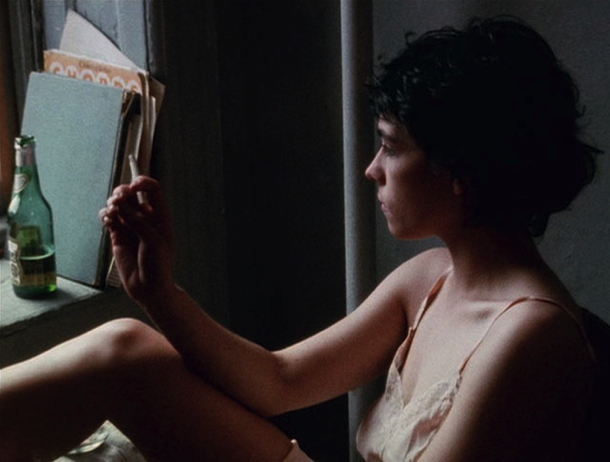
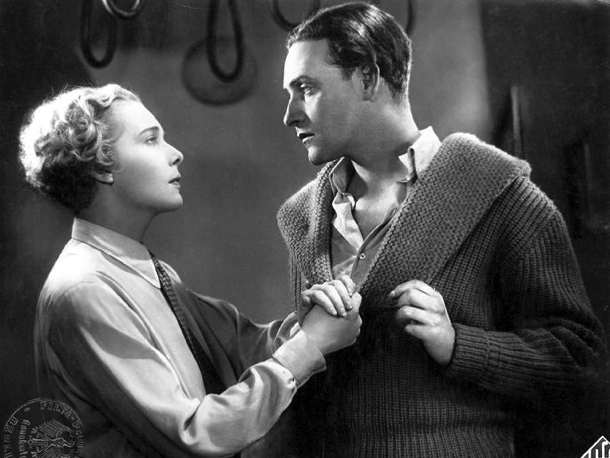
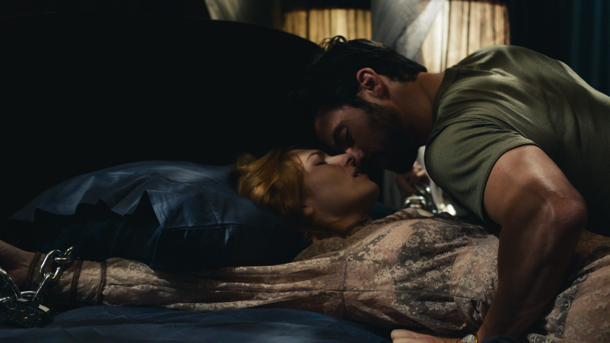
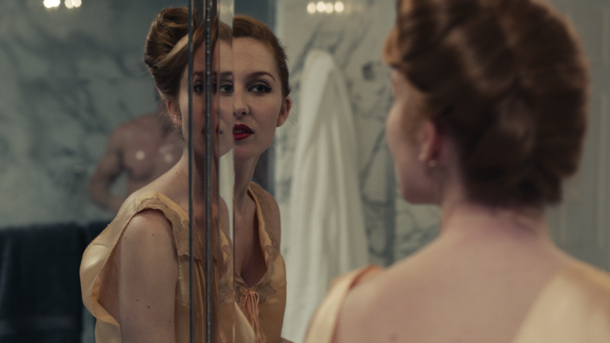
Mike Figgis’ booze-soaked 1995 indie still intoxicates like a shot of cheap whiskey straight to the soul. The new 4K restoration gives Leaving Las Vegas a haunting texture — neon-drenched, gritty, and heartbreakingly intimate — while Nicolas Cage’s Oscar-winning performance remains one of the rawest acts of self-destruction ever put onscreen. Elisabeth Shue is equally devastating, grounding the film’s doomed romance with warmth and humanity. Thirty years later, it still feels dangerous, tender, and utterly uncompromised.
Celebrating the 250th anniversary of their births, two British iconic artists come together in a new documentary that explores the artists’ intertwined lives and legacies alongside the current exhibition at London’s Tate Gallery.
Famously described by critics as a clash of ‘fire and water’, Turner and Constable’s respective styles were both bold yet starkly different. JMW Turner (1775-1851) and John Constable (1776-1837) were at work at a time when Britain was at war with France so their landscapes reflect their island home and became vital and treasured by the people of England, Scotland and Wales. At the same time, the artists were rivals using landscape painting to chronicle the changing world that surrounded them.
Once again filmmaker David Bickerstaff is behind the camera, avoiding a traditional narrative structure preferring to bring the subject to life vividly on screen by comparing and contrasting the artists’ work using valuable insight from curators and art specialists. What we discover are unexpected details of the painters’’ lives behind the canvas by way of their sketchbooks and personal items that show how the artists redefined landscape painting, and paved the way for Impressionism.
Turner, whose first Royal Academy exhibition was in 1790, evokes urban and rural landscapes studying light and Impressionism, whereas Constable was all about the Suffolk. He was dedicated to the nature and scenes of this eastern county where he was born, entering the Royal Academy in 1799 and becoming a fully fledged RA in 1829. Born in the heart of London, Turner inhabited the dark narrow streets of Covent Garden and spent his childhood in this bustling commercial part of the city, an area full of theatres, drinking establishments, and the red light district. His youth was formed by an awareness of things being bought and sold. With a businessman father Turner was made acutely aware from a young age that Art is a not jut a creative output but a way of making money in a capital full of possibilities that can be monetised. And Turner’s father hung his son‘s watercolours in the window of his barbershop to give him the support he needed.
Constable, by contrast is very much a country boy, born into an affluent family in rural Suffolk, surrounded by open fields and vast landscapes. His father ran a successful milling and grain exploitation business and so Constable’s background is one of health and security. Turner, being a Londoner, had easy access to the relatively new Royal Academy, and the Royal Academy of Arts had only been founded in 1768. It was the most dominant prestigious body in the art world at the time and an influential platform for exhibitors. To be a Royal Academician was to have your name as an artist showcased to an elite world, enabling the artist to command the highest prices, to move in the most influential circles, and acquire wealthy patrons.
Turner and Constable took part in a British school of art that was stepping out of the shadows of the European counterparts with work that was uniquely British in style and tone. Both artists follow this path albeit at slightly different times of their life. Turner was a child prodigy aged just 14 years old when he was admitted to the Academy School and he enjoyed a meteoric rise gaining Academy admission and becoming a full RA at 27. On the other hand, Constable had a more slow-burn approach entering aged 23. He was more at home in the Suffolk fields drawing, and sketching, and his awareness of business came much later.
Although Turner and Constable were both essentially landscape painters, when it comes to painting styles they were very different. Constable focused on capturing the literal, atmospheric reality of the British coast, whereas Turner creates a very emotional view, using the sea to explore deep forces. His seascapes were abstract and evocative, often giving a sense of the turbulent water, an impression of an oncoming storm, and the wildness of the cliffs, giving him the nickname ‘prince of the rocks’.
1798 was a particularly special year for artists exhibiting at the Royal Academy as it offered the first opportunity to attach lines of poetry or description to the titles of paintings in the exhibition catalogue. Both artists loved poetry so this was a way forward. For Turner, particularly this was a great opportunity to embellish some of the feelings he was trying to convey in his landscape paintings.
The painters were cut off from travelling to the continent due to the Napoleonic wars so their focus in depicting more dramatic countryside had to be closer to home. The Lake District and Wales had the mountains and wild scenery enabling the two to depict light and shade in that dramatic environment. Turner’s sketchbooks were filled with a great intensity, he was compelled to draw and sketch everything. Inquisitive, his sketches really give a sense of an artist who is absolutely thrilled to be out on the road, capturing the dazzling vibrancy of life as he moved along. Whereas Constable roots his entire practice in a sensory record of atmospheric effects in places he knows really well, and can truly be called a ‘plein air’ painter.
In 1781 a company in England called Thomas and William Reeves started to commercially manufacture blocks of ‘ready to use’ watercolour paints with the key ingredient of honey to keep the paint moist. This was a revolutionary change in how artists could create watercolour paintings while out and about. And this allowed both artists to elaborate their signature study of light, the white underneath illuminating the colour that they could apply on top. Turner could paint a watercolour every day, and then perhaps colouring in the canvas at night when inside his lodgings. He particularly favoured chrome yellow and cobalt blue which was a colour developed in France around 1802.
Constable is an incredibly emotional painter – an intense impression of his feelings is almost impregnated in the paint. In one painting, of Brighton, you can sense the pain he’s experiencing when his wife Maria Bicknell is dying of tuberculosis in 1828, aged 41. Their marriage had been bitterly apposed by her parents, but eventually she had seven children with Constable. Scattered with red highlights, he really packed a raw visceral punch in his 1828 painting of the sea at Brighton. His grief and despair is palpable within this dark wall of falling rain.
One word that characterised the era was change, and both artists are acutely sensitive to the potential for change. Nowadays we think of the arts and sciences are being diametrically opposed and very different disciplines but that distinction wouldn’t have existed during the 19th century. There is much more crossover. There is an incredible interest in reforming the political system, the disparity between the power and wealth. There are the beginnings of writings and discussions about about prison reform. There is the the abolition of slavery and these are massive seismic changes in society and stabilisation.
Turner comes across as intellectually curious and he owns a wide range of books within his personal library, with publications on chemistry on print technology on mathematics, geography and geology, and he reads these to help him understand the forces that shape the landscape. Both enjoyed friendships with people like Michael Faraday and Marie Somerville, some of the big names in scientific inquiry at the time. Constable was deeply interested in the clouds he saw above Hampstead Heath and he was fascinated to understand the science behind this and other ways of codifying meteorology and the skies. He was keen to learn the whether you might need a jumper, or possibly an umbrella, but with Turner you need all the protective gear that you can get at the same time.
For over sixty years Turner and Constable shared a timeline. But in 1837 Constable suddenly and unexpectedly died during his sleep. Turner would live another fifteen years, in Twickenham near the river Thames where he chose to build himself a house. It still exists as Turner’s only complete architectural project, a place where he could withdraw from the professional pressures of life and a retirement home for himself and his father. He had children but never married, possibly a reflection of the overbearing character of his mother.
Both of them challenged the conventions that dominated landscape painting in the British art scene at the time and the film and exhibition now offer the chance to experience these great artists, side by side, as were so often in life, on the big screen, globally, for the first time.
NOW ON EXHIBITION ON SCREEN | In cinemas from 10 March 2026
Jean Vigo’s cinematic swansong has a tragic history behind its tender love story. L’Atalante the French director’s only feature was a ravishing romantic vision but not a box office success.
Filming was hampered by Vigo suffering from TB from which he died shortly afterwards, at only 29: Yet the film is a prime example of how a slim budget and short running time need not hamper the creation of a legendary gem.
Dita Parlo is Juliette, a modest girl who marries Jean (Jean Dasté, captain of L’Atalante, a shabby barge that sails up and down the canals of rural France. Essentially a three-hander, the film centres on Juliette’s desire to see the world and her onboard romance with Jean which is continually blown of course by his rumbustious first mate Pere Jules (Michel Simon).
Meanwhile the melodrama’s significance is far greater than the simple narrative. As his life was slipping away Vigo infused his film with texture, resonance and surprising eroticism. Along with the film’s surreal visual wizardry are moments of brutal truth that jostle with the playful spontaneity and ecstatic love story. L’Atalante is often flawed but always memorable. @Meredith Taylor.
A 4K restoration of Jean Vigo’s masterpiece L’ATALANTE is re-released in cinemas ahead of JEAN VIGO | A CURZON COLLECTION home ent release commemorating the 120th anniversary of the filmmaker’s birth
Dir: Tony Richardson | Cast: Rita Tushingham, Peter Danquah, Robert Stephens, Dora Brian, Murray Melvin | UK Drama
Reviewed by Richard Chatten
Tony Richardson confirmed his position at the vanguard of the British new wave with this touching adaptation of Shelagh Delaney’s play that tells the story of a pregnant left to fend for herself after her mother remarries.
Rita Tushingham’s enormous eyes inevitably remain the most memorable feature – despite stiff competition from Robert Stephen’s’ glass eye – Dora Bryan has the role of her career and Walter Lassally’s photography is as usual exemplary.
NOW ON BFI PLAYER AND ON BLURAY AT THE CRITERION COLLECTION
Dir: Paul Cox | Cast: Isabelle Huppert, Robert Menzies, Norman Kaye, Monica Maughan | Australia Drama 93’
Reviewed by Richard Chatten
One of only two films I’ve ever watched on video that impressed me sufficiently for me to immediately rewind and watch it again right through from the start.
Directed by Netherlands born Paul Cox and adapted for the screen by co-writer Norman Kaye (best known for Bad Boy Bubby) the pace is deceptively languid while Isabelle Huppert is her usual fascinatingly inscrutable self as a vacationing Frenchwoman travelling through Australia when her eyesight is seriously damaged in a car crash.
The theme of blindness is of course made doubly poignant by the sheer visual beauty of the verdant landscape in which the events unfold.
Dir/Wri; Yves Boisset Cast: Marlene Jobert, Tomas Milian | France Thriller 90´
A consistently absorbing adaptation of the novel by Jean-Patrick Manchette, in which to the music of Verdi it follows the pursuit across France of a young woman at the behest of a corrupt psychiatrist.
As the heroine Marlene Jobert receives our encouragement throughout; while as the psychiatrist Michel Lonsdale provides a truly vintage villain in the tradition of Sylvester Sneekly. @RichardChatten
Chevy Chase, Sam Neill, Daryl Hannah | US Comedy 1992
John Carpenter hasn’t tried to be funny for a very long time, and for Chevy Chase this film represents a considerable change of pace.
After a freak accident, he plays a company executive who turns completely invisible, goes on the run, and becomes hunted by the CIA
Starting off quietly enough, he looks increasingly agitated in realising he’s becoming invisible; which attracts the unwanted attention of sundry interested parties
As in ‘Shallow Hall’ only the audience can see the reality and Chase remains visible to us and to himself throughout; although we see fanciful special effects such as bubble gum inflating itself without visible means of support.
All of which is told in the time-honoured fashion in the past tense in the form of a message on an answering machine. @RichardChatten
Dir: Elia Kazan | Cast: Marlon Brando, Lee J Cobb, Karl Malden, Rod Steiger, Eva Marie Saint| US Drama 108’
Having recently drawn the unfriendly attention of the HUAAC for their youthful political indiscretions Elia Kazan and Lee J. Cobb completed their rehabilitation with this apologia for informers produced by Sam Spiegel, which in keeping with the current prevailing zeitgeist portrays trade unions as little more than an arm of organised crime; and for which Kazan duly received a pat on the back in the form of an Academy Award.
Equally deserving was Boris Kaufman’s Oscar for best black & photography; but the question remains: in an early instance of the eccentricity that soon become characteristic of Marlon Brando, whatever possessed him to wear such heavy eyeliner throughout? @RichardChatten
Dir: Nicolas Ray | Cast: James Dean, Natalie Wood | US Drama
‘Rebel Without a Cause’ started life as a modest black & white exploitation item about disaffected youth, but allied to Nicholas Ray’s flair for colour and penchant for melodramatics – heightened by Leonard Rosenman’s dissonant score – ultimately emerged in widescreen & colour as an ambitious vehicle for an emerging star.
It’s been observed that the youngsters display more careworn than their parents and they certainly seem to derive little satisfaction from a life of cheap thrills and mindless violence; which is why it’s a cathartic moment when James Dean finally has to take the conciliatory role with Plato at the film’s conclusion.@RichardChatten
A new documentary exploring the Hitchcock’s debut career in England during the 1920s and 1930s is directed by Laurent Bouzereau and narrated by American radio host and film critic Elvis Mitchell.
As the title suggests the first part of this dense doc is dedicated to his first British talkie Blackmail (1929) highlighting the English director’s predominant style as a visual filmmaker whose talents and enjoyment lay in setting up the scene and crafting the interplay between light and shadow. For Hitchcock image was king and drove the narrative forward with the dialogue coming second. By his own admission he found writing a task.
Blackmail, starring Andy Ondra as a woman who kills in self defence, was first released in 1929 as a talkie with although the first part is largely silent with minimal dialogue, the silent version following,
Hitchcock always made an appearance in his own films suggesting he possibly wanted to be an actor, but this was far from the case. So he always staged these vignettes early on in the narrative so as not to draw the viewer’s attention away from the film as a whole.
Becoming Hitchcock moves steadily through its paces with a focus on lead actors and main themes: of violence, intrigue, blackmail and, of course, love, with the thriller being a particularly English passion. Hitchcock was also a master of psychology and his villains were invariably charming and often smiling as they inveigled their victims.
So the spoken word was of lesser consideration for Hitchcock. But for Bouzereau the opposite is true. The film’s narration is verbose and dominating. The radio celebrity talks continuously throughout the film as if reading from a prepared script, with plentiful images and black and white sketches added almost as an embellishment, and clearly emphasising Mitchell’s talent for broadcasting. Becoming Hitchcock would perhaps work better as a radio broadcast. The criticism here is the lack of time given over for quiet reflection, let alone digestion, in a spare running time of 72 minutes.
A shame, also, that Bouzereau chose an American rather than an English voice to narrate this quintessentially English story, given that the Leytonstone-born Hitchcock spent a good fifteen formative year’s crafting his career in Blighty before moving across the pond in 1939 and taking US citizenship in1955. @MeredithTaylor
Dir: Mark Robson | Boris Karloff, Anna Lee | US Fantasy horror
Evidently a subject close to his heart, the film with which Val Lewton concluded his series of low budget but intelligent horror films for RKO was one of the few on which he actually took a writing credit, albeit under his pseudonym ‘Carlos Keith’, with results so raw that the British censor paid it the backhanded compliment of banning it outright.
Lewton bore his erudition lightly but he displays moments of sly wit as when moving pictures are shown to be the idea of a patient in a lunatic asylum and he demonstrated the lethal effects of applying coat of gold paint to the skin over ten years before Ian Fleming had the idea in ‘Goldinger’.
As the asylum director, Boris Karloff plays one his most fiendish, leering villains, and comes to a satisfactorily grisly end; while Anna Lee is charmingly different as the heroine. @RichardChatten
Dir: Alfred Hitchcock | Cast: Maureen O’Hara, Robert Newton | Drama 108’
Hitchcock’s period dramas tend to get a bad press but ‘Under Capricorn’ at least is worthy of considerable respect.
‘Jamaica Inn’ – the last of the British phase of Hitchcock’s career and the first of three adaptations of made of the work of Daphne du Maurier – was even included in the book ‘The Fifty Worst Movies of All Time’ and both Hitchcock and du Maurier personally disliked it; in the case of the latter probably not helped by liberties taken like the addition of Sir Humphrey Pengallan.
Possibly Hitchcock’s most violent film, this rollicking yarn boasts sumptuous production design, mobile photography by Harry Stradling, a bizarrely made up performance by Charles Laughton as Pengallan (although he predictably proved difficult to direct, especially since it was made for his own company), a game young heroine played a by Irish actress Maureen O’Hara, who gets an ‘Introducing’ credit and promptly accompanied Laughton to Hollywood; and distinctive supporting contributions from Leslie Banks, Robert Newton, Emlyn Williams, Marie Ney, Basil Radford and Hay Petrie, to name but a few; and a memorably harrowing scene at the conclusion in which Stephen Haggard pleads for his life. @RichardChatten
Dir: David Bickerstaff | Prod: Phil Grabsky | UK Art Doc
Exhibition On Screen is a series of documentary portraits of painters and their iconic works. It goes behind the scenes at major galleries and museums – this time London’s National Gallery – offering detailed insight from experts and curators and dramatised scenes that bring the artists to life.
David Bickerstaff and Phil Grabsky already highlighted the Vincent Van Gogh’s letters with his brother Theo,(1853-90) in the 2015 documentary Van GoghA New Way of Seeing. This time they once again bring the letters to bear with a lyrical look at works from the artist’s most vibrant, less sensational, period when he discovered the power of colour and sunlight during a two-year sejour in the South of France.
Through forty seven paintings and fourteen drawings, the focus here is Van Gogh’s imagination as a visual poet rather than the tragedy of his personal life. The theme of lovers dominates in the opening room with his portrait of “the lover”, lieutenant Paul Milliet, the Zouave regiment soldier who Van Gogh saw as a ladies’ man. The artist was clearly aware of his seductive powers: “Milliet’s lucky, he has all the Arlésiennes he wants, but there you are, he can’t paint them, and if he was a painter he wouldn’t have any.”
La Berceuse 1889
This image is paired with that of the “the poet” – his Belgian artist friend Eugène Boch (Musée d’Orsay, Paris) whom he considered a more sensitive soul, framing him against an azure background of stars. In the middle of these two works is a picture of two embracing lovers strolling through a shady park, in fact the public park opposite the famous yellow house Van Gogh rented in Arles and shared, at one point, with Gauguin during 1888-9 when he painted ‘The Yellow House’, and ‘The Bedroom’.
During this time he also depicted his short spells in the local asylum just outside Saint-Remy-de-Provence. These stays, when he stopped working altogether, enabled Van Gogh to recuperate and recalibrate his emotional state before getting back to work with renewed vigour. Far from the troubled madman he is so often depicted as, this exhibition and film lays bare the artist as a sensitive and deeply poetic soul uniquely able to convey the beauty of his surroundings on canvas.
Central to the exhibition is the spectacular ‘Starry Night over the Rhone’ (main picture) and Self-Portrait further illustrating his successful time in Arles.
With valuable contributions from art specialists and curators: Christopher Riopelle, Lachlan Goodie, The Times’ critic Rachel Campbell Johnson and others, the film also offers a detailed look at detailed marks and brushwork from a selection of rarely seen paintings from private collections all over the world. ‘The Poet’s Garden’, ‘The Trinquetaille Bridge’ and ‘The Public Garden, Arles’.
Poets and Lovers shows how Gogh had started to build his work into a series that could work together. An example of this is the so-called ‘triptych’, with two of the Sunflowers surrounding ‘Madame Roulin Rocking the Cradle’ (La Berceuse) from the Museum of Fine Arts, Boston. The National Gallery owns the ‘Sunflowers’ on a yellow background, which is displayed with one of Van Gogh’s two versions on a blue background, this one on loan from the Philadelphia Museum of Art. All the three paintings are displayed on one wall.
Ironic, then, to think that Van Gogh was unable to sell his work during his lifetime, relying on the financial support of his brother Theo, when Nowadays his paintings go under the hammer for eye-watering amounts of money, even running into the millions.
Enriched with dramatised sequences this is a spectacular film to watch and keeping re-visiting about Van Gogh’s hopeful and productive time in the South of France. @MeredithTaylor
Marguerite Duras is not exactly renowned as a crowd pleaser, I didn’t really expect to enjoy this film – especially since it was shot in drab black & white with probably deliberately inexpressive acting by the leads – when I dutifully sat down to see it, but in its playfully sinister way it proved quite diverting.
Lucia Bose and Jeanne Moreau play two women in early middle age, who live together alone, whether siblings or lovers never being made clear.
Perhaps the film’s highlight involves a young Gerard Depardieu as a washing machine salesman nervously attempting to interest the two women in purchasing a new model. The two ladies just stare and constantly contradict him, and one is never sure if they intend to rape him or kill him. @RichardChatten
Dir: Bob Ellis | Cast: Norman Kaye, Wendy Hughes | Australia, Drama 91’
This Australian drama starts deceptively quietly as music teacher Wendy Hughes quietly picks up an unassuming little salesman played by Norman Kaye, which proves something of a red herring as Kaye is never seen again.
What then follows resembles ‘Looking for Mr Goodbar’ as Miss Hughes resumes her travels and turns into a regular chameleon, her appearance transformed as she adapts to every new man.
The most extraordinary development comes when she is enlisted in a conspiracy to assassinate a conservative politician whose eye she catches by vigorously joining in a performance he’s giving of ‘The Internationale’, which ironically enlists your sympathy for the intended victim since few real conservatives would have the wit to declare “I hate the sentiment – as you know – but I love the tune!” @RichardChatten
Dir: Mervyn LeRoy | Cast: Edward D Robinson, Marian Marsh, H B Warner | US Drama. 97’
Joseph, an editor of a tabloid, goes against his journalistic morals when he tries to stimulate public interest in a 20-year-old murder case in order to raise the circulation of the newspaper.
Mervyn LeRoy is one of those bizarre anomalies sadly common in film history that his career continued well past its peak with the result that his reputation suffered accordingly. Had he died or retired in 1935, or simply stuck to producing (‘The Wizard of Oz’ was one of his) posterity today would accord him much more respect.
Consider ‘Five-Star Final’ (the title refers to the final edition of a newspaper), sandwiched between authentic classics ‘Little Caesar’ and ‘I am a Fugitive from a Chain Gang’, a morality tale which still resonates today on the question of journalistic responsibility, with its adroit use of split-screen and a supporting performance by a then unknown actor called Boris Karloff as a character so vile preview audiences actually protested that he was allowed to reach the end still alive. @RichardChatten
Dir: Jessica Palud | Cast: Anamaria Vartolomei, Matt Dillon, Giuseppe Maggio, Céleste Brunnquell, Yvan Attal, Marie Gillian
Last Tango in Pariswas certainly a ground-breaking film shocking audiences to the core back in 1972. A woman directs this new biopic about the abused French actress Maria Schneider, who at age of 19, landed a role alongside Marlon Brando in the Bertolucci film that would make her a star but also destroy her life.
Berlolucci wanted to make a film about two people, Jeanne and Paul, indulging in a sexual relationship without any trappings. They would meet regularly in room and just go from there. But, crucially, without asking or her consenting, the Italian director and his 48-year-old male star sprung an unscripted rape scene on the young woman asking for real ‘rage’ and ‘humiliation’. And that’s what happened. Even though sodomy never took place the fear and loss of control is devastating. And we feel for Maria even though Brando assures her: ‘it’s only a film’. She has seen him as a mentor only to be deceived. And even now, in the light of the #MeToo era, this sequence is particularly resonant.
Maria is from an educated if broken home: her father (Attal) is the seasoned actor Daniel Gerlin who has gone on to form another family after leaving home. Her volatile mother Marie-Christine (Gillain) throws her out of the house – quite literally – for reconnecting him after the two meet and reconnect on a film set in the opening sequence. The twice rejected Maria then moves in with her uncle, but is clearly damaged by her life experience thus far.
Being Maria is directed by Jessica Palud (who has a handful of directing titles behind her: Revenir, Les Yeux Fermes), and co-written with Laurette Polmanss, freely adapting the novel ‘Tu t’appelais Maria Schneider’ by Vanessa Schneider, Maria’s cousin, It paints a convincing portrait of this young woman desperate to forge a career in acting.
Encouraged by her father in this endeavour, she contacts an agent and then finds herself in a café where she meets Bertolucci (Giuseppe Maggio who authentically, like the director, doesn’t role his ‘r’s). He has picked her out for the fateful role. (‘roles chose actors, not the other way round’ says her father). But after the furore of that pivotal scene, which happens early on. The film has nothing more to say thereafter and unravels as does Maria’s life. @MeredithTaylor
Dir: Michael Powell & Emeric Pressburger | Cast: Jack Hawkins, Kathleen Byron, UK Drama
The director Michael Powell once opined that The Small Back Room was probably his best film, while Emeric Pressburger’s personal favourite was The Life and Death of Colonel Blimp; therefore anyone in any doubt as to the contrasting personalities behind The Archers should go no further than this austere black & white adaptation of Nigel Balchin’s novel which further develops the pair’s preoccupation with the emotional fallout from the national trauma of World War II.
Focusing on the emotional truth of a tortured love story the British noir takes place during 1943 with the Germans dropping explosive booby-traps over Britain. Meanwhile the troubled expert tasked with disarming them fights his own private battle with alcohol. The expressive use of sound was already a Powell characteristic and in the expressionistic sequence depicting delirium tremens combining the ticking of a clock and an enormous whiskey bottle.
The incisive depiction of office politics probably also originated with Balchin (likewise the treatment of physical disability) although one wonders which studio executive was being parodied by Powell in the sequence with the Whitehall ignoramus played by Robert Morley. @RichardChatten
AT THE BFI from 28 May | DIGITAL AND BLURAY/DVD RESTORATION RELEASE ON 3 JUNE 2024 | STUDIOCANAL VINTAGE CLASSICS |
American painter John Singer Sargent (1856-1925) is best known for his ‘swagger portraits’ of wealthy Americans of the Edwardian era. The canvasses command our attention and mesmerise in the same way as Rembrandt’s although Sargent adopts a more broad brush style than the Dutch 17th century master who was known as the greatest portrait artist of his era, arguably of all time.
In his latest art biopic director and cinematographer David Bickerstaff frames his documentary through interviews with curators, contemporary fashionistas and style influencers, their input and his fluid camera showing how Sargent influenced modern art and fashion with a unique approach in capturing personalities, gender politics and social capital on the canvas. John Singer Sargent: Fashion and Swagger brings this all together for everyone to enjoy on the big screen, the expert commentaries adding value and insight.
Sargent’s approach is testament to how clothes and outward apparel can make a powerful social statement and one that still reverberates today, albeit in different ways. Sargent’s portraits certainly capture the imagination and Bickerstaff conveys this with skill despite an over-reliance on ‘talking heads’: he should consider limiting them to a select few and re-introducing them with inter-titles whenever they appear. @MeredithTaylor
John Singer Sargent: Fashion and Swagger IN CINEMAS 16 APRIL 2024
Dir/Wri: Claire Denis | Cast: Isabelle Huppert, Isaac De Bankole, Giulia Boschi, Francois Cluzet, Jean-Claude Adelin | France, Drama 105′
In her intimately observed feature debut Claire Denis draws on her own experience of growing up in the twilight years of French authority in 1950s Africa exploring the social dynamics between the past and the present for men and women, black and white in pre and post colonial Africa
Isabelle Huppert is a young woman who returns to a remote outpost in West Africa where her formative years were spent in the company of Protee her family’s black ‘houseboy’ a powerful presence of dignity and intelligence played by Isaac De Bankole. The overall effect is one of resonating tranquility as we become enraptured by the daily exchanges between France and Protee as the story flows from to present that culminates in a luminous finale – that was then and this is now and we should not try to compare the two or apologise for history. @MeredithTaylor
ON 4K RESTORATION BFI BLU-RAY & DIGITAL from 29 APRIL 2024
Dir: George Walker | Cast: Wilfrid Lawson, Elizabeth Allan, Malcolm Keen | UK Drama 89’
Goebbels was almost certainly aware of the strange anomaly that the first two Technicolor features made in wartime Britain while the war was at its lowest ebb both centred upon a German hero; although Handel promptly demonstrates his patriotic principles by declaring to a detractor that “While you are not English by any act of your own, I am English by choice”.
Resembling ‘Amadeus’ in its depiction of an unorthodox talent forced to abase himself before assorted pseuds and dilettantes; while the film betrays its origins as a radio play with its emphasis on talk – and the lack of obvious marquee value helped it to fail at the box office – Lord Rank at least had the good sense to cast an actor of the calibre of Wilfred Lawson rather than just a conventional leading man in the title role. So while two-thirds into the film Handel gets down on his knees to pray it at first seems ominous, despite Roger Manvell’s curt dismissal of “the sort of thing that disgraced ‘The Great Mr Handel'” and George Perry’s description of it as “so dull it has never been revived” Lawson’s performance combined with the imaginative use of colour (veteran colour cameraman Claude Friese-Greene was presumably enlisted for his experience with Dufaycolor, while his younger collaborator was a nascent Jack Cardiff) means it works.
The film is also to be cherished for the unique opportunity it provides to see the lovely young Elizabeth Allan in Technicolor; while Hay Petrie has one his best roles as Handel’s faithful servant Phineas, who in the final half-hour makes the film a virtual two-hander. @RichardChatten
Dir: Robert Bresson | Cast: François Leterrier, Charles le Clainche, François Jost | France 100’
Made when Bresson was still showing us actors’ faces and their hands rather than their backs and their feet, ‘Un condamne a Mort s’est echappe’ is proof positive than an austere drama in black & white can be as absorbing as the most action packed thriller.
French Resistance activist André Devigny is imprisoned by the Nazis and starts planning his escape from his solitary cell. On the day of his execution he is given a new cellmate who may be a Gestapo informer. Should reveal his elaborate escape scheme?
To those unfamiliar with the director’s work – notorious for his total lack of overt action and the almost parodic lack of expression of his casts of non-professionals – this will come as a pleasant surprise as you watch with your totally undivided attention the deceptively mundane details of prison life, it’s impact actually heightened by the sparing use of music (although whenever Bresson actually does allow Mozart his head he certainly makes up for lost time). @RichardChatten
1949 saw the release of a trio of classic British comedies that really cemented Ealing’s place in history as this country’s finest film studios: Passport to Pimlico, Kind Hearts and Coronets and Whiskey Galore!
75 years later, these films offer a window into the hilarious nature of British eccentricity and ingenuity, and one that shows a healthy disdain for authority coupled with a not inconsiderable dose of anarchy. Today in the world of woke these features seem as fresh, innovative and, above all, as amusing as ever.
To celebrate its 75th Anniversary Ealing’s most endearing crime caper The Lavender Hill Mob (out 29 March) gets an up-to-date restoration and a nationwide re-release. Cinemas will be offering a selection of Ealing classics, both comedy and drama, under the banner ONCE MORE WITH EALING!
Other classics to revisit include Ealing stalwart Alec Guinness and his gang of thieves undone by Katie Johnson and her parrots in gloriously restored 4k Technicolor The Ladykillers along with ground-breaking and provocative dramas such as Pool Of Londonand It Always Rains on Sunday the archetypal portmanteau horror championed by everyone from John Landis to Kenneth Branagh, Dead of Night, and that man Guinness again, facing off against big business as they try to quash his miracle invention in The Man in the White Suit.
Also joining these bigger Ealing names are some lesser-known gems: Jean Simmons is blackmailed by her no-good husband back from the dead in Cage of Gold, Tommy Trinder impresses in a rare dramatic role in Ealing’s wartime ode to the Auxiliary Fire Service and their vital work during the Blitz in The Bells Go Down, and Lease of Life, written by Eric Ambler and starring Robert Donat as a Vicar who delivers an impromptu sermon that sets tongues wagging in Ealing’s only treatise on religion.
Mainstream Hollywood cinema of the nineties offers many profound disappointments, of which two of the most poignant were the early death of John Candy, thirty years ago this month after suffering a heart attack in his sleep, and Steve Martin’s increasing dissatisfaction with simply being funny.
With a plot that owes an evident debt to ‘The Out-of-Towners’ it’s disarmingly good-natured and nice to see the erstwhile ‘Wild & Crazy Guy’ play the straight man for a change with Candy as Falstaff to his Prince Hal.
Over thirty years later ‘Planes, Trains and Automobiles’ is as melancholy to watch as it is funny since it demonstrates the ability of the cinema to preserve such moments for posterity. @RichardChatten
Dir: Monte Hellman | Cast: Jack Nicolson, Warren Oates, Millie Perkins, Will Hitchens | US Drama 82’
A historically important film since it marked the beginning of the collaboration between Monte Hellman and Warren Oates that eventually came to full fruition with ‘Two-Lane Blacktop’.
For Jack Nicholson, who co.produced with Hellman and plays yet another in a long line of leering malcontents it represented yet another frustration before he finally arrived with ‘Easy Rider’.
Assisted by the minimal score by Richard Markowitz the predominantly horizontal visuals created by cinematographer Gregor Sandor dispenses with the usual visual attraction associated with the genre concentrating instead upon character interaction; while as the shady lady – like Nicholson wearing a striking wide-brimmed hat – the freckles on Milly Perkins’ face shows she had spent far more time exposed to the sun than poor Anne Frank had. @RichardChatten
Dir: Dorothy Arzner | Cast: Joan Crawford, Franchot Tone, Robert Young, Billie Burke | US Drama
With a title like that The Bride Wore Red is guaranteed to stand out in even the most casual perusal of Dorothy Arzner’s oeuvre; along with the fact that one of the writers and the editor were also women.
Although Ms Arzner disliked making this film and left it in high dudgeon after having a happy ending imposed by Metro, it remains a most diverting Tyrolean lark (a fact appropriately reflected in Franz Waxman’s score).
In a role originally intended for Luis Rainer the film’s biggest liability is as usual Joan Crawford (her most impressive moment being as a cake decoration behind the credits) but she certainly brings an authentically feral quality to the scene where she hunches up her shoulders and gets stuck in when offered lunch.
While of the two leading men Robert Young has the most screen time Franchot Tone has the more interesting part, while standouts in support include George Zucco before he was typecast as mad doctors, and Mary Philips is as usual a robust presence.@RichardChatten
Dir: Hugo Fregonese | Cast: Edward G Robinson, Jean Parker, Peter Graves, Milburn Stone | US Crime Noir 80′
More than two decades after Little Caesar Eddie Robinson was still capable of showing absolutely no sign of mellowing – while as his moll Jean Parker is a classic floozie in the Claire Trevor tradition – in this astringent United Artists quickie which briefly begins as a home invasion drama, then becomes a prison film before concluding with a humdinger of a shoot-out.
Recalling the days when hoodlums still wore their hats indoors, the visual highlight is probably the section in the prison gothically lit by Stanley Cortez; although there plenty of other nice touches along the way such the scene early on were a bunch of journalists saunter in to watch a pair of executions in the electric chair as if attending a first night, and the shot during the final siege of a floor covered with spent cartridge cases. @RichardChatten
Dir: William Cameron Menzies | Cast: John Mills, Rene Ray, Robert Newton, Charles Oliver | UK Crime Drama 70′
Although John Mills is technically the star, The Green Cockatoo is principally told through the big blue eyes of Miss Rene Ray as a country mouse who gets a crash course in what “a vile and wicked city London is”; while, as directed by visionary production designer William Cameron Menzies, it anticipates the feel of a forties film noir (complete with a score by Miklos Rozsa).
Old movies often provide incidental details of interest to later social historians: in this case that the phrase “a bit of a goer” was in use back in the 1930s. The film further charmingly shows its age by depicting John Mills as a song & dance man – first seen singing in a night club before briefly launching into an incredible swivel-hipped tap dance. We’re expected to believe he and Robert Newton are brothers (presumably only their mother could tell them apart) further showing just how long it was made when Mills describes him as “a good kid”. @RichardChatten
Dir: Todd A Kessler | Cast Juliette Binoche, Ben Mendelssohn, John Malkovich | Drama series 2024
A slick new series on Apple sashays back to fashionable post war Paris emerging from German occupation and in need of a fashion boost
In an all star International cast Juliette Binoche is the biggest surprise. She is English speaking Coco Chanel alongside Ben Mendelssohn as Christian Dior. John Malkovich is Lelong Balmain
Bristling with intrigue the series cleverly combines wartime thriller elements with a more lightweight look at the birth of haute couture in a shocking story of how fashion icon Christian Dior and his contemporaries including Coco Chanel, Pierre Balmain, and Cristobal Balenciaga navigated the horrors of World War II and launched modern fashion.
The New Look is filmed exclusively in Paris by Todd A Kessler and will make its global debut on Apple TV+ with the first three episodes onWednesday 14th February 2024, followed by new episodes weekly
On Apple TV+, followed by one episode every Wednesday through April 2024
Dir: Lewis Gilbert | Cast: Aiden Quinn, Kate Beckinsale, John Gielgud, Anna Massey | UK Fantasy horror 95’
Based on a novel by James Holborn, like ‘Don’t Look Now’ this film starts with a prologue depicting a young girl drowning (a debt further acknowledged by a brief glimpse of Hilary Mason at her memorial service), but this time she’s in a long white dress rather than a red duffle coat.
In the more conventional hands of Lewis Gilbert the action then picks up in a twenties mansion in the style of Brideshead – complete with Anthony Andrews – and the plot proceeds to make it’s way with elements lifted from ‘The Halfway House’, ‘The Haunting’ and ‘The Shining’.
Aiden Quinn and a youthful Kate Beckinsale (who shows that she’s a modern girl by smoking, wearing jodhpurs & riding boots, driving like a maniac, swimming starkers, playing the piano in a kimono and enthusiastically making love) make an attractive pair of young leads, ably supported by Anna Massey as a disturbed old nanny, John Gielgud as the family doctor whose entrance is literally preceded by a cloud of smoke, and Liz Smith as a disconcertingly accurate fortune teller. @RichardChatten
Dir: Richard Fleischer | Cast: Robert Mitchum, Ursula Thiess, Gilbert Roland, Zachary Scott | US Action Drama 92’
In his memoirs director Richard Fleischer gave a harrowing account of the horrors of filming in Mexico beset with insect stings and upset stomachs. The film itself takes its lead from leading actor Robert Mitchum by being much more light-hearted than Fleischer’s account would have lead you to expect.
In its rollicking picture of Mexico as a place in which lead is constantly flying (none of it naturally hitting our Bob) it rather recalls the Harold Lloyd comedy ‘Why Worry?’; a piece of advice that Mitchum obviously took to heart.
Apart from Mitchum himself the most interesting member of the cast is probably veteran Mexican heavy Miguel Inclain, who was deeply touching in ‘Salon Mexico’ and briefly appears late in the film as a priest. @RichardChatten
Dir: Rowland V Lee | Cast: Boris Karloff, Basil Rathbone, Béla Lugosi, Lionel Atwill, Josephine Hutchinson | US Horror 99′
In Gods and Monsters Ian McKellen (playing the director James Whale) derisively barks “I only directed the first two, the rest were made by hacks”. This is a bit hard on Roland V. Lee who delivers an extremely atmospheric addition to the canon, and derives full value, aided by cameraman George Robinson, from Otterson & Riedel’s ‘psychological sets’, complete with a portrait of Colin Clive.
Billed as ‘A Roland V. Lee Production’, to add to its credibility, this was the last Frankenstein movie of the thirties, and marks the final appearance of Karloff’s monster – who had apparently lost the ability to speak since we last saw him – flanked by a memorable performances from Basil Rathbone in the title role. Lionel Atwill also star as the police inspector deliciously spoofed by Kenneth Mars in Young Frankenstein, and Bela Lugosi as the vengeful Ygor (possibly the last role he ever played that counted for something). @RichardChatten
Marlon Brando, James Mason, John Gielgud. Louis Calhern, Edmond O’Brian, Greer Garson, Deborah Kerr | US drama 121’
Joe Mankiewicz had contributed enough black ink to the ledgers of Hollywood to be entrusted with this ambitious version of one of Shakespeare’s most celebrated plays.
Metro were prepared to make it in Technicolor but Mankiewicz predictably declined, especially as it would probably have created problems with the censor depicting (SPOILER COMING:) Caesar’s bloodied corpse.
Miklos Rozsa’s score owes much more his earlier film noirs than his subsequent work on historical epics. While winning Academy Awards for the art direction the forum at Rome has simply been recycled from ‘Quo Vadis’ and Philippi dashed off in a day at Bronson Canyons, the very plainness of the settings enabling Mankiewicz to subordinate the spectacle to the dialogue; although the presence of John Gielgud (then young enough to be described as ‘young Cassius’), James Mason, Greer Garson and Deborah Kerr amply attest to the fact that it’s a prestige production.
Among the smaller parts the appearance early on of George Macready bodes well, while John Hoyt – who was in the original Mercury production – certainly looks the part as Decius Brutus and rejoined Mankiewicz ten years later on the set of ‘Cleopatra’ on which Mankiewicz attempted to avoid the discrepancy of accents that jars so much in this version; although the gamble in casting Marlon Brando as Mark Anthony paid off handsomely. Edmond O’Brien may seem rather rather out of place as Casca but as ever is always worth watching. @RichardChatten
In 1963 Joseph Losey’s huge success with The Servant gave him carte blanche with his next project.
Since the following year marked the fiftieth anniversary of the start of the First World War – an occasion celebrated by a landmark TV series of interviews with survivors – Losey took the opportunity to interrogate his perennial fascination with the British class system which resulted in one of the most raw and powerful anti-war films since ‘All Quiet on the Western Front’.
To that end he enlisted Dirk Bogarde to represent the officers and Tom Courtney the common man who plays a sacrificial lamb akin to those in Kubrick’s Paths of Glory.
During World War I, Courtenay is Hamp, a young soldier who deserts his post, attempting to escape the relentless guns and mud and walk home. Captain Hargreaves (Bogarde), an aristocratic British Army lawyer, must defend Hamp before the army tribunal, for whom the crime of desertion carries the threat of execution. Initially, Hargreaves approaches Hamp’s case with disdain; however, upon learning that Hamp volunteered for duty on a dare, that he is the sole survivor of his unit and that his wife has been unfaithful in his absence, his efforts on Hamp’s behalf become more impassioned and earnest. In the face of cold army bureaucracy, Hargreaves’s arguments fall on deaf ears as Hamp becomes a victim of morale-boosting on the eve of the troop’s deployment into an impending bloody battle.
Even by Losey’s standards King and Countryis a relentless and harrowing experience. It proved to be his final black & white film and lost its entire tiny production costs. Losey career never completely recovered and in retrospect it can now be seen as the beginning of his decline. @RichardChatten
Dir: John Boulting | Cast: Richard Attenborough, Hermione Baddeley, William Hartnell, Harcourt Williams
You know you’re in Greeneland when Harcourt Williams appears as a down-at-heel lawyer who quotes ‘Macbeth’.
Directing duo The Boultings were fast ascending in critical status when they turned their attention to Greene’s novel and their facility with locations is demonstrated from the outset by the first twenty minutes following Alan Whitely as the il-fated Kolley Kibber through the streets of Brighton.
Despite the disclaimer blaming the activities of Pinky and his gang on the thirties it perfectly captures the shabby feel of the postwar austerity era, complete with Nigel Stock in a zoot suit and a spivvy moustache.
The ending caused controversary at the time but it seemed me a pretty neat trick because although it concentrates on Carol Marsh’s rapturous smile somebody would have promptly (SLIGHT SPOILER COMING:) given that record player a good swift kick.
One final thought: was it just by coincidence that Pinky’s previous victim was called Fred Kite? @RichardChatten
Dir: Gordon Parry | Cast: Freda Jackson, Rene Ray, Lois Maxwell, Laurence Harvey | UK Crime Drama 89’
Unmarried nightclub singer, Vivanne Bruce, is suddenly along when her lover, Jerry Nolan, is arrested for murder. Searching for a place to live she eventually finds a room in a boarding-house run by the ruthless “Nellie” Alistair, who has an ulterior motive for offering unmarried mothers bed and board.
Britain’s first ‘X’ feature was this unrelenting slice of life with photography and production design that makes it resemble a silent German kammerspiele in which the unwed mothers of the title are first introduced in a series of close ups that resemble a series of mugshots.
The men are hardly seen (where was Maxwell Reed on the day they shot it?) with the egregious exception of Laurence Harvey, first seen as a crooner (obviously dubbed) in a nightclub.
Freda Jackson reprises her baby-farmer from No Room at the Inn, again answering to the appellation ‘Mrs’ although we never actually see her husband. @RichardChatten
Dir: Arch Oboler | Cast: William Phipps, Susan Douglas Rubes, James Anderson, Charles Lampkin | US Sci-fi 91’
Arch Oboler’s ‘Five’ marked the original template for the many dramas to depict the aftermath of a nuclear war and you’ve got to hand it to him for not pulling his punches; realistically depicting radiation sickness and with a bleak and uncompromising conclusion.
Based on radio play ‘The Word’ there’s an awful lot of talk, but it consequently also benefits from a skilful use of sound. The film strongly resembles Oboler’s earlier independent production ‘Strange Holiday’ and like that creates a claustrophobic intimate drama despite being set against the backdrop of the wide open spaces.
Oboler was also responsible for the production design, and shows ingenuity in staging the action around the Frank Lloyd Wright guesthouse at his own Malibu ranch. @RichardChatten
Tall, lithe and perfectly formed with a swish of long blonde hair: the Barbie doll was the pinnacle of perfection for young girls in the 1960s. Hours were spent dressing her up in a variety of outfits with shoes that never stayed on, tiny handbags and even gloves. Barbie was a fully formed adult of 19, and later even had a boyfriend called Ken.
Susan Stern’s brief but informative documentary Barbie Nation: An Unauthorized Tourdives deep into the story of this iconic plaything that was sexy and yet resolutely asexual in an era where women were still content to be mothers and wives. Back in the early 1960s there was never a mention of Barbie working or having career aspirations beyond being a secretary or a nurse.
Ruth Handler was an ordinary Denver wife and mother when she spotted a gap in the market that would make her one of the richest enterpreneurs of the 20th century. Her little daughter played with dolls made out of paper and Ruth, ran a small furniture business called Mattel with her husband Elliot, and his partner Matt Matson (Matt+El).
In a brilliant marketing stroke, the entrepreneurial Jewish housewife then had the idea to extend their range of furniture and picture frames to include dollhouses, and then came across the German’ Bild Lill Doll’, created by Reinhard Beuthein years earlier. The doll was based on a gold-digging comic strip sex symbol but Handler refashioned the mannequin transforming it into Barbie in 1959.
Barbie was the first adult doll on the market in the 1950s. In archive footage, Handler explains her reasons for creating an adult doll that could help girls deal with the physical changes as they went through puberty. The adult doll had breasts (but no nipples!) and was not popular with parents, but the went down a storm with their kids after Mattel devised a clever TV marketing campaign. Girls had great fun dressing the Barbie dolls, and buying different outfits each week with their pocket money. Back in the day, I remember the sheer excitement of discovering, while staying with my cousin, that Brierley’s in Peterborough were selling Barbie outfits at discount prices. We bought the whole range. Even nowadays two Barbies are sold every second somewhere in the world.
The film then explores Barbie’s evolvement as the doll was produced in a variety of different guises: there was a black Barbie, named Christie that could say: “Hello I’m Christie, let’s go shopping with Barbie” – simple words perpetuating the safe but stock idea that Sixties women were pliant emptied-headed females happy to stay in the background. Nowadays things have become more avantgarde: there is even a blood-soaked ‘Carrie Barbie’ and a ‘Frida Kahlo’ wheel-chair user. The Barbie ‘Fashionistas line’ is now available in seven skin tones, 22 eye colours and 24 hairstyles.
Naturally Barbie couldn’t stay ‘innocent’ forever. A more sinister undertone comes from two women who gave their dolls a dominatrix spin with appropriate leather accoutrements. Stern interweaves her doc with footage from original Barbie ads; a Philadelphia TV news story with the startling headline, “Is deep frying a Barbie part of a Satanic ritual?”. And this negative aspect is echoed in Handler’s own life: She was later convicted of false accounting that saw her and Elliot forced out of running the business they had started. Breast cancer followed but her indomitable entrepreneurial sprit survived when she came up with a new business called Nearly Me, the first to produce customised breast prostheses on the general market. There’s no keeping a good woman down!. MT
25th ANNIVERSARY DIRECTOR’S CUT | Available on demand from 27 June 2023
Dir: Vojtěch Jasný | Cast: Jan Werich, Emília Vášáryová, Vlastimil Brodský and Jiří Sovák | Czechoslovakia, 101 mins
A Special Jury Prize winner at Cannes in 1963 Cassandra Cat is an allegorical fable in which life in a small town is turned upside down with the arrival of a magician and his cat. Everyone’s true character is revealed through the cat’s gaze and recognized for who they truly are in visually stunning musical scenes. A provocative and beautifully executed fantasy with great camerawork, this film was seen as an unacceptable take on the shortcomings of communist society after the 1968 Soviet invasion of Czechoslovakia and banned.
Making its world premiere on blu-ray courtesy of Second Run in a 4K restoration
Dir: Nietzchka Keene | Cast: Bjork, Bryndis Petra Bragadottir, Valdimar Orn Flygenring, Guorun Gisladottir | Fantasy Drama, 78′
Iceland is a magical setting for this enchanting medieval black and white adaptation of a 1812 Grimm’s fairytale that sees two sisters forced to flee the homeland after their mother is stoned to death for practising witchcraft.
Filmed and entirely funded by American writer and director Nietzchka Keene (1952-2004) and her co-producer Alison Powell, the film eventually premiered at Sundance 1991 nominated for the Grand Jury Prize, Dramatic. Keene’s career was cut short but her final film, another female centric story, Barefoot to Jerusalem, was completed after her death, in 2008.
Icelandic singer Björk, in her feature debut, makes for a perfect heroine as Margit with her feral looks and delicate diction so evocative of this Grimm’s inspired fantasy with its horrific undertones. The German brothers themselves had been captivated by the painter Philipp Otto Runge’s original adaptation of The Juniper Tree. Hailed as Germany’s answer to our own visionary poet and printmaker William Blake, his mysticism and symbolism seem to fit well with the English artist’s. And although the Grimms dialled up the darkness with their themes of cannibalism and child abuse, Keene reflects this in her own lyrical version with its violent misogyny and witch-burning while at the same time questioning its moral code in an ascetic spiritual ambiance straight out of Carl Theodor Dreyer’s Ordet or even Bergman’s The Seventh Seal.
Margit and her sister Katla (a softly spoken Bryndis Petra Bragadottir) are wandering around stunned and looking for shelter after their mother has met her terrible death. Their recourse to witchcraft will be the only practical way of surviving in this bleak terrain where anonymity serves to their advantage, until they meet a widower called Johann (Flygenring) who has lost his wife, and been left with his only son Jonas (Pormar). Katla casts a spell on him and the foursome continue as rather unsatisfactory bedfellows, Johan deeply resenting Margit’s attempts to replace his mother by giving her weird and whimsical incantations short shrift with the sobering words: “she was better than you”.
Some may find the film too enigmatic even at only 78 minutes, but Bjork’s innovative presence gives a freshness that keeps The Juniper Tree otherworldly and radical rather than rooted in the distant past, and is this unique curio is definitely worth visiting. MT
Dir: Thorold Dickinson | Cast: Anton Walbrook, Edith Evans, Yvonne Mitchell, Ronald Howard, Michael Medwin, Valentine Dyall | UK Drama, 95′
Yet another jewel in an output by Dickinson, short on quantity but long on quality, which showed his time at The Film Society in the 1920s had been well spent.
It takes place in Imperial Russia 1806 where St Petersburg is in the grip of gambling fever. No card strikes more fear in to the hearts of the soldiers than the evil Queen of Spades. Captain Herman Suvorin (Anton Walbrook) is a lowly German engineer: an outsider obsessed with making his fortune whose peculiar manner isolates him from the revelries of the other bawdy soldiers. He is intrigued, though, by soldiers’ gossip that tells of the legend of an ancient Countess (Dame Edith Evans), who supposedly sold her soul to the devil years before in exchange for the secret of success at the card game de jour: Faro. When he stumbles across a strange and rare book that seems to confirm the story, Suvorin sets about a dastardly plan in order to extract the old lady’s secret for himself. Worming his way into the household by paying false court to the Countess’ lonely ward Lizaveta (Yvonne Mitchell), Suvorin discovers a secret door to the palace that leads directly into the Countess’ chambers. On the night of a ball that the Countess and Lizaveta attend, he enters the palace and waits in the shadows for the Countess, determined to learn her secret before another bitter winter’s day breaks.
Immaculately assembled and incisively acted by a large cast of familiar faces it both looks good, thanks to the gothic photography by Otto Heller, and sounds good, thanks to Georges Auric’s rich score and eerie use of sound (notably the rustle of the Countess’s cape). Yet as coldly elegant as Anton Walbrook was in the lead, The Queen of Spades was a troubled production. Thorold Dickinson – at just three days notice – took over direction from screenwriter Rodney Ackland whose footage remains in the film (notably the flashback sequence with Pauline Tennant as the young countess) and plagued with money problems; not that you’d know from the film that emerged. RichardChatten
THE QUEEN OF SPADES | RESTORATION COURTESY OF STUDIOCANAL | IN CINEMAS from 23 DECEMBER | ON BLU-RAY, DVD & DIGITAL FROM JANUARY 23
The Home entertainment release comes complete with bonus features including an Introduction by Martin Scorsese, a new interview with film critic Anna Bogutskaya as well as a rare filmed interview with Thorold Dickinson discussing the film in detail. THE QUEEN OF SPADES is the newest addition to the ever-expanding Vintage Classics collection.
Stylish and unmistakably Losey with its sinister vibe, striking camerawork by Harry Waxman and schmoozy avantgarde score by Northampton-born Malcolm Arnold. Of course Losey was directing under a pseudonym of Victor Hanbury having fallen foul of the US authorities.
In his first collaboration with the director, Dirk Bogarde and Alexis Smith make for a subversive couple in the jagged 1950s London-set psychological noir thriller. She is the bored housewife married to Alexander Knox’s kindly cardiganed psychiatrist, when Bogarde comes along – a suave thug in faintly ridiculous jodhpurs — and is caught red-handed during a smash and grab. Knox offers Dirk therapy rather than exacting damages, and becomes a father figure to the troubled tousled-haired drifter. A dazzling dance floor number with Alexis and Bogarde really sizzles but she ends up scorned and forced to admit “I wish I was a man”. And it all predictably ends in tears but not without a fight. Losey at his best. MT
Dir: John Guillermin | Cast: Richard Todd, Peter Sellers, Elizabeth Sellars, Adam Faith, Carol White, Mervyn Johns | UK Drama 90’
This meaner, uglier British version of Bicycle Thieveswas a key film both in Peter Sellers’ development as an actor and as a human being, it being his first attempt at a heavy and also because he took the role home with him each night, which placed a terrible strain on his marriage for reasons only too obvious if you watch it.
Modern audiences probably don’t even know what a Ford Anglia was, but the moment when Sellars’ boot comes crashing down on a terrapin it still elicits gasps from people who’ve unflinchingly sat through Peckinpah.
Henchman David Lodge seems suspiciously loyal to Sellers’ character (always addressing him as ‘Lionel’). Kubrick at the time was a huge fan of Sellars so he almost certainly saw this film; is it merely coincidence that both this and ‘Dr Strangelove’ employ ‘When Johnny Comes Marching Home’ on the soundtrack? @RichardChatten
Dir: Joseph Pevney | Cast: Alan Ladd, Richard Conte, Arlene Dahl, Akim Tamiroff | US Action drama | 86;
Hollywood must have absolutely throbbed with fascinating stories in its heyday, and a glance at the credits of even a Universal-International potboiler like this (actually directed with some flair by Joseph Pevney, who later worked on Star Trek) reveals it certainly lived up to both the ‘Universal’ and the ‘International’ parts of its banner in those days.
At a superficial glance this appears just another yarn about the foreign legion, based on a 1927 novel by Georges Arthur Surdez and adapted for the screen by Irving Wallace and Lewis Meltzer; but on closer inspection it turns out to have elements of Lost Horizon thrown into the mix, with ravishing redhead Arlene Dahl photographed in Technicolor in a succession of glitzy, diaphanous outfits by Bill Thomas by veteran cameraman John Seitz (whose CV included The Four Horsemen of the Apocalypse and Sunset Boulevard).
At fourth and fifth place in the cast list we find Akim Tamiroff without his rug but sporting enormous side-whiskers, who a dozen years later would turn up in Alphaville; and as Dahl’s father 77 year-old Oscar Beregi, twenty years after playing the role of asylum director Dr Baum in The Testament of Dr Mabuse! @RichardChatten
More glamorous escapism from the lowest point of the depression, in which the wavishing Kay Fwancis and the amazonian Lilyan Tashman sashay about pursued by Ernest Haller’s sinuous camera-work in nightclubs and on yachts dressed (and undressed) to the nines, or in the palatial bachelor girl pad where they apparently have a foolproof way of denying the sugar daddies they bring back their sugar.
Gifted silent comic Raymond Griffith shares the screenplay credit, and his hand can be discerned in funny business like the hilarious scene on the yacht with the golf balls and the ‘auction’ of Francis’s glad rags at the end (in which a slinkily attired Adrienne Ames and a blonde Claire Dodd are particularly eye-catching among the bidders).
Beneath this hard-boiled coating director George Cukor naturally whips up a soft centre in which Kay falls for handsome hunk Joel McCrea, and Tashman shows herself a tart with a heart by putting her expertise as a gold digger at the disposal of Michigan Copper King Eugene Palette’s neglected wife Lucille Gleason (“He’d never even gave me an engagement ring. I don’t believe he’d have given me a wedding ring, only his mother left him hers when she passed on.”) A touching little gesture probably engineered on the set is that the baby girl introduced to the plot near the end continues holding on to Kay’s pearls after she’s put her down. @Richard Chatten
Dir.: Alonso Pineda Ulloa | Wri: Paul Schrader | Cast: Jose Maria Yazpik, Shannyn Sossamon, Paz Vega, Keidrich Sellati, Neal McDnough, Ron Pearlman, Tim Roth; USA/Mexico 2022, 104 min.
There Are No Saints has that same sober nihilism that has ruled Paul Schrader’s last few films, such as First Reformed but is directed here by Alonso Pineda Ulloa, best known for his TV fare. Nihilism is the right choice for this hard-hitting genre feature, a revenge blood bath with an all star cast of Brian Cox, Tim Roth and Paz Vega.
Schrader (who also the exec produced) is the archangel who has fallen from grace in mainstream Hollywood; but he still packs a heavy punch. Arthouse it may not be, but few can come up with a tour-de-force like this.
Sadistic hit-man Neto Niente ‘The Jesuit’ (Yazpik) escapes death row after taking the rap for a ghastly crime he did not commit. But when his wife Nadia (Paz) and son Julio (Sellati), are murdered, he finds himself implicated in their deaths. There are no Saints is a visually stylish thriller in the same mould as Brian De Palma’s Carlito’s Way. Niente is constantly on the move amid escalating violence in a world run by criminals who are all successful businessmen of one sort of the other. Schrader’s is as powerful as his writing skills: in many ways, There are No Saints is Seventies nostalgia in a modern world where ‘everything but violence is fake’. Not for the faint hearted, but Jim Thompson would have loved it. AS
Dir: Roy Boulting | Cast: Hayley Mills, Hywel Bennett, Billie Whitelaw, Phyllis Calvert | UK Thriller 118′
When the writer of Peeping Tom got together with the Boulting Brothers the result was predictably a film with something to offend everyone, even without the questionable subject matter and insensitive language (even the pathologist is addressed as ‘Taffy’).
Thanks to Tarantino the music by Bernard Herrmann is a familiar ringtone to people who’ve never heard of this film let alone seen it, while slivers of the cynical wit of the writer and producers can be seen both in the casting and frequently amusing dialogue and details like Hywell Bennett’s eclectic reading, ranging as does from The Beano to Krafft-Ebbing. @RichardChatten
Dir: Fritz Lang | Cast: Walter Pigeon, Joan Bennett, George Sanders, John Carradine, Roddy McDowell | By 1941 the unnamed quarry in Geoffrey Household’s 1939 could finally be explicitly identified as Hitler, but since America still hadn’t yet entered the war this was still a bold film to make.
Treated by director Fritz Lang as a bit of a lark Man Hunt sees British big game hunter Thorndike (Pigeon) chancing upon Adolph Hitler’s retreat while vacationing in Bavaria, and taking aim at the dictator with a high- powered rifle. It succeeds beautifully simply as entertainment; set in a fog-shrowded London of pearly kings and wing collars with a creepy pair of villains played by George Sanders and John Carradine (the former in a monocle, the latter – described by young Roddy McDowall as a “walking corpse” – in a wing collar), and a newly brunette Joan Bennett as a tart with a heart with a cockney accent that would have made Dick Van Dyke blush in the first of a quartet of roles for the director. @RichardChatten
Dir: Fred Zinnerman | Cast: Marlon Brando, Teresa Wright, Everett Sloane, Jack Webb | US Action drama 85′
Even in his first film Marlon Brando dominates the screen with his feral physicality, a sullen, tempestuous and charismatic presence that burns through this black and white anti-war action drama. Made on a low budget but none the worse for it, The Men opens with the worthy message that for paraplegic veterans battle is a two way process: the first fought with the sword, the second with determination in the face of frustration.
After being injured in active service, Ken Wilocek (Brando) finds himself bedridden in hospital, his spinal cord shattered. Under the care of the dour Dr Brock (Sloane) the ward is full of strapping young men struck down in their prime, yet Brock pussy-foots around the subject of impotence, clearly uppermost in their minds as they reintegrate into female society. To their wives and girlfriends Brock is unhelpful, making it clear that he is ‘not the marrying kind’.
Wilocek’s prissy fiancee (Wright) professes undying love, but Wilocek gives her short shrift, refusing pity and avoiding sentimentality. To Dimitri Tiomkin’s jaunty score, he then embarks on a fierce regime of rehabilitation along with his chipper ward fellows, amongst them Jack Webb and Arthur Jurado are notable. No mention is made of the world outside, nor is any political context given. This is Marlon’s film and his brooding luminosity shines out, a star if ever there was one. MT
Dir: Nicholas Ray | Cast: Ida Lupino, Robert Ryan | US Thriller 82′
Robert Ryan commences in full psycho mode in this further step up in the ascending career of Nicholas Ray. Filmed under the title Mad with Much Heart, it begins as a very noir noir before relocating to Colorado to become a snowswept rural drama, the two halves held together by George Diskant’s photography and by a superlative score by Bernard Herrmann (his personal favourite) which anticipates his later work for North by Northwest.
The presence in the early scenes on the mean streets of Charles Kemper, already dead eighteen months when it finally hit screens in February 1952, shows that like many other RKO productions of the time it spent months on the shelf at RKO while the studio’s new owner Howard Hughes dithered over when finally to release it. @RichardChatten
Dir: Henry Cornelius | Cast: Julie Harris, Laurence Harvey, Shelley Winters, Ron Randell | drama, 108’
I Am A Camera is based on Christopher Isherwood’s 1939 novel Goodbye to Berlin and John Van Druten’s 1951 Broadway play adaptation but somehow never escapes the confines of the stage in this chamber piece evoking Weimar Berlin in the early 1930s. South African director Henry Cornelius travelled to Europe where he made five memorable features and this fourth one has Julie Harris as one of Broadway’s greatest nightclub chanteuses Sally Bowles who finds herself sharing a tiny room with Laurence Harvey’s Isherwood. John Collier’s waspish script certainly nails down the animated exchanges between the flatmates but is less successful in capturing the social and political zeitgeist of pre-war Berlin than the novel which although more authentic than the Oscar winning musical Cabaret (1972) will always eclipse it entertainment wise.
Bowles is a simpering, irrepressible diva down on her luck recalled by Isherwood (in voiceover) in the film’s Bloomsbury-set opening sequence at his book launch, with the action flashes back to a wintery 1931 Berlin where she charms the earnest and unsuspecting intellectual into a doomed arrangement, playing on his better nature and ultimately leaving him exasperated when his half-hearted attempt at seducing her goes pear-shaped: “A puritan all of a sudden, or just where I’m concerned”.
The film is most entertaining when Bowles drags the penniless Isherwood into a cocktail bar where they meet moneyed American Clive (Randell) and Patrick McGoohan’s hydro-therapist, although Shelley Winters and Anton Diffring are less convincing as the Jewish lovers Fritz and Natalia who are haunted by the growing threat of Nazism.
Obviously there are no allusions to Isherwood’s sexuality it being the 1950s, this is played as a purely platonic relationship where Isherwood (and the audience) is gradually more and more irritated by Bowles’s flirty behaviour. MT
Dir: Tod Browning | Cast: Priscilla Dean, Wheeler Oakman, Lon Chaney, Ralph Lewis | US Horror 75′
While under contract at Universal Studies Tod Browning crafted a series of melodramas featuring powerful female protagonists who stood defiantly against the men who tried to control them on the wrong side of the law. Here the leading lady is Priscilla Dean.
Although recalled today as an early Chaney collaboration with Browning – Chaney playing both a gangster and a Chinaman! – both Chaneys are actually offscreen for much of the film’s tedious mid-section where lady Priscilla Dean and boyfriend Wheeler Oakman agonise over whether or not to go straight while holed up in their Knob (sic) Hill hideout.
Fortunately “Black Mike” Chaney finally tracks them down and actually calls Oakman “you dirty rat”! (did the line make it into Browning’s own remake ten years later in which Chaney’s role was played by Edward G. Robinson?) before a remarkably violent climax in which ferocious punches are thrown that draw blood, the aggro heightened by incredibly fast cutting that surpasses Griffith. @RichardChatten.
NOW ON BLU-RAY COURTESY OF EUREKA MASTERS OF CINEMA
“I find it hard to say what it is to be English, but Ravilious is part of it” says writer Alan Bennett in a new film on the artist.
Eric Ravilious by the British architect Serge Chermayeff @copyright Foxtrot Films
Eric Ravilious (1903-1942) was one of Britain’s most iconic creative forces defining the English landscape in the British pastoral tradition with his unique engravings and prints. What other wartime painter has captured Englishness with such gentle passion. And although his short life was touched by joy and tragedy his paintings, engravings and lithographs are accessible and so easy to like. His softly nostalgic subject: the countryside during wartime, the soft rolling hills of the South Downs; the chalky fields of the Chilterns and white cliffs of Dover. But his work would soon document the war effort with fishing boats, barage balloons and a painting entitled ‘Rendering mines safe: “He’s so loved and appreciated but somehow remains a shared secret”. says Alan Bennett, one of the talking heads in this new film by the Bafta-winning director Margy Kinmonth, along with Grayson Perry and Eric’s daughter Anne Ullmann and granddaughter Profoundly serene yet profoundly disturbing, the documentary also serves as a visual record of war.
Born in 1903 into a family that fell on hard times after the Great War Ravilious won a scholarship to the RCA where he met his mentor the artist Paul Nash. He developed his own precise but elegiac style while sharing a house in Great Bardfield in Essex with the fellow artist Eric Bawden, who he met at Morley College. Inspiration came from the nature surrounding them and was chosen for its documentary quality, the two brought watercolours back into fashion as both Eric and Bawden detested oils (too much like toothpaste).
HMS Glorious in the Arctic @copyright Foxtrot Films
A satirical first project in 1930 offered the opportunity of meeting his wife, fellow artist Tirza Garwood and the two started painting a mural of a seascape with parachutes raining down from the sky, an undertaking that financed the first four years of their marriage. Times were hard but Tirza made an income from marbling paper for walls while Eric combined teaching in London with his design work. Anne Ullmann explains how his boyish good looks, wit and infectious sense of fun soon led to several affairs during which time his paintings became freer and more colourful. But Tirza’s first child John arrived with a marital reconciliation and she would keep the home fires burning alone with the children for most of their married life, although Eric wrote often and affectionately, and some of his letters are interweaved into the linear narrative along with ample illustrations and personal photographs from the family collection.
What drew Ravilious to work for the War Office was the chance of excitement but also the responsibility. It gave him a salary which was welcome after struggling financially for so long. War also gave him tremendous scope to broaden his horizons, painting things he would have never dreamt of had it not been for the conflict, although much of his work was destroyed when Morley College was bombed.
Submarine Dream @copyright Foxtrot Films
In April 1940 Ravilious was stationed in Norway on HMS Glorious which was later to be destroyed. Ready to fight as a soldier he was also trying to paint British battleships and Germans U-boats in the deep fjords and raging seas. From then on he travelled far and wide documenting wartime in Scotland and Iceland where he found himself painting warplanes that helped to inform today’s pilots. In Newhaven his drawings were censored on the grounds of them being ‘too informative for the enemy’.
HMS Arc Royal in action @copyright Foxtrot Films
Two years later in 1942 Tirza’s ill health brought Eric back down to earth and he was posted at RAF Sawbridgeworth (now defunct) in Hertfordshire, where he produced a series of watercolours providing a flavour of everyday life, from the types of aircraft to the activities that took place in the interior of the airfield’s ‘mobile operations room’. He wrote to Tirza: “the weather gets finer all the time but I feel bored of pictures of planes on the ground and want to go flying”.
Eric’s affection for the watercolours of Francis Towner took him next to RAF Kaldadarnes in Iceland where he would capture ice and snow and crater scenery. In August 30th 1942 Eric went missing, aged 39, in his plane on a royal marine Air Sea Rescue patrol. These imaginative scenes are hazily recreated showing him floating down through the heavens to a watery grave surrounded by leaves from his sketch book. “From the artistic side his loss is deplorable and he will be quite impossible to replace”. Tirzah would die nine years later of cancer leaving their children orphaned.
Eric Ravilious was the first Britist artist to die on active service in the Second World War. His paintings were forgotten for 40 years until they were discovered under Edward Bawden’s bed, by Eric’s children James, John and Anne. Now how romantic is that? MT
ERIC RAVILIOUS: DRAWN TO WAR | in cinemas 1st July 2022
Dir: Roger Corman | Cast: Marie Windsor, Carole Mathews, Beverly Garland, Mike Connors | US Crime Drama, 84’
Financed by the owners of a chain of New Orleans drive-ins and ravishingly shot in glorious Pathecolor by Fred West, this early Roger Corman exploitation quickie cries out for the same cult status now enjoyed by ‘Faster Pussycat! Kill! Kill!’. (So far it has already been singled out for attention of sorts by being included in the book ‘The Fifty Worst Movies of All Time’; a mixed blessing since that book also includes Last Year at Marienbad and Ivan the Terrible. And most really bad films are dull, which this certainly isn’t.)
Shot in ten days on location in New Orleans and Louisiana with a jazz score by Willis Holman and a dream cast of typically tough Corman females doing their own stunts in spotless colour-coordinated blouses and tight fifties jeans which they soon cut down with unlikely professionalism into very short shorts (which would have provided far less protection against the mosquitoes) of which two of them naturally later divest themselves completely for a quick skinny dip.
Led by Marie Windsor and with Beverley Garland as psycho redhead Vera, vengeful harpy Susan Cummings (later in Sam Fuller’s Verboten!) and of course undercover policewoman Carole Matthews. Interestingly, masquerading as the prison from which they escape is the same stock shot of Stateville Penitentiary, near Joliet in Illionois that stood in for Gotham State Penitentiary in Batman. With them gone fellow inmate Selina Kyle was probably able finally to crown herself Queen Bee of the women’s section.
They unwisely allow captive ‘Touch’ Connors (his girlfriend soon devoured by alligators) – as he then was – to live. And if these desperado dames had concentrated more on making good their escape with the half a million dollars’ worth of stolen diamonds their boyfriends (who’d already gone to the electric chair) secreted in the swamp than in squabbling over him and fighting among themselves a sequel would have been on the cards. And most welcome! @RichardChatten
A typically handsome and vigorous example of this director’s early work with a star performance by Sumiko Kurishima as a youthful example of Naruse’s careworn, impecunious heroines working hard to to keep her head afloat and raise a child against the tide of the rat race waiting for her long-lost husband to come home.
Nearly ninety years later it still looks as fresh as a daisy and – sadly – just as pertinent too in the 21st Century in it’s depiction of life at the bottom of the heap. Although set in Tokyo during the depression of the thirties, it could be taking place at any time or any place. Including here and now. @RichardChatten
Dir: Ray Milland | Cast: Ray Milland, Sylvia Sims, Felix Aylmer, Raymond Huntley | US Drama 101′
Ray Milland’s final film as a director was also one of the last in which he wore a toupee. But for the glossy colour it rather resembles a thirties quota quickie (complete with the presence of Felix Aylmer) or early sixties Edgar Wallace complete with opening and ending shots of the statue atop the Old Bailey, albeit at twice the length and with far more histrionics; but it provides the same undemanding entertainment and has a sublime final last line.
Milland stars as hot shot barrister Simon Crawford who finds himself on the wrong side of the law when his daughter is killed in a ‘hit and run’. When his neighbour is also killed, evidence points to his being involved in the murder.
The radiant Sylvia Syms represents the sixties, veteran silent star Percy Marmont the twenties; while fifties regulars Ballard Berkeley and John Horsley are also present, although by now no longer wearing trenchcoats.@RichardChatten
Wri/Dir: Kwon Oh-Seung | South Korea, Thriller 103′
An impressive first film for South Korea’s Kwon Oh-Seung highlighting his country’s negative attitudes towards women and the less able in a really tense cat and mouse thriller.
Kyung Mi (Jin Ki-joo), a deaf woman, is attacked in a crowded street when she goes to the assistance of another young woman, onlookers siding with the assailant (serial killer) Do Shik (Wi Ha-Joon) and viewing her cries for help as female histrionics – or even a tantrum.
The implication here is that these two women really shouldn’t really be out and about after dark. But putting misogyny aside for the moment, the film inadvertently sheds a grim light on the male characters: a control freak brother and an outright killer.
Kyung Mi and her mother may be aurally challenged but they certainly make up for it with their courage and resourcefulness refusing to be put down despite their impairments, without coming over as self-pitying. The director makes clever uses of a soundscape that imagines the world from the POV of the hard of hearing and that is its selling point, despite the rather trite finale. MT
Midnight is released on 14 March on digital platforms courtesy of EUREKA
Dir: Simon Bird | Cast: Monica Dolan, Earl Cave, Elliot Speller-Gillot, Tamsin Greig | UK Drama 86′
The Inbetweeners star Simon Bird goes behind the camera for his screen director debut that sees teenager Daniel (Cave) spending his summer listening to heavy metal music and trying to get on with his librarian divorcee mother (Dolan).
Days of Bagnold Summer is a self-consciously quirky slice of twenty-first century life reminiscent of a less bilious early Mike Leigh comedy-drama. Originally based on a graphic novel, hence the incongruously bright colours that surround the mother and son stuck with each other in their otherwise grey little life together. @RichardChatten
OUT ON LIMITED EDITION SIGNED BLU-RAY at Anti-Words | BLU-RAY and DVD on 25 April 2022.
Dir: Terence Fisher | Cast: Peter Cushing, Christopher Lee, Hazel Court | UK Horror 82′
Terence Fisher’s first major gothic horror outing sees Baron Victor Frankenstein telling the story of a creature he built and brought to life – only for it to behave not as he intended.
Much of the gruesomeness is described rather than seen (as in the line “Eyes is generally the first to go”), while Cushing in his debut as Frankenstein played him as an impetuous young rake nonchalantly wiping blood off on his lapels after removing a head and seen asking “Pass the marmalade…” immediately following a particularly gruesome scene. The words in this film “I don’t think we should continue with this Victor” were ironic in light of what was to come over the next few years.
In addition to putting colour within reach of auteurs like Resnais and Chabrol, the development of Eastmancolour (sic) also transformed the horror genre, with results in The Curse of Frankenstein that were described by the late Richard Mallett as “strangely picturesque”; Frankenstein’s laboratory being as liberally sprinkled with brightly coloured props as the screen was splattered with blood. @RichardChatten
Dir: Zhang Zimou | Cast: Matt damon, Tian Jing, Willem Dafoe, Andy Lau | 103’ Action Drama
I actually find the idea that the Great Wall of China was built to keep out alien invaders rather fun; and if you can buy that, the story that follows isn’t too hard to take. The basic narrative of ‘The Great Wall’ has seen service before in classics like ‘Zulu’ and ‘Assault on Precinct 13’, while the monsters (collectively called the Tao Tei) are the usual slavering CGI nightmares with rows of ferocious teeth; the later emphasis on the strategic role of their queen recalling ‘Starship Troopers’.
English director Clio Bernard had a hand in the script set in the 11th Century where the action is fast, furious and very noisy; with predictable pauses for the occasional bit of hushed Eastern-style philosophising. Ironically it’s when the action transfers from the Great Wall itself to the capital that it becomes much more interesting to look at, the capital providing a far better backdrop for veteran director Zhang Yimou to display the bold use of colour for which he is renowned (most notably in a climactic scene set in a tower inevitably lined with stained glass windows).
The return to the capital by balloon of Commander Lin Mae of the Crane Troop (Jing Tian) with her female comrades-in-arms is another visual highlight, and throughout the film it’s good to see women serving on the front line (in blue, for a change, with matching capes), albeit usually in the background; and Lin Mae’s armour as Commander doesn’t seem to have been designed to immediately distinguish her from her subordinates. @RichardChatten
Dir.: Tony Palmer; Cast: Simon Callow, Michael Ball, Rebecca Front, Lucy Speed, Nina Young, Robert Stephens, Corin Redgrave, Guy Henry; UK 1995, 158 min.
Director Tony Palmer excels in biopic dramas of composers Shostakovich (Testimony) and Rachmaninov, turns his talents to England’s foremost Baroque composer Henry ‘Harry’ Purcell (1659-1695). This is no mean feat as Purcell was a reclusive character and little is known of his origins. But he was nonetheless prolific, and conductor Sir John Eliot Gardener certainly does his music proud despite often verging on the pedantic.
Michael Ball leads a sterling British cast in the main role of Purcell in a biopic that works on two levels, scripted by John Osborne and Charles Wood. It unfolds in 1960s London where a British playwright is attempting to construct Purcell’s life with little to go by. England, My England touches on the composer’s involvement with Charles II (Callow) and Mary II (Front) and the subsequent monarchs James II (Henry) and William III (Redgrave). Lucy Speed acts the part of Neil Gwyn and there are such treasures as Murray Melvin, Corin Redgrave John Fortune and Bill Kenright, who has sadly only just left us.
John Osborne, who died before the film premiered, turns his venom on the “Little Englanders” – bankers and merchants – in the more contemporary sequences. One of the settings is the same dressing room Osborne enjoyed when he was a ‘mere’ actor, before Look back in Anger fame.
In England of the mind 1660s, freedom of speech was also an explosive topic, as it would continue to be three hundred years later. The first poet Laureate John Dryden (Stephens) has a word or two to say about while the bubonic plague ravished London, before the great fire destroyed most of the city. The later scenes were actually shot in Bulgaria, as part of the first Anglo-Bulgarian co-production.
Purcell’s life, as far as we know of it, was full of tragedy: his wife Frances (Young) was a prolific breeder before she succumbed to small pox, Henry went to an early grave with tuberculosis – other reports suggesting something more sinister. But the music dominates, and Dido’s lament from ‘When I am laid in earth’ from Purcell’s opera “Dido and Aeneas” is deeply affecting.
Had Tony Palmer, now in his eighties and 65 directing credits under his belt, been born in France, he would be famous and probably rich. But sadly his canon is underexposed even though his knowledge of history, music and the arts is encyclopaedic and provides the rich textural references in this enjoyable biopic.
Palmer assisted Ken Russell in his early music portraits like Elgar (for BBC2). Most of Palmer’s features also have a striking visual tone, in this case provided by DoP Nic Knowland who contra-points the 1660 with the decades of the mid-19th century in stunning fashion. The script has so many ideas, comparing and contrasting historical themes, forming a rounded treatise on culture and politics, like many of Palmer’s works about England and the English. Alas, as the saying goes, the prophet in his own land…Here is the film in its full glory. AS
A private collection of modern art including works from Delacroix, Monet and Gauguin forms the subject of this latest documentary from David Bickerstaff, best known for bringing international art exhibitions to the big screen.
The Danish Collector: From Delacroix to Gauguin shows how a self made man and his savvy wife saved a treasure trove of priceless paintings from the ravages of war in Europe by transferring them to neutral Denmark.
Wilhelm Peter Henning Hansen (1868-1934) rose from modest beginnings to amass a fortune from the insurance business. At the age of 25 he bought his first painting, Monet’s ‘Waterloo Bridge’ (1903) exploring changing light and fog in the haze of industrial development, and by 1912 Hansen’s French realist and impressionist collection was well under way as he set out to acquire twelve works from each of his chosen artists mapping the development of Impressionism from its origins and early influences of Ingres and Delacroix. These included paintings by Sisley, Pisarro, Monet, Corot, Corbet and Renoir and works by female Impressionist painters Berthe Morisot and Eva Gonzales.
When war broke out in 1914 he capitalised on the conflict by sending the paintings to his wife Henny in Denmark where they were housed in a specially designed country house in Ordrupsgaard (near Copenhagen). He later joined a consortium of middle-class Danish collectors whose aim was to bring outstanding French art to Scandinavia during in a wave of Civic pride.
Accompanied by an occasional score of strings and more romantic vibes, Bickerstaff’s agile camera lingers over the detail – particularly lovely is Manet’s 1882 ‘Basket of Pears’ – as well as giving a broad-brush approach to the works in their various settings, interweaving informative on-screen interviews from relevant curators.
Eschewing a straightforward narrative the style here is to gather together the various specialists and then give them free rein to talk about their own research and insights. This gives the doc a random, freewheeling yet highly informative quality as the curators go off on their different tangents.
After an intro from London’s Royal Academy chief Axel Ruger we swing into the gallery where Bickerstaff takes us on a fleeting tour of the exhibition, double hanging reflecting the way Hansen hung the pictures in his own home, whetting our appetite for what is to follow.
Anna Ferrari takes over telling us how Henny Hansen realised that the works acquired by her husband were becoming increasingly becoming valuable amongst collectors, and shipping them back to Denmark. The couple were particularly keen on Monet’s ‘garden’ period and Sisley’s landscapes paintings that mapped a journey down the Seine, with smoking chimneys charting the burgeoning industrial era, his ‘September Morning’ (1887) shows leaves tussling in the fresh breeze, with the sky dominating. The film travels from London to Paris, the cradle of the Belle Époque, with its experimental artist scene, and then on to Denmark where Ordupsgaard’s curator Anne Brigitte Fonsmark enlightens with a tour of the house and its specially designed Danish furniture complimented by flower arrangements gathered from the lavish gardens, and the recently added extension by the later Zaha Hadid.
Art historian Professor Frances Fowle makes the most impact with her amusing stories about the illustrious women Impressionist collectors namely the Welsh sisters Gwendoline and Margaret Davies who built up the country’s largest and most important series of French Impressionist and Post-Impressionist works in the 1920s and bequeathed it to the National Museum of Wales, and Kentucky philanthropist Berthe Palmer (and her husband Potter) whose collection now forms the core of the Art Institute of Chicago’s Impressionist collection. MT
This unusual title – aka Elephants Never Forget – is familiar to most cinephiles as Oliver Hardy’s one starring vehicle of the sound era without Stan Laurel; and aided by an excellent supporting cast he carries the film extremely well. Playing the beloved local doctor of the fictitious town of Carterville, Mississippi in 1870, the Southern setting well suits him, and provides him with a context in which to exhibit the same Southern courtliness without being the pompous buffoon he usually was when teamed with Stan Laurel. He gives a performance of grace and charm, even dancing a few steps with spouse Billie Burke, and shows a concern for the underdog that extends to the little black kid played by Philip Hurlic that is reasonably lacking in condescension for 1939, let alone 1870. While it doesn’t even attempt to be as funny as Hardy’s work with Laurel, the film is however characterised by the charm and lack of sentimentality which remain one the principal reasons that Laurel & Hardy’s work has worn so well to this day compared to that of Chaplin.
When you see Step’in Fetchit billed with his name ‘humorously’ spelled thus in the credits you fear the worst, although in the film that follows his mistress Billie Burke is actually dafter than he is. Hardy’s comments about Southern segregation are later underlined without labouring the point by a fleeting shot of Hurlic, Fetchit & Hattie McDaniel watching the trial through the courthouse window rather than from the public gallery. This film is often spoken of as an ersatz Laurel & Hardy film with Harry Langdon filling in for Laurel, but Langdon’s is really only a supporting role, although he acquits himself well, the old gestures from his silent films are still there, and it’s interesting to both see and hear Langdon for once. Both he and Hardy look remarkably comfortable around Miss Zenobia, who plays the title role. @RichardChatten
Dir: Fred M Wilcox | Cast: Sonya Wilde, James Franciscus, Patricia Mahon, Elizabeth Council | Drama 63’
Far from being the trashy exploitation movie signalled by the title, the rather bland groupings by veteran director Fred Wilcox actually heighten the drama that grows and grows and grows, with the final resolution only coming right at the very end.
Based on Mary Hastings Bradley’s novel, James Franciscus’ aryan good looks are perfect for the leading man who you never know which way he’ll jump. But but as usual it’s the women who are the most interesting characters: Sonya Wilde in her screen debut after making her mark on Broadway taking over the role of Maria in ‘West Side Story. Pat Michan as the friend who’s the only one in on the heroine’s (literally) dark secret, Elizabeth Council as the menacing mother-in-law who you are never sure how much and what exactly she suspects; and especially Isabelle Cooley as the ever-present but quiet and inscrutable maid who is yet another element in the film that keeps you guessing. @RichardChatten
Jacques Tourneur’s first film in Technicolor won praise from Martin Scorsese for its use of colour. Set in Oregon in 1856, the obvious studio sets contrast badly with the majestic location work; but are mitigated by Tourneur’s Germanic lighting, mise en scene and elegantly mobile camera.
In the lead Dana Andrews is (constantly) addressed as and referred to just as ‘Logan’ (his full name is actually ‘Logan Stuart’). Most of the interesting supporting cast are given little to do, with the notable exception of Ward Bond as a particularly brutish heavy, and Hoagy Carmichael dressed as Mr Macawber, who gets to drawl ‘Ole’ Buttermilk Sky’. Richard Chatten
PLAYING IN THE VENICE FILM FESTIVAL CLASSICS RETROSPECTIVE 2022
Dir.: Jean Pierre Melville; Cast: Nicole Stéphane, Edouard Dermithe, Jacques Bernard, Renée Cosima, Maurice Revel, narrated by Jean Cocteau; France 1949/1950, 107 min.
It is difficult to imagine two different directors (and personalities) more different than Jean Cocteau and Jean-Pierre Melville. Yes, both were French – Cocteau, the poet of a decadent underworld; and the intellectually aloof Melville, whose policiers were disguised Westerns. But it happened, when Cocteau asked Melville to adapt his 1929 novel “Les Enfants Terribles” for the big screen, having watched his 1947 debut feature Le silence de la Mer. Detachment met passion, but the result was closer to a duel than a collaboration, fought out between two ex-students of the famous Lycée Condocet. Against the odds, a cult classic was born.
Paul (Dermithe), is severely injured in a snow ball fight at the Lycée Condocet; Dargelos (Cosima) who threw the fatal ice bomb, is expelled from the school. Paul lives with his dominant, possessive sister Elisabeth (Stéphane) and their dying mother, looked after by the maid, and supported by a kind doctor (Revel). Paul’s friend Gérard (Bernard), is the only person Elisabeth will give houseroom to but after her mother’s death Elisabeth’s fortunes improve: she becomes a model and meets Agathe, also played by Cosima, although her short marriage to a wealthy business man ends with his death in a car crash before they can consummate the marriage.
Elisabeth moves into his vast mansion inviting Paul, Agathe and Gérard to join her but Agathe and Paul soon fall for each other concealing their feelings, so as not to upset Elisabeth. But their love is exposed when Elisabeth intercepts Paul’s secret billet doux to his paramour, and she forces Gérard and Agatha to marry and leave the house, so she can be alone again with Paul.
On the first day of filming, Cocteau’s lover Dermitte was on set when the writer shouted “Oh no. Cut”, immediately apologising for upstaging the director Melville, and claiming: “Forgive me, I don’t know what came over me. I thought I was still on the Orphée set”. Later Cocteau went on “to advise” Melville, leading to a contretemps between the two, putting their relationship under strain until Melville, feeling ill one day, asked Cocteau to take over the helm and was surprising that he followed his instructions, “like a real Assistant Director”. Melville then explained, “The one thing Cocteau wanted was for me to die, so that he could make the film himself.”
Jean-Pierre Melville, who became the “grandfather” of the Nouvelle Vague (for a time), reported, that Truffaut had seen the film 25 (!) times, and Chabrol, during the shooting of Les Cousins, asked DoP Henri Decaë “to do exactly what you did in Les Enfant Terribles”. Decaë’s poetic black-and-white images are perfect for this decadent incestuous rapport between two siblings who did not want to grow up, playing games until the disastrous denouement. Melville chose Bach and Vivaldi in preference to the Jazz score, Cocteau had favoured – and it perfectly accompanies this morbid and maudlin death dance. AS
Released on Blu-ray, iTunes and Amazon Prime on 13 December 2021
Dir.: G.W. Pabst; Cast: Edith Jéhanne, Udo Henning, Fritz Rasp, Brigitte Helm, Adolph Edgar Licho, Eugen Jensen; Germany 1927, 100 min.
Austrian director G.W. Pabst (1885-1967) was the leading proponent of interwar German cinema, along with his countrymen Lang and Murnau. But Pabst did not settle abroad, returning to Germany in 1939 where he became a pawn in Dr Goebbels’ empire. The move discredited his oeuvre, even though he tried to make amends after the war.
The Love of Jeanne Ney is based on the novel by Ilya Ehrenburg (1891-1967), a Soviet journalist and author who spent time in Paris before leaving for the USSR. Written by Vadislav Vadja and Rudolf Leonhardt, Pabst’ UFA feature is a lighter version of Ehrenburg’s tonally rather grim novel; Pabst having been told by the UFA to make a feature in the ‘American style’. He certainly obliged.
In the Crimea, the Civil War is about to be decided in favour of the Red Army. We watch the libertine Khalibiev (Rasp) getting drunk while the White Russians stage a debauched party. Pabst having encouraged his cast of real soldiers from the White Army, to imbibe freely for the endeavour.
The film centres on Jeanne Ney (Jéhanne), daughter of French diplomat Andre Ney (Jensen) and in love with Red Army soldier Andreas Labov (Hennig), a spy for the Bolsheviks. In the novel, he shoots Jeanne’s father – she forgives him immediately – but in the film, the murderer is a friend of Andreas’. Jeanne then flees to Paris where she works for her uncle Raymond (Licho) in his shady detective agency. When the two lovers meet Andreas is in the midst of organising a strike on behalf of the communists. But Khalibiev is also in Paris, and has his eye on Jeanne while making do with Gabrielle (Helm). But he is persistent in pursuing Jeanne, one scene sees him caressing Gabrielle, while at the same time trying forcefully to kiss Jeanne. He steals a valuable diamond, making Andreas look like the thief. Jeanne lets him have his evil way in the novel, but in Pabst’s feature she resists and we get a happy-ending in a train scuppering the torrid ending of Ehrenburg’s novel.
DoPs Frit Arno Wagner and Robert Lach work with natural light, the camera roving around freely and catching the protagonists in perpetual motion, along with an editing style that described “their very order re-enforcing the realistic illusion”. Film critic Iris Barry remarked: “In the scene where Khalibiev sells the list of Bolshevik agents to Jeanne’s father, it lasts about three minute, though one is scarcely aware of a single shot, there are forty in this short scene – needless to say, the director cut and edited the film himself.”
As Kracauer put it: “Pabst permanently discredits his daring attitude as in Joyless Street. The imaginative way he satisfies UFA’s craving for melodrama, confirms the strength of his own tendencies in this direction”. In the final three films that Kracauer called the “Stabilised Period”, Pabst retreated from reality and the social scene to indulge in “the secrets of the soul”. But he would return to the social whirly again with West Front 1918, Comradeship and The 3 Penny Opera, three of the most important features of the period before Hitler came to power in 1933. This makes the director’s later alignment with the Third Reich even more surprising. AS
NOW ON BLURAY COURTESY OF MASTERS OF CINEMA | DECEMBER 2021
Dir: Jacques Tourneur | Cast: Ray Milland, Patricia Roc, Marius Goring, Hugh Sinclair | UK Drama, 86′
A drama rather than a thriller, with a plot anticipating Bad Day at Black Rock and Get Carter. The action encompasses both Wales and Scotland, but only the second unit under Gilbert Taylor seem actually to have gone to those outposts without Milland; the conclusion itself being an interior moment of revelation worthy of Chabrol.
Unusually produced by a woman, Joan Harrison, who later produced Hitchcock’s TV series, as much drama is generated by the two principal male characters’ relationship with Patricia Roc than with the search for the truth about the death of Milland’s bother. Red herrings abound and characters flit in and out of the narrative (including Hitchcock veteran Edward Rigby in his final fleeting film appearance as a Welsh miner. There’s also a charismatic appearance from Marius Goring) with the result you never know until the conclusion who the prime movers are going to turn out to be.
The biggest mystery of all is probably the story’s original provenance. Printed sources (but not the film itself) claim it was adapted by Phillip McDonald from his own novel, ‘White Heather’, yet he never published a book with that title. If it WAS adapted from his own book, it was an unpublished one. @Richard Chatten
NEW 4K RESTORATION: blu-ray,DVD and Digital 5 February 2024
Dir: Dennis Hopper | Cast: Linda Manz, Dennis Hopper, Sharon Farell, Doń Gordon | US Drama 94′
Initially signed on as an actor, Dennis Hopper took over the direction of this, his third feature film, from writer Leonard Yakir (whose script Hopper re-wrote eight days into the six-week shoot in Vancouver). The result is Hopper’s most professional looking film (not necessarily something he would have taken as a compliment), well-acted, good looking and engrossing, particularly when the unique Linda Manz (billed over Hopper) is onscreen; confirming here that her unforgettable performance in Days of Heaven was no flash in the pan.
Obviously intended not to be an easy ride, towards the end a spectacularly ugly skeleton comes crashing out of the family closet, and it all ends very badly for all. Does Cebe’s poor junkie mother Kathy (a characteristically attractive performance from Sharon Farell; an actress like Miss Manz grievously underused in films) really deserve what her daughter does to her? Richard Chatten
AVAILABLE from 29 NOVEMBER ON DIGITAL and BFI BLU-RAY
Dir.: Sion Sono; Cast: Nicholas Cage, Sofia Boutella, Nick Cassavates, Bill Moseley, Tak Sakaguchi, Charles Glover, Yazuka Nukaya; USA 2021, 103 min.
In his first English language feature Japanese director Sion Sono (Love Exposure) is still very much the enfant-terrible of today’s Japanese cinema with this wild visual extravaganza that sometimes loses the plot (by Aaron Henry and Sôhei Tanikawa). There are good bits and very bad bits. Nicholas Cage is – true to form- an OTT hero without a name – Ghostlands is a ride-and-a-half on the wild side.
Cage is first seen robbing a bank with Psycho (Cassavates), an enterprise that goes wrong and leaves Cage in prison and at the mercy of shady Governor (Moseley) of Samurai Town. letting Cage out of jail to liberate niece Bernice (Boutella) from Ghostland, wearing a suit which threatens to explode if he oversteps his time limit, and will blow up his testicles, if he makes a move with Bernice.
Ghostland is headed up by Enoch (Glover). Time has stood still since a convoy of dangerous prisoners collided with a transport of nuclear waste; Psycho being one of the victims. But Cage also recognises Bernice, whose mother he shot dead in the debacle following the bank robbery, injuring the child. Somehow the two escape and, with the help of Yasijiro (Sakaguchi), a samurai and young Susie (Nukaya), get rid of the Governor and his clique in a wild shootout with sword fights.
The Western meets the Samurai actioner and together they spawn a post-nuclear disaster movie with humans running around as Semi-Zombies clad in card-board. Cage lets fly, Boutella is underused, and in the end one no one gives a damn that nothing makes much sense. Sôkei Tanikawa’s excoriating images are wasted, as are the attempts of the audience to remember anything of the slightest importance after leaving the cinema. A void. AS
Dir.: Jacques Becker; Cast: Raymond Rouleau, Micheline Presle, Jean Chevier, Gabrielle Dorziat, Françoise Lugagne; France 1944/5, 111 min.
Jacques Becker only completed thirteen feature films but still enjoys a near mythical reputation. Nouvelle Vague directors like Godard and Truffaut wrote enthusiastically about his dramas Goupi Mains Rouges and Le Trou in ‘Cahiers’, vaunting his work as far superior to the traditional French cinema offerings they often lambasted.
Becker started his film career as assistant to Jean Renoir, (Toni, Partie de Campagne), before finding his own style mainly in dark crime features mining his experiences in the Resistance in the South of France. He began shooting FALBALAS (‘Furbelow’ or trimming for a woman’s petticoat) in 1944 after the Liberation, but the release had to be postponed well into 1945.
Nineteen-year old Micheline Lafourie (Presle) has come from Reims to Paris to marry the much older business man Daniel Rousseau (Chevier). Whilst living with her ten (!) cousins in a Paris mansion, she meets couturier Philippe Clarence (Rouleau), a good friend of Daniel. Philippe is a womaniser, but worse, treats his nearly all female staff abominably. The mature fashion house manager Solange (Dorziat) is the only one who stands up to her boss, treating him like a little boy – a nasty one, at that. Not so lucky is Clarence’s ex, Anne-Marie (Lugagne), who is still in love with Philippe, even though he treats her like a doormat. Philippe is captivated by Micheline and seduces her – promising to elope with her. A few days later, he has changed his mind, encouraging Micheline to marry Daniel as planned. Micheline, scorned but determined not to let it show, decides to return to Reims alone. And her nonchalance towards Philippe makes him think again: he is once again infatuated and claiming to be in love for the first time. Daniel finds out about the affair, but it is too late. Micheline has made up her mind to teach Philippe a lesson on the launch of his new collection. The dramatic ending is one of the finest piece of noir cinema – the fashion world overall pictured as glamorous but shallow and empty. Falbalas plays out in the style of the sub-genre, so appealing with its ravishing sets and elegance it later convinced Jean Paul Gautier to become a couturier.
Rouleau is in his element as the suave and soulless perfectionist: a misogynist par excellence. DoP Nicolas Hayer (Orphee) conjures up immaculate black and white images of Philippe’s domaine: the physical and psychological exploitation in stark contrast to the beauty of the garments and the soigné clientele. Editor Marguerite Renoir (who took Renoir’s name even though they were not married) keeps up a breath-taking tempo, much more suited to a thriller than a graceful fashion feature. But the ending is one of the greatest achievements of post-war French cinema. AS
Dir: Bill Gunn/Lawrence Jordan | Cast: Duane Jones, Marlene Clark, Bill Gunn, Sam L Waymon | US Horror 112′
The confused and contradictory comments and descriptions among reviewers of both the quality and the content of this film was probably the desired effect of this laconic semi-underground conversation piece which vaguely appropriated aspects of vampire film iconography to satisfy the film’s financiers without actually making one. It doesn’t have the noisy razzmatazz of the blaxploitation film the druggy-sounding title suggests, or the visual fussiness of a continental seventies vampire movie; while the scenes depicting wrapped up bodies being carrying across a field for disposal rather recall comedies like The Old Dark House and Arsenic and Old Lace. Quite a bit of blood gets drunk, but in circumstances that suggest psychosis rather than authentic vampirism; although only a genuine vampire would be able to drain the glass of red fluid Hess offers to Ganja at one point (blood in that quantity is actually an emetic).
The liberal amounts of both sex and violence are handled in a generally deadpan fashion (the spectacular stabbing of Dr. Green with an infected knife referred to in several reviews, for example, is merely described in an opening caption, not shown), and the characters rarely seemed fazed by much that happens. Duane Jones of ‘Night of the Living Dead’ as Dr. Hess Green has acquired a beard in the intervening five years and like any self-respecting screen vampire lives in an enormous country house with servants. As Ganja Meda, Marlene Clark is enjoyably venal and grasping, her steely beauty (no afro!) contributing the seductive female component without which no seventies vampire film could possibly have possibly been complete. Richard Chatten
Dir: Terence Young | Cast: Eric Portman, Edana Romney | UK drama 108’
A unique Gothic version of Fifty Shades of Gray, with the extravagance but not quite the sex (debuting director Terence Young would later supply plenty of that in his James Bond pictures).
Set in 1938 and shot in France with a British cast (including future Miss Moneypenny Lois Maxwell, with later Bond villain Christopher Lee making his film debut), a French cameraman and music by the great French composer Georges Auric. Scripted by producer Rudolph Cartier and leading lady Edana Romney (‘inspired’ by a novel by Chris Massie), it provides a temporary escape from the mundane day to day realities of life in postwar austerity Britain to which she returns rather as Celia Johnson does at the end of ‘Brief Encounter’. It’s amazing that this extraordinary film isn’t better known. @Ricard Chatten
Dir.: John Frankenheimer; Cast: Talia Shire, Robert Foxworth, Richard Dysart; USA 1979, 102 min.
US filmmaker John Frankenheimer (1930-2002), director of the original Manchurian Candidate, started out, like Sidney Lumet, directing TV fare including numerous reputable ‘Playhouse’ episodes. He never lost feel for a good newsworthy story, and Prophecy is a good example with its focus on environmental issues.
Written by David Seltzer (The Omen), Prophecy takes place near Maine, where strange findings are reported in the river Ossipee. Considering, the Flint Water Crisis in Michigan went on from 2014 to 2019, Seltzer’s script is very much ahead of its time.
Doctor Robert Verne (Foxworth) and wife Maggie (Shire) are working in Washington DC, and hope that a holiday in Maine might take their minds off the polluted capital. But soon they are witnessing strange incidents in the river Ossippee, near the paper mill run by Bethel Isley (Dysart). Babies are being born with physical defects, people are walking around in a drunken stupor even though they have not consumed a drop of alcohol, and in the local river salmon and tadpoles are growing to monstrous proportions, while on dry land racoon are running riot.
When a group of lumberjacks go missing, Isley blames the indigenous population, who in turn claim that the Katahdin, a Sasquatch monster, is responsible for the mysterious happenings. Maggie, who is pregnant, but has not told Robert, grows increasingly nervous – she has eaten fish caught in the vicinity. But worse is to come in the shape of an enormous bear with diseased skin that causes total mayhem for all concerned.
Bad timing saw Prophecy premiering only a few weeks before Alien, and Ridley’s Scott’s monsters were very far superior to the giant bear. DoP Harry Stradling jun. (Convoy, Little Big Man) is on fine form, and the mixture of conspiracy and horror is a potent brew. When the survivors leave the scene, a bear cub is left behind – but unlike Alien, a sequel to Frankenheimer’s outing never saw the light of day. AS
Dir: Sidney Lumet | Wri: Morton S Fine | Cast: Rod Steiger, Geraldine Fitzgerald, Brock Peters, Jaime Sanchez | US Thriller 116′
Director Sidney Lumet’s gritty New-York set Nazi survivalist movie made Rod Steiger a star with his unforgettable portrayal of a Holocaust survivor. Jewish refugee Sol Nazerman is a broken holocaust victim eking out an existence as a pawnbroker in Harlem’s squalid mean streets. His world-weary cynical approach to his customers is a study of indifference occasionally erupting in irritation – he’s too exhausted by misery and the memories of the wife he lost in the Death Camps to be angry or even sad any more, although at one point he’s reduced to tears of sheer emotional exhaustion by his tyrannical business partner, the gangsterish Rodriquez (Brock Peters).
Haunted by the lost and the misunderstood, The Pawnbroker is given a certain poignance with its louche jazz score from debut film composer Quincy Jones. Based on Edward Lewis Wallant’s cult novel – the film evocatively recreates a not so swinging Sixties America where life limps on in the shadows of the past. MT
THE PAWNBROKER IS OUT ON BFI BLURAY/DVD 16 August 2021
Dir: Michael Winner | Cast: Diana Dors, Eric Portman, Alfred Lynch, Kathleen Breck | UK Crime Drama 93′
Michael Winner’s social realist crime caper is not his best by long chalk, lacking the heft to transport into the realms of a gritty thriller or an involving drama. Captured by Otto Heller’s inventive camera it certainly evokes the seedy squalor of 1960s Kensington well before gentrification made it trendy ‘Notting Hill’. The cast was intended to include Oliver Reed for the lead role of Joe Beckett. Instead Alfred Lynch stepped in as an aimless office worker recruited into crime by Eric Portman’s lowlife gangster. Beckett’s two complementary love interests are a smouldering Diana Dors and coquettish Kathleen Breck but the feature the lacks the verve of so many other outings of the era despite a decent script from Keith Waterhouse, based on Laura del Rivo’s ‘The Furnished Room’. MT
NOW ON STUDIO CANAL DVD, BLURAY and DIGITAL DOWNLOAD FROM 5 JULY 2021
Director:Peter Medak Screenwriter: Philip Ridley Cast: Billie Whitelaw Tom Bell Gary Kemp Martin Kemp Susan Fleetwood Charlotte Cornwell, Stephen Berkoff, Alfred Lynch | UK Drama 115′
Peter Medak’s thrilling drama about the Kray twins rattles with wartime angst – there’s an evocative scene in the underground the sound of bombs thundering overhead. The Krays (1933-95/2000) were a product of that stoical generation weaned on rations by a mother as tough as old boots who fought tooth and nail for them – here played by the indomitable Billie Whitelaw in a rather painterly portrayal of the legendary story. That said there’s some brutal violence, and plenty of scarlet bloodshed mostly involving swords.
Although we think of the Ronnie and Reggie Kray as 1960s mobsters it was all over for them by 1968 (they spent the rest of their lives in confinement). Their story really started in in the 1930s where we see them as nasty little boys growing up in the grimy backstreets of Haggerston well before they became the instigators of organised East End crime.
Their’s was not a pleasant household – and the family milieu seems to dominate here, their mother Violet threatening to slit their father’s throat in one of the more feisty scenes, the boys defending their mum against an emasculated father, their consumptive aunt Rose (Fleetwood) hovering in the background with her horror stories of being left at home while the men were being ‘heroes’ on the front.
The twins rise to glory in seen in sedate night clubs and fairground settings where their heyday played out against swing bands, Matt Munro and early Beatles. The deft touchstones of Philip Ridley’s textured script are school life, army service, mob and murder. There’s a sensitive turn from Kate Hardie as Reggie’s put-upon wife Frances. Martin and Gary Kemp are more psychopathic than thuggish as the sleek, twinkly-eyed twins – Medak brushed up against them in the East End while shooting another movie and felt the full force of their power. There’s an iconic turn from Tom Bell as Jack ‘the Hat’ McVitie, and where would we be without the snarling Steven Berkoff as George Cornell. And Jimmy Jewel as the grandad. The action is more glamorous than dark and dastardly but, as I said, this is more of a family drama. A social document of backstreet London in the aftermath to the Second World War. MT
NOW ON RELEASE COURTESY OF SECOND SIGHT | 12 JULY 2021
Dir.: Ewald André Dupont; Cast: Jameson Thomas, Gilda Gray, Cyril Ritchart, Anna May Wong, King Hou Chang, Charles Laughton; UK 1929, 109 min.
German director E.A. Dupont (1891-1956) did not make a success of the talkies in the advent of sound cinema, although his features set in the show-biz world: Variety (1925) Salto Mortale and Trapeze (1931) were visually ravishing.
Emigrating to Hollywood in 1933 brought him mostly failure, his twelve US films include the infamous Neanderthal Man from 1953. Piccadilly,based on the script by Arnold Bennett, was later ‘updated’ with scores and sound effects provided by Harry Gordon.
London Nightclub owner Valentine Wilmot (Thomas) is in love with dancer Mabel (Gray), brought in to boost the club’s clientele with her partner Vic (Ritchart). But one night an irate diner (Laughton) complaining about a dirty plate, interrupts Mabel’s performance, sending Wilmot into the kitchen where Shosho (Wong) is entrancing the workers with her table-top dancing routine. Wilmot fires her, and next morning Vic also resigns in a move that will lead to betrayal, lust and murder as he fights to save his club.
Wong captivates with her smouldering charisma DoP Werner Brandes showing the glamorous side of the glittering London nightlife with dreamy images, light and shadow transforming the set into an ethereal fantasy.
Unfortunately, Brandes would stay in Nazi Germany, shooting, among others, Veit Harlan’s propaganda film Der Herrscher (1937). Dupont would follow up with Atlantic, the Titanic story (1929), the major production resulting in a very costly flop despite its star turn Madeleine Caroll.
Anna May Wong soon left Hollywood, disenchanted by the portrayal of Asian characters as evil. Her European career never caught fire, so she returned to Hollywood to co-star in Josef von Sternberg’s Shanghai Express (1932) alongside Marlene Dietrich. AS
Dir: Florian Zeller | Cast: Anthony Hopkins, Olivia Colman, Mark Gatiss, Olivia Williams, Imogen Poots, Rufus Sewell | Drama 97′
If ever there was a film for now it’s The Father. Dementia has become today’s most dread disease – along with cancer – not least because of its emotive and devastating effects on sufferers and loved ones alike as the personality disintegrates in a frightening and often hurtful way casting a dark shadow on entire families as they struggle to make sense of it all as everything changes.
Based on the acclaimed, award-winning play, The Father starts out with a simple idea based on the situation familiar to many of us. Anne (Olivia Colman) realises her 80-year-old father, Anthony (Anthony Hopkins) is losing his mind but can do nothing to help him. Anthony refuses a carer determined to control his own destiny while exerting an invidious grip on his frustrated and desperate daughter, who is moving to Paris and needs to ensure his wellbeing.
The Father is rather a triumph for director and playwright Florian Zeller who has already won an Oscar for his clever script nailing the anxiety, frustration and sadness surrounding dementia, and the confusion it causes for the sufferer and those affected who increasingly find themselves at odds with each other.
Anthony thinks a conspiracy is playing out as he continues his life ‘as normal’ believing his daughter (Colman) to be overplaying the situation as she becomes increasingly neurotic and overbearing, according to him. One of the features of the disease it that sufferers confuse members of their family, and Olivia Williams steps in to play the ‘other’ person. Meanwhile Anthony suspects (wrongfully) that things are being done behind his back and this all too familiar aspect of dementia often gives rise to a dark humour that Zeller thoughtfully interweaves into the fractured narrative through a series of surprise events and changes adding a bizarre twist to proceedings.
Hopkins pulls this off brilliantly in a totally convincing performance that sways from outrage to pitiful vulnerability building on his reputation as one of the world’s finest actors. Colman too is impressive as she struggles convincingly between anger and deep sadness. A sibling set-to would have added grist to the storyline, so often family members fall out as they are pitted against one another amid stress and confusion in a battle to comply with the sufferer’s need to divide and rule in the descent in mental mayhem.
The Father is a difficult film to watch – and it will touch a nerve with so many of us – but Hopkins and Colman deliver their best and that’s all that can be hoped for in the circumstances. MT
The Father is on Digital Download 27 August and Blu-ray & DVD 30 August from Lionsgate UK
Dir: Paul Verhoeven, Wri: Joe Eszterhas | Cast: Sharon Stone, Michael Douglas, George Dzundza, Jeanne Tripplehorn, Leilani Sarelle | US Thriller, 127′
A lush and stylish Neo noir thriller capturing an era of permissiveness and danger its sultry assured heroine remaining mysteriously foxy until the final reveal, the taut and twisty narrative overpowered by the cinematic allure. Basic Instinct has a potent whiff of sex and seduction about it, and that’s what sealed in the public imagination.
San Francisco seemed the right setting, more alluring that LA and laid back than New York, Jerry Goldsmith languorous score striking just the right mood for love, and murder. Sharon Stone at the height of her powers, the perfect choice to play Joe Eszterhas’ liberated woman (the script garnering him a $3 million pay check), attractive, sexually voracious, Mustang driving and smart, with just a hint of vulnerability setting the detectives against each other in their bid to prove her guilty of a crime. But one of them falls prey to her charms. And the thrill of the chase is his undoing. To be fair, he’s ripe for exploitation by this femme fatale.
Michael Douglas was also at the top of his game having won an Oscar and a Golden Globe for Oliver’s Stones’ Wall Street. As detective Nick “Shooter” Curran, Stone’s Tramell whips him up into a frenzy, his addictive personality unleashed into a toxic brew of indignation and lust. So his ditches his on off girlfriend/mentor (Tripplehorn): “We went to bed ten maybe fifteen times – it wasn’t memorable enough to call a relationship”.
The film walks a fine line between revelation and enigma, giving us just enough to draw us further into the murder mystery, never revealing the truth in a finale that will remain ambiguous. MT
ON 4K UHD COLLECTOR’S EDITION STEELBOOK, BLU-RAY DVD and DIGITAL JUNE 14, 2021
Dir: Jan Philipp Weyl | Cast: Ashenafi Nigusu, Mikayas Wolde | Drama, 119′
A feel good film about sport, friendship and ambition Running Against the Wind, sees two friends growing up in a remote village drawn together by their love of running, a sport that has long been associated with this now beleaguered nation which has produced two-time Olympic gold medal winner Haile Gebrselassie – who has a cameo in the film – and long-distance runner Muktar Edris.
But the boys’ lives diverge when Solomon (Wolde) leaves for Addis Ababa to become a professional photographer and Abdi (Nigusu) pursues his running career. They will meet again under darker skies.
German filmmaker Weyl has put a great deal of thought into his feature debut – clearly a ‘method director’ he has immersed himself in the country’s history and culture, even learning Amharic, one of Ethiopia’s eight major languages, to make a story that feels gritty and authentic with the bond of friendship at its core. Mateusz Smolka’s widescreen visuals capture the magnificent scenery and the intimacy of the human story with its universal appeal. MT
NOW ON BLURAY and QUALITY DIGITAL PLATFORMS from 11 JUNE 2021
Dir: Jennifer Kent | Cast: Essie Davies, Noah Wiseman, Douglas Henshall Aus Horror, 94′
When it comes to home invasion thrillers it doesn’t get much scarier than this Australian shocker from Jennifer Kent that started life as a short film called The Monster in 2005. Over the next decade Kent tooled away at the narrative and in 2014 THE BABADOOK was born. It went on to win over fifty international awards from critics and viewers alike. Kent successfully employs every horror trope in the book along with a discombobulating soundscape to create a cumulatively distressing psychological thriller that feels real and yet completely outlandish at the same time with its violent visual and emotional onslaught .
Amazingly THE BABADOOK was also Kent’s first full length feature, and worth watching for its sensational central performance from Essie Davis as Amelia, a bereaved single mother still going through the trauma of her husband’s death in a car crash minutes before she gave birth to her only child, Samuel (Wiseman). The two hunker down in their dour Victorian house on the outskirts of Adelaide, where the boy becomes obsessed with a children’s book entitled Mr Babadook, a dark demonic raven-like creature who gradually becomes the vehement vector for their mutual misery and paranoia.
At times unbearable to watch it’s the way little Samuel bears the brunt of his mother’s violent anguish that makes this so horrifying and heartfelt.There’s a visceral longing and a sexual yearning in Amelia that tips the feature into full blown Gothic territory. And as usual the family dog has to die. MT
The Babadook: Limited Edition 4K/ Blu-ray is now 28th June 2021 from Second Sight Films.
Dir: Cecil B DeMille | Wri: Jeannie Macpherson, William C de Mille | Cast: Geraldine Farrar, Raymond Hatton, Hobart Bosworth, Theodore Roberts | US Drama, Silent 138′
Premiering over a hundred years ago on Christmas Day 1916, this marked the first of the historical epics with which Cecil B. DeMille’s name became synonymous. Joan the Woman far excels his later sound spectacles, by which time he’d lost his enthusiasm for location shooting, his films becoming painfully studio bound, with just a few token exterior sequences left in the hands of second-unit directors. Handsomely designed by Wilfred Buckland and photographed by Alvin Wyckoff, at 138 minutes, it is almost as long as Victor Fleming’s Technicolor folly of 1948 with Ingrid Bergman, but far surpasses it as spectacle.
Imposing a contemporary WWI framing story was probably prompted by Griffith’s Intolerance and pushes the feature over the two hour mark, making it a long even by today’s standards; and the first third of the film drags a bit. The other weak link in the chainmail is Farrar herself. The title ‘Joan the Woman’ (compared to later versions with titles like ‘Das Mädchen Johanna’ and ‘Jeanne la Pucelle’) already seems to acknowledge that DeMille is aware that the 34 year-old soprano Geraldine Farrar looks extremely matronly as Joan (much more so than the 32 year-old Ingrid Bergman in 1948). In the rare close-ups where DeMille has her lit for effect from below, Farrar actually looks strikingly like the 43 year-old Hedy Lamarr in The Story of Mankind (1957). Sadly she also gives possibly the worst performance in the film, constantly playing to the camera rather than the other actors.
However when Joan finally gets into her armour and lays siege to Orléans the film really gets going. The screen positively swarms with extras, some of whom look as if they’re genuinely getting hurt (you can actually see some of them flinching). Joan’s imprisonment and trial also captures DeMille’s imagination and provides him with the opportunity to indulge in one of the torture sequences he developed a penchant for, to the accompaniment of appropriately dramatic ‘Rembrandt’ lighting. Now in the clutches of tombstone-faced Theodore Roberts as Cauchon, the faces of the menacing-looking extras DeMille amassed to fill the courtroom during Joan’s trial are really something; as is her execution, when a flaming orange firebrand is applied to her pyre. Courtesy of the Handschiegl colour process she expires in an eye-boggling blaze of orange flames. @Richard Chatten
Dir: Stuart Paton | Allen Holubar, Dan Hanlon, Edna Pendleton, Curtis Benton | UK, Action Drama 105′
A remarkably lavish production that seems not content with merely filming Jules Verne’s 1870 novel but for good measure also throws in his later novel ‘L’Île Mystérieuse’ and a concluding flashback that – as the subtitles themselves admit – owes nothing to Verne but must have made an already expensive production needlessly extravagant (Universal’s Carl Laemmle took a bath – if you’ll pardon the expression – on the reported $500,000 he spent on it).
The most remarkable aspect of the film is the pioneering underwater photography supervised by the brothers Ernest & George Williamson (some of it shot in the Bahamas) depicting the view from Captain Nemo’s famous picture window, the camera lingering lovingly on strikingly modern-looking actuality footage of coral reefs and shoals of fish. When Nemo’s crew get into their diving suits there is then remarkable footage of them interacting with actual sharks; although the realism abruptly evaporates in a later scene involving an extremely phony looking octopus.
The film’s makers quickly lose interest in a straight adaptation of Verne’s novel at this point, and the action transfers to a mysterious desert island whose one human inhabitant is initially a boisterous ‘child of nature’ played by Jane Gail in dusky body makeup, who jauntily trades in her cheetah skin sarong for a fetching combination of blouse and trousers provided by one of the visitors. (Quite a few adventure films from this period that I’ve seen have put the leading lady in trousers.) Nemo, alias Daaker, turns out to have been an Indian prince in a previous life, and Miss Gail turns out to be his daughter, as is explained in a flashback thrown in climaxing in a native uprising. The film had at this point seemed to be drawing to its conclusion; which makes the insertion of this very expensive looking sequence reportedly featuring almost 2,000 extras all the more bewildering.
The extraordinary underwater footage aside, the handsome and atmospheric look of the rest of the film probably owes more to the photography of Eugene Gaudio (whose elder brother Tony’s long career at Warner Bros. included The Adventures of Robin Hood) than to the rather perfunctory direction of Stuart Paton, who should have told Allen Holubar as Nemo and the unidentified actress playing his late wife not to wave their arms around so much. Other reviewers have commented on the resemblance of the uniform worn by Captain Nemo and his crew to the one traditionally worn by Santa Claus. @Richard Chatten
Dir/scr: Aleem Khan | Joanna Scanlan, Natalie Richard, Talid Arris | UK, Drama 89 mins
A spare but transcendent feature debut that takes place between Calais and Dover in the aftermath of a cross-channel menage-a-trois. Happily married Muslim convert Mary/Fatima (Scanlan) discovers her husband’s secret on his mobile ‘phone, shortly after his sudden death. Curiosity sees her travelling to France where she tracks down Genevieve the middle-aged mother of his love child Solomon, now an unruly teenager much loved by both his parents. Through a understandable mix-up the women’s lives come together, but only Mary is aware of Genevieve’s identity. Both women are forced to deal with loss and longing in different ways.
Writer director Aleem Khan delivers an accomplished and insightful drama that speaks volumes about race, identity and the nature of love and faithfulness through a storyline that goes to unexpected places. Joanna Scanlan is quietly tremendous as a woman exploring grief and bereavement in a graceful and philosophical way that never descends into melodrama or histrionics, so commonplace in this kind of story. And it’s also down to Khan’s economic style of writing that follows the saying: ‘speech is silver, but silence is golden’.
Instead the two women discretely and gradually explore the past and the present in a way that is both surprising and satisfying. Khan leaves a great deal to the imagination – we are left to make up our own minds about Mary and Genevieve’s life, the focus here is the dynamic between them as they feel their way forward, largely in the dark, as the truth gradually emerges questioning their core beliefs and feelings.
One scene in particularly mirrors the women’s crushing loss of faith seen through a section of Dover’s white cliffs literally crumbling into the sea. It’s a stunning metaphor for this graceful two-hander that portrays women at their best, coping calmly with disappointment and bewilderment, reflecting on their lot with dignity and philosophy. A stunning and mature drama in the classic tradition of storytelling. MT
BAFTA AWARD FOR LEADING ACTRESS Joanna Scanlan | Released on Blu-ray and digitally as a BFI Player Subscription Exclusive on 23 August 202
Dir.: Tim Whitby; Cast: Eddie Marsan, George Mackay, Leigh Quinn, Niamh Cusack, Rob Brydon, Richard McCabe, Tracy-Ann Oberman; UK 2012, 87 min.
This upbeat crowd-pleaser takes place in leafy Buckinghamshire where the Paraplegic Games first kicked off courtesy of one Ludwig Guttmann (1899-1980), a Jewish neurologist who revolutionised life for injured veterans, after fleeing Nazi Germany at the beginning of the Second World War.
TV Director Tim Whitby and his writer Lucy Gannon are best known for their popular TV series Bramwell and their star-strewn big screen production shows how the pioneering Jewish doctor’s groundbreaking work at Stoke Mandeville Hospital eventually led to him founding the centre’s Para-Olympics, held parallel with the London Olympic Games of 1948. Guttmann also founded the International Medical Society of Paraplegia and was later knighted.
Eddie Marsan plays the good doctor who arrives at Stoke Mandeville where paraplegic soldiers injured in the war effort are more or less being left to die, plagued by bed sores and suicidal with chronic pain. At first the medical staff are totally opposed to Guttmann’s methods with a great deal of tutting from Nurse Carr (Quinn) and Sister Edwards (Cusack) and pompous resident Doctor Cowan (McCabe) who tries to obstruct the newcomer, there’s even talk of a transfer.
The storyline follows twenty year old William Heat (Mackay) – who we see in happier days with his fiancée – he now wants to die after a prognosis of being confined to a wheelchair. Then there is Wynne ((Brydon), a Welshman who wants a divorce from his wife on the grounds of him not being man enough anymore. With the help of a PE instructor, Guttmann gets the men out of bed – and the rest is history.
The good old British stiff up lip makes light of the sombre topic, Rob Brydon and George McKay are lively and amusing. Guttmann’s fight against the stolid traditions of British bureaucracy has an upbeat feel – but Guttmann doesn’t get an easy ride of it – he too can be difficult at times. The men rise to the occasion with banter and witty repartee. An outing to the local pub underlines the film’s firmly British credentials. DoP Matt Gray captures the English countryside with roving panorama shots, his interiors are full of inventive angels. Marsan is convincing as the knowledgeable intruder whose solemn bedside manner fails on the empathy front with his British hosts. A tad didactic at times, The Best of Menis a wonderfully entertaining insight into a sporting triumph. AS
Dir: Jules Dessin | Cast: Melina Mercouri, Peter Ustinov, Maximillian Schell, Robert Morley, Akim Tamiroff | 120′
The second of two glossy international adventures Istanbul played host to in 1963 (the first was From Russia with Love), this much-copied (especially the scene with the cat burglar suspended from the skylight) adaptation of Eric Ambler’s 1962 novel The Light of Day’ is the sort of slick entertainment Losey thought he was making – but wasn’t – when he made Modesty Blaise two years later.
Effectively a sumptuous, less clinical Technicolor remake by Jules Dassin of his own classic fifties heist movie Riffifi. Henry Alekan’s photography is as fluidly mobile as it is ravishing to the eye (notably in the scene clambering across the roof of Istanbul’s Topkapi Palace Museum in brilliant sunshine).
With the cast including Peter Ustinov playing a schmoo “who aims low and misses”, Robert Morley and Akim Tamiroff you know you’re not going to get method acting; even without queen bee Melina Mercouri. (Ustinov later opined that director Dassin “could have had a more remarkable career if he had not dedicated himself so devotedly to her service”.) Yet despite the gleaming presence of Ms Mercouri as a voracious nymphomaniac there are occasional scenes with a strong homoerotic character; and not just the one with the oiled-up wrestlers. @Richard Chatten
Dir: Justus Addiss | Cast: Jack Nicholson, Carolyn Mitchell, Brett Halsey , Lyn Cartwright | US Drama 70′
Jack Nicholson makes his screen debut in this economy-sized Le Jour se Lève’ for the Drive-Ins where he is second billed to veteran TV and ‘B’ movie tough guy Harry Lauter; here representing the law. Although Roger Corman is credited as Executive Producer, and has one line as a TV cameraman (after which all we see of him for the rest of the film is his right hand resting on the side of the camera), the film is a United Artists release rather than one of AIP’s quickies, with slightly bigger production values; a mixed blessing in the face of TV director Justus Addiss’s lethargic direction.
Corman regulars Leo Gordon (who co-wrote the script) and Bruno Ve Sota (who the same year directed The Brain Eaters) fill out the throng gathered to ogle; and Gordon generously gives Ve Sota one of the script’s best lines, “Teenagers, never had ’em when I was a kid!”
The basic situation dates back at least as far as Jean Gabin in Le Jour se Lève’ (1939), and was probably more immediately inspired by the siege at the end of Rebel Without a Cause. Nicholson doesn’t actually get that much screen time, as much of the action taking place back in the diner and in the forecourt. The script flits from character to character, including Gordon’s own wife Lynn Cartwright, who gives an attractive performance as waitress Julie, united with Ruth Swanson as Nicholson’s mother in her contempt for poison maiden Carolyn Mitchell who started all the trouble in the first place by ditching Nicholson for obnoxious alpha male bully Brett Halsey. (Swanson sums her up as “selfish, vulgar, cruel…rotten!!”)
The film’s unsung hero is Jordan Whitfield as Sam, the black dishwasher who keeps his head throughout the crisis. That we don’t see him get his due as Hero of the Hour at the film’s conclusion is one of several issues left unresolved (including the ultimate fates of both Nicholson and Halsey) when the end credits roll. @Richard Chatten
Dir: Jacques Becker | Cast: Gerard Philipe, Anouk Aimée | Lilli Palmer | Drama France, 108′
The Grim Reaper casts a long shadow over this film depicting the final declining months of Amedeo Modigliani – one of the giants of 20th Century art – who, in January 1920, died in Paris in poverty of tubercular meningitis aged just 35. The original director Max Ophuls had died suddenly at the age of 54, and both his replacement as director and the film’s star were dead within two years of its completion.
Had Ophuls lived we would now be contemplating a very different film – probably in colour and alive with his trademark dolly shots. Having already shown the seamier side of the Belle Époque in Casque d’Or, Jacques Becker wasn’t about to romanticise Parisian life after The Great War. In addition to making drastic changes to Henri Jeanson’s script – which led to rows – Becker (who had just made his two worst films, both in colour, which put him off making a third), instead of lifting the soul by concentrating on the art as posterity’s triumph over the life – as had Lust for Life – takes us on a bleak, monochromatic tour of the lower depths of Modigliani’s cramped and thwarted mortal existence; his mental and physical decline reflected in Paul Misraki’s sinister score.
The film already carries an on-screen disclaimer that it takes liberties with historical fact; and good as they both are as the two doomed lovers, it’s hard to believe the ethereal Gerard Philipe as the sort of brute who could possibly strike a woman, while Anouk Aimée – who has just celebrated her 89th birthday – looks more like a chic fifties left bank existentialist than a vulnerable little waif. A vibrant Lili Palmer, however, is spot-on as Modigliani’s bohemian ex-lover. Representing the art trade, Lino Ventura looks as if he’s barged in from the set of ‘Touchez Pas au Grisbi’; and the final shot of him greedily rifling through Modigliani’s artistic legacy is not for the faint-hearted @Richard Chatten
Dir.: Robert Wiene; Cast: Conrad Veidt, Alexandra Sorina, Fritz Kortner, Hans Homma, Fritz Strassny, Carmen Catellieri; Osterreich 1924, 92 min.
Four years after his most emblematic feature, Das Cabinet des Dr. Caligari, director Robert Wiene (1873-1938) filmed Ludwig Nerz’ adaption of Maurice Renard’s novel as a psychological horror feature blending Grand Guignol with German Expressionism. It starred two of the great stars of the German speaking cinema of the first half of the 20th century, Conrad Veidt and Fritz Kortner; both of whom emigrated to the USA, where Veidt would go on to play Major Strasser in Casablanca. The film would be later be reworked as Mad Love in 1935, directed by emigrant Karl Freund and starring fellow émigré Peter Lorre in his Hollywood debuta. Amongst others, there is also a 1960s version of the original which stars Mel Ferrer, Christopher Lee and Donald Pleasence.
Veidt is mesmerising here as creepy tormented concert pianist Paul Orlac (Veidt) who is gravely injured returning from a concert tour when his train collides with one coming in the other direction. At the nearby sanatorium, Dr. Seral (Homma) saves his life by amputating the pianist’s hands, replacing them with those of a convicted murderer. But it’s not only the criminal’s hands he inherits in the ground-breaking surgery, as we discover in a grim twist in the finale.
Based on a novel by Maurice Renard, Wiene vividly brings to life Orlac’s horrifying descent into madness as his genius suffers and his reputation slowly disintegrates, his career in tatters. He is blackmailed by Nera (Kortner) and his father is mysteriously murdered, Orlac’s fingerprints appearing on the weapon. .
DoPs Günther Krampf and Hans Androschin use light and shadow to deft effects in the cavernous set design, making Orlac much more of a genre horror feature than Caligari. Mad Love was Freund’s last feature as a director, but he would go on shooting 45 features, including Key Largo). Meanwhile, Robert Wiene died in 1938 on the set of Ultimatum while in exile in Paris, the feature – starring Erich von Stroheim and Lila Kedrova (The Tenant) was finished by yet another future Hollywood great, Robert Siodmak. AS
Dir: Richard Laxton | Wri: Emma Thompson | Cast: Dakota Johnson, Greg Wise, Julie Walters, John Suchet, Claudia Cardinale, Richard Scamarcio, Tom Sturridge, Robbie Coltrane | UK Drama 104′
Richard Laxton’s bleak but beguiling Victorian drama transports us back to an era where women were often the sexually oppressed victims of emotionally repressed husbands. Such was the case with the intellectual giant and emotional pigmy John Ruskin (1819-1900).
A British stage actress Mrs Patrick Cambell described marriage as “the deep, deep peace of the double bed after the hurly-burly of the chaise lounge” This was one martial bed that was distinctly frosty.
Emma Thompson’s intriguing script unveils the frigid nature of the leading art critic who nevertheless left his name to an Oxford College – albeit a minor one (Ruskin himself attended Christ Church). Thompson and her husband Greg Wise both star here as Ruskin and the women who ‘exposes’ him – so to speak, at a time where even table legs were often covered up least they dare to offend, there’s a feeling that ardour and ecstasy was slowly burning its way through many a female bodice – and one such garment was worn by Ruskin’s young wife Euphemia (1828-97) – elegantly and dolefully played here by Dakota Fanning – who endured a sexless marriage for nearly six years before escaping, quite legitimately, to the arms of John Everett Millais (Sturridge). Their marriage had never been consummated so it wasn’t even a menage-a-deux, let alone trois.
In keeping with the subject matter Effie Gray is delicately drawn and very painterly despite the gloomy first act where Effie’s spirit is gradually broken within the confines of the marital manor home they share with John’s doting mother (a stern Walters) and her saturnine husband (Suchet). There’s a bit in the middle where the newlyweds escape to Venice for a sweltering sojourn with Claudia Cardinale and her raffish son Rafael (Scamarcio) who sets Effie’s senses on fire, further repressing her boring bed dodger husband, who retaliates by calling her a harlot. Then it’s back to the Lake District where persistent rain falls as Ruskin, Effie and Millais embark on some plein-air painting.
By this stage the arrogant Ruskin has retreated to his books and Effie’s hair is falling out. At this point on to the scene jumps Emma Thompson vivacious as ever, claiming that “the first years of marriage are often hard”. Clearly she something else in mind. But it’s thanks to her Lady Eastlake that Effie extricates herself, culminating in a landmark court case wherein the marriage was annulled.
Laxton avoids melodrama or sensationalism producing instead a rather morbid feature the only passion coming from Thompson’s rather bumptious noblewoman who despite her socialite credentials is still aware of how marriage could often be a stricture where women were forced to honour and obey, even amongst the nobility who found their pleasures elsewhere.
Ruskin was the product of an over-bearing couple who hothoused his talents but stymied his emotional growth, reducing him to a pompous man-child capable of freezing out the warmest of souls, making him a perfect critic but a parlous companion. MT
EFFIE GRAY will re-release in Virtual Cinemas and on VOD19th April.
Virtual Cinemas
Rio Cinema, Rich Mix, ICA, Home, Plymouth Arts Centre, The Dukes, Watershed, Lewes Depot, The Riverside, Northampton Filmhouse, The Dome, Derby Quad and Bonington Theatre.
Digital Platforms:
Amazon, iTunes, Virgin, IFI Player, Chili, Youtube, Microsoft, Google, Vimeo on Demand, Small Screen Machine
SPECIAL COLLECTOR’S EDITION DVD/BLURAY OUT ON 31 MAY 2021
Boris Karloff was born in London as William Henry Pratt on 23 November 1887. His parents shared Indian ancestry and his mother’s maternal aunt was Anna Leonowens whose writings inspired The King and I musical. Pratt was tall and well built but suffered from a lisp which adds a rasp to his deep, melodious voice. The youngest of nine children, he was privately educated at Uppingham and went up to King’s College, London with a view to joining the Foreign Office, but eventually ended up travelling to Canada where he fell into acting adopting his stage name of Boris Karloff. He would marry six times, clearly his big break in Frankenstein in 1931 at the age of 45 didn’t put women off.
As one of the legends horror cinema he made six horror films during his time at Columbia, three with Nick Grinde, one with Robert Dymtryk and a final comedy spoof, joining forces with Peter Lorre: The Boogie Man Will Get You directed by Lew Landers.
The Black Room (1935)
Writing for The Spectator in 1935, Graham Greene described Roy William Neil’s thriller as “absurd and exciting”, and “wildly artificial.” praising both the acting of Karloff and the direction of Neill, and noting that Karloff had been given a long speaking part and “allowed to act at last”, and that Neill had “caught the genuine Gothic note” in a manner that displayed more historical sense than any of Alexander Korda’s films.
In the early 19th century twins are born to the DeBerghman family who rule a Czech province from their majestic medieval castle, bizarrely located in the Tyrol and designed by Stephen Goosson (Columbia art director who won an Oscar for Lost Horizon). A curse on the family states that the birth of twin boys will destroy the dynasty forever, the younger will murder the elder one in the infamous Black Room, betrayed by the family dog.
Made for Columbia Pictures at the height of his career, an eloquent Karloff has fun here fleshing out the characters of the gallantly endearing gentleman Anton and his arrantly fiendish older brother Baron Gregor (who women both fear and detest). Magically captured in Allen G Siegler’s luminous black and white camerawork, it’s fascinating to see Karloff getting his teeth into a fully formed, non horror role. The pet mastiff Tor is terrific in support.
The Man They Could Not Hang (1939)
Columbia’s prescient sci-fi themed riff on the Old Dark House theme sees Karloff directed by Nick Grinde in the first (and arguably most intelligent) of his ‘mad scientist’ roles as Dr. Henryk Savaard a kindly and convincing psychopath bringing the dead back to life through the use of an artificial heart, twenty five years before reality. But when his healthy patient dies in a ‘failsafe’ experiment Savaard is tried in a pithy courtroom procedural (“I offered you Life, but you gave me Death”) and condemned to swing. Using the doc’s same methods his assistant, Lang (Byron Foulger), revives him, but Savaard is bitter for revenge.
The Devil Commands (1941)
Karloff really brings out the humanity of a bereaved husband mourning his beloved wife in Edward Dmytryk’s Gothic horror outing based on William Sloane’s novel The Edge of Running Water. It’s a convincing beast from the ‘mad doctor’ stable that explores the afterlife where science meets the surreal in a sorrowful romantic love story stylishly captured by Allen G Siegler’s spooky shadowplay making Karloff look raffishly sexy.
Nick Grinde collaborated with Karloff in two other ‘mad scientist’ films: The Man with Nine Lives (1940) and Before I Hang (1940). MT
Dir: Guy Green | Cast: Peter van Eyck, Betta St John, Mandy Miller, Gregoire Aslan | UK Psycho Drama, 90′
In 1968, when I was nine years old, I was about 10 minutes from the end of this gripping Hammer psycho-thriller on Anglia Television when my father amused himself by suddenly packing me off to bed. It’s taken me forty-nine years, but I finally got to see the ending of this film.
Hammer’s psychological thrillers of the early sixties are usually deemed sub-Hitchcock copies of Psycho; but since The Snorkelwas released a full two years before Psycho their inspiration is more obviously Henri-Georges Clouzot’s Les Diaboliques (1955), from the mystery novel by Pierre Boileau and Thomas Narjejac, who also wrote the book on which Vertigo was based. (Peter van Eyck, the evil stepfather in The Snorkel, actually starred in Clouzot’s previous film, Le Salaire de la Peur.)
The Snorkel was the last film lead played by the unique Mandy Miller, then 13, whose dramatically arched eyebrows and full lips render her still recognisable as the pretty little deaf & dumb girl from Ealing Studio’s classic Mandy (1952). Already convinced that her mother is simply the second of her two parents to be murdered by Van Eyck, a poster of Cousteau’s ‘Le Monde du Silence’ provides her with the clue she needs as to how he did it, and she enters with gusto into a game of cat and mouse with her wicked stepfather. Thus provoked, van Eyck puts on his striped jersey and rubber gloves again, slips her a Mickey Finn, seals off all the windows and doors and turns on the gas, and then…
Dir: Brian G Hutton | Wri: Edna O’Brian | Cast: Elizabeth Taylor, Michael Caine, Susannah York, Margaret Leighton | US Drama 110′
For anyone who ever hankered to see what a collaboration between the novelist Edna O’Brien and the director of Where Eagles Dare would have looked like, look no further! After two war movies in a row, Brian G. Hutton obviously felt the need to try his hand at something a bit more dangerous; and Elizabeth Taylor in all her big-haired, loud-mouthed and even more loudly dressed glory dominates this delirious spectacle in a way rarely seen since the heyday of Bette Davis.
Taylor and Caine give their all as a self-absorbed pair who make George & Martha from ‘Virginia Woolf’ look like The Brady Bunch. In reality Caine would probably have abandoned or murdered Taylor long ago; but she’s entertaining to watch and listen to – at least for the duration of the movie – and shows a delightful flair for mimicry mocking some of her co-stars. (spoiler coming up: I thought she jumped the shark, however, with her suicide attempt.)
Susannah York understandably seems more than a little overwhelmed by the madhouse she’s wandered into. A few spoilsports have already revealed the twist at the end of this tale. As a bloke I was as surprised and delighted as I was relieved that a woman wrote it; so it absolved me of feeling guilty at being served up with one of my favourite male fantasies about two women.
Whatever happened to these three after the closing credits is anybody’s guess; but the audience I watched it with at the Barbican tonight laughed appreciatively all the way through and gave it an enthusiastic round of applause as the lights went up. @Richard Chatten.
Dir: John Boorman | Wri: Peter Nichols | Cast: Dave Clark, Barbara Ferris, David Lodge, Robin Bailey, Clive Swift, Marianne Stone, Ronald Lacey, Yootha Joyce, David de Keyser,
John Boorman’s calling card for Point Blank wasn’t a straight-up musical biopic of the famous early 1960s band (whose 1964 hit ‘Glad All Over’ knocked the Beatles off the top of the UK Singles Chart) but something altogether more interesting, the DC5s music providing the score for a ‘Youth Culture’ escapade. Taking its title from another band hit Catch Us if You Can starts in London then broadens out into an eventful auteurish travelogue of the West Country in an E-type Jag, captured by Manny Wynn’s evocative black and white camerawork. There are some memorable turns – particularly from Barbara Ferris as a model running away with a stuntman (played by Clark) while filming a promo for an ad agency – who then capitalise on the caper. The Five boys don’t have the chops, but they certainly held the tunes – and add a certain cocky verve as ‘Beatle competitors’, and Ferris is amusingly perky as Dinah. Watch out for Yootha Joyce, Clive Swift, Michael Gwynn, Peter Nichols (who wrote the script) and a mellow David de Keyser (who is still with us) as the quintessential Sixties adman adding a touch of edgy class. MT
NOW OUT ON BLURAY, DVD, DIGITAL PLATFORMS – 5th April 2021
Dir: Edward Ludwig | Cast: Joan Bennett, Claude Rains, Lionel Atwell, Juanita Quigley | US Drama 80′
The few people likely to be familiar with this title today will probably already know enough of the plot to be aware of the spectacular final retribution taken by Claude Rains against Lionel Atwill and assume that it was a follow up to Rains’ auspicious talkie film debut the year before as Universal’s new horror star in the title role of The Invisible Man.
However, Rains had already played the role on Broadway – under that title – the year before he made The Invisible Man, and the film is actually a very thirties pacifist diatribe (albeit garnished with an eye-catching title and plot gimmick) set in France just before and during the first year of The Great War.
No attempt seems to have been made to dress the cast convincingly in period attire, probably to heighten its topicality to the troubled 1930s, when fear of lethal new weapons ran hand in hand with munitions manufacturers in wing collars rubbing their hands with poorly concealed glee at the prospect of the vast fortunes to be made out of another war.
Dirs: Konstantin Yershov, Georgi Kropachyov | Cast: Leonid Kuravlyov, Natalya Varley, Aleksey Glazyrin, Nikolay Kutuzov, Vadim Zakharchen | USSR Fantasy/Horror 77′
In 19th century Ukraine a young priest is forced to undergo a macabre test of his faith in this whimsical gothic ‘folktale’ based on the 1835 novella by Nikolai Gogol – more Arthur Rackham or Grimm’s than Tarkovsky in feel – inviting us to reflect on the temptations of Lent, with a twist that taunts Russian Orthodoxy with its nihilistic overtones.
Surprisingly avoiding censorship due to Gogol’s revered status in Russia, this first slice of Soviet fantasy horror vividly brings to life the writer’s atmospheric prose and erotic and fantastical elements spiced with a little irony, all glowingly designed by communism’s answer to Walt Disney, Aleksandr Ptushko whose special effects in the delicately creepy haunting scenes make this particularly enjoyable, and include a 360-degree camera movement to create the illusion of a protective circle around Khoma, all enhanced by Karen Khachaturyan’s evocative score.
The film was previously adapted by Mario Bava as Black Sunday (1960) in the same simple storyline. As the purple twilight of a midsummer evening descends three lost novices bed down for the night in a remote wooden farmhouse after persuading the old lady who lives there to give them sanctuary from the wolves. Later she overpowers Khoma (Leonid Kuravlyov) in a bid to seduce him, literally riding him broomstick-style into the twinkly night sky as she turns into a witch. Beating her to death after landing, Khoma sees the crone morph into a dark-haired maiden (Natalya Varley) who later emerges as the dead daughter of a local nobleman who begs him, on pain of a flogging, to pray for her soul on three nightly vigils in the locked church, each ending with the crowing of a rather handsome cock.
Viy could be set in the 15th century of Andrei Rublev with its medieval-looking peasant farmers, but the grotesque humour of Khoma’s weird dance routine echoes Polanski’s Fearless Vampire Killers – made in the same year – and also based on a 19th legend in Transylvania. Romanian actress Natalya Varley is alluring in the role of the young temptress, at just under five feet tall.
Djordje Kadijevic‘s Serbian gothic film Sveto Mesto (A Holy Place) (1990) is a distinctly more scary and unsettling South Slavic take on Gogol’s story, directed as a straightforward gothic drama here by Djordje Kadijevic and starring the darkly alluring Dragon Jovanovic (as the priest Toma), the real life partner of Branko Pujic who plays his onscreen temptress Katerina.
Kadijevic loses the humour but sexes up the storyline of his version where Katerina is an altogether more nasty character: in a lesbian tryst with her maid, an incestuous one with her father, she also castrates one of her manservants after seducing him in a barn.
After dark, Katerina turns into a wailing banshee, needless to say, Toma goes grey. These chapel scenes are really quite terrifying, not to mention the wincingly brutal finale where Toma gets it in the neck and somewhere even more painful, in contrast to Khoma fate in Viy’s wittier fantasy style.
Sveto Mestowas made during the wartorn era of Balkan history when audiences were not looking for more horror in their lives so the film more or less sank without trace, only to re-emerge in recent years to serve as a worthwhile companion piece to Viy. Although technically less innovative, Kadijevic had a much tighter budget than the Soviets, and a dimmer view of society in general. His trump card was to secure as DoP Alexandar Petrovic, one Yugoslavia’s most talented filmmakers of the era, who gives the film a baroque visual style. Particularly choice is the line of dialogue “every woman who grows old becomes a witch”. MT
Visconti’s first film in colour and his first with a patrician 19th Century backdrop, Sensois a squalid tale of base animal passion with an epic grandeur that raises it to the pantheon of Great Screen Romances by courtesy of Visconti having robed his sixth feature in the trappings of the momentous historical backdrop of the Risorgimento of 1866, Venetian locations, plush interiors, immaculate costumes and Bruckner’s Seventh Symphony (which wasn’t actually composed until fifteen years later).
The plot actually has marked similarities to Joseph Losey’s The Sleeping Tiger, made concurrently in drab monochrome in postwar austerity Britain; in which refined Alexis Smith (married to decent but dull Alexander Knox) completely loses her head over delinquent Dirk Bogarde. Ten years earlier, Visconti himself made a much more unadorned treatment of greed and destructive passion with Ossessione (1942) an adaptation of James M. Cain’s sweaty tale of blue-collar adultery and murder, The Postman Always Rings Twice.
Maria Callas had been Visconti’s first choice for the part of Countess Livia Serpieri – a society wife who becomes infatuated with good-looking creep Lieutenant Franz Mahler (played in a gleaming white uniform by an obviously dubbed Farley Granger), but she had too many theatre commitments to take time out for the shoot which eventually took nine months to complete, and Ingrid Bergman was too wrapped up working with her husband Roberto Rossellini, so the role eventually went to Alida Valli. Still stunning, but already perceptibly older than during her late forties Hollywood sojourn, in the arms of Lt. Mahler Valli discovers an erotic fulfilment entirely new to her; but to Franz she’s just another notch on his bedpost, and someone to sponge off.
Marcella Mariani (who died in a plane crash aged 19, just six weeks after Senso‘s premiere) is rather sweet and vulnerable as the young prostitute Clara who is spitefully exploited by Franz to further rub Livia’s nose in his rejection of her. Rina Morelli has an eye-catching cameo flitting about Livia’s villa in Aldeno as her maid, who seems to be actively enjoying the thrill of her mistress’s affair. But the most blackly comic element in the film is the way that as momentous historical events escalate around them, she and her idealistic cousin Roberto Ussoni (played by Massimo Girotti) are shown to be completely oblivious to what is making the other tick.
Under the impression that Franz is waiting for her at an address to which she has been followed by her stuffy husband (Heinz Moog) she melodramatically declares, with her back to the door, that YES SHE HAS A LOVER!!!, only to discover the place occupied by Roberto and his revolutionaries eagerly making plans; as oblivious of the turmoil raging inside Livia as she is by now indifferent to their cause. She commits treason by sheltering Franz from the Italians, and then gets even deeper into corruption by helping him to avoid combat by giving money meant for The Cause to him. One of a number of loose ends in the plot is that we never find out what happens when it’s discovered that 200,000 florins have gone missing from the fund intended to finance The Revolution, has been filched by yours truly.
As her grip on sanity loosens, Livia’s wardrobe (the work of Marcel Escoffier & Piero Tosi) becomes more and more buttoned down and severe, the black dress she wears in her final scenes making her resemble some ferocious bird of prey. The distinguished Italian cameraman G.R. Aldo was killed in a car crash during filming (this was also his first colour production); and the opening scene in Venice’s Fenice Theatre is the work of his successor Robert Krasker, who himself walked out on the production after falling out with Visconti, leaving the film to be completed by Giuseppe Rotunno. Whoever shot the amazing close-ups of Valli – her eyes wildly darting from side to side as she becomes more and more unhinged – merits particular kudos. During the final confrontation in the hotel you’re expecting her to produce a gun and shoot Franz; but she achieves the same end by more deliciously vindictive means, and he ends up in front of a firing squad assembled at remarkably short notice while she careens into the night to a very uncertain fate.
Having ended with a bang, the final credits still have one more surprise to serve up when the first two names we see after Visconti’s turn out to be those of the future directors (on this occasion humble assistants), Francesco Rosi and Franco Zeffirelli.
Senso was shot in English, and there are a couple of excerpts on YouTube from the truncated 94 minute English-language version, ‘The Wanton Countess’ which enable you to hear Granger in his own voice speaking dialogue written by no less than Tennessee Williams and Paul Bowles (thus confirming suspicions that we are witnessing a Venetian variation on A Streetcar Named Desire).
By the 1970s Visconti could finally make a film truer to his own inclinations in Death in Venice (1971), with Dirk Bogarde – once the object of infatuation himself in The Sleeping Tiger, but now the one smitten – in a production again dressed up to the nines, handsomely set in period, again using beautiful Venetian locations and this time almost entirely dispensing with dialogue in favour of Mahler, his favourite composer; whose name he had co-opted for the young officer in Senso (who had been called Remigio Ruz in Camillo Boito’s original novella). Richard Chatten.
Dir: Vasevolod Pudovkin, Mikhail Dollar | Cast: Aleksandr Chistyakov, Vera Baranovska, Ivan Chuvelyov, V Obolensky | USSR Drama 87′
Despite the grandiose and specific title, and crammed with the usual magnificent images one expects of Soviet silent cinema (aided by Pudovkin’s regular cameraman Anatoli Golovnya), this worm’s eye view of the Revolution is as frustrating to watch as Spielberg’s remake of The War of the Worlds in electing to show momentous events from the perspective of a humble onlooker (Ivan Chuvelev) stuck at the back with a rather poor view of what is unfolding, and assumes a detailed knowledge on the part the audience (which may well have existed in 1927) of – say – the role of the First World War in the fall of the Romanov dynasty to fill in the gaps.
Pudovkin, like Eisenstein, had considerable resources at his disposal when he made this tenth anniversary celebration of the Russian Revolution, and the money’s up there on the screen, but without the cinematic exhilaration of Eisenstein’s October. No film about the Revolution seems complete without its visit to the Winter Palace, however, and The End of St.Petersburg concludes with Pudovkin’s original ‘Mother’, Vera Baranovskaya, wandering into the Palace and up the central staircase without encountering a single other person. How many authentic proletarians in 1917 really wandered about the building so casually in the Revolution’s aftermath? (Just as how many shareholders ever actually visit the sweatshops from which their wealth derives, like the guy in the Hitler moustache and stiff collar who introduces himself to the hero while he’s stoking a furnace?) Richard Chatten
Dir: Allen Baron | Cast: Allen Baron, Molly McCarthy, Larry Tucker, Peter Clune | US Noir Thriller 77′
The most valuable asset to an ambitious young filmmaker of the 21st Century would probably be a time machine capable of returning you to the year 1960. Clocking in at just 77 minutes but seeming much longer, Blast of Silence is further evidence that in those days it would have taken genius for an independent filmmaker NOT to create a classic city ‘noir’. Just make sure there’s film in your camera and take your pick from all the breathtaking compositions – complete with vintage cars and sharply dressed passers-by – constantly forming around you; even Michael Winner couldn’t fail to turn in a black & white urban gem three years later with West 11 (1963).
It certainly anticipates Jean-Pierre Melville’s Le Samourai (1967) – but then so do Kubrick’s Killer’s Kiss (1955) and Robert Wise’s Odds Against Tomorrow (1959) – and plenty have been seduced by Blast of Silence’s aura of monochrome period cool into extravagantly overpraising it. Allen Baron’s inexpressive performance as hit-man Frankie Bono (he resembles a young George C. Scott) certainly provides a perfect blank slate on which to inscribe any profundities or angst that grab you. In his capacity as writer-director Baron at some point late in production evidently felt the need to do just that, calling upon two eminent blacklistees whose services at the time would have been available at an affordable price.
The insistent narration reminiscent of Mark Hellinger’s in The Naked City was written under the pseudonym Mel Davenport by Waldo Salt (who later won Academy Awards for Midnight Cowboy and Coming Home), while the rasping voice of Lionel Stander is uncredited but unmistakable on the soundtrack, providing the glue which with Merrill Brody’s photography holds the film together. Unfortunately much of what Stander keeps telling us on the soundtrack doesn’t really need to be spelled out so relentlessly; while Meyer Kupferman’s jazz score is extremely effective in moderation, but gets very noisy in places.
Despite supposedly being such a pro, Frankie Bono’s murder of Big Ralph (played by Larry Tucker, who I recognised from Sam Fuller’s Shock Corridor) is remarkably amateurishly executed, his long-anticipated hit of Troiano no big deal, and he proves remarkably easy to ambush at the film’s conclusion. Richard Chatten
Dir: Joseph Sargent | Cast: Walter Matthau, Robert Shaw, Martin Balsam, Hector Elizondo, James Broderick, Dick O’Neill, Lee Wallace | US Thriller 104′
A depressing sign of the times is that Ridley Scott’s underpowered 2009 remake of this classic thriller has far more posts on IMDb, after ten years, than the original after twenty. Mind you, even older viewers would be hard-pushed to recall the name of the actual director. But Joseph Sargent (whose long career in TV included James Cagney’s final role in Terrible Joe Moran) put his long career directing actors to good use in his one major cinema release, filmed in New York with a cast recruited largely from Broadway (including Rudy Bond – who played the judge in the opening scene of 12 Angry Men – as the police commissioner).
A slow-burner with a terrific score by David Shire (whose other films include The Conversation and Zodiac). During filming everyone knew they were making a winner, but at the box office back in the day failed to come up trumps, and the thriller rarely showed up on tv during the eighties. It was eventually resurrected twenty years later as a cult movie after inspiring Reservoir Dogs, which turned the film inside out by not actually showing the caper itself, dealing instead which its planning and aftermath.
In Reservoir Dogs we instead see the squabbling among grown men over who gets what colour, while the black suits worn in Tarantino’s film reflect the simple but effective disguises employed by the original desperadoes (it comes as quite a shock when Mr Grey turns out to be bald underneath his hat).
Frederick Raphael cited the use of the word ‘Gesundheit’ and its implications in the final scene as exemplary of the high standard of the writing; evident throughout the film as when one of the security men observes that “You’d think a million dollars would look like more” or when Garber is surprised to discover that Inspector Daniels is black. The one major flaw is when Blue behaves wholly out of character by going back into the tunnel to kill the plainclothes man solely so that he can get caught (Matthau’s line that they don’t “at the moment” have the death penalty in New York State shows just how long ago this film was made). The scene where Blue kills the guard is genuinely shocking since we have come to care about him, but demonstrates just how ruthless Blue is and justifies his own sticky ending. Richard Chatten
Dir: Frank Tuttle | Cast: Dane Clark, Simone Signoret, Fernand Gravey, Robert Duke, Michel Andre | US Noir thriller 86′
Atmospherically shot by the veteran Oscar-winning cameraman Eugen Schüfftan, Gunman in the Streetsis the English-language version of a co-production released in France as Le Traqué. The French version is now even more obscure than this, and since it had a different credited director (Borys Lewin, normally an editor) may be substantially different from this one. All those obviously Gallic types speaking English seem a little incongruous and it would be easy to imagine this with subtitles (Dane Clark and Robert Duke were presumably dubbed). Jean-Pierre Melville probably saw Le Traqué, and Fernand Gravet’s police commissioner, suavely hot on Clark’s trail, strongly resembles Paul Meurisse’s Commissaire Blot in Le Deuxième Souffle (1966).
The English-language version bears the name of blacklisted Hollywood veteran Frank Tuttle (before he yielded in 1951 to pressure to name names to the HUAC), which may be why it was never released theatrically in the United States. But it can’t have helped that it’s so relentlessly sordid, grim and claustrophobic, with a hero unlikeable even by Dane Clark’s usual charmless standard.
It starts like Odd Man Out, with Clark on the run on the streets of Paris with a bullet in his shoulder after shooting his way to freedom. He contacts former girlfriend Simone Signoret, curtly informs her that he needs 300,000 francs pronto to get out of the country, and they hole up in the apartment of a creepy admirer of Signoret’s (Michel André) who Clark handles predictably roughly. What Signoret (then in her absolute youthful prime) ever saw in this vicious little runt was beyond me; I guess he must have been dynamite in the sack. Richard Chatten
This brutal survival horror outing from Denmark’s Jens Dahl’s – who actually wrote Nic Winding Refn’s drug thriller Pusher – is set in rather sophisticated surroundings in a smart part of Copenhagen.
‘Women beware women’ is very much the order of the day here as female themselves are the victims of a curious bio-hacking experiment, run by a ruthless businesswoman (Signe Egholm Olsen) who is using her health supplement company as a front for selecting and abducting them as part of an experiment to reverse the ageing process, which most of the female population could end up benefiting from if only they could survive.
The central character Mia (Sara Hjort Ditlevsen, Borgman) tries to get to the bottom of it all and ends up trapped, branded and tortured in a grim underground facility. Familiar faces start to appear, and Mia realises she is not alone in all this. But does she have the will to survive and escape from the nightmare? Or do we really care?
Dahl has some interesting ideas but lacks the directing experience to pull it all off successfully, and despite his considerable talents as a writer he relies on a script by Sissel Dalsgaard Thomsen. Slack pacing and an unremarkable cast are supported by Nikolai Lok’s camerawork that certainly looks impressive, but you can’t rely on images alone to make a gripping horror film.
Clearly Dahl is harking back to the New French Extreme films at the turn of this century from filmmakers such as Gaspar Noé’s, Catherine Breillat and Leo Carax but Breeder is rather a pale rider in comparison to Polar X, Baise Moi or even Trouble Every Day. MT
Dir: Robert Lynn | Wri: Leigh Vance | Cast: Donald Pleasence, Samantha Eggar, Coral Browne, Donald Wolfit, James Robertson Justice | UK Drama 98′
Along with Himmler in The Eagle Has Landed this is the role Donald Pleasence was born to play; although ironically Coral Browne, who stars as his abrasive wife, later married Vincent Price who landed the part originally written with Pleasence in mind, of Matthew Hopkins in Witchfinder General (1968).
Nic Roeg is behind the camera here and the focus is Crippen’s love life in a storyline that opens at the start of the doctor’s trial in the Old Bailey, flashbacks fleshing out the gruelling desperation of his marriage to failed performer Belle (Browne), whom he later leaves to elope with his young secretary and mistress Ethel Le Neve (Eggar) only to be arrested on boarding the vessel bound for freedom – and death in 1910.
George Orwell once observed that it shows what society really thinks of the institute of marriage that whenever a woman gets murdered the first person police suspect is always the husband. Making a welcome change from the usual theme of petty crime and bank robberies that British cinema at that time became known for, Robert Lynn’ macabre ‘true crime’ drama followed swiftly on the heals of the Lady Chatterley’s trial that showcased the subject of sexual incompatibility within marriage. Dr Crippen carried an ‘X’ certificate due to its raw depiction of unfulfilled married life, rather than its murderous subject; and in order to potray a very contemporary problem on screen it was necessary to do so in the guise of a famous criminal case over a half a century earlier. Richard Chatten.
Dir: Alfred J Werker | Wri: Ormond Dekay | Cast: Beatrice Pearson, Mel Ferrer, Susan Douglas Roubes, Robert A Dunn, Richard Hylton | US Drama 99′
During the immediate postwar period Hollywood developed a new maturity and a social conscience on racial matters given expression in 1947 by two dramas about anti-Semitism, Crossfire and Gentleman’s Agreement. Two years later, Lost Boundaries was one of at least four films released in 1949 addressing discrimination against Black Americans preceded by Home of the Brave and followed by Pinky and Intruder in the Dust.
The issues addressed by Lost Boundaries anticipated Imitation of Life and the British Sapphire by ten years, but Imitation of Life itself was already based on a 1933 novel that had been filmed before in 1934. The 1934 version of Imitation of Life is possibly unique in that the daughter who ‘passes’ was actually played by a Black actress, Fredi Washington (1903-1994), who is superb, and whose failure to go on to a fruitful career in Hollywood speaks volumes. The topic remains hot today, with the White House having been recently occupied by the man who sponsored the ‘birther’ campaign against his mixed-race predecessor (who himself once raised eyebrows by describing himself as a ‘mutt’); while in 2015 the whole situation was turned on its head when Black activist Rachel Anne Dolezal was ‘outed’ as White.
Crossfire was actually based on a novel in which the original murder victim had been a homosexual, and the issue of ‘passing’ for straight for the sake of a quiet life also remains a live one, as Jonathan Demme’s Philadelphia (1993) testified. (Richard Hylton – who plays the son in Lost Boundaries – ironically returned to the stage after Fox declined to renew his contract due to rumours about his sexuality, and eventually committed suicide in San Francisco in 1962.)
Mounted by Louis de Rochemont to resemble a documentary, Lost Boundaries depicts a world unfamiliar even today to many White audiences of America’s Black professional class, and is based on the case of Dr. Albert C. Johnston (1900-1988), a Black radiologist who along with his wife Thyra (1904-1995) passed as White in 1930s New Hampshire (and was even chairman of his local Republican Party) until his cover was blown when the USN withdrew his commission in 1940 after learning that he was part Black.
The story of Dr. Johnston and his family was the subject of a Reader’s Digest article in 1947, followed in 1948 by a book, Lost Boundaries, by William L. White (author of Journey for Margaret and They Were Expendable) before being turned into this film, which won the award for Best Screenplay at the 1949 Cannes Film Festival and was banned in both Atlanta and Memphis. (Dr. Johnston himself continued to work in Keene, N.H. until moving to Hawaii in 1966).
For modern viewers more used to seeing Mel Ferrer in escapist Hollywood fare like Scaramouche and Lili his role in this is a surprise; but he is in fact one of several actors making their debuts in the feature, notably Richard Hylton – whose discovery that he’s Black just as he was about to enter the navy has a power equivalent to the plight of the daughter in Imitation of Life – and a charming and impossibly young-looking Carleton Carpenter in a smaller role.
The fact that the son’s situation is far from unique is revealed when a Black police lieutenant observes, “Ohh, one of those cases, eh? Some times they really do go screwy”. Canada Lee is excellent as usual as Lt. Thompson, and it’s yet another of the film’s many ironies that when he died of a heart attack three years later at the age of 45 he was at the time being hounded by the HUAC. Richard Chatten.
Dir: Jean-Luc Godard, Jean-Pierre Gorin | With Marlon Brando, Moshe Dayan, James Dean, Maria Falconetti | Doc, 52′
Letter to Jane is a 1972 French postscript film to Tout Va Bien directed by the same duo (under the auspices of the Dziga Vertov Group). It came as quite a surprise to me to realise that I had until recently never actually seen this much-discussed polemic from Godard’s radical phase. The fact that the commentary was delivered by Godard himself and Jean-Pierre Gorin in English was another surprise, as I had no idea that Godard spoke English.
As the film progressed I became angrier and angrier at the fact that Godard & Gorin never drew back to let us see the whole photograph for ourselves. Early on in the film (before we’ve had time to get our bearings), a slightly fuller version of the picture appears as part of the original ‘L’Express’ article in which it appeared; so we know that the picture extends further than Godard & Gorin subsequently permit us to see – but we never see the picture in anything approaching its entirety ever again.
Instead Godard & Gorin show us only what they want us to see, while on the soundtrack they didactically ramble on and on; mercilessly bludgeoning the audience with egregious digressions, non sequiturs and name-dropping. It’s as if some officious bore were sitting opposite you holding an 8 by 10 copy of the original picture which they insist on describing to you in great but selective detail; but every time you try to get it off them so you can have a look at it for yourself pulls away and never lets you have it.
This sort of stunt might have worked during the seventies when you were seated in a cinema and couldn’t replay any of the film on DVD or YouTube. But thanks to the internet, as soon as I got home after the screening I was able to immediately look up the full uncropped picture on Google Images; and the enormity of Godard & Gorin’s offense was revealed. Godard & Gorin go on and on AND ON in a wildly speculative fashion (confident assertions beginning “In fact” or “We couldn’t help observing” or “We have proved” rubbing shoulders with frequent caveats like “We think” and “In our opinion”) about the man in the white shirt in the background with his face grainily blown up to show only him; and yet almost completely ignore the man in the pith helmet in the foreground that Fonda is actually concentrating upon. Furthermore, nobody watching Letter to Jane ever sees that on the right of the original photograph there is in fact another woman listening; and only at the beginning of the film can we see that Fonda is holding a camera.
So it’s a bit rich of Godard & Gorin to sanctimoniously accuse ‘L’Express’ of deliberate lying and manipulation while they themselves are throughout wilfully withholding information from the viewer. Richard Chatten
Dir: Gerald Thomas, Wri: Patrick Cargill | Cast: Juliet Mills, Donald Sinden, Donald Houston, Kenneth Williams, Andrew Ray, Amanda Reiss | UK Comedy 89′
Carry On Nurse had been the top British moneymaker of 1959, but Twice Round the Daffodils is far from the “Carry On in all but name” it’s usually claimed to be – and was originally promoted as – despite the presence of Kenneth Williams who’s actually rather subdued here. The ‘naughty’ digressions with Jill Ireland clambering through a window in her drawers and Donald Sinden’s roving eye actually go jarringly against the grain of most of the rest of the film.
Based on a play called ‘Ring for Catty’ by Patrick Cargill (who had just appeared in Carry On Regardless) and Jack Beale, originally produced as Rest Hour in 1951. Producer Peter Rogers had owned it for several years and had wanted to film it when he was obliged to make Carry On Nurse instead’. It’s obvious from the opening credits accompanied by Bruce Montgomery’s soaring score, however, that this is a completely different kettle of fish more akin to the ‘Sanatorium’ episode of Trio (1950).
Taking its title from the fervently aimed for constitutional exercise of ‘twice round the daffodils’ indicating possible permanent release from the hospital confines, this is a film best appreciated after a spell of serious illness, or possibly even Covid isolation. When I recently spent two months in hospital, I often thought about this film, and how soul-destroyingly boring hospital life must have been without the iPad my sister supplied me with. Everybody in this film looks far too healthy, the interminable nights and the tedium and melancholy of the days is suggested only by Kenneth Williams’ desperation for a chess partner; and while going to the lavatory isn’t overlooked – and is here treated as a subject of mirth – it looms large in your calculations if you’re stuck in bed all day.
To return to the credit sequence, Amanda Reiss as Nurse Beamish (referred to only as ‘Dorothy’ in the cast list) is listed right at the bottom of the cast despite featuring prominently and touchingly throughout the film itself. Richard Chatten.
Dir: Richard Oswald | Cast: Anita Barber, Conrad Veidt, Reinhold Schunzel, Hugo Doblin, Paul Morgan, Georg John, Bernhard Goetzke,
By 1919 feature films were now long enough to accommodate more than just one story (as Intolerance had amply demonstrated), and Unheimliche Geschichten provides five; replete with spooky special effects and atmospherically lit interiors shot by Carl Hoffmann that make good use of depth of field. (The apprehensive-looking fellow who appears in the prologue with Reinhold Schunzel and Conrad Veidt is director Richard Oswald.)
The Black Cat and The Suicide Club (episodes 3 and 4) will already be familiar to most viewers, while the first episode presumably draws upon the same urban legend that originated during the Paris Exposition of 1889 that was most famously filmed as So Long at the Fair in 1950. I don’t know how widely seen this film was during the 1920s, but plenty of the imagery found its way into later, more famous movies (the ghostly clutching hand in The Beast with Five Fingers, the button that can kill the person sitting in a particular chair at the reading of SPECTRE’s financial reports in Thunderball, for example).
With his creepy demeanour, slicked-back hair and tights, moon-faced Reinhold Schunzel as Satan resembles The Riddler, while in the first episode he looks like Kurt Raab. It’s always good to see Conrad Veidt; but the film is particularly valuable as a record of the naughty Weimar-era cabaret dancer Anita Berber, whose adoption of formal male attire in Dr Mabuse was later made famous by her erstwhile girlfriend Marlene Dietrich, and who was the subject of a famous portrait by Otto Dix in 1925. She burned herself out young but here gets ample opportunity to display her corporeal presence in several different roles, as well as her famous androgyny and dancing agility doing the splits in tights and a short smock that display her legs while simultaneously making her resemble a female Hamlet. Richard Chatten
SO LONG AT THE FAIR is now on Talking Pictures TV | Amazon
Dir: Melville Shavelson | Cast: Paul Newman, Joanne Woodwood, Thelma Ritter, Eva Gabor | US Romantic Comedy 100′
One of the funniest things The Marx Brothers ever did was attempt to pass themselves off as Maurice Chevalier singing the title song of this ghastly misfire to bluff their way through customs in Monkey Business (1931). Over thirty years later Chevalier here puts in an appearance to briefly warble it himself; which simply demonstrates that they did this sort of thing better in the thirties and that Paul Newman couldn’t play comedy.
Rehashing the old chestnut that short hair and a suit equals frumpy, and that tarting herself up and plonking on a blonde wig and several pounds of slap automatically makes an already delightful woman irresistible. The plot resembles a leering cross between Ninotchka and Two-Faced Woman on which glossy Technicolor photography by Daniel Fapp and fanciful colour effects by George Hoyningen-Heune have been squandered. And it all thinks it’s a lot cleverer and sophisticated than it actually is. Years later they used one of the photos to headline the Cannes Film Festival, bringing the film back into the collective conscience, so that served a purpose of sorts. Richard Chatten
Dir: Tobias Linholm | Cast: Soren Malling, Pilou Asbaek, Pernilla August, Rolf Lassgard, Laura Christensen, Dulfi Al-Jabouri, Hans Henrik Clemensen | Denmark, True crime drama, 2021
True crime doesn’t get any more gruesome than the murder of journalist Kim Wall. So the Danes have thrown their best talent behind this HBO miniseries (now also on BBC 2) written and directed by Tobias Lindholm (whose Another Round is Denmark’s Oscar hopeful) and starring Pernilla August, Borgen‘s Soren Malling, Pilou Asbaek (A Hijacking) and Rolf Lassgard.
This was a murder that shocked the world: a Danish inventor Peter Madsen invited Wall to visit his homemade submarine somewhere off the coast of Denmark. She then disappeared without trace and Madsen was rescued after his vessel sunk near to Copenhagen’s Koge bay. Interviewed by police Madsen later claimed Wall had slipped and hit her head, drowning in a watery grave. But then it gets weird. As Wall’s body parts were gradually washed up, the head some time later delaying identification, Madsen was arrested and charged with her murder, changing his story several times in the aftermath.
Sombre and sumptuously photographed by Magnus Nordenhof Jonck this plays out as a slow burning and evocative thriller that manages to be utterly compelling while respecting the delicate subject matter and Wall’s loved ones, as it carefully chronicles the unfolding investigation – day by day – under the guidance of Malling’s thoughtful Jens Moller. The detective really took it upon himself to ensure that no stone was left unturned in exploring the unpalatable facts, consulting oceanographers and tide experts to fathom out what happened during that fateful night of August 10th 2017.
Wall was an accomplished professional investigative journalist with everything to live for, yet her career was cut short by Madsen who not only ended her life, but in such a macabre way – presumably he hoped the evidence would be destroyed by marine life.
Moller works painstakingly in the suitably grim conditions of a rainy Danish autumn – the whole process took four months – to try and piece together enough evidence to nail Madsen. Dogs detectives join specialist divers and pathologists, and the scenes involving Walls’ parents are particularly moving. The six part structure enables Lindholm to fully flesh out the characters’ backstories in this deeply affecting criminal procedural that widens out into a slice of social history.
Although one tries to avoid the expression ‘Nordic Noir’ in this particular case, it’s just what it is. No disrespect to Wall, she just happened to be the victim. All things considered I think she would consider this a fitting tribute to her life. MT
Dir: Ingmar Bergman | Wri: Herbert Grevenius | Cast: Eva Henning, Birger Malmsten, Bergit Tengroth, Hasse Ekman, Mimi Nelson | Sweden, Drama 73′
Based on a short story by Birgit Tengroth who also stars, Three Strange Loves (Torst) is Bergman’s final 1940s film and follows the break up of his second marriage. This relationship strife is echoed in the three-stranded storyline which unravels on a train ride (filming was actually in Hamburg) while energetically employing the same non linear narrative structure Bergman would later bring to triumphant fruition in Wild Strawberries – fluidly shifting throughout in time and place – but put to much less wistful use.
A failed ballerina Rut (Henning); a buttoned down professor (Malmsten) and a bickering couple (she chain smokes as they squabble) all returning to Stockholm in 1946 through a Europe still full of the displaced and disenfranchised;
Only his second film with his first great collaborator as cameraman, Gunnar Fischer, Bergman had a great fondness at this time for sliding his camera through walls, and the film is quite intoxicating to watch. Richard Chatten.
Dir: Seth Holt | Writers: Brian Clemens, Bryan Forbes, Jean Martet | Cast: Caroll Baker, Peter van Eyck, Ian Bannen, Denholm Elliott, Biff McGuire, Mario Adorf, Hansjorg Felmy | UK Comedy Thriller 101′
Not a film for anybody currently climbing the walls under lockdown. Station Six-Sahara demonstrates that a wide open expanse can be as claustrophobic as a tiny little cabin; the oppressive desert backdrop (of Libya’s Sahara) vividly rendered by veteran cameraman Gerald Gibbs as a blinding white nothingness stretching to infinity (like snow but also oppressively hot).
Usually mistaken for a drama, Station Six-Sahara is more properly enjoyed – if that’s the right word for such an intense experience – as a very black comedy. Bryan Forbes rewrote Brian Clemens’ original script based on a play by Jean Martet which anticipates The Flight of the Phoenix and Dark Star in it’s unsparing depiction of a group of men who didn’t have much in common in the first place driven further round the bend by being cooped up together; or to suffer the final twist of the knife when Carroll Baker literally crashes in on them.
There’s little overt action, the tension deriving from what’s going on inside them rather than what they are actually doing. Or wish they were doing. Richard Chatten.
Dir.: Paul Leni; Cast: Laura La Plante, Montague Love, Roy D’Arcy, Burr McIntosh, Margaret Livingston, Carrie Daumery, John Boles)Bert Roach, D’Arcy Corrigan; USA 1928, 89 min.
Universal intended The Last Warning as a companion piece to Leni’s more famous (and superior) The Cat and the Canary (1927), and it was also German born director Paul Leni’s final: he died at the age of forty four eight months after the film’s premiere, contracting sepsis from an untreated tooth infection.
Based on the novel by Wordsworth Camp, the Broadway play by Thomas F. Fallon and then adapted for the screen by Alfred A. Cohn, The Last Warning is a mystery-thriller ‘who-done-it’, with a clunky and complicated narrative dominated by Leni’s direction and Hal Mohr’s jerky camerawork. Charles D. Hall’s art direction is inspired by German expressionism, with Leni’s Das Wachsfigurenkabinett/ Waxworks (1924) perhaps his greatest achievement.
Leni made use of the Phantom of the Opera (1925) set for his last outing which begins with one of the actors (Woodford’s D’Arcy Corrigan) being electrocuted on stage. There is rumour Woodford was part of a menage-a-trois, but more confusion occurs when the body disappears without trace. The theatre is closed but five years later producer Mike Brody (Roach) re-opens the place to catch the murderer by staging a re-run of the play with the original cast members.
During the rehearsals falling scenery, a fire and frightening noises occur, and the purse of leading lady Doris (La Plante) is stolen. Stage manager Josia Bunce (McIntosh) receives a telegram, signed by John Woodford, telling him to abandon the play and this sets the stage, quite literally, for a series of disasters, involving a 400 volt cable electrocution and worse was to come.
After the shooting, some spoken dialogue and audio effects were added, but this version has been lost. We are left with great moments of camera work, such as in a scene where veteran actress Barbara Morgan leaps from the stage and plummets to the ground, with the camera taking on her POV. Whilst Phantom of the Opera would play a great role in future Universal canon of horror features, The Last Warning, with its masked killer, is a prelude to the Italian ‘Gialli’ features of directors Dario Argento and Mario Bava. AS
Dir: Richard Brooks | Cast: Robert Blake, Scott Wilson, John Forsythe, Tex Smith, Paul Stewart, Jeff Corey, Gerald S O’Loughlin | US Crime Thriller, 130′
Truman Capote’s celebrated reporting of a Kansas murder case, In Cold Blood, is the basis for Richard Brooks’s disturbing docudrama. The film opens as a Greyhound bus roars into the darkness of a desolate prairie night, bound for Kansas City. Black silhouetted figures stand out, one is a man with a guitar. A girl passenger sees a boot with the famous catspaw soles (‘catspaws won’t slip’), and this is the clue that will eventually lead to the murderer – and the Capote’s nemesis.
Formally ambitious yet elegantly restrained the film crisply evokes the small-town Sixties Kansas in Conrad Hall’s stylish black and white visuals with a classy score by Quincy Jones. New Yorker Capote had spent over six months getting to know the Kansas locals for his ‘non-fiction novel’, and one local in particular would be his unravelling. He trusted Brooks to transfer his own ideas to the screen, and they were both sold on black and white, Hall creating a gritty true crime feel, and some stunning Wild West style panoramas, Brooks carrying the authenticity through by filming in the town and the exact house where the murders actually happened, but Capote became mesmerised by one of the perpetrators, Perry Smith.
The events of the case grippingly unfold in a chronological narrative recounting how four members of the ‘God-fearing’ Clutter family were slaughtered in cold blood one night in 1959 by two two ex-convicts looking for cash during a random burglary in the remote rural property. They stole a radio and a few dollars and left few clues as to their identity, but Brooks shows how Kansas Police (lead by a superb John Forsythe) embark on a lengthy and painstaking investigation eventually catching and convicting the killers and bringing them to justice in 1965.
Robert Blake (Perry Smith) and Scott Wilson (Dick Hickock) are utterly convincing as the ruthless killers. And although we already know that they committed the murders from the early scenes Brooks generates a palpable tension while he fleshes out the investigation and we get a chance to fathom the broken minds of the perpetrators.
At the end of the day, who can really understand why two people only intending to rob the Clutters, and who had not committed murder before, suddenly decided to sadistically murder four innocent people on a quiet night in 1959? And what did the modest Clutters do provoke such vicious violence?
Richard Brooks’s fractured narrative flips nervously back and forth brilliantly evoking both the frenzied minds of the killers and the fervent need of detectives to nail and endite their suspects. Conrad Hall’s noirish visuals re-visit the rain-soaked scene of the crime, the remote locations and the fugitives’ brief escape to Mexico and their chance arrest in Las Vegas, while allowing brief glimpses of the genesis of their disfunctional family stories.
Brooks skilfully avoids showing bloodshed, violence or macabre crime scenes, allowing the terror to haunt our minds rather than the cinema screen. The mercilessness of the intruders and the abject fear and vulnerability of Clutters in their final moments is more evocative than any blood-soaked bedroom scene. By the time we reach the trial and imprisonment, we are glad to be done with these sordid criminals, although Brooks a scintilla of sympathy for Perry Smith who seems to have been led on. Robert Blake and Scott Wilson give chilling and resonant portrayals in the leading roles. MT
ON DVD | REMASTERED COURTESY OF PARK CIRCUS FILMS.
Alan Price remembers the days of X-rated Sci-fi with these three Japanese classics from ISHIRO HONDA, The H-Man (1958), Mothra (1961) and Battle in Outer Space (1959)
Aged thirteen I sneaked, under age, into a Liverpool flea-pit cinema for a double bill of X certificate films. A horror / SF programme kicked off with The H-Man followed by House of Wax starring the charismatic Vincent Price a rising star in the horror film firmament. H-Man was my first viewing of a Japanese film and badly dubbed into English. House of Wax featured effigies melting in a fiery climax. The only thing I remember about The H-Man was an intense screaming followed by a gooey substance running into drains as the rain poured down; this radioactive liquid was being transformed into a glowing green man.
In the cold war years of the 1960s “radiation” was a word constantly on everyones’ lips. To witness a drugs trafficker, exposed to nuclear radiation, and transformed into a poisonous creature, appeared, to my young mind, as dangerously plausible.
Many years later in 2020 I again encountered the 1958 H-Man restored, with all its gooeyness digitised, on Blu Ray. It felt like a re-union of my young fears with an older understanding of things. A force called H-Man never existed but I was still gripped and entertained by a remarkably effective film managing to fuse the crime detective film with an Sci-fi monster movie.
1958 was also the year of The Blob (with the young Steve McQueen). I love the Google description of The Blob – “A misunderstood teen fights to save his town from a gelatinous monster from outer space.” If I had to sum up The H-Man it would be something like ‘an maligned professor tries to convince the Tokyo police force that a criminal has been turned into a radioactive liquid organism.’
Eventually Dr.Masada (Kenji Sahara) manages to convince the police in an apocalyptic climax that takes place in the sewerage system, and the ‘H monster’ is finally destroyed by gasoline poured on water and set on fire. The H-Man gets a hot ending whereas The Blob’s fate was rather more frigid: it is deposited, by aircraft, in the Arctic wastes. The H-Man actually has more in common with another liquefying monster, that of Val Guest’s 1955 outing The Quatermass Xperiment which sees a former human reduced to an undoubtedly earthbound being rather than a menacing alien from outer space.
The original Japanese title of Honda’s 1958 classic is Bijo to Ekitai Ningen that translates as “Beautiful Woman and Liquid Man.” This gives the film an apt ‘beauty and the beast’ slant as the plot forefronts a beguiling cabaret singer Chikako (Yumi Shirakawa) who was once the girlfriend of the trafficker. She is pursued by her ex-boyfriend (now a slithering organism) along the burning sewers to be rescued by the professor, smitten by her good looks, as he saves her and the rest of mankind from their destiny as an ‘H man’ or ‘H woman’.
There is a great deal to enjoy here: the stunningly shot sewer climax is possibly the most outstanding moment in The H-Man, set on a deserted ship where the crew of a neighbouring ship stumble on the creature. It’s a creepy and potently-lit sequence providing both an incredible/believable back story explores the origins of the green substance: all done with a strong feel for the old ghost-ship tale.
There are no liquid men in Honda’s 1961 Mothra. Yet there is beauty in the form of two petite women discovered on an irradiated island (named Infant Island) in the Pacific. The Beast is Mothra, a giant female moth. Mothra is not out to destroy the whole world but only those who get in her away as she attempts to rescue the kidnapped twins (played by a singing duo called “The Peanuts” whose Mothra song “The Girls of Infant Island” was a pop chart hit).
Radiation sickness also surfaces in this story. Yet instead of a traditional monster movie we have more of an enchanting fairy story. The young women are dispatched to Tokyo to appear on stage in a show called “Secret Fairies Show.” Their exploitation reminded me of the chained Kong gorilla appearing on Broadway in the film Mighty Joe Young. But these girls are too good-natured and innocent to really mind performing, though they yearn to go back home.
One of my favourite aspects of Mothra is the editing between the girls singing and the dancing natives beseeching their god Mothra to break out of its giant egg and help. The caterpillar swims the Pacific Ocean towards Japan: becomes an adult moth (with a most genial face) and flies over Tokyo on its rescue mission.
Beneath its fantasy surface Honda is aware of the script’s political satire which he handles with a lovely light touch. Overall this is an irresistibly charming film. Its special effects still stand up and the mythic and adventure element of its storyline draws upon King Kong, Godzilla (Honda directed many of the Godzilla films) and probably went on to influence Bong Joon-Ho’s 2006 The Host.
Battle in Outer Space is the slightest of these re-issued Honda films. Aliens have based themselves on the Moon. They plan to attack and invade Earth. The UN launches two rocket ships on a reconnaissance mission. The battle commences. Finally the alien’s mothership is destroyed and Earth is saved.
The two most remarkable aspects of Battle in Outer Space are its comic book model work, no strings and all smoothly executed, plus a very early sixties optimistic belief in international co-operation: nationalism recedes in the face of universal goodwill to save the planet. How far away are we now from benign diplomacy and world peace in our strongly divided Earth of 2020!
If you search on YouTube I think you will find these Honda films. But they will be the cut, un-restored American versions. Forget them and go for the complete Japanese language originals on Eureka. They look and sound great. Light and dark fantasies from another differently inventive age of popular Japanese culture. ALAN PRICE.
Lon Chaney Jr is the stars in this fantasy horror compendium of six cult classic features that dabble in Death, dementia and the dark arts. Based on the popular radio shows of the 1940s, Chaney, Jr. (The Wolf Man), gives a timeless performances alongside his leading ladies Anne Gwynne, Lois Collier, Patricia Morison, Jean Parker, Tala Birell and Brenda Joyce in these spooky chillers.
Calling Dr. Death (dir. Reginald Le Borg, 1943) – A doctor is not sure if he murdered his wife and has his nurse uncover the truth by hypnotising him.
Weird Woman (dir. Reginald Le Borg, 1944) – While on a trip, a professor falls in love with an exotic native woman who turns out to be a supernatural being.
Dead Man’s Eyes (dir. Reginald Le Borg, 1944) – When an artist is blinded, an operation to restore his sight depends on another person willing to donate their eyes.
The Frozen Ghost (dir. Harold Young, 1945) – A stage mentalist and a discredited plastic surgeon are involved in mysterious goings-on in an eerie wax museum.
Strange Confession (dir. John Hoffman, 1945) – Flashbacks reveal the events leading up to a man’s revenge on the racketeer who took advantage of his wife.
Pillow of Death (dir. Wallace Fox, 1945) – A lawyer in love with his secretary is suspected of suffocating his wife, among others.
INNER SANCTUM MYSTERIES: THE COMPLETE FILM SERIES starring Lon Chaney, Jr; on Blu-ray as a part of the Eureka Classics range from 18 January 2020.
Almost entirely dialogue-free and relying on a spellbinding score from Swedish composer Einar England to drive the narrative forward, it sees a beautiful young bride Pirita – the director’s own wife Mirjami Kuosmanen, who also co-wrote the script – fall prey to a tragic curse when she seeks advice on her love-life from a macabre Norse shamen.
Capturing the ethereal beauty of Finnish Lapland’s panoramic snowscapes, and picturing real herdsman at work in the icebound countryside, The White Reindeer is a magnificent example of low budget effectiveness and magic neo-realism in a simple but thematically rich storyline. Starting out in an upbeat mood Pirita is seen in full Nordic costume riding a sleigh alongside her lover and soon to be husband. But after their wedding night he is frequently absent.
Longing to capture his affection, she takes the shamen’s love potion and is transformed into an elegant white reindeer by night, drinking the blood of local hunters.This lyrical parable is both intriguing and mesmerising melding documentary footage with exquisite lighting techniques and elegant framing to produce a film that echoes Polanski’s Fearless Vampire Killers and Dreyer’s Vampyr with potent references to Norse mythology and themes of longing, loneliness and fear of abandonment. MT
Dir.: Jack Arnold; Cast: Richard Carlson, Barbara Rush, Charles Drake, Joe Sawyer, Russell Johnson; USA 1953, 81 min.
Director John Arnold (1916-1992) was the mastermind behind seven Sci-Fi classics between 1953 and 1958. It came from outer Space was the first, shot in 3-D and based on the short story ‘The Meteor’ by Rad Bradbury and written for the screen by Harry Essex.
Seen as an anti-McCarthy feature at a time when Aliens and ‘Reds’ were both out to destroy the idyll of small town America, Arnold uses small Californian towns like Victorville and the Mojave desert as background to create an exotically eerie backdrop .
Astronomer and author John Putnam (Carlson) has moved to the desert, finding his intellectual viewpoint at odds with the small-time folks back home. He is in love with school teacher Ellen Fields (Rush) who plays truant when the two discover a meteor hitting Earth. It later transpires that an alien spaceship has made some sort of an emergency landing but Sheriff Matt Warren (Drake) is the first to denounce John’s theories after visiting the crash site, he also has the hots for Ellen.
Strange things happen all over town, as citizens are cloned by the Aliens. Among them are Frank Dayton (Sawyer) and George (Johnson) two electricians whose spouses are telling Warren their men folk changed personality before simply disappearing, taking their clothes with them. John, helped by Ellen, finds out that the Aliens are repairing their spaceship, using the tools and equipment of the local engineers and electricians. Then Ellen gets taken over by the strangers, she appears to John in an evening gown and leads him to a mine, where she is taken hostage.
John comes to an arrangement with the leader of the spaceship who appears as a glittering droopy-eyed monster. John pretends to blow up the mine, whilst Warren and his posse (or lynch mob), are closing in on the entrance. The Aliens repair their spacecraft and leave Earth.
DoP Clifford Stine creates some startling black-and-white images, often veiled by an ethereal mist. It Came from Outer Space shows Arnold (who was assistant to Robert J. Flaherty) as a chronicler of the The Eisenhower era, where anti-intellectualism and the McCarthy Witch Hunt was the dominating factor. Arnold’s other classics sided with outsiders, among them Creature from the Black Lagoon (famously restyled by Guillermo del Toro in 2017),Tarantula and The Space Children. He was also known for his Westerns, and one of his last cinema features, The Mouse that Roared (1959) which made Peter Sellers an international star.
A true creative, Jack Arnold later switched to directing TV fare, his seminal ideas providing the basis for some of today’s most popular big and small screen outings. There is hardly a series he did not have a hand from Wonder Woman to Dr. Kildare; The Brady Bunch, Ellery Queen and Perry Mason amongst the very best. AS
BLURAY/DVD AVAILABLE 14 DECEMBER 2020 | FABULOUS FILMS
Dir: Martin Scorsese | Wri: Wesley Strick from the novel by Joh D MacDonald | Cast: Robert De Niro, Nick Nolte, Jessica Lange, Juliette Lewis,
J Lee Thompson’s cult classic 1961 thriller is undoubtedly a more sober and classy reflection on recidivism with its serious and starkly realised legal procedural, you cannot deny the appealing immediacy of Martin Scorsese’s version, its characters are certainly more relatable in our contemporary gaze. The 1991 Cape Fear has four colourful central performances to enjoy, as well as cameos from key characters from the original, including Robert Mitchum and Gregory Peck (in what would be his final film). As a piece of entertainment the 1991 version has everything, including Freddie Francis behind the camera, although some may argue its melodrama and schlocky sensationalism verges on the extreme. It’s a thriller and a fiery one at that, Scorsese finding a brilliant way of bringing things to a climax in the coruscating final act.
Scorsese’s decision to stage the final denouement during a tempestuous rainstorm on the bayou was a masterstroke, the turbulence of the rushing water serving as a magnificent metaphor for the emotional turmoil felt by all the characters, and for different reasons: Nolte’s defence lawyer is hellbent on protecting his family (Lange’s histrionic wife, the innocence of her daughter (Lewis). And a felon just keen to survive as the waves gradually claim the psychotic victim.
Scorsese leaves us in no doubt that his married couple are still enjoying each other, whereas the Peck and his staid onscreen wife Bergen seem to have veered off that avenue of pleasure, despite their relative youth. Robert De Niro makes for a terrifying villain as bible-bashing Max Cady; all quietly persuasive and self-righteous, he emerges a viciously twisted misogynist when riled, and a chilling sociopathic monster in a finale that will remain seared to the memory, alongside Javier Bardem’s Anton Chigurh in No Country for Old Men (2017). In preparation for the role De Niro paid a doctor USD 5,000 to grind his teeth down and then USD 20,000 to have them restored after shooting had finished. He also used vegetable dyes for the horrific tattoos, that faded a few moths later.
In contrast Robert Mitchum’s 1962 Cady is a standard nasty piece of work, but he doesn’t make our blood run cold, certainly not from a woman’s point of view, coming across moreover as a suave operator who just happens to be a sadistic small time criminal. But Mitchum comes up trumps in the Scorsese version as the heavyweight Lieutenant Elgart. In contrast J Lee Thomson’s womenfolk are twee coffee morning folk, particularly Polly Bergen’s prissy housewife, Peggy. Admittedly it was early Sixties Georgia in America’s staid Deep South (where race riots were still raging).
Martin Scorsese regular casting director Ellen Lewis makes a wise choice with Juliette Lewis for the role of Danielle Bowden, and both she and De Niro garnered Oscar nods for their performances. She gives a great deal of texture to the flirty vulnerable teenager: on the cusp of adulthood, and hormonally charged, she is sexually curious yet still possessing of a young girl’s fragile charm.
Nolte’s Bowden has clearly put a foot wrong in his legal judgement by suppressing evidence that may have kept De Niro’s Cady out of jail, and he continues to blot his copybook on this misdemeanour, flirting with Douglas’s unstable Lori Davis rather than making amends with a decent apology to Cody.
Casting and performance-wise Gregory Peck comes across as a morally superior Bowden, with his finally chiselled jawline, matinee idol demeanour and clean-suited integrity, as against Nolte’s rather scuzzy married man nursing a nascent midlife crisis and sniffing around before the inevitable onset of sexual disfunction. Bernard Herrmann’s thundering score also unites these two films (remastered for the 1991 version), it’s a magnificent and memorable musical calling card to what will follow. As an elegantly realised moral drama the award goes to J Lee Thompson, but as a rip-roaring riveting thriller Scorsese wins with Cape Fear. MT
CAPE FEAR IS NOW ON BLU-RAY | 14 DECEMBER 2020 | COURTESY OF FABULOUSFILMS.COM
Dir/Wri: Irwin Allen | Writers: Irwin Allen, Charles Bennett | Cast: Walter Pidgeon, Joan Fontaine, Barbara Eden, Peter Lorre, Robert Sterling, Michael Ansara | US Sci-fi Fantasy, 105’
A feelgood answer to ‘On the Beach’ which owes more to Jules Verne (right down to a fight with a giant squid) than to the Atomic Age, in which the end of the world is averted by the crew of a submarine rather than contemplated by one. Actually rather prescient in predicting global warming, but unlike the same year’s The Day the Earth Caught Fire, detonating a nuclear device at the North Pole averts catastrophe rather than causes it. Enough has already been said on the ‘science’ in this film to fill a book; so I’ll simply confine myself to saying I was most amused by the sight of the North Pole still covered with icebergs despite the sky being tinted red to denote that the Van Allan Belt was ablaze.
I remember the dreary sixties TV series that followed only too well and didn’t learn until much later that there had originally been a film. At $3 million at least the money is there up on the screen; of which $400,000 was spent on the submarine ‘The Seaview’ itself. (The sonic pulses it emitted as it ploughed gracefully through the water remained one of the coolest features of the TV series, and in the film we’re spared those annoying shots of the crew being thrown from side to side that became such a tedious feature of the series.)
Ironically another critic (TheHonestCritic) thought Peter Lorre the only cast member who didn’t look bored, whereas I thought he looked easily the least interested in what was going on around him. Aside from Michael Ansara’s religious fanatic Alvarez (in those days, when a character started quoting the Bible you knew you were in for trouble), the most fascinating performance comes from Joan Fontaine. Still a handsome woman at 43 but washed up as a film star, 1961 began with the finalising of her divorce from producer Collier Young on 3 January, and in November she lost her home in Brentwood to that year’s catastrophic Hollywood Hills fire. Although in her autobiography she dismissed Voyage to the Bottom as “a horrendous film”, wearing high heels, a lab coat and an even more than usually anxious expression on her face she was ripe at the time to play such a neurotic role and gives an electrifying performance. Richard Chatten
Dir.: John Maloof, Charlie Siskel | Doc; USA 2013, 85 min.
A nanny makes history in this fascinating film that was also one of the most popular documentaries in the year of its release. It’s not often than one finds a genius by accident, furthermore a genius who did not want to be discovered and who hid her art from everybody: but this is exactly what happened to the Chicago neighbourhood historian John Maloof, when researching photos to illustrate a history about his local district in 2007, and obtaining a box of photos from a nanny called Vivian Maier.
Ms Maier died in 2009, aged 83, just when Maloof began to collect all her work (over 100 000 negatives, 27 000 roles of film, audio tapes and 8mm and 16 mmm films) consisting of mainly street photography from the rougher parts of the “windy city”. Her photos are now shown all over the world; the work of a rare talent who hid from the world. Having discovered Maier’s work, Maloof began to research Vivian Maier’s life: this film is the result of his detective work.
Vivian Mayer was born in 1926 in New York, but her French mother and Austrian father (who soon cleared off), moved to a village in the French Alps, where Vivian was educated, before moving back to Manhattan in her mid-twenties. There she worked in a sweat-shop, before moving to Chicago in her early thirties where she was employed for the rest of her working life as a nanny. Maloof has found over a hundred of her ex-charges and their memories are mostly positive (some paid her rent in old age), but a few talked about her temper, or her style draconian discipline. But most remember being dragged by Vivian into the slums of the city where most of her photos were taken, though the more bourgeois quarters, where she lived, are also represented. Maier was an artist first and foremost: when one of the children she was looking after was hurt in a car accident, Vivian took photos of the injured child whilst the mother, rushing on to the scene of the accident, was relieved that it was not the family dog who was injured.
Vivian, who features in many of her photos taken with a Rolleiflex twin lens camera (which she always carried with her), was a tall, imposing woman. But in contrast, to her physical appearance, psychologically, she was very fragile. She was extremely shy, sometimes not even wanting to give her real name, calling herself V.Smith. Some of her former charges remembered that she was very hostile towards men in general, and speculated that she might have been abused as a child.
Looking at the photos it is clear that Vivian identified with the underdog in society, finding a split-second where photographer and subject become emotionally engaged. The same can be said about Maloof and his subject: this documentary is a labour of love, one obsessive collector researching another. The interviews are very informal and lively, and Maloof obviously shares his love of Chicago with Maier. Kafka asked for his writings to be destroyed, and we can thank his friend Max Brod for disobeying him – Maier never wanted the acclaim she is getting now posthumously, and we have to thank John Maloof for discovering her style. History repeats itself sometimes in strange ways – but then, Vivian Maier was in a way very much a stranger on this planet. AS
Vivian Maier Developed: The Untold Story of the Photographer Nanny by Ann Marks | Atria Books £28 pp368
Dir: Roger Corman | Vincent Price, Hazel Court, Jane Asher, Nigel Green, Patrick Magee | Horror, US 89′
The Masque of the Red Death is the seventh in the series of Roger Corman/Edgar Allan Poe adaptations produced by AIP in the 1960s. These visually handsome films were praised for an integrity of tone, laced with dark humour; and a careful – though not over-reverential – respect for the period horror genre.
Atmospheric widescreen colour sets and costumes complimented intelligent scripts and sensitive direction. Of course, there were earlier Poe films yet it was only with the Corman features that we experience a remarkable grandeur faithful to the tone of Poe’s writings, which greatly appealed to critics and audiences.
For his ninety minute version of The Masque of the Red Death Corman takes a sparse storyline and makes it rich in atmosphere. Charles Beaumont and R. Wright Campbell worked on a plausible treatment and also added material from Poe’s tale Hop-Frog. As with the earlier Corman film The Pit and the Pendulum (an even starker one prisoner/victim situation) further characters and sub-plots needed to be created.
Alongside the Masque’s hooded figure of the Red Death (often seen as a reference to Bergman’s death character in The Seventh Seal, those monks surfacing in Bunuel’s films and the callous Prince Prospero (malevolently performed by Vincent Price) we also have a selection of court people, dwarf actors and dancers. A rival villain is provided by Patrick Magee’s Alfredo, although Magee gets short shrift in this rather underwritten role, and would have fared better as Prospero, for he conveys much darker undercurrents of evil with his bitter cracked voice and cold stare.
It made sense to move out of the hermetic court and include some villagers. Those chosen are a virtuous peasant girl Francesca (Jane Asher, ideally pure but never sentimental), her lover and her father. The men are kept inside the dungeons while Francesca, against her will, has to join the company of the court. Francesca is probed by the Satan-worshiping Prospero. He sees her belief in Christianity as equalling his attachment to the powers of darkness. Like Prospero’s mistress Juliana (Hazel Court) the peasant girl is ideal for an apprenticeship with the Devil. A quasi-initiation scene, where Vincent Price leads Jane Asher through a series of highly-coloured rooms is fascinating. Like the doors in the legend of Bluebeard’s castle, a diabolic temptation is being presented to the curious, though resistant Francesca.
These new characters are perfectly serviceable although The Masque of the Red Death tends to make them secondary to the sheer beauty of the film. And although the cast do their best, the photography, set design and costumes create an even stronger note, adding to the visual allure of the picture. Of all the Corman/Poe outings Masque is the most opulent, containing some of the most magnificent colour photography to be found in the genre (perhaps only the colour filtering and lighting in the restored Mario Bava, Kill Baby, Kill achieves a Gothic intensity equal to The Masque of the Red Death).
Nicholas Roeg won a BAFTA for his terrific work. His seductive photography is not just skin deep, it offers brilliant texture that lights up the horrible cold decadence of Prospero’s rooms, divorced from reality, and the misty presence of the village – not forgetting the hill and tree where the ominous figure of death lays out his tarot cards. Dan Haller’s set design is remarkable (they are re-used and re-decorated sets left over from the film Beckett) and so are the costumes supervised by Laura Nightingale.
Corman reportedly gave his cameraman a lighting “theme” and said that ‘Nic lit everything really very beautifully.’ So where does that leave Corman’s direction in this intense artefact? Well he directs with a fluid and elegant touch that glides you through the film. None of the performances seem obviously grand guignol. They’re very natural. And given Vincent Price’s tendency to sometimes be hammy, his Prince Prospero is as restrained as his Mathew Hopkins in Witchfinder General.
There’s a sense that Corman trusted his actors to deliver. However The Masque of the Red Death’s danse macabre scene slightly disappoints and is somewhat underwhelming. There’s a feeling of it not being adequately choreographed. Roger Corman has said he thought this sequence was a failure and he’d wished he’d had more filming time. It lacks a sense of pain and ritual, a dress rehearsal for everybody’s dreadful fate rather than the real thing.
This new blu ray comes uncut – so the flesh branding scene and Julia’s satanic hallucinations are intact. And the quality of this restoration does justice to its production values. My personal best of the Poe films still remains The Tomb of Ligiea but The Masque of the Red Death and The Fall of the House of Usherare not far behind.
Dir: Alejandro González Iñárritu | Wri: Alejandro González Iñárritu, Nicolás Giacobone, Alexander Dinelaris, Jr., Armando Bo | Cast: Michael Keaton, Zach Galifianakis, Edward Norton, Andrea Riseborough, Amy Ryan, Emma Stone, Naomi Watts | Comedy/Drama, US 119mins
After Gravity comes Birdman, a breathless, funny, sad, esoteric meta-cinematical work that equals the former’s visual feat, but also an about-turn by director Alejandro González Iñárritu, the likes of which has rarely been seen. A return to the limelight comes in Michael Keaton’s great performance as Riggan Thompson, a former star of the superhero Birdman franchise, whose career has faltered into wilderness (comparison to Keaton’s real life are very much intended). He wants to stage a comeback on Broadway to direct and star in his own adaptation of a Raymond Carver short story. But it’s not plain sailing, even for a movie star, as he has to deal with ego-maniacal co-stars, a druggie daughter and disastrous previews. Oh, and he’s haunted by the voice of his Birdman character, and believes he can move things with his mind.
But that doesn’t begin to explain what watching the film is like. Directed to look like one continuous shot alongside Antonio Sánchez’s glorious free jazz score, but set over several weeks (following tricks out of Hitchcock’s Rope, it’s somewhere between the technical mastery of Russian Ark (2002) and the themes and styling of Synecdoche, New York (2008)– but in fact it looks almost like something that’s rarely been seen before. It’s far from Iñárritu’s previous works, which were grim, expansive world-is-connected films, shot with shaky steadycams and quick editing like Amores Perros (2000) and Babel (2006). And what a successful volte-face.
Much of the thanks should go to cinematographer Emmanuel Lubeski, whose redefined 3D in Gravity last year to critics who dismissed stereoscopy as dead on arrival, creating long, dazzling steadycam takes. The first shot is a levitating Michael Keaton, and there are some magic moments – Keaton walking through Times Square in his Y-fronts is just one of many highlights. But perhaps the style’s greatest feature is simplicity, how after a big moment – an argument, a fight, for instance – the film doesn’t cut, change scene, but we find out that rarest of things: what happens in those moments next.
The cast are dynamite together with Edward Norton, Naomi Watts and Zack Galifianakis on top form alongside Emma Stone as Riggan’s dagughter, who delivers a zeitgeisty rant about how Riggan’s play is of little importance in the modern world compared to the 350,000 YouTube visitors that have seen her father in just his underpants. In a way it’s not dissimilar in tone to Truffaut’s Day for Night, also about a dysfunctional troupe of directors and actors. But while that’s about a film set, it struck me how much Birdman is actually one of the great films about the stage, where Broadway’s St James Theatre is as much a character as the players and which reflects the theatre in the film’s very composition – no cuts is, well, like theatre.
It’s also a searing satire of ego-centric thesps, Hollywood and of popular culture, where top actors have been downgraded and are now hired in Hollywood only for superhero flicks (Michael Fassbender and Jeremy Renner are roll called). But also it credibly shows the foolhardiness of putting faith in dreams and the pitfalls of grand artistic pretensions – a hole into which Iñárritu himself fell in the past. Riggan says he went into acting because Raymond Carver gave him a personal note with a good review as a youngster, but, as we soon discover, it was on a bar napkin, meaning the author was presumably (as he often was) drunk. With the film’s subtitle “The Unexpected Virtue of Ignorance“, would knowing that have made Riggan more or less happy, more or less willing to plunge into his art? Perhaps ignorance is bliss. The film went on to garner four Oscars, in the Academy Awards of 2015: for cinematography, directing, and screenplay, it also won Best Motion Picture of the Year. Ed Frankyl.
NOW ON MUBI | BIRDMAN PREMIERED AT VENICE 2014 | DVD BLU-RAY IS NOW AVAILABLE
Dir: Richard Goldstone, John Monks Jr. | Jeffrey Hunter, Barbara Perez, Marshall Thompson, Ronald Remy, Amparo Custodio, Paul Edwards Jr. | US Action drama, 116′
No Man is an Island (aka Island Escape) is based on the 1945 memoir ‘Robinson Crusoe, USN’ by George Ray Tweed (1902-1989), who evaded capture by the Japanese for more than two and a half years after the Japanese invasion of Guam in 1941.
Nearly two hours in length, this Universal release handsomely lensed in colour and scope by Carl Kayser and back in Hollywood edited by veteran cutter Basil Wrangell is considerably more ambitious than the other cheap war movies shot in the Philippines during the early Sixties; with Hollywood star Jeffrey Hunter again finding himself alone on an island dodging enemy bullets just nine years after finding himself in the same situation in the Boulting Brothers’ Singlehanded.
The title quoting John Donne – along with a lead actor who had just played Christ – had made me expect something preachier; but apart from a scene with a local priest there’s actually surprisingly little God talk (maybe there was more in Tweed’s original book). The situation was played for laughs in Heaven Know, Mr Allison! (from which footage reappears) and Father Goose; while the ending recalls Brigadoon. But here – despite one character treading barefoot on a scorpion and others bleeding to death, being decapitated and stripped down to a skeleton by crabs – the treatment is more like a soap opera, with a pet chicken cutely named ‘Admiral Halsey’ and a suitably romantic score by Restie Umali.
Although prominently billed second in the opening credits, Girl Friday Barbara Perez in fact gets a fraction of the screen time of ninth-billed Filipina comedienne Chichay (Mrs Nakamura) as a feisty Japanese-American saloon owner, to whose establishment the film keeps returning. Richard Chatten.
Dir: Roman Polanski | Wri: Roman Polanski, Gerard Brach | Cast: Roman Polanski, Isabelle Adjani, Melvyn Douglas, Shelley Winters, Jo Van Fleet | Prods: Andrew Braunsberg, Alain Sarde | Original Music: Philippe Sarde | 126mins
The Tenantcompletes the Apartment Trilogy following on from Repulsion and Rosemary’s Baby and a faithful adaptation of the 1964 novel Le Locataire Chimerique. Polanski directs, co-writes and appears as a Polish emigré called Trelkovsky in this allegory of the outsider in society, a poignant reminder of the immigrant in these Brexit-ridden days.
Paris is the sombre star of the twisted psychodrama, squalidly romantic and steeped in Jan Nyqvist’s evocative visual gloom that unearths nostalgia for the Paris of the 1970s with its sleazy backstreets and nicotine-stained bars where seedy raincoated types breakfast on Gauloises and Café Crème.
Based on the book by Roland Topor, this portrait of paranoia is punctured by lewd moments of humour and a scabrid script. Trelkovsky is a timid, insignificant sort of functionary. Despite his newly acquired French citizenship he is painfully aware of his foreign status in the eyes of the chauvinist French. Renting an two-room apartment where the previous tenant has attempted suicide, he remains a doleful character soaking up the ancient atmosphere of the squalid apartment block with its ghostly corridors, strange noises, and litany of neighbour complaints, until he gradually takes on the guise of the former occupant of his flat in the rue des Pyrénées: Simone Choule.
Polanski gives an understated but persuasive performance and one that leaves us reflecting on his own tragic past. The horror slowly unravels to Philippe Sarde’s poignantly plangent score (with its suavely syncopated dance sequence). Trelkovsky’s American colleagues gradually fade into the background leaving him a vulnerable figure troubled by his sniping landlord and accusing neighbours, imagining the worst in this moribund backwater of the city’s former industrial heartland.
The director clearly feels for his character, a seedy little outsider who is desperate to do the right thing. He pours the anguish of his own past into this Polish alter ego, from the loss of his mother in a concentration camp, to a childhood of rejection from foster families on account of being Jewish, to the brutal bloody murder of his wife and unborn child. Trelkovksy also becomes obsessed with Simone and her mysterious past, even entertaining a friend and comforting him when he turns up unaware she had subsequently lost her fight for life in the Hospital Bretonneau. Simone’s funeral is particularly macabre adding a Gothic twist this richly textured saga. Gradually empathising with Simone’s terrifying breakdown he embodies her whole being, dressing in her frocks and a grotesque wig. Haunted by the past the present becomes his reality in flesh and blood, echoing in his horrifying screams that resonate with a wartime siren in the final moments. Pity, shame and humiliation in the Père-Lachaise.
Polanski would go on to win an Oscar for his 2002 thriller The Pianist.The Tenant limped home empty-handed from Cannes, a bruised and broken, intimately private film, feeding into the director’s personal brand of enigmatic psychosis, the outsider’s descent into self-inflicted purgatory that eventually becomes self-realising, or is it just a nightmare?
Strangely Polanski received no acting credit for his quietly appealing role alongside Isabelle Adjani’s nonchalant lover, Shelley Winters’ sulky concierge, Lila Kedrova’s tortured neighbour and her crippled child. Watching the film you can’t help meditating on Paris’ grim revolutionary past. For me, every part of France is a film memory: Claude Chabrol’s Le Boucher is Bergerac; Swimming Pool (2003), Avignon; A Prophet (2009) very much embodies the fighting spirit of Marseilles; La Reine Margot is resolutely Bordeaux: but Paris is The Tenant, one of the most haunting films ever made. MT
Dir: Sidney Hayers Wri: Fritz Leiber Jnr | Cast: Peter Wyngarde, Janet Blair, Margaret Johnston, Anthony Nicholls, Kathleen Byron | UK Horror, 90′
Two years earlier Anglo Amalgamated had realised the horrific potential of modern technology in Peeping Tom. This smart British shocker shows how telephones and tape recorders. as well as tarot cards. are employed by a twentieth century witch to cast spells (aided naturally by a cat) in a terrific Freudian version of ‘Bewitched’, played for chills rather than laughs (just as director Sidney Hayers’ early use of zooms and a hand-held camera anticipates the much clumsier later use of these devices by other directors).
Having already portrayed an evil spirit in Jack Clayton’s The Innocents (1961), a pre-Jason King Peter Wyngarde is here beset by them himself; and, like any average man, is bewildered and embarrassed when he investigates the contents of his wife’s handbag (her bedside reading is ‘The Rites and Practises of Black Magic’). Meanwhile a bunch of very average men are oblivious of the office politics seething behind their backs amongst a poisonous coven of spitefully ambitious faculty wives (including a tart little cameo from the wonderful Kathleen Byron).
Based upon A.Merritt’s 1932 novel ‘Burn Witch Burn! (its US release title), the triumvirate that adapted it include the venerable fantasy writers Charles Beaumont and Richard Matheson, with one sequence of a THING attempting noisily to gain entry worthy of ‘The Monkey’s Paw’, but with a spool of magnetic tape instead of a pagan relic working its malign magic.
The perpetrator wears an enormous fur collar creating the impression of a bird of prey that’s had a stroke, and also adding another layer to the traditional superstition that physical disability was the price paid for striking a pact with the devil. Richard Chatten.
Dir: Tony Richardson | Wri: Rama Laurie Stagner | Cast: Jessice Lange, Tommy Lee Jones, Powers Boothe, Carrie Snodgress, May Locane, Anna Klemp | US Drama 101′
A few years before he died in 1991 Tony Richardson created a powerful portrait of obsession between a diva and the man who loves her. A more mainstream hit than his arthouse affair, thirty years earlier, but with the same mesmerising punch as Mademoiselle (1966).
Jessica Lange and Tommy Lee Jones score high on the sparky chemistry front as Carly and Hank whose dynamite devotion dominates everything else in their lives, including their children and an army career that suffer as a consequence. And so did Richardson’s swan song, hitting the buffers when Orion went bust, its release was put back until three years later. Blue Sky is still a memorable tribute to his career.
If histrionic performances appeal – and Jessica Lange scooped Best Actress for this one – then Blue Sky is right up your street. The Oscars are littered with plate-throwing turns from Bette Davis in Jezebel to Elizabeth Taylor in Who’s Afraid of Virgina Woolf?, yet emotional nuance is a more difficult skill to master, and therefore possibly more laudable. Food for thought. Lange is particularly fiery here and oozes chutzpah and charm, and her dance sequences are really spectacular.
Hank is besotted with his wife, despite her manic moods, largely attributable to her unsuitability as an army wife confined to prefab housing in military backwaters, as here in Selma, Alabama. Carly is a deeply narcissistic fantasist who sees herself as a Southern Belle of the ball, lauding it over everyone in her sphere: in short, not one of the army girls, or a team-player. Her marriage with Hank is a miracle but it works (to the detriment of everyone else), such is the mystery of love and sexual attraction, and the script – a three-handed effort by Stagner with Arlene Sarner and Jerry Leichtling – conveys this with considerable skill and insight, leaving the strand about army radiation tests in the ‘atomic’ 1960s firmly in the background.
Talking of which, Hank is an army scientist engaged in nuclear testing in the Alabama desert and tasked with investigating a dangerous leak. But Carly proves to be far more dangerous: a ‘stay at home’ housewife is, in her case, a misnomer if ever there was one: she spends her time cavorting topless on the beach and dancing suggestively with Hank’s boss, a smouldering Powers Boothe, and neglecting her daughters who are gleefully left to their own romantic devices.
Highly entertaining and occasionally funny, this is a complex, fraught and often embarrassing inter-dependent relationship, Lange and Lee Jones shimmer at the top of their game in Richardson’s last hurrah. MT
Dir.: Jean-Pierre Melville; Cast: Alain Delon, Ives Montand, Gian-Maria Volunte, Andre Bourvil, Paul Crauchet, Francois Perier, Anna Douking; France 1970, 140 min.
By the early 1970s the varied career of Jean-Pierre Melville (1917-1973) which included wartime dramas, psychosexual character studies and even a collaboration with Jean Cocteau – the two shared the same “do it yourself attitude’ – was drawing to a close.
This penultimate feature echoes the fatalism of thrillers such as Le Deuxieme Souffle (1966), Le Samourai (1967) and his last film Le Flic (1972). Dictated by the various criminal criminals and detective codes as the only moral guide, protagonists and their players are often interchangeable, women just peripheral to sex up the scenario (the director was a notorious womaniser) and often admitted that his films were camouflaged Westerns – this clearly informed the choice of Herman Melville as his nom de guerre as a novelist.
Distinguished by a dialogue free 27 minute heist sequence, this stylised feature is very Seventies in feel, a jazzy score often giving way to stretches of silence that focus the attention on the elegant framing and distinct cinematic style of Henri Decaë, one has to admire Melville’s rigour and insistence on style over matter in this spare and soigné caper. The plot is rather convoluted and based on a Japanese proverb.
Commisaire Mattei (Bourvil who would die before the premiere) is transferring the notorious criminal Vogel (Volunte) on the night train from Marseille to Paris, handcuffed to a couchette. Meanwhile Corey (Delon) is spending his last night in prison, where a guard tempts him with the ‘perfect’ heist that sounds right up his street. In a parallel timeframe Vogel has jumped from a train window escaping into open countryside, and is later rescued by Corey, who has robbed his boss, and seduced his girl friend (Douking). Corey is then ambushed by hitmen send by his ex-boss, and Vogel rescues him, shooting the two assassins. The two then set about planning the robbery of an expensive jewellery store at Place Vendome, inviting alcoholic ex-policeman Jansen (Montand), a famed sharp shooter, to join them in the plan. As the day of the heist dawns, all four players are determined to cheat fate.
The robbery goes well, but the fence (Crauchet) gets cold feet, and the cat-loving commisaire dupes the trio with an invitation to meet him in the titular ‘Cercle Rouge’, where their fate is sealed.
The robbery itself is shot without any dialogue, like Rififi (1955), which Melville was slated to direct, before the Hakim Brothers, opted for Jules Dassin. Otherwise, the various strands are brought together in a sober and ceremonious fashion, with Alain Delon glancing enigmatically at mirrors, whenever he leaves a room. Melville, who was once called the ‘godfather of the Nouvelle Vague’, later fell out with Godard and the other directors over artistic differences. Melville’s studio had burned down, just before he started shooting Le Cercle Rouge, and he lost scripts among other valuable items.
Le Cercle Rouge has a distinct style seen in the portentious nature of the pacing and the daring existential quality of the narrative. Melville was seen as a godfather of sorts for the French New Wave (Godard giving him a cameo in Breathless). His most personal movie was L’Armée des Ombres, which, though misunderstood upon its initial French release in 1969, is now widely considered a masterpiece. Here the enjoyable trio of Delon, Montand and Volonte make this a memorable addition to his short-lived but fiercely independent career. AS
ALAIN DELON 1935-2024 | RESTORED FOR THE FIRST TIME ON 4K HD, BLURAY, DVD AND DIGITAL.
The reason for the docudrama approach stems from the original idea of making a propaganda film for the Australian government who knocked on Watts’ door looking for a well known director and a reputable studios – Ealing naturally fitted the bill, although the film was released after the war was over.
The odds are against Chips and his team and they encounter all manner of obstacles from crocodile infested rivers to poisonous vegetation, which kills a large number of horses. The climate is unforgiving, the main problem being the scarcity of water. But they persevere, undeterred. Women come off well too, they are not butch or coarse, but graceful and daring, rocking well-tailored khaki fatigues, check shirts and cowboy hats. Aborginals also play a lowkey part and are treated with respect and dignity. The film really is a tribute to human endeavour and fortitude, the tone pragmatic and upbeat throughout. The scenes showing cows falling off a cliff are particularly difficult to watch but all this makes it real and convincing, superbly shot in lustrous black and white by Canadian Osmond Borrowdaile who had worked with Cecile B. DeMille, and later became a dairy farmer. Maybe this wonderful experience inspired him. MT
NOW TALKING PICTURES TV | BLU-RAY COURTESY OF NETWORK DISTRIBUTING
Dir: Otto Preminger, Jean Negulesco | Cast: Robert Mitchum, Marilyn Monroe, Rory Calhoun | US Western 91’
Rather more rugged to make than Marilyn Monroe was accustomed to, she recalled River of No Return with a shudder as her worst film. This was probably more due to the arduous shoot than because it wasn’t actually any good, since she sprained her ankle while getting drenched on location in Canada and then had to repeat the performance back on the sound stage in Hollywood while Otto Preminger (who compared directing Monroe to directing Lassie) cracked the whip.
Today it holds up well as an atmospheric, entertaining production with two handsome leads, shot largely on location in Alberta in Technicolor and CinemaScope. Although much is made of her flaunting her legs in tights as a saloon girl in the scenes that bookend the film, Monroe spends most of the rest of the shoot in cowboy boots, tucking in a pair of classic rump-hugging fifties jeans she would never really have worn back in 1875 (a pair of which were auctioned off in L.A. as recently as 2017). She cuts an impressive figure shooting the rapids in what was Preminger’s only western and Monroe’s only outdoor adventure. It was also the only picture she ever made with Robert Mitchum who’s at his hunkiest; introduced felling a tree just before we hear him singing the title song. Richard Chatten.
These four classics from the Golden Age of Hollywood showcase the timeless charisma of Marlene Dietrich (1901-1992). Seven Sinners, The Flame of New Orleans, The Spoilers andPittsburgh were all produced by Universal during the war years of the early 1940s, and capture Dietrich’s enduring persona that had justifiably brought her the fame and riches garnered during her six magnificent collaborations with Josef von Sternberg. Dietrich continued to be the epitome of big-screen glamour and sensuousness, and although she never quite attained the dizzy heights of her time with von Sternberg, she continued working until the early 1960s, her last substantial role being in Stanley Kramer’s Judgement at Nurembergin 1961. MT
Seven Sinners
Seven Sinners is the first of three films starring Marlene Dietrich and John Wayne – Pittsburgh and The Spoilers followed in 1942. This lively musical showcases the versatile talents of a vampish Marlene Dietrich following her spectacular comeback in the standout Western Destry Rides Again (1939), after being branded “box-office poison.” Once again she plays a dubious gaiety girl and entertainer to John Wayne’s honest and gallant lover, Navy Lt Dan Brent (from Stagecoach). After the Wild West, the South Sea Island setting is luminous and exotic (complimented by Rudolph Maté’s sublime shadowplay). Dietrich’s Bijou sings her lovelorn ballads with a great deal of charm, in a similar vein to her 1930s triumphs with von Sternberg yet somehow bereft of the innate style and emotional heft of these outings, Dietrich trying – unsuccessfully – to keep her troupe of motley misfits under control. There is Antro (Homolka), Dr. Marin (Dekker), Little Ned (Crawford and Sasha (Auer). When Dan Brent enters the fray with a big bouquet of orchids, Dietrich has to save him from the knife-throwing Antro – and also from himself, because an affair would have destroyed Brent’s career chances, and one of Brent’s superior’s quips is fittingly: “the Navy has already got enough destroyers”. In the end, Bijou leaves him to his first love: The Navy.
The script by John Meehan and Harry Tugend is a mixture of songs (by Dietrich), brawls and witty repartee. Russel A. Gausman’s production design, and the Maté’s camerawork are both stars turns in their own right, bringing to mind a Joseph von Sternberg feature. Sternberg, who directed Dietrich in Der Blaue Engel and her first Hollywood films, was known as her Guru, and his style and influence on the actress still shape her appeal. The set design was intricate, with elaborate windows and labyrinthine staircases and an overall ornate richness, coming to life in Maté’s fluid camera. Many of Sternberg’s movies (Macao) fall into the “Exotica” category, here symbolised by the huge gargoyle in the club were Bijou performs, recalling Sternberg’s Scarlett Express, where Dietrich was flanked by huge statues.Dietrich is in perpetual motion, an ethereal angel in satins and haute couture, driving the narrative forward a lightness of touch. Again, in a nod to von Sternberg, Dietrich wears the white Officers uniform, mirroring Wayne/Brent.
This is very much Dietrich’s film (“I am a bad influence”). Wayne is her acolyte – he had only just made the step from support to main player, and it shows. Tyronne Power, who was originally cast, would have certainly been a stronger pendant to Dietrich’s Bijou. Garnett favoured maverick stars for his films, often casting those who’d fallen foul of established society, such as Greer Garson’s Mrs. Parkington (1944) and Valley of Decision, a year later.And whilst Garnett does not always reach the heights of von Sternberg, Seven Sinners is a glittering piece of entertainment. AS
Pittsburgh
With its sequences of social realism picturing the grimness of Pittsburgh mining traditions (as Groucho Marks once commented: “this is like living in Pittsburgh, if you call that living”, Lewis Seiler’s 1942 morality tale is certainly the least glamorous of the trio of films Dietrich made with John Wayne. Greed is the theme here, and Seiler sets the scene from the get-go with a rousing speech from Wayne’s Charles “Pittsburgh” Markham who is hellbent on financial success in the steel industry, whatever the cost. To get there he’ll trample on friends and lovers, but when the sh*t eventually hits the fan, he does get a second chance. The film came out a year after Pearl Harbour, which is also cleverly wound into the plot line. Randolph Scott plays Wayne’s rival and Dietrich the smouldering siren Josie Winters. MT
The Spoilers
This 1942 version of a popular Rex Beach novel has been filmed three times before (twice as a silent) and another would follow. An eventful romantic adventure following a group of crooks adding corruption to its list of themes, the setting is Nome, Alaska, during the Gold Rush days of 1900. Hero John Wayne gets the bit between his teeth, and particularly in the final showdown set-to in the bar with crooked gold commissioner Randolph Scott and good guy John Wayne, all over a woman, and the woman in question is the joint’s owner, Marlene Dietrich.
The swindlers have in their sights the biggest mine in the territory. They also have Scott’s McNamara on their side along with a dodgy Judge (Samuel S. Hinds) and his underling Struve (Halton). They plan to lure the wealthy punters in with the services of an upmarket Helen Chester (Lindsay). John Wayne’s Roy Glennister falls for her. Wayne and Scott take to their action roles with a swagger, and Marlene does her stuff with a succession of elegant and seductive costumes. She’s not just a pretty face but a witty and entertaining hostess enjoying some comedy moments with her maid Marietta Canty. And she’s a mistress of the put-down too, making short shrift of an unwelcome suitor in the shape of Richard Barthelmess, dismissing him with a curt: “Go down below to your table.” MT
Flame of Orleans
After the end of her partnership with Josef von Sternberg, Dietrich echoes her role in Destry Rides Again this time in Rene Clair’s farce Flame of Orleans. Once again she plays woman with a dubious past, this time cutting a dash as a ‘faux’ countess in New Orleans, torn between a stable marriage to a rich banker and her wild sexual attraction for a strapping but penniless captain of a Mississippi steamer. This was the first of the four films that Clair directed in Hollywood during his wartime exile from France. Norman Krasna wrote the entertaining script but Dietrich sets the night on fire with her flirtatious game-playing in a delightful costume drama that was Oscar nominated for Jack Otterson’s stylish art direction, Russell A Gausman’s set design and DoP Rudolph Maté’s peerless visual allure. MT
Limited Edition Blu-ray release on 18 January 2021 | BFI SHOP
Dir. : Ric Burns; Documentary with Oliver Sacks, Kate Edgar, Bill Hayes, Paul Theroux; USA 2019, 114 min.
The final six months in the life of eminent clinical neuro-psychologist Oliver Sacks (1933-2015) are the focus of Ric Burns’ immersive biopic. Filmed in the Sacks’ Greenwich village home and taking its title from his New York Times essay of February 2015, penned on discovering he was dying with terminal cancer, this warmly enjoyable portrait reflects Sacks’ compassionate nature as well as his courage.
Sacks appears to make a graceful exit from this world; writing, talking and loving to the end. Not that the doctor’s life had always been so harmonious and well-structured – on the contrary – his homosexuality and extreme shyness, which he blamed on his prosopagnosia (Face blindness), a neurological defect which some of his patients shared.
Born into an orthodox Jewish family in Cricklewood, London in 1933, he was destined to become a medical doctor: both his parents were members of the profession, so were two of his older brothers. Oliver was his mother’s favourite but when she found out he was homosexual (at the age of 18), she declared “I wish you had never been born.”
Oliver and his brother Michael had been evacuated during the Blitz to a boarding school in the Midlands where both were bullied and beaten. Michael was so disturbed he developed full-blown schizophrenia. Oliver was physically strong, but very timid, and on his 18th birthday let his parents know his plan to move to the USA. In San Francisco and LA he found a life very different from that in repressive London. Achieving a weight-lifting record from his body building he also became addicted to amphetamines and his BMW motorcycle. His sex life was a disappointment: he constantly fell for straight men and after a birthday encounter in 1963 at the Hampstead Ponds, on a short-lived return to London, he turned celibate for 35 years.
Back in the Bronx Sacks’ life hung in the balance during a fellowship at the Albert Einstein College. And by New Year’s Day 1966, came the realisation his drug habit had to go. In its place came writing. Seeking the help of psychoanalyst Leonard S (the two where still “getting there” by the end), the late 1960s saw him working at Beth Abraham Hospital, where he discovered the beneficial effects of a dopamine replacement drug (L-DOPA) on victims of the encephalitis lethargica pandemic of the 1920s. His patients recovered and shared their experiences during “Lock-Ins”.
Unfortunately, Neurology had acquired a bad name largely as a result of the widespread practice of lobotomising difficult young schizophrenics, but Sacks’ work with kids in this area was too subjective and therefore regarded as ‘unscientific’. In 1973 he was sacked for criticising the practice of putting troublesome young patients suffering from Schizophrenia into solitary confinement.
But his book on EL, entitled ‘Awakenings’ was not well-received, and his colleagues shunned him. To make matters worse, he had written it during a rapprochement with his mother, who then died during a trip to Israel. So disturbed was he at her loss that he injured his leg during a hiking accident (an obvious act of self-harm/suicide) and it took him years to regain his full mobility. This was made worse by his relationship difficulties – homosexuality was a crime, and even an admittance would mean the end of a career. Prison terms and chemical castration were common punishments. (Ironically Penny Marshall’s 1990 film version of Awakenings, with Robin Williams and Robert de Niro, was nominated for three Oscars).
In 1982 Sacks met the editor Kate Edgar, who became his mother surrogate: organising not only his writing output but running his day-to-day life. Sacks output was prolific: his books are always centred around neurological topics, like the aforementioned Prosopagnosia, which he tackled in “The Man who mistook his Wife for a Hat” and “Egnosias”. His love for music was the main theme in “Musicophilia”, “The mind’s Eye” is a research into the brain recognition process of seeing moving images, where a neurological disorder can slow down our recognition process to a slow motion tempo.
Sacks was an explorer of the mind, observing and empathising with his patients, he became completely at one with them during the treatment process. He considered the hierarchical structures which dominate medicine to this day as deleterious to the profession.
DoP Buddy Squires close-ups of Sacks dominate the feature, with Burns keeping proper distance from his subject – apart from at the end, when he chronicles his late-life relationship with NY journalist Bill Hayes, whom Sacks met in 2008. This story of an outsider who became the part of a professional mainstream tainted by decades of patient mistreatment is an enjoyable and informative watch. AS
Dir: Compton Bennett | Wri: Muriel and Sydney Box | Cast: James Mason, Ann Todd, Herbert Los, Hugh McDermott | UK Drama, 91;
Compton Bennett started life as a bandleader and then a commercial artist before he started making his own films catching the eye of producer Alexander Korda who hired him as an editor in 1932.
Later he directed this amusing drama which was Gainsborough Studios’ Oscar-winning contribution to the ‘Lady on the Couch’ genre of the forties, described by the late David Shipman as “a dotty mixture of psychiatry, Greig, Tchaikovsky and so on”.
Also worth mentioning is the script by Britain’s most prolific female director Muriel Box who collaborated with her husband Sydney and went on to win the Academy Award for Best Original Screenplay. It begins like Letter from an Unknown Woman with it’s button-eyed female lead in pigtails as an extremely mature-looking schoolgirl, here getting caned. Soon her wardrobe is far more glamorous, but she’s still being bullied; this time even more expertly by James Mason at his most saturnine with the result that she ends up being treated by psychiatrist Herbert Lom (in the role that made him a star and which he effectively reprised on TV nearly twenty years later in The Human Jungle).
That by now she’s also being forced to chose between three handsome suitors is a problem only too many of the women in the audience wished they had, and it was a huge box office hit. Richard Chatten.
Nanni Moretti’s portrait of tragedy is an emotionally intelligent and cumulatively moving drama that won him the Palme d’Or in 2001. Naturalistic, unsentimental yet eventually quite shattering the film unpicks the slow and surprising way the sudden death of a close relative can completely change the way we see each other and the person we lost.
In the first half-hour or so this family is living life as normal in the pleasant coastal town of Ancona. The Sermontis are a happily married professional couple: Moretti plays the psychiatrist father Giovanni, Laura Morante is Paola his wife. Their teenagers Irene (Trinca) and Andrea (Sanfelice) are going through the usual teenage ups and downs at school. But when Andrea dies suddenly in a diving accident, his parents and sister find themselves so lost in sadness, anger and confusion their world is blown apart. But then the bombshell – there is another person involved in the equation: a girlfriend they never even knew existed. Nothing surprising – yet this stranger is pivotal in a drama so strangely gripping and psychologically profound, it forces each member of the family to re-examine life up to the event and going forward. Some films make a big impact but are instantly forgettable, this moving story will stay with you for a long time. MT
Eugene Allen Hackman, who has died aged 95, was one of cinema’s greatest actors. In a career that spanned over four decades he received two Academy Awards and Four Golden Globes. According to his friend and colleague Clint Eastwood: “there was no finer actor than Gene. Intense and instinctive. Never a false note”.
Hackman shone in a variety of roles most memorable were The French Connection, Unforgiven, Eureka,The Royal Tenenbaums, The Poseidon Adventure, Scarecrow and Behind Enemy Lines. Here Alan Price explores Night Moves directed by Arthur Penn
Filming on Night Moves was completed in 1973 right in the middle of the Watergate scandal but its release was held back until 1975. This was probably because the film’s tone of despair echoed the country’s political disenchantment. Dialogue such as this wouldn’t have helped it at the box office: Paula: Where were you when Kennedy got shot? Harry: Which Kennedy? Paula: Any Kennedy.
Night Moves’ sinuous storyline didn’t make for an easy film for Warner Brothers to promote. Certainly Alan Sharp’s screenplay is a dense and entwined narrative. The film’s noirish plot about smuggled Asian art treasures, killings and small plane crashes is made subservient to a riveting study of character: the script’s depiction of loneliness, uncertainty and failure was undoubtedly what really attracted Arthur Penn to direct, more than who did what to whom.
Night Moves is an unusual production, as the mantle of noir is questioned and almost abandoned. It turns into a bleak road map for the private investigator, disturbed by a moral murkiness, that no longer allows for a comfortable resolution to a crime. Criminal intent is blurred with human frailty and responsibility. 1973 was also the year of Robert Altman’s The Long Goodbye in which Eliot Gould’s portrayal of Philip Marlowe shunted the private eye into irreverence, parody and even de-construction.
If Night Moves’s investigator Harry (Gene Hackman on great form) doubts the meaning and purpose of his work, whilst struggling with a troubled marriage, he still wishes to enjoy the process of detecting, whereas his contemporary Marlowe strides blithely and disengaged through dangerous and increasingly absurd situations.Harry Moseby is still hanging on to the fact that he does want real answers. Yet Philip Marlowe is tired of asking the questions and now plays along with a crazy game.
L.A. investigator Harry is hired by an ex-actress Arlene (Janet Ward) to find her missing teenage daughter Delly (Melanie Griffiths). He completes the job yet also experiences complex relationships that undermine his professional authority, confidence and marriage.
There are two scenes that are so quintessentially Arthur Penn in illustrating his brilliance at the editing of an action sequence and a great tenderness and empathy forthe soul of his characters. Rather than reveal the action/suspense – for the crucial violence is for the most part held back to implode in Night Moves’ still shocking climax – let’s dwell on the intimacy of the film and in particular the bedroom scene between Harry and his wife Ellen (Susan Clark).
It’s a moment that beautifully settles on Harry’s tracking down of information: not simply about the missing girl case, but on his own family. Ellen knows that as a boy Harry was left by his parents and brought up by his relations. She calls him the ace sleuth, the all American detective who did discover his parents. When questioned about his father, Harry tells Ellen: “…this old guy sitting reading the funny pages out of the paper, and his lips were making the words and I just stood there and watched him and walkedaway.” Ellen: “Why did you never tell me?” Harry: “It wasn’t something I was too proud of. To stand six feet away from your ownfather and then walk away.”
Penn’s enormous sympathy for people struggling for truth and self-knowledge (An investigation more difficult than detective work) is beautifully on show here in what is one of the greatest scenes in Penn’s films. For me it’s remarkably affecting: a heart of the matter episode that is also equally, if not so intensely, signalled in many scenes with other characters. Night Moves movingly describes people who try and fail to communicate their real needs or live long enough (Young Delly’s murdered in a tampered stuntman car crash) to move forward with maturity and insight.
The despair of Night Moves is not simply one of working out the tropes of noir (An acute visual pessimism of setting and underhand motivations) but a reflection on the loneliness of the self. Penn was always a very European-influenced filmmaker (Bonnie and Clyde exults in his love of the French New Wave). Emotionally he was closer to the passion of an Ingmar Bergman (Of whom Penn was a great admirer) than the cynicism of Hitchcock. No surprise then that a character, early on in Night Moves, talks about going to see Eric Rohmer’s My Night with Maud (A film where a couple spend a chaste night in part-philosophic conversation).
Dir.: Paul Leni; Cast: Emil Jannings, Conrad Veidt, Werner Krauss, William Dieterle, Olga Belajeff; Germany 1924, 107 min.
German born filmmaker Paul Leni (1885-1929) was one of the greatest talents of the silent era. His German features include Hintertreppe (Back Staircase, 1917) and The Man who Laughs(1928), but he is probably best known for The Cat and the Canary (1927) made in Hollywood where he often worked as a director of photography. The fantasy drama Waxworks captured the comedy-horror craze (or ‘tyrant’ films) of the 1920s and was Leni’s final German outing before he set his sights on America.
Credited with inspiring The Wizard of Oz (1929) and House of Wax (1953) Waxworks (Das Wachsfigurenkabinett) sees a young author (Dieterle) commissioned to add value to the most popular figures in a waxwork museum by crafting their backstories: they Sultan Haroun al Raschid, Ivan the Terrible and Jack the Ripper. The writer has already fallen for the proprietor’s daughter Eva (Belajeff), and lets his imagination run wild making the lovers part of the fun in all three fairytales where they fight to stay together against all odds.
The first tale sees Emil Jannings as the portly Sultan Haroun al Raschid wondering where the smoke is coming from below his palace. His Grand Vizier (Biensfeldt) is tasked with killing whoever is responsible but when he sets eyes on the baker’s wife Maimune (Belajeff) he fails to execute her husband the baker (Dieterle) instead returning to the palace with tales of her great beauty. That night the baker argues with his wife about money and promise to improve things by stealing the ‘wishing ring’ from the Caliph at the dead of night. The womanising Sultan meanwhile visits the bakery to have his wicked way with the wife. When the baker suddenly returns all hell breaks lose, and the Sultan hides in the oven. But a happy ending is ensured courtesy of Maimune.
The second episode is an exercise in sadism. Czar Ivan (a sinister Veidt), loves to poison his adversaries, real or imagined and employs a special poison-mixer to this effect, although he is warned that the man has too much power. So Ivan does away with him, but the dying poison-mixer puts a curse on his final toxic potion: Ivan’s name on the poison bottle will kill the tyrant.
Meanwhile, the writer and his love Eine (Belajeff) are betrothed to be married, and the Czar is invited to the party. Ivan and the bride’s father are travelling on a sledge, the old man is dressed in the Ivan own clothes. Assassins kill the old man, and Ivan arrives unhurt. He takes the bride and bridegroom to the cellars of the Kremlin, threatening to kill the husband if the bride does not consent to having sex with him. But the poison-mixer’s elixir does the trick, and once again ensures a happy ending.
The third story is the shortest, but by far the wildest. The author and Eva find themselves in a distinctly terrifying fairground sharing a tent with Jack the Ripper (Krauss) who chases them round. Finally, Jack stabs the author in the heart – but he wakes up from the nightmare, having cut himself with his pen.
DoP Helmut Larski, whose exotic images dominate the feature, emigrated 1932 to Palestine before returning disillusioned to Switzerland in 1948. Writer Henrik Galeen (1881-1949), the celebrated author of The Golem and Nosferatu, went to work in Britain the late 1920s returning to Germany for a last film, before establishing himself in Hollywood after the Nazism reared its head in his homeland.
Though this fantasy is not as well known as Caligari or Nosferatu, Kracauer is convinced Waxworks goes even further in “The Procession of Tyrants” by “stressing the role of the fair: which in Caligari merely served as a background” Here the fair is very much part of the action. “In the course of their flight, the writer and the girl hurry past the constantly circling merry-go round while Jack the Ripper himself, Caligari and Cesare in one, pursues them in miraculous dream paths, hovering through a gigantic Ferris-wheel that also turns without a pause. Completing the kindred pictorial efforts of Dr. Mabuse, these images symbolise the interpretation of chaos and tyranny in a definite manner. Waxworks adds the final touch to the tyrant films proper.” Sadly Paul Leni died in Hollywood at the height of his career aged only 44, from a tooth infection. AS
NOW ON BLURAY COURTESY OF MASTERS OF CINEMA | 2020
Dir: Bernardo Bertolucci | Debra Winger, John Malkovich, Cambell Scott, Jill Bennett, Timothy Spall | Drama 138′
Bertolucci transforms Paul Bowles’ oppressively mournful novel into a sizzlingly seductive big screen feast. With a talented cast all dressed up in James Acheson’s stylish rigouts and Vittorio Storaro’s lush visual mastery there is also Ryuichi Sakamoto’s teasing score and the sultry scenery of the Sahara to salivate over. So abandon yourself to the sensual pleasures of this richly romantic drama that lingers for over two hours.
John Malkovich and Debra Winger are at their languorous best as the rather louche Americans (Kit and Port Moresby) who are travellers – rather than tourists – in North Africa in 1947. Bertolucci brings out the humanity in this rather dizzy couple – who are unlike their page versions – so when it all ends in tears we actually care in a finale that echoes The English Patient.
There is something Gatbyesque about Kit and Port – spoilt beautiful people they may be but there is a tenderness in their love for each other, however much they suffer their melancholy ennui. Both are casually unfaithful early on in the film: Kit with their travelling companion Tunner (a sultry Scott), Port with a Moroccan prostitute. But the pivotal moment comes when they realise their relationship is doomed while making love under the eponymous sheltering sky.
From then on Algeria morphs from exotic paradise to a place of primitive danger as the trip gradually implodes. This is because Port contracts typhoid leading to a fraught search for medical help. Until then this is a sumptuous swoon of a film full of magnificent sunsets and mysterious beauty. Bertolucci by no means subverts our expectations of the cruel savagery of Africa but triumphs in showing us how terrifyingly Heaven turns to Hell. Kit loses her moral compass after Port loses his life and the enigmatic desert swallows her up in an entirely appropriate denouement. MT
A distinguished and emotive follow-up to his Best Picture-winning The Last Emperor (Academy Awards 1988) and a highlight in anextraordinary filmmaking career, The Sheltering Sky won a BAFTA for Vittorio Storaro’s outstanding cinematography and a Golden Globe for Ryuichi Sakamoto’s haunting original score. MT
Dir: Douglas Trumball | Cast: Bruce Dern, Cliff Potts, Ron Rifkin, Jesse Vinterberg | US Sci-fi, 86′
Douglas Trumball’s ecological Sci-fi outing s now nearly 50 years old yet feels more relevant that ever despite its slightly wacky mise-en-scene and a score performed by Joan Baez.
The year is 2001 and 36 year old fresh-faced blue-eyed Bruce Dern plays an evangelical botanist adrift in space in a Garden of Eden. His message is loud and clear, re-working that of 2001: A Space Odyssey (Trumbull was in charge of the special effects): The planet needed saving – and humans were the ones to do it. The Garden planet ‘Valley Forge’ has been carefully nurtured by Dern’s Freeman Lovell to nourish and preserve plant specimens rescued before Earth’s apocalyptic meltdown during nuclear war. But afterwards Lovell defies orders to destroy his nurtured slice of paradise, instead taking off for a spin around space (with Drone robots Huey and Dewey), on a mission to save the Earth in perpetuity.
Working with Deric Washburn, Steven Bochco (Hill Street Blues) and The Deer Hunter‘s Michael Cimino, Trumball’s feature debut is a fabulous ground-breaking idea full of fun and fantastic visuals. Dern brings a febrile intensity to the part keeping things weird and wonderful, striking the perfect tone for a fantasy thriller with more up its sleeve than just space travel. MT
Dir: Abel Ferrara | Cast: Christopher Walken, Laurence Fishburne, David Caruso, Wesley Snipes, Steve Buscemi, Joey Chin | Crime Drama, 103′
Abel Ferrara gives this US crime thriller a lyrical almost existential makeover spiked with some vicious violence and an incendiary car chase on a storm-lashed bridge. Haunted by the otherworldly elegance of Christopher Walken as mercurial world-weary crime lord Frank White, a strangely likeable felon determined to do good, having done bad in gangland New York.
Walken carries his villain head and shoulders – quite literally – above the usual hard-nosed mobsters. Not that he doesn’t mince words, and there are some punchy lines thanks to Ferrara’s regular writer Nicholas St John: “are you gonna arrest me, because if so do it because I’ve got people waiting for me”.
Laurence Fishburne and David Caruso also add zest to the mix, Caruso as a frustrated cop: “every time Frank kills somebody out there, it’s our fault, and I can’t live with that”. But this is a film made of memorable moments rather than a true epic feature. Ferrara makes gangland look real but stylish, rather than gritty or dangerous – he a 5 million dollar budget to play with. Bojan Bozelli’s lighting in the high class brothel and neon nights scenes is particularly lush.
Back on the streets Frank White’s game-plan is to rebuild the community hospital out of his ill-gotten gains but his recidivist credentials cannot help getting in the way, especially when the Chinese gangster Larry Wong gets involved. Ferrara portrays a time when New York gangsters made millions and sunk it into real estate, adding to the city’s reputation for iniquity, finally addressed – and rectified – by Mayor Giuliani. Sadly, women only get to play molls and prostitutes (although one pretty boy serves as a nifty receptacle for cocaine). The soundtrack is terrific and Walken does his funky dances and makes some serious social comment about the drug trade. MT
NOW AVAILABLE ON ARROW PLAYER & 4k RESTORATION BLU-RAY/DVD
Dir.: Steve James; Documentary with Arthur Agee, William Gates; USA 1994, 172′.
A sporting dream based on basketball spawned this multi-award winning documentary about two becoming NBA stars.
Hoop Dreams started life as a thirty-minute documentary short for first time director Steve James. But after nearly five years of shooting and two years of editing 250 minutes the running time grew into nearly three-hours.
Arthur Agee and William Gates were fourteen year old Afro-Americans living in different housing projects in the West Garfield neighbourhood in Chicago. Their flair for the basketball that saw them beating their elders and competitors captured the attention of a scout who ‘encouraged’ them to enrol at St. Joseph’s, a middle-class (and therefore nearly completely white school) in a leafy suburb.
The star pupil there was Isiah Thomas an NBA legend.It took the two boys three hours a day for the roundtrip (something quite normal in the US unlike here). But it turned out Arthur was not as promising as they had hoped, so the school literally throw him out in the middle of the academic year, his now estranged parents being unable to pay their part of the school fees, so Arthur had to join his local community school.
William, on the other hand, found a wealthy sponsor in Mrs. Wier, who helped with his family’s finances. No such luck for Arthur, whose parents Arthur sen. (‘Bo’) and Sheila had split up, his father spending seven months in prison, selling drugs on the open-air playground where Arthur often played with his friends. When Sheila lost her job as nursing assistant, electricity and gas in the home was turned off. So the filmmakers decided to help out.
Gene Pingatore, the team’s basketball coach at St. Joseph’s, turned out to be a bully and particularly so towards William who suffered two serious knee injuries, nearly ending his career. Curtis Gates, Williams’ older brother, had been an outstanding player himself, but was called “un-coachable”. He would be shot dead just after the turn of the century. Bo, Arthur’s father, also was murdered in 2004.
Not surprisingly, Sheila was thankful that Arthur was still alive and able to celebrate his 18th birthday. For William, St. Joseph more than supportive: they ‘massaged’ his academic grades so he could attend Marquette University. Arthur too reached university level at Arkansas State, after a detour via the Mineral Area College. Neither men would play in the NBA, though William came nearest in 2001. After training with Michael Jordan, he missed his trial with Washington Wizards because of a foot injury. He is now a Pastor and Youth Team coach in Texas, Arthur does community work in Chicago, funding himself with the USD 200,000 bursary the producers gave each of their subjects after the surprise success of the documentary.
Watching Hoop Dreams, you can understand the Americans’ fixation for ball games of all sorts. Spectators become hysterical in their thousands, and on a scale that far surpasses anything we’ve come to appreciate in Britain. Hoop Dreams could be called the first reality doc: not a second has been wasted on Hollywood structures – a reason, the feature was boycotted by the Oscar jury for Documentaries. The three filmmakers capture the essence of the American Dream: sport and music as an escape from the poverty trap. Sadly, drugs and poverty are now the only release for the huge majority who fail to reach the promised land. AS
Celebrating 60 years of Gothic horror and grisly gore, THE HAMMER HORROR COLLECTION hails from the glory years of this iconic house of horror offering a chilling foray into a selection of British cult classics first spawned by Terry Fisher’s in 1957 outing The Curse of Frankenstein up until the 1970 with Peter Sasdy’s Taste the Blood of Dracula, now making its blu-ray debut. The production house was originally founded 82 years ago by William Hinds and James Carreras.
TASTE THE BLOOD OF DRACULA | 1970, 91’
Atmospherically directed by Hungarian Peter Sasdy, and adapted for the screen by Anthony Hinds – stepping in due to budgetary constraints under the pseudonym of John Elder (he told his neighbours he was a hairdresser to avoid publicity throughout his entire career) this outing actually broadens the storyline into a damning social satire of Victorian repression and upper class ennui. The eclectic cast has Christopher Lee, Geoffrey Keen and Gwen Watford and sees three distinguished English gentlemen (Keen, Peter Sallis and John Carson) descend into Satanism, for want of anything better to do, accidentally killIng Dracula‘s sidekick Lord Courtly (Ralph Bates), in the process. As an act of revenge the Count vows they will die at the hands of their own children. But Lee actually bloodies the waters in the second half, swanning in glowering due to his lack of a domineering role in the proceedings.
BLOOD FROM THE MUMMY’S TOMB
Directed by Seth Holt | Starring Andrew Keir, Valerie Leon | UK | 1971 | 89 mins
Adapted from Bram Stoker’s mystical thriller The Jewel of the Seven Stars, this supernatural shocker is one of Hammer’s most enduring classics. A British expedition team in Egypt discovers the ancient sealed tomb of the evil Queen Tera but when one of the archaeologists steals a mysterious ring from the corpse’s severed hand, he unleashes a relentless curse upon his beautiful daughter. Is the voluptuous young woman now a reincarnation of the diabolical sorceress or has the curse of the mummy returned to reveal its horrific revenge? Blood From The Mummy’s Tomb was plagued by the sudden deaths of director Seth Holt and the wife of original star Peter Cushing, leading to rumours of a real-life curse. Michael Carreras completed the movie that made a Scream Queen of Valerie Leon as the Mummy who, in a titillating twist, forgoes the usual rotting-bandages and is instead resurrected sporting a negligée.
Extras: New featurette – The Pharaoh’s Curse: Inside Blood From the Mummy’s Tomb
DEMONS OF THE MIND
Dir: Peter Sykes | Cast: Robert Hardy, Shane Briant, Patrick Magee | UK | 1972 | 89′
In 19th century Bavaria, deranged Baron Zorn (Hardy) keeps his children Emil (Briant) and Elizabeth locked up because he thinks they are possessed by tainted hereditary madness. It’s up to discredited psychiatrist Professor Falkenberg (Magee) to unravel the dark family secrets involving incest, traumatic suicide and proxy fantasies in this satisfying and unusual late-period masterpiece.
Extras: New featurette – Blood Will Have Blood: Inside Demons of the Mind
FEAR IN THE NIGHT
Dir: by Jimmy Sangster | Cast Judy Geeson, Joan Collins, Ralph Bates, Peter Cushing | UK | 1976 | 94′
A damaged young girl (Geeson), recovering from a recent nervous breakdown, is about to move with her new husband (Briant) to a secluded boarding school in the country but, the night before they are due to leave, she is attacked by a one-armed man with a prosthetic hand. With no evidence remaining, her kindly old neighbour and the local doctor conclude that she may have imagined the attack and the intruder altogether. The terror follows her and at the school she is attacked again but again her story is met by doubt, this time from her kind and loving new husband. She continues to be terrorised by the mysterious one-armed man, but nobody believes her.
Extras: New featurette – End of Term: Inside Fear in the Night
SCARS OF DRACULA
Dir: by Roy Ward Baker | Starring Christopher Lee, Dennis Waterman, Jenny Hanley, Patrick Troughton | UK | 1970 | 96′
Count Dracula (Lee) is brought back from the dead when blood from a bat falls on his mouldering ashes and once again spreads his evil from his mountaintop castle. When a young man, Paul, disappears one night, his brother Simon (Waterman) and his girlfriend (Hanley) trace him to the area, discovering a terrified populace. Thrown out of the local inn, they make their way, like Paul before them, towards the sinister castle and its undead host.
Extras: New featurette – Blood Rites: Inside Scars of Dracula
DR JEKYLL AND SISTER HYDE
Dir: Roy Ward Baker | Cast:Ralph Bates, Martine Beswick | UK | 1971 | 97 mins
In Victorian London, Professor Jekyll (Bates), an earnest scientist, obsessively works day and night haunted by the fear that one lifetime will not be enough to complete his research. Side-tracked from his objective he becomes consumed with developing an immortality serum. Once convinced his findings are complete, he consumes the potion only to discover that he is to become two as he turns into half Jekyll and half Hyde. Desperate to cover up his newfound identity he calls her his sister, but things take a turn for the worse when he realises that he needs female hormones if he is to maintain his existence. Before long he is battling with his alter ego Mrs Hyde (Beswick), as a number of young girls begin to go missing in the streets of London…
Extras: New featurette – Ladykiller: Inside Dr Jekyll & Sister Hyde
TO THE DEVIL A DAUGHTER
Dir: Peter Sykes | Cast: Richard Widmark, Christopher Lee, Honor Blackman, Denholm Elliott, Nastassja Kinski | UK | 1976 | 95 mins
In 1970s London John Verney (Widmark), a renowned occult writer, is approached by Henry Beddows (Elliot) to help rescue his daughter Catherine (Kinski) from a Satanic cult. Catherine is a nun with the Children of the Lord, a mysterious heretical order based in Bavaria and founded by the excommunicated Roman Catholic priest (Lee). When Catherine arrives from Germany, Verney sneaks her away from her bodyguard and takes her to his apartment. The order, however, are determined to get Catherine back and use all the powers of black magic at their disposal in the ensuing battle between the forces of light and darkness
Extras: New featurette – Dark Arts: Inside To the Devil a Daughter
STRAIGHT ON TILL MORNING
Dir: by Peter Collinson | Cast: Rita Tushingham, Shane Briant, James Bolam | UK | 1972 | 96 mins)
This is not some sort of night of unmitigated lust chez Dracula, but the tragedy of young Brenda (Tushingham), an innocent young girl, who leaves her hometown of Liverpool for London in search of love. By chance she meets Clive (Briant). Attractive, debonair and rich he seems to be the handsome Prince Charming she’s been looking for. Clive is actually a deeply disturbed young man and his psychotic tendencies soon manifest themselves and destroy Brenda’s dreams of a fairy-tale life offering instead a kind of COVID-19 style misery – and we all know about that
THE HORROR OF FRANKENSTEIN
Dir: by Jimmy Sangster | Cast: Ralph Bates, Kate O’Mara | UK | 1970 | 95 mins)
Young Victor Frankenstein (Bates) returns from medical school with a depraved taste for beautiful women and fiendish experiments. But when the doctor runs out of fresh body parts for his ‘research’ he turns to murder to complete his gruesome new creation. Now his monster has unleashed its own ghastly killing spree and the true horror of Frankenstein has only just begun…Extras: New featurette – Gallows Humour: Inside The House of Frankenstein
TASTE THE BLOOD OF DRACULA | AVAILABLE On BLURAY AND DVD DOUBLEPLAY | Amazon | Warner Bros
Dir.: Shivendra Singh Dungarpur; Documentary with Jiri Menzel, Vera Chytilova, Woody Allen, Raoul Coutard, Milos Foreman, Ivan Passer, Ken Loach, Andrzej Wajda, Agnieszka Holland; India 2018, 448 min./Special features 23 min.
Indian filmmaker Shivendra Singh Dungarpur fell in love with the films of Jiri Menzel (1938-2020) after watching the Czech director’s Oscar-winning debut Closely Observed Trains (1966) and this new documentary certainly does his hero justice – weighing in at over seven hours and eight years in the making – it also serves as a deep dive into the Czechoslovakian New Wave (that culminated in 1968 when Russian forces invaded!).
After meeting the Czech master in a Prague cafe ten year’s ago Dungarpur’s obsession grew, and the result is this labour of love – which would take him all over the world – CzechMate re-igniting the spirit of a world long gone by, at a time when Eastern Europe’s right-wing authoritarian regimes have ironically replaced their former Stalinist dictatorships.
Dungarpur had to be persuasive in chasing down the contributors to this mammoth endeavour “It was a challenging, often frustrating task to capture their stories: it took three years and a ruse to convince the Diamonds of the Night director Jan Nemec to give an interview; “I had to chase the veteran actor Josef Somr to a village hundred kilometres from Prague, and still he refused to talk to me. I drove five hours one way from Bratislava only to have Closely Observed Trains star Dusan Hanak refuse to open the door, forcing me to try again later. But in the end, I got them all”.
Jiri Menzel was a subversive rebel in the vein of Czech literary figure The Good soldier Schweijk. He chose to tackle the authorities head-on, unlike his compatriots Milos Foreman (Loves of a Blonde) and Ivan Passer (Intimate Lighting), who emigrated to Hollywood. Most of his films are portraits of small-town life (Cutting it Short, The Snowdrop Festival, My Sweet Little Village, and he brought out the humanity in his provocative characters who were loveable in spite of it all.
During his time at FAMU Film School in Prague, Menzel got to know the writer Bohumil Hrabel (1914-1997), who became the Czech New Wave’s leading light. But it was Vera Chytilova who gave Menzel his first break as assistant director in her 1963 feature Something Different. Hrabel went on to script Menzel’s own debut feature Skylarks on a String (1969) a rather mild comedy about life in a “reform” Camp, more satire than anything else. But it was banned by the authorities and kept locked up, only to be screened in 1989 – before winning the Golden Bear at the Berlin Festival a year later. Meanwhile, Menzel was left out in the cold cinema-wise and in the intervening years worked in theatre with plays by Chekhov, Shakespeare, Michael Frayn, and later Vaclav Havel’s stage adaptation of ‘The Beggars Opera’, (based on the original 1728 libretto), with a film version that would follow in 1991.
Five years after Skylarks Menzel would continue with his comedy output his 1976 Secluded, Near Woods garnering the Golden Shell at San Sebastian in the same year, and Who Looks for Gold (1974) was selected for Berlinale but went home empty-handed, and Cutting it Short receiving at Honorable Mention at Venice in 1981. In 2006 he adapted Hrabel’s novel I Served the King of England, which took the FIPRESCI prize at Berlinale the following year and this was his penultimate feature in a career that culminated with his energetic opera-themed swan song The Don Juans that met with a rather mixed reception, described by Variety called it a “frothy operatic romp” haunted by the spectre of the hated financier.
Dungarpur offers little in criticism of his idol whose only dissenter appears to be Agnieszka Holland, who thought Menzel’s approach to “twee”, particularly his portraits of the Nazis in Closely Observed Trains. For what it’s worth, the Polish director apparently preferred the more sombre confrontational works of the New Wave’s Slovakian filmmakers: Jurak Jacubisco, Dusan Hanak and Stefan Uher.
Menzel’s story is the story of the Czechoslavak New Wave in microcosm. Many suffered more than Menzel: Evald Schorm (Courage for every Day) and Eduard Grecner (Nylon Moon) were banned from working for decades, Stefan Uher (Genius) died prematurely from cancer at 62. Others, like Otokar Vavra (Witchhammer) gave in to the regime, but were criticised afterwards for getting too close. It was a non-win situation.
As for CzechMate, DoPs David Calk, Ranjan Palit, K.U. Mohanan and Jonathan Blum help to keep Dungarpur’s Opus Magna flowing gracefully. As film essays go, this is certainly as comprehensive as possible. It is carried by the playful relationship between Menzel and Dungarpur – echoing the jaunty exuberance of his oeuvre. Passionate and brimming with verve, this is a gem which can be tackled at once, or dipped into again and again for the pleasure of revisiting the Czech master’s life and work. Like most worthwhile things, CzechMate needs time commitment, but is well worth it for the joy of the ride. AS
AVAILABLE ON SECONDRUNVD.COM VOD from 26 OCTOBER | on BLU-RAY 2 DISC SPECIAL EDITION
Dir: Charles Crichton | Script: T.E.B. Clarke | Cast: Alex Guinness, Stanley Holloway, Sidney James, Alfie Bass | UK, Comedy Crime Drama 78′
Of all the British-produced caper films The Lavender Hill Mob has to be the most endearing. Almost seventy years old it still engages and delights with a period innocence that’s now impossible to recreate. Although Crichton’s comedy is on a par with the whimsy of Passport to Pimlico – both films were scripted by T.E.B.Clarke – this is not amongst the very best of Ealing comedies: that accolade still goes to Kind Hearts and Coronets, Whiskey Galore and The Ladykillers. But The Lavender Hill Mobdelivers a unique gentleness of tone that makes it special.
The plot centres on the theft of a security van carrying gold bars which are melted down to be encased in souvenir paperweights of the Eiffel Tower, and shipped over to France. A supposed perfect plan, until a few are accidentally sold to a class of English schoolgirls, leaving the mob (each a grown-up kid at heart) panicking over one stubborn child who won’t exchange her Eiffel Tower for a ten shilling note. A simple story of a mob undertaking, with childlike courage, a heist remarkable enough to disarm a complacent British establishment.
Assembling a gang of East End thugs sounds somehow a lot less threatening than a mob of Chicago hoodlums. The spivs and gangsters of violent British films like They Made me a Fugitive (1947) have been replaced here by the mischievous ‘boy’ criminal. Ironically, sweet rationing came to an end in Britain two years after the release of The Lavender Hill Mob, so you can imagine how easily satisfied the British public were prior to that – just a lollipop made people happy back in the day, never mind a gold bar.
I emphasise the adult Lavender Hill mob as being deprived kids because, as in The Ladykillers, they are often subtly and ingeniously infantilised. There’s a delightful scene where a drunken “Al” Pendlebury (Stanley Holloway) and “Dutch” Holland (Alec Guiness) return to their lodgings to be reprimanded by landlady Mrs Chalk (Marjorie Fielding). She calls them noisy “naughty men” for disturbing the other residents. This prim old lady looks forward to Mrs Wilberforce (Katy Johnson) of The Ladykillers. As Charles Barr describes in his brilliant Ealing Studios “She (Wilberforce) becomes a triumphant nanny” on discovering what her furtive visitors are really up to.
Both films depict middle and working class blokes reprimanded for being naughty and irresponsible – even Lackery Wood’s missus forbids him to go on a boat trip to Paris to collect the golden souvenirs. Both films carefully reveal an astute feminine force at work to challenge the behaviour of bad men. If The Ladykillers is a black comedy that finally destroys the would-be murderous visitors then The Lavender Hill Mob is a light (or white) comedy intent to show gentlemanly thieves, without violent impulses or methods, eventually found out by Mum and her detectives.
Charles Crichton directs with confidence aided by the precise editing of Seth Holt. Witness Al and Dutch’s giddy descent on the steps of the real Eiffel Tower. Dizzy from their efforts (like kids after a Big Dipper) they regain their balance just as a car is speeding off with the schoolgirls happily clutching their souvenir towers. The edit from them standing up to witness the car leaving, is superbly done, and one the four chase sequences featured.
Chase two begins with Al and Dutch arriving at the port where the school party will catch a boat to sail back to England. They suffer the last minute frustration of having to buy tickets, go through passport control and customs. Each procedure is a gem of comic observation, culminating in them missing the boat.
Chase three is set in an exhibition hall illustrating how the police force works, or tries to work, in England. The little girl hands over her Eiffel tower model to a policeman friend. The thieves grab it and mayhem ensues. Trapped in a confined space police accidentally pursue other police, including one on an exhibition motor bike.
Chase four is the funniest of all and sees Al and Dutch steal a police vehicle to be pursued by patrol cars – one being driven by a man dressed in Robert Peel period uniform. The cars collide, their radio aerials entwine and Scotland Yard overhears a policeman singing as he cadges a lift by the mob, all this interspersed with loud pig snorts, the song “Old McDonald had a Farm” in time with a BBC radio broadcast.
Each sequence is handled with expert timing that not only recalls silent movie escapades but possibly inspired Cliff Owens’s sublime 1963 comedy The Wrong Arm of the Law – a satirical chase film about naughty villains and a befuddled police force. And Lavender’s fast moving antics are reinforced by an exuberant music score from Georges Auric.
If I’ve stressed the innocence of a film that appears to have no dark content, then I’d make one qualification. The film has a small note of despair. “Dutch” Holland, formerly a timid bank clerk, was lacking in drive and ambition. Alec Guinness (voice over) describes himself as a desperate nonentity. Cut to a shot of documentary footage of similar nonentities, trapped in their boring jobs, crossing over London Bridge. This oddly piercing moment made me think of Eliot’s famous lines in The Waste Land.
“A crowd flowed over London Bridge, so many.
I had not thought death had undone so many.”
But to mention Eliot is probably too weighty. For The Lavender Hill Mob is first and foremost a seriously funny comedy more than a serious film. The meek Dutch (Holland’s first and real name was Henry) is transformed from being an anonymous worker to paradoxically a celebrated and plucky local-hero for the bank staff and a cunning mastermind thief who finally absconds to Rio de Janiero; wining and dining whilst generously donating the stolen money to good causes.
Celebrating its 65th Anniversary The Ladykillerswas the last of the legendary Ealing Comedies., a subversively amusing caper that proves the undeniable civilising force of charming female influence. The female in question is Katie Johnson’s Mrs Wilberforce, a genteel little old lady who agrees to let a suite of rooms in her St Pancras abode to a ghoulish looking ‘musician’ with unfeasible dentures (Alex Guinness). As we soon discover, his intentions are far from honourable when joined by a motley crew of what turns out to be rather gentlemanly crooks: Peter Sellers, Herbert Lom, Cecil Parker and Danny Green. The Ladykillers reflects on the kindness of strangers – but reminds us never to look a gift horse in the mouth – in a world that sadly no longer exists.
In a role originally intended for Alistair Sim, Guinness looks almost macabre as Professor Marcus, whose plan to dupe the seemingly naive Mrs Wilberforce into being part of a heist goes pear-shaped after the crew rob a security van. But the heist is just a vehicle for darkly amusing antics that involve a parrot, a tea party and a strange old house facing St Pancras Station in Euston Road, but now no longer exists.
This gothic caper is far superior to the Coen Brothers’ 2004 remake, the humour derived from Mrs Wildberforce’s typically English way of derailing the gang’s activities with her innocent requests for assistance, and offers of cups of tea. Meanwhile they try to conceal their sculduggery by posing as a farcical string quartet, though they are unable to play a note and are in fact miming to a recording of Boccherini’s Minuet. In the end the gang pull off the robbery, but none of them could have predicted that their greatest obstacle to escaping with the loot would be their well-meaning hostess.
The Ladykillers was the last Technicolour three-strip film shot in Britain and went on to win Best British Screenplay for William Rose and Best British Actress for Katie Johnson, in the film that made her a star at the grand old age of 77.
Restoration-wise a 35mm Technicolor print was used as a reference for the colour grade to ensure the new HDR Dolby Vision master stayed true to the films original 1950s ‘Colour by Technicolor’ look. In total the remaster benefitted from over a 1000 hours’ worth of 4K digital restoration to achieve a sparkling new digital print. MT
IN CINEMAS FROM 23 OCTOBER 2020 | UHD, BLU-RAY/DVD includes Forever Ealing Documentary narrated by Daniel Day-Lewis and BBC Omnibus Made in Ealing (1986) featuring interviews with Alexander Mackendrick and William Rose.
Dir.: Ali Ray; Documentary narrated by Anna Chancellor; UK 2020, 90 min.
Mexican painter Frida Kahlo (1907-1954) had more than her fair share of set-backs in a short life marked by tragedy: after suffering from polio as a child, her heart was set on becoming a doctor. Eventually a life-changing accident in Mexico City proved the making of her as Mexico’s most well-known figurative artist.
Helmed by Ali Ray, this portrait of Frida Kahlo has been beefed up with extra source material and takes a deep dive into the cultural history of Mexico in an engaging and informative study that starts in turn of the 20th Century Mexico City where Kahlo was born into a professional family of Germany heritage. Inspired by Renaissance art and European Avant-garde Kahlo channelled her pain (caused by a road accident) into portraits of family and friends, painted from her bed, with a special easel suspended from above.
The straightforward narrative chronicles a life marked by Kahlo’s dedication to finding an artistic outlet to her feelings as a semi-invalid in need of constant surgical intervention to manage her afflictions. Her paintings explore post-colonial gender, class and culture at a time where her country was experiencing seismic shifts in its transformation away from Hispanic influences and back to Mexico’s native roots in magic realism and folklore. She was the first painter to depict a miscarriage (her own), and, as a devout Catholic, she even painted herself as the baby Jesus cradled in the arms of Mary.
Kahlo’s relationship with wealthy, political activist and painter Diego Rivera marked a significant turning point in her life in1928. Both were members of the Communist party and they married a year later – Rivera was 20 years older – to form a union that would be influential but turbulent for the rest of her life. Crucially it also meant that Kahlo was able to afford the hospital treatment that would keep her going. Despite his obesity Rivera was a flagrant womaniser – even sleeping with Frida’s younger sister and close confident. “I had two accidents in my life, the tram and Diego. He was by far the worst”. She reflected later in life.
Kahlo may have been avant-garde in her outlook, but styled herself as a traditional Tijuana woman and painted in the naif style of the ‘Mexicanidad’, a romantic nationalism which adopted motifs from the pre-colonial era. In the early 1930s the couple moved to San Francisco where Rivera – as part of the Muralista movement – took on an assignment to paint the walls of an industrial plant with historical murals, a mammoth undertaking that would later see the couple move to Detroit and New York.
But while Rivera worked, Frida tried to have a family. Her 1932 work “Henry Ford Hospital” was considered the first painting to feature a miscarriage, an attempt by the 25 year-old Frida to process the shock. She continued to paint expressing her inner trauma using symbolism and iconography which bordered on the surreal. Andre Breton being entranced by her style, even though Kahlo herself never used any categorisation for her work.
Frida yearned for Mexico and their eventual return saw the couple housed in separate dwellings, connected by a bridge where they could visit each other at will. It was at this time that Rivera took up with Kahlo’s younger sister, and the disappointed Frida turned to expressing herself through religious tableaux painted on copper and zinc – but not in the traditional form of an icon: one painting: “My Nurse and I” (1937) depicts her as the baby Jesus, and Maria as a Mexican woman. “The Two Fridas” (1939) is a split-personality portrait, whilst “Self-portrait with cropped Hair” (1940) is about her androgynous self, not surprisingly since she had affairs with women as well as men during her chequered sexual career. Her increasing alcohol intake, and Diego’s affairs with high profile lovers, led to a divorce in 1939, but they would remarry a year later.
Kahlo only had two solo exhibitions in her lifetime (the last one in 1953, just before her death). In 1938 her paintings were part of “Magic Realism”, an exhibition in Paris, where Picasso gave her critical acclaim. In Kahlo’s final years her paintings became more and more graphic in their depiction of trauma. “A Few Nips” shows a prostitute being murdered by her pimp, and “The broken Column” (1944) is a self-portrait, her body in a corset, her spine held together by bandages. “Self-Portrait with Thorn Neck Lace and Hummingbird” (1940) shows her with a monkey and a black cat – a semi-religious portrait which again is a role reversal of gender roles. Perhaps her most complete painting is “The Love embrace of the Universe, the Earth (Mexico), Myself, Diego and and Senor Xolotl “(1949), a quasi-religious panorama in which Frida holds the adult Diego like a baby in her arms.
Ray’s filming technique show the paintings at their most vivid and clear, but the academic Talking Heads become too intrusive: Anna Chancellor’s concise narration offering adequate insight, the paintings speaking for themselves. Kahlo’s work and personality elude any academic approach – her life and work defied categorisation as a unique expression of life experience couched in the enigma of an extraordinary woman who succeeded against the odds. AS
FRIDA KAHLO: The encore version includes new material curated from the 2026 Frida: The Making of an Icon exhibition at THE TATE MUSEUM LONDON
RE-RELEASED ON DVD, DOWNLOAD COURTESY OF EXHIBITION ON SCREEN IN MAY/JUNE
A woman’s paranoia proves to be more than just a nightmare, in John Parker’s influential 1953 horror film Dementia.
Made on a shoestring and certainly none the worse for it, the film shows how much can be achieved with a slim budget.
Attracting a great deal of controversy surrounding censorship, Dementia had a doomed start in life: it fell foul of the New York State Film Board in 1953, who deemed it “inhuman, indecent, and the quintessence of gruesomeness”. It had a limited release two years later, and was then re-named Daughter of Horror in 1957, and given a VoiceOver narration by Ed McMahon. Well ahead of its time, it is a startling portrait of a woman working through vivid emotional trauma to come to terms with her troubled family past.
Dementia was Parker’s only film, expanded from a short, it barely makes the full length feature category. Garnering cult status after appearing on TCM’s late night horror spot ‘The Underground’, furore for the film’s strange blend of Gothic and fantasy horror gradually developed.
It came into being as a result of a dream experienced by John Parker’s then secretary Adrienne Barrett, who plays the main character. Awakening from a nightmare in a squalid hotel room in the back streets of Los Angeles (where the film was also shot), ‘the gamin’ begins her journey into the deep recesses of her mind – whether real or imagined. Clearly her reverie connects with some deep hidden anxiety. Armed with a flick-knife she sets off into the night where darkness envelopes her, along with a string of menacing and exploitative characters.
An interesting companion piece to The Cabinet of Dr Caligari (1920), Dementiais also a harbinger of the sinister brand of psychological drama that would follow: The Cabinet of Dr Caligari (1920) : Roman Polanski’s 1965 outing Repulsion strikes a chord, although visually Dementia connects with Guy Maddin’s hallucinatory fantasy outings such as Keyhole (2011) or even the cult classic Blue Velvet (1986).There are film noir and expressionist elements in the oblique black and white camerawork, the shadow-warped backstreets and pervasive paranoia. Narrative-wise Dementia could even come out of the pages of a Shirley Jackson novel with its chillingly sinister sense of foreboding; the heroine sinking into madness, consumed by terror.
Dialogue is minimal – apart from the occasional scream or laughter – the focus is on tone and atmosphere, with an unsettling soundscape by George Anthiel (Ballet Mécanique). ‘The gamin’ rushes through the empty streets where she collides with a series of weirdos and wayfarers (including a deranged flower-girl), culminating in a salutary meeting with the lascivious, cigar-chomping Bruno Ve Sota. He takes her on the town, only to be mesmerised by a suggestive nightclub performer.
Meanwhile the woman is gripped by a fantasy of her own which takes the shape of a foggy graveyard vignette, where she is approached by a black-hooded man carrying a lamp. As she stares down at her mother’s grave, the incongruous figure of a glamorous woman is seen smoking on a chaise-long. The woman – potentially her mother – is involved in a violent encounter with a smirking man. These characters are clearly symbolic yet shrouded in mystery, and the evening comes to a dreadful end.
The director (1899-1980) remains an elusive figure. According to a back copy of Variety magazine he was the son of Hazel H Parker who owned a chain of cinemas in Oregon.
ON BFI DUAL FORMAT BLU-RAY/DVD/DIGITAL on 19 OCTOBER 2020 | simultaneous release on iTunes and Amazon Prime |EXTRAS include a newly recorded commentary, and an alternative cut of the film, retitled Daughter of Horror (1957) which has added narration by actor Ed McMahon.
Dir: J. Lee Thompson | Cast: Diana Dors, Michael Craig, Yvonne Mitchell, Geoffrey Keen | Drama UK 99′
This sober female-centric prison thriller, echoing the Ruth Ellis case, stars Diana Dors as a hard-nosed convicted criminal waiting for a possible reprieve in her grim prison cell.
In stark contrast, the upbeat opening sees Dors ‘shopgirl’ strutting along in black stilettos, a cool articulate London blonde with love on her mind. Tired of her inattentive husband she has fallen for the darkly dishy musician Jim Lancaster (a sultry Michael Craig). Her romantically troubled past seems over and the future finally looks bright with her Prince Charming, or so it would appear. But Lancaster has feet of clay and and no money, and is unable to break off his existing relationship with well-healed socialite Lucy Carpenter (Mercia Shaw). But when Jim’s relationship with Lucy takes a tragic turn, a heartbroken Mary snaps, her love for him transformed into bitter hatred turns for her rival as she takes matters into her owns hands.
Adapted for the screen by John Cresswell and Joan Henry (from her own novel which preceded the Ellis affair), this anti-capital punishment study of stoicism and unrequited love stands out as a rare female led 1950s drama – both in terms of the story and the fact it was written by a woman. Mary Hilton was a precursor to the “Angry Young Women” ushered in the British New Wave realist features with their aggrieved girls like Jo in A Taste of Honey (1961), Eva Koenig in That Kind of Girl, 1963) and This Sporting Life’s Margaret Hammond, of the same year.
Dors maintains a dignified presence throughout, her radiant charm and vulnerability eventually giving way to dignified impenitance as she takes off her make-up and dons drab prison garb. Despite her incarcerated status she still pulls rank over the female prison officers in a role that received nods to best actress at Cannes and the BAFTAs in the year of its release. Michael Craig makes for an alluring low-level lothario, and Mercia Shaw a petulant and sophisticated woman of means.
Yield to the Night is makes for rather distressing viewing with its death sentence theme overriding the more exciting sequences where Gilbert Taylor’s artful black and white camerawork is given full rein. But Mary’s claustrophobic confinement certainly exerts a sinister thrill during the countdown to the inevitable. MT
FULLY RESTORED ON BLU-RAY, DIGITAL AND DVD ON OCTOBER 12
Dir: John Barr | Cast: Tom Berenger | US Drama 90′
This solid vehicle for Tom Berenger makes enjoyable autumnal viewing keeping us glued to the screen despite a generic storyline. Berenger’s laconic style and suave economy of movement have made him a cinema stalwart throughout his long and undervalued career as a talented actor in mainstream titles and B movies such as this first feature for John Barr, who makes a well-worn plot watchable with solid production values and Berenger at the helm.
Essentially a one-hander Blood and Money is also slim on dialogue that somehow suits its peaceful snowy setting in the wilds of a winter-bound Maine. Berenger is Jim Reed a man of few words with a laid back approach to life that seems to stem from his poor state of health and possible terminal illness. Despite regular coughing fits that spray blood onto his parka he doesn’t make any bones about it, and Barr weaves this cleverly into the narrative as a McGuffin. It soon emerges his daughter was killed in a car accident and Reed was at the wheel.
On a last ditch solitary vacation all togged for the icy conditions he cuts a rugged figure trudging through snow near his makeshift cabin in the woods. A custom jeep waits to transport him homeward to a comforting diet of peanut butties and painkillers washed down with milk, and a post prandial cigarette before sleep takes over, his sole mission to shoot a male deer is the only thing waking him up the morning. And he keeps missing his target.
One target he does manage to hit is a lonely figure hurrying away with a bag of money. What happens next is largely immaterial because we’re somehow lost in reverie contemplating the pointlessness of life and the weakness of the human condition when the chips are finally down. A big shoot out adds some spice to the final stretch but there is also a satisfying human twist to this lowkey thriller that takes us mildly by surprise but pleasantly so. MT
BLOOD AND MONEY IS AVIALABLE COURTESY OF SIGNATURE ENTERTAINMENT ON DIGITAL HD from 16 October and DVD 19 October 2020.
Dir.: Frank Tuttle; Cast: Veronica Lane, Alan Ladd, Robert Preston, Laird Crogar, Tully Marshall, Mark Lawrence; USA 1942, 81 min.
Frank Tuttle gives the full film noir treatment to Graham Greene’s themes of guilt and redemption in this highly influential thriller with iconic performances from Veronica Lake and Alan Ladd.
Adapting Greene’s 1936 novel of the same name, the action is transported to wartime US where hit man Philip Raven has killed a blackmailing chemist and his girlfriend on the orders of shady operator Willard Gates (Crogar), who is after his research paper on poison gas. Gates works for Alvin Brewster (Marshall), the wheelchair bound Nitro Chemical boss, who wants to sell US secrets to the Japanese. Cat-lover Raven is quietly ruthless swearing revenge when he discovers his pay-0ff is counterfeit.
Nightclub-owner Gates has meanwhile hired magician and singer Ellen Graham (Lane), who, unbeknown to him, is working for a Senate committee on the trail of Brewster. Ellen is also engaged to police Lieutenant Michael Crane (Preston), who is hunting Raven. On a train journey, Raven and Ellen meet by accident, and he is smitten. Gates, who is also on the train, believes Ellen is Raven’s girl and plans to abduct and kill her. But Raven will save her life, finding her chained in a wardrobe in Gates’ mansion where Gates’ servant Tommy (Lawrence) is about to dump her in a river. Ellen and Raven are on the run, trying to nail Gates and Brewster. Meanwhile Crane is hunting the two, unsure if Ellen is still on his side.
DoP John F. Seitz (Double Indemnity, Sunset Boulevard, The lost Weekend) conjures up smouldering noir settings, among them an underground chase (with shades of The Third Man) in a gas works where Ellen and Raven are fleeing from the cops.
One of the most revered and successful film noir hits of the 1940s This Gun for Hire would see Lake and Ladd team up again although this remains their standout feature as a duo. Raven is a frightening yet oddly sympathetic hit man, Ladd bringing out his humanity in a breakout debut turn that transformed him into a star. As The New York Times said of Ladd upon the film’s 1942 release, “He is really an actor to watch. After this stinging performance, he has something to live up to – or live down.”
Working with writers Albert Maltz and WR Burnett, Tuttle also underlines Raven’s ambiguity as a broken individual suffering from an abusive childhood. This wariness of people has kept him an outsider, and the narrative revolves round his strengthening relationship with Ellen whose life as a female nightclub-chanteuse also put her in a vulnerable position in the society of the day. And whilst the censors would have insisted on a happy-end for Ellen and Crane, there are moments when Ellen is hard pushed to choose sides. Stunningly cinematic, This Gun for Hire is also a clever character study of forbidden love. AS
ON BLU-RAY | EUREKA CLASSICS RANGE | 14 SEPTEMBER 2020
Dir.: Tony Richardson; Cast: Jeanne Moreau, Ettore Manni, Keith Skinner, Umberto Orsini, Paul Burge; France/UK 1966, 105′
Based on a story by Jean Genet and adapted for the screen by Marguerite Duras, Tony Richardson’s sinister arthouse drama Mademoiselle did not fare well with the critics (or the public) when it was released after its Cannes premiere.
Perhaps audiences expected something different from an MGM release: in those days there was a chasm between mainstream and independent cinema. It could have been down to the fact that neither viewers nor critics were aware of Richardson’s sublime subversiveness, even though it was not the first time his idiosyncratic style had been aired on the silver screen.
Jeanne Moreau is the Mademoiselle in question, a school teacher and an inverted version of Colin Smith from The Loneliness of the Long Distance Runner played by Tom Courtenay, a few years earlier. Here Moreau’s teacher rebels in a series of spiteful acts on her village community, each time covering them up with over-adjustment.
The attractive, middle-aged Parisian arrives in the country town of Corrèze (the film was shot in Le Rat, with cast and crew living locally for the duration) looking for a new start in life, and hoping to up the ante with her sophisticated urban ways. Put simply, she wants to be a big fish in a small pond. Posing as a respectable buttoned-down teacher during the day, the nighttime transforms her into a pyromaniac, setting fire to houses and barns, she poisons farm animals and even creates a flood of biblical proportions during an annual get together.
But the blame falls squarely on the resident Italian lumberjack, Manou (Manni) whose lady-killing potential have made him unpopular with the village men. Fellow Italian Antonio (Orsini) asks Manou to move on, but suggests his son slightly backward son Bruno (Skinner) should stay on at school where his studies are progressing rather well with Mademoiselle. But Bruno is no fool when it comes to male intuition, and he smells a rat when it comes to his teacher. Picking up on these bad vibes she lashes back calling him a ‘gypsy’ and demonising him in the classroom.
Meanwhile, a subtle chemistry simmers between Mademoiselle and Manou; and this fatal attraction drives the story forward, her covert lust fuelling the incendiary acts of rebellion. Sadly the farm animals come off worst, many of them losing their lives in the process. Eventually the two come together for a rather wild night of passion in the pastoral splendour. Arriving home the worse for wear, Mademoiselle is asked by a concerned neighbour “was it him?”. Her tacit agreement thereby signing Manou’s death warrant that sees him lynched by the angry male mob. Mademoiselle leaves for good shortly afterwards, Bruno spitting at her from a distance, having found evidence to confirm his suspicions – although lacking the confidence of his convictions.
Look Back in Anger DoP David Watkin once again joins Richardson’s Woodfall crew, his delicately rendered black and white images creating a bewitched and magical wonderland in the English countryside evoking folkloric associations with Midsummer Night’s Dream and The Wicker Man.Mademoiselle is an exercise in Freudian dualism. Ironically Richardson and Moreau began an affair during film, fired up by the heady atmosphere in the summer heat. Over fifty years later, the film still feels fresh and real with its central theme of xenophobia and mistrust.
The celebration of Buster Keaton on Blu Ray continues with Eureka’s three film package of Our Hospitality, Go West and College. These features have been lovingly restored from the best film elements available. If you own their previous Keaton issues then this set is self-recommending.
I’ll begin with a masterpiece, Our Hospitality (1923). In this wonderfully charming and tender film (above) we have Keaton successfully integrating amusing set pieces (not merely clever gags) with a dramatically involving story. A family feud, with murderous consequences, is an old idea, ripe for comic exploitation: suspense being created in order to ward of bloodshed. Not only does Keaton achieve his reconciliation, through a brilliant inventiveness and tour de force timing, but films Our Hospitality‘s story, of the McKay’s v the Canfields, against the backcloth of a lyrically realised 1830s American South.
The film’s period charm is enhanced by sequences featuring a Stevenson’s Rocket train complete with stagecoach carriages. Like Keaton’s The General a train becomes a quirky character in its own right: watching it bravely travel over a rocky terrain proves irresistible. Two very funny incidents involve the shifting of the track to accommodate a wilful donkey, and the moment an old man pelts the train driver with stones, so that logs of wood are then thrown back and collected by the villager to be used as firewood. Halcyon days they maybe but vulnerable to interruptions.
In order to survive Keaton mustn’t leave the house – the Canfield’s code of Southern hospitality says they will not kill a McKay whilst indoors. At one point Keaton has to dress like a woman, run out the building and create a decoy by dressing a horse in his discarded clothes. A superbly paced comic rythm is established as McKay desperately flits in and out of the Canfield home and although guns are fired a lot in the film no one gets injured.
At the end when peace is achieved and the Canfield’s lay down their pistols, it turns out the victimised McKay was carrying an armoury far bigger than their own. Keaton’s most dangerous moment actually occurs attempting to rescue the Canfield’s daughter (played by Natalie Talmadge, Keaton’s wife) from rapids flowing into a waterfall. Keaton does it with such poetic skill – and not a stunt man on the set!
Although Go West (1925) never achieves the sublimity of Our Hospitality this is a lovely film: captivating, surreal and even flirting with sentimentality. That last objective is much more Chaplin than Keaton territory – David Robinson (Chaplin’s great biographer) noted that Keaton’s friendship with a steer named Browneyes, recalls the tramp and flower girl affection in City Lights. “Do you need any Cowboys today?” asks the forlorn New Yorker named Friendless (Keaton) to the ranch owner. A classic inter-title question that gets him the job. Of course the city slicker does everything wrong but finds consolation with Browneyes.
Apparently Keaton was disappointed with the film because he couldn’t get the cows to stampede through the town fast enough in the final scenes. Keaton does manage to evoke both their docility and action to splendid surreal effect. I love how the steer stroll into department stores, lumber into a barbers and agitate the local police force. And I can’t help thinking that Bunuel’s L’Age d’Or (with its dead donkeys over a piano) wasn’t influenced by Keaton’s Go West. Bunuel’s on record as adoring Keaton’s filmmaking. Of Keaton’s expression he said it was “as unpretentious as a bottle.’
Of course the clown-bottle genius never smiled. In College (1927) Keaton puts himself through so much physical effort trying to prove his athletic prowess to the students (and his girl) that you almost want him to break into the relief of smiling: then as a boatswain he eventually triumphs – the irony of the film is that in reality Keaton was arguably the most athletic of the silent comedians.
College has some excellent gags and as in Our Hospitality and Go West Keaton is revealed as a master of framing and deployment of space. However the film doesn’t have a coherent structure, being more a succession of incidents that are deftly, but routinely orchestrated. A very different but more rewarding college silent movie is Harold Lloyd’s The Freshman. Lloyd’s breezy personality is more at home in this
material.
I could have reviewed this entertaining boxset just by describing in great detail the wealth of gags. But words would fail me. Here we have a genius on the road to perfection; Keaton’s first fully fledged expression of greatness. With his deep impassive countenance, Keaton orchestrates his antics while remaining acutely aware of his commanding presence as the world implodes around him, knowing that, philosophically at least, he will always rise stoically above every threat and misfortune. ALAN PRICE 2020.
NOW ON BLURAY COURTESY OF EUREKA MASTERS OF CINEMA
Dir: Billy Wilder | Cast: Eric von Stroheim, Franchot Tone, Anne Baxter, Akim Timaroff, Peter van Eyck, Fortunio Bonanova | US War thriller 96′
Before he made one of the most lauded film noirs ever committed to celluloid Double Indemnity Billy Wilder directed this gutsy Second World War espionage thriller that froths with energy despite its rather stagey confines of a chamber-piece. He had only been in Hollywood for a decade but Five Graves proves that Wilder and screenwriter Charles Brackett—who would collaborate on thirteen films, winning screenplay Oscars for The Lost Weekend and Sunset Boulevard—were already at the top of their game having cut their teeth together on a star-studded comedy The Major and the Minor with Ray Milland and Ginger Rogers, the previous year.
Enjoying an equally strong cast of Franchot Tone, Anne Baxter and Eric von Stroheim (who gets some of the best lines, including the fiendishly misogynist: “I don’t like women in the morning, go away”) the thriller is based on a play by Hungarian writer Lajos Biro, and retains a slightly claustrophobic feel despite the stylish camerawork of Oscar nominee John F Seitz who creates evocative shadow-play within the confines of the hostelry and inthe wonderful opening desert scenes (filmed in Arizona) recalling those velvety sand dunes in Laurence of Arabia.
The plot is an engaging one. Tone is British Corporal Bramble, the only survivor in his unit after a battle with Rommel’s soldiers in North Africa. After falling from his tank and staggering to the isolated Empress of Britain hotel, he is offered sanctuary by owner Farid (Akim Tamiroff) and his French employee Mouche (Anne Baxter). But Eric von Stroheim’s Rommel soon fetches up crunching on a cigar and shooting the cuffs of his elegant desert rig-out (designed by Edith Head who really goes to town on the costumes). He soon commandeers the hotel in an extraordinary performance and claims it as the new quarters for his Nazi sidekicks. Meanwhile Bramble is back-footedly forced to assume the identity of a recently killed waiter. It soon emerges that this waiter was also serving as a German spy, a role Bramble now has to adopt for his own survival. And while Mouche knows Bramble’s true identity, she has her own reasons for not wanting to aid and abet him as they survive in close quarters in this nest of wartime vipers.
Named by Quentin Tarantino as one of his favourite films, Wilder enriches the minimal action scenes with archive war footage and explanatory inter-titles. The interior scenes dice between light-hearted wittiness and sinuous tension as the disparate group of characters are huddled up hiding their own secrets and ulterior motives. The director would soon become one of Hollywood’s most lauded talents, but his genius was clearly evident in this early work.
Masters of Cinema Series is proud to present the film in its UK debut on Blu-ray from a new 4K restoration
Dir/Wri: Pedro Costa | Cast: Ventura, Vitalina Varela, Tito Furtado
Portugal Drama 104mins
Drenched in profoundly mannered grief, Pedro Costa’s tortuously paced HORSE MONEY (CAVALO DINHEIRO) is a magnificent monument and/or an egregious folly, demonstrating the Portuguese director’s expertise in arresting compositions as well as the decidedly acquired taste of his opaque minimalism. Starring Costa’s regular protagonist Ventura, a charismatically stalwart, mononymic Cape Verdian, the film won Best Director at LOCARNO FILM FESTIVAL’s 67th edition and is now playing in the Journey Through History strand at this year’s celebration (viewable online via MUBI).
Though German Expressionism might be an unlikely source of inspiration for Costa, there’s more than a touch of Robert Weine’s THE CABINET OF DR. CALIGARI (1919) about his latest feature, which before anything else seems to entrap its listless characters in harsh quadrants of chiaroscuro lighting, with ominously shadowy depths encroaching from the extreme edges of frame. Cinematographer Leonardo Simões employs wide-angled lenses and canting horizons to distort the film’s claustrophobic interiors into a nightmarish grid of dilapidating geometry. It’s as if the very axes of the earth shifted a long time ago—and people are only now adjusting.
Also like CALIGARI, HORSE MONEY is set for large portions of its narrative in a medical centre, unfolding as a succession of dreamily purgatorial fragments that suggest a kind of hallucinatory hotchpotch of somnambulant trauma. Ventura is one of only a few patients left at this half-abandoned outpost, being treated for a nervous disease after being badly beaten by soldiers sent in to displace him and others from the Cape Verde settlement of Fontainhas decades previously (forgoing traditional drama, Costa presumably assumes his audience is familiar with the real-life history so obliquely referenced here). Claiming he’s 19 years and 3 months old, Ventura may or may not be a reliable narrator: one consequence of state violence is, apparently, the aggressive onset of senility—which of course benefits a state eager to bury its colonial guilt.
Our visibly shaken hero is visited by ghosts from rosier pasts. This circle of displaced pals posthumously places its trust in Ventura to unshackle memories and preserve the truth. Chief among such friends is Vitalina, a benumbed widow who speaks only in a monotonously stately whisper—as if wary of disturbing sleeping dogs from their slumber. In a concluding sequence, Ventura is confronted by long-suppressed horrors in an elevator—a space he shares with a street performer-like ‘human statue’ dressed as a soldier from the Revolutionary Army. Large parts of this scene arrive intact from ‘Sweet Exorcism’, Costa’s largely insufferable contribution to the typically uneven portmanteau project CENTRO HISTORICO (2012). At least on this occasion we’re given a little more context.
Like the elevator itself, the film as a whole seems reluctant to move forward: though Ventura is eventually discharged from the facility, his mental wounds don’t appear to be healed. In fact, stasis is one of the film’s visual strengths: it opens stunningly, with a series of Jacob Riis photographs. Hereafter, Costa repeatedly shows himself as a potential master of still photography, having his performers pose motionless within absorbingly framed scenarios. Moments such as that in which Ventura walks along a road in his red underpants only to be stopped at a crossroads by armed soldiers and a tank, for example, have such a potency and urgency about them that one can’t help but wonder if the director’s thematic aims would be better served by a stills exhibition.
Until then, we’ll endure these glacial temporalities the Lisboan dares to impose upon us. In passing, we’ll merely note that challenging, politicised cinema doesn’t need to be a challenge to sit through. But at least this pertains to somebody’s idea of a worthwhile artistic experience—which, for any artist wanting to do things her or his own way, is sometimes enough. MICHAEL PATTISON
LOCARNO FILM FESTIVAL 2020 | A JOURNEY Reviewed at LOCARNO
This visually remarkable late silent film is an adaptation of a French novel (by Victor Hugo) within an English setting, directed by a German filmmaker (Paul Leni) in an American studio. By the end of the 1980s critics were complaining that cultural identity in Trans-euro pudding films was neither one thing nor the other. Yet in 1928 the ingredients were well-baked: The Man who Laughs is no flat hybrid, but a splendidly risen cake. And the icing on top is the charismatic actor Conrad Veidt.
England in the 1680s and King James II has had his political enemy Lord Clancharlie killed. His son Gwynplaine is disfigured by Dr. Hardquannone who works as a comprachico (a dealer in mutilated children intended to play fools or dwarfs at Court.) The grown-up Gwynplaine (Conrad Veidt) now has a permanent fixed grin, due to his disfigurement, and is reduced to working as a clown in a freak show carnival. He falls in love with a blind actress named Dea (Mary Philbin.) Meanwhile, a jester at the Court of Queen Anne, ‘discovers’ Gwynplaine and reveals his royal lineage and inheritance. Yet the estate is now owned by a seductive vamp, the despised Duchess Josiana (Olga V. Baklanova.). And when Gwynplaine is bought to Court, emotional and political turmoil ensues.
First, let’s get one thing out of the way. The Man Who Laughs is today seen as an influence on the Joker character in the Batman comics and movies. However, the only resemblance between Conrad Veidt and all the actors who’ve played The Joker, is the fixity of that grotesque grin. Unlike Batman’s adversary Veidt’s Gwynplaine is not malicious and wears no pronounced makeup: in other words the two characters have nothing in common with each other.
Conrad Veidt uses his hypnotic eyes to convey a complex personality that both attracts and repels women. Veidt was a highly intelligent and subtle actor: throughout The Man Who Laughs he evokes the anguish and joy of Gwynplane’s thoughts – his performance is an master class in how the eyes can be used to express deep emotion. Writer Daniella Sannwald cleverly puts this into words in an extract from The Oxford History of World Cinema:
‘Veidt’s face reveals much of the inner life of his characters. The play of muscles beneath the taut skin, the lips pressed together, a vein on his temple visibly protruding, nostrils flaring in concentration and self discipline. These physical aspects characterise the artists, sovereigns and strangers of the German silent film…’
Of course, no film is solely the landscape of a great actor’s face. The design and spatial excitement of Paul Leni’s film, a German silent tradition enriching American silent cinema (often as lyrical as Murnau’s Sunrise), is considerably enhanced by his spry and stylish direction. The Southwark fair scenes; the chase at the London harbour and the episodes at Court are full of exciting mobile camerawork and editing.
The Man Who Laughs is more of a tender love story than a horror film. Veidt’s scenes with Mary Philbin (the heroine of the silent The Phantom of the Opera) are genuinely touching and steer well clear of sentimentality. Their romance is unconsummated yet charged with erotic tension– how far does Gwynplaine want to go in the relationship? He is terrified that Dea might just possibly regain her sight and then see how strange he looks.
Gwynplaine’s frustration is put to the test in a deliciously sexy scene where Duchess Josiana (perversely attracted to Gwynplaine’s grin) attempts to seduce him. Here Conrad Veidt’s placing of a face cloth over his lips is in order to resist temptation. Whereas when with Dea, he does it to hide his shame. Olga V.Baklanova really lets rip, giving a glowingly photographed scene much sexual animalism. There are even some earlier nude-back scenes of her emerging from a bath, risqué for 1928, or maybe not given what Eric Von Stroheim was up to in his 1928/29 Queen Kelly.)
Of course the film changes Victor Hugo’s ending. Best not to divulge, and it really doesn’t matter, for it perfectly suits the fate of the two romantic leads (who we really care for.) My one complaint about The Man whoLaughs is the over-use of a faithful dog with the obvious name of Homo the Wolf, played by a dog called Zimbo: it’s a case of a canine melodramatic over-drive.
Dir: Michael Powell | Writer: Emeric Pressburger | Cast: David Niven, Roger Livesey, Raymond Massey, Kim Hunter, Marius Goring, Abraham Sofaer, Robert Coote, Joan Maude, Kathleen Byron, Bonar Colleano, Richard Attenborough | UK / Fantasy / 104min
Although by general consensus it is now accorded the status of a classic, it actually took quite a while for this beautiful and unique film to be considered as such. Lindsay Anderson at the time actually used it as his yardstick for mediocrity when he despaired in ‘Sequence’ of audiences that “allow themselves to be diverted by A Matter of Life and Death,but confess themselves too lazy for Ivan the Terrible“, while as recently as 1973 it had been dismissed by Angela & Elkan Allan in ‘The Sunday Times Guide to Movies on Television’ as “[e]xtravagantly awful… told not as a comedy, but as a serious, ludicrous drama”.
When it first appeared plenty of critics grumbled at its lack of realism, although director Michael Powell himself took great satisfaction in the fact that everything in the film was psychologically explicable as a hallucination on the part of the hero, Peter Carter (engaging played by a young David Niven). The light-hearted backdrop of fantasy, however, made palatable the graphic depiction of the violent death of two of the film’s characters (we first see Bob Trubshawe [Robert Coote] looking very realistically dead with his eyes open), since within the context of the film’s narrative they are both soon depicted jauntily bounding back to life, when in reality at the film’s conclusion they would both have been very much dead, and remained so for all eternity.
Under the baton of maestro Michael Powell,A Matter of Life and Deathis an enormously satisfying exercise in organisation, with the many components that make up a feature film – Emeric Pressburger’s literate script, the enthusiastic performances by a uniformly fine cast, Jack Cardiff’s Technicolor photography, Allan Gray’s music, Alfred Junge’s production design, Reginald Mills’ editing and so on – smoothly coalescing into a sublime whole, which Powell himself prided himself on making it all look so easy, when it had been anything but. It was typically audacious that the film chose at so early to reverse the convention already emerging in cinematic fantasy by depicting real life in Technicolor and Heaven in black & white. The transitions are smoothly organised, although some took exception at Marius Goring’s line – breaching the fourth wall – that “One is starved for Technicolor up zere…!” Depicting Heaven in black & white was perceived by Raymond Durgnat as satirising the welfare state, and in an odd little book published in 1947 called ‘The World is My Cinema’ E.W. & M.M. Robson heaped page upon page of abuse on the heads of Powell & Pressburger accusing them of being unpatriotic fascist sympathisers (although it’s worth noting that nobody from the Axis Powers is anywhere to be seen, the Chief Recorder is a woman (Joan Maude) and The Judge is played by an Asian actor [Abraham Sofaer]).
A remarkable amount of Britain’s imperial dirty linen indeed receives a very public airing during the heavenly tribunal (including a laugh-out-loud moment depicting the introduction of an Irish juror in standard IRA uniform of trilby and trenchcoat) led Richard Winnington of the News Chronicle to suppose it was there just for “American box-office purposes”, which ironically attests to the artfulness with which Powell & Pressburger’s company The Archers had camouflaged their propaganda, since the whole reason for the film’s existence had been a request from the Ministry of Information to make a film stressing Anglo-American friendship (relations between the Allies were becoming strained even before Germany surrendered). Anyone else would have simply obliged with a conventional romance between a Brit and a Yank, but The Archers didn’t do conventional, and only they would erect such a formidable edifice to get their message across.
It’s hard to imagine any other national cinema or filmmakers combining such technical and philosophical ambition with such boundless exuberance in its telling. The whole film looks so extraordinary, it’s easy not to notice the skilful use of sound throughout – from the hollow, echoing acoustics of the opening scene narrated by John Longden taking us on a tour of outer space, through the ominously ticking clock in the control room at the air base, to Allan Gray’s exquisite and atmospheric score, his last for an Archers production.
Dir: Herbert Wise | Cast: Adrian Rawlins, Bernard Hepton, Pauline Moran, David Ryall, Clare Holman | UK Horror Thriller, 100′
Originally made for TV and screening on Christmas Eve 1989, Herbert Wise directed this well made and effective thriller that takes us back to the Gothic tradition of storytelling in a Victorian ghost fantasy based on Susan Hill’s original 1983 novel. The Woman in Black follows the same formula as Bram Stoker’s Dracula, minus the blood-sucking Count who is replaced by an equally menacing woman in black, and the boxes of earth by a trunk full of evil trappings.
On the request of his crusty old boss young lawyer Arthur Kipps (Adrian Rawlins) travels from London to the North Eastern coastal town of Crythin Gifford, and out across the eerie salt marshes to attend the funeral of a friendless old widow, Alice Drablow. During the church service a be-hatted, black-robed woman appears to be watching Arthur Kidd from a distance and reappears on the marshes later that day, her face set in a ghastly grimace.
Wise’s film is chockfull of ghastly horror tropes. The wind moans and gulls screech as Kipps makes his way in the swirling mists to Eel Marsh House, only to discover a mournful legacy of untimely death and ghostly appearances in this miserable corner of Victorian England. A talented British cast includes Bernhard Hepton who plays a kindly professional Sam Toovey a sort of Devil’s advocate in explaining away the terrifying sounds and occurrences. The other locals are a sceptical bunch. And no one can explain how a ball comes to be bouncing and a little boy’s voice greets Kipps laughingly in a room that has apparently been locked since Alice’s death. Not to mention a recurring sound of a carriage crashing amid blood-curdling screams outside the house. All this has been recorded on a phonograph by Mrs Drablow herself. Meanwhile, Kipps seems to be losing his mind – not surprisingly. And things don’t improve when he returns to London, freaked out by the whole affair which continues to haunt him in the film’s shocking finale. Made in the late 1980s this reliable horror story still has an undeniable kick thanks to Wise’s able direction. MT
Dir: William Wyler, Script: Ruth Goetz, Augustus Goetz | Cast: Montgomery Clift, Olivia De Havilland, Ralph Richardson, Miriam Hopkins, Vanessa Brown, Selena Royle, Betty Linley, Ray Collins, Mona Freema | US Drama | 110mins
Dame Olivia de Havilland, who has died aged 104, claimed her second Oscar for leading actress in William Wyler’s stirring drama, based on Henry James’s novel, ‘Washington Square’. She had already won an Academy Award for Mitchell Leisen’s To Each His Own (1946) and was one of the last surviving cast members of the 1939 epic Gone With the Wind.
As the sister of Joan Fontaine, she was not only an acclaimed actress but also a feisty member of the Hollywood studio system and had had the presence of mind to successfully sue her employers Warner Brothers in the famous “De Havilland decision” – that was a victory not only for female performers but but actors in general.
The Heiress was originally a play by Ruth Goetz that successfully ran on Broadway, with Basil Rathbone and Wendy Hiller headlining. Betty Linley is the only one to survive from the play, here reprising her role as Mrs Montgomery. Goetz’s husband Augustus then adapted the play for the screen
It’s a silken, subtle piece really, about human psychology and the impact that loss can have on a person and on those around them. Ralph Richardson plays the imposing, exacting father to a naïvely young Catherine Sloper (de Havilland), an heiress in waiting to a fortune, both from her already deceased mother and eventually, her father; inexperienced in the ways of the world at an age when she should be out meeting potential suitors, rather than staying at home endlessly threading tapestries.
The entire production was beset by off-screen politics. In the Forties and Fifties the director was often chosen by the actors and, indeed, de Havilland chose Wyler, confident he would push her enough to get the requisite strong performance. Word is that Method actor Montgomery didn’t regard her as much of an actress though and this, combined with Ralph Richardson improvising through his scenes in the hope of stealing as much of the limelight as possible, made it a very bruising experience for her. But de Havilland triumphs with a wonderful performance that garners Best Actress.
Wyler championed her and protected her throughout the shoot and their mutual support and belief in each other paid huge dividends, the film going on to take down four Oscars, including Best Actress for de Havilland, but also Costume, Art Direction and the last for a very interesting score by Aaron Copeland.
Copeland was a true talent, but what is less known is that Wyler was uncomfortable with his score and is rumoured to have had it heavily rewritten and re-orchestrated. Not the first time an Oscar has been awarded to the public face of something potentially ghost written, and certainly not the last. Copeland was ahead of his time with his spare score but traditionalist Wyler was unsure of this new sound.
Clift was chosen over Errol Flynn for his more subtle and committed brand of acting and indeed, learned the piano for the scenes where he plays and sings, however, he was unhappy with his performance in general and walked out of the premier, disgusted.
The Heiress doesn’t run as a standard ‘play by the book’ drama and is so much the better for it, especially when compared to so much of the current derivative screen fare, and Monty was perhaps not the best judge of his outstanding talents and certainly too harsh on himself. He is perfectly suited as the devastatingly handsome and charming love interest, whose true motives remain tantalisingly cloaked as the story unfolds.
Made in an era when depth of character, superlative crafting and inventive choices were the touchstone of filmmaking, this well-constructed drama is a tribute to a British star who has now taken her rightful place in the glittering Hollywood firmament. MT
Dir: Basil Dearden. Prod: Michael Relph. Scr: Bryan Forbes, from the novel by John Boland. Cast: Jack Hawkins, Nigel Patrick, Roger Livesey, Richard Attenbrough, Bryan Forbes, Keiron Moore, Terence Alexander, Norman Bird, Robert Coote, Melissa Stribling, Nanette Newman, Lydia Sherwood, Doris Hare, David Lodge, Patrick Wymark, Gerald Harper, Brian Murray. Comedy drama/ Great Britain/ 116 mins.
Michael Relph and his production team would provide ‘entertainments’ like this between ‘message’ films such as Sapphire (1959) andVictim (1961). Their short-lived company Allied Film Makers hit the ground running in 1959 with this slick, enjoyable early ‘caper’ film in which eight army officers fallen upon hard times pool their talents to rob a bank. The League went on to become the sixth highest-grossing British film of 1960.
No relation to the TV series, and originally written with Cary Grant in mind, it anticipated the James Bond films with its pre-credits sequence that saw the gang’s mastermind Hawkins emerging from a manhole cover immaculately dressed in black tie. In contrast to the earnestness of their ‘message’ film, The League of Gentlemen light-heartedly throws in cynical home truths about the newly affluent postwar Britain (including passing references to its activities in Cyprus and Ireland) and is gently satirical about the deference to authority still rife in Britain during the 1960s. Crime was still not allowed to pay in 1960, so the ending is a bit of a downer. But you couldn’t expect everything in those days. Richard Chatten.
Dir.: Dzintars Dreibergs; Cast: Otto Brantevics, Taimonds Celms, Martin Vilsons, Greta Trusina; Latvia 2019, 104 min.
The Rifleman pays stark witness to the horrors and brutality of the First World War, as seen through the eyes of an innocent 17-year-old farm-boy turned soldier and the tragic fate of his family.
Written by Boris Frumin and based on the 1933/34 novel by Aleksanders Grins, which was forbidden in the USSR, its author shot down in 1941. This lushly mounted historical drama was, not surprisingly, a huge success at the box-office in Latvia, and an impressive first feature for Latvia’s Dzintars Dreibergs, who made his name as sports documentarian.
The Rifleman is an unashamedly male and patriotic affair, filmed as an eyewitness report from the POV of 17-tear-old Arthurs Vanags (Brantevics), it opens in 1914 giving full emotional throttle to the murder of the young man’s mother by German soldiers, who, for good measure also kill the family’s dog. Arthur’s father (Vilsons) has served in the Russian Imperial Army, and burns down the farmhouse and shoots the cattle, before enlisting with Arthurs and his brother Edgars (Celms) in Latvia’s first National Battalion, part of the Russian forces overrun by the Germans.
Wounded in a skirmish, Arthurs soon falls for Marta (Trusina), a nurse in the field hospital. But more tragedy follows when Arthurs is asked by Red Army commanders to shoot Latvian soldiers who have disobeyed their Russian officers. Returning home, Arthurs catches up with Marta who is now working as a farmhand in Latvia, before setting out to liberate his homeland from “Tsars, Red Army and the Germans who all want to repress Latvian independence.”
DoP Valdis Celmins does a great job with his grizzly images of foggy snowbound battles, the frozen bodies reduced to ghostly spectres. Lolita Ritmanis’ evocative score is in line with this heroic approach to war, providing the emotional underpinnings to this rousing feature (1917 it is not) depicting a grim episode in Latvian history. AS
In the Showcase Cinema circuit nationwide | Sunday 26th July
On Digital from 10th August | On DVD from 24th August
Dir: Lewis Gilbert | Cast: Stanley Baker, Gloria Grahame, Joan Collins, Laurence Harvey, John Ireland, Richard Basehart | UK Drama
This watchable if rather moralistic British thriller sees three law-abiding men brought together Producer Clayton and director Gilbert (the most hard-working of all British post-war film-makers) assembled a top Anglo-American cast for this rather moralisitic and decent thriller, based on a book by Richard Macauley).
Boasting a stellar cast that also includes Gloria Grahame (The Bad and the Beautiful), Joan Collins (Cosh Boy) and Robert Morley (The Battle of the Sexes), this compelling crime picture is presented in both its original theatrical version and in an extended export cut (Blu-ray only), originally intended for international audiences.
Psychotic playboy Harvey finds himself short of the readies so he persuades ex-GI Basehart, AWOL Air Force sergeant Ireland and no-hope boxer Baker to join him in holding up a mail van. This being a British picture from the ’50s, you don’t expect them to get away with it – but neither do you quite anticipate Joan Collins and Gloria Grahamepopping up in such low-key supporting roles as they do here.
Amoral aristocrat Miles Ravenscourt (Laurence Harvey, Room at the Top) plots a daring robbery to settle his gambling debts in this taut, tough thriller played out on the shadowy streets of post-war London. Enlisting the aid of washed-up former boxer Mike (Stanley Baker, Zulu), ex-GI Joe (Richard Basehart, Moby Dick) and US airman Eddie (John Ireland, Red River), Ravenscourt sets out to plan the perfect heist. But is there any such thing as a sure thing?
Blu-ray/DVD release on 20 July 2020, and on iTunes and Amazon Prime on 3 August 2020
Antonioni’s impeccably stylish social critique unfolds crisply in black and white, in and around his hometown of Ferrara known for its beauty and cultural importance.
Set amongst the wealthy industrialists of Italy’s Po Valley powerhouse whose main concern other than business and their elegant cars and fashions is, of course, love. And especially for the women. But Cronaca di Amore gradually emerges not just as a sombre story of marital infidelity and discontent but also a tightly-plotted noirish expose of the life and times of a seemingly innocent young bride.
Cronaca di Un Amore was Antonioni’s first feature but his graceful sense of framing and mise en scene were already evident – in one of the early scenes is an aerial view of four gleaming sports cars sets the tone for this menage a trois amongst the upper classes and the star lead was his then girlfriend 19 year old Miss Italy Lucia Bose.
She plays Paola the self-focused and voraciously acquisitive new wife of a rich but workaholic Milanese fabric manufacturer. Her truculent attitude to his amorous overtures along with photos of her past cause him to hire a private investigator to track her movements in an around Ferrara and Milan.
As always in Italy the”Bella Figura” is of the utmost importance to both sexes, and Antonioni reflects this in his choice of costume designer in the shape of cutting edge couturier Ferdinando Sarmi who headlines the titles not only for his costumes but also as Paola’s cheated husband, Enrico.
But Paola wants the only thing money can’t buy: love. And although the two never really look happy together, she soon confesses her undying love for the good-looking but impoverished ex Guido (Girotti) who she wheels in to fill the emotional void in her life, although Guido is already spoken for. Tortured by their feelings for one another, and plotting Enrico’s demise, the two embark on a doomed but very chic and well-turned out love affair, primped by Giovanni Fusco’s plangent score, and chiaroscuro camerawork by Enzo Serafin. MT
Story of a Love Affair is on BFI player and Blu-ray
Dir.: Basil Dearden; Cast: Googie Withers, John Clements, Raymond Huntley, Renee Gadd, Mabe; Terry-Lewis, Fanny Rowe, A.E. Matthews; UK 1944, 77 min.
Basil Dearden (1911-1971) was one of the most undervalued of British directors. His films featured the persecution of homosexuals (Victim, 1961) and the not so latent racism in Sapphire (1959). No surprise therefore that J B Priestley’s little known but worthwhile play They Came to a City (premiered 1943) should capture his imagination in the final days of the Second World War. Taking its title from the Walt Whitman poem ‘The City’, it is a Sartre-like scenario set in a transient underworld, ever more relevant in the current climate.
Nine characters, picked from every stratum of British society, are stranded at the entrance to a city; the huge door is locked, and the protagonists feel unsure of the way ahead. But after the door opens and they are (unlike the audience) allowed into the ‘magic’ city, and soon recover their mindsets, very much the product of their individual places in society. It emerges that this city offers the option of social equality, but only two will stay. The rest, for whatever reasons, will return to the life they had.
Of the minor characters, Sir George Gedney (Matthews), is every inch the upper-class gentleman, kept away from his game of golf, and only too ready to forget all the arguments arising from their encounter. Lady Loxfield (Terry-Lewis) is his equal, but her daughter Philippa (Rowe) finds enough strength to cut loose from her over-bearing mother, who is too stunned by her daughter’s sudden resistance, to react. Malcolm Stratton (Huntley) is a bank manager, who looks through the charade of the hierarchy he is working for, calling the chairman of the bank a pompous idiot. But his wife Dorothy (Gadd), totally dependent on him, is fearful of any change, and even promises to be more outgoing if Malcolm returns with her to their middle-class existence. The main couple, barmaid/shop girl Alice (a sparkling Googie Withers) and the explosive seaman Joe (Clements), might be falling in love with each other but nevertheless argue non-stop. She reacts against his aggressive masculinity, and talks of the sexual harassment she encounters at work. He raves on about this new opportunity but has no idea how to make it happen. These two soon become aware that neither they, nor society as a whole, is ready for change.
Using most of the original stage cast, Dearden directs thoughtfully, letting all the characters explore themselves as much as their hopes for a future. Whilst this often feels stuck in its stagey setting, and would have possibly worked better as a radio play, DoP Stanley Pavey (Home is the Hero) brings a certain poetic realism to the proceedings. In many ways, the doomed affairs of French films such as Quai de Brumes, are re-enacted through a British gaze. Needless to say, They came to a City was a disaster at he box-office, and it is to the credit of Ealing supremo Michael Bacon, that the brave feature came to be be produced at all. MT
ON RELEASE ON A NEW 2K FORMAT FOR THE BEST SURVIVING 35 mm ELEMENT COMPLETE WITH AUDIO NFT LECTURE BY MICHAEL BALCON IN 1969 | BFI
Dir.: Hirokazu Kore-eda; Cast: Makiko Esumi, Takashi Naito, Gohki Kashima, Tadanobo Asanao; Japan 1995, 110 min.
Born in 1962, Hirokazu Kore-eda studied literature at university with plans to become a novelist, later establishing himself as a documentarian in the late 1980s, working in television, were he directed several prize-winning programmes. Maborosibrought him and his DoP Masao Nakabori international acclaim, winning awards at Venice film festival. He would later win the Palme d’Or at Cannes with Shoplifters (2018).
Maborosi is a mature, poetic discourse on the meaning of loss and longing. Scripted by Yoshihisa Ogita and based on a novel by Teru Miyanoto. Maborosi takes its title from the Japanese word for mirage, and resonates with Feu Follet, Louis Malle’s feature about a suicide. Kore-eda was 34 when he shot Maborosi; contrasting modern and traditional life, rather like Japanese master Ozu.
In Osaka, Yumiko (Esumi) is content with her easy-going husband Ikuo (Asano) and their baby-boy Yuichi. One morning she finds the police on her doorstep: Ikuo has been killed on the nearby railroad tracks. Yumiko is shattered, the tragedy bringing back memories of the disappearance and death of her grandmother Kyo, when Yumiko was twelve years old. For a long time Yumiko lives in limbo, not able to accept the death of her husband. An arranged marriage brings her to the remote windswept coast of Uniumachi on the Noto peninsula. Her new husband Tamio (Naito) and his daughter live with an extended family and Yuichi (Kashima) bonds easily with the two. But Yumiko takes time to adjust to her new life, unable to forget her the deep affectionate love she shared with Ikuo. And when she returns to Osaka for a visit, all the old wounds open – particularly when she re-connects with Ikuo’s friends about the circumstances of his death. She goes back to Uniumachi but the past stays with her.
The hustle and bustle of city life in Osako contrast with the tranquil setting of the fishing village. Although in both places Kore-eda shows the warmth and humanity of close neighbours and the daily routine. Yumiko’s anxiousness and the barriers she puts between herself and a new life are palpable: for most of the film we see her as an observer, looking in from outside. The languid tempo also brings to mind Ozu, as do the frequent near static shots, featuring the rough landscape around the village. The feeling that fate could once again We observe this grieving process with a shared feeling of ambivalence: Yumiko has lost confidence in happiness, doom is constantly waiting round the corner. She is not yet ready to say goodbye to her former life and the limbo between the past and an unknown future, where “she brings death to the ones she is close to” – like her first husband and her grandmother.
Moborosi is a story that also paints an emotional portrait; music, light and weather express the heroine’s sate of mind while her serene persona is also deeply troubled. The spoken word is often replaced often by an inner monologue. In the end she has to make up her mind whether she, like Ikuo, wants to ‘listen’ to the siren songs in the light of death, or whether she is ready to progress with her life and new family. Like his compatriot Hsiao Hsien Ho, Kore-eda takes care of every frame: nothing is superfluous, everything is stripped down to the minimum. Kore-eda’s whole oeuvre is about using the screen to paint poetry, his protagonists seek to overcome their banal reality with something more meaningful which, as in this case, can also be destructive. AS
This trio of classic 1930s horror films—Murders in the Rue Morgue, The Black Cat, and The Raven—is also distinguished by a trio of factors regarding their production. Most notably, each film is based on a work by master of the macabre Edgar Allan Poe. Part of the legendary wave of horror films made by Universal Pictures in the 30s, all three feature dynamic performances from Dracula‘s Bela Lugosi, with two of them also enlivened by the appearance of Frankenstein‘s Boris Karloff. And finally, all three benefit from being rare examples of Pre-Code studio horror, their sometimes startling depictions of sadism and shock a result of being crafted during that brief period in Hollywood before the enforcement of the Motion Picture Production Code’s rigid guidelines for moral content.
Director Robert Florey, who gave the Marx Brothers their cinema start with The Cocoanuts in 1929, worked with Metropolis cinematographer Karl Freund to give a German Expressionism look to Murders in the Rue Morgue (1932), with Lugosi as a mad scientist running a twisted carnival sideshow in 19th-century Paris, and murdering women to find a mate for his talking ape main attraction. Lugosi and Karloff teamed forces for the first time in The Black Cat, a nightmarish psychodrama that became Universal’s biggest hit of 1934, with Detour director Edgar G. Ulmerbringing a feverish flair to the tale of a satanic, necrophiliac architect (Karloff) locked in battle with an old friend (Lugosi) in search of his family. Prolific B-movie director Lew Landers made 1935’s The Raven so grotesque that all American horror films were banned in the U.K. for two years in its wake. Specifically referencing Poe within its story, Lugosi is a plastic surgeon obsessed with the writer, who tortures fleeing murderer Karloff through monstrous medical means.
THE BLACK CAT
Dir.: Edgar Ulmer; Cast: Boris Karloff, Bela Lugosi, Lucille Lund, David Manners, Julie Bishop, Harry Cording, Egon Brecher; USA 1934, 69 mins.
When Moravian born director Edgar G. Ulmer (1904-1972) directed The Black Cat, losely based on a story by Edgar Allan Poe and adapted for the screen by Peter Ruric, he teamed up legendary horror stars Boris Karloff and Bela Lugosi for the first of seven co-operations. Ulmer, who had worked in Vienna with Max Reinhardt and co-directed Menschen am Sonnatg (1930), first went to Hollywood in 1926 to assist Murnau on Sunrise. After the Nazis took power in 1933, Ulmer then returned to Hollywood, directing Damaged Lives in the same year. He had a great future ahead of him – before falling in love and eloping with Shirley Castle, wife of the producer who also happened to be a nephew of Carl Laemmle, the Universal Studio boss. Ulmer was blacklisted by the major studios for marrying Shirley, so was relegated to working for Producers Releasing Corporation, the lowest of Hollywood’s Poverty Row studios. Despite this he directed a string of successes including the famous noir Detour (1945) with a meagre budget of USD 20,000. Soon he could command better budgets with runaway success Ruthless (1948), bringing out a great performance from Hedy Lamar. Ulmer also made features in Jiddish, amongst them Amerikaner Schadchen (1940) and the most famous Jiddish/American film Green Fields (1937). He ended his working career with a return toEurope, and Germany (Meineid Bauer, 1956) and Italy (Cavern, 1964).
The Black Cat sees American newlyweds Peter (Manners) and Joan Alison (Bishop) on route for their honeymoon in Hungary. Travelling in a train carriage they meet Hungarian psychiatrist Dr. Vitus Werdegast (Lugosi) who despite his sinister appearance and woeful tale of discontent is in fact a goodie in this surreal charade, . While sharing a cab to their destination Joan is injured, forcing the trio to hole up in the imposing modernist villa of Hungarian architect Hjalmar Poelzig (Karloff), built on the ruins of First World War Fort Marmorus.
It soon emerges that Werdegast was denounced by Poelzig, spending 17 years in a prison camp in Siberia, Poelzig marrying his (now dead) wife Karen, and sharing a bed with their entranced daughter also called Karen (both played by a luminous Lucille Lund). In an extraordinary twist, Werdegast suffers from ailurophobia – a fear of cats – and kills one of Poelzig’s black cats much to his Satanist host’s anger.
Poelzig intends to sacrifice Joan, Werdegast pledging to save her, and her husband, by beating Poelzig at chess, but sadly losing the game. Poelzig and his ghastly servant Thamal (Cording) attack Peter and carry Joan to her fate in his catacombs underneath the building. Werdegast chains Poelzig to a rack, threatening to skin him alive, while Joan desperately tries to get the key to the chamber of horrors. Peter awakes, and accidentally shoots Werdegast who blows up the whole building with Poelzig and his cult members.
Ulmer acted as his own costume and set designer in Poelzig’s Bauhaus construct of steel and glass. DoP John Mescall (The Invisible Man, Bride of Frankenstein) moves the camera along vertical lines, creating a maze-like atmosphere. Lugosi cleverly manages to convince us, playing against type in his role as a mournful character full of bitterness and regret. In some way Ulmer must have understood his miserable hero, having been thwarted and blackballed himself, this time from directing major features – and just for falling in love with the wrong person.
MURDERS IN THE RUE MORGUE
Dir.: Robert Florey; Cast: Bela Lugosi, Sidney Fox, Leon Ames; USA 1932, 62 min.
Based on the short story of the same name by Edgar Allan Poe, and adapted for the screen by Tom Reed and Dale van Every, Poe’s fictional detective Pierre Dupin making his first appearance in this delicately rendered arthouse gem. Director Robert Florey (Till we Meet Again) was involved in Frankenstein (1931), but was assigned by Universal to Murders in the Rue Morgue. It stars Bela Lugosi, born 1882 as Bela Ferenc Dezsö Blasko in Hungary, who had made the burgeoning horror genre his own since appearing as Dracula (1931) in Tod Browning’s version of the legend.
Set in a fake but fabulous Paris of the turn of the century, Dr. Mirakle (Lugosi) uses his pet gorilla Erik on sideshows in fair grounds. But this is just a cover for his murderous activities with young women, whom he injects with ape blood in a bid to find a mate for Eric, his unsuccessful attempts given rise to a slew of murders in the titular road. When Mirakle comes across Dupin (Ames) and his finance Camille L’Espanage (Fox), Erik is so taken by the young woman it nearly strangles Dupin in a fit of jealousy, but Mirakle finally succeeds in kidnapping Camille with the intention of making her his ape’s bride. The body of Camille’s mother is found stuffed into a chimney, clutching ape fur. Dupin and the police chase down Mirakle, who is killed by Erik, before running off with Camille, Dupin coming to the rescue.
Shot by the great Karl W. Freund (The Last Laugh), Murders is very much based on the school of German expressionism. Long shadows dominate, and the hero is always with his back to the wall, gaining the sympathy of the audience, Dr. Mirakle channelling his namesake Calligari. There are also undertones of Frankenstein, proof of Florey’s involvement as script writer – he himself was replaced by James Whale, Lugosi losing out to Boris Karloff in the title role.
THE RAVEN
Dir.: Lew Landers (Louis Friedlander); Cast: Boris Karloff, Bela Lugosi, Irene Ware, Lester Matthews; USA 1935 61 min.
Prolific director Lew Landers (1901-1962), whose credits include Law of the Underworld and Bad Lands, bases The Raven on Edgar Allan Poe’s narrative poem, hiring David Boehm to write the screenplay. And once again it stars ‘the terrible twins’ of the genre, Boris Karloff and Bela Lugosi.
Jean Thatcher (Ware) is gravely injured in a car accident. Her father, an eminent judge, implores the best surgeon in the land Dr. Vitus Vollin (Lugosi) to save her. Vollin does his stuff and befriends the grateful Jane, expressing his obsession for Edgar Allen Poe’s work, his homemade collection of Poe-inspired torture instruments: pit, pendulum, razor, and the shrinking room guarded by his talisman the Raven. Vollin soon becomes obsessed by Jean, despite the protestations of her father who vehemently opposes the union. But Vollin is not to be thwarted, and engages the services of escape convict Edmond Bateman (Karloff) in a Faustian pact, proposing to surgically change Bateman’s looks if he agrees to assist him in an evil act of evil revenge on the Thatcher family. The elegantly crafted thriller touches on themes of devotion, obsession and revenge in a series of gripping plot twists underpinned by Vollin’s lament at love lost that turns to anger.
DoP Charles Stumar (Werewolf of London), born in the Austro-Hungarian Empire, uses light and shadows brilliantly, before ending in a magnificent creshendo, when the love-mad doctor is literally obliterated. Karloff again plays the innocent victim/aggressor, with great humanity.
ON Limited Edition (3000 copies only) Blu-RAY from 20 JULY 2020
Dir: Philip Selkirik; Documentary with Carlo Maserati, Stirling Moss, Juan Manuel Fangio; Germany 2020, 89 min.
Unlike the sleek and streamlined vehicle in question this new documentary is a dreary journey through detail weighed down by a monotonous voice-over and too many backseat talking heads.
Maserati originates from Bologna where brothers Alfieri, Ettore and Ernesto had a fight on their hands to keep their legendary company on the road, surviving thanks to take-overs by Orsi, Citroën, Fiat, even sharing the same owners as arch rivals Ferrari. Henry Ford II was keen on producing Maserati models for the mass market in the USA – rather like he was with Ferrari and the late British GP driver Stirling Moss talks about “spare girls and spare cars”, before lauding the Maserati as the best car he has ever driven.
Philip Selkirk does his best occasionally enlivening his film with archive footage of races such as Nuvolari’s triumphs in 1930s. But the focus seems to be company politics: and we learn that Maserati will soon be re-united with old rivals, made possible by the forthcoming merger of PSA (Fiat Chrysler Automobiles Group) and Peugeot /Citroën/DS/Opel and Vauxhall. Maserati has not driven in F1 for 50 years, unlike Mercedes or Ferrari.
Pink Floyd drummer Nick Mason’s comments dovetail into the avalanche of technical data. Selkirk bills the Fascist movement in Germany and Italy as “just a change in politics”, mentioned in passing between the more glorious successes of the Maserati “Trident” car: The symbol of Neptune’s powerful weapon was adapted in 1920 as a company symbol, copying the spear of the Fountain of Neptune statue in the Piazza Maggiore in Bologna, before the factory was moved to Modena. Unfortunately for Maserati, the brand’s trident symbol has recently been closely associated with far-right organisations such as ‘For Britain’ and fascist groups such as Trident Antifa.
Maserati is hard work, as one critic put it, “make sure of adequate food and drink supplies”. Intended as a doc for mainstream audiences Maserati somehow misses the Zeitgeist of our times – by a mile and more. It’s more likely to please diehard fans of the brand or petrol-heads. AS
Dir: Bong Joon Ho | Cast: Song Kang-ho, Choi Woo-shik, Chang Hyae-jin, Park So-dam, Lee Sun-kyun, Cho Yeo-jeong, Jung Ziso, Lee Jung-em, Jung Hyeon-jun | Drama | Korea 131′
The black and white cut of this wickedly thrilling upstairs downstairs social satire Korean-style seems even more resonant, relevant and appealing in its monochrome format.
This scabrous story is the latest in a line of hits from the South Korean master along with The Host, Snowpiercer and Okja. But this time the gloves are off as Boon Joon offers up shameless social reality and makes no bones it, dishing the dirt on the rigid class system in his homeland.
Thematically rather too similar to last year’s Plane d’Or winner Shopkeepers to offer any big surprises about South Korean life, this is nonetheless startling in its candour. The characters are ordinary people making their way as best they can. But this is a flashier film that wears its satire on its slick sleeve for all to access, and there’s nothing subtle about its social message. The ‘parasites’ are sharp individuals who cunningly see their way to the main chance. Bong Joon calls the film “a comedy without clowns, a tragedy without villains.” Yet in the natural world, parasites live off their hosts, depending on them for survival, but often causing disease or harm. This certainly was the case in The Servant, but does it happen here?
Head of the family Ki-taek (Song Kang-ho) lives with his wife Chung-sook (Chang Hyae-jin), son Ki-woo (Choi Woo-shik) and daughter Ki-jung (Park So-dam) in a squalid slum, grafting a living by preparing cardboard pizza boxes. Through his backstreet contacts, young Ki-woo inveigles himself into a wealthy household of a captain of industry Mr. Park (Lee Sun-kyun) where he is tasked with tutoring his teenage daughter Da-hye (Jung Ziso). Her mother Yeon-kyo (Cho Yeo-jeong) is a typically vacuous trophy wife who prances around their pristine modernist mansion all day, doing a spot of shopping when she occasionally ventures out with . Without giving any clues away, the Ki-woo’s entire family are drafted into the vast mansion, taking various guises, and booting out the old guard. As the narrative spools out with a series of plot twists, the tension gradually mounts and the gulf between rich and poor is ramped up to the maximum. No one comes out a winner after a lavish garden party where they all take part in some form or another, as blood mingles with the champagne.
Winning the Palme d’Or at Cannes in 2019 and four Academy Awards in 2020, including the Oscar for Best International Feature, this is a confident and entertaining drama that beats as it sweeps, its production values as smooth as silk and laced with a dread-laden score. The kids give as good as the adults performance-wise and leave us pondering which is best: North Korea with its oppressively restrictive communist regime or the South with its dog eat dog capitalism based on the law of the jungle? MT
PARASITE WON THE PALME D’OR 2019 | ACADEMY AWARDS FOR BEST DIRECTOR, BEST MOTION PICTURE, BEST ORIGINAL SCREENPLAY, BEST INTERNATIONAL FEATURE.
NOW in Black and White COURTESY OF CURZON ARTIFICIAL EYE | IN CINEMAS from 24 July 2020
Dir: Albert Shin | Cast: Tuppence Middleton, David Cronenberg | Fantasy Drama, Canada 100′
Tuppence Middleton is the intriguing focus of this Canadian-set mystery drama that sees her investigating a haunting childhood event in the Clifton Hill area of Niagara Falls. David Cronenberg plays a mesmerising podcaster who joins in to unlock the past in a thriller that is interesting to watch rather than gripping as a psychological whodunnit.
In his third feature Canadian filmmaker Albert Shin has developed a distinctive cinematic style with lurid echoes of David Lynch, Hitchcock and even Cronenberg himself. There’s a chilling vibe to the richly textured, atmospheric drama with its characters who feel like real people you might even know, and you certainly feel for Middleton’s Abby who still keeps her edgy allure. The story develops in an offbeat but often contrived way and what slowly comes to light is predictable until the riveting reveal.
Shin knows the territory well. He grew up in Niagara Falls where we first meet Abby working as a hotel receptionist in this seedy off season tourist centre. Nothing is what it seems, and Abby gradually becomes an enigmatic woman dogged by a history of mental illness clouding the truth behind that lakeside outing with her parents when she saw a boy with a patch over his eye, being kidnapped.
Back in the present and Abby and her sister (Laure/Gross) have recently lost their mother and are back in town with the family lawyer (Dan Lett). The girls now own a motel and a sale needs to be concluded on the rather distressed property. The sibling rivalry feels genuine here and naturally they fall out over their legacy. Initially we are on board with Abby, rather taking her side of events, until she starts to give off unreliable vibes after a chance meeting in a bar with a guy (McQueen) who turns out to be a detective. A one night stand goes pear-shaped but he takes up the case of the missing boy and further investigations soon reveal sleazy secrets from the past, and some characters who you wouldn’t trust to post a letter. These include the infamous Magnificent Moulins (Marie-Josée Croze and Paulino Nunes) who turn out to be the parents of the missing one-eyed boy whose disappearance underpins the narrative. Also key are a couple of raddled old-timers (Elizabeth Saunders and Maxwell McCabe-Lokos) who seems to play a part in the boy’s murky fate.
An evocative jazzy soundtrack gives the film part of its unsettling allure, Catherine Luke creating neon-tinged visuals that reflect a tackier side of the lakeside resort, this is a captivating film that casts a certain spell. MT
Dir.: Roland Joffé; Cast: Sam Waterston, Haing S. Ngor, John Malcovich, Julian Sands; UK 1984, 141′
British director Roland Joffé’s (*1945) debut feature is a triumph. Chris Menges’ documentary-style photography transports to the horror but also the era:Killing Fields is not just another heroic Vietnam War film like the Deerhunter.
Based on Sidney Schanberg’s biographical novel “The Death and Life of Dith Pran”, Bruce Robinson’s narrative begins in 1973 in Cambodia’s capital Phnom Penh. American journalist Sidney Schanberg (Waterston) and his Cambodian assistant and interpreter Dith Pran (Ngor) pick up on rumours that American bombers have destroyed the city of Neak Leung, the US war spilling over from Vietnam to Cambodia, and despite sanitised reports in the US press. they soon discover the extent of the carnage when they arrive in Neak Leung,
Two years later, the two are joined by photographer Al Rockoff (Malcovich), when the Khmer Rouge, having won the war, are entering Phnom Pennh. Rockoff assists in trying to forge a passport for Pran, but it all goes pear-shaped. Still, Schanberg is able to get Pran’s wife and four kids out of the country. Pran stays behind, in a tacit agreement with Schanberg, who wants to use him for stories about the Khmer Rouge’s brutal regime. Pran escapes the communist’s firing squad, knowing that intellectuals are the main target for execution, and playing the dumb peasant. One of the Khmer soldiers, Phat, is suspicious of him, and asks him to educate his son with some hair-raising moments, soon escaping with some other friends, a plan that leads to tragedy, Pran finally reaching Thailand, and re-uniting in the USA with Schanberg, who has had a time of it too but has garnered a Prize for his work. Schanberg, ashamed of himself, begs Pran to forgive him.
Dr. Haing S. Ngor won the Oscar for Best Supporting Actor: he had never acted in his life but gives a naturalistic performance because this is his story. Robinson plays a balancing act with his script, showing the mass executions of the Khmer Rouge, but also pointing the finger at the other warring nations. There are no heroes, just guilty men for different reasons. Joffé is something of an enigma: he would go on to direct The Mission, which won the Palme d’Or in 1986 at Cannes and a cinematography Oscar. His is one example of a career that has never since touched the zenith of its early success.AS
Director: Todd Haynes | Cast: Mark Ruffalo, Anne Hathaway, Tim Robbins, Bill Pullman, Bill Camp, Victor Garber, Mare Winningham, William Jackson Harper, Louisa Krause, Kevin Crowley, Bruce Cromer, Denise Dal Vera, Richard Hagerman
Mark Ruffalo plays a whistleblowing lawyer in Todd Haynes’ fact-based drama, co-starring Anne Hathaway and Tim Robbins.
After some rather elegant arthouse dramas such as Carol Haynes returns to more conventional territory with this sober legal inquiry that echoes Safe (1997) in gradually unearthing the facts behind the DuPont water poisoning travesty that came to light as a result of a 1990s New York Times magazine article “The Lawyer who became DuPont’s Worst Nightmare”. It reveals how the conglomerate had been contaminating water in the area around West Virginia with the carcinogenic substance PFOA. Cattle in a local farm were dying and the chemical – used in Teflon – had entered the bloodstreams of people living nearby with disastrous affects.
Ruffalo plays the scandal’s original hero Robert Bilott who slowly but surely builds a case against DuPont, much to the initial consternation of his boss (Tim Robbins) and colleagues at a Cincinnati law firm who realise they could be losing more than they stand to gain against the corporate giant.
In all starts in 1998 when a local farmer Wilbur Tennant (a sad-faced Bill Camp) approaches Bilott impressing him with his conviction that DuPont are dumping chemical waste near his farm in Bilott’s home town in West Virginia. Cows are literally dropping dead and some of the locals have blackened gums, flagging up water as the likely contaminant. Bilott remembers a photograph of girl with this problem, and is the kicker for him to proceed. It takes legal tenacity and perseverance to pursue the case and Bilott has this in spades, along with a quietly spoken, lowkey charm that makes him a likeable character guided by moral integrity and supported in his endeavour by his clever professional wife (Hathaway, in equally subdued mode).
Fraught with unsettling undertones and creeping paranoia, Ohio looks sombre in Ed Lachmann’s blue-tinged visual makeover, and West Virginia even more so. But Dark Waters is not all bleak: Robbins get some caustic dialogue in a case that is complex and a film that is plodding but satisfyingly persuasive. MT
Dir: Sergio Corbucci | Cast: Johnny Hallyday, Gastone Moschin, Francoise Fabian | Western 104′
Casting is crucially important to the success of a film – even in the Italian Western where it was often lumbered with poor English dubbing, making it harder to discern how credible a character was intended to be (or incredible given the stylisation of the genre).
Even with the original language and decent English subtitles the lead is vital. Clint Eastwood and Lee Van Cleef were relaxed and laconic masters, of the less said and barely suggested school, who perfectly pitched their cunning minimalism to light the fuse for a violent gun raid or duel. Actors like Terence Hill and Franco Nero continued this tradition of self-confident strangers and equestrian loners.
Johnny Hallyday (a famous French pop singer) is the star of Sergio Corbucci’s film The Specialists, but despite his lithe physique and good looks delivers a wooden performance – any charisma is in his athletics not his line delivery which hardly departs from its single register. He simply can’t act well. During the early development of the film Lee Van Cleef was hired but eventually fell out with the director. So the producer brought in Hallyday and a near-fatal flaw was planted.
Johnny Hallyday plays Hud who rides into the town of Blackstone, where his brother has been wrongly accused of robbing the bank. Without a proper court hearing he is then hanged. Hud is determined to avenge his brother’s death. One of the town’s most respected citizens has actually robbed the bank. So Hud is compelled to shoot his way through the corruption of Blackstone, stave off Mexican bandits, desiring their own share of the stolen money and then finally repel the furious dignitaries and townsfolk.
The Specialists is a revenge Western. On its first release Tony Rayns (in the MFB) described it as ‘dourly going through the motions of the Continental revenge western’ and for a large proportion of the film I wouldn’t disagree. The Specialists contains its stereotyped villains (a one armed Mexican bandit over-acted by Mario Aldorf); Sheba (Sylvie Fennec) the passive orphaned woman who pines for Hud; a world-weary sheriff (Gastone Moschin) and a cheated community acting as a vociferous chorus.
Now all this is agreeably entertaining if over-familiar material. We have to wait for the last act for some pleasing, if irrelevant, originality. Corbucci throws in an anachronism in the shape of three young male hippies who chose to anarchically misbehave. This politicisation of The Specialists has the hippies (looking like ragged leftovers from Godard’s 1968 Weekend) forcing the townspeople to crawl naked along the main street. Once capitalism’s naked self is revealed Corbucci has Hud, who has discovered the bank’s money, burn the banknotes and throw the part-ashy remains to the eager crowd below his balcony on the saloon. This humiliation is engendered by the hippie’s own humiliation, at the beginning of the film, when the nasty Mexicans force them to bathe in pig excrement. When they are rescued a respectable, middle class citizen cries out his thanks to The Mighty Hud (it’s hard to resist not calling Hallyday ‘Mud’ at this moment.)“I’m against drugs and hippies. I wanted to denounce them in The Specialists. I’m really against their attitude, and I hate Easy Rider.’
If The Specialists had developed Corbucci’s intended critique then we might have had a relevant sour rather than obvious dour film. Sadly the film’s critical gestures don’t make for a coherent political western. The action scenes are effectively staged, there’s some beautiful landscape photography and a tuneful score. That said, I sat through The Specialists not really caring about the outcome of its slick revenge story. Lee Van Cleef might have convinced me if he’d been re-hired and also re-written the script. Yet we are left with a wounded Johnny Hallyday limping away on his horse, abandoning a beautiful woman and riding off into an over-filtered sunset.
Dir.: Nicolas Roeg; Cast: Jenny Agutter, Luc Roeg, David Gulpilil, John Meillon; UK/Australia 1971, 100 min.
Nicolas Roeg (1928-2018) is, like his contemporary, Ken Russell, was a unique talent in British movie history, a pioneering maverick with his own cinematic vision. Whilst Russell chose to be megalomaniac, Roeg set himself apart as the man with a shuttered vision of reality: his narratives dissolve in enigmatic, opaque images, which he honed as DoP before coming to direct his first single feature Walkabout at the age of 43.
He had made his name as DoP for The Servant (1963), Fahrenheit 451 (1965) and as second unit cameraman for David Lean’s Lawrence of Arabia. Lean was so impressed, he wanted Roeg to shoot his subsequent epic Dr. Zhivago, but the two fell out over artistic differences. In Performance, co-directed by the tragic Donald Cammell, Roeg’s filmmaker’s ambition were at last fulfilled.
Walkabout, written by Edward Bond, based on the novel by James Vance Marshall mainly set in the Australian outback. Although the early city-bound scenes in Sydney feel dated in their Seventies concrete aesthetic they bookend a fantasy tale where nature forms the beguiling backcloth to a parallel universe of Aboriginal and urbanite, the outback assumes an exotic character of its own where a father (Meillon) comes to wrestle his personal demons with his pubescent daughter (Agutter) and his six-year old son John (Luc Roeg) in tow.
There he has a psychotic episode, shooting at his children, before setting fire to the car and killing himself. Jenny Agutter is epitome of naive teenage beauty instilling in her younger brother the mores of modern middle class society, but in this savage desert they soon run out of water. Their saviour is an aboriginal boy (Gulpilil) on his ‘walkabout’ (a rite of passage into manhood) who shows them how to draw water from a hidden well, and takes them to his home on a farm, having watched in shock, how white hunters killed dozens of buffalos. The two boys soon develop a line of communication, the girl is not tuned in to the subtle sexual advances of the Aboriginal boy, who does his best to attract her with teenager a mating dance, showing off his male prowess with tragic results. The scene, in which all participants were naked, was removed, for the premiere in Cannes and following cinema run, but later restored.
In an epilogue, we see the girl as a mature married woman listening to the banal banter of her husband, and harking back in her dreams to that surreal experience in nature that changed her forever, even though she was unaware of it at the time. Walkabout works on several levels, but perhaps the most significant channels Proust’s idea that underpinned his novel Remembrance of Things Past. Youth is a dream that can teach us so much about ourselves and our vital connection with nature and the nurturing purity of a simple way of life that soon becomes clouded by sophistication, although we are unaware of it at the time, it will haunt us through our adulthood when life becomes complex and often unsatisfactory.
Roeg’s features seem to hover between dream and reality; particularly The Man who Fell to Earth(1976) and Don’t Look Now (1973). His characters are suspended in time, a case in point is Bowie in The Man, drifting in the supernatural, or seeing a mirage, in this case our planet. In Don’t Look Now, the grieving parents enter a nightmarish time warp in Venice, where fact and fiction continuously float beyond their grasp in a vain hope of bring their drowned child back to life. In Walkabout too, Roeg is his own DoP, a watery Venice is replaced by the searing heat of the Australian outback, creating a mirage of images, the kids lives become one with nature which opens up and swallow them for a time until reality bites. We are left to bring their own conclusions to the melancholic ending, when the mirror is smashed forever, and we are never quite the same. AS/MT
Dir: Byron Haskin | Wri: H G Wells (novel) Barre Lyndon | Cast: Gene Barry, Ann Robinson, Les Tremayne, Robert Cornthwaite | US Fantasy/Sci-fi 85′
Although a brash travesty of H.G.Wells’ original 1898 novel, and despite Steven Spielberg’s 2005 ‘upgrade’ and last autumn’s well-received TV version, George Pal’s original big screen version is still for many the last word in fifties Technicolor destruction on the grand scale (blessed as John Baxter described it with “the smooth unreality of a comic strip”).
With Oscar-winning special effects (which took so long to complete the award went posthumously to Paramount special effects veteran Gordon Jennings), the elegant fire-spewing war machines like dragons based on manta rays by Japanese-American designer Albert Nozaki bring a touch of eastern elegance to their menace, while the sophisticated use of sound throughout to mount up suspense at key moments remains exemplary.
In all it adds up to a film with a power that remains in the words of critic Richard Mallett “in places quite hypnotic”. And it can now be savoured in all it’s pristine glory on Blu-Ray! Richard Chatten
Dir: Mike Hodges | Cast: Rosanna Arquette, Jason Robards, Tom Hulce | UK 100′
Rosanna Arquette shines as a clairvoyant on tour with her father (Jason Robards) in this supernatural curio from undervalued English director Mike Hodges.
Black Shadowplays out like a thriller but goes in unusual directions and has wit and quirkiness too thanks to a clever script and a charismatic Jason Robards who keeps things tethered to reality with his skeptical view of his daughter Martha’s work, and her flirty encounters with Tom Hulce’s investigative journalist.
The two New Yorkers are travelling through the Southern States bringing solace to the bereaved thanks to Martha’s psychic gift. During a séance she communicates a message from a dead man to his wife in the audience. Shocked, the wife claims her husband wasn’t dead when she left him just a few hours ago. Their journey is full of surprising encounters taking a road less travelled and exposing the deep insecurities of our life here on earth.
There’s plenty to enjoy in a fantasy drama that explores fate and human dynamics with humour and sinister vibes, with some fabulous performances from Robards, and Arquette at the top of her game. MT
Jack Bond throws every English icon into this absurdist outing. It sees the Pet Shop Boys’ Neil Tennant dolled up In evening garb and ready to party, rather soberly, alongside his partner in crime Chris Lowe (rocking a beanie and leather jacket). The two fetch up in the English seaside resort of Clacton where they befriend a bonkers blind priest (Joss Acland); a camp Gareth Hunt; nuns in drag; a ventriloquist’s dummy and marauding school boys for an existential day that spills into a neon night.
Scored by the ‘Boys’ legendary classics, one of the best scenes features Lowe in a biplane soaring over the English countryside in Summer, Tennant riding below in an old Humber banger complete with a bunch of dice. At a funfair pervy bovver boys threaten to queer the pitch as they whizz by on a big wheel. Tennant finally returns his mother’s call (an unlikely Barbara Windsor in curlers and psychedelic lipstick). Zeebras, cows and snakes roam through the Victorian station of Horsted Keynes where a train is – naturally – derailed.
If you’re an avid fan of Jack Bond’s fare this nostalgic trip to those glory days will have you singing from the rafters – but it’s a kitsch bridge too far for most audiences, feeling very dated in its 1980s ponceyness. MT
Dir: Paul Anderson | Cast: Daniel Day-Lewis, Vicky Krieps, Lesley Manville, 130′ | US | Drama
The latest film from Paul Thomas Anderson is quite unlike anything he has done before. PHANTOM THREAD is a deliciously thrilling love story with a slow-burning tight-lipped tension bred partly out of the discrete haute couture world of its gracefully dapper central character Reynolds Woodcock. Played peerlessly by Daniel Day-Lewis in his ‘swan song’, Reynolds is a Hardy Amies-style fashion designer who lives and works in London’s Fitzroy Square where he presides over a celebrated 1950s fashion house specialising in dressing high society and the Royals.
This stylishly buttoned-up affair is all about control, power and prestige in maintaining a veneer of respectability through discipline, dedication and duty that drives Reynolds forward, preventing him from acknowledging the hole in his soul, left by the death of his dear mother, and the absence of true love in his life. Anderson constructs a world of superlative elegance where the daily round involves the pristine almost priestly preparation of his dress, coiffure, floral arrangements and particularly his breakfast: “I can’t begin my day with a confrontation.” Says Reynolds primly as he goes through the motions of his morning tea ceremony (lapsong, please) and silently buttered toast. “Nothing stodgy”. And no “loud sounds”. His sister Cyril (Lesley Manville at the top of her game), trundles in all red-puckered lips and seamed stockings. She rules the roost with utmost decorum, helping Reynolds as his business advisor and mentor. Reynolds is a disillusioned romantic, a bachelor in his fifties secretly yearning for love, but unable to let it into his tightly-corseted schedule. So his lust for carnal pleasure is channelled into luscious food – runny egg yolks and jugs of cream – until the real thing comes along to unleash his passion in the shape of a scrubbed up waitress named Alma (Luxumbourgeoise actor Vicky Krieps).
In his weekend retreat, he delicately delivers a breakfast order to her: poached eggs, butter, bacon, and jam – but not strawberry, raspberry…and some sausages – is the verbal equivalent of an orgasm. And beneath Reynolds’ fussy exterior there really does lie a highly sensual man capable – we feel – of giving sexual pleasure to a woman, as well as tailored perfection, and this is the fine line that prevents Day-Lewis’ performance from being too prissy, although it sometimes veers in the direction. Alma is slightly gauche but also sensuous – like a ripe peach that won’t yet yield its stone. And so love gently blossoms in the autumn of Reynolds’ life while storm clouds linger on the horizon.
PHANTOM THREAD feels like a perfect metaphor for the well-known adage: AISLE ALTER HYMN (I’ll alter him, for the uninitiated) and this is just what the innocent-looking Alma has in mind when the two start working together in the West End atelier. This is a drama that sums up the utter dread many men feel about losing control of themselves to a woman. Reynolds will not cede to Alma’s charms and refuses to sacrifice his precious craft by allowing her control of his inner sanctum – the House of Woodcock – which represents his heart and life blood. She remains tough but loving – the perfect replica of his beloved mother, tempting him yet repulsing him by equal measure. Day-Lewis is adamant as the tortured artist, every subtle nuance flickers across his face in a display of mesmerising petulance. It’s impossible not to admire his gentle delivery and his chiselled, tousled allure. As an actor his economy of movement is unparalleled; he possesses the feline grace of Roger Federer and the innate style of breeding of George Sanders. During a delirious night of Alma-induced food-poisoning, Reynolds reveals his deep love attachment to his mother (whose ghost appears to him in her wedding dress) and somehow her power is magically transferred to Alma, who from then on gets to wear the tailored trousers.
PHANTOM THREAD is Anderson’s eighth feature, and refreshingly is not based on anything but his own inventiveness. It perfectly suits its 1950s setting, an era where England was still on its knees after the war and rationing, and duty and pride in one’s work was paramount – people were so glad to have a job – and this is conveyed by a team of first rate unflappable seamstresses (with names like Biddy and Nana) who understand implicitly when a deadline looms, and a wedding dress must be tweaked or repaired for the following morning at 9am.
There is an erotic charge to PHANTOM that cannot be underestimated despite its immaculate and primped aesthetic. And the acerbically brittle Reynolds is no high-performing borderline psycho. He can transform at the doff of a cap into an amorous and extremely tender lover. As in “The Master (2012) this is a film about the power and control dynamic between man and woman, and who eventually wins. It moves like the well-oiled engine of Reynolds’ blood red Bristol he drives down country lanes to his retreat. “I think you’re only acting strong,” says Alma, to which he replies, “I am strong.” And the two continue their power play in a way that never resorts to extreme physical or extreme verbal displays, although there is an extremely sinister side to Alma’s methods that make her the perfect antiheroine of the piece, Reynolds, like some overtly powerful men, emerging the weaker of the two.
Jonny Greenwood’s music is the crowning glory, setting a tuneful rhythm of piano and strings for the soigné scenario that often feels quite claustrophobic, particularly in the final scenes, where we find ourselves shouting: “Don’t!” (you’ll soon see what I mean). At one point Reynolds says: Are you sent here to ruin my evening? And possibly my entire life?” These are the long-held suspicions of the committed bachelor who desperately longs for love, but constantly suspects the worst from his loving mate. Regretfully PHANTOM THREAD is our last chance to see Day-Lewis on the screen. He will be much missed from the films that he has graced. And this is possibly his best. MT
Dir.: Autumn de Wilde; Cast: Anya Taylor-Joy, Mia Goth, Johnny Flynn, Callum Turner, Gemma Whelan, Bill Nighy, Amanda Hart, Amber Anderson, Josh O’Connor, Rupert Graves, Tanya Reynolds; UK/US 2020, 124 min.
Emma has enjoyed several screen and TV versions but this visually ravishing addition to the party refreshes Austen’s novel with a delightful contemporary cast, adding to its allure. American photographer Autumn de Wilde films Eleanor Catton’s script casting Anya Taylor-Joy as Austen’s titular heroine. Far better than previous big screen outings, it trumps the limp 1996 version by Douglas McGrath, starring a self-congratulatory Gwyneth Paltrow.
We first meet twenty-one year-old Emma (Taylor-Joy) picking flowers for her ex-governess Miss Taylor (Whelan) on her wedding day to Mr. Weston(Graves). Emma and her hypochondriac father (Nighy) are sad to lose her. Emma – intelligent, beautiful, rich and wilful – turns her attentions to new best friend Harriet Smith (Goth) who is in awe of our accomplished heroine. Emma tells her to reject a proposal from Robert Martin, a prosperous farmer, implying Harriet can do much better. But close confidante George Knightley (Flynn) is not always taken in by Emma’s scheming, despite being in thrall to her charms. Vicar Elton (O’Connor) asks for her hand in marriage and gets a swift kick in the teeth, metaphorically speaking. Frank Churchill (Turner) is a bit of a mystery but comes good in the end, marrying the timid Jane Fairfax (Anderson) who piano and singing skills far outweigh Emma’s.
Cannon’s narrative thrusts the spotlight on Emma, keeping the running time manageable, but rather undercooking the other characters; a device that won’t flummox Austen habitués but may leave newcomers with too many questions unanswered. Anya Taylor-Joy inhabits Miss Woodhouse better than the filmmakers give her credit for, making her far too saccharine: Austen’s acerbic anti-heroine describes her as “only likeable for myself”.
DoP Christopher Blauvelt (Certain Women) conjures up England’s green pleasant land where nature and the characters melt into languid dances of love-sickness, bolstered by a never ending supply of servants. Taylor-Joy sparkles with mischievousness as if the world is her own private kingdom – and male acolytes react accordingly. Flynn’s George is in every way a match for her, but Callum Turner’s Frank pales into insignificance like most of the support cast. Miranda Hart is a perfect Miss Bates in a performance that will linger for a long time. Overall this Emma is good but not great compared to the BBC version. Still a worthwhile celebration of one of our best loved English novels. AS
How many English language films, realised by an American director, portray German combatants in trenches and dugouts during the first and Second World War? At first four films spring to mind depicting the German army at the end of the two wars. For the First World War there is All Quiet on the Western Front (1930). For the Second World War we have The Young Lions (1958); Cross of Iron (1977) and Inglorious Besterds (2009.) Yet there are really only two films that deal with the practicalities of German combatant warfare, solely from the viewpoint of approaching defeat, and remaining resolutely determined in their anti- war stance. They are All Quiet on theWestern Front (the 1980 remake could be included but that poor film is negligible) and Cross of Iron. The other films I’ve mentioned, that potentially stand alongside the German-centred TheEagle Has Landed (1976) or Where Eagles Dare (1968), may show German soldiers over-heroically or ineptly fighting, but don’t attempt to describe the day to day life of an army trying grimly to survive.
Cross of Iron deals with a German platoon involved in the 1943 retreat from the Russian front. The ordinary soldiers and officer class are equally disillusioned and realise they have probably lost the war. An aristocratic Prussian officer Captain von Stransky (Maximillian Schell) arrives as the new commander of the platoon. The regimental commander Colonel Brandt (James Mason) and his adjutant Captain Kiesel (David Warner) express surprise that Stransky deliberately applied for transfer to the Eastern front, as he had a greater chance of winning the Iron Cross from this standpoint. What he fails to mention is his lack of loyalty to the Nazi state, a medal will serve as a symbol of pride for his family. The arrogant Stransky immediately clashes with Corporal Steiner (James Coburn) who disrespects officers and appears to conduct his own form of anarchic warfare. The conflict between the ambitions of Stransky and the cynicism of Steiner takes centre stage.
This was the only war film made by Peckinpah but he directs with the aplomb of a war veteran. Cross of Iron contains some of the best staged minor battles in any WW2 film. The sound design captures explosions and gunfire with an intensity not fully developed until Speilberg’s Saving Private Ryan (1998) which is a precursor, sound-bombardment wise, to Nolan’s Dunkirk (2017). Yet because Cross of Iron is not aiming to be an immersive experience (As Ryan and Dunkirk often are) an argument for realism can be credited to itmorethan the other films. Peckinpah has an instinctive feel for the relentless bombardment of war – true, you could argue that his slow motion killing effects (apropos The WildBunch) has a stylising effect on proceedings, somehow Peckinpah manages successfully to integrate these slow-mo sequences and the noisy hell of battle into a plausible and intelligently written storyline.
Ultimately, the all too human clash of class conflict, military authority, ambition and personal freedom is what makes Cross of Iron so engrossing. As in Kubrick’s Paths ofGlory (1957) the film attempts to be analytical about a military power structure and the questioning of motivations and needs. Stransky wants his cross, Brandt wants to maintain a semblance of order, and Steiner seems to escape into his own bitter anti-authoritarian war game.
“Do you know how much I hate this uniform and everything it stands for?
“I believe God is a sadist but probably doesn’t know it.”
“What will we do when we lose the war? Prepare for the next one.”
All these utterances are from Corporal Steiner, who rejects his promotion to Sergeant when in arrives, continuing to act as a partly shell-shocked outsider. James Coburn is very good and very watchable in this part but sometimes appears to respond like an outlaw or renegade in a Western, rather than a war film. Is he fighting a private war against the Nazi war machine (that he’s part of) or merely being self- destructive? Arguably a bit of both. Cross of Iron depicts Steiner hallucinating about a Russia boy soldier whom he saves and sets free, only for him to be mistakenly shot by the Russian army. The splits in Steiner are only an exaggeration of conflicts to be found muted in Brandt and sadistically expressed by Stransky who would lie, cheat, blackmail – he discovers two gay soldiers in his platoon –and have men killed in order to get his iron cross.
Cross of Iron has strong performances from not only Coburn but Maximillian Schell (who makes a repellent aristocrat seem sympathetic) and James Mason (the General’s hurt and shock at Steiner’s disrespectful behaviour is superbly conveyed.) I’ve mentioned the soundstage but the editing by Michael Lewis and Tony Lawson is terrific whilst John Coquillon’s photography has a dusty war-weary beauty.There are weak episodes: Steiner’s convalescing and subsequent brief relationship with a nurse (Senta Berger) at the hospital fails to convince and feels all a bit hurried and undeveloped. The sequence when the platoon captures an all-female Russian detachment certainly raises a familiar accusation made about Peckinpah’s films that he’s a misogynist. And powerful though Coburn’s performance is, his character has an untrammelled and violent energy that feels too much at odds with the film. But perhaps I am wrong here. Steiner is certainly not a despicable Rambo action man. Steiner’s character is much more reflective and intelligent. Not a brute, but a crazed, even philosophic force?
All Quiet on the Western Front ends with that unforgettable shot of a German soldier reaching out for a butterfly, just beyond his trench, only to be shot down by an enemy sniper. There is no such poetic ending for Sam Peckinpah’s Cross of Iron. In fact, it doesn’t quite appear to have an ending, more an abrupt, though perfectly satisfying, anti-conclusion; the film’s producers ran out of money and had to halt filming prematurely, but this proves an aesthetic bonus. For at its ‘end’ the bitter laughter of James Coburn is heard off-screen, scornfully indicating that this hellish defeat of the German army will be a recurrent bad dream. It would be a shame to disclose the finale. Let’s just say that Cross of Iron’s final bleak sense of a death-trap has none of the tragic ‘release’ of the young soldier’s death in All Quiet on the Western Front.
“Don’t rejoice in his defeat, you men. For though the world stood up and stopped the bastard, the bitch that bore him is in heat again.”
Those lines from Bertolt Brecht’s play about Hitler, The Resistible Rise of Aturo Ui appear in the end of the film’s titles sequence. However a line before that has been cut out, “This was the thing that nearly had us mastered”. I wonder if Peckinpah dropped that line because it was another reference to Hitler, and by losing such specificity he wanted to generalise more about men in war fighting on madly and uncontrollably, to erase the ‘heat’ of their own private all consuming war? Certainly in the figure of James Coburn as Sergeant Rolf Steiner he looks, at the ‘end’ of Cross of Iron as if he has lost, along with the war, the plot (his sanity) and can only self-destructively fight on.
Cross of Iron reminded me of a Brechtian experience at London’s Riverside Studies in the 1980s while watching “The Berliner Theatre Ensemble” reciting Brecht’s poetry, in German, on stage. I had an English language translation sheet in my hand but what gave me most pleasure that evening was listening to the harsh, rasping sound of an East-German dialect. The sounds of that all male ‘chorus’ had an unforgettable and meaningful sting of anger, compassion and political concern. This memory resonated with the considerable sting of Peckinpah’s remarkable film. Alan Price
4K ULTRA HD STEELBOOK, BLU-RAY, DVD & DIGITAL
AVAILABLE ON 31ST JULY
Dir.: Billy Wilder; Cast: Marlene Dietrich, Jean Arthur, John Lund, Peter von Zerneck, Millard Mitchell; USA 1948, USA 1948, Comedy 116 min.
Shot in post war Berlin, the ruins of the divided capital a startling sign of the times, A Foreign Affair reunited Billy Wilder (1906-2002) with his star Marlene Dietrich. Both had met in Berlin in 1929, when Wilder interviewed Dietrich, who had a part in George Kaiser’s musical revue ‘Two Ties’ – the same year Wilder collaborated with Robert Siodmak and Fred Zinnemann (among others) for Menschen am Sonntag.
US captain John Pringle (Lund), has an affair with German ‘Lorelei’ nightclub singer Erika von Schlütow (Dietrich), well aware fraternisation between US soldiers and German civilians is strictly forbidden – but disregarding this anyway. But prim congress woman Phoebe Frost (Arthur) arrives in Berlin to enforce these strict ground rules. Meanwhile, Pringle’s commanding officer, Colonel Plummer, turns a blind eye to his involvement with the German femme fatale, hoping she leads the army to Hans-Otto Birgel (von Zerneck), a Nazi war criminal.
Phoebe and Pringle meet and realise they are both from Republican-dominated Iowa and this flirty encounter adds grist to the mix. Later, Phoebe and Erika are arrested in the ‘Lorelei’ unable to produce their identification papers. Down at the police station, Erika claims Phoebe is her cousin, and they both get off Scott free. But back at the apartment, when Erika reveals Pringle is her lover, Phoebe storms out humiliated, just before Pringle emerges arrives. But eventually love finds a way.
The shoot was no less fraught with emotional up and downs. Jean Arthur was jealous of Marlene Dietrich, claiming, claiming Wilder favoured her because of their history of working together. Once, in the middle of the night, Wilder, Jean Arthur and her producer husband Frank Ross turned up and caused a furore over some close up shots. Later, to try and smooth things over, Wilder offered Arthur the chance to be doubled in a rough scene where GI soldiers were required to toss her into the air. After rejecting the offer of the double, Arthur then complained Wilder had humiliated her.
The feature was very much a re-union party for the rest of the crew: composer Friedrich Hollaender had written the score, returning with Wilder from Hollywood having emigrated after composing the score to The Blaue Engel. And Erich Pommer, former boss of the UFA, was part of the production team trying to rebuild the West German film industry. DoP Charles Lang was nominated for an Oscar for his documentary style grainy black-and-white images. He would later collaborate with Wilder for Sabrina, while the director would go on to make One, Two Three with James Cagney in Berlin in 1961 – just when the Wall went up. AS
Dir.: Nagisa Ôshima; Cast: David Bowie, Tom Conti, Ryuichi Sakamoto, Takeshi Kitano, Jack Thompson, Johnny Okura; Japan/UK/New Zealand 1983, 123 min.
David Bowie is the star of this emotional rollercoaster from Japanese New Wave director Nagisa Ôshima (1932-2013) also known for Empire of Passion.
Mr. Lawrence has aged very well and has lost nothing of its impact as an analysis of male short-comings. Adapted from Laurens van Der Post’s The Seed and the Sower, the film takes place in a Japanese POW camp during the Second World War and is centred on four men: British POWs Major Jack ‘Strafer’ Celliers (Bowie) and Lt. Col. John Lawrence (Conti), and two Japanese soldiers, camp commander Capt. Yonoi (Sakamoto, who also composed the score) and sergeant Gengo Hara, a brute with a softer side.
Group Captain Hicksley (Thompson), the camp’s highest ranking officer and the spokesmen for the prisoners plays a minor, but catalysing role. Celliers’ stubbornness sees him locked in a battle of wills with the camp’s new commandant, a man obsessed with discipline and the glory of Imperial Japan. Lieutenant Colonel Lawrence (Tom Conti) is the only inmate with a degree of sympathy for Japanese culture and an understanding of the language, and attempts to bridge the divide through his friendship with Yonoi’s second-in-command, Sergeant Hara (Takeshi Kitano), a man possessing a surprising degree of compassion beneath his cruel façade. Celliers is also living with a guilty secret: he has betrayed his younger brother at boarding school. Captain Yonoi is also secretly ashamed of himself for being part of a military uprising in 1936, but unlike his comrades-in-arms, he escaped execution. Yonei develops a homo-erotic crush on Celliers, provoking him into a duel with the salve: “if you kill me, you will be free”. Celliers declines.
When a secret radio is discovered at the base, Yonoi makes Celliers and Lawrence take responsibility, sentencing them to death. But on Christmas Day, Hara frees the two prisoners, wishing Lawrence a titular “Merry Christmas”. Hara gets a light ticking off for showing mercy. But when Group Captain Hicksley learns about Yonoi’s plan to replace him, a fracas develops with the Japanese camp commander ordering Hicksley to have all men stand up on the parade ground, including the sick. When Hicksley refuses, Yonoi wants to kill him, but Celliers kisses him on the cheek. With his honour in tatters, Yonoi retreats and is replaced as camp commandant who doesn’t give Celliers such a wide birth, “unlike my predecessor, I am not a romantic” and buries Celliers up to his neck in sand as a punishment.
At an epilogue set in 1946, Lawrence makes a trip to visit Hara who has been sentenced to death. Yonoi has already been executed, and Hara tells Lawrence that Yonoi gave him the lock from Celliers hair to place in a shrine in Yonoi’s home village.
David Bowie commented later that during the shooting he had been surprised Ôshima only showed the perimeters of the prison camp – yet when he saw the film afterwards he was able to appreciate how much more terrifying the threat of the compound was in contrast to the detail of the camp itself. DoP Toichiro Naushima (Double Suicide) shows how the mens’ emotions reflect the harshness of their surroundings (filming took place on the Polynesian island of Rarotonga) by continuously changing the angles of close-ups and the long tracking shots. Merry Christmas avoids the moral judgements made by David Lean on Bridgeon the River Kwai. In his valedictory chat to Hara, Lawrence makes a shrewd observation: “there are times when victory is very hard to take“. Ôshima always keeps the balance, avoiding sentimentality, without shrinking from this very emotional conflict. AS
Dir.: Johnnie To; Cast: Louis Koo, Aaron Kwok, Cherrie Ying, Hoi Pang Lo, Tony Leung, Calvin Choi, Eddie Cheung; China/Hong Kong 2004, 95 min.
Throw Down has a very special place in Johnnie To’s body of work. It stands apart from narrative driven films like Election or Office:Throw Down is Kurosawa on speed, the plot being more or less accidental. The son of Judo Master Cheng introduces himself to his opponents in the violent arcade games “I will be Sanshiro Sugate, you will be Higaki”, referring to Sanshiro Sugate I and II, Kurosawa’s first and third features featuring judo fighters.
Sze-to Bo (Koo) is a bar owner who steals big time from gangster boss Savage (Cheung), only to lose the money on the gambling table. Bo had been a judo champion a long time ago, but has retired for unknown reasons. Lee Ah-kong, the current champion, has a grudge against Bo because the he failed to turn up for a fight Lee was sure he would won. Master Cheng (Pang Lo) is Bo’s former teacher; his son Ching stricken by dementia, prone to introducing himself as Sugagte. Into this murky milieu comes Tony (Kwook), a keen judo fighter, and Mona (Ying), a would-be singer, who is running away from her pimping manager. Bo joins this desperate, spunky trio, with To staging some bizarre sequences. At one point, Bo steals money from Savage and his men, only to lose it on their flight, with Mona returning to pick up some bank notes, Savage’s henchman doing the same at the other end of the street. Mona then runs to Bo, who has lost a shoe – Mona running back to pick it up front of the gangsters, still collecting the bank notes, which have flown everywhere like confetti. When Bo gives up fighting because of threatened blindness due to his detached retina, a frantic finale starts to unfurl, Bo trying to wipe out his adversaries before losing his sight. But the atmosphere remains the dominant factor right to the end.
DoP Sie-Keung Cheng’s stylish images of noirish sleaziness overlay this angst ridden riot. Artificial light dominates in the studio and the eerie empty streets of Hong Kong. Yeun Bun, in charge of the fight scenes, choreographs like a ballet master. Ying is by far the liveliest protagonist, running riot over the fighting males. Overall, Throw Down is an idiosyncratic mixture of fight movie and melodrama, with large dollop of surrealism thrown in. AS
NOW ON BLU-RAY COURTESY OF EUREKA MASTERS OF CINEMA
Dir: George Sluizer | Gene Bervoets, Johanna Ter Steege, Bernard-Pierre Donnadieu | Thriller | 107′
A simple plot grows into a suffocatingly desolate psychodrama exploring the depraved wickedness of the human mind. Although Stanley Kubrick claimed it was the most terrifying film he’d ever seen, George Sluizer was unable to find distribution for his film that screened at the Sydney film festival to critical acclaim. And it’s not difficult to see why. A group of singularly unappealing characters fill a narrative so bleak and uncharitable it leaves you utterly dejected by the time the credits roll. What starts as a tender love story in the sun-drenched South of France ends in an autumnal Amsterdam as leaves fall on human tragedy.
A young Dutch couple, Rex and Saskia (Bervoets and Ter Steege) are on their way to her French holiday home, in a battered old Peugeot. After stopping for drinks and petrol at a service station near Nimes, Saskia vanishes into thin air. A protracted and febrile search by Rex draws a blank. Scripted by Tim Krabbe from his own novel The Golden Egg, a parallel narrative introduces Raymond Lemorne, a devious and conceited father of two who starts to contact Rex claiming to know the whereabouts of Saskia, via taunting postcards that reveal a disturbed mind.
In this portrait of obsession and frustrated desire, Sluizer focuses on Rex’s desperation but also on Donnadieu’s conniving Raymond who makes for a cynically asexual psychopath with his immaculately trimmed goatee beard. He lives a banal quotidian existence with his two daughters and pleasant wife, who starts to question his protracted lone visits to the family’s country house.
Rex, by contrast, cannot move on emotionally after losing Saskia and is tortured into an angry mess of a man by his troubled dreams, despite a supportive new girlfriend. Eaten up by his desire for closure, Rex confronts his nemesis and ends up in a Faustian pact, submitting himself to Raymond’s unfeasible requests just to satisfy his inner demons. Clinically plotted and devoid of any humanity after the upbeat opening sequences Sluizer’s thriller makes for a critically watertight but thoroughly unpleasant watch.MT.
George Mallory and Andrew Irvine’s failed attempt to climb Everest in 1924
There’s a moment during The Epic of Everestthat really reflects the powerless of human endeavour when faced with the magnitude of nature: As three tiny insect-like creatures totter over a snow-caked precipice of solid ice and gradually disappear from view, the total insignificance of man versus the mountain finally dawns. What sheer folly to think that these men could conquer a force of nature dressed flimsily in tweed jackets and plus fours almost 100 years ago but, of course, North Face puffas didn’t exist then.
Captain John Noel accompanied Mallory and Irvine on this third attempt to conquer the magnificent Himalayan peak using the most powerful lenses of the day to produce jaw-dropping photos and ethereal time-lapse sequences that are testament not only to the dangers of the snowscape but also the spiritual splendour of this deeply spiritual part of the world. To add context, Noel captures footage of the megalith of Rongbuk monastery (where they are told that the expedition is fated not to succeed) and the local people of the world’s highest town: Phari-Dzong, who never wash from birth to the day they die, when they are ‘hacked to pieces’ on a slab of stone. They seem cheerful enough.
Despite restoration by the BFI National Archive, the photography naturally feels dated in comparison with recent mountaineering films such as Chasing Iceand The Summit but what Captain John Noel has captured here is the extreme sense of loneliness and isolation of the vast expanses. Filming the lead party up to two miles away, thanks to the clarity of visibility, they look like tiny dots on a hostile landscape often shrouded in swirling mists and eerie legends of local Tibetan folklore.
Heights mean nothing to those of us who stay happily at sea level, but when we hear that sherpas carved up to 2,000 steps in the ice on some of the ascents, the extreme arduous nature of the expedition finally hits home. On the day of his birth, a tiny donkey was forced to walk 22 miles and collapsed in sheer, sleepy exhaustion after his first day of life. These bare facts really put this extraordinary venture into human context that can be appreciated.
The Epic of Everest is accompanied by Simon Fisher Turner’s atmospheric ambient soundtrack featuring cowbells, Tibetan music and vocals gradually turning more sinister and haunting as the expedition unfolds. A moving and peaceful tribute to our courageous men. MT
THE EPIC OF EVEREST IS NOW free ON BFI PLAYER marking TO THE ENDS OF THE EARTH: EXPLORATION AND ENDURANCE ON FILM.
On 5 January 1922 the ‘heroic age’ of Antarctic exploration drew to a symbolic close with the death of Anglo-Irish explorer Sir Ernest Shackleton. Marking this centenary and that of Britain’s first attempt to summit Mount Everest, this collection tells a connected story about human endurance, our relationship with and impact on the natural world. The birth of film collided with exploration’s heyday as a competitive sport, source of national pride and beacon of scientific discovery. This free curated archive collection includes early film records of expeditions to Everest and the Arctic and beyond to remote regions of South America and South Asia. Many of the films are part of the extraordinary Royal Geographical Society collection, preserved by the BFI National Archive.
In his lavishly filmed documentary Nick Hamer meets a group of Trappist monks in the Leicestershire monastery of Mount Saint Bernard Abbey. He talks to them individually about their lives, thoughts and prayers. The Cistercian Abbey is a closed community that has seen its numbers dwindle since the early decades of the 2oth century. Now there are only 30 monks in residence.
Although the film subverts our expectations about spirituality, the main focus is the monks’ desire keep their community thriving and viable. And to this end they have converted their dairy farm into a brewery, a traditional monastic occupation which has been successful enough to ensure the abbey’s survival. Their beer is called Tynt Meadow, and is sold as ‘English Trappist Ale’, Helped by Belgian brewing advisor Constant Kleinemans it has become a successful craft beer.
The inspirational tenet of the Cistercian monks is simplicity. Life in a monastery is not an escape route from the world. Apart from running the monastery and brewing, the monks lives are spent in deep contemplation, silencing their minds and stripping back their own desires and thoughts and offer themselves to God in prayer. Not to be confused with meditation that has as its focus green fields, beaches or or the next holiday: the monks are taught to empty their minds so as to make room for God’s presence. Their existence is enriched by the simplicity of their lives and not their material wealth.
Death is not a sad end but a joyful culmination of their existence, and everything they have learnt and given to others through prayer. Two monks actually die during filming and their passing is a peaceful and contented occasion. By the end of Hamer’s film we have learnt that the monastic life is not about suffering or deprivation but a journey towards fulfilment and acceptance of themselves and their selfless commitment towards the world as a whole. And Hamer conveys this convincingly in this spare and dignified documentary. Being a monk is about achieving the highest form of life. MT
Dir.: Francois Reichenbach; Documentary with commentary by Jean Cocteau; France 1960, 90 min.
French writer/director/DoP Francois Reichenbach (1921-1993) made his name with a series of musical biopics, amongst them Serge Gainsbourg, Herbert von Karajan, Yehudi Menuhin and Mireille Mathieu. Chris Marker collaborates on this freewheeling travelogue with its delightful preamble by Jean Cocteau that praises his homeland’s spirit of resistance.
The journey kicks off at the Golden Gate Bridge in San Franciso, where Reichenbach meets participants of the ‘Salt Route’, re-staged in Houston. Ordinary Americans saddle up horses and carts and re-live, for a few days, the experience of the founding fathers. The voice-over expresses how their Native Indians will live forever live in their hearts – a rather dubious statement. But Reichenbach really gets going with the next sequence, a photo shot on a beach in California where a couple of actors get really excited by their activities, “even beyond their remit”. This male perspective never comes to rest.
After a cursory visit to Disneyland (back then a far less technological experience) and a ‘Ghost Town’ in LA where extras from Hollywood pose with visitors, we visit a Rodeo in a prison where the winner will have his sentence reduced by a year – the runner-up will have three weeks ‘holiday’ from jail to spend with his wife. Then starts a nostalgic trip to American childhood, expectant fathers learning to bathe and feed babies in a three week course. When said babies have been born, we discover they have their own TV programmes in hospital. Hula-hop contests and various parades with children and adults, show a strict segregation, but the director turns a blind eye. Further on, boys under thirteen are taught to be impervious to their injuries at Soap-Box Derbies, toughening up the new generation.
But soon we come back to the sexy side of it all, visiting a school for striptease where young women learn the trade. A half-naked youngwoman appears in a ad while the off-voice commentator states”this woman has an ordinary husband”. Reichenbach spends an awful long time at the beach where teenagers “discover their sexuality”. After a demolition derby, the feature takes us to New Orleans, where the carnival processions are strictly segregated: Black and White Carnival do not meet. Finally some unruly young men are seen in prison, following by a sequence involving their positive counterparts in a cult-like ‘Holy Rollers’. It all ends up in New York with its massive glass store-fronts, making Reichenbach wonder “if the US is not just a big shop with slogans” and fearing “that Europe might look the same in twenty years.” Clearly he wasn’t wrong!
Nothing prepares for the violence of the Kennedy or Martin Luther King assassinations, or the Vietnam War, which dominated the next decade. But thanks to Reichenbach’s uncritical approach, we start to appreciate the fault lines of a society which would explode not long afterwards. Forget the white-washing commentary, just take it all in with your eyes. Reichenbach offers a cinematic and valuable heads-up for what was to come. AS
Dir/DoP: Jack Hazan | With: David Hockney, Celia Birtwell, Mo Mc Dermott, Kasmin, Mike Sida, Ossie Clark, Patrick Proctor, Henry Geldzahler, Nick Wilder | UK Doc, 106
This rather sombre partly imagined drama is set in a wintery London in the early 1970s and follows episodes in the life of Britain’s most expensive living artist David Hockney (1937-), in the early days of his career. For those who revere Hockney and his coterie: Celia Birtwell, Ossie Clark, Mo McDermott – all of whom appear here in the flesh – this is cinematic catnip. The four of them went on to form what is still described by Bonhams as “a Northern invasion of Swinging London” they would become its epi-centre.
Made on shoestring but none the worse for it, A Bigger Splash was at first rejected by Hockney who offered Hazan £20, 000 t0 destroy the print. But his long term confident Shirley Goldfarb gave it a big thumbs up so the release went ahead, and the film was accepted for Cannes Critics’ week and Locarno where it won the Golden Leopard in 1974.
Critically speaking the script is confusing with its bewildering fractured narrative, and his idea to frame the film as a drama is also problematic: the real life characters, though fascinating, feel rather wooden and self-conscious in their attempts to be natural – Hockney emerges the most appealing and unaffected of all, his unassuming placidness, his tall ranginess, blond hair and iconic round glasses setting a look that still rocks. That said, the real people give the film a blinding authenticity that in retrospect makes it an important chronicle of the era and the pioneering artistic community that lived through it, although many elements never actually occurred in reality. A straightforward documentary may have been more informative in fleshing out the characters, but this strangely dreamlike affair (newly remastered on blu-ray) captures the zeitgeist of a time when the art world was still relatively unaffected by rampant commercialism, and the cult of celebrity unheard of. John Kasmin is seen at his London gallery, trying to persuade the artist to speed up his work and expressing frustration that most of his paintings leave the country without being exhibited. Hockney says nonchalantly: “John, I’m going to leave now”. Kasmin’s gallery transformed the art world of the 1960s. And he continues to be a major force in the art world.
The dramatic focus of the film is the break-up of Hockney’s affair with photographer Peter Schlesinger: “when love goes wrong there’s more than two people suffer”. As much an intimate study of a relationship breakdown it also offers insight into Hockney at work – he has just finished Mr and Mrs Clark and Percy (now in the Tate and featuring Celia, Ossie and their cat). It shows how Hockney prepares by taking copious photographs, figures are then be incorporated into the landscape canvas, stencilled in for clarity.
While talking to another famous curator Henry Geldzahler (1935-94), Hockney expresses his deep love for painting and his feelings of isolation from a wider like-minded artistic community, considering New York as a possible new place to express his ideas. And the end of his relationship provides the ideal opportunity to broaden his horizons. The New York scenes add further texture to this enjoyable, almost ethnographical piece. There are illuminating discussions with Patrick Proctor (1936-2003) on his method of starting with a white canvas and building his marks from there, and Hockney examines these at close range with his lighter, before enjoying a cigar.
The muted pastel aesthetic of the London scenes contrast with the vibrancy of those flashback reveries of poolside California and Southern France, giving A Bigger Splash a lowkey melancholy, Hockney haunted by memories of Peter during the wee small hours which flip back to salacious scenes of his ex, poolside or actually swimming naked, always in a pool. A sequence in the blue tiled shower of his South Kensington flat – David didn’t know Hazan was shooting him naked – segues into more daydreaming; Hockney warming to his focus on these ‘pool period’ paintings, and preparing extensively with photographs, assisted by his close sculptor friend Mo McDermott. ‘A Bigger Splash’ painting would in November 2018 fetch $90.3 million – nearly doubling the previous record-holder Jeff Koons for his 12 foot sculpture Balloon Dog). Koons regained the title in May 2019 however with the stainless steel sculpture ‘Rabbit’ which sold for $91.1 million.
The painting on the cover of the DVD/Blu-ray is Portrait of an Artist (Pool with Two Figures), 1972. The first composition for the painting started in 1971 but was destroyed by Hockney as documented in the film. In April 1972 however Hockney decided to return to the concept ahead of a planned exhibition due to open just four weeks later.
The National Portrait Gallery was due to showcase an exhibition of Hockney’s work titled David Hockney: Drawing from Life devoted to Hockney’s drawings from the 1950s to the present, depicting himself and those close to him. The exhibition was due to run until 18 June 2020 | A Bigger Splash is available to buy on DVD and Blu-ray at amazon.co.uk.
Director: Joseph Mankiewicz | Script: Tennessee Williams, Gore Vidal | Cast: Elizabeth Taylor, Katherine Hepburn, Montgomery Clift, Albert Dekker, Mercedes McCambridge, Gary Raymond, Mavis Villiers | US | 110′
Sam Spiegel was already firing on all cylinders by the time he backed an adaptation of the standout stage play by the great Tennessee Williams, having already made The African Queen, On The Waterfront and Bridge On The River Kwai. It’s therefore no surprise that he was able to command a headliner cast anyone else might give their right arm for, Taylor, Hepburn and Clift.
All was not quite as it seemed though. In 1957, Clift had been involved in a near fatal car crash and had only been saved by Elizabeth Taylor pulling two teeth out of his mouth, preventing him from choking to death. He required extensive facial reconstruction and was also a serious addict to pain killers by the time filming started, however Taylor would only accept the role if her great friend Clift was cast opposite her.
Spiegel understood the draw of Taylor; there was nobody hotter, she having recently completed Giant opposite James Dean, her Oscar nominated Raintree County and Cat On A Hot Tin Roof with Paul Newman, so he passed over his more favoured choice of Brando to keep her onboard.
Liz first met Monty when the studio asked her to accompany him to the 1949 premier of The Heiress in an attempt to assuage growing rumours of his homosexuality, prior to their working together in A Place In The Sun. They hit it off immediately and remained close friends until his untimely death in 1966.
The subject matter for Suddenly, Last Summer was a delicate one and perhaps a difficult sell, if it wasn’t for the star wattage involved in the cast. Mental health might not be the first choice topic for a blockbuster, but the film was a huge success and Taylor was again Oscar nominated alongside Katherine Hepburn. They both lost out to Simone Signoret (for Room At The Top), but Taylor did win a Golden Globe for her performance as a traumatised young woman who cannot remember something truly horrific that she witnessed.
Hepburn plays Violet Venable, her rich, powerful but deeply manipulative aunt, threatening to have her lobotomised to keep her silent about what she witnessed the day Violet’s ‘canonised’ son died. Under extreme duress, it’s down to Monty’s Surgical Doctor Cukrowicz to cure her.
Obviously, Tennessee Williams is no slouch and the story is a good one, tension coming from the personal politics and financial need and greed as much as Catherine’s desperate illness, all topped off with sexual desire. It’s a heady mix and one we are quickly drawn into; Hepburn is sublime as the all-powerful grieving multi-millionaire.
Clift is good too but the role demands less of him and having seen several movies in the Monty canon in short order recently, the transformation to his visage is marked and appears even to have left him partially frozen. Upsetting to see his star power here prematurely on the wane.
But it’s Liz Taylor who tears up the screen. If you haven’t seen a Liz Taylor film for a while, then this is an example of why she was regarded as one of the last true screen legends, nominated for Oscars for four consecutive movie performances. There’s a vulnerability, a truth to her performance and a luminescence to her beauty that comes across in spades, even here in black and white.
Structurally, this is a storyline that may feel overfamiliar to many; even hackneyed, but it is also worth considering that this film was made in 1959 and has had many imitators in the intervening years. At the time, it was busy blazing a trail for what was permissible for the big screen as much as for a new way of performing. One to see perhaps for Kate and Liz then, rather than Monty, but one to see nevertheless. MT
Director/Writer : Lynn Shelton | Cast: Mark Duplass, Rosemarie DeWitt, Emily Blunt | Cert1 5 100 mins
This easy going rites of passage drama along the lines of “Grab a dude and preg yourself up” has three memorable performances and comes from a director who writes from the heart and from her own life experiences. Her follow up to Hump Day (2009) is full of witty insight and watchable scenery, a classic tale of thirty-somethings, it stars Mark Duplass as Jack who’s mourning the death of his brother Tom. Mutual friend Iris (Blunt) offers him sanctuary in her island hideaway just off Washington State. She secretly fancies Jack but within hours of rocking up he is bedding her sister Hannah (DeWitt) who happens to be lesbian or, at least she thought she was until broodiness and a few drinks intervened. After a night of unexpected shagging Iris turns up unannounced.
A tangled mess of misconception and conception follows and feelings are shared and thoughts aired by the trio. This brings them closer but has unexpected consequences and far-reaching complications all round. Skelton’s outline script gives an improvised feel that’s indie in style but slick enough to appeal to wider audiences. The result is a tense but funny tale about sex, sisterhood and growing up.
Dir: Joseph Losey | Cast: Alain Delon, Jeanne Moreau, Francine Berge, Juliet Berto, Michael Lonsdale | Thriller, 123′
What a fabulous and resonant contribution American director Joseph Losey made to the world of European cinema: each film a work of art that seems to live on. reinventing itself with each new generation. Mr Klein is a case in point and seems more relevant now that it did on its original release in 1976 in telling a story from Nazi-occupied Paris of the early 1940s.
Elegant, unsettling and strangely brooding this noirish thriller reflects another world of caution and insecurity reflecting the current state of crisis. Opulently set in and around the quartier of a Parisian apartment belonging to an art dealer – a superb Alain Delon, who has sadly died, plays the central role with a suave and amiable dignity alongside his pouting heroines Jeanne Moreau and Juliet Berto exquisitely attired by French costume designers Collette Baudot and Annalisa Nasalli-Rocca. Gerry Fisher’s subtle camerawork and chiaroscuro lighting enhances Alexandre Trauner’s magnificent production designs creating an atmospheric sense of place in the beautiful bourgeois Parisians settings. So much so that you almost forgot the storyline that is stealthily working its way to a compelling conclusion, in the background. Not to mention the salient subject of Jewish persecution and anti-semitism which is at the film’s core. And crucially, it is the police that are carrying out the rounding up of Jews (some 13,000), not the German soldiers.
Elliptical in nature, in the same way as The Servant and Accident, Franco Solinas (Battle of Algiers) wrote the script along with Fernando Morandi and Costa-Gavras, but Losey drew on his experience with Hollywood Blacklisting to create the atmosphere of creeping uncertainty and mistrust that steals through the feature.
Delon’s Robert Klein is running a tight business buying up art works from Jewish Parisians desperate to leave the country. But gradually his facade drops when a Jewish newspaper bearing his name is delivered to his private address, forcing him to check the provenance of the paper, and prove his identity and his raison d’être. And as he digs deeper, the more the mud seems to stick to his hand-tailored tweed suits, eventually landing him in deep shit when things spin out of control, as they eventually do, in the best possible taste. A fascinating film about suspicion, illusion, collective recrimination and the strange way people behave when the ground starts to shift. MT
Dir: Charles Crichton | DoP: Douglas Slocombe | Cast: Robert Beatty, Moira Lister, Stanley Holloway, Michael Medwin | UK Drama 77′
Robert Beatty leads a sterling British cast in this upbeat bit of Ealing whimsy that sees him dreaming of the South Seas during an inclement postwar Dublin summer. Although the story is rather slight (based on Kenneth Reddin’s novel) the theme of escapism is a universal one – particularly at the moment when everyone is cooped up at home due to Covid.
On his daily walkabout in Dublin, Gulliver Shiels (Beatty) meets a variety of different characters – and characters is the operative word. There is poor old Mrs Gleeson (Delaney) who sells newspapers; an alcoholic called Moore (Wilfrid Brambell) whose dog Gulliver adopts, Michael Golden as a police detective; he also makes a drinking friend of Michael Medwin’s Yellow. A chance encounter with a wealthy alcoholic (an elegant Stanley Holloway) offers him the chance to realise his adventure, but eventually he plumps for Moira Lister’s bored but wealthy widow in an unconvincing trade-off.
But the main reason to see Another Shore is for Dublin itself which is very much the star of the show. DoP Douglas Slocombe creates a magnificent sense of place in and around the Liffey, St Stephen’s Green and Merrion Square which glow in his immaculate black and white photography. Ealing costume designer Anthony Mendleson creates some rather dapper costumes. MT.
Dir: Pen Tennyson | Cast: Clive Brook, John Clements, Edward Chapman, July Campbell, Penelope Dudley-Ward, Edward Rigby | Wartime Drama, UK 90′
Penrose Tennyson (1912-1941) was one of the Golden hopes of British social realism in the 1930s. The great grandson of the poet, he was taken under the wing of family friend and Gaumont-British supremo Michael Balcon, and cut his teeth on The Good Companions and The 39 Steps before following Balcon to MGM and Ealing Studios where he finally took over the helm finding a voice in social realism with There Ain’t No Justice (1939) that follows the trials and tribulations of a young boxer (Jimmy Hanley) at the hands of his crooked promoter. The Proud Valley (1940) was a more ambitious project that mined the dramatic potential of disaster and unemployment in a Welsh pit village based onHerbert Marshall’s script of his wife Alfredda Brilliant’s ground-breaking novel. Paul Robeson’s wartime wanderer finds acceptance in the tight knit community through his powerful bass-baritone voice, when he joins the local choir.
With the Second World War on the way Tennyson, signed up to the Royal Navy Volunteer Reserve to make training films and got the idea for his final film while serving on HMS Valourous. A patriotic ambitious adventure, Convoy was one of the first British war films and features remarkable shots of various fictitious destroyer vessels engaged in protecting the vital supply cargoes between the US and Britain during hostilities. According to one amusing source, Noel Coward saw the film on its release, and joked these were possibly filmed using miniature models from nearby Gamages department store – although they certainly look believable in Roy Kellino’s camerawork.
Clive Brook heads the cast that sees stars in the making Stewart Granger and Michael Wilding in minor roles. Brook is Captain Armitage in charge of a tiny English vessel targeted by a German battleship that threatens to blow everyone out of the water, until a battle squadron comes to the rescue. But that’s not the only battle on his hands. Amidst the scenes of derring-do there lies an intricate love story: crew member Lieutenant Cranford (Clements) has had an affair with Armitage’s ex-wife Lucy (Judy Campbell) whose life hangs on a thread as she sails in another missing boat carrying Jewish refugees, and this ‘menage a trois’ provides a frisson of drama in counterpoint to the combat scenes.
Tennyson married English actress Nova Pilbeam, whom he met on the set on The Man Who Knew Too Much (1934), but while she went on to a successful career in film and stage, he would lose his life on active service a year after completing Convoy.. MT.
CONVOY IS ON BLU-RAY FROM 18 MAY 2020 | Convoy is presented here as a High Definition remaster from original film elements in its as-exhibited theatrical aspect ratio.
Dir.: Sam Peckinpah; Cast: Kris Kristofferson, Ali McGraw, Ernest Borgnine, Burt Young, Madge Sinclair, Franklin Ajaye, Cassie Yates, Seymour Cassel; USA 1978, 110′.
In a career spanning twenty-two years – but just twelve features, US director Sam Peckinpah (1925-1984) fell foul of producers more often than not. His films were butchered in the editing rooms, Convoy being no exception: the supervising editor credit for Graeme Clifford shows how EMI lost trust in the director. Written by BWL Norton, based on a song by CW McCall of the same title, Convoy is Sugarland Express meets Easy Rider.
Set in the (then) contemporary American South West, legendary trucker Rubber Duck (Kristofferson) and his merry band of truck drivers, among them Pig Pen(Young), Widow woman (Sinclair) and Spider Mike (Ajaye) are at loggerheads with the corrupt Sheriff ‘Dirty’ Lyle Wallace (Borgnine), who has the National Guard on his side, but is more interested in preventing Mike from seeing his pregnant wife, and issuing speed tickets to the rest of the truckers. Meanwhile, Rubber Duck has picked up journalist Melissa (McGraw), whose Jaguar XKE has broken down, and she has to get to Dallas to start a new job. They set off from a cafe where Violet (Yates), Duck’s former flame, but now Lyle’s wife, works as a waitress. A whole town falls victim to the ensuing destruction derby, before Duck look like he’s heading for a watery grave, State governor Jerry Haskins (Cassel) promising at his funeral to help the truckers in their fight. Still, there is a happy-end: “You ever known a duck that couldn’t swim?”
Pauline Kael talks about Peckingpah’s feature as ‘nihilist poetry”, claiming the director of The Wild Bunch, The Getaway and Bring me the Head of Alfredo Garcia is only interested in showing his disgust with American society, which did not allow any form of resistance during the Vietnam War and the Civil Rights movement. The truckers represent the earlier cowboys, not for nothing is Mexico the escape target for the truckers. Yes, these haulers are a Wild Bunch, running over policemen and crashing homes – but only because their path of destruction is as inhuman as that of the authorities. The truckers also represent the film crew – and their fight against interfering producers. John Huston, Peckinpah’s idol, once commented on the demise of a film company “as the end of the world”. It is therefore only fitting that Borgnine’s mad laughter at the ending very much channels Captain Ahab from Moby Dick.
Kristofferson takes the film in his stride leaving McGraw (again) underwritten on the sidelines, observing his antics. Highlights are the well choreographed trucker chases, a ballet of machines, much more impressive than Michael Bay’s Transporters a later, much paler rider. DoP Harry Stradling jr (McQ) stylises the fight between nature and technology in brilliant panorama shots, and the close-ups in the truck cabins echo those war features by Samuel Fuller. Peckingpah would only direct one more feature, the (again) heavily re-edited The Osterman Weekend (1982), before his early death.
Dir: Yasujiro Ozu | Cast: Shin Saburi, Michiyo Kogure, Koji Tsuruta, Chishu Ryu | Japan, Drama 116′
The Flavour of Green Tea Over Rice tells the story of a marriage slowly imploding as Japan shifts into the modern world from its pre war traditions.
Like many luminaries of the last century Japanese legend Yasujiro Ozu (1903-1963) experienced some milestones – from the Manchurian Invasion to the Second World War and the atomic bombs that ruined Japan on an epic scale. But the director absorbed all this tragedy and distilled it into gentle domestic dramas reflecting on the virtues of humanity and the subtleties of relationships in family life as seen in Tokyo Story (1953) and Good Morning (1959).
The Flavour of Green Tea Over Rice (1952) cleverly skirted round the censors in telling a story of one family unable to overcome the shift from the traditional to the contemporary. Taeko Satake (Michiyo Kogure) comes from a wealthy family but her marriage to working class husband Mokichi (Shin Saburi) is in trouble, her refined ways and preference for wearing kimonos is at odds with his more down to earth attitudes, and the couple have no children to keep them together. During a spa trip with friends she voices her feelings of disenchantment. Meanwhile, her niece Setsuko (Keiko Tsushima) expresses her own desires to make a break from tradition dressing in the latest fashions and resisting her aunt’s attempts at matchmaking, pointing out how her own arranged marriage is clearly not the answer.
All this is handled with the lightness of touch and underlying humour so familiar to Ozu’s films. The tone is upbeat and there is still an affectionate playfulness to the couple’s discord with the usual daily tiffs that speak volumes about their troubled relationship. Taeko prefers cultural pursuits such as the kabuki theatre while Mokichi is more at home riding his bicycle. But they eventually reach a compromise over a simple meal of green tea over rice they prepare together late at night after their maids have gone off duty. Meanwhile Setsuko finds a new boyfriend in the shape of Noburu, a young friend of Mokichi. The final scene is a cleverly enigmatic depiction of the one of the film’s pivotal themes. We see Setsuko running away from her lover down a Tokyo street: is she rejecting the idea of marriage or simply playing hard to get? Underlying tensions are teased out delicately in this graceful domestic drama from the Japanese master. MT
Blu-ray/DVD release on 18 May 2020 and simultaneously available to stream or buy via iTunes and Amazon Prime. On BFI Player from 5 June 2020 within a collection of 25 Yasujirô Ozu films released on BFI Player’s Subscription service as part of JAPAN 2020, a major new BFI season launching this month (more details below)
Dir.: Richard Curson-Smith; Commentated excerpts from Oscar Wilde plays with Anna Chancellor, Anna Devlin, James Fleet, Freddie Fox, Ben Lloyd-Hughes, Freddie Fox, Alice Orr-Erwing, Nicholas Rowe, Claire Skinner, Ed Stoppard; UK 2020, 84 min.
If you are expecting another amusing arthouse drama from one of Ireland’s greatest writers, you will be disappointed by this pot pourri of Wilde’s work. Director/producer Richard Curson-Smith, whose TV portraits of Nureyev, Ted Hughes and Francis Bacon are highlights of the BBC programming, fails in his attempt to have Wilde scholars connect his work with his stormy life story. The Importance just makes you yearn for a whole play, especially with this fine assembled cast of Freddie Fox, Anna Chancellor and Ed Stoppard. And although the dramatised excerpts are enjoyable in themselves, there are too many talking heads, the only engaging commentators on Wilde being Giles Brandreth and Stephen Fry who share early tit-bit such as his appearance in ‘Punch’ magazine.
They discuss Gilbert & Sullivan’s Patience (1988), a parody of the genius-in-the-making. We learn, that Wilde went to the USA in 1882, and was greatly impressed by the circus impresario Phineas Taylor Barnum. On his return he became, among other occupations, a contributor and editor to London outlet ‘The Strand Magazine’. From this era there are excerpts from The Canterville Ghost (1887), a short story. There is an interesting (part) dramatisation of his essay The decay of Lying (1882). Equally captivating is De Profundis (1897), which got the same treatment as the above mentioned essay, quoting from Wilde’s letters from prison, published posthumously in 1905.
But his famous society plays, as well as a part adaption of The Portrait of Dorian Gray make up most of the running time, and commentary concentrates on the well known trial of Wilde for homosexuality, instigated by the Marquise of Queensbury, whose son, Alfred Lord Douglas, was Wilde’s long term lover. What the film does establish is that Wilde was imprisoned not so much for his homosexuality but because, as a wealthy man of society and standing, he took advantage of less fortunate members of the community in the shape of rent boys desperate for money. As such Wilde’s story connects to the narrative of the #metoo movement.
Wilde’s grandson features but adds nothing sparkling to the party and DoP Graham Smith’ images are perfunctionary. And this is one example where an attempt to cram the life and work of a major literary figure into just 84 minutes should be questioned. Surely, the subject deserves much more – and this goes not only for the length of this rather flimsy affair. AS
Dir.: Max Ophüls; Cast: Martine Carol,Peter Ustinov, Anon Walbrook, Lisa Delamare, Oscar Werner, Will Quadflieg, Ivan Desny; France 1955, 114 min.
This dazzling visual masterpiece was Max Ophüls’ last feature and based on the novel La vie extraordinaire de Lola Montès by Cecil Saint-Laurent. Clearly a femme fatale Martine Carol was however, no actress and brings the film down with her lack of talent. The original version was then butchered by the producers and some shorter versions ensued, all with a linear style that destroyed the Austrian filmmaker’s original fractured narrative. Then in 2008, a restored widescreen version was made available, showcasing all the glory of widescreen Technicolor. This blu-ray further enhances the thrill of it all.
We first Lola Montès first in a circus in New Orleans where the famous 19th century dancer and courtesan is being disported by the ringmaster (Ustinov) like a fair ground attraction of times gone by. Under two glittering chandeliers (that echo the Vienna theatre, where Ophüls’ career in the 1920s), a band is playing and a chorus line of girls, juggling ninepins, introduces the ringmaster’s storyline. Lola makes a triumphant, as a counterpoint to her troubled background, which plays out in flashback, her cruel mother (Delamare), whose lover, lieutenant Thomas James (Desny) she goes on to marry. There are affairs with a a student (Werner); Franz Liszt (Quadflieg) and Ludwig I, King of Bavaria (Anton Walbrook) who leads the film along with Peter Ustinov. In the end, Lola exists only for her male audience who can touch, or even kiss her, for a Dollar extra fee.
Ophüls films are characterised by their roving camerawork uniting one moving shot to another. His grandiose aesthetic echoes in the decor – like that rather strange Goethe arch in Liszt’s room. “Details make art”, Ophüls opines. There are some rather gruesome ‘details’, a sequence showing a soldier with the maimed leg in Ludwig’s famous castle, where his servants run hither and thither on some gratuitous errand for their King.
In contrast to the ambitious settings, the script is just another version of the ‘tart with the golden heart’. Whilst Dumas’ Marguerite Gautier attempts to show humanity in a femme fatale, Lola: is all about the heroine’s exploitation. That said, the cyclical structure of many of Ophüls films: La Ronde, Le Plaisir and The Earrings of Madame de… is also visible in Lola: instead of a fade-out, the camera moves further and further away from her, the customers lining up, rather like the Chorus Girls at the beginning – DoP Christian Matras (La Grand Illusion) leading the film audience in a merry cycle, symbolised by the circus ring. Ophüls was very much aware that the audience was paying to watchhis caged diva, because, as usual, the producers wanted to get their money’s worth. But Ophuls was only interested in talent and creativity.AS
Dirty weekends don’t come any dirtier than the one in this ferocious indie revenge thriller that has ravishing locations, a twisty storyline, and a female lead who is not just a pretty face.
Revenge is the impressive debut from French filmmaker Coralie Fargeat. This is a movie that will resonate with women everywhere with its feminist humour, from the dreaded chipped nail polish to the unwelcome male attention, especially the unwanted male attention. Bathed in garish technicolor and pulsed forward by a pounding electronic soundscape, Revenge snakes its way through the Moroccan desert where its heroine, the cheeky bummed hottie Jen, fetches up with her smugly married lover Richard (Kevin Janssens) for a sexy sun-drenched ménage à deux. But this French woman (Mathilde Lutz) is not just gorgeous, she is also extremely cute. And although she can play the seductive siren at will, she can also be as tough as old boots. And when two of Richard’s friends suddenly appear on the scene, their company is distinctly ‘de trop’.
Revenge is a playful film that teeters on the brink of fantasy: combining surreal Grande Guignol with down to earth horror in a gore fest so stylishly achieved it actually becomes vital to the plot line in the incendiary finale laced with spurts of subversive humour, along the lines of I Spit on Your Grave. Jen is seen rocking raunchy tops and a seductive smile that makes up for her monosyllabic part, she is just there to perform on the shag carpet which is perfect for soaking up the bloodshed that will follow.
Meanwhile the misogynist love rat Richard makes disingenuous phone calls to his wife back in France, discussing the canapés for a forthcoming event, and pretending he’s there just to enjoy some downtime with pals Stan (Vincent Colombe) and Dimitri (Guillaume Bouchede), who are later seen leering at Jen through the enormous windows of the glamorous modern villa.
Fargeat makes brilliant use of the local flora and fauna echoing the over the top, tongue in cheek decadence of it all: insects crawl over a rotten apple core, as Dimitri urinates over a scorpion emerging from the sands. But it all turns nasty when Stan takes a shine to Jen and ignores her clear rejection of him. Just because Jen presents herself as a purring sex kitten it doesn’t follow that these men can stroke her at their own volition. What comes next will set this cat amongst the pigeons in a prolonged showcase showdown that sweats out between the foursome in the dazzling desert heat. A woman behind the camera allows a licence for extremes, and Fargeat pushes her story to the limits in a thriller with appeal for every sexual persuasion. And the moral of the tale: if you have a secret lover, keep them strictly to yourself. MT
Dir: Sergio Leone | Cast: Rod Steiger, James Coburn | US Western 157′
Sergio Leone’s final foray into spaghetti western territory was originally called Duck, You Sucker!, a title that certainly rings true with the unexpected comedy talents embodied in the dynamite duo of Rod Steiger (Juan Miranda) and James Coburn (John Mallory) who exude a feisty chemistry as a couple of anti-establishment hellraisers who are both on the run, for different reasons. At the beginning of the Mexican Revolution in 1913, they fall in with a band of revolutionaries and embark on a rip-roaring journey to rob a bank – but their real triumph is as saviours and heroes in the pursuit of the revolutionary cause
With thrilling support from Maria Monti, Romolo Valli, Rik Battaglia and Franco Graziosi and an atmospheric score by iconic composer Ennio Morricone, Fistful of Dynamite never quite reaches the heady heights of Leone’s Dollars Trilogy but Steiger and Coburn more than make up for it with their sheer bravura.
Dir.: Jean-Paul Civeyrac; Cast: Andranic Manet, Diane Rouxel, Jenna Thiam, Gonzague van Bervesseles, Corentin Fila, Valentine Catzeflis, Sophie Verbeck, Christine Brucher, Gregori Manoukov; France 2018, 137 min.
Jean-Paul Civeyrac’s passionate cocktail of Sex, cinema and politics is a seductive distillation of what it means to be French. Based on the novel Lettres Provinciales by Blaise Pascal, it follows the adventures of Etienne who arrived from Lyons to study filmmaking in Paris, Saint-Denis, leaving his family and friend Lucie (Rouxel) behind. Shot in ravishing black-and-white by Pierre-Hubert Martin, A Paris Education feels very much like La Maman et la Putain by Eustache, transported into contemporary times.
Etienne (Manet) is a shy, immature young man – and extremely naïve – he’s looking for a mother/father figure. Shacking up with a new flat mate Valentina (Thiam), he soon falls under the spell of the enigmatic Mathias (Fila), a fellow student and troubled provocateur who would rather criticise than actually put himself out there and make a film. Then there is Jean-Noel (Bervesseles), who is just the opposite: caring and balanced – Etienne’s two new friends could not be more different. Yet he seems to be more passionate about Mathias than anybody else – even though he hardly knows him. Meanwhile Valentina moves to Berlin and is replaced by fierce eco-warrior Annabelle (Verbeck). Etienne tries to get close to this vulnerable woman but she falls for Mathias, until his violent outbursts jeopardise their love, Mathias turning his aggression on himself; Etienne has lost both his friends – and he is literally picked up by Barbara (Catzeflis), who was only briefly introduced to him by Annabelle in the flat.
Etienne appears vulnerable but he is primarily a non-committal, both in love and work. He sails through the film like a ship without a flag: his only constant concern is to make films, people come second in every way – with the exception of Mathias. Even his relationship with his parents (Brucher/Manoukov) is far from straightforward. When they visit him in Paris he seems embarrassed and aloof. The endless discussions with his friends and co-students seem to be a way to avoid growing up, and also full-time work. In a sad epilogue, we see him gradually withdraw from Barbara: how can he commit when he only loves himself.
Music plays a central part in this affecting drama; editor Louise Narboni has worked in opera, and Bach and Mahler dominate (particularly his 5th symphony that scored Death in Venice), and underline how marginalised Etienne has become since leaving provincial life made him a big fish in small bowl. In Paris his lack of real identity and commitment turn him into Musil’s titular hero in A Man without Attributes.A Paris Education is a tour-de-force of art and psychology, and for once, the running time of over two hours is appropriate. AS
The reason for the docudrama approach stems from the original idea of making a propaganda film for the Australian government who knocked on Watts’ door looking for a well known director and a reputable studios – Ealing naturally fitted the bill, although the film was released after the war was over.
The odds are against Chips and his team and they encounter all manner of obstacles from crocodile infested rivers to poison vegetation, which kills a large number of horses. The climate is unforgiving, the main problem being the scarcity of water. But they persevere, undeterred. Women come off well too, they are not butch or coarse, but graceful and daring, rocking well-tailored khaki fatigues, check shirts and cowboy hats. Aborginals also play a lowkey part and are treated with respect and dignity. The film really is a tribute to human endeavour and fortitude, the tone pragmatic and upbeat throughout. The scenes showing cows falling off a cliff are particularly difficult to watch but all this makes it real and convincing, superbly shot in lustrous black and white by Canadian Osmond Borrowdaile who had worked with Cecile B. DeMille, and later became a dairy farmer. Maybe this wonderful experience inspired him. MT
Dir/Wri: Roger Corman | Cast: Ray Milland, Diana Van der Vils, Harold J Stone, John Hoyt | Sci-fi Thriller UK, 79′
Drawing comparisons with Jack Arnold’s Incredible Shrinking Man this gripping foray into Sci-fi showed Roger Corman capable of inventive storytelling as well as horror in this enterprising low budget thriller with a razor sharp wit that stars Ray Milland in the leading role. It even has a forward- thinking female role in the shape of Diana Van der Vils who plays a vampish pearl-rocking blond Dr Diane Fairfax, who also provides the romantic twist.
Space exploration had captured the collective imagination of the cinema-going public for all things scientifically ground-breaking in the early 1960s and The Man with X-Ray Eyes buys into this vibe. There’s also ‘something of the night’ about Ray Milland, despite his sparkling blue eyes, and these take on a superhuman power for his character Dr James Xavier who has invented a serum for championing human vision.
Set in Las Vegas, Nevada – we get to see blue skies and palm trees – but the action mainly takes place in the confines of labs and domestic interiors (aka the studio). At first his vision leads to cheeky revelations about women’s underwear and even their spines! Twisting with a blond who picks him up at a party he comments on her (hidden) birthmark and underwear: “Remember I’m a man”: he jokes lasciviously, and she quips back:”Remember I’m a woman” taking him off guard, realising he has been successfully pulled, and gets his coat.
But things get serious when he discovers that his serum has a cumulative affect, giving him the ability to see inside a patient’s body to their veins and organs during an operation, and his colleague threatens him with malpractice. But Xavier is not afraid: “Soon I’ll be able to see what no man has ever seen”. And this knowledge is power. So much power that he accidentally throws his colleague out of the window during the ensuing contretemps.
Forced to go on the run, Corman gets the chance to cast the brilliant Don Rickles as Dr Xavier’s stooge/compare when he embarks on a foray as a fortune teller in a bizarre turn of events. And soon he’s seeing to much for his own liking, donning an enormous pair of dark glasses that give him a striking resemblance to Ricky Gervais.
Overnight he becomes a miracle worker, treating the sick but also seeing the downside of his gift, which works both ways, showing him the sinister, seamy side of humanity warts and explores the ethics of power: In the process he loses his empathy for the common man.
Corman avoids sensationalism creating some rather clever visual affects that are in keeping with the integrity of the performances and thematic strength of a story that explores the moral side of Xavier’s powers, and the nature of what it is to be human. Corman was forced into a studio-dictated ending which is nevertheless reasonably satisfying, Ray Milland carrying the film from start to finish. And whatever the question was at the beginning, love was always going to be the answer. MT
NOW ON BLURAY from 4th May 2020 COURTESY OF SECOND SIGHT FILMS
Dir.: Robert Day; Cast: Alastair Sim, George Cole, Jill Adams, Terry-Thomas, Raymond Huntley; UK 1956, 80 min.
Robert Day, who died age 94 in 2017, had an interesting and varied career after directing his first feature, under the guidance of Basil Dearden and based on the play Meet a Body by Frank Launder and Sidney Gilliat,The slight but entertaining farce takes its title from a hotel on the South Coast where Alastair Sim is Harry Hawkins, a watchmaker with a sideline as a professional hitman.
He is tasked with killing politician Sir Gregory Upshott (Huntley) but in the process comes across skirt chaser Charles Boughtflower (Terry-Thomas), whose latest crush Ann Vincent (Adams) teams up with vacuum cleaner salesman William Blake (Cole) to save Hawkins’ victim – without even knowing what he looks like. After repeatedly getting in the way of Hawkins’ plan, they manage to derail his efforts and the whole crew end up in a dilapidated seaside hotel (The Green Man), where the tension and laughs steadily rise to a brilliant climax.Cole is hilarious as the gadget obsessed Blake, who cannot understand, that hardly anybody shares his love for the newest inventions. Terry-Thomas is his usual blustering self, and Huntley’s pompous Sir Gregory does not deserve to get away. DoP Gerald Gibbs tries hard to overcome the theatrical setting, whilst Day directs with great panache.
Day would later direct Boris Karloff in The Haunted Strangler and Corridors of Blood, Peter Sellers in Two Way Stretch, Ursula Andress in She and George Sanders in Operation Snatch. He also was in charge of four Tarzan features in the 1960s, but would later turn to TV work, directing episodes of Dallas, Kojak, The Avengers, The Streets of San Francisco, McCloud and classics like Police Story and The Adventures of Robin Hood. Work didn’t dry up and in the 1980s he signed off with the TV disaster movie Fire: trapped on the 37th Floor in 1991.
For the 2020 restoration of THE GREEN MAN, STUDIOCANAL went back to the original camera negative where possible and alternative sources where severe damage that could not be repaired was encountered. These elements were scanned at 4K resolution in 10bit and then restored in 4k.
Dir.: Fritz Lang; Cast: Peter van Eyck, Dawn Addams, Gert Fröbe, Werner Peters, Wolfgang Preiss, Lupo Prezzo, Reinhard Kolldehoff; Germany/Italy/France 1960, 103 min.
Fritz Lang (1890-1976) goes back to the beginning with his final output: The Thousand Eyes of Dr Mabuse: there is the re-emigrant Lang, making his last of three films in West Germany, finishing his career with completing the Mabuse trilogy that started with Mabuse the Gambler (1922) and The Testament of Dr. Mabuse (1932). Joining fellow Hollywood re-emigrant Peter Van Eyck, Lang concentrated on the Nazi spirit of evil, still virulent in West Germany, and his favourite topic: machines versus humans. Based on the novel by Polish author Jan Fethke and using the Mabuse character created by Norbert Jacques, The Thousand Eyesis a melancholic good-bye from one of 20th century’s greatest directors, who had forged his career in the early days of silent film.
Having promised his radio station an impressive scoop, a reporter is murdered in his car. Meanwhile in the Hotel Luxor, where the Nazis used spy on the clientele with hidden microphones, wealthy American Henry Travers (Van Eyck) saves the live of fellow guest Marion Menil (Addams) not once but twice: he saves her from committing suicide, then kills her club-footed husband Roberto (Kolldehoff) with a single shot. A voyeur is in control of the hotel, watching every room via TV: the new Mabuse is after Travers’ nuclear plans to dominate the world. But detective Kras (Fröbe) is puzzled by the identity of the evil genius: is it the ubiquitous salesman Hironymos B. Mistelzweig (Peters); the blind clairvoyant Cornelius (Prezzo), or the enigmatic Professor Jordan (Preiss)?
The Thousand Eyes is a feature of double mirrors: every scene is connected to the previous one. Each take is followed by something “directed” by the evil genius. As in Metropolis, the story is one of triumph and destruction of a machine come alive. This Mabuse is the very much in the spirit of the 1932 feature: Hitler using technology first to conquer Germany, then the world. But this Mabuse is more creative than ever: he makes friends, divulging his secrets to them, only to destroy them when they are no longer of use. He is subversive, hoping to change the power structure from within.
Sadly DoP Karl Löb’s black-and-white images lack elegance and fluidity, short-changing the feature along with the German cast who are anything but enigmatic or unfathomable: they were the same actors who played clichéd characters in the UFA re-makes of the era – at a time when the Nouvelle Vague in neighbouring France was re-inventing cinema. So we often get second-hand emotions, and bemusement instead of real angst. That Lang’s last feature is still by far the most interesting of the era in West Germany’s post WWII film history speaks for itself – the era was dominated by caricature thrillers based on the work of British author Edgar Wallace, who met deadlines by dictated his books from London phone boxes. No fewer than six Mabuse ‘thrillers’ were produced in the next decade in Germany, Lang was eventually forced to retire after his eye-sight worsened. AS
ON BLU-RAY FOR THE FIRST TIME IN THE UK ON 11 MAY 2020
French Filmmaker Claire Denis is one of the most innovative pioneers of independent cinema and fiercely committed to her singular vision. Growing up the daughter of a civil servant in various African countries, she eventually went home to France and fell in love with cinema in the Cinematheque, Paris.
A film career beckoned and after studying at the Institute for Advanced Cinematographic Studies (IDHEC) she embarked on a career that would see her working with Jacques Rivette (who became the subject of her 1990 documentary Jacques Rivette, Le Veilleur), Dušan Makavejev, Roberto Enrico and Costa-Gavras and Wim Wenders on Paris, Texas and Wings of Desire.
Through the musician John Lurie she met Jim Jarmusch and worked with him on Down by Law. But it was with her debut featureChocolat that she made it to the international stage in 1988. The film was selected for Cannes and the César awards, it also got her together with Agnès Godard who became her regular director of photography for all her films.
Trouble Every Day is a dark and lyrical rumination on the pleasures of the flesh and a remarkable work of extreme cinema that challenged critics and audiences upon its release before it came to be lauded as a modern classic.
Is follows Dr Shane Brown (Vincent Gallo, Buffalo ’66) and his new wife June (Tricia Vessey) on honeymoon in Paris, though Shane has other plans for their trip. He is hoping to track down his former medical colleague Léo Semenau (Alex Descas, Bastards) and discuss a past study into the human libido. But Léo doesn’t want to be found – he is living in obscurity to hide his own wife, Coré (Béatrice Dalle), who has developed an insatiable, cannibalistic lust as a result of Léo’s outlandish experiments. A lust that Shane is beginning to feel, too.
So far Claire Denis has made six documentaries and no fewer than 18 feature films, such as Nénette et Boni for which she is awarded the Golden Lion at the Venice Film Festival in 1996. Beau Travail, is one of the most stark and contemplative French films about war, standing alongside Bruno Dumont’s L’Humanite. It was chosen for Venice line-up in 1999. Set amid racial conflict in a Francophone African state, Isabelle Huppert plays a coffee plantation owner desperately trying to save her crop, her family and her life in Denis’ 2009 outing White Material.
Clearly race and post-colonial themes feature heavily in her work, but Denis has also dabbled in genres – Bastards was a thriller, 35 Shots of Rum a fantasy drama about a father and daughter in Paris. Trouble Every Day reflects the emotional anguish of a loved up but warring married coup, starring Béatrice Dalle and Vincent Gallo it screened at Cannes Film Festival in 2001. Denis has also worked several times with Juliette Binoche, most recently in her critically acclaimed sci-fi outing High Life (2018) and previously in her insightfully playful comedy Let the Sunshine In. where she plays a spirited and intelligent woman trying to find love with a series of unedifyingly pompous losers. Robert Pattinson will join Denis for the The Stars at Noon (2021) which follows American traveller (Margaret Qualley) through Nicaragua during the 1980s revolution, based on the novel by American writer Denis Johnson. Her latest feature, The Fence, starring Mia McKenna-Bruce and Matt Dillon, is in post-production. MT
The Masters of Cinema series presents the film on 4K UHD for the first time anywhere in the world from a brand new restoration
Filmography
Stars at Noon 2022 * Both Sides of the Blade, 2022• High Life, 2018 • Un beau soleil intérieur, 2017 • Le Camp de Breidjing, 2015 • Contact, 2014 • Voilà l’enchaînement, 2014 • Les Salauds, 2013 • Venezia 70: Future Reloaded, 2013 • Aller au diable, 2011 • White Material, 2010 • 35 rhums, 2008 • Vers Mathilde, 2005 • L’Intrus, 2004 • Vendredi soir, 2002 • Vers Nancy (Segment du film Ten Minutes Older: The Cello), 2002 • Trouble Every Day, 2001 • Beau travail, 1999 • Nénette et Boni, 1996 • Nice, very Nice (segment from A propos de Nice, la suite), 1994 • J’ai pas sommeil (I Can’t Sleep), 1994 • U.S. Go Home (Collection : Tous les garçons et les filles de leur âge), 1994 • La Robe à cerceau (from Monologues, with Chantal Akerman), 1993 • Keep It for Yourself + Figaro Story, 1991 • Jacques Rivette, le veilleur. Part 1 : la nuit (Cinéaste de notre temps), 1990 • S’en fout la mort (No Fear, No Die) 1990 • Man No Run, 1989 • Chocolat, 1988 • Le 15 Mai, 1969
The longest of his outings for the BBC Monitor series, this is an ambitious and gently flamboyant biopic that certainly reflects the hazy impressionism and subversive imagination of its subject, the French composer Claude Debussy (1862-1918) who was around at the same time as Claude Monet, both trying to reject the creative formalism of what had gone before.
The Debussy Film oscillates between several strands in evoking the emotionally complex life of Debussy. Essentially a film within a film, there is a dramatisation of his relationships with his friends, lovers and collaborators played by an eclectic cast of Vladek Sheybal (as ‘the director’ and Debussy’s own Svengali who is juggling his own demons while trying to capture those of the composer).
Sheybal had risen to fame for his role in Dr No. and adds an exotic touch to proceedings, along with Vernon Dobtcheff. Oliver Reed, only 27 at the time, makes for a smoulderingly seductive Debussy, his roving eye constantly alighting on a succession of nubile females notable of whom is the small but perfectly formed Annette Robertson (an ex wife of John Hurt) and Penny Service.
Russell co-scripts with Melvyn Bragg and the often frothy mise en scene is shot in schmoozey black and white by Ken Westbury with a very 1960s feel to the fashions – Courrèges often springs to mind in the costume department, although this was clearly the mid 19th century. And despite Huw Weldon’s beady eye on proceedings, Russell manages to get away with some outré ideas while largely sticking to the facts embellished, of course, by his vivid imagination. MT
Dir.: Ken Russell; Cast: Richard Chamberlain, Glenda Jackson, Max Adrian, Christopher Gable, Kenneth Colley, Izabella Telezynska, Sabina Maydelle; UK 1970, 122 min.
Blending the crass with the ethereal – as was his wont – Ken Russell billed his portrait of Russian composer Pyotr Ilyich Tchaikovsky (1840-1893) as “a romance about a homosexual married to a nymphomaniac”.
Riding high on his success with Women in Love, United Artists allowed Russell a lavish budget for The Music Lovers, and it was completed in the same year as Russell’s Richard Strauss biopic Dance of the Seven Veils for the BBC.
As a director of sober BBC biopics and large screen escapism, Russell was having a field day. Dance of the Seven Veils was only aired once, until quite recently, after the Strauss family forbade any music by Richard Strauss to be played in the feature because they misinterpreted the composer being shown as a staunch Nazi, which the archive material shows quite clearly he was.
The Music Lovers, on the other hand, is aesthetically much closer to Russell’s Mahler portrait of 1974. Based on the letters between Tchaikovsky (Chamberlain) and his benefactor Madame Nadezhda von Meck (Telezynska) and edited by Catherine Drinker Bowen and Barbara von Meck, Melvyn Bragg’s script has operatic proportions but uses dialogue very sparsely, leaving the music to stand out for itself.
In a romantic setting, we first meet the composer with his lover Count Chiluvsky (Gable). But homosexuality was illegal in Czarist Russia and so fellow composers at the conservatoire, including Rubinstein (Adrian) had started gossiping. Tchaikovsky takes an aggressive and – as it turned out – not too wise approach to the dilemma: he marries the over-sexed and rather fragile Antonina Miliukova (Jackson). The marriage ends in disaster with Antonina becoming more and more unhinged, finally ending up in a psychiatric ward.
Tchaikovsky dearly loves his family, brother Modest (Colley) and favourite sister Sasha (Maydelle), but he also has a horrible memory of his beloved mother’s death which will, in the end, mirror his own. He transfers all his attentions to Madame von Meck, who lives in Switzerland. On her estate, the composer takes it easy, while von Meck travels in Europe. In reality the two never met, but in the feature von Meck is seen watching the composer while asleep. The episodic character of the narrative, combining Tchaikovsky’s music and psychological estate, as it does in the 1812 Overture, is less jarring than in later features such as Lisztomania.
With much help from the great Douglas Slocombe (Rollerball, Hedda) and his sweepingly romantic images, The Music Lovers just stays on the right side of the line between opulent drama and over-the-top showmanship. Richard Chamberlain (1934-2025), who died at the ripe old age of 90, may well be remembered for his TV appearances at Dr Kildare, but here he flexes his outstanding talents alongside Jackson as their make for turbulent bedfellows as a newly married couple, set to the emotional tones of Tchaikovsky’s Sixth Symphony. The Music Lovers is the highlight of Russell’s stylistic achievement. AS
PRZYPADEK (BLIND CHANCE) 1987 | was Krzysztof Kieslowski’s most direct attack on the authorities, produced in 1981, it was shown only “underground” for six years. A sort of Sliding Doors narrative, it is one of the few films that manages to be deeply affecting right from its opening sequence. It tells the story of Witek Dlugosz (Boguslaw Linda), born in 1956 in Posen. His father had participated in the uprising and moved to Lodz, where Witek went to school and started to study medicine. After his father died with the words “you don’t have to do what you don’t want to”, Witek decides to take a gap year, and takes the train to Warsaw. The three endings hinge on whether or not he catches his train. Version one sees him leaving the station, and arriving in Warsaw, where he starts a career as a party functionary. In the second variation, he misses the train, than fights with a railway policeman, and becomes a fervent opponent of the system. In the last version, he again misses the train, but meets a friend from university. The couple get married, and Witek lives a life faraway from strife and politics.
When, at the end, Witek has to fly to Libya for work reasons, he changes his mind at the last minute in a decision that has disastrous consequences. Kieslowski said in an interview that the last scene was proof “that the plane is waiting for all three ‘Witold’s’. All their lives end in the plane. The plane is waiting for him all the time. But, really, the plane is waiting for all of us”. Ironically, when BLIND CHANCE was invited to the Cannes Film Festival in 1987, to be shown “out of competition”, Kieslowski enquired, why the film was not to be shown ‘in competition’. Gilles Jacob, artistic director of the festival, answered in a letter that he feared the film would not be understood by the audience. So Kieslowski cut some political scenes from the film and sent the new copy back with the label “For the French censors” – which failed to change Jacob’s mind. Last year the digitally remastered BLIND CHANCE was shown in the Classics Strand at Salle Debussy during the 67th Cannes Film Festival, proudly introduced by Kieslowski’s daughter.
NOW ON BLURAY VIA ARROW FILMS | EARLY WORKS BY KIESLOWSKI
Dir Rouben Mamoulian | Cast: Miriam Hopkins, Frances Dee, Cedric Hardwicke, Billie Burke | US Drama 84’
The first feature film shot entirely in the newly perfected Technicolor process, Becky Sharp – which had cost an estimated $950,000 – was dismissed at the time by Otis Ferguson as “As pleasing to the eye as a fresh fruit sundae, but not much more”. Unlike The Jazz Singer – which had blazed an equivalent technological trail eight years earlier – Becky Sharp was not a box office hit, and colour was to take another thirty years to become the cinema’s default setting the way sound did; more associated with historical rather than contemporary subjects.
Becky Sharp was in fact the third film version to be made of Thackeray’s sprawling 1847-48 novel (which had originally appeared in serial form) set against the backdrop of the Napoleonic wars. This version was based upon the hit 1899 Broadway dramatisation by Langdon Mitchell, and as meticulously designed by acclaimed theatre designer Robert Edmond Jones. The rigours of early Technicolor filmmaking resulted in an extremely stagy and studio-bound experience which whizzes in just 84 minutes through an originally very long and convoluted narrative under the punishingly hot lights that made early Technicolor films such a trial to act in. (Mira Nair’s 2004 remake with Reece Witherspoon, by comparison, clocks in at 141 minutes!)
The men at whom Miss Sharp sets her cap are all inclined to be pompous middle-aged caricatures (with the honourable exception of Alan Mowbray as Rawdon Crawley), since she is after financial security rather than romance. Opinion continues to remain divided over Miriam Hopkins in the title role, whose stature as an actress has dimmed considerably since she received an Oscar nomination for this film; but she does bring sparkling blue eyes to the part, seldom apparent in her other movies. Although the most eye-catching moments involve red British army uniforms, much of the rest of the film actually employs blue (a hue hitherto absent from the Technicolor palette) to attractive effect. The credits, for example, are in blue, and the first shot of the film itself is of a blue stage curtain being pushed aside.
For over forty years the film languished in the public domain in a cheap 67 minute 16mm Cinecolor travesty until finally restored in 1984. It subsequently received only one British TV screening ten years later; but now be enjoyed on BluRay as the “triumph for colour” Graham Greene declared it on its first appearance. Richard Chatten
Japanese director Massaki Kobayashi (1916-1996), best known for his Human Condition trilogy, adapted writer Yoko Mizuki’s script based on four short stories by Lafkadio Hearn, into a sumptuous, eerie and beguiling horror feature, with the images of DoP Yoshio Miyajima of carrying the sometimes rather slim narrative. To use the term horror is perhaps a little misleading since the storyline often focuses on supernatural forces invading the human sphere and re-creating a balance, which was disturbed by the protagonists. The quartet are more or less fairy-stories, all told with a didactic undertone.
In The Black Hair (Kurokami), a poor Samurai (Mikuni) leaves his loving wife (Aratama) because he can not stand the poverty any more. He marries the daughter of a wealthy family (Watanabe), but soon tires of her, telling the lday-in-waiting he had only married for her inheritance, sending her back to the family in shame. After years of wandering around, the Samurai returns to his first wife’s house, finding it in disrepair. She surprisingly takes him back and, before falling asleep, the re-united couple make plans for a happy future. When the warrior wakes up next morning he discovers, he has slept next to her rotting corpse and tries to run away in horror, but the titular hair of his wife keeps him back.
The Snow Maiden (Yukionna) is the tale of two woodcutters who seek refuge from the cold in a fisherman’s hut. One of them, Mosaku is killed by a Yuki-Onna (Keiko Kishi), a ghost-like creature. When it is Minokishi’s (Tatsuya Nakadai) turn, the spirit spares him because he is so handsome. But she tells him never to share her secret. Minokoshi returns home, and obeys her. One day she meets a beautiful woman, called Yuki, another incarnation of the Yuki-Onna. When she stitches a kimono at night, he sees the resemblance and tells her. Yuki forgives him for breaking his word because of their two children, but leaves him behind, heartbroken.
In Hoichi the Earless (Miminashi Hoichi no Hanashi), a blind musician/monk, Hoichi (Nakamura) is an accomplished biwa player. He is singing about the battle between two clans at the height of the Genpei War. One night a Samurai (Taba) visits him in the garden, asking him to play for his master, the Warlord. The High Priest of the monastery (Shimura) finds out about Hoichi’s nightly adventures, and tells him he is in great danger. The monks paint the text of the war ballad all over Hoichi’s body, but forget the ears. This has dire consequences for Hoichi, but there is still a happy-end waiting for him.
The last episode, In a Cup of Tea (Chawan no naka) is rather tame in comparison with the previous trio. A writer (Takizawa), who is also the narrator, hears the story about the attendant Sekinai, who sees the face of un unknown man in a cup of water. Even though he refills the cup many times, the face will not go away. Later on, the person’s face comes alive, calling himself Shikibu (Nakaya). He brings two friends with him, the trio trying to kill Sekinai. The writer leaves the end of the story open, leaving the solution to the imagination of the readers.
Kwaidanwent on to win the Special Jury Price at the Cannes Festival in 1964. Today it is mainly considered a masterpiece due to Miyajima’s masterly photography. The whole set was located in a huge aircraft hangar, with the hand-painted sets reflecting the changing seasons and settings. Kwaidan needs to be watched, not seen or interpreted. It has all the qualities of a Grimm fairy-tales, coupled with a specific Japanese form of angst and fatalism.AS
Dir: Robert Rossellini | Wri: Roberto Rossellini, Vitaliano Brancati | Cast: Ingrid Bergman, George Sanders, Maria Mauban | Drama, Italy/France, 86
In this groundbreaking film it is almost impossible to take your eyes off Ingrid Bergman and George Sanders as they enact the fading love story of a well-healed fifties middle class couple both undergoing painful heartache of their own, behind the scenes. Roberto Rossellini’s drama is the culminating masterpiece of Italian neo-realism and arguably one of the greatest neo-realist love stories of the era.
Inspiring and ushering in the New Wave, Viaggio channels the ideals of the neo-realist movement in the use of non-professional actors and rural everyday life, in the this case in Naples and Pompeii and although it performed badly at the Box Office, it went down very well with French critics, based loosely, as it was, on Colette’s novel Duo and Francois Truffaut, called it the first ‘modern film’.
The film’s plot is simple: an unhappily married couple drive down to Italy to organise the sale of an inherited villa in one of the most scenic locations in the South, the bay of Naples. They bicker and neither is at peace. Katherine is young and vivacious but disappointed with her hostile husband, Alex, who – she claims – cares only for money and work and dislikes the area: “I’ve never seen noise and boredom go so well together.” As the trip grows more complex with delays in the property sale so Alex takes it out on his wife, who harks back to a previous lover and starts to sense that divorce is inevitable. The two flirt openly with outsiders on every social occasion and spend increasing time away from each other during in activities and venues that seem to enhance their feelings of desperation and sadness. Katherine visits a morbid catacomb, Alex becomes close to a girl he meets through friends. The final moments are unforgettable, unexpected and transcendent in the history of Italian cinema and mark Viaggio in Italia out as a significant film that has stays in the memory long after the titles fade.
The production was not without it difficulties. Ingrid Bergman’s marriage to Rosellini was under severe pressure. George Sanders was at the end of his union with Zsa Zsa Gabor and was fraught from his attempts to contact her long-distance. He was not only annoyed that he was expected to improvise, but also that the director himself appeared to be making it up as he went along.
According to Tag Gallagher (The Adventures of Robert Rossellini, New York Da Capo Press, 1998) Sanders was waiting in his hotel reception as instructed at 2pm: “I was led like a man in Sing Sing’s Death House to the waiting car which whisked me away to some Neapolitan back street where Rossellini had set up the camera to shoot the momentous scene for which we had all been waiting so patiently. He had his scarlet racing Ferrari with him (a new one!) and he kept eyeing it and stroking it while the cameraman was fiddling with the lights, getting the scene ready. Finally when all was ready, Rossellini changed his mind about shooting the scene and dismissed the thunderstruck company. While we watched him in stupefied silence, he put on his crash helmet, climbed into the Ferrari, gunned his motor and disappeared with a rorar and screeching tyres round the bend of the street and out of our lives for two whole days…). Meanwhile Ingrid Bergman was equally distraught. She couldn’t improvise, she hated to improvise, which Roberto well knew. Yet whenever she’d ask what she was supposed to say, he’d snap: “Say what’s on your mind”.
After a long and tortuous process, the film was finally released in July 1954. Despite all the set-backs and unpleasantness and Rossellini’s wasteful and unorthodox methods the film emerged as one of the most enduring examples of ingenious innovation and timeless inspiration. Rossellini managed finally to get convincing performances from two people authentically portraying the end of love. MT
Recently restored l’Imagine Ritrovata VIAGGIO IN ITALIA | BFI Player
The Comedies and Proverbs series brings together six of Éric Rohmer’s best; the first entry in the series, The Aviator’s Wife, sees François become obsessed with the idea that his girlfriend is being unfaithful. A Good Marriage follows Sabine in her pursuit of matrimony with Edmond, who it seems is the only person that doesn’t know the two are set to marry. In Pauline at the Beach the titular Pauline and her cousin Marion discover lovers new and old during a summer vacation. Full Moon in Paris centres on Louise who although in a relationship with Remi seeks the freedom of single life. The Green Ray sees Delphine let down by her holiday companion, travelling alone she witnesses a remarkable natural phenomenon. The sixth and final tale in the series, My Girlfriend’s Boyfriend tells the story of new-to-town Blanche and her colleague Léa whose relationships become entangled.
ON BLU-RAY from the 20 APRIL 2020 | Available on Amazon
Dir.: Billy Wilder | Cast: William Holden, Marthe Keller, Hildegard Knef, Frances Sternhagen, Mel Ferrer | France/W Germany | 116min.
Since his last film Buddy, was just a remake of a French comedy, FEDORA can be easily counted as Wilder’s swansong. Some view it as a masterpiece, others, a misguided attempt to recreate his classic Hollywood movies that made his famous.
Down-on-his luck producer Barry Detweiler (Holden) learns about the death in a train accident of the famous actress Fedora (Keller), who seems to have never grown old. Detweiler suspects foul play: when he visited her two weeks before the suspected ‘suicide’, the actress seems to have been kept like a prisoner at her home by the shady countess Sobryanski (Knef), the servant Miss Balfour (Sternhagen) and her doctor (Ferrer) who was responsible for her seemingly eternal youth. It then emerges that Fedora had a daughter, and Detweiler is determined to delve deeper.
Holden narrates Fedora in the same style as Wilder’s Sunset Boulevard, but that’s where the comparisons end. After the commercial failure of Front Page, Wilder had difficulty finding a Hollywood producer for the project, even though his crew was really stellar: DoP Gerry Fisher (Wise Blood), veteran PD Alexandre Trauner (Irma La Douce), composer Miklos Rozsa (Quo Vadis), editor Fredric Steinkamp (Out of Africa) and Wilder’s long time co-writer I.A.L. Diamond. But none of them could compensate for a script which oscillated between nostalgia and self-parody. Fedora has a certain charm and old-world emotional intensity, and is certainly worth a watch as a Wilder curio. AS
NOW ON MUBI from 3 May 2020 | On Dual Format EUREKA
Polish director Krzysztof Kieslowski (1941-1996) brings a raw emotional simplicity to his films that disarm even the hardest heart. Nothing is overstated or irrelevant in his sober depictions of human life during the last thirty years of Polish communism. Starting his career as a documentarian, by the mid 1970s a novel by Romuald Karas was to inspire his first feature The Scar (1976).
THE SCAR (BLIZNA, 1976)
Dir.: Krzysztof Kieslowski; Cast: Frantisek Pieczka, Marius Dmochowski, Jerzy Stuhr, Halina Winiarski; Poland 1976, 106 min.
In the small Polish city of Olechov, the local party committee decides to build a huge chemical complex. The project is forced through despite the local fear of environmental fallout. Stephan Bednarz (Pieczaka) heads up the project. A very straightforward and honest Party man, he and his wife (Winiarski) used to live in the area and had some unpleasant experiences there, although the exact nature of these is not alluded too. Bednarz is responsible to the Party boss (Dmochowski), who has his hands full with infighting in his many sub-committees. Stephan’s wife (Winiarski) has been very sceptical from the beginning, along with his assistant (Stuhr). Everyone wants a piece of the action, and Stephan is buried under an avalanche of complaints. Kieslowski and DoP Slawomir Idziak handle the crowd scenes very well, as the focus narrows on Stuhr’s assistant. Fans will appreciate this dour slice of social realism made starker by Kieslowski’s documentary style which lacks humour or even irony. A bleak start for the director’s dramatic career.
CAMERA BUFF (AMATOR, 1979/80)
Dir.: Krzysztof Kieslowski; Cast: Jerzy Stuhr, Malgorzata Zablonska, Ewa Pacas; Poland 1979/80, 112 min.
Camera Buff is a much more human affair. Kieslowski, co-writes in a drama that concentrates on the individuals, the society issues melting into the background. Remarkably, Kieslowski had five DoPs sharing camera duties. The story revolves around Filip Mosz (Stuhr) who has bought himself a an eight millimetre camera to film the birth of his daughter. He takes his new hobby seriously: When his daughter falls off her chair, he continues to shoot oblivious. “Would you have gone on filming, had she fallen off the balcony?” asks his wife Irka (Zablosnka). As his talent develops, his boss asks Filip to be the official chronicler of Party activities. With responsibility comes privilege, and the “man with the camera” turns into more than just an observer: When he shoots the workers mending the pavement, he does so from his balcony – symbolising his new empowerment. Family life takes a back seat and he belittles his wife when she walks out on him: “I saw you walking away. You looked so small. I will always see you like this”. Filip is proud to be a chronicler, but, as one of his friends puts it “filmmakers are service providers”. His new sense of entitlement blinds him to his obligations to society. Total autonomy and independence are illusions, as Julie will find out in Three Colours Blue.
NO END (BEZ KONCA, 1985
Dir.: Krzysztof Kieslowski; Cast: Grazyna Szapolska, Maria Pakulniss, Alexander Bardini, Danny Webb; Poland, 107 min.
Even though playful at times, No Endis a serious story, the narrative’s absurdist elements never overshadow the sober nature of the human struggle at the film’s core. The main character Ursula Zyro (Szpolska) has lost her lawyer husband Antek (Radziwilowicz) to a heart attack. And Antek faces the camera in the opening scene describing the moments surrounding his death on the way to take their son Jack to school. He was set to defend a man accused of organising activities for the repressed Solidarity movement during a time of draconian martial law in Poland. Ulla, an English translator, currently working on ‘the’ Orwell project, feels guilty, because their marriage had been going through a bad patch. Ulla reaches out to an American tourist (Webb) and they sleep together even though he doesn’t even speak Polish, but Ulla shares her grief all the same. Meanwhile, the activist’s case is taken up by an old lawyer called Labrador (Bardini), who had been Antek’s teacher, but is now rather cynical, convincing his new client to agree a plea bargaining sentence. Meanwhile, Antek comes back to haunt proceedings as a ghost, still talking directly to the camera and watching over Ulla and Jacek. At one point he is seen stroking a dark Labrador (sic). It’s amazing that No End got through the Communist censors and made it to cinema screens. Ironically, the only criticism came from the opposition parties and the Catholic Church. No End was Kieslowski’s first time collaboration with scriptwriter Krzyszof Piesewicz, a partnership that was to last until the end of Kieslowski’s career – and further. The two worked together on three scripts before the director’s death. These were filmed by Tom Tykwer, Stanislaw Mucha and Danis Tanovic, in the first years after the new millennium.AS
EISENSTEIN ON THE STEPS:Alan Price shares some thoughts on Sergei Eisenstein’s 1925 epic that sees the crew of a Russian battleship mutiny against the brutal, tyrannical regime of the vessel’s officers, resulting in a street massacre with police when the ship finally docked in Odessa in 1905.
There are three problematic shots of lion statues in Battleship Potemkin (1925)that disturb some critics when they discuss the use of montage in film. And they profoundly offended V.F.Perkins in his landmark book Film as Film. He didn’t proceed to attack Potemkin’s most famous montage moment, the Odessa Steps sequence. No, it was the lions, as symbols of authority, inserted arbitrarily into the general narrative of Potemkin, which he thought to be wilfully self-imposed. Though if you consider Potemkin as a great example of revolutionary propaganda then can you denounce Czarism’s lions the right to be assertively present and thus exposed as another enemy of the people?
Victor Perkins considers the lions to be a “momentary flaw” that “adventurous filmmakers are bound to explore.” Does that mean directors will become over-iconoclastic and throw in any image to make a dubious point? Yet his argument is more with critics “I would wish the limits of my attack on montage to be clear. I claim only that there is no special merit attached to the use of editing devices as such, and nothing more cinematic or creative about these usages thanabout achievements in the significant use of lighting, dialogue, décor, gesture orany other of the film-maker’s resources.”
The expressiveness of a fully functioning mise en scene requires what’s listed. And the outcome of such cinematic density can be synthesised into the long take – the logical antithesis to rapid cutting. As Andre Bazin said of the films of Stroheim, “One can well imagine in theory, a Stroheim film composed of a single shot which would be as long and as close-up as one liked” I can easily conjure up shots from Stroheim’s often raw and pitiless Greed (1924) that create the illusion of holding your attention longer than their actual screen time. But they are never un-cinematic or boring.
The mise en scene of Eisenstein’s Potemkin is often a fidgety motion holding back or anticipating the rapid editing of the film’s climaxes. Thousands of words have been written on the construction of the Odessa steps sequence but they cannot really paraphrase its dynamic (though director Roger Corman made a fine attempt now viewable on YouTube.) Film students can theorise about the meaning of the editing but as an ordinary viewer you really have to bodily feel that you and its victims are helplessly falling down and down. Even today we are forced to emphasise with the fate of that baby in the pram, just prior to it bumping down the many steps. It makes you want to reach out a hand and save the innocent. The firing soldiers move, like a stark Italian Futurist machine, over the running and falling bodies forcing you to imagine peoples screams and the cracking of heads and ribs. Those seven and a half minutes of violent repression still exert an artistic and visceral power that shames other cinematic crushes (or more precisely bloodbaths) like the formulaic violence often found in Tarantino and De Palma’s self-conscious Odessa imitation, The Untouchables: but at least managing to constructively inspire the massacres in Sam Peckinpah’s The Wild Bunch or the violent mayhem of The Godfather 2.
Potemkin is a film in five parts. (1) Men and Maggots – The sailors protest at having to eat rancid meat. The doctor, peering through his pince-nez, examines a carcass and tells the sailors that it’s not worms but only maggots that can be easily washed off with brine (In the BFI Blu Ray restoration they have never looked so sharp and repugnant.) (2) Drama at the Harbour – the sailors’ mutiny and their leader Vakulynchuk is killed along with some officers and a priest (played by Eisenstein, suddenly laughing and yielding his cross after feigning death.) As the mutiny is enacted Eisenstein’s masterly eye for group composition is apparent– though I do have sympathy with those of his Russian contemporaries who accused Eisenstein of being a mere formalist- for this grouping and re-grouping of men can’t escape from sometimes being manipulative and self-conscious – not exactly a slow game of chess more rapid checkers. (3) A Dead Man callsfor Justice, the body of Vakulynchuk is mourned over by the inhabitants of Odessa (The composition of the shots we view from inside the covering, over Vakulynchuk, as mourners approach him, has a superb lyric strength.)(4) The Odessa Staircase – the Tsarist soldiers kill and trample everyone with the cold logic of a programmed Terminator. Heightened realism it might be but a realism that shifts its killing machine into fantasy, even SF. (5) The Rendezvous with a Squadron. We assume the navy is about to attack Potemkin, but end up joining forces with the rebellious sailors (wonderful images of sailing boats and warships here but less wonderful is the relentless pounding rhythm ofEisenstein’s editing accompanied by Edmund Meisel’s apt, if bombastic score, that rapidly becomes hectoring.)
Parts 1 – 4 climaxing on Odessa are mostly thrilling. But after the magnificent steps magic Potemkin has nowhere to go. Of course anything afterwards was bound to be an anti-climax. But the film can’t end here – there must be an epilogue. Yet Part 5 begins to bludgeon you with its revolutionary fervour. If only it had been shorter and not built up over-inexorably to its triumphant conclusion. Sergei, the state required a communist message, but it should (could have?) have been trimmed and then I might have forgiven you that shot of a hoisted up, red-tinted flag.
The violence of Odessa lives on as great cinema amidst Potemkin’s other episodes where ‘masterly’ filmmaking can appear strained. Odessa will always command our compassion and horror even though that sequence is heavily aestheticized An aesthetic call to revolution can work powerfully in political cinema (see The Battle of Algiers) yet at Potemkin’s climax it naively feels like a command to rejoice in victory, or else comrade!
Stark Eisenstein violence preceded Potemkin in his savage first feature, the consistently brilliant Strike. Eisenstein moved on, with his mathematical film concepts, and realised, for me, his greatest compositional achievement (and most satisfyingly film) in Ivan the Terrible Part 1.Whilst an even more richly sensual and liberated imagery is to be found in the stunning fragments that remain of his uncompleted Que Viva Mexico (with the gay shots of Potemkin sailors in hammocks anticipating the Mexican peasantry in their hammocks too). Mexico and the tyrant Ivan appeared long after the explosion of Potemkin – produced when Eisenstein was twenty seven: youthful genius indeed that we’ll continue to celebrate along with the other films I’ve admired, his theoretical writings, a vast amount of drawings (sometimes erotic) and generally marvellous artwork. ALAN PRICE
Born in a tightly-terraced house in Bradford, the fourth of five children, David Hockney’s early memories were of darkness and claustrophobia. It was a happy and aspirational childhood with his strong mother and a father who encouraged him not to care about what the neighbours thought, and fired his imagination and enthusiasm for the world outside with regular visits to ‘the pictures’.
Randall Wright’s portrait of the artist is as ambitious and upbeat as Hockney himself, enlightened by archival material and enriched by cine footage from Hockney’s family collection. Spanning a career that started in local art school and the RCA as a popular and gently opinionated maverick, it shows how he was associated with the Pop Art movement of the 60s, abstract expressionism and figurative work, and is now considered one of the most influential artists of the 20th Century, and the most expensive living artist when his Portrait of an Artist (Pool with Two Figures (1972) was sold at Christie’s for 80 million dollars under the hammer in November 2018.
Kicking off with the usual talking heads who share their fondness for the artist contemporaries and American pals (Ed Ruscha who fleshes out a picture of a philosophical thinker, capable of amiable friendship, lively wit and occasional bouts of introspective loneliness: “I think the absence of Love is Fear”). After a sexually and artistically explorative spell in 1960s New York (his blond hairstyle was the result of a Clairol advert on TV), Hockney gravitated to California spending many years developing his technique with acrylics in bright colours, a fascination with the spacial qualities of water and swimming pools led to his most famous work: A Bigger Splash (1967) – the splash took seven days to paint.
Friendships with Christopher Isherwood and his partner Don Bachandry feature heavily during these years along with a love affair for Peter Schlesinger, an art student who also posed for him and followed him back to London where Tchaik Chassey designed a lateral apartment for the couple in Kensington. Embarking on a series of portraits for friends and relatives, we also meet Celia Birtwell who appeared with Ossie Clark in his other well-known figurative painting, Mr and Mrs Clark and Percy (1970/71).
Continually broadening his artistic horizons, Hockney also stresses the intellectual side of art as opposed to photography: “the longer it takes to put (an image) together, the more representative it becomes of time and space”. Hockney also developed an interest in Opera due to his gift of synesthesia, an ability to see bright colours when listening to music. His iPad paintings are possibly his most innovative work with landscape, developing and exploring a spacial awareness unique to painting and allowing us to chart the development of his paintings from the first marks “the way we depict space and the way we behave in it are different – wider perspectives are needed now”.
Filled with serenity, insight and gentle humour, Randall Wright’s biopic overflows with information, facts and fascinating footage, packing in every subtle nuance of this remarkable creative force in just over two hours. We are left with a feeling of pride and admiration for our national figure who is as charmingly appealing and strangely naive and this colourful legacy. MT
HIS LATEST EXHIBITION entitled THE ARRIVAL OF SPRING 2020 IS NOW SHOWING AT THE ROYAL ACADEMY IN LONDON
Dir: Nicholas Ray | Cast: Farley Granger, Cathy O’Donnell | US, Film Noir 95′
Legendary director Nicholas Ray began his career with this lyrical film noir, the first in a series of existential genre films overflowing with sympathy for America’s outcasts and underdogs. When the wide-eyed fugitive Bowie (Farley Granger), having broken out of prison with some bank robbers, meets the innocent Keechie (Cathy O’Donnell), each recognizes something in the other that no one else ever has.
The young lovers dream of a new, decent life together, but as they flee the cops and contend with Bowie’s fellow crims, who aren’t about to let him go straight, they come to realise there’s nowhere left to hide. Ray brought an outsider’s sensibility honed in the theatre to this debut, using revolutionary camera techniques and naturalistic performances to craft a profoundly romantic crime drama that paved the way for decades of lovers-on-the-run thrillers to come.
Dir/Wri: Kirill Sokolov | Cast: Vitaliy Khaev, Aleksandr Kuznetsov, Evgeniya Kregzhde, Mikhail Gorevoy, Elena Shevchenko Russian director Kirill Sokolov’s debut feature is a bloody-spattered, neon-infused cocktail of toxic manhood tinged with bitter comedy that sees a war of attrition play out between a meat-headed bellicose gangster and his daughter’s wiry and wilful boyfriend.
Set almost entirely within the confines of a pokey Moscow apartment, this luridly gory genre piece makes a striking showcase for the 29 year old Russian filmmaker’s nascent talents, eking out a shoestring budget to remarkable effect. A lively inventive script elevates the film’s pulp credentials with some shocking social commentary on Putin’s Russia and an illuminating take on today’s Russian womanhood. Resonances with Tarantino are clear from the outset. But this first film is slick and surprisingly confident, its turbulent tension primped by a perky score from Vadim QP and Sergey Solovyov.
Twentysomething Matvei (Aleksandr Kuznetsov) is feeling a little back-footed when he fetches up at the family home of his girlfriend Olya (Evgeniya Kregzhde), armed with a hammer and an assignment to murder her detective dad Andrei (Vitaliy Khaev). Clearly the old bruiser is no pushover, but strangely neither is the lithely ‘up for it’ Matvei. A wrestling match soon turns nasty and the mayhem sees Matvei’s face embedded in a TV screen, luckily it’s switched off.
In the thick of the fight, Sokolov cuts to threefold flashbacks filling in the backstories on Matvei, Olya and Andrei’s police partner Evgenie (Mikhail Gorevoy). The showdown in the apartment is rooted in an earlier blackmail pact between the crooked cops, which released a killer from prison but ended in tears all round. As the tangled threads of skulduggery come to light, friends and family turn against each other and the mounting body count becomes a bloodbath.
This is a hyper violent affair that may prove too much for many with its ludicrous fight scenes, Sokolov ramping up the butchery while maintaining a sardonic upbeat tone that sees the good, the bad and the ugly bite the dust – women included. Although it must be said that the bad get their just deserves in a pitiless payback scenario.
Why Don’t You Just Die! can and will be read as a caustic commentary on Putin’s rotten Russia, but Sokolov certainly makes a meal of it all – cashing in on his opportunity to put the boot in, big time. The film’s original title translates as Daddy, Die! hich and Sokolov emerges as a refreshing and raucous new talent on the Russian indie film scene. MT
Dir: Nico Mastorakis | Cast: Robert Morley, Meg Foster, Wings Hauser, David McCallum | Horror, 92′
The Wind (aka Edge of Terror) is an odd film that begins as a promising Greek giallo thriller but loses its way half way through despite a brilliant cast, lush locations and Hans Zimmer’s spanking score – his first of many.
Robert Morley (Alias Appleby) and David McCullum (John) add ballast to the tenuous plot constructed by Mastorakis and his Blind Date writer Fred Perry in the second of their colourful collaborations that sees John’s successful novelist wife Sian (Meg Foster) leave their luxury LA home to finish a book on the Greek coastal town of Monemvasia. Shame then that the film’s best two male actors only get slim cameos.
Why anyone would travel to Greece from LA to find a remote retreat is a first mystery, especially when Meg has to tolerate Alias Appleby’s condescending banter on her arrival. At least Morley adds swagger to the opening scenes, offering her a stylish hideaway that comes with a caveat about the tunnels running under the property, and the ferocious nocturnal wind. Sadly the film makes scant use of its magnificent setting, confining most of the action to claustrophobic interiors and cramped alleyways.
Monemvasia is far from the sanctuary Meg had in mind; more a hub of frenzied activity of the worse kind involving the unwanted attentions of a psychotic handyman in the shape of Phil (Wings Hauser) whose opening gambit is the comforting: “Death is a whole lot different than on paper”. From the get-go we get the impression this guy is going to be a major pain in the neck, and Mastorakis never fails to disappoint in his irritating characterisation of Phil, which is neither terrifying not compelling, just plain irritating. And that’s the only psychic part of this story. Inspired by Phil’s skulduggery Meg’s writing then bizarrely pushes the plotline forward, predicting events as they gradually come true – and leaving us in doubt as to the murderer at large.
For some reason, Mastrovakis squanders all his trump cards by half-baking the script: there so much that really doesn’t follow through, lending a hollow feel to proceedings: What is Phil so angry about? What happened in his past to inform the present? What are the reasons for the demonic wind? None of this is properly explored, and there’s a latent misogyny that has us believe that Sian is a numpty who is game for verbal and physical abuse from two men, and believed to be over-doing it when she contacts the local police, when clearly she is a sane and accomplished intellectual who is being traumatised? Mavrokakis would go on to make another slasher the same year, in the shape of Zero Boys. How much more low can you go.? MT
Both Niagara (1953) and Bus Stop (1956) provided parts for Marilyn Monroe to accommodate a studio imposed stereotype and yet subvert its imposition. A dumb blonde transitions into a femme fatale. And when the dumb blonde becomes a feisty gal she demands and wins respect, says Alan Price.
In both films Monroe effectively exploits her sexual power over men: her tight clinging dresses being both a sensual invitation and a slinky suit of armour for Monroe’s constantly alert body. In Niagara Marilyn is trapped in her marriage to a psychologically disturbed war veteran – Joseph Cotten. Whilst in Bus StopMarilyn is courted and literary lassoed by a country hick rodeo rider – Don Murray. She triumphs (even after dying in her Niagara role) to crush murderous behaviour and reform the immature.
Niagara(a beautiful colour film noir) employs the background of its stunning waterfalls as a character in its own right. Yet this set-up is not for a holiday but crime. Honeymoon couple Ray and Polly Cutler (Max Showalter and Jean Peters) arrive at their holiday cabin to discover George and Rose Loomis (Joseph Cotten and Marilyn Monroe) occupying their reserved abode. Rose tells them her husband isn’t well. The Cutler’s are content to accept another cabin but become increasingly concerned about George’s mental health and the Loomis’s unhappy marriage. Enter a young lover Patrick (Richard Allan) whom Rose has persuaded to kill George. Yet it’s Patrick who dies in the struggle leaving George to pursue Rose. The Cutlers change from being bystanders to helpers, with the police force, to track down a now frantic husband.
You can appreciate Niagara on three levels. As a liberating vehicle for Monroe (it was her first, and financially very successful, starring role); a noir that joyfully employs colour symbolism (the holidaymakers are provided with raincoats to resist the spray of the falls – black for the men and yellow for the women: with Marilyn wearing, at one point, black, yellow and red to exploit her conflicted, or harmonised, masculine and feminine energies) and director Henry Hathaway’s skill at integrating his natural locations to make Niagara Falls feel perfectly at home in its noirish plot.
Monroe presents us with an alluring and credible scheming woman as far as it goes. For there is still too much of the frustrated victim written into Marilyn’s part, and acted out, that conflicts with the real vulnerability conveyed when Marilyn is at her very best. Here she is not as forcefully vindictive as say Barbara Stanwyck is in Double Indemnity, nor as assertive as Jean Peters once was playing a girlfriend of a communist in Pick up in South Street.
Jean Peters would have been excellent playing the part of Rose in Niagara. It’s not a case of miscasting, having instead Monroe playing Polly, the wisely practical if conventional wife of an advertising man, but the correct actor persona. In real life Jean Peters hated being seen as glamorous or sexy and manages to bring a splendid warmth and wisdom to her Niagara character. This almost makes us forget, but its hard, her prostitute role in Pickup. Peters was a fine actor but not someone groomed to be a star and deeply resistant to that process anyway.
Marilyn Monroe was a cunningly created star, a hugely gifted actor, with a greater emotional range than Peters and a powerful erotic presence achieving miracles in some parts that severely underestimated her talent. I’m not saying she isn’t right in Niagara.But I sense strain: a struggle to get the femme fatale side to fully click. She bravely tackles Rose’s dark behaviour well enough but not so effectively as the yearning depicted in her loneliest moment – here Rose, as a sexually liberated female, in a tight purple dress, part sings along to her special song “Kiss” and it’s remarkably affecting. If I had to chose the roles that she didn’t have to ‘struggle’ through and are fully worthy of her talents, as an exquisite comedienne and commandingly serious actor, they’re to be found in Gentlemen Prefer Blondes, Some Like it Hot, The Misfitsand Bus Stop. Here you discover the unforgettable real thing: glowingly crafted performances and, most importantly for Marilyn, authentic.
Niagara is famous for the scene where Marilyn walks away from us, high heels on cobble stones, to establish the famous Monroe walk. It lasts for all of seventy feet of film. Most commentators have noticed, in an obvious sexist manner, that this moment epitomised the potent sexy wiggle of the dumb blonde. Yet if you carefully watch her walk it doesn’t appear affected or provocative at all (In interviews Marilyn always insisted that she walked naturally on and off screen.) In the context of the film Rose / Marilyn is employing all the shrewd resources of her body language to convey her triumph at the thought (mistaken) that her lover has just disposed of her husband.
Graham McGann’s 1988 book simply called Marilyn Monroe quotes the ballerina Margot Fonteyn who met Monroe in 1953 and perceptively observed: “She was astoundingly beautiful…What fascinated me most was her evident inability to remain motionless. Whereas people normally move their arms and head in conversation these gestures, in Marilyn Monroe, were reflected throughout her body, producing a delicately undulating effect like the movement of an almost calm sea. It seemed clear to me that it was something of which she was not conscious; it was as natural as breathing, and in no way an affected “wiggle”, as some writers have suggested.”
Fonteyn is correct to note the ‘balletic’ skill of Marilyn. This is an attribute Monroe shares with Jacques Tati, Charles Chaplin and Clara Bow. When these great talents performed each brought their own joyful, innocent and distinct movement to perfect and constantly accentuate the needed motion of a motion picture.
What then of Marilyn’s movement in Joshua Logan’s delightful romantic comedy Bus Stop? On the surface it’s a simple story of a naïve cowboy (Beauregard Decker) energetically played by Don Murray who finds his “angel” in Monroe (Cherie a singer hostess in a run down bar) and ‘kidnaps’ her to take home on the bus back to his ranch in Montana. His long suffering buddy (named Virgil Blessing, winningly played by Arthur O’Connell) being the only sensible barrier between Decker’s crass behaviour and Cherie’s charm. Logan directs with a lightness of touch, expertly handling the wide screen with the kind of prowess he exhibited in Picnic and South Pacific.
The scene to single out is the moment Murray and Monroe eloquently sprawl across the counter of a café where the bus party stayed overnight because of a snowstorm. It’s cinemascope poetry, a physically elongated love scene that encapsulates the film’s breakthrough to real romance and common sense. The hick stops fooling around. The singer looks like she’s getting the man she needs to respect her – something never accorded to Marilyn in real life. But in the fabricated happiness of a movie called Bus Stop we believe it and the agile Marilyn’s wonderful at convincing us that it’s happened. Perhaps the long shadow of Jean Harlow’s wit and the misbehaviour of Mae West are behind Monroe. Yet aren’t they more an encouragement for her to act well, serious and true without any obvious influence? Two movie stopovers then, always worth our attention: on a country bus and besides a thunderous waterfall that are inimitably Marilyn’s. Alan Price.
John Ford is renowned for his US cavalry pictures but not for his American Civil War films. On this issue he only made one feature (The Horse Soldiers) a film segment (The Civil War 1861-65 for How The West Was Won) and a TV episode of Wagon Train (The Colter Craven Story.) Arguably the most visceral, though historically limited, of those three is the tragic How the West Was Won episode.
Ford was vocally passionate and highly knowledgeable about the Civil War. He’d always wanted to adapt a biography of Ulysses C. Grant but it never materialised. So we are left with his sole feature, The Horse Solders – containing an opening scene that briefly includes an appearance by Grant. To this day, The Horse Soldiers is unloved by most critics: Ford’s chief biographer Joseph McBride calls it “mediocre”, critic Scott Eyman considers it “a dud” and in Peter Bogdanovitch’s interview book, Ford himself admits, “I don’t think I ever saw it.”
Over the years my reaction has ranged from good but meandering, then better than I’d recalled, to a flawed and underrated film containing deeply felt moments. The passage of time has proved kinder for this production. Although for me it will never be as compelling as other late Ford (The Man Who Shot LibertyValance and Seven Women) The Horse Soldiers has considerable pleasures. It’s not the big Civil War picture Ford should have made but a considerable and accomplished gem.
In April 1863 the U.S. cavalry lead by Colonel John Marlow (John Wayne) goes on a 600 mile raid through Mississippi into Louisiana to cut railway lines and attack Confederate troops from Grant’s drive towards Vicksburg. Accompanying him is army doctor, Major Henry Kendall (William Holden) who has to put up with Marlowe’s animosity – he’s distrustful of doctors since his wife died, wrongly diagnosed with a tumour, at their hands. En route they encounter the Southern plantation mistress, Hannah Hunter (Constance Towers). She and her slave Lukey (Althea Gibson) eavesdrop on the officers’ plans to thwart the Confederates and toprotect the secrecy of their mission they are taken with them.
No director filmed long lines of men on horseback better than John Ford – place riders on a hill at sunset, singing a ballad or military song, and Ford’s poetry never fails to captivate.His eye for composition was immaculate. There are numerous examples of this in Fort Apache and She Wore a Yellow Ribbon. It was never macho posturing but an affirmation of folkloric and communal values. Ford’s group formations have a painterly depth. The Horse Soldiers has some of the best photographed patterning of men and equestrian power in all of his work. Ford’s viewpoint is the long shot, or medium long shot that impacts so well with his careful framing.And William H. Clothier’s photography gives the troops and scenery a lovely autumnal charge. So much so that there are times when you could almost forget the story and characters of The Horse Soldiers and simply delight in a lyrical mise en scene of cavalry expertise.
But the problem with The Horse Soldiers is its undeveloped screenplay. Too much time is spent on the argumentative feuding between John Wayne and William Holden. This is lively and engaging but overdone, causing the film to often be a series of war episodes intercut between the their incessant personal scrap.Yet if you relax into the rhythm of The Horse Soldiers – which is detached, but not disengaged, then you’ll also discover a sensitive questioning of military and civilian values, the tension of the actual military raid and how war represses feelings of love, shame and regret.
There’s a fine scene where Marlow, in a captured saloon, is talking to Miss Hunterabout his wife’s death. It’s so beautifully acted by Wayne – his hurt looking eyes conveying a bitterness and anguish that’s reminiscent of Wayne’s great performance as Ethan Edwards in The Searchers. The attack on the Confederate troops, coming in on a train, contains a haunting shot of an apprehensive officer that echoes the barber scene in My DarlingClementine. And the soldiers’ response to the shocking killing of Lukey has a tenderness exhibiting Ford’s compassionate sense of community. Finally perhaps, and most striking of all, is the bizarre skirmish with the boy cadets from a local military school.
Civil War to one side The Horse soldiers, as a cavalry picture, is never as expressive as She Wore a Yellow Ribbon or as complex as Fort Apache yet it avoids the musical bombast of Rio Grande. It’s a quieter, restrained, but equally angry and concerned film of personal and military conflicts. We may mourn the fact that Ford never gave us a Ulysses C. Grant bio-pic (though with Grant’s early reputation for heavy drinking that could have been over the top) but we do have Ford’s subdued The HorseSoldiers still riding along, slowly growing in stature. ALAN PRICE
Dir.: Martin Ritt; Cast: Richard Burton, Claire Bloom, Peter Van Eyck, Oscar Werner, Sam Wanamaker. Michael Hordern, Rupert Davies, Bernhard Lee, Cyril Cusack, Robert Hardy; UK 1965, 112 min.
Martin Ritt (1914-1990) best known for The Long Hot Summer, was one of America’s most sensitive directors with a keen understanding for the British post-war scene which he portrays with great feeling in this stylish adaptation of John Le Carré’s 1963 novel.
Based on a script by Paul Dehn and Guy Trosper – and shot brilliantly in black-and-white by Oswald Morris. Ritt, who was a victim of the HUAC witch hunt, which he worked through in The Front, shows the same palpable appreciation of the murky borderlines of Nazi induced terror, as far removed from the glittery Bond mania that had started in 1962.
Alec Leamas (Burton) is a British MI6 operative, working for Control (Cusack) who has sent him to West Berlin to direct the espionage net in East Germany. But GDR Counter-Intelligence, under the leadership of the ruthless Hans Dieter Mundt (Van Eyck), has killed nearly all agents. Now Leamas is sent into the GDR to discredit Mundt. For this purpose, Leamus is kicked out of MI6, hits the bottle and is, as hoped, picked up by GDR agents Ashe (Hordern) and Peters (Wanamaker) in London, whilst he is working in a library, where he meets and sleeps with Nancy Perry (Bloom), a member of the local branch of the CPGB.
All goes to plan when Leamas is smuggled into East Germany and meets Fiedler (Werner), Mundt’s deputy, who believes (rightly) that Mundt is a British spy. At a secret trial, Fiedler accuses Mundt of treachery, but it turns out Nancy, who has entered the country as an adoring visitor to the country of Marx and Engels, is present at the trial.
She has been compromised by MI6 to save Mundt and condemn Fiedler who, like Nancy, is Jewish. Leamas discovers too late he was not sent by Control to incriminate the Ex-Nazi turned communist turned British agent Mundt, but to save him from Fiedler who was on the verge of exposing him. At nightfall Mundt frees Leamas and Nancy, having arranged a safe conduit over the wall into West Berlin. But when Nancy is shot, Leamas would rather take a bullet himself, than jump over the wall to his waiting colleague Smiley (Davis).
The cast is supported by a sparkling array of British talent, not least the undervalued Michael Hordern as Ashe, who is gay. He picks up prisoners from Holloway prison and tries to seduce them in the guise of being a charity worker, and is also in hock to the Sam Wanamaker’s East German agent Peters who treats him with contempt. Bernhard Lee plays a grocer who is witness to Leamas’ violent temper tantrums after being fired from MI6. His casting is particularly ironic since he was playing M, James Bond’s MI6 boss, in the first of the 12 movies. In the role of George Smiley the movie also stars Rupert Davies, who played Inspector Maigret for many years trying in vain to coax his friend Alec to jump back into his old life.
Burton is like a reeling boxer, seconds away from being floored. His beliefs are on the line, but he is not ready to give them up: being an agent is his drug. Seething with self-disgust on discovering he is the fly in Mundt’s spider’s web. He does not actually love Nancy, but neither does he want her to become another statistic in his deadly game.
Bloom convinces as the fragile, naive communist, totally unaware of what her adored comrades are doing behind the wall. Peter Van Eyck, who spent the war as an emigrant in Hollywood (Five Graves to Cairo), is the personification of evil as Aryan – detached swopping sides remorselessly and totally lacking in empathy. Werner (Fahrenheit 451), his polar opposite, shows conviction as a man who would rather sacrifice himself, than give up.
There is a sinister shadowplay between all these characters, lurking in the gloom, they are as lost as the Flying Dutchmen, waiting in vain for redemption. The Spy Who Came in from the Cold is a harsh but trenchant portrait of spies suffering from multiple personality disorders, caused by their addiction to lies and double play. AS
AVAILABLE ON ON TALKING PICTURES TV, YOUTUBE AND GOOGLE PLAY and to own on Bluray from 17 May 2021
Josée (Elizabeth Wiener) is the wife of an artist whose work is exhibited in Stan Hassler’s modern art gallery. Stan (Laurent Terzieff), impotent and depraved, satisfies himself by photographing women in humiliating poses. Josée is fascinated by the man and soon falls completely in love with him.
LE CORBEAU (1942)
A veritable masterpiece of French cinema, LE CORBEAU is a dark and subversive study of human nature starring Pierre Fresnay and Ginette Leclerc. A wave of hysteria sweeps the small provincial town of St. Robin when a series of poison-pen letters signed ‘Le Corbeau’ (The Raven) begin to appear, denouncing several prominent members of society. The slow trickle of sinister letters soon becomes a flood and no one is safe from their mysterious accusations. Upon its release in 1943, Le Corbeau was condemned by the political left and right and the church, and Clouzot was banned from filmmaking for two years.
QUAI DES ORFEVRES (1947)
A marriage that has fallen on hard times is further tested by the couple’s implication in a murder. Jenny Lamour (Suzy Delair) is a music hall chanteuse married to her pianist husband Maurice (Bernard Blier). Keen to get ahead, Jenny leaps at the chance when an ageing wealthy businessman (Charles Dullin) offers her the chance of some gigs.
However, when she agrees to a meeting at his home and he is found dead later in the evening – Maurice’s untamed jealousy is in the frame. A Maigret-esque detective, Antoine, played by Louis Jouvet, leaves no stone unturned in his exceedingly private investigations of the down-at-heel showbiz couple’s sad, tempestuous life.
MUBI | 14 April 2020 | BLURAY, DVD AND DIGITAL | STUDIOCANAL
Buster Keaton directed these three films between 1920 and 1929, establishing him as “arguably the greatest actor-director in the history of the movies”. The Navigator, Seven Chances and Battling Butler. may not be on a par with The General; Sherlock and Steamboat Bill Jnr, but they are certainly enjoyable examples of his talents as an entertainer, and presented by Eureka for the first time on Blu-ray boxset.
The Navigator (1924, dir. Buster Keaton & Donald Crisp) – Wealthy Rollo Treadway (Keaton) suddenly decides to propose to his neighbour across the street, Betsy O’Brien (Kathryn McGuire), and sends his servant to book passage for a honeymoon sea cruise to Honolulu. When Betsy rejects his sudden offer however, he decides to go on the trip anyway, boarding without delay that night. Because the pier number is partially covered, he ends up on the wrong ship, the Navigator, which Betsy’s rich father has just sold to a small country at war. Keaton was unhappy with the audience response to Sherlock Jr., and endeavoured to make a follow-up that was both exciting and successful. The result was the biggest hit of Keaton’s career and his personal favourite.
Seven Chances (1925, dir. Buster Keaton) – Jimmy Shannon (Keaton) learns he is to inherit seven million dollars, with a catch. He will only get the money if he is married by 7pm on his 27th birthday, which happens to be that same day! What follows is an incredible series of escalating set-pieces that could only have come from the genius of Buster Keaton. Elaine May made a similar film with Walter Matthau in 1971. It was called A New Leaf.
Battling Butler (1926, dir. Buster Keaton) – A rich, spoiled dandy (Keaton) pretends to be a champion boxer, “Battling Butler”, to impress the family of the girl he loves. When the real Butler shows up, he decided to humiliate the imposter by having him fight the “Alabama Murderer”!
BUSTER KEATON: 3 FILMS (Vol. 2) [Masters of Cinema] 3-Disc Blu-ray Set Trailer
Dir: Michael Elliott | Wri: Nigel Neale | Cast: Leonard Rossiter, Suzanne Neve and Brian Cox
First broadcast by the BBC on 29 July 1968, The Year of the Sex Olympics is one of the most original pieces of television drama ever written, foreshadowing both the likes of Big Brother and Love Island and the sexualisation of digital space.
Unavailable on DVD for many years, on 20 April 2020 it will be re-released by the BFI in a new edition with a host of accompanying extras including a feature-length audio commentary by actor Brian Cox and Nigel Kneale in conversation. Also on the disc is Le Pétomane(1973), a short comedy biopic of Joseph Pujol, starring Leonard Rossiter and written by Ray Galton and Alan Simpson (Hancock’s Half Hour and Steptoe and Son).
Nigel Kneale’s eerily prescient drama is set in a future when society is split into two strata. The low-drives are the passive majority, mentally anaesthetised by an incessant diet of TV consisting largely of pornography. Television, and by extension the populace, is controlled by the high-drives, an educated class engaged in a perpetual quest for better ratings and audience subjugation. But when the low-drives become increasingly uninterested in the programming on offer, production executive Ugo Priest (LeonardRossiter, Rising Damp, The Rise and Fall of Reginald Perrin) and his team happen upon a new concept: reality TV.
The Year of the Sex Olympics was originally broadcast in colour. At some point after that single broadcast, the original colour tapes were erased and all that remains is a black-and-white 16mm telerecording which has been remastered by the BBC for this release.
DVD release on 20 April 2020
Special features
Feature-length audio commentary by actor Brian Cox: recorded for the BFI’s 2003 release
Nigel Kneale in conversation (2000, 71 mins, audio only): the writer looks back over his career with Professor Julian Petley
Kim Newman introduction (2003, 5 mins): the writer, critic and broadcaster guides us into the world created by Nigel Kneale and Michael Elliott
Joyce Hammond’s Costume Designs (2020, 8 mins): a gallery of designs and drawings including the original colour swatches
Le Pétomane (1973, 31 mins): a this short comedy biopic of Joseph Pujol, penned by Ray Galton and Alan Simpson and starring Leonard Rossiter
Fifty Years of Broadcasting (1972, 5 mins): an episode of the COI’s cinemagazine This Week in Britain, looking at the work of the BBC on its anniversary
Illustrated booklet (***first pressing only***) with new essays by Rob Young, Mark Pilkington and William Dudman (who was a trainee assistant cameraman at the BBC); a biography of Michael Elliott by Philip Kemp, notes on the special features and full credits
Dir: Charles Crichton | Cast: Peter Sellers with Robert Morley, Constance Cummings and Donald Pleasence | UK Comedy 84′
Comedy genius Peter Sellers gives one of his best performances in this famously sharp-edged satire on sexual politics in the 1950s workplace.
The sleepy staff of Macpherson’s traditional Scottish tweed firm get a rude awakening when young Macpherson (Robert Morley, Theatre of Blood) hires a feisty American efficiency expert Angela Barrows (Constance Cummings, Blithe Spirit). She advocates new-fangled horrors like automation and – ghastliest of all – ‘synthetic fibre’. Can nothing stop her? Nothing, perhaps, but meek accountant Mr Martin (Peter Sellers). Beneath that placid surface, still waters run deep; to balance the books, he decides, he must erase the ‘error’.
Made just after I’m All Right, Jack, this misleadingly titled version of James Thurber’s The Catbird Seat transposed to fifties Scotland was both Peter Sellers’ final character part (recalling his elderly projectionist Percy Quill in The Smallest Show on Earth) and his first starring role as a shuffling old accountant driven to thoughts of murder by American efficiency expert Constance Cummings.
It’s more a battle of cultures or of generations in the vein of an Ealing comedy than of the sexes; as befits Michael Balcon’s maiden production for his newly formed company Bryanston. Directed by Ealing veteran Charles Crichton, it is also considerably enhanced by the glacial black & white photography of the rabbit warren in which Sellers works and on the streets of Edinburgh by Oscar-winning cameraman Freddie Francis fresh from Room at the Top.R Chatten
Blu-ray/DVD release on 20 April 2020 with simultaneous release on BFI Player, iTunes and Amazon
Dir.: John Ford; Cast: John Wayne, Maureen O’Hara, Claude Jarman jr., Ben Johnson; USA 1950, 105 min.
John Ford’s Rio Grande is the final part of the “cavalry” trilogy that started with Fort Apache and She Wore a Yellow Ribbon, and continues in the same vein: the Indians are dastardly, real men – when on the right side – are above the law, and women get to see what’s good for them, even if it takes them a long time.
Colonel Kirby Yorke (Wayne) is fighting the Indians at the titular river, but the cowards always decamp into Mexico when things get rough. And the high command allows him not to go in hot pursuit, since Mexico is a foreign country. Enter Jefferson Yorke, a son Kirby hasn’t seen for fifteen years. Jeff’ has just flunked West Point, but still wants to be a good soldier under Dad’s command. Hot on his heels comes mother Kathleen (O’Hara) – who has also has not seen Kirby since the latter burned down her family mansion during the Civil War. Kathleen wants to buy her son out of the army, but Jeff is hellbent on following Dad, and earning his spurs. Up comes trooper Tyree (Johnson), who is on the run for manslaughter, but is given a helping hand by the Colonel and his mates. Eventually, the Colonel finds a way to track the Indians down – even if it means breaking the law. But hell, if a certain Lt. General Sheridan is your best friend, you can take a chance or two.
Rio Grande now seems so dated, not only in look but also in theme. And there are many little ‘Trumps’ at work: misogynists for whom the law means nothing. The Indians are shown as a wild bunch who need to be killed lest they further endanger white women and children. The script by James Kevin McGuiness is as vapid as a plume of pipe-smoke, the downtime between fighting scenes filled with songs by the Sons of the Pioneers. DoP Bert Glennon (Stagecoach) does his best, but General Sheridan didn’t need to worry (“I wonder what history will say about this”): all is now being revealed in the White House today. AS
NOW ON BLURAY COURTESY OF EUREKA MASTERS OF CINEMA | APRIL 6TH
Although Fellini’s The Nights of Cabiriawon him an Oscar for Best Foreign film in 1957, and his wife Giulietta Masina Best Actress at Cannes as the typical “tart with a heart”, the film then drifted into the long grass, Gwen Verdon later taking up her role a decade in Neil Simon’s Broadway classic which was filmed by Bob Fosse, starring Shirley MacLaine in Sweet Charity (1969).
Nights of Cabiria was caught in the cusp between Italy’s neo-realist period, which came to a close with Rossellini’s Viaggio in Italia(1954), and the later more lushly surreal Fellini features such as La Dolce Vita, as Italy moved out of post war austerity and towards prosperous golden era of the 1960s. That said, Cabiria shares certain elements of Dolce Vita in its Via Veneto settings and the high Baroque style of the church ceremonies that contrast with the flirty night clubs scenes.
Masina is perfect as the poignantly chirpy fallen angel about town in the eternal city, looking for love in all the wrong places. An eternal optimist she is at home on the streets and in the nightclubs, a disillusioned romantic dusting herself down after each failed love affair, Francois Perier’s Oscar offering hope that once again disappoints. Pier Paolo Pasolini made contributions to Fellini’s script which was based on another story from Tullio Pinelli. MT
OUT ON BLU-RAY for the first time and on DVD and DIGITAL | 6 April 2020 ALONG WITH THE WHITE SHEIK | COURTESY OF STUDIOCANAL
Dir: Ted Kotcheff | Writer: Evan Jones, based on the novel by Kenneth Cook | Cast: Donald Pleasence, Gary Bond, Chips Rafferty, Sylvia Kay, Jack Thompson | DoP: Brian West | 108min Drama
The maverick and multi-talented filmmaker Ted Kotcheff (1931-2025), who has died aged 94, was born in Plovdiv and grew up in a Macedonian community in Toronto, eventually becoming the youngest drama director in the country at only 24.
Working extensively for theatre and TV, his well-known series ‘Play for Today’ and ‘Afternoon Theatre’ became household names. His features have become cult classics from Life at the Top with Jean Simmons and Honour Blackman; Golden Bear winner: The Apprenticeship of Duddy Kravitz (1974) that launched the career of Richard Dreyfus to Uncommon Valor, considered one of the greatest dramas about the Vietnam war. First Blood defined the Rambo series and his North Dallas Forty is considered to be one of the best sports films ever made. Turning his hand to successful comedies: Fun With Dick and JaneandWeekend at Bernie’s, Kotcheff has also been behind the popular ‘Law & Order: Special Victims Unit’ for the past 12 years.
His second feature, Wake In Fright, screened to massive critical acclaim at Cannes in 1971, whereafter it did very poor box office internationally: a not unusual occurrence – Rome, Open City (also re-launching this week), was also unsuccessful on its first release. But Wake In Fright is considered by many to be one of the best Australian films ever made, revitalising the flagging film scene and ushering in the Australian New Wave movement and Ozploitation movies (low budget horror, comedy or action), along with others that wandered into the same cinematic territory: the Barrie McKenzie series, Mad Max 1 & 2, and Nicolas Roeg’s Walkabout.
Based on a book by Kenneth Cook, Kotcheff opens with a 360-degree pan of the isolated sun-baked wilderness of the outback establishing the de-humanising environment into which our protagonist John Grant wanders when he fetches up in the Australian mining town of Yabba on his way to Sydney for the Christmas holidays. Played by the impossibly good-looking Gary Bond, he’s a dapper and fresh-faced young intellectual. But when he comes across the local bobby Jock Crawford (Chips Rafferty) in a bar, he ends up on a drunker bender, gambling away his earnings in the hope of winning enough to leave the job he hates in a dead-end location. Up on the money, he retires to bed, then making the classic mistake of returning to the gambling game. And so begins his descent into a nightmarish hell, isolated from civilisation, in the back of beyond with a collection of raucous locals.
Grant emerges a malleable, weak-willed man who dislikes the people he comes across but is unable to extricate himself from their company or show any restraint in dealing with them. Serving as a parable for the Innocent’s descent into Hell, Wake in Fright perpetuates the theory that men will turn into monsters given sufficient alcohol, testosterone and bad company. And the Yabba is a place where you can murder, rape and kill but it’s a criminal offence not to hang with the boys; and once you spend time here the law of the jungle prevails.
Forcing themselves onto Grant’s urbane gentility, the locals ply him with drink and inane banter which he parries with good grace and without restraint until he becomes a lightweight creature of scorn. These are men who slaughter animals for fun and undermine women. After his skinful on the first night, Grant then encounters Tim Hynes, a local ‘businessman’ who invites him to stay in his ranch. His daughter Janette (Sylvia Kay in a gracefully alluring turn), has also been forced to her knees emotionally after years of disdain from the local menfolk. Donald Pleasence plays a flippant, roguish doctor, struck-off in Sydney and now in the Yabba to ply his trade to the initiated and uncaring. Of all the characters, Dr Tydon and Janette are probably the most well-matched, occasionally ‘friends with benefits’; Dr Tydon is a sexually ambiguous character. He’s also the most psychopathic and least red-necked local, but there’s a hard-edged sinister quality hiding behind his glib charm and well-manicured hands. Kotcheff remains completely neutral to his characters, observing their antics dispassionately and giving us space to be disgusted or pitiful at Grant’s fate and introducing an element of realism into the drama. But it’s difficult not to be sickened by the unrelenting depravity which peaks during an horrific night-time foray where they indulge in kangaroos shoot-out from their jeep, in a set piece which remains seared into the memory.
Although Wake in Fright is not classified as a horror film as such, the narrative contains elements of horror in its sinister build-up. There are no moments of explicit terror; just an unrelenting stream of offence that gradually has a corrosive effect on the psyche and soon the long-cherished idea of Aussie manhood and camaraderie is shot down and exposed for what is ultimately is: a lame excuse for wanton brutality and mayhem. By the end of the film, nobody emerges unscathed by the events or worthy of our sympathy and so this becomes a drama entirely fraught with antagonists, leaving us desperate to find some kind of redemption where none exists, putting this on a par with John Boorman’s Deliverance or Sam Peckinpah’s The Wild Bunch: quite an achievement given its low budget, lack of stylistic effects or any real bankable stars apart from Donald Pleasance, who shines out with his richly-crafted portrait of Dr Tydon. Wake in Fright is a chilling but universal portrait of a civilised man who falls victim to a community he holds in contempt. MT
TED KOTCHEFF 1931-2025) |
NOW AVAILABLE ON BFI PLAYER
KOTCHEFF ON THE KANGEROO FOOTAGE: “I loved the kangaroos. I spent a lot of time with them, intimately close: they would lie around my director’s chair, waiting, like extras to be asked to do something. They are the most anthropomorphic creatures I have ever encountered. Nothing on earth would persuade me to hurt them or any other animal for any reason whatsoever.”
Dir: Richard Attenborough | Cast: Anthony Hopkins, Ann Margaret, Ed Lauter, Burgess Meredith | UK, Horror 100′
Weird dolls have long been a fascination for horror fans. From Hugo to Annabel and the many incarnations of Chucky, meet one of the original devilish dummies: Fats…the side-kick from hell.
He belongs to Charles ‘Corky’ Withers (Hopkins) a shy magician who just cannot get his act together, quite literally, until he introduces a foul-mouthed ventriloquist doll to his shtick, and his star begins to rise. His powerful agent Ben Greene (Meredith) asks Corky to appear on TV, after his double act’s great success. But Corky runs away into the Catskill mountains, claiming he is afraid of success. There he meets his high-school love Peggy (Anne-Margret), who is in a sterile marriage with Duke (Lauter), also known to Corky. Corky tricks Peggy into believing he is love in love with her and they sleep together. Fats becomes jealous of Peggy, but first he has to ‘deal’ with Greene and Duke, who meet a sticky end. After Corky puts a knife to himself so as to stop him and Fats from doing any more harm, the latter, also feeling very faint, already has his eyes on another ‘person carrier’.
Adapted for the big screen by William Goldman from his best-selling book Magic is directed by Richard Attenborough who crafts a creepy study in schizophrenia, following in the footsteps of Hitchcock’s Psycho and later The Dummy and Caesar and Me in the ‘Twilight’ series. All of these share a popular misunderstanding about schizophrenia, assuming that there is clear cut split into two defined personalities. In reality, schizophrenia fragments the personality into small sub egos, allowing sometimes a sort of domineering second identity, which allows the old self to accomplish (often violent) acts of omnipotence.
Goldman mixes elements of the “Incubus” mythos into his script, muddling the waters slightly. The cast, particularly Hopkins and Ann-Margret are convincing, Hopkins deftly morphing between Corky’s various personalities. Dog Day Afternoon veteran Victor J. Kemper’s (Dog Day Afternoon) is behind the camera, although the production now feels dated visually. Magic is a bloody tour-de-force, and there is a certain gleeful voyeurism at work, without reaching the eeriness of Powells’ ‘Peeping Tom’. AS
HOPKINS’ 1978 HORROR CLASSIC WITH ITS FIRST UK BLU-RAY RELEASE SET TO ARRIVE 23 MARCH 2020
Dir: John Schlesinger | Cast: Peter Finch, Glenda Jackson, Murray Head, Vivian Pickles, Frank Windsor, Tony Britton, Marie Burke, Peggy Ashcroft | UK Drama 110′
In John Schlesinger’s ménage a trois drama kids smoke dope, men snog each other and then slip between the sheets, and a patient undergoes an intimate examination.
All perfectly natural de nos jours but on the cusp of the 1970s this was all quite groundbreaking. When the film went on release in California a woman bustled her husband out of the cinema saying: “Come on honey this is not for nice folk” according to the audio interview with the director (included in the BFI bluray release).
John Schlesinger created one of the most underrated masterpieces in British cinema. Ahead of its time in its unsensationalised representation of queer polyamory, Sunday Bloody Sunday was to be the most personal work of Schlesinger’s career, in which screenwriter Penelope Gilliatt drew heavily on both his and her own past experiences.
Schlesinger’s breezy direction is spiked by Gilliatt’s daringly perceptive script capturing the zeitgeist of a decade more world-weary than the one preceding it, in this snapshot of suburban society. Glenda Jackson and Peter Finch play disillusioned Londoners Alex and Daniel, linked by their younger bisexual lover Bob (Murray Head) whose glib favours they are forced to share. Their daily professional lives seem to revolve around their dependence on Bob who leads a butterfly existence as an artist.
Meanwhile they are brought to their knees by their love for him, each feeling the stultifying presence of the other. Alex and Bob spend a rather louche weekend looking after the kids of some friends of hers in Blackheath (Vivian Pickles and Frank Windsor are typically nonchalant as 1970s parents).
On the audio interview, Schlesinger admits to regretting having cast Head in the role of Bob. Clearly Jackson and Finch outshine him, leaving his rather shallow turn in the shadows. Tony Britton’s talents are showcased in a playful role as Alex’s debonair one night stand. Peter Finch is outstanding in his ability to create resonance in what he’s feeling but not showing. And this particularly comes across in the deeply affecting final scene where he talks to the camera and connects with everyone who has suffered for love. MT
Dir.: Sidney Lumet; Cast: Katherine Hepburn, Ralph Richardson, Jason Robards, Dean Stockwell; USA 1962, 174 min.
Nobel literate Eugene O’Neill (1888-1953) wrote Long Day’s Journey into Night in 1941/42. He stipulated that the highly autobiographical play should not be staged until 25 years after his death. But his widow Charlotta Monterey was so impressed by Lumet’s stage production of late husband’s play The Iceman Cometh she gave him the film rights despite higher bids from other directors. Trust the Swedes to get their paws on the gloomy Bergman-esque play), it premiered in in Stockholm in 1956, nine months before the first US staging in Boston and New York,
Set in August 1912, Journey follows one day in the life of the Tyrone family playing out in their house in rural Connecticut. This is a family in denial: Patriarch James (Richardson) is in his mid sixties and looks back on a long acting career channelled into one role, limiting him severely. His penny-pinching ways have caused his wife Mary (Hepburn) to become addicted to cheap morphine easing the pain suffered by the birth of their youngest son Edmund (Stockwell) – now in his early twenties. Their oldest son Jamie (Robards) is a drunkard and womaniser, trading on his father’s name to get on in the acting profession. He also suffers from tuberculosis – which the whole family fail to recognise. Now and again the truth rears its ugly head: Edmund being blamed for his mother’s trauma. Moody and melancholic, Mary is afraid her chronic depression and addiction will be the death of the family, not least because of their financial worries. Their story is an ongoing love and hate scenario par excellence.
Eugene O’Neill Sr. had a difficult relationship with his children: he disowned his daughter Oona in 1943, when she married Charles Spencer Chaplin, 36 years her senior – he was never going see to her again. Both his sons, Eugene Jr. and Shane, would commit suicide.
Lumet’s sensitive direction gives the actors plenty of freedom. Hepburn takes centre stage, whilst Richardson seems to stay on the back burner, veering erratically from an Irish brogue to Shakespearean declamation in his lowkey performance. Robards is bombastic and over the top, Stockwell’s Edmund feels rather out of place, given his meekness: certainly a rather unjustified self-portrait by the playwright. Lumet’s script sticks faithfully to the page, DoP Boris Kaufman (Twelve Angry Men) achieving an atmosphere somewhere between The Magnificent Andersons and The Glass Menagerie.AS
ON DUAL FORMAT (BLU-RAY/DVD) for the first time ever | MASTERS OF CINEMA SERIES | 16 MARCH 2020
Dir: William Dieterle | With Benny Goodman, Charlie Barnet, Harry James, Jack Jenney, Gene Krupa, Alvino Rey, Joe Venuti and Singer Connee Boswell | US Musical Drama 88′
William Dieterle’s entertaining tribute to the evolution of jazz covers a quarter-century of American “syncopated” music (ragtime, jazz, swing, blues, and boogie woogie), from the turn of the 20th century through prohibition, the Great Depression, the Wall Street Crash and the outbreak of WWII. It does so through a love story that sees a jazz trumpeter wooing a fellow New Orleans singer musician setting up a band in the hope of bringing them closer together. While they play and argue musical creativity flowers. Featuring jazz greats Benny Goodman, Charlie Barnet, Gene Krupa, Harry James, and more.
Dir.: John Huston; Cast: Humphrey Bogart, Jennifer Jones, Gina Lollobrigida, Edward Underdown, Peter Lorre, Robert Morley, Ivor Bernhard, Marco Tully; USA 1953, 95 min.
Beat the Devil is based on a novel by James Helwick, written by Claud Cockburn and a 28 year-old Truman Capote. What would become the first Camp movie, started out as an earnest endeavour about the evils of colonialism. But when the location was switched from France to Italy, with Capote writing the script in daily instalments, putting in a call to his pet raven in Rome, the narrative became secondary. Bogart had put his own money into the project but thought ‘only phoneys’ would like the box-office flop. Meanwhile, Huston told Jennifer Jones she would be remembered much longer for Devil than for her previous role in Song of Bernadette.
Billy and Maria Dannreuther (Bogart/Lollobrigida) and Harry and Gwendolyn Chelm (Jones/Underdown) play two couples down on their luck but pretending otherwise. They team up with four villains, O’Hara (Lorre) Peterson (Morley), Major Ross (Bernhard) and Ravello (Tully) to exploit uranium resources in British East Africa, biding their time in an Italian resort while their decrepit ship is made seaworthy. Then on the voyage to Africa, Major Ross tries to kill Harry, but Billy thwarts him. Once in Africa they are arrested by Arabian soldiers; Billy convincing the troops to send them back to Italian shores, where they are interrogated by Scotland Yard. The crooks are charged – Peterson for the murder of a British Colonial officer, who had discovered his scheme – Harry buys the land containing the uranium and sends a telegram to Gwendolyn, forgiving her for her affair with Billy.
There are some corny jokes, like the Major exclaiming “Mussolini, Hitler – and now Peterson” after the latter appeared to have been killed in a car accident. Overall the chaos of the shooting has a liberating effect in the finale, nobody grasping what was going on. Things are made murkier by the Hays’ Office insistence that no extra-marital sex should be shown on set. The grainy black-and-white images of British DoP Oswald Morris are very evocative, and the self-written dialogues by Morley and Lorre often hilarious. Ironically Beat the Devillooks more modern today than it did at the premiere when neither the public nor the critics saw the funny side of things. AS
BLURAY/DVD RELEASE | 16 MARCH 2020 WITH SIMULTANEOUS RELEASE ON BFI PLAYER, iTUNES and AMAZON
Dir: Henry Cass | Wri: J B Priestley | Cast: Alex Guiness, Beatrice Campbell, Kay Walsh, Bernard Lee, Sid James | UK Drama 101′
Last Holiday is based on a simple premise: a man believing himself to be terminally ill splurges his life savings on a luxury stay in an exclusive seaside hotel. Alec Guinness plays the man in question, JB Priestley produced the film and wrote the script which was directed by a young Hampstead filmmaker Henry Cass who was known for The Glass Mountain (1949) and would go on to make The Reluctant Bride (1955) and comedy, Castle in the Air (1952).
Aware of his impending fate, Alec Guinness’s George actually has a new lease of life and loses his inhibitions to indulge in some traditional English pastimes such as croquet and horse-racing, all kitted out in some seriously elegant outfits. Priestley makes some witty and ironic observations on the nature of life, love and loss this is a poignant and enjoyable B movie which ends happily – but you’ll have to watch it to find out why. MT
LAST HOLIAY | DVD, Blu-Ray and Digital | 9 MARCH 2020 COURTESY OF STUDIOCANAL VINTAGE CLASSICS
Dir: Michael Caton-Jones | Wri: Michael Thomas | Cast:John Hurt, Joanne Whalley- Kilmer, Bridget Fonda, Ian McKellen, Leslie Phillips, Britt Ekland, Daniel Massey, Roland Gift
Michael Caton-Jones’ first feature is a sophisticated but fun-loving affair made just thirty years after the Profumo Scandal itself. It re-creates the Swinging Sixties with a well-paced script that puts the focus on the genuine and heartfelt friendship between Christine Keeler and Stephen Ward. Scandalalso exudes the rather quaint buttoned up feel of London in the late 1950s with its sleazy underbelly and arrant racism (Ward refers to Lucky as a ‘lovesick jungle bunny). The period detail is strong but the performances make this head and shoulders about the others – it really is a fabulous cast: Joanne Whalley is a softer more kittenish Keeler than Sarah Cookson’s sultry hard-edged take. And John Hurt was such a complex actor and here he plays Stephen Ward as raddled but genuinely likeable in his seedy vulnerability. He is a more appealing, less smarmy Ward than the BBC’s James Norton. And of course Bridget Fonda brings her elegance and Hollywood style to the party as Mandy Rice Davies. A shaven headed Ian McKellen is less appealing as Profumo, lacking a certain sardonic charm, but Leslie Philips has just the right shambling allure as Lord Astor. Jean Alexander is underused as Mrs Keeler and makes for a convincing even loveable working class woman of the era. Music by Carl Davis is sparing and effectively used in this enjoyable and illuminating trip down memory lane. MT
BLURAY/DVD RELEASE ON 24 FEBRUARY 2020 with SIMULTANEOUS release on BFI PLAYER, iTunes and Amazon
Dir: James Whale | Wri: Benn Levy/J B Priestley | Cast: Boris Karloff| Charles Laughton | Eva Moore | Gloria Stuart | Melvyn Douglas| Raymond Massey | Horror / Comedy |US 75′
James Whale’s greatest film was arguably The Bride of Frankenstein but The Old Dark House comes a near second with its spine-tingling blend of thrilling suspense piqued with deliciously dark humour, cleverly sending up the horror genre in a subtle and brilliant way, thanks to Benn W. Levy’s script based on J B Priestley novel, Benighted.The storyline is secondary to spirited performances from a superb cast led by Raymond Massey, Mervyn Douglas and Gloria Stuart as a trio forced to take refuge in a macabre household presided over by sinister siblings (Ernest Thesiger and Elspeth Dudgeon). Things go bump in the night and Boris Karloff plays the monstrous hirsute butler off his rocker – hinting at an early version of Frankenstein himself. But it’s the quirky characterisations that make this supremely entertaining, along with an eerily evoked Gothic atmosphere. Another threesome soon emerges – a ménage à trois between Charles Laughton’s bumptious Yorkshire mill-owner and his gal (Lilian Bond) who is chivalrously courted by Douglas whispering sweet nothings in the gloaming. Good fun all round. MT
New 4K restoration of THE CHILLING LOST CLASSIC from the director of FRANKENSTEIN, THE INVISIBLE MAN & THE BRIDE OF FRANKENSTEIN | and on dual format from 21 May 2018 COURTESY OF EUREKA MASTERS of CINEMA | ALSO SHOWING AT THE CINEMA MUSEUM, LONDON on FEBRUARY 23
Dir: Michael Tuchner | Co-Wri: Dick Clement, Ian La Frenais | UK Thriller 108′
This 1970s British crime caper pales in comparison with Mike Hodges’ Get Carter of the same year.
Starring Jos Acland, who has died at the ripe old age of 95, Villain is certainly enjoyable as gangster sagas go, Dick Clement and Ian La Frenais’ pithy dialogue raising a titter as we step back down memory lane to those refreshing politically incorrect days.
Villain has a fabulous sterling British cast including Ian McShane, Donald Sinden and Nigel Davenport, not to mention T P McKenna. The problem here is Richard Burton. Well-versed in his suave role as The Spy Who Came in from the Cold; he makes for a wicked working class hero in Look Back in Anger, a peerless Petruchio in The Taming of the Shrew, and was masterful as Cleopatra‘s Mark Anthony. But cockney wide-boy he ain’t, and he really struggles with an accent that somehow throws his performance off-kilter as mob boss Vic Dakin.
Burton is also an unconvincing homosexual is this otherwise enjoyable thriller from TV director Michael Tuchner, now on re-release and hoping to attract a wider audience with its LGBTQ+ credentials: McShane and Burton nip between the sheets – although the scene was cut and you only see them slipping their fitted shirts off. There is a great deal of old style violence involving coshes rather than today’s more ubiquitous guns and knives, giving this classic an authentic twist. And it’s fun guessing the locations with 1970s London looking decidedly grim: Battersea Power Station, Notting Hill Gate and Kensal Rise Cemetery all feature in this solid but rather stolid Britflick. @MeredtihTaylor
FULLY restored on BLURAY, DIGITAL and DVD | STUDIOCANAL’S VINTAGE CLASSICS COLLECTION
Dir: George Fitzmaurice | Cast: Rudolph Valentino, Vilma Banky, Montagu Love | US, Silent drama 69′ | English intertitles
This simple love story of lust and betrayal is elevated by exquisite performances from Valentino and his personally chosen co-star Vilma Banky who is visibly transformed by his sultry love-making in the desert sands of Araby, sumptuously evoked in William Cameron Menzies’ set design.
The narrative is driven forward by Artur Guttmann’s atmosphere score primping the emotional lows and highs of the tragic fable. The legend behind the camera was George Barnes whose evocative images would see him winning an Oscar forHitchcock’s Rebecca (1941), a Golden Globe for Cecile B. DeMille’s 1952 extravaganza The Greatest Show on Earth and many other nominations.
Dir.: Stanley Kramer; Cast: Spencer Tracy, Burt Lancaster, Richard Widmark, Maximilian Schell, Marlene Dietrich, Werner Klemperer; USA 1961, 179 min.
Director Stanley Kramer (1913-2001) was always ready to bring controversial stories to the screen, Guess Who is Coming to Dinner being one of them. When he directed Aby Mann’s adaption of his own story in 1961, Judgement at Nurembergwas very much a slap in the face for Cold War warriors, who had forgiven (West) Germans the Holocaust, just to have old Nazis to fight against Bolshevism.
Four years after the original Nuremberg trials, Chief Justice Dan Harwood (Tracy) is presiding over the trial of four German judges who had sentenced the defendants to death following the orders of Nazi laws. Dr. Ernst Janning (Lancaster), who heads up the defendants, had sentenced a Jewish man to death for committing “Rassenschande” (Blood defilement) by sleeping with a ‘gentile’ German girl of sixteen. Despite being aware of his guilt, Janning asks Harwood to reason with him: poverty in Germany had been one of the main factors in Hitler’s rise to power and he was one of the many to embrace Nazism. But he denies knowledge of the death camps.
Colonel Tad Lawson (Widmark) is the combative military prosecutor. The same can be said for defence lawyer Hans Rolfe (Schell), who questions the US Judges authority. Defendant Emil Hahn (Klemperer) goes even further: he harangues Harwood: “Today you sentence us to death, tomorrow the Bolsheviks will do the same to you”. Trying to empathise with the German, Harwood befriends Frau Bertholt (Dietrich), the widow of a German general killed by the Nazis for his part in the uprising against Hitler on 20th July 1944. Harwood later visits Janning in prison, after the four defendants have been give ‘life’. Closing credits reveal that at the time of the film’s release all 99 defendants of the original Nuremberg trials, who were imprisoned in the American Zone of West Germany, had been set free.
Apart from the overindulgent length (and verbosity), Kramer succeeds again with this strong moral tale, raising the profile of war crimes that should never be forgotten, even when political alignments change. DoP Ernest Laszlo (Kiss me Deadly) re-creates the harrowing visual landscape of post-war Germany, zooming in on the court scenes to reflect the angst ridden trial. Maximilian Schell won the Oscar for Best Actor, with Montgomery Clift leading a starry cast that included Judy Garland. Judgement at Nuremberg does its best to avoid sentimentality and melodrama in a moving testament to a monumental human tragedy. AS
Dir.: Federico Fellini | Wri: Bernardino Zapponi | Cast: Donald Sutherland, Tina Aumont, Cicely Browne, Carmen Scapitta, Diane Kourys | Italy/USA 1976, 155 min.
Donald McNichol Sutherland (17 July 1935 – 20 June 2024) was a Canadian actor and anti-war activist whose film career spanned over seven decades. He received numerous accolades, including a Primetime Emmy Award, two Golden Globe Awards, and a Critics Choice Award.
One of his most unusual performances was in Fellini’s imagined drama that follows the last years of Casanova’s life in a permanent odyssey through Europe indulging in a variety of amorous but mostly tired adventures. Fellini’s production echoes this emotional ennui. But the film was also an exercise in misery that started with a long search for the leading man: Alberto Sordi, Michael Caine, Jack Nicholson and Gian Maria Volonté were all in line to play the raddled seducer before Donald Sutherland finally got the part. More than one producer gave up and had be replaced. The shoot was suspended between December 1975 and March 1976; on top of everything, some of the reels were stolen and the scenes had to re-shot.
Sutherland’s Casanova is an old man, a shadow of himself. His role as the Count Von Waldstein’s librarian occupies his days but at night he is hellbent on enforcing his virility at the Venice carnival before he is imprisoned by the inquisition and accused of ‘black magic’. After his flight from the infamous ‘Piombi’ (lead chambers) he travels to Paris, but his stay is short-lived: he finds out that the hostess Marchesa d’Urfe (Browne) is only interested in gaining the secret of eternal life from him. An affair with the young Henrietta (Tina Aumont) causes him to fall into a deep, suicidal depression when the young woman suddenly leaves. After many more affairs, Casanova feels his existence become an ordeal, and ends up dancing with an automated puppet as he is reduced to an object of ridicule by the servants.
In an interview Fellini is quoted of saying: “I wanted to realise the total film. I wanted to change the celluloid of film into a painting. If you look at a painting, the effect is total, there are no interruptions. But if you watch a film, the effect is different. In a painting, everything is included, you only have to discover it. But film is just not as complete: The audience does not look at the film, the film allows the audience to look at it, and so the audience becomes the slave to the rhythm of the film, it dictates the tempo. It would be ideal to create a film which has only one sequence. A film in one, great, permanent and varied movement. With Casanova, I would have liked to get closer to this ideal, with Satyricon I nearly reached my goal.”
Dir: Lewis Gilbert | Cast: James Kenney; Joan Collins; Betty Ann Davies; Hermione Baddeley, Bob Stevens Robert Ayres | UK Crime Drama
Lewis Gilbert’s searing slice of British neo realism sees a juvenile delinquent commit a swathe of brutal robberies on innocent victims, aided and abetted by his rather puny sidekicks. Cosh Boy was a tamer, noirish version of what was to follow teenage crime-wise with Kubrick’s A Clockwork Orange(1971) and Alan Clarke’s Scum (1979). And although it all seems fairly quaint nowadays, the film scandalised audiences back in post war days when kids mostly respected their parents and were glad of a return to normality after the war, despite the simmering social tensions provoked by the years of privation.
Roy (Kenney) is a brash, chain-smoking thug who bullies his friends into subservience (including Rene, played by a luminous young Joan Collins). He and his gang are not died in the wool criminals but possess a certain hard-nosed opportunism, and things get increasingly dangerous when their behaviour escalates, with tragic consequences.
Best known for his more upbeat fare: Alfie and The Spy Who Loved Me, Gilbert’s punchy direction certainly gives the crime drama some gritty wellie, providing an acerbic and sinister portrait of the backstreets of South London, although the film was actually shot at Riverside Studios, Hammersmith W6.
On 20 January 2020, Cosh Boy will become the 40threlease in the BFI Flipside series, released in a Dual Format Edition with extras including short films by Lewis Gilbert and more. It will be launched with a special screening event and discussion with Flipside founders at BFI Southbank – details below.
Dual Format Edition (Blu-ray/DVD), release on 20 January 2020, with simultaneous BFI Player, iTunes and Amazon Prime release
The legendary Chilean filmmaker is still active at 90. His latest film, the documentary PSYCHOMAGIE, un art pour guerir came out a few months ago. He is also an author, poet, theatre director and comic book writer. Here are a few interesting facts about him.
Jodorowsky moved to Paris in 1953, at the age of 24. He felt there was little left for him in Chile, where he had grown up in an abusive household facing discrimination for being the son of immigrants. Arriving in France, he studied mime and ended up touring with the legendary Marcel Marceau. Once back in Paris, he moved on to theatre directing, working on Maurice Chevalier’s music hall comeback.
He directed his first film, a 20-minute Thomas Mann adaptation entitled La Cravate.in 1957. The short garnered praise from Jean Cocteau but was subsequently considered lost until a print resurfaced in 2006.
In 1968, Jodorowsky’s first feature film, FANDO AND LIS caused a full-scale riot when it premiered at the Acapulco Film Festival. As a result, the film was banned in Mexico, which led to his decision not to release his next film EL TOPO in his adopted country, fearing another scandal.
For the American release of EL TOPO, cinema owner Ben Barenholtz, who had attended a private screening of the film at MoMA, decided to screen it as a midnight feature at The Elgin. This proved to be a successful strategy as midnight audiences were enraptured by the film, and it kept running in New York seven days a week from December 1970 to June 1971. The midnight screening platform was retained for the film’s distribution across the United States, which reportedly the result of praise from a very high-profile fan: John Lennon.
In 1974, Jodorowsky was hired to direct an adaptation of Frank Herbert’s science-fiction novel Dune. The project would have featured an eclectic cast consisting of, among others, Orson Welles, Mick Jagger and Salvador Dalì; with the director’s own son playing the lead. It was eventually shut down due to budgetary issues, but Jodorowsky suggested someone could revive it as an animated film, using his storyboards. Frank Pavich’s documentary Jodorowsky’s Dune provides an insightful and often hilarious account of the project’s history.
He is considered a spiritual mentor by Danish filmmaker Nicolas Winding Refn, and has been mentioned in the “Special Thanks” section of the closing credits in three of Refn’s films: Drive, Only God Forgives and The Neon Demon
All three of Jodorowsky’s sons have appeared in his films. Most notably, Brontis (born 1962) plays his own grandfather in both La Danza de la Realidad and Poesia Sin Fin, which also features Adán (born 1979) as Alejandro himself. MT
EL TOPO | PRINCE CHARLES CINEMA on Friday 10 January 2020
EL TOPO (1970)
Director Jodorowsky himself plays ‘The Mole’ of the title: a black-clad, master-gunfighter. In the first half, El Topo journeys across a desert dreamscape with his young son to duel with four sharp-shooting Zen masters, who each bestow a Great Lesson before they die. In the second half, El Topo becomes the guru of a subterranean tribe of deformed outcasts who he must liberate from depraved cultists in a neighbouring town. EL TOPO is considered he director’s most violent film, often described as an ‘acid western’. The film shocked and dazzled audiences back in the day of its controversial original release. A countercultural masterpiece, which ingeniously combines iconic Americana symbolism with Jodorowsky’s own idiosyncratic surrealist aesthetic, EL TOPO is an incredible journey through nightmarish violence, mind-bending mysticism and awe-inspiring imagery.
THE HOLY MOUNTAIN (1973)
Jodorowsky casts himself as The Alchemist, a guru who guides a troupe of pilgrims, each representing a planet of the Solar System, on a magical quest to Lotus Island where they must ascend the Holy Mountain in search of spiritual enlightenment.
FANDO Y LIS (1968)
In Jodorowsky’s feature debut, Fando and his paraplegic sweetheart Lis embark on a mystical journey through a series of surreal scenarios to find the enchanted city of Tar. On the way, they journey through urban desolation, scorched deserts and towering mountains, whilst encountering a series of terrifying and sometimes moving characters.
Boasting some of the auteur’s most disturbing images, the film is an ambitious and intense adaptation of a controversial play by Fernando Arrabal. A bizarre tale of corrupted innocence and tortured love rendered in searing, high-contrast black and white, FANDO Y LIS incited a full-scale riot when it was first screened at the 1968 Acapulco film festival. Film4 said the film ‘leaves Fellini and Buñuel spluttering in its dust’.
EL TOPO is released 10 Jan; THE HOLY MOUNTAIN is released 24 Jan; and FANDO Y LIS is released 7 Feb in selected cinemas by ARROW VIDEO. All three titles will also be released as a Limited Edition Blu-ray set in March 2020.
Dir: Anthony Asquith | Cast: Cedric Hardwicke, Robert Donat, Margaret Leighton
Anthony Asquith and playwright Terence Rattigan worked together on three literary adaptations, but this legal-themed drama about defending justiceis possibly the best. It was also a great stage success for Rattigan, reflecting the traditional values of middle-class society in a glorious portrait of Edwardian England. David Mamet’s 1999 version isn’t a patch on this black and white masterpiece with its drole comedy undertones. Based on the true-life Archer-Shee case of 1910, it sees a strong-willed father (Cedric Hardwicke) determined to risk his reputation and fortune in defending his son’s honour when the young navy cadet (an earnest Neil North) is accused by the establishment of stealing a £5 postal order (a bill of payment, rather like a cheque). Meanwhile the Winslow family relationships come under strain as the legal case plods on endlessly – nothing has changed there.
Cedric Hardwicke and Robert Donat are superb as Ronnie Winslow’s father Arthur Winslow and his defending barrister Sir Robert Morton respectively (Morton is based on a renowned Irish lawyer Sir Edward Carson). Margaret Leighton is also superb as Winslow’s suffragette sister, Catherine, looking graceful in William Chapell’s elegant designs (she was a willowy, 5.10’). Mona Washburne plays against type as an amusingly plucky female journalist who comes to cover the case for the Evening News (Morton later has a dig at the press: “What you say, will have little bearing on what they write”). There are rousing musical interludes capturing the zeitgeist of the era, and one echoes the public’s support, courtesy of Herbert Clifford’s musical compositions. Mother Grace (Marie Lohr) berates her husband for devoting his life to his son’s innocence at the expense of the rest of the family: Catherine’s upcoming nuptials are put in jeopardy by her future father in law. This is all captured in Freddie Young’s lustrous monochrome camerawork. The Winslow Boy competed for the Grand International Award at Venice Film Festival that year but came home empty-handed. The winner was Lawrence Olivier’s Hamlet, with Jean Simmons winning Best Actress, so at least the British didn’t lose out that year. MT
FULLY RESTORED AND RELEASED FOR THE FIRST TIME ON BLURAY | DVD | DIGITAL | 3 FEBRUARY 2020
Dir: David Bickerstaff | Writers: David Bickerstaff/Phil Grabsky | With: William Feaver, James Hall, Tim Marlow (RA Artistic Director 2014-19, Jasper Sharp, Curator, Kunthistorisches Museum Vienna | Andrea Tarsia (Head of Exhitibitions RA) | Doc, 85′
“I wanted to shock and amaze” says Lucian Freud in faintly-accented English. Sitting in his workshop where he fought, struggled and experimented tirelessly with his craft – Freud was well into his eighties when he died in 2011 – the renowned Berlin-born portraitist is an intense and furtive figure in the early scenes of this new biopic by David Bickerstaff. The filmmaker’s previous subjects have included Van Gogh, Picasso and Monet. Co-written by Phil Grabsky, the doc interweaves filmed interviews with Freud in his final years, with the usual talking heads approach. Curators and specialists add valuable insight, although a few of the contributors bring little to the party.
The former artistic director of the Royal Academy Tim Marlow takes us round Lucian Freud’s first and only exhibition at the London gallery (until 26 January 2020). Although Freud is seen as a modern artist his work is very much connected to that ‘old master’, painterly tradition of Titian and Rembrandt: Few modern artists have explored the human body with such intensity, and such determination. Of course, he was a gambler, a playboy and a bon viveur, but few artists spent as much time in their studio as Lucian Freud. The RA’s Andrea Tarsia explains how he pitted his developing style against his personal life, scrutinising himself as much as his subjects. His single-minded passion focused on self-portraiture as much as on those his was painting:. “Everything is a self-portrait”. Often his subjects are not even named: what mattered more to him was the immediacy of the situation, the spontaneity of the gaze. Accompanied by a jazzy score the doc conveys the energy and charisma that seems to spin off each hypnotic portrait, even a small canvas can dominate a room.
Born into an eminent but non-religious Jewish family on the 8th December 1922, Lucian Freud’s father was an architect and the youngest son of the analyst Sigmund Freud. The middle son of three, Lucian was his mother’s favourite and as such he was deeply resented by his brothers. His biographer William Feaver (The Lives of Lucian Freud) reports how as a popular teenager he was taken by surprise when the family came under scrutiny by the authorities and had to move to London in the autumn of 1933. He was sent to the progressive Dartington school where he developed an interest in plants and horses, and thence Bryanston whence he was expelled for mooning in Bournemouth High Street, on a bet. A stone sculpture of a horse secured him a place in a London art school in 1937 but this was also short-lived. Eventually Freud fetched up in what he told his parents was “the only decent art school” of the time run by Sir Cedric Morris in East Anglia. Subversive to the last, Freud once again disgraced himself and “burnt the school down”.
But Morris had by this time instilled some discipline into the 18 year old Freud and he produced his first work – a tight and rather flattened oil painting simply entitled ‘Self-portrait,1940′. An ability to draw was the first step on the ladder and led to commissions for various book covers but impetuosity led to Freud joining the Navy for a spell. Returning to London he shared a St Johns Wood flat with fellow painter John Craxston who introduced him to an influential circle of friends. For nearly ten years he and John experimented with architects sample pots producing glossy-looking abstracts and portraits.
In the early 1940s Lucian Freud moved to the more seedy area of Paddington and settled down to a more committed painting style, ‘Man With a Feather’ (1943) was exhibited at his first solo show at London’s Lefevre Gallery. Now in his early twenties, women fell for Freud’s mesmerising allure and powerful presence, and he was able to navigate his way round English society marrying Kitty Garman. But he made a hopeless husband; although he could be sensitive and sociable, focusing on you with an intense gaze, he could also be callous and cruel.
In Paris in 1946 he met Picasso and soon realised the dedication that painting required. By now he was using oils and honing his style of self-portraiture, his face creeping into the frame with surprise, suggestion or a quizzical expression that calls to mind the ‘fourth wall’. ‘Still Life with Green Lemon’ was a case in point, painted during a visit to Greece in 1946. Ostensibly these were self-portraits – Freud’s face only just intruding into the edges of a work dominated by another subject – he was already displaying the prickly illusiveness that was to become his style. ‘Startled Man’ (1948) ushered in a period of clean, conte-work. This is an extremely accomplished drawing that really flaunts his capabilities. ‘Sleeping Nude’ (1950) and the surrealist ‘Interior at Paddington’ (1951) were actually hyper-realist paintings. By this time John Minton had become a friend, and Freud had also met and painted Francis Bacon. His marriage to Lady Caroline Blackwood saw her being incorporated into various works, and she appears in bed in his self-portrait ‘Lucian Freud, 1949’ which was exhibited at the Venice Biennale that year. She left him four years later due to his infidelities. Like most artists Freud wanted his life to be his work, and it was impossible for him to be committed to any woman. His only focus was himself and whoever he was painting at the time.
A sensuality entered the artist’s work in the late 1950s and early 1960 where an emphasis on touch starts to appear. This is most noticeable during a trip to Ian Fleming’s Golden Eye when he painted a Flemish style portrait on a small scrap of copper. It sees him putting his finger on his lips and was the start of this sensuous awareness. The 1960s also marked a switch to hog-hair brushes with ‘Man’s Head’ (1963) and the restless associated portraits, smooth backgrounds allowing the face to stand out. Although Freud admired Francis Bacon’s style of working in a gestural way, his own work increasingly gained a more structural, almost architectural element, as he slotted colours together with pasty brushstrokes, trying to make the paint tell the story.
The film’s focus then switches from Freud’s own work to visit Amsterdam where he often visited the Rijksmuseum to study Rembrandt and understand his approach. Back in London at the Royal Academy’s Exhibition, the film shows how Freud’s portraits actually hold and dominate the room. ‘Man with a Blue Scarf’ (2004) was a canvas that required exactitude, the sitter under as much pressure to perform as Freud himself. This portrait of art critic Martin Gayford offers further evidence of the Freud’s obsession with detail. The relationship was intense and required the sitter to be totally committed and, crucially, to return to the studio for sittings that went on several times a week for at least a year. But during this time Freud engaged in avid conversation: highly entertaining he was a raconteur who was as focused on the sitter as he was in himself. But Freud was certainly not an expressionist painter.
Lucian Freud’s large 1993 self-portrait is defiant – he was 71, but still emanated power and excitement; his greatest fear was losing his mind, but he was also concerned about his physical vigour. ‘Benefits Supervisor Sleeping’ (1995) sold in 2008 for 33.6million dollars – the highest price ever paid for a work by a living artist. Freud carried on painting voraciously until his death on 20 July 2011. He was 88. “Being with him was like being plugged into the National Grid for an hour” said one sitter. “Freud was one of the great European painters of the last 500 years. He’s one of those big figures across the centuries, rather than representative of an era or a movement” says Tim Marlow. “Tradition is a big word but Lucian challenged tradition constantly”. Jasper Sharp adds him to a list that goes back to Holbein; Durer; Cranach and Rembrandt. And he goes on: “Freud gives that list a little shuffle, making us look at Rembrandt a bit differently and Holbein a bit differently through his eyes, and through himself”. And that is a remarkable achievement for any artist. MT
LUCIAN FREUD: A SELF PORTRAIT | ON RELEASE FROM 14 JANUARY 2020 | SEVENTH ART PRODUCTIONS | ROYAL ACADEMY LUCIAN FREUD
Dir: Fritz Lang | Cast: Cary Cooper, Lilli Palmer, Robert Alda | 106′ US Spy Thriller
This virtuoso World War II espionage thriller is one of Fritz Lang’s most underrated films, its edgy European cast adding grist to Albert Maltz and Ring Lardner’s screenplay based on Corey Ford and Alastair McBain’ book: Cloak and Dagger – The Secret Story of the Office of Strategic Services. The noirish classic was Lang’s first post-war and stars Gary Cooper as a suave and sardonic nuclear physicist Alvah Jesper (Cooper) who is tasked by the U.S. OSS to become a reluctant undercover agent, embarking on a secret mission to Switzerland and then Italy to investigate Germany’s plans to construct an atomic bomb. His plans are waylaid when he falls for vulnerable resistance fighter Gina (Lilli Palmer, in her first Hollywood role). The two then join forces in a eventful and often tortuous effort to smuggle a scientist out of Italy. Although Cloak and Dagger is not quite as pithy and focused as You Only Live Once, but definitely worth a watch. With Max Steiner’s rousing score, Sol Polito’s captivating chiaroscuro camerawork and some dazzling shoot-outs and set pieces, Cloak and Dagger is an intriguing wartime story that melds romantic melodrama with stylish spy thriller as the lovers embark on an adventure fraught with danger and sinister characters, into the unknown. Lang’s original footage was lost, and so the ending changed for the theatrical release. MT
CLOAK AND DAGGER (Masters of Cinema) out on 27 January 2020
Dir: Arthur Penn | Cast: Anne Bancroft, Patty Dukes | US Drama, 106′
The Miracle Worker is a Southern Gothic melodrama about the remarkable life of Helen Keller (1880-198), who was born deaf and blind but went on to achieve great things in the world of literature and politics. Directed by Arthur Penn and based on William Gibson’s Broadway play, the film avoids sentimentality achieving a rare emotional power due to its raw and uninhibited performances from Patty Duke (Keller) and Anne Bancroft as her Irish governess Anne Sullivan whose patience and dedication helps her overcome her physical and emotional setbacks and live a full life. The Academy Award-winning story is set in 19th century Bible Belt Alabama where Helen is born into a middle class family who are frightened and devastated when they realise their newborn daughter is unable to see or hear. The real Helen Keller’s illness was attributed to meningitis – or possibly Scarlet Fever at the age of seven, but in Penn’s version Keller is afflicted from birth. Hope arrives in the shape of Anne Sullivan, a 20-year old specialist teacher from Boston whose empathy comes largely due to her own recently regained ability to see. Anne responds to Helen through the power of touch —the only tool they have in common—and leads her frightened pupil on a challenging journey from fear and isolation to enlightenment and self-determination. MT
The Miracle Worker on UK Blu-ray for the first time | EUREKA
Dir.: Jacques Demy; Cast: Catherine Deneuve, Anne Vernon, Ellen Farmer, Nino Castelnuovo, Marc Michel, Mireille Perrey; France/West Germany 1964, 91 min.
Jacques Demy (1931-1990) was a unique and multi-talented filmmaker who rose to fame in the wake of the New Wave. The Umbrellas was the second of a trilogy, bookended by Lola (1961) and Les Demoiselles de Rochefort (1967). American style musicals are dominated by song and dance numbers, whereas in The Umbrellas is entirely sung. Demy wanted to create a European counterpart to the American tradition: The film is much closer in style to opera than musical.
It all focuses on Sixteen-year old Genevieve Emery (Deneuve) who is madly in love with car mechanic Guy (Castelnuovo). Her mother (Vernon) is not keen on the marriage, she is holding out for a more substantial match for her daughter. Guy is not really poor, he still lives with his godmother Elise (Perrey), who spends most of her time in bed, being looked after by Madeleine (Farner). But Madame Emery has another reason to wish for a financially more rewarding partnership for her daughter: her umbrella shop is on the verge of bankruptcy. Enter Roland (Michel), a diamond dealer, who falls for Genevieve.
When Guy gets drafted into the army, with the possibility of seeing action in the Algeria War, the lovers consummate their relationship. Madame Emery’s best laid plans seem to come to nothing when her daughter gets pregnant. But Roland (who was part of Lola, and quotes from it), forgives all and suggests they bring up the child together. But the marriage ceremony is anything but joyful, and the little epilogue is even grimmer: Guy has married Madeleine after the death of Elise, and has bought a petrol station with the money he inherited from her. On a cold winter evening Genevieve stops at the petrol station and asks Guy if he wants to speak to his daughter, who is in the car. Guy is not keen at all, looking forward to meeting his wife and little son.
Comparing The Umbrellas with Godard’s Un Homme et une Femme (1961), it turns out that Demy is very much more a realist than the self-proclaimed revolutionary Godard. Whilst Anna Karina (in bohemian Paris) just wants to marry Jean-Paul Belmondo and have a baby – even if the baby’s father might be Jean-Claude Brialy, Genevieve and her mother (in provincial Cherbourg) see the child as a fly in the ointment. Instead of a fairy tale ending, where the pig-herd marries the beautiful princess and they live happily ever after, Demy offers an exchange relationship: Genevieve’s young beauty is traded for Roland’s wealth. The ending is more bitter than sweet.
Michel Legrand’s score and Jean Rabier’s colourful images have made The Umbrellas into an emotionally resonant classic. Shot on Eastmancolour, notorious for fading, Demy’s widow Agnes Varda created a restored copy in 1992. AS
Dir:Costa-Gavras |Screenwriter:Joe Eszterhas Cast: Tom Berenger, John Heard, Ted Levine,Jeffrey DeMunn, John Mahoney, Betsy Blair, Debra Winger | Thriller UK 127’
With its universal themes of alienation and racial division, comes a particularly timely re-release that highlights the continuing issues surrounding anti-semitism in the Labour Party thirty years on, and nearly fifty years since the Holocaust.
After the Chicago killing of a controversial radio talk-show host by right wing extremists, FBI agent in the shape of Debra Winger goes is tasked with investigating the prime suspect (Tom Berenger). A thanks to his moves on the dance floor, and tousled haired charm, it doesn’t take long before she is seriously smitten by this outwardly clean living widower despite nagging feelings of doubt.
But it all goes pear-shaped when this appealingly earthy guy takes her on a night time hunting expedition of a very sinister kind, one involving human beings. Clearly Winger is not impressed but her boss and ex-lover (John Heard) forces her to keep on his trail, one that reveals serious crime involving a white supremacist conspiracy against Jews, blacks and the LGBT crowd in the heartlands of America’s tradition-bound midwest that serves as a thorny counterpoint to her own ambivalent feelings about her new lover. Highly intelligent she may be as a detective, but we are sometime fools for love.
The strength of this thriller is undoubtedly in the performances. Winger and Berenger skilfully navigate Eszterhas’ flawed script, riding over the potholes to make this convincing and often gripping viewing, with its highly corrosive subject matter. MT
On 2 December the BFI will bring Betrayed to Blu-ray for the first time in the UK. Special features include a new audio commentary and audio interviews with Costa-Gavras and Joe Eszterhas.
Dir: Clive Donner | Cast: Peter O’Toole, Romy Schnieder, Capucine, Paula Prentiss, Woody Allen, Ursula Andress | 109′ France/US Comedy
What’s new Pussycat? Is a light-hearted often hilarious comedy farce thanks to a witty script by Woody Allen (who also stars) and its fabulous cast. Nowadays it will be criticised for its perceived misogyny, but back in the 1960s this is how life was. So the film is certainly not laudable ethically or aesthetically but that doesn’t mean it’s not highly entertaining, and not least because of its performances and jazzy score from Burt Bacharach.
The opening sequence sets the tone for what is a flagrant but lush satire and outlandish behaviour from both the sexes, and everyone seems to play by the same rules, the men never upstaging the women.
Clive Donner would eventually go on to direct Peter O’Toole in Rogue Male (1976). Here he plays Michael Voltaire James, a rogue of a different kind. One who is dating Romy Schneider’s “Pussycat” but is giving out clear signals that he doesn’t want to be tied down. “Marriage is forever, like concrete”. The other women is his life enjoy his attentions but are never degraded or hurt by him.
So off he goes to seek the advice of Peter Sellers’ dementedly camp psychoanalyst who is himself not exactly averse to the odd extramarital affair, causing his wife (Eddra Gale) to inquire: “is she prettier than me? “Prettier than you?”, he replies “I’m prettier than you”.
Donner’s skilful direction plays down some of the film’s more slapstick sequences but still allows his prodigious cast free reign to style their own idiosyncratic roles, and this makes for some inspired and enjoyable vignettes from the likes of Capucine, Paul Prentiss, Romy Schneider, Ursula Andress, and Sabine Sun, although Peter Sellers shouts far too much for everyone’s enjoyment. Peter O’Toole is incredibly debonair as the philandering chain-smoking lead character who never seems able to curtail his romantic attentions.
Pussycat does have a happy ending and and brilliant finale – and Allen’s script provides plenty of memorable one-liners to make this a cult classic worthy revisiting. MT
NOW ON BLURAY | EUREKA MASTERS OF CINEMA | 2 December
Dir: Sergio Leone | Cast: Rod Steiger, James Coburn | US Western 157′
Sergio Leone’s final foray into spaghetti western territory was originally called Duck, You Sucker!, a title that certainly rings true with the unexpected comedy talents embodied in the dynamite duo of Rod Steiger (Juan Miranda) and James Coburn (John Mallory) who exude a feisty chemistry as a couple of anti-establishment hellraisers who are both on the run, for different reasons. At the beginning of the Mexican Revolution in 1913, they fall in with a band of revolutionaries and embark on a rip-roaring journey to rob a bank – but their real triumph is as saviours and heroes in the pursuit of the revolutionary cause
With thrilling support from Maria Monti, Romolo Valli, Rik Battaglia and Franco Graziosi and an atmospheric score by iconic composer Ennio Morricone, Fistful of Dynamite never quite reaches the heady heights of Leone’s Dollars Trilogy but Steiger and Coburn more than make up for it with their sheer bravura.
Dir: Blake Edwards | Cast: Cary Grant, Tony Curtis, Joan O’Brien, Dina Merrill, Gene Evans, Dick Sargent (TV’s Bewitched) | US Drama 124′
William Blake Crump, better known by his stage name, Blake Edwards, was an American filmmaker who began his career in the 1940s as an actor, but soon began writing screenplays and radio scripts before turning to producing and directing in television and films in a comedy vein, the most famous of which is arguably his 1961 light-hearted romantic drama Breakfast at Tiffany’s starring Audrey Hepburn. He was also responsible for creating the Pink Panther series with Peter Sellers playing the bumbling Inspector Jacque Clousseau, “an officer of the low” that ran from 1963 until 1993 culminating in an eighth sequel Son of the Pink Panther, where Roberto Benigni takes over as Clousseau’s progeny, alongside Herbert Lom.
Cary Grant and Tony Curtis, are the dynamite comedy duo behind Edward’s Academy Award-nominated sixth film Operation Petticoat. Filmed in glorious Eastmancolor, by six times Oscar-nominated Russell Harlen, Grant is in his usual sardonic guise this time as Admiral Matt Sherman in charge of a submarine USS Sea Tiger during the Battle of the Philippines at the time US involvement Second World War. In flashback Sherman reflects on the amusing misadventures of the fictional U.S. Navy submarine, in a script that was based on real incidents affecting the Pacific Fleet’s submarines during the war.
As Sherman is due to relinquish command to the morally questionable Lt. Nick Holden (Curtis), who is tasked with taking the vessel to the scrapyard, he is joined by a motley collection of female nurses, adding a frisson to proceedings, along with a goat. Most of the humour is on the lewd side, but no more so that Gerald Thomas’ comedy Britflick Carry on Jack that would follow five years later, starring Kenneth William, Charles Hawtry and Juliet Mills. A threadbare narrative is saved by enjoyable performances from Grant, Curtis, Merrill and O’Brian who all have a whale of a time. Blake tried to transform the energy of the film into a TV series which never really took off. MT
EUREKA Classics presents one of Blake Edwards most beloved comedies on Blu-ray for the first time in the UK in a Dual Format (Blu-ray & DVD) edition | 2 December
Dir: John Huston | Katherine Hepburn, Humphrey Bogart, Robert Morley | US Drama 105’
The African Queen, is one of the best romantic adventures to come out of the First World War. Adapted from a novel by C.S. Forester, this rollicking rollercoaster sees Bogart and Hepburn as an unlikely couple forced to travel together down a hazardous East African river.
Katharine Hepburn plays Rose Sayer, the unmarried sister of a prim British missionary (Robert Morley). When occupying German forces pitch up in her village, killing her brother, Bogart comes to the rescue in the shape of raddled old captain Charlie Allnut (a role that won him his only Oscar), whisking her away in his rambling tramp steamer called the African Queen. But the voyage is more eventful than either could possibly imagine. And from their intense hatred of one another develops a sparky romance that carries them through against the odds. And they sail towards calmer waters united by their battle against the Germans.
The African Queen is one of the most popular films in the history of cinema, and may well be the perfect adventure film and certainly one of the best literary adaptations ever to hit the big screen.
On 4K UHD for the first time Studiocanal from 21 October 2024
Nuri Bilge’s langorously contemplative dramas draw on Turkish life and offer a unique style of visual storytelling often reflecting his personal experiences as exponents of the disillusionment and unfairness of Turkish life, particularly where family trauma or social injustice implodes on the individual.
The past collides with the present, the countryside with the city and the rich with the poor in these gorgeously rendered reveries that muse on fraught domestic scenarios, betrayal or officialdom calling to mind the work of Tolstoy, Ibsen or even Terence Davies.
Social realism shapes his early work that observes everyday life in thoughtful moments of reflection. His beguiling moody cinematic style and need for spontaneity combines magnificent widescreen images with a potent intimacy that draws us into the minds of his often troubled characters whose lives are exposed through vibrant visual storytelling. His delicately rendered black and white feature debut Kasaba (The Small Town, 1997) sees the changing seasons through the eyes of two school children whose family is at odds with the local set-up in and forms part of the unofficial “Provincial Trilogy” along with Clouds of May and Uzak.
Uzak is a study in alienation which sees a man’s life imploding after his marriage breaks down and he is forced to re-adjust to changing circumstances of his personal life. In some ways this same theme is teased out in Climatesthat explores the deteriorating relationship of a married couple and the repercussions as their marriage slows spins out of control. Two crime thrillers follow: The powerful Three Monkeysis a visual metaphor for anxiety, a moody reflection on family guilt echoed after a tragedy under the glowering skies of Istanbul. The darkly amusingOnce Upon a Time in Anatolia burns through the torpor of a stifling summer afternoon where the impact of crime and officialdom weighs down on the lives of those involved in a local murder and their tight-knit families. Clouds of May (2009) actually stars his own father as a filmmaker returning to his village to cast the locals in a feature about their daily trials and tribulations.
In his Palme d’Or winner Winter Sleep (2014) Ceylan hones his discursive style in an intense meditation on the ties that bind. Set in the snow-swept panoramas of his beloved Anatolia, a couple engage at length on the complexities of their relationship and their family. This brings us full circle to his most recent and resonant work The Wild Pear Tree that once again sees the present connecting with the past when a troubled writer returns to his hometown in Marmara to seek financing for a book while dealing with his ageing father’s gambling debts.
Dir.: Paul Wegener, Carl Boese; Cast: Paul Wegener, Albert Steinrück, Lydia Salmonova, Ernst Deutsch, Lothar Müthel; Deutschland 1920, 91 min.
The Golem was one of the highlights of German Expressionism. Directors Paul Wegener (The Student of Prague) and Carl Boese (Grock) created a world of chaos and destruction in the Jewish ghetto of Prague, where love and political commitment are shown as equally destructive.
Set in the Middle-Ages, the Emperor gives the order for all the Jews to leave the country. Rabbi Löw (Steinrück) is able to to convince the Emperor to take the decree back. And he is helped in his endeavour by the Golem (Wegener), a giant who is(sometimes) under the command of the evil genius Astaroth. The Rabbi is not aware of it, but when the Cosmic forces allow the Golem becomes destructive. He is helped by the Rabbi’s assistant (Deutsch), who is in love with the Rabbi’s daughter Miriam (Slamonova). When his assistant finds Miriam in bed with the Knight Florian (Müthel), he brings the Golem back to life: the Rabbi had merely ‘disarmed’ him. The Rabbi’s assistant tells the Golem to open the heavily locked door to Miriam’s bedroom, but the Golem kidnaps Miriam and runs riot, destroying nearly all of the ghetto. The Rabbi is able to destroy the connection between the Golem and Astaroth, making the giant docile again. Finally, a little girl innocently plucks away his amulet, which gives him life force.
Brilliantly shot by Karl Freund (The Last Laugh) and Guido Seeber (Sylvester), this, the forth Golem film version (The 1915 version was lost), was a great success at the box office, and is also, according to Kracauer “the only progressive feature made during the post-war period. If this attempt of reason would have been successful, reason would have denounced the character of torture and given way to the true alternative to tyranny and chaos”. AS
THE 4K RESTORATION IS AVAILABLE 19 November 2019 COURTESY OF EUREKA
Dir: Christopher Morahan | Wri: Michael Frayn | Cast: John Cleese, Alison Steadman, Sharon Maiden, Stephen Moore, Chip Sweeney, Penelope Wilton, Joan Hickson
Cleese plays a toned down version of his iconic hotel owner Basil Fawlty in this whip smart comedy drama brilliantly written by the great English playwright and author Michael Frayn.
It sees a clock-watching comprehensive headmaster Mr Stimpson (Cleese) finally go off the rails after perpetually brow-beating and berating his pupils and staff with a loud speaker. Heading for a vitally important Headmasters’ Conference in Norwich, he first boards the wrong train then leaves his speech in the carriage. This leads to a major misunderstanding with his wife when he goes hell for leather in a female pupil’s car in order to make it to the conference across the summery East Midlands countryside in time for the keynote speech.
Michael Frayn is famous for his pithy writing skills and is supported by a well-known British cast making this all highly entertaining. But Cleese tops the hilarity bill as the masterful headmaster whose calmly pragmatic approach always teeters on the brink of barely suppressed hysteria as desperately tries to make it in time dressed at one point as a monk. But it’s his final modish rig-out that will have you in hysterics : “I can take the desperation, it’s the hope…”.
CLOCKWISE is the film that inspired Cleese to make A Fish Called Wanda and won him the Evening Standard Peter Sellers Award for Comedy in the year after its release. MT
ON BLURAY, DVD and DOWNLOAD | 19 NOVEMBER 2019 from STUDIOCANAL
Dir: Karyn Kusama | Wri: Phil Hay | US Thriller 100′
In this hypnotic psychological thriller Karyn Kusama creates a cocoon of tension that slowly implodes during a friends’ evening get together in the Hollywood Hills.
Grieving father Will (Marshall-Green) turns up to visit his ex-wife Eden (Blanchard) who has clearly put their tragic past behind her. But an unsettling vibe seems to haunt this shadowy get-together where everyone is behaving in a bizarre fashion while secrets and desires slowly muddy the familiar water. Will gradually becomes convinced there is a hidden agenda at play behind the invitation to join the people he thought he knew and loved. The tension mounts amid an increasingly unsettling atmosphere of paranoia and suspicion as the evenings turns decidedly hostile – and friends soon become enemies. Kusama’s taut pacing, spooky sound design and suggestively ambiguous narrative combine to make this impressively tense thriller well worth a watch. MT
ON BLURAY FROM SECOND SIGHT FILMS | 4 NOVEMBER 2019
In his third feature Uzak you can sees Ceylan gradually transitioning from the social realist cinema verite style of his early two works to something more like an urban arthouse drama. Spare on dialogue and score, Mozart’s Symphony Concertante (K364) accentuates the feeling of displacement and alienation in this thoughtfully sober two-hander.
At this stage Ceylan is still writing, photographing, editing and producing his own features and this melancholy depiction of loneliness and isolation is set in a dour and wintry Istanbul where Yusuf (Mehmet Emin Topak) fetches up from the country in order to find work on the banks of the Bosphorus. He moves in with Mahmut (Muzaffer Ozdemir) a distant relative and successful photographer whose flat over looks the harbour. Keen on arthouse cinema, particularly Tarkovsky, he enjoys the company of various women friends or hanging out in a jazz-filled local cafe. The contrast between the rough-edged young blade and the louche yet faintly sophisticated older man makes Distant compellingly watchable as the two ruffle each others feathers in a low-key but extremely masculine way. Ceylan’s static camera observes their daily life from a detached point of view: eavesdropping on casual conversations, laconic encounters and familiar comings and goings in the block of flats where they live out an uneventful existence. .
Mahmut is often pictured in front of the TV, his feet up on a poof, enjoying a film while in the background distant conversations emanate from the concierge downstairs. His wife Nazan has left him and he has grown accustomed to his state of isolation almost relishing it as a badge of honour and with a comforting pride. But he still mourns hiss loss. Meanwhile his mother is forever leaving urgent messages on the ‘phone which he ignores as a matter of course.
Yusuf, on the other hand, is uneasy and restless, out of sync with his newfound urban freedom. He spends his days idly wandering around the locale, trying to meet women in the hope that something will give without much effort on his part, in the style of Dickens’ Mr McCawber. A poignant moment sees him worrying about the suffering of little mouse which Mahmut has tried to poison. The country boy still has a feeling for nature, lost to the man inured to harshness of city life.
Stunningly visual, leisurely and slow-burning but not to the extent of his later films Winter Sleep and The Wild Pear Tree, this is very much a tale from the city that relies on an atmosphere and takes the viewpoint of a detached observer allowing plenty of scope for our imagination to wander and even enjoy the subtle situational humour created by the growing friction between these uneasy flatmates who are clearly both lonely but also loathe to come to any satisfactory modus vivendi. The only moment of real drama is when Mahmut berates Yusuf about not flushing the lavatory. And this leads to a contretemps with the older many suddenly tiring of this young feckless loser who expects to be handed things on a plate, a conversation which highlights Ceylan’s ongoing preoccupation: the contrast between town and country; the old and the new. MT
NOW ON DVD/BLURAY COURTESY OF NEW WAVE FILMS | 11 NOVEMBER 2019
A towering figure of American cinema, Samuel Fuller was a master of the B-movie, a pulp maestro whose iconoclastic vision elevated the American genre film to new heights. After the major success of The Steel Helmet, Fuller was put under contract by Twentieth Century Fox after being impressed by Darryl F. Zanuck’s direct sales pitch (other studios offered Fuller money and tax shelters; Zanuck simply told him, “We make better movies.”).
Over a six-year period, Fuller would produce some of the best work of his career, (and therefore, some of the best films in American cinema), an uncompromising series of masterpieces spanning multiple genres (the Western, the War film, film noir, the Crime-Thriller) that would establish the director as a true auteur, whose influence continues to be felt today.
Five of the films from this fruitful period, are now presented on blu-ray from stunning restorations. The impossibly tense Korean-War drama Fixed Bayonets!(1951); the outrageous and confrontational spy-thriller Pickup on South Street(1953); the Cold War submarine-actioner Hell and High Water (1954); the lushly photographed, cold-as-ice film noir House of Bamboo (1955/main picture); and the audacious Western with a feminist twist, Forty Guns (1957). Also included is Samantha Fuller’s 2013 documentary, A Fuller Life, featuring friends and admirers of the great director reading extracts from his memoirs.
Dir: Claude Watham, Wri: Ray Connelly | Cast: David Essex, Ringo Star, Keith Moon, Robert Lindsay, Rosemary Leach | UK Drama 91′
Bad boy David Essex was a teenage heartthrob back in the 1970s. With his twisted grin, blue-eyes and cheeky swagger he was a little bit louche in contrast to David Cassidy’s fresh-faced boy next door. But the camera loves him as Jim MacLaine, the perfect teen hero in Claude Whatham’s seamy coming of age drama about wannabe rock ‘n’ roll stardom in a post-war suburbia where England is still rather down on its knees, gloomily captured by legendary DoP Peter Suschitzky. Leaving school just before the end of term exams Jim soon finds himself in the Isle of Wight working in a holiday camp, and then joins the travelling fair where he meets his mentor in the shape of a game Ringo Star with his mellow Merseyside burr. Rosemary Leach doesn’t get much of a role as Jim’s mother, but she certainly makes her mark as the face of maternal disillusionment in this poignantly atmospheric trip down memory lane. MT
NOW COMING TO DVD, Bluray and DIGITAL together with cult classic STARDUST (1974) | 21 OCTOBER 2019
Dir Miloš Forman | Cast: John Savage, Treat Williams, Beverly D’Angelo, Annie Golden | US Comedy musical 121′
Emblematic of the so-called Swinging Sixties this zany anti-establishment smash hit musical captured the imagination of Czech director Miloš Forman who made a film of it ten years later.
John Savage plays Claude Bukowski, a naive country boy who leaves Bible-bashing Oklahoma for a journey of love and self-discovery in New York City, before reality finally bites in the killing fields of Vietnam.
The film was nominated for two Golden Globes but came home empty- handed: only the music remains in the collective memory with a string of hits such as: The Age of Aquarius and San Francisco.
Loosely based on Hair: An American Tribal Love-Rock Musical, the musical play, book and lyrics by Gerome Ragni and James Rado, the opening scene seems ludicrous today – it sees a group of hippies sashaying along a country lane extolling the virtues of masturbation, just as some rather posh women are riding by on their horses. But there’s a joyful energy at play throughout this coming of age musical that sees the wide-eyed Claude (Savage) waiting for his Vietnam drafting while falling in love with a rich but rebellious ‘it’ girl (D’Angelo). He certainly experiences a baptism of fire – but not the one he originally had in mind back in Oklahoma. And although Hair occasionally feels cheesy and dated, there’s plenty to enjoy in this provocative and sometimes downright hilarious musical memoir. MT
Celebrating its 40th Anniversary this year, HAIR will be released on Blu-ray (a UK premiere)/DVD in a Dual Format Edition by the BFI on 28 October 2019 as part of a UK-wide season, BFI Musicals! The Greatest Show on Screen.
Dir.: Olivier Assayas; Cast: Guillaume Canet, Juliette Binoche, Vincent Macaigne, Norah Hamzawi, Christa Theret, Pascal Gregory, France 2018, 107 min.
One of France’s most inventive and diverse directors returns to the theme of alienation with a classically styled drama set in contemporary Paris. Non-Fiction analyses the detached charm of the intellectual bourgeoisie, seem through the lives of two middle-age couples who are losing their place in the sun thanks to the digital age. Knowledge and experience is replaced more and more by market strategies; and personal relationships turn out to be as fraught as the digitalisation of culture.
Alain (Canet), editor-in-chief of a successful publishing house is meeting one of his writers, Leonard (Macaigne) over a rejection lunch. Alain will not be publishing his new book. The reasons are purely commercial, but the situation is made more difficult by their family friendship. In the end, Alain has to spell it out, and Leonard, looking very much like his younger, unkempt student self, in contrast to the well-groomed Alain, takes it badly. At home he complains to his over-worked wife Valerie (Hamzawi), PA to a leading politician engaged in an election battle. When the couples meet later on, nothing is said about the rejection, instead everyone is ganging up against against Valerie – who is in fact the only likeable protagonist – for her engagement in politics. They all believe in the future of e-books and the power of algorithms. But their world will soon crumble: Alain is summoned to Marc-Antoine (Gregory) the owner of the publishing company, who nonchalantly admits to selling up, putting Alain out of a job. Alain’s young lover and colleague, the even more ambitious Laure (Theret) is leaving him to take up a post in London. Luckily Alain is unaware that his wife Selena (Binoche), a TV actress, has long been involved with Leonard – who has a penchant for writing for including his private life in his book – and not always well-disguised, at that.
On the surface, this is a verbal war, rich in dialogue where Adorno and Lampedusa are often quoted, but beneath the intellectual surface lies growing insecurity. Alain over-estimates his power, he is totally unaware that he is a play-ball of forces he cannot control. Selena, trying to put some gloss on her mediocre career, will soon live under the threat of Leonard’s next book, whilst Leonard himself is still playing around like a teenager, not wanting to adjust to reality – even though he confesses his affair eventually, he really does not deserve his faithful but self-focused wife.
Non-Fiction can sometimes feel overly verbose, Assayas keeps up our interest by involving the audience in his protagonists’ subterfuge. Apart from Valerie, everybody is an out and out opportunist, trying to hide behind ideas which have completely lost their meaning for them: they have become slaves of ratings and sales figures. The only humour is self-inflicted and involuntarily. The betrayals are in the end self-betrayals, but these people are too far gone to distinguish between feelings and façade: they only believe in perception. The polished aesthetics are workmanlike with a grainy indie feel that seems to suit this bookish study of greed and lust. AS
Directed by Robert Fuest (The Abominable Dr. Phebes, Wuthering Heights) AND SOON THE DARKNESS is an unsettling Claude Chabrol style thriller starring Pamela Franklin and Michelle Dotrice as young English nurses enjoying a cycling holiday in the French countryside. In a bar they come across a dark and seductive stranger (Paul/Sandor Eles) who is the catalyst for the two falling out and going their own separate ways. But Paul is not what he seems. A local woman then warns Jane (Franklin) to be careful and Cathy (Dotrice) finds a broken bicycle and some female underwear in the bushes. Desperately they try and find each other as the tone grows increasingly sinister with suspense generated largely by the film’s atmospheric sound design, Laurie Johnson’s clever score and Ian Wilson’s vibrant camerawork (both are still alive). Based on an original story by Terry Nation and Barry Clemens who also co-wrote the script AND SOON THE DARKNESS cleverly confounds expectations and extracts the maximum amount of suspense, sustaining jeopardy and a sense of claustrophobia despite the story all taking place in wide open spaces in complete daylight. Unlike Chabrol, Fuest makes no real attempt to explore his characters, preferring to rely on atmosphere, score and clever editing to drive the narrative forward.
FRIGHT (1971) | 87′ | Dir: Peter Collinson (main picture)
Directed by Peter Collinson – best known for The Italian Job, Straight on Till Morning) – this original British slasher film from 1971 stars Honor Blackman (Goldfinger), Susan George (Straw Dogs), Ian Bannen (The Flight of the Phoenix), George Cole and Dennis Waterman (Minder)
Young babysitter Amanda (Susan George) arrives at the Lloyd residence (Honor Blackman and George Cole) to spend the evening looking after their young son. Soon after the Lloyds leave, a series of frightening occurrences in the gloomy old house have Amanda’s nerves on edge. The real terror begins, however, when the child’s biological father appears after recently escaping from a nearby mental institution. Pre-dating the release of Halloween by seven years, FRIGHT was the groundbreaker for the ‘terrorised babysitter’ variation of the ‘home invasion’ horror genre.
Dir.: Jimmy. Henderson; Cast: Gu Shangwei, Vithaya Pansringarm, Dy Sonita, Nophand Boonyai, Byron Bishop, Sahajak Boonthanakit; Cambodia 2018, 93 min.
Italian born director, co-writer and producer Jimmy Henderson (Jailbreak) may well lay claim to have delivered the first Cambodian action movie, but The Prey is a second rate blend of Irving Pichel’s The Most Dangerous Game,Predator and Hard Target. Henderson never avoids a cliché, if he can help it – making this debut at times rather tedious.
Chinese undercover cop Xin (Shangwei), is investigating a ‘phone scam involving Mainland Chinese customers in the Cambodian capital Phnom Penh. Captured by local police in a raid he is sent to a faraway prison with the Warden (Pansringarm) is less interested in rehabilitation, and more in hiring out his prisoners to be hunted down and killed Hunger Games style.
Released into the jungle Xin and the other victims are hunted down by Payak (Boonthanakit), Mat (Bishop) and Ti (Boonyai). Fortunately, and to keep the plot rolling, Xin is able to send off a signal to his superiors, who send in a rescue team which includes Li (Chinese supermodel Dy Sonata). There is a sub-plot with a rebel village controlled by the The Warden, but this narrative strain is quickly forgotten. Instead, booby traps; gruesome injuries; snapping twigs as well as unbelievable braveness and sadistic brutality takes over, to deliver a predictable outcome.
The production values, including DoP Lucas Gath’s lively images and original angles, make this old-style slaughter feature slightly more bearable than the more recent, CGI controlled models. But that’s not saying not too much. AS
Dir.: Adrian Panek; Cast: Kamil Polnisak, Sonia Mietielica, Danuta Stenka, Nicolas Przygoda; Poland/Netherlands/Germany 2018, 88 min
Inspired by real-life, historical events, writer and director Adrian Panek turns the nightmare of the Holocaust onto a motley group of children who are still alive in the last knockings of the war. One-part survival horror, one-part wartime thriller with a dash of coming-of-age drama, Werewolf is an unconventional yet haunting contemporary dark fable. But its use of young Concentration Camp survivors – in what is basically a horror film featuring vicious German Shepherd dogs – is rather questionable.
In the final days before liberation by the Red Army, the guards in the Gross-Rosen Camp in South-west Poland kill some of the survivors, others are bitten to death by the Alsatians. Young Wladek (Polnisak) is a prisoner who ingratiates himself with the guards, voluntarily throwing himself to the ground and jumping up shouting Auf (Up) and Nieder (down), to please his masters. After he survives along with seven much younger children, they are taken to the the sinister cottage belonging to enigmatic Jadwiga (Stenka) deep in the woods where Jadwiga is killed under mysterious circumstances. The children soon start to run out of food but are forced to remain in the remote house under the leadership of twenty-year old Hanka (Mietielica), due to the wild dogs circling outside, baying for blood. When one of the invading Russian soldiers tries to rape Hanka – with the clear acquiescence of Wladek who is jealous that Hanka prefers the outsider Hanys (Przygoda) to him – he saves the young woman. Wladek seems to be able to communicate with the dogs, before Hanys removes his striped uniform, making the dogs obey him.
Panek clearly objectifies the survivors, with Wladek becoming more mean as the films goes on. Survival depends on living by their wits and the victims cannily comply with their captors. But Werewolf goes a step further, and denounces Wladek as completely wicked. Unfortunately, many Poles were complicit in the murder of their Jewish countrymen – one estimate by the historian Grabowski talks of over 200 000 cases, ending with the deportation or death of Jews. But between the liberation of 1944 and 1946, over 2000 Jews, often Camp survivors, were murdered by Poles – some forty at the first post-war pogrom in Kielce in July 1946. The nationalist government of today has tried to block out any discussion, making it a crime to speak about Polish collaboration, before rescinding the law. Panek’s treatment of Wladek and the other survivors (relegating them to fairground objects) is just another example of the difficulty Poland has with its Jewish history. AS
Werewolf is out on 30 September 2019 (UK & Ireland)
Dir.: Rupert Jones; Cast: Toby Jones, Anne Reid, Sinead Matthews, Cecilia Noble; UK 2016, 100 min.
Debut director/writer Rupert Jones has crafted a sublime psychological thriller, enhanced by yet another standout performance from (his brother) Toby Jones as the tortured anti-hero.
Set in a large London Housing Estate, Carl (Jones) lives in a pokey 1970s style flat after being released from prison the year before. One morning Carl wakes up, and finds the body of a young woman he vaguely remembers as Abby (Mathews), in his bathroom. He seems to recall how they ending up dancing together before he possibly locked her in the bathroom. The stairs outside his flat become a kaleidoscope, strangling him in always new twits and turns. The police show up, and so does a helpful neighbour, Monique (Noble). Toby is convinced that he has done something wrong – but can’t work out exactly what or why. When his mother Aileen (Reid) invites herself over – very much against his will – images of Abbey and Aileen co-mingle, Toby certainly suffers from displacement activity – a repressed guilt complex, which will revealed in the final reel.
This is 10 Rililngton Place meets Kafka’s The Trial: Jones even looks spookily very much like Richard Attenborough as the murderous landlord. The grimy atmosphere in the flat is another parallel – but whilst Attenborough’s John Christie was sheer evil, Carl is suffering from a trauma. He is hectically trying to cover up the traces of whatever he might have done; objects, he wants to destroy or find, becoming his enemies. Carl is paralysed, whenever he meets authority, be it the police, or his boss at the garden centre. His anxiety increases the longer his mother stays in his flat, and when she reveals that’s she has bone cancer and wants to spend a lottery win on a last family visit to Canada with him, Carl is close to breaking point.
Let’s just be clear over one thing, and director Jones underlines it – “Kaleidoscope is a psychological thriller, a tragedy, but not a horror feature”. The score, using a harp concerto by the German/American composer Albert Zabel, really intensifies Carl’s desperate state of mind. There are also echoes here of Bernhard Hermann’s score for Hitchcock’s Vertigo: But whilst Scottie was suffering from Vertigo (and love sickness), Carl is haunted by a past, that remains partly an enigma. DoP Philipp Blaubach (Hush) creates elliptical camera movements, showing Carl permanently fleeing from himself, whilst the long tracking shots mark him like a hunted animal. Overall, Jones has made the most of his limited budget, avoiding any gore, and staying consistently within the parameters of unsettling psychological drama. AS
Dir.: Pier Paolo Pasolini; Cast: Tatiana Mogilansky, Susanna Radaelli, Giuliana Orlandi, Liana Acquaviva, Paolo Boacelli, Giorgio Cataldi, Umbert Paolo Quintavalle, Aldo Valletti, Caterina Boratto, Elsa De Giorgi, Helene Surgere, Sonia Saviange; Italy 1975, 117min.
Banned, censored and reviled the world over since its release, Salò was Pasolini’s final and most controversial masterpiece. The content and imagery is extreme, retaining the power to shock, repel and distress. But it remains a cinematic milestone: culturally significant, politically vital and visually stunning.
Originally intended as the first part of a trilogy about death, it was actually Pier Paolo Pasolini’s swansong: it was premiered at the Paris Film Festival on 23rd November 1975, three weeks after his murder. Based on the novel The 120 Days of Sodom by the Marquis de Sade, it takes place in Northern Italian Fascist Republic of Salò (1943-1945), controlled by Mussolini with the support of Nazi Germany. It tells the story of the Libertines, who kidnap 18 teenagers and subject them to four months of violence, murder, sadism and sexual and psychological torture. Told in four segments ((Ante Inferno, Circle of Manias, Circle of Shit, Circle of Blood), all based on Dante’s The Divine Comedy. There are also quotes of Friedrich Nietzsche (On the Generality of Morality), the poem The Cantos by Ezra Pound and A la Recherche de Temps Perdu by Proust. Shot brilliantly by DoP Tonino Delli Colli and with a score by Ennio Morricone, the drama has moments of brilliance.
The public officials The Duke (Bonacelli), The Bishop (Cataldi), The Magistrate (Quintavalle) and the President (Valletti) decide to marry each other’s daughters: all four are raped and killed in the end. The victims are told “we will govern your life”. Heterosexual intercourse will be punished by mutilation and “the slightest religious act committed by anyone will be punished by death.” Most of the action takes place in a villa, including the coprophagic wedding banquet. Like a Greek chorus, four middle-aged prostitutes are commenting on the on-going bloodshed. The four men dictate everything, their slogans are actual fascist quotes or ones by de Sade. Death is the central topic, Pasolini claims that real and imagined death is connected, and that political and pornographic dehumanisation are the same kind of phantasy. Filmed with radical artificiality, on purpose Saló is very uncomfortable to watch. The Cubist art on the walls, the camp outfits, the sheer absurdity of certain scenes – especially the drag wedding – all make it impossible to reason with anything. The fascists laugh, but it is certainly not funny when they declare: “You cannot reason your way to an understanding of us or a prediction of what we will do next”.
The overriding impression of is of dread. The violent scenes are brief, but the torture that unfolding in the imagination is even more unbearable. The essence of torture is not violence or physical pain, but in the de-humanisation that takes place beforehand. Comparisons with Liliana Cavani’s The Night Porter and Joshua Oppenheimer’s The Act of Killing are clear.
Roland Barthes felt that Pasolini failed on both accounts with Salò: describing fascism and combining it with de Sade. “A flop of figuration (both of Sade and of the fascist system).That is why I wonder, if, at the end of a long concatenation of errors, Pasolini’s Salò is not, all things considered, a proper Sadean object: absolutely irredeemable: no one, indeed, so it seems, can redeem it.”
Surprisingly, most of crew and cast claimed to have enjoyed the shoot, despite the bruises and cuts they suffered. During the filming at the Villa Gonzaga-Zani in Villempunta, the Salò team where not far away from Bertolucci’s 1900 shoot, which provided the ideal opportunity for these directors to bury the hatchet on their long-standing disagreement that had started when Pasolini criticised Last Tango in Paris. AS
On 30 September 2019 the BFI will release Salò on Blu-ray utilising a High Definition master new to the UK. Special features for this release include a new commentary by Kat Ellinger.
Dir: Bill Forsyth | Cast: Burt Lancaster, Peter Riegert, Denis Lawson, Peter Capaldi, Jenny Seagrove, John Gordon Sinclair | UK Drama 111′
Bill Forsyth’s lyrical comedy drama feels at relevant now as it was back in the 1980s with its sterling British cast led by Burt Lancaster. He plays a canny local hermit who refuses to give way on negotiations when Riegert’s Texas oilman attempts to buy up an idyllic Scottish village to build a refinery. With echoes of Alexander Mackendrick’s whimsical fable Whisky Galore! the film conjures up the gentle mystique of its island location that contrasts gracefully with the amusing brashness of the Texas tycoon. Things don’t go as expected but everyone has fun along the way including a girl with webbed feet. A true British classic worth revisiting if you haven’t yet had the pleasure. MT
NOW on Blu Ray. The special new remastered Collector’s Edition includes brand new extra features, including an audio commentary with director Bill Forsyth
Dir.: Samuel Fuller; Cast: Richard Widmark, Jean Peters, Thelma Ritter, Marvyn Vye, Richard Kiley, Willies Bouchey; USA 1953, 80 min.
Pick Up is another classic film noir that gained considerably from Fuller being adamant about the female lead. 20th Century Fox wanted either Marilyn Monroe, Shelley Winters or Ava Gardener for the role of Candy, but director Samuel Fuller not only resisted the three divas on the grounds of them being “too beautiful”, he also threatened to walk off set if Betty Grable (who wanted a dance number for herself) was cast instead of his own choice Jean Peters.
Pickpocket Skip McCoy steals a wallet from Candy (Peters) in a subway train. FBI agent Zare (Bouchey) is tailing Candy, but loses Skip. He then contacts Police Captain Tiger (Vye), who asks his old informer Moe (Ritter) to identify Skip. She agrees happily, and Zare can now go on the hunt for the micro film in Candy’s purse, which she got from her ex-boyfriend Joey (Kiley), a communist agent. He later murders Moe – who had cashed in a second time on Skip’s identity, selling it to her killer. Candy has fallen in love with Skip, but he has no faith in her. Finally, Skip tracks down Joey and the communist ringleader, and starts a new life with Candy.
Samuel Fuller was known as an anti-communist, but Pick-Up, in spite of its topic, is ambivalent about taking sides. As often in Fuller’s films, the American bourgeoisie which had most to gain from the status quo, is ‘saved’ from communism by the down-and-outs of society. Moe, who lives in utter squalor and Candy, the ex-prostitute, are the most violent defenders of the system, Moe does not want to sell her information after she learns Joey is a communist: “Even in our crummy kind of business, you gotta draw the line somewhere”.
Pick Up is first and foremost a gangster film, a milieu which the ex-crime reporter Fuller knew well. Fuller might have been right-wing, but he took very badly to J. Edgar Hoover’s criticism of Pick Up; Skip laughs off appeals to help as ‘patriotic eyewash,’ and only goes after the communists in revenge for the beating they gave Candy – with producer Daryl F. Zanuck backing Fuller up in an acrimonious meeting with the FBI boss. The film was selected for the 1953 Mostra in Venice, where it won a Bronze Lion in a year when the jury withhold the Golden Lion for the ‘lack of a worthy film’, – in a selection which included Kenji Mizoguchi’s Ugetsu Monogatari. The festival compensated with six Silver and four Bronze Lions.AS
Christopher Walken (The Deer Hunter) is a masterful presence as a brutal mercenary who must fight the ultimate battle – against his own conscience – in this powerful, energetic action thriller. Based on Frederick Forsyth’s paperback The Dogs of War, the screen adventure brilliantly captures the horror – and glory – of war, in an imagined African state of Zangar
Walken’s James Shannon is no pipe and slippers man – he only feels alive in the heat of armed conflict. After being captured and tortured while on reconnaissance on behalf of a British mining concern, he goes back to Africa with a vengeance, and a mission to invade the corrupt dictatorship and replace it with a set-up more friendly to the British. With him are a select bunch of well-trained buddies – in the shape of Tom Berenger, Paul Freeman, Hugh Millais and Jean Francois Stevenin. John Irvin’s feature debut is now on Blu-ray courtesy of Eureka. MT
George A. Romero (Night of the Living Dead) adapts his intelligent chiller from the bestselling novel by Stephen King, who wrote the novel as a nod to his own literary pseudonym, Richard Bachman. It stars Timonthy Hutton as small town tutor author and horror writer Thad Beaumont who kills off his own literary doppelgänger as a publicity stunt to distance himself from the killings in his own novels and from George Stark, the pseudonymous name he has used to author them. But things don’t go according to plan. And when people around him start dropping dead in macabre scenarios – and his own fingerprints appear at the crime scenes – Beaumont is bewildered until he learns that Stark is back with a vengeance.
Stanley Baker was once of the most unusual romantic heroes during the 1950s. His stock in trade was a mean masculine allure and leopard-like physique and he triumphs in this British gangster thriller that has become a cult classic with Losey fans. Baker leads a sterling British cast of Sam Wanamaker (The Spy Who Came In from the Cold), Grégoire Aslan (Cleopatra), Margit Saad (The Saint) and Jill Bennett (For your Eyes Only), as an angst-ridden loner and recidivist criminal whose self-destructive personality sees him locked into a life of crime. Ricocheting between empowerment as a kingpin behind the prison walls run by a sadistic chief warder (Magee) and the underworld of a gangland boss (Sam Wanamaker) who has his eyes on Baker’s crock of gold, THE CRIMINAL is a jagged, violent film that gleams in Oscar winner Robert Krasker’s camerawork, complemented by Johnny Dankworth’s jazzy score. Losey’s direction gives it the edge on many other British crime thrillers of the time. MT
THE CRIMINAL from director Joesph Losey which will be released on DVD, Blu-Ray and Digital Download on September 16 2019.
Dir.: John Schlesinger; Cast: Dustin Hoffman, John Voigt, Sylvia Miles, Brenda Vaccaro, Jennifer Salt; USA 1969, 113 min.
Based on James Leo Herlihy’s 1965 novel, scripted by Black List victim Waldo Salt, John Schlesinger’s 1969 film adaption of Midnight Cowboy is still a landmark in film history. Not only were gay men shown for the first time in mainstream history, the hero’s broken sexual identity (in the novel Joe Buck is raped by two men) is an equal first. Schlesinger excels like in his two other epics, Far from the Madding Crowd (1967) and Day of the Locust (1975), because he takes his time to develop his characters in all their ambiguity.
Joe Buck (Voigt) sees himself as stud, who leaves his small town Texas home for the glittering prizes waiting for him in New York. But Joe is anything but like John Wayne, his hero. Left by his mother with his granny, who looked after him affectionately, he was in love with Annie (Salt), a ‘nymphomaniac’, who is put into psychiatric care by her father. But Joe feels safe in his Cowboy outfit, bringing a brand new, all conquering identity to the Big Apple. And soon he picks up veteran sex worker Cass (Miles), having a great time – before he asks for money. Needless to say, that he is the one who pays – his bravado personality punctured immediately. Meeting small-time conman Ratso Rizzo (Hoffman), costs him more money and a further deflation of his Ego. He spends the winter in Rizzo’s unbelievable derelict squat, trying his luck as a rent boy, but mainly looking after the deteriorating Rizzo, whose tuberculosis is getting worse. After he meets Shirley (Vaccaro) at a sort of Warhol party, his luck seems to have changed. But soon the duo is back at the condemned flat. And again, Joe conjures up a magic cure for salvation: to finance a trip for two to Miami, he attacks and (perhaps kills) a customer. Alas, only one of them will arrive.
Midnight Cowboy is told like a latter-day Hardy novel, with Jude the Obscure a likely comparison. Like in most Hardy novels, poverty and (self) delusion lead to violence. Joe is the only one, falling for his macho image, and he pays for affection of the only love-object he has (Rizzo) by loosing him too. DoP Adam Holender’s images are dark and grey, (Rizzo’s flat) and a garish colour of glittering New York, for which nobody falls. The gay men Joe meets live in depraved circumstances, only a little better off than Joe. This is a feature of decline and deprivation, Joe is caught in his own spider web of dishonesty and deceit, the turmoil from Texas is following him. Unable to adjust to any reality, he is driven to self-distraction: he is Rizzo one step removed. In its total bleakness, Midnight Cowboy goes very much again the grain of a society, in which clean sex and clear sexual identities were the pillars of a positivistic consumer society, which does allow no deviation. This way, Schlesinger is ahead of the changes which were on its way. With Annie, Joe and Rizzo are a trio of victims of a society, whose celebrated superficial optimism was to collapse in the Vietnam War and the Civil Rights movement – closely followed by Stonewall. AS
OPENING AT BFI SOUTHBANK AND CINEMAS NATIONWIDE | 13 SEPTEMBER 2019
Alan J Pakula made some outstanding films – COMES A HORSEMAN was not one of them but certainly entertains as an impressive modern day (1940s) Western with a remarkable cast and crew. The Blu-ray release positively gleams in its vibrant Technicolor scenery of Westcliffe Colorado; Flagstaff, Arizona and the Coconino National Forest, brilliantly brought to life by the inimitable Gordon Willis.
Jane Fonda and James Caan play Ella Connors and ‘Buck’ Athearn, Montana ranch-owners who join forces against the depredations of her ex-lover, Jason Robards’ ruthless J R Ewing determined to increase his empire no matter what. In the opening scene he confronts her when the dust has settled, taunting her with the possibility of a re-union. The onscreen chemistry between them crackles. An interesting foray into Western territory then, but certainly not as strong as his thrillers.
The film won an Oscar nomination for Best Supporting Actor for stuntman Richard Farnsworth in the role of a craggy cowhand called Dodger, although another stunt man Jim Sheppard was killed when a horse that was dragging him veered off course. And the script also goes off course slightly too despite Pakula’s able direction. His best known film Klute (1971) was another collaboration with Jane Fonda, and he would go on to make more stylish thrillers such as Sophie’s Choice;Presumed Innocent and The Pelican Brief during the course of a career which concluded with Brad Pitt starrer The Devil’s Own (1997). MT
Dominating Pier Paolo Pasolini’s work of the 1970s, is a trio of exuberant dramas that explore three literary classics: Giovanni Boccaccio’s The Decameron (1971), Geoffrey Chaucer’s The Canterbury Tales (1972) and The Thousand and One Nights(1974) (often known as The Arabian Nights). These came to be known as his ‘Trilogy of Life’.
Challenging consumer capitalism and celebrating the uncorrupted human body while commenting on contemporary sexual and religious mores and hypocrisies, Pasolini’s scatological humour and rough-hewn sensuality leave all modern standards of decency behind.
Full of bawdy, earthy spirit, The Decameron romps through its tales of sex and death – of lusty nuns and priests, cuckolded husbands, murdered lovers and grave-robbers – with five of the stories linked by the character of an intriguing artist, played by Pasolini himself.
Plunging with gusto into some of the blackest and bawdiest of The Canterbury Tales, Pasolini celebrates almost every conceivable form of sexual act with a rich, earthy humour. A particular delight is the use of a largely British cast, including Hugh Griffith, Jenny Runacre and Tom Baker, and Pasolini takes the part of Chaucer.
Arabian Nights was two years in the making. The locations – Yemen, Ethiopia, Iran and Nepal – form a rich, exotic backdrop to these tales of slaves and kings, potions, betrayals, demons and, most of all, love and lovemaking in all its myriad forms. Engrossing, mysterious, profound and liberating, Arabian Nights is an exquisitely dreamlike, sensuous and adult interpretation of the original folk tales.
Available on Blu-Ray from 9 September, courtesy of BFI | High Definition masters | Special features in the set include Notes for an African Oresteia(1970) and an interview with Robin Askwith about Pasolini.
Dir: Joseph Losey | Wri: Harold Pinter | Cast: Julie Christie, Alan Bates, Edward Fox, Michael Redgrave, Dominic Guard, Margaret Leighton | UK Drama 113′
Losey’s adaptation of LP Hartley’s novel is arguably his masterpiece. Pinter’s script adds a darkly amusing twist to the torrid love and coming of age story set in the lush summer landscapes of Norfolk to Michel Legrand’s iconic score.
Harold Pinter playfully shows the bitter irony of the English class system: true love between a rugged farmer and the daughter of a gentleman cannot run its course due to the strictures of convention and duty, so she is forced to marry someone from her own background (the rather dapper Edward Fox). All this is experienced through the eyes of an innocent boy who inadvertently becomes the conduit for a sophisticated affair between them as he desperately tries to learn about life and love from his own perspective. What is outwardly intended to be his glorious summer holiday in a Norfolk estate enjoying the pleasures of cricket and afternoon tea as a guest of this civilised family, becomes fraught with misunderstanding, manipulation and misery. Although the adults have learnt to play this civilised game, it is nonetheless devastating for this naive boy (played by Dominic Guard) and the lovers whose passion is genuine and unbridled: Julie Christie and Alan Bates (Far From the Madding Crowd) are once again united with their palpable onscreen chemistry. Winning both audience and critical acclaim as well as a raft of awards (including 4 BAFTAs and the prestigious Palme d’Or), the visceral story of an Edwardian romance set during one seemingly endless Norfolk Summer (shot sumptuously by Gerry Fisher) continues to endure with a contemporary audience. The film was acknowledged by Ian McEwan as a strong inspiration for his modern classic, Atonement. Poignant, witty and devastating this is a film that will stay with you forever. M
RESTORED by STUDIOCANAL VINTAGE CLASSICS and available on DVD, Blu-Ray and Digital Download from September 16 2019 .
Dir.: Rupert Jones; Cast: Toby Jones, Anne Reid, Sinead Matthews, Cecilia Noble; UK 2016, 100 min.
British director Rupert Jones keeps it in the family with this surreal and nightmarish psychological thriller, enhanced by yet another standout performance from his brother Toby as the tortured anti-hero.
Set in a large London Housing Estate, where Carl (Jones) lives in a pokey flat – a throwback to the 70s. We learn that he has moved in a year ago after being released from prison where he’s done time for a serious crime. One morning Carl wakes up to find the body of a young woman in his bathroom. His memory serves up a meeting with her, she was called Abby (Matthews), they danced and he might have locked her in the bathroom. When he walks up the stairs, the staircase becomes a kaleidoscope, it seems to strangle him in continuous twists and turns. The police show up, and so does a helpful neighbour, Monique (Noble). Toby is convinced of some wrong-doing – but can’t think what, exactly. When his mother Aileen (Reid) invites herself over- very much against his will, the images of Abbey and Aileen mingle, Toby certainly suffers from displacement activity – a repressed guilt complex, exposed in the final reveal.
This is 10 Rillington Place meets Kafka’s The Trial: spookily Jones even looks like Richard Attenborough as the murderous landlord. The grimy atmosphere in the flat is another parallel – but while Attenborough’s John Christie was sheer evil, Carl is suffering from past trauma. He hectically tries to cover up the traces of whatever he might have done; objects, he wants to destroy or find, becoming his enemies. Carl is paralysed: whenever he meets authority, be it the police, or his boss at the garden centre, he goes into meltdown. His anxiety grows the longer Aileen stays in his flat. And when she reveals she has bone cancer and wants to spend a lottery win on a last family visit to Canada with her son, Carl is close to breaking point.
Kaleidoscope is crucially “a psychological thriller, a tragedy, but not a horror feature”. The score, using a harp concerto by the German/American composer Albert Zabel, underlines Carl’s feeling of tension. The whole film resonates with Hitchcock, particularly in the way the staircase is shot. It also brings to mind Bernhard Hermann’s score for Hitchcock’s Vertigo: But whilst Scottie was suffering from Vertigo (and love sickness), Carl is haunted by a past he has yet to understand fully. DoP Philipp Blaubach (Hush) creates elliptical camera movements, showing Carl permanently fleeing from himself, the long tracking shots mark him like a hunted animal. Overall, Jones has made the most of his limited budget, avoiding any gore, and staying consistently on a psychological level. AS
On UK digital platforms on 12 August 2019, followed by its DVD release on 23 September 2019. The cast includes Sinead Matthews (Jellyfish), Cecilia Noble (Danny and the Human Zoo) and a stand out turn from national treasure Anna Reid, MBE (Last Tango in Halifax).
Dir: Martin McDonagh | Cast: Ralph Fiennes, Colin Farrell, Brendan Gleeson, Clemence Poesy | Irish/UK Drama
I don’t think I’ve ever laughed so much and so continuously as watching In Bruges. The sheer outrageousness of it all is enough to raise a smile whenever you think back to it. Although Woody Allen’s All Time Crooks and most of his other comedies certainly beat it on wisecracks and clever dialogue, Martin McDonagh’s script epitomises the sheer pissed-offness of a couple of sweary Dublin hitmen who fetch up in the Belgian town after failing abysmally to bring off a job set for them by their ridiculously snarling boss Ralph Fiennes (as Harry) – playing out of character – in his finest comedy hour.
There’s nothing to be proud of in the sweary humour but it’s infectiously funny for most of the film’s running time. Colin Farrell and Brendan Gleeson play Ray and Ken, who have been ordered to lie low after the fiasco – in Bruges. Shoot the breeze, enjoy the architecture and wander round generally taking in the atmosphere. To makes matters worse they are to share a tiny, twin room in a B&B – but milling about just isn’t their style, it queers their pitch and generally leaves them back-footed, appalled at themselves and each other, the whole situation is ludicrous, and they moan and rant as they mooch about aimlessly, quite out of place in this quaint, romantic hideaway where everyone else is enjoying themselves. Not them.
Martin McDonagh’s directs with easy aplomb. Farrell explodes when a man with an American accent complains about their cigarette smoke – although smoking was still quite legal at the time, in Bruges. Farrell then meets sexy single girl Poesy, and the story reaches a natural, successful conclusion. A real one-off, but a memorable one where everyone rises to the occasion. MT
With: Bob Dylan, Joan Baez, Donovan, Alan Price, Marianne Faithfull, Allen Ginsberg
96min | Documentary | US
Although it may not have meant much back in 1967, D.A. Pennebaker’s full-length documentary DON’T LOOK BACK now offers an absorbing and resonant tribute to a handful of folk heroes of the ’60s and particularly Bob Dylan who it follows on his 1965 British tour.
This freewheeling and voyeuristic trip down memory lane offers a rare and real portrait of the recalcitrant singer songwriter performing impromptu in hotels and more formal venues showcasing his laid back but often prickly approach which won the hearts and minds of his young audience of the time, Dylan went on to capture the imagination of many and achieve iconic cult status. Whether the film pictures the real Dylan or just his facade is a matter for consideration but Pennebaker makes us feel the intimacy of these encounters.
Surrounded by an entourage of contempo cronies: his rebarbative manager Albert Grossman; his long-term companion Joan Baez; the Scottish balladier Donovan; helmer of The Animals, Alan Price, the film offers behind the scenes glimpses of their convivial gatherings offering up ad hoc renditions of their work: Dylan strums and sings “The Times They Are A-Changing,” and Donovan ‘To Sing for You”. There is a chance to see Baez’ gentle beauty and spiky humour in offguard moments that capture her feral beauty.
The awkward approach of some of the interviewers – particularly a journalist from Time Magazine – is very amateurish, and it’s a wonder that Dylan didn’t punch him in the nose – but he adopts his usual acerbic style, hiding behind a public persona, ruffled hair and sunglasses, refusing to be riled but engaging nevertheless.
D. A. Pennebaker has since made several impressive biopics: Monterey Pop (1968) and Ziggy Stardust and the Spiders from Mars being among the best. His handheld camera offers a grainy indie feel with jump cuts that keep the pace lively despite the relaxed tone that often hints at an underlying anger, that eventually seeps out in a scene featuring an ugly encounter between Grossman and a hotel manager. The film’s finale sees Dylan kicking backing after a successful concert at London’s Royal Albert Hall, happy to be seen as an artist peddling no particular message and who no one understands. MT
Dir: Larry Peerce | Cast: Martin Sheen, Tony Musante, Beau Bridges, Thelma Ritter | US Thriller
Larry Peerce’s raw and intense urban tension thriller offers a snapshot of 1967 New York City in all its seedy, black-and-white glory, The Incident also features an iconic 60s cast that must be seen to be believed. Martin Sheen makes his feature film debut as one of two small-time hoods – the other is Tony Musante (The Bird with the Crystal Plumage) in one of his earliest roles – terrorising a subway car full of trapped passengers, portrayed by an ensemble cast including Thelma Ritter (Rear Window), Beau Bridges (The Fabulous Baker Boys), Ed McMahon, Donna Mills (Play Misty for Me), Jack Gilford (Save the Tiger), Brock Peters (To Kill a Mockingbird), Ruby Dee (A Raisin in the Sun), and a host of other instantly recognisable faces from NYC films and television of the era.
After mugging an old man for a few dollars, thugs Artie (Sheen) and Joe (Musante) hop a subway deep in the Bronx, and proceed to threaten and intimidate the Sunday night commuters all the way to Times Square. The terrified riders are a mixed group – an elderly Jewish couple, a family trying to protect their 5-year-old daughter, an alcoholic, two teens on a date, two military Privates, a bigoted African-American man and his wife, etc. – but they are united by their fear and sense of helplessness as switchblade-wielding Joe and Artie block the subway doors from opening at stops, and prevent the riders from leaving. Will any of them have the courage to confront the two maniacs?
A high-velocity “home invasion”-styled hostage drama on rails, The Incident is a NYC transit suspense film that precedes the better-known The Taking of Pelham One Two Three by seven years. When director Larry Peerce (Goodbye, Columbus) and cinematographer Gerald Hirschfeld (Young Frankenstein) were denied permission to shoot in the NYC subways, they did it anyway, using concealed cameras for some footage, providing a gritty time capsule of the 60s Big Apple as it begins to rot. Review courtesy of Eureka.
WORLDWIDE DEBUT on Blu-ray in a Dual Format (Blu-ray & DVD) edition as part of the Eureka Classics range from 12 August 2019 | Eureka Store https://eurekavideo.co.uk/movie/the-incident/
Based on a true story and a book by George Kent, US filmmaker José Ferrer directs and stars in this popular and quintessentially British wartime caper that sees Royal Marines embark on a daring mission to destroy enemy shipping at the height of the Second World War. Trevor Howard and Ferrer lead a strong cast of commandoes who undertake an intense night-time sortie on collapsible canoes into the comparative safety of the port of Bordeaux where the German ships are tucked away. The plan is to blow them all up with limpet mines, but the execution is far more perilous and gruelling affair, making for a grippingly tense drama. Christopher Lee, Anthony Newley and Dora Bryan also star, MT
Eureka Classics is proud to present the film in its worldwide debut on Blu-ray.
Available to order from:
Eureka Store https://eurekavideo.co.uk/movie/the-cockleshell-heroes/
Jean Cocteau – poet, playwright, novelist, designer, visual artist and one of the avant-garde movement’s most inventive and influential filmmakers was born in 1889, and grew up in Paris, immersed in the theatre and art world. He published his first volume of poems at just 15 and began mixing in bohemian circles becoming known as the Frivolous Prince.
He associated with Marcel Proust, Maurice Barres, Pablo Picasso, Amedeo Modigliani and numerous other writers and artists with whom he later collaborated. At a time when society condemned it, he was openly homosexual and homoerotic undertones, imagery and symbolism pervade all aspects of his writings, art and films. Despite financial constraints he continued to work even through the war years when he was forced to ad-lib often making do with bric-a-brak and bed sheets as part of the scenery in Le Belle et la Bête (1946). It still looked ravishing.
Made thirty years apart, these two recent 4k restorations effectively frame his filmic career and are both considered masterpieces of the avant-garde movement.
LE SANG D’UN POÊTE – is an exploration of the tortuous relationship between the artist and his creations. LE SANG D’UN POÊTE, seeks to explore the feelings within a poet’s heart and soul, beginning in an artist’s studio where an unfinished statue comes to life. The lips of its androgynous face move, pressing a kiss to the artist’s hand. At the statues demand, he plunges it into a mirror.
LE TESTAMENT D’ORPHÉE brings full circle the journey made in 1932, the first part of the ‘Orphic’ trilogy LE TESTAMENT D’ORPHÉE (1960)
This last film is a truly abstract piece of work. Portraying an 18th century poet who travels through time on a quest for divine wisdom, it is another finely crafted, surreal and magical piece set in a mysterious, post-apocalyptic desert where Cocteau meets a series of enigmatic characters, joining them to muse about about the nature of art. Often gently poignant and whimsical in tone, this ethereal drama resonates with his Spanish roots – he settled in Andalucia for a while, in common with Picasso. Cocteau assembles an eclectic cast that includes vignettes withPablo Picasso himself, Jean Marais, Brigitte Bardot, Charles Aznavour, Roger Vadim and Yul Brenner in a piece that veers between gentle irony and low-key pessimism. Cocteau admirers will probably find it very moving.
LE SANG D’UN POÊTE (The Blood of a Poet) and LE TESTAMENT D’ORPHÉE (The Testament of Orpheus) will be released on ON BLU-RAY, DVD AND DIGITAL DOWNLOAD – 5TH AUGUST 2019
Dir.: Krzysztof Kieslowski; Cast: Miroslaw Baka, Krzyztof Globisz | Poland 1988, 84 min.
So powerful was the effect of Krzysztof Kieslowski’s graphic description of violence in eighties Warsaw that the Polish authorities declared a five-year moratorium on capital punishment. Forty minutes go by before the first murder: a nearly botched attempt, mercilessly shown in all the gory detail. The second killing is just the opposite: a professional job, executed by the hangman in cold blood, but much more gruesome than the first one. A rope is used in both cases, but there all similarities end.
Jacek (Baka) is a young man lost in the high-rise concrete that is Warsaw in 1988. The camera encircles him like an animal in a laboratory. He is alienated, has lost nearly all contact to friends and family, life has been sucked out of him. When he kills the taxi driver without an obvious motive it may seem senseless to the audience, but for Jacek it is only just one more unexplainable act in a chain of events he cannot comprehend any more. Jacek’s lawyer in the forthcoming murder trial, Piotr Balicki, (Globisz) is just his opposite. Not much older than the murderer he is defending, Piotr has just finished law school and is a ferocious opponent of the death penalty. He is full of idealism with his life stretching out in front of him in a clear path: he wants to do good. But he too will be scarred by the case; he stands no chance in the courtroom and for the rest of his life he will suffer from this defeat.
Kieslowski shows a grim world; children play with dead cats in dark backyards – the light seems a predominantly nauseous green, as in a morgue. Jacek is a product of this society – we should not be surprised that he acts out his inner hollowness in this way. Many reviewers saw this film as a condemnation of the death penalty (which was only abolished in Poland in 1997), but it is more realistic to assume that Kieslowski wanted to show that Stalinism had hit rock bottom – a year before the system finally collapsed.
Both leads give dynamite performances. The camera shows this Dantesque Inferno with panoramic shots and close-ups. Jacek is cold-eyed and ashen-faced throughout. The portrait of a dying world in which murder, in whichever form it takes, is as normal as clocking-in for work. AS
Dir: Jean Becker | Wri Sébastien Japrisot | Cast: Isabelle Adjani, Alain Souchon, Suzanne Flon, Jenny Clève, Michel Galabru, François Cluzet, Edith Scob | France 133’
Isabelle Adjani plays a sensual pert-bottomed coquette in Jean Becker’s flirty revenge thriller based on Sébastien Japrisot’s script from his novel of the same name. In true petulant form, Adjani originally rejected the part but after reconsidering she came back to play Elle, kicking Becker’s second choice Valerie Kaprisky into the long grass.
It doesn’t take much to get French men going, so when Elle prances into a small French village in the Vaucluse the locals are predictably hot to trot. But the tone soon shifts when it turns out the lusty long-legged temptress is more interested in getting her own back rather than conquering hearts in this increasingly unsettling and complex drama.
The action unfurls through the eyes of the various characters as elements of trickery, lies and exploitation all come into play in this vivid yet surprisingly subtle film “du look”. Japrisot’s bold characterisations reveal multi-layered personalities in a sinuously gripping storyline where nothing is black and white amusingly played by a cast led by the seductive Adjani in luminous form. MT
CultFilms presents One Deadly Summer on dual format Blu-ray and DVD 29 July
Dir: Leslie Arliss | Cast: James Mason, Wilfred Lawson, Tucker McGuire, Joyce Howard | UK Gothic Horror 79′
Although he directed some of the biggest British box office successes of the 1940s, Leslie Arliss‘s contribution to British cinema remains under-celebrated. He was born Leslie Andrews in London on 6 October 1901, and started life as a journalist in South Africa, returning to London in the late 1920s to take up a job as a screen writer during the 1930s, turning his hand to various genres from comedy to historical epic dramas such as William Tell (1958); The Wicked Lady (1945) and Idol of Paris (1948). One of his most successful scripts was for Ealing studio’s The Foreman Went to France directed by Charles Friend in 1942.
Based on the novel by Alan Kennington The Night Has Eyes sees James Mason at his most suave and sinister as a troubled ex-soldier from the Spanish Civil war. Schoolteachers Marian (Howard) and Doris (McGuire) are looking for their friend Evelyn who has gone missing in the Yorkshire dales (actually filmed at Welwyn Garden City Studios, an overflow for Elstree). Retreating during a storm to a remote cottage for the night they soon fall under the seductive thrall of the owner, a reclusive pianist Stephen Deremid (Mason) who is strangely appealing especially to Doris who soon senses some connection between this cool customer and the disappearance of her friend. Gunther Krampf’s evocative camerawork does wonders with shadows and light while Arliss keeps us gripped with his tortuous storytelling. MT
Dir: Hal Ashby | Cast: Jane Fonda, Jon Voight, Bruce Dern | Drama US
One of director Hal Ashby’s biggest hits (second only to Shampoo) is a compelling and uncompromising tale of love and loss, exploring the shattering aftermath of the Vietnam War and starring a trio of Hollywood’s best: Jane Fonda, Jon Voight and Bruce Dern.
When Marine Captain Bob Hyde (Bruce Dern) leaves for Vietnam, his wife Sally (Fonda) volunteers at a local hospital. There she meets and falls for Luke Martin (Voight), a former sergeant whose war injury has left him a paraplegic. Embittered with rage and filled with frustration, Luke finds new hope and confidence through his growing intimacy with Sally. The relationship transforms Sally’s feelings about life, love and the horrors of war. And when, wounded and disillusioned, Sally’s husband returns home, all three must grapple with the full impact of a brutal, distant war that has changed their lives forever.
Coming Home is sometimes over-sentimental in its portrayal of a nation’s guilt but the performances win through and the movie won three Oscars, for Best Actress (Jane Fonda), Actor (Jon Voight), and Original Screenplay.
Available on The Masters of Cinema Series for the first time on Blu-ray in the UK on 15 July 2019.
Dir.: Catherine Breillat | Cast: Caroline Ducey, Sagamore Stevenin, Francois Berleand, Rocco Siffredi | France 1999, 84/99 min.
Catherine Breillat, novelist and filmmaker, has been a victim of censorship (and misinterpretation) from the beginning of her career as a cinematographer: her debut film Une Vraie Jeune Fille (1975), based on her own novel Le “Sopirail” was banned after its premiere until 1999. Influenced very much by George Bataille (whose 1928 novel “Histoire de l’oeil” was wrongly indicted for pornography), Breillat, too, had to fight off the same accusations.
Her heroines do not fit into the mainstream categories of either victim or aggressor: they like their sex in whatever form, but at the same time they want to determine their lives; fighting their male partners successfully for domination in their relationships. And they are no goody-two-shoes: Barbara in Sale Comme Un Ange (1991), is married to the young detective Didier Theron, and willingly seduced by his much older superior George Deblache, who might be a drunkard, but satisfies her carnal needs much better than her bland husband. Deblache gets Theron killed on a job, and slaps Barbara at the end of the film: he is only now aware of her manipulating, whilst she smiles like the cat that got the cream.
Marie (Ducey) in ROMANCE(1999) chooses a not so different way to punish her narcissistic boyfriend Paul (Stevenin) for his refusal to sleep with her, simply because he wants to control her. First Marie, a primary teacher, has a casual affair with Paolo (Siffredi, a well known porn star), then she plays S&S games with her headmaster Robert (Berleand). Somehow, she gets Paul to sleep with her after all, and the resulting pregnancy makes him even more removed from her, neglecting her in favour of friends and relatives. But he ends up paying the price: after the birth of Paul junior, only one male with this name ends up being part of Marie’s life.
Breillat’s films show an understanding of women’s sex life from their own perspective – just the opposite of the male view that is usually trotted out. Whilst male sexual transgressions (in films and books) are usually tolerated, Breillat’s female counterparts are censured, her films condemned as pornographic. Like Simon de Beauvoir and Bataille; Breillat in her novels and films, often adds an essayistic character, strong symbolism and abstract images, best described by Linda Williams as “elitist, avant-garde, intellectual and philosophical pornography of imagination, [as opposed] to the mundane, crass materialism of a dominant mass culture”. Whilst one can describe male sexuality (including nearly all phantasies) as strictly one to one, meaning that there is no ambivalence left, actions and desire are one, female sexuality thrives on ambiguity and imagination. Whilst sex from a male perspective (and its mostly male descriptions in all forms) is treated as an object. For Breillat and her heroines, sex is the subject of their emancipation. There is no pleasure in Breillat’s sexual images, the best example being Marie’s encounter with a man on the staircase. The man offers her money for performing cunnilingus on her, but she does not take the money. Instead she turns over, having rough sex doggy-style. The scene ends highly ambiguously: Marie cries, but when the man calls her names, she retaliates: “I am not ashamed”. Further more, the whole scene begins as voice-over, Marie informing us that this particularly way of being taken, is her phantasy. In blurring the boarder between phantasy and reality, Breillat leaves the audience to judge what they have seen, and how to categorise it. This is just the opposite of conventional pornography, where a mostly male audience is never left in any doubt what is going on, taking their pleasure from the submission of the female.
In A Ma Soeuri! (2001) Breillat went a step further, trying to redefine rape: Anais (12) and Elena (15) are sisters; the latter attractive and sexual active, the former overweight and insecure. On a parking lot, an attacker kills Elena and her mother, afterwards raping Anais. When questioned by the police, the young girl stoical denies having being raped, in her experience, she has at long last caught up with the experience of her sister: for the first time in their rivalry she has come out on top. Breillat’s interpretation gives room for misunderstanding, as does the use of un-simulated sex in her films – but she is a major figure of modernist filmmaking; her films are dominated by reflectiveness and a desire to reinvent class consciousness; not via an out-dated model but by describing women as a class via their experience of sex: Breillat is an innovative heir to the ideas of de Beauvoir’s “Le Deuxieme Sexe”. AS
NOW OUT ON BLURAY COURTESY OF SECOND SIGHT FILMS and BFI Player
Dir.: Robert Altman; Cast: Sandra Dennis, Cher, Karen Black, Sudie Bond; USA 1982, 102 min.
The terrible box-office receipts for Popeye forced director Robert Altman to sell Lion’s Gate and his Malibu home in 1981. He took his family to New York to begin his “minimalist’ decade. The French, always helpful when it came to Hollywood misfits of all sorts, gave out the official Altman line that he “was trying the small format as a means of circumventing the traditional film distribution circuits” – but in reality the retreat was nothing but a final effort to mend his now nearly defunct relationship with the major studios. On a personal level, he felt isolated and paranoia had got the better of him. His supporters believers had to listen to rants about old and new enemies – one of them, director Alan Rudolph was singled out for crossing the line to the enemy, by asking MGM to produce his next feature – never mind that only a few years later, Altman would do exactly the same.
At this point, the theatre was the logical stepping stone. He directed two one-acters for the Los Angeles Actor’s Theatre. One of them, Two by South was re-staged in Manhattan in the autumn of 1981 and taped for TV, after good reviews. When Altman staged Come back to the five and dime Jimmy Dean, Jimmy Dean in New York, the reviews were quiet unfavourable. Never the less, a new recruit to the Altman ‘family’, the former sports reporter and documentary filmmaker Peter Newman, set up a deal for cable TV. The budget was USD 850 000,when backers pulled out, Altman had to put USD 200 000 of his own money into the production.
Written by Ed Graczyk and based on his stage play, Jimmy Dean, Jimmy is just another soul searching expedition in the Tennessee Williams mode. It is set in a rundown Woolworth store in a small Texan town called McCarthy (sic!). James Dean disciples are commemorating the 20th anniversary of their idols death in 1975. The flashbacks show his arrival in a near-by town, where Giants would be shot. Sandra Dennis is Mona, asthmatic and hyper sensible. Cher, at a low point in her singing career, is Sissy, a waitress with artificial breasts whose wisecracks hide a secret. Finally, there is Karen Black’s Joanna, who comes late and gets of the attention in Juanita’s (Bond) restaurant. At the end all is revealed: Joanna (who had a sex change operation) is the father of Mona’s son, who steals a Porsche – putting an end to speculation that he might be Dean’s son.
Apart from the brilliant female cast, PD David Cropman and DoP Pierre Mignot (who would shoot the rest of the Altman pictures in the 80s) take most of the credits. Cropman built a set of two identical dime store stage sets, separated by a two-way mirror. This way, the audience was looking at a self-reflecting front store. Mignot’s 16mm camera captures the anguish in very intimate shots, creating an atmosphere not unlike Streetcar Named Desire.
Altman took the film (literally) with him to any festival who would pay his flights and hotel. His credit cards were often rejected, and whilst Jimmy Dean, Jimmy Dean made a small profit, Altman was back where he started before: drinking on long flight and waxing nostalgically, oblivious to the fact that he had launched Cher’s film career, self obsessed as always. A Hollywood rebel without a cause. AS
Director: Franco Zeffirelli Screenplay: Franco Brusati, Masolino D’Amico | Cast: Olivia Hussey, Leonard Whiting, John McEnery, Milo O’Shea, Pat Heywood, Robert Stephens, Michael York, Bruce Robinson | 138min | Romantic Drama | Italy
Franco Zeffirelli’s Romeo and Juliet captures the innocent rapture of teenage love when hormones spill over to create an intoxicating cocktail of lust and longing. Full of life and perfectly cast, newcomers Leonard Whiting and Olivia Hussey were absolutely exquisite as the star-struck pair, evoking a sweetly innocent sexuality. Their beautifully spoken prose and mesmerising chemistry completes this idealistic yet achingly romantic depiction of tragic love between Romeo Montague and Juliet Capulet, who came from different warring families.
And although D’Amico and Brusati’s screenplay dumbs things down in the classic speeches, each character is superbly cast: Milo O’Shea as the kindly indulgent yet dignified Friar Laurence; John McEnergy’s fiesty Mercutio, and Pat Heywood’s jovial Nurse all make their memorable mark and are still fresh and familiar over 50 years later, in this sparkling restoration.
Zeffirelli makes good use of the original settings of the play in the medieval ‘struscio’ of Perugia, Viterbo, Siena and the Palazzo Borghese in Rome, and where Pasqualino De Santis’ stunning set pieces luxuriate in an around the rolling countryside of Gubbio (Umbria) and rural Siena (Tuscany), winning him an Oscar for cinematography. Danilo Donati won another for his richly beautiful costumes, and also a Bafta.
Nino Rota’s romantic score “What is Youth” will also flood back to the memories of those who first saw it in the late ’60s or ’70s. He made his name in The Leopard and would go on to write music for The Godfather, Part I and II. The script plays up the relationship between friends Mercutio and Romeo. And Robert Stephens is suave and wise as the Prince of Verona. Romeo and Juliet’s bedroom scenes are quite raunchy in a sensual way – Hussey was almost 16 and Whiting 17 – but they show their tenderness when they break down in tears in the touching final scenes. They would win Golden Globes for Most Promising Newcomers. MT
Olivia Hussey 1951-2024 | A BRAND NEW 4K RESTORATION is now available | PART OF THE SHAKESPEARE LIVES SEASON: CELEBRATING THE WORKS OF THE BARD over 400 YEARS AFTER HIS DEATH.
Dir: Max Ophüls | Arthur Schnitzler | Cast: Anton Walbrook, Simone Signoret, Serge Reggiani, Simone Simon, Daniel Gelin, Danielle Darieux, Fernand Gravey | France, Drama 93′
Max Ophüls (1902-1957) creates an avant-garde merry-go-round full of subtle sexual vignettes based on Arthur Schnitzler’s play from 1920. Using the same technique and narrative structure as in Lola Montez (1955), this delicately dreamlike pot pourri of romantic rendezvous takes place in Vienna in the last decade of the 19th century and is set to a melodious score by Oscar Strauss.
Led on by the Master of Ceremonies (Anton Walbrook), talking directly into the camera, he changes the proceedings symbolically, altering the outcome of the encounters – not unlike the ringmaster of the circus in Lola Montez.
Leocadie (Signoret) and the soldier Franz (Reggiani) enjoy a romantic interlude under a bridge. This sets off a carousel of rather casual affairs in which the lovers treat the person they come across like a runner in a relay race. First of all, Simone Simon (Marie) is seduced by her employer (Daniel Gelin), and so the affairs continue until the Count (Philipe) closes the circle, falling for Marie.
There are echoes of von Sternbergs’s romantic comedies, particularly Shanghai Gesture, that played out like a roulette wheel. Both directors make use of irony and wit as well as well as farcical moments. The female characters are often victims of male society, they are courtesans or bourgeois women who have failed to fit in with the hypocritical standards of their class. The male characters strut around like peacocks in their dandy-like attire, and soldiers in highly decorative uniforms. Songs and music are key elements in the work of both directors, driving the narrative forward, as here with Strauss, the “Waltz King”.
The highly fluid camerawork of Christian Matras (Lola Montez, Grand Illusion) is crucial in maintaining the flirty lightness of touch in compositions which roll along in an elliptical scroll, the camera reflecting the changing thoughts of the characters.
La Ronde is a nostalgic look back to a world which had been destroyed by the social changes of the First World War. Ophüls’ films yearn to re-create this lost world of gentility, reflecting moral codes and social mores that no longer apply. AS
EliaKazan‘s first film, A Tree Grows in Brooklyn shows that the filmmaker’s great empathy for his characters was already quite evident at this early juncture, and this endures as one of the most moving Hollywood dramas of the 1940s. Based on Betty Smith‘s novel – a bestseller in the U.S. but also one of the most popular books among American soldiers overseas in WWII – Kazan’s debut is a sensitive, masterful adaptation.
Set among Brooklyn tenements circa 1912, A Tree Grows in Brooklyn is a portrait of the Nolans, an Irish-American family living in financially challenging circumstances, often made worse by father Johnny’s drinking and employment problems. But matriarch Katie keeps the family together, caring for son Neeley and daughter Francie, as well as Katie’s outspoken, oft-married sister Sissy. But just as Francie’s gift for writing opens up new avenues, more tragic developments test the family’s resolve.
Winning Academy Awards for actors James Dunn (as Johnny) and Peggy Ann Garner (as Francie), and featuring splendid work by Dorothy McGuire and Joan Blondell, A Tree Grows in Brooklyn is a heartfelt testament to the strength of family, and offers an early indication of Kazan’s unrivalled proficiency with actors. COURTESY OF EUREKA
Dir: John Guillermin | Script: Bryan Forbes | Cast: M E Clifton Jones, John Mills, Maureen Connell, Cecil Parker, Patrick Allen, Leslie Philips, Barbara Hicks, Sidney James, John Le Mesurier, Marius Goring, Michael Hordern | War Drama | UK 101′
During the war years doubles often served as decoys to divert the enemy away from the main action. One such doppelgänger was ME Clifton-James whose striking resemblance to General Montgomery made him the ideal candidate to impersonate him during a special assignment in North Africa with D-Day fast approaching at the end of the Second World War. And he really is terrific in the role, successfully drawing German troops away from Normandy and becoming both a hero and a major military target.
The riveting real story has been amusingly adapted for the screen by Bryn Forbes providing the drama for John Guillermin’s entertaining caper which stars his wife Peggy and a top-tier array of British talent from the era including a chipper John Mills, Leslie Philips (looking rather pleased with himself), John Le Mesurier (playing it rather severely against type), Michael Hordern and even Marius Goring. I WAS MONTY’S DOUBLE is smart, astute and pacy as it powers along convincingly in Basil Emmott’s slick black and white camerawork. As Clifton James prepares for his role of a lifetime there’s never a dull moment both in the tensely conspiratorial interior scenes and on the widescreen – with some terrific set pieces such as the landing in Gibraltar and North Africa. Guillermin’s eclectic career path would see him directing Orson Welles in the 1966 mystery thriller House of Cards and Paul Newman and Steve McQueen in The Towering Inferno (1974). MT
AVAILABLE from JUNE 11 | COURTESY OF STUDIOCANAL to COMMEMORATE the 75th ANNIVERSARY OF THE D-DAY LANDINGS
Dir.: Herbert Wilcox; Cast: Anna Neagle, Trevor Howard, Marius Goring, Peter Ustinov, Alfred Schieske; UK 1950, 124 min.
Directed by Herbert Wilcox (1890-1977) and scripted by Warren Chetham-Strode after the book Odette, The Story of a British Agent by Jerrad Tickell, Odette was produced by Wilcox and his leading lady and wife Anna Neagle (1904-1986).
A popular star of the British cinema from the 1930s onwards, she played Neil Gwynn, Queen Victorian (twice) and Edith Cavell, Neagle was nevertheless reluctant to be cast as Odette Hallowes- Samson-Churchill, a French born British Special Operations agent, who survived Ravensbrück Concentration Camp after being captured working for the resistance in France. Wilcox (The Lady with a Lamp) offered the part to Michèle Morgan and Ingrid Bergman, who both turned him down. The real Odette Samson finally convinced Neagle to take on the role.
Odette works with the resistance as British operative in France. She meets and works for commander Peter Churchill (Howard), whom she would marry after the war. Odette and the Russian agent Arnaud (Ustinov) are lured into a trap by ‘Henri’ (Goring), who is really the German Abwehr spy Hugo Bleicher, pretending that he is on the side of anti-Hitler forces. The three of them are captured, and Odette is tortured in the notorious Fresnes prison near Paris. Whilst Arnaud (real name Rabinovitch) is sent to the extermination camp Rawicz, near Lodz in Poland, Odette is transferred to Ravensbrück, where she is to be executed. But the camp commandant Fritz Suhren (Schieske) believes her lie, that she is Winston Churchill’s niece. He hopes to bargain for a pardon after letting her go free to meet the advancing American troops. Odette is reunited with Peter in the UK, and a witness in the trial against Suhren – who was, ironically hanged the same year, the feature Odette hit the British cinemas, being the forth most successful film that year at the box-office.
This was a picture with some real howlers (like Bleicher apologising to Odette, and making it possible for her to see Peter Churchill in prison ‘for a last time’), Neagle is superb in her understatement. But the star is veteran DoP Max Green aka Mutz Greenbaum (1896-1968), a German émigré who founded the ‘Deutsche Bioscope’ and was after his emigration responsible for classics like The Stars look Down, Night and the City and So evil, my Love. The black-and-white images, particularly the one in Fresnes and Ravensbrück, belie the studio background. Only slightly dated, Odette is still a harrowing reminder of the price women had to pay in the liberation from fascism.AS
DVD, BLU-RAY, DOWNLOAD | JUNE 11th | STUDIOCANAL VINTAGE CLASSICS | COMMEMORATING THE 75th ANNIVERSARY OF D DAY
Dir: Vincent D’Onofrio | Wri: Andrew Lanham | Cast: Ethan Hawke, Leila George, Dane DeHaan, Jake Shur | Western US 100′
Vincent D’Onofrio’s first foray behind the camera is a good-looking Western that keeps the camp fires burning with some top tier performances and a contemporary look. The Western genre is still popular, the classics packing some punches with their tales of macho males and simmering molls created by the heavyweights John Ford, Sam Peckinpah and Walter Hill. Some of themes seem outdated and politically incorrect in today’s modern world, but perhaps that’s why they still strike a cord with some nostalgic audiences. The only modern ones that shake a stick at the cult classics are Clint Eastwood’s Unforgiven (1992), Kristian Levring’s The Salvation (2014) and John Mclean’s Slow West (2015).
The Kid reworks the story of a young boy called Rio (newcomer Jake Schur) who witnesses Billy the Kid’s encounter with Sheriff Pat Garrett – Dane DeHaan and Ethan Hawke playing the respective roles with skilful aplomb. After an unnecessary voiceover introduction we see Rio (Jake Schur) killing his father to prevent him doing for his mother, then scarpering in the direction of Santa Fe with his older sister Sara (Leila George) to avoid reprisals. The pair get holed up on the way in an abandoned house with the charismatic Billy, in a terrific turn by DeHaan, Hawke allowing him all the glory and holding back with a rather stylish performance. Andrew Lanham plays fast and loose with the Garrett/Bonney story and the whole thing looks rather fresh with a cinema vérité twist to proceedings, while still maintaining its traditional tropes. It’s decent but not memorable, if Westerns are your thing. MT
Dir/Wri: Frederic Tcheng | With: Tavi Gevinson, Liza Minnelli, Marisa Berenson, Joel Schumacher, Pat Cleveland, Bob Calacello, Carl Epstein, Lesley Frowick, Sassy Johnson, Naeem Khan, John David Ridge | US Doc, 120′
Well known for his insightful portraits of the fashion world: Dior and I (2014);Diana Vreeland: The Eye Has to Travel (2011), which he co-directed; andforValentino: The Last Emperor, (2008), which he co-produced, Tcheng gets top marks for this exposé on Roy Halston Frowick the all American boy from De Moines, Iowa who put America in the frame with his flare for flattering the female form.
After the boxy styles and artificial fabrics of the Sixties, Halston’s voluptuous dresses enveloped and caressed curves and cleavages as they “danced around you” according to Liza Minelli, one of his biggest advocates and a firm friend. All this was in part thanks to his master tailor Gino Balsamo whose clever crafting created single-seam clothes that ‘freed the female body” and swirled and seduced due to the unique simplicity of their genius bias-cut.
Apart from its length the only slight criticism ofthis biopic is the gimmicky structure that sees actor Tavi Gevinson as an innocent bystander, sleuthing through the Halston company archives and VHS tapes to needlessly sex up the sinister nature of Halston’s final fall from grace. It’s a device that feels tacky and counterintuitive to the sophisticated slimline slinkiness of the designer’s raison d’être.
Born during the Depression in 1932, Halston was an ordinary gay man who instinctively knew how to re-invent himself as a suave mover and shaker. Starting out in the 60s as a milliner to Bergdorf Goodman famous clients (Jackie Onassis wore his pillbox hat), he rapidly moved on to create his own brand through celebrity endorsement in New York’s 70s and 80s. Sashaying onto the dance floor of Studio 54 with his beautiful entourage, known as the Halsonettes, he moved on with movie stars, and invented “hot pants”. Andy Warhol and Elizabeth Taylor were amongst his friends and clients. He also dressed the American athletes at the ’76 Olympics, the girl scout leaders, the NYPD and Avis car rental staff, as well as the Martha Graham dance troupe.
His all American freeform fashion parade at Paris’ Palace of Versailles in 1973 featured black American models and set the night alight with a fizzing floor show, despite French domination of the event. China was the next step and we sample previously unseen footage from NBC visiting a silk factory where workers got a chance to try on creations made from their own fabrics.
But Halston was to grow too big for his own boots. Soon he moved offices to the glamorous mirrored interiors of New York’s Olympic Tower. His keenness to develop the brand saw high signing a multi-million dollar deal with conglomerate Norton Simon. This took away his rights to his designs and name, while offering him continued creative control, allowing him to jump into bed with the likes of Max Factor, facilitating the launch of his first fragrance, Halston, with a bottle designed by longterm collaborator Elsa Peretti. The brand was soon on sheets, towels, even leather goods. But gradually new bosses with scant appreciation of fashion or design would take over, and one by the name of Jacob Epstein would be his nemesis.
Halston launched a worthy endeavour to dress mainstream America through a deal with JCPenney (a sort of US Marks & Spencer). Termed “From class to mass” the venture focused on volume rather than artistry, and did not go down with well with Bergdorf Goodman, or his high-net-worth clientele, many of whom cancelled orders.
By this time Halston’s lavish lifestyle was also becoming financially exhausting, along with his on-off Venezuelan lover Victor Hugo, who had arrived on the scene purely for his looks (“One night Halston dialed a dick”) and then became involved in the business, upsetting several members of his team. The final segment sees Halston re-connecting with his family and employing his niece, Lesley Frowick, who emotes on his HIV/AIDS demise rather too copiously.
Halston works best as a chronicle of his fashion design artistry with its eye-catching footage and fascinating characters of the era. The business side of things often feels over-laboured and detailed. But it’s still an entertaining biopic to watch. Clearly Halston was a force to be reckoned with, totally redefining the fashion world, and bringing America to the forefront with his fabulous legacy. MT
ON RELEASE On various platforms including Dogwoof.com
Dir: Fred Walton | Wri: Steve Feke | Cast: Carol Cane, Steve Beckley, Rachel Roberts, Charles Durning, Colleen Dewhurst | Thriller | US, 1979 | 97′
A sinister soundtrack, the camera playing on ordinary objects in a shadowy sitting room, a neurotic woman, and our own pavlovian response to a ringing phone all coalesce to inspire terror in WHEN A STRANGER CALLS. Fred Walton’s astute psychological thriller starts with a 20-minute scene that gradually develops into something altogether more horrific and a showcase showdown. The second act explores the criminal mind through two scary looking specialists in the shape of Rachel Roberts’ Dr Monk, who has let the killer escape from her mental asylum, and Charles Durning’s hard-eyed police investigator who has himself become unhinged in his determination to catch up with the felon. Infact, the entire cast of this urban thriller look pretty unsavoury – but Tony Beckley tops the bill as the psychopathic murderer who terrorises a lonely babysitter, savagely rips apart her two charges with his bare hands and then returns to menace her again, seven years later with the chilling phrase “have you checked the children?”.
After Beckley (the killer) has done time, he escapes the asylum and fetches up on the streets of Downtown Los Angeles where he chats up a confident woman (Colleen Dewhurst) in a bar, and is later duffed up by another barfly – he really strikes an unnerving chord in the scenes that follow. As much a portrait of social alienation and emotional disintegration in the seamier side of Los Angeles, as a spine-chilling thriller, this auteurish arthouse shocker is one of the best, and certainly the most atmospheric. Beckley brings out the pitiful humanity of his character who is both vulnerable and deeply hateful. It’s an astonishing performance and his last. He died six months after the film was released. MT
Along with its recently released WHEN A STRANGER CALLS/WHEN A STRANGER CALLS BACK: LIMITED EDITION and the rarely seen, short THE SITTER. Brand new interviews; a 40-page perfect bound booklet; Original Soundtrack CD; reversible poster featuring new and original artwork; reversible sleeve featuring new and original artwork | 1 July 2019 |
Arnold Fanck’s THE HOLY MOUNTAIN, the greatest of the German ‘mountain films’ and the film which launched the career of Leni Riefenstahl, digitally restored in 2K and presented on Blu-ray for the first time in the UK as a part of The Masters of Cinemas Series from 17 June 2019.
German filmmaker Arnold Fanck made this beautifully photographed Bergfilm, or ‘mountain film’, in 1926. Written in three days and nights – especially for Leni Riefenstahl – The Holy Mountain took over a year to film in the Alps with an entourage of expert skiers and climbers.
Ostensibly a love triangle romance – between Riefenstahl’s young dancer and the two explorers she encounters – Fanck relishes the glorious Alpine landscape by filming death-defying climbing, avalanche dodging, and frenetic downhill ski racing.
Dir.: Jack Clayton; Cast: Simone Signoret, Laurence Harvey, Heather Sears, Ambrose Phillipotts, Donald Wolfit, Allan Cuthbertson; UK 1959, 115. Min.
Jack Clayton (1927-1995) is one of the most underrated of British directors. He made his mark with only seven features – and it could have done more had some of his projects not been abandoned by circumstances beyond his control. We are left with the Henry James adaption of The Innocents, the equally eerie Our Mother’s House,The Pumpkin Eater (scripted by Pinter) and Room at the Top, his debut film.
Based on the novel by John Braine and adapted by Neil Peterson, Room at the Top won two Oscars: Simone Signoret for Best Actress (as she did in Cannes,) and Peterson – Best Adaption. Clayton was known as a middle-of-the-road director (and his name was not Tony Richardson or Karel Reisz), so he did not get the credit for the first “Kitchen Sink Drama” in British film history.
Joe Lampton (Harvey) a young man from a working-class back ground is determined to make it big. Working in the treasury department at Warnley, near Bradford in Yorkshire, he meets Susan Brown (Sears), the daughter of the local industrialist (a terrific Wolfit) and makes his mind up to marry her. But Susan’s parents send her abroad to avoid the bumptious social climber, and Lampton falls in love with Alice Aisgill (Signoret) whose husband George (Cuthbertson) treats her like a possession. When Susan returns Joe switches his attentions back to her, but after they consummate their relationship Joe swears eternal love to Alice. Furious, her husband threatens to ruin their life and when Susan gets pregnant Joe marries her. Alice is distraught and has a fatal car accident after getting drunk, and Joe is beaten up by a gang after making a pass at one of the girls. But he recovers in time to marry Susan, the girl of his dreams but not the love of his life.
Room at the Top is full of the subtle inequalities of English provincial life and the film’s success at the box office was based on the premise that sex (even in the afternoon!) could be enjoyed in an industrial northern town, by mature adults. The locations were exactly right, and the display of sexual frankness was an eye-opener.
Born in Lithuania and bred in Sough Africa, Harvey was already a small star but this role as a glib social climber catapulted him to fame. But it was Simone Signoret who carried the feature, her smouldering sexuality was a first for British cinema. The great Freddie Francis photographed Bradford luminously as a post-war ruin, just before re-generation arrived.
Jack Clayton’s unrealised projects include the Edna O’Brien adaption Sweet Autumns, John Le Carre’s The Looking Glass War, The Tenant, later directed by Polanski, and an early version of The Bourne Identity (1983). He never got the tributes his realised films deserved, and he withdrew into virtual silence. AS
NOW ON BFI PLAYER | SUBSCRIPTION | Also available to own in a BFI Dual Format Edition (Blu-ray & DVD) packaged with numerous extras including a new feature commentary and a selection of archive films of West Riding, Yorkshire, where the film is set.
Dr. Strangelove or: How I learned to Stop Worrying and Love the Bomb
Dir: Stanley Kubrick Writers: Terry Southern, Stanley Kubrick Peter George: Novel | Cast: Peter Sellers, George C. Scott, Sterling Hayden, Slim Pickens, Tracy Reed | UK/USA1963, 94 min.
Conflict was the theme that ran through all Stanley Kubrick’s works and he created three major anti-war films: Paths of Glory (1958), Full Metal Jacket (1987) and Dr. Strangelove: the latter being by far the most far reaching and most significant of the trio and was to have a profound political impact, with policy changes ensuring that the events depicted could never really occur in real life. Based on the novel “Red Alert” by Peter George, who co-wrote the script with Kubrick and Terry Southern, Dr. Strangelove is a biting satire centred on the reality of the nuclear deterrent, reflecting the fears of the Cuban Missile crisis of 1962, when a nuclear confrontation between the Super Powers was only just avoided.
Columbia Pictures insisted on Peter Sellers playing multiple roles – arguing that his performance in Kubrick’s Lolita had been the reason for the commercial success of the film. In the end, Sellers, who was in the middle of a divorce and could not leave England (Dr. Strangelove was filmed at Shepperton Studios), only played three parts, Slim Pickens taking the role of Major TJ ‘King’ Kong, after Sellers sprained an ankle. He was paid over half the film’s budget – $1 million – for his role, Kubrick famously quipping “I got three for the price of six”.
General Jack D. Ripper (Hayden) believes that Russia is poisoning America’s water supply to meddle with the nation’s fitness. He orders the RAF Captain Mandrake (Sellers) to start a nuclear war without the permission of the Pentagon or the US President. General Turgidson (Scott), an ultra-nationalist, briefs the president and his aids in the War Room, obviously very happy that the Code to recall the nuclear bombers would take two days to recover, since the targets in Russia will be attacked in one hour. The Russian ambassador informs President Muffley (Sellers) and the Military that his country has developed a doomsday device which will bring an end to all life on the planet, in the event of Russia bing attacked. After being overpowered by troops loyal to the Pentagon, General Ripper kills himself, for fear of giving away the Recall-Code for the bombers. Finally, Mandrake can relay the code via pay phone to the SAC command, which succeeds in bringing back nearly all aircraft – apart from Major Kong’s whose communication system is disabled together with then release doors of the bomb doors – the Major solving this by straddling the nuclear bomb like a wild horse at a rodeo. Dr. Strangelove (Sellers) is an ex-Nazi scientist who is supposed to help to defuse the situation but when he suddenly jumps out of his wheelchair proclaiming proudly “Mein Fuhrer, I can walk” the nuclear arsenal of the Super Powers rain down on the planet, accompanied by Vera Lynn singing “We’ll meet Again”.
The original ending was supposed to be a pie-fight between all main protagonists, but Kubrick could not use the material as the cast were all laughing. The film’s test screening was supposed to be on November 22.11. 1963 – the day of Kennedy assassination. Its release was postponed to January 1964, some lines -“ you’ll have a pretty good weekend in Dallas” were changed to “..in Vegas”, out of respect, and one whole line “our young and gallant president has been struck down in his prime”, was cut in its entirety, even though Kubrick claimed later that it would have been cut anyway.
Apart from Sellers’ particularly impressive turn as Strangelove; Ken Adam’s production design, particularly of the War Room, has become a classic example of ingenuity and imagination. Kubrick always tried to show the absurdity of the slogans of “manageable survival” after a nuclear war: with politicians debating a post-war life underground, where ten women would each share each man in order to restart the rebirth of the species. AS
NOW SCREENING AS PART OF THE BFI’S KUBRICK RETROSPECTIVE during May 2019 | AVAILABLE ON BLU-RAY
Dir: Fritz Lang | Wri: Nunnally Johnson | Cast: Edward G Robinson, Joan Bennett, Raymond Massey | US Film Noir 107′
One of legendary director FritzLang‘s first noir films, The Woman in the Window is also rightfully considered one of the most important examples of the genre, a landmark movie that became one of the initial representations of noir first singled out by French critics after WWII. A triumph for Lang, legendary writer/producer Nunnally Johnson (The Grapes of Wrath), and leading man Edward G. Robinson (shedding his earlier gangster roles to portray a love-struck obsessive), the mysterious melodrama remains a classic American nail-biter.
Johnson’s loose adaptation of J H Wallis’ novel Once Off Guard sees Robinson as Richard Wanley, a successful psychiatrist biding his time while his wife and children are on vacation. Lamenting the loss of his salad days, along with his drinking pals Raymond Massey and Dan Duryea, he is surprised and delighted to be picked up in the street by a foxy femme fatale in the shape of Alice (an alluring Joan Bennett dressed by Vogue illustrator and couturier Muriel King), who bears an uncanny resemblance to the subject of a portrait he had just admired in a gallery window. When Richard and Alice retire to her home, her wealthy, jealous boyfriend intrudes, and is killed after a struggle. Alice convinces Richard to cover up the crime, but as Richard’s district attorney friend (Raymond Massey) investigates and the boyfriend’s bodyguard (Dan Duryea) begins to apply pressure to Richard, the walls begin to close in…
With a darkly drôle climax years ahead of its time, The Woman in the Window is suspenseful film noir at its most seductive, elegantly captured and lit by Milton Krasner (who would go on to win the Oscar for Three Coins in a Fountain in 1955), the thriller also serves as an excellent companion piece to the following year’s Scarlet Street, which reunited Lang with Robinson, Bennett, and Duryea in strikingly similar roles.
Dir: Richard Lester | Writer: Charles Wood | Cast: John Lennon, Roy Kinnear, Michael Crawford, Michael Hordern, Jack MacGowran | UK Comedy 109′
In 1967 John Lennon took a break from the band and travelled down to Almeria in Southern Spain where he still managed to write the lyrics for Strawberry Fields Forever while starring in Richard Lester’s surreal comedy. Aside from its merits, the film was always going to be a talking point and would ultimately become a cult classic and one of the most appealing anti-war satires. Based on Patrick Ryan’s book, Charles Wood’s script sends up the British Army in a way that is both harmless and enjoyable.
John Lennon exudes an easy charisma as the bespectacled Private Gripweed, eclipsing Michael Crawford in his role as the incompetent Lieutenant Goodbody leading his troupe of hapless soldiers into active service in Europe and North Africa during the Second World War. Roy Kinnear, Michael Hordern and Jack MacGowran complete the wonderfully witty and watchable cast. MacGowran also polished off another dark comedy role that year starring in Polanski’s Fearless Vampire Killers. Lester’s direction often misfires but in a way that is retrospectively endearing given the nostalgic nature of the subject matter – cricket. A lovely, amusing walk down memory lane. MT
AVAILABLE ON DUAL FORMAT BLU-RAY from 20 May 2019 COURTESY OF THE BFI
Dir.: Anatole Litvak; Cast: Peter O’Toole, Oma Sharif, Tom Courtenay, Donald Pleasence, Philip Noiret, Charles Gray, Joanna Pettet, Christopher Plummer; France/UK 1967, 148 Min.
Based on the novel by popular West German author Hans Hellmuth Kirst and adapted by resistance authors Joseph Kessel and Paul Dehn, Anatole Litvak’s penultimate feature is a monumental historical portrait of WWII and the aftermath, stretching from 1942 to the mid 1950s. Litvak poured his own experiences into the action thriller, having left the Soviet Union for Berlin in the 1920s, before escaping from the Nazis via France to Hollywood in the following decade.
Paris under German occupation in 1942: A sex-worker is brutally murdered, and a frightened witness tells German MP Major Grau (Sharif) that he has seen a man wearing the uniform of a German General leaving the house of the crime. Grau is keen to know the alibis of three suspects: General Tanz (O’Toole), a vicious SS commander, General Kahlenberg (Pleasance), who will be one of the supporters of the 20th July 1944 plot against Hitler, and the careerist Von Seydlitz-Gabler (Charles Gray), who hedges his bets when it comes to resisting Hitler. Whilst his investigation in Paris is unsuccessful, Grau meets all suspects in Warsaw, finally being able to interview them. Tanz is destroying parts of Warsaw single-handed with his tanks, but the other two are not too keen to help Grau. The action returns to Paris in July 1944, just before the plot. Grau works with the French inspector Morand (Noiret), who is also a member of the resistance. He warns Grau to be aware of Tanz, but Grau corners the SS General, who shoots him in cold blood on the 20th of July, claiming that Grau is one of the conspirators.
More than a decade later, Morand visits Germany to take up the case. Tanz has just been released from prison for war crimes. Meanwhile the other two generals are making a good living as civilians, particularly Von Seydltz-Gabler, who is writing his memoirs. But his daughter Ulrike (Pettet) and her husband, ex-corporal Hartmann (Courtnenay) (who started their affair in Paris when Hartmann was an adjutant of Tanz) are the key witnesses for Morand.
Litvak (1902-1974), worked in Soviet cinema before becoming assistant to GW Pabst for Freudlose Gasse (1925) in Berlin. He directed popular features such as Dolly Macht Karriere (1930) for the Ufa, and fled the III. Reich to direct his first French feature Maylering, before settling in Hollywood where he shot, among others, All this And Heaven Too and Snake Pit (1948), a feature about outdated psychiatric methods. In 1949 he returned to France, where he directed Aimez-vous Brahms, based on Françoise Sagan’s novel.
The Night of the Generals is innovatively photographed by Henri Decaë, midwife to the French Nouvelle Vague with features like Les Cousins (Chabrol), Ascenseur pour l’echafaud (Malle), Bob Le Flambeur (Melville) and Les Quatre cents coups (Truffaut). The film is carried by Peter O’Toole’s manic psychopath Tanz, who is in love with violence and “entartete Kunst”; nearly fainting in Paris in front of Van Gogh’s self-portrait, whilst visiting an exhibition of paintings destined to be shipped to Germany for leading Nazis. O’Toole portrays Tanz as a member of the master race and is only able to express himself through violence, torn apart by the fascination of murder and suicide. AS
Eureka Entertainment to release THE NIGHT OF THE GENERALS, a suspenseful WWII thriller starring Peter O’Toole, Omar Sharif, and a star-studded cast, presented for the first time ever on Blu-ray in the UK, taken from a stunning 4K restoration, as part of the Eureka Classics range from 13 May 2019, featuring a Limited Edition Collector’s booklet [2000 copies ONLY].
Dir: Stanley Kubrick | Writers: Stanley Kubrick, Michael Herr, Gustav Hasford | Cast: Matthew Modine, R Lee Emey, Vincent D’Onofrio, Adam Baldwin, Dorian Harewood | US Action thriller 116′
The last film to be released during Kubrick’s lifetime is a bleak and violent look at the Vietnam war through the eyes of recruits moving from the brutal US Marine training bootcamp into the nightmare of active service overseas. Pessimism combined with dark cynicism gives us a flavour of what came before in Paths of Glory and Dr. Strangelove.
The first half of the film is extremely loud and shouty, focusing on the recruits’ dehumanising and draconian training programme. Although it makes for grim viewing there’s a certain visual symmetry at work here echoing Leni Riefenstal’s Olympia (1938), although the dialogue is coarse and sweary, and full of racist bigotry as you might expect given the all-male environment where the men are toughened up and whipped into shape. There then follows a brutal and melodramatic baptism of fire before the men head to Vietnam, where top recruit and military journalist Pvt Joker (Modine) decides to try his hand in the front line: “a day without blood, is like a day without sunshine”. Kubrick maintains a cold-eyed distance throughout the mayhem and hard-edged horror. There is no attempt to bring out the humanity of these men who are now reduced to killing machines, murdering anything that moves as they fight for their own survival in the dog eat dog delirium. Kubrick’s message is clear: War is no place for decency. You come away not knowing or caring about any of the characters. Stunned and saddened by the senselessness of it all. No pity or poetry here. MT
BFI STANLEY KUBRICK RETROSPECTIVE | APRIL-MAY 2019 at BFI Southbank
Dir.: John Schlesinger; Documentary, UK 1961, 33 min.
This was John Schlesinger’s last documentary, having started his career as a TV director for ‘Monitor’. His first feature A Kind of Loving (1962) was part of the New British Cinema, but Schlesinger would soon find a place in Hollywood, where he would cast Julie Christie in the classic Far from the Madding Crowd (1967) and go on to secure an Oscar for Midnight Cowboy (1969), amongst other successes in a muscular body of work that encompassed 50 years of the 20th century. Schlesinger’s gift to cinema was his varied depiction of gender relations and his ability to convey complex emotions sensitively and eloquently through multi-layered characterisations. And this is picked up here in the passengers’ comings and goings, their greetings and goodbyes, their anticipation, elation and anguish, in particular, seen through the little boy who gets separated from his mother, a situation that resonates for everyone. Set to Ron Grainer’s mellow original score there is a rhythmic quality to Kenneth HIggins’ black and white camerawork.
Terminus was shot in one day in Waterloo Station in the style of the cinema verité, and won him a BAFTA and the Golden Lion at Venice. Ken Higgin’s black-and-white images are grainy, but even today have lost none of their poignant meaning; together with the direct sound (and no-commentary or voice-over) they encapsulate British society at large on its way into a decade of technology, youth culture and liberation. Other little stories emerge – the woman who’s lost her umbrella – the camera often ‘finds’ different people again, before losing them in the turmoil. The three-class system in carriages had been reduced to two after nationalisation, but nevertheless, the rigid segregation is still visible. The stories of marriage, work and petit crime allow a kaleidoscopic view. Train journeys, in life and in the cinema can be a real life changer, as in Schlesinger’s second feature Billy Liar. There is a seriousness in Schlesinger’s approach, which can be seen on the faces of the travellers: the close-ups say very much about those involved. Schlesinger never objectifies his protagonists, always leaving them in control.
Terminus was one of 140 short documentaries produced by Edgar Anstey, a protégé of the great John Grieson. Anstey not only worked, like in this case, for the British Transport Film, but also for the BBC.
ONE OF THE BRITISH TRANSPORT FILMS now on TALKING PICTURES | Blu-ray FROM THE BFI
What could be more romantic than a train journey? Even if it feels more like a boys own adventure, as many of these British Transport films do. Escaping into the unknown with a promise of excitement and discovery – or just a trip back in time to revisit childhood holidays in the 1960s and 1970s, where the English landscape stretched far and wide from the window of the pullman out of Waterloo, or even Paddington, and not an anorak in sight!
This year celebrates the 70th anniversary of the British Transport Films with twenty one films representing the cream of the celebrated BTF collection.
Classics including John Schlesinger’s Terminus (1961)and Railways forever! (1970) John Betjeman’s eulogy to his favourite form of transport, have been newly digitally remastered on 2k, while Geoffrey Jones’s legendary homage to progress, Rail (1967), has been restored in 4K by the BFI National Archive.
British Transport Films was established in 1949 to focus a spotlight on transport as a nationalised undertaking. Over a period of more than 35 years, BTF produced an unrivalled documentary film legacy for generations of film and transport enthusiasts.
The Films (disc 1)
Farmer Moving South (1952)
Train Time (1952)
This is York (1953)
Elizabethan Express (1954)
Snowdrift at Bleath Gill (1955)
Any Man’s Kingdom (1956)
Fully Fitted Freight (1957)
Every Valley (1957)
A Future on the Rail (1957)
Between the Tides (1958)
Disc 2
A Letter for Wales (1960)
They Take the High Road (1960)
Blue Pullman (1960)
Terminus (1961)
The Third Sam (1962)
Rail (1967)
Railways For Ever! (1970)
The Scene from Melbury House (1972)
Wires Over the Border (1974)
Locomotion (1975)
Overture: One-Two-Five (1978)
This collection will be launched with a special screening at BFI Southbank. Moving Millions: British Transport Films Blu-ray Launch + Q&A takes place on Tuesday 14 May at 18:00 in NFT1. It will be introduced by BFI Curator of Non-Fiction, Steve Foxon and followed by a Q&A with special guests. This event is also part of the Department for Transport’s Centenary.
Dir/Writer: Rainer Sarnet | Cast: Rea Lest, Jorgen Liik, Arvo Kukumagi, Katariina Unt, Taavi Eelmaa, Dieter Laser, Jette Loona Hermanis | Fantasy Horror | 115′
Rainer Sarnet’s wickedly weird adaptation of an Estonian folklore infused fairy tale is flawed but enthralling and full of magic moments of ethereal black&white beauty.
This is a film that wears its Baltic credentials proudly on its delicate fashioned sleeve – set in the deepest, creepiest snowbound forest in a remote region it features the Devil, ghosts and all kinds of mysterious and often mischievious characters. Adapted from Andrus Kivirahk’s best-seller ‘Rehepapp’, NOVEMBER is an endlessly fascinating film that has you gawping in terror and disbelief despite its rather enigmatic narrative that scratches at the edges of horror, fantasy and dark comedy. At it’s core NOVEMBER is a love story based on the premise of human survival in hard times.
The inhabitants of a distant Estonian village desperately eek out a living in frosty and threadbare poverty. The fantasy element strikes fearfully from the opening sequence that pictures a spiky mechanical creature flies through the air and into a stable where a slumbering calf is transfixed with fear as the creature, called a ‘Kratt’, lassoos it with a sturdy steel chain, transporting it through the night sky and into the barn of a nearby farm. And this is how the inhabitants survive by robbing and cheating each other with their supernatural robotic aids.
In this legendary land of dour and often demonic doings where characters often come back from the dead to join the living, young Liina (Rea Lest) is hoping to marry her sweetheart Hans (Jorgen Liik) while desperately avoiding the clutches of a gruesome farmer. Meanwhile Hans is in thrall to a newcomer to the village in the shape of a gorgeous German baroness (Jette Loona Hermanis), whose beauty is unrivalled and unsullied by hardship. But there’s a secret going on with both these women, and caught in a love triangle, they seek out magical ways to capture the hearts of the one the desire.
The only criticism here is that NOVEMBER is chockfull of strange and outlandish characters that fail to serve the central narrative robbing the drama of much of its delicious tension and often detracting from Sarnet’s dark humour. There’s simple too much going on. But Jacaszek sinister score provides just the right note of chilling concern to keep us waiting, and fearing that there may not be a happy ending. NOVEMBER is an arthouse gem that begs to be seen, along with Sarnet’s 2011 adaptation of Dostoyevsky’s The Idiot. MT
Dir.: Josef von Sternberg; Cast: Emil Jannings, Marlene Dietrich, Kurt Gerron, Hans Albers; Germany 1930, 106 min.
One of many Germans who would later emigrate to Hollywood, UFA boss Erich Pommer wanted to raise the profile of German cinema, feeling it had not adapted well to sound. So he engaged Hollywood director Josef von Sternberg (Undeworld) to direct Heinrich Mann’s 1905 novel Professor Unrat at Babelsberg.
Set in 1924, Emil Jannings played the anti-hero,Professor Rath, who is a strict teacher, and a very repressed man. When is comes to his attention that his High School students are visiting a rather notorious establishment called Der Blaue Engel, to meet the well-known singer LoLa-Lola (Dietrich), he is hell bent on destroying their fun. But instead, he falls in love for the first time in his life. After a night with Lola, he asks for her hand, and is immediately dismissed from his position. With his new wife, he tours small towns, and even takes part in the stage acts: the cabaret owner Kiepert (Gerron) asking him to crow like a cockerel. But Lola is not the faithful type, preferring the young and athletic Mazeppa (Albers) and Rath soon becomes disillusioned and turns to alcohol. When the troupe arrives in his home town, where a large crowd awaits his appearance on stage, Rath has a nervous breakdown. And after trying to strangle Lola, he runs off to his old school to meet his maker.
Dietrich’s songs: “Ich bin die fesche Lola”, dominate the feature: Von Sternberg took her to Hollywood, where she starred in six of his films, becoming an American citizen in 1939, and, for a while, an international star. Siegfried Kracauer, for whom Fritz Lang’s M and The Blue Angel were the most significant German films of the the Weimarer Republic, called the feature “sadistic”. And it is true: Rath is tortured in every way possible after he sets eyes on Lola – he is no match for her, or the milieu he has chosen to live in. He is a victim of what Kacauer called the “Street films”, where the middle class man attempts to follow his passion, but is brutally punished. Rath is one of many tragic screen heroes who can only function in a restricted lower middle-class environment due to his emotional regression. For Kracauer, the majority of German men fell into this category.
Dietrich’s casting proved to be a turning point in the life of two German actors – just six months apart by birth – who aspired to convince Von Sternberg to cast them. The other was Leni Riefenstahl was already an established film star who had had great success in ‘Mountain’ films, a popular sub-genre in Germany. Dietrich on the other hand, was not much more than a singing extra both in films and on stage. Riefenstahl dined with Von Sternberg hoping to get a part in The Blue Angel, but after she heard that he had plumped for Dietrich, she told the newspapers that she had recommended her rival, in order to save face. But according to a another version she shouted “Okay, let the whore play the whore, who cares”. The rest, as they say, is history – and much more than film history. AS
Eureka and The Masters of Cinema Series is proud to bring The Blue Angel back to big screen once again from 31 May 2019, when it is released in selected cinemas nationwide (UK and Ireland) to coincide with the centenary of the Weimar Republic and the BFI Southbank’s major two-month season Beyond Your Wildest Dreams: Weimar Cinema 1919-1933.
Dir.: Clive Donner; Cast: Alan Bates, Donald Pleasence, Robert Shaw; UK 1963, 105 min.
A play that changed the face of modern theatre and made Harold Pinter’s name, The Caretaker remains one of Pinter’s most famous works. Featuring original production cast members Donald Pleasence and Alan Bates, the film adaptation is sensitively directed by Clive Donner (Rogue Male) and was shot by Nicolas Roeg. It will be released by the BFI in a Dual Format Edition on 15 April 2019, presented with a variety of extras, and on iTunes on 29 April.
The Caretaker was also an early version of celebrity crowdfunding, with Elisabeth Taylor, Richard Burton and Noel Coward among the co-producers. With clear echoes of Joseph Losey’s The Servant from the same year (Pinter also scripted, based on a novel by Robin Maugham), The Caretakeris a power play as well as a psychological menage-a-trois. But whilst the titular servant in the Loosey film wins the battle with his master and his fiancée, the title character in The Caretaker looses out against the alliance of two brothers.
Hobo Mac Davies aka Bernhard Jenkins (Pleasence) is picked up from the street by Aston (Shaw), who takes pity on him on a frosty night, and invites him into the dilapidated home he , shares with his brother Mick (Bates). But having set foot in his bedsitter room, which has been used as a dumping ground for broken domestic appliances, Davies turns out to be opportunistic and aggressive at the same time: bullying the hyper-sensitive Aston, who has been the victim of electro-shock treatment during his teenage years. Davies also spins him a porkie about having to get to Sidcup, to retrieve his ‘papers’ – a bogus excuse which provides a rich vein of humour. Despite being a tramp with no possessions or any way of financing him life, he has a high opinion of himself, and is extremely demanding and choosy finding fault in Aston’s generous attempts to accommodate him: particularly with regards to footwear. Alan Bates plays Aston’s cocky older brother Mick (Bates), who dreams about tuning the ramshackle house into a luxury penthouse – whilst Aston had mentioned a much more realistic project to Davis: the building of a shed in the garden, where Aston could use as a workshop. But Davis soon enthrals Aston with his stories of follies de grandeur – and the need to get to Sidcup to fetch his ‘references’. Private Eye’s column ‘Great Bores of Today’ could have been based on Pinter’s hilarious road references.
Even though, Mick throws a few coins at Davies feet, which the in the room is a small Buddha statue, which Aston cherishes. Trying to get to grips with Davies, Mick smashes the stature, whilst the former tries to get Aston to give him control over the household, relegating his brother. A knife suddenly turns up, but slowly the brothers form an alliance against Davies. Aston throws him out of the house, but even though Mick picks him up in the morning, after a Davies is shivering from the cold, Aston turns his back literally on Davies, who has returned to the house: Aston keeps out the light blocking from the window and condemns Davis to the darkness he came from.
Richard Donner (Here we go around the Mulberry Bush) directs the sparse action with great sensitivity, but DoP Nicolas Roeg steals the show, using all tricks in the trade to conjure up always new light and shadow games, in which the three protagonists are caught like in a spider’s web. Pleasance is really creepy as the ever-changing Davis, and Bates acts out his his psychotic tendencies with menace. But Robert Shaw makes the strongest impression, as the permanently tortured victim of intrusive medical treatment, which has robbed him of any idenity. AS
Dual Format Edition (DVD/Blu-ray) release on 15 April 2019, and on iTunes on 29 April
Dir: Billy Wilder | Wri: I.A.L Diamond | Cast: James Cagney, Pamela Tiffin, Arlene Francis, Comedy | US,
One of director Billy Wilder‘s most frenetic comedies, the madcap Cold War and corporate politics satire One, Two, Three has to be one of the only films almost capable of making its Wilder predecessors Some Like It Hot and The Apartment seem sedately paced in comparison. Featuring a hilarious lead performance by James Cagney, One, Two, Three hasn’t always been as famous as Wilder’s other comedies, but it’s among his best.
Cagney is C.R. “Mac” MacNamara, a top soft drinks company executive shipped off to (then West) Berlin and told to keep an eye on his boss’ 17-year-old Atlanta socialite daughter Scarlett (Pamela Tiffin) while she visits Germany. Scarlett’s tour seems endless, and Mac discovers she’s fallen for a (then East) Berlin communist agitator and the young couple are bound for Moscow! Mac has to bust up the burgeoning romance before his boss learns the truth, all the while dealing with his wife Phyllis (Arlene Francis) and her own impatience with German living.
With One, Two, Three, Wilder set out to make “the fastest picture in the world.” Mission accomplished, so hang on and try not to miss too many gags if this is your first viewing of this knockabout comedy penned by Wilder’s long-time screenwriter I.A.L. Diamond. The Masters of Cinema Series is proud to present yet another Billy Wilder masterpiece on Blu-ray for the first time ever in the UK.
Billy Wilder’s ONE, TWO, THREE, a witty and energetic comedic showpiece starring James Cagney, presented on Blu-ray for the first time in the UK as a part of The Masters of Cinemas Series from 15 April 2019, featuring a Limited Edition slipcase [2000 copies ONLY]https://amzn.to/2IfCLl5
Writer|Director: Peter Watkins | Biopic | Norway /Sweden | 210min | Drama
In the ultimate biopic of Norway’s most famous artist, Peter Watkins sketches a profoundly atmospheric cinéma vérité portrait of 19th century Kristiania (now Oslo) where the expressionist painter (Geir Westby) grew up in a protestant middle class family with two brothers and three sisters in 1863.
His mother was to die when he was five, inauspiciously shaping his introspective life in a society where sickness and death were prevalent amongst the young. Munch himself nearly died of a haemorrhage aged 13 and legalised prostitution and child labour were the norm offering the artist plenty of scope to draw on for his iconic paintings. “Illness, insanity and death were the black angels that watched over my cradle and accompanied me every day of my life”. It seemed inevitable that this milieu of grief and nihilism would culminated in his ultimate expression of anxiety ‘The Scream’ thirty years later.
A fly on the wall camera introduces the Munch family, Watkins’ slow and deliberately didactic narration presents their lives in a factually informative way, making use of the painter’s own diaries and key historical events of the era. Peter Watkins is well known for his dispassionate treatment of often inflammatory subjects and his biopic is a leisurely two-hour affair that immerses us in the era and the artist’s own world which ran contrary to the establishment, his work being described as ‘ugly and deranged’ in a critical assault that continued for most of his career. Munch was simply expressing his feelings in a visual way using a “nervous, dissolving treatment of colour”.
The scenes of his love affair with Mrs Heiberg (a graceful Gro Fraas), a married woman without children, are sensually rendered in the romantic fashions of the era and provide a welcome counterpoint to those featuring Munch’s sombre childhood marked by grief and illness: “Sex is the only human pleasure that spares man from ultimate loneliness”: Munch describes his relationship with Mrs Heiberg as making him feel much calmer although the affair was not to last.
From then on Munch’s brushstrokes are shown scratching and scraping at the canvas as his work becomes more impressionistic, and Watkins cuts back to scenes of him weeping pitifully. Watkins’ treatment gets increasingly more manic and dreamlike as the film progresses echoing Munch’s troubled state of mind with an evocative use of flashback and cuts. At a time where all of the major artists are still involved in exterior depictions: Cézanne, Van Gogh and Renoir, Munch was painting groundbreaking symbolist works that transcended all external reality to express innermost feelings and emotion.
His critics stood by and laughed at the canvasses. Hurt and confused by their negativity Munch withdrew from the world during the 1888s while his fellow artists died of syphilis, consumption, suicide and tuberculosis. But Munch gains strength again in the early 1890s as his work takes on more detail and clarity of vision. Still obsessed with Mrs Heiberg, he marries in hast but then leaves for Paris. His diaries maintain that his inner pain is clearly the origin of his creativity: “Without anxiety and illness I should have been like a ship without a rudder”. With Edvard Munch Peter Watkins presents an epic work of historical and artist genius that is still unparalleled. MT
NOW ON MUBI | ON BLURAY COURTESY OF EUREKA MASTERS OF CINEMA |
Dir.: James Ivory; Cast: Shashi Kapoor, Felicity Kendall, Madhur Jaffrey, Geoffrey Kendall, Laura Liddell, Jennifer Kapoor; India 1965, 115 min.
This is the second feature of writer/director James Ivory and producer Merchant Ivory, co-scripted by the latter’s wife Ruth Prawar Jhabvala; the trio would go on with opulent productions like Heat and Dust and Howard’s End, describing the fate of strong women in male-dominated, authoritarian societies.
This is about change and belonging: The Buckingham parents Tony (G. Kendall) and Carla (Liddell) tour India with a travelling group of players, including their daughter Lizzie (F. Kendall), bringing Shakespeare to a country changed beyond belief after the British left for home. But the change is not only a cultural one; Indians are saying goodbye to their own heritage in a post-colonial era that replaced Shakespeare with Bollywood and old palaces of Maharajas with hotels. Lizzie, who plays Ophelia and Desdemona on stage, falls for Indian playboy Sanju (Kapoor), who also has a mistress: Bollywood actress Manjula (Jaffrey). While the Buckinghams and their plays become more and more tacky, Manjula represents a modern India, which is aggressively taking the place of the old – be it Indian or British. Manjula commits a faux-pas on purpose: she arrives at the theatre with only ten minutes of Othello to go. But the nomadic players have no recourse, they are redundant in a country where they don’t belong any more. They are rootless, like Ruth Wilcox in Howard’s End. “Everything is different when you belong to a place. When it’s yours’, says Carla Buckingham wistfully. Her daughter has never set foot on her “home” country.
Kendall’s and Lidell’s experience with their own touring company have been an inspiration for the feature, stage and reality overlap. When Tony (as Othello) talks endlessly to himself, before facing Desdemona for a last time and in the real world, Manjura enters with aplomb. Finally, with Feste’s song in “Twelfth Night”, the “rain raineth”everything away, it becomes not only a summing up for the play, but the fate of the actors, swept away by history.
The misty black and white images express the evocative fragility of the narrative, there is much to admire, apart from the acting – Madhur Jaffrey would win the Prize for Best Actress at Berlin Film Festival in 1965. The score is by none less than Satyajit Ray. His long-time collaborator, DoP Subrata Mitra, conjures up sensitive images of a group of Thespians who are lost, languidly suffering a maudlin nightmare. Ironically, Shashi Kapoor’s marriage to Felicity Kendall’s sister Jennifer (who made an uncredited appearance) was one of long-lasting happiness until her death aged 50. AS
NOW ON BLURAY from 15 April 2019 COURTESY OF THE BFI
Dir.: Billy Wilder; Cast: James Cagney, Pamela Tiffin, Arlene Francis, Lilo Pulver, Horst Buchholz, Howard St. John; USA 1961, 108 min.
When Wilder adapted Ferenc Molnar’s stage play from 1929 with his regular writing partner I.A.L. Diamond, he wasn’t to know that real life would interfere dramatically with his film set in the divided German capital. But on the day after filming a scene at the Brandenburg Gate in August 1961, when Wilder was putting his feet up at the Kempinski on the Kurfurstendamm, the Wall went up. And Wilder and his team had to scramble over to Munich, where the Brandenburg Gate was re-erected in a studio for a cool $200 000. No wonder, the feature bombed at the box-office: nobody could see the fun any more.
Cagney is CR McNamara, boss of Coca-Cola in West Berlin, but angling for a return to the HQ in Atlanta. Top dog Hazeltine (St. John) entrusts him with his 18 year-old daughter Scarlett (Tiffin), who comes to stay with McNamara and his wife Phyllis (Francis) in their West Berlin home. After Scarlett asks Phyllis “if she had ever made love to a communist”, Phyllis answers in the negative, but adds “I once necked a Stevenson Democrat”. So Scarlett goes on to make sure she’s succeeds, falling in love with communist agitator Otto (Buchholz). CR is successful in having the relationship terminated, “torturing” Otto with American hit songs. But it then turns out Scarlett is pregnant, and CR’s new task is to re-model Otto into a good capitalist, before the Hazeltine parents arrive.
The change from a comedy to a tragedy killed the film off. At its premiere in West Berlin it was slaughtered in the press, the chief critic of the “Berliner Zeitung” writing “our hearts are crying out, but Wilder only sees the funny side”. But when the feature was re-released in 1985, it went on to play for a whole year in West-Berlin’s cinemas.
This was supposed to be Cagney’s last film (he returned with Ragtime in 1981), and his staccato voice delivered the gags memorably. DoP Daniel L. Fapp (West Side Story) films the divided city impressively in black-and-white and Andre Previn’s score underlines the fricative heel-clicking of the Germans, who see in CR just another “Leader”. It may not be Wilder’s finest hour, but it’s very much worth a look in. AS
Dir: Aleksei German | Wri: Joseph Brodsky | Comedy Drama USSR, 147′
Named after the apocryphal exclamation of Soviet security chief Lavrentiy Beria as he rushed to Stalin’s deathbed, this raucously, rip-roaring ride through Soviet history captures the anticipation and anxiety in the Moscow air, as the Soviet despot lay dying.
In January 1953, the Vladimir Ilin’s camera thrusts us right into a surreal snowbound Moscow where Stalin still rules like the ‘man of steel’ of his nickname. An alcoholic military surgeon, General Yuri Georgievich Klensky (Yuri Tsurilo), finds himself a target of the “Doctors’ Plot”: the anti-Semitic conspiracy accusing Jewish doctors in Moscow of planning to assassinate the Soviet elite. Captured, arrested and marked for the gulags, Yuri enters an Hieronymus Boschean hell where characters abuse each other, one stubbing a cigarette out on another. Sexual acts are degenerative and ubiquitous but caught off camera, dialogue random as the characters come and go, fight and wrestle in the dizzying dystopia. At one point Yuri wipes his nose and moustache on his wife’s fur coat. The fractured narrative of this demonic, chaotic, histrionic yet delicately poetic dark comedy captures the madness of a desperate era where everyone had lost the plot.
Filmed in high-contrast monochrome by Vladimir Ilin and directed by Aleksei German (Hard to Be a God), Khrustalyov, My Car!went on to win multiple awards long after its premiere at Cannes where it picked up the Palme d’Or. wildly provocative when it was screened at the 1998 Cannes film festival, despite being championed as the best film of the festival by the president of the Cannes jury that year, Martin Scorsese. A one-of-a-kind collision of nightmare and realism, German’s film is presented here in a new restoration with a wealth of illuminating extras. MT
Dir: Henry King | Writer: George Seaton | US Drama 156′
The Song of Bernadette is a perfect film for Lent. And while Jesus Christ is wandering about in the wilderness having his faith tested, so is Sister Bernadette in this rare Hollywood film that explores the thorny theme of spiritual belief and religious conviction. Clearly one for the believers, then. But this earnest classic went on to win no less that four Academy Awards and Golden Globes for Best Drama and Best Director for Henry King (Love is a Many-Splendoured Thing), and made a star out its leading lady Jennifer Jones.
Based on the best-selling historical novel by Franz Werfel, the film chronicles the life of 14-year-old Bernadette Soubirous, who began seeing visions of the Virgin Mary in Lourdes, France in 1858. When news of Bernadette’s vision first spreads through the town, there are those who decry her as a nutter, while others wholeheartedly believe –particularly when the spring that erupts near the grotto that housed the visitations contains water that seems to have miraculous healing properties. Eventually her priest (Charles Bickford) and the Roman Catholic Church become convinced of her beliefs and welcome her into a convent.
The film has an interesting cast: alongside Jones there is Vincent Price, Lee J. Cobb, Charles Bickford, and Gladys Cooper. It also enjoys the sumptuous visuals and lighting techiniques of Arthur C. Miller (How Green Was My Valley) who won the Oscar for Best Art Director and Interior Decoration.
Whatever your personal feelings on the matter (and please suspend them and cast your mind back to the 1940s) The Song of Bernadette is an earnest attempt to capture the essence of conviction: not only its power to heal mind and body, but also to inspire leadership. And King’s attempts to convey this do occasionally wander into the realms of melodrama (not helped by Alfred Newman’s ridiculously over-bearing religious score – needless to say he won an Oscar). That said, this is a touching and intimate portrayal of a young French girl’s spiritual journey from her vision to the healing spring at Lourdes. Her gentle strength of purpose provides a leading light and succour to many others. The film version also puts a positive spin on Franz Werfel’s rather reverent novel on which George Seaton’s script is based.
The Song of Bernadette tempers raw realism to offer up a soft-edged and dignified religious narrative. This mammoth undertaking had a cast of 104 actors including five doctors (one aptly named ‘Dr LeCramps’). Rene Hubert’s does wonderful things with the black and white ecclesiastical robes. And Gladys Cooper is particularly convincing in her intense portrayal of Mistress of Novices, Marie-Therese Vauzous. In her screen debut as Bernadette, Jennifer Jones is perfectly cast as an innocent, wide-eyed wonder. There is also a role for Vincent Price as the vehement Prosecutor Vital Dufour. MT
Dir: Peter Sellers | Wri: Pierre Rouve | Cast: Herbert Lom, Billie Whitelaw, Leo McKern, Peter Sellars, John Le Mesurier, John Neville, Joan Sims | Michael Gough | Comedy Drama | 97′
Peter Seller’s debut as a director is a rather lyrical bittersweet 1960s version of a Marcel Pagnol play adapted for the screen by Pierre Rouve with wit and insight. Playing the lead with a drôle debonair melancholy, Sellers is a well-meaning provincial teacher desperate to do the right thing and marry his love Ernestine (a foxy Whitelaw). He prides himself on his integrity but puts his foot down at giving higher marks to the grandson of a wealthy baroness (Martita Hunt). He is fired (by Leo McKern) as a result, and then led astray by Herbert Lom’s snide and corrupt government official, Castel Benac, who with his mistress and actress Suzy (Nadia Gray cutting a dash in a series of soigné rigouts) intend to set up a dodgy financial business using Topaze (“He’s an idiot I like him”) as the malleable managing director. The moral of the tale is that money is power. And Topaze eventually discovers this.
At the time Sellers was going through a divorce and relied on the film to keep him said. But despite his time of trauma, the film’s success lies in its happy ending that confirms what many have discovered. It’s not the money that makes you happy but the freedom it offers: So when Topaze is asked “Has money bought you happiness? he answers “I’m buying it now!”.
First entitled I Like Money (a song by Herbert Kretzmer gracefully performed by Nadia Gray swathed in furs) the film was chosen by the British public in an online vote in 2016 to be digitised by the BFI National Archive. It certainly proves its crowd-pleasing qualities with some enjoyable performances from Gray, McKern and Le Mesurier, although Sellars sadly reigns himself back too much leaving Lom to shine as the comedy standout. MT
A loveable family pet becomes a ferocious killer in this terrifying cult horror outing from Lewis Teague. Atmospherically adapted for the big screen from Stephen King’s novel, the film sees parallel’s between wounded male pride and a rabid St Bernard who turns on its family after being bitten near their pleasant suburban home in California. In the meantime, the dog’s owner has gone off to lick his own wounds having discovered his wife’s affair. Who knows why dogs get such a bag time in small independent films. Whenever a dog appears, it is almost certain to have a tragic ending, and this is certainly the case for the titular St Bernard Cujo who is all friendly and bushy-tailed in the opening scenes and gradually descends into a raving monster after sticking his head into a bat cave. Ironically, a we feel pity for the dog rather than the family – had Teague picked a pit-bull or a Rottweiler things may have worked out entirely differently, and perhaps this was the reason for the film’s poor box office. That said, Teague pulls out all the stops on the terror front, keeping the bloodied mother and child trapped in a car being menaced by the angry dog for most of the film’s mileage. MT
Making its UK debut on Blu-ray on 15 April 2019 , with over 7 hours of extra content, Eureka Classics on a special Limited Two-Disc Blu-ray Edition, featuring a Limited Edition Hardbound Slipcase, with artwork designed by Graham Humphreys, a Limited Edition Collector’s Booklet and Bonus Blu-ray disc [4000 units ONLY].
Dir: Alain Resnais; Cast: Sabine Azéma, Pierre Arditi, André Dussollier, Fanny Ardant; France 1986, 112 min.
Mélo, based on the play by French author Henri Bernstein (1876-1953), has already been filmed three times, before Alain Resnais (Hiroshima, mon Amour), adapted it for the screen in a theatrical version, which proved again that the director prefers style over contents.
This doomed love story sees married couple Romaine (Azéma) and Pierre (Arditi) live in the Parisian suburb of Mont Rogue, where they invite Marcel (Dussollier), Pierre’s friend from the conservatoire, for supper. Since their youth, the men’s careers have taken very different directions: Pierre is a member of a not all to prestigious orchestra, while Marcel is a violinist of some renown. But when it comes to their love life, roles are reversed: Pierre is happy with Romaine, but Marcel doesn’t really trust women with his heart, making happiness impossible. The kittenish Romaine, much more mature than her husband, in spite of him treating her like a child, falls for Marcel, and after a musical beginning in his posh Parisian flat, they begin a torrid affair. The naïve Pierre closes his eyes to everything, and even after Marcel returns from a tour, he still overlooks his wife’s absences. It is unclear whether Romaine tries to poison her husband, but cousin Christiane (Ardant) appears on the scene, and the desperate Romaine commits suicide. An epilogue desperately tries to make Marcel admit the truth.
Renais is known for his stagey approach and love of theatrical formats. Before every new scene, there is a curtain opening, and no fourth wall: Resnais reminds us that he is directing a play: the film outings by German director Paul Czinner (Germany 1932, UK 1937), seemed dated at release, but fifty years later, the conflicts are even more arcane. But Resnais’s aesthetic rigour, and Charles Van Damme’s static, long shots echo Last Year in Marienbad and Manoel de Oliveira’s films, keep the audience interest until the final denouement. Azéma (who would marry Resnais twelve years later), is the centre of attention, her confusion makes her much more sympathetic than Arditi and Dussollier, who both are somehow wooden and one-dimensional. Ardant brings in some rigour, certainly a woman who knows what she wants. Mélo is very much a melodrama from a bygone era. AS
Stephen King’s terrifying novel, Pet Sematary was written back in 1983 and King then collaborated on the script with Mary Lambert directing a big screen adaptation in 1989. To celebrate the 30th anniversary release of the original Pet Sematary (1989)film, we’re looking into the key differences between the novel and the movie adaptations. With the latest film version out on March 29th – how do they differ, and which is better?
Ellie or Gage Creed
In Stephen King’s terrifying novel and the 1989 version of Pet Sematary, the youngest Creed, Gage, is killed by a monster truck. This is a crucial element to the narrative as the loss of their son is the catalyst for the haunting events that unfold later. However, in Kevin Kölsch and Dennis Widmyer’s 2019 version of Pet Sematary, Gage’s older sister Ellie is the one to be hit by the truck.
In many ways this has a marked effect on the storyline, as Dennis Widmyer explained in a recent interview: changing the death to be that of the older child adds more psychological layers to the narrative. Ellie Creed understands what she becomes whereas Gage in the novel and the 1989 version is unaware, making it more unsettling and haunting.
Zelda, Rachel Creed’s Sister
Rachel Creed’s sister is a significant and haunting character in all versions of the Pet Sematary story, yet she is portrayed in different ways. In both Stephen King’s novel and the upcoming film adaptation, Zelda is described and portrayed as a 10-year-old girl with spinal meningitis. However in the 1989 version, Zelda is played by an adult male actor, which is debatably one of the most hair-raising elements in the film. Either way, Zelda’s horrific deterioration and lonely death is one of the most terrifying elements of the story.
Timmy
Timmy Baterman is a 17-year-old boy killed during World War II and then affected by the curse of the Micmac burial after his father laid him there. Timmy appeared ‘normal’ at first, but then we soon find out that Timmy didn’t return from the dead with a soul. Timmy’s tale is only alluded to in the novel and the 1989 adaptation, although it’s not mentioned in the upcoming adaptation. Instead we get to know the protagonists a little better.
Regional Accents
A smaller yet crucial difference in terms of being true to the novel is the loss of the Maine accent. Stephen King clearly details in the novel that the Creed’s neighbour and keeper of the Micmac burial ground, Jud Crandall, has a very heavy Maine accent.However, in the 2019 version, Oscar-nominated actor John Lithgow (Jud) whom does not take on the Maine accent. He recently stated in an interview that he believes Jud has evolved into “a more serious character” since the novel, casting a distinct slur on regional accents.
THE 2019 VERSION IS IN CINEMAS ON 29 MARCH 2019
PET SEMATARY (1989) is on 4K ULTRA HD AND BLU-RAY™ MARCH 25.
Teddy Pendergrass was such a loved and wanted child, success would always follow him. Born in Philadelphia to a proud mother who had suffered six miscarriages that made her cherish him all the more, the two grew close after his father left home shortly after he arrived. Powerful both musically and physically, he had an electric smile and a rich and melodious voice. And women in their droves would flock to his sexually-charged performances, while men were attracted by his power. Lichtenstein chronicles his story but somehow misses a vital chapter, playing down a sinister but clearly significant crime side-story involving the local Phili mafia. And that somehow eclipses the high notes of this essentially celebratory film.
Much the same as Aretha Franklin, Pendergrass started singing in his local Gospel church where he would be ordained. He soon joined Harold Melvin and the Blue Notes, only to leave in 1977 – under a cloud – for a spectacular solo career, that would result in a clutch of platinum discs: an impossibly handsome, virile man with a rich and sensuous voice. But in 1982 tragedy would touch his life when a car accident turned him into a cripple. He flirted with suicide but pulled back from the brink thanks to his family and friends. One of the film’s most moving moments is seeing Pendergrass performing from a wheelchair at Live Aid at Philadelphia.
In 1977, one of the most important woman in his life was shot dead. No one has ever been convicted of Taaz Lang’s crime but Teddy was devastated. And clearly the split from Melvin had left him with enemies too, not least the local police, yet to play this up would diminish the overall impact of his own success and recovery from near death. And, at the time his career was taking off and he was positioned to be a major crossover artist, a Black Elvis even. But the crash takes over in the final scenes changing the mood of the film and leaving us wondering what really happened and why.
The murky world of organised crime in pop music is a real issue, but Pendergrass’s inspirational comeback story forces a different narrative arc on the film, leaving questions unanswered. It’s a remarkable story, but way more complicated than this makes it sound. MT
Dir: Derek Jarman, Paul Humfress | Score: Brian Eno | UK Drama 86′
Derek Jarman aimed to dignify his voyeuristic gay romp on the beach by basing it on the legend of a martyred Catholic saint 17,000 years ago. His Sebastiane is a lowly Roman soldier exiled due to his religious beliefs to a remote Sardinian outpost along with a small platoon of buff but bored fellow combatants, and he falls foul of his gay commander’s advances, and eventually the rest of the men. Jarman tries elevate Sebastiane to almost Christ-like proportions yet there is nothing in the story, as he tells it, that is remotely worthy of such. Religious beliefs aside, Sebastiane rejects his suitor simple because he doesn’t find him appealing.
Back in the 1970s this was ground-breaking stuff, as gay porn – or any other kind of porn – was almost not-existent: the opening scene at Emperor Diocletian’s Christmas party sees the all male revellers rocking massive phalluses and festive masks; then beachside in Sardinia with full erections, lots of slow-mo snogging and close-ups of naked bottoms and rippling muscles. They certainly must have had fun on that shoot which was filmed naturalistically in three and a half weeks by a professional crew and largely non-pro cast. Brian Eno’s minimalist sound design now feels rather dated, as does the gay subject matter, but it’s easy to criticise in hindsight because the world has obviously moved on, and Peter Middleton’s photography and Jarman’s mise en scene still remain spectacular and evocative. Shame then, about the slim narrative. Sebastiane flopped at the box office all over Europe, and lost the Stones’ their money.
Yet there are important themes at play in this remarkable piece of independent filmmaking: religious intolerance is of course the most important one; but there is also submissiveness versus domination; the role of the outsider and the underdog. And Jarman sees Sebastiane as the eternal victim of society. Quite why the dialogue is in Latin is an anomaly. Ordinary soldiers would speak Italian, as Latin was spoken only by scholars and dignitaries at that time. Is this another attempt to elevate the characters, or simply to make them sound more exotic and alluring?
Nowadays Sebastiane might be criticised for animal cruelty: at one point the soldiers chase down a small piglet, taunting and butchering it savagely with sticks. There are also racist taunts mocking Jews and Christians alike. But it is the storyline that is the least adventurous aspect of the feature, with Jarman overplaying the voyeurism at the expense of telling us a fascinating and little known tale about another man who suffered for his religious conviction. A missed opportunity despite its artistic merit. MT
SEBASTIANE IS ON BLURAY AND ITUNES FROM 18 MARCH 2019
Dir: Steven Okazaki | Wri: Stuart Galbraith IV, Steven Okazaki | With: Wataru Akashi, Kyôko Kagawa, Takeshi Katô, Hisao Kurosawa, Shirô Mifune | 77′ Doc
Mifune: The Last Samurai shines a light on both the man and the actor, director and producer in Steven Okazaki’s fascinating biopic of the legend of Japanese cinema Toshiro Mifune (1920-1997). Enlivened by archive footage and reminiscences from family, friends and collaborators such as the actress Kyoko Kagawa and Kanzo Uni, a sword-fight choreographer who took him through his paces.
The documentary chronicles Mifune’s childhood after his birth in Tsingtao China, through to his early career in the film business and his longtime partnership with Akira Kurosawa and the string of masterpieces they made together: Throne of Blood, Seven Samurai, Rashomon and Red Beard, and also those with Hiroshi Inagakim – Samurai Saga and Machibuse.
The film provides a fascinating history of Japanese samurai cinema and also highlights Mifune’s private life and the things he enjoyed, such as cars and alcohol, often together. Martin Scorsese and Steven Spielberg also give their two penny worth, Spielberg talks about the similarity between the Western tradition and the Samurai culture “Film is the single language on this planet that makes us all the same”, he also describes Mifune’s extraordinary sense of stillness and commanding emotional power. Scorsese comments on the very real danger of the stunts he undertook, and the tense atmosphere on set during a Kurosawa shoot.
Off set, Mifune was a colossal star and idol who enjoyed the highlife and Spielberg talks of his keen sense of humour despite his dour roles. As a producer he worked on Masaki Kobayashi’s Samurai Rebellion (and also starred) and set up a film studio which made successful mainstream titles. Toshiro Mifune was clearly a mercurial maverick whose influence still resonates throughout world cinema. MT
KUROSAWA: To complete the retrospective of Akira Kurosawa more that 20 titles are now live on BFI Player
Dir: Lewis Gilbert | Cast: Kenneth Moore, Dana Wynter, Carl Mohner, Laurence Naismith | UK, Wartime Drama 97′
British post-war cinema was fraught with films depicting how we triumphed with our Allies. And one of the most successful and stylish was this 1960 epic featuring actual combat footage. Lewis Gilbert bases his spectacular action thriller on real events that took place when British warships set off to eliminate the pride of the German fleet, the Bismarck, in the North Atlantic. Kenneth Moore is the star turn as the British naval officer tasked with leading the 1940s mission, and putting duty first when still recovering from his wife’s death in an air raid.Sink the Bismarck depicts the human story behind the war effort, showing respect for the enemy, and commemorating the courage of our own brave soldiers, and the unsung ‘backroom heroes.’ This thrilling and authentic adventure drama also features the cruiser HMS Belfast (now preserved on the Thames in London) which was used to depict the cruisers involved in Bismarck’s pursuit. MT
ON RELEASE FROM 11 MARCH 2019 COURTESY OF EUREKA FILMS
Dir: Peter Glenville | Wri: Bridget Boland | Cast: Jack Hawkins, Alec Guinness | UK, Drama 95′
Jack Hawkins and Alec Guinness are the dynamite duo driving this intellectually daring and morally complex thriller forward. With its themes of pride and betrayal, The Prisoner is based on Irish Catholic novelist Bridget Boland’s play of the same name, embellished by a rousing minor love story that bubbles along under the surface of its main plot line involving an inquisition between Guinness’s ‘Cardinal’ and Jack Hawkins ‘Interrogator’ that takes place in solitary confinement in an unspecified totalitarian Eastern European country under siege. The outdoor scenes are pure social realism, but the interiors benefit from John Hawkesworth’s elegant set design. Guinness exudes a peerless subtlety as the breathtakingly sinuous man of God interrogated, tortured and broken – with equal finesse – by a charismatic Jack Hawkins. Benjamin Frankel’s sinister occasional score compliments the slow-burning narrative directed with stylish aplomb by Peter Glenville (Becket, Term of Trial) and photographed by DoP Reginald H Wyer in velvety black and white. This is a fine British film ripe for rediscovery. MT
Dir: Robert Siodmak | Wri: Bernard C Shoenfeld | Cast: Franchot Tone, Ella Raines, Alan Curtis, Aurora Miranda, Elisha Cook, Regis Toomey, Fay Helm | US Noir Thriller 87′
This was Robert Siodmak’s first American success, a Noir thriller based on a book by Cornell Woolrich who would seed the storyline for a series of similar titles. Woody Bredell’s moody camerawork and Siodmak’s jagged angles echo German expressionism heightening the suspense of this twisty whodunnit. The wife of an unhappily married engineer (Alan Curtis) is murdered and his only alibi is a woman with a distinctive hat who disappears without trace after the two spend an impromptu evening together. But no one can remember the woman after their soiree so Curtis faces the chair, depressed and losing faith in his own judgement. His only hope is his faithful secretary (a vampish Ella Raines).who is determined to save him, along with a cop called Gomez (Burgess) who adds psychological insight into the criminal mind. As they work through the clues and the evidence together, the woman and the hat eventually emerge. Taut and tightly scripted, Phantom Lady seems to pack a great deal into its modest running time. Stylish costumes are by Vera West (Shadow of a Doubt) and musical choices are evocative. There’s also a racy jazz scene, the instruments filmed up close, adding a frenzied feel to the affair. MT
OUT ON BLURAY FROM 4th March 2019 | with extras Dark and Deadly: 50 Years of Film Noir a documentary with insight from Edward Dymtryk, Dennis Hopper and Robert Wise.
Dir.: Billy Wilder; Cast: Shirley MacLaine, Jack, Lemmon, Lou Jacobi, Bruce Yarnell; USA 1963, 149 min.
Three years after The Apartment, Wilder re-united Shirley MacLaine and Jack Lemmon, along with his DoP Joseph LaShelle and PD Alexander Trauner (Les Enfants du Paradis) for this funny, endearing feature, set in Paris. Irma looks dated with its stagey Sixties settings and florid interiors, and it’s not quite as biting as the black-and-white New York satire, but Irma La Douce was nevertheless Wilder’s last original work: re-makes and self-indulgence dominated the last, rather shallow seven films until 1981.
Andre Previn won the Oscar for Best Music Score for his original compositions. Irma La Douce is based on the play by Alexandre Breffort, Wilder and his regular co-writer I.A.L. Diamond tell the story of sex-worker Irma (MacLaine), who falls for disgraced ex-cop Nestor Patou (Lemmon), whose attempts to reform the local call girls lose him his job. Irma’s pimp His aim in life was to reform the district’s call-girls. But after losing his job, he tries to make an honest woman out of Irma, who gives all her earnings to her pimp Hippolyte (Yarnell), who Patou beats up. angry about this state of affairs that he floors the pimp – and is terrible surprised that Irma now wants to work for him. Bartender Moustache (Jacobi) lends him 500 Franc, so he can play his own double, an English Lord, who only wants to sleep with Irma. But whilst Patou spends the nights with Irma, he has to work during the day in an abattoir, carrying dead pigs. Finally, he has to kill the Lord off – but now, his ex-colleges are wanting him for murder.
Today, Irma is a little quaint, and certainly a little too long at two-and-a-half hours running time. But at the time, it was very brave. The Hays Code was not fooled, and called the feature “a coarse mockery of virtue”. And the Catholic Church send priest to the shooting, wanting to make sure, that no blasphemy happened during the wedding scene. But apart from the above mentioned production values – including Andre Previn’s score – the feature belongs to MacLaine and Lemmon, who just have enough empathy which each other, to pull the unbelievable story off. As for Wilder, he was, for the last time the “Bürgerschreck” (the bogeyman of the establishment) he so badly wanted to be. AS
Dir: Steven Spielberg | Writer: Steven Zaillian | Cast: Liam Neeson, Ben Kingsley, Ralph Fiennes, Embeth Davidz, Caroline Goodall | US Biopic Drama, 195′
Based on a novel by Thomas Keneally, Schindler’s List is possibly Spielberg’s most noble arthouse classic, and certainly as memorable as Jaws. In German-occupied Poland, 1939, an opportunistic German businessman turns humanitarian hero by saving his Jewish workforce of some 1100 after witnessing their persecution by the Nazi Germans. Certainly this was Liam Neeson’s finest hour in the lead role of Oskar Schindler. Nothing he has done since has quite reached the heady heights of his break-taking performance as the Czech factory owner, who ends up penniless. The grainy camerawork gives an immediacy to the tragedy of brutal, casual slaughter of innocents. Kingsley, too, is tremendous as Stern, the crafty accountant; and would go on to better things, as would Fiennes as Goeth, the steely leader of Plaszow camp. Spielberg’s direction is masterful in bringing clarity to the incomprehensible darkness of the Holocaust unfolding bleakly in this black and white chronicle of wartime wickedness. Crucially, Schindler’s List brought the Holocaust to younger, mainstream audiences, many of whom would witness for the first time the grim fate of victimised Jews, and would be shocked to the core, Janusz Kaminski’s images seared to the memory. MT
SCHINDLER’S LIST 25th ANNIVERSARY EDITION | NOW OUT FOR THE FIRST TIME ON 4K ULTRA HD, BLURAY AND DVD | 25 FEBRUARY 2019 | includes bonus features.
Ring was only his second feature, yet director Hideo Nakata became an over-night sensation with this supernatural B-movie, written by Hiroshi Takahashi, based on the novel by Koji Suzuki. And despite budget-related poor production values, Ring spawned many worldwide copy-cat features and although it now feels dated, the original impact is still tangible.
It all starts with teenage girls, Tomoko (Takeuchi) and Massami (Sato) discussing a strange video with three other friends in a motel room in Izu. At the end of the video, comes an even stranger phone call telling them they will die in a week’s time. And sure enough, death comes to them all on the day in question in the form of a cardiac arrest, their faces bearing expressions of the horror they encountered.
Journalist Reiko (Matsushima), Tomoko’s aunt, starts to investigate the mysterious deaths, and watches the video tape in question. She too gets a strange phone call after watching, but this time she enlists the help of her ex-husband Ryuji (Sanada), to avoid the fate of the earlier victims. The couple has a son, Yoichi (Otaka), who, like his father is gifted with sixth sense. Both father and son watch the video, before the parents discover some clues, buried in the past: The psychic Shizuko who predicted the eruption of the volcano in Mount Mihara, later leaped into the volcano, after a scandal involving her mentor Dr. Ikuma and her uncle Takashi. But the real mystery surrounds her daughter Sukado, who was murdered and thrown in a well. Reiko and Ryuji are working against time – but Ring has a rather ghastly surprise in store.
Performances are on a par with the rather crass images. The overall effect verges on the theatrical, Kenji Kawai’s doom-laden score always warning of some imminent threat. There is blatant misogyny, with Ryuji slapping his ex-wife brutally, when she shows signs of fears. He also accuses her of not looking after their son, whilst he is a totally-absent father. The murder victims (in both the flashback and the main story) are, with one exception, all female. There is also the question of Japan’s very violent past (which has never been addressed), like the invasion of China and the consequent taking of sex slaves in the occupied country – perhaps the flash-backs are a form of recognition of these crimes. Finally, TV and video are seen like a virus, infiltrating Japanese society – a warning in a country, which, whilst very modern in its approach to technology, is still moored in an ancient past, which, though denied, comes back to haunt the present. A successful sequel was directed in 1999 by Nakata with Ring 2, in which most of the main cast re-appeared. AS
RING, will release in cinemas 1st March 2019 | It will then release on Digital, DVD, Blu-ray, Limited Edition Steelbook, and Limited Edition Collection featuring Ring, Ring 2, Ring 0and Spiral 18th March 2019.
Dir: Pierre Rouve | Cast: James Mason, Geraldine Chaplin, Bobby Darin, Ian Ogilvy, Moira Lister | Comedy Drama | UK, 104′
I wish I love the human race; I wish I loved its silly face;
I wish I loved the way it walks; I wish I liked the way it talks;
And when I’m introduced to one; I wish I thought “What jolly fun”.
Sir Walter Raleigh (1861-1922)
This rather cynical and satirical portrait of Sixties Britain is held together by an impressive James Mason as a disillusioned and often drunken ex-barrister reflecting back on his life, tormented by a mindless wife and a directionless daughter who holds him in contempt.
The Swinging Sixties was a time when parents were not your close friends but the older generation. That said, the scenes with the younger generation feel rather silly and dated and are much less enjoyable that those with Mason who holds court in a well-pitched sardonic turn, and gets the best lines, all of them drily amusing and satirical. Moira Lister is superb too as his sister, and Ian Ogilvy as his nephew. Even Yootha Joyce makes a small appearance in the court scene.
Based on Georges Simenon’s book of the same name, this was the only film Bulgarian writer and broadcaster Pierre Rouve directed and scripted. And it’s extremely entertaining. Flushed with success after producing Antonioni’s 1966 cult classic Blow-Up, he went on to script Diamonds are for Breakfast (1968). Geraldine Chaplin was still honing her craft and it shows. She is dating a Greek ‘immigrant’ Jo Christoforides who is implicated in a murder of one Barney Teale (Bobby Darin). And after insulting her father, Chaplin begs her him to defend Jo in court. There’s some well-observed comedy scenes such as the one on the escalator between a shopgirl and her boss. And the Southampton streets scenes bring the era flooding back to life. Musical choices are redolent of the era as is Tony Woollard’s iconic artistic direction. A BFI flip-side not to miss. MT
OUT ON DUAL FORMAT WITH SPECIAL FEATURES FROM 25 FEBRUARY 2019 | BFI
Rainer Werner Fassbinder’s noirish sci-fi curio was way ahead of its time with themes that are still relevant today, and would later be explored in the likes of The Matrix, Bladerunner, and TV series Westworld.
Originally created for TV by the prolific but short-lived radical filmmaker, this futuristic film explores the nature of reality. It does so through Simulacron 1, a type of projected reality considered to have some revolutionary potential, such as predicting the price of commodities, and consumer habits in the future – both would later become mainstream realities.
When the Simulacron project leader Henry Vollmer dies, Dr Stiller (Klaus Löwitsch (Cross of Iron) become his successor. As the new doctor realises probes and realises he’s on to something ground-breaking, the company’s head of security (Ivan Desny) also disappears during a louche party, and the line between the real and virtual worlds increasingly blurs. Stiller is compelled to dig even deeper for answers to this unfathomable mystery.
With a theme-tune from Pink Floyd’s drifty surreal album ‘Albatross’ to ramp up the atmosphere, the look and feel is stylishly evocative of the ’70s: all opulent white leather and steel. Blueish computer monitors flashing away in the background, DoP Michael Balhaus creates a hostile and alienating aura, and would go on to shoot other dark thrillers such as Goodfellas and The Departed .
Even the characters here are hard-nosed and unlikeable: men posture around in fedoras and wide-lapelled suites; vampish women are invariably tight-lipped and ash blond. There are roles for Fassbinder’s longterm collaborators Ulli Lommel and Kurt Raab, and Mascha Rabben (Salome) and Barbara Valentin (Our Man in Jamaica) also star. This is a compelling and watchable film, richly thematic and aesthetically avantgarde for its time. MT
NOW ON BLURAY COURTESY OF SECONDSIGHT FILMS. This latest restoration comes supervised by The Rainer Werner Fassbinder Foundation and cinematographer Michael Ballhaus,
Dir.: Claude Lanzmann; Documentary with Ruth Elias, Ada Lichtman, Paula Biren, Hanna Marton; France 2018, 273 min.
Just seven months before his death in July 2018, Claude Lanzmann’s last “satellite” feature Shoahwas shown on French TV. Even though the four interviewed Holocaust survivors are not genetic siblings, they share the real burden of survival (each the last of their families), yet their stories are very different. In reality their stories of survival are stranger than fiction. Two of them, Paula Biren and Hanna Marton, are still suffering from survivor’s guilt, because, however unwillingly, they were the one who escaped the Nazi extermination machine.
THE HIPPOCRATIC OATH (Le serment d’Hippocrate)
Ruth Elias (1922-2008) sings Czechoslovakian songs from her childhood, accompanying herself on the accordion. These tunes helped her and her fellow sufferers to survive in Auschwitz. Now at home in Israel, her upbeat optimism somehow jars with her macabre story as she cuddles a German Shepherd, the archetypal emblem of Nazi Germany. When the Germans occupied her native city of Moravska Ostrava (Czechoslovakia) in 1939, the family lost not only their – non-kosher – sausage factory, but had to go into hiding with false papers. In April 1942 the rest of the family was deported to Auschwitz, whilst Ruth married her boyfriend and stayed behind in hiding. In Auschwitz, the genders were separated, but Ruth’s mother did not want to leave her husband, and was shot dead in front of him. Ruth’ sister Edith was also killed. And Ruth too was caught eventually, and via Terezin reached Auschwitz, where she found out she was pregnant. She miraculously survived the selection process, other inmates hiding her from Mengele. When he found out, he was furious, especially as Ruth’s friend Berta, also near term, also got away. But Mengele was vengeful: after the birth of her baby-girl, he had Ruth’ breasts bound, so that she could not suckle her offspring. Mengele wanted to find out how long a baby could survive without being fed. After nine days, an imprisoned Jewish doctor, Maza Steinberg, told Ruth that she had sworn the Hippocratic oath to save human lives – and since the baby was dying, it was her duty to save Ruth. She got hold of some morphine, and Ruth injected her baby with a lethal dose. The next day Mengele appeared and was somehow disappointed: “You are really lucky, I had planned to deport you and the child with the next transport”. Via Hamburg and Ravensbruck, she ended up back in the CSSR, totally broken, even after ‘liberation’ She was put into a sanatorium, where she finally found the will to go on living. Later in Israel, she met Dr. Steinberg with her two sons, the women stayed in contact for the rest of their lives.
THE MERRY FLEE (LA PUE JOYEUSE)
Born in Galicia, Ada Lichtman then moved with her family to a village near Krakow. When the Germans invaded in 1939, they gathered the Jewish men, and shot all 134 in a nearby wood. Polish people made life hell for Ida and the other survivors, they looted their flats while the Germans looked on . Ida was captured and housed in an aerodrome where hunger and disease whittled down their numbers. Her fiancée had been shot along with the other weaker Jews, who were hit over the head with rocks. Deported to Sobibor, she soon met Gustav Franz Wagner, SS Oberscharfuhrer. Discovering Ada was a kindergarten teacher’, he said “Then you might be able to keep house for me”. The SS in Sobibor thought it amusing to christian one of the houses “The Merry Flee”, making it sound like an operetta title. In reality the whole camp was filthy. The SS enjoyed stripping all the newly-arrived prisoners, and made the oldest men dance with the youngest girls. Later, when they were drunk (ie. often), they raped the women. Ada never wanted to believe that Sobibor was a death camp but she survived, along with her husband. The Nazis made Ada mend the murdered children’s dolls so they could give them to their own kids to play with. When a convoy with Dutch prisoners arrived, they had to fill out postcards, telling their relatives that everything was fine. They would be gassed, before their postcards arrived home. Wagner, who was called ‘Wolf’, relished performing the executions. After the successful uprising in October 1943, the prisoners scattered around the area. But Sobibor was never re-opened.
BALUTY
This is the titular name for the Lodz Ghetto, where Paula Biren would end up as a member of the Jewish Police. She was seventeen when the Germans invaded, and had helped to dig ditches to stop German tanks. Paula listened to Hitler’s radio reports so she was aware of what would happen to the Jews After the invasion, Polish people would beat up Jews. In October 1939 the Germans started to build the Jewish Ghetto, in the poorest quarter of the city. 200 000 Jews would end up there overseen by Germans and the (Jewish) Judenrat, led by Mordechai Rumkowski, who turned the ghetto into a slave labour camp on behalf of the Germans: 45 000 Jews died of starvation and disease. He and his closest colleges were all deported to Auschwitz. After they lost their flat, Paula’s family moved into the ghetto, it “felt like going to prison”. The Judenrat had once been a Jewish welfare organisation, but now it was a parody of the Jewish state. In 1942 the first transports went to the death camps in Auschwitz and Chelmno. Paula and her family started a vegetable garden, and hopes were high. But she was soon commandeered to join the Jewish Police, initially working in the office, but later on her night patrols. Beggars and ‘loiterers’ were given a warning, and they would be deported to the death camps. Paula managed to hide but her family was deported to Auschwitz and killed. When the ghetto was finally liquidated in August 1944, Rumkowski made a list of people who would go to a special camp. Nobody believed him any more. “I was finally put on a train to Terezin, which was not a death camp – if I’d stayed put, I would have been killed like my family”. After liberation, the Polish people in Lodz told her to leave –pogroms started up again. Living in the USA, Paula refuses to answer Lanzmann when he asks if she thought Rumkowski was guilty. “I leave this to others”.
NOAH’S ARK (L’ARCHE DE NOE)
Paula Morton had just has lost her husband, also a survivor of Hungarian death camps, when Lanzmann interviewed her in her home in Tel-Aviv. She grew up in Cluj ( also know as Klausenburg) a Romanian/Hungarian city of over 15000 Jews lived. Hungary had send 60 000 Jews to the front in WWII, to fight alongside Germans and Italians in Russia. The Jews had no rifles or other weapons, they were used as slave labour. Only 5000 survived; Paula’s brother was one of the victims. Until 1944 Jews were left alone, then the deportations started. Paula is rather scathing about her fellow Jews: “I kew if Hungarian Jews are asked to come at 12.00 for their execution, they would all appear on time”. Paula and her husband, a lawyer, had been in the Zionist Youth organisation in Hungary, and later got to know Zionist leaders like Dr. Fischer, Dr. Kastner and Hillel Danzig. These three had ties to the SS, and particularly to Eichmann. They agreed that 1684 Jews would be exchanged for huge sums of money (the SS always put the price up, and even when the Jews arrived in Switzerland, huge sums changed hands.). An estimated 500000 RM was being shelled out by the Zionist organisation. Paula and her husband were deported to the Kistarcsa transit camp near Budapest. Between the 10th and 30th June 1944 all Jews from the camp were deported to Auschwitz, just the 1684, mostly Zionist and/or wealthy remained. The group was supposed to travel to Auspitz (!), but the Hungarian authorities wanted them to go to Auschwitz. Kastner intervened along Eichmann, and the transport left Hungary. But before the convoy reached the Swiss border, two families had to leave, and because they were not Hungarian, they were deported to a death camp. Paula is obviously guilty about her survival, but she claims to Lanzmann that her husband was a fatalist and felt no guilt at all. She told him, “it was beyond a personal choice. What people forget is that the Nazi terror produced the situation. They alone decided in the end, who lived and who died. Some will say, if you can save one thousand and let 10 000 die, do it. Others will say, all should die”. Dr. Kastner was later killed in 1957 Israel after being found guilty of collaborating with the Nazis. A later court cleared him posthumously.AS
Fritz Lang brings a seething expressionism to this steely hard-boiled Noir. And although Jean Renoir’s 1938 version is better known, Lang’s American remake re-works themes of fear, jealousy and hatred into an equally provocative and suspenseful thriller that translocates the action to a working class New Jersey railroad setting. Loosely based on Emile Zola’s La Bête Humaine, Alfred Hayes script pictures Glenn Ford’s tortured train engineer cum Korean War veteran (Warren) fall for Gloria Grahame’s married femme fatale (Vicki Buckley). Set amidst the bleak monochrome marshalling yards, their doomed love affair is the only spark. Vicki’s abusive alcoholic husband Carl (Broderick Crawford) is fired from his job and blackmails her to stay with him using as his weapon a letter that links her to a jealousy-fuelled murder he committed on a train. He begs Vicki (Gloria Grahame) to speak to John Owens (Grandon Rhodes), an influential businessman. But when her love affair is revealed, it all ends in tears. Oscar-winning cinematographer Burnett Guffey creates a remarkable opening sequence where a train hurtles through the urban landscape. Set to Daniele Amfitheatrof’s rousing score, which primps the highs and lows of the narrative, this is one of the highlights of the mean and moody affair. Meanwhile costumier Jean Louis works his mastery on some seriously well-tailored rigouts. MT
Dir: Joseph H Lewis | Cast: Henri Cassin, Micheline Cheirel, Eugene Borden | US Noir, 70′
Joseph H Lewis dabbled in various genres but is particularly well-known for his 1940s film noir outings . So Dark the Night has the advantage being shot by the Oscar-winning Burnett Guffey (Bonnie and Clyde) whose chiaroscuro mastery elevates this rather implausible French-set whodunit making it stylish and worthwhile, along with its fine score by Hugo Friedhofer (who would win the music Oscar for The Best Years of Our Lives in the following year). Based on a novel by London-born Aubrey Wisberg, it stars Steven Geray as exhausted Parisian detective Henri Cassin who decides to take a break in the country. There he falls for the hotelier’s daughter Nanette (Hollywood star Micheline Cheirel) who is already engaged to a local farmer, but who (as usual) yearns for the bright lights of gay Paree. On the night of their engagement both Nanette and the farmer disappear leaving the hapless detective with another mystery – and more work – on his hands. Plus ça change!. MT
OUT ON BLURAY FROM 18 FEBRUARY 2019 COURTESY OF ARROW
Dir: Joseph H. Lewis; Wri: Muriel Roy Bolton, Music Mischa Bakaleinikoff, Art Director Jerome Pycha Jr | Cast: Nina Foch May Whitty George Macready Roland Varno Anita Bolster Doris Lloyd | Noir thriller US, 64’
Joseph H Lewis’ tautly tense psychological melodrama runs for just over an hour, yet every minute is packed with seconds with Muriel Roy Bolton’s clever script adapted from Anthony Gilbert’s novel The Woman in Red about a decent girl down on her luck who falls into the clutches of a Machiavellian mother and her disturbed son.
My Name Is Julia Ross immediately secured Joseph Lewis a place in the noir firmament, and was soon to be followed by A Lady Without Passport and Gun Crazy in 1950; Cry of the Hunted (1953); and The Big Combo in 1955.
The premise is slightly outlandish, but suspend your disbelief and you’ll enjoy this Noirish thriller with its eclectic international cast. Dutch actor Nina Foch plays a secretary who secures a live-in position working for a wealthy English dowager (Dame May Whitty) with a dark secret. It soon transpires that Julia (Foch) has been employed under false pretences, as a shoe-in for the dowager’s dead daughter-in-law. She then wakes the following morning to discover she has been heavily drugged and transported to a Cornish seaside mansion where she is now Mrs Marion Hughes, and married to the dowager’s son Ralph. But that’s not the end of a waking nightmare that sees her trapped by circumstances beyond her control.
Foch makes for a vulnerable yet stylishly foxy heroine decked out in Jean Louis’s elegant designs. Meanwhile, Burnett Guffey’s subtle lighting and chiaroscuro shadow-play spices up the sinister nature of this sinuous English-set psychodrama. Whitty gives a chillingly commanding turn as the mother, and Macready is suitably convincing as her abusive son. In this first class B movie, Joseph H. Lewis shows that great results can be achieved with a modest budget. MT
WDir: William Friedkin | Writer: Mart Crowley | Drama | 118’
Fifty years ago, this milestone in Queer cinema The Boys in the Band was considered highly controversial, although in retrospect it’s seems rather quaint with Mart Crowley’s priceless dialogue making it all worthwhile (apart from the groundbreaking use of the C-word), particularly Leonard Frey’s Harold gets some caustic remarks.
William Friedkin would go on to make The French Connection a year later, and The Exorcist just after that (in 1973) but this is a beast of another colour and sees a group of gay men grow increasingly antagonistic after enjoying an alcohol fuelled party in a spacious Upper East Side apartment, especially after Harold arrives.
Based on Crowley’s play, and featuring the original cast, it stars a sterling selection of gay actors Kenneth Nelson, Peter White, Cliff Gorman and, of course, Leonard Frey. The play premiered off-Broadway in 1968, just as the gay rights movement was gaining momentum and aimed to portray a candid view gay life, although it sparked mixed reactions amongst the gay community for its negative stereotyping of limp-wristed and bitchy victims of their sexuality. William Friedkin’s faithful 1970 screen version, has become a cult classic. But when all is said and done, LGBTQ equality has pathed the way to a better acceptance of what went before, and the piece can now be appreciated for it depiction of an oppressed group of any kind, and is by turns brutally amusing, compelling and dark.
The film plays out as a chamber piece echoing its original scale. Led by the single Michael (Nelson), a Catholic alcoholic from Mississippi and set in his ostentatious bachelor pad. Michael is throwing a birthday party for his difficult friend Harold (Frey), who eventually turns up high, with a brilliantly bombastic monologue: “What I am, Michael, is a 32-year-old, ugly, pockmarked Jew fairy — and if it takes me a while to pull myself together and if I smoke a little grass before I can get up the nerve to show this face to the world, it’s nobody’s goddamn business but my own.”
Other guests include Donald (Combs), Michael’s ex who comes back to NY to visit his shrink. Hank (Luckinbill) is a bisexual teacher (Tuc Watkins), who’s now with photographer Larry (Prentice) although the relationship is strained by Larry’s promiscuity. Bernard (Reuben Greene) is the token black guy and seems the most brooding of the group. Into the party drops Michael’s straight college friend Alan (Peter White), who is on the verge of tears over his own failing marriage. His reluctance to leave nods to an ambivalence in his own sexuality, and hints that he might be hiding an uncomfortable truth from himself.
According to Friedkin, this was “one of the few films I’ve made that I can still watch”. Released 50 years after its Broadway debut – a year before the infamous Stonewall Riots – The Boys in the Band still has the power to shock. MT
NOW ON BLURAY FROM 11 FEBRUARY 2019 with interviews with Mark Gatiss, and commentary from William Friedkin himself | COURTESY OF SECOND SIGHT
The Argentinian provocateur is now in his fifties but still loves to see the worse in people, as his latest ‘thriller’ shows. This nihilistic metaphor for modern youth starts with a group of young Parisian dancers sharing the joy of their art through a series of video vignettes in the wake of their US tour. This all plays out on TV screen sunk into a bookshelf of bizarre titles ranging from suicide manuals to DVDs of Possession, Harakiri and Schizophrenia. With its ghastly blood red and green tinged camera work, Climax is a well-executed but unedifying affair that’s best left for the horror crowd or those who enjoy a touch of dirty dancing – and I mean dirty.
Shot in fifteen days and opening with the final credits – the camera erupts onto a dance floor basking in gory neon where skanky-looking types writhe and wriggle to the sounds of ‘Supernature’ – all spinning out in one hypnotic take. Scantily clad and in various states of undress the disco divas then move to the sidelines to share inane banter along the lines of: “you’re so fucking fake”. The dancing grows more frenetic after they unwittingly imbibe LSD spiked Sangria. And this is where the film finally descends into a nadir of full-blooded decadent debauchery.
Neither seductive nor particularly interesting, this devilish chamber piece may be a delight to Noe’s fanbase, but others will find it sad to see society’s bases impulses played out as a soi-disant arthouse piece. Shirking a coherent narrative, the film’s throbbing electronic beats appeal to the darker more reptilian impulses of the human brain. As the camera plummets and soars, the desire to vomit grows stronger. Couples copulate and urinate in the name of art. Noé’s schtick is growing tiresome. Can we play at something else? MT
DVD and BLURAY | 21 January 2019 courtesy of Arrow Films
Writer/Dir: Chloe Zhao | Drama | 100min | US | 2017
Skilfully melding narrative and documentary film techniques, The Rider is set on South Dakota’s Pine Ridge Indian Reservation and follows a Lakota cowboy after an accident derails his rodeo riding dreams.
Chinese-born Chloe Zhao is a writer, director and producer known for her previous Cannes outing Songs My Brothers Taught Me. Her sophomore featureThe Rider, is a poetic cinema vérité style drama that explores themes of male pride, family loyalty and thwarted ambition through a moodily soulful young cowboy unable to continue his vocation in the rodeo circuit due to a life-changing injury.
Showcasing the magnificent mountains and windswept prairies of America’s Badland’s National Park, South Dakota, the film has a cast of able non-professional actors Brady Jandreau, Tim Jandreau, Lilly Jandreau and Lane Scott who star alongside Cat Clifford (from Songs) making this resonant action drama feel both authentic and informative on the subject of horse training and competitive riding.
Zhao convincingly conveys the wild excitement and thrilling danger of this male-dominated world where young cowboys become addicted to the high octane buzz of the rodeo that sizzles with angst and poignant moments. Macho bravado must be tempered with patience and gentle coaxing in order to tame and tackle the wild horses and train them to be ridden, and this is where Brady shines with his innate ability.
Brady dearly loves his family, his father is a disappointment to him, drinking and gambling on the slot machines. But he also fails to comprehend the weight of responsibility left to his dad when Brady’s mum died leaving him to bring up his two siblings: his brother has been left brain-damaged from a rodeo accident and his kind-hearted sister clearly has learning difficulties.
After a fall competing in the circuit, where he was once a leading star, the film derives its needling tension from Brady’s struggle to face a future in the real world where he works in a supermarket, and his former life in the wild outdoors riding and training his horses.
This is Brady’s film and he gives a mesmerising and deeply moving turn (with echoes of Montgomery Clift in The Misfits), as a man so deeply connected to the land and his horses that he doesn’t know where else to go. @MeredithTaylor
NOW ON MUBI
The Rider won the Art Cinema Award at CANNES 2017 and National US Critics’ Award 2018
Dir.: Robert Aldrich; Cast: Bette Davis, Olivia de Havilland, Joseph Cotton, Agnes Morehead, Victor Buono, Mary Astor, Bruce Dern; USA 1964, 133 min.
This Grand Guignol of the Southern kind by underrated director Robert Aldrich stars Bette Davis and Olivia de Havilland. Scripted by Henry Farrel and Lucas Heller it re-unites the cast and crew of Whatever happened to Baby Jane? (1962) – minus Joan Crawford, who started the feature, but was driven out by rival Bette Davis, who asked for De Havilland as Crawford’s replacement.
In the unusually long pre-credit introduction, set in 1927, young Charlotte Hollis (Davis) is hoping to elope with married lover John Mayhew (Dern) on the eve of a ball, but her overbearing father Sam (Buono) has other ideas after being informed of her intentions by goody-two-shoes cousin Miriam (de Havilland). Even though John obliges Hollis sen., he is decapitated by a meat cleaver, Charlotte being suspect number one in his murder. Jump forward to 1964 when Charlotte, who has being living alone in the big mansion in Hollisport, Louisiana, is still haunted by the murder – for which she blames her father. Losing her mind, she is plagued by an apparition of John’s severed head. Charlotte is forced against her will to leave the mansion, due to the building of a highway. Cousin Miriam returns to help her see sense, together with doctor Bayliss (Cotton). But with the support of her housekeeper Velma (Morehead), Charlotte goes on fighting the past and the present. An eerie meeting between John’s widow Jewel (Astor) and Miriam, throws everything even more into confusion.
It should be said that Davis insistence of getting rid of Crawford has done the feature a great favour, since Crawford would have never had the ability to play such an understated villain as de Havilland. Cotton’s doctor is a snake like performance. Meanwhile, Morehead’s Velma tries to outscore Davis’ hysterics; the latter swings between keeping her status as a wealthy Southern Belle and outright paranoia. All said and done, Hush Hush belongs to DoP Joseph Biroc, who shot eleven of Aldrich’s features. His black-and-white images are truly haunting, he plays with shadows and light and his interior shots of the mansion have an overbearing emotive, tormenting quality.
Aldrich (1918-1983) made so many memorable features – Kiss Me Deadly, The Killing of Sister George, Vera Cruz, The Dirty Dozen, The Flight of the Phoenix – he should be considered one of the giants’ of his era. But all his genre-films contain a subversive sub-text, unsettling the audience. And this also applies to Hush Hush: which cannily compares the state of society with regards to race, nothing seems to have changed in those intervening forty years. Black and White are strictly segregated, the former only appear professionally in a serving capacity to the white masters. And the (all white) crowd in front of the mansion, watching Charlotte being carted off, gossip about their repressed sexual desires, Aldrich borrowing from Tennessee William’s Cat on a Hot Tin Roof and Baby Doll. And watch out for a direct quote/steal from Henri-Georges Clouzot’s Les Diaboliques! AS
BLURAY RELEASE 21 JANUARY 2019 | EUREKA MASTERS OF CINEMA
Dir.: Jacques Becker; Cast: Daniel Gelin, Anne Vernon, Elina Labourdette, Jacques Francois, Jean Galland, William Tubbs; France 1951, 85 min.
Director/co-writer Jacques Becker was very much one of the ‘fathers’ of the French Nouvelle Vague, even though he only directed thirteen films, before dying in 1960 aged 53. Chamber piece EDOUARD ET CAROLINE is a variation on his earlier feature Antoine et Antoinette (1947), though much more daring concerning the sex life of the titular couple, and very critical of high society.
The pianist Edouard Mortier (Gelin) is married to Caroline (Vernon); they live in a small Paris attic flat. Edouard’s family background is modest, whilst Caroline’s uncle and cousin, Claude (Galland) and Alain Beauchamp (Francois) are part of the gilded bourgeiosie, living a life of Reilly. Cousin Claude still lusts after Caroline, trying to break up her marriage, while looking down on the gifted, but impoverished artist Edouard, trying to better his lot, and asking him to play for a selected audience of influential citizens in his huge house. Getting their glad-rags on for the evening, Edouard and Caroline argue about her dress, and come to blows, Caroline is adamant about wanting a divorce. Cousin Claude tries his best to exploit the situation, chasing Caroline around her flat. Edouard is forced to get drunk before he can summon to courage to play, and society Florence (Labourdette) falls for him. But it is her husband Spencer (Tubbs), a rather blunt American businessman, who actually sees potential behind the nonsense being played out in before his eyes, and he offers the young pianist the chance to play in front of a great audience. The action takes place in the confines of the couple’s apartment and the Beauchamps’ opulent villa, bookended by two identical exterior shots through the window of the cramped flat, signalling a blissful solution.
Becker was obviously influenced by Hollywood screwball comedies, even though his rather daring detailing of the sexual relationship would have never passed an American censor of the era. Everybody wants to have sex, preferably outside marriage – apart from Claude, who is so stultefyingly boring he believes in his own superiority is good enough to carry him through life.
EDOUARD ET CAROLINE satirises the French Upper Classes for their vulgarity and small talk: while their impeccable etiquette belies a lack of real manners. But Becker’s misogyny is everywhere: Tubbs tells Edouard that he is fully away that Florence if unfaithful, he too has a lover, a seamstress. “She works all day, so, she does not cuckold me. But rich women, they have too much time, so I am the cuckold”. Compare this to François Truffaut’s Antoine et Colette a decade later and it’s clear that Becker was by no means alone in his sexist views.
DoP Robert Lefebvre (Porte de Lilas) uses clever lighting techniques in the rather crampted settings and illuminate the characters’ faces to great effect. Although lighter in tone than Godard, he was clearly influenced here for Le Mepris: the camera tracks the couple’s every movement in both films, the flat becoming a war zone in a gender battle. AS.
Julien Duvivier (1896-1967) was a prominent French film director largely active between 1930-1960 and best known for his early silent films and thrillers such as Pépé Le Moko, La Bandera, Life dances on, and Marianne de ma Jeunesse. He began life as an actor but after a disaster on stage, he moved on to write and direct, later relating the incident in his 1939 film La fin du Jour, with Michel Simon playing his character.
After working for Andre Antoine at Gaumont, Duvivier directed his first film in 1919. His early work was often religious in nature: La Tragédie de Lourdes, and La Vie Miraculeuse de Thérèse Martin which explored the Carmelite saint Thérèse de Liseux. Gaining experience with seminal French directors Marcel l’Herbier and Louis Feuillade, his first successful drama David Golder (1931) was a rags to riches story of an ambitious Polish Jew who falls foul of his wife. In 1934 Duvivier began a collaboration with Jean Gabin that would see them working together in The Imposter (1944), Pépé Le Moko, and La Belle Equipe (They Were Five). Like his countryman Jacques Tourneur, Duvivier moved to Hollywood and enjoyed the experience working with Charles Boyer, Edward G Robinson, Henry Fonda and Tyrone Power. But like Tourneur he eventually went back to France where he often cast Fernandel, Alain Delon, George Sanders and Michel Simon in his dramas.
Revered by legends such as Ingmar Bergman and Jean Renoir, Duvivier is still one of the greatest figures in the history of French cinema and possibly the most neglected, due to the uneven yet thematically varied nature of his work. Critic Michael Atkinson sees the poetic realist pioneer as “a victim of auteurism, ignored for generations by critics who saw…his output as the work of an able journeyman without signature or invention,” Duvivier, Atkinson argues compellingly, “rarely let a dull or unevocative shot pass through his camera,” and his films “fairly leap and swoon with visual cogency, surprising compositional drama, and a quintessentially French embrace of narrative life, equal parts funeral and fete.” Despite all this, his best films are stellar and treasured by cinefiles all over the world. He died in a car crash in 1967.
Julien Duvivier taps into post-war France’s paranoia in PANIQUE (1944), a long unavailable thriller, adapted from a Georges Simenon novel. Proud, eccentric and anti-social, Monsieur Hire (Michel Simon) has always kept to himself. But after the body of a woman turns up in the Paris suburb where he lives, he feels drawn to a pretty young newcomer to town (Viviane Romance), discovers his neighbours are only too ready to be suspicious of him, and is framed for the murder. Duvivier’s first outing after his return to France from Hollywood, sees the acclaimed poetic realist applying his consummate craft to darker, moodier ends. Led by two deeply nuanced performances, the tensely noirish Panique exposes the dangers of the knives-out mob mentality, delivering a pointed allegory of the behaviour of Duvivier’s countrymen during the war.
But Julien Duvivier’s 1956 thriller DEADLIER THAN THE MALE (Voici les temps des Assassins) somehow manages to outdo them all when it comes to violent women in film Noir: Catherine (Delorme) is the daughter of the drug depending Gabrielle (Bogaert), and tries to escape from the milieu by marrying the restaurant owner Andre Chatelin (Gabin), who has divorced her mother. Telling him that Gabrielle is dead, the scheming Catherine succeeds in marrying the much older man, who soon learns that his wife is lying about her mother. He more or less imprisons her with her mother Antoinette (Bert), also a restaurant owner, who kills her chicken with a whip – which she also uses on Catherine. The frightened woman asks Andre’s friend, the student Gerard (Blain), to kill her husband, but when he refuses, she kills him. Her end – by the fangs of a particular vicious animal – is particularly gruesome. Again, the images of Armand Thirad are undeserving of this blatant ideology.
The notorious Pépé LE MOKO (Jean Gabin, in a truly iconic performance) plunges into the gangster underworld as a wanted man: women long for him, rivals hope to destroy him, and the law is breathing down his neck at every turn. On the lam in the labyrinthine Casbah of Algiers, Pépé is safe from the clutches of the police–until a Parisian playgirl compels him to risk his life and leave its confines once and for all. One of the most influential films of the 20th century and a landmark of French poetic realism, Julien Duvivier’s Pépé le moko is presented here in its full-length version. AVAILABLE FROM CRITERION COLLECTION | Amazon Prime
Dir.: George Cukor; Cast: Judy Holliday, Broderick Crawford, William Holden, Howard St. John; USA 1950, 103 min.
Based on the Broadway play of the same name by Garson Kanin, and scripted by Albert Mannheimer, Born Yesterday is not one of George Cukor’s most dynamic features. The film’s plus side is Judy Holliday, who, reprising her Broadway role, won Best Actress at the Oscars. But Cukor’s direction is a little impersonal, and the feature never quite breaks free from its theatrical origins.
Harry Brock (Crawford) is a crook and a mini-tycoon, arriving in Washington with his mistress Billie Dawn (Holliday), to bribe a politician. Helped by lawyer Jim Devery (St, John), he sets in motion a great scheme, but suddenly decides that Billie isn’t good enough just as she is (an ex-revue girl), and should be be educated to a higher standard to make worthy marriage material: wants her as a wife – not for love, but for insurance purposes: he has made over some properties to her, and a wife cannot testify against her husband. Journalist Paul Verral (Holden), does a fine job of her re-education – before an emancipated Billie upsets the applecart.
There are several reasons why Born Yesterday doesn’t really catch fire:first of all,the 1950 drama has not aged well; and lines like “Yes, you are right, I am stupid and I like it” (Billie) and “Maybe I slapped you a couple of times” (Harry) are not funny today, even though they may have raised a titter back in the day. Secondly, there is an awful lot of preaching going on, and DoP Joseph Walker (who extensively worked for Capra and Hawks) cannot do much to liven up the proceedings. Even Holliday’s sparkling, Oscar worthy performance is questionable: she is hardly a match for Bette Davis (All about Eve) or Gloria Swanson (Sunset Boulevard). Far too verbose and sanctimonious, Cukor’s direction falls between a screwball comedy and a muted pre-feminist manifesto, leaving a rather stuffy and stultified box of tricks. AS
Dir: Otto Preminger | Cast: Gene Tierney, Dana Andrews, Clifton Webb, Vincent Price, Judith Anderson | Film Noir, Mystery | US | 88′
Otto Preminger, the bombastic Austro-Hungarian protegé of Max Reinhardt, trained as a lawyer in his homeland before emigrating to make his name in Hollywood with this glorious Noir love story. A divisive director, he often tackled themes that were taboo during the Hollywood era, such as drug addition (The Man with the Golden Arm 1955) and rape (Anatomy of a Murder, 1959). The project started life with director Rouben Mamoulian in 1944, but Preminger soon took over the reins and Lauragained iconic status due to its sparkling script, adapted from Vera Caspary’s novel, and velvety black and white visuals that won Joseph LaShelle an Oscar at the 1945 Academy Awards. But David Raksin’s soaring score is one of the most memorable things about Laura – and you find yourself humming it long after seeing the film.
Gene Tierney stars as the beautiful New York advertising executive, Laura Hunt, who is mysteriously murdered, raising an investigation by Dana Andrews’ Detective Mark McPherson, who falls in love her, Hitchcock-style. There are also roles for Laird Cregar (The Lodger) who is brilliant as the film’s villain, and Vincent Price who plays Laura’s lascivious boyfriend Shelby Carpenter. Preminger’s Anatomy of a Murder was undoubtedly a better crime thriller, as the genre goes, but Laura somehow captures the imagination and lives on in our memories as a lasting classic. MT
BLURAY RELEASE COURTESY OF EUREKA MASTERS OF CINEMA | JANUARY 2019
Dir: Tony Richardson | Writers: Shelagh Delaney, Tony Richardson | Cast: Rita Tushingham, Murray Melvin, Dora Bryan, John Danquah, Robert Stephens | UK | Drama | 101′
“Kitchen sink drama” is a lazy journalistic term glibly applied to long-ago films like A Taste of Honey.Posh critics in film magazines once spoke of the British New Wave as being inferior to the “Nouvelle Vague.” French cinema was praised for its liberation and spontaneity whilst the Brits where dammed for having too much depressing grit. It’s easy to be disparaging about working class dramas of the early 60’s (the bleakest example is probably A Kind of Loving but no one today mentions the rival optimism displayed in Clive Donner’s Some People).
After the influential “Free Cinema” shorts of the fifties gravitas arrived in the form of A Tasteof Honey, Saturday Night and Sunday Morning and This Sporting Life: they are the overseas cinematic children of the Italian neo-realists. The background of these films is not wartime, nor a country suffering from immediate post-war difficulties, but the beginnings of a still repressive, and materially poor decade, prior to huge social changes in British culture. They are immensely moving and involving films: trenchant, angry and authentic expressions of the lives of ordinary people, bearing comparison with the visceral social concern of either a De Sica or Rossellini.
Jo (Rita Tushingham) is a 17 year old Salford schoolgirl, who lives with her mother, Helen (Dora Bryan). Poverty and Helen’s drinking means they’re constantly in debt and moving homes. Jo meets a Black sailor named Jimmy (Paul Danquah) and loses her virginity. 40 year old Helen is dating a younger man, Peter (Robert Stephens). Tension arises between Peter and Jo. When Mother moves out to live with Peter, Jo leaves school, finds a job in a shoe shop, rents a room and discovers that she’s pregnant. A young gay man Geoffrey (Murray Melvin) befriends Jo and moves in to her rooms. The relationships / friendships of Mother and daughter don’t really work out. The future seems uncertain for everyone.
It’s now crazy to think that Audrey Hepburn was the first choice to play the teenage Jo. Could Hepburn (with her Eliza Doolittlecockney role still to come) coached in a Salford accent have made the role as convincing as Tushingham? But should it matter? Under Tony Richardson’s direction Tushingham’s body language, line delivery and facial expressions are perfect. Jo’s face constantly conveys an unfulfilled desire for security and affection (close-ups can be over-used in cinema but in A Taste ofHoney they’re exactly judged and telling – the camera falling rightly, though unsentimentally, in love with Tushingham).
A Taste of Honey has further brilliance of casting with Dora Bryan giving a comic-tour de force as a selfish mother who resolutely avoids caricature. Murray Melvin brings deep sensitivity to his role as the mothering friend. Paul Danquah expertly sketches in his brief role as the black sailor who never returns. And Robert Stephens is shrewdly spot-on as the car salesman.
Such characters were not being portrayed in the other British films of 1961. Back then they appeared as outsiders marginalised from the accepted norms of family life; all anxious to have a voice, and articulate their presence. The poignancy of A Taste of Honey is that no one is able to communicate fully their needs. Everyone aspires to a better life; to make sense of their muddled life and move on. Yet sufficient knowledge, education, money, sexual fulfilment and power, within their class, gender and sexuality, are just out of reach.
Richardson’s direction is thoughtful, compassionate and poetic (it’s undoubtedly his finest hour). Walter Lassally provides stunning cinematography. John Addison’s musical arrangements of The Big Ship Sails on The Ally-Ally-Oh are modulated to create a folk ballad. Whilst each carefully shaped performance never makes anyone become a victim – behind potential despair is always a space – cinematically and emotionally – of great resilience. However uncertain the future appears at the bonfire scene climax of A Taste of Honey we have journeyed with hugely sympathetic characters just like you and me. The camera rests on Jo’s face, and her burning sparkler, to create a fleeting moment of peace within the film’s large question mark. In an earlier moment, by a canal, Jo, still so young and unsure about being a mother, yells out: “My usual self is a very unusual self. We’re bloody marvellous!”
Dir: Basil Dearden | Wri: Robert Andrey | UK, 1966 | 134′ | Historical Action Drama
KHARTOUM is the kind of spectacular, rousing historical adventure that doesn’t get made anymore, certainly not along the same lines as Basil Dearden’s star-studded epic that exposes English colonialism, religious fanaticism, heroism and sacrifice in a magnificent visual masterpiece. Back in the day, it all seemed perfectly harmless to our innocent childhood eyes as we sat round the telly oblivious to the political incorrectness. And that wasn’t the worst thing: it later emerged that over a hundred horses were severely injured or killed immediately during the battle scenes, due to unethical stunt methods of the time.
Sir Laurence Olivier actually plays the Arab fanatic Muhammad Ahmad, whose troops massacre thousands on British-led Egyptian forces in 1880s Sudan. He truly believes he is the Mahdi, choses by the profit Mohammed’s to topple the Anglo-Egyptian rule. Meanwhile, Legendary Major General Charles George Gordon (Charlton Heston was nearly a foot taller than the General himself) is sent by Prime Minister William Gladstone (Ralph Richardson) to save the city of Khartoum from the Mahdi, but is given only one aide in the shape of Richard Johnson), and limited support from the British government that sent him there. Intrepid til the last he faces a fearless opponent determined to create a new empire. Gordon sees that further bloodshed is imminent.
With impressive battle sequences given greater weight by philosophical and moral debates about the righteousness of military action, Khartoum is a widescreen extravaganza and was the final film to be shot using Ultra Panavision 70 (and screened theatrically in Cinerama) until Quentin Tarantino’s The Hateful Eight in 2015. And it’s an extraordinary endeavour with its masterful performance from a heavyweight cast of actors at the top of their game. Perfect entertainment for a drizzly afternoon or a long winter’s night – if you’re not an animal lover!
FROM 3 DECEMBER | COURTESY OF EUKEKA MASTERS OF CINEMA
This 1967 portmanteau film from Woodfall both disappoints and surprises in equal measure. Three short films make up an offbeat production that MGM backed only to then shelve on completion. They understandably realised that its box office potential was insignificant and they probably hadn’t a clue as to what it was all about. The White Bus and Red and Blue films are the more radical, whilst The Ride of the Valkyrie is the most traditional. Anderson’s The White Bus was the only film to be shown in cinemas and is the best of the three: yet all of them are failures.
In terms of failing, the worst offender is Peter Brook’s The Ride of the Valkyrie starring Zero Mostel as an opera singer trying to make it on time for his small-part entrance in Wagner’s Die Walkyrie at London’s Royal Opera House. Filmed like a slapstick silent comedy Brooks proves he’s never ever going to effectively pastiche Keaton, Chaplin or even Norman Wisdom! Unfunny sound effects, clunky acting, badly timed gags and a desperate feel of British low-brow farce bring it all crashing down. Zero Mostel (usually a very funny comedian) is here clumsy and self-conscious. His only amusing moment is when, dressed in full costume and yielding a spear, he mistakenly rushes onto a production of a West End drama. And I suppose taking his spear through customs at Heathrow makes you smile because today it would be forbidden and he’d be arrested. But everything else is tedious and quickly forgettable.
The premise of Tony Richardson’s Red and Blue comes across well: a singer’s disappointment with her relationships as she sings of her unhappiness in the present and the past.
Yet despite a convincing and stoical performance from Vanessa Redgrave (who can’t really sing but makes a decent go of it) the film never manages to effectively marry its melancholy with an involving story or convincing atmosphere. It’s partly because the acting of Michael York, William Sylvester and Douglas Fairbanks Jnr, (looking very uncomfortable in the part of Redgrave’s elderly lover) is well below par. There’s some effective use of colour filters and a few Jacques Demyish vocal touches which playfully shake the realism of a film that’s never quite a love letter nor a musical offering. Sadly Richardson’s direction lacks real engagement leaving too much up to Vanessa Redgrave. Red and Blue is deeply flawed with some crude New Wavish gangster scenes but still marginally interesting.
Lindsay Anderson’s The White Bus is the most substantial production. However be warned – if you are not an Anderson enthusiast (as I am) it will make less of an impact, as The White Bus is often a series of sketches and notes for If… and O Lucky Man. The script by Shelagh Delaney is adapted from her own short story. Patricia Healy (A look-alike for Delaney) is a writer / office secretary who travels up by train from London to the North. On the platform she encounters a bowler hatted guy eager to date her. On board the train she’s accompanied by a group of football supporters. On reaching Salford, Manchester she joins some foreign tourists, the Lord Mayor (Arthur Lowe) and his dignitaries on a White Bus tour of the city. Throughout all this she remains remarkable impassive– early on in the office scenes Anderson cuts to a not-full body shot of her having hung herself.
So is The White Bus a post-suicide journey to the writer’s background and roots? Or is she travelling home to the moment when she might take her life? – either way the woman’s cool detachment from events has her rubbing shoulders with the semi-depressed landscape of Manchester and the script’s odd, unfunny satirical tone (maybe the geography and manners of Northern England then was too glum to raise a laugh and therefore that’s the point.) The film’s beautiful and soulful greyness of image, intercut with colour footage, is supplied by the great Czech photographer Miroslav Ondricek who worked with Anderson on If… and O Lucky Man.
I was prepared to regard The White Bus as an intelligent but very unsure film until the writer leaves the bus tour to walk round the streets of her neighbourhood. She stares in the windows of houses and sees an old man being shaved and a young girl (herself?) playing the piano. In an alleyway she disturbs a man insisting that his girl-friend have sex with him. Then in a fish and chip shop she eats a meal: its last customer of the day as chairs are stacked up and a voiceover, of its owners, has them talking about the monotony of work. Recalling the film’s earlier suicidal image then a logical development has been made to make us understand the young woman’s alienated state.
Lindsay Anderson revered the poetic direction of John Ford and Jean Vigo. Although often difficult to precisely pin down, a cinematic poetry is apparent in Anderson’s finest work. As a whole piece The White Bus is not him at his best but a preparation for his more mature work. Yet the autobiographical Delaney scenes have a surreal and haunting power intimating a great deal about environment, class, work, upbringing and its potential to condition and depress.
Dir: Leo Joannon | Cast: Stan Laurel, Oliver Hardy | Comedy Drama | 98′
ATOLL K marked the big screen comedy return of Laurel and Hardy in 1951. It was also their swan song. The much loved duo were lured back during a European stage tour to take a trip of another kind – this time involving a ramshackle voyage to the Pacific to save Stan’s island inheritance. The odyssey was actually filmed off the coast of the French Riviera and was an ambitious attempt to add a satirical twist to their well-known slapstick scenarios. It certainly showcases their versatility and inventive comedy talents. Atoll K (the French title) also comes as a welcome ‘Laurel and Hardy’ refresher in the wake of a new feature film: Stan & Ollie, that arrives in the New Year and stars Steve Coogan and John C. Reilly.
After 1945 Laurel and Hardy had found new popularity with audiences deprived of their films who during the war years. The comedy duo had signed up with 20th Century Fox and MGM for a series of movies, but by the end of the 1940s their career had ground to a halt after a long association with producer Hal Roach. Atoll K (also known as Utopia and Robinson Crusoeland) was the result of a big budget French-Italian initiative, with the production to take place in France. But the project did not run smoothly, and filming took over a year – from Spring 1950 to the following April – instead of the projected 12 weeks. To make matters worse, there were artistic and communication issues between Laurel and the director, who could only speak French. Lancashire born Laurel was diabetic and suffered severe complications during shooting, further hampering the production. And with seven writers contributing to the script, it’s hardly surprising the storyline drifts rather, despite some great comedy moments revolving around the usual setbacks and mishaps during a voyage that’s stormy – both on and off the boat. Despite its flaws thisburied treasure from archives provides solid gold entertainment. MT
Director: Nicholas Roeg Screenplay: Paul Mayersberg Writer: Mashall Houts (Who Killed Sir Harry Oakes)
Cast: Gene Hackman, Theresa Russell, Rutger Hauer, Jane Lapotaire, Mickey Rourke, Ed Lauter, Joe Pesci, Cavan Kendall, Corin Redgrave The story of a man richer than Getty, stranger than Hughes
130min | Thriller | UK US
Nicholas Roeg was a true visionary: his films are unique in portraying our struggle with the mysteries of the universe; in viscerally capturing what it is to be human: Walkabout; Don’t Look Now; The Witches; The Man Who Fell to Earth. They are all romantically sexual, visually audacious; formally superb, thematically adventurous and always powerfully acted and intense as here with this fascinating mix of European and American talent – Mickey Rourke, Joe Pesci and Rutger Hauer at their elegant best before they went for seedier roles, a delightfully graceful Jane Lapotaire and Theresa Russell, the sensual jewell in the crown. Gene Hackman is captivating and masculine in the lead, rocking a rather ill-advised yellow tint in his receding coiffure, he is nonetheless the svelte hero of this impressive fantasy drama. He also gets some dynamite lines: “I’m the most dangerous man I know – once I had it all, now I just have everything”.
EUREKA is a complex tale about greed, power and passionate love. And Roeg certainly knows what it is to be in love and how to express that potently through his characters powerfully portrayed by a international cast of Gene Hackman, There Russell, Rutger Hauer and Jane Lapotaire.
Based on a true story, in 1925, a man (Jack McCann/Hackman) finds a rich source of gold after being empowered by a supernatural lover in the magnificent opening scenes – a ‘mystic Meg’ (Kallianiotes) who has the wonderful line: “we had all the nuggets we needed between your legs”. Becoming the richest the man in world however is not the answer to his McCann’s dreams, and as more complex issues start to emerge in this imagined utopia, we soon learn why.
From the icebound snowscapes of the Yukon the film fast forwards to a sultry Caribbean Island of ‘Eureka’ (actually Jamaica) where Jack now holds sway in the Colonial splendour of 1945. Married to a soignée Coco Chanel lookalike Helen (Jane Lapotaire), the couple no longer have sex so she passes her time reading the cards in hope of inspiration (“You don’t need your fortune told, you’ve got a fortune” quips Jack). They have a daughter Tracy (Jane Russell) whom Jack is obsessed with physically and emotionally but, despite still being daddy’s little girl, she has fallen madly in love with Rutger Hauer’s Claude Maillot Van Horn, a statuesque roué whom Jack falls out with on a regularly basis amid scenes of hilarious violence involving meat cleavers and vituperative exchanges. Strangely, Tracy is also deeply in love with her father but she is sexually in hock to Van Horn.The serpentine narrative is driven forward by Jack’s almost psychotic belief that everyone is after his money: and they are, in their various ways.
EUREKA is a fascinating mess: elegant costumes, spectacular set pieces with cleverly devised supernatural and voodoo elements often threatening to topple the bewildering narrative, although pacing and editing never quite allow this to happen; Roeg deftly mixing moments of raucous melodrama with some quieter meditative scenes. Theresa Russell keeps things exciting both in and out of the bedroom with her extraordinary range of looks (designed by the talented Marit Allen – Eyes Wide Shut and Brokeback Mountain), appearing sexually alluring one minute; kittenishly coy the next and elegantly vivacious in the explosive final court scene. Russell had just married Roeg at the time and was only in her mid twenties but clearly possessed an amazing maturity and feminine allure for one so young.
Paul Mayersberg’s script is fantastically curt: full of witticisms and Roeg brings a scintillating vision to the party with his larger than life characters: women who really know how to exude love and sensuality and men who are masterful and powerfully driven despite their human weaknesses. Hackman and Russell hold sway with their magnetism and extraordinary charisma in this intensely watchable, often complicated, but extremely rewarding rollercoaster. MT
OUT ON DUAL FORMAT BLURAY AND DVD COURTESY OF MASTERS OF CINEMA EUREKA | NICOLAS ROEG 1928-2018
John Schlesinger’s YANKS, a moving and romantic WWII tale of love starring Richard Gere and Vanessa Redgrave is based on Lancashire born Colin Welland’s original story, he also wrote the script.
Colin Welland was one of England’s finest film and TV writers best known for The Dry White Season (1989), Chariots of Fire (1981) and numerous popular TV series including Play for Today and Armchair Theatre. He also appeared in Kes (1969); Straw Dogs (1971) and Villain (1971).
Capturing all the subtle emotional complexity that marked Schlesinger out as a one of our finest directors, this captivating social drama is imbued with English sensibilities of the local characters that contrast so eloquently with the looser and more playful US soldiers, YANKS is full of sweepingly romantic moments and amusing interludes that show how easily petty resentments or racial differences could easily catch fire in the heat of the moment inflaming hearts and minds fraught with the stresses of wartime occupancy.
Ambitious yet intimate YANKSis a World War II epic that won BAFTAs for Best Costume Design (Shirley Russell) and Best Supporting Actress (Rachel Roberts). John Schlesinger (Midnight Cowboy, Far from the Madding Crowd) went on to get the Evening Standard British Film Award in 1981. Crucially, his drama focuses on the human angle, avoiding battle scenes to explore the romantic and social entanglements between the locals and the U.S. soldiers stationed in a small town in Greater Manchester just before the Normandy landings of 1945. The American G.I.s set female hearts aflutter across the social divide: in one amusing scene in a train station Mollie (Wendy Morgan) cries”Excuse me, I’m pregnant!”. A woman quickly responds: “So is half the bloody town, love!”.
Gere is particularly charismatic as Sgt. Matt Dyson, falling for Lisa Eichhorn’s delicate heroine Jean Moreton who misses her fiancée Stan overseas. Redgrave is wealthy socialite Helen, engaged in an affair with a gallant captain (William Devane), while desperate to remain faithful to her husband serving in the British Navy. Sergeant Ruffelo’s romantic interlude with Mollie (Wendy Morgan) shows how romance can be heightened by wartime adversity when love and lust helped to counteract the stress and uncertainty of conflict.
Schlesinger had a rare gift for capturing romantic desire and yearning in a typically understated English way, and Yanks was a personal passion project for director whose success with Marathon Man (1976) here allowed him free creative rein.Although the film never really caught fire upon initial release, here is emerges as a soaring classic wartime romance that really deserves to be revisited – hankies at the ready. MT
YANKS NOW AVAILABLE COURTESY OF EUREKA MODERN CLASSICS on 3rd December 2018.
PINA is an amazing and lavishly attractive musical that combines 3D to heighten our enjoyment of a series of dance sequences filmed by Wim Wenders and featuring the celebrated dancer Pina Bausch in her Tanztheater in Wuppertal in the southern Ruhr valley, Germany.
The German choreographer died in June 2009 at the age of 68 just as she was starting her collaboration with Wim Wenders but he so believed in the project that he continued with Pina’s versions of Vollmond, a dance that centres on water splashing in a rock pool, Stravinsky’s exotic expressionist piece The Rite of Spring; Kontakthof, where rhythmic movements are inspired by a heightened naturalism; and the dynamic routine Café Müller, where six dancers move around in a restaurant as they rearrange the tables and chairs. West End Blues sees the troupe in full evening dress with lounge suits and long flowing gowns as they move to the jazz syncopations of Louis Armstrong and his band. The dances often break out into the nearby streets where they swirl around using the backdrop of the monorail and green spaces as inspiration for their graceful compositions. Ever inventive this is one of Wenders’ most memorable and enjoyable films along with Wings of Desire and the cult classic Paris, Texas. MT
https://youtu.be/CNuQVS7q7-A
PINA RELEASES ON BLURAY FROM 12 NOVEMBER 2018 and on DVD on CURZON ON DEMAND
THE LAST WALTZ is deeply personal yet timeless in its universal appeal. Martin Scorsese’s love song to rock music is a resounding one, and arguably the best concert film of all time. Dated in its Seventies look, but endearingly so, the doc has been remastered onto bluray, and the result is stunning. The film showcases the legendary rock group The Band’s final farewell concert appearance. Joined on stage by more than a dozen special guests, Van Morrison, Eric Clapton, Neil Young and Joni Mitchell perform their iconic numbers to dazzling effect. The Last Waltz started as a concert, but it became a celebration. In between numbers, Scorsese chats to members of The Band, filmed by master DoPs Laszlo Kovacs and Vilmos Zsigmond. Scorsese’s message to the audience, “this film should be played loud” MT
THE BAND | BOB DYLAN | ERIC CLAPTON | NEIL YOUNG | JONI MITCHELL | VAN MORRISON | NEIL DIAMOND | EMMYLOU HARRIS| MUDDY WATERS | THE STAPLES | RINGO STARR | RON WOOD | DR. JOHN | PAUL BUTTERFIELD | RONNIE HAWKINS
This delicately drawn brightly animated fantasy is possibly the best loved of all Hayao Miyazaki’s Ghibli offerings. The magical ‘ghost’ story is so cute it couldn’t say boo to a goose yet remains unsentimental and rooted in reality. With a featherlight frisson of fear, Miyazaki captures the wonder, amazement and uncertainty of growing up, and our childhood need to retreat to a secret fantasy world. Brimming with hope and excitement, two tiny girls move with their father to a countryside retreat where their mother is recovering in hospital. The nearby woods are full of fantasy and intrigue. A cuddly creature called Totoro provides a source of spiritual nourishment and soulful awakening for the sisters as they face the reality of their mother’s illness constantly lurking at the back of their minds. This sumptuously beautiful Japanese anime offers versatile entertainment. There’s something for everyone to take away, if you can manage to leave. MT
MY NEIGHBOUR TOTORO is MY NEIGHBOUR TOTORO | Re-releasing in UK & ROI cinemas August 2nd | Trailer & Quad availableon Prime Video
Dir: Colin Eggleston | Writer: Everett De Roche | Cast: Briony Behets, John Hargreaves | Horror | 97′
Long Weekend literally shouts 1978 in a garish aesthetic, tinkly soundtrack and flared trousered kind of way. But it could also be classed as an Avantgarde eco-thriller. Not up there with Wake in Fright but thrilling as Australian cult horror films go (and kangaroo kills are also included, not to mention glorious seascapes).
It sees a miserably unhappy couple head off for a doomed few days on the beach – or at least that’s the plan. Early on in the journey they hit a kangaroo who is dazed by the headlights, and this roadkill seems like a metaphor for the death of their love life. As they venture deeper and deeper into the outback, a supernatural element rears its head through strange exotic sounds in the forest. Come morning though things are looking more positive and they manage a pre-breakfast kiss on the idyllic seashore.
But the primeval forces of Nature are not far away (thanks to an eerie soundscape and a repetitive Hammond organ chord motif, set to vibrato). It feels like Nature will get them in the end, if they continue to catch fish, use insecticide and shoot every bird in sight – and these events are over-laden with symbolism, signalling the impending doom. And to be fair, Peter gets his just desserts – he’s a pretty base individual who doesn’t seem to have much sympathy for his gorgeous girlfriend (a dazzling Briony Behets), or the local flora and fauna, which he destroys with alarming frequency (even by 1970s standards). Peter’s a latent misogynist (a brash John Hargreaves) and Marcia’s dislike of camping and loss of sex drive makes things unfeasible, particularly as she is depressed and mourning an unwanted abortion. They finally decide to hit the road after he gets bitten by a possum. But things go from bad to worse, and their conversation is scintillating: “You should have married your mother!” – she says. He replie”but you’ve got better tits”. Fun doesn’t even begin to cover to it!. MT
JACQUES TOURNEUR, THE MEDIUM – FILMING THE INVISIBLE (JACQUES TOURNEUR, LE MEDIUM – FILMER L’INVISBLE)
Dir.: Alain Mazars | Documentary | France 2015, 60 min.
Jacques Tourneur (1904-1977) only directed four feature films in France between 1931 and 1934, before he went with his director father Maurice, to Hollywood, where he started making short films between 1936 and 1939. What followed was an extraordinary career of classic B-pictures, fantasy dramas and film noirs in different genres..
As the title of this well-crafted documentary hints, Jacques Tourneur specialised in filming invisible terror through his subtle scores and dramatic lighting techniques. This must have come easily to him as his parents would lock little Jacques into a cupboard whenever he was naughty, ordering the nanny to make scratching noises on the door from outside, pretending to be a child-devouring monster.
Three of Jacques Tourneur’s best known films, Cat People, I Walked with a Zombie and The Leopard Manwere produced in 1942/3 by Val Lewton, who would also go on to work on The Body Snatcher (1945). Cat People is a great example of a study in silent terror: the architect Kent Smith has married the Serbian graphic designer Irena (Simone Simon), who believes that she will turn into a panther when aroused. Kent encourages Irena to see Dr. Judd, a psychoanalyst who is sure he can unlock her trauma. Kent’s co-worker Alice Moore, is in love with Kent, and soon stalked by a growly big cat – which the audience never sees. But Alice finds her bathing costume torn up, and Dr. Judd discovers too late that an analyst can be utterly helpless too. The terror (as in The Leopard Man), where a leopard is the unseen hunter of men and women, is subtle and manifests itself exclusively by sound.
But Tourneur’s best known work was Out of the Past(1947), the classical ‘femme fatale’ noir in which private eye Jeff (Robert Mitchum) succumbs to the deadly charms of Kathie (Jane Greer), the girlfriend of mobster Whit (Kirk Douglas). Even though Jeff has broken with his past, living as a petrol station attendant in a small town, where he tells his new girl friend Ann Miller (Virginia Huston) about his life story of passion and betrayal – he recants as soon as he encounters Kathie again, he is drawn to this deadly female, and the ending, very much like John Dall’s Barton Tarr in Joseph. C. Lewis’ Gun Crazy, leaves him only one way out. Again, there is just enough action to drive the film forward, but the decisive moments are more or less silent: one look at Jeff’s face is enough to let us know that his amour fou is stronger than his rationale. Likewise, Kathie’s most powerful weapon to subdue Jeff is not her gun – she kills Whit in cold blood – but her soulful big eyes, which change her expression seconds after the killing into the ‘helpless beautiful girl’, who Jeff has to save, against his better judgement. All the torment of these powerful emotions can be read in the eyes and facial expressions of this self-destructing couple.
Mazars’s documentary, with insightful interviews and extensive clips from Jacques Tourneur’s films, paints a picture of a filmmaker who weaved dreams which turned into nightmares. And even at the end of his career, as his episode ‘Night Call’ (1964) for the legendary “Twilight Zone” TV Series shows, he was always ready to experiment and invent. AS
Dir: Maurice Tourneur | Writer: Jean-Paul Le Chanois | Cast: Pierre Fresnay, Josseline Gaël | Fantasy Horror | France 78′
Jean Cocteau was not the only French director making wartime fantasy films on a limited budget. Jacques Tourneur’s father Maurice (Ship of Lost Men) directs this tightly effective Faustian horror fantasy laced with political undercurrents. Made during the time of the Vichy government, when France was still under German occupation, the film was a subtle attempt to finger those Frenchmen who sold their souls to the Nazis in return for favours, although the narrative is based on Gérard de Nerval’s short story written in 1832.
In a remote mountain hostellerie on the Franco-Italian border, a harried stranger (Pierre Fresnay) blows in from the rainy night. All dressed in black, he is the Parisian artist Roland Brissot. He carries a small package and a hunted look. As the evening takes a sinister turn, enhanced by a power cut, the packed dining room is plunged into semi-darkness, and the one-handed painter tells a macabre tragedy. The previous year he had bought a supernatural talisman for the princely sum of a penny. The man who sold it to him was the owner of the famous Melisse restaurant (Noël Roquevert). And the mysterious object looked like a human hand. Overnight he developed extraordinary artistic skill and became a success, both romantically (he marries the demanding beauty Josseline Gaël), and professionally – under the pseudonym of “Maximus Léo,” But there’s a price to pay, not least, because the object comes with a sinister stalker in the shape of a bowler-hatted midget (the devil, played by Pierre Palau with a blood-curdling laugh). And that’s not the end of it all.
Elegantly crafted by Armand Thirard (Les Diaboliques) in alluring black and white, La Main du Diable is endowed with the signature Tourneur shadow play, and this is particularly haunting during the final puppet scene. Andrej Andrejew’s distinctive innovative set design gives the drama a lyrical beauty that sweeps it into the realms of fantasy, despite its realistic setting. Pierre Dumas’ evocative soundtrack drives the intrigue forward as Pierre Fresnay plays the classic Tourneur hero, a desperate man struggling against the tide and brought down by his emotional frailty and desire. MT
ON Blu-ray limited edition for the first time from 16 March
Dir.: Rüdiger Suchsland, Documentary, Germany 2017, 105 min.
Rüdiger Suchsland follows his brilliant From Caligari to Hitler with a chronicle of cinema during the Nazi regime, 1933-1945. The Nazis may not have achieved their thousand year reign, but they produced roughly this number of feature films. Hitler’s Hollywood is narrated by the softly sinister voice Udo Kier, with quotes from from Hannah Arendt and Susan Sontag, Suchsland searches the souls and minds of ordinary German citizens who went the cinema in record numbers, the like of which would never be seen again.
Of these features, roughly 500 were comedies, over three hundred belonged to the popular genre of “Revue” films, the rest was made up by detective and adventure films. There were no Horror movies (enough in real life), and just one SF movie: GOLD by Karl Hartl, a shameless Metropolis rip-off, with its star Brigitte Helm now able to talk. The huge majority of features were produced by the UFA, founded in 1917; its owner, Von Hugenberg, had helped Hitler to achieve power. In 1937 the company was nationalised, and in 1942 monopolised every film production. There were no auteurs in Nazi cinema (they had mostly emigrated like Fritz Lang), the stars had much more power, given to them by Dr. Joseph Goebbels, Reach’s Propaganda Minister, who was THE auteur: controlling everything from script, auditioning to censorship.
Not that Goebbels had to change that much: On the last day of January 1933, after being installed as Chancellor, Hitler visited the Berlin premiere of Gustav Ucicky’s MORGENROT. This U-boat feature showed what was in store for Germany: the love of death. The commander declares “that Germans might not be good at living, but are pretty well prepared to die in style”. More about this later. MORGENROT was one of about 40 hard-core propaganda films. But the Nazi ideology was very much present in all productions. Jews were the most popular target of these agitation films (DER EWIGE JUDE, JUD SUSS, DIE ROTHSCHILDS). The British did featured in OHM KRUGER, but the majority of these outings were either glorifications of dead Nazi heroes, or of their fictional characters. There was HANS WESTMAR, HITLER JUNGE QUEX, SA MANN BRANDT as well as war features. These largely fell into two categories: the ‘victory’ celebrations depicted in SIEG IM WESTEN, STUKAS, U-BOOTE WESTWARTS or the ‘Durchhaltefilme’ (perseverance films) which came towards the end of the Second World War. One of the most prominent of these was Veit Harlan’s 1945 action drama KOLBERG. This was one of the most expensive German productions to date, a mammoth undertaking that saw 100, 000 soldiers taking part in the bellicose spectacle. There was even a Pro-Euthanasia feature ICH KLAGE AN, directed by Wolfgang Liebeneiner.It came as no accident that Goebbels chose Harlan to helm this extravaganza. “Fascist ideology was part part of his whole work” – and he was by far the most talented filmmaker of the Nazi period – and the most prolific – with twenty films in just ten years. Harlan cast his wife Kristina Söderbaum to star in nearly all his films: she usually committed suicide by drowning, as in THE GOLDEN CITY DIEGOLDENE STADT (1942), and THE GREAT SACRIFICE (1944)). And it goes without saying that both continued their careers well past 1945 in West Germany. Ferdinand Marian, the most gifted actor of the period, who played the wicked Jew in Jud Süss, was killed while drunk driving in August 1946 – some days before a tribunal would decide his professional fate.
Kristina Söderbaum was Swedish along with several of her compatriots such as Zarah Leander (LA HABANERA) and Ingrid Bergman who appeared in Carl Froelich’s 1938 romantic drama DIE VIER GESELLEN. Then there was the Czech actor Lida Baarova– Goebbels nearly left his wife for her – and star of DIE FLEDERMAUS (1937); the Dutch stars Johannes Heesters in FRAU IM BESTEN MANNESALTER (1959) and Ilse Werner in WIR MACHEN MUSIK (1942) . They were required to visit a police station every week to renew visas. But the brightest star in this firmament was the Hungarian actor Marika Rökk (KORA TERRY, IT WAS A GAY BALL NIGHT 1940), who sang and pirouetted her way through 19 features of the Nazi period, and nearly as many in post-war West Germany.
A special mention should go to the Gustaf Gründgens as the leading turn in Hans Steinhoff’s TANZ AUF DEM VULKAN 1938, and Helmut Käutner romantic drama AUF WIEDERSEHEN, FRANZISKA! (1941). Gründgens esteemed by Göring, but hated by Goebbels. With his androgynous looks (and muddled sexual orientation), he sang “the night is not only there for sleeping” in the 1938 drama. It was an open invitation to revolt, and Goebbels reacted by letting the film pass, but the recording of the film’s score was never released. There is some irony in this feature where city dwellers throw resistance flyers from their balconies – and in real life, the Scholl siblings were beheaded a few years later for doing exactly that in their High School. Suchsland lets Käutner get away lightly, calling him “a man with an anti-fascist soul”. After the war, Käutner directed less ironic mainstream features, now too timid to upset anybody.
Hitler and Goebbels both were film fans even before coming to power. The Leader preferred Micky Mouse cartoons and Frank Capra films, Goebbels was an admirer of early Eisenstein features. Both had it in mind to create a German Hollywood, dominated by dramatic gestures and crowd scenes. An early example of this was Leni Riefenstahl’s 1935 chronicle of the Nazi Party’s Nuremberg meeting: THE TRIUMPH OF THE WILL (TRIUMPH DES WILLENS). It is like a religious service, an ornament of masses, constantly synchronised movements. In contrast to these epics, her Olympia films were a search for the perfect body. But what is lacking in most films of this era is irony, even the screw-ball comedies, modelled on Hollywood, lacked this essential ingredience.
Later reality and feature films moved even closer: DER GROSSE KÖNIG (Veit Harlan 1942) was premiered in parallel with USSR invasion. Male leader figures like Frederick the Great and Frederick I often featured, such as the hero portraits of Schiller, Schlüter and PARACELSUS (GW Pabst, 1943). During the war years, the newsreels lasted on average forty minutes.
The other side of these strict political agitprops were the comedies with their regressive characters; and Suchsland starts with a clip from THE MAN WHO WAS SHERLOCK HOLMES (Karl Hartl 1937). It shows the two best known male stars, Hans Albers and Rühmann (the latter a German Everyman, who was extremely popular during the 3rd Reich and in West Germany) playing around like little boys, enjoying their bath and using the foam to have fun in their separate bath rooms. Whilst Albers was usually the hero (THE BLUE ANGEL, PEER GYNT, GOLD) Rühmann (MODEL HUSBAND, HEINZ IM MOND) was the scatter-brained dreamer, who just got along, but usually came out on top.
And while the Nazis seemed to love their nighttime marches armed with torchlights in the dark, creating a sinister atmosphere of necrophilia, they loved death even more. There is a great montage in Suchsland’s documentary that shows the mountain of deaths that accumulated during these twelve years: nearly everyone seems happy to die, including the victims of Euthanasia.
Last, but not least, we should mention WUNSCHKONZERT (Eduard von Borsody, 1940) an impressive amalgamation of feature and newsreel. Kicking off with the Olympics of 1936 and ending with the Fascist victory in the Spanish war, this relationship drama starring Ilse Werner and Carl Raddatz is best described by the couple listening to the chorus, who sing: “I know there will be a miracle, and a thousand dreams will come true”. Meanwhile, the cinema audience was increasingly inured to endless sacrifice (turning a blind eye to murder), they were asked not to trust what they saw, but to “believe in their intuition that all will turn out well”. Germans, so Suchsland, did not want to leave the cinema, because the reality was too cruel.
We can look forward to Suchsland’s next project, an analysis of post-war West German cinema, which will showcase the era of the Weimar Republic and the 3rd Reich. AS
AVAILABLE ON DUAL FORMAT FROM EUREKA MASTERS OF CINEMA | 5 NOVEMBER 2018
Dir: Nuri Bilge Ceylan | Cast: Yavuz Bingol, Hatice Aslan, Ahmet Rifat Sungar, Ercan Kesal | Thriller, Turkey 109′
Three Monkeysis a visual metaphor for anxiety and suspicion, a moody reflection on family guilt after a tragedy under the glowering skies of Istanbul. Three Monkeys is a masterpiece in stylish visual storytelling. Writing with his wife Ebru, Ceylan keeps his plot and narrative ambiguous to focus on an atmosphere seething with angst ridden doubt. His characters make spurious assumptions that eventually lead to their undoing.
The plot is brilliantly simple yet loaded with potential for emotional meltdown: under a cloud of dismay and financial hardship, Eyup and Hacer live in a modest flat overlooking the Bosphorus with their aimless son Ismail, whose brother has recently died. One dark night Eyup’s politically ambitious boss Servet hits a pedestrian on a lonely road. Eyup agrees to take the rap – a short stay in prison – for a chunk of money that will repay a debt he owes his father. While Eyup is away, the feckless Ismail buys a car with part of the money to secure a job as a driving instructor. Hacer then falls for Servet who decides to repay Eyup in full, including the amount Ismail has spent on the car. But Eyup regards his largesse with suspicion and soon puts two and two together.
The sheer intensity of Three Monkeys is captivating – keeping us in thrall as the four main characters gradually unravel in a way that is rare in modern cinema, invigorated by Gokhan Tiryaki’s vibrant images and stunning performances from Yavuz Bingol, Hatice Aslan and Ahmet Sungar whose facial expressions convey all we need to know and more. A simple tragedy leads to a constantly changing dynamic between the central characters who are poisoned by a self-seeking outsider. Pure cinematic joy that deservedly won Ceylan Best Director at Cannes 2008. MT
Edgar Degas (1834-1917) was one of the greatest draftsman of the 19th century.Phil Grabsky’s semi-dramatised documentary reveals the artist’s obsessive experimentation with new techniques. It explores how Degas perfected his craft until blindness overtook him at the end of the First World War. He died aged 83.
Guiding us through the Fitzwilliam Museum in Cambridge which holds the largest Degas collection in Britain, curators and conoscenti show how Degas started his career at the age of 21. After rigorous academic training, he modelled his drawings on the work of another great master Ingrès, who he met through his father’s socials gatherings. A reclusive by nature Degas is pictured (in a filmed cameo by an actor) closeted away in his studio producing a prolific output of paintings, sculptures, prints, and drawings, most of which only came to light after his death when art dealer and facilitator of the Impressionist movement Paul Durand-Ruel was tasked with selling the collection. As Degas commented himself: You will realise how much I’ve produced at my death”.
At the beginning of his career Degas worked as a copyist which eventually brought him into contact with Manet in 1864. The art specialists go in to fascinating details about Degas’ masterpieces including The Bellelli Family—an imposing canvas he intended for exhibition in the Salon although it remained unfinished until 1867; Alexander and Bucephalus and The Daughter of Jephthah in 1859–60. In 1861 we hear how Degas visited an old friend in Normandy where he made many studies of horses. In 1865 he has his first exhibition at the Salon when the jury accepted his painting Scene of War in the Middle Ages, although it gained no critical appeal at the time leading him to submit his horse painting Steeplechase—The Fallen Jockey which signalled his commitment to more contemporary subject matter.
After returning from the Franco Prussian war in 1870, Degas enlisted in the National Guard, where his eyesight was proved to be failing and this was a constant worry to him. He travelled to New Orleans where his brother René lived, he produced The Cotton Office in New Orleans which garnered favorable attention back in France, and was his only work purchased by a museum during his lifetime.
On his return to Paris he was faced with the death of his father and Rene’s accumulating debts forcing him to sell some canvases and paintings he had inherited, and for the first time in his life he was dependent on his own work for income, which proved the making of him and his work with the Impressionists really took off from 1874 onwards, bringing his traditional methods as a history painter to bear on this contemporary subject matter and becoming a classical painter of modern life who is often identified with the subject of dance; more than half of his works depict dancers. But it was the physicality of the dancers that interested him, and he spend long hours working with pastels to achieve freshness but at the same depth to these well known works of art. Sharp-tongued in company, he relished the cut and thrust of the debates with his fellow Impressionists and although he is regarded as one of the founders of Impressionism he rejected the term, preferring to be called a independent working in a realist style. His portraits are notable for their psychological complexity and for their portrayal of human isolation as seen in the famous “In a Cafe” painting. He thought little of the spontaneous “plein-air “paintings of Monet and often came into conflict with him. His conservative social attitudes sat uneasily with the scandal created by the exhibitions, as well as the publicity his colleagues sought. Sculpture became a fascination for Degas as his sight failed him and in 1880 he created the famous Little Dancer of Fourteen Years in wax with complete tutu and ribbons, with permission for the piece to be refashioned in bronze where is appears in the Fitzwilliam amongst other international galleries.
A great collector himself, he was able to buy more painting through sales of his own work, indulging his passion for El Greco, Gauguin and Van Gogh. He idolised the work of Ingrès and his competitor Delacroix. He also developed a passion for photography and often used that to inform his own artwork, and many painters adopt this same technique in portrait painting today.
But after the Louis Dreyfus affair, he withdrew from company being in the “against” camp for the soldier’s release. His misogyny was well documented, he never married and most of the women in his life were paid so he could maintain control over his models and his housekeeper. He eventually stopping working in 1912 after his longtime residence was demolished and he spent his final years trampsing around the Boulevard de Clichy, rejecting help from his family and dying in September 1917. But his memory lives on in own words: “It’s not a matter of what you see, but what you make others see”. MT
In this understated study in narcissism downbeat Upstate New York is brought to life by a captivating Andre Riseborough. She plays a woman who thinks she may be have been kidnapped at birth.
Nancy is a compulsive manipulator of the truth, and a game-changer. In a misjudged bid to garner sympathy, she messes with people’s minds. Leaving meetings early, pretending to be ill or even pregnant – all these kind of moves show her to be at best a fantasist, and worst, completely untrustworthy. A slim story but a worthwhile one draws us into its fascinating web as Nancy quietly drops little thoughts into a conversation which ripple out and affect those around her, changing their dynamic in the process while she retreats into the darkness of her own personality.
A frustrated writer, Nancy prefers her cat Paul to her mother Betty (Ann Dowd), who has Parkinson’s Disease. Their relationship had clearly long since broken-down, but when she dies suddenly Nancy decides to contact a couple she sees on TV (J Smith-Cameron and Steve Buscemi) who talk movingly about their daughter disappearing 30 years previously. Nancy takes things further.
Naturally, the couple want to believe Nancy is their long lost daughter, there’s an undeniable similarity between thephotofit of the missing child and how Nancy looks in the present day. They also enjoy her company as she plays to their sympathy exposing her (pseudo) vulnerability and bringing out the woman’s maternal instinct, while Buscemi gives a strong performance as the inquiring father. The doom-laden tone is enforced by Peter Raeburn’s discordant score.This Sundance and Biennale College-supported indie debut is glum but certainly intriguing. MT
Davies’s epic, musical celebration of the working class evokes a late 40s to late 50s cultural space. This was soon to be replaced by more individualist post 1963 space where there existed, in certain areas of Liverpool, communal values and social cohesion.
All that celebration of feeling (Distant Voices, Still Lives is a visceral and passionate work) comes hurtling back with vivid memories of a lost culture. It wasn’t all good, nor that bad, just considerably more honest and trusting. A lot of life was regimented, ordered and repressive yet authority had still managed to resist the effects of intense commercialisation.
By 1988 we could look back wistfully at the better, and more authentic, aspects of those far distant voices and still lives – with “still” meaning organically centred or fixed by memory – and wonder what the film was saying about us in the present. By the eighties some of us sensed that society had become a hard and rapaciously driven market culture.
Now in 2018 we can more thoughtfully analyse, to the point of mourning, the family and neighbourhood values that Distant Voices, Still Lives both celebrates and critiques. Those values may be now corroded, or even lost to us (Brexit is looming) but such a deep expression of the communal found perhaps its greatest, and most un-patronising, expression in Terence Davies’s eloquent film. Alongside such British films as Powell’s A Canterbury Tale, Losey’s The Servant and Anderson’s If…it’s a masterpiece and a landmark picture about English identity, class, aspiration, emotion and power.
There is no linear narrative. The story is simple. A family’s reaction to a tyrannical father (brilliantly played by Pete Postlethwaite.). His death. The mourning. New life for the family as they grow up, marry and have children. The celebration of that fact. Growing old. The vicissitudes of extended family life where patterns of domestic abuse are dolefully repeated. Things forgiven. Put up with. Then, from the women, the fighting back. Whilst the men remain both complacent and shaken.
The film consists of two parts with the Still Lives section being filmed two years after the Distant Lives half. It’s a cyclic memory film indebted to Alain Resnais (minus the cerebral) and with a warmth that we get from Jean Renoir (all the performances of Distant Voices, Still Livesfeel more ‘lived’ than acted.) Impressions, fragments, epiphanies, words and gestures are rigorously bonded by two musical soundtracks.
We have the music of popular culture, such as O Mein Papa, Love is a Many Splendid Thing, blues, classical art and folk song (O Waly Waly) Vaughan Williams’s 3rd symphony, choral music, radio comedy and the shipping forecast amongst others.
That eclectic line-up functions as both counterpoint and relief to the song repertoire of ordinary people at home or in pubs singing their hearts out. Such popular songs as Taking a Chance on Love, I Love the Ladies and Dreamboat. Yet not just hearts but also minds are revealed as Terence Davies skilfully uses song with a dualism to both masquerade and expose his characters’ thoughts.
Take the moment when actor Angela Walsh sings her solo “I Wanna be Around to pick up the pieces when somebody breaks your heart” it’s especially affecting when you realise she is unhappily married. None of the community singing ever becomes mannered or sentimental. Its pitch-perfect delivery keeps delving into character motivation – raw, soulful and compassionate utterances: collective and individual needs are voiced and move the film’s people on, in time and space, through beautifully shot and composed scenes. (Interestingly the fierce father never gets to sing with a group. His only lone singing moment is when he’s shown cleaning the coat of a pony in a barn, watched by a secret audience – his children when very young.) The musical genres of opera, operetta and the MGM musical (adored by Davies) giving his film the structure of a hybrid, autobiographical ballad. And complementing this extended song (both joyful and heartbreaking) are some masterly tracking shots.
One breathtaking example is one where a daughter weeps for her dead father and the camera moves along into darkness, followed by lit candles and the Catholic family together celebrating Christmas. States of death, belief, innocence and forgiveness are effortlessly trailed in front of you like a cine-poem (Terence Davies greatly admires T. S. Eliot.) Watching it again I thought of the working class voices of the pub scene in The Waste Land and flash forwarded to Davies’s 2008 Liverpool documentary Of Time and The City where Davies himself reads excerpts from Four Quartets as his camera tracks over the waterfront’s Royal Liver building at night.
I return to the year and month the film was released – September 1988. My father died aged 79 in May of that year. I wrote a short film script about him. It was called A Boxof Swan and was accepted and broadcast on BBC2 in October 1990. Pete Postlethwaite was cast in the film as the older son having to deal with the funeral arrangements of his father.
My own real father wasn’t like the violent man portrayed by Postlethwaite in Distant Voices, Still Lives. But when I witnessed the domestic violence depicted in Davies’s film I thought of my long dead Uncle Harry. He was a morbidly religious man and did what the father did in the film – beat his daughter and wife with a broom in the coal cellar. I thought of my poor Aunt Edie. And not just how art, as the cliché goes, imitates life but can tighten your memory’s hold on the cruelty of real actions.
Yet cinema can also have a powerful redemptive charge. And Davies’s courageous film is of that high order of filmmaking. I don’t know if he knows, along with Eliot, the poetry of W.B.Yeats but the working class rituals and habits of Distant Voices, Still Lives make me think of lines from his poem A Prayer for my Daughter.
Dir.: Simon Hunter; Cast: Sheila Hancock, Kevin Guthrie, Amy Mason, Wendy Morgan; UK 2017, 102 min.
Oscillating between embarrassing and clumsy, Simon Hunter plays a tune with another inter-generational dalliance, this one sees a 83-year woman climbing a mountain in the Scottish Highlands, but wastes the great talent of lead Sheila Hancock.
After the death of her tyrannical husband, confined to a wheelchair for thirty odd years of their marriage, his widow Edie (Hancock) is on the verge of being packed off to a care home by her daughter Nancy (Morgan). Their relationship has always been strained so instead Edie decides to fulfil a burning ambition to scale the mountain in the Scottish Highlands, a trip originally planned with her father before he died. Her controlling husband had since managed to scupper the plans.
Leaving a slightly diffident message for her daughter, Edie heads North where she meets young Jonny (Guthrie), who sells her his services as a guide and paraphernalia from his sport shops. But his overbearing girlfriend Fiona (Mason) becomes jealous when Jonny takes a shine to Edie, impressed by her enterprising ambition to conquer one of Scotland’s most challenging peaks (Suilven), to make up for years of marital bitterness and resentment.
In this tale of life-affirming tale of redemption Simon Hunter certainly captures the magical beauty of the Highlands as well as the slightly comic camaraderie between Guthrie and Hancock, who is magnificent as Edie. But there are also some slightly misjudged moments such as when Edie attends a raucous party with Jonny’s loutish friends, made up like a caricature of a much younger woman. The film also verges into the realms of luxury travelogue, when Edie stumbles during a storm into a glamorous ‘hut’ with a blazing fire, and is fed porridge by the silent owner, things start to feel rather over-egged – or maybe over-salted? Which ever way, this is way over the top, even for a mountain drama. AS
Home entertainment | on blu-ray and DVD from 29th October 2018
Ian Bonhôte and Peter Ettedgui show how Lee A McQueen took the fashion world by storm and rose to become a leading anti-establishment designer whose label would be a favourite of the future Queen of England. Co-directed by Ian Bonhôte and Peter Ettedgui, McQueen structures the documentary expose into “tapes” that showcase his most iconic collections, styling women as heroines of their own lives rather than victims of others. We experience the high octane thrill of the catwalk in collections such as Jack the Ripper Stalks His Victims and Highland Rape or even Plato’s Atlantis. Filmic and fast-moving, McQueen is made all the more tense by Michael Nyman’s urgent score.
The duo describe how Lee A McQueen grew up in London East End and was prompted by his mother to apply for an apprenticeship at Anderson & Sheppard in the legendary home of gentlemen’s tailoring Savile Row. Exuding an creative energy, McQueen worked at lightening speed to draft his designs and put them together for his own fashion company, eventually rising to become the creative director at Givenchy – clearly schmoozing also came naturally to the young talented workaholic. Although from the other side of the tracks, he developed a close relationship with a mentor in the shape of the late Isabella Blow who was so impressed she promoted him to her high-end contacts. Described as “funny and disrespectful”, McQueen was also obsessed by fetishist culture in his Gothic designs which echoed the Victorian history of London’s East End at a time in the 1990s when Tracy Emin and Damien Hirst were also making a big splash.
Seizing the fashion world by storm while surviving on benefits, McQueen’s stock in trade was to forage and fashion any type of fabric he could lay his hands on and make an immediate statement on the catwalk. Bonhôte and Ettedgu pay homage to this idiosyncratic style with their combination of rough-cut home videos of the designer himself with archive of his shows and talking heads of some of his collaborators. MT
BLURAY, DVD, COLLECTOR’S EDITION | 22 OCTOBER 2018 | DIGITAL DOWNLOAD 15 OCTOBER 2018
Dir: Michael Radford | Cast: Philippe Noiret, Mario Troisi, Maria Grazia Cucinotta | Drama
Michael Radford’s masterpiece, Il Postino (The Postman) is a tender tribute to the enduring power of love and friendship garnered critical acclaim and multiple accolades on its release in 1994.
Scripted by Furio Scarpelli together with Anna Pavignano, Massimo Troisi and Michael Radford, the story follows Pablo Neruda’s exile to a tiny island off Italy where, being a high profile figure, he receives such huge quantities of mail – even for 1952 standards – that the post office has to take on extra staff – Ecco Il Postino,
This touching drama is underpinned by a imagined story the sees the exiled Chilean poet and diplomat Pablo Neruda (Noiret) retreating to house on an island off the Neapolitan coast. And the shy and poorly educated postman becomes secretly charmed by Neruda (Philippe Noiret/Life and Nothing But) as the two soon form a film friendship, Neruda helping him to win the affections of the enchanting local siren Beatrice (Maria Grazia Cucinotta/The World is Not Enough).
Radford’s brilliant casting and the breathtaking seascapes of Southern Italy make this a worthy winner of an Oscar – even though it was for Best Music and Original Dramatic Score. The only tragedy was Troisi’s death soon after filming. He embodies the romantic soul of Italy in a drama that never seems too sentimental, or too beautiful. MT
AVAILABLE ON Blu-ray and DVD from 15 October 2018 courtesy of CultFilms.
Dir.: Olivier Assayas; Cast: Wadeck Stanczak, Ann-Gisel Glass, Lucas Belvaux, Remy Martin, Corinne Dada, Etienne Dacla, Etienne Daho, Philippe Demarle, Juliette Maihe, Simon de Bosse; France 1986, 88 min.
After editing Cahiers du Cinema and writing scripts, among them two for Andre Techiné, Assayas’ debut feature is a playground for lost souls in limbo. Three members of a band, Yvan (Stanczak), Anne (Glass) and Henri (Belvaux, a future director himself) rob a music shop but Yvan loses his nerve and kills the owner. The tone is chaotic and it’s clear that the trio will never be the same again, haunted by their own neurosis, self-doubt and self-obsession. There all react in different ways: Anne is traumatised by the murder; Ivan and Henry go on as if nothing has happened. But Anne soon distances herself from the other two, appalled by their blatant denial. Henri and Yvan get on with the daily running their band. Drummer Xavier (Martin) loses his girl friend band member Gabirel (de Bosse), whilst Ivan falls in love with Cora (Dacla), the manager’s girl friend. Henri is finally overcome by the darkness that has literally defeated him, leaving the rest behind with their doubts, affairs and long phone calls.
What starts as a Bonnie & Clyde drama soon morphs into a classic riff on the soul-searching that would continue to appear in his work: instead of the police (who never appear) we get the inner selves of the protagonists, desperately clinging on to the idyllic days they have left behind in the music shop. Shot in London, Paris and New York, by Assayas’ regular Denis Lenoir (Winter’s Child, Demonlover), whose images are the reflections of the tormented trio, everything rushing by frenetically. Perhaps most memorable are the long sessions in the phone box. Disorder is a modern Dostoyevsky.
WINTER’S CHILD (L’ENFANT DE L’HIVER) (1989) ****
Dir.: Olivier Assayas; Cast: Michel Feller, Clothilde de Bayser, Marie Matheron, Jean-Philippe Escoffey, Anouk Grinberg, Gerard Blain; France 1989, 85 min.
Winter’s Child, the director’s second feature, is a logical follow-up to Disorder. Set in a familiar milieu (the theatre), Assayas once again visits spiritual and emotional stagnation . Stephane (Feller) and Natalie (Matheron) are running out of steam as a couple. Casting around for away to revitalise their relationship they make the mistake of having a child – and this actually makes things worse. Stéhane leaves Natalie during the pregnancy and has a short affair with Sabine (de Bayser), a young set designer. Sabine likes Stéphane, but has just left a passionate relationship with actor Bruno (Escoffey). Sabine shuttles between her two lovers until Bruno rejects her once again, even asking her to leave the theatre so they can be rid of one another, once and for all. This endless chopping and changing goes on until Sabine threatens then with a gun one New Year’s Eve.
Assayas shows how adults are so often prone to emotional immaturity where affairs of the heart are concerned: narcissism predominates, a lack of commitment parades as spontaneity. Natalie’s motherhood at least allows her to progress to adulthood. These characters are brutal and self-pitying at the same time, changing their outlook on life and relationships change as often as their underwear. Winter’s Child would have benefited from the title of the Fassbinder’s first feature: Love is Colder than Death. Assayas certainly makes great progress in the three years between Disorder and Winter’s Child, the latter being an analytical portrait of self-centred emotions, mistaken for love in this brilliant La Ronde of self-deceit. AS
The final part of WIM WENDERS’ loose trilogy of road movies (following on from Alice in the Cities and Wrong Move), KINGS OF THE ROAD has been hailed as one of the best films of the 1970s and remains Wenders’ most remarkable portrait of his own country.
After driving his car at high speed off a road and into a river, losing all his worldly possessions, Robert Lander (Hanns Zischler) hitches a ride with Bruno Winter (Rüdiger Vogler), who travels across Germany’s hinterland repairing projectors in run-down cinemas. Along the way, the two men meet people whose lives are as at odds with the modern world as their own. In attempting to reconcile their past, the two men find themselves increasingly at odds with each other.
KINGS OF THE ROAD is a meditation on the passing of the age of great cinema, an acute study of life in post-war Germany and to this day remains one of Wim Wenders’ most accomplished films.
WINNER – FIPRESCI PRIZE 1976 | CANNES FILM FESTIVAL 1976 | RESTORED/REMASTERED IN STUNNING 4K | Commissioned by the Wim Wenders Foundation and supervised by director Wim Wenders
Dir: Paul Schrader | Writer: Harold Pinter | Cast: Christopher Walken, Natasha Richardson, Helen Mirren, Rupert Everett | US Thriller | 104′
Perhaps better named ‘Never Trust a Stranger’ this unsettling cult thriller sees Colin (Everett) and Mary (Richardson) head to Venice to spice up their jaded sex life. But the trip will also lead to tragedy putting an end to the sensual piquancy they hoped for.
Harold Pinter wrote a winning script that explores the more exotic avenues of sexuality through the couple’s chance meeting with a generous but often brutally playful aristocratic Robert (Walken) and his submissive wife Carol (Mirren). The sultry Venetian ambiance lulls them into a devil may care sense of adventure as they endure a bizarre evening with this strange couple in their magnificent palazzo after which Colin and Mary discover a new zest for each other that melds with obliging uneasiness to comply with Robert’s wishes. Not put off by this second encounter, they surrender to a third get together with devastating consequences. There is seemingly no limit to their naivity which can only be put down to a distinct lack of judgement, and a foolhardiness resulting from their innate English politeness. Schrader’s gracefully paced slow-burner exerts a beguiling yet sinister torque on the viewer, while impressive performances make for an engrossing if unsettling watch, amplified, in hindsight, by Richardson’s untimely death less than a decade later. This is a stifling erotic thriller enriched by Dante Spinotti’s camerawork surrounding us in the richly torpid environment that is Venice in Summer, Gianni Quaranta’s sensuous sets showcasing scenes of stultifying horror. MT
OUT ON DUAL FORMAT FROM 24 SEPTEMBER 2018 | BFI releases are available from all good home entertainment retailers or by mail order from the BFI Shop Tel: 020 7815 1350 or online at www.bfi.org.uk/shop
Dir.: Alain Resnais; Cast: Delphine Seyrig, Giorgio Albertazzi, Sacha Pitoeff; France/Italy 1961, 94 min
Alain Resnais co-founded the Nouveau Roman movement in the early 1950s going on to win the Palme d’Or with this stylishly somnambulist drama scripted by Alain Robbe-Grillet.
In a splendid Bohemian villa, gorgeously attired guests are enjoying an languorous cocktail party. A young woman (Delphine Seyrig) is approached by a man (Albertazzi), who wants to elope with her. Apparently they met at the same place the previous year, had an affair, and she let him to believe they would run away together. But this woman is already spoken for by another lover (Pitoeff) who tries to intervene, without success.
The setting is luxurious, treasures and works of art dominating every shot, but the sinister organ music by Francis Seyrig references the doom that lies ahead. Our elegant couple sashay around languidly as if intoxicated by the allure of their sublimely dreamlike surroundings, the enigma of their relationship echoing all around as they ignore the world outside. This soigné world of treasures and culture would soon go up in flames, like the victims of the holocaust.
Resnais filmed at Schleissheim and Nymphenburg castles, built by Ludwig II the King of Bavaria not far from the former Concentration Camp Dachau. The actor Françoise Spira (who would commit suicide at the age of 36), used her 8mm camera to capture “the shooting of Last Year in Marienbad“. Among the material (lost for many decades), where shots of the actors and crew visiting the remains of the concentration camp. Whilst Spira did not shoot inside the camp, her images show the complete indolence of the German population living nearby, who were completely unfazed by the mass murder happening in their midst. When the 8 mm material was re-discovered, German director Volker Schloendorff (who had been a mere second-assistant director during the shooting of Last Year), re-edited the material and added a commentary. The historic implications are clear. Resnais and DoP Sacha Vierny tried to re-create the shots of their famous documentary Nuit et Brouillard. And whilst Resnais’ contemporary comment (“Could I direct this feature whilst the Algerian War was going on?”) reflects his way of of thinking, the highly-stylised pre-WWII atmosphere in Europe not only dominates throughout the drama but reflects on Resnais’ own role as a pure connoisseur of culture when he arrived in Paris in 1940. He was a by-stander during the German occupation, until visits to Austria and Germany “left me no chance, and it became clear why the faces of the French police during the deportations where eradicated in films and photos”.
Far from being an artificial work of art for the sake of it, Last Year is very much in line with Resnais’ output of the time, set between Hiroshima mon Amour (1959) and La Guerre est Finie (1966). WWII and The Spanish Civil War are shown from a personal angle, and Last Year is really a study of denial and ignorance, which would lead to the outbreak of both the conflicts. The gorgeous aesthetic – however hypnotising – it is a metaphor for the apathy of a world which is about to be obliterated. AS
NOW AVAILABLE ON BLURAY, DVD AND DIGITAL DOWNLOAD COURTESY OF STUDIOCANAL
Extras
New: ‘RESNAIS and ROBBE-GRILLET – The wanderers of imagination’
Interview with Film Historian Ginette Vincendeau
2 short films by Alain Resnais: ‘THE STYRENE’S SONG’ and ‘ALL THE MEMORY OF THE WORLD’
‘In the Labyrinth of Marienbad’
Restored Trailer
BD only: Documentary on Alain Robbe-Grillet
ON BLURAY COURTESY OF STUDIOCANAL FROM 17 SEPTEMBER 2018
Dir: Richard Marquand | Cast: Donald Sutherland, Kate Nelligan, Christopher Cazenove, | Action Drama | UK |
EYE OF THE NEEDLE is an ambitious wartime spy thriller set on the Isle of Mull and based on Ken Follett’s novel adapted for the screen by Stanley Mann. It was one of several big screen outings made by the British TV director Richard Marquand along with Jagged Edge and Return of the Jedi.
Evergreen themes of passion vs marital allegiance are bought sharply into focus when a stranger arrives on the remote Scottish Island en route to Germany with secrets that will stop the D-Day Invasion. Donald Sutherland’s ruthless spy is the outsider who inveigles himself into the household of Lucy (Kate Nelligan) and her ex-RAF husband David (Christopher Cazenove) who is wheelchair bound after a car accident pictured in the early scenes in an idyllic English countryside. But can illicit passion survive the harsh realities of war? This is a gripping and energetic affair, with appealing performances from Cazenove and Nelligan as the conflicted couple, but somehow Donald Sutherland never feels attractive enough to appeal to this lonely woman, and despite his best efforts to bring charisma to the role, he just remains a weirdly unlikeable psychopath.
After a brief prelude in the summer of 1940, Sutherland’s unsavoury German spy called Faber -”Needle” is his codename – finds out that the Allied invasion of Europe will take place in Normandy. But while he’s about to relay this information to his superiors he is shipwrecked on Storm Island (Mull) and rescued by Lucy and David, who is threatened by his steely presence in their family home. Meanwhile, Faber goes straight for the jugular when he realises that the couple’s marriage is in trouble largely due to David’s feelings of inadequacy, and it’s not longer before he has cast a spell over Lucy with a combination of his powerful persona and bedroom skills. Their passionate affair then becomes the central focus, the spy story taking a back seat with its rather inevitable and unsurprising showdown as Lucy comes to her senses – and there’s nothing like a drab morning in Scotland for staging a wake-up call.
But it’s Kate Nelligan who you’ll remember, nearly three decades after the film’s initial release. It’s a shame her feature film career never really went further than TV work because she brings a remarkable tenderness to her role as Lucy. As war romance thrillers go, Richard Marquand certainly made an impressionable one. MT
OUT ON DUAL FORMAT FROMT 24 SEPTEMBER 2018 | BFI releases are available from all good home entertainment retailers or by mail order from the BFI Shop Tel: 020 7815 1350 or online at www.bfi.org.uk/shop
Dir: Eugene Jarecki | US | Musical Biopic with Alex Baldwin, Ethan Hawke, Ashton Kutcher, Lana Del Rey, Emmylou Harris | 109′
Using Elvis Presley’s life as a metaphor to explore America’s modern malaise from so-called dream to disaster, Eugene Jarecki’s Sundance Grand Jury Winner heads across the States for a musical mystery tour in the legendary star’s vintage Rolls Royce, four decades after his life as one of the most significant cultural icons of the 20th century ended in a heart attack, aged 42.
Although Jarecki adopts a novel approach to the life of the legendary singer and entertainer, the results are sprawling, spirited and great fun in a biopic that gazes deep into the soul of a nation in flux and features an eclectic cast of stars and well known places from Presley’s birthplace in Tupelo, Mississippi, to Graceland, Memphis, Las Vegas and New York.
Enlivened by archive footage, musical interludes and enlightening observations from Ethan Hawke and Alec Baldwin, ex-band members and those associated with Presley’s life, Jarecki cleverly draws a comparison between the star and President Trump showing how these twotransformative figures made a terrific impact on the US culture. In Presley’s case his musical style created a bridge to ease racial tension which sadly ended in disappointment, particularly in the southern states, due to the pursuit of financial above humanitarian goals (Presley always chased the money in his career choices, and when once purportedly asked by President Reagan whether he would choose a new swimming pool or to help kids with AIDS, he went for the swimming pool). On the face of Jarecki’s seems like an inspired and persuasive viewpoint: whether it stands up beyond this cursory glance, remains to be seen and sometimes his approach feels as it Elvis has been slotted in to meet the needs of his argument.
Needless to say, the musical soundtrack is astonishing (shame the excerpts are so short) and Jarecki’s wide angle images of the glittering skylines and sweeping landscapes of Route 66 make this an enjoyable romp as well as an informative biopic of the “King of Rock and Roll” MT
ON DVD FROM 1 October 2018
ARTISTS FEATURED IN THE KING
EmiSunshine and The Rain; Leo “Bud” Welch; STAX Music Academy All-Stars John Hiatt; Loveful Heights; Immortal Technique; The Handsome Family; Nicki Bluhm and The Gramblers; M. Ward ; Justin Merrick and the STAX Academy All-Stars; Lindy Vision; Robert Bradley
FILMS FEATURED IN THE KING
LOVING YOU (1957); SPEEDWAY (1968); JAILHOUSE ROCK (1957); KID GALAHAD (1962); GI BLUES (1960); FOLLOW THAT DREAM (1962); GIRL HAPPY (1965); CLAMBAKE (1967); IT HAPPENED AT THE WORLDS FAIR (1963); TICKLE ME (1965); EASY COME EASY GO (1967); FUN IN ACAPULCO (1963); BLUE HAWAII (1961); LIVE A LITTLE LOVE A LITTLE (1968); HARUM SCARUM (1965); PARADISE HAWAIIAN STYLE (1966); FRANKIE AND JOHNNY (1966); VIVA LAS VEGAS (1964)
Dir: Jacques Rivette | Cast: Anna Karina, Liselotte Pulver, Francisco Rabal, Micheline Presle | Drama | France | 140′
Jacques Rivette is famous for his playful features such as Céline and Juliette go Boating, and his one and only excursion into mainstream fare, La Religieuse(1966), based on a Diderot novel, is also full of anarchic fun and was almost banned due to its salaciousness, but went on to be nominated for the Palme D’Or in the year of its making. Suzanne Simonin (Anna Karina), is incarcerated in a cloister against her will and soon falls foul of not one, but three Mother-Superiors who respectively treat her sadistically, tenderly, or as an object for plain lesbian lust – but Suzanne stays pure. This anti-clerical romp was very popular at the box office and served as a liberating force for Karina giving her the emotional impetus to finally divorce JL Godard after having completed their last collaboration, Made in USA, in the same year. AS
IN ARTHOUSE VENUES NATIONWIDE FROM 27 JULY 2018 with a HOME ENT release planned for September 2018 | COURTESY OF STUDIOCANAL
Dir.: Jean Renoir; Cast: Rene Lefevre, Florelle, Jules Berry, Nadia Sibirskaia; France 1936, 80 min.
Jean Renoir’s The Crime of Monsieur Lange is often seen as a political film, supporting the Front Populaire– Renoir working with the Left Bank agit-prop theatre Premiere Groupe Octobre, but it goes much further: criticising misogyny and the unjust laws regarding abortion. One of his most successful dramas it is humane and entertaining, scripted by Jacques Prevert (Les enfants du Paradise), the film was also notable for its innovative techniques in depth of field photography.
Amadée Lange (Lefèvre) is a day-dreamer, unlike his scheming boss Paul Batala (Berry) who runs a publishing house exploiting its women workers. Strangely, or not so, Lange’sWestern comic-strip hero Arizona Jim is the total opposite of his creator: always trying to defend the poor against the rich. Batala even uses Lange’s stories to prop up the small ads. But when the womanising Batala starts to run up debts with his creditors, he asks Estelle (Sibirskaia) to sleep with one of them to keep him at bay. All in vain: Batala has to make a run for it, escaping on a train, which later crashes. He goes into hiding disguised in the clergyman robes of one of his fellow travellers. Meanwhile Lange and his lover Valentine (Florelle, star of Moulin Rogue) witness a reversal of fortune: Arizona Jim and his creator have become a success, and all the employees of the company share the profits. But, alas Batala soon re-appears, wanting to re-instate himself.
The Crime is told in flashback: Lange and Florelle are on the run at the Belgian boarder when she asks the “court” in a local relais to decide if her lover was really guilty when he shot the returning Batala in the courtyard where the action unfolds. This roving scene is a masterpiece shot by DoP Jean Bachelet in the style of the handheld cameras that would follow in the future “eyeing the life layered all around it with persuasive urban density”.
The drama also showcases Renoir’s controlled spontaneity, a breezing sublimity where a character can jump suddenly into the frame, thus changing the narrative. Berry makes for a terrific pantomime villain, showing real flashes of evil. Florelle lures the hesitant Lefevre with her in a superb turn. Even though La Regle du Jeu and La vie est à nous, were much more admired, Le Crime is the most spirited of the trio.AS
Mohsen Makhmalbaf is one of its shining lights of Iranian cinema lauded by critics and cineastes alike on the international film circuit and at home. His Poetic Trilogy is a collection of three of the writer-director’s most lyrical, imaginative works:
GABBEH
Dir.: Mohsen Makhmalbaf; Cast: Shaghayeh Djodat, Abbas Sayah, Hossein Moharami, Rogleih Moharami, Parvanah Ghalandari; Iran/France 1996, 75 min.
THE SILENCE (SOKOUT)
Dir.: Mohsen Makhmalbaf; Cast: Tahmineh Normatova, Nadareh Abdelahyeva, Goibibi Ziadolaheva, Araz M. Shirmohamadi; Iran/Tajikistan/France 1998, 76 min.
THE GARDENER
Dir.: Mohsen Makhmalbaf; Cast: Ririva Eona Mabi, Paula Asadi, Bal Kumar Gurung, Maysam Makhmalbaf, Mohsen Makhmalbaf; South Korea/Israel/Iran/UK 2012; 87 min,
Director/writer Mohsen Makhmalbaf (*1957) went to prison at the age of seventeen, protesting against the regime of the Shah of Persia by knifing a policeman. After serving five years of his life sentence, he was freed in the aftermath of the Iranian Islamic Revolution, and his first four films are one-dimensional propaganda features. But his growing criticism of the Islamic authorities led finally to his exile in 2005. He has since lived in Afghanistan, Tajikistan, India and Paris, before settling finally in London. His three children Samira, Hana and Meysam are all filmmakers in their own right.
This ‘Poetic Trilogy’ consisting of three features shot between 1996 and 2012, could be called lyrical journeys, very much in the manner of Sergei Paradjanow’s The Colour of Pomegranates. The emphasis is on the visual, and GABBEH starts with an exploration of the colourful titular carpet, floating downstream. The carpet depicts a couple riding a horse, and whilst the owner of the carpet, elderly couple (Hossein and Rogleih Moharami) fight over their past, recounting their romantic miss-adventures, the girl in the picture, also called Gabbeh (Djodat), springs to live, to tell her story. Living with Nomads, Gabbeh is looking forward to marry her beloved for a long time. But her repressive father always invents new reasons to postpone the marriage: her uncle (Ghalandari) is used as a reason for the father to stall. First Gabbeh has to wait for the uncle’s return from a trip, than he has to find a wife for himself – somebody who will sing near a river “like a canary”. But Gabbeh tires of seeing her future husband only as a shadow on the horizon, and she will have to make a decision.
Filmed in a small town in Tajikistan, SILENCE tells the story of ten-year old Khorshid (Normatova), who is blind, but earns a living as a tuner of musical instruments, to support his mother. His master always threatens him with dismissal, since the young boy gets obsessed with the four opening notes of Beethoven’s Fifth, which keeps him distracted. A young woman (Abdelahyeva) acts as his eyes, selling bread and fruit near the river. She wears cherries instead of earrings and flower petals instead of nail varnish. In one scene, she becomes very nervous, when a soldier looks like he wants to arrest a woman, who is not adequately covered. SILENCE is a symphony of images (DoP Ebrahim Ghafori) and sounds, a magic and sensual journey into the world of a special childhood.
In THE GARDENER, not quite a documentary, but more a travelogue about the role of religion, Mohsen senior and his son Meysam visit the magnificent Gardens of the Baha’i faith headquarters in Haifa. The Baha’I religion has about six million followers world wide, but in Iran, its members are persecuted and often imprisoned. Makhmalbaf sen. interviews one of the volunteers tending the garden, Ririva Eona Mabi from Papua New Guinea, to learn more about the Baha’I faith. Afterwards son and father split up: Whilst Mohsen will play the role of the defender of religion and faith, Meysam will prove the destructive force of every organised religion. He travels to Jerusalem, where he films Israeli citizens praying at certain parts of the West Wall where the equally important Al-Asqua Mosque is literally a stone’s throw away. Meysam concludes quite rationally that religion has been exposed and damaged beyond repair by groups such as the Taliban. Meanwhile his father finds enough bystanders only too happy to discuss the positive aspects of religious faith. In the end Mohsen and Eona Mabi “mirror their hearts”, carrying big mirrors which reflect the red of the flowers surrounding them, before listening to the waves crashing down on a stormy beach nearby.
The trilogy is a feast of colours and ideas directed by a filmmaker who has paid the price for expressing his vision of tolerance, framed in images of splendour and beauty. AS
The newly restored Blu-ray release of Mohsen Makhmalbaf’s The Poetic Trilogy? Out 27th August from Arrow Academy.
Dir: Billy Wilder | Writers: Billy Wilder, Harry Kurnitz, Lawrence B Marcus | Cast: Marlene Dietrich, Tyrone Power, Charles Laughton, Elsa Lanchester, John Williams, Torin Thatcher, Norma Varden, Una O’Connor | US Crime Drama | 116′
A veteran British barrister takes on a slippery client in Billy Wilder’s twisty courtroom triumph based on Agatha Christie’s international stage success.
WITNESS FOR THE PROSECUTION is an enjoyable classic masterpiece that blends humour, intrigue and stunning performances from an outstanding cast lead by Charles Laughton as the bombastic diehard Sir Wilfred Roberts (Laughton), who is determined not to be outwitted by his charmingly glib client the putative murderer Leonard Vole (Power) whose steely wife Christine (Dietrich) plays a vixen with a heart of gold. Wilder and his co-writer Harry Kurnitz lace this deliciously intoxicating cocktail with their signature witty one-liners that pretty up this elegantly pleasing theatrical courtroom drama with its robust legal underpinnings and insight into England in the late 1950s, the distant echoes of WWII and Colonialism adding gusto to the storyline.
The film was nominated for six Academy Awards including Best Picture and Best Director and was reportedly praised by Agatha Christie as the best adaptation of her work she had seen. MT
AVAILABLE ON BLURAY COURTESY OF EUREKA MASTERS OF CINEMA FROM 10 SEPTEMBER 2018
Dir John Curran | Cast: Jason Clarke, Kate Mara, Ed Helms, Jim Gaffigan, Clancy Brown, Taylor Nichols, Olivia Thirlby, Bruce Dern | US | Political Drama | 97′
The Senator looks swanky enough with its Ivy League Sixties aesthetic but as a gripping account of when Ted Kennedy (Clarke) had a car accident in Chappaquiddick, Martha’s Vineyard that led to the death of campaign worker Mary Jo Kopechne (Mara), it’s a pretty flaccid affair.
And that’s no fault of these two versatile actors – Jason Clarke is a dead ringer for Ted, and Mara makes a cool but brief appearance as Mary Jo – or a decent cast that includes veteran Bruce Dern who do their utmost to serve this legendary incident in American 20th century history, that, on the face of it, offers luridly exciting dramatic potential with its themes of adultery, sexual shenanigans, cover-ups and dirty politics in an era fraught with glamour and intrigue. Not least is the fact that Ted Kennedy kept the whole thing under wraps from the authorities – or even his advisors, for a 10 whole hours, even enjoying a night’s sleep before spilling the beans about the mishap and his colleague’s disappearance.
Yet Curran plays all these explosive elements down to offer a sober, morose, almost worthy, drama that adopts a near religious respect to the scandal that rocked the final knockings of the Sixties, and debatably put paid to Ted’s Kennedy’s political career. In the event, the whole episode was buried under the breaking news of the first moon landing two days later.
Taylor Allen and Andrew Logan’s debut script plays out like a tame crime procedural maintaining that because the tragedy took place on Kennedy home soil in Massachusetts, it was possible to stage manage the incident and keep the incendiary potential underwater, drowning most of the scandal along with its sorry victim, who was only 28 at the time. What is not played down however is the strongly patriarchal influence of a frail Joe Kennedy (Bruce Dern) who continued to pull rank on his son: despite being semi-gaga and confined to a wheelchair he manages to deflate his progeny with a potent allure.
Curran and his writers make no attempt to elaborate or delve deeper into the well-known facts – that Ted was offering Mary Jo a lift home from an ordinary campaign evening when his car left a bridge and somersaulted into the shallow river below. Kennedy escaped but did not rescue Mary Jo, claiming amnesia brought on by shock. After getting a metaphorical clip round the ear from pater during a telephone call where he asks for advice, Ted then disappears into the bosom of his family as advisors close ranks around him.
What transpires, unsurprisingly, is that this powerful US scion appears to be above the law: Curran shows Ted to be a rather spineless individual whose ill-conceived decision to don a neck brace for Mary Jo’s funeral also proves him to be rather narcissistic and lacking in integrity. In the event, Kennedy pleaded guilty to leaving the scene of a crash causing personal injury and got away lightly with a two-year suspended sentence.
With its sonorous score by Garth Stevenson, The Senator offers decent but rather lacklustre viewing, and while it will certainly enlighten those not familiar with the story, it hardly sets the night on fire with what could have been an incendiary political thriller. MT
Dir/Wri: John Palmer/David Weisman | Docdrama 1972
Written and directed by Factory regulars John Palmer and David Weisman this cult film is a semi-biographical take on Sedgwick’s life and captures a seminal time in history, namely the groundbreaking 1960s New York art scene.
If you’re keen on watching a mash-up of a black and white Sixties-set musical thriller and the final early Seventies knockings of the wasted Sedgwick, sporting a surgically enhanced chest and cavorting around half naked and half cut, then Ciao Manhattan will appeal.
Edith Minturn Sedgwick was born in California in 1943, studied at Harvard, rose to fame in 1965 as an actress in Andy Warhol’s films, was briefly married to Michael Post and died from a barbiturate overdose in her parents’ home at just 28.
On the plus side, the film perfectly recreates the star’s own chaotic life and also features other contemporary ‘heroes’ such as Holzer and Viva. Rather than a liberated woman of her generation, she emerges disillusioned and delusional. With its soundtrack featuring the music of Ritchie Havens and Kim Milford, this is a redolent portrait of a shooting star who crashed and burned, yet her fame remains. MT
Dir: Delbert Mann | Writer: Terence Rattigan, John Gay | Cast: Deborah Kerr, Rita Hayworth, David Niven, Burt Lancaster, Gladys Cooper, Cathleen Nesbitt, Felix Aylmer, May Hallett, Rod Taylor Audrey Dalton | UK | Drama | 100′
Based on the one act plays “Table by the Window” and “Table Number Seven” by Terence Rattigan. This intimate and exquisitely-crafted character drama from Marty director Delbert Mann shows darker noirish shadows lurking behind its chic and gracefully turned out long-term residents staying at the Beauregard Hotel in the English seaside resort of Bournemouth, in the late fifties.
The hotel manager is the prim and dignified Miss Pat Cooper (Wendy Hiller) who seems to be involved with Burt Lancaster’s recovering alcoholic. But it soon emerges that the troubled writer is actually still in love with his beautiful but insecurely narcissistic former wife (a glowing Rita Hayworth) who – on a dynamic-changing rebound – makes a smouldering entrance amongst the assembled guests, an unhappy assortment of troubled misfits, loners and fakes who welcome the chance to have the company of fellow souls as they dine at separate tables, all elegantly attired by costumier Edith Head. David Niven plays the part of a Walter Mitty major, a delusional phoney who tries to impress the emotionally fragile and histrionic Deborah Kerr, styling himself as a war hero. Deborah is accompanied by her brittle and overbearing mother (Gladys Cooper).
Considered controversial at the time it all feels rather quaint but its underlying themes of emotional dysfunction, family breakdown, lost love and broken dreams are enduring and just as meaningful now as they ever were, and John Gay’s thoughtful script (complimented by David Raksin’s atmospheric score and Charles Lang’s pristine cinematography) never resorts to melodrama or sensationalism in expressing them as the narrative gradually reaches a satisfying conclusion with the ensemble cast giving some really fabulous performances. This is English classic cinema at its best. MT
Another great film of the Seventies and one of the most salient on the futility of war, this was undoubtedly Michael Cimino’s masterpiece. The lives of three Pennsylvanian steelworkers are changed forever when they sign up as volunteers for Vietnam. Patriotic and poignant, THE DEER HUNTER is underpinned by a terrific cast and two towering performances from Robert De Niro and Christopher Walken – one a victorious hero, the other a tragic victim of the hostilities and of life in general. This rich character epic portrays how men can be tested by the worst of circumstances and can survive or fail. Magnificent both as a moral tale and a soaring testament to community and comradeship, the Nietzschean saga is not for the feint of heart, nor those lacking in viewing stamina – it runs for over three emotionally gruelling hours. MT
THE DEER HUNTER | BRAND NEW 4K RESTORATION TO COMMEMORATE 40th ANNIVERSARY | IN CINEMAS 4TH JULY 2018ON BLU-RAY, COLLECTOR’S EDITION (INCLUDING FIRST EVER 4K ULTRA HD VERSION) AND EST 20TH AUGUST 2018
Dir.: Adam Rifkin; Cast: Burt Reynolds, Ariel Winter, Clark Duke, Ellar Coltrane, Chevy Chase; USA 2017, 94 min.
Adam Rifkin has had a mix career in movies and TV, coming up with features like Dawn of Sex (original title Homo Erectus), and here shows an ageing Burt Reynolds in the worst possible light.
Keeping the best part for starters, we first meet elderly actor Vic Edwards (Reynolds) in the waiting room of a vet’s practice where he will later be told that his dog must be put down. Driving back to his sprawling mansion, we do feel for him. But Rifkin makes sure that our sympathy won’t last. Talking to his buddy Sonny (Chase) in an outdoor restaurant – where no woman escapes their lascivious glances – Edwards tells him about his invitation to Nashville to receive a lifetime award. He’s not keen to go but Sonny eventually talks him into making the all-expenses-paid trip and he is soon met at the airport by Lil (Winter), a millennial Goth pestered by an abusive and two-timing boyfriend.
In Nashville, Edwards is aghast at the shabby hotel but even more by the venue of his prize giving: a backroom of a bar where Lil’s brother Doug (Duke) and Shane McAvoy (Coltrane) lead the proceedings. After a pathetic ‘ride’ on a rocking horse meant for children, even Edwards has had enough, and wants to be taken back to the airport. But seeing a motorway exit leading to his hometown of Knocksville, he changes his mind, and revisits old haunts: his family home and the football stadium, before meeting his first wife in a care home. “Having made peace” with his past, he can return to Sonny and ogling young women.
This choice cinematic experience with its themes of nostaligia and last chances is made considerably less bearable by interludes from two Reynolds films (Smokey and the Bandit/ Deliverance) spliced into the narrative. This allows the older Reynolds to talk to his young alter-egos. The Last Movie star is beyond saving: Cheesy, sentimental, cliché-ridden and utterly sexist, it’s certainly a contender for “Turkey of the Year”.
Dir.: Wim Wenders; Cast: Arthur Brauss, Kai Fischer, Erika Pluhar, Libgart Schwarz, Marie Bardischewski, Rudiger Vogler; FRG/Austria 1971, 101 min.
Based on the novella by German playwright Peter Handke, who would be his collaborator on Falsche Bewegung, Wenders’ debut The Goalie’s Anxiety is a portrait of alienation, where meaningful communication has ground to a halt.
The story kicks off when anti-hero and professional footballer Joseph Bloch (Brauss) is given the red card for protesting against a goal scored (in his opinion) from an off-side position. In the aftermath, he wanders around Vienna losing the will to live until his first casual sexual encounter with Marie (Bardischeewski). Next on the list is Gloria (Pluhar), a cinema cashier who sells him a ticket for Howard Hawks’ Red Line 7000. After spending the night in her flat near the airport, Bloch strangles her without any apparent motive and sets off for Bierbaum, a small border village near Hungary. There he falls out with his old friend and innkeeper Hertha (Fischer), after trying to flirt with her and barmaid Anna (Schwarz), without really showing any real commitment to either. He then bores a salesman rigid with his stories about penalties, as the two watch the game.
Wenders’ regular DoP Robby Muller keeps his camerawork mostly static, reflecting the intransigent mood of the main protagonist. Bloch is unconcerned about being pursued by the Poice, even when he sees a composite drawing of his mug in the newspaper he stays put. His nonchalant reaction to the murder suggests sociopathy, he’s possibly a serial-killer, so bored with himself and everyone else that the act of killing leaves him unimpressed and catatonic.
After a recent visit to the States, Bloch (like Wenders) is obsessed with America, and gadgetry of all kinds (a latter-day substitute for his mobile ‘phone?). The Wurlitzer juke box in the bar gets all his attention. His talk is flat and casual – a dead fish at the best of times. Vogler plays a village idiot and would go on to play the many ‘broken’ male heroes in Wenders’ films. Strangely, he seems to be the only one who cares for others.
As spare and striking as a noir-feature in colour, The Goalie’s Anxiety is a brilliant study of chronic introspection seen through the eyes of an individual who can only express himself through violence. Desolate and disenchanted, he is caught in a trap of his own making, an island off an archipelago of sorrow. A triste portrait of psychotic gloom. AS
Having remained commercially unavailable for over three decades due to music licensing, Wim Wenders’ 1972 classic THE GOALIE’S ANXIETY AT THE PENALTY KICK returns to UK cinemas in Summer 2018, restored and remastered in stunning 4K. Also available on Blu-ray and DVD
Dir: Peter Medak | Cast: George C Scott, Trish Van Devere, Joh Colicos, Melvyn Douglas | Horror | 107′
Born into a Jewish family of textile merchants in 1937 director Peter Medak fled his native Hungary during the late 1950s uprising to embark on a film careerin the UK which would see him directing for both TV and the big screen. In 1963 he signed with Paramount Pictures where his feature debut was Negatives (1968). This was followed by such successes as The Ruling Class (1972); The Krays (1990) and Let Him Have It 1991). Medak’s TV work includes episodes for The Wire; Hannibal; Homicide: Life on the Streets and Breaking Bad. Slated to world premiere at Venice this September, his latest film is a documentary entitled The Ghost of Peter Sellers based on the unreleased film Ghost in the Midday Sun, filmed in Cyprus in 1973.
The Changeling is a gripping supernatural thriller anchored by a terrific turn from George C Scott as a talented composer who seeks solace in a remote West Coast mansion after the tragic death of his wife and daughter. In this stylish horror outing, Medak quails away from cheap thrills and sensationalism in favour of a more elegant and intriguing approach gradually inveigling us into the life of John Russell (Scott) and the mysterious history of his haunted home and its connections to a powerful local senator (Spencer Carmichael). All the usual tropes are deftly employed to disturbing effect: murderous wheelchairs, mysterious banging doors and séances, as the sceptical Scott and his friend Claire Norman (real wife Trish Van Devere) gradually identify both victim and usurper in a shocking and satisfying denouement.MT
NOW OUT ON BLURAY COURTESY OF SECOND SIGHT FILMS | 13 August 2018
Dir: Mel Brooks | Cast: Zero Mostel, Gene Wilder, Estelle Winwood | US Comedy | 90′
Mel Brooks’ debut feature is a flagrantNew York Jewish comedy so gross it is actually hilarious and hammy in the extreme – in the best tradition of American Burlesque. Set in Broadway is stars Zero Mostel as Max Bialystock a failing theatre producer forced to flatter a series of rich widows in order to finance his plays. When timid accountant Leo Bloom (Gene Wilder) is brought in to do his books, he inadvertently reveals to Bialystock that under the right circumstances, a producer could make more money with a flop than a hit. So Bialystock cajoles Bloom into helping him achieve this end and together they come up with what they consider to be a sure-fire disaster waiting to happen – a musical version of Adolf and Eva’s love story entitled ‘Springtime For Hitler’.
Directed by legendary filmmaker Mel Brooks (Young Frankenstein, Blazing Saddles), and starring Zero Mostel (The Front), Gene Wilder (Willy Wonka And The Chocolate Factory) and Estelle Winwood (Murder By Death), The Producers was adapted for Broadway in 2001, starring Nathan Lane and Matthew Broderick, and went on to win a record 12 Tony Awards.
THE PRODUCERS new 4k restoration from the original negative screens nationwide on August 5 2018 in celebration of the film’s 50th anniversary. The Oscar-winning feature will also include a very special Mel Brooks introduction from Turner Classic Movies. MT
The Producers will be released in UK cinemas for one day only on August 5th, and then on DVD/Blu-ray/EST on September 10th
Dir: Denis Dercourt | Cast: Cecile de France, Albert Dupontel | France | Drama | 82’
Two magnetic performances (not to mention a great supporting act from stallion Othello) make this elegantly crafted uplifting drama really watchable. Based on the true story of paralympian Bernard Sachsé, a stunt horse trainer who suffers life-changing injuries, it stars Albert Dupontel) as Marc, paralysed from the waist down after an accident on a film set. It turns out that his insurance loss adjuster Florence (Cecile de France) has a sideline as a former professional pianist playing just the kind of tunes that the good-looking rider enjoys as the two gradually fall in love while fighting over the claim resolution.
Set in the glorious countryside of Brittany in springtime, this cleverly written and well-paced story shows how two people can come together through their artistic appreciation of one another. Florence is attracted by Marc’s courage and self-belief in pursuing his dreams, and also his appreciation of the skills that she herself has neglected in order to pursue a safer, more traditional life as a working mother. But it’s not all straightforward, and seasoned director Denis Dercourt adds a twist to his tale that creates a soupçon of dramatic tension as the film trots satisfyingly towards its final denouement. An inspiratonal, feelgood film with some moving moments. MT
Dir: Kevin Brownlow/Andrew Mollo | Cast: Pauline Murray, Sebastian Shaw, Bart Allison, Reginald Marsh, Derek Milburn | Drama | UK | 93′
Made on a shoestring budget – and none the worse for it – Brownlow/Mollo’s Neorealist re-imagining of a Nazi invasion of Britain is plausible and chilling: even though the event never happened. Financed by Tony Richardson and his Woodfall Film Production Company, it was shot in 16mm and 35mm, with a mainly amateur cast and incredible attention to detail.
Eight years in the making – Brownlow was only 18, Mollo 16 when they started – IT HAPPENED HEREpictures the whole scenario in the wake of the British retreat from Dunkirk in 1940 where the German army are strongly resisted at first, but finally crushed, lacking outside support. Then in 1944, it reappeared and the result sees history being re-written with Germany winning the Second World War with England under occupation. MT
SCREENING AT BFI SOUTHBANK ON 23 JULY AT 18.00 FOLLOWED BY A DISCUSSION WITH KEVIN BROWNLOW AND ANDREW MOLLO TO MARK BROWNLOW’S 80TH BIRTHDAY | DUAL FORMAT RELEASE NOW AVAILABLE.
Dir, Writer: Jean Cocteau | Cast: Jean Marais, Josette Day, Mila Parély, Nane Germon, Michel Auclair, Marcel André | 96min | Fantasy Drama | French with English subtitles
LA BELLE ET LA BÊTE is one of the most amazing fantasy films ever made, drawing you into its Gothic spell and enchanting beauty.
Jean Cocteau was a visionary intellectual and one of the creative geniuses of the 20th century. A poet, writer, painter and filmmaker, the dreamlike nature of his work is perhaps best showcased on the silver screen. Given the climate of austerity, shortages and widespread power-cuts when the film was being shot during the end of the Second World War, it seems even extraordinary – and nothing less than a work of art. And although some of its effects may appear unremarkable to contemporary audiences, its mesmerising style and ambience was unlike any other film that had gone before.
Based on a fairytale by Madame Leprince de Beaumont, there is something delightfully innocent yet sophisticated about this fable with its dark Freudian implications. Light of touch and ethereal in atmosphere – evoked by Henri Alekan’s sensual cinematography (assisted by Rene Clement) – there is nevertheless a sinister undertone to proceedings enhanced by Georges Auric’s haunting music, placed in a Gothic setting in the French countryside where La Belle lives with her family not far from the bewitched chateau of La Bête, inspired by Gustave Doré. In LA BELLE ET LA BÊTE, Cocteau (who was 60 at the time) asks us to suspend our disbelief as adults and return to childhood with all its magic and mystery.
La Belle’s father is a refined merchant who has fallen on difficult times. Lamenting their reduced circumstances, La Belle’s two nasty sisters Felicié and Adélaide (played with coquettish petulance by Mila Parély and Nane Germo) and sneering brother Ludovic (Michel Auclair) constantly diminish her. Suitor Avelante (Jean Marais) who also plays La Bete, prancing around in his regal splendour in one scene, before descending into brutish behaviour in the next – fangs bared and eyes glistening: very much the epitome of the modern alpha male. His make-up alone is a masterpiece. The costumes were designed by Lanvin and Pierre Cardin.
There’s an experimental feel to the film with its trance-like episodes as La Belle glides through the corridors of La Bête’s bewitched Château, with its draperies wafting eerily and mysterious statues coming to life in the glint of lighted candelabras and goblets of wine: There are even ‘electric’ gates and an enchanted white horse: Le Magnifique, whose rider’s wish is its command. This is the stuff of dreams; there a magic mirrors, and gauntlets that transport the wearer from one place to another. La Bête is a sad figure, almost like that of Count Dracula; forced to live a life without love entombed in a nocturnal doom, and forced to beg each night at seven for La Belle’s hand in marriage. The answer will surprise you. Avant-garde fantasy coalesces with the peerless disciplines of traditional methods and drama, even teaching the American cinema of the day some tricks that it never thought possible. MT
Dir.: John Frankenheimer; Cast: Burt Lancaster, Karl Malden, Thelma Ritter, Edmund O’Brien, Betty Field, Telly Savalas; US 1962, 147 min.
Director John Frankenheimer (1930-2002) came from a TV background and retains his documentary approach once at Hollywood which was nominated for several Oscars and went on to sweep the board at Venice in 1962.
There were various setbacks – Charles Crichton actually started at the helm but the British director fell out with the film’s star and de-facto producer, Burt Lancaster, and left alongside his DoP John Alton.
There were script issues too: Frankenheimer was told that Guy Trosper’s screenplay would run for four and half hours, so clearly scenes had to be re-shot later to fall in line with a new narrative, Birdman still running for well over two hours.
Lancaster plays Robert Stroud (Lancaster) spent 53 years of his life in prison and mostly in solitary confinement until his death in 1963. His life-long tormentor was Prison Warden Harvey Shoemaker (Malden), the two clashing on numerous occasions. Stroud’s original sentence was for the murder of a bartender who did not want to pay for one of Stroud’s prostitutes. In prison he killed a guard for not letting his mother Elizabeth (Ritter) visit him. Originally sentenced to death, his mother’s campaign eventually saved Stroud’s life.
Ironically, Birdman is shot mostly in Leavenworth Prison, where inmates were allowed to keep pets. After his transfer to Alcatraz, Stroud could not look after birds anymore. In Leavenworth, Stroud had became a self-taught ornithologist, developingmedicines for his bird patients. He was so successful that he and his wife Stella Johnson (Field) founded a company for the supply of the pharmaceuticals. In spite of his running battle with Shoemaker, Stroud helped to put down a prison revolt in 1946. He would also meet his future biographer Thomas E. Gaddis (O’Brien), on whose work the film is based. Telly Savalas also makes a moving impression as one of Stroud’s fellow prisoners and bird keepers.
Frankenheimer shot his masterpiece The Manchurian Candidate in the same year, proving his versatility as a director. He would go on and direct a trio of features (All Fall Down, Seven Days in May, The Iceman Cometh), which like Manchurian Candidate, would feature Trump-like politicians, ready to overthrow the constitution of the USA by manipulation and force.
Birdman is hyper-realistic, but Stroud’s exclamation “You ain’t got much, but you keep subtractin”, is proven wrong in the end. DoP Burnett Guffey’s (Bonny & Clyde) black-and-white images are cast in deep shadows and as stone cold as the prison walls. in spite of his brush-up with Crichton, Lancaster is brilliant, winning the Volpi Price for Best Actor in Venice 1962.AS
Dir: George Cukor | Writer: Wyatt Cooper/Irving Wallace | Cast: Efrem Zimbalist Jr, Shelly Winters, Jane Fonda, Claire Bloom, Glynis Johns, Ray Danton, Ty Hardin, Andrew Duggan, John Dehner | Comedy Drama | US | 125′
Jane Fonda remains highly attractive at eighty starring recently in the wholly unworthy Book Club (2018), in which the tome raising temperatures is Fifty Shades of Grey. In the fifties it was Alfred Kinsey’s Sexual Behavior in the Human Female (1953) that was stirring the pot with its jaw-dropping revelations about the passions simmering among suburban American womenfolk, and provoked a run of best-selling ‘exposés’ like Peyton Place which duly hit the big screen in glossy but bowdlerised form, including Irving Wallace’s fictionalised 1960 version of the Kinsey report called The Chapman Report; also promptly filmed with a cast including a young Miss Fonda (in her third film), whose character is ironically the one who’s frigid. (Her role was also the one that suffered the most from Darryl Zanuck’s post-production chopping and changing and feels as if there’s quite a bit missing – and not just orgasms.)
As befits the veteran gay Hollywood director George Cukor (who in 1939 had directed the all-women The Women), the result is elegantly mounted with meticulous colour design by the pioneering fashion photographer of the 20’s and 30’s George Hoyningen-Huene and the cast all immaculately dressed by veteran costume designer Orry-Kerry (also both gay, surprise, surprise). It also – like Sex in the City – boasts eye candy for both gay men and straight women in the form of a trio of hunks played by Ty Hardin, Corey Allen and Ray Danton, while the husbands played by Harold J Stone and John Dehner are portrayed as solid but unexciting. However, the hunks let all the women down (is this based on Cukor’s own experience of men?), with Hardin proving a big kid, Allen a jerk, and Danton under the thumb of his lawful wedded.
The acting is uniformly good, with doe-eyed Glynis Johns (happily still with us) providing most of the laughs and Claire Bloom and Shelley Winters the tears. As the one who’s getting too much sex rather than not enough, Bloom as a tormented drunken nymphomaniac (complete with her own film noir lighting) is heart-wrenching (she would soon be playing a lesbian in The Haunting), but her tragic fate underlines the actually rather conservative mores of the film as the married women return to their husbands and Miss Fonda finds salvation in the form of marriage to researcher Ephraim Zimbalist Jr.Along with Jane Fonda, Claire Bloom is still acting. She’s in a film called Miss Dali, which premiered at the Guadalajara International Film Festival in March 2018.
Cameraman Harold Lipstein’s hot colours, the plush settings and – especially – Leonard Rosenman’s febrile score all also conspire to evoke Vincente Minnelli’s earlier, extremely eccentric melodrama set in an up-market sanatorium, The Cobweb (1955). Richard Chatten.
Dir: John Mackenzie Writer: Barry O’Keefe Composer: Francis Monkman (Curved Air) | Cast: Bob Hoskins, Helen Mirren, Dave King, Bryan Marshall, Derek Thompson, Eddie Constantine, Paul Freeman, Pierce Brosnan.
THE LONG GOOD FRIDAY is firmly built on a dynamite performance from Bob Hoskins who smoulders throughout as hard-edged East End crime sion masterminding a deal that heralds the dawn of London’s Big Boom transforming the Docklands wasteland into a property powerhouse and ushering in a new dawn of prosperity for the capital.
As underworld boss Harold Shand, he is poised to pull off a multi-million-pound property deal to be built on the backing of American money. It all turns out to be a dodgy as Shand himself when it emerges that the Mafia is involved. But just as he’s hoping to trouser a tidy profit, Shand comes under siege from one of his own trusted clan; and rapidly his house of cards collapses as bomb blasts blow away his Rolls-Royce, East End pub and his dreams, in scenes of epic destruction. Helen Mirren is queenly and kittenish as his savvy moll, who knows just when to bare her claws and when to purr in the background.
The meat-heads are called in for a moratorium – a hilarious “heads-down” that takes place in a local abattoir as they are notoriously up-ended from meathooks – but it ends in tears. A furious Bob Hoskins steams with anger, surprise and indignation throughout, fetching up in a fiendish finale of facial gesticulation – as Francis Monkman’s classic score blares out to mask Mackenzie’s off-scene encouragement to his lead. The last scene also marks the debut of a sly-eyed, fresh-faced newcomer in the shape of Pierce Brosnan. But this is Bob’s film and will go down as his most legendary performance. MT
A BRAND NEW RESTORATION SOURCED FROM THE ORIGINAL CAMERA NEGATIVES AND APPROVED BY CINEMATOGRAPHER PHIL MEHEUX IS OUT ON BLU-RAY WITH INTERVIEWS AND EXTRAS COURTESY OF ARROW FILM FROM 16 JULY 2018
This domestic noir from Fritz Lang. SECRET BEYOND THE DOOR stars a luminous Joan Bennett as Celia, a elegant woman who marries a troubled and mercurial architect Mark (Michael Redgrave) with a secret past. Lang himself had started studying the profession in Vienna (his father was an architect). Film Writer Walter Benjamin wrote: “that watching films is a simultaneous and collective effort, therefore architecture is closest to the cinema of all the classical art forms. They are related and they are viewed the same way, but cinema is able to show the masses in their way of life. Film shows us an enlarged, unbelievable new world”.
So Death and architecture are again the themes here, as they were in Metropolis (1927): more than twenty years after Der Müde Tod Lang (1921) Lang again picks one of his favourite combinations. The feature has a layered Russian-Doll like structure, there are continuous flashbacks – optical, verbal and architectonic – including daydreams, hallucinations and phantasies that come to life. All the time, the objects become symbols, which often in a pathological way, transform memories and phantasms into a much more potent layer of consciousness than the real world.
The architect Mark Lamphere (Redgrave) has closeted himself in a gothic mansion where he has designed three rooms, filled with furniture from a secret room where a murder had occurred. This room is dedicated to the memory a wife stabbed to death by a husband who thought she was being unfaithful. In the second chamber, a young man tied his mother to a chair, and drowned her. The third room is the copy of the bedroom of Mark’s first wife Caroline (Revere), for whose death Mark feels responsible. He has certainly a very disturbed view of women, and when he shows his second wife Celia (Bennett) the third room, she is stunned to recognize her own bedroom. Since his childhood, Mark had repressed murderous instincts, for which he feels guilty. Celia knows that if her “therapy” is not successful, she will pay with her life.
Lang himself was no fan of this feature – during the shooting there were many setbacks. “The ending is really ridiculous. Nobody is healed so quickly from traumatic obsessions”. But there is much to be said in favour of Secret Beyond the Door: Silvia Richards’ screenplay, based on the novella by Rufus King, is very tight but also innovative. veteran DoP Stanley Cortez (The Magnificent Andersons, Night of the Hunter) excelled with his stylish dissolves and long panning shots and the music of Miklos Roza is haunting, but never competes with the visuals. Lang might not have like the end product, butSecret is a small masterpiece.
NOW AVAILABLE COURTESY OF ARROW ACADEMY FROM 25 JUNE 2018
Dir.: Carlos and Jason Sanchez; Cast: Evan Rachel Wood, Julia Sarah Stone, Denis O’Hare, Maxim Roy; Canada 2017, 105 min.
Carlos and Jason Sanchez’ feature debut is an overblown melodrama lacking any serious theoretical background deserving of this sensitive topic of sexual abuse. Well acted by the two leads, this sensationist psychodrama relies on Sara Mishara’s eclectic images to convey atmosphere.
Laura (Wood), a woman in her late twenties, works as a cleaner in her father William’s business. She is introduced to us having rough, anonymous sex with a stranger. On one of her cleaning jobs, she meets sixteen year old Eva (Stone), whose controlling mother Nancy (Roy), wants to move her out of her childhood home so they can join her new boyfriend in his place. Somehow Eva falls for Laura, and instead, moves in with her. Laura obviously suffers from severe Bi-Polar symptoms and is hardly the ideal partner, but Eva stays with her as a toxic relationship develops. Slowly a role reversal takes place as Eva starts to mother Laura who seems more and more imbalanced, eventually becoming the sexual victim of two men. It appears that Laura has been sexually abused by her father (O’Hara) who at one point tries to apologises for his behaviour. But since we are never quiet sure of the past, the enigmatic narrative just veers into a series of meaningless, melodramatic encounters.
It is well known that abuse victims create a circle of violence in their own lives, trying helplessly to re-create the situation of the original dysfunction. But Allure is so one-dimensional that Laura’s relationship with Eva is simply shown as a homophobic nightmare. This simplistic approach often spoils the positive production values, and Mishara’s moody images using filters to highlight the nightly atmosphere of threat, are a case in point. Wood and Stone put on a bravura performance, but ALLURE still fails to convince, deserving a more mature and less sensationalist approach. AS .
NOW OUT ON BLURAY COURTESY OF EUREKA FILMS AND VIDEO
British Instructional Films is a production credit that makes Shooting Stars sound as if it’s going to be a dull affair, suggesting a utilitarian entertainment for the masses. In fact it’s quite the opposite: Shooting Stars has a strong popular appeal but is never complacent. Throughout a running time of 101 minutes this stunning film has much of the flavour and emotional sophistication of the European Cinema with the craft and enthusiasm of Hollywood of the 1920s: a confident young man’s film (Anthony Asquith’s first) assimilating, without ever imitating, the influence of Lang and Murnau (the staging and lighting of sets) an expressive Chaplin/Lubitsch style acting and a precise attention to detail equalling Hitchcock, who was Asquith’s contemporary.
Asquith really did his homework: visiting European studios and Hollywood where he met and spoke to prominent producers, directors and actors. On returning to England he wrote a clever, nuanced story so tightly constructed that the credited A.V. Bramble only went thorough the motions as a director – a very much in-charge Asquith completely oversaw the production.
Mae Feather (Annette Benson) and Julian Gordon (Brian Aherne) are a married couple and movie stars. The marriage is strained. Mae is attracted to actor/comedian Andy Wilkes (Donald Calthrop). Julian finds out and threatens Mae with a scandal that will ruin her career. The distraught wife plans an act of violence against her husband.
The title Shooting Stars operates on three levels: the film making process itself; the transient nature of a film star’s fame; and that star being the possible victim of a shotgun loaded with real bullets, fired on the set. Between these conceits the film oscillates, creating constant tension, comedy and tragic rejection.
Asquith’s later A Cottage on Dartmoor displayed an acute editing comparable to Hitchcock and indebted to Eisenstein. In Shooting Stars it’s not so much the cutting but a representation of objects that’s remarkable. Much playful suspense is created between the similar shape of a lipstick and a bullet. They become symbols of both sexual betrayal and Mae’s plot to kill, as they’re jostled back and forth in the couple’s home, and then in abstract imagery against a skyline. One is mistaken for the other as the camera compounds a perception of dangerous ambiguity. Such inter-changeability proves fascinating.
And round these ‘tease’ object moments, Asquith directs a sad marital drama and sharp satire on the film industry. The leading actors are being directed in a Western drama called “Prairie Love.” This is set in a British film studio, in Cricklewood, North London with some location work on the Devon coast. In the opening scenes the camera prowls around this frontier romance, but also over another film being shot in the same studio space. All done with a superbly staged crane shot looking down on the comedies and dramas being filmed, as extras get out of the way of electric cables and musicians rehearsing: a fluid long take achieving a semi-documentary elegance that is breathtaking.
Dir: Erin Beckloff, Andrew P Quinn | US | Doc | 99′
A 4K feature length documentary exploring the remarkable community keeping letterpress alive
Just as vinyl is the true home of the music aficionado, the old-fashioned letterpress – with the symbols carved out of wood or moulded out of lead – is the shrine of the printing fanatic. This world of the letterpress ended in the 60s with the advent of off-set printing and the copy machine – over 50% of the printing shops closed. In this immersive feature debut, filmmakers Erin Beckloff and Andrew P. Quinn follow old and young addicts of these huge machines all over the United States.
“I thought letter print would die with me” says Gregory Walters from Ohio. Meanwhile, Richard Hopkins from West Virginia, who has collected 40 machines from the scrap-yards, now wants to give these treasure “my last ten good years”. Both are in love with the big classic print machines named Heidelberg, Line-O-Scribe, Kelsey and Sigwalt. Another hobby printer “wants to carry the torch, the best thing I can hope for”. But their fears of being the last in a long line of those still using Johannes Gutenberg’s invention from the mid 15th century, are absolutely unfounded. The best example is Dave Churchman, a hobby printer from Indianamwho died during the filming of this documentary, and whose son Andrew took over immediately from his father. And “Masterprinter” Jim Moran from Wisconsincan talk nostalgically about the onset of on-set printing – the NYT was the last paper to switch in 1978 – but he knows full well that the trade is safe – mostly in the hands of young women. Which is surprising, giving the dangerous nature of the traditional way of printing: Jim Daggs from Iowa is not the only one to shows his ‘war wounds’: some fingers are rather incomplete, and one arm is disfigured by a lead burn. Needless to say, Daggs does not think much of modern printers, which “are getting away from the skill of the trade.”
Jim Sherraden runs the Hatch Show Print in Nashville,Tennessee, specialising in posters for Country music. The manager of Hatch, Celene Aubrey (a woman in her thirties) is proud of a tradition which started with Jimmy Cash, followed by Dolly Parton and now features Bon Jovi. “We are a living connection from the past into the future. An honourable mention should go to the Plateau Press Museum in Illinois, where over 600 machines are curated by Paul Eden. There is another museum of the trade in Hamilton, for Wood Type and Printing in Wisconsin. But it is not only printing letters and posters: Jennifer Farrell, who quit her job to work for her Starshape Press in Illisnois, prints ornaments, which are very much admired by the veterans of the trade. And Tammy and Dam Winn, both in their forties and from Illinois, run their Red Door print shop profitably, just like in the good old days.
To liven up the “Talking Heads” the directors have used old AFL-CIO vocational films and other documentary clips about the art of printing, as well as historical re-enactment. A quiet but rewarding feature, which slowly grows on anyone patient enough to enjoy its pearls of wisdom.
Dir.: Rainer Werner Fassbinder; Cast: Günter Lamprecht, Gottfired John, Barbara Sukowa, Hanna Schygulla; West Germany/Italy 1980, 940 min.
This captivating 15 hour odyssey is Fassbinder’s adaption of Alfred Döblin’s 1929 novel of the same name. It is the story of two men who can not admit their love for each other, and go on to destroy themselves and the women they become involved with. At the same time, it is a symbol of advancing Fascism in the Germany of the Weimar Republic – of which Döblin (1878-1957), a practising psychiatrist and novelist, became a victim himself, and was punished with emigration for being Jewish.
Berlin Alexanderplatzis often compared to James Joyce’s Ulysses and Don Passos’ Manhattan Transfer, two contemporary novels where the protagonists play a major part. Fassbinder has translated the associative structure of the text into an impressionistic portrait of the German capital, where half-sentences and poster texts mix with a permanent flowing traffic: a city which never sleeps, everything dazzles and glimmers. But the chaos of words, sounds and thoughts covers the growing infection with the Fascist bacillus, a regime which promised a new order of certainties.
Franz Biberkopf (Lamprecht) has just been released from prison, after serving four years for strangling his girl friend Ida. He is forbidden by the Police to live in certain areas of Berlin because the milieu might make a recidivist of him. Franz is working as a hawker, selling necktie holders, but he has not the gift for the gab, and finds it impossible to make ends meet, so he is talked into selling the Nazi newspaper Der Volkische Beobachter, even though some of his Jewish contacts warn him of the consequences. Unfortunately, Franz does not want to take on board their efforts to protect him and he sinks further and further into the negative influence of this misguided political movement, where robberies are supposed to benefit the NSDAP, but more often than not serve only the perpetrators. Franz gets to know his nemesis Reinhold (John), a sort of underground leader. Reinhold get quickly bored of his girlfriends, and Franz “inherits” them. One of them is Eva (Schygulla), who once worked for Franz on the streets of Berlin. But his true love is Mieze (Sukowa), who is only too glad to lose Reinhold as her pimp. But Reinhold is jealous of Franz’ chance of a happiness, and he murders Mieze, before throwing Franz from the back of a truck, after a robbery. Franz survives, but loses his right arm – ironically, he cannot perform the ‘Heil Hitler’ greeting anymore. An epilogue sees Franz recovering from his psychosis in a closed psychiatric ward where he suffers from nightmares:dreaming of the atomic bomb and other Armageddon-like events. In the end, he is prepared for work in a Fascist society, but becomes very much a prisoner of the system.
This impressive endeavour, described as the longest film in history at 900-plus minutes, is photographed brilliantly by Xaver Schwarzenbeger (Querelle, Lilli Marlen). With a cast and crew of over a hundred, most of them Fassbinder regulars – such as composer Peer Raaben and editor Juliane Lorenz – Berlin Alexanderplatz is the director’s greatest opus: the homoerotic element of German Fascism symbolised by the bi-polar love-hate relationship between Franz and Reinhold, causing (self) destruction first on a private, then on a worldwide level. AS
AVAILABLE from Second Sight as a LIMITED EDITION BLURAY BOXSET ON 23 JULY 2018 | Complete with a luxury 60 page perfect bound book.
SPECIAL FEATURES FOR LIMITED EDITIONLimited edition deluxe box set (2000 copies only)
‘Fassbinder: Love Without Demands’ – The acclaimed 2015 feature length documentary by ChristianBraad Thomsen
Berlin Alexanderplatz – A Visual Essay by Daniel Bird
‘A Mega Movie and its Story’ documentary by Juliane Lorenz
‘The Making of Berlin Alexanderplatz’
‘The Restoration’ documentary including ‘before and after’
The Original Recaps
Berlinale 2007 trailer
60-page perfect bound book featuring new essay by Cahiers Du Cinema’s Stephane du Mesnildot andarchive material by Wim Wenders, Thomas Elsasser and Christian Braad Thomsen
Yuen Woo-ping’s kung-fu classic is a breathtaking action adventure from perhaps the greatest action choreographer of all time, Yuen Woo-ping’s Iron Monkeycombines innovative special effects and remarkable fight choreography with a classic story of courage, honour and sacrifice, all doused in deliciously dark humour.
Wong Kei-ying (Donnie Yen; Ip Man, Rogue One), a physician and martial artist, is mistaken for a masked vigilante known as the Iron Monkey (Yu Rong-kwong); a Robin Hood style hero who has been robbing the wealthy local officials in order to provide medical treatment for the poor. The two men must team up to defeat a corrupt political regime, and protect the lives of the people whose cause they champion.
NOW OUT ON BLURAY FOR THE FIRST TIME EVER COURTESY OF EUREKA MASTERS OF CINEMA FROM 18 JUNE 2018
Dir: Joe Wright | Cast: Gary Oldman, Kristen Scott Thomas | Lily James | Ben Mendelsohn, Ronald Pick-up | Biopic Drama | UK
Darkest Hour is to be believed, Britain’s destiny was actually decided during a tube journey from St James’ Park to Westminster on the 28th May, 1940 when the war cabinet met to make a pivotal but in the end winning agreement to continue resisting Hitler’s inexorable plans to invade the British Isles.
English director Joe Wright’s Darkest Hour follows on from Jonathan Teplitzky’s Churchill which concentrates on the hours leading up to the invasion of Normandy. They are both worthwhile and weighty films deriving considerable dramatic heft from these crucial and compelling moments during the Second World War.
The film opens as Parliament is returning a no-confidence vote against Neville Chamberlain’s shaky leadership (he was suffering from cancer), in favour of fellow Conservative Winston Churchill who is played with considerable conviction and aplomb by Gary Oldman in a performance that won him an academy award at the year’s Oscars. Ironically the US film came away empty handed but won a BFDG award for production design.
Although Churchill was seen as a bumptious drinking man – and he wasn’t a well man himself, he nevertheless got up and finished first in the charisma stakes and the rest is history. While all around him – including the weakened King George VI were clammering for Britain to strike a deal with Germany and retire graceful from the fray, Churchill confidently led the country to victory through a precarious series of potholes from Hitler’s imminent invasion through to winning the war. Strangely Clement Attlee doesn’t feature at all, but that’s for another film.
This is a beast of a role and Oldman takes it on masterfully – deftly playing up the vulnerable ego-driven empathiser, he makes for a sleeker and more dapperly upbeat Churchill than Brian Cox’s blustering bull of a man, although they both have their moments in creating an indomitable English hero who is still much treasured in the Nation’s collective memory. And it falls to Joe Wright and his writer Anthony McCarten to turn the action around from the fateful tube journey and a time of desperation to the successful end game with their rather clunky plot device.
The distinguishing factor about Darkest Hour is the atmospheric way Wright catapults us back into 1940 with the extraordinary look of the film. From the scenes in Buckingham Palace, in Parliament and even in Churchill’s intimate domestic rooms we are surrounded by the gloominess of the era, daylight shafting in through windows onto characters dwarfed by the enormity of what was at stake. Lit by Bruno Delbonnel’s terrific cinematography the walls and wood-panelling soars up around us, making us feel small in the scheme of things.
Impressive also are the performances: Ben Mendelsohn makes a stutteringly good George complaining of being “harshly tweeted” (he probably would have been had twitter been invented at the time). And Kristin Scott Thomas is gracefully deferential of her husband, much less forceful but, strangely, just as convincing as Miranda Richardson’s Clemmie. Lily James gets a small but perfectly formed and even amusing cameo as Churchill’s secretary Elizabeth Layton.
But at the end of the day it is Oldman’s Churchill that powers this forward. His alluring way with words and his charismatic showmanship energises this biopic sending it soaring into the annuls of Second World War film archive. MT
Dir.: G.W. Pabst; Cast: Louise Brooks, Fritz Kortner, Franz Lederer, Carl Götz, Alice Roberts, Daisy d’Ora, Alice Roberts; Germany 1928, 135′.
Based on two plays by the German playwright Frank Wedekind (Earth Spirit/Pandora’s Box), there had been already a stage, screen and even musical version of the story, and Pabst, after having failed to find his ‘Lulu’ was about to cast Marlene Dietrich in the title role.
Luckily for him (and for the millions who have watched the feature), 22 year-old Louise Brooks (a trained dancer), his first choice, phoned from Hollywood just in time, to accept. Pabst had seen her in the role of a circus artist in Howard Hawks’ A Girl in every Port, and Paramount did not even answer his request to borrow her.
Only after she quit Paramount ((“just for the hell of it”), did Bud Schulberg tell her that Pabst had offered her the part. She cabled Pabst her agreement immediately – Marlene Dietrich waiting in the director’s office.
Lulu (Brooks) is a mixture of modern femme fatale and a naïve child. Her allure and seductiveness is apparent from the get go when her lover, Dr. Peter Schön (Kortner) arrives. Meanwhile her first pimp Schigolch (Götz) is hiding on the balcony of her flat. Schön is the editor of a big newspaper and engaged to the aristocratic beauty Charlotte (O’Ora). After spotting Schigolch, the disgusted publisher is delighted Lulu wants to star in a variety show, helped by Schigolch and the strongman Rodrigo Quast. But on the evening of the first night Lulu has a tantrum: she is not going to perform in front of her lover’s fiancée.
When Lulu seduces Schön, Charlotte and Schön’s adult son Alwa (Lederer), who is secretely in love with Lulu, enter through the backroom of he theatre. The editor has no choice now – he has to marry Lulu. On the night of their wedding there is a drunken scene in their boudoir involving Quast and Schigolch. Lulu’s newly-wed husband, asks her to shoot herself, to save him from becoming a murderer – but in the struggle for the gun he is killed. Lulu is found guilty of manslaughter, but escapes with Alwa, Schilgoch and Quast. The trio soon runs out of money, ending up penniless in London, where Lulu meets her end at the hands of Jack the Ripper.
Not only did Pabst introduce Louise Brooks as the modern sex siren, he also casts, perhaps for the time in film history, a lesbian protagonist: Countess Anna Geschwitz (Roberts) is equally smitten by Lulu. But she is no wallflower – and even ends up murdering Quast, who wants to give Lulu away to the police for money.
Pandora’s Box was not successful at the box office, even German critic of the time Kracauer has nothing good to say: he considered Wedekind’s plays to be “really essays”, lifeless and lacking visual strength. In the USA, the film’s ending was changed: instead of being murdered, Lulu joins the Salvation Army.
Brooks would stay in Europe starring next in Pabst’s Diary of a lost Girl, before returning to the USA, where she ended her screen career in 1938, becoming a writer. Pabst himself would never again reach the same heights, retuning to Nazi Germany in 1939, and ruining his reputation. But Pandora’s Box, a serendipitous meeting of chance and the unique historic constellation of culture, the Weimarer Republic, will live on forever. AS
A BFI RELEASE OF THE NEW 2K DCP OF THE MUNICH FILM MUSEUM’S DEFINITIVE 1997 RESTORATION, WITH SCORE BY PETER RABEN
Dir: Richard Lester | Cast: Rita Tushingham, Ray Brooks, Michael Crawford, Donal Donnelly | Comedy | UK
It’s indicative of our more conservative century that in 2001 the Wallflower Critical Guide appreciated the creative cinematography and editing of The Knack, but then said it disrupted the storytelling. That’s ridiculous. The bare storylineof The Knack makes for a comedy pitched exactly in tune with its technique: a style conveying zany behaviour, sexual freedom and cheeky irreverence. Never a case of disruption but a familiar eruption of the visual approach associated with director Richard Lester.
Sandwiched between the two Beatles films, A Hard Day’s Night and Help,The Knack is very much a Sixties production. Amazingly, it won the 1965 Cannes Palme D’Or and has become one of the ‘swinging’ 60s films that people either love or hate. I like it, but with a few reservations. Blow-Up is the other 60s film now lazily described as ‘swinging’. Antonioni’s film doesn’t swing but provokes and mystifies: a film of its time yet also magisterially timeless; whereas The Knack has begun to look dated: caught in its own charming time capsule.
Colin (Michael Crawford) is a schoolmaster with little sexual experience of women. His friend Tolen (Ray Books) is a smug and conceited womaniser. He has the knack of seduction. Colin wants it too. Only with the disruptive arrival of Nancy (Rita Tushingham) on the scene does it seem possible that Colin’s inhibitions will be swept away by a potential girlfriend.
The Knack was adapted by Charles Wood from a play by Ann Jellicoe. I’m not sure how much of the dialogue is Jellicoe’s and how much is Wood’s. What is apparent isa strange and strained tone of both awkward misogyny and exhilarating energy. You disapprovingly groan at Tolen’s remark that women are ‘just skirt’ and that “skirt is meat”, and his assertion that “girls don’t get raped unless they want it.” These attitudes are powerfully counterpoised by Nancy’s assertive dialogue. As Tolen approaches, intent on rape, Nancy blasts out, “Mr. Smarty, Smarty, tight trousers – just you don’t come near me!” whilst her constant asking to be directed to the YWCA becomes a repeated knack leitmotif. Will the YWCA ever preserve Nancy’s virginity?
The Knack is a semi-absurdist mishmash of Wood/Jellicoe lines that manage to attract and repel. And Lester directs his actors to speak in a frenetic, questioning manner as if they were tearing through the text of Beckett’s Godot – not anxiously waiting for redemption but running up and down stairs intent on sexual gratification.
If The Knack hadn’t been so perfectly cast then I don’t think I would be giving it very much critical attention. Michael Crawford, Ray Brooks, Donal Donnelly and Rita Tushingham deliver wonderfully winning performances. The film might be an uneven, if brilliantly photographed, fantasia on sexual drives, but I strongly identified with the frustrations and ambitions of its very likeable and very human characters.
The comedy sometimes fall flat – both the child-like lion taming scene and the wheeling of a bed, through the London streets, are over-long – but when The Knack’s comedy works, it becomes an appealing bundle of anarchic energy. And British films are always in need of a good dose of that. Alan Price.
NOW ON BLURAY TO CELEBRATE BFI’s WOODFALL: A REVOLUTION IN BRITISH CINEMA
Special features
Presented in High Definition and Standard Definition
Captain Busby the Even Tenour of Her Ways (1967, 16 mins): Ann Wolff’s surreal riff on Philip O’Connor’s poem, featuring Quentin Crisp
Now and Then: Dick Lester (1967, 17 mins): Bernard Braden’s wide-ranging interview with the director
Rita Tushingham Remembers THE KNACK…and how to get it (2018, 11 mins): newly shot interview with the actress
Staging THE KNACK…and how to get it (2018, 2 mins): interview with the director of the first stage version of The Knack
British Cinema in the 1960s: Richard Lester in Conversation (2018, 59 mins): the director discusses his career in film with Neil Sinyard
Illustrated booklet with writing by Neil Sinyard and Melanie Williams, plus full film credits
Product details
RRP: £19.99/ Cat. no. BFIB1292 / Cert 15
UK / 1965 / black and white / 85 mins / English language with optional hard-of-hearing subtitles / original aspect ratio 1.66:1 / BD50: 1080p, 24fps, PCM dual mono audio (48kHz/24-bit) / DVD9: PAL 25fps, PCM mono audio (48kHz/16-bit)
Dir: Michael Anderson | Writer: R C Sheriff | Cast: Richard Todd, Michael Redgrave, Ursula Jeans, Basil Sydney, Ernest Clark | Aventure Drama | UK | 124′
British classic,The Dam Busters was directed by the late Michael Anderson (Logan’s Run) from a script by R C Sheriff (Goodbye, Mr Chips) exploring the legendary true story of Commander Guy Gibson and his elite squadron, The Dam Busters (1955). The film captures all the thrilling action and suspense of the magnificent exploits of a group of young pilots and their crews, charged with taking out the supposedly impenetrable Ruhr river dams of Germany with an ingeniously designed bouncing bomb. Starring Richard Todd as Gibson and Michael Redgrave as scientist and engineer Dr Barnes Wallis, the film also immortalised composer’s Eric Coates’s masterpiece: The Dam Busters March.
The impact of The Dam Busters on modern filmmakers spans the decades: director George Lucas hired the film’s special effects photographer Gilbert Taylor to work his magic on the original Star Wars; and The Lord of the Rings director Peter Jackson has long been attached to a remake, based around a screenplay by actor/writer Stephen Fry.
THE DAM BUSTERS DVD / Blu-ray / EST and Collector’s Edition | Courtesy of STUDIOCANAL’S Vintage Classics label from June 4th, with a host of extras including an exclusive‘Making of The Dam Busters’ documentary. The Collector’s Edition will include the feature in 1.37 and 1.75 aspect ratios, a 64-page booklet, a rare aerial photographic print of the Möhne Dam following the raid (signed by the surviving members of the original 617 Squadron), an RAF Chastise Lancaster Bombers poster and a set of 5 art cards. Pre-order here: https://amzn.to/2I4z400
Paul Van Carter (The Guv’nor) spills the beans in this solemn non-judgemental exposé of Kray Twins associate Freddie Foreman – or Brown Bread Fred, as he’s known in the trade. As biopics go this is a stealthy but straightforward affair heavily controlled by Foreman’s brooding and rather swarthy presence as he sits facing Carter, only sharing what he wants to – and that’s not a great deal, in the scheme of things. Most of the detail surrounding this ruthless villain’s bloody past is in the pubic domain, including his part in the grizzly demise of Jack the Hat McVitie – for which he served ten years behind bars, and Freddie openly admits to this. But by the same token, he describes himself as a family man who never really wanted to harm anyone unless they got out of hand. Foreman has been accused of over forty murders, yet he’s not troubled by his gangland past: heartache comes only in the shape of memories of the Blitz and his Wartime childhood. And he certainly has a way with words, and a calm economy of movement when alluding to his misdemeanours, in phrasing that could be described as euphemistic. As a figure he very much calls to mind Bob Hoskins’ character in The Long Good Friday but Foreman has a brutal hard-edged quality that not even Bob could muster in his superlative performance. Foreman blames his criminal past on his impoverished upbringing as one of five boys in London’s Battersea, long before it became posh. And despite his shrewd entrepreneurialism – he went straight for two years in the US and Spain – he still reverted to his recidivist ways: clearly crime runs in his blood, even when the money flowed too. In his 80s and with strained family relations, Foreman now lives in a care home, where no doubt he is getting a taste of his own medicine. MT
NOW AVAILABLE ON DIGITAL DOWNLOAD 28 MAY AND ON 4 JUNE DVD
Woodfall Film Productions was founded in 1958 by English director Tony Richardson (1928-1991), the American producer Harry Saltzman (later of James Bond fame) and the English author and playwright John Osborne, whose play Look back in Anger was filmed by Richardson in 1959 as the opus number of the company that championed the British New Wave. So it’s only fitting that Richardson should finish the circle in 1984 with Hotel New Hampshire, creating a sub-genre of dram-com, which was later developed by Wes Anderson.
The Entertainer featured Laurence Olivier in the title role, reprising his stage role from the Royal Court, co-written by John Osborne from his own play. There is nothing heroic about Olivier’s Archie Rice: he is a bankrupt womaniser, exploiting his long suffering wife Phoebe (de Banzie) and using Tina Lapford (Field) – who came second in the Miss Britain contest – and her wealthy family to prolong his stage career. Not even the death of his son in the Suez conflict can deter him from his vain pursuit of a long dead career. Using his father – who dies on stage – for his own advantage, Archie sinks deeper and deeper. There is a poignant scene with his film daughter Jean (Plowright), whom he asks: “What would think, if I married a woman your age?” and Jean answers exasperated “Oh. Daddy”. At the end of productions, Olivier would marry Plowright, after his divorce from Vivien Leigh. Shot partly at Margate, this is a bleak portrait of show business, shot in brilliant black and white by the great Oswald Morris (Moby Dick, A Farewell to Arms).
Set in a desolate Manchester, A Taste of Honey would make a star of the lead actor Rita Tushingham. She plays 17-year old school girl Jo, who is totally neglected by her sex-mad mother Helen (Bryan), who only has time for her fiancée Robert (Stephens). Jo gets pregnant by the black sailor Jimmy (Danquah), who soon leaves with his ship. Jo befriends the textile student Geoffrey, a brilliant Murray Melvin, who is not sure about his sexual orientation. He looks lovingly after her, before Helen returns, after having been rejected by Robert. She shucks Geoffrey out, and pretends to look after her daughter and the baby, whilst having one eye on the next, potential suitor. A Taste of Honey is relentlessly gloomy and discouraging. Photographed innovativelyby Walter Lassally, who would become a Richardson regular.
Written by John Osborne, The Loneliness of the Long Distance Runner again created a new star: Tom Courtenay in the titular role as Colin, a young, working-class petty criminal. After being caught by the police, he lands in up in Borstal, which is run by the posh Ruxton Towers (Michael Redgrave). The vain headmaster loves nothing more than to prove his theory that hard labour and physical exercises will reform his juvenile clients. Colin has a talent for running, and Towers trains him to beat the best of the Public School runners, in the annual competition. Teased by his mates as ‘teacher’s pet’, Colin strives hard to fulfil his potential – but, in one of the great endings in film history, he has the last laugh, making a complete fool of Towers. Again shot in grainy black-and-white by Lassally, The Lonelinessof the Long Distant Runneris a classic of the new genre of kitchen-sink dramas.
Nothing could be more different than Richardson’s next project, the historical romp Tom Jones,based on the novel by Henry Fielding. Albert Finney is the bumptious titular hero, who is nearly hanged due to the schemes by his adversary Bliflil (the debut for David Warner). With a great love story involving Sophie Western (York) and her father (Griffith), there are some great performances by Edith Evans, Joan Greenwood and Diane Cilento. Like his auteur Richardson, Lassally changes style effortlessly in this colourful wide-screen bonanza. It would garner an Oscar for Richardson, and was a huge success at the box office: the slender budget of £467000 pounds would result in a cool 70 million takings. AS
NOW AVAILABLE FROM THE BFI THIS CLASSIC BOX SET SERIES IS PACKED WITH QUALITY EXTRAS
Blu-ray RRP: £79.99 / Cat. No. BFIB1296 / Cert 15
UK / 1959-1965 / black and white & colour / English language with optional hard-of-hearing subtitles / 921 mins (+ extras)/ original aspect ratios / 24fps, 1080p / 7 x BD50 & 2 x BD25 / Blu-ray: PCM mono audio (48kHz/24-bit)
DVD RRP: £69.99 / Cat. No. BFIV2113 / Cert 15
UK / 1959-1965 / black and white & colour / English language with optional hard-of-hearing subtitles / 885 mins (+ extras)/ original aspect ratios / 24fps, PAL / 9 x DVD9
From the opening credits of La Signora Senza Camelie we’re in very recognisable Antonioni territory. First, a close overhead shot of a young woman pacing up and down the street at night: she’s hesitant, anxious and uncomfortably placed against an architecture that appears to disturb her. On the soundtrack we hear a melancholic title theme composed by Giovanni Fusco (Who later worked with Antonioni on L’avventura, L’eclisse and Il Deserto Rosso). Then the woman enters a cinema to catch the final moments of her latest film. As she watches herself, singing in a nightclub, Signora’s filmic intersection of life and art undemonstratively signals what will be the cause of the woman’s continuing stress – the capricious and uncaring Italian film industry of the 1950s.
Clara Manni (Lucia Bose) is a beautiful-looking shop assistant now transformed into a film starlet. After Clara’s first successful film, the movie executives propose a project entitled “Woman Without a Destiny.” Attempts are made to make the film more erotic and provoke the censor. Producer Gianni Franchi (Andrea Checchi) persuades Clara to marry him and commence with the new production. The film does well but Gianni objects to the sexual exploitation of his wife. Upset by the studio’s control of her talent and image, Clara walks out of the marriage and requests a part in a more artistic film. A version of the Joan of Arc story is completed, but is badly received. Clara is shaken by the ordeal and continues to strive for serious roles.
Hollywood would have treated this storyline with either black satire (Sunset Boulevard) or sophisticated critique (The Bad and the Beautiful). But not Antonioni. In interviews he’s said that it was not the workings of film production that interested him but the personality, or soul, of an actress, praised then denigrated by forces that prevent her self-realisation.
Lucia Bose was also the leading actress in Antonioni’s first film, Cronica di un Amore. This masterly debut feature contained outstanding acting from Bosse and the supporting cast. La Signora Senza Camelie is a cooler and less intense affair. Yet both films are companion pieces in so far as they eloquently convey the despairing looks of Bose –prefiguring the haunting look of later Antonioni women such as Jeanne Moreau and of course the incomparable Monica Vitti. It’s a look not of victimisation but of outward betrayal; a vulnerable face revealed to the world: but subtly concealing both a determination and strength to be respected for your inner worth. Men also struggle in Antonioni’s films but it is the women who appear more resilient in situations and relationships that threaten moral vacuity and loneliness.
Bose’s performance is superb at capturing such intense disappointment. But is she not too middle class and sophisticated to project the fate of a humble shop-girl? Both Gina Lolibrigita and Sophia Loren where choices for the parts: sadly Antonioni couldn’t get either actress. Yet ‘miscast’ or not, Bose brings much nuanced depth of feeling to her character.
Without Bose, Antonioni’s camerawork and the photography of Enzo Serafin the story of La Signora Senza Camelie might have collapsed into melodrama or worse, soap opera. Antonioni may not have wanted Lucia Bose, but he ably guides her to deliver a radiant performance, making the final ten minutes of the film touching and transcendent.
In one scene Clara is shown reading Pirandello. And it’s from Pirandello that Antonioni begins to comment on the complex realities of identity. Antonioni’s seamlessly ‘light’ and graceful direction integrates the disenchantment of the business of living with the industry of film production and its commercial imperative to manufacture dreams and illusions.
Already within a conventional narrative Antonioni is an auteur bringing both rigour and spontaneity to an overworked plot. A short story by Cesare Pavese is better realised in his next brilliant feature Le Amiche and once we reach L’avventura Antonioni’stechnical control is completely assured, here plot evaporates and abstraction triumphs.
Dir: David Cronenberg | Jennifer Jason-Leigh, Jude Law, Ian Holm, Willem Dafoe
Visionary director David Cronenberg (Videodrome) challenges the boundaries of reality in sci-fi thriller eXistenZ. During a closed-door demonstration of her new virtual reality video game, brilliant game designer Allegra Geller survives an attempt on her life by a crazed assassin. On the run with Ted Pikul, a young marketing trainee who falls into the role of bodyguard, Allegra convinces Ted to join her in her game, eXistenZ. As the line between fantasy and reality begins to blur, the real-life dangers they sought to escape start to merge with their virtual world.
Special Features
Brand New Extras
• The Leader: An interview with Christopher Eccleston
• Commentary with Kim Newman and Ryan Lambie
• Commentary with Mondo Digital’s Nathaniel Thompson
• Limited edition booklet includes: ‘Enemy of Reality: David Cronenberg’s eXistenZ’ by Alex Morris, and ‘Of Fabrics and Flesh: An interview with Denise Cronenberg’ by Phillip Escott.
Additional Extras
• Audio commentary by David Cronenberg
• Making-of documentary
• Promo Featurette
• Special Effects Featurette
• Backstage interviews with Jude Law, Jennifer Jason Leigh, Willem Dafoe, Jim Isaac (visual effects) and David Cronenberg
• Trailer
101 Films launch their new Black Label with The Grifters and eXistenZ both on dual format on 21 May 2018
Dir: Stephen Frears | Anjelica Huston, John Cusack, Annette Bening | Thriller |
Directed by British auteur Stephen Frears (Dangerous Liaisons) and producer Martin Scorsese, The Grifters, is a taut thriller that explores themes of seduction and betrayal. When small-time cheat Roy Dillon (Cusack) winds up in hospital following an unsuccessful scam, it sets up a confrontation between his estranged mother Lilly (Huston) and alluring girlfriend Myra (Benning). Both Lilly and Myra are con artists playing the game in a league far above Roy, and are always looking for their next victim. As Roy finds himself caught in a complicated web of passion and mistrust, the question is who’s conning whom? Frears elicits memorable performances from this talented cast in one of the 20th century’s most edgy and memorable cult classics.
Special Features
Brand New Extras
• Seduction. Betrayal. Murder: The Making of The Grifters: A brand new feature length documentary on the film’s production, including new interviews with director Stephen Frears, cinematographer Oliver Stapleton, editor Mick Audsley, executive producer Barbara De Fina and co-producer Peggy Rajski.
• Limited edition booklet includes: ‘Jim Thompson, Noir, and the Popular Front’, an essay by David Cochran, and ‘Elmer Bernstein: Grit not Grift’, a review of the legendary composer’s career by Charlie Brigden
101 Films launch their new Black Label with The Grifters and eXistenZ both on dual format on 21 May 2018
xDir.: Stanley Kramer; Cast: Spencer Tracy, Frederic March, Gene Kelly, Dick York, Harry Morgan, Claude Akins, Donna Anderson; USA 1960, 128 min.
Director Stanley Kramer (1913-2001) often used his films for progressive arguments: Judgement at Nuremberg, On the Beach, Ship of Fools and Guess Who’s Coming to Dinner are a few examples. INHERIT THE WIND is a rerun of the famous “Monkey Trial” of 1925, when a young school teacher was on trial in 1925 because he was teaching Darwinism and denied the biblical account of creation.
Needless to say, this argument is hardly an historic one: ten years ago, 38% of American teenagers believed that God created the universe within the last 10 000 years, and 54% of adults do not believe that humans evolved from other species. In 2006 Darwinism was on trial again, this time in Dover, Pennsylvania.
In the original Monkey trial in Tennessee, schoolteacher John T. Scopes was accused of violating the recently passed law, stating that nobody was allowed to deny the biblical story of creation. Scopes was defended by star attorney Clarence Darrow, whilst the prosecution was led by three-time presidential candidate William Jennings Bryan. To emphasise that that nothing much has changed, Darrow’s hefty fee was paid by the Baltimore Sun papers, represented by the famous journalist H.L. Mencken, who covered the trial extensively.
In Kramer’s feature Darrow becomes Drummond (Tracy), Bryan is HarrisonBrady (March), Scopes is called Cates (York) and Mencken morphs into EK Hornbeck (Kelly). The courtroom battle is centrepiece of Inherit: Tracy and March slog it out in the best Hollywood tradition; their speeches are long and passionate. After judge Mel Coffey (Morgan) has sided with the prosecution and disallowed Drummond’s request to hear six scientific witnesses, the lawyer calls Brady to the stand – as a witness for the defence. Brady, bombastic and grandiloquent, cannot resist the bait: when quizzed on biblical details, Brady goes so far, as to nail down the hour of creation exactly: Nine a.m. on October 23rd 4004BC.
The scenes outside the courtroom are mixed: A preacher and his followers stage a fair in the town of the trial, presenting a smoking monkey, whilst a barker agitates the masses, telling them, that this monkey is proof, that humans were not preceded by monkeys. A sub-plot, involving the engagement of Cates with the preacher’s daughter Rachel (Anderson) does not add anything; the preacher, frothing at the mouth, calling his daughter “a creature of the devil” is simply wildly over the top.
In spite of its length and overly verbose content, INHERIT is still a fine example of challenging fundamentalism. Acted brilliantly by the two male leads, recreating the atmosphere of ignorance and aggression in the American South the feature is carried by the images of veteran DoP Ernest Laszlo, who started his career in the 1920, and was active into the late 70ies (Logan’s Run). His roving camera makes the courtroom look more like a battlefield than a house of law. AS
ON DUAL FORMAT RELEASE COURTESY OF MASTERS OF CINEMA ON 21 May 2018
Dir Tom Gries | Writer: Alistair Maclean | Cast Charles Bronson, Jill Ireland, Richard Crenna | US | 95’
With shades of Narrow Margin to its locomotive setting BREAKHEART PASS is a Western murder mystery that takes place on a stream train at the height of the frontier era, starring Charles Bronson and based on Alistair Maclean’s bestselling novel, who also wrote the script.
Bronson plays an undercover agent who is hotly pursuing a murderous gang during an perilous journey to a remote Army post across hostile wintery terrain featuring marauding Native Indians and some brutal action sequences. None of these men can be trusted to post a letter and moll Jill Ireland realises this, but she can’t be trusted either – at least, not on the romantic front, and ends up switching partners during the action. With a rousing score by Jerry Goldsmith and some magnificent set pieces – including one where a entire train careers full length into a ravine – this is a roadie Western with plenty of thrilling twists up its snow-covered sleeve. MT
OUT ON DUAL FORMAT BLURAY DVD FROM 14 MAY COURTESY OF EUREKA ENTERTAINMENT
“You don’t make up for your sins in Church. You do it on the streets. You do it at home.The rest is bullshit, and you know it”
Mean Streets was an autobiographical feature with Harvey Keitel’s character loosely based on Scorsese’s father’s relationship with his younger brother, played by Robert De Niro, who was always in and out of jail. Scorsese explores themes of responsibility and obligation, pondering where they end, and if they ever do in a society based on strong moral ties and close relationships, such as his own strict Catholic upbringing, in a tough working class neighbourhood of Queens, where he suffered from asthma. With no books or money, music and visits to the cinema became his abiding influences. In the film, he asks:. How do good people exist in a bad society, and can they still remain good surrounded by evil. Bad people, too, are often capable of extreme acts of kindness and generosity, so where do the boundaries lie?Most of his work closely examines his close relationships with other men, who were a particular feature of his own life, and he is most familiar with these male bonds: brother; cousins, fathers and friends.He is also interested in exploring compassion in society and how difficult it is to care for others who are challenging and cannot see the light, such as his father’s younger brother.
Before making a film, Scorsese generally locks himself away for 2 weeks and draws the entire thing on paper which he then shows to his DoP. He considers the minute geography of the film he’s working on, examining all the angles thoroughly before starting. His latest film has so many scenes, he has started working more closely with the actors, and making things comfortable for the them, often person by person.
Robert De Niro phrase YOU TALKING TO ME happened as a pure accident while they were rushing to finish a scene, but it’s become legendary. Another happy accident was Joe Pesci’s line: “ou think I’m funny? These all happened due to time constraints. There has to be laughs during the filmmaking process because the anxiety and tension of making the dark stuff is harrowing, he makes music films as a way of balancing things out. MT
Dir.: Martin Scorsese Cast: Robert De Niro, Harvey Keitel, David Proval, Amy Robinson, Jody Foster; USA 1973, 112 min.
Imagine being told by a fellow director you admire, that “you have just spent a year of your life making a peace of shit” – Martin Scorsese was told exactly this by John Cassavetes, after he’d watched Scorsese’s Box Car Bertha (1972). Cassavetes suggested that his next film should resemble his debut feature Who’s that Knocking at my Door? (1967), set in the Italian/American community in New York. Scorsese followed the advice and directed MEAN STREETS – the rest, as they say, is history.
MEAN STREETS (original title ‘Season of the Witch’) takes it title from a Chandler essay: “But down these mean streets a man must go who is not himself mean, who is neither tarnished nor afraid”. Based on Scorsese and Robert de Niro’s personal experiences in “Little Italy”, MEAN STREETS is a “passion play” – not only because of the religious undertones but also in the sense of the anger and violence displayed. Charlie (Keitel, who had starred in Who’s that Knocking) is in love with money, Teresa and God – in a constantly changing priority. But Charlie’s life is complicated by his best friend Johnny Boy (De Niro), a psychotic gangster who prefers to keep his cash for clothes, instead of paying back his creditors, who will eventually get their own back on him. Charlie not only has to look after Johnny, he also has to hide his love for Teresa (Robinson), an epileptic girl, who happens to be Johnny’s niece. And then there are Charlie’s relatives, wanting him to take over the family restaurant – very much against his will. The violence escalates after Johnny insults the loan shark Michael once too often. When he, Teresa and Charlie head out of town for a holiday they are ambushed and a professional killer (Scorsese) peppers their car with bullets. Unlike Glenn Ford who comes too late to save his wife from the burning car, in Fritz Lang’s The Big Heat – which Charlie’s uncle is watching on TV; Charlie leaves the severely injured Teresa in the car.
Amazingly MEAN STREETS was shot mainly in Los Angeles, Scorsese – the crew only spent six days in New York. The physical and emotional violence is best symbolised by Jodie Foster’s child prostitute, Iris. Foster was just eleven at the time the film was shot, and her older sister Connie had to body-double for her in the sexually explicit scenes. MEAN STREETS is the key to all Scorsese’s crime films: metaphors and quotes have vie with the violence, the integrated score(often overlaying the fighting – ironically), seventies hits such as ‘Be My Baby’ and ‘I Looked Away’, religious themes and the lack of male engagement, leading to the brutal conclusion of total annihilation.
Whilst MEAN STREETS was not a success at the box office, the New York Times’ film critic wrote after the premiere: “No matter how bleak the milieu, no matter how heart breaking the narrative, some films are thoroughly, beautifully realised, they have a kind of tonic effect that has no relation to the subject matter. Such a film is Mean Streets”. Amen. AS
MARTIN SCORSESE MASTERCLASS FOR HIS CAROSSE D’OR | THEATRE CROISETTE | CANNES FILM FESTIVAL 2018| NOW OUT ON DUAL FORMAT | BLURAY COURTESY OF MASTERS OF CINEMA
Dir: Feng Xiaogang | China | Historical Drama | 148′
Feng Xiaogang (I Am Madame Bovary) is widely considered as China’s answer to Stephen Spielberg, and he certainly proves himself in this crowd-pleasing if over-ambitious drama that straddles an entire generation of young Chinese, caught in the vortex of political and social change.
Setting off in the 1970s this magnificently-mounted saga tries – and initially – succeeds in being all things to all people: a musical laced with political commentary; a tragedy of war and of first love all narrated by Xiao Suizi (Chuxi Zhong) a dancer in a military troupe where another young woman He Xiaoping (Miao Miao) has just arrived determined to escape her troubled background by making a name for herself. The professional dancing standards are exacting even by Chinese considerations but He does her best for the national cause despite bullying from the other girls. Feng (Xuan Huang) takes her under the wing and the two grow close.
While the dizzy backdrop of political events unfolds – Chairman Mao’s death is a highlight – the troupe (the the drama) powers on at a relentless pace amid rivalries, and romantic crushes all masterfully recorded by Pan Luo whose energetic camerawork darts around taking it all in.
With Chairman Mao gone, a new sense of confidence invigorates the troupe and, slowly, materialism rears up in the face of the previous hardships as the film segues into a bloody depiction of the Vietnam War and its salient Chinese protagonists. Meanwhile, our own heroes don’t get away lightly during the decades – and we feel for them, especially Liu Feng whose dedication and sacrifice shines through, while He seems also to be misunderstood. As time marches relentlessly on, the film loses momentum as the focus becomes more scattered, its previous authenticity turning soapy in contrast to the convincing earlier scenes.
Overall this is an entertaining romp through the Chinese history books, its schmaltzy score milking the memorable moments with a rousing gusto that Chinese audiences will relish and take to their hearts. MT
NOW AVAILABLE ON BLURAY/DVD | Reviewed at PINGYAO INTERNATIONAL FILM FESTIVAL | YEAR ZERO | 28 OCT – 4 NOV 2017
Dir.: Delbert Mann; Cast: Ernest Borgnine, Betsy Blair, Esther Minicotti, Joe Mantell; USA 1955, 90 min.
Based on the TV play by Paddy Chayevsky, who would later script Network (1976), Delbert Mann won both the 1955 Oscar and the Palme d’Or in Cannes for his debut feature (he had directed the original TV Playhouse production with Rod Steiger and Nancy Marchand).
Ernest Borgnine won an Oscar for his thoughtful performance in this independent production (Hecht/Lancaster) which had a mini-budget of USD 300 000 but grossed over five million US Dollars at the box office. It was a follow-up to his impressive turn as the sadistic sergeant in From Here to Eternity,
Director Delbert Mann was an intellectual with a TV background, restricting his Hollywood output to a few, but memorable, features such as The Outsider (1961). His career would lead him back to TV, a medium which gave him more freedom than the Hollywood studio system. Shot in brilliant black–and-white by the veteran Joseph LaShelle (Laura, The Apartment), Marty is a chamber piece, which g set in the Bronx, during two days between Christmas and New Year’s Day: Marty (Borgnine) is an affable but rather thick-set butcher, who is mistreated both by his mother (Minicotti) and his “best friend” Angie (Mantell), a superficial misogynist. They both criticise 34–year old Marty for not being married, but would rather keep him under their control, to suit their own needs. Up to a certain point, Marty plays ball, talking in the Mickey Spillane style – but deep down he is aware of his lack if appeal to the opposite sex, his social clumsiness: he is the anti-hero, and he knows it. When he meets Isabel (Blair), a schoolteacher who has just been stood up on a blind date, the two outsiders slowly find happiness together – in spite of their shyness and awkwardness.
In an era dominated by big, colourful blockbusters from Hollywood, fighting the advent of TV with more and more sensational technical innovations and lame, simplistic plots, often featuring invincible male heroes, Marty was the antithesis to all these adventures: escapism, which never engaged the audience brains, so they would not forget where they had parked the car. Marty and Isabel were anything but the heroic winners, which sailed through the feature, but ordinary working people, whose problems were rooted in a society, where interaction between the genders where stereotype, and “a good line” was more important than a reliable character. Angie is the classical example of male insecurity, who is only too happy, to transfer his helplessness onto Marty.Having said this, Marty relies very much on the witty dialogues by Chayevsky, who identifies the conflict with the lines between the two friends: Angie trying to keep Mart at his side, as a fellow man, who never wants to grow up, and lives in the phantasy land of hard-boiled detective novels.
After winning an Oscar for her part in Marty, the Spanish director Juan Antonio Bardem would cast Blair in his subversive anti-Franco feature Calle Mayor, where she plays another unfortunate female in a story about three bored young men, one of whom pretends to be in love with her, while his friends support this illusion. Sixty years later, Marty’s humane message is still strong, and the acting is outstanding, avoiding sentimentality at all times as its simple appeal shines through.
NOW OUT ON DUAL FORMAT COURTESY OF EUREKA MASTERS OF CINEMA
Dir/Writer: Kiyoshi Kurosawa | Japan | Mystery Thriller | 111′
Twenty minutes into Cure (Kairos) I was reminded of David Fincher’s Seven, and the first Japanese Ring film, both causing me to think that they had influenced Kiyoshi Kurosawa. In fact Seven (1995) was 2 years before Cure: with Fincher’s urban decay corresponding with Cure’s grimy and rundown suburbs of Tokyo. However Cure was made 1 year before Ring and shares some of its long dark-hair menace (from both ‘villian’ characters) pulsating as strongly as their similar eerie soundtracks. A further link is the menacing way that spilt water is filmed, prefiguring Dark Water (2002) and reminding you of the malevolent power of water in old Japanese ghost stories.
Putting influences to one side, Cure is more of a hybrid than the other productions. Part psychological thriller, cop movie and supernatural horror film – blending all these generic elements with impressive skill. This is a film absent of sensationalist gore and full of creepy menace. There is no cure for anyone in this ironically titled drama. Quite the opposite. Characters are infected by a sinister hypnotism event, from 100 years back, causing people to be mentally manipulated to kill those they work or live with.
Kenichi Takabe (Koji Yakusho) is a Tokyo detective investigating a serious of gruesome murders – a large X is cut across the victim’s neck. The killers are caught and cannot explain what made them kill. Takabe accompanied by psychologist Sakuma (Tsuyoshi Ujiki) trace a connection with a young man called Mamiya (Masato Hagiwara). When brought in for questioning Mamiya appears to be an amnesiac – he’s very dazed and confused about who he is, where he is and what he’s doing. After searching his apartment the police discover that he used to be a psychology student who studied the ideas of the 19th century hypnotist Anton Mesmer. They conclude that Mamiya is capable of planting hypnotic suggestions in people that turns them into murderers.
The ex-student mesmerist, the stressed detective and his mentally unstable wife are pitted against a force which initially appears emphatic. Mamiya wants to know his victim’s emotional state. “Let’s talk about yourself” is a re-occurring request through Cure. Mamiya wishes to make “the inner become the outer” and have them act on their darkest impulses. The very matter of fact depiction of the killings in Cure is what makes for an unsettling experience. The scene where a policeman takes out his gun and kills his colleague, just outside the police station, is chilling for its casual horror. He carries on working then drags the body inside. Filmed at a distance, acutely well framed and morally detached: nothing unusual is seen to disturb the policeman’s banal routine.
There is little obvious thriller action in Cure. Many clashes of will and personality occur in a hospital or police headquarters: the best of these almost equalling the interrogations in Silence of the Lambs. Aided by excellent performances from Koji Yakusho and Masato Hagiwara, setting up their suspenseful games, Kurosawa powerfully creates a highly personal and atmospheric world of damaged individuals.
If you carefully examine the plot then you will find holes. Why would Anton Mesmer be such an influence – where’s the real proof? Why did the hospital nurse appear to tear off the face of the bloodied corpse in the waiting room? It’s never explained. How was the ‘curse’ of hypnotic suggestion actually passed on to new perpetrators over time? But this is the logic of a mysterious and highly intelligent horror film where emotion suppresses cold rationality. By not explaining too much Cure allows its creepiness to infiltrate the viewer. And like all good horror stories plants its dread of the unknown in a plausibly real and indifferent world.
Dir: Rob Curry | Tim Plester | Musical biopic Doc | UK | 94′
Rob Curry and Tm Plester (Way of the Morris) retain a 1970s aesthetic for this lyrical paean to Shirley Elizabeth Collins MBE (born Sussex 5 July 1935) the English folk singer who, along with her sister Dolly, is widely regarded as the mainstay of the English Folk Revival of the 1960s and 1970s. After leaving school at 17, she often performed on the banjo and recorded with her sister Dolly, whose piano accompaniment created unique settings for Shirley’s plain and often plangeant singing style. She first met Communist activist and eminent ethnomusicologist Alan Lomax at a party Ewan MacColl held in the early 1954, fell in love and followed him back to Kentucky in 1959 where he had been under surveillance during the McCarthy witch-hunt. The two made recordings under Atlantic Records under the title Sounds of the South (some were re-enacted in the Coen Brothers’ Oh Brother Where Art Thou). But the focus here is largely on Shirley and her life experiences up to the present day, and there’s a distinct feeling of loss and redemption that runs through it.
Shirley Collins comes across as vulnerable but warmly down to earth telling how she briefly lost her singing voice after a relationship ebded, but she has certainly recovered it now – she looks and sounds stunning at 82 – as she performs informally. Shirley is also a lively raconteur adding a touch of wry humour when recalling letters to her family back home, written from her time in Mississippi with Alan, which she describes as ‘quite domestic’: “I must finish now as I have to go and syringe Alan’s ears”.
Narrated by Hannah Arterton (The Five) and enlivened by original black & white footage, audio archives, and colourful filmed excerpts from Arundel and the countryside around East Sussex where she grew up, this enjoyable and informative biopic raises the profile of this little known era of English folk singing with a distinct pagan feel to it. THE BALLAD OF SHIRLEY COLLINS is fascinating and gorgeously framed and captured in Richard Mitchell’s limpid visuals. MT
Hou Hsiao-hsien is one of contemporary cinema’s most dynamic and esteemed auteurs, and a leading light of Taiwanese cinema and its New Wave movement.
It’s surprising that his pre New Wave debut CUTE GIRL/Lovable You (Jiushi liuliu de ta (1980) is a raucously upbeat romantic musical comedy of the ‘golden age’ of Mandarin cinema in Taiwan. This first film is light years away from the director’s complex and poetic portrayals of Taiwanese social history that would first emerge with The Boys from Fengkuei (1983).
Although Hou Hsiao-hsien tries to play down his early films – CUTE GIRL (1980) *** is evidence of his talent for clever comic timing and situational comedy, as well as the more serious fare that would follow later. The romcom was a commercial vehicle for two leading stars of the 1980s: Feng Fei-fei (who has since died) and Kenny Bee, who was the main character in this first part of the trilogy that continued with Cheerful Wind/Feng er ti ta cai (1981) and The Green, Green Grass of Home/Zai in hepan quincao qing (1983).
So boy (Bee) meets girl (Fei-fei) with profuse musical accompaniment and a nod to Taiwan’s economic boom – although technology is still confusing and mobiles have only just really arrived. Themes of modern life in Taipei contrast with the traditional rural idyll and come into play when a young surveyor is practically forced by his parents to marry the daughter of a rich industrialist in the schematic but amusing plot line. The social context is familiar, but the serenity and sumptuous widescreen cinematography is absent, along with the slightly melancholy tone of his later work.
THE GREEN, GREEN GRASS OF HOME (1981) *** is the third part of the Kenny Bee trilogy and continues in a formulaic romantic/musical comedy vein, with a considerably more auteurist feel already emerging along with some impressive extended takes and naturalistic, improvisational performances from impressive child newcomers.
Bee arrives in the country village as a substitute teacher and soon becomes part of a community where adults are often more childish than their pupils. Ironically, Bee succeeds in offering some lessons in conservation to these ‘back to nature’ types, as they make their emotional way into adulthood. Sadly, the young female schoolgirl characters hardly get a look in, but this is an interesting prelude to his masterpieces that would follow.
THE BOYS FROM FENGKUEI (1983)**** His first work as an auteur (rather than a commercial director ) is a coming of age story set in an idyllic fishing village in the Penghu Islands where a group of boys are waiting to be called up for the army. The harsh realities of city life soon bite in a cautionary tale that sees three of the youngsters leaving for the large port of Kaohsiung, where their fate awaits and reality finally comes home. Slightly darker in tone but with some gentle humour, Hsiao hsien stresses the importance of a good education and a proper start in life in this poetic and at times sentimental rites of passage drama. MT
CUTE GIRL IS NOW ON MUBI | HOU HSIAO-HSIEN: THREE FILMS 1980-83 MASTERS OF CINEMA
Writer/Director: Tom Browne | Cast: Daniel Cerquiera, Gemma Jones, Richard Johnson Leonard | 80mins UK Drama
Many of us will be familiar with the story at the heart of Tom Browne’s astonishing debut RADIATOR. A three-hander, it takes place in a ramshackle house in the Cumbrian countryside where middle-aged Daniel’s parents are coping with life in their 80s. Leonard, his father (Richard Johnson, sadly no longer with us), is unable to get upstairs anymore and has taken up residence on the sofa, issuing orders, and frustrated at not being in control anymore. Mariah, (a touching turn from Gemma Jones), potters endlessly around the domestic muddle, her confusion possibly down to senile dementia – she is a kindly but a desperate figure. Daniel’s personal life is far from satisfactory (he is played convincingly by Daniel Cerqueira who co-wrote the screenplay), yet he feels permanently at odds with the situation, powerless as he probably did as a child, and guilty now as an adult, taking time off work to support them, whilst being the permanent whipping boy of his curmudgeonly dad. Venturing into the village, he bumps into a neighbour who chides him further for his lack of parental support.
Tom Browne’s story resonates deeply with us all, or will eventually, as our parents become our own badly-behaved children. Just like Daniel, we grapple with our own lives and our own, often troubled, offspring. Middle-age turns into a three-pronged assault course, unless we have been bereaved already.
In Browne’s case the film is based on his own reality, with the actors playing his own parents. The narrative mirrors our own experience, and offers up empathy and strangely, a feeling of relief: a gut-wrenching feeling of pity, an overwhelming desire to help, an occasional feeling of anger at our parents’ self-centredness, a niggling feeling that this will be us one day: a desperate need to be with them as much as possible – in case they die any minute – yet a powerful reluctance not to lose the threads of our own difficult, lives. Old age is the coalface where we really get to know our parents; in the frustrations of dressing and handling their oblutions, and we argue over domestic detritus as they subtly or overtly undermine us, due to their own feelings of helplessness or even disappointment – as Leonard does here with Daniel. What he makes clear in this often poignant drama, is that parents are not going to change or even listen to our efforts or suggestions – the die is cast and we are still, in their minds, incapable children – their children, although we are now affectively their parents. No amount of shouting or arguing will change the way they have always behaved, we just have to accept and understand.
Affectingly, Browne has set the film in his parents’ house, still almost untouched since their recent deaths. It provides interesting food for thought, unless you’ve already choked on its unpalatable reality. MT
NOW ON ITUNES AND AMAZON FROM 2 APRIL 2018 | RADIATOR WON THE AUDIENCE AWARD AT GLASGOW FILM FESTIVAL 2014
Dir: Roger Donaldson | Sam Neill, Warren Oates | 107′ | NZ Thriller
Tightly scripted and tense, SLEEPING DOGSis the gritty political action thriller that revolutionised New Zealand filmmaking, kicking off its New Wave movement at a time when the country was not well known for its cinema, at the end of the 1970s. Resonating with audiences at home and abroad with its themes of politics and personal struggle, it also launched the Hollywood careers of Sam Neill (Possession) and director Roger Donaldson (No Way Out). Neill, in his first lead role, plays a mercurial young man escaping his failed marriage and two kids by taking temporary refuge in an island off the Coromandel Peninsula Meanwhile at home, political turmoil and an oil embargo leading to civil war is drawing him slowly but surely back into its claws. Warren Oates is also brought into the conflict as the commander of a US army unit. Together, they fight against the country’s dictatorship, in a narrative based on C K Stead’s novel Smith’s Dream. Amazingly, Donaldson enlists the cooperation of the NZ Air Force in this entertainingly subversive and occasionally surreal action thriller. MT.
ON BLURAY COURTESY OF ARROW FILMS FROM 16 APRIL 2018
Dir: David Lean | Writer: David Lean, Eric Ambler; Stanley Haynes, David Lean (both adaptation); H.G. Wells (novel) | Cinematography: Guy Green | Cast: Ann Todd, Claude Rains, Trevor Howard, Isabel Dean, Betty Ann Davies | UK | Drama | 95′
Before embarking on his widescreen epics, this romantic drama was Lean’s first filming foray outside the UK when he replaced Ronald Neame as director, due to clashes with Ann Todd. For his part, Lean had been having an affair with Todd for some time and the two would eventually marry sometime shortly after filming The Passionate Friends which competed in Cannes on the year of its release.
Travelling to Chamonix and Lake Annecy in Switzerland The Passionate Friends tells a similar love story to that of Brief Encounter (1945) although on this occasion the focus is on the ménage à trois rather than simply the couple in love, although all three characters here are aware of each other and essentially out of control concealing their emotional distress with a graceful sense of propriety and aplomb. The classic English rose Ann Todd stars as a woman who has one last flirt with the man she had fallen in love with (Trevor Howard’s Steven), before marrying Claude Rains’ rich banker for stability, wealth and social position. While on her luxurious Swiss holiday awaiting her husband’s arrival, Todd’s Mary Justin reflects on her previous lover who has been (unknowingly) booked into the hotel room next to hers. Mary had refused to marry Steven fearing their sexual passion would stifle her emotional integrity, and therefore her freedom to operate as an individual. With Howard she enjoys an affectionate companionship, but it she really as emotionally independent in her marriage as she imagines? In their thoughtful script, Lean, his co-writers and H G Wells explore how habit, affection and compatibility can be just as emotionally bonding as sexual passion, where marriage is concerned.
Captured in Guy Green’s box-fresh black and white camerawork, the elegant London interiors contrast with the magnificence of the Swiss lakeside settings to offer an enjoyable moral drama, and although it lacks much of the tear-jerking emotional undertow of Brief Encounter, The Passionate Friendsis unexpectedly moving largely due to Claude Rains’ impeccable performance as the financier, Howard Justin. It is also notable for H.G. Wells’ romantic storyline that explores different kinds of loving and commitment – quite a departure from his usual Sci-fi writing but displaying a consummate understanding of male and female psychology – and Lean successful employs the use of flashback to achieve considerable dramatic tension, particularly in the final denouement.
Ronald Neame was not the only one to have issues with Todd. According to David J. Skal in the biography Claude Rains: An Actor’s Voice: “Rains disliked Todd, who he felt had wasted everyone’s time through her prima donna behavior with Neame over the script and Neame’s direction. As Lean later told his biographer, Kevin Brownlow, “I said I was going to stop the picture. We couldn’t go on spending money at that rate. We had commitments to Claude Rains, and we had permission to pay him in dollars. You don’t realise how difficult that was. That had to be a top-level decision. He’d already been sitting there doing nothing for most of the time he’d been in the country.” In addition to his dislike of Todd, Rains was also concerned about Lean’s personal life which seemed to be slipping over onto the set and affecting the picture. He also knew that Lean was seeing a psychoanalyst at the time which didn’t bode well. Yet, Rains recognized Lean’s immense talent and said, “I can’t say enough about the man as a director. He’s magnificent.” (TCM).
Dir.: Edgar Reitz; Cast: Marita Breuer, Dieter Schaad, Michael Lesch, Rudiger Weingang, Eva Maria Bayerswaltes, Karin Rasenack, Michael Kausch, Peter Harting, Jorg Richter, Jorg Hube, Gudrun Landgrebe, Gertrud Bredel; West Germany 1984, 924 min.
Edgar Reitz was originally intending to publish Heimat as a semi-autobiographical novel but a meeting with producer Joachim von Mengershausen inspired him to film this as a chronicle of Germany’s wartime social history set in the imaginary village of Schabbach, from 1919 to 1982. He was especially keen to avoid the phoney undertones of the US soap opera ‘Holocaust’ (which ironically went down very well with German TV audiences). HEIMAT (1984) is an epic achievement that captures the turbulent years of postwar economic hardship, the rise and fall of Nazism, The Second World War and the decades that followed through the prism of traditional family life rather than through the eyes of Germany’s leaders, politicians, or creatives. Marita Breuer gives a wonderful performance as the woman at the centre of it all, holding the family together as a daughter, wife and matriarch from childhood to old age.
The story begins after Germany’s routing in the Second World War that sees Paul Simon (Lesch) returning to his family in Schabbach, where he escapes the confines of the small community by building a radio and escaping into world events. He falls in love with Apollonia, but later marries Maria (Breuer). His brother Eduard (Weigang), panning for gold in a nearby river, catches pneumonia and never really recovers and is sent to Berlin for treatment. Paul suddenly ups and leaves and Maria is left with the children.
Eduard falls in love with social climber Lucie (Rasenack), who runs a brothel and talks him into joining the SA. Back in the village, another member of the Simon clan is imprisoned in a KZ, for his Communist Party leanings. Maria has now fallen in love with the engineer Otto Wohlleben, but a letter from Paul, who is living in the USA, destroys any future for them. When Paul finally remerges, arriving in Hamburg, he cannot enter the country due to to his name being misconstrued as being ‘Jewish’ – and he has no proof of his Aryan ancestry. Meanwhile Otto is defusing bombs at the front when he learns that Maria has borne him a son called Hermann who he will meet for the first time at the end of the war, when American troops arrive in the village, after the Allies’ victory in 1945, bringing with them a sense of normality – and food. Paul finally returns from the USA, his big limousine is the talk of the village. But his return is not celebrated by everyone and he soon goes back, missing the funeral of his grandmother Katherinna (Bredel). Maria lives her life through her son Hermann who is interested in music and poetry. He eventually falls for Klärchen, who is eleven years older than him. Paul has since sold his company to the Americans for a huge profit, and channels his success into helping Herman with his musical career.
The shoot ran from 1981, and took 18 months, before 13 months of editing resulted in a 15-hour potted version, down from 18 hours of rough-cut. Over ten million West Germans watched the eleven episodes. Thanks to DoP Gernot Roll, a later cinema version was internationally successful, the seemingly arbitrary changes from colour to black-and-white and back giving the chronicle of the years between 1919 and 1982 an added feature. The main premise of HEIMATwas to show how ordinary people – in this case the Germans – can easily embrace a murderous regime such as Nazism, and even in a small village like Schabbach, could tolerate the existence of the concentration camps, almost turning a blind eye. These same people went on to embrace consumerism, this time following in the footsteps of the Americans. Reitz would follow Heimat with The Second Heimat (1992), Heimat – Fragments – The Story of the Women in Heimat (2006) and Home from Home (2013) – all together another 30 hours viewing, premiered at the Venice Film Festival, which became Reitz’ second home.
HEIMAT | 30 APRIL 2018 | Newly restored version for the first time on Blu-ray as Heimat Limited Edition Box Set courtesy of Second Sight.Restored from the original negative by The Edgar Reitz Film Foundation, the set comes complete with a limited-edition luxury 50-page soft cover book and features a vast array of brand new bonus features including Edgar Reitz’s two-hour documentary ‘prologue’ to Heimat and interviews including Edgar Reitz and Marita Breuer Weigang.
Dir.: Oren Moverman; Cast: Richard Gere, Laura Linley, Rebecca Hall, Steve Coogan, Charlie Plummer, Seamus Davey-Fitzpatrick, Miles J. Harvey, Cloe Sevigney; USA 2017, 120 min.
Oren Moverman (Time out of Mind) is the third director to brings Herman Koch’s 2009 novel to the screen. By introducing more characters and a reflection of the battle of Gettysburg, he delivers less punch than his predecessors Menno Meyjes and Ivano de Matteo who stayed very close to the original where two sets of parents try to cover up their offsprings’ serious crime History teacher Paul (Coogan) is not keen to join his wife Claire (Linley) at a posh restaurant, for dinner with his brother Stan – who is running for governor – and his second wife Kate (Hall). The rivalry of the brothers is well documented in flashbacks, along with a meeting at the scene of the deciding battle of the American Civil War, where both men reflect on the dominance of violence in American history. Little does Paul know that the dinner guests are well aware of the ghastly murder committed by his son Nick (Plummer) and Stan’s offspring Rick (Davey-Fitzpatrick), burning a homeless to death. The dinner courses are used as chapter headings, and the hilarious serving ceremony by an army of waiters brings light relief to the brutal contents. Stan’s PA, who is in the lobby, also interrupts the discussions, since a vote in House and the forthcoming elections have to be organised. Surprisingly, Stan is alone in wanting the teenagers punished. The others invent excuses, and in the end, Paul goes so far as to try to kill his brother’s adopted son Bean, who is awre of the crimes. The evening ends in pandemonium, the protagonists stripped of their bourgeois masks, defending their tribe with violence, like a pack of wild animals.
The problem here is that Moverman dilutes the plot, with references to Paul’s mental illness, and Stan mentioning the history of these health issues in the family. Furthermore, the introduction of Stan’s first wife Barbara (Sevigney) in the flashbacks, makes this meal feel overstuffed and verbose: more theatre than film, as Coogan, particularly, milking his role for what its worth. DoP Bobby Bukowski (Arlington Road) uses film-noir elements in the restaurant scenes, creating an unreal atmosphere. Moverman’s mealy-mouthed treatment results in a bloated affair that drifts around desperate for the concentrated flavour of the novel. AS
Dir: Cy Endfield | Writer: John Kruse | Cast: Stanley Baker, Herbert Lom, Peggy Cummins, Patrick McGoohan, William Hartnell. Sidney James | 108′ | Crime Drama
“They fight to the death – and their weapons are ten-ton trucks.” So screams the poster publicity for Hell Drivers. This tough and tautly directed thriller unconsciously echoes the lorry driver tribulations of Clouzot’s The Wages of Fear and anticipates the internal combustion engine, as monster, in Spielberg’s Duel. The Wikipedia entry for Hell Drivers actually supplies a credit for the vehicles “The Doge 100 Kew” parrot-nosed truck, with a tipper body.” The trucks are as much a star of this film as are the macho guys who manically drive them, loaded with gravel, on 20 mile round trips.
Tom Yeates (Stanley Baker), just released from prison, gets a job as truck driver after seeing Carley, (William Hartnell) the manager for a local building contractor. He soon meets Red (Patrick McGoohan), the head Irish driver and violent bully. Lucy (Peggy Cummins), the manager’s secretary, is dating driver Gino Rossi (Herbert Lom), but is really more interested in Tom. Red and Tom compete fiercely and dangerously to be the top driver so they can claim a gold cigarette case (their prize and flashy symbol of strength). Meanwhile, Hell Drivers’ sub-plots of managerial corruption, loyal male friendships and the attraction of the hardly conflicted Lucy, all simmer in the pot for this powerful duel.
Hell Drivers is fascinating for its Americanisation of the parochial British thriller of the 1950s. Director Cy Endfield (a victim of the McCarthy purges) is an émigré who directs as if whipping up a posse pursuit in a Western, with a nod to that Warner Brothers melodrama about truck driving: They Drive by Night: all the action being sharply spiked by an angry script about worker exploitation. Yet Hell Driversseems to addressconflicting forms of masculinity rather than small business swindles in today’s climate.
Stanley Baker is outstanding as Tom. It’s a perfect role for his idiosyncratic fiery Welsh temperament. Baker consistently expresses a potent mix of surface menace and suppressed tenderness. He cares, yet doesn’t really care. Baker’s wayward “devil may care” persona was always impatient to get things done and achieve a kind of class justice in a treacherous world. His acting had a fantastic edge. He was at his very best when directed by Cy Endfield and Joseph Losey: exhibiting a Celtic Brando-like power (minus any method acting) that gripped you by the throat and worth a quote from critic David Thomson here.
“Until the early 1960s, Baker was the only male lead in the British cinema who managed to suggest contemptuousness, aggression, and the working class. He is the first hint of proletarian male vigour against the grain….”
Patrick McGoohan was compelling in the role of Red. But unlike Baker he is a bit too self-consciously acting for effect. He was a highly individual and intense performer who was most famous for his TV work on Danger Man and, of course, the iconic The Prisoner. In The Prisoner he was always searching to find ‘No 1’. Whilst in Hell Drivers he is the foreman driver of the ‘No 1’ truck. After several viewings of Hell Drivers I’m beginning to think that Red is just a bit too much of a stereotyped baddie. McGoohan snarls his way through the film as if aping Lee Marvin on a bad day. Or prefiguring an imitation of Eli Wallach in a spaghetti western. Yet in spite of the hugely enjoyable over-acting, Red’s character doesn’t flaw the realism of Hell Drivers: it works to provoke the Tom character to discover some moral virtue behind his gritty attitude.
The third element of masculine force is Gino – finely played by Herbert Lom. Any caricature of an Italian abroad in a rough community, is avoided. True, he does have a Catholic side, in the form of a prayer-room point in the lodging house. But religious sentimentality, mama mias and a love of pasta are absent. Lom touchingly stresses the sensitivity and kindness of Gino. He acts as a feminine catalyst between the opposing forces of Tom and Red: pairing himself up with the tough Lucy (a strong performance from Peggy Cummins).
All the characters in Hell Drivers – including the minor supporting actors, such as a very young Sean Connery – keep testing one another. And not simply on a testosterone tough guy level. They’re challenged by the company’s demand for profit and hence their need for insanely reckless driving. Through an exposure of the cheating management, Red does eventually receive his come-uppance and Tom, a form of salvation, or more specifically he comes to his senses and might be a changed man.
Dir: Michael Haneke | Cast: Isabelle Huppert, Jean-louis Trintignant, Toby Jones, Mathieu Kassovitz, Franz Rogowski, Fantine Harduin Drama | 110min
HAPPY END is Michael Haneke’s satirical exploration of a rich family of industrialists whose dysfunctional daily lives become linked to the turbulent ongoing immigration nightmare that is Calais, thanks to the son and putative heir of the Laurent family’s building firm.
The ironically entitled HAPPY END joins Haneke’s film oeuvre with impeccable production values, sophisticated interiors and elegant performances from a starry ensemble cast, including veteran Louis Trintignant and, of course, Isabelle Huppert. This is a typical Haneke film: all his classic themes coalesce in a slow-burning treat, with an exquisitely judged script. Themes here include voyeurism, family guilt, shame, and revenge with social media and onscreen messaging topically enlightening the narrative and adding to a gritty subtext behind the beautifully manicured domestic scenes. In one involving and impromptu moment musicale for the scion’s 85th birthday (Trintignant as Georges Laurent), the female musician, a chelloist, is conducting a covert porn exchange with Thomas Laurent – revealed only to the audience as it scrolls down on his onscreen messenger.
Isabelle Huppert plays Anne Laurent, the chatelaine of the family’s Belle Epoque residence (complete with Moroccan staff) who has recently taken over the construction business from her ageing father Georges, who is stumbling on the foothills of decrepitude, and desperate to die, while actually being healthy, despite his advanced years. Recently engaged to Toby Jones’ English lawyer, and tasked with handling a UK deal involving the business, her son, Pierre (Franz Rogowski), is a non-starter prone to drunken outbursts, and her brother Thomas (Kassovitz) has a new wife, a baby and a savvy little daughter, (Harduin) from a previous marriage, who has broken into his computer and sussed his game. So far, so dysfunctional. Meanwhile, we are treated to glimpses of the migrant crisis on the streets of the coastal city and an industrial accident on one of the Laurent’s main construction sites.
This is a malevolent movie that wears its unsettling credentials discretely hidden under its haute couture outerwear, and as in all Haneke’s fare, we know the ending will be far from happy, but provide first class entertainment from start to finish. MT
Dir: Jim McBride | Cast: Richard Gere, Valérie Kaprisky | Drama | US | 100′
There’s a lot to be said for Richard Gere in his early days of tousled-haired charisma and cupid bow lips. With an sweet smile and a svelte body, he played the perfect Officer and a Gentleman and the Armani-clad, snake-hipped seducer in American Gigolo and had acting chops too.
In his Jean Luc Godard neo-noir remake Jim McBride (The Big Easy) translocates the action from Sixties Paris to Eighties Los Angeles, where Gere cuts a dash as Jesse, a wanton opportunistic wayfarer and Jerry Lee Lewis devotee with a gift for the gab and a side-line in stealing cars. He then goes on the run after killing a cop in Las Vegas and flees to Mexico where he meets Valérie Kaprisky’s French architecture undergraduate Monica and the two fall in love. Breathless’s breezy charm turns into something more sinister as Jesse’s crime catches up with him and Monica is forced to make a choice. MT
OUT ON BLURAY COURTESY ON SECOND SIGHT FILMS FROM 26 MARCH 2018
This Czech animation cleverly makes a strangely endearing storyline out of the sock that routinely go missing in the wash, while the other sits forlornly at the back of the airing cupboard waiting to be reunited with its other half.
Clearly this is an annoying scenario, and one that has worried Galina Miklinova enough for her to make a feature length musical Noir set in a dystopian corner of modern Prague, where its invisible sock inhabitants have been successful dubbed into English – with Brooklyn accents – and its central character little Hugo (Christian Vandepass) is a cute and curious stripy blue sock who has stolen not one, but an entire pair of socks to give to his grandpa Lamor on his deathbed: “baby socks give you the best nutrition” says Hugo as his grandpa’s life slips away, telling him to seek out his uncle, a gang leader, Big Boss (Gregg Weiner), the only family he has left.
Based on the Czech writer Pavel Strut’s original book Oddsockeaters (Lichožrouti), the book’s illustrator and director Miklinova co-scripts to create a dark but delicately drawn tale that then follows the invisible sock thieves, who are universally responsible for socks that go missing. Suitable for kids as young as 7 with its narrative championing family love and good manners, there are more subversive elements at play that will appeal to adult audiences.
The street recreations are absolutely terrific as the film deftly mixes 3D computer animated adventure with themes of alienation and homesickness, not unlike a sort urban-based and more nefarious version of The Clangers. What follows is a fascinating survival story where Hugo and his twin cousins, Ramses and Tulamor have to compete with their arch rival Professor René Kaderábek, who also shares their attic abode by the river in Prague, while drawing courage from the rules his grandpa has told him. It turns out however, that their biggest enemy is a gangster named Sid who head another gang of Oddsockeaters. The two rival gangs sock in out an this inventive and enjoyable urban adventure that never outstays its welcome during its modest running time. MTOUT ON DVD FROM 27 MARCH 2018
Director: Gustav Deutsch | Cast: Stephanie Cumming, Christoph Bach, Tom Hanslmaier, Florentin Groll, Elfriede Irrall | Austria | Drama | 89′
In Shirley, Visions of Reality Austrian architect and filmmaker Gustav Deutsch daringly imagines a story behind thirteen of Edward Hopper’s most famous realist portraits of American life during the 1930s.
The Iconic artist was probably best known for his urban and rural scenes of detachment such as “Nighthawks’ and ‘New York Movie’. Deutsch opens each vignette – literally tableaux vivants – with a pithy news bulletin setting the scene for the unfolding, fictitious story of an actress whose unique experience takes place in New York from 1931 – 1963, and is immaculately filmed by cinematographer Jerzy Palacz, and gracefully performed by Canadian actress Stephanie Cumming (who looks rather like Jessica Chastain), her voiceover delivering the story from her unique POV. Her boyfriend Steve occasionally appears but remains silent but expression-filled.
Deutsch maintains the same calm frigid detachment from his subject matter. In this discrete and beguiling curio, the intrinsic feel of Hopper’s work is maintained by the garish brightness of starkly colourful interior scenes, envisioning a life beyond the isolation depicted in the soulless settings, occasionally accompanied by Christian Fennesz’ atmospheric score. In “New York Movie” Shirley muses vacantly over the life of a bored cinema usherette while “Intermission” sees her actually watching a French film with the comment: “intermission, like waking up from a dream”. Shirley projects no personality and is merely a elegant cypher frozen in an eerie time-warp as she muses reflectively over the historic milestones of the Depression, the Second World War, Civil Rights Activism and Vietnam, somehow creating a quiet sense of suspense in this sensuous and strangely affecting film. MT
ON BLURAY DOUBLE PLAY COURTESY OF EUREKA MASTERS OF CINEMA | 19 MARCH 2018
Dir: Kon Ichikawa | Drama | Japanese with English subs | 113′
Thirteen years ago I visited Tokyo and saw a Kabuki play at their National Theatre. I was captivated by the long, elongated structure of the stage and its carefully assembled musicians and actors deliberately creating a stylised composition akin to, and obvious progenitor, of wide-screen cinema. Immediately I thought of Kurosawa’s The Hidden Fortress. And then Kon Ichikawa’s remarkable An Actor’s Revenge.
There have been many period films drawing upon Kabuki within strong storylines. Mizoguchi’s marvellous The Story of the Last Chrysanthemums is perhaps the most outstanding. But An Actor’s Revenge is most successful at drawing the viewer in to create the dual illusion of watching a play whilst experiencing a film, where each cinematic flourish of action is seamlessly fused with a theatrical gesture. Ichikawa skilfully avoids kitsch or camp excess (admittedly An Actor’s Revenge has a pulp fiction quality, yet I would distance myself from critics who underline its ‘fun’ and sense of the absurd, whilst playing down the poignant elements of the story).
The film is set in the late 1830s. Yukitaro (Kazuo Hasegawa) is a male actor who plays female roles and his stage name is Yokinojo. Whilst in Edo, acting in a play, he notices in the audience the three men who were responsible for the death of his mother and father. He is persuaded by the Hirutaro (Raizo Ichikawa), the head of the acting troupe, to take revenge on the murderers. Yet Yukitaro decides to drive them to a ‘theatrical’ madness before killing them (he announces his revenge will be “a flamboyant performance”). Unfortunately he is emotionally sidelined by the daughter of one of the guilty men. Namiji (Ayako Wakao) is genuinely attracted to Yukitaro and desires a romance. Initially, he sees her attention as a pretence to trapping him but gradually realises that she is sincere. Yokitaro’s revenge is achieved but on the way it is challenged by erotic attraction and the self-mocking criticism of a thief Hojin (Shintaro Katsu) who is continually pursuing the actor.
You could easily make out a case for An Actor’s Revengebeing over-plotted and confused, making the viewer uncertain of its pitch and tone – how seriously are we expected to take these events? Are they only artifice – implausible theatrical happenings? If you succumb to the film’s visual style (impossible not to) Ichikawa’s film is an involving aesthetic delight. An Actor’s Revengemay lack Mizoguchi’s tragic intense view of the acting life, but its own viewpoint of life as a bitter theatre of – maybe made-up – destructive affairs is still compelling.
The film is completely set in the studio, making for a superb staging of action that intensifies its heightened theatrical ‘reality.’ This is a valid Ichikawa world where performers are cunningly immersed in the idea of performance (without ever being self-consciously aware of the effect they are striving to achieve). An Actor’s Revengethenbecomes an intoxicating concoction when astonishing camerawork and a jazzy, lounge-lizard soundtrack are added to the mix.
For me, the fight scenes are thankfully the antithesis of modern martial arts productions. Swords glint and flash, choreographed against an inky blackness and have such abstract power – a ‘now you see the blade and now you don’t’ tease. And a scene where two thieves using a lasso to capture their victim is thrilling and balletic. All this is stunningly composed and edited with fantastic precision.
Kazuo Hasegawa reprieves a role he played in the 1935 film version directed by Kinugasa, and is terrific in conveying the contradictions of a Kabuki actor not always in control of his revenge plan or able to see its consequences. A rival actor says he is “A pale-face cross between a man and a woman” Yukitaro has an indeterminacy of sexual presence. You cannot take your eyes off him. Nor can his young lover – the beautiful Ayko Wakao – who is both elegant and touching.
Dir: Gabriela Cowperthwaite | Cast: Kate Mara, Ramon Rodriguez, Tom Felton, Bradley Witford, Edie Falco | US Biopic Drama | 116′
Gabriela Cowperthwaite is best known for her impressive documentaries features Blackfish (2014) and City Lax: An Urban Lacrosse Story (2010) but her debut drama teeters between mawkish melodrama and war docudrama, barking up the wrong tree in creating a fitting tribute to Rex and many other brave animals who have served us during wartime. Even committed dog lovers will find it difficult to sympathetise with her efforts to channel a woman’s existential angst and emotional breakdown into the story of a fearless, committed and intelligent canine who saw active service as her military combat dog in the American Forces during the Iraq war. Cowperthwaite’s documentary experience really shines during the stunning combat scenes on location, but once Leavey returns home the sentimentality sets in and the result is frankly trivial and unconvincing. A superb cast is headed by Kate Mara who does her best as Ms Leavey in a difficult role that actually puts the dog in the invidious position of having to share its deserved tribute as a soldier rather than a domestic companion with the brilliant but clearly troubled Marine corporal Megan Leavey. MT
The New Testament (Indiscretion) | Dir.: Sacha Guitry; Cast: Sacha Guitry, Jacqueline Delubac, Belly Daussmond, Gerald Christian Zacher; France 1936, 96 min.
Let’s Go Down the Champs Elysées /Remontons Les Champs Elysées | Dir.: Sacha Guitry; Cast: Sacha Guitry, Jacqueline Delubac, Robert Pizani, Jean Perier; France 1938, 100 min.
My Father Was Right/Mon Père Avait Raison | Dir.: Sacha Guitry; Cast: Sacha Guitry, Jacqueline Delubac, Gaston Dubosc, Paul Bernard, ; France 1936, 81 min.
Let’s Make a Dream/Faisons un Rève | Dir.: Sacha Guitry; Cast: Sacha Guitry Jacqueline Delubac, Raimu, France 1936, 96 min.
French director/writer Sacha Guitry (1885-1957) was prolific: he wrote 124 plays, directed 36 films, published over 900 strongly opinionated columns, and was also active as a painter and sculptor. Born in St. Petersburg to French parents, his mother soon left Sacha’s womanising father Lucien, after he more or less kidnapped young Sacha (who birth name Alexandre Georges Pierre) to take him on a tour of Imperial Russia.
As a result, Sacha developed a strong father obsession, even going as far as to marry Charlotte Lyses, one of his father’s many mistresses. He was married five times, his wives after Lyses were invariably decades younger. An outspoken misogynist, he once stated: “We cannot count on women to love their children”. During the German occupation of France, he lived a lavish lifestyle, very much in contrast with the rest of the French population. He also director De Jean D’Arc A Philippe Petain in 1943, trying to justify Marshall Petain, who led the Vichy government allied to Germany. After the liberation, he was jailed for collaboration, but later released without trial, his reputation was tarnished for good, but he blamed the media for his downfall.
The themes that repeatedly occur in his work are those of death and ageing. He was obsessed with hedonistic pursuits and his films were invariably centred on unfaithful love affairs amongst the rich and landed gentry. The women tended to come of worst in the scheme of things. In Lets Make a Dream, Guitry explores the Anna Karennina syndrome in a ‘grass is always greener’ affair with an unsuspecting female conquest. As The Lover/Seducer, delivering his lines like “bullets” – he goes off the idea of The Wife after he successfully luring her away,(Jaqueline Delubac, his wife from 1935-39 is the star of four films in this collection) and the couple fall asleep without making love. Next morning, The Husband (Raimu) turns up, but not to challenge him to a duel, as The Lover had feared, but to confess his own waywardness. The Lover then goes off the idea of marriage to The Wife.
The New Testament/La Noveau Testament (1936) is rather a stiff affair that struggles to escape the stagey feel of its original stage format. Thematically typical of these four features, it stars Guitry as Doctor Marcellin a sanctimonious character whose is eventually foisted by his own petard over a Will and a complex love triangle involving his wife Lucie (Betty Daussmond) who is having an affair with the son of the Doctor’s former lover. In the same vain is My Father is Right: Guitry is Charles Bellanger, a man who passes his mistrust of women onto his son Maurice (Bernard) and it comes back to bite him, after his wife Germaine (Daussmond) returns after 20 years. Let’s Go Down the Champs Elysees is actually Guitry’s history lesson and tribute fable to the famous Boulevard from 1617 onwards. Sadly it lacks the wit of Story of a Cheat with the narrative rigour of Pearls of the Crown, but provides some entertainment. There is a great double role for Guitry as the schoolmaster, lecturing his Secondory School class and as Louis XV, who is very much afraid of dying. Finally, Robert Pizani excels in the roles of the composers Richard Wagner and Jaques Offenbach. Of all features, Lets Go Down the Champs Elyseesis by far the most filmic, which is hardly surprising, since Guitry was foremost a playwright and theatre director.
Outside France, Guitry’s work has not always travelled well. That said, his plays are still popular throughout France and regularly find a stage airing. AS
Dir: Terence Fisher | Write: Harry Spalding | Cast: Willard Walker; Dennis Price, Virginia Fields, Thorley Walters, Anna Palk | UK | 62′
The Earth Dies Screaming is not a cutting edge sci-fi in the traditional sense just a delicate amuse-bouche of British black & white nostalgia (that would lead Fisher to his blow-out banquet at Hammer). Special effects are graciously subtle rather than gobsmacking and there’s some priceless dialogue and a solid cast who are sadly no longer with us: Willard Walker; Dennis Price, Virginia Fields, Thorley Walters and a captivating vignette of Anna Palk (The Main Chance).
Financed by American producer Robert L Lippert, Terence Fisher’s low-key approach showcases his laudable auteurist credentials in a sci-fi fantasy that unfurls elegantly in early Sixties Surrey, and a far cry from the lurid Gothic fare he went on to make for Hammer Studios. The Earth imagines a prescient vision of England invaded by aliens possessing the power to re-animate and control those who had lost their lives in the rural apocalypse. Willard Parker plays a masterful American test pilot who marshalls the survivors in an upmarket uprising against the alien invasion. Parker makes for an impressive hero, and Virginia Field plays attractive female lead Peggy, in control but also vulnerable to Dennis Price’s snide and supercilious Quinn Taggart, who is desperately trying to sneak her away from the rest of the group in a cheeky subplot (she was actually married to Willard at the time).
This is a classical production dressed by The Avengers costumier Jean Fairlie with dialogue that is terribly twee, despite the ominous tone throughout, Harry Spalding raises titters rather than shocks with lines like: “I’ve got your dinner warming in the oven”. Fisher makes the most of a minimal budget with glowing black and white camerawork from Arthur Lavis. The robots look more like deep sea divers in their natty quilted boxes. than scary monsters from outer space but when the dead characters start to reanimate their eyes glow opaquely in a really unsettling and convincing way, and Elisabeth Lutyens’ atmospheric score completes the picture of middle-class meltdown. That said, The Earth is about as terrifying as a fireside chat with Terry Wogan but equally entertaining. Watch it for the cast and the craftsmanship rather than the chills. MT
NOW ON TALKING PICTURES | THE EARTH DIES SCREAMING IS ALSO ON DVD DOUBLEPLAY
Dir/Writer/Costume Designer: King Hu | Cast: Chun Shih, Feng Hsu, Sylvia Chang, Lin Tung, Feng Tien, Ng Ming Tsui, Hui Lou Chen, Rainbow Hsu | China | Drama | 192′
Born in Beijing in 1931, actor, writer and director King Hu left the mainland for Hong Kong in 1949 where he worked with the Shaw Brothers, later pioneering early wuxia fare such as Cannes winner A Touch of Zen, and this lesser known but bewitching fantasy ghost story.
After a coy start Legend of the Mountain is soon all over you like a slinky cheongsam if you surrender to its seductive charms and over-indulgent running time where the director’s slack editing often emphasises atmosphere and scenery over plot. But this stunning fantasy epic does have moments of palpable tension – such as the impressive drumming scene. Hu’s cypher-like characters also leave us intrigued and bemused rather than engaged in their eventual plight in the mysterious often perilous garden of Eden. The evergreen allegory for good and evil echoes the tradition of Japanese ghost stories like Ugetsu. Luminous set pieces and glowing imagery provide a magnificent backdrop to the feisty performances from duplicitous characters, led by Taiwanese actor Chun Shih (The Assassin) as naive scholar Qingyun who heads off to a remote mountain retreat on a mission to copy an ancient religious document (a sutra) for some Buddhist monks. This sutra has the redemptive power to release lost souls of the dead, but Qingyun is unaware of its intrinsic value, and how he is about to be manipulated.
After a long journey (30 minutes of the film’s 191′ running time), he eventually meets his host, Tsui (Lin Tung), in a vast abandoned fortress where things are clearly not what they seem: distant figures loom and disappear in the misty hilltops. The lulling effects of the mountain idyll are soon punctured by a brusque outburst from a sinister occupant, the forthright harridan Madam Wang (Rainbow Hsu) who browbeats Qingyun into tutoring her daughter Melody (Feng Hsu), soon after his arrival.Clearly the pair have a hidden agenda, and during a home-cooked supper and cocktails Qingyun is regaled by Melody’s musical talents – she specialises in ‘percussion’ and magically mesmerises him into a dreamlike state, awaking the next morning to discover he is under the siren’s spell and betrothed to be married. But marriage is not the only thing on Madam Fang’s mind. Switching between charm and deceit Rainbow and Feng make for a unsettling pairing in Paradise but Qingyun has some protection through his sacred prayer beads. Good is represented in the final hour by his meeting with Cloud (Sylvia Chang) as his struggle with evil forces. Magic and deceit are cleverly expressed through the medium of musical instruments, as opposed to today’s ubiquitous use of tawdry CGI. Fascinating to watch Legend remains an epic visual spectacle, along the lines of traditional Chinese Opera, or Xiqu, dating back over more than a thousand years, incorporating music, song and martial arts, and where the legendary characters are household names in China, MT
OUT ON BLURAY | EUREKA MASTERS OF CINEMA | 19 MARCH 2018
Writer/Dir:Dan Gilroy | Jake Gyllenhaal Bill Paxton, Sharon Tay | US Thriller | 118′
When Nightcrawler was released in 2014 it proved popular with both audiences and critics. It did well at the box office and even received a Best Original Screenplay nomination at the 87th Academy awards. On the visual front Nightcrawler is a gripping affair but for me it’s been very over-rated, especially narrative-wise. So much of Nightcrawler is simply a shiny surface – outstanding photography of L.A. night scenes, from Robert Elswitt, does not compensate for an undeveloped and foreshortened plot. Which is a great pity because initially the storyline appeared to be aiming for a head-on jugular attack on the American public’s craving for violent crime reports satisfied by an ugly, breakfast TV news agenda.
Louis Bloom (A glassy-eyed Jake Gyllenhaal) is an unemployed guy who’s thieving material from a scrap yard. Unable to get a job after selling the scrap, he turns his attention to other late-night prowling. Bloom follows freelance journalists who turn up, with the police, to film violent crime scenes and accidents. He’s captivated by the idea of making a living from this work. After buying a camera he films the carnage and sells the footage to a TV company. An assistant named Rick (Riz Ahmed) is hired and they both begin to dangerously expand into filming territory that borders on the illegal. Bloom produces some seductively graphic material for TV director Nina Romina (Rene Russo) that will please her network. Yet the police department begin to suspect that Bloom may be withholding important evidence gathered at a crime scene.
Critics have tended to enthuse over Nightcrawler’s suspense. One commentator spoke of Nightcrawler as a “shattering critique of both modern-day media practice and consumer culture.” I would challenge the adjective “shattering” and replace it with the blander word “informative.” Its theme of morally reprehensive guys who feed television with voyeuristic content is hardly original. You can go right back to movies like Network (Grotesque satire) and Medium Cool (Semi photo-journalistic critique) to uncover dubious media ethics. Yet neither of those films fails to be disturbingly transgressive like Powell’s Peeping Tom (Its serial killer cameraman probably providing a model for the serial parasite/film reporter of Nightcrawler).
Nightcrawler isn’t the visceral experience that director Dan Gilroy intended it to be. Louis Bloom’s kind of newsgathering is only ‘shocking’ if it produces imagery and words that really get under your emotional skin. The beautiful lighting too often dilutes the violence – excitement, rather than suspense lies in the skill of lots of second-unit directors who worked very well on the car pursuit sequences.
I didn’t really believe that TV director Rene would let herself be so manipulated by Bloom (Even though she has job insecurity). As for Louis, he is an odd, strangely comic socio-path loner (Bloom’s business jargon echoed some of the autodidactic menace of Rupert Pupkin in The King of Comedy – a far superior film to Nightcrawler.) If only Gilroy’s script had pushed the idea of media power to its limit. We might then have had Bloom storm his way up to becoming the head of the network and then Nightcrawler might have possibly delivered a ‘shattering’ critique. Unfortunately the film’s good ideas run out of steam leaving us with smaller plot triumphs for its anti-hero.
Jake Gyllenhaal is effectively creepy and delivers some good lines – “Do you know what fear stands for? False Evidence Appearing Real.” Riz Ahmed touchingly conveys his vulnerability as Bloom’s sidekick. But Rene Russo’s acting appears stiff and uncomfortable. She doesn’t convince me of her guardedness towards the over-intense Bloom or her sense of anxious ambition.
Nightcrawler is not a bad film, just a good, if disappointing thriller that acts as if it’s being very daring. It’s not really posturing in a fake manner: but lacks a dramatic investment to realise its strongly held moral attitude. The stand that Nightcrawler takes is sadly lacking a raw edge that could have delivered something more provocative about America’s salacious relationship with the smart controllers of its crime-box in the living-room.
Dir.: Joseph L. Mankiewicz; Cast: Humphrey Bogart, Ava Gardner, Edmund O’Brien, Warren Stevens; Rosanno Brazzi; USA 1954, 128 min.
Joseph L. Mankiewicz, who had won an Oscar for his 1950 Hollywood satire All About Eve (1950), aims for the same with Barefoot Contessa, but this lacks the bitter cynicism of its predecessor, despite Jack Cardiff’s vibrant visual mastery of its Mediterranean setting. Somehow, Eve’s stark monochrome treatment by Milton Krasner are better suited to a critique – colour gives the Hollywood system an excuse to shine and escape nearly unscathed.
Humphrey Bogart plays down-on-his-luck Hollywood director Harry Dawes who is asked by multi-millionaire Kirk Edwards (Stevens), to ”discover” a new star and restart his career with her – whilst also making lots of money for Mr. Edwards. Dawes chooses the Madrid nightclub dancer Maria Vargas (Gardner), a country girl who is rather naïve and trusting. She is no match for Dawes or Edwards, or the rest of Hollywood for that matter, and her – wildly publicised – marriage to the Italian Count Vicenzo Torlatto-Favrini (Brazzi), comes unstuck after it turns out he is impotent.
Starting with Vargas’ funeral – Bogart inconsolable in his dripping trench-coat – the narrative is told in flashbacks, which is, like so often, not the best choice. The – meagre- storyline is somehow held together by Edmund O’Brien’s press agent Oscar Muldoon, who got the best lines, with O’Brien receiving the Oscar for Best Supporting Actor. Bogart is strangely absent: Having just ‘escaped’ from a disaster in Billy Wilder’s Sabrina, where he and Audrey Hepburn lacked any chemistry, Mankiewicz casts Bogart as a marginal figure, a mere chronicler of events. He is a monument to himself, showing his age (54) proudly, whilst putting on a pair of glasses, happy to be ageing (for the era) and detached. Gardner outshines him easily and proves again that Bogart’s identity was (apart from The African Queen) clearly linked to black-and-white features.
The Barefoot Contessais an entertaining ‘soft’ satire; not much more than a soppy melodrama. It lacks any real bite and relies mostly on great production values. Apart from Jack Cardiff, it’s worth seeing for Mario Nascimbene’s music (his last film score was Matchstick Men in 2002) and Arrigo Equini’s ravishing sets (Furia). AS
OUT ON BLURAY COURTESY OF EUREKA Masters of Cinema | 12 March 2018
Dir: Andre De Toth | | Joel McCrea, Veronica Lake, Don Defore Western | US | 94′
In 1947 Hollywood produced two remarkable Westerns, Raoul Walsh’s Pursued and Andre De Toth’s RAMROD. Both films prefigure the popular psychological westerns of the 1950s. Their pressing concerns are troubled characters with conflicting desires. If Pursued is the western’s venture into guilt and trauma forcibly shaded by psychoanalysis, then Ramrod is a head-on prairie encounter with contradiction and moral duplicity. Each is strongly noirish: with Ramrod the more talky and perhaps, in terms of all its characters, the more morally conflicted. The casting of Joel McCrea and Veronica Lake points up the tension to come: a seasoned Westerner clashing with a devious femme fatale went very much against the grain of the late forties.
Connie Dickason (Veronica Lake) is the determined daughter of ranch owner Ben Dickason (Charles Ruggles) who is controlled by cattleman Frank Ivey (Preston Foster). This powerful man was lined up, by her father, for marriage to Connie. Yet the man she really loves is shamed by Ivey. Connie forms a gang. As does Ivey. Ranch foreman Dave Nash (Joel McCrea) is hired, along with Bill Schell (Don Defore) to help Connie. Bill’s methods bend the law. Whilst the manipulative Connie seduces Dave and Bill, organises a cattle stampede and pushes on to claim her land.
Unpredictability comes to the fore in Ramrod. Throughout its violence and machinations you are never quite sure who to trust next. Characters act in their own naked self-interest – getting land, getting a partner or getting-back at a parent. Yet Ramrod is a subtly written drama of moral ambiguity. Enhancing the complexity of the scripting is a dense and tightly focused cinematic design. It’s storytelling with numerous in-depth shots, often through windows, that are as dark and troubling as the many moves of the protagonists (A climactic shoot out, executed at night, and accompanied by Adolph Deutsch’s music, has a brooding power.)
De Toth was an expert director of westerns. If not in the same high class B picture league as Joseph H. Lewis, in terms of staging, there are times when he’s not far behind. It’s difficult for a western of moral probity to avoid a strained seriousness (Some later 50’s westerns strayed into this territory.) However Ramrod’s actors obviously relished their excellent script, without ever over-acting, for even the most minor supporting player delivers a carefully considered performance. The film contains sporadic and exciting action that’s appropriate to the plot and reinforces the reaction of people making hard choices over who next to betray, or not, and what property to grab. De Toth’s direction is consistently strong and seriously engaged.
Dir: Pablo Giorgelli | Cast: Hebe Duarte, German de Silva | 82’
Las Acacias is both a ‘road movie’ that eschews genre conventions (both violence and stunning scenery is absent) and an embryonic romance (its slow-burning fuse signposts a love interest at the end of the film.) And nearly all the action in its modesr running time is confined to the interior of a truck carrying three characters.
Ruben (German de Silva) is a middle-aged truck driver transporting timber between Paraguay and Buenos Aries. Ruben is asked by his boss to take a young Paraguayan woman Jacinta (Hebe Duarte) to Buenos Aries. She meets him at the truck stop, accompanied by her 5 month old daughter Anahi (Nayra Calle Mamani). At first Ruben and Jacinta make little conversation. Gradually their apprehension and resentment melts away as they begin to connect. Jacinta, with her three month visa, is hoping to get a job in Buenos Aries; the assumed long-divorced Ruben, estranged from his grown-up son, starts to emotionally open up. By the end of their journey the barrier of loneliness is lifted and there’s a suggestion of a future relationship.
De Sica’s Bicycle Thieves has one of the simplest stories in all cinema. A working class man loses the bicycle he needs for his new job. He and his son wander the streets of Rome looking for it. A sparse plot. Yet Las Acacia’s story is even more minimal than Zavantini’s scenario for De Sica. It has a classic simplicity that’s cut right to the bone, and excludes social critique (Though our brief glimpse of the face of the border guard, after Jacinta’s bags have been checked, speaks volumes about a suspicious authority.)
Las Acacias is a three-hander with a tiny amount of dialogue, employing looks, gestures and body language to communicate deeper needs. Their breaks in the journey (halting at a roadside café where Ruben tries, but fails, to get bus tickets for his passengers and get shot of them) and a brief scene of Jacinta chatting, round by the parked trucks, to a young man (causing Ruben to feel jealous and insecure) can hardly be considered substantial sub-plots, more carefully considered dramatic pauses.
Las Acacias presents a very clear trajectory: an acknowledgement of repressed feelings, dismantling of defences and the opening up to change from a chance encounter. This doesn’t make for a slight film. No Bicycle Thieves tragic intensity. But a powerfully warm-hearted work of acute social observation. We come too really like and care for Ruben and Jacinta. There’s a lovely little ‘break’ scene where they are sitting by a river bank and a dog joins them. They simply say that they like dogs and then curiosity slowly blossoms. Such recognition of human affection is done with beguiling humility.
Technically the film has a hard job to do – evoke the rhythm and tempo of being on the road so as to engage the viewer. This is achieved with great sensitivity, so that we come to feel very comfortable inside the truck. Giorgelli’s deft positioning of the camera creates the pleasurable illusion that each of us is a welcome passenger on this journey.
There are some really witty and perceptive moments in Hirokazu Kore-eda’s AFTER THE STORM, this is one of his more underplayed and subtle films that celebrates the comforting simplicity of everyday family life. Lighter and less sentimental than I Wish (2011), Like Father, Like Son (2013) and Our Little Sister (2015), this is a genial film with a gentle feelgood vibe as it explores the inter-generational conflict without ever being hard-egded or judgemental in doing so.
Ryota (Hiroshi Abe) is having a difficult time of being a son and a father. A failed writer and budding private detective in Kiyose (Kore-eda’s home town) he feels unfulfilled with his role as a voyeur in other people’s marriages and is working on another book. An expert gambler, most of his cash goes on feeding this habit and we’re led to believe it was responsible for his marriage breakdown to Kyoko (Yoko Maki), and jeopardising payments to his young son Shingo (Taiyo Yoshizawa).
Mourning the recent death of his father, Ryota frequently goes home to his canny old mother Yoshiko (Kilin Kiki), from whom he steals lottery tickets and food whilst hoping to build bridges towards a closer relationship. The storm of the title is actually the 23rd typhoon to hit Tokyo in 2016 and it’s gradually making its presence known in nearby Tokyo. This act of God means that Ryota will have to spend the night with his mother with his ex-wife and son and sparks the beginnings of a poignant family rapprochment that is both humorous and delicately sad.
This is a well-crafted domestic drama where some of the comedy focuses on food preparation with surprising authenticity. It one scene Ryota attempts to eat his mother’s home made sorbet: “this has a refrigerator smell” – Japan may be a different cuisine and culture, but this well-observed comment will be familiar to everyone. MT|
Dir: Sergei Parajanov | Armenia | 79′ | Biopic Drama |
This heady, avant-garde cinematic reverie depicts the life of highly acclaimed 18th-century Armenian poet and musician Sayat-Nova (Vilen Galstyan) from childhood to his death, particularly focussing on his relationships with women. Glowing in a new bluray release, the sumptuously fantastical visual poem is said to serve as a metaphor for Parajanov’s own life. It was only officially seen in western cinemas in 1982 and immediately hailed as a masterpiece by cinephiles and critics alike. The director – who was to spend a large part of his creative life behind bars on account his sexuality and political beliefs – had spent the intervening years in prison with the authorities re-editing and diminishing his prized work.
Sergei Parajanov was influenced by Sergei Eisenstein and Alexander Dovzhenko and his highly stylised and dreamlike film blends new techniques such as the use of jump-cuts with exquisite tableaux often seen in silent film to tell a story drenched in ancient Armenian art and folklore, and opening with a quote from a poem crafted by Sayat Nova: “I am he whose life and soul are torment”. His major contribution to the world of cinema was in raising the profile of his non-Russian Soviet heritage of Georgia, Armenia and Ukraine.
Parajanov was born in Soviet Georgia of Armenian parents in 1924 and started life as a musician before discovering film-making at the famous Soviet Russian All-Union State Institute of Cinematography film school in Moscow. He married in 1950 but his wife was sadly murdered the following year, possibly by her family on the grounds of religious scruples. A second marriage ended in divorce and precipitated a disenchantment with his own film oeuvre when he saw how Andrei Tarkovsky made use of dreams to present allegory in his extraordinary debut Ivan’s Childhood (1962).
In Shadows of Our Forgotten Ancestors (1964) Parajanov once again depicts ancient traditions through a tragic but magical tale of doomed love set in the exotic wilds of the Carpathians.
In Pomegranates, Sofiko Chiaureli is cast in five both male and female roles, underlining Parajanov’s attitude to non-binary sexuality and artistic freedom. He then made two more films sealing his international success on the film stage, allowing him to travel abroad and embark on his final auto-biographical project Confession, before dying of cancer in 1990. MT
THE COLOUR OF POMEGRANATES | SPECIAL EDITION BLURAY FROM 19 February 2018 | COURTESY OF SECOND SIGHT DVD.
Dir: J Lee Thompson | Cast: John Mills, Sylvia Syms, Anthony Quayle | UK | 122’
1942: The Libyan war zone, North Africa. After a German invasion a British ambulance crew are forced to evacuate their base but become separated from the rest of their unit. Somehow they must make it to Alexandria, but how? Their only hope is a dilapidated ambulance named “Katy” and an irrational, alcoholic soldier known as Captain Anson. Facing landmines, a Nazi attack, suffocating quicksand and the relentlessly brutal and unforgiving Sahara desert, can Captain Anson face his demons and make the road to hell a journey to freedom? Winner of the FIPRESCI Prize and nominated for the Golden Bear Award at Berlin International Film Festival, the film was also nominated for 4 BAFTAs including Best British Film, Best Screenplay and Best British Actor for Anthony Quayle on its initial release. Directed by J. Lee Thompson (Cape Fear, The Guns of the Navarone) with one iconic set piece after the next and with career best performances from John Mills (Goodbye Mr Chips, Great Expectations), Sylvia Syms (The Tamarind Seed, The Queen) and Anthony Quayle (Lawrence of Arabia), ICE COLD IN ALEX is a suspenseful, invigorating journey which leaves film fans gasping for breath… and a beer.
Special Premiere Screening at Glasgow Film Festival
Thursday 22nd February, Glasgow Film Theatre 1, 12.40pm
New 4k restoration of ICE COLD IN ALEX (1958) released on Blu-ray, DVD & Digital Download 19thFebruary 2018
BASIL DEARDEN will never join the frontline of British film directors. He won’t be canonised, nor does he deserve to be among ‘Britain’s Best’ alongside Michael Powell, Alfred Hitchcock or even David Lean. So is it fairer to classify him with the likes of Roy Ward Baker, Robert Hamer or Val Guest; as a minor director with major virtues, ambitious for authorship? At the risk of sounding derogatory or ironic, is Dearden just an intelligent craftsman?.
In 1962, British film critic Victor Perkins (1936-2016) launched a savage attack on the director: “Dearden typifies the traditional Good Director in the appalling performances he draws from good actors; and in his total lack of feeling for cinema. He sacrifices everything to impact and, consequently, has none.” In 1993, Charles Barr in his seminal book Ealing Studios said: “If I were re-writing the book from scratch, Basil Dearden’s contribution to Ealing would be handled differently.”
Since then there have been two books on Dearden. And the internet’s font of film knowledge IMDB, notes some positive viewer comments, a BFI education link toSapphire and Victim’s high placing, by some critics, in the canon of gay cinema. A customer remark on a Criterion Box set entitled ‘Basil Dearden’s London Underground (consisting of Sapphire, Victim, The League of Gentleman andAll Night Long) puts a convincing case for Dearden: ”What Basil Dearden was able to bring to British Cinema during the roughest times in not just the UK but in the world, watching these films today, I was not only amazed and taken back, but I feel proud to have watched cinema that absolutely moved me.”
This is a warm and appreciative corrective against the earlier scorn. Yet I wonder if Dearden’s ‘sociological seriousness’ has hindered his appreciation as a fine UK film director? You only have to look him up in the BFI’s Encyclopaedia of British Film to think that: “It is now less easy to elide the achievement under patronising adjectives like “liberal” and “safe”. Dearden’s films offer, among other rewards, a fascinatinating barometer of public taste at its most nearly consensual over three decades.” I would drop the word safe, retain liberal as a positive and explore those “other rewards” of Dearden’s rich career. I have seen 26 (of his 38 films) and very few are disappointing.
Dearden starts out in the forties with three Will Hay comedies, The Black Sheep of Whitehall (1941) The Goose Steps Out (1942) and My Learned Friend (1943). All entertaining films – the sinister and farcical moments of the last film being his best directed (though with the verbal anarchism of Will Hay, how could Dearden possibly fail?).
Dearden contributes a notable episode to the 1945 portmanteau film Dead of Night and throughout the 1940s he is embedded as an Ealing Studios director. The Half Way House(1944) and They Came to a City (1941) – pictured left – are deliberately theatrical films posing questions about (a) war-time dilemmas and loyalties and (b) what is to be done in the post-war world? These films are deliberately didactic but not without visual pleasures. Their message is somewhat crudely stated but they retain an intelligent social concern for British identity that still grips. In the National Film Archive records, They Came to a Cityis listed as “an unusual film which represented the first attempt to carry out socialist propaganda in the first British feature film” These two films begin the creative partnership of Bail Dearden with Michael Relph. (His contribution was a shared producer-writer-director credit, yet his main creative achievement was as a set designer). The Came to a City and later Saraband for Dead Lovers (1948) have remarkably well realised sets.
Through the 1950’s they produced The Blue Lamp (1950); Cage of Gold(1950) right; Pool of London(1951); I Believe in You (1952); The Gentle Gunman (1952); and The Ship that Died of Shame (1955) and Violent Playground (1958). I have to admit to having a nostalgic soft-spot for a delightful comedy about a flea-pit cinema The Smallest Show on Earth (1957, Of this group of films, The Ship that Died of Shame strikes me as the most interesting. It’s a story of wartime seamen who continue, after the war, using their Navy Convoy boat, for smuggling.The Ship that Died of Shame (top left) is a fascinating picture, adapted from a Nicholas Montsarrat story, and contains a superb performance by Richard Attenborough –now behaving like a grown up Pinky (Brighton Rock) minus his psychotic behaviour. As a depiction of post war disillusionment / moral decline The Ship that Died of Shame neatly links up with Dearden’s heist drama of 1963, The League of Gentlemen, where British society starts to feel cynical about its old ‘heroes.’
Another noteworthy 1950s film is The Blue Lamp. Yet for me that’s still a problem. Its status as social realism is high, and it does give you a sympathetic picture of London’s police. But an over-melodramatic tone flaws The Blue Lamp. Particularly Dirk Bogarde’s self-conscious performance as a young hoodlum. (Accusations of melodrama have often been levelled at Dearden/Relph’s Sapphire, Victim, and Life for Ruth. Yet in those films melodrama, not in itself a negative trait, is thematically better contained and realised).Sapphire, Victimand Life for Ruthcan be viewed as a loose trilogy tackling such themes as racism, homosexuality and religious belief. They have often been dismissively called social problem films, as if that where also a problem for the viewer. I prefer to consider them social issue films whose ‘messages’ are not writ up didactically large. (If you want that please go to the American cinema circa that time and suffer the clunky On the Beach 1962 (Kramer, doing nuclear war) The Victors 1960 (Foreman, doing WW2) and The Blackboard Jungle 1955 (Brooks doing war in the classroom).
Sapphire (1959) is an outstanding film for four reasons: (1) Its very honest depiction of racism (2) The detail of its police investigation; (3) The technical assurance of a thriller that’s both brilliantly economical and (4); Its employment of an expressive Technicolor design.
A woman’s dead body is found on Hampstead Heath. The victim is Sapphire a music student of black and white parentage. Sapphire passed for white and frequented night clubs in a black neighbourhood. Superintendent Robert Hazard (Nigel Patrick) leads the criminal investigation. Although they suspect Sapphire’s white boyfriend David (Paul Massey) and Johnny, a man Sapphire dated, their attention is also drawn to David’s racist father (Bernard Miles). However in the police’s probing of David’s family complex issues are uncovered. David’s paternalistic father (beautifully played by Bernard Miles) is subtly highlighted to reveal the horrible mix of repression, racism and unfullfillment he encouraged to taint his family.
John Hill in ‘Sex, Class and Realism – British cinema 1956-63’ considers Dearden’s ‘social problem’ film to be creaky (Not so. This is forceful and non-judgemental cinema. Sapphire’s ‘issues’ are effectively worked through the tropes of a crime thriller. With any melodrama kept in check by its visual power – it’s a noirish Eastmancolour production. However Hill concedes to Sapphire’s ‘message’: “For the focus of violence (in Sapphire) is not in fact the blacks but the white-middle class family home. The real danger is not the threat without but the sexual repression that is within.”
For Hill this creates an irony in that black people are seen as more ‘natural’ than the white characters in Sapphire. But for me they are not more stereotypically ‘natural’ simply more open in their relations, and less hypocritical by being ‘outside’ of English society. Sapphire is a scrupulously balanced film about black and white relations. It won a BAFTA award for best film and was remarkable for its time in being such an astute, multi-faceted picture of a racially motivated crime.
When scriptwriter Janet Green joined Dearden and Relph’s production, they really delivered. Green’s writing is intelligent, subtle, analytic and must be acknowledged as a crucial part of the equation when assessing the directorial status of Basil Dearden. Her sensitive scripting takes social issues out of any obvious message box, so that screen characters are fully realised.Sapphire’s crime movie story has a considerable degree of sharp social observation. Dearden’s films now possess an un–patronising liberal urgency.
In Victim (1960) the issue of gay freedom is tackled as powerfully as Sapphire’s exploration of racism. And like Sapphire it’s another landmark film. Dirk Bogarde plays Melville Farr, a successful barrister happily married to Laura (Sylvia Sims). Farr is contacted by Barrett (Peter McEnery) who appeals for help. He’s being blackmailed. The blackmailer has a photo of Farr and Barrett together that possibly suggests a gay relationship. Farr tries to avoid Barrett. Eventually Barrett, who has stolen money from his employers, for the blackmailer, is arrested by the police. In his prison cell Barrett hangs himself. Farr then takes it on himself to discover who’s behind the blackmailing.
One of the strong points of Victim is that it’s such a comprehensive and sensitive picture of a gay London community. Dearden strongly fashions it like a crime thriller. Yet Janet Green’s screenplay plays down any melodrama by her empathy with the gay world and such great attention to detail. And both main actors, Dirk Bogarde and Sylvia Sims, are brilliant. Bogarde is made to look like a barrister aged about 50, rather than Bogarde’s real age of 39. This gives him a ‘safe’ feel of respectability, presenting a ‘mature’ barrister unable to repress his homosexual feelings. Perhaps this was an artistic error, but the complexity of characterisation in Victim prevents any fall into stock representations of ‘victimised’ gay men. Indeed putting social concerns to own side, Victim is not merely a crusading film about the injustice of illegal homosexual relations in 1961. For near the end of the film, Melville Farr’s anguish and hurt shifts to a deeper sense of his probable bi-sexuality. Farr clearly still loves his wife, yet is also pulled towards a love of men that he cannot deny. It’s Victim’s sense of a more generalised societal repression, blocking a full and workable sexual identity, demanding tolerance and empathy, which makes the film so remarkable.
Of course in today’s social and moral climate Victim appears a mild affair. Bogarde is on record of having said “It is extraordinary, in this over-permissive age (1988) to believe that this modest film could ever have been considered courageous, daring or dangerous to make. It was, in its time, all three.”
If Sapphire andVictim are concerned to tackle societal repression and conformity, in Life for Ruth(1961) ‘intolerance’ of religious belief and matters of conscience are closely scrutinised.
John Harris (Michael Craig) saves his young daughter Ruth (Lynn Taylor) from drowning in the sea. The child needs a blood transfusion. Harris’s religious beliefs forbid him to give consent. Ruth dies. Her mother, Pat (Janet Munro) separates from John. Doctor Brown, (Patrick McGoohan) of the local hospital, takes legal action against Harris for what he sees as a needless death of a young girl.
Of the Dearden / Relph ‘trilogy’ Life for Ruth was probably the least commercial project of the three. The film’s storyline making it more a candidate for a BBC Wednesday Play – still a few years down the line. It’s a sombre, even tragic film (aided by Otto Heller’s bleak grey toned photography) where your moral position on Harris’s behaviour constantly wavers. He was wrong to let his child die from not receiving blood. However was the doctor right to ‘hound’ Harris through the courts? The mother becomes horribly conflicted in her sympathies. Whilst Harris, clinging to his religious creed, anguishes over the terrible decision that he must live with.
Though sharply edited and full of intense drama, Life for Ruth (unlike Sapphireand Victim) doesn’t employ a thriller format. In fact it’s closer (but not quite) to British New Wave realism. However Dearden’s brand of social realism concerns the rules of religion and the ethics of responsibility, rather than issues of class and power. Life for Ruth is about faith put on trial, hardly a fashionable subject for 1962. I can only think of Bergman’s Winter Light (1961) for atmospheric comparison. Though Winter Light is a better and greater film in its dealing with spiritual crisis, the silence of failed relationships and God’s absence. Yet by the end of Life for Ruththe viewer is emotionally shaken by what Harris has done and ponder on his fate after his religion has been seen to ‘betray’ him. Once more, Dearden and Relph are aided by a fine Janet Green script, containing some of her most nuanced writing. “Religion is a tricky business, very tricky-everybody feels, nobody thinks” That’s said by a police inspector. A key line in Life For Ruth about the persuasive, and potentially repressive moral authority of religious belief.
After Life for Ruth, Dearden directed The Mind Benders1963 (a flawed but compelling thriller about military brainwashing – picture above left) A Place to Go 1963 (A watchable kitchen sink drama worth seeing for Rita Tushingham) Woman of Straw(1963) right; Masquerade(1964); Khartoum(1966) – Charlton Heston starring as General Gordon; Only When I Larf (1968); The Assassination Bureau(1968) and finally The Man Who Haunted Himself (1970), a science fiction drama about a doppelganger, starring Roger Moore.
Dearden died in a road accident in March 1971. He was only sixty. His films after The Mind Benders is only partially successful. Perhaps his best work had already been achieved with Michael Relph- both earlier with Ealing and after they left the studio to set up their own productions. “Versatility” is a word often employed to damn Basil Dearden with faint praise. The Times epitaph described him as “A versatile British Director.” Inferring that taking your hand to many diverse subjects was a workmanlike and very British drudge. Well Howard Hawks tackled most genres with craftsmanship and artistry. And they were rarely chores. Hawks’ versatility is applauded because he is a recognisable auteur. I’m not placing Dearden on the same artistic level as Hawks. Yet both really knew how to finely craft a movie.
At his best Dearden was a maker of serious films of cinematic skill and a passionate integrity. When dealing with issues in British Society he dug deep into cultural pressures and repressions. Perhaps he didn’t go far enough, and finally shied away from exposing the full hypocrisy of power – that was more the job of an outsider like Joseph Losey. And he certainly never had Losey’s dazzling style. However his films always look good. Not just efficiently good. But striking and imaginative (Noir, early British documentary and Neo-realism cluster round his imagery). Author or not, I respond to Dearden’s best films, not out of a sense of moral duty to British cinema, but with a cineaste’s genuine pleasure. Alan Price
THEY CAME TO A CITY is released on 23 April 2018 | Bfi Films | Dual Format 2K | BLURAYS|DVDS AVAILABLE COURTESY OF EUREKA, STUDIO CANAL, CRITERION | AMAZON.CO.UK
An action-packed prequel to the acclaimed 2014 original, starring CHEN CHANG (Crouching Tiger, Hidden Dragon, The Assassin), BROTHERHOOD OF THE BLADES II is sumptuously set in the late Ming dynasty of China, where Shen Lian (CHANG), a loyal warrior of the Imperial Guard, is searching for the truth behind a conspiracy that framed him.
Brotherhood Of Blades is gorgeous to look and engrossing to watch, its historical narrative fraught with intrigue and moral ambiguity. And although we never feel for the characters they certainly keep us entertained in glowing set pieces involving intense action and intricate swordplay where the camera darts back and forth, often at ground level looking up to the skies or in intimate close-up. Lavish emerald landscapes sparkle like priceless gems jostling with opluent period interiors. Moments of silence intensify the delicate fight sequences with echoes of House of Flying Daggers. Not a masterpiece but a competently crafted and entertaining Korean martial arts thriller. MT
BROTHERHOOD OF BLADES 2: THE INFERNAL BATTLEFIELD to DVD on 12th February courtesy of Thunderbird Releasing
In 1964, Henri Georges Clouzot, the acclaimed director of thriller masterpieces Les Diaboliques and Wages of Fear, began work on his most ambitious film yet. Richard Chatten looks back at his unfinished work INFERNO (L’ENFER) and the documentary that emerged 45 years later.
Dir: Serge Bromberg and Ruxandra Medrea | Cast: Romy Schneider, Serge Reggiani, Costa Gavras | 96′ | DOC
Like many other fields of human endeavour, the intricacies of the filmmaking process are often seen at their clearest when things go wrong, as has already been revealed in the fascinating documentaries, The Epic That Never Was (1965), about Josef Von Sternberg’s 1937 attempt to film I Claudius, and Lost in La Mancha (2002) about Terry Gilliam’s abortive The Man Who Killed Don Quixote in 2000.
Another such blighted project was Henri-Georges Clouzot’s L’Enfer (literally Hell), on which the plug was pulled in 1964, leaving behind 185 cans of film (about 13 hours) around which 45 years later Serge Bromberg and Ruxandra Medrea assembled this remarkable documentary.
Known to have been a drama about an insanely jealous husband featuring Romy Schneider and shot in both black & white and colour (as indeed had Clouzot’s classic documentary Le Mystère Picasso in 1956), that was about all that was known about the film until Claude Chabrol filmed Clouzot’s original script in 1994, which revealed a plot about the proprietor of a lakeside hotel (played in Chabrol’s version by François Cluzet) who becomes unhinged through jealousy in a fashion similar to Bunuel’s El (1953) and Kubrick’s Eyes Wide Shut (1999).
Clouzot (1907-1977) had been a gifted director with a mean streak a mile wide (frequently evident in his films) whose earlier and later years had been plagued by health problems (mental as well as physical). His most recent film, La Vérité (1960) with Brigitte Bardot had a been a critical and commercial hit and Columbia wrote Clouzot a blank cheque for this next projected film with Romy Schneider anticipating that Clouzot would enjoy equivalent success with Miss Schneider as he had had with Bardot. Unfortunately, while La Vérité had had the firm hand of producer Raoul Lévyon the tiller, Clouzot took the responsibility upon himself of producing L’Enfer and ran wild with both time and money, shooting hours and hours of bizarre ‘psychological’ colour tests while driving his cast and crew mad on location in Auvergne until after just 10 days in July 1964 his star Serge Reggiani walked out after being forced repeatedly to run behind a camera car along the side of a lake. Clouzot shortly afterwards suffered a heart attack that provided the pretext to pull the plug on a production that had run hopelessly out of control.
The existing footage in Dayglo colours that he left behind – much of it Miss Schneider, including her water-skiing in blue lipstick – is absolutely eye-popping (plenty of it not surprisingly has become popular on YouTube), but suggests he was more interested in them than in delivering a coherent narrative, portions of which also exist in black & white. Clouzot’s sole subsequent completed feature, La Prisonnière (1968) was a sadomasochistic drama also in pop-art colours (also known as Woman in Chains) that suggests how L’Enfer might have turned out had it been completed, and is ironically largely forgotten today.
Regrets that it may have been an unrealised masterpiece clouded the judgement of critics when they reviewed Chabrol’s version of 1994, and Chabrol ruefully observed that plenty of films have been unfavourably compared to earlier versions that had been made, but this must have been the first to be unfavourably compared to an earlier version that was never made! The two films would make a good two-disc box set, since the documentary makes much more sense if one has the grasp of the plot afforded by Chabrol’s version (which unfolds in straight linear sequence, whereas Clouzot’s film was going to be told in flashback); and watching Chabrol’s film the scene of Cluzet running alongside the lake now carries considerable additional dramatic impact as one experiences the thrill of recognition of finally seeing in its intended context what we saw poor Reggiani forced to do again and again thirty years earlier. @Richard Chatten
NOW AVAILABLE ON BLURAY COURTESY OF ARROW ACADEMY | MUBI
Dir: Carl Theodor Dreyer | Writer: Thea von Harbou | Silent | 90′
Danish auteur Carl Theodor Dreyer is best known for his five major films made over a protracted career of 40 years from The Passion of Joan of Arc (1928), Vampyr (1932), Day of Wrath (1943), Ordet (1955) and Gertrud (1964). His output was hampered by lack of financing due to his unique cinematic vision which was viewed as uncommercial and his perfectionism often made him unpopular to work with. But the result is an intensely stylish studies of human crisis or religious conviction.
The German drama MICHAEL(Mikael) was one such psychological drama exploring three characters involved in a love triangle. Variously released as Chained (in the US) and The Story of the Third Sex, a more candid allusion to the film’s homosexual subtext, it features a mesmerising performance from Benjamin Christensen as “The Master,” an artist of international fame for his portrait of an art student Mikael (the sylthe-like Walter Slezak/Lifeboat), who awakens latent feelings of illicit desire while the two are tousling for the affections of an impoverished duchess who comes to have her portrait painted (the luminous Nora Gregor/The Rules of the Game). Such is the intensity of their smouldering rivalry that when The Master dies suddenly, Mikael comes under extreme public scrutiny as the perpetrator in his demise although it later emerges that he died from natural causes. This dreamlike silent drama leads on to a subtle subplot involving another tortured ménage à trois.
Filmed on a magnificent studio set, and in intimate close-ups where the characters often appear as if in a halo, silhouetted against the mysterious darkness, the piano accompaniment lends a sinister almost ghostly tension to the story. The meticulous camera moves with stealth drawing us in to the intrigue while maintaining an unsettling distance. Passion glows but never sizzles in Rudolph Mate and Karl Freund’s cinematography, Freund has his only role as an actor, in vignette, as an jovial art dealer. The film was scripted by Dreyer with Fritz Lang’s wife, Thea von Harbou (Metropolis, M), based on Herman Bang’s 1902 novelMikaël.A real treat avant-garde gem.MT
Masters of Cinema presents MICHAEL for the first time ever on Blu-ray | 12 February 2018
Dir: Dorota Kobiela, Hugh Welchman | With Douglas Booth, Jerome Flynn, Robert Gulaczyk, Helen McCrory, John Sessions, Eleanor Tomlinson, Aidan Turner, Chris O’Dowd | Animated Biography | Poland | UK | 94′
Seven years in the making LOVING VINCENT is a mini-masterpiece from directors Dorota Kobiela and Hugh Welchman. Each of the 65,000 frames is hand-painted in the style of Van Gogh’s own work, to explore the mystery behind his tragic death. The film makes a superb companion piece to Van Gogh: A New Way of Seeing that highlighted the close relationship between Vincent and his brother Theo, told through their extensive correspondence. Other films about the famous post-impressionist painter are Vincent & Theo and Maurice Pialat’s Van Gogh. But this animated biopic drama sheds light on the controversy surrounding Vincent’s fatal gunshot wound, suggesting the possibility of murder.
Despite his prolific output of 800 paintings in fewer that ten years, Van Gogh was only 37 when he ended his troubled life in July 1890, during his stay in the countryside boarding house of the Famille Revoux in Auvers-sur-Oise, Northern France. Although the performances are entirely animated, it is possible to identify the actors playing their roles due to the astonishing likeness of their animated counterparts. LOVING VINCENT glows with a ravishing lucidity to create a story that feels intriguing, intimate and heartfelt in its gentle examination of the facts behind Van Gogh’s turbulent final months and his early childhood memories, revealing the painter’s sorrowful ‘sadness at not amounting to anything’. Van Gogh is played by Polish actor Robert Gulaczyk and the detective work is done by Douglas Booth’s slightly sleazy Armand Roulin, who as the postman’s son, is the least convincing element of this highly inventive and enjoyable exposé. MT
Dir.: Park Hoon-jung; Cast: Park Seong-ung, Hwang, Choi Min-sik, Lee ja-seng, Ji-hyo Song; South Korea 2013, 134′
Park’s ultra-violent, epic gangster movie is unfortunately all mouth and no trousers. Images of mass slaughter, however stunning – and Chung Chung Hoon certainly pulls out all the stops in this department – can never replace the gaping void left by an incoherent narrative that ultimately leaves most viewers yawning on the sidelines, or even checking their ‘phones.
After the death of the senior boss of the gangster conglomerate Goldmoon, three men fight in a bloody war for his succession: Lee Jeong-gu (Park) seems to have the best chance, he at least appears to have his act together – more than can be said for the loose cannon Jeon (Hwang), who is an out and out psychotic. The third contender is Lee Jong-jae (Lee), who happens to be a policeman who has infiltrated the gang on orders of his superior chief Kwang (Choi). To make sure that Lee is keeping on the right side of the law, Kwang has ordered Lee’s pregnant wife to keep an eye on him, sending regular reports to the chief. But Lee is really in love with Shin-woo (Ji-hyoSong), who is also a mole set up by Kwang. After her cover is blown, Lee has to shoot her to save her from more torture. After Kwang himself is killed, the plot deteriorates even more, ending in its bloody conclusion. That the gangsters behave like corporate junkies, when not hell bent on killing each other, is hardly a novelty after a while. Overall, Park has nothing new to offer, just a higher head count than his fellow directors. Shame about the gorgeous images, and the highly skilled professional work of all departments. AS
NOW ON BLURAY COURTESY OF EUREKA VIDEO MONTAGE SERIES | 18 JANUARY 2018
Fellini’s little known TV vignette is a rather anarchic undertaking which suffers from its episodic form offering moments of brilliance, but even longer stretches of opaqueness.
Seen as Fellini’s only contemporary effort – his other films always reaching out to the past – Orchestra still has some hallmarks of his classics, with the film crew always present, this time we can hear Fellini as the director of a documentary crew filming the rehearsal. Everything gets off to bad start after members of the union squabble about musicians’ payment, and when the conductor (Baas) arrives, things get even worse. He is an arrogant German (perhaps a caricature of Herbert von Karajan), and behaves like a dictator, alienating everyone before he is ‘sidestepped’ by demolition workers who arrive and tear the place apart. The harpist (Labi) is the victim of falling walls, and after the mayhem stops, the musicians, like frightened children, suddenly obey the conductor.
This was sadly the last music every composed by Nino Rota – a Fellini regular. DoP Giuseppe Rotunno (The Leopard), also collaborated on Fellini classics such as Roma, and he excels here in the limited space allotted to him. But overall the director seems oddly tired and not at home in this contemporary setting. AS
ON BLURAY | 12 FEBRUARY 2018 | COURTESY OF ARROW ACADEMY
Dir: Nobuhiko Obayashi | Chiho Katsura | Cast: Kimiko Ikegami, Miki Jinbo, Kumiko Ohba | Fantasy Horror | 88′
This utterly outlandish cult fantasy flick feels like Five Go Mad in Dorset translocated to Japan and directed by Mario Bava. Nobuhiko Obayashi’s second feature follows the endlessly silly and psychedelic shenanigans of a motherless Japanese teenager who sets off with her six school friends to escape a much yearned for summer holiday with her dad and his new, weirdly placid girlfriend. Oshare (Ikegami) and her mates eventually fetch up in a carnivorous countryside cottage belonging to her aunt, who has since died and haunts the property along with her demonic cat. The cartoonish craziness is a non-ending nubile nightmare featuring phantasmagorical happenings: a carnivorous piano; a vomiting picture, spooky sound effects (including a catchy piano theme tune), as the giggly girls disappear one by one in this lewd, low-budget grand guignol gobsmacker. MT
Property is No Longer a Theft is the final part of a trilogy by Elio Petri which comprises Investigations of A Citizen Above Suspicion (1970) and Lulu the Tool (1971) aka as Le Classe Operaia va in Paradiso. Bergman allowed himself a “faith” trilogy and Antonioni an “alienation” trilogy, so Petri, as a politicised filmmaker, delivers a “neurosis” trilogy. The inherent sickness of acquiring property, money and power is viewed from a darkly comic perspective: a corrupt Italian capitalism where the thieves, both legal and criminal, thrive and fall.
Total (Flavio Bucci) is a young bank clerk striving for a more meaningful existence beyond the daily grind of dealing with rich businessmen and their money. To get his own back on one of his clients – a wealthy but slightly dubious butcher (Ugo Tognazzi) – Total steals the meat man’s car, amongst other possessions, and kidnaps his young girlfriend Anita (Daria Nicolodi). Total’s motives are a crazed sense of social justice – punishing the rich butcher who he sees as representative of a corrupt class. Yet capitalism has rules that Total cannot break and he pays a severe price for his anarchic intervention.
Few films present us with a philosophy of theft. The emotionally-charged arguments in The Godfather 2 or spiritual tension in Pickpocket have a theoretical and philosophic power. Coppola depicts stealing as a natural activity. Bresson, as a means to find spiritual grace. Yet Petri presents us with a bitter and ironic escapade in ‘praise’ of a thieving world whose logic and highly normalised rules we cannot ignore.
A Brechtian/Godardian distancing effect interrupts his story, with monologues by his characters functioning as unreliable narratives. We criticise and examine their relationship with money and one another. These talks to the camera are filmed in a faintly sinister manner: leering, sweating people anxious to justify their actions whilst the sub-text is often a cry of pain. They’re vulnerable, very human and sometimes deeply sad. Without its comedy Property is No Longer a Theft might have been a tedious political diatribe against capitalism. Yet a brilliant and biting script makes for a compelling, even grotesque, experience as every mad attempt to justify the logic of stealing and owning is hilariously exposed.
Despite his humble role as the local butcher, Ugo Tognazzi’s character is an ill-educated, coarse and ego-driven man living a ‘nouveau riche’ lifestyle. He sexually abuses his girlfriend (Nicolodi’s Anita), who is partly complicit with his treatment and is strongly aware of how she functions in his and other men’s lives. In contrast, bank employee Total often appears deranged and deluded in his pursuit of justice.
Albertone (Mario Scaccia) is a burglar/professional actor employed by Total to rob the butcher. They’re caught by the police. Albertone dies during the interrogation. At his public funeral, a speech is delivered praising the criminal class over the legal class of thieves. Hyperbole is piled up in praise of Albertone, resulting in richly absurd comedy. The phrase “honour among thieves” has never been so superbly ridiculed in the cinema.
Property is No Longer a Theft is both very funny and very serious. It’s a bitter, radical and complex film about monetary contagion. Total suffers from itching, odd tics; always wearing gloves so as not to be physically contaminated by the touch of money. (There’s a great scene where he asks the bank manager for a rise. When refused he takes a banknote and burns it in front of his boss.)
“…in the struggle, legal or illegal to obtain what we don’t have, may fall such with shameful illnesses; they become plagued, inside and outside.”
Total’s opening speech sets the tone for the rest of the film. The characters’ almost farcical antics are captured by Petri’s acute eye for detail as Total purses his intension to be a “Marxist Mandrake”. The break-ins and bungled robberies are excitingly filmed. Fiercely exact editing and camerawork gives the film an exhilarating rhythm (accompanied by an off-centre and spiky score form Ennio Morricone)
Dir: Henri-Georges Clouzot | DoP: Claude Renoir | With Pablo Picasso | French | Doc | 78”
The only mystery about Picasso, for many people, is his legendary popularity given the well-documented abuse of his lovers which today would, no doubt, give reason for public outcry. “Women are machines for suffering” he told his lover, the artist Francoise Gilot, in 1943. And this statement is certainly borne out in his tortured and butchered depictions of the female subjects that clearly represented real life. But Gilot survived him and lived another 80 years. The artist and feminist icon died on 7th June 2023.
Picasso, despite his genius, was a serial adulterer who drew strength and artistic inspiration from his lovers, two of whom killed themselves, and one died of natural causes only four years into their relationship. Françoise Gilot escaped his clutches after a seven year relationship which produced Claude and Paloma Picasso.
The Picasso Mystery (1956)
As a legendary artist and painter, his skill is undisputed and masterfully captured here in Henri-Georges Clouzot’s 1956 film showing Picasso in the act of creating works for the camera. Many of these paintings were subsequently destroyed and may only still exist on film. Clouzot was not the first to depict Picasso’s process of creation, that honour fell to Belgian director Paul Haesaerts in his BAFTA-winning A Visit to Picasso (1949) that featured the Malaga-born painter sketching out images on glass plates from the viewpoint of the camera.
Francoise Gilot (1921-2023) was already an accomplished artist in watercolours and ceramics but her own career was eclipsed by that of her more famous lover who dissuaded the galleries from buying her work and even tried to block her memoir Life With Picasso from publication, after their affair ended. Despite all this her cubist painting ‘Paloma a la Guitar’, sold for $1.3 million at Sotheby’s in London in 2021. Two films would depict her life with the artist: Surviving Picasso in 1996 and Genius in 2018.
Picasso himself was a master of simplicity. With a handful of black marks he could suggest a form that would be gradually fleshed out into a full scale sketch, collage or oil painting. Here, Claude Renoir’s camera captures each artwork’s creation as it comes into being, utilising a series of transparent canvases, until the final reel when the film switches to a CinemaScope ratio and burst into colour. The film went on to win the Special Jury Prize at Cannes 1956. Truly magnifique! MT
NOW ON BLURAY together with A VISIT TO PICASSO and Man Ray’s ‘home movie’ LA GAROUPE (1937).
Dir.: Francis Lee; Cast: Josh O’Connor, Alec Secareanu, Gemma Jones, Ian Hart; UK 2017, 104 min.
Francis Lee’s feature debut is often hard watch to watch. This dour and utterly realistic portrayal of a gay relationship in the Yorkshire countryside does not spare humans or animals. But in spite of the gloominess of landscape and relationships, Lee allows a chink of sunlight into this country-noir.
Johnny Saxby (O’Connor) is a lost soul: he works for his stroke-impaired father Martin (Hart) on the family farm, his mother (Gemma Jones) watching his every step. The only entertainment is alcohol and quick sexual encounters in the pub toilet. Josh resents the world – but not as much as himself. Enter Gheorghe (Secareanu), a Romanian farm worker, hired to help Josh with the overbearing tasks of looking after the varied livestock and the land. Josh might be a country yokel, but he knows how to provoke Gheorghe at their first meeting: he calls him a Gypsy – but Gheorghe, who speaks near perfect English, wrestles him to the ground showing he’s no pushover. Gheorghe comes from a farming family experience and shows imagination and knowledge whilst saving a new-born lamb, Josh warms to him, and after yet another wrestling match in the mud, the two become lovers. With his mother growing more and more suspicious of the two young men, Josh’s father suffers a second stroke, leaving him bedridden for good. Stressed out, Josh takes up again with one of his casual lovers, but is caught in flagrante by Gheorghe, who leaves the farm.
DoP Joshua James Richards (Songs my Brother taught Me) beautifully captures the dappled Yorkshire countryside – always changing from light to shadow in support of the moody narrative. O’Connor is brilliant as Johnny, showing both vulnerability and brutal aggression. Secareanu is his equal: his Gheorghe is a much more developed personality than Johnny, but he is traumatised by the events in his homeland – one can only guess how homosexuals are treated in rural Romania, but we don’t know that he is not bisexual. Josh’s parents are trying to hold everything together, but in the end, they are both totally dependent on their son. So Josh, for the first time, gets a chance to be his own master.
God’s own Country has, in contrast with many contemporary British films, an intricate narrative, and a proper dramatic arc: Lee, who grew up on a farm in Yorkshire, directs with assurance, never rushing anything; incorporating the gloomy landscape into the human mire. A great character study, and a visual feast, even though some more delicate souls might have to close their eyes now and again. MT
Screening during Bfi Flare on 1st April |ON BLURAY AND DVD FROM 29 JANUARY 2018
Dir: Billy Wilder | Writers: I A I Diamond, Billy Wilder | Comedy drama | US |
The Private Life of Sherlock Holmes is a triumph largely due to the wittily elegant repartee that Wilder wrote with I A I Diamond for Robert Stephen’s world weary Holmes and his sidekick Watson, played by Colin Blakely. Teetering on the edge of romantic drama the film delicately suggests, in an jokey endearing way, that the sleuthing duo are also a gay partnership, an assertion that Watson fiercely seems to refute, deeply concerned for his public reputation. But their status is somehow left gently in the ether in a clever scene where Holmes wants to disentangle himself from siring a child for a Russian ballerina. And later when Watson asks him if he can prove his sexuality via female conquests: “There have been women, haven’t there, or am I being presumptuous?” Holmes responds: “yes – you are being presumptuous.” Although the film feels dated in its classic 1970s aesthetic – a brassily florid and theatrical look – there is a great deal to enjoy thanks to the amusing dialogue and perfectly pitched performances. MT
AVAILABLE on dual format bluray from EUREKA Masters of Cinema series | January 22 |2018
Set in 1953 Vietnam during the First Indochine War, Derek Nguyen’s premise is a captivating one with faint echoes of Chantal Akerman’s Almayer’s Folly, but that is where this comparison ends. An orphaned country girl is hired as a housemaid at a haunted French rubber plantation where she unexpectedly falls in love with the French landowner Captain Sebastien Laurent, awakening the vengeful ghost of his dead wife, Camille. Despite being the third-highest-grossing horror film in Vietnam’s history THE HOUSEMAID is rather a derivative slice of Gothic eeriness which fails to deliver despite superb production values and superb cinematography from Sam Chase (who cut his teeth on Shaft and Eternal Sunshine of the Spotless Mind). Stunning visuals and overactive jump scares are strung together by a threadbare narrative that appears to cherry pick from far better films of the genre such as The Woman in Black, Thriller and even Night of the Living Dead. Amateurish performances across the board fail to inject the promised erotic charge of life into this rather moribund shocker that nevertheless has a certain sinister appeal for those committed to Vietnamese cinema. MT
NOW OUT ON DUAL FORMAT BLURAY COURTESY OF EUREKA MONTAGE SERIES
Dir: Erik Poppe | Writers: Harald Rosenlow-Eeg, Jan Trygve Royneland | Cast: Jesper Christensen, Anders Baasmo Christiansen, Karl Markovics | History Biopic | Norway | 133′
Royalty makes a stand against Hitler in this solidly-crafted and deeply humanist Oscar hopeful from Norwegian director Erik Poppe.
Norway’s popular King Haakon VII (a dignified Jesper Christensen) is brought to his knees, quite literally, during three dramatic days in 1940 when he is presented with an unimaginable ultimatum from Nazi Germany: surrender or die. The action revolves during a diplomatic crisis that sees Norway suddenly and unexpectedly plunged into hostilities, despite neutrality and previous good relations with its invaders. The German’s approach, via the Fjords, is announced during Radio reports and telephone exchanges that telegraph Norway’s entrance into the Second World War.
Poppe’s film works both as an intimate portrait of a loving family man, who hailed originally from Denmark, and a rousing and visually stunning WWII epic illuminating a little known episode of Norwegian history. We get a glimpse of the ageing king from all aspects – he would go on to live for another 17 years despite declining health – playing with his grandchildren; dealing with matters of state and even engaging with a young soldier (Private Seeberg/Arthur Hakalahti) on the enemy battle lines. The tension quietly mounts as the Royal family are forced to separate. Haakon and his son, Crown Prince Olav are taken under cover of darkness to refuge, where the king makes his solitary final decision in a coruscating showdown with Karl Markovics’s bristling German envoy. THE KING’S CHOICE is a captivating cinematic adventure, despite its lengthy running time, largely due to impressive handheld camerawork, magnificent snowbound set pieces and the rousing human story at its core. MT
OUT ON DVD FROM 15 JANUARY COURTESY OF THUNDERBIRD RELEASING.
Dir.: Gillo Pontecorvo | Cast: Yacef Saadi, Brahim Hadjadj, Jean Martin | Algeria/Italy | Historical drama | 121 min.
Gillo Pontecorvo (1919-2006) only directed five feature films during his active years as a filmmaker between 1957 and 1979, but shot more than feature documentaries. Having won the Golden Lion in Venice in 1966 for The Battle of Algiers, he returned to the Mostra as its director between 1992 and 1996, giving him a unique position in film history.
The Battle of Algiers is a milestone for two main reasons: firstly, Pontecorvo created a blueprint of terrorism, torture, guerrilla fighting and racial profiling which was still used by the Pentagon in 2003, at the beginning of the Iraq war. Secondly, Pontecorvo used his skills as a documentary filmmaker, mixing the observational style of the classic documentary with a newsreel like spontaneity. When the film was premiered in the USA, the disclaimer made clear that no newsreel segments had been included. The shock was so great, that The Battle of Algiers could not be shown in France for five years, and the British censors followed suit, after only one screening at the LFF in December 1966. Even after the delay, there where huge demonstrations in front of the cinemas who dared to show it. Meanwhile, the government in Algiers (and some film critics), protested that the French army, particularly their leader, Colonel Mathieu, were shown with too much sympathy.
The Battle of Algiers opens at the end in 1957: an Algerian resistance fighter discloses during torture the hiding place of his leader Ali La Pointe (Hadjadj) and three of his staff. La Pointe, who is holed up in a hiding place behind a wall, is being told by a voice- over “You’re the last one. It’s all over”. A huge regiment of French soldiers (symbolic for the whole army) is ready for the kill. A close-up of La Pointe’s desperate face fades and we are back in 1954.
Ali La Pointe is not at all a charismatic leader: he is an illiterate petty-criminal, who is radicalised in jail, after watching a resistance fighter die under the guillotine. Out of prison, he seems to like the violence which the FLN (Front de Liberation Nationale) insurgents are employing more and more against the French occupying army. He is very much an alien, comparable with the protagonists in Rome, Open City, whose neo-realism Pontecorvo used to perfection. And Djafar (Saadi), another leader of the movement, reminds us very much of the father in De Sicas’ The Bicycle Thieves. Compared with them, Colonel Mathieu (Martin) is a dashing figure, a true intellectual leader. Violence escalates, the battle sequences are shown in organised segments – the most famous starts with the clock showing 11.20, scored with Ennio Morricone’s percussive music. Three female guerrilla fighters put on Western clothes, preparing to attack three different locations with their bombs. A montage with the three women and the faces of the victims who will be blown up soon, remind us of early Eisenstein.
Pontecorvo and DoP Marcello Gatti (The Four Days of Naples) always create the impression that the scenes were spontaneously shot: the camera reacts to events, never going for the best exposé, but letting characters slip in and out of frames. The images vibrate with constant gunfire and bombs reminiscent of early days of the hand-held camera. The audience is right in the thick of the action. After over fifty years, the powerful images of Battle of Algiers are still ahead of the contemporary documentary-aesthetic. AS
Dirs: Alexandre Bustillo, Julien Maury | Writer: Seth M Sherwood | Cast: Lili Taylor, Stephen Dorff, Vanessa Grasse, Sam Strike, James Bloor, Jessica Madsen, Sam Coleman, Finn Jones | US | Horror | 90′
French directing duo Alexandre Bustillo and Julien Maury, who rose to fame with their standout debut Inside, have done their best to give an arthouse twist to Tobe Hooper’s 1974 cult original TCM replacing his pared-down grainy indie look with a grungy green-sheened shocker, blunting facial features and darkening scenes of gory violence and misogyny. It’s a tolerably decent adaptation which echoes Malick’s Badlands.
The Texas Chain Saw Massacre has so far re-emerged from its blood-soaked stable with seven reimagining of variable quality of which Leatherface is a prequel to the original. Texas Chainsaw 3D (2013) was the worst which ironically made a healthy profit unlike Tobe’s original, made on a shoestring budget adding considerably to its appeal; it became a champion of the ‘less is more’ school of horror filmmaking. Although Tobe died as this one premiered, he could go to his grave peacefully in the knowledge that his film will be remembered – the others won’t.
The plot is more sparing than the mostly obscured carnage, but sound effect vividly convey the deep horror of proceedings. A cast of mostly Bulgarian newcomers is led by US stalwarts Stephen Dorff (as seedy sheriff Hinton) and Lili Taylor who plays Verna, a deranged chainsaw-obsessed mother who attempts to pass on her addiction to her son Jed (Boris Kabakchiev) in the family’s wooden farmhouse in deepest Texas, 1955. Jed gradually gets on board with the family’s ghoulish games. But when Dorff’s daughter becomes a victim of the demonic Verna, he punishes her by placing Jed in a draconian remand home Gorman House, where ten years later, under an assumed name for public protection and also as a ploy to keep us on tenterhooks, the long-term inmate has developed into a fully blown psychopath, wreaking acts of unspeakable violent towards the nursing staff.
The horror of Leatherface largely derives from what is insinuated rather than seen. And this extends beyond the classic chainsaw screeching. Although, make no mistake, some of the brutality is hard to watch – if indeed you can glimpse it in the murky darkness – and most of the violence is sadly inflicted on female characters although, parodoxically, Verna is the arch villainess of the piece. But not all the horror is fuelled by gore: There is one particularly unsavoury individual with enormous moobs – did they really have them in those pre-pill days of the 1950s when crops and the water supply was still pure and oestrogen-free?.
ON RELEASE | EST 18 December 2017 | DVD 8 January 2018
There are prison dramas and there are prison dramas. Jules Dassin’s 1947 crime thriller falls into that strange arena of social hell where its prison bars also exist outside of a real prison. BRUTE FORCE is an allegorical movie, but not quite in the existential manner as viewed by some film commentators. They cite Sartre’s No Exit as a reference point. Yet rather than hell being the never-ending company of other people, it’s more that hell is the forced accommodation of prison codes that inhibit freedom. When the drunkard Dr. Walters (Art Smith) says, at the tragic climax of Brute Force, that “Nobody’s really free.” thereby denouncing a crushing, unjust and regulated system that pervades society as a whole.
“The point hammered home is that the prison system reflects the values of a society, Dassin castigates society for creating and then turning a blind eye towards the brutality and insensitivity of a prison system that offers no chance for rehabilitation.”
Dennis Schwartz Ozus ‘ World Movie Reviews’ 2004
Things “hammered home” with “no chance for re-habiliation” is also the outcome of Audiard’s 2009 film A Prophet. Gradually it dawns that only death, in the form of the gangster driven car that follows Tahar Rahim, outside the prison gate, will release him from his stress. Or maybe just before that you decide to risk everything, ram the gate with a truck (Brute Force) to create an apocalyptic inferno (Fire, explosions and machine-gunning of inmates) sharing a kinship with James Cagney’s ecstatic ‘madness’ at the end of White Heat. Here are some plot details to keep such fatalism percolating.
Brute Force sees Joe Collins (Burt Lancaster) returning from solitary confinement in Westgate Prison. He is firmly decided to escape. Westgate’s tired and ineffectual Warden Barnes (Roman Bohnen) is being pressured to improve discipline. Jailor Captain Muney (a name you want to pronounce as Monster), played by Hume Cronyn, is a Nazi thug who listens to Wagner’s Tanhauser overture as he beats prisoners with his rubber truncheon. Prisoner violence inflicted on prisoner informers means that horrible restrictions are imposed. Dr.Walters warns of the explosion that will happen. He demands a radical overhaul of prison treatment and secretly confides with Collins. Yet reforms will be a long time coming. “Nothing is OK. No way. Till we’re OUT!” snarls, the often half-naked Burt Lancaster at his most primal.
Brute Force belongs to a group of film noirs directed by Dassin. That is Thieves Highway, Night and the City and The Naked City. The cinematographer of Brute Force and The Naked City is the veteran William Daniels. The first film has a poetic realism whilst the second is justly famous for its location shooting. The look of Brute Force is one of unremitting despair and confinement. Its fatalistic tone is made immediately apparent in the opening sequence shot in the rain; an intense black and white rain that looks as if it will chill the bones of everyone. Difficult to make rain look both frightening and ominous yet Daniels brilliantly creates such atmosphere (The only rain I can recall as bleak as this is the downpour during the freaks revenge in Tod Browning’s Freaks). William Daniels is most celebrated for helping to create the screen image of Greta Garbo. But he was also responsible for the harrowing Death Valley desert scenes of Stroheim’s Greed. He was a remarkable artist capable of producing tortuous extremes of weather and painting human suffering for the camera, whilst making Garbo luminous.
Brute Force’s script is tough and anti-establishment. Two months after the film’s release, the HUAC (House of Un-American Activities) was formed. Brute Force was suspiciously viewed as the work of communist infiltrators. There are vivid performances from Burt Lancaster and Hume Cronyn. Some cracking direction by Dassin – especially in Brute Force’s final electrifying 15mins. I love the way fire curls round the base of the prison-gate clock, seemingly ticking on as if to say “I’ll survive this, whilst you will burn doing time here.” If Brute Force has a niggardly fault then it’s to be found in the casting of the Trinidadian actor Sir Lancelot as Calypso. He is a perfectly good actor but unfortunately his part was written up as a chorus for the film in the form of calypso-style ballads. They sound far too pat and badly underline the despair of the film. Thankfully after half an hour, the songs are dropped and only very briefly re-appear at the end.
Dir: Andrey Zvyagintsev | Cast: Marie Bonnevie, Konstantin Lavronenko, Alexander Baluev | Russia | Drama | 118′
After critical acclaim with THE RETURN, Russian director Andrey Zvyagintsev’s second feature kicks off with a gritty opening sequence that gives the early impression of an edgy and sinuous thriller with a potential for brutal violence. Not so. What we actually get is an unsettling social drama based loosely on a story by William Saroyan entitled The Laughing Matter.
Dir: Anthony Kimmins | Writer: Nigel Balchin | Psychological Drama | UK | Burgess Meredith, Barbara White, Kieron Moore, Dulcie Gray
In the 1940s there was a cinematic fascination with psychoanalysis, madness and psychology in general. Three well known films, Spellbound, The Snake Pit and The Seventh Veil are watchable, if highly flawed, productions. In spite of Hitchcock, Salvador Dali and George Barnes’s photography (Spellbound), James Mason’s suave authority (The Seventh Veil) and Olivia De Havilland’s commanding presence (The Snake Pit) all are romanticised, over-wrought and heavily Freudian. None presents an authentic picture of the very hard practical struggle to be an effective therapist or a willing patient. And to be honest none was probably meant to.
In 1947 Anthony Kimmins’s Mine Own Executioner(scripted by Nigel Balchin from his own novel) was released to public and critical approval and was that year’s entry for the Cannes Film Festival. Until very recently it was an almost forgotten film. Now issued on Blu-Ray, Mine Own Executioner stands up as probably the best film on psychology from the latter half of that uneasy decade – a time not only of the post-war reconstruction of cities but the building up of confidence again in war-traumatised minds.
Felix Milne (Burgess Meredith) is a lay psychiatrist. He is overworked and under-challenged by his rich and complacent clients. One day Molly Lucian (Barbara White) calls on him to ask if he will consider taking her husband as a patient. Adam Lucian (Kieron Moore) has been severely disturbed by his time in a Japanese POW camp and his killing of a Japanese soldier. An accumulation of anxiety and guilt have made him schizoid – resulting in his attempt to strangle his wife. Initially Milne is reluctant to take on Adam but eventually does. What then follows is ‘a race against time’ plot with Milne trying to therapeutically guide Adam and stop him from attempting to murder his wife again. Added to this conflict are sub-plots about marital difficulties with Patricia Milne (Dulcie Gray) and the psychiatrist’s obsessive sexual interest in Barbara Edge (Christine Norden, as a blonde femme fatale) the wife of a close friend.
Anthony Kimmins (an good all round craftsman) directs Mine Own Executioner with great assurance: assisted by Wilkie Cooper’s photography he gives the film a noirish edge. The scenes with Adam in the jungles of Burma and then the family bedroom are remarkable for their nightmare menace. And in the intimate scenes between Felix and Patricia, Kimmins shows considerable sensitivity with his actors (her patience / clumsiness and his loyalty / irritation are counterpointed with skill and finesse.)
Yet what solidly grounds the film’s mental health practice with mental torment is the subtle scripting of Nigel Balchin (whereas Ben Hecht’s script for Spellbound points up far too much.) Admittedly Balchin had to simplify his novel but he didn’t compromise on its moral alertness. After the war Balchin became an industrial psychologist and, according to his daughter, had always wanted to be a therapist. Balchin’s experience and knowledge certainly shows through. Take the deft manner in which Balchin’s writing plays with the subliminal effect of Freudian symbolism: the cigarette lighter that doesn’t always work, Milne’s fingering of his pipes, the stealing of a walking stick by Adam and his compulsive kicking of a stone on the road plus the breaking of objects by Patricia. Such signage is never made self-conscious. Each small detail beautifully enhances character motivation.
As in Balchin’s novel The Small Back Room (brilliantly filmed by Michael Powell in 1949) there’s a concern with the power of authority, deference and professionalism. The coroner’s inquest scene has him obsequiously lapping up the evidence of Milne’s colleague Dr. Garstein (John Laurie) as more medically credible than Milne’s statement. Whilst in the opening scenes in the clinic, where Milne does voluntary work, the chief administrator declares to a visiting dignitary that “The world is full of neurotics. But we haven’t the money to treat them all.” These niggardly things, related to Milne’s experience and competence, accompany an undermining feeling that Adam was the wrong patient for him.
Performances in Mine Own Executioner are very strong and focussed; here are fallible people placed in destructive and dangerous situations where they genuinely try to do their best. No spectacular breakthroughs but doggedly hard perseverance. To this add sly Freudian references, a desperate man on the roof scene, influenced by Hitchcock, and a prescient war veteran guilt (The Manchurian Candidate and the Vietnam War wasn’t even round the corner) all making for an excellent compelling thriller.
In the credits for Mine own Executioner the words of the poet John Donne appear.
“There are many Examples of men, that have been their own executioners, and that have made hard shrift to bee so;…some have beat out their braines at the wal of their prison, and some have eate the fire out of their chimneys: but I do nothing upon my selfe, and yet am mine owne Executioner.”
Donne, Devotions 1624
The Val Lewton production The Seventh Victim (1942) and Sam Wood’s For Whom the Bell Tolls (1943) also quote John Donne. No coincidence then that in the forties, there is a renewed academic interest in metaphysical poets and the workings of the mind.
Dir: Cedric Jimenez | Writer: David Farr, Audrey Diwan, Cedric Jimenez | Cast: Jason Clarke, Rosamund Pike, Jack O’Connell, Jack Reynor, Mia Wasikowska, Stephen Graham, Celine Sallette, Gilles Lellouche | Screenplay: David Farr, Audrey Diwan, Cedric Jimenez | France | Biopic Drama |
Jason Clarke and Rosamund Pike star alongside Jack O’Connell and Mia Wasikowska in this visually impressive but structurally questionable portrait of the rise of Nazism and the Heydrich assassination attempt at derailing its genesis.
Reinhard Heydrich was the leader of Czechoslovakia under Nazi occupation, and also the man behind the Final Solution. Douglas Sirk was the first to make a film about the affair only a year after it happened in 1943. Fritz Lang followed, and 75 years later came Anthropoid (Sean Ellis). But this is a far grander outing with its stellar cast and cool visual style, and unfurls in two sections; the first describing the rise to power of Heydrich, a swaggering libertine whose military career is masterminded by his politically astute wife (a gracefully convincing Rosamund Pike), who suggests he joins the Nazis at a time where they were merely a collection of incongruous agitators where under the control of Himmler (a shify Stephen Graham) he helps the party to the height of its merciless power. The camera then focuses on the group of Czechoslovak Resistance fighters who plot Heydrich’s assassination.
Scripted by French director Jimenez, Audrey Diwan, and British screenwriter David Farr (Hanna), the film opens in dour mood in the run up to the car journey in Kiel where Heydrich (Clarke) was court-martialed and rejected by the army for his sexual misconduct. After his marriage to his then girlfriend, Lina (Pike) he starts to flesh out as an increasingly draconian and ambivalent tyrant in tense and confrontational domestic scenes with his wife and during his professional duties as the Nazi party takes shape in onset of WWII.
The film flips back and forth incorporating photo montage and building considerable tension and feelings of unease as we witness Heydrich’s strict surface persona as a ‘family man’ and respectable officer to his uncontrolled and violent side that frequently often breaks out leading to his nickname “the man with the iron heart”. At first, Lina appears to have the upper hand, having saved his career and agreed to bestow her bounties on him. But she is gradually diminished by his psychopathic personality into a confused and alienated woman. And this is also a reflection of how wives fared under Nazism. The second half feels looser and far more underwritten with the characters of Jan (O’Connell/Anthropoid), and his Czech colleague, Jozef (Jack Reynor/Sing Street), who arrive in Prague to prepare for their mission, abetted by their Resistance colleagues, including Mia Wasikowska as a love interest. There are scenes of cruel brutality, with children being threatened and families taking cynanide tablets as Guillaume Roussel’s rousing score plays up the emotional bits leading up to the final coruscating showdown in the church where Czechs thrillingly give it their all to a mortifying finale. And Despite the strange dichotomy of its two halves and changes in tone, Jimenez pulls it all off with panache. THE MAN WITH THE IRON HEART is a highly entertaining and intelligent film and deeply affecting. MT
Dir: Julia Ducournau | France/Belgium | Horror Fantasy Thriller | 99′
RAW has a distinctive visual style that made it one of the most refreshingly gruesome watches of 2016, scooping awards at Cannes, Sitges and London for Franco Belgian auteur Julia Ducournau. Often gory but never schlocky, her debut feature sees a young vegetarian woman struggle with an identity crisis as she completes her training to be a vet, while gradually growing obsessed by meat.
Justine is desperate to conform to her family’s expectations and fit in with her new friends but a freshers’ night hazing ritual forces her to sample raw rabbit liver, awakening her tastebuds to the temptations of flesh of all kinds – not just the animal variety. Previously committed to a diet of free from beast protein she suddenly finds herself drooling over the lusty bodies of the male students and the blood dripping from the severed finger of her close friend during a particularly challenging bout of bikini waxing.
There are echoes of Cronenberg’s body horror and Belgian cult outing Alleluiato Ducournau’s compelling mix of horror and fantasy thriller, which she describes as “a modern ancient tragedy about too much love”, Raw is both grim and bracing in its originality with a dynamite central performance from Garance Marillier (star of Ducournau’s 2011 short Junior) as Justine, the wide-eyed fresher student we first encounter spitting out a piece of sausage during a family lunch on the way to the Vet college, where they also trained decades before. An unsettling scene featuring a horse’s anaesthesia is then followed by a gruesome initiation ceremony where students are drenched in blood before their exams begin – is this from the horse? All very visceral and disturbing. The scenes that follow in her Vet college are steeped in motifs relating to bestiality and brutality.
Ducournau nips between the genres with the help of her cinematographer Ruben Impens who takes us down into a claustrophobic world of sweaty bodies and frightening procedures including one scene where Justine is plagued by a mysterious seeping rash, while mobile phones capture the zeitgeist of the student milieu echoed in a well chosen score that includes the Orties’ aptly named: Plus Putes que routes les Putes. “An animal that has tasted human flesh is not safe,” How true. This clever filmmaker has since returned to the small screen with the series Servant now on AppleTV+. MT
NOW AVAILABLE ON limited BLURAY from 19th April 2021 |AMAZON.CO.UK
Films centred round the death of a parent can be an effective, if dramatically obvious, springboard for an exploration of family feeling. Grief, regret and resentment could potentially explode. Nothing of any melodramatic flavour occurs in Francesco Rosi’s Three Brothers.Here the mother’s funeral takes place near the end of the film, acting as an epilogue to its principal story of the coming together of the brothers.
Raffaele (Philippe Noiret) is a judge, living in Rome, presiding over a terrorist case for which he risks assassination. Nicola (Michele Placido) is a militant factory worker in Turin, whose marriage has failed. Rocco (Vittorio Mezzogiorno) works as a teacher in a correctional institute for boys based in Naples. The North and the South. And three brothers of different generations – aged in their fifties, forties and thirties – leaving the city to return to their countryside birthplace in the region of Puglia.
Early on we quickly realise that Rosi is schematically setting up the story to portray a divided nation under the shadow of the political events at the beginning of the 1980s. That Three Brothers represents a microcosm of Italian society and one of several planes in which Rosi explores culture and character, proving to be a rich seam for a critical humanist enquiry. His threads are angry terrorist threats and actions, industrial action leading to violence, religion presenting a false utopia and marital breakdown and stress. The chaotic tension for the brothers being aligned too, yet not placated, by the old father’s reflections (a magisterial performance from Charles Vanel) and Nicola’s young daughter’s innocence. All the characters live in their separate worlds. Yet Rosi wants them to connect not only through love but with a greater awareness of the problems and contradictions of a disturbed society.
Rosi fully admits to his didactic tone as follows:“Most people in Italy live in despondency and confusion, and in dealing with current situations one must do so with clarity, and risk seeming schoolmasterish.” This approach works well in the café sequence where Raffaele is questioned by the local villagers, watching the TV news about a terrorist incident, over what should be done. The spontaneous and concerned debate is brilliantly executed. It doesn’t work so well in Rocco’s dream sequence where he leads his boys to burn the objects of their poverty and create a false utopia (Deliberatively naïve though the scene may be it’s still artistically mismanaged.)
Rossi’s previous films Salvatore Giuliano (1963) or The Mattei Affair (1973) are overtly more political and angry works. Three Brothers is measured and lyrical. There are fantasy expressions of violence (A chilling assassination of the magistrate on a bus) but it is Rosi’s attempt to reconcile differences, examine conscience and mediate on death that gives Three Brothersits power. Critic Pauline Kael described it as“A wonderful film that moves on waves of feeling”. For once I agree with Kael. The quiet emotional resonance is realised by superb performances all round, the luminous photography of Pasqualino de Santis and the integrity of Rosi’s direction.
It’s that time of year again when we take a look back at a year’s worth of indie and arthouse films and remember some we enjoyed most. Meredith Taylor picks her Top Ten releases of 2017.
The lives of three women intersect is this gracefully understated but convincing drama from US director Kelly Reichardt. Full of subtle insight and lasting resonance. Certain Women Meditates on contemporary life from the female perspective in an utterly enthralling yet low-key, often ambiguous way. Michelle Williams, Kristen Stewart and Laura Dern star
Filmmaker Maren Ade has created one of the most poignant and refreshingly humorous German arthouse comedy dramas of recent memory – it never drags despite its three-hour running time. Picturing the absurd and often awkward nature of family relationships, this is a life-affirming experience not to be missed, especially at Christmas time. After The Forest for the Trees and Everyone Else, Ade is working her way slowly but surely to the top as most of the most refreshing European writer directors around..
This sumptuously crafted thriller is compelling, twisted and terrifying in its quiet and light-footed depiction of loneliness and psychopathy. Nicholas Pesce’s debut is deeply enthralling from start to end (main pic).
There’s something sad and awkwardly compulsive about this cautionary tale of a misguided intergenerational liaison between a lonely man and a glib young woman who meet in an island paradise. One of the best recent dramas about delusional love and its grim aftermath that perfectly epitomises the sinking realisation of being ‘over the hill’ on a holiday fling, while still holding on to the dream . Slim and but beautifully scenic and deeply resonant in its evergreen theme.
Claude Barras’ impressive stop-motion animation is a tender tale probing life’s saddest moments: not a kid’s film but one that chimes with the kid inside us. Heart-breaking yet uplifting at the same time, Celine Sciamma has cleverly scripted Gilles Paris’ sombre autobiography that is both a sensitive study in grief and an authentic portrait of children growing up, coming to terms with sadness and learning how to look after each other. A real gem.
Based on a true story, this tortured and claustrophobic character study of evil and human depravity is set in a quiet middle-class Australian backwater. Showcasing the dynamite duo of Emma Booth and Stephen Curry as real life partners Evelyn and John White, this is a stunning debut from writer/director Ben Young.
Despite its awkward title, this charming drama was the breakout hit of 2017 for all audiences not just the gay crowd. Beguiling, mysterious and compelling, Sicilian director Luca Guadagnino conveys the claustrophobic August heat of the film’s Po Valley setting and the chemistry between leads Armie Hammer and Timothee Chalamet – who went on the win various awards – permeates every scene. This is Oscar material and deserves to be.
It’s rare that a virago creates mayhem and gets away with it in literature or film. But this is exactly what happens with Florence Pugh’s Katherine in theatre director William Oldroyd’s feature debut, based on classic Lady Macbeth of Mtsensk. In 19th rural England, Pugh plays a young bride sold in marriage who falls desperately in lust with a worker on her impotent husband’s rural estate in North Yorkshire. Oldroyd maintains an unsettling dread throughout in a drama brimming with venomous malcontent.
If you liked Alan Partridge or Alpha Papa then Mindhorn will appeal. This is a comedy that washes over you like a cloud of laughing gas – if you’re in the right mindset: there are scenes so hilarious it’s impossible to remain dignified; others so cringingly embarassing you will never been seen wearing lycra again – let along tight jeans, or at least in the way Julian Barratt does as the main character Richard Thorncroft in this big screen debut for TV veteran Sean Foley. Thorncroft is a pot-bellied ‘has been’ who lost his acting talent but not his sense of self belief. The Isle of Man is pictured as a rain-soaked backwater full of caravans and twee tearooms.
Carlo Di Palma was one of the most influential cinematographers of the 20th century, influencing the careers of Antonioni and Woody Allen with talent, warmth and personal magnetism. His story is told in this memorable documentary that showcases the collaborative nature of filmmaking, showing how Di Palma’s warm approach made everyone he worked with even better.
Hopkins’ fraud of a film is full of middle-aged cyphers floating around in a fantasy world of the Seventies where they meet for coffee mornings and discuss worthy causes. But in the real place, this lot passed on decades ago to be replaced by the likes of Hugh Skinner’s fundraising nerd or the smiling Romanians touting The Big Issue at every street corner. Robert Festinger’s script teeters from crass to cringeworthy with no laughs to be had, and a score that jars. Hampstead is utterly specious and hollow – even Diane Keaton can’t save it.
BEST CLASSIC BOXSET – FOUR FILM NOIR CLASSICS
A fantastic box set that brings together dazzling high def print of some of the best films in the crime genre: THE DARK MIRROR (1946) starring Olivia de Havilland; Fritz Lang’s SECRET BEYOND THE DOOR (1947) with Joan Bennett and Michael Redgrave; FORCE OF EVIL (1948) directed by the underrated Abraham Polonsky; and Cornel Joseph H Lewis’ THE BIG COMBO (1955); with its terrific score by David Raksin with dynamite duo Cornel Wilde and Jean Wallace. The dual format edition comes with a hardback book on the films. MT
ALL FILMS NOW AVAILABLE AT AMAZON, EUREKA MASTERS OF CINEMA, ARROW FILMS & VIDEO, ARTIFICIAL EYE and STUDIOCANAL | all films were shown on general release in 2017
Dir: Joseph H.Lewis | Noir Thriller | US | Cornel Wilde, Richard Conte, Helen Walker, Jean Wallace
“I live in a maze, Mr. Diamond, a strange, blind and backward maze. All the twisting paths lead back to Mr. Brown.”
That is platinum blonde Susan (Jean Wallace) delivering Philip Yordan’s deliciously noir dialogue in Joseph H. Lewis’s THE BIG COMBO. Police Lt.Diamond (Cornel Wilde) not only loves Susan but is trying to expose and destroy the “combo”, a money – laundering / lending criminal banking system run by the sadistic Mr. Brown (Richard Conte). And the police’s only hope of evidence for this, and a murder rap, is to trace Brown’s wife Alicia (Helen Walker) now hidden away in a sanatorium under another name.
Susan is not a femme fatale; most of her screen-time she is an observer in a drugged, confused, almost dream-like trance: swaying dangerously between the sexual infatuation of Diamond and Brown, caught as Brown’s mistress, yet never actively Diamond’s lover. Although it is never explained why Susan (a ‘society gal’ and ex-concert pianist) was drawn to Mr. Brown, Jean Wallace’s captivating performance allows us to acutely feel her entrapment and vulnerability. Indeed, although the principal characters of The Big Combo are morally reprehensible, we experience such empathy for them that they retain our sympathy in spite of sleazy and brutal acts of torture and killing.
Take Joe Mc Clure (Brian Donlevy) the ineffectual second in-command of the mob. When he sees that Mr. Brown’s time is over, he thinks he persuades Brown’s hired killers Fante (Lee Van Cleefe) and Mingo (Earl Holliman) to dispose of the boss. But it’s Brown who ends up instructing the killers to make Joe their target. Joe wears a hearing aid that’s pulled from his ear moments before his killing. From his point of view, we witness (in a quasi- surreal shot) the killers letting their machine-guns rip, with the sound now poignantly silenced.
Joseph H. Lewis always sought fresh ways to film conflicts. The Big Combo murder has a dreamy look that is an early throwback to Susan’s expression, before she faints, in the arms of an old music professor. Jean Wallace’s expression, the angle of her body and overall look are suggestive of a Man Ray photograph. Even the film’s opening is executed with style. Susan is not so much pursued by Brown’s men than engaged in a ‘balletic’ struggle paced by David Raskin’s fine jazz music. Proceedings are interrupted by the camera rapidly panning to an outside street diner consciously modelled on an Edward Hopper painting.
These touches probably annoyed Lewis’s producers who never appreciated the ‘fancy stuff’ and just wanted things done cheaply and quickly. Yet what probably disturbed them more were the risqué elements (for 1955) of The Big Combo. Though it is never graphically depicted, oral sex, between Mr. Brown and Susan, is certainly suggested. And the partnership of Fante and Mingo (separate beds in the same bedroom) signals a close gay relationship.
However the most powerful operative auteur in The Big Combo is probably cinematographer John Alton. His work has been praised for its masterly lighting and staging. Big Combo’s torture scene echoes a similar scene in Mann’s 1954 film T-Men (another Alton assignment) and looks forward to the Anthony Perkins cupboard-room interrogation in Welles’s The Trial (1962). Alton provides a menacing and sparsely lit inky darkness that wonderfully heightens the screen violence. The fog sequence at the climax of The Big Combo is probably the most thrilling element here.
Lewis wanted to convey an airport setting. Difficult when confined to a studio and having little cash. So Alton simply told Lewis to drape the whole set in black velvet, create a fog and have a constant revolving light. Critics have remarked that this reminds them of the airport ending of Casablanca. Yes, in black and white cinematography terms it does. But the ending of The Big Combo is anti-romantic, even despairing. The fog scenes it really emotionally connects with are those to be found in Antonioni’s The Red Desert and Identification of a Woman. If there’s a final sense of existential loneliness and uncertainty then the fog metaphor powerfully feeds into Susan’s neurosis that she’d been trapped in a maze created by Mr. Brown. Susan turns the car headlights on Mr. Brown (struggling in the fog) in an attempt to pin him down and free herself from the maze of the Combo nightmare. The fog may eventually clear, but for Lewis and Antonioni the characters remain decidedly shaken and lost.
Lewis’s four late illustrious films The Big Combo,Gun Crazy, The HallidayBrand and Terror in a Texas Town are minor masterpieces of B picture production values, containing a visual density of information worthy of study by aspiring filmmakers, for their mise-en-scene is both emotionally complex and remarkably crafted.
As for aspiring cinematographers, they should examine Alton’s work of the 1950s. Indeed, also read his seminal book on photography Painting with Light. And Richard Conte delivers a ruthlessly intelligent performance that should be a model villain for actors whether in B pictures or blockbusters.
Dir.: Attila Till; Cast: Zoltan Fenyvesi, Szabolcs Thuroczy, Adam Ferkete, Monika Balsai; Hungary 2016, 105 min.
Phantasy and reality coalesce in director/writer Attila Till’s (Panic) feature KILLS ON WHEELS, when a disabled trio become successful serial killers using their wheel chairs as a perfect camouflage. Casting aside taste and political correctness, Till unleashes his mayhem with tongue firmly in cheek in this a darkly comedic buddy movie.
Two disabled teenagers, Zoli (Fenyvesi), suffering from a spinal deformity, and Barba (Fekete), who has mild cerebral palsy, share a room in a care home where they are working feverishly on a graphic novel in which they overcome their disabilities and excel as heroes. Into their lives comes ex-fire fighter Rupaszov (Thuroczy): who looks like a grizzly bear and seems ill-fitted to his wheelchair. Straight out off jail, he is working as a hitman for a Serbian gangster. Rupaszov employs the boys as helpers, but his Serbian master asks him to kill them, getting rid of witnesses is his code of survival. Rupaszov nearly follows through, attempting to drown his helpless victims, before having second thoughts in this raucous comedy that is Hungary’s hopeful in next year’s Academy Awards.
There are two sidelines in the narrative: Rupaszov had a relationship with a nurse, who is now getting married, the ageing ex-fire fighter making a fool of himself at her wedding. Whilst this strand is well integrated, Till’s attempt at seriousness sits rather uneasily with the audience: Zoli needs a life saving operation, and his mother (Balsai) is willing to get the money from her divorced husband, Zoli’s father, who left soon after his birth. Not able to cope with a disabled child, he fled to Germany. Whilst his mother pleads in vain with him, Zoli would rather die than ask his father for anything. Luckily for him, the trio is getting more and more successful in their chosen profession…..
This rowdy and often violent caper is carried forward by the two disabled teenage actors Fenyvesi and Ferkete, imaginative images supplied by DoP Imre Juhasz. One of the assassinations on a beautiful square in Budapest is choreographed in the style of a ballet for wheelchairs. The Hungarian title means “From the button of my heart”, referring to the coming-of-age aspect of the narrative. Whilst everyone wants to see the disabled being more integrated in society, the choice of their liberating profession is somehow embarrassing, even though the merging of the graphic-novel into real life takes some of the sting out of it. In spite of its originality KILLS ON WHEELS is slightly repulsive, since the use of violence, however ingenious, is disturbing, relegating it the to the curio status – not withstanding its success at the Hungarian box-office. AS
DUAL FORMAT RELEASE ON 15 JANUARY 2018 | MONTAGE PICTURES RANGE | EUREKA ENTERTAINMENT
Dir.: Wim Wenders; Cast: Rüdiger Vogler, Yella Rottländer, Lisa Kreuzer; West Germany 1974, 110’.
ALICE IN THE CITIES was one of a trilogy of early road-movies by German director Wim Wenders, but the first in which found his very personal style. With the glowing b/w images of his regular collaborater and DoP Robby Müller (Paris, Texas), Wenders develops a poetic realism dealing with a psychological conflict in a subtle and often lyrical way.
German journalist Philip Winter (Vogler) has been sent to the US, to write about the daily life on the sub-continent. But he is traumatised by the visit, losing his ability to hear and see. When he finally returns to his newspaper headquarters New York, all he has to offer is some rather personal Polaroid photos. Winter literally flees New York – but is stopped at the airport where flights to Germany are suspended due to a strike. Booking a flight to Amsterdam – the nearest city to Germany – he meets Lisa Van Damm (Kreuzer) and her nine-year old daughter Alice (Rotländer). Lisa has just split up with her husband, and the three spend the night in a hotel – but when Vogler wakes up, he is alone with Alice. Lisa turns out to be an elusive character: she misses two rendezvous’ at the Empire State Building and Amsterdam airport. Winter travels with the girl to Germany to try and look for Alice’ grandmother, a woman called Krüger who lives in Wuppertal. As it turns out, she really lives in Munich, where Lisa has joined her as the police search desperately for Vogler and the young girl.
Vogler is a rather fragile character, like most male protagonists in Wenders’ features before he moved to the US. There is even a hint of gender confusion: Vogler gets on much better with Alice than his girlfriend Angela, and when he finally returns to Germany, life goes back to normal. There are some great shots of the mono-rail train in Wuppertal, and a long scene in a café, where an old-fashioned jukebox is the main attraction, rather than Alice and Vogler, who make an unconventional couple rather reluctant to give up their journey – by now Vogler’s emotional immaturity has put him on the same developmental stage as Alice, who gains confidence in the company of this older man. An Ozu-like helicopter shot of a slowly disappearing train ends a road movie about little sense and much sensibility.
Yella Rottlander is the standout here, as the film’s title suggests. Alice not only dominates Vogler, but the whole feature. She is sometimes capricious, but very much able to adjust to situations and people. Her screen presence is astonishing, and she totally lacks self-consciousness. Vogler’s Winter is a day-dreamer, who loves to get lost: not it’s not only women are an enigma for him. Wenders direct this elegy of two lost souls with great understatement and perceptiveness. The often dreamy images complement the fairy-tale allure of this adventure. AS
NOW OUT ON BLURAY DVD DUAL FORMAT FROM 4 DECEMBER 2017
Dir: Benedict Andrews | Writer: David Harrower | Cast: Ben Mendelsohn, Rooney Mara, Ruby Stokes | 91′
The intensity between Rooney Mara and Ben Mendelsohn make this disturbing drama a compellingly haunting if ultimately rather unsatisfying experience. Adapted for the screen by David Harrower from his 2005 play Blackbird, the film has a strange, fractured structure that flips back and forth losing much of its dramatic heft in the process. Mara is Una a young woman who was seduced by Ray (Mendelsohn) a middle-aged father and neighbour when she was only 13. This may have worked for Una, had he not then left her, and this sexual abandonment lies at the core of her need to track him down and resolve the emotional conflict that has obsessed her for the previous 15 years. Meanwhile Ray has a good job in retail, and has changed his name. The two-hander plays out in Ray’s workplace, like the chamber piece of its origin, with occasional forays into the outdoors. There’s a strange feeling of alienation heightened by Thimios Bakatakis’ cool interior visuals, placing the central characters in semi-lit separate frames, with Jed Kurzel’s eerie occasional score, unmistakably echoing his work on Snowtown and The Babadook. Ruby Stokes plays the young Una, in a confusing way – with Mara’s voiceover – that initially makes us mistake her for Ray’s real daughter. Harrower’s clammy claustrophobic treatment makes for an unsettling denouement to this sorry, but all too familiar tale of rejection, sexual frustration and unrequited lust. MT
Russian auteur Andrei Tarkovsky influenced many contemporary filmmakers, amongst them Lars Von Trier, Claire Denis, Steven Soderbergh and Nuri Bilge Ceylan.
All seven of Tarkovsky’s features including MIRROR (1975), SOLARIS(1972), STALKER(1979) and ANDREI RUBLEV (1966) (left), IVAN’S CHILDHOOD(1962), THE SACRIFICE (1986) and NOSTALGIA (1983) appear on Blu-ray in the much-anticipated Andrei Tarkovsky box set (Tarkovsky.co.uk)
Andrei Tarkovsky (1932-1986) was born in the same year as François Truffaut and Nagisa Oshima. His father, Arseny, was a poet like Bernardo Bertolucci’s father. Tarkovsky called Tolstoi’s “War and Peace” his ‘art school’. He studied Arabic before attending film school. Even though he was not very fond of Sergei Eisenstein, the Stalinist censors both liked their first film – in Tarkovsky’s case Ivan’s Childhood (1962) – but it was censored. Like Eisenstein before him, Tarkovsky was not an easy man to work with. Derek Malcolm reported from the set of The Sacrifice, shot on the Faroe Islands in Sweden, that the British actress Susan Fleetwood shivered in her nightgown for over thirty minutes waiting for Tarkovsky to turn up because, as a production assistant later related, the director was adjusting his scarf in front of the mirror. And after a house was burned down during the shooting of the same film, some parts of the footage was lost due to a defective camera; the director was not happy with the rest of the material, and asked for a completely new house to be built.
The Russian auteur’s films are not about anything in particular; they show a cosmos of everything. “You can’t materialise eternity”, the director said. “And since the world we live in is enigmatic, the images should be the same.” We cannot really classify Solaris a Sci-fi film, or Stalker an adventure film – but in both cases the narrative (if we can call it such) is just a pretence. So be prepared to “live” in his films, go with the slow flow and they will take your breath away.
ANDREI RUBLEV(1969) was a startling achievement. In 205 minutes, the director dramatises the life of the great medieval Russian painter, the episodes are divided in eight chapters. The world of Andrei Rublev, who painted religious icons, is brutal (the infamous death of the horse will upset animal lovers) and chaotic. There is darkness everywhere, and the gloom only lifts in the last scenes, when the black-and-white changes into colour. The film was forbidden in the USSR until 1971, and western versions run with cuts of more than thirty minutes.
SOLARIS is Tarkovsky’s only love story, based on the novel of the Polish writer Stanislaw Lem. As Hoberman pointed out, Solaris very much resembles Hitchcock’s Vertigo. Unlike in most Sci-fi films, there are no gadgets or special effects. When Kelvin, a psychologist, arrives at the space station of the ocean planet Solaris, he finds a artificial manifestation of his death wife Hari, who killed herself ten years ago. Kelvin, still feeling guilty, is only too happy to relate to the ‘new’ Hari, even though he fears that she is just a machine. But her second suicide is harrowing, and Kelvin literally flees back into his childhood. Solaris is by far the most emotional of his films.
MIRROR is a stream-of-consciousness, totally without any narrative. The narrator, on his deathbed, looks back on his life. The only structure is the time-setting: pre-war, war and post-war. Mirror is the best example of his “sculpting in time” approach to filmmaking: images and sound (in this case classical music) melt into a memory lane in which the time frames are interchangeable. Sometimes the film is labelled as metaphysical and it is hardly surprising that the censor’s of the USSR tried even to ban any export of the film, helping to make it into a legend. (The title is on long release at the BFI)
STALKER , based on the novel ‘Roadside Picknick’ by Arkady and Boris Strugatsky (whose novel ‘Hard to be a God’ was filmed twice), and tells a story about post-nuclear Russia. Stalker, a man of near super-natural powers, guides a writer and a scientist into the Zone – a fearful place deep underground – a forbidden location, where intruders are threatened with long prison sentences. There are some Sci-fi elements, but unlike Solaris, the narrative somehow holds the action and the meta-physical and spiritual world together. Brown monochrome sepia tones and an abundance of water in all forms (one of the director’s favourite themes), create an end-of-world atmosphere, a surreal place of decay and Wagnerian ‘Untergangstimmung’ .
Tarkovsky’s first feature IVAN’S CHILDHOOD (1962), tells the story of 12-year-old Ivan who, orphaned by Hitler’s invading troops, becomes a scout for the Soviet army, risking his life slipping between the marshy front lines. Ivan’s Childhood won Tarkovsky notice in the West by being awarded the Golden Lion at Venice.
In the early 1980s, Tarkovsky left Russia permanently; his filmmaking career started again in Italy where he followed a TV documentary TEMPO DI VIAGGIO (1983) with NOSTALGIA(1983), written in collaboration with the distinguished screenwriter Tonino Guerra (right). In Nostalgia a Russian writer tours Tuscany with his translator, researching a suicidal 18th century Russian composer. Homesickness and despair frustrate him until he meets Domenico, a madman, who convinces him to take on a task – walking a lit candle from one end of a spa pool to the other – to ‘save the world.’ By the time Tarkovsky started work on his next and final film, THE SACRIFICE(1986) he knew he was seriously ill with cancer. A Swedish production, The Sacrifice is an allegory of self-sacrifice in which a man played by Erland Josephson gives up everything he holds dear to avert a nuclear catastrophe. The use of Josephson and cinematographer Sven Nykvist, both of whom were best known for their collaborations with Ingmar Bergman, indicate the influence of the Swedish director, one of the few directors that Tarkovsky really admired.
Many contemporary filmmakers have been influenced by Tarkovsky; from Béla Tarr and Lars Von Trier to Claire Denis and Steven Soderbergh. Many of his influences are clear – the long takes in Béla Tarr’s WERCKMEISTER HARMONIES (2000) and Steven Soderbergh’s take on SOLARIS (2002), while some directors such as Lars Von Trier, Aleksandr Sokurov and Carlos Reygadas have explicitly cited his influence. The season will include screenings of Von Trier’s The Element of Crime (1984), Sokurov’s Mother and Son (1997) and Reygadas’ Japón (2002). Other work deeply indebted to Tarkovsky which will be screened will include Andrei Zvyagintsev’s The Banishment (2007) Claire Denis’ The Intruder (2004) and Nuri Bilge Ceylan’s Distant (2002), the latter of which even uses a sequence from Stalker as humorous counterpoint to a porn film on TV. For many great directors such as these, Andrei Tarkovsky remains their guiding spirit. AS
THE ANDRE TARKOVSKY BOX SET | SCULPTING TIME | AVAILABLE WWW.AMAZON.CO.UK
Dir.: Abraham Polonsky; Cast: John Garfield, Thomas Gomez, Beatrice Pearson, Marie Windsor, Roy Roberts, Howland Chamberlain; USA 1948, 78’
Director/co-writer Abraham Polonsky’s stylish noir thriller is a critique of capitalism and shows how corruption affects nearly everyone in America who strives for financial gain.
Lawyer Joe Morse (Garfield), obsessed by rising from his humble background in the slums, is determined to become indispensable to his gangster master Ben Tucker (Roberts), a numbers racketeer. Morse wants to consolidate all the small-time racket operators into a single powerful organisation. But, his older brother Leo (Gomez) is one of the small and ‘honest’ operators, and he wants things to stay the way they are, rather than dealing with the gangsters who dominate the big-time. Morse must come to a decision. He offers his brother an integration into Tucker’s scheme but falls head-over heals in love with Leo’s secretary Doris (Pearson in her final screen appearance), having fought off advances from femme-fatale Edna (an elegantly poised Windsor), Tucker’s alluring wife. After a struggle, Leo agrees to Morse’s plan but then gets arrested along with Doris. The accountant Bauer (Chamberlain) gets killed by Tucker’s new mob partner, and Joe tries to shoot his way out of a dark room, chased by Tucker and the even more ruthless partner, while Doris wants to save his soul.
DoP George Barnes (Rebecca, Spellbound), who shot 144 features between 1918 and his death in 1953, excels in lighting the different locations in diffuse shades of black and grey: only the exterior shots in New York have some sort of clear light, the rest is all mysterious shadows made even dramatic by David Ruksin’s commanding orchestral score. The highlight, the gunfight in the dark, is symbolic of the merciless pursuit of money that drives the characters forward.
Both, director Abraham Polonsky (1910-1999) and the film’s star, John Garfield (1913-1952) were victims of the HUAC (House of Un-American Activities Committee) in the late 1940s. Garfield’s Hollywood career was over and he died, only 39, from a heart attack. Polonsky, who shot a feature in 1957 un-credited, at least made a come-back in 1969 with Tell Them,Willie Boy is Here, before bowing out with Romance of a Horse Thief, a war movie set in Russia in 1905. Had he not been blacklisted, Polonsky may have gone on to have a more prodigious film career. AS
NOW AVAILABLE AS PART OF FOUR NOIR CLASSICS FROM ARROW ACADEMY | www.Arrowfilms.com
THE GREEN RAY | Dir.: Eric Rohmer | Cast: Marie Riviere, Beatrice Romand, Carita, Lisa Heredia, Vincent Gauthier | France 1986, 98′
Eric Rohmer’s didactic approach he always brings to filmmaking is present again in LE RAYON VERT. Opening with a Rimbaud quote from ‘The Song of the highest Tower’:” Ah! Let the moment come/when hearts love at one”, he then sends his heroine Delphine (Riviere) all over France, in search of this exact rare moment. Delphine is a Parisian secretary still suffering from the break-off of her engagement two years previously. She has not come to terms with herself and is emotionally distraught. The summer holidays bring new frustrations: when weighing up the pros and cons of a sea-side holiday, she gets short shrift from an elderly neighbour who sees no need for her to travel: “We have the Seine!”. When a friend for a planned journey to Greece deserts her, she vents her anger on her family who invite her to Ireland for a camping holiday – Delphine, rather arrogantly, declines. A trip to Cherbourg with her friend Francoise (Rosette) comes to an early end, when Delphine’s passive-aggressive behaviour erupts with her insistence on long, lone walks into the woods and a dogmatic stance on vegetarianism. Naturally Francoise’s family take umbrage. Next is a mountain holiday, prematurely ended by a long crying fit. Finally, at the beach in Biarritz. Delphine overhears a conversation about a Jules Verne novel, where “a flash of green”, which one can see at a clear-skied sunset, enables a person to get close to true feelings: their own and the ones of others. Delphine sets out to find the magic ray. Delphine is a classical Rohmer heroine, on par with Louise in LES NUITS DE LA PLEINE LUNE and Felicie in CONTE D’HIVER. All three drive their partners and friends, as well as the audience, crazy. They want, what they seemingly cannot get: the perfect relationship which exists only in their heads. In spite of this, they are adored by everyone, We root for them because we understand that they are different from most of us by acquiesing too early to relationships full of compromise – just to not be alone. None of these three women are particularly outstanding in any way, but they are obsessed by the need for perfection in affairs of the heart. They are often awkward and stubborn, preferring their own company – until they find ‘the one’. And, like Louise and Felicie, Delphine would also break off any relationship, which might seem a practical compromise – only Delphine runs even before anything could happen.
LE RAYON VERT, the fifth instalment of Rohmer’s Cycle of “Comedies and Proverbs”, is a long essay on the need to find oneself, before being ready for a close relationship. Delphine is an archetypical Rohmer heroine, who transcendences every-day life by a fierce dream, for reasons she might not even be conscious of. Marie Rivière is also the co-author of the film, so her Delphine is particularly believable: she is fragile and overbearingly insistent at the same time. There seems to be an invisible wall between her and the other protagonists, who appear wooden and predictable compared with her convinced take. Riviere makes us believe that if anybody can pull off a miracle, it is her. Whatever the destination of her travels, the delicate camerawork and background landscapes seem as transient as Delphine – the mountains, are neither towering or threatening. Somehow the scenery colludes with Delphine against the adult she is fighting, both are waiting to be released by a miracle. AS
THE MARQUISE OF O… | Cast: Edith Clever, Bruno Ganz, Peter Luhr, Edda Seippel. 102′
In Rohmer’s moving adaptation of Kleist’s classic novella, set during the Napoleonic Wars, a virtuous widow finds herself mysteriously pregnant. This was Rohmer’s ironic and wittily engaging exploration of the female role in a male-dominated society. Glowing with Almendros’ compositions, inspired by Romantic painting of the period, Rohmer even appears himself – as a soldier.
OTHER TITLES IN THE BOXSET: PAULINE; FOUR ADVENTURES OF REINETTE & MIRABELLE; FULL MOON IN PARIS; MY GIRLFRIEND’S BOYFRIEND; PERCEVAL; THE TREE, THE MAYOR & THE MEDIATHEQUE; THE AVIATOR’S WIFE; A GOOD MARRIAGE
ERIC ROHMER COLLECTION | ON RELEASE FROM 12 DECEMBER 2017 | COURTESY OF ARROW ACADEMY
The culture channel Arte celebrates the artistically ambitious cinema of independent filmmaker Jean-Pierre Melville with two new releases.
France in the 1940s and 50s is seen as a broken nation where male solidarity – be it in the gangster milieu or the bourgeois living rooms – relegated women as second class citizens– or even worse, as cold blooded killers. But the defeat in the WWII to the Germans on the battlefield was nothing compared with the moral degradation as the result of the collaboration between the huge majority of French citizens with the Nazis, until their liberation by allied troops in 1944. Much admired by Jim Jarmusch and Quentin Tarantino as well as the directors of the French New Wave, its chief protagonist Melville was so revered he had a part in Godard’s seminal Breathless (1960).
Melville’s feature-length debut LE SILENCE DE LA MER (1949), is a drama about the Nazi Occupation which was made cheaply and clandestinely, and none the worse for it. Melville’s collaboration with Jean Cocteau on an adaption of the latter’s novel LES ENFANTS TERRIBLES(1950) is a claustrophobic, psychologically astute drama about a sister and brother retreating into an isolated world of erotically charged game-playing. Despite disagreements with the author, it remains one of the finest of all Cocteau adaptations, its keenest admirers having included François Truffaut and Claude Chabrol. Though the noir-tinged melodrama WHEN YOU READ THIS LETTER (1953) is perhaps Melville’s least typical film, there’s still much to enjoy both in its depiction of a faintly Americanised Nice underworld and in its psychological ambiguities.
BOB LE FLAMBEUR (1956) was Melville’s first script as director and offers a light-hearted portrayal of an ageing criminal whose passion for gambling and women jeopardises his plans to rob a casino. Beautifully shot by Henri Decaë, the film is a love letter to Paris and an affectionate nod to Hollywood heist movies like The Asphalt Jungle.
Melville’s homage to America TWO MEN IN MANHATTAN (1959) (non Arte), sees two journalists (one played by the director himself) investigating the disappearance of a French diplomat in New York. Another German Occupation outing, LEON MORIN, PRIEST( 1961) is a slowburn study of deception in which an attractive priest crosses the boundaries of his calling in trying to convert a female member of his congregation. A complex film of ambiguities and ironies, it boasts superb lead performances from Jean-Paul Belmondo and Emmanuelle Riva.
One of Melville’s great thrillers, LE DOULOS (1962), is a dazzlingly intricate tale of deadly suspicion and betrayal starring Jean-Paul Belmondo and Serge Reggiani. Establishing an atmosphere of unease, distrust and deception with a beautifully staged opening scene, Melville combines ingenious plot twists with a near-mythic evocation of underworld customs and fashions, and also shows what happens to treacherous women. The gangster Silien (Belmondo), best friend of Maurice (Reggiani) is suspected of having sold his friend out to the police. But the true culprit is Maurice’s new girlfriend Therese (Hennesy). And she suffers heavily (and graphically) for it: Silien first beats her up to get the address of a new burglary, than he kills her brutally, making it look like an accident. Later, Melville shows how brave and honorable Silien and Maurice are, dying for each other – Nicolas Hayer’s cold, grainy images are adept for this drama of male solidarity to the death.
Melville is probably best known for his artistic crime movies made in the latter part of his career, (and these feature in Part Two of the disc) including LE SAMOURAï (1967), LE CERCLE ROUGE (1970), UNFLIC (1972) THE ARMY OF SHADOWS (1969) and L’AINE DES FERCHAUX.
Athough the may appear slow and meticulous to the 21st century gaze, Melville triumphs with his meticulously made stylised films with an abiding interest in loyalty and betrayal, courage and camaraderie, honour and dignity: themes found not only in his tense explorations of underworld ethics, but in his lesser-known earlier studies of troubled, even perverse relationships.
JEAN PIERRE MELVILLE’S bluray releases are available on Amazon | UN FLIC and LE CERCLE ROUGE is on ARTE
Andre Simonoveisz looks back at the life and work of New Wave director JACQUES RIVETTE (1928-2016).
Jacques Rivette was born in Rouen, where he shot his first short film Aux Quatre Coinsin 1948, inspired by the work of Jean Cocteau. The following year he moved to Paris, submitting his film to the prestigious IDHEC Film School where he was rejected. Undeterred, he took courses at the Sorbonne and soon became an habitué at the Cinemathèque Française, run at the time by Henri Langlois. Meeting up with the other members of what would become the “Band of Five” – all film critics at “Cahiers du Cinéma”, who would later form the Nouvelle Vague movement as directors: Jean-Luc Godard, Eric Rohmer, François Truffaut and Claude Chabrol.
Rivette was the political exception with his left-wing leanings, the rest, particularly Godard, were very much to the right. Nevertheless, Rivette was the leading theoretician of the group and when he took over the editorship of Cahiers from Rohmer in 1963, he opened up the magazine to luminaries outside the film word, namely Roland Barthes and Pierre Boulez.
In 1950 Rivette directed his second short film Le Quadrille, produced by Godard who also played the lead. Four years later, Rivette and Truffaut began a series of interviews with film directors they admired, among them Hitchcock, Hawks, Fritz Lang and Orson Welles. In 1952 Rivette filmed his third short Le Divertissement, followed by Le Coup du Berger (1956), scripted by Chabrol. With borrowed money and short film reel ends, Rivette begun to shoot his first feature film Paris Nous Appartient in 1958. Running out of money, the film was only finished and premiered in December 1961, long after Godard and Chabrol had started the movement with their first films.
Paris Nous Appartient has all the hallmarks of the later Rivette films: mysteries, theatre productions (in this case Shakespeare’s Pericles) and old houses. But Rivette’s films are not simply mysteries, but studies of the phenomenon of mysteries. In this way, Rivette produced narratives about narratives; about the process and working of fiction itself. All this relates to Rivette’s closeness to anothor movement of the time, the “Noveau Roman” along with Robbe-Grillet and Marguerite Duras. It took him until 1966 to make his next film, Suzanne Simonin, la Religieuse de Diderot, which starred Anna Karina. The government tried to ban the film but it eventually became Rivette’s only hit at the box office. But Rivette was deeply rustrated with the conventional way he worked, particularly his script writing, which bored him.
With Amour Fou (1968) he started to improvise whilst shooting, culminating in his most important work, Out 1 : Noli me tangere, (left) an experimental film which runs for nearly 13 hours and was shown in Le Havre in 1971 as a “work in progress”. Since then it has been rarely shown, until the recent DVD/Blu-ray release by Arrow Films and Video. The audience of Out 1 were reluctant to let go of the film, and like many serials, they wanted the film to continue indefinitely. Emotionally, they had bought into the story and identified with its characters. This interesting development implies that the real community of Out 1 is the community of the film itself, not only formulated by the cast and crew, but also by the viewers: who (unwittingly) were witnessing a process of strong identification, built up over the 13 hour viewing. Out 1 was the first film the audience “wanted to live in”: it appeared that he actors had forgotten that they were acting and Rivette realised crucially that “men want to solve a conflict by denial, women through dialogue”.
Women, particularly, dominate nearly all Rivette’s films. Regular collaborator Bulle Ogier once said about Rivette’s work: “The actor works out her role according to the scheme: an exercise in improvisation to the edge of despair. It’s then up to Rivette to put the jigsaw together in the montage”. And Juliet Berto, also a regular of Rivette’s films, concludes: “Rivette’s main directing work was done at home during the editing stage: that’s where he organises the disorderly action of the puppets”.
Céline et Julievont en Bâteau (1974) is perhaps the ultimate Rivette film. To start with, the title could mean in translation ‘Celine and Julie are taken for a ride’ or ‘Celine and Julie are falling into fiction’. The leading duo, who could be lovers, sisters or simply friends, enjoy a life of games, storytelling and magic tricks. One day, Celine (Dominique Labourier) tells Julie (Juliet Berto) about the house of the Levinson family (which she dreamed about), where the two young women become maids, to save the life of Madlyn (the daughter of widower Olivier) from the murderous intents of Camille, his sister in-law, and Sophie, both of whom want to marry Olivier. But Olivier can’t marry as long as Madlyn is alive so the women want to kill the child. The Levinson house is like most of Rivette’s houses: large, rambling and mysterious. Analytically speaking, the house is the geographical centre of the psyche, the spatial organisation of our first remembered world; and first and foremost shelter; a place of security and a more complex version of the maternal womb, were we can dream in peace. These are common factors of Rivette ‘houses’, and in all cases the protagonists are women, whilst the house belongs, or is at least inhabited by a man. Life the city of Paris, the bourgeois houses become the ‘theatres’ for Rivette’s mobile performances. InLa Bande des Quatre(1988), four young actresses from the Paris banlieu try to solve the mystery of a house’s owner.
Wining the Grand Prix in Cannes in 1991 with La Belle Noiseusewas certainly a high point for Rivette, together with his two films about Jeane d’Arc. The first was Jeanne la Pucelle, which starred Sandrine Bonnaire as a very earthy version of the saint. With the second (also starring Bonnaire, Secret Defense(1998), Rivette came full circle with his love for Hitchcock as a critic. It is a loose rebuilding of the Electra myth; and, like Hitchock in Vertigo, Rivette reinforces in this his most important neo-noir film, the theme of the double through the use of a shadow: When Ludivine (Laure Marsac) enters the office of Walser (the man who murdered her father), harsh light casts a full shadow of Ludivine’s body on the wall between her and Walser (Jerzy Radziwilowicz), as a violent reminder of her murdered sister.
Games are the main standard bearers for for Rivette’s narratives: from the Coup du Berger onwards, ‘play’ and ‘games’ are, among other things, the vehicle for this tension in his narratives; for a desire for structure; a sense and context and a contradictory imposition that remains open to experiment, chance and unpredictability.
These magical games, indulged by the double protagonists of Celine et Julie, or in Noroît (1976) or Duelle (1976), are a sign of refusing maturity. The inability to grow up and to stay in a world of magic and mystery; but also a trap in which the child-goddess can only repeat the same confrontation with herself/other, or face mutual destruction. Which brings us to the conclusion of Rivette’s oeuvre: His films are created in the spirit of a kindergarten group performing an end-of-year show for the grown-ups, but also the other way round.
Rejecting the ‘auteur’ theory and calling it a myth, Jacques Rivette fell neither into the trap of self-centred Jean-Luc Godard, who needs to keep re-inventing himself; nor did he succumb, like Truffaut and Chabrol, to the banalities of commercial cinema. Ultimately he was the playful grown-up child of his own films; always conscious that “when curiosity disappears, there is nothing left but to lie down and wait for our last breath”. AS
THE JACQUES RIVETTE COLLECTION IS NOW OUT ON DVD BLU-RAY COURTESY OF ARROW FILMS AND VIDEO | CELINE ET JULIE IS ALSO CELEBRATING A BLURAY RELEASE ON 20 NOVEMBER 2017 COURTESY OF BFI FILMS
Dir.: Bryan Forbes | Cast: Leslie Caron, Tom Bell, Brock Peters, Cicely Courtneidge, Bernhard Lee, Patricia Phoenix, Avis Bunnage | UK 1962, 126′.
Bryan Forbes started his career in film as a scriptwriter: The Angry Silence (1960), directed by Guy Green, featured Richard Attenborough as a worker caught between management and union. A year later came Forbes’ debut as director with Whistle Down the Wind, a near classic, telling the story of three Lancashire children who believe that a hiding criminal is Jesus.
The L-Shaped Room, based on the novel by Lynn Reid Banks, most famous for her children books, was Forbes quintessentially English answer to the French nouvelle vague movement; Phil Wickam wrote “it feels like half a New Wave film”, which did Forbes not enough credit. Soon after he went to Hollywood and in spite of eventually returning to England, he will be remembered mostly for mainstream works like International Velvet and The Stepford Wives, hardly trashy, but safe and lacking the originality of his early work.
The L-Shaped Room is set in a Notting Hill boarding house which back in the day was a grim part of London (the novel was set in even more downtrodden Fulham), where Jane Fosset (Caron), a French girl pregnant from a one-night-stand, moves into the squalid L-shaped attic room. She falls in love with Toby (Bell), who is suffers from low self-esteem and is writing his first novel, which gives the film its title. The house is owned and run by fierce landlady Doris (Bunnage). Like most of her tenants, she is not sympathetically portrayed: “I never close my door to the nigs”, she is obviously a racist – as many were in those days – but too shrewd not to take the money from her black lodger Johnny (Peters, who had just starred in To Kill a Mockingbird).
The ageing lesbian Cicely Courtneidge offers a poignant portrait of lonely later life. When Jane visits a Harley Street doctor, she is told to “marry or have an abortion”; the good doctor is angling for the profitable latter solution, since abortion was still illegal and single parenthood deeply frowned upon at the time. His mercenary character helps Fosset to decide to keep the child. When Toby finds out that Jane is pregnant he leaves her, not able to father a child who is not his own.
Caron’s Jane comes across as the only emancipated character in this community of sceptics and traditionalists. The actress had originally rejected the downtrodden female characters penned by Forbes and together they worked at making Jane more of a feminist. It’s a demanding role but Caron pulls it off with tremendous flair. Her rapport with Toby is convincing and Bell is superb as a man in smitten by love but fraught with his own demons. The poignant ending shows Jane walking up the steps with the new lodger (Nanette Newman, Forbes’ wife), saying an effecting goodbye to the room that saw her through such an emotional period of her life. The English girl cannot understand Jane’s affection for the crummy place.
DoP Douglas Slocombe’s grainy black-and-white images show a London lost in time, closer to the Victorian era than the 20th century. The streets seem shabby, drab and provincial. Claustrophobic rooms make the place more like an open prison trapping the tenants in an impoverished, curtain-tweaking neighbourhood, where nowadays they would be part of the edgy London scene. The prudishness is over-bearing; when Jane and Toby try to embrace each other in Hyde Park, a warden intervenes. London is not swinging at all in this dingy Notting Hill setting that was simply a poor man’s version of Kensington and would remain so until the 90s.
The L-Shaped Room is a celebration of Jane’s emotional awakening in a place of repression and middle-class values. John Barry’s sublime score echoes the heart-rending sadness and emotional desperation in this over-looked masterpiece of British New Wave cinema.
Between 1920 and 1929, Buster Keaton created a peerless run of feature films that established him as one of the greatest actor-directors in the history of film. Three films in particular showcase his talents Sherlock Jr, The General and Steamboat Bill, Jr.
SHERLOCK JR (1924) A film projectionist and amateur sleuth offers to solve the case of a missing watch, but is instead framed for the crime. In his obsession to clear his name he literally steps into the screen to bring his fantasies to life, in one of the most remarkable sequences in cinema history.
THE GENERAL (1926) A courageous railway engineer crosses enemy lines to pursue some union spies who have stolen his locomotive, and his girl. Widely considered to be Keaton’s masterpiece, it stages some of the most enjoyable chase sequences ever committed to film.
STEAMBOAT BILL, JR (1928) A steamboat caption receives notice that his son intends to make a visit for the first time in many years. What emerges is not the strapping youth of his dreams, but a boy who wouldn’t say boo to a goose, let alone help him to compete with his arch-rival. Best remembered for its climactic cyclone sequences in which Keaton performs a number of death-defying stunts whilst an entire town is destroyed around him, this was Keaton’s last independent silent comedy and also one of his best.
NOW ON BLURAY FROM 20 NOVEMBER 2017 COURTESY OF EUREKA MASTERS OF CINEMA.
Dir: Dome Karukoski | Cast: Pekka Strang, Jessica Grabowsky, Lauri Tilkanen | Finland | Biopic | 112min
Dome Karukoski’s biopic about Touko Laaksonen – aka Tom of Finland – is a thoughtfully poignant and stylish portrait of an intriguing pioneer of Gay art in the second half of the 20th century.
His story also charts the development of social and sexual mores of the Post-War era where the illicit nature of his nascent sexuality provided the erotic charge for pencilled images of well-endowed and masculine musclemen often rocking official uniforms astride motorbikes or engaged in sporting or heavy duty activity.
We first meet Touko (Pekka Strang) in the immediate aftermath to the War living in Helsinki with his sister Kaija (Jessica Grabowsky) and suffering from the after effects of killing a Russian pilot. Kaija works in the art department of an local advertising agency and he joins her, developing his own art style after hours. At a time where homosexuality is still illegal in Finland, he also dabbles in cruising in the local woods where the Police are active in combatting the activity ahead of the 1952 Helsinki Summer Olympics. One of his ‘fuckbuddies’ Nipa (Lauri Tilkanen) later turns up as a lodger and romantic hopeful for his sister, leading to an subtly-played menage a trois, a script device of Aleksi Bardy’s fractured narrative structure that, despite its occasional incoherence – largely due to the ambitious time period untaken – manages to convey a believable onscreen chemistry for the males, while dashing Kaija’s romantic hopes during an evocative summer interlude in the family’s blissful country house in the lake region.
TOM OF FINLAND is a painterly affair with some sumptuous cinematic moments, not only in the glorious outdoor sequences, but also in the Art Nouveau splendour of Helsinki’s architecture. The city’s downtown soigné offices and cocktail bars and the stylish interiors of Touko’s own apartment provide a showcase for the country’s iconic designs: Aalto chairs and Lindfors lighting. And the elegantly austere colour palette of Northern Europe contrasts well with the sun-drenched segments in ’70s California, where Touko’s work is finally published and earns the nom de plume ‘Tom of Finland’. There is a witty scene with the fanzine printer who suggests: ‘Tom of Sweden would sell more,” while the editor retorts: “But it seems, Finland has bigger cocks”. While Nipa struggles with throat cancer back home, Touko meets a local gay couple: Doug (Seumas Sargent) and Jack, played by Norwegian Jakob Oftebro, who become firm friends.
Despite the minor narrative setbacks, TOM OF FINLAND is enjoyable and fascinating to watch. Strang’s Touko is an appealing almost endearing character and his love for Nipa, a classically trained ballet dancer, is completely convincing and touching. Apart from his sister, Touka’s wider family remain completely in the dark, although it is clear in final scenes that he never got the family appreciation he justly deserved for his iconic style. MT
Director: Albert Serra Writers: Thierry Lounas | Cast: Jean-Pierre Leaud, Bernard Belin, Philippe Crespeau, Filipe Duarte, Irene Silvagni | 110min | Biopic Drama | France\Spain
Dying very slowly is always going to be a painful affair, especially in the 18th Century. The lack of medical knowledge and the quackery of charlatan doctors, not to mention the absence of pain relief, clearly made the final hours of life unbearable even for the privileged Roi de Soleil (1638-1715).
French New Wave veteran Jean-Pierre Léaud gives a performance of subtle dignity as Louis XIV in Catalan director Albert Serra’s painterly and well-paced portrait that captivates and mesmerises for just under two hours, despite its length and almost entire confinement to the interior of the King’s rooms in Versailles.
Crafted in the same luminescence as his Locarno Golden Leopard Winner The Story of MyDeath that explored an encounter between Casanova and Dracula, Albert Serra this time casts professional actors instead of newcomers and the result is a drama that resonates and delights both visually and emotionally..
We first meet the Bourbon King taking in the mellow pleasures of late summer in the grounds of the palace of Versailles in a scene that oozes balmy fruitfulness in the gentle Autumn breeze. Already suffering from gangrene in his leg he is confined to a creaky wheelchair that travels at a snail’s pace like the remainder of the film – and none the worse for it.
Retiring to his boudoir after a brief glimpse of court where he flourishes a feathered hat at the ladies in recognition of their invitation to a soirée – which he declines – clearly proves he is much loved and admired amongst his female côtérie. Although the rest of the film takes place in the confines of his bed chamber it never once feels claustrophobic or unpleasant despite the sight of his gangrenous leg and his numerous attempts to imbibe his favourite ‘Vin d’Alicante’ and biscotti. Louis cuts a fragile but endearing and rather kindly figure, if a little cantankerous late at night when he demands water – but only to be served in his crystal glass – and one who commands respect and even sympathy in final hours of suffering.
Serra manages to evoke the majesty of his legendary opulence with just a few props and trinkets obviating the need for a large budget and or a vast cast and crew. But there is still no doubt as to the power Louis commands from his court and personal advisers who are seen clapping when the king does manage to down the odd grape or two after several weeks of illness, that seem to indicate a reprise especially when he orders a ‘chicken chaud froid’ shortly before slipping away.
Louis continues to reign from the comfort of his lacy underpinnings with the assistance of his physician, Fagon (Patrick D’Assumcao), and priest Le Tellier (Jacques Henric), who crowd around his bed. Clearly they compete for the King’s praise and like many great men he exerts power over them with his waning authority still sparking imperiousness with moments of touching vulnerability as he struggles to maintain control.
Sumptuously mounted and richly textured this is a film to savour and enjoy, and its finest moment is undoubtedly when a magnificent Mozart mass plays on the soundtrack as Louis listens in all his finery. Long live the King!. MT .
Dir: Francois Truffaut |Cast: Julie Christie, Oskar Werner, Cyril Cusack, Anton Diffring | Sci-fi Drama | 112′
One of the many pleasures of Truffaut’s adaptation of Ray Bradbury’s Fahrenheit 451 has become the power of the bibliophile. When the fireman of the future turn their flame-throwers on a pile of 1950/60’s paperbacks (it’s now over fifty years since Truffaut chose them for the film) their book covers appear achingly nostalgic, to older cineastes. Many of these retro Penguins and Pelicans still turn up in charity shops and though it hasn’t come to pass that our government will destroy them, maybe, just maybe, instead of becoming ash, they remain unsold and unread?
It’s fascinating to watch Fahrenheit 451in our social-media age when more time is spent reading words on screens rather than on paper. Technology has ‘burnt’ into our reading behaviour making a ban on books almost unnecessary. We’ve ‘freely’ chosen, assisted by advertising, to absorb information on computers, TV and film over experiencing knowledge gleaned from the inner life of books of fiction or philosophy.
Fahrenheit 451 depicts large television screens (a prophetic novelty in 1966 that we can now easily purchase) that in Truffaut’s ‘future’ are removed of word content in the form of credits or announcements. Our miniaturised phone screens, tablets and laptops, so commonplace in 2017, are never seen. Nor is any character depicted taking a selfie. The film’s routine narcissism consists of people without mobile devices, travelling on trains and hugging or touching their clothed selves, in a sad auto-erotic manner, indicating that clinging to a vestige of self-love is a last resort in a society where no one looks happy, and therefore is disinclined to reflect this on film.
Truffaut has claimed that Fahrenheit 451 is not science fiction. This is true in the sense that the technological menace of the book’s mechanical hound, and the horribly graphic manner in which would-be suicides are vacuumed of any depression, is absent. But Ray Bradbury, allowing for his technological terrors, was more of a poetic fantasist than a genre SF writer. Truffaut attempted to convey threats to intimacy (Fahrenheit 451 is more to do with repression and denial of human closeness). And Bradbury, also mindful of loss, is as differently soulful about that as Truffaut.
Guy Montag (Oskar Werner) discovers that after reading his first book, Dickens’s David Copperfield, he is re-born (“Chapter one. I am born. Whether I shall turn out to be the hero of my own life or whether that station will be held by anybody else these pages must show.”) His wife Linda (Julie Christie) discovers his crime and betrays Montag by informing the captain of the Fire Service (Cyril Cusack). Once they discover Montag’s secret hoard of books, Montag kills the captain, burns his room and escapes to the country to join the book people, who have each chosen a book to preserve for future generations. In Montag’s case it’s Poe’s Tales of Mystery and Imagination. The formerly placid and neutral Montag is to be transformed by symbolic tales depicting morbid states of catalepsy, hallucination and terror.
On my 4th viewing of Fahrenheit 451 I was much more aware of the film’s lightly humorous tone, making for a telling picture of social conformity: particularly this absurd exchange between Montag and the captain.
The Captain: By the way, what does Montag do on his day off duty?
Guy Montag: Not much, sir, just mow the lawn.
The Captain: And what if the law forbids it?
Guy Montag: Just watch it grow, sir.
Or the lovely in-joke announcement, by one of the book people, who’s preserving his text, in his memory, in order to survive its physical destruction.
Book Person: And I’m The Martian Chronicles by Ray Bradbury.
Whether by accident or design, the film’s book titles take on their own filmic pattern of meaning. I’m sure film students have written essays and published theses, on the trajectory of key books in Truffaut’s film, relating to the moral awakening of Montag. The first book that we see burning is Don Quixote (A story of a man pursuing illusions) then The Moon and Sixpence (A story of a man renouncing the conventions of society to become an artist) and David Copperfield (A story of a man who wants to determine his own fate.) All can be viewed as stages in Montag’s development from destroyer to creator, fireman made lover slowly seduced by his books.
The obedient state servant rejects a “zombie” (Montag’s word) society. Fireman burns books. Fireman reads and comes to revere books. Fireman becomes his freely chosen book. “Kerosene is a perfume” says Montag, explaining his book burning work, to Clarisse (Julie Christie doubling up as wife alter-ego and book person). Interestingly Truffaut’s film has no equivalent line of dialogue to suggest that the smell of a book’s pages become Montag’s preferred love perfume.
If there are flaws in Fahrenheit 451they centre round some occasionally stilted dialogue. (Though this can be viewed as the natural result of a highly controlled zombiefied society plus Truffaut’s lack of English over co-writing the screenplay). And when the book people begin to appear near the end and start to introduce themselves – for example (“I am Pride and Prejudice Book I and I am Pride and Prejudice book 2” ) you immediately think what a great idea but not quite worked out properly. Then a miracle occurred. During the shooting of the film, it went and snowed. As the snow falls people walk back and forth, reciting chapters to themselves, and we experience eloquent screen poetry – greatly enhanced by Bernard Herrmann’s touching music.
Dir.: Willy Rozier; Cast: Brigitte Bardot, Jean-Francois Calve, Howard Vernon; France 1952, 76 min.
Also known in the UK/US under the title The Girl in the Bikini, this was the second feature for Brigitte Bardot, who has died aged 91. She was just 18 when she went on to marry Roger Vadim, later that year, 1952, and the rest is history.
Manina’s director and writer Willy Rozier had a long but not very distinguished career, directing 38 features between 1938 and 1976, of which 56 Rue de Pigalle is the best known. Manina is, apart from Bardot’s striking screen personality, quite ordinary for its time: Mature student Gerard (Calve) listens to a lecture about a hidden treasure trove off the coast near Ajaccio, the loot involves gold coins, worth a fortune, hidden in amphorae. It was lost after the ship carrying them way back in Phoenician times, sank. Gerard remembers diving near the rocky island of Levezzi five years previously with friends, when they came across an amphora. So off he goes on an expedition to uncover the treasure, borrowing money to finance the endeavour.
In Tangiers, he makes the acquaintance of the smuggler Eric (Vernon), whose boat they will use to recover the gold coins. After a tediously long evening in the cabaret and a subsequent brawl, the two set out with Eric’s men to Levezzi. Eric vaguely remembers Manina (Bardot) from his last visit, but is stunned to discover she is now a luminous beauty. Manina showcases Bardot’s singing – she would record over 80 songs in her career) – and her agility, she trips lightly over the dangerous rocks, slithering into the sea. Her magical performance embodies all the mysterious qualities of a mermaid, and Gerard falls in love with her. Eric too makes an attempt to kiss her, but is rebuffed with a hefty slap. Finally, Gerard finds the amphorae with the coins, but Eric has his own agenda.
Never mind the tedious plot, It is impossible not to be fascinated by Bardot, she carries the film; she is simply stunning, fully dressed or in a bikini, captivating with her doll-like beauty, she had innate star quality even at the beginning of her career, Bardot had the talent to act out all nuances of her various screen personalities. In Manina she was a force of nature, far beyond her fame as a sex object that was merely male projection and publicity. AS
TRIBUTE TO BRIGITTE BARDOT | MANINA is on digital platforms.
Dir.: Willy Rozier; Cast: Jacques Dumesnil, Marie Dea, Aime Clariond, Rene Blancard; France 1949, 88′.
Willy Rozier (1901 – 1983) was know for his exotic taste, and 56 Rue de Pigalle does not disappoint: a brazen mixture of film noir and melodrama, the plot swerves wildly between the two genres, the protagonists having to change track often.
Nautical engineer Jean Vigneron (Dumesnil) is also a fanatic water sportsman, competing in races with his yacht. Whilst having a collision with another boat, captained by Ines de Montalban (Dea), he falls in love with the married woman. Jean tries to meet her at social occasions, and makes friends with her husband Ricardo de Montalban (Clariond), who is much older than his wife. Ricardo declares his everlasting friendship with Jean in a nightclub, not knowing that Jean is lusting after his wife.
After the yachtsman finally seduces Ines, Jean’s butler Lucien Bonnet (Blanchard) blackmails him with letters from his mistress. Jean is willing to pay, and puts his yacht on the market. Ricardo, always the gentleman, but not very intuitive, lends Jean 1.1. Million Franc, but after Jean pays off Bonnet, the rogue turns round and murders his partner in crime, pocketing the money. Obviously, Jean is a suspect, and since he does not divulge Madame de Montalban’s involvement, he has to stand trial. By now, Ricardo has finally learned the truth (he wanted to shoot Ines during a hunt, but was disturbed), and hopes that Jean is found guilty and beheaded. But Ines finds the copies of the incriminating letters in his jacket, and Jean is quitted. But Ricardo swears revenge, and the lovers have to flee to a French colony in Africa, where they await Ricardo’s arrival, fearful of his revenge.
Shot in atmospheric black and white by renowned veteran Fred Langenfeld (Topaze, Le Coeur sur le main), the narrative is full of twists, but these swings and roundabouts are often too clumsy. Rozier did not only introduce Brigitte Bardot in Manina (1952) to a wider audience, but did the same for the beautiful Françoise Arnoul in L’Epave (1949), which was distributed in Britain as Sin and Desire. Finally, after the release of 56 Rue Pigallein France, the critic François Chalais was very harsh on the film, and Rozier challenged him to a duel. They fought with swords, and Rozier got satisfaction, when he cut Chalais. An epitaph, somehow in line with the wild story of the feature. AS
NOW AVAILABLE ON BLURAY FROM 13 NOVEMBER 2017 COURTESY OF EUREKA | AMAZON
Writer/Dir: Sandrine Veysset | Cast: Dominique Reymond, Daniel Duval, Jessica Martinez | France | Drama | 90′
Deeply moving but never sentimental this remarkable debut from FRENCH writer/director Sandrine Veysset is testament to a mother’s unflinching love and dedication to her family of seven kids growing up on a farm the south of France.Based on a book by Antoinette de Robien (La Reine Margot) it provides an intimate portray of family life under the draconian glare of their distant father (Daniel Duval) who also has another family who live nearby. Helene Louvart’s sensitive camerawork and the use of ambient sounds rather than a musical score makes for a naturalistic feel as we join the family in their everyday country life. Heartfelt performances from the young cast support Dominique Raymond star turn as the mother. And Veysset remains detached and non-judgemental throughout, her feminine intuition guiding the narrative that shows how a mother’s love is instinctive and unselfish at all times. MT.
BFI DUAL FORMAT 4K RESTORATION IS OUT ON 20 NOVEMBER 2017
Dir: Alfred Hitchcock | Cast: Cary Grant, Eva Marie Saint, James Mason | Writer: Ernest Lehman 136′
There’s a glorious irreverence to Alfred Hitchcock’s ‘wrong man roadie’ that makes it funny and thrilling despite the lengthy running time. This is largely due to Ernest Lehman’s sparklingly witty screenplay, and Cary Grant who displays the same suave insouciance as Roger Moore in his utter refusal to take anything seriously, despite sinister scenarios constantly threatening danger.
As dapper advertising executive Roger O’Thornhill, Grant is mistaken for an imagined spy, forcing him to dice with death at every turn; evading James Mason’s arch villain while channelling a universal ‘mummy’s darling’ turn – alongside the marvellous Jessie Royce Landis – until he falls for the dulcet charms of the much younger but highly resourceful Eva Marie Saint (he was 45, she only 27).
The Mount Rushmore settings are astonishing, not least for Robert Burks’ daredevil camerawork, while Hitchcock’s laudable re-creation of the Frank Lloyd Wright house on the precipice is an ingenious money-saving exercise that adds a twist of sophistication to the final denouement. This priceless classic picked up the Silver Shell at San Sebastian in the year of its release, but Ernest Lehman’s brilliant script went away unrewarded at the 1960 Oscars. MT
Directors: Joel Coen | Script: Joel Coen and Ethan Coen | Cast: John Getz, Frances McDormand, Dan Hedeya, M Emmet Waltsh | US | Thriller | 92′ US
The Coen brothers pull a clever mix of cinematic tricks from their box in this tightly-plotted neo-Noir focusing on four characters. With brilliant cinematography (Barry Sonnenfeld) and a darkly humorous, whip-sharp script, this neo-noir thriller keeps you on your toes til the end with more nasty surprises than an angry rattlesnake.
Very much a throwback to the Hitchcockian thrillers of the forties and fifties, the action here unfolds in a shady Texan backwater in the eighties and established the Coens as creative leaders of the American art house genre.
Supremely well-cast: Frances McDormand came on board as a newcomer in place of Holly Hunter, and subsequently went on to win an Oscar for her performance in the Coens’ Fargo. John Getz stars as her lover Ray, and baddie Dan Hedaya plays her jealous controlling husband Marty who hires veteran villain M Emmet Walsh as a private detective Loren Visser to kill them. Naturally, the plan backfires. The car scene where the two are discussing the contract killing is a masterpiece of facial expression.
Blood Simple. won the Grand Jury Prize at Sundance the following year. The Coen’s had spent a year raising the development finance by going ‘door to door’ to financiers with a two-minute teaser trailer of the film they planned to make.
The latest restored ‘Director’s Cut’ is actually shorter by 3 minutes than the original 1985 version due to tighter editing, shortening some shots and removing others altogether. In addition, they HAVE resolved long-standing right issues with the music. MT
Dir: Margy Kinmonth. With the voices of Daisy Bevan, Tom Hollander, Sean Cronin, Matthew Macfadyen, Eleanor Tomlinson | Documentary | UK | 85min
Bafta-nomimnated documentarian Margy Kinmonth (Hermitage Revealed) provides a whistlestop tour of Russian Avant-garde art in ths informative and engrossing exhibition on screen – REVOLUTION: NEW ART FOR A NEW WORLD.
Politically, the turn of the 20th century was a pivotal time, but also creatively things would never be the same again as Russia’s young and thrusting artists provided their own revolutionary counterpoint to Lenin’s political agenda. An astute artist in her own right, Kinmonth engages with Andrei Konchalovsky and other descendants of the legendary artists to create a brilliant documentary that combines impressive photographs and archive footage with filmed imaginings (with a sterling British cast) of the radical climate that flooded through Russia a hundred years ago, when inventiveness broke free, flourished and even drove the nation forward in those formative decades, and still exerts a powerful influence on the contemporary art world of today.
For those interested in art or political history this is a fascinating piece of filmmaking. Kinmonth is clearly well-connected as she tours the State Tretyakov Gallery, the State Russian Museum and the State Hermitage Museum to show works by Chagall, Pimenov, Rodchenko, Kandinsky and Malevich and to interview leading art world luminaries among whom are Mikhail Piotrovsky and Zelfira Tregulova and the grandson of the architect Shukhov, whose free-standing Shabolovka Tower structure in Moscow provided radio broadcasting throughout the region during the early 1920s.
Despite the often tragic deaths of the artists in Gulags during Bolshevik purges of the 1930s, the revolutionaries had pushed the word out from Moscow and St Petersburg with the aid of ‘art trains’ that promoted their work and ideals with lectures, agitational propaganda and posters.
Kinmonth deftly weaves her linear narrative through the various Avant-Garde movements of Suprematism, Futurism and Constructivism to Socialist Realism to show how these influential artworks and even ceramics live on to tell their story even after the heyday of the movement with Kazimir Malevich’s famous Black Square Suprematist painting (1915) now valued at many millions of USD. MT
REVOLUTION: NEW ART FOR A NEW WORLD will be broadcast in the BBC’s upcoming Russian Revolution Season and will air on Monday 6th November 9pm on BBC4
REVOLUTION: NEW ART FOR A NEW WORLD will be released on DVD 3rd April 2017
Dir: John Caroll Lynch; Cast: Harry Dean Stanton; David Lynch; Ron Livingston; Ed Begley | US | Drama | 88min
Harry Dean Stanton reached his early-nineties with a string of a hundred or so nuanced character performances to be proud of in TV, indie and mainstream fare. The Kentucky born actor kicked off his career in the 1950s with an uncredited turn in Hitchcock’s The Wrong Man. Cool Hand Luke and Two-Lane Blacktop followed and he made notable impressions in Alien; Paris Texas and The Green Mile – and the Avengers Assemble and Twin Peaks. He died in September 2017.
John Carroll Lynch’ feature debut is devoted to Stanton’s rich brand of dark humour and hang-dog ‘dudeyness’, where finally the American National treasure gets a film all to himself. Described as the spiritual journey of a ninety-year0old atheist, LUCKYcertainly lives up its drole title. And although the film is rather a caricature of the MidWest mindset, Stanton’s poignant performance as a retired cowboy Lucky garnered a handful of US awards.
Redemption and rumination are popular themes and always make for a pithy drama – indeed, Stanton played the brother of Richard Farnsworth’s similar type in David Lynch’s The Straight Story nearly 20 years ago. Here as Lucky he is forced to review his own mortality and how its affects his loved ones, after a fall jolts him into introspection. As a debut, LUCKYis sure-footed and appealing with some memorable scenes amongst the more routine stuff of men playing cards and shooting the breeze in local bars. And Stanton is partnered by his old friend David Lynch (as Howard, an equally mellow character). A real Western gem, for anyone’s money. MT
BLURAY/DVD RELEASE COURTESY OF EUREKA MASTERS OF CINEMA now on Mubi
Fellini’s last feature, shot three years before his death, was not one of his most memorable. Harking back to La Strada, where the innocent and naïve both have voices of wisdom, The Voice of the Moon, is a freewheeling affair, and not in a good way. Based on a novel by Ermanno Cavazzoni, who also cooperated with Fellini on the script, has some humour in its episodic settings but overall the impact is one of confusion and chaos.
Ivo Salvini (Benigni) has just been released from a mental institution, and is pleased to join ex-prefect Gonella (Villagio) on his meanderings in the Emilia-Romagna countryside. Gonella has been sacked because of his paranoia, and it soon becomes clear that he is a danger to anyone he meets – apart from Ivo – who has fallen madly in love with Aldina (Ottaviani), who rejects him. In a raucous scene she is crowned “Miss Flower 1989”; and finally, the Moon is captured and dragged out of the sky by some brothers, making everybody happy. At the end a madman shouts: “What am I doing here? Why was I put here in the first place?” To which Salvini answers: “If we all quietened down a little, maybe we’d understand something. What a shame that the career of one of Italy’s greatest director’s should end with this self-parody, with little to recommend it. AS
Agatha Christie’s whodunnits provide intriguing stories for noirish thrillers and four classics have now been remastered on bluray; three classic Poirot mysteries and one featuring maven Miss Marple. Sidnet Lumet’s Oscar-winning MURDER ON THE ORIENT EXPRESS stars Albert Finney in his only incarnation as the Belgian sleuth Poirot – this despite Agatha Christie’s own endorsement of him as her personal favourite. Ingrid Bergman won an Oscar and a Bafta for Best Supporting Actress for her role, and the thriller also garnered Best Supporting Actor for John Gielgud.
Peter Ustinov then took over as Poirot in the subsequent DEATH ON THE NILE and EVIL UNDER THE SUN,supported by an equally stellar cast that included Jane Birkin and Maggie Smith in both films, Bette Davis, Mia Farrow, David Niven, James Mason, Roddy MacDowall and Diana Rigg. Finally Angela Lansbury took on the crime-soliving mantel of Miss Marple in THE MIRROR CRACK’D, leading another investigation. These quintessential British mysteries also feature performances from Geraldine Chaplin, Tony Curtis, Edward Fox, Rock Hudson, Kim Novak, Elizabeth Taylor, Lauren Bacall, Jacqueline Bisset, Sean Connery, Anthony Perkins, Michael York and Vanessa Redgrave.
Dir; Park Hoon-jung | Cast: Choi Min-sik, Jeong Man-sik | Action Adventure | South Korea | 139′
New World (2013) director Park Hoon-jung sets his ambitious Colonial epic in the impressive region of South Korea’s Jirisan National Park where veteran star Choi Min-sik gamely pits his wits against a real-looking CGI tiger, a metaphor for the era’s Japanese oppressors, in a film feels like Korea’s answer to The Revenant. Although THE TIGER gets rather bogged down in fantasy snowdrifts halfway through its bulbous running time, there is plenty to admire in the fabulous snowy wastelands with an historical backdrop adding intellectual ballast to the cut and thrust of the wild outdoors. Tiger-wise the mighty beast is amongst the most authentic in the mechanical world, head and shoulders above the other ‘animals’ that took part in this enjoyable mix of nature and history. Certainly a Korean outing to relish. MT
BLURAY COURTESY OF EUREKA MASTERS OF CINEMA | 6 November 2017
Dir: John Badham | Writer: W D Richter | Cast: Frank Langella, Laurence Olivier, Donald Pleasance, Kate Nelligan, Trevor Eve, Jan Francis, Tony Haygarth | UK | Gothic Horror | 109′
In 1979 two very different screen versions of Dracula appeared. Werner Herzog’s Nosferatu and John Badham’s Dracula. Nosferatu has attained cult status as one of the cinema’s great vampire films, whilst the more traditional Dracula still remains in a bit of a limbo. Herzog employed Klaus Kinski to play the count. Whilst Badham’s choice was Frank Langella. Dracula is visually a throwback to Tod Browning’s 1931 film. However Bela Lugosi was not a role model for Langella. Of the three actors Langella is the most romantic and undoubtedly the sexiest Count Dracula. (Christopher Lee in the Hammer Dracula projected a dark primal eroticism but not couched in the Byronic style of Langella). Badham’s film exudes an energy that is enjoyably theatrical. Frank Langella had played the part hundreds of times on the Broadway stage. By the time Dracula went into production he’d honed his sophisticated performance. Thirty eight years on, Langella still manages to bestride the widescreen with vigour and conviction. Take for instance an early dinner table scene where Dracula is asked to more fully explain the meaning of the word Nosferatu. A guest says “Undead”. To which the count replies, “Ah, it means not dead.” At that moment a servant cuts his finger whilst carving a joint of meat. The man sucks his bleeding thumb. Langella observes him with a natural and heightened seriousness. Blood is Dracula’s vital life source. I doubt if today such a scene could be played so straight. A mannered jokiness would inevitably ensue. Now our times for Dracula, as well as the TV Sherlock, are too knowing.
Dracula is romantic but not romanticised. It’s handsomely mounted, intelligently scripted and well acted. The film has genuine “Romantic Agony values” and gothic spirit. It’s pleasingly anti-Victorian; covertly criticising social progress and the repression of any contrary and liberating energy that hints at the satanic. The count’s not the only sexy animal to be found on board here. His attractive admirer Lucy (Kate Nelligan) has a feisty strength. Her fiancé Jonathan Harker (Trevor Eve) proves loving but rather stolid, failing to satisfy her once she’s experienced the count’s charisma. And after she’s been bitten by Dracula, Harker, Dr.Seward (Donald Pleasance) and Van Helsing (Laurence Olivier) cannot physically restrain her from joining her dark soul-mate.
Dracula’s production values are impressive. The set design is authentically spooky (all those candles lighting the count’s residence). John William’s exciting music is charged with atmosphere, while Gilbert Taylor’s cinematography has been corrected to achieve the more monochrome look that the director intended.
At the home of Dr.Seward, Dracula expresses a desire to throw himself into the rush of humanity. To that Mina van Helsing (Jan Francis) declares, “You have a great lust for life, Count.” His reply is simply, “How well you phrase it.” Dracula then gives Mina a piercing look causing her to faint. If you like your Dracula to be irresistibly handsome and seductive then Frank Langella is the actor for you. This Dracula is a treat and one of the best screen outings the count’s ever had. Alan Price.
Dir: D W Griffith | Cast: Lillian Gish, Mae Marsh, Henry B Walthall, Miriam Cooper, Mary Alden, Ralph Lewis | US | Historical Drama | 195′
It will always be problematic to write about D.W. Griffith’s The Birth of a Nation. This epic established that the structure of classical Hollywood filmmaking is also embarrassingly racist. There are probably films that have been more prejudiced against black Afro-Americans than Griffith’s. Indeed you could argue that the cumulative effect of all those cheerful black mamas, shoe-shine guys and hotel porters, in some treasured and many deservedly forgotten B pictures, was a deadening patronisation far worse than Griffith’s crime. But unfortunately The Birth of a Nation stands out as significantly reprehensible of racism, historical distortion and bias because of its content and sensitive context – The American Civil War -and its reconstruction of the South.
The film was adapted from The Clansman by Thomas Dixon. From the online extracts that I’ve read that book is horribly discriminating in a bestial sense. Griffith had to tone things considerably down for his film (yet that doesn’t redeem him). Then the story is that Dixon saw a pre-view of The Clansman film and was so impressed that he wanted it re-named The Birth of a Nation.
With one stroke the film’s authority was set in stone. This was not, according to Dixon and the public who flocked to it, all about the beginning of a unified nation but the birth of a white supremacist one. Griffith’s film is a skewed historical document for the America of 1915 that was even endorsed by President Woodrow Wilson. Back then there were marches, protests and the arguments began. Even today with America’s current president Donald Trump having supporters in the Klu Klux Klan (they are the rescuers of the whites of the film) controversy still hangs over this landmark picture.
Yet I wouldn’t ever advocate for the suppression of The Birth of a Nation. If it had been a bad film its embarrassments would have consigned it to the dustbin of history. But The Birth of a Nation is a remembered masterwork still taught at film schools, though rarely screened at public cinemas. Screenings should be allowed to go ahead with a discussion – before and after – to place the film in its cultural and historical context.
The politics of The Birth of a Nation has to be confronted. As great a director as Griffith was, I do wish that somebody had been on hand as an advisor during the film’s production. If only he’d been told not to pursue certain trains of thought in the post-war reconstruction scenes and resisted sentimental memories of his Southern upbringing.
The pursuit of the white girl, by the black Gus (Walter Long) trying to escape a probable rape and therefore miscegenation, is both ludicrously overdone and disturbing – she throws herself of a cliff to escape her fate. And the cartoonish depiction of black men, in the senate house, eating chicken legs and leering carnally at white women was a mad artistic decision. These moments plus some repugnant inter-titles make you cringe. All’s not so well dramatically in Part two until its terrifically well shot and exciting chase – though it’s the triumph of the Klan who’d previously lynched Gus. Yet we do have Part 1 (the film’s better half morally as well as technically) where the aesthetics of The Birth of a Nation have to be experienced by all who love cinema. Here Griffith’s astonishing refinement of his earlier innovations is now welded by his groundbreaking editing. From here on Hollywood cinematic narrative emerges.
This is the birth of almost all of the feature film language of the international art / industry commerce that we now know as Hollywood. Once Griffith had established film grammar and syntax then the niceties of technique were refined – especially the use of the iris viewpoint, dense visual information contained in the frame, extensive use of panning shots and the handheld camera: a memorable moment being the shot beginning with a mother huddling children on a hill to slowly pan to an advancing army. Like a symphony Griffith established a rhythm (or musical beat) for filmmaking (Though tempo is made more complex in the multiple story viewpoints of Griffith’s next, and in my opinion, greater film Intolerance.)
The Birth of a Nation has such delicate felicities of feeling that demonstrate Griffith’s skill and intuitive intelligence with actors. If the blacks are sadly on the level of caricature, then the whites are given humanity – we really do care about the fate of the Stoneman and Cameron families of the North and South. Of course Griffith had the lovely Miriam Cooper, Mae Marsh and the incomparable Lillian Gish. Their acting and presence still sparkles in a film now just over a century old.
I am sometimes wary of the tinting of silent films but for the BFI’s blu-ray edition I have nothing but praise for the subtlety and care with which they’ve gone about this restoration. There are a generous amount of extras in the form of Griffith shorts, interviews and discussions. This feels like a definitive edition. (A small footnote -Raoul Walsh plays John Wilkes Booth the assassin of Abraham Lincoln and John Ford rides with the Ku Klux Klan!) Alan Price.
Dir: Kim Jee-woon | Cast: Moon Geun-young, Im Soo-jung, Kim Cap-su, Yum Jung-ah | Horror | South Korea | 115′ |
A Tale of Two Sisters is a loose adaptation of a Korean fairy tale called “Janghwa Hongryeon” – meaning Rose Flower, Red Lotus. The film’s association with the colour red is displayed early on when the sister Su-yeon (Moon Geun-young) picks some poppies growing outside the parent’s country home. This blood symbolism, related to a split psychology, gradually becomes more apparent.
A teenage girl Su-mi (Im Soo-jung) assisted by a nurse, is brought shuffling into a room of an asylum to be interviewed by a doctor. Su-mi has thick black hair almost covering her face and recalling the menacing woman of the first Ring film. She’s asked if she remembers her family and what happened on the day she was admitted to the instituition.
There’s a rapid dissolve to her former slightly younger self, and her sister Sun-yeon (Moon Geun-young) arriving at their parent’s country home. This is where we meet their kind but ineffectual father (Kim Kap-soo) and his second wife (Yum Jung-ah). The stepmother’s cold and threatening behaviour proves the oddest in a house where many oddly disturbing things happen. Into an atmosphere of fear and distrust appears the ghost of the real dead mother, a caged bird that’s killed, the visiting sister-in law, who disturbed by the stepmother’s manic storytelling, has an epileptic seizure, strange noises and a murder that perhaps never happened. The sisters become trapped in a house where it becomes difficult to know who’s really the tormented and who’s doing the tormenting.
A Tale of Two Sistersis a psychological thriller/horror film with nods towards the ghost story. Discovering the secret of the family’s unease proves to be a compelling pleasure. Everything’s strongly directed, technically brilliant, very well acted and beautifully photographed. Yet in spite of its emotional power A Tale of Two Sisters is ironically somehow flawed by the plausible mad state of Su-mi. Though it’s never explicitly stated, she suffers from a disassociate identity disorder – a condition creating a perception of things through two different identities.
The film’s psychological underpinning is never fully ‘explained’ by any doctor character. Mystery is a great strength of A Tale of Two Sisters. Combine this with dramatic visuals of commanding beauty (swirls of dark brown lighting, potent reds and a patterned set design of dining room, bedrooms and kitchen are incisively edited to genuine horror film shocks).
However the family’s disturbing behaviour is perhaps revealed by a tendency to over-elaborate on plot detail. There are too many storyline incidents. Ghostly appearances (who really is inside that bloodied bag?) and suspicious behaviour all round is excessively displayed (though never gratuitously so) in the last third of A Tale of Two Sisters. Even after a second viewing and consulting an online plot description, I felt A Tale of Two Sisters couldn’t avoid the charge of artistic error, leading to narrative confusion: mainly because of an unreliable narrator perspective.
Through the prism of Sun-Mi’s madness we begin to get a misleading account of events. It’s not merely a case of the right / wrong actor viewpoint but writer / director Kim Jee-woon’s mistaken choice of viewpoint. A bit too many things happen – is the epilepsy scene really necessary and maybe the ghost of the mother shouldn’t have been repeated with such intensity? The films terrific style works against the story of the fate of the film’s protagonist, so that things begin to falter and stumble, causing us to loose sympathy with sister Su-mi’s anxious state of mind: almost but not quite. For the film has a rich sensual texture prompted by strong and gripping compositions. Perhaps this tension between being a horror-thriller and ghost story isn’t fully resolved. A tendency to let its audience experience too much “disassociation” gradually flaws A Tale of Two Sisters.
Dir: Blake Edwards | Cast: Peter Sellers, Claudine Longet, Jean Carson, Al Chacco | US | Comedy | 99′
Peter Sellers is the star turn as a bumbling Indian actor mistakenly invited to a glitzy Hollywood party in Blake Edwards’ ingenious comedy satire that showcases Sellers’ ability to be vulnerable and hilarious at the same time, his extensive range of signature accents getting an extensive airing from ‘Gunga Din’ to Italian and Russian, while causing the whole evening to implode. This was the only time Edwards directed Sellers away from the Pink Panther series but it’s a good’un. MT
NOW OUT ON BLURAY COURTESY OF EUREKA MASTERS OF CINEMA.
Dir.: Rainer Werner Fassbinder; Cast: Gottfried John, Hanna Schygulla, Luise Ullrich, Wernr Finck, Wolfgang Schenck, Renate Roland, Kurt Raab; West Germany 1972; 467′.
This is certainly the most optimistic film of Fassbinder’s entire career: Made for TV and divided into five episodes, lasting around 95 minutes each, the prolific German director tries to be ready to compromise his usual pessimism for a more “user friendly” content, at the same time giving in to the aesthetic of television. Unlike those in Berlin, Alexander Platz, also a TV production, the working class heroes here have a chance to make their lives better. Originally planned for a much longer run, Fassbinder only finished five episodes.
Set in Cologne, a city dominated by industry, the narrative focuses on toolmaker Jochen (John), his family and friends. All five episodes have their different titles, always the names of couples, even though Jochen and his wife Marion (Schygulla), are always at the centre of the action. Fassbinder liked to cast actors from the 1950s in his films, andEight Hoursis no exception: Jochen’s grandma (Ullrich) and grandfather Gregor (Finck) are always integrated into a story, where working life and private stories form what could in hindsight be termed socialist realism, even though Fassbinder tried very hard to use the structure of existing TV series – so as not to lose the TV audience who were unaccustomed to his usual, rather artificial mode of story-telling. Human conflicts are always resolved. And Fassbinder used contemporary themes, often involving female financial dependency as a reason for women staying put, even after love has gone. He also transferred his other pet feature film topics to his TV work, namely the difficulties faced by immigrants (Gastarbeiter) in Germany. Housing costs also play a big role in his characters’ lives: Jochen and Marion are shown as a very modern couple, clever and sexy, always keen on finding solutions.
Fassbinder has never been so accessible as in Eight Hours: he tries very hard to adjust to the expectations of the TV audience. But at the same time, the episodes show the rewards of active community life, and how it invariably leads to a better life for the working class protagonists. The characters are enthusiastic but never revolutionary, their fighting spirit is contagious, and they are always likeable, and their happiness is well-earned, as are their little victories in the fight against capitalism. Only some of Fassbinder regulars, like Kurt Raab as Harald, are allowed to act as caricatures of mean-spirited Kleinbürger.
The whole series tries to raise the consciousness of the audience, hoping to give some practical examples of problem solving. In this way, Fassbinder stays with the tradition of Agitation Cinema of the Weimarer Republic. Discussions are always down to earth: in the pub, Jochen tries to explain to Marion’s little brother that the streamlining in he factory will mean less money for the workers. But Fassbinder was criticized by many from the Left for this approach; even some of his regular actors, like Harry Baer, called Eight Hours much too’ insipid’. It is certainly true that Fassbinder often made use of post-war comedies structure to get his message home. And Luise Ullrich, who was a star of the UFA between the wars, uses a cheeky cleverness, which reminded some of the worst Nazi comedies. But overall, Fassbinder’s “gentle revolution” was welcomed by the TV audience. And West Germany’s most successful soap opera Lindenstrasse, broadcast in 1990s, was proud to “stand on the shoulders of Eight Hours”. AS
EIGHT HOURS DON’T MAKE A DAY | NOW ON BLURAY/DUAL FORMAT | ARROWVIDEO@FETCH.FM
Dir: Richard Fleischer | Kirk Douglas, Tony Curtis, Ernest Borgnine, Janet Leigh | US | Adventure Drama | 116′
Kirk Douglas, Tony Curtis lead a solid cast in Richard Fleischer’s magnificently-mounted hard-nosed Norse adventure that was a massive hit at the box office, after doubling its original budget in depicting the Viking Invasions, with a specially constructed village atop a rock in a private Fjord, served by a fleet of longships. Jack Cardiff’s Technicolor widescreen images and superb set pieces set the tone for this large scale – occasionally silly – extravaganza with its glorious battle scenes conveying the legendary splendour of the brutal Viking era as the warriors thrash it out for the throne of Northumbria and a Welsh princess Morgana (the resplendent Janet Leigh), all the time unwitting of their half-brotherhood from their opposite ends of the Viking social hierarchy. Calder Willingham and Dale Wasserman’s script hangs loosely on Edison Marshall’s novel The Viking, but it’s all in the best possible taste, providing light-hearted entertainment of the best swashbuckling kind. MT
NOW AVAILABLE ON BLURAY COURTESY OF EUREKA MASTERS OF CINEMA.
Three of French writer Guy de Maupassant’s short stories are sumptuously brought to life by German director Max Ophuls in this arthouse treasure LE PLAISIR. With elegantly polished, often tongue in cheek, performances from Jean Gabin, Danielle Darrieux and Simone Simon and glowing black and white camerawork, Ophuls delicately conjures up the 18th world of the author’s Normandy settings and lush summer landscapes in this cleverly plotted, gorgeously rendered, light-hearted costume drama. Le Masque: a masked dandy hides a secret in this evergreen fable of desire and lost youth; La Maison Tellier: a lively tale about a well-respected brother madam who takes her girls on an outing to her brother’s village to attend the first communion of her niece and attracts additional business; Le Modèle: A painter chases his muse until she catches him in this amusing parable that shows how the path to love never runs smoothly. MT
OUT ON 23 OCTOBER COURTESY OF ARROW ACADEMY | £24.99 | arrowvideo@fetch.fm
Dir: Don Siegal | Herman Miller | Cast: Clint Eastwood, Lee J Cob, Susan Clark, Betty Field, Tisha Sterling | Crime Drama | US | 93’
COOGAN’S BLUFF began the creative partnership between Clint Eastwood and Don Siegel. Of the five films they made together Dirty Harry (1971) has become a benchmark detective film and The Beguiled (1971) a Southern Gothic cult classic. But what of the reputation of Coogan’s Bluff? Certainly its attitudes towards women and racial issues have slightly dated the film. Yet as a comedy drama / action cop film / western, it’s under-valued today. Even director Don Siegel is sadly not celebrated enough to warrant a complete season at the BFI Southbank. A pity, for Siegel was a brilliant and highly dependable craftsman who can put to shame many current Hollywood ‘storytellers.’
Arizona deputy sheriff Walt Coogan (Clint Eastwood) is sent to New York to extradite escapee killer James Ringerman (Don Stroud). However Ringerman has overdosed on LSD and can’t yet be released from hospital. This poses no obstacle for Coogan who ignores Lieutenant Mc Elroy (Lee J.Cobb) and en route seduces probation officer Julie Roth (Susan Clark). Linny Raven (Tisha Sterling) is a client of Roth. Coogan finds her file and then persuades Linny to lead him to her boyfriend Ringerman: the result is two misfired capture attempts.
One of the great pleasures of Coogan’s Bluff is the witty script. The fish out of water country sheriff Coogan, landing in the big city, suffers jokes and jibes from everyone about his dress and manner. His large hat and sleek pointed boots mean that Coogan’s assumed to be a cowboy from Texas, not Arizona. This labelling becomes one of the film’s running gags as well as Coogan’s shrewdness over not being ripped off, especially in the very funny taxi-cab scene.
Taxi Driver: That’s $2.95, including the luggage.
Coogan: Tell me, how many stores are there named Bloomingdales in this town?
Taxi Driver: One, why?
Coogan: We passed it twice.”
Taxi Driver: It’s still $2.95, including the luggage.
Coogan: Yeah, well there’s $3, including the tip.
This deputy sheriff’s appearance may look out of place but he’s too wised up for the urban cops, managing to ignore McElroy’s sarcasm when directed at Coogan’s tough guy obstinacy.
“A man’s gotta do, what a man’s gotta do.”
The remark is thought to have come from an early John Wayne western or even George Stevens’ Shane. Not quite. Its more of an amalgamated misquote from both sources, and others. Such a playful putdown of Eastwood’s macho persona makes for great fun as Eastwood delivers one of his most laconic and relaxed performances, minimal acting delivered by a real Hollywood star.
Siegel directs the whole affair with style and panache – two outstanding action scenes are the brawl in the poolroom and the motorcycle chase climax. And Siegel understands how to use the city itself as a performer to provide great atmosphere – there’s usually a drunk entering the frame to knock over a trash can and New York’s parks and skyscrapers throb with visual energy. But most of all Coogan’s Bluff’s pleasures lie in the great dialogue that hums alongside of its economical editing and exciting staging.
In the book Don Siegel: A Siegel film the director records how they re-wrote the first scripts of Coogan’s Bluff. Siegel and Clint Eastwood sat on the floor and literally cut up and pasted together the best bits of each script (“A game of scrabble” admitted Siegel). Afterwards another scriptwriter was proposed.
Me (Siegel): Clint wants you to fix up the already written material. He doesn’t want you to write a new fifth version.
(Dean Riesner, the newly hired writer, gets up and pats me on the cheek.)
Dir: Roy Ward Baker | Writer: Nigel Kneale | Cast: James Donald, Andrew Keir, Barbara Shelley, Julian Glover | Horror Sci-fi | UK | 97′
The name Quatermass has been iconic in British popular culture ever since 1953, when Professor Bernard Quatermass arrived to save us from aliens and de-mythologize the origin of The Devil. From its BBC television beginnings to Big Screen adaptations, writer Nigel Kneale’s thoughtful creation has stimulated and excited fans of conceptual science fiction.
The 1958/59 TV serial of Quatermass and the Pit had considerably more time to let its ideas breathe than this 1967 Hammer production. However, one of the pleasures of Roy Ward Baker’s film is its condensing of a remarkable storyline. Nigel Kneale wrote the script thus keeping many of the details kept sharply intact.
A mysterious object is discovered at the building site extension to London’s Hobbs Lane tube station. Many sightings of The Devil were recorded as having occurred in the vicinity. The object concerned is a spacecraft containing long dead insect-like creatures who turn out to be Martians who briefly colonised Earth and subsequently influenced human evolution to create earlier manifestations of evil in the form of The Devil. Professor Bernard Quatermass (Andrew Keir) aided by Palaeontologist Dr. Mathew Roney (James Donald ) and his assistant Barbara Judd (Barbara Shelley), are forced to combat a spacecraft, drawing its destructive power from the broadcasting equipment on the site.
Although it would be a shame to divulge the plot by describing the film’s climax, the ending is rather predictable, and we are left to witness the disturbing after-effects which are just as impressive as the film’s deliberate inconclusiveness. As Quatermass and Judd stand in the street, a serious of subtle dissolves picture them, still reeling from what they’ve witnessed. Baker’s choice of a long take conveys a powerful impression that the horrors in the pit will still rage within us, together with the awful racial memory that we are part-Martian is embedded in our genes; that this cannot be expunged, and accounts for the aggressive human need to wage war: “We’re the Martians now” says a character in the film: retaining a power to chill and undermine us earthlings. So roll over H.G.Wells’s and his War of the Worlds Martian invasion – it occurred millions of years ago!
Hammer is so stamped with the identity of period horror melodrama that you forget that it was once a studio that produced its own British B picture Noirs and Sci-fi. Surely QUATERMASS AND THE PIT ranks alongside Losey’s The Dammed as their best excursions into Sci-fi. Yet QUATERMASS is also a successful blend of horror and Sci-fi. In the green slimy monster department it scores highly, rather than absurdly, as the convincing models of the Martians, when cut with a scalpel, produce an emetic green liquid. (Moments like this greatly compensate for the killing of army officer Colonel Breen – Julian Glover, for the special effects, for his fried-up body, are really crude.)
Dir: Les Norman | Writer: Trevor Dudley Smith, David Divine | Cast: John Mills, Richard Attenborough | History/Adventure | 134′
A new restoration of Leslie Norman’s classic wartime epic DUNKIRK (1958) follows the dramatic events leading up to Operation Dynamo, where upon the British Army attempted to rescue fellow soldiers and allied troops from Nazi occupied France. Seen from the dual perspectives of a jaded journalist in search of propaganda and a weary soldier desperately trying to give his troop some hope, DUNKIRK never shies away from the brutality of war and the bravery of its soldiers.
Directed by Leslie Norman (The Long, The Short And The Tall), starring John Mills (Ice Cold In Alex, Goodbye Mr Chips, Great Expectations) Richard Attenborough (Brighton Rock, The Great Escape) and a cast featuring genuine army officers, DUNKIRK is one of the most authentic representations of conflict during World War II.
ON, DVD/ Digital Download from 25th September 2017. Featuring brand new extras, Ealing Studios’ remarkable DUNKIRK (1958) will release as part of STUDIOCANAL’s Vintage Classics Collection – a showcase of iconic British films, all fully restored and featuring brand new extra content: www.facebook.com/vintageclassicsfilm.
Eight Hours Don’t Make A Day | Dual Format Blu-ray & DVD | 24 September 2017 |
Rainer Werner Fassbinder was a prolific filmmaker during his short career had been making features for a few years when he produced this terrific family series working with West German television channel WDR. What started as a couple of episodes eventually grew to five feature-length programmes to be broadcast monthly, due to its popularity.
It’s easy to understand why audiences would be captivated by this Coronation Street style story of the Krüger family and the ups and downs of their lives both in the workplace and in between the sheets: this has something for everyone and often plays out like an early version of a German-set Auf Weidersehen Pet, as follows the extended family: Jochen (Gottfried John, Berlin Alexanderplatz) and his lover, Marion (Hanna Schygulla, The Marriage of Maria Braun) MT.
ICH MÖCHTE KEIN MANN SEIN (I DON’T WANT TO BE A MAN) Dir.: Ernst Lubitsch; Cast: Ossi Oswalda, Curt Goetz; Germany 1918, 45 min. (Silent)
DIE PUPPE (THE DOLL)| Dir.: Ernst Lubitsch; Cast: Ossi Oswalda, Hermann Thimig, Victor Janson; Germany 1919, 48 min. (Silent) |
DIE AUSTERN PRINZESSIN (THE OYSTER PRINCESS)| Dir. Ernst Lubitsch; Cast: Ossi Oswalda, Victor Janson, Harry Liedtke, Julius Falkenberg; Germany 1919, 58 min. (Silent)
SUMURUN | Dir.: Ernst Lubitsch; Cast: Ernst Lubitsch, Pola Negri, Paul Wegener, Jenny Hasselqvist; Germany 1920, 85 min. (Silent)
ANNA BOLEYN (DECEPTION) | Dir.: Ernst Lubitsch; Cast: Henny Porten, Emil Jannings, Paul Hartmann, Ludwig Hartau
DIE BERGKATZE (THE MONTAIN CAT)| Dir.: Ernst Lubitsch; Cast: Pola Negri, Victor Janson, Paul Heidemann, Wilhelm Diegemann, Hermann Thimig, Edith Meller; Germany 1921, 79 min.
In From Caligari to Hitler,Siegfried Kracauer’s pre-eminent history of the German film between the two world wars, Ernst Lubitsch dominates the chapter entitled The Shock of Freedom, dealing with the films which followed the Armistice in 1918. Kracauer is not uncritical of Lubitsch’ four ‘blockbusters’ – Sumurunand Anna Boleyn are in this collection of six Lubitsch films – (the others were Madame DuBarry and The Loves of Pharaoh) – the author is emphatic: were it not for Lubitsch, “the German film comedies of the time would hardly be worth mentioning”. As it turns out, the comedies are in a way much more impressive than the big productions: they so much more innovative, and even anarchic. Many of Lubitsch’ collaborators went on to enjoy long careers, often in Hollywood, as did the director himself.
Unfortunately LUBITSCH IN BERLIN does not include Paul Davidson, who was a well-known actor and chief-executive of UFA after the merger with Deulig. He became the producer of 39 Lubitsch films in Berlin. Some time after the director left for Hollywood in 1922, Davidson committed suicide but while he produced all six films, the actress Ossi Oswalda was the star of the three Lubitsch comedies I Don’t Want to Be a Man,The Doll and The Oyster Princess. Oswalda was the German Mary Pickford. She starred in 51 films between 1916 and 1933 – but could not adjust to sound films and died in poverty in Prague in 1947, four month before Lubitsch’ own demise in Hollywood. Script-writer Hanns Kraly, who was co-writer with Lubitsch for the films of this collection, followed Lubitsch to Hollywood, where they worked together again for Eternal Love (1929). Kraly has over 87 credits, among them 100 Men and a Girl and It Started with Eve. And last, but not least the masterful DoP Theodor Sparkuhl was behind the camera, not only for the films in this collection, but in a career that spanned over hundred features. He working in France and Hollywood after leaving Germany in 1928. Highlights were Renoir’s La Chienne, as well as Beau Geste and The Glass Key in Hollywood.
In I Don’t Want to Be a Man, Ossi Oswalda plays a teenage tomboy under the power of a draconian governess and a even more dictatorial and moralistic guardian (Curt Goetz). When Ossi has enough, she buys herself a tailored suit, dresses like a man and goes to a ball where she meets her guardian, who does not recognize her. The two get drunk together, even kiss, and in the morning Ossi is not only in love with her former tormentor, but wants to remain a woman for the rest of her life. The ball scenes are exceptional, Lubitsch’ talent for crowd scenes is perfectly showcased. Oswalda is very convincing in both roles, exuding a charming playfulness that outshines the rest of the cast.
The Doll is the most innovative of the three medium length features. The Baron of Chanterelle is dying, and wants his nephew Lancelot (Thimig) to marry, so the bloodline can continue. But Lancelot is afraid of women, and he flees into a cloister to get away from it all. But the monks are only interested in eating and drinking, and once they find out that Lancelot is heir to a fortune they hatch a scheme to get their hands on the money, convincing the young man to marry a mechanical doll, perfectly produced by master constructor Hilarius (Janson). But Hilarious’ apprentice accidentally destroys the doll, and his daughter (Oswalda) takes over in an amusing performance. The crowd scenes are magnificent, played out against the backdrop of a Grimm Brother’s design. The Doll is an early comedy masterpiece.
The same goes for the Oyster Princess,a satire on Hollywood films, where everything is over-cooked. The wealthy Oyster King (Janson) is tyrannized by his daughter overbearing (Oswalda) into find her a prince she can marry. Oswalda, who still sleeps with her teddy-bear, is not really after a husband, but wants to impress her contemporaries. The impoverished Prince Nicki (Liedtke) is chosen, but he sends his friend and servant Josef (Falkenstein) to have a look at Ossi. In a mix-up, Josef is taken for the real Prince, and Ossie marries him – but sends him away in the wedding night so she can go sharing her bed with her teddy. It all ends well but not before Lubitsch makes a fool out of the Hollywood style, in some scenes even outdoing his future employers; producing the kind of gags even the Marx Brothers would have been proud of!
In Sumurun (An Arabian Night), based on Max Reinhardt’s stage production, Lubitsch himself plays Yeggar, a hunchback who denounces the love affair between the old Sheik’s (Wegener) son and his mistress, the dancer Yannaia (Pola Negri), to the vengeful ruler, who kills the couple. Realising his humanity, Yeggar then murders the old Sheikh. Kracauer had this to say about the 1920 silent film thus: “loaded with kisses and corpses, this story phantasy pretended superiority to its theme, by satirizing it pleasantly.”
For Anna Boleyn (Deception) Lubitsch splashed out 8.5 million marks on this gruesome spectacle, that depicts Henry VIII’s lust for sex and murder. Torture scenes predominate, and, in contrast to Danton (1921), Lubitsch doesn’t need to embroider the facts as Henry VIII (Jannings) and Anna Boleyn (Porten) provided enough material to be exploited. Highlights are the murder of Boleyn’s lover and her own execution scene where the masses joined forces to converge on the Tower, giving Lubitsch an excuse to a chance to max out his crowd control mastery.
Finally, Die Bergkatze (The Mountain Cat) was a rare box-office failure for Lubitsch. In follows notorious Don Juan, Lieutenant Alexis (Heidemann) who seduces Lilli (Meller) the daughter of his fort commander (Janson). He’s also secretly in love with Rischka (Negri), leader of a robber gang, who infiltrates the fort. The two women fight for Alexis before Rischka ‘sees sense’ and gives Alexis up. Reinhardt’s stage designer Ernst Stern (who emigrated to London in 1933) was responsible for the innovative mixture of expressionism, Jugendstil and oriental fairytale. There are hardly any straight lines in the designs, everything is elliptic, full of scrolls and squiggles. Curved frames predominate this inventive silent film and, Lubitsch uses distorting mirrors for the dream-scenes to complete the magic of this highly unusual piece.
The last word should go to the pioneering Guardian film critic Caroline Alice) Lejeune (1897-1973) as quoted by Kracauer: “Lubitsch had a way of manipulating his puppets that gave multitude, and in contrast, loneliness, a new form. No one before had so filled and drained his spaces with wheeling masses, rushing in the figures from every corner to cover the screen, dispersing them again like a whirlwind, with one single figure staunch in the middle of the empty square” AS
LUBITSCH IN BERLIN | EUREKA MASTERS OF CINEMA | 18 SEPTEMBER 2017
Antonioni’s great early 1960s trilogy (L’Avventura, La Notte and L’Eclisse) continues to mesmerise in its haunting multi-layered originality without diminishing in in mystery.
Indeed, the puzzle of existence is the film’s raison d’être. What does it mean to be truly human? And if we have any inkling of an answer to that question, how do we meaningfully connect with others to overcome our individual loneliness?
LA NOTTE posits these questions in the context of a bourgeois middle class marriage that is desperately failing. Antonioni never concerns himself with great angry outbursts – the vicissitudes of a naturalistic domestic life are not his territory: but explores how abstractly observed frustration coalesces with a form of passive aggression. The marital tension turns reflective, even static. Antonioni’s prowling camera conveys a calm – though never emotionally arid – neutral ground.
Whilst other directors would aim for obvious realism, naturalism or even satire; Antonioni’s cinema is deeply philosophic. What matters to Antonioni is a solitary individualism that needs connection with others so as to be better acquainted with a sense of self. But can we compromise or overcome our solitude?
Nothing happens in La Notte. Everything happens in La Notte. It’s a soulful journey within a hot day and night of a couple Giovanni (Marcello Mastroianni) and Lidia (Jeanne Moreau). They visit an old friend (a dying writer) in hospital, return home, wander through their apartment, the streets of Rome attend a party held by a literary-loving millionaire; and then, come the dawn, they try to re-kindle their passion for each other.
Their estrangement is observed by Antonioni’s startlingly dense and distanced technique. An elegant style of suggestion and nuance – without ever becoming mannered – creates a moral ambiguity; not through the eye of a moralist, but a filmmaker’s drawing board, where nothing is planned in advance, but remains fluid and spontaneous.
Antonioni is always providing a blue-print for a building (cinematic home) for his characters. The foundations may be in doubt but Antonioni compassionately observes the vulnerability of his men and women: the tension in these relationships more often quietly implodes more than explodes (Zabrieskie Point’s explosions being an exception where the suffocating materialism of things is destroyed through a kind of fantasy wish fulfilment).
Many words have been written about Lidia (Jeanne Moreau) and her famous walk through Milan on that hot Saturday afternoon. It’s usually discussed in terms of sexual symbolism (the erosion of her marriage). This sequence is interrupted, more than intercut, with scenes of her husband Giovanni waiting anxiously at home. He reads a letter, paces restlessly thorough his high-rise flat, to eventually fall asleep on a couch. Giovanni the writer/intellectual feels unable to save the marriage. Lidia’s walk through the cityscape is her break from this emotional sterility. However a further sub-text for the walk is for me the signalling of modes and styles of post war Italian cinema.
Lidia smiles in reaction to two men enjoying a laugh on the street. Next she feebly attempts to comfort a crying toddler in a run down, almost war damaged, slum. Both moments echo neo-realist and post neo-realist imagery (I’m thinking of early Fellini-such films as I Vitteloni and Rossellini’s war trilogy). Next, an old woman eating her lunch, scraping at a food carton, has the appearance of a De Sica character in his fifties films. Then Lidia witnesses a gang fight between young men who seem to have strayed out of Pasolini’s Accatone. This is followed by Lidia joing a crowd to watch two men lighting the torches of paper rockets. As the firework rockets shoot into the sky they make you think of a party moment in Fellini (say La Dolce Vita).
La Notte’s roaming scenes are further intercut with Lidia’s body in relation to the city’s buildings. Antonioni, aided by the great photographer Gianni di Venanzo, beautifully films landscape and architecture (If you froze any frame at any moment you would have a stunning composition). Behind such brilliant modernist abstraction is the ghost of a documentary filmmaker: Antonioni’s early films were poetic short documentaries, commentaries on modern life in the late 1940’s and early 1950’. To them, and his features, he brings melancholy and sense of loss. La Notte’s nods to Italian cinema’s genres- neo-realism, realism and naturalism, are referenced and framed within Antonioni’s unique form of modernism.
La Notte is compacted with similar scenes of its characters’ alienated responses to the world round them. Most notably is the appearance of the character Valentina (Monica Vitti) at the party. Valentina threatens to come between the couple. “You’ve completely exhausted me. The two of you.” She finally says. But is her exasperation an expression of her own selfishness rather than concern? Anyway can anyone prevent this marriage from breaking up?
Dir: Lucio Fulci | Cast: Florinda Bolkan, Barbara Bouchet, Tomas Milian | Italy | Horror | 102′
Widely recognised as the rightful competitor to the better known Dario Argento, Lucio Fulci’s films rightly earned him the sinister sobriquet ‘Godfather of Gore’. One of the most frightening giallo thrillers ever – more for its casual cruelty and psychological aspects than its overt horror tropes – DON’T TORTURE A DUCKLING takes place in a remote Sicilian village where a series of shocking murders point the finger at feared witch Maciara, played by the incredible Brazilian actress, Florinda Bolkan. As the locals clamour for revenge, a city journalist Andrea (Tomas Milian) and his pouty accomplice Patricia (Barbara Bouchet) attempt to shed light on the chilling carnage, but their own lives are soon in danger as the Devil comes to town. MT
NOW AVAILABLE ON BLURAY COURTESY OF ARROW FILMS AND VIDEO | 11 SEPTEMBER 2017
Dir: Henry Levin | Pat Boone, James Mason, Arlene Dahl | Fantasy Drama | US | 132′
James Mason, Pat Boone and Arlene Dahl are the stars of Henry Levin’s ambitious and magnificently-mounted science-fiction adaptation of Jules Verne’s classic novel with its terrific special effects. JOURNEY TO THE CENTER OF THE EARTH was considered Avantgarde for the 1950s but is still stunning with the Carlsbad Caverns as its setting, despite outstaying its welcome at over two hours.
In 1880 Edinburgh, Sir Oliver Lindenbrook (James Mason) discovers a bomb in a piece of lava rock with a code suggesting the existence of a new world at the Earth’s core. He consults an expert, Professor Goteborg, who investigates the theory on his own unleashing a competitive mission to Lindenbrook’s and his sidekick, student Alec McEwen (Pat Boone). But Goteborg suddenly dies and his widow Carla (Arlene Dahl) joins Mason’s group along with the musclebound Hans (Peter Ronson) and his pet duck Gertrude. Boone has a penchant for breaking into song on every occasion as the intrepid foursome descend into the nadir where romance also features in a fantasy foray that clings closest to Verne’s original than any other version.
There is much to enjoy here with the lost city of Atlantic, giant mushrooms. mammoth dinosaurs and (prosthetic) lizards that tower over the superb ensemble cast. Cheesy in the best possible way, this is tongue in cheek entertainment in the true spirit of Verne’s original, even for today’s jaded palette. MT
NOW ON BLURAY COURTESY OF EUREKA MASTERS OF CINEMA | 18 SEPTEMBER 2017
Some consider this more part of the poliziottesco subgenre than strictly a giallo but it is nevertheless a slick and stunning ride through the crime underworld of 1970s Milan where a young girl is brutally murdered uncovering a sleazy slavery and teen exploitation ring. Casinelli is the suave standout as he cuts a dazzling dash through the investigation, which is Martino’s final giallo, based on an original story by Ernesto Gastaldi (Death Walks at Midnight). MT
NOW OUT ON BLURAY COURTESY OF ARROW FILM AND VIDEO | 11 SEPTEMBER 2017
Dir: Lindsay Anderson | Writer: David Storey| Cast: Richard Harris, Rachel Roberts, Alan Badel | 134′ | UK | Drama
This Sporting Life is set in the recognisable 1960s Wakefield of Northern England but is much more than a working class drama, with its stark and primal themes of death and life struggling to escape loneliness. This is no ‘Who’s Afraid of Virginia Woolf’ tearing down of a destructive and murderous relationship but an irrational attempt to start a wrong and destructive one. And the power of this harsh yet often very tender film derives from David Storey’s fine novel, genuinely inheriting the influence of D.H. Lawrence, adapted by Lindsay Anderson’s acute direction.
Frank Machin (Richard Harris) becomes the rugby player hero of the town. Yet heroes can fall. Frank is injured in a game and needs urgent dental work. Whilst Frank is in the dentist chair, Anderson narrates his story in flashback: how he got to be a rugby player and struggled to convey his love for the widow Mrs. Hammond (Rachel Roberts). THIS SPORTING LIFE is not even a film about sport. The rugby story takes second place to the psychological drama. Anderson succesfully conveys what he intended: “ordinary uncelebrated life on film” but through the prism of an extraordinarily mismatched couple.
Of course the film is also a story of class conflict; noveau riche dissatisfaction; male friendships; neighbourly suspicion and existential doubts – the latter voiced by team board member Stoner (Arthur Lowe) who wonders if Machin is really “the right kind of player” for them. For Machin turns out to be a unpredictable brute force that Mrs. Hammond, Machin’s manager, Mr. Weaver (Alan Badel) and his wife Judith (Anne Cunningham) eventually disown: Frank’s fatal ‘limitation’ is that he’s always just “A great ape on the football field”.
The film comes at the very end of the British New Wave and portrays a bleak Northern location in the same manner as earlier films such as A Taste of Honey, Saturday Night and Sunday Morning and A Kind of Loving. Yet it’s far less ’sociological’ than those productions, being more of an art movie without any self-conscious artiness. Lindsay Anderson’s audacious cutting has the shadow of an Alain Resnais edit over him.
There’s also a probable projection of Anderson’s own sexual repression into the film. A fair amount of explicit imagery is centred round the macho play, away from the rugby field, of the footballers and the patronising and tactile gay character of Mr. Weaver. It’s interesting that athough This Sporting Life appeared three years after Saturday Night and Sunday Morning (again starring Rachel Roberts) there’s no direct heterosexual sex scene. The only bit of bare flesh is when Machin attempts to finger Margaret’s top and dress. Then Anderson cuts – not to the bedroom – but sometime later, after they’ve had sex and are physically and mentally dressed again to re-commence their ‘battle.’
For me THIS SPORTING LIFE is a great British film full of superlatives and impeccably cast. Richard Harris and Rachel Roberts give magnificent and electrifying performances – both were nominated for Oscars. All the characters ring true as authentic participants in this tragic story. Anderson’s brilliant direction (this was his first feature) is harnessed to Denys Coop’s beautiful photography and Roberto Gerhard’s brooding and off- kilter music score. David Storey’s film script (his first) was strongly influenced by the observations of Richard Harris, discussed with Anderson. The result is a merging of collaborative talents that Storey generously delivers.
Approximately fifty four minutes into This Sporting Life Margaret Hammond allows herself to smile for the first time. She’s watching her two young children playing with her lodger, Frank. They’re relaxing in the countryside having been driven there in Machin’s car and ostentatious symbol of his sporting success. Margaret’s emotional ice is thawing. It’s not quite happiness but a moment of respite from her repression and suppressed guilt over the death (likely suicide) of her husband. In a film of raw and painful confrontations it’s a very moving and lyrical episode: a welcome pause in an impossible relationship charged with anger, longing and frustration. For the ‘lovers’ arguments appear driven by forces of love and hate that they don’t fully understand. As an audience we watch and think we know better – that this couple is so incompatible. But don’t we also make wrong choices that push us to extremes?
Dir: James Hill | Writers: Joy Adamson, Lester Cole | Virginia McKenna, Bill Travers, Geoffrey Keen, Peter Lukoye, Omar Chambati | Adventure Biopic | UK | 95min
BORN FREE is a fondly remembered childhood classic that captured our imagination and vast appetite for nature programmes of every description. A story of courage and love, nature, and a relationship unlike any other filmed, it epitomises man’s close bond with the wild and the animal kingdom.
Virginia McKenna will always be remembered primarily for her role as Joy Adamson, the woman who raised a lioness and eventually set her free in the vast golden savanna of central Africa. Highly acclaimed for its Technicolour cinema vérité style cinematography and for John Barry’s rousing score (that scooped a brace of Oscars for Best Original Music and Best Theme Tune – shared with Don Black who wrote the lyrics), it follows the lives of game wardens Joy and her husband George (Bill Travers) who are forced to kill a menacing lion and lioness but end up adopting their three cubs, re-homing two of them in zoos but keeping the third – a female named Elsa – who becomes part of their family – until reality forces them to re-consider Elsa’s future. Gut-wrenchingly poignant and life-affirming for its factual but never sentimental narrative, the film was also an enormous hit at the box office – the sequel Living Free was less successful financially but starred another quintessential English duo Nigel Davenport and Susan Hampshire. MT
NOW ON BLURAY DUAL FORMAT COURTESY OF EUREKA MASTERS OF CINEMA
Dir. Argyris Papadimitropoulos. Greece. 2016. 104mins
Deftly drawn and filmic Third features explores the theme of fading romantic hope and loss of respect and confidence seen through the experience of one midlifer in this menacingly suspenseful cautionary tale that proves to a powerful watch despite its predicatible outcome.
This one-sided holiday romance echoes Alain Guiraudie’s Stranger by the Lake, SUNTAN ‘s focus is heterosexual rather than gay but the relationship between the central characters is similar – a young and vivacious girl teases with and seduces a hesitant older man, seemingly for the hell of it and there’s no other reason why she should be drawn to him on the cusp of life and youthful vigour and a future hundreds of miles away..
SUNTAN in the latest Greek new wave title and Papadimitropoulos joins Yorgos Lanthimos, Alexandros Avranas and Athina Rachel Tsangari all exciting filmmaking talent from Greece.
We first meet 40-something doctor Kostis (Efthymis Papadimitriou) Landing on the Island of Antiparos to take up his at his new job as a GP in the local clinic. A portly smoker, balding and sprouting moobs, Kostis is hardly an adonis but he has a kindly reflectively melancholy appeal. The remote island looks bleak and washed out in the wintery sunshine. Over rowdy New Year celebrations a crude newfound friend describes the ‘hot pussy’ that will arrive with the summer holidays, when the island’s population swells from it meagre 800. Kostis attends to the island’s mostly elderly population while he glumly awaits the warmer weather, which comes with a well-crafted shift in tone and vibrant colours. The sun-filled island suddenly plays host to bawdy young students who sunbathe naked and guzzle beer. And Kostis attends to their injuries caused mainly from bike accidents. The surreal atmosphere is swings between bacchalean feasts and slowmo scenes as Kostis falls for 21-year-old Anna (Elli Triggou), and her crowd of Eurotrashy mates who come and go as they please. Costis plies them all with drinks attempting to inveigle himself into their crwod. But he is just a plaything to these young things. Seemingly a fuck is just fuck and Kostis has seriously misjudged the mood when he admonishes Anna for disappearing to Mykonos without letting him know. Clearly his obsession has got the better of him. Anna is not amused.
Papadimitropoulos takes an ordinary character and pushes him to the boundaries – it would be a shame to reveal more of the narrative, but tragedy is the inevitable outcome for all concerned in this gripping and uncomfortable thriller MT
ON DVD BLURAY RELEASE COURTESY OF EUREKA MASTERS OF CINEMA AMAZON.CO.UK
Dir: Fred Zinnemann | Crime Thriller | US | 143′ |
Some of the best US thrillers were made by European emigrés: Austrian-born Fred Zinnemann’s The Day of the Jackal is a fine example. Slick, riveting and thoroughly classy, it transports us back to the early 1970s where a professional political assassin bags a million dollar fee to kill President Charles de Gaulle, on behalf of a group of French officers disenchanted with the way things turned out in North Africa.
The Jackal, the code name for the killer, is played by Edward Fox in the style of a Viyella-House clad test-pilot. But Fox is no slouch when it comes to negotiating his way around the hotspots of Paris, Vienna, London and the Cote d’Azur, and bedding Delphine Seyrig’s elegant baroness in a Château in Var, although she gives him the slip soon afterwards and is later found murdered.
Based on Frederick Forsyth’s novel, Zinnemann directs from a script by Kenneth Ross, but the suspense is slightly diluted because history has already revealed the ending. The enjoyment is all about seeing how Fox fails, hoping – the while – that he might succeed in his meticulously researched and gracefully performed endeavour.
Zinnemann plays it straight down the line in a crime thriller that certainly gets about in its glamorous international locations captured by Jean Tournier’s skilful camera. There’s very little humour here apart from Tony Britton’s hammed up Birmingham accent, which probably wasn’t intentionally drôle – he did in fact come from the West Midlands. The ensemble cast is solid gold with endlessly enjoyable turns from Alan Badel (whose voice was once described as “the sound of tears”); Terence Alexander; Cyril Cusack; Derek Jacobi; Jean Martin and Ronald Pickup – to name but a few. Marvellous, easy-going entertainment despite its running time of over two hours. MT
NOW OUT ON BLURAY on 4 SEPTEMBER COURTESY OF ARROW FILMS
Peter Brook, who is still alive at 92, has had a brilliant career in film and theatre adapting literature to the stage and big screen as here with William Golding’s 1954 novel about a gang of English schoolboys who are stranded on a desert island after a nuclear holocaust. Shot in resplendent black and white, Brook’s cinema vérité metaphor for Darwin’s theory of selection is enjoyable and beautiful to watch with as the boys enjoy their new-found freedom to explore captured by Hollyman’s striking black and white cinemawork. But soon their playfulness deteriorates into class warfare as the public school boys learn to hunt, subjugating their rivals into virtual slaves until the devastating finale sorts the savages from the gentlemen.
From the cast of newcomers Edward’s tragic Piggy and Aubrey’s Ralph do really well in convincing us of their trials and challenges in the wild in a film that sometimes moves, but also deeply disturbs, its more brutal elements highlighted by Raymond Leppard’s haunting score. MT
OUT ON CRITERION BLURAY BY CRITERION UK | 28 AUGUST 2017
To blame women for this seems odd, but the tendency of the female as a crime perpetrator is already clear in this pre-war film by Pierre Chenal LE DERNIER TOURNANT (1939).
This is the first film version of James M. Cain’s novel The Postman always rings twice, three years before Visconti’s Ossessione. Nick Marino (Simon), the elderly husband of Cora (Luchaire) runs a petrol station, and talks the drifter Fernand Gravey (Maurice) into helping him with the work. Cora, who hovers over the two men like a dark shadow, when they discuss the deal, soon falls for the rather empty Fernand, and begs him to kill her husband. The deed done, Cora is punished, dying in a car crash, whilst Fernand gets the death penalty. DoP Christian Matras always shows Cora as the leading light in this sordid undertaking, she towers physically over both men, and her burning eyes show a malicious intensity. Chenal goes much further than Visconti, for whom the sexual angle was most important – Chenal does not show much passion, but scheming dominance on Cora’s part. Leading actress Corinne Luchaire, who was just eighteen when the film was shot, died at the age of only twenty-eight of tuberculosis.
There are many examples of gross violence against women, considering the era, not much is shown, but this makes matters even worse: the audience’ imagination is like a magnifying glass. And the perpetrators are often shown as victims, like the young Pierre (Philipe) in Yves Allegret’s UNE SI JOLIE PETITE PLAGE, a moody film set in a third rate costal resort in Normandy. Pierre has returned to the town where he grew up, after spending time in the orphanage. On his return, be befriends another orphan, who works in the same hotel as Pierre did. Later we learn, that Pierre murdered a singer, who picked him up in the hotel – but he could not stand the moral degradation of making love to a much older woman. The beautiful black-and-white images of the great Henri Alekan seem to be wasted on this deeply misogynist tale.
Violence against women seems to be the norm: in Jules Dassisn’s RIFIFI CHEZ LES HOMMES, the story of a great heist, the hero Tony (Jean Servais) is introduced by beating up his ex-girl friend Mado (Sabouret) in a cold and calculated way, because she had an affair whilst he was in jail. This matter-of-fact violence is much worse than any emotional punishment. DoP Philip Augustino’s silent images of the heist are part of film history, but the casual violence melted out to Mado is still alarming, and somehow reduces HUAC victim Dassin’s achievement.
But Julien Duvivier’s VOICI LE TEMPS DES ASSASSINS somehow manages to outdo all examples when it comes to the description of violent women: Catherine (Delorme) is the daughter of the drug depending Gabrielle (Bogaert), and tries to escape from the milieu by marrying the restaurant owner Andre Chatelin (Gabin), who has divorced her mother. Telling him, that Gabrielle is dead, the scheming Catherine succeeds in marrying the much older man, who soon learns that his wife is lying about her mother. He more or less imprisons her with her mother Antoinette (Bert), also a restaurant owner, who kills her chicken with a whip – which she also uses on Catherine. The frightened woman asks Andre’s friend, the student Gerard (Blain), to kill her husband, but when he refuses, she kills him. Her end – by the fangs of a particular vicious animal – is particularly gruesome, even though/or because, it is acted out in the off. Again, the images of Armand Thirad are undeserving of such blatant ideology.
Jean-Pierre Melville, the grandfather of the Nouvelle Vague, also shows what happens to treacherous women: in LE DOULOS, the gangster Silien (Belmondo), best friend of Maurice (Reggiani) is suspected, to have sold his friend out to the police. But the true culprit is Maurice new girlfriend Therese (Hennesy). And she suffers heavily (and graphically) for it: Silien first beats her up to get the address of a new burglary, than he kills her brutally, making it look like an accident. Later, Melville shows how brave and honorable Silien and Maurice are dying for each other – Nicolas Hayer’s cold, grainy images very adapt to this this drama of male solidarity to the death. NOW ON BLURAY AT PARK CIRCUS.
Jacques Becker’s usually more poetic style shines through in TOUCHEZ PAS AU GRISBI, which translates roughly to ‘keep your hands off my loot”. Here, one of the gangster molls, Josy (Moreau), girl friend of Riton (Dary), best pal of the boss Max (Gabin), is “interrogated”, but compared to the above examples, her treatment is rather light. Overall, Becker’s gangsters behave more like gentlemen of an old era, violence is strictly limited to the male protagonists.
Henri-Georges Clouzot’s LE CORBEAU sees the misery and deceit of small town France under occupation as the responsibility of both genders. The film brought Clouzot an unjust work ban from the resistance, by arguing that the film was defeatist and therefore not patriotic. But violence is more of the psychological than the physical kind when a village doctur becomes the target of a poison-pen letters accusing him of affaires and malpractice.
QUAI DES ORFEVRES is one of the most well-known films in French cinema, a deliciously dark drama and a fine example of traditional French Noir. Clouzot is best remembered for The Wages of Fear yet his real forte was the thriller. QUAI DES ORFEVRES conflates tragedy, romance and music in a bleak vision of France in the late 19th century. Slow to get going – the music hall shenanigans almost railroading the main plot – this is a gripping thriller about a married couple brought to their knees through hardship, who then find themselves embroiled in a murder. Clouzot brilliantly evokes the squalid low-life of the era in glowing black and white. Jouvet’s detective cunningly works his way to the truth through a series of grimly-set vignettes reflecting human tragedy at its most pitiful but always with dark humour. AS/MT
ON PRIME VIDEO | COURTESY OF PARK CIRCUS | CRITERION | STUDIO CANAL | THE WAGES OF FEAR now on BFI Player
Dir: Jacques Torneur | Cast: Simone Simon, Tom Conway, Kent Smith, Jane Randolph | 73min | Fantasy | US
Paris-born Jacques Torneur arrived in Hollywood with his director father Maurice who taught him how to script and edit. Hired by RKO horror baron Val Lewton, he went on to make a series of highly artistic B movies that played with psychological innuendo – the first of which was box office hit CAT PEOPLE in 1942 – before broadening his talents into other genres. French actress Simone Simon gives a friskily feline turn as a young Serbian wife who fears she is turning into a black panther. This atmospheric cult chiller is lusciously photographed in elegant black and white by Oscar nominee Nicholas Musuraca, and feels as spooky and suggestive to modern arthouse audiences as it did back in the day. MT
Dir.: Jean-Luc Godard, Jean-Pierre Gorin; Cast: Jane Fonda, Yves Montand, Vittorio Caprioli; France/Italy 1972, 95 min.
The first stage of Jean-Luc Godard’s career as a director ended in 1968 with Weekend. What followed was the period of the “Dziga Vertow” collective, starting with A Movie Like all the Others (1968) and finishing with Vladimir and Rosa in 1971. Godard’s main collaborator was Jean-Pierre Gorin, a former student activist, and like Godard, a hard-core Maoist. The films of this period were so esoteric and dogmatic, that Godard became an ‘Un-person’ forgotten but by a handful of admirers. But in 1971 Godard and Gorin were aware “that we were in a kind of ghetto, and we really wanted to go outside”. The answer was TOUT VA BIEN – which nearly didn’t get made: on his way to Rome airport on June 7th 1971 – to meet Paramount in Hollywood -, he had a near fatal motorcycle accident, suffering a skull fracture, a broken pelvis and internal injuries. He was in a coma for a month, and could only attend the shooting of TOUT VA BIENhobbling on crutches and with a catheter.
The film starred Jane Fonda (Susanne) and Yves Montand (Jacques) and “was meant to explore the class struggle in France four years on from 1968”, and starts with the opening gambit “If you use stars, people will give you money”; followed by a flurry of checks being signed. Fonda – a radical feminist, who had to persuaded by Gorin more than once to stick with the project – plays Suzanne, an American journalist who visits a sausage factory with her boyfriend Jacques (Montand) an ex-feature filmmaker, who has turned to directing commercials, “because it is more honest”. They are supposed to do a piece on “modern management”, but soon find themselves in the middle of a wildcat strike. To make his point, Godard had the workers played not by workers, but unemployed actors. The director and the stars are locked in by the workers for a night, but released in the morning. Suzanne starts to question her relationship with Jacques, and her own identity: I am supposed to be an American correspondent in France, but I correspond to nothing”.
The actors often address the audience directly in front of the camera, achieving a ‘Brechtian’ detachment. The two-story set is open, and the resulting image are reminiscent of Jerry Lewis’ Girls School in The Ladies Man (1961).At the end there is a long, lateral tracking shot in a supermarket, when workers and students run riot and “liberate” the consumer goods.
The overbearing diagrammatical structure meant, that TOUT VA BIENwas a critical and financial failure, for which Gorin was held responsible by Godard’s (soon to be ex-wife) Anne Wiazemsky: “Gorin brought out the worst of him, dragged him towards a cinema that was not his own. He created a void around him. I left because of (Gorin), because of living with him. He was like a political commissar. All my problems with Jean-Luc date from his arrival”.
In hindsight, the truth might be different: all Cahiers du Cinema critics – with the exception of Jacques Rivette – were politically very much to the right, and Godard, as one friend remarked “was only one step away from being a Fascist”. Godard’s “change” into a Maoist revolutionary was therefore hardly surprising – Maoism offering a left wing alternative of an unreflective, inhuman ideology.
As film history goes, TOUT VA BIEN can be seen as a bridge to Passion(1982), which is a less political love story, set in a factory. As for the much-acclaimed follow-up, A Letter to Jane” (shown together with TOUT VA BIEN at the New York premiere in the autumn of 1972), where Gorin/Godard judge Fonda rather harshly after her visit to Hanoi, that film’s “success” was credited to Godard. AS
OUT ON RELEASE COURTESY OF THE CRITERION COLLECTION
Director: Douglas Hickox |Script: Clive Exton | Cast: Beryl Reid, Harry Andrews, Peter McEnery, Alan Webb | 90min UK | Comedy
When Orton’s debut play first hit the stage in 1964, it caused quite a stir. Nothing like it had been seen, indeed, Orton recalls casting the play as quite a trial, as no actor seemed prepared to risk their reputation with such incendiary material.
It eventually went on at the New End Theatre with Dudley Sutton, Madge Ryan and Peter Vaughan. Terrence Rattigan was then instrumental in getting it transferred to the West End where it had a successful run unlike the Broadway production which closed after just 13 performances, so appalled were the New Yorkers.
McEnery plays the eponymous Mr Sloane, a sharp, conniving chancer with an unsavoury history, who meets lonely cougar Kath, floating about in a cemetery one summer’s day. On the strength of his lissom bod and incredibly smooth skin, he’s soon invited home much to the chagrin of her father, Kemp (Alan Webb). Surely then, he’ll get thrown out, once Kath’s no nonsense brother Ed turns up..?
Re-visiting the film version, scribed by Clive Exton, it’s difficult now to see what all the fuss must have been about, things having moved on so far in the intervening time; this could almost be daytime TV viewing. But programmes like Queer As Folk owe a great deal to Orton’s work, dragging British sensibilities out from under their collective Victorian mantelpiece.
The film style, the acting and the subject matter have all dated greatly. Performances are all very theatrical, everything being telegraphed and a bit leaden, as though it were a filming of the stageplay, rather than a film in its own right. Worth it just to see what all the fuss was about, for the Orton completist and ingénue alike, but prepare to be shocked more by how unshocking it all seems now. AT
LOOT (1970)
Dir: Silvio Narizzano | Cast: Richard Attenborough, Lee Remick, Hywel Bennett, Milo O’Shea & Roy Holder
Farcical comedy LOOT is a satirical look at 20th century society with a sterling British cast. Dennis (Hywel Bennett) and his lay-about pal Hal (Roy Holder: The Taming of the Shrew) chance a robbery of the local bank. With nowhere to hide the loot, their only option is to conceal it inside Dennis’s recently deceased mother’s coffin. Once the money is concealed, they move the casket to the hotel belonging to Dennis’s father (Milo O’Shea) under the duplicitous eye of scheming Irish nurse Fay (Lee Remick). All seems well until inept Inspector Truscott (Richard Attenborough) arrives at the hotel to investigate the crime. Before long the hotel becomes the epicentre of a hilarious farce as the motley crew move the casket back and forth to avoid detection by the incompetent Inspector.
ENTERTAINING MR SLOANE | LOOT | OUT ON BLURAY FROM 2 AUGUST COURTESY OF STUDIOCANAL TO COMMEMORATE 50 YEARS OF GAY RIGHTS
Dir: Mike Nichols | Cast: Dustin Hoffman, Anne Bancroft, Katherine Ross | Drama | US |
Dustin Hoffman was so nervous in the screen test for his debut screen performance that the classic vocal tightness needed for the part came naturally and without effort. He wasn’t the only nervous one: In an interview he describes Michael Nichols’ hand as ‘so drenched in sweat’ that it slipped away from the handshake that landed him the role of Ben Braddock, a disillusioned college graduate who finds himself torn between his feelings for Berkeley classmate Elaine Robinson (Katherine Ross) and her sardonically world-weary mother played by Anne Bancroft at her most alluring.
Nichols’ seminal film went on to win him an Oscar for Best Director and launched Dustin Hoffman in a career that endures to this day: his latest performance in The Meyerowitz Stories has the same effortless charisma 50 years on.
Based on Charles Webb’s book of the same name, THE GRADUATE is an evergreen satire on privileged youth. Contemporary kids are often raised on the guilt of time-poor and overly-indulgent mums spawning a generation of ‘kidults’ propelled into the workplace by their overinflated sense of self-worth, and bewildered by a future often funded by parents they tend to regard with disdain. But back in the Sixties these kids were more in awe of their elders, and that pent up frustration is unleashed by a sense of rebellion provides the erotic charge that plays out in the final scenes. THE GRADUATE has become a classic – not only for those reasons, but for the evocative young love affair at its heart. It is a heart-thumping tribute to first love and to the rebellious abandon to the euphoria of romance. Watching it, we re-live our own experience of the rapture that blossoma under the blue skies of youth, where grey clouds never descend.
THE GRADUATE is never sentimental. Moments of searing honesty are punctuated by caustic humour – at its most biting in the poolside scene where Benjamin’s pretentious parents (William Daniels and Elizabeth Wilson) host an alfresco business lunch to hobnob with their peers and provide a soft-sell career networking opportunity for their son: (“Benjamin, I’ve got one word for you, Plastics”). Anne Bancroft smoulders as a frustrated and manipulative wife and guest, who later seduces Benjamin into an affair that provides a fraught and fractious sexual outlet for them both. Mrs Robinson then becomes highly obstructive in the tentative relationship between Benjamin and her daughter Elaine (Katherine Ross). But this only sharpens Benjamin’s resolve to have her, as he embarks on a febrile and occasionally arduous mission from Los Angeles to Santa Barbara to win his mate’s hand, turning up ‘last minute’ at her wedding ceremony for that showcase showdown.
Whether the end result leads to marital success and happiness remains in the ether as their faces reflect the aftermath of joy, elation, relief and pensiveness as the titles roll. The idyll of everlasting love is the myth that THE GRADUATE perpetuates and the reasons for its evergreen success, seared into our erotic and romantic consciousness.
Robert Surtees’ hand-held camera adds to the intensity of panic and uncertainty in scenes expertly edited by Sam O’Steen. But the score of tunes from Simon & Garfunkel, and particularly “The Sound of Silence,” are synonymous with the era, as memories of that hot summer in 1967 come flooding back 50 years later. MT
Peter Chatten adds:
Although ‘The Graduate’ was Hoffman’s first lead his debut was actually supporting Elsa Martinelli and Cesar Romaro in an Italian film called ‘Un dollaro per 7 vigloacchi’ – on which he receives an “and introducing” credit – filmed in 1966 but not released until December 1969 as ‘Madigan’s Millions’ after ‘The Graduate’ had made Hoffman’s name. He also played a small part in ‘The Tiger Makes Out’ (1967).
Mike Nichols told Hoffman & Ross to play the final scene in the taxi knowing the relationship wouldn’t last.
THE GRADUATE High definition | BLU-RAY™ DVD AND DOWNLOAD September 15 2025
Dir.: Georg Wilhelm Pabst: Cast: Gustav Dießl, Fritz Kampers, Hans-Joachim Moebis, Jackie Mounier; Germany 1930, 75 min.
KAMERADESHIP (KAMERADSCHAFT)
Dir.: George Wilhelm Pabst; Cast: Fritz Kampers, Alexander Granach, Ernst Busch, Elisabeth Wendt; Deutschland 1931, 93 min.
Austrian director Georg Wilhelm Pabst (1885-1967) was at the time of the transition between silent and sound film perhaps the leading European filmmaker: from 1925 (The Joyless Street) to 1931 (Comradeship), his silent classics included Pandoras’s Box and Diary of a Lost Girl, followed by Westfront 1918 and The 3 Penny Opera, where he introduced sound in a very imaginative way.
It seems nearly incomprehensible then that the rest of his output of 23 films – shot between 1932 and 1956 – gwould merit only a comment regarding the waste of this great talent. He went to France in 1932 to direct Don Quixote, had a disappointing time in Hollywood with A modern Hero (1934), before settling again in France until the outbreak of WWII, when he returned to Austria – by now part of the Third Reich – where he directed three mediocre films, before producing the worst of the “light entertainment” in post-war Austria and West Germany. Just “The Trial” (1946) can be seen as an apology for having worked for the Goebbels controlled film industry which, after all, forbid any showing of Westfront 1918 when the Nazis came to power in 1933.
Kracauer is only too ready to concede “that Pabst took the lead in films of the pre-Hitler period, which overtly indulged in social criticism and belonged among the top-ranking artistic achievements of the time. Aesthetic quality and leftist sympathies seemed to coincide”. But he followed with an important caveat: “His [Pabst’s] pre-occupation with social problems outweighed the melodramatic characteristics of his ‘New Objectivity period”. Based on a novel by Ernst Johannsen, WESTFRONT shows war as inhuman on all levels: the anti-hero Karl (Dießl) literally goes mad under the pressure. His friend, a young student-soldier (Moebis) spends the first (and only night) with a French woman, but volunteers to serve for a particularly dangerous part of the Front. Here he meets Karl, who has just returned from a vacation at home experiencing food shortages in all the shops. He has also surprised his wife with the son of the local butcher – selling herself for extra-meat rations. When Karl re-joins his comrades on the front, he learns that the student has been killed by a French soldier who himself now lies wounded in no-mans land, screaming for help. Karl, suicidal, takes part in a relief operation, where a German lieutenant goes mad, shouting “Hurrah, hurrah”, whilst Carl, wounded, also loses his mind. He is transported to a hospital where he dies in a delirium, images of his wife dominating his final moments.
Whilst Kracauer might have a point in claiming that “ WESTFRONT 1918 is an outright pacifist document going, as such, beyond the scope of New Objectivity, its fundamental weakness consists in not transgressing the limits of pacifism itself. The film tends to demonstrate that war is intrinsically monstrous and senseless, but this indictment is not supported by the slightest hint of causes”. This may be so, but the Nazis seemed to have got the message. Undeterred, Pabst went on fighting against the rise of the Nazis, he even became president of Dacho, the top organisation of German film workers, succeeding the late Lupo Pick.
KAMERADSCHAFT, is based on an idea by Karl Otten that follows a real event which happened before WWI in the Courriers, near the French/German border, where German miners were helping in the rescue of their French counterparts. Pabst sets the narrative after the signing of the Versailles treaty. Unemployment in Germany was rising, and many miners were trying to cross the border to work in French mines, which upset the local population. In a scene at the beginning, a young French woman declines to dance with a German miner, making her feelings very clear. Nevertheless, when the news of the explosion in the French mine reaches Germany, the miners spontaneously cross the border assist in the rescue operation. A contemporary critic commented: “Nothing seems staged in the episodes of the rescue operation. The mine had been rebuilt in the studio, and DoP Fritz Arno Wagner (who was also co-DoP in Westfront), re-created a claustrophobic world. Kracauer saw progress since his criticism of WESTFRONT: “Pabst’s mining film progresses his theoretical thought: for he now tries to make his pacifist leanings invulnerable by endorsing the socialist doctrine. Comradeship advocates the international solidarity of the workers, characterising them as the pioneers of a society where national egoism, the eternal source of wars, is abolished. It is the German miners, not their superiors, who conceive the idea of the rescue action. But whist Kracauer lauds Pabst for showing that “the passages dealing with the management of the French and German mines subtly imply the alliance between capitalists and nationalists” he follows that with the comment: “even though the socialist pacifism of Comradeship was better founded than the humanitarian pacifism of WESTFRONT, it does not justify the assumption that it was more substantial. Pabst penetrates reality visually, but leaves its intellectual core shrouded”. It should be said, that the huge majority of reviewers disagreed with Kracauer – but COMRADESHIP was not a success at the box-office.
The real question still remains: What really happened to Pabst after COMRADESHIP his most substantial film. We know that he settled in France to direct and supervise bland and unconvincing melodrama, returned to Nazi Germany in 1939 and served “Papas Kino” (Dad’s Cinema) in Germany after 1946 – but the data alone does not explain where his talent went. AS
OUT ON BLURAY/DVD COURTESY OF MASTERS OF CINEMA EUREKA 24 JULY 2017
THE MUSIC ROOM (Jalsaghar) is probably the most exotically opulent of Satyajit Ray’s films, sumptuously showcasing the traditional cultural references of his native Bengal.
Based on a short story by Tarasankar Banerjee, it tells of a rather arrogant 1920s Bengali aristocrat, Roy, who rides on his enormous ceremonial elephant, called Moti, and lives a closeted life during in his rambling palace overrun with bats and threadbare treasures, and determined to keep up appearances despite his gradually dwindling financial resources. Married to the graceful and long-suffering Mahamaya (Padmadevi), he intends to offer the finest tradional religious and cultural education to his son Khoka, mortgaging his wife’s precious jewels in the process. He is played with elegant restraint by Chhabi Biswas, who was to die several years later.
In the vast and crumbling music room of the palace, surrounded by portraits of his illustrious ancestors, he organises one last musical soiree serenaded by Calcutta’s most prestigious and sought after players, while he swallows his pride and drowns his sorrows in his servant’s handmade cocktails – a fly symbolically drowns in his glass as he stares mesmerised by the memories of his more illustrious past.
Meanwhile, his chief guest, Mahim Ganguli “I’m a self-made man, no pedigree” who has arrived for the evening in a car with a screeching horn, stretches out to throw the dancer Krishna Bai (exquisitely played by Rushan Kumari) a tip, but his arm is caught by the zeminder’s walking stick, reminding him of the protocol that his arriviste credentials have failed to recognise.
Subrata Mitra’s delicate lighting captures the joy and despair on the faces of Roy and his servant and evokes the magical riverside landscapes. And the music is evocative in recalling the ancient traditions of the aristocrat’s cultural heritage, offering fabulous entertainment in the process.
And although Ray seems in awe of his central character, what really comes across is their mutual respect, admiration and sadness for the death of this rich cultural past, and ultimately commanding our acceptance and sympathy for his pathetic but endearingly tragic hero. MT
OUT ON CRITERION NEW DIGITAL TRANSFER WITH UNCOMPRESSED MONAURAL SOUNDTRACK | INTERVIEW WITH SATYAJIT RAY (1984)
The Danes are best known for their gritty contemporary urban thrillers and dogma realism so this sumptuous romantic drama gives a refreshing insight into a little known episode in the their cultural heritage. Starring Danish man of the moment Mads Mikkelsen it delivers just the right amount of bodice ripping and sexual frisson to keep it intelligent and upmarket.
Gorgeous to look at, impeccably casted and well-served by the director/writer duo who adapted the original “Girl with the Dragon Tattoo” it opens with the marriage of bright teenage princess Caroline, a playful Alicia Vikander, to the insane and sexually incompetent King Christian VII (Mikke Boe Folsgaard) who won a Silver Bear for Best Actor at Berlin 2012 for his performance. Mads comes to her rescue as the free-thinking intellectual Johann Friedrich Struensee when he is appointed the King’s private physician. Gradually the pair embark on an illicit love-fest of the mind and body as they take over the reins and lead Denmark into an enlightened renaissance of political and social reform at the end of the eighteenth century.
Starring Richard Attenborough, Lee Remick, Hywel Bennett, Milo O’Shea & Roy Holder
Farcical comedy LOOT is a satirical look at 20th century society with an impressive ensemble cast including Richard Attenborough (The Angry Silence, Brighton Rock), Lee Remick (The Omen, Days of Wine and Roses), Hywel Bennett (The Family Way, Twisted Nerve) and Milo O’Shea (Arabian Adventure, Barbarella).
Dennis (Hywel Bennett) and his lay-about pal Hal (Roy Holder: The Taming of the Shrew) chance a robbery of the local bank. With nowhere to hide the loot, their only option is to conceal it inside Dennis’s recently deceased mother’s coffin. Once the money is concealed, they move the casket to the hotel belonging to Dennis’s father (Milo O’Shea) under the duplicitous eye of scheming Irish nurse Fay (Lee Remick). All seems well until inept Inspector Truscott (Richard Attenborough) arrives at the hotel to investigate the crime. Before long the hotel becomes the epicentre of a hilarious farce as the motley crew move the casket back and forth to avoid detection by the incompetent Inspector.
‘LOOT’ come to Blu-Ray and DVD on 28 August. Both films will also screen as part of the BFI’s Joe Orton season in August.
The Nazi occupation of France went on for nearly five years and Marcel Ophuls’ seminal documentary brings the era to life in an absorbing and contemplative afternoon’s viewing (265min). Well-paced, lavish and convincing, THE SORROW AND THE PITY is set in Clermont-Ferrand, 20 miles from Vichy, and unfolds through a series of newly-shot interviews, original footage and political propaganda material to provide a historical testament to the suffering of a nation under the Nazi cosh, under the leadership of Marshal Pétain.
Ophuls sets the tone with a note of menace as France falls victim to the German overlords. Maurice Chevalier’s mellow music add a poignancy to the images of Hitler swanning round the streets of a Paris back-footed by the invasion of its enemy and often betrayed by its own bourgeoisie, desperate to save their own skins. Stories of collaboration sit alongside those of un-patriotic cowardliness and cold-blooded deceit that will be justified and dusted under the carpet decades later. Bizarre recollections sit alongside banal ones: an upmarket gentleman recalls the excellent hunting season of 1942, whilst a shopkeeper called Klein took out announcement in the small ads to assert his non-Jewishness.
Originally made for television, the film was banned by the French authorities for obvious reasons that will rapidly become clear: This complex and nuanced tribute rather blows the myth of Vichy’s proud Patriotism out of the water with the middle classes denouncing their working class countryman. The film also showcases the heroes of the Resistance offering vivid snapshots of their personal stories: high-school students who naively and courageously gave their lives and the legendary Maquis represented by stocky French gang leader Gaspar still embittered by his memories of the era. Then there are the ordinary French citizens just making the best of a bad situation in recollections that will remain seared to the collective memory. MT
ON BLURAY AND DVD FROM 26 JUNE COURTESY OF ARROW ACADEMY | ARROWVIDEO@FETCH.FM
Alan G Parker (Hello Quo) has included some previously unseen Beatles photos and footage in his biopic that opens with the aftermath of the band’s disastrous 1967 US tour that inflamed religious Christians in Texas, and culminates with the band’s intoxication with the Maharishi. This biopic follows Ron Howard’s Eight Days a Week (2016) but ironically contains no tunes, a real drawback for a film about a legendary band. That said, fans will lap up the informative talking heads interviews from those personally involved: Ray Connolly; Brian Epstein (footage) and his secretary (live); John Lennon’s sister, Julia Baird; Jenny Boyd (Patti’s sister); Hunter Davies – their biographer; and Tony Bramwell.
The Beatles are a household name and will always provide endless fascination for generations to come. Aside from their music, the band’s honesty and disenguousness comes across in spades as a tribute to an era that was still genuinely free from the trappings of today’s celebrity and show-business nonsense. Parker’s film is very much wallpaper, but worthwhile wallpaper if you’re Beatle mad. Those really keen to get to grips with The inside story would enjoy Sir George Martin’s recollections in his 1994 paperback Summer of Love. MT
GETTY IMAGE SUBJECT TO COPYRIGHT | DO NOT COPY
It Was Fifty Years Ago Today! The Beatles: Sgt. Pepper & Beyond is in cinemas 26th May, including special Q&A previews and On Digital 1st June and DVD 5th June.
Dir.: Fritz Lang, Cast: Lil Dagover, Walter Janssen, Bernhard Goetzke; Germany 1921; 114 min; (Silent)
DESTINY is the first “real” Fritz Lang film: early films such as Die Spinnen, were still serial-cinema – but DESTINY was high drama with death as the focus – and the audience had to overcome fear before they could enjoy the lust for the dark netherworld: the Germans preferred death to life in the aftermath of WWI. Death was their destiny – or, as Kracauer put it, “the will of tyrants is fate”, not to be challenged.
In the prologue, a couple visits a small inn in an old town. The fiancé (Janssen) gets mysteriously lost, and the woman (Dagover), starts looking for him, but instead finds Death (Goetzke), who offers her three chances to be re-united with her lover in this life. In the first trial, set in Bagdad, Zobeide (Dagover), the sister of the Caliph, is in love with a commoner (Janssen), and her brother is so enraged by this, that he buries the suitor alive. In the second attempt, Dagover plays Monna, a Venetian noble woman who is in love with a middleclass merchant (Jannsen), but her jealous fiancée Gianfrancesco wants to kill the rival. Monna schemes to kill her fiancée instead, but at the Carnival, Gianfrancesco swaps costumes with Monna’s lover, and Mona kills him, instead of her fiancée. Finally, the third episode is set in Imperial China, where the Emperor asks the magician A Hi, to perform tricks for his birthday – warning him that he will be beheaded, if he, the Emperor, is bored by the performance. A Hi conjures up a miniature army, but the Emperor, though amused, wants to sleep with Tsien (Dagover), the magician’s female assistant. A Hi conjures up next a magical horse, but the Emperor wants to do away with Liang (Janssen), A Hi’s other assistant, who is Tsien’s lover. The two escape, but the Emperor has them caught and brought to his palace. Tsien repels the advances of the Emperor, and when A Hi arrives, she takes away the magic wand from him, and turns the guards into pigs. She than creates an elephant, freeing Liang from his cell, but the Emperor sets his archers on the fleeing couple, killing Liang, but sparing Tsien. In the epilogue, the young woman saves a baby, and Death would accept this life for the one of her fiancée, but the woman rather gives the baby back to her mother, not wanting somebody else to grieve like herself about the death of a loved one. Death takes her life, and she is reunited with her fiancée in the afterlife, after three failed attempts to save him
.
In “From Caligari to Hitler”, Kracauer devotes a whole chapter to DESTINY, and Lang’s next project DIE (1924). Fate, according Kracauer, has replaced any rational dealings with tyranny in Germany after 1918, and the work of Lang, particularly the Mabuse films and M, are symptomatic of this tendency to give in to suicidal/ homicidal tendencies. It should not be forgotten, that Lang’s co-writer, Thea von Harbou, had been a member of the NSDAP since the late 1920s and whilst not everything could be blamed on her (after all, Lang knew of her political standpoint – they were married), her influence did shape Lang’s films until his emigration in 1933. Kracauer saw how the tenets of German fascism could be detected in many of Lang’s films: the sub-conscious was much more powerful than any political organisation, because “the intrinsic action does not coincide with the succession of treacheries and murders, but is to be found in the development of smoldering instincts and I perceptibly growing passion. It is an all but vegetative process, through which Fate realises itself”.
A stylish silent film told with flair and a considerable amount of visual ambition thanks to the wizardary of Fritz Arno Wagner, Bruno Mondi and Bruno Timm. AS
DER MÜDE TOD (AKA Destiny) is as part of the Masters of Cinema Series in a definitive Dual Format (Blu-ray & DVD) edition on 17 July 2017.
Director: Jeppe Rønde |Writers: Jeppe Rønde, Torben Bech, Peter Asmussen |Cast: Hannah Murray, Josh O’Connor, Steven Waddington | Denmark Drama 99min
Danish tourist Jeppe Rønde arrived in Bridgend with a readymade tragedy-mystery on which to base his debut feature, which world-premiered in competition at the 44th International Film Festival Rotterdam this week. It was in the Welsh town, and across Bridgend County as a whole, that 79 suicides were recorded between 2007 and 2012. Most of the victims were teenagers and all bar one were by hanging. The local and national press were dumbstruck, while police found little evidence to link them together.
Though a fascinating and investigative documentary demands to be made about Bridgend’s suicides – one, perhaps, that goes some way in delving into its history as a mining town, and how the obliteration of this industry might in some way account for a general sense of purposelessness there – Rønde moves away from his award-winning background in non-fiction and instead lends his experience in television commercials to a fictionalised drama involving Sara (Hannah Murray), a Bridgend-born teen who returns after years away in Bristol with her single father Dave (Steven Waddington), the police officer tasked with investigating the local suicides.
Opening with the early-morning discovery of the twenty-third suicide, found by the victim’s own father, the film hurls Sara into the deep end: befriended by the latest victim’s pals, she’s the kind of doe-eyed lass who needs ‘pig’ (i.e. copper) explained to her, and is understandably freaked out when the group concludes a trip to their favourite lakeside idyll with a mourning ritual at the spot where the recently deceased was found hanging. When another unexpected suicide occurs within the group, Sara’s dad is justifiably concerned not only by the escalating tragedy but also by his daughter’s proximity to the clan’s more influential leaders – among whom he counts Jamie (Josh O’Connor), the son of the local priest and Sara’s new boyfriend.
Shooting on location with DP Magnus Nordenhof Jønck (who worked on A HIJACKING as well as Danish TV series BORGEN and THE KILLING), Rønde brings a dreamy atmosphere to proceedings, concentrating less on solving the suicides than on the tensions that characterise the three-way standoff between Sara, her pals and her dad. Unfortunately, Rønde and fellow scribes Torben Bech and Peter Asmussen seemingly have little to say about this dynamic. Indeed, BRIDGEND is less Scandinavian procedural than it is BROADCHURCH, or some other bereft three-part drama made for ITV.
Dave, apparently the only copper in town and lifted straight out of a scene from EMMERDALE, is barely a character at all (props to the wardrobe assistants who made him look like an extra from 1994 British serial THE CINDER PATH though!). Meanwhile, Sara and Jamie’s relationship develops by means of montages awash with French producer Mondkopf’s minimalist score, which renders dialogue conveniently inaudible as the youths frolic at the coast and in abandoned theme parks. When the characters are audible, their dialogue is ropey indeed.
Shock-cuts from an amplified soundtrack to virtually silent scenes and the presence of a horse called Snowy add both to the formal and narrative clichés – to say nothing of a voice-over rendition of Dylan Thomas’s ‘And Death Shall Have No Dominion’. Some problems are merely budgetary, of course: presumably, scenes in local cafés are so sparsely populated with extras because funding didn’t stretch that far. And while Jønck’s dank cinematography lends sheen to the morbidity, why do none of the houses have their lights turned on? Is it that these decisions were meant to provide an aesthetic approximation of unspoken trauma? Whatever the case, cinematic depictions of suicide have never been so unaffecting.
But deeper qualms persist. Barring its title and closing text, there’s little else to link BRIDGEND to the real-life suicides from which Rønde took inspiration. But his decision to make such an evasive work, one so dependent upon archetypes for its storytelling grit, is questionable in light of the very real tragedies that have haunted this town. Put another way, without the kind of subtly provocative satire of, say, Gus Van Sant’s ELEPHANT (2003), which prodded at some of the cited causes behind a real-life tragedy, there’s no real reason here why the film has to be linked to Bridgend at all. And it’s when the film hints increasingly at a horror template, implied by a palpable nastiness and chatroom gossiping (don’t any of these kids have phones?), that Rønde exposes himself as a fraud at worst and a hopelessly confused artist at best. MICHAEL PATTISON
BRIDGEND DVD BLURAY DUAL FORMAT RELEASE | AXIOM FILMS | 24 JULY 2017 | ROTTERDAM INTERNATIONAL FILM FESTIVAL 21 JANUARY -1 FEBRUARY 2015
Dir.: Andrej Tarkovsky | Cast: Alexander Kaidanovski, Alisa Fejndlik, Natasha Abramova, Anatoli Solonitsyn, Nikolai Grinko | USSR 1979 | 163 min.
STALKERbased on the novel ‘Roadside Picnic’ by Arkadi and Boris Strugatsky, was Andrej Tarkovsky’s fifth feature and imagines a mystical and enigmatic journey. Open to all kinds of interpretation, the production itself and the aftermath was fraught with strange incidents and tragic deaths. After filming the exterior scenes for over a year, it emerged that Tarkovsky wanted to re-shoot with a new cameraman Alexander Knyazhinsky, after falling out with his original DoP Gregory Rerbery (Mirror). But the controversy didn’t end there. It was also rumoured that much of the footage was actually lost. This was due to processing problems in the Moscow film laboratories who were not used to dealing with Kodak products. The shoot itself took place near Tallinn, Estonia (then part of the USSR), in a chemical plant that pumped poisonous liquids into the air that could well have contributed to the death of the actor Anatoli Solonitsyn from lung cancer. Tarkovsky himself died only seven years later in Paris, aged 54, of the same bronchial cancer as his wife Larisa Tarkovskaya – twelve years later.
STALKER has much in common with Solaris and although both portray a dystopian version of the future, STALKER is not an apocalyptic one. The camera introduces us to a room where a family of three are lying on a bed: Stalker (Kaidanovski), his wife (Fejndlik) and his legless daughter Martha (Abramova). This takes the form of a tableau vivant where the figures move. Stalker is a scout who leads visitors into ’The Zone’, an eerie moonscape of horror and beauty where something otherworldly has clearly happened. This could have been the result of a meteor, or the presence of Aliens, or simply natural forces requiring it to be cordoned off by police and soldiers. Whilst his wife does not want him to return to the Zone, Stalker is fascinated by the area and drawn involuntarily to it. His next two ‘clients’ are a writer (Solonitsyn) and a scientist (Grinko). They set out from a hostelry, and are nearly gunned down by police. By the time they enter the Zone, the black-and-white images are replaced by colour, but only for trees, fields and flowers, in contrast to the litter of an industrial wasteland ruining Nature’s beauty.
The trio’s odyssey could be termed a “journey of souls”, because Tarkovsky makes no difference between the inner and outer world of his protagonists. Whilst Stalker is obsessed by individuality, the Zone being the only reflection for his yearning for spiritual purity, the writer is full of nihilism and sees mankind from a cynical perspective. He has lost faith in himself, in his writings and is depressed because of his writer’s block. The scientist only wants to destroy what they are all looking for: A room, where the darkest wishes come true. Stalker and the writer are able to overpower the scientist, who wanted to make sure, that nobody could use the ‘Room of wishes’ for evil purposes. None of the three will enter the room after all. When they return, they seem to have not changed much: the three are the archetypes of the 20th century: the nihilist, the man of science and Stalker, the (lost) individualist.
At the end, Stalker’s wife raises a the question:“How would a life without any suffering work out? A life without suffering would also be one without happiness and hope.” This is as close as we come to an answer: an existence without highs or lows, based on technology, materialism or belief in scientific progress is doomed to an utter mediocrity. To be unreasonable, is to be alive. The myriad symbols of STALKERleave just one interpretation given by Tarkovsky himself: “In the end, everything can be reduced to one single element, which is all a person can count upon in his existence: the capacity to love”.
STALKER – available to buy on Blu-ray from 24th July 2017.
Credit: The Criterion Collection UK | @Criterion | #CriterionUK
Cast: Sonia Braga, Julia Bernat, Humberto Carrao, Paula De Renor, Maeve Jinkings
140min | Drama | Brazil
Brazilian writer and director Kleber Mendonca Filho rose to fame with his debut Neighbouring Sounds. His second feature is a feisty character study that again takes place in a Recife apartment building and stars the famous Brazilian actress Sonia Braga.
Clara is an elegant and single-minded woman (Braga) and the only resident left in an upmarket seaside apartment in the coastal town in North Eastern Brazil. In flashback we see her surrounded by an extended family celebrating her recovery from breast cancer and madly in love with her husband, who has long since died. The developers want her out that they can refurbish the block and offer an attractive price. But Clare has no intention of leaving.
THE GIRL FOR RECIFE feels like a classic throw-back to boom times of the ’70s and there are faint echoes of Sebastian Lelio’s Santiago-set Gloria to this light-footed family drama. Intimate in scale and languorous in pacing, the story is driven forward by the verve and charisma of Braga’s prima donna performance – in the best possible way. Clara is a retired journalist and still firing on all cylinders when she comes up against a young and hungry developer, Diego (Humberto Carrao), who has plans to make some money out of the building, offering her well in excess of the market price but Clara is a lady not for moving as her home means everything to her with its nostalgic links to the past. She has clearly not lost her mojo where men are concerned and this is shown in rather awkward scenes where she seduces a much younger man and also manages to meet someone of her own age in a nightclub.
Once can’t help feeling the director is slightly in awe of Braga’s Clara (and Braga herself) as she hold centre stage in every scene sometimes misjudging the extent of her popularity and considerable craftiness. Meanwhile, she continues to fight the last stand against the developers with the support of her longterm cleaning woman in scenes that not only give Diego a run for his money but also seemingly the Brazilian government. AQUARIUSis a watchable and more gently amusing than Filho’s ambitious Sounds, but nevertheless serious in its message, although overlong in its running time. MT
Dir: Marlon Brando | Writer: Guy Trosper | Cast: Marlon Brando, Karl Malden, Pina Pellicer, Katy Jurado, Ben Johnson | 142min | Western | US
ONE-EYED JACKS Marlon Brando’s directorial debut – in which he also stars – has a moody sensuous Baroque appeal thanks to a superb and sultry-looking superb Mexican female cast and Charles Lang’s burnished visuals and magnificent Monterey ‘mises en scene’. It was also nearly Stanley Kubrick’s only Western until Brando took over the controls. He plays Rio, an exotic-looking outlaw who was double-crossed his partner in crime, Dad Longworth (Malden), after the two robbed a bank. Some years later he emerges to avenge Dad who has now become a respectable pillar of the community. Based on the novel by Charles Neider, which was a re-telling of the story of Pat Garrett and Billy the Kid, Brando made further changes to the script with Rio now killing Dad rather than the other way round. The crashing waves and wild coastlines seem to echo the restless imagery and complex inter-personal conflicts and Brando himself smoulders as a cowboy who’s not only easy on the eye but intriguing as a Romantic hero. MT
OUT ON 12 JUNE 2017 | COURTESY OF ARROW ACADEMY | SPECIAL EDITION CONTENTS
New 4K restoration by Universal Pictures and The Film Foundation, in consultation with Martin Scorsese and Steven Spielberg
High Definition Blu-ray (1080p) and Standard Definition DVD presentations
Uncompressed Mono 1.0 PCM Audio
Optional English subtitles for the deaf and hard of hearing
Brand new audio commentary by Stephen Prince, author of Savage Cinema: Sam Peckinpah and the Rise of Ultraviolent Movies, recorded exclusively for this release
Introduction by Martin Scorsese
Marlon Brando: The Wild One, Paul Joyce’s 1996 documentary on the actor, featuring interviews with Dennis Hopper, Shelley Winters, Martin Sheen and Anthony Hopkins
Additional, previously unseen interview material from Marlon Brando: The Wild One with Francis Ford Coppola and Arthur Penn
Theatrical trailer
Reversible sleeve featuring original and newly commissioned artwork by Jacob Phillips
Dir.: Luis Bunuel; Cast: Simone Signoret, Charles Vanel, George Marchal, Michel Piccoli, Michele Girardon, Jorge Martinez; France/Mexico 1956, 104 min.
Filmed completely on location in Mexico, the film version of Jose-Andre Lacour’s novel – with additional dialogue by Raymond Queneau – was an expensive production, shot in Eastman Colour and with echoes of Herzog’s Aguirre. Bunuel never attempted to shoot a pure adventure film, but stayed true to himself in relying heavily on religious symbolism and surrealism.
In an unnamed South American country, the adventurer Chark (Marchal) is accused of a bank robbery, but the real reason for his arrest is his support for the miners, who are digging for gold. After Captain Ferrero (Martinez) has successfully suppressed the uprising, the survivors take a ship and escape to Brazil. There are Father Lizardi (Michel Piccoli in his debut), the ageing miner Castin (Vanel) and his deaf-mute daughter Maria (Girardon and the prostitute Djin (Signoret). In the jungle (the titular garden of Eden), they stumble about a plane, which has crashed, full of gourmet food and other luxury items. Father Lizardi is excited, and thanks God for the discovery, but is reminded that around fifty people had died. In spite of this reprieve, the group soon develops a sort of madness, two members are shot: everyone, who had plans for the future will die, only the most innocent will survive.
Bunuel, who also had a hand in the adaption of the novel, began the film with a revolution, a storybook event, which is quickly put down. In the second part, religion and madness (Bunuel’s favourite topics) take over. Symbolism is also present: after the fugitives have killed a large python, they want to eat it, but suddenly, it seems, that the beast is still alive – the humans nearly flee the scene, whilst an army of ants attacks the python. Death in the Garden is a sort of halfway house in Bunuel’s development as a filmmaker: it is the link between his Mexican phase of commercially orientated relationship films like La hija del Engano (1951) and masterpieces like Viridiana (1961). The images of Jorge Stahl jr, (Garden of Evil) who shot 176 films in a long career, are breathtaking, the use of early colour film is masterful, and the jungle scenes are seriously creepy. Signoret dominates the proceedings, even though she was homesick for France and her husband Yves Montand, and Bunuel had to coax her every day into staying on board. DEATH IN THE GARDEN has all the hallmarks of the subversiveness of Bunuel’s early work and the “organised anarchism” of his later period. But apart from this, it is also extremely enjoyable to watch. AS
Director: Henri-Georges Clouzot | Cast: Simone Signoret, Paul Meurisse, Charles Vanel, Véra Clouzot | Thriller | French | 117min
Hitchcock considered Henri-Georges Clouzot his arch enemy in the world of suspense, and Psycho was deliberately made to outdo this gripping thriller about two women love rivals who conspire to murder a sadistic headmaster, played smoulderingly by Paul Meurisse. Simone Signoret is the harder-edged of the two as a calculating bleached blonde in chilling contrast to Véra Clouzot’s rather twee and simpering brunette. Charles Vanel plays the Devil’s advocate as a Boris Johnson’s stye detective, who is clearly not as dumb as he looks. DIABOLIQUE is as demonic as the name suggests and its dazzling finale promises a devlish twist – although the lesbian relationship that exists in the novel is sadly edited out. Well it was 1955. MT
ON BLURAY SPECIAL EDITION COURTESY OF CRITERION COLLECTION
SPOTLIGHT ON A MURDERER takes place in one of those quaint, quintessential French chateaux that you may have visited with its medieval interiors and evocative turrets and tapestries hanging on the stone walls. Gaumont too is a classic studio one of the oldest in the world. The star of Georges Franju’s Gothic murder mystery is also a veteran: Jean-Louis Trintignant, who has just appeared in Michael Haneke’s latest film Happy End, at the age of 89. He plays Jean-Marie whose elderly relative Count Hervé de Kerloquen (Pierre Brasseur) has completely disappeared leaving Jean-Marie and his family members responsible for its upkeep while waiting five years until they can become benefactors of the estate. Along with his girlfriend, Micheline (Dany Saval), they conconct a plan to open the place to visitors while uncovering his whereabouts and discovering the truth.
This atmospheric thriller is scripted by Pierre Boileau and Thomas Narcejac whose books were also adapted for Hitchcock’s Vertigo and Les Diaboliques. Franju keeps the tension taut with fine performances from the ensemble in a rare and intriguing mystery thriller that keeps you guessing right until the very end. MT
On MUBI and ON BLURAY DUAL FORMAT COURTESY OF ARROW ACADEMY
Dir: Terry Gilliam | Cast: Mercedes Ruehl, Robin Williams, Jeff Bridges, David Hyde Pierce | 137min | Comedy | US
When New York radio DJ Jack Lucas (Bridges) causes a listener to commit mass murder after a throwaway exchange on his programme, his life starts to implode. But the husband of a woman who died in the tragedy ends up being his guardian angel, three years on, rescuing him from his emotional abyss. Professor of medieval history and professional drop-out Parry (Williams) is also a free-thinking maverick who is inspired by the thought of finding the Holy Grail and claiming Lydia (Amanda Plummer) as his prize. In order to assuage his feelings of guilt, Jack sets out on a mission to help Parry achieve his dream. Funny in parts but far too long, Gilliam’s fantasy is part poetic drama, part inventive comedy swinging around deliriously in its spectacular Manhattan locations. Sprawling with wild and ridiculous antics this is an entertaining spectacle enriched by playful performances from Bridges, Williams and Ruehl who won an Oscar in the role of Jack’s lover Anne. Gilliam directs Richard LaGravenese’s witty script, creating a magical modern fairytale for all to enjoy. MT.
Dir: Mick Jackson | Writer: David Hare | Cast: Rachel Weisz, Timothy Spall, Tom Wilkinson | Drama | 109min | UK/USA
DENIAL is a court procedural that examines the case of Holocaust denier David Irving, who took USA historian Deborah Lipstadt and her British publishers Penguin to court for defamation in 2000. Directed by Mick Jackson (The Bodyguard) and written by David Hare, it tries to please a mainstream audience, without losing substance – a exacting undertaking which, for the most part, results in a lacklustre piece of entertainment.
Lipstadt (Weisz) had written Denying the Holocaust in 1993. Three years later, the historian and Holocaust Denier David Irving (Spall) sued Penguin for defamation. The libel case was heard in 2000 by Mr. Justice Gray, after Irving and Penguin had agreed not to go for a jury trial. Lipstadt was surprised that in English law the defendant has to present proof, and not the plaintiff – as in US law. Penguin and Lipstadt hired Richard Rampton QC (Wilkinson) and Anthony Julius (Scott) to lead their legal team, whilst Irving represented himself in court, having aquired much experience in this role.
Before the trial, Lipstadt and the team went to Auschwitz to see evidence; during the visit, Rampton is very detached and Lipstadt accuses him of being blasé in the face of such horror, due to his aimless meandering around the Camp. But during the trial, Rampton can convince the judge that Irvine’s assertion that the gas chambers were not used for killing, but as bunkers for the SS guards, was wrong, since the living quarters of the guards were three miles away. Lipstadt very much wants some concentration camps survivors to testify against Irving – meeting one of them, Vera Reich (Walter) during the trial. But Julius argues, that Irving would just humiliate the witnesses, as he has done in former trials. When Lipstadt visits Jewish organisations in London for financial help, she is given the cold shoulder: the Jewish leaders would rather have no trial and pay Irving off. In April 2000 Judge Gray delivers his verdict – 333 pages – that clears Lipstadt. Irving has to pay the costs of the trial and is declared bankrupt in 2002.
Based on Lipstadt’s book My Day in Court with a Holocaust Denier, it is hard to argue with the content, but the choice of DoP Haris Zambarloukos (responsible for productions like Thor) shows the intent of the filmmakers. The Auschwitz sequence is very much Hollywood at its worst. Perhaps it is best to close on David Irving in his own words, speaking with his baby daughter in a pram “When half-bred children are wheeled past: I am a Baby Aryan/Not Jewish or sectarian/I have no plans to marry an/Ape or Rastafarian.” AS
AVAILABLE ON DOWNLOAD FROM 22 MAY | DVD 5 JUNE 2017 FROM AMAZON
Dir: Sidney J Furie | Cast: Barbara Hershey, Ron Silver, David Labiosa, George Coe, Cindy Nash | Horror | 125min | US
Barbara Hershey plays the convincing heroine of Sidney Furie’s aptly-named THE ENTITY.Seduced, abandoned, widowed and unemployed (it could only happen to a woman, naturally) the mother of three then becomes the victim of a poltergeist-like malign spirit who repeatedly mugs and rapes her in the privacy of her own bedroom, and later further afield. The saturnine figure of Ron Silver’s bearded psychiatrist then steps in to save her but his professional balm fails to sooth troubled waters and soon he becomes emotionally involved in the story.
Based on a book by Frank DeFelitta – who also writes the script – THE ENTITY is inspired by apparently ‘real events’ that happened in mid Seventies Los Angeles, calling into question an ordinary woman’s dodgy state of mind until it eventually admits defeat in this line of reasoning. Pity rather than horror is the overriding feeling as the tedium starts to grow during the second hour. Although the tropes are effective THE ENTITYis not a particularly scary horror film, an erotic thriller or a satisfying psychiatric procedural but it’s well made – if overlong. And Hershey is remarkably convincing and watchable. MT
Dir: Basil Dearden | Writer: Bernard Miles, Angus McPhail | Cast: Will Hay; Peter Ustinov; Charles Hawtrey; Frank Pettingell; Julien Mitchell | 79min | Comedy | UK
Basil Dearden’s directorial debut was this slapstick comedy from Ealing Studios. Will Hay plays a bumbling schoolteacher William Potts who doubles as a German general for the British Intelligence during the Second World War. Once in Germany he causes chaos in a Hitler Youth college where he is tasked with finding about the latest weapons of mass destruction, 1940s style. Naturally being Will Hay this turns into a hilarious affair where he cleverly masquerades as a teacher, taking the Micky out of the enemy and generally raising national morale with the assistance of college attendees Peter Ustinov and Charles Hawtrey.
Snappily paced and lushly filmed in pristine black and white, the GOOSE is accompanied by British-Gaumont composer Bretton Byrd’s dynamic score. Following on from his role in Marcel Varnel’s comedy The Ghost of St Michael’s (1941) where he plays a teacher hired by a grim school in Scotland, Hay makes brilliant use of his fast-witted comedy skills, ducking and diving between his characters and manipulating the situation to his advantage with a range of funny facial expressions and different accents and illiteration. This is Vintage Ealing at its best and worth adding to the collection. MT
THIS BRAND NEW RESTORATION COMES TO BLURAY AND DVD COURTESY OF STUDIOCANAL AS PART OF THE VINTAGE CLASSICS COLLECTION IN COLLABORATION WITH THE BFI’S UNLOCKING FILM HERITAGE PROGRAMME TO CELEBRATE THE 75TH ANNIVERSARY | 15 MAY 2017
Dir: Jack Gold | Writer: Philip Mackie | Cast: John Hurt, Patricia Hodge, John Rhys-Davies | Biopic Drama | 77min | UK
“Never Keep up with the Joneses. Drag them down to your level, it’s cheaper”
Adapted for the TV by Philip Mackie this biopic of Quentin Crisp is based on his autobiography of the same name and successfully captures the flamboyant spirit of a man who openly flouted his homosexuality in an era where gaydom was not only frowned upon, but only just legal.
Born with the rather less glamorous name of Denis Pratt in 1908, Crisp became an ageing poster boy for a style of effete homosexuality. And although society failed to espouse his gay status, his bid to raise its awareness made him the sexual equivalent of the suffragettes, suffering daily verbal abuse and discrimination for his cause. Crisp decided late in life to write his autobiography: it it hardly flew off the press, with only 3500 copies sold. But this Thames TV 1975 outing was a resounding success finally giving Crisp the celebrity and personal endorsement he had always craved.
John Hurt gives extraordinary performance of style and panache winning him a BAFTA for Best Actor, while director Jack Gold won the Academy’s highest commendation, The Desmond Davies Award, for outstanding creative contribution to television. The narrative is episodic in nature and deals with its subject matter in a down to earth fashion, refusing to sensationalise what was clearly a time of personal difficulty and great sadness, despite Crisp’s great courage and perseverance which he bears with wit, verve and considerable aplomb. Crisp makes a cameo appearance at the end. MT
A SPECIAL CINEMA SCREENING ON 28 MAY 2017 | BLURAY/DVD RELEASE 5 JUNE 2017 COURTESY OF NETWORK.
Dir: Alexander Mackendrick | Writers: Jack Whittingham, Nigel Balchin | Cast: Phylis Calvert, Jack Hawkins, Terence Morgan | UK | 93min | Ealing Classic
Alexander Mackendrick’s Ealing classic MANDY is much a love story as an inspiring study of perseverance and courage set in London in the early 1950s. Based on Hilda Lewis’ The Days Is Ours, originally serialised on Woman’s Hour, the book captured the imagination of Mackendrick (Whisky Galore!) whose adaptation went on to win the Special Jury Prize at Venice in 1952.
Born deaf, Mandy is mute for most of her childhood, causing her parents tremendous sadness and a rift in their marriage. Her mother Christine(Phyllis Calvert /Mr. Denning Drives North), moves on her own to be near Mandy’s residential remedial school where she grows close to Jack Hawkins’ dynamic teacher Searle whose positive influence brings out the best in Mandy, encouraging her first words. Meanwhile Christine’s husband Harry (Terence Morgan) becomes increasingly jealous threatening to divorce her and take Mandy away.
Hearthrob of the day Jack Hawkins’ gives a warm and thoughtful performance as the gallant Searle who has Mandy’s best interests at heart in contrast to her self-centred and impulsive father. Phyllis Calvert brings to mind another quietly selfless ’50s heroine Celia Johnson in her portrayal of Christine, desperate to save her marriage but wanting to do the best for her little girl. Mackendrick’s crisp direction is enhanced by a very sensitive and insightful script that never sentimentalises Mandy’s plight but garners appeal for the adult love story as much as the child’s suffering. The final scenes are surprisingly moving. MT
CELEBRATING 65TH ANNIVERSARY OF MANDY | VINTAGE CLASSICS COLLECTION SHOWCASING ICONIC BRITISH FILMS | RESTORATION FUNDED BY PARK CIRCUS | 12 JUNE
Director: Max Ophüls | Cast: Charles Boyer, Danielle Darrieux, Vittorio De Sica | 105mins | Drama
As she gracefully riffles through her worldly possessions: her jewels, her furs, her fancy gowns, Danielle Darrieux as Comtesse Louis de.. has shades of an upmarket Madame Bovary about her in Max Ophül’s (La Ronde) sumptuous fin de siècle saga of a beguiling but frivolous noblewoman who appears to have status but whose existence is totally predetermined by the men in her life, her husband General André de.. played with masterful magnetism by Charles Boyer and her lover played with rakish charm by Vittorio De Sica.
But this is not the doom-laden, intellectual fare of Flaubert but a feather-light and humorously romantic concoction that encapsulates the height of Belle Epoque grandeur with its distinctive visual style and central drama surrounding a pair of fabulous diamond earrings.
Max Ophuls based his feature on Louise de Vilmorin’s novella but transposed it to a Parisian setting, where it is elegantly shot in black and white by Christian Matras and opens with the wonderful sequence in Madame’s boudoir. Tracking through her gorgeous residence it follows the earrings to their globe-spinning destiny as the camera swirls endlessly gracefully through a succession of ballrooms in pursuit of the Countess, her adventures and her sparkling jewels. If you’re looking for a touch of glamour and romance and a snapshot of a bygone era, Madame D is now available in the comfort of your own home so why not put the champagne on ice… MT
Dir.: George Marshall | Cast: Marlene Dietrich, James Stewart, Brian Donlevy, Wash Dimsdale, Charles Winninger, Samuel S. Hinds | USA 1939, 94 min.
After starring in seven films directed by Joseph von Sternberg between 1930 (Blue Angel) and 1935 (The Devil is a Woman), Marlene Dietrich’s career seemed to be over: she was declared “Box Office Poison” in Hollywood, after her last failure in Lubitsch’ Angel in 1937. But she re-invented herself with the role of the tough saloon singer Frenchy in George Marshall’s Destry Rides Again, based on a Max Brand’s novel, which was filmed first in 1932 with Tom Mix, and again directed by Marshall in 1954 with Audie Murphy.
Kent (Donlevy), a crooked saloon owner, is running the town of Bottleneck with mayor Hiram Slade (Hinds), and when Sheriff Keogh asks one question too many, Kent has him killed. The mayor appoints the permanently drunk Wash Dismdale (Winninger) as the new sheriff, but has not reckoned with his choice of deputy: Tom Destry (Stewart), son of a famous gunfighter. Tom seems to be at odds with the rough town: he drinks milk in the saloon, and is so naïve he doesn’t even carry a gun. Nevertheless, Frenchy, singer and main attraction of the saloon, falls for him, even though she is Kent’s girl. But when is rebuffed at first, she tries to make his life hell on earth.. But after Tom turns out to have inherited his shooting skills from his Dad, their romance blossoms until tragedy strikes..
At the age of 38, Dietrich was alluring as ever and her comeback was well deserved. The way she played Frenchy is seen as a role model for Madeline Kane in Blazing Saddles. There were some problems with the censors who did not like the vicious catfight between Dietrich and Una Merkel’s Lilly Belle. DoP Hal Mohr (The Wild One), a veteran – like Marshall (The Blue Dahlia) – who started his career in the Silent Film era, creates lively images, alternating between great panorama shots, and impressive close ups. But the main attraction is the chemistry between Stewart and Dietrich, which carried on – very well reported by the gossip press – off screen. AS
NOW AVAILABLE ON DVD AS A BOX SET WITH SHENANDOAH, THE MAN FROM LARAMIE, TWO ROAD TOGETHER | DVD
Dir: Lasse Hallstrom | Cast: Anton Glanzelius, Tomas von Bromssen, Ing-Marie Carlsson, Anki Liden | 101min | Sweden | Drama
A coming of story told with sensitivity but never sentimentality. MY LIFE AS A DOG (Mitt Liv Som Hund) is based on the autobiographical novel by Reidar Jonsson. In 1959 Sweden, 10 year old Ingemar (Anton Glanzelius) lives with his dying mother and his older brother. To keep himself cheerful he thinks of all those worse off – such as Laika, the Russian dog who was sent to Space in a Sputnik where he died of starvation. Laika becomes a metaphor for all his suffering, as he reflects on happy memories of summertime by the lake where he made his mother laugh. Anton Glanzelius gives a magical performance for a little boy. Brimming with cheekiness but also quietly reflective, he shows tremendous forbearance given his sad circumstances until it all becomes too much in the poignant final scenes.
The Swedish countryside where he’s sent to live with his uncle is a lush green paradise where the night is full of stars and everyone seems friendly and cheerful. Even when the snow falls there is plenty to do, but thoughts of his mother continually drift into his mind, along with those of his pet dog who he yearns for as a soulmate, but who mysteriously never returns. This is a film suffused the silent worries of childhood and early puberty, the subtle bodily changes that occur and fears that remain unexplained often lead to burning and unspoken anxieties.
MY LIFE AS A DOG is a deeply impressionistic film delivered with a lightness of touch, profoundly moving and suggestive in nature rather than over-talkie and intrusive. It leaves a space for our own reflections and recollections making it all the more powerful allowing soulful empathy with Ingemar as he constantly comes to terms with disappointments beyond his comprehension; those that we may have suffered too. There’s a resilience and a starry-eyed optimism here and a touching vulnerability – particularly in the scene where Ingemar spends the night in the Wendy house in his uncle’s garden. This is one of the most insightful and delicately drawn portraits of childhood, but also of being a child in the late fifties. Hallström seamlessly evokes sadness, hope and joy in a young life touched by tragedy. MT
OUT ON ARROW ACADEMY UK BLURAY|DVD | 8 MAY 2017 | ARROWVIDEO@fetch.fm
Dir.: Sidney Lumet; Cast: Henry Fonda, Lee J. Cobb, Ed Begley, Jack Klugman, Martin Balsam, E.G. Marshall; USA 1957, 96 min.
Filmed for a mere $ 350 000 and shot in 19 days, Sidney Lumet’s first feature film was destined to become a classic, even though it was a commercial flop. Lumet had directed Reginald Rose’ play of the same name already for Television, and the theatrical nature of the set up – a single room where the Jury deliberates the case of a Puerto Rican teenager, who stabbed his abusive father to death – run against the current wave of widescreen, TechniColour movies that were in vogue at the time.
Even though the advertisement headline was as lurid as possible: “Life in their hands – Death on their minds. It explodes like 12 sticks of dynamite!” Surely, this sort of sensationalism was attracting the wrong target group: TWELVE ANGRY MEN, shot in black and white by DoP Boris Kaufman (Baby Doll) – is a didactic exercise on the thesis “Prejudice always obscures the truth”. The twelve jurors have the life of the teenager in their hands, but their reasons for their verdict turn out mostly to be personal. Eleven of them are clear at the beginning, that the accused is guilty – they want to get it over with as quick as possible, to return to their ordinary lives. Only Henry Fonda (this being his only producer’s credit) as Juror 8, has doubts. After he is joined by another juror – who wants to give him a chance to elaborate his doubts – Fonda is able to get more and more of the all white, middle aged men jury on his side. Some are simply insecure (Juror 8), or not up to the task, like Juror 1, the foreman (Balsam). Then there is the arrogant stockbroker (Juror 4), E.G. Marshall, who believes in “methodical” thinking, and sees himself far superior to all others. Juror 10, is a great performance by Ed Begley, who plays the out-ant-out racist brilliantly. Finally, Lee J Cobb (Juror 3), who hates his son, after being left by him: he holds out the longest, having a clear personal motive. Others, like Juror 7, simply want to shorten the process, to see a “ballgame”; the man changes his verdict with the majority, whichever outcome is more likely to end the process the quickest. But Fonda also points out structural elements of the court process: the publicly appointed defence lawyer did not challenge the witnesses enough, he was defeatist from the start: “No money, no glory, not even much chance of winning”.
TWELVE ANGRY MEN has aged well, particularly the racist angle is very much part of contemporary live in the USA – from the top down. Also, the obsession with sport in society is hardly reduced: the foreman is a college coach, and he sees the whole jury process like a sporting contest, whilst on juror as mentioned before, would send the accused to the electric chair, if it would allow him to see a game. Kaufman usually uses well thought-out medium shots, and his close-ups are very emotional. Sidney Lumet (1924-2011) would become one of the few intellectually charged Hollywood directors in a career of more than fifty features. AS
The Criterion Collection UK | @Criterion | #CriterionUK
Dir: Martin Scorsese | Writer: Paul D Zimmerman | Cast: Robert De Niro, Jerry Lewis, Diahnne Abbott, Sandra Bernhard | US | Comedy | 109min
“At the bottom…yes that’s a perfect way to start.” advises Jerry Langford (Jerry Lewis) to Rupert Pupkin (Robert De Niro) during a tense car conversation. Pupkin is a wannabe stand up comedian and fantasist who manages – with the help of stalker Marsha (Sandra Bernhard) – to gain entry into Lawford’s car and persuade him for a break in show business. When their plan fails they kidnap comedian Langford whose influence finally gets them the spot on Lawford’s TV show. The King of Comedyis all about whether Pupkin really manages to engineer a rise to the top or remain at the bottom of the heap. This all depends on how you view the film’s ambiguous ending. I wont reveal that but sketch in a little more of this remarkable film.
Apart from its thematic connection with Taxi Driver (Travis and Pumpkin are highly disturbed loners) it is hard to pin down THE KING OF COMEDY as a Scorsese picture from its style. For me that’s a positive for it reveals a spontaneity and lightness of touch. Too often Scorsese films are flawed by their earnest tone. THE KING OF COMEDY’s absence of over-control, but superb fluid craftsmanship makes for one of his best pictures.
Take the ease with which Scorsese directs De Niro in his attempts to have a meeting arranged by Langford’s office staff. Firstly they get his name wrong, calling him Pumpkin or Pimpkin.When their polite attempts to fob Pupkin off fail they review his audition tape and then reject it. Finally Pupkin has to be physically ejected, by the security staff, from the building. His attention seeking is very funny (I love the moment where De Niro, who won’t leave the reception area, calmly looks up at the ceiling and praises its architectural design.) De Niro has been criticised for playing Pupkin like a mannequin. Now there’s an element of this. That’s not detrimental but a spellbinding asset as we observe this embarrassingly creepy man. Sandra Bernhard has never done anything better. And Diahnne Abbott playing Rita, the bar woman Pupkin tries to seduce, is excellent as the desired queen of the king.
Yet it’s Jerry Lewis (the film’s only real and famous comedian) who deserves the loudest praise. Lewis doesn’t so much act as fiercely convey a relentless and difficult man – just check a recent Youtube ‘interview’ with the now 91 year old, for similar bloody minded obduracy. Lewis as Langford fights back with indignation and scorn refusing to be intimidated by – in his own word – the moronic Pupkin. Even Lawford’s humiliation at being kidnapped (taped to a chair to look like an Egyptian mummy) merely exacerbates his seething contempt for the kidnappers. Jerry Lewis delivers a magnificently mean and horribly unforgettable ‘performance’. It’s a master class in resistance to the sick celebrity seekers of the world.
The King of Comedy is a bitter take on shaping the American Dream. A film as dark-hearted as Frankenheimer’s Seconds and as downbeat as Rafelson’s The King of Marvin Gardens. Three great American movies about deluded aspirations. All would have made an amazing triple bill at the long gone and legendary Scala cinema. Now just devour this one at home, and be dazzled. Alan Price
Dir.: The Shammasian Brothers (Ludwig and Paul Shammasian) Writer: Geoff Thompson | Cast: James Cosmo, Ethan Cosmo | UK 2015 | 97 min.
In their debut feature, the Shammasian Brothers focus on a lonely and embittered ex-boxer and coach as he recalls a life of repressing his emotions, leading to the death of his only son.
Ray (James Cosmo) sits alone in a boxing ring, sharing his life story – a mixture of regret and pseudo-philosophical meanderings – into a video camera on tripod. Crucially, it centres around his inability to come to turn with his own fears – drowned mostly in alcohol – and his failure to empathise with his son Bomber (named after Joe Louis), who ran away from what looked like a great boxing career. There are very short flashbacks featuring Bomber, but apart from these, Ray pontificates in absolute loneliness.
More of a one-man stage-play than a film, The Pyramid Texts feels aesthetically like a re-run of the grainy black-and-white world of the British cinema of the early 60s, with shades of Karel Reisz’ Saturday Night and Sunday Morning, where sporting heroes from the working class bemoan their fate. Whilst being behind the times with its raving monologue embodying clichéd male excuses, the Shammasian Brothers also abstain from building a dramatic arc: this is unadulterated, repetitive ‘pub talk’ dressed as soul searching. All credit goes to James Cosmo who keeps the film together with an emotional performance of raw intensity, but even he struggles sometimes with the sheer banality of his lines. A tacky ending makes matters worse for a production which does not suffer from the restraints of its mini-budget, but the lack of insight and imagination of its writers/directors. AS
TAMPOPO celebrates the joy of eating and sensual nourishment with an offbeat and amusingly sensuous clutch of ramen-Western style foodie vignettes that showcase the art of cuisine and how close it is to the art of carnal delight. Juzo Itami lovingly links these stories together with inspiration and a generous dollop of fun: a slow-cooked lesson in how to celebrate pork knoodles; a hint at how to spice up your love life and an inspired idea about the role of yam sausages in your final hours. A watchable and inventive cult classic and one of the most entertaining foodie films ever made. MT
Dir.: Luchino Visconti | Cast: Helmut Berger, Romy Schneider, Trevor Howard, Silvana Mangano, Helmut Griem, John Moulder-Brown, Sonia Petrovna, Gerd Froebe | Italy/France/W. Germany 1971/2, 235 min.
Luchino Visconti finished Death in Venice in 1970 and had actually planned a film adaptation of Marcel Proust’s A La Recherche du Temps Perdus – a long-planned project he would never realise in the end. LUDWIG, based on the live and death of the Bavarian King Ludwig, turned out to be also a mammoth undertaking. The shooting took nearly a year, from July 1971 to June of 1972, and Visconti would suffer a major stroke a month into filming which saw him hospitalised in the same Zurich hospital where Thomas Mann died, on whose novella of the same name Visconti’s Death in Venice was based.
LUDWIG is like a slow waltz of self-destruction: crowned at 18, Ludwig II of Bavaria (Helmut Berger) is narcissistic and a repressed homosexual. His great love is Elizabeth of Austria (Schneider), the married Empress, who is unattainable. The two meet in Bad Ischl and Possenhofen, where they use the night to escape from court rituals. For Elizabeth Ludwig is just another escape, but he is attracted to her because she is his mirror image – she is the love of his life. Ludwig is not interested in fulfilling his duties as regent, he sees himself as a patron of arts, particularly music. When war breaks out, Ludwig, having fought against it, leaves his generals to themselves. But his brother Otto (Moulder-Brown), who is fighting at the front, is traumatised and Ludwig is only too happy, to see the end of the military conflict, even though Bavaria is on the loosing side. Otto is another person Ludwig cares for: Ludwig – again – sees himself in the hyper-sensitive young man. When Elizabeth asks him to marry their cousin princess Sophie (Petrovna), he only agrees, because the court chaplain Hoffmann (Froebe) has come to suspect him of homosexual activities. The courtiers even pay an ‘actress’ to sleep with Ludwig, but he rejects her and throws her, laughing hysterically, into a swimming pool.
The film’s main narrative centres around the king’s relationship with Richard Wagner (Howard), who is fleeing from his creditors from all over Europe. Wagner lives with Cosima von Bülow (Mangano), Franz Liszt’s daughter, who is still married to the conductor Hans von Bülow, who does not want to lose his well paid job as Wagner’s ‘house’ conductor, and pretends even to Ludwig, that he knows nothing about the relationship between his wife and the composer. Ludwig is not only paying Wagner’s enormous debts, but also builds him a music-theatre in Bayreuth. Together with the building work for the outrageous castles in Neuschwanstein, Linderhof and Herrenchiemsee, Ludwig’s extravagant lifestyle – he also gave fortunes to a actors and other artists – ruined the kingdom. The ministers, who had been quiet happy to rule without much supervision, suddenly decided to commit the King to a psychiatric institution. Just Major Duerkheim (Griem) stays loyal to the king, who has by now given in to his homosexuality and sleeps with his servants and workers, whom he picks up in local hostelries. The long goodbye to life is near, when Ludwig refuses to see Elizabeth, who is touring his castles, laughing uncontrollably at the kitsch design.
Visconti was well known for his work as an opera director at the Scala and other major opera houses. LUDWIG, very much like Senso before, is structured like a tragic 19th century opera where the hero slides slowly into madness and death. DoP Armando Nannuzzi, who worked with Visconti for The Damned, uses sumptuous colours and panoramic shots to illuminate a world of decay, in which Ludwig is sinking. By the end of his life, LUDWIG was a lounge lizard who liked to live at night, Nannuzzi’s colour scheme gets darker and darker: red, at the beginning so glittering, becomes a near black. Berger is brilliant and a great ensemble helps Visconti to realize this ‘Totentanz’. AS
NOW AVAILABLE on ARROW FILMS | LUDWIG | Dual Format DVD + Blu-ray on 27 March 2017
Walter Hill’s impressive debut bristles with macho pride in recording America’s illegal sport of bare-knuckle fighting during Depression era New Orleans.
Witty, watchable and tight as the bruising fights it portrays, the film showcases Charles Bronson at his best as a strong and laconic hero alongside James Coburn’s sassy fixer and Gill Ireland’s vulnerable siren.
Unlike the majority of hagiographic US sporting portraits HARD TIMES is a strait-talking amusing affair that gets out and about in its Southern locations and in the high octane boxing ring. Solid performances underpin an entertaining snapshot of a tough but colourful episode in US history. MT
OUT ON DUAL FORMAT DVD | BLURAY | 24 APRIL 2017 | COURTESY OF EUREKA MASTERS OF CINEMA
Director: Ulli Lommel Producer: Rainer Werner Fassbinder | Cast: Kurt Raab (who also wrote the script), Jeff Roden, Margit Castensen, Ingrid Craven, Rainer Werner Fassbinder | 82min Thriller Horror Germany
Ulli Lommel’s film about a serial killer in the early post-war era echoes the real story of “wolf man” murderer Fritz Haarmann. A mix of Fritz Lang’s M and Hitchcock’s Psycho that follows in the tradition of Weimar cinema.
The Tenderness of Wolves is not an enjoyable film but a grisly depiction of depravity. This collaboration between Fassbinder, Lommel and Raab created a seedy and often gruesome melodrama telling the true and horrific tale of the “Butcher of Hanover” aka Fritz Haarmann. And as producer and editor (an actor), Fassbinder gives full throttle to his macabre sense of humour in his vibrant 1940s styling that explores, in often explicit detail, the 1920s life and times of the gay serial killer and his dystopian world of cannibalism with a sideline as a vampire.
Fassbinder was too busy with The Bitter Tears of Petra von Kant and Fear Eats the Soul to direct so he enlisted the help of his protege Ulli Lommel, who had a few films under his belt and went on to make the “Bogeyman” hits. Kurt Raab wrote the script and takes the part of Haarmann, looking seriously wan and ungumütlich with his pallid, shaved head adding to his scary appearance, unlike that of Klaus Kinski in Nosferatu.
Kurt Raab, who wrote the script and also plays Haarmann, has embellished the story to have the killer selling his victims to restaurants and offering them to his unsavoury circle of cannibal friends. A neighbour remarks to the Police:”He’s always leaving the house with large parcels, the funny thing is, he never enters the house with large parcels . . .”
Jürgen Jürges cinematography is suitably sombre and shady garishly coloured interiors, shabby lodgings and gunmetal streets dank with rain. Raab’s script is non-judgemental, the moral message stands for itself: he merely tells the story as it is in cold-edged and often lurid detail reflecting the sad times of a Germany brought to its knees after a severe drubbing in the Second World War where young men were only too happy to earn a bob or two and restaurants only too happy to procure meat from untraced origins: his vile circle of lowlife cannibal friends were fully aware of what they were doing. Setting the film during the 192os would have been too expensive but the conditions echoed a similar aftermath to that of Germany in the mid forties.
The sight of Haarmann seducing his victims and dragging them to their deaths is repulsive enough, but your heart goes out to his victims and sinks with sadness at the depravity of it all. @MeredithTaylor
SCREENING AS PART OF THE BERLINALE 2025 CLASSICS RETROSPECTIVE | BERLINALE 13-23 FEBRUARY 2025
Dir|Writer: Matthew Ross | Cast: Michael Shannon, Imogen Poots, Emmanuelle Devos, Michael Nyqvist, Rosanna Arquette, 88min | US | Romantic thriller
Michael Shannon is the one to watch in an electrifying neo-noir that explores desire, domination and redemption. His star quality and sizzling sensuality oozes all over this stylish curio where he plays the strong and sincere Frank alongside Imogen Poots’ dreamy airhead Lola.
It all kicks off with a torrid night of lust in the playground of Las Vegas. The two have just met. Divorced, forty-something Frank is a talented chef in a city where restaurants are legendary and Lola is a newly-arrived fashion graduate whose enigmatic past drives the narrative backwards and forwards to France threatening to destroy their convincing stab at coupledom.
In the tight working community of Las Vegas, Frank becomes surprisingly jealous when he overhears Lola being offered a job over a drink in a local bar. Her new employer (Justin Long) is a young, glib and confident and appears rather too keen on Lola. And when she turns up the following evening distressed and tearful Frank decides to probe Lola’s past. An interview in Paris gives Frank the opportunity to track down a suave Frenchman (Michael Nyqvist) who was once involved with her sophisticated mother (Rosanna Arquette in a coquettish cameo) and has now married a wealthy Frenchwoman (Emmanuelle Devos) who has recently been in Las Vegas.
What starts out as a seductive love story develops into a peripatetic psychological thriller well served by a witty script and infused with an intriguing menu of subplots that lead us into the often bizarre world of the superrich with lashings of food and property porn and an over-cooked side dish of real porn. Shannon’s Frank is the kind of man who women desire: strong and masculine yet sensuous and vulnerable as his love and protective obsession for Lola permeates every scene. Frank bears his soul for Lola without ego or rancour from his romantic past, channeling masculine jealousy into a passion that ultimately makes him a great lover and a better man. Poots’ Lola is a flighty and fluffy female who remains an elusive dark horse right until the final denouement, and even then we’re unsure of her motives. Michael Nyqvist nails a new kind of macho male: one whose ego sits uncomfortably with his role as a kept man hanging around nightclubs and playing the field. As Frank puts it plainly: “you’re a bit long in the tooth to be playing these kind of games. You’re not 35 anymore, come on Pops move on with your life”. Matthew Ross is a talented directer who is crafted a set of authentic characters with convincing and complex agendas in this provocative and exciting feature debut. MT
FRANK AND LOLA IS OUT NOW ON DVD AND DIGITAL DOWNLOAD | 10 APRIL 2017
Cult classic DRUNKEN MASTER is possibly Jackie’s Chan’s finest film bringing him fame on the international stage and reinvents the genre with a comedy twist as Kung Fu’s answer to Bruce Lee’s more serious player. As the lewd Hellraiser Freddy Wong he is out of order until his father hires Sam Seed’s ‘Drunken Master’ to pull him into shape teaching him a secret fighting style and some impressively exuberant moves – the restaurant scene showcasing the most hilarious. After a tricky start the two find mutual respect and common ground against the Tae Kwando arch villain Hwang Jan Lee or “Thunderfoot” as he’s known in the criminal Martial Arts fraternity. At the end of the day it’s all good fung. MT
The Masters of Cinema DRUNKEN MASTER from 24 April 2017.
Dir: Waris Hussein | Writer: Alan Parker | Cast: Mark Lester, Tracy Hyde, Jack Wild | Drama | UK | 103min
BAFTA Award-winning director Alan Parker started out as an advertising copywriter before moving on to shooting commercials and then directing his own scripts for hits such as Bugsy Malone, The Commitments, Midnight Express and Angel Heart. SWALK (later renamed Melody) was his first ever script, directed by Warris Hussein. A modern answer to Romeo and Juliet, SWALKwent on to be one of the 70s best-loved childhood rom-coms with its nostalgic tale of first love and teenage rebellion in a London comprehensive. Co-stars Mark Lester (Latimer) and Jack Wild (Ornshaw) had already worked together on the 1968 musical film adaptation of Oliver! and love interest Tracy Hyde (Melody) was only 11 at the time.
The chalk and cheese bromance at the film’s core is threatened when Latimer falls for Melody Perkins at a school disco. But when they announce their wish to get married (as you do at 14!) their parents’ and teachers’ efforts to dissuade them only make the two more keen on the idea – so much so that Ornshaw decides to facilitate the union by staging a ‘wedding’ in a secret hideout, leading to an riotous finale.
Alan Parker’s script shows how it was to be a child in the early ’70s in the same spirit as did Ken Loach in Kes . An atmospheric soundtrack from the Bee Gees and Crosby, Stills, Nash and Young. Legendary DoP completes the era complementing Peter Suschitzky’s striking visuals in and around the Brompton Cemetery, Battersea Funfair, Trafalgar Square and Soho. MT
OUT ON BLURAY|DVD COURTESY OF STUDIOCANAL | THE VINTAGE CLASSICS COLLECTION FROM 8TH MAY 2017
Cast: Hanna Schygulla, Wolfgang Schenck, Ulli Lommel
West Germany 1972/3, 141 min.
When Rainer Werner Fassbinder embarked on his screen adaptation of Theodor Fontane’s novel Effi Briest (1884/5) in the autumn of 1972, he wanted the script to stay as close as possible to the original text, hence the title. Theodor Fontane (1819-1898) developed the style of German poetic realism during the 19th century. And whilst critical of certain aspects of society, he was anything but a Dickens: he represented the “Biedermeier” attitude of the cultured German middle class citizen of his time, which Fassbinder recreated lovingly in the sets of the film.
Fassbinder and his contemporary directors of the “New German Film” school had set out to make films with a programmatic approach, often explaining their intentions in longwinded title texts; in this case: Fontane Effie Briest or many like her, who are well aware of their potential but still accept the ideology of the ruling system in their heads, and therefore in their deeds, and so cement and affirm the ruling ideology.
Seventeen year old Effie (Schygulla) is living a very sheltered life with her parents in the small German town of Brandenburg. Her mother arranges a marriage to Baron Von Instetten (Schenck), a highly ranked civil servant who is twenty years older than his bride. The couple move to Kessin, a seaside resort at the Baltic Sea but Effie is bored, her husband often absent, making a career for himself. When Effie meets Major Crampas (Lommel), a superficial seducer, their relationship is not so much passionate, but rather indolent. Six years later, Effi and von Instetten now live in Berlin, and he discovers some old letters which disclose his wife’s affair. He challenges Crampas to a duel and kills him. Then he divorces Effi, keeping their daughter with him. Effi ‘retires’ to her parent’s home and dies soonafter – not so much of a physical ailment, but a broken heart.
Aesthetically Effi is the exception in Fassbinder’s work. His cinematic style usually veers towards highly emotional settings with the cinematography reflecting the passion and action with abandon. But Effie is austere, clinging closely to the tone of the book and the performances echo this stiff quality. Shooting in black and white and using inserts (black on white background) and circular fade-outs, Jurgen Jurgers (Christiane F) evokes an 19th century atmosphere of elegant discretion that only comes to life during the outside carriage scenes, making the drama feel like a silent movie with dialogue. Mirrors in the rooms reduce the usual shot-counter shots and cuts, this way, the close-ups are very intense. The performances are buttoned down emotionally frustrated by the claustrophobic, soulless atmosphere.
Fassbinder (who narrates the voice-over) explains his concept of a ‘film to be read’: “I wanted to make sure that the audience does not experiences this film like others, which reach heart and soul, but this is only a film for the head; a film, where the audience does not stop reflecting, and like reading a book, where the letters and sentences become the narrative, the images here would tell the story.”AS
SCREENING AS PART OF A MAJOR BFI RETROSPECTIVE | MAY 2017 | NOW AVAILABLE ON DVD
Dir: Dan Kwan | Castaways: Paul Dano, Daniel Radcliffe | Comedy | 97min | US
It’s hard to work out why two decent actors would get involved in the tedious exercise that is SWISS ARMY MAN, a title that immediately brings to mind a really world class piece of kit – the Swiss Army knife. Unlike the legendary gadget, the film version won’t be remembered, other than possibly for a lavatorial sense of humour as weak as the sphincters that form its focus. A bedraggled and querulous castaway (Dano) fetches up on a desert island where he finds creepy comfort in the flatulent corpse of a dead man (Radcliffe) whose post mortem bodily gases propel the gormless groper over the waves for a joy ride that’s about as joyous as death by drowning in slurry. MT
Lionsgate UK Releases Swiss Army Man on DVD & Blu-ray 10th April, 2017
DVD Amazon link: http://amzn.eu/cxDk6BZ Blu-ray Amazon link: http://amzn.eu/2gO0O6f
Dir.: Iciar Bollain | Cast: Anna Castillo, Javier Gutierrez, Pep Ambros, Manuel Cucala, Miguel Aladren | Drama | Spain/Germany | 100 min.
The third collaboration between Madrileno director Iciar Bollain and British scriptwriter (and Loach regular) Paul Laverty is far more successful than Katmandu and Even the Rain: The Olive Tree not only combines themes of ecology and economic hardship, but also weaves together the personal with the political in a story that centres on a headstrong but vulnerable heroine (Alma played by Castillo) in the midst of a family conflict, played out against a backdrop of disturbed rural tranquillity in rural Castellon, Spain.
Alma’s family is in disarray because her father has sold their pride and joy, a thousand-year old olive tree of to an energy company in Düsseldorf, West Germany in order to finance his new concern – a restaurant and poultry farm poultry farm. Anna is very close to her grandfather Ramon, and in flashbacks, we witness Ramon and the young Alma bonding over the love for the famed old olive tree, before it is forcible removed by her father Luis (Aladren). His brother Arti (Gutierrez) is equally guilty in Alma’s eyes, since he invested his part of the deal in a business which has since gone bankrupt, with his wife leaving him into the bargain: “you, like the whole country, are lying to yourself”. The conflict escalates when Ramon grows despondent, sinking into a near catatonic state. The penniless Alma is convinced that the retrieval of the fabled tree will restore Ramon’s physical and psychological health, so she hatches a cunning plan to bring it back to the farm in Canet, talking uncle Arti and his co-worker Rafa (Ambros) into driving to Germany with a huge transporter, to fetch the tree back. During the journey, Alma finesses her tree re-patriation project that involves recruiting the help of a womens’ environmental group in Germany, but soon turns into a wild goose chase for all concerned. Bollain’s intricate script and superb cast, lead by the eloquent and graceful Castillo.. The men characters lack integrity (apart from Ramon), and are certainly no match for Alma or her girl friends. DoP Sergi Gallardi’s visuals conjure up the sun-drenched Autumnal beauty of the rural setting contrasting the steely German locations. Iciar Bollain avoids cloying sentimentality and a pseudo happy end in this stirring portrait of a modern woman, giving modern man as run for his money. AS
Dir.: Ezra Edelman | Documentary with O.J. Simpson | USA 2016 | 448 min.
OJ Simpson is not the only one on trial in Ezra Edelman’s documentary. This meticulous analysis of the circumstances of this American tragedy is worthy of a Dreiser novel, and critiques a society as a whole and its main driving forces: entertainment and violence. Few embody these two pillars of the US society as much as Simpson – after all, in a country where sport is just one form of entertainment, OJ represents both, since success in American football relies on disabling the opponent, often causing permanent injury.
Told in five chapters, we meet 20 year old OJ in 1967 at USC where he is a promising running back for the Football team. He would soon win the Heisman trophy as the best collegiate player and, even more importantly, where he carefully distanced himself from other Afro-American athletes, like Mohamed Ali, who was jailed for refusing to go to Vietnam; and Tommy Smith, protesting for Black Power at the 1968 Olympics. Simpson’s standard answer was “I m not black. I am OJ”. We see an obnoxious Bob Hope at the USC auditorium, praising the students for “ having no riot, no demos, not even a sit-in”. Simpson’s natural charm made it possible for him to overcome the racial barrier: after being drafted No. One by the Buffalo Bills, and gaining a lucrative professional contract, also becoming the first black standard bearer for a major company: Hertz, the leading Car Rental company. Simpson also began his movie career, whilst still playing his sport, he would appear among others in ‘Cassandra Crossing’ and ‘Capricorn One’, whose director Peter Hymes became a close friend of OJ and features extensively in this documentary. In 1977, Simpson, who had married in 1966 and had three children, met eighteen year old Nicole Brown, and told a friend on the spot: “I am going to marry her.” Whilst this took another seven years, Simpson got divorced from his first wife in 1979.
Chapter two is devoted to the violent racial history of LAPD under his chief William H. Parker in the 1950s and 1960s, then under his successors, culminating in the Rodney King beating in 1991 and the successive LA riots which saw four police officers acquitted. This unprecedented level of street violence passed OJ Simpson by. He had made the acquaintance of businessmen and members of the glamour set like the lawyer Robert Kardashian, who was later on his defence team and kept believing in OJ’s innocence, until his death. But on the home front everything was falling apart: Nicole gave birth to two children but called the police on eight occasions after being attacked by her husband. The couple split up, reconciled, before the final parting in 1994. On 13th June 1994 the bodies of Nicole Simpson and her friend Ron Goldman were found on the property of her Brentwood condominium in LA. OJ had left late the night before for Chicago, but pleaded innocent of the gruesome stabbings. Nevertheless his DNA was found at the scene; together with his bloody shoe prints. The police also found his glove, which would late become very important during the trial. On June 17th, Simpson promised to give himself up to the police. But he drove in a Ford Bronco (where the police had also found blood samples of him and Nicole) on the freeway in LA, holding a gun to his head, soon followed by up to twenty police cars. The ”pursuit” lasted for hours, before Simpson drove to his villa in Brentwood. Passers-by joined in the commotion, shouting “Run, OJ, run”. The whole episode was filmed from a helicopter, and watched nationwide. He gave himself up later to the police, after being allowed to talk to his mother.
The trial went on from 9.11.94 to 3.10.95, watched by up to 95 million on TV. Simpson pleaded not guilty. The prosecution team was led by DA Marcia Clark, the defence by Robert Shapiro, the latter claimed, never to have lost a case. The forensic evidence showed clearly that OJ Simpson was guilty; for example, after the murder he came up with three different stories how he cut his thumb, which bled all over the victim and the surrounding area. The glove signified the turning point during the trial. It is rumoured that Shapiro told OJ not to take his anti-rheumatic medication, so his hand would swell, and not fit into the glove. For whatever reason, the glove did not fit properly on the witness stand. Furthermore, police office Mark Fuhrman, who had collected evidence in the Simpson case, was a known racist, who had used the word “nigger” on more than one occasion. Whilst his testimony was not challenged by the defence, his history did help OJ Simpson. On 3rd October 1995 OJ Simpson was found “not guilty’ by the jury. Many commentators believed, that the black members of the jury saw the Simpson case as a “payback” for the Rodney King verdict. A poll after the trial showed, that 77% of the black population thought that OJ was innocent, whilst 72%f whites thought him guilty.
Whilst the criminal trial of Simpson was held in downtown LA, the private suit by the Goldman and Brown families was heard in Santa Monica, a much more affluent part of the city. All in all both families claimed 43 million in compensation, after Simpson was found guilty of causing the death of Nicole Brown-Simpson and Ron Goldman. The parents of Goldman, very much aware of the fact, that OJ was hiding money in fronted companies, started to follow him around the country “we will never make him forget, that we re there. After having given up the guardianship for his two children he had with Nicole, he had to leave his Brentwood villa. A video recording showed him taking down the American flag; he was full of self-pity, seeing himself as the victim of racial prejudice, after most of his friends from the upper echelons of society deserted him. Suddenly, OJ Simpson was feeling like a black man. But he could not do without fame: in Miami he was the “Godfather” to a scene of thuggish admirers of both sexes: his new girl friend was a Nicole look-alike blonde. More and more rumours spread: Simpson had indeed confessed to the double murders, and a book deal was reached with the Rupert Murdoch press. But “If I did it” was yanked at the last minute by Murdoch himself, who fired the editor.
The – so far – last chapter in the rise and fall of OJ Simpson began on 13.9.2007 in the Las Vegas Palace Station Hotel, where OJ and his friends got entangled with another ‘gang’ over the sale of Simpson memorabilia. It was more like a Marx Brothers comedy: OJ shouting “nobody leaves the room”, guns were raised. But nobody came to harm – apart from OJ. On October 3rd 2008, – thirteen years after his acquittal in LA – he was sentenced to 33 years in prison for robbery and kidnapping. Experts agreed, that under normal circumstances, the punishment would have been three years – but the law took its revenge “in the fifth quarter of the game”. OJ Simpson is serving his sentence in Lovelock Prison, Nevada – he is up for parole in October 2017.
Edelman is very hard on ESPN the TV network that produced the documentary: he rightly ascertains that mainstream TV, with its sensationalist reporting, uses violence to raise the viewing figures. On the other hand, Nicole Simpson-Brown was the victim of domestic violence which has never been taking seriously by the police. The male offenders get a slap on the wrist if they are ordinary citizens. In the Simpson case, the perpetrator was a celebrity and was potentially the main reason why Nicole’s many calls for help NEVER resulted in any action against OJ. In spite of the running time, OJ: Made in America, is compulsive viewing. It shows the correlation between individual and institutional violence: the glorification of military and sport personalities in the USA is a celebration of male violence, supported by the media. The victims, like Nicole Brown, are merely statistics. AS
OUT ON DVD AND BLURAY 17 APRIL 2017 | BEST DOCUMENTARY WINNER AT THE US ACADEMY AWARDS 2017 | http://amzn.eu/3nO4Cww
Dir.: Cristian Mungiu | Cast: Adrian Titieni, Maria-Victoria Dragus, Lia Bugnar, Malina Manovici, Vlad Ivanov, Petre Ciubotaru | Romania 2016, 128min.
Director/writer Cristian Mungiu’s third film, which won him the Best Director’s Prize at Cannes last year, is a bleak picture of contemporary Romania where the dark shadow of the Ceausescu still haunts those who grew up during a regime.
Dr. Romeo Aldea (Titieni) wants to make sure that his daughter Eliza (Dragus) leaves Romania as soon as possible for a scholarship at a British university. He and his wife Magda (Bugnar) returned to the country from the West in 1991, after the fall of Stalinism, but Aldea has no illusions about the place: living in the city of Cluj and working at the local hospital he is part of a system where bribery , cheating and corruption is a matter of survival. When Eliza is sexually attacked the day before the final examines, she fights off the attacker but injures her arm, which is put in plaster. But the real wounds are psychological: Eliza does not really want to leave for London, she is in love with her boyfriend, a motorbike fanatic, doubling at night as a DJ. Needless to say, that he is seen as very unsuitable husband material by Romeo. Since Eliza needs an average ‘A’ for the results to gain her scholarship, Dr. Aldea is afraid that the incident and the arm injury will put her grades at risk and so hatches a plan to ensure her success but those involved are not as loyal as he hoped, sending his world into meltdown.
This is all as sombre as it sounds with DoP Tudor Vladimir Panduru’s washed-out colours infusing every scene with bleakness, and long, mournful travelling shots in the streets and the run-down estates show the decay. But the real poverty is not just much visible in the environment, but in the souls of the represented by Dr. Aldea. Graduation is, in spite of its length, absorbing with ensemble acting of the highest standard.
Dr. Aldea emerges as a selfish victim, sacrificing himself for goals that are not shared by those around him. He disregards his daughter, belittles her boyfriend, betrays his wife. He sees himself as the loser, but not the perpetrator. GRADUATION is a fascinating indictment of contempo Romania locked in the past, still run by the ‘players’ of the establishment rather than ordinary people. Justifying every move as love for his daughter (who is just a pawn in his strategy), he is very much like the great majority of Romanians ((and many parents of the era), who failed to find a new spiritual beginning after the end of the dictatorship. AS
OUT ON DVD 15 MAY 2017 | REVIEWED AT CANNES FILM FESTIVAL 2016
Dir: Michael Anderson | Cast: George Segal, Alex Guinness, Senta Berger, Max von Sydow, George Sanders | Thriller | 114min | UK
On the crest of the commercial wave of the Bond spy movies of the 1960s came a plethora of espionage dramas of varying quality – from the trenchant realism of The Spy Who Came in From the Cold via the cool adventures of The Ipcress File to the spoof mad antics of In Like Flint, spies and Cold War machinations were potent box office. Michael Anderson’s The Quiller Memorandum is one of the oddest and most pleasing of these products. Paranoia about who knows what you’re actually thinking is nakedly emphasised. Not because of Anderson’s direction – which was efficient and workmanlike – but through the agency of a fine cast who deliver the cryptic menace of its Harold Pinter script.
Twenty minutes into The Quiller Memorandum we depart Fleming land, lean on Le Carre territory then fully enter a Pinter Picture Playhouse. Take the film’s main interrogation scene. Quiller (George Segal) is a spy in Berlin sent to discover the headquarters of a neo- Nazi organisation that have just killed two British operatives. Quiller is captured by the group and secretly taken to the basement of their building. Their leader Oktober (Max von Sydow) instructs a colleague to inject Quiller with a truth serum. During the interrogation Quiller keeps fracturing his truthful replies as he stares at a painting of a naked woman on a couch. Quiller recalls yesterday and his sexual liaison with a schoolteacher Inge Lindt (Senta Berger). At every question about the name of Quiller’s boss, he replies Inge. To which Oktober taunts him about the woman. Here the manner of the writing very much recalls Stanley Webber’s interrogation by the two gangsters in Pinter’s play The Birthday Party (interestingly Pinter once said (a South Bank Show interview) how much the stress of the WW2 and Nazism had been an element to surface obliquely in his work.)
Pinter’s script continually drives and dominates The Quiller Memorandum, so as to become the film’s real auteur. In exchanges between Gibbs (George Sanders) and Rushington (Robert Flemying) at their London Club we’re introduced to the MI6 puppet-masters. The absurdity of their exchanges has less to do with Quiller: it’s about the quality of their lunch and envy about who is going to attend the Lord Mayor’s banquet. Pinter exhibits a darkly comic spin on some favourite themes of class and power. Along with the arrogant assertions of spy boss Pol (Alec Guinness) they’re brilliantly delivered asides, appearing more important than Pinter’s job in writing a spy thriller plot. What happens in The Quiller Memorandum is not so much Cold War trickery and betrayal but a psychological cold war of provocation and response made amoral and apolitical. Paranoia becomes a natural state of being and surveillance feels as normal as breathing.
In the last half hour we return to thriller conventions with an exciting chase on the metro. But even its resolution is intentionally anti-climactic. In Pinter’s private spying world people just watch, watch again and suspect. John Barry supplies some fine atmospheric music and the wide screen is effectively employed by Anderson – always kept second in command to Pinter. The dialogue’s delivered perfectly clearly by a sound recording not intended (as later on) in the spy genre to emphasise mumbling and incomprehensible facts. I think Fox should really re-title this movie as The Pinter Memorandum. Alan Price
Dir: Randal Kleiser Cast: Brooke Shields, Leo McKern, Chris Atkins | 104min | US | Drama
Randal Kleiser, still only 70, is the creator of GREASE, the most successful musical drama ever made. Among his repertoire are also ‘household name’ outings such as HONEY I BLEW UP THE KID, GETTING IT RIGHT, and AN OFFICER AND A GENTLEMAN (which directed to Elizabeth Jane Howard’s script). For some reason, he decided to re-make Frank Launder’s 1949 adventure with two teenage actors apparently for their looks rather than their star quality. Child star Brooke Shields had been known for her TV work as the murdered pre-teen Karen Spages in the 1976 cult horror film Communion. Chris Atkins was teaching sailing in NY state at the time of his casting, as Richard Lestrange the brother of Emmeline (Shields) who makes a life with his sister after a shipwreck lands them on a desert island in the South Pacific, with no adults to guide them.
The premise, taken from Henry De Vere Stacpoole’s novel and adapted for the screen by Douglas Day Stewart – is an interesting foray into human behaviour. Left to their own devices, it’s quite possible and indeed probable the segregated from civilised society, a male and siblings will act of their natural instincts, once puberty arrives. And this is exactly what happens in this beautifully filmed remake, that is easy on the eye and inoffensive in a saccharine sort of way (Nestor Almendro’s photography was nominated for an Oscar). Leo McKern makes a brief appearance as the kid’s guardian, who drowns early on in the story after a drinking session. MT
BLURAY IS AVAILABLE COURTESY OF EUREKA MASTERS OF CINEMA | 10 APRIL 2017
Patrick Mark’s documentary FABERGÉ: A LIFE OF ITS OWN is another in a recent series bringing art and culture events to life on the big screen. Narrated in the reverential tones of Samuel West, FABERGÉ explores the colourful history of the famous Russian jewellers, first founded in 1842, through archive footage, specialist curators and family members.
In St Petersburg, German immigré Gustav Faberge founded and founded a lucrative business by supplying the Russian Royal family with thousands of gifts to offer on their extensive trips abroad or when entertaining visiting dignatories. Designed by Carl Gustav himself but crafted by his prized Finnish and Scandinavian craftsmen, the docs shows how the family name gradually became a byword for opulence of the highest order. In contrast to the sprawling poverty of early 20th century St Petersburg, Fabergé workers were given their own personal trademarks and well-looked after with medical care and even a canteen.
Inspired by nature, animals or significant events, the pieces were intricately crafted using precious stones, gold and the trademark ‘guillochet’ enamel that glowed with an alluring lumiscence evocative of the sunlight reflecting on St Petersburg’s stately buildings and palaces. The first egg appeared in 1885, fashioned in gold and white enamel, an Easter gift from Tzarevitch Nicholas to his wife.
Loosely linked to World historical events and enlivened by remarkable footage of the era, Patrick Mark shows how the business nearly crumbled during the war years, leaving Gustav to move to Lausanne where he died broken-hearted. His son Carl Gustav took over the firm as Lenin rose to power and in the ensuing devastation of the city opportunist and businessman Armand Hammer was able to acquire many Fabergé items at cut price. But returning to a depression-hit America, his goods are declared almost worthless as “nobody wants a Tsarina’s ruby-studded swizzle stick” during the crisis ridden twenties. His luck changes when wealth returns in the more prosperous 1930s and the pieces garnered prestige from their royal connection. In a fascinating twist, many of the jewels served to ‘bullet-proof’ the garments of the besieged Russian royal family: they had been carefully stitched into the fabric and their owners survived the re-cocheting bullets.
Of those interviewed, Tatiana Faberge is the most interesting as she recounts her sadness at the family name becoming synonymous with bleach and cheap perfume during the sixties but the family are currently involved in trying to resurrect the Fabergé to its original cachet. Craftsmanship has moved on and new materials and more modern styles are refreshing the Fabergé look. At times a commercial edge seeps in to the film making this feel like an extended advertisement for the brand – particularly in these final scenes. That said, this is a well-made and engrossing piece of filmmaking with some fascinating archive footage of the Romanovs and Russia during the First World War making you want to revisit Franklin Schaffner’s epic 1971 drama Nicholas and Alexandra. MT
DIR: Andrei Tarkovsky | Visuals: Vadim Yusov | Prod Designer: Mikhail Romadin | 167min | Russia
SOLARIS is Tarkovsky’s only love story, based on the Sci-Fi novel of Polish writer Stanislaw Lem, it explores the baffling nature of alien intelligence back in the days where space travel still captured our imagination with an alluring power. As Hoberman pointed out, Solaris has distinct echoes of Hitchcock’s Vertigo yet unlike most Sci-fi films, there are no gadgets or special effects making the film feel strangely more resonant and engaging with its dazzling camerawork and avant-garde production values akin to Kubrick’s 2001. The eerie and unsettling story follows a psychologist Kelvin who arrives at the space station of a distant ocean planet called Solaris to replace one of the three scientists who has mysteriously died. There he finds an artificial manifestation of his dead wife Hari, who killed herself ten years ago. Feeling guilty about her death, Kelvin is only too happy to relate to the ‘new’ Hari, even though he fears that she is just a machine. But her second suicide is harrowing, sending Kelvin literally fleeing back into his childhood. Despite its subject matter SOLARIS is by far the most emotional of all Tarkovskij’s films questioning the nature and reality of the human personality in a sumptuously beautiful, richly sensual and deeply affecting way. MT
AVAILABLE FROM CRITERION UK ON BLURAY from 3 APRIL 2017
Dir.: Kenji Mizoguchi; Cast: Kinuyo Tanaka, Tsukie Matsuura, Ichiro Sugai, Toshio Mifune, Toshihaki Konoe | Japan | 133 min.
Kenji Mizoguchi, who together with Yasujiro Ozo and Akira Kurosawa was mainly responsible for the introduction of Japanese cinema in post-war Europe, has filmed Saikaku Ihara’s novel ”The Life of a Woman after Saikaku”. This poetic epic explores the tragic life of the 17th century heroine, whose life is destroyed by men.
Oharu (Tanaka) grows up as a handmaiden at the Imperial Palace in Kyoto, where she falls in love with Katsunosuke (Mifune), a Samurai who belongs to a lower cast. They are severely punished: Katsunosuke is beheaded, Oharu is sent back to her parents in disgrace. Her father Shinzaemon (Sugai), a rich merchant, loses prestige and clients, but soon compensates for it, selling his daughter to Lord Matsudaira (Konoe) as a concubine. Oharu is going to have his baby, since his wife is unable to have children after an illness. After the birth of her son, Oharu, is once again sent back to her parents since the Lord has fallen in love with her, and his wife is jealous. Her father, very much in debt, had counted on a fortune from the dishonourable Lord, but only gets a pittance. Against the will of his wife Tomo (Matsuura), he sells Oharu to work as a geisha. A client wants to “buy” her, but he turns out to be forger and Oharu has to return to her parents again. Soon they sell her again, this time to a rich merchant, whose wife has lost her hair after an illness. Sadly this is not the end for Oharu whose life goes on to be touched by tragedy yet Mizoguchi’s avoids melodrama in his delicate and utterly beguiling adaptation of the novel
Shot in soft black and white by DoP Yoshimi Hirano (Depth), Mizoguchi uses all shades of grey to compose a dreamlike environment where Oharu is literally sucked in: it is an emotional tour-de-force. Mizoguchi preferring – unlike Ozo, who was the master of the medium-shot – overhead shots, gives the spectator a birds-eye view of the proceedings. Oharu is a commodity for men: she is used as a pawn, in which ever game men play. Alone Katsunosuke is her equal in wanting an emotional relationship, not a trade-off. Tanaka gives a gracefully restrained performance, always using small gestures. Mizoguchi, had to leave Shochiku Studio after many years for Toho Productions to realise this very expensive project, which won him the International Prize at the Venice Film Festival. Even today its originality and deeply felt sensitivity is overwhelming – in the early 1950s it established Mizoguchi as one of the greatest directors worldwide. AS
Dir: John Ford | Writer: James Warner Bellah | Cast: James Stewart, John Wayne, Vera Miles, Lee Marvin, Edmond O’Brian, Andy Devine | 123min | US | Western
“Senator Ransom Stoddard returns to Shinbone for the funeral of a pauper and tells an enquiry reporter the true story of the man who shot Liberty Valance.”
That is Peter Bogdanovitch’s summary of The Man Who Shot Liberty Valance, to be found in his interview book with John Ford. This is not the movie pitch that Ford gave to his producer Willis Goldbeck at Paramount, but its Fordian straight talking will do, or maybe won’t do, for it disguises the complex inner movement, contradiction and irony of this thoughtful late masterwork. Peckinpah’s Ride the High Country (1961) and Siegel’s The Shootist (1976) both exude the same penetrating melancholy found in classic Westerns yet neither have the same philosophical reflection on American history and politics. For The Man Who Shot Liberty Valance asks the question, “What really civilised the Wild West – the law book or the gun?” The answer could well be ‘both’. For if violence was a prerequisite for conspicuous heroes back then (or maybe still now?) dutiful lawmaking quickly accompanied it.
As the real Valance story opens in flashback, Liberty Valance (Lee Marvin) and his gang hold up a stagecoach and rob the passengers. Newly qualified lawyer Ransom Stoddard (James Stewart) is savagely beaten up and his law books are damaged. Apart from Valance’s sadistic glee (relished by Lee Marvin) the reasons for his violence are never quite made obvious. Valance is a ‘bad man’ who yields a silver whip that he frequently unleashes on bar room tables. Although Ford and his scriptwriters don’t create a stereotyped baddie, Valance is not subtly drawn. At another level, he exists as a symbolic force – a miscreant unable to accept civilising change. Not helped by a cowardly marshal Link Appleyard (Andy Devine) who is running away from arresting Valance. A clue to his power lies in his name. Liberty = freedom, whilst Valance suggests health and strength. It’s going to be difficult for Stoddard and rancher Tom Doniphon (John Wayne) to put down the larger than life monster Valance, who is a pale reflection and distortion of the violence in their own democratic natures.
Lee Marvin does ham up his role, conveying an untrammelled egoism, but shrewdly disciplines his part. Andy Devine’s conversion from a foolish marshal to wiser old man never quite convinces. And Edmond O’Brien’s performance as Shinbone’s newspaper editor is a strong case of over-acting, but gloriously entertaining. To balance up the moral focus, we have John Wayne, James Stewart and Vera Miles, all at their brilliantly serious best as the winners and losers from Valance’s death.
The Man who Shot Liberty Valance is filmed im black and white (and the muted grey tones bring out its sadness.) Apart from the visual economy of the street gunfight, Valance is not one of Ford’s most beautiful looking films. For this is an intimate chamber piece. The film is driven by much dialogue as it explores its characters and their fate in a story of disenchantment, regret and lost aspirations.
Critics and teachers have written on this film, which along with the original story written by Dorothy M. Johnson, has now become an aid for teaching American history. Indeed one of the best moments in Valance is the classroom scene where James Stewart attempts to instruct the barely literate residents of Shinbone in Politics. Yet history lessons to one side, the film’s most quoted line is “This is the West, sir. When the legend becomes fact, print the legend.” In our new age of so-called ‘Trumpism” you can take this to mean fake news, or simply the fact that the film Western has consistently exalted romance and archetypes of good and evil (Though Altman’s McCabe and Mrs. Miller from 1971 and Penn’s The Missouri Breaks from 1976 go elsewhere in disparaging and breaking with those requirements).
The Man Who Shot Liberty Valance is a questioning and tragic work: yet its vision is too organic and conservative to upturn Western conventions. A death in the community and its political and personal consequences concern it more.
“Nothing’s too good for the man who shot Liberty Valance.” says the railwayman to Stoddard on leaving Shinbone. And really nothing’s too good for John Ford the great poet who so deeply shaped our view of the American West. Deservedly cited as one of the best westerns ever made, now the Blu – Ray edition allows you to fully experience its elegiac power. Alan Price.
Dir.: Oliver Stone; Cast: Joseph Gordon-Levitt, Shailene Woodley, Melissa Leo, Nicolas Cage, Rhys Ifans, Ben Schnetzer; France/Germany/USA 29016, 134 min.
Four years after Savages Oliver Stone is back with a dry and cliché-ridden drama, wasting a budget of 40 million dollars and a good cast. His Snowdon is a limp portrait of the troubled whistle blower, whose conscious finally won over his patriotism.
The story kicks off in Hong Kong’s Mira hotel, where journalists from the Guardian and the filmmaker Laura Poitras (Leo) interview Snowden (Gordon-Levitt), and intervened with his bio, starting in 2004, when he failed an attempt to join the Special Forces after breaking both legs. SNOWDEN never gathers enough pace to capture our attention. Gordon-Levitt does his best to portrait the introvert spy, who never finished college and joined the CIA as a reaction to 9/11. Girlfriend Mills (Woodley), a photographer, is, like many of Stone’s woman protagonists, dreadfully under-written, and is not much more than a cypher. Nicholas Cage as Forrester, a disillusioned CIA boffin; and Rhys Ifans’ O’Brien, a calculating CIA officer, also fail to spark any fire: they are just there to bring the plot forward. Only Snowdon’s CIA collegeaque Gabriel Sol (Schnetzer) is allowed an off-beat humour, whilst showing off the newest CIA surveillance programme – which is so frightening, you’d expect any decent person witnessing it to go public immediately.
In defence of Stone, it can be said that SNOWDEN’s thought process is not easily transformed into images, but the lack of pace is surprising: usually there is more than one male Ego causing havoc in any Stone film, and sometimes ruining it with overkill. But Snowden, in spite of its atmosphere of (pseudo) suspense, is deadly insipid. Everybody has their place, and since we all know the outcome, it just feels like we are just going through the motions, any coherence or engagement lacking. Simply, SNOWDEN is a waste of time and money: Laura Poitras’ documentary CITIZENFOUR has said it all, confirming that we do not need Hollywood blockbusters to bore us with banal scripts and overblown production values. AS
ON SKY AND ITUNES 31 MARCH 2017 | DVD AND BLURAY FROM 3 APRIL 2017
The cult series of six films based on the internationally best-selling Japanese Manga Comics explore the vengeful antics of the shogun’s executioner Itto Ogami (Tomisaburo Wakayama) who is Japan’s answer to Charles Bronson. Roaming the countryside with his beloved boy offspring Daigoro (Akihiro Tomikawa) this is a chanbara sword and blood fest par excellence, delivering stylish thrills and a body count that beggars belief, played out in searingly violent and gracefully choreographed action sequences contrasting with tender moments between father and son. A must for collectors.
Sword of Vengeance; Baby Cart and the River Styx;Baby Cart to Hades; Baby Cart in Peril; Baby Cart in the Land of Demons; White Heaven in Hell have been impressively remastered for bluray in sparkling 2k restorations.
AVAILABLE ON 27 MARCH 2017 | COURTESY OF CRITERION UK
Dir: John Ford | Writer: Frank S Nugent : Cast: James Stewart, Richard Widmark, Linda Cristal, Paul Birch, Henry Brandon, Ken Curtis, Annelle Hayes | 109min | Western | US
John Ford’s sagebrush Western stars James Stewart as a fierce but practical marshal who sets out with Richard Widmark’s hard-bitten cavalry officer to rescue and repatriate pioneer children captured a decade previously by the Comanche Indians. The straight-talking film pits ‘Cowboys’, Indians and Mexicans together in an 1880s frontier debacle that is a pale rider in comparison to Ford’s previous outing The Searchers (1956) but important in highlighting a little known period of American history, although the thrust of the narrative is more about the psychological impact on the captives rather than on their discovery and ‘liberation’. Based on the novel by Will Cook, and adapted for the screen by Frank S Nugent, TWO RODE TOGETHER shows how the original families miss their loved ones, whereas the captives have experienced ‘Stockholm syndrome’ and adapted to their new lives despite the hardships involved – particularly for the women. Re-integration proves problematic particularly for a beautiful Mexican woman, Elena de la Madriaga, played by Linda Cristal (best remembered for her role in High Chaparral) who is faced with discrimination and hostility on her return to the White community.
There are some pithy exchanges between Widmark and Stewart, and his lover Belle Aragon gives as good as she gets: “How many times do I have to tell you that I don’t want to even look at a man before five.” There is also much to enjoy in Charles Lawton Jr’s widescreen photography although some of the scenes feel a little too stagey. No classic, but well worth a watch for its storyline and central performances. MT
AVAILABLE ON BLURAY COURTESY OF EUREKA MASTERS OF CINEMA | 13 MARCH 2017
Jacques Becker, who was born and died in Paris (1906-1960), only made thirteen feature films in a relatively short period of time, between 1942 and 1960. His legacy was small but perfectly-formed and rich in important titles such as Casque d’Or (Golden Helmet, 1952), Touchez pas au grisbi (Hands Off the Loot, 1954) and Le Trou (The Hole, 1960) more than enough to earn Becker consideration as one of the essential names of French cinema, who work was often classified as ‘transcendent realism’.
Becker eventually became a Communist, although he never made social cinema in the strict sense of the word, training in the cinema of the Popular Front and worked as an assistant to Jean Renoir.
His influences came both from the work of the author of La grande illusion (Grand Illusion, 1937), one of the eight films by Renoir on which Becker worked as an assistant, and from the classic North American movies made prior to World War II.He was a huge fan of King Vidor and Howard Hawks, for example. Hisstyle stemmed from a sort of classicism, soon moving into modernity, refining itself at neck-breaking speed during the Occupation and post-war period.
It comes as no surprise that the majority of the influential Cahiers du cinéma critics always defended him as being one of the few directors saved from the generalised attack on French post-war cinema: for Truffaut, Godard and company, enemies of academicism, Becker was always on a par with his mentor Renoir, with Jean Cocteau, Jean-Pierre Melville, Max Ophüls, Robert Bresson and Jacques Tati.
A lover of detail and meticulous both when recreating periods in the studio or shooting outdoors, stylist of the mise-en-scène and creator of unrepeatable atmospheres such as the romantic and violent Casque d’Or (Golden Helmet), Becker practiced impressionism and realism equally, paying as much attention to the historical periods of his tales as he did to the psychology of his characters. The “Cahiers du cinéma” critics saw in him the modernity that they themselves would put into practice on moving into production as part of the Nouvelle vague.
LE COMMISSAIRE EST BON ENFANT, LE GENDARME EST SANS PITIÉ / PITILESS GENDARME | JACQUES BECKER, PIERRE PRÉVERT (FRANCE) 1935
The police superintendent may be good-natured but he has got a lot on his plate with all the witnesses that come to make a statement before him. They are all crazier than the others and although the superintendent is not too bad at keeping his self-control, he might well go nuts after all with this bunch of lunatics.
LA VIE EST À NOUS
JACQUES BECKER, JEAN RENOIR, JACQUES B. BRUNIUS, HENRI CARTIER-BRESSON, ANDRÉ ZWOBADA, JEAN-PAUL LE CHANOIS (FRANCE) 1936
The film, shot at the initiative of the French Communist Party, mixes documentary with fiction. A Board of Directors is preparing a mass layoff; in a factory, a strike prevents the dismissal of the older workers; some peasants prevent the auction of the possessions of a poor farmer with the help of political activists; a young man out of work who cannot even eat receives the help of a group of communist young men.
DERNIER ATOUT
JACQUES BECKER (FRANCE) 1942
A man is murdered in an imaginary South American city. Two young detectives, Clarence and Montes, on a level pegging in their wrangle to see which of them will graduate as best student from police academy, are given the job of investigating the case. The deadlock will be broken once and for all.
GOUPI MAINS ROUGES / IT HAPPENED AT THE INN (1943)
In a small French village a woman is killed and her money stolen. Several members of her family, the Goupis, are suspected. In addition, the family is looking for the gold of its older member, who is about to die.
FALBALAS / PARIS FRILLS | Jacques Becker France 1945
Micheline arrives in Paris to prepare her marriage to Daniel Rousseau. There she falls in love with her fiancé’s best friend, dress designer Philippe Clarence, an impenitent ladies’ man who seduces and then leaves her, although he later finds out that he is deeply in love with her. (Available on Studiocanal later in 2017).
ANTOINE ET ANTOINETTE / ANTOINE AND ANTOINETTE (1946)
Antoine, who works in a printing house, and Antoinette, an employee at Prisunic, buy a winning lottery ticket. When they lose said ticket, their dreams seem to fade away.
RENDEZ-VOUS DE JUILLET / RENDEZVOUS IN JULY (1949)
Lucien is a young Parisian boy who dreams of becoming an explorer, but his parents expect him to lead a conventional life. After an argument with his father, Lucien leaves home with his friends; aspiring actors and jazz lovers, writers and film directors. Together they will hatch a plan to break free.
ÉDOUARD ET CAROLINE / EDWARD AND CAROLINE
Jacques Becker (France) 1950
Edouard is a poor pianist married to Caroline, a beautiful girl from a middle-class family who don’t approve of their marriage. Caroline’s uncle invites the couple to a party at which Edouard is to play the piano… a situation that will have them arguing before they know it.
CASQUE D’ OR | JACQUES BECKER (FRANCE) 1952
The members of Leca’s gang go to an open-air dance hall with their ladies. One of them, Marie (Signoret) meets Manda, a carpenter and friend of one of the members of the gang, with whom she falls in love. Her man Roland is jealous and Leca has also set his eyes on her.
ALI BABA ET LES 40 VOLEURS / ALI BABA AND THE FORTY THIEVES | Jacques Becker (France) 1953
Ali Baba, one of Cassim’s servants, is sent to buy a slave for his master. On the way back he falls in love with Morgiane, the slave. The caravan is attacked and this allows him to discover the cave of the forty thieves and the secret word to enter it.
RUE DE L’ESTRAPADE | Jacques (FRANCE) 1953
Although Françoise and Henri have a happy marriage, he is caught having an affair by one of his wife’s friends. Furious that he cheated on her, Françoise moves into the Rue de l’Estrapade, a district of bohemian artists. There she succumbs to the charms of Robert, a young and down-at-the-heel existentialist musician strapped for cash.
TOUCHEZ PAS AU GRISBi | Jacques Becker (France/Italy) 1954
Max, an ageing gangster, has come up with a master plan for a heist involving 50 million francs. His ex-girlfriend, who left him for Angelo, the head honcho of a rival gang, schemes to get her hands on the details of the plan and swipe the 50 million haul for herself. But Max is so discreet and impassive that it is impossible to get the information the easy way, so they decide to kidnap his sidekick and demand a ransom.
LES AVENTURES D’ARSÈNE LUPIN / THE ADVENTURES OF ARSÈNE LUPIN Jacques Becker (France/Italy)1956
Arsène Lupin, the gentleman thief, steals two masterpieces by Leonardo and Botticelli from the home of the President of the Council. Some time later, he tricks several jewelers to come to his house and then steals their gems. His next victims are a Maharajah and Kaiser William II.
LES AMANTS DE MONTPARNASSE / MODIGLIANI OF MONTPARNASSE | Jacques Becker (France/Italy) 1958
The film portrays the last years in the life of painter Amedeo Modigliani, his artistic peak, but marked also by alcohol and his love for Jeanne Hébuterne.
LE TROU | Jacques Becker (1960)
In prison, four inmates serving life sentences run into unknown territory when they involve a new prisoner in their elaborate escape plan plan. Becker collaborated with real life La Sante prisoners to add authenticity to his last film and died several weeks after completing the romantic drama.
JACQUES BECKER | BFI player | STUDIOCANAL Blu-ray release.
Dir: Jasper Sharp and Tim Grabham | Nature Doc | 84min | UK
“Being Slime Mould” a workshop where participants are actively encouraged to engage with this baffling organism and transform themselves into a ‘human’ slime mold”
THE CREEPING GARDEN is a feature length documentary exploring the work of fringe scientists, mycologists and artists who explore the extraordinary world of plasmodial slime mold, a single cell organism that has the ability to form into armies in search of nourishment. The slime mould is being used to explore biological-inspired design, emergence theory, unconventional computing and robot controllers and a chap called F. Percy Smith who pioneered the use of time lapse (or time magnification) photography to make a series of instructional films such as his 1931 masterpiece Magic Myxies (that followed The Bedtime Stories of Archie the Ant (1925).
Entirely learned while also being ironically ominous in tone, in a way that scratches at the realms of Sci-Fi, THE CREEPING GARDEN is geekdom at its best in completely avoiding a user friendly approach to its subject matter. Earnestly scientific in its approach, with a bizarrely tonic score (by Grizzly Man’s Jim O’Rourke), it endows the slime with human qualities, claiming that the impressively versatile organisms are capable of “emotional responses” and have been able to reanimate even after long periods of inactively due to unfavourable growth conditions.
International scientists are fascinated by the mould and its capabilities, but are singularly unable to convey this fascination to the viewer, who is unable to appreciate the weird beauty of the species, deriving only humour from the extreme intensity of the scientists’ fervour. Mark Pragnell spends many hours searching a forest for slime mold, occasionally taking photos to prevent people from thinking he is doing something strange – in his own words – when actually he is. Meanwhile, the experiment encouraging participants to engage with the organism: ‘Being Slime Mould’ was unable to gain critical mass for its experiment to be seriously considered groundbreaking. But the handful of participants did bond together in a way that was similar to that of slime mold behaviour, so it was not a complete waste of time. And the organism’s behaviour was also likened to a motorway network according to a Russian study.
Arcane and at times uneven, THE CREEPING GARDEN may not be everyone’s cup of tea but as far as slime mold documentaries go, this is unique and compelling, possibly providing hours of entertainment for afficionados and scf-fi enthusiasts or those of a nerdy persuasion. MT
AVAILABLE AT ARROWVIDEO@FETCH.FM | 13 MARCH 2017|
A SELECTION OF F. PERCY SMITH’S FILMS ARE AVAILABLE ON DVD THROUGH THE BFI
Dir.: Michael Curtiz | Cast: Joan Crawford, Zachary Scott, Ann Blyth, Eve Arden, Bruce Bennett | USA | 111 min.
Based on 1941 novel of the same name by James M. Cain (Double Indemnity), Curtiz and his scriptwriters Ranald MacDougall and Catherine Turney, changed the linear narrative into a series of flashbacks, adding a noirish twist with a murder (that never happened on the page), and condensing the novel’s 8-year timespan down to four years, making it much more gripping: But the filmmakers had to show the audience that a ‘bad’ woman needed to be punished. In the book, Veda is a failed pianist who suddenly finds fame as coloratura soprano – a wishful-thinking projection by Cain, who originally wanted to be an opera singer.
The film opens as the credits are “washed onto” the screen by the ocean waves landing on the beach. In the background, we see a little beach house, a car parked in front of it. After the dissolve the perspective changes as we try to make out how close the car is to the house. Suddenly, shots are fired. Cut to a room: a man collapses, a revolver falls to the floor next to his body. The camera catches his last breath, then pans up, to the mirror above the sofa, but we don’t see what we expect. The murderer has left the room, the door slams closed: the dead man lies dying alone in the room. A woman is seen driving away in the car. Cut to the same woman, walking across a dark bridge, looking utterly desperate. A policeman looks on; the woman is devastated. Looking down into the water, her face transforms, unafraid of death. She wants to jump off the bridge, but the policeman takes his club and comes hard down on the railing. The woman shrinks back as the first words are spoken: The policeman urges her to reconsider, have a drink. Later, the same woman appears in a pub with a weak-looking man. Her name is Mildred. Afterwards, she leads the man to the beach house where promises are made, the man asking if her husband is home. She then locks him in and leaves. Alone, he runs through the house, finds the body, dark shadows relay his panic. Conclusion: the woman wants to frame the man for the murder. When she comes home, the police are already there.
After these red herrings, the real story begins. Mildred Pierce (Crawford) has two daughters, Veda (Blyth), is a spoilt, materialistic brat of fourteen but still ‘mother’s darling’. The younger one, Kay, will die on an outing with Mildred’s ex-husband Bert (Bennett). Fearing that Veda will look down on her modest job as a waitress, Mildred conceals her work. But Veda is cruel: after finding out the secret, she dresses the maid in her mother’s uniform, and mocks her mother for their lack of money. Mildred: with her friend Ida (Arden), starts a chain of successful restaurants. But this is not enough for Veda: she marries a wealthy man and blackmails him for money, lying that she is pregnant. The two argue and Mildred tears up the cheque given in settlement, based on Veda’s spurious pregnancy claims. Veda leaves in anger, vowing never to return. Mildred leaves for Mexico but she cannot forget her daughter. In order to get her back, Mildred then marries the playboy Monty Beragon (a suave and saturnine Zachary Scott), who, in spite of his expansive life style, is nearly bankrupt. Mildred soon finds herself paying her new husband’s debts. But when she confronts Monty in the beach house, she finds her daughter in his arms. But the truth is another story.
Shot in stunning black and white by Ernest Haller (Gone with the Wind, Rebel without a Cause), this is Joan Crawford’s masterpiece, winning her the only Oscar of her career: “A good script, a good cast, a good director, and a picture that was written specifically for me. It gave me a chance, to put 200 years of experience to work”. Her vulnerability, decency and honour shines through in every scene. She is a convincing and self-affacing heroine and a superstar at the same time. A rare performance.
MILDRED PIERCE is a story about an obsessive love. A mother’s unconditional love for a daughter who ends up ruining her own life and that of her mother. Strangely enough, Todd Haynes’ ‘page-by-page’ 2011 TV adaptation, running for 536 minutes, has much less impact than the ‘original’: Winslet in the role of Mildred Pierce is a mere shadow of La Crawford. AS
CRITERION UK BLURAY RELEASE IS AVAILABLE from 27 FEBRUARY | ORDER
Dir: Penrose Tennyson | Cast: Paul Robeson, Simon Lack, Edward Chapman | Musical drama | 74min | UK
The Proud Valley is rather a quaint but affecting musical drama written for Paul Robeson by Herbert Marshall and his wife, Alfredda Brilliant, who believed that his mellow singing voice deserved a filmic vehicle of its own. It was the second collaboration between Marshall and the actor and directed by Pen Tennyson (a grandson of the English poet) who died in a plane crash at only 28.
The film is important for several reasons: it authentically portrays and champions the working class mining population of the village and it is a fitting tribute to Paul Robeson who is revered as the finest Black actor of the era (before Sidney Poitier succeeded him), and here is endowed with integrity and honour – qualities that were rarely attributed to Black actors back in the day. It was also the first film to be premiered on radio, on February 25th 1940, when the BBC Home Service broadcast a sixty-minute version, reproduced from its soundtrack.
And Robeson gives a charismatic performance as the unlikely named David Goliath, a genial African American, who fetches up in the small Welsh village in the Rhondda Valley where he finds work down the pits as a stoker. Carousing his fellow workers with All Through the Night, he captures the attention of Dick Parry (Simon Lack/The Silver Darlings) and his son Emlyn (Edward Chapman/Convoy) whose dream is to win the national Welsh choir contest.
But tragedy lurks round the corner and is, unsurprisingly, linked to a mining accident. This gives the film its heroic quality in a working class story that imaginatively reflects the gruelling nature of the times without resorting to melodrama or sentimentality.
The Welsh mining community never forgot Paul Robeson. When he was denied a passport by the US authorities (1950-58), they actively campaigned in his support.
THE PROUD VALLEY IS PART OF THE VINTAGE CLASSICS COLLECTION SHOWCASING ICONIC BRITISH FILMS.
THE DIGITAL RESTORATION WAS FINANCED BY STUDIOCANAL IN COLLABORATION WITH BFI’s LOTTERY-FUNDED UNLOCKING HERITAGE PROGRAMME AND IS AVAILABLE ON 27 march 2017
Dir: Gus Van Sant | Writer: Mike Rich | Cast: Sean Connery, Rob Brown, F Murray Abraham, Anna Paquin | 136min |Drama | US
FINDING FORRESTER is a confident and complex character-driven drama that explores the story of two New Yorkers who couldn’t be more different. At opposite ends of the social scale they are drawn together by an intellectual pursuit; that of writing. As William Forrester, Sean Connery gives one of his finest performances never overplaying the tightly-scripted narrative. Rob Brown’s Jamal is impressive in a big-screen debut that resonates with its strength and authenticity.
In the Bronx, Jamal is a typical black teenager who lives for basketball and sleeps in late. William Forrester is an eccentric much older man, now a recluse he who once wrote a Pulitzer prize-winning novel and takes an interest in Jamal’s literary aspirations. After a chance meeting the two men gradually enhance each other’s existence in ways that are full of humanity and dark humour in a friendship that will prove beneficial to both. But first must kill their own demons in order to find their dreams. With a triumphant score and New York very much the third character this is an immersive and life-affirming watch. MT
OUT ON DUAL FORMAT BLURAY COURTESY OF EUREKA MASTERS OF CINEMA | 20 FEBRUARY 2017
Dir.: Rama Burshtein | Cast: Noa Kooler, Irit Sheleg, Dafi Alpheon, Odelia Morteh, Amos Tamam, Oz Zehavi, Erez Drigues | Israel 2016 | 110 min.
Director/writer Rama Bursthein (Fill the Void) has created a very single-minded heroine, who after eleven years of waiting in vain to get married, simply puts her faith in God and books a hall for her wedding on the Eighth Day of Hanukah – leaving her with the task to find a husband in a matter of weeks.
It all starts for Michal (Kooler) a few days before the planned wedding to Gidi (Drigues): he simply declares that he does not love Michal and cancels the ceremony. Unperturbed, Michal, 32, seeks the help of a Jewish “witch doctor” and matchmaker – Hulda (Morteh), who promises success, and helps Michal to book a hall for her wedding, catering for 200 guests. The venue is owned by her son Shimi (Tamam), whose own marriage is on the rocks. Michal’s family is of no great help: her mother (Irit Sheleg) is not religious and does not share her daughter’s Hasidic faith, which dictates that that true happiness for a woman can only be found in marriage. Her sister (Alpheon) is equally cynical about Michal’s chances of finding a husband in time – and with Gidi marrying Michal’s friend Ziva, the voices of doubt have their point. Next, Michal undertakes a pilgrimage to the shrine of Rabbi Nachman, one of the founders of the ultra-orthodox Hasidic movement. Apart from meeting the rock star Yoss (Zehavi) – she is told by the long queue of waiting groupies to ‘get in line’ – nothing gives in this adventure either. When the wedding day arrives, Michal, still without a husband, really needs a miracle.
THROUGH THE WALL suffers from its tortuous pacing which destroys any tension in the storyline. As the owner of Mobile Petting Zoo (she performs for children’s birthday parties), Michal gives the audience much more entertainment and Kooler is full of energy, and lovable in spite of herself, but the orthodox marriage dogma somehow reduces the drama to a question of faith: and it’s difficult to believe that such an inflexible, self-centred woman will sacrifice her independence for any man – let alone a last minute stand-in.
The ensemble acting is admirable, and DoP Amit Yasur (Next to Her) conjures up wonderful images of the Petting Zoo travels, and equally finds always new angles for the close-ups of the storming heroine. Apart from being too long, the film suffers from a rather uncritical acceptance of orthodox faith. AS
NOW OUT ON 20 FEBRUARY 2017 | CURZON ARTIFICIAL EYE
Dir: Elia Kazan | Writer: Paul Osborn | Cast: Montgomery Clift, Lee Remick, Jo Van Fleet, Albert Salmi, J C Flippen | 110min | Drama | US
The prologue to Elia Kazan’s Wild River, set in 1931, is black and white documentary footage depicting the Tennessee river flooding the county. A voiceover explains that The Tennessee Valley Authority wanted to dam the river but some residents living in homes on the banks and islands refused to move. From this touching if auspiciously New Deal propaganda opening WILD RIVERunfolds onto the screen in cinemascope and colour, giving us a melancholic story of change: the obdurate old against the rapid new, the individual versus the community, all entangled with questions about tradition and the positive side of progress.
TVA agent Chuck Glover (Montgomery Cliff) arrives from Washington to try and persuade Ella Garth (Jo Van Fleet) to move from Garth Island. It will soon be flooded but she refuses to leave. Glover meets Carol Garth (Lee Remick) and asks for her help to persuade the old woman to leave. She is a widow and single mother of two. Carol and Chuck fall in love. Chuck also develops a love and understanding of Ella and her connectedness to the land.
WILD RIVER has a classic simplicity. Kazan’s marvellously quietist direction digs deep into the complexities of this very American tale of ‘rugged individualism’ The early sequence of the Garth’s’ first meeting with Glover illustrates Kazan’s mastery at establishing his characters’ hopes and fears. Glover arrives at the farm and says he would like to talk to Ella. She says nothing, gets up from her rocking chair and goes indoors. Chuck then addresses Carol. She looks at him, revealing a slight hint that the stranger has awakened something inside her. Then she too remains silent and moves away. Chuck sees her six year old daughter sitting on the porch. Yet before he can befriend her she’s called in by her mother.
Glover threatens to uproot the Garths but they are staying put. We are made to feel the opposition of sense versus sensibility as Kazan draws out both the tenderness and danger of the encounter. It is a most basic confrontation, comprised of subtle glances and body language, yet so carefully and judiciously edited, introducing conflicts and hopes that the film will later develop (Note the exquisite framing and the moment when the front door is closed on Garth to evoke Ford’s The Searchers.)
WILD RIVER’s atmosphere is enhanced by Elsworth Fredericks’s photography. He and Kazan create lyrical compositions that are thoughtful and reflective even in the film’s moments of violence. Whilst Kazan’s direction of the romance between Montgomery Cliff and Lee Remick manages to achieve a screen chemistry up there with Marlon Brando and Eva Maria Saint in On the Waterfront. Such great acting, along with Jo Van Fleet’s superb performance (Remarkable for the fact that she was then aged forty five and made up to play a stubborn eighty year old woman of great dignity.)
“The most dangerous erosion is not to the land – it’s when your capacity for living gets eroded.”
Chuck refers here not only to the threat of social change, but ironically also his own inability to bond with Carol, who deeply loves him. For Wild River is a meditative film about the ambivalence of change and progress; with emotional loss being more intense than any material gain. Along with On the Waterfront, America, America and East of Eden Kazan is here at the height of his powers. ALAN PRICE
ON DUAL FORMAT BLURAY COURTESY OF EUREKA MASTER’S OF CINEMA
Dir: Fred Zinnemann | Cast: Paul Scofield, Wendy Hiller, Leo McKern, Robert Shaw, Orson Welles
Fred Zinnemann’s Oscar-winning version of Robert Bolt’s 1960 play (set here in 1530) is fairly true to historical events that have continually captured our imagination with their rich dramatic possibilities. Here Zinnemann portrays the solicitor-general. Rich (John Hurt) as having a close and personal relationship with More, a speculative strand to the storyline, but it’s plausible, all the same. Of the starry cast, Paul Schofield, Robert Shaw and Orson Wells are the standouts, But it’s Scofield’s film and his performance is one of measured dignity with a touch of arrogance as the chancellor who wins on a moral point but ends up losing his head nevertheless.
Henry VIII is played rumbunctiously by an elegant Robert Shaw in an inspired performance that feels warm yet reverent and Orson Wells is awesome as the red-robed Cardinal Wolsey, commanding respect despite his slightly over-grown cherubic appearance, spiked by a snarling wit: “If Wolsey fell, the splash would swallow a few small boats like ours,” murmurs More. . There are some other enjoyable turns from a young John Hurt in his first major role; a striking Wendy Hiller, a glowing Susannah York, Vanessa Redgrave as Anne Boleyn (in an unpaid cameo) and Leo McKern as Cromwell.
The film opens as Henry VIII is making a furious bid to divorce Catherine of Aragon on the grounds of her inability to provide a male heir, and this leads to a clash with the Roman Catholic Church and his own lord chancellor Sir Thomas More who approval is demanded, and withheld – a move that leads to More’s eventual demise.
This film was a spectacular undertaking that was delivered – with the support of the cast taking salary cuts – at a budget of just under $2 million with locations that include Hampton Court Palace, Studley Priory, Beaulieu, Beauline Abbey and royal boat outings on the Thames. Orson Welles claimed he had Fred Zinnemann ‘removed from the set’ and directed his scenes himself and the trial and execution scenes are purportedly based on an eyewitness account, published anonymously in a Paris Newsletter of August 4, 1535. It went on to win six Oscars. Mt
OUT ON DUAL FORMAT COURTESY OF EUREKA MASTERS OF CINEMA | 20 FEBRUARY 2017
Dir/Writer: Tomas Gutierrez Ales (based on the novel by Edmundo Desnoes) DoP: Ramon Suarez, Editor: Nelson Rodriguez, Score: Leo Brower | Cast: Sergio Corrieri, Daisy Granados, Eslinda Nunez, Beatriz Ponchora | Docudrama | 104min
The date is 1961 and the suave figure of Sergio (Sergio Corrieri), the passionate intellectual star of Tomas Gutierrez Alea’s Cuban masterpiece, lopes like a jaguar moving through the capital of Havana, a town that is like an exotic old cougar caught in the headlights of the ‘modern’ world; world-weary, yet cannier than time. Saying ‘goodbye’ to his bourgeoise wife, bound for the delights of Miami with his parents, he returns home, a king in his own country caught between the past and the future.
MEMORIAS DEL SUBDESARROLLO is a drama about his daily life set against the backdrop of post-revolutionary Cuba, combining news footage, archive photos and a langourous romantic interlude he shares with a coquettish young woman Elena (Daisy Granados) – who later takes umbrage at his advances: “Everything happens to me too early or too late,” says Sergio, a man with European sensibilities – too soigne for Cuba yet almost too sophisticated, in every sense, for the brashness of ’60s Miami. He toys with writing a novel about the state of the country, but his ideas are too advanced. Perhaps if the revolution had happened earlier, he tells himself, he might have understood.
After attempting to civilise Elena, it emerges she is too tethered to the old world, not endowed with the faculties requisite for her desired transition to wannabe stardom. “She doesn’t relate things,” he tells himself. “It’s one of the signs of underdevelopment.” There are trips to the galleries and even to Hemingway’s house (with filmed footage from a Death in the Afternoon-style bullfight): “He said he killed so as not to kill himself,”.
Looking out over the vast port complex from a telescope in his apartment window, Sergio observes the birds eye-view of Havana, stretching out into the vastness of the ocean. The director deftly combines shocking news footage with glimpses of the current political scene in this spicy and often poignant ‘point-de-vue’ that distills the essence of the extraordinary country.
One imagines that this is a semi-autobiographical work for Tomas Gutierrez Alea, who was roughly the same age as Sergio when he shot the film, observing Fidel Castro’s political post-revolutionary machinations with an alienated eye.
This is a monumental film of great integrity: passionate and quietly moving. A testament to the ’60s with great courage and insight, skilfully edited by Nelson Rodriquez to engage and inform – without meandering or erring into the realms of small-mindedness in a small town way. Apparently, Edmundo Desnoes was positive about the film saying of Ales (according to the NY Times) that he “objectivized a world that was shapeless in my mind and still abstract in the book. He added social density. . . .” Certainly one of the most outstanding films of Cuban cinema along with Mikhail Kalatozov’s Soy Cuba | I am Cuba (1964). MT
AVAILABLE on BFI PLAYER and on bluray COURTESY OF MR BONGO FILMS
Director: Roman Polanski |Writers: Polanski and Gérard Brach | DoP: Gilbert Taylor | Score: Krzysztof Komeda | Cast: Donald Pleasence, Françoise Dorléac, Lionel Stander, Jack MacGowran, Iain Quarrier, Geoffrey Sumner | Thriller | 113min
This cruel and dark comedy follow-up to Repulsion is supposed to be Polanski’s favourite, indulging his penchant for awkward social situations, where the underdog is pitted against the stronger personalities. It is another battle of wits fought out in the wild and remote beaches of Lindisfarne where a mismatched married couple are besieged by a couple of robbers and then forced into keeping up appearances when their weekend visitors eventually arrive.
Donald Pleasence and the exquisitely gamine Françoise Dorleac, play the couple (Dorleac was to die in a car accident for the following year at only 25), he is mesmerised by her sexual allure and obsessively in love, she ambivalent and flirtatious playing teasing games when they are interrupted by the arrival of an American crook Richard (Stander) and his mate Albie (MacGowran) whose car has been washed up on a sand dune. The third of the trio, a man called Katelbach, never appears.
The back-footed and half-dressed couple squirm and squabble as they try to get the better of the criminals – who terrorise and torment them. But when Jacqueline Bisset arrives as a glamorous guest, Richard is forced into a submissive role as a butler to maintain his cover, and this gives him a dose of his own medicine – for a while, at least. Of course, it all ends in tears but not before a witty and rather nasty and drawn out interplay between the protagonists.
With Polanski you’re never going to get harmony or a happy ending but CUL-DE-SAC‘s characters are all unlikeable and unpleasant in different ways as the toxic dynamic plays out.
As usual, Polanski surrounds himself with the creme de la creme in cast and crew: DoP Gilbert Taylor’s images gleam with a velvety lustre, Krzysztof Komeda (Rosemary’s Baby, Knife in the Water) provides a perky, score and the production design comes courtesy of Voytek. The whole lot produced by Gene Gutowski (The Pianist, Repulsion, Fearless Vampire Killers). And for once we can be proud of a British-made indie cult classic. CUL-DE-SAC really is arthouse cinema at its best. MT
ON BLURAY COURTESY OF CRITERION UK | 27 FEBRUARY 2017
Dir.: Charles Vidor | Cast: Rita Hayworth, Gene Kelly, Lee Bowman, Phil Silvers, Otto Kruger; USA , 107 min.
Back in the day COVER GIRLwas the most ambitious project for Harry Cohen’s Columbia – and for once, the studio boss, who was known for his parsimoniousness, did not mind the cost. COVER GIRLcame in 600 000 Dollars over the original budget of one million dollars, a staggering sixty per cent. Cohen’s enthusiasm for the film was so remarkable, because it meant spending huge amounts of unplanned money for the expansive dance numbers, devised by Kelly.
Danny McGuire (Kelly) runs a small nightclub with a chorus line of girls and the star comic Genius (Silvers). Rusty Parker (Hayworth) is his girl, but he treats her the same as the other dancers. Rusty enters a Cover Girl contest and wins, mainly because the magazine’s publisher (Kruger) sees a resemblance between Rusty and the woman he loved forty years ago – no one else than Rusty’ grandmother, also played by Hayworth. Rusty is an overnight Broadway sensation, starring in a production, featuring the Cover Girls. But Danny’s club is also very much in demand, losing much of its intimacy. Among the guests is the producer Noel Wheaton (Bowman), who is in love with Rusty. Danny fires Rusty to set her free, and closes the club soon afterwards. After trying in vain to locate Danny, Rusty finally agrees to marry Wheaton, but – like her grandmother before – ditches him at the altar for a happy-end with Danny.
Writing programme notes for the BFI, the future director Karel Reisz (Saturday Night and Sunday Morning) stated: “In COVER GIRL we can see the transition from the old to the new taking place. Though its story has the usual backstage back-ground, many of its numbers are staged in the open air and characters dance in it for the joy of dancing and as an expression of mood, not simply as professional performers. The design of costumes and sets moreover, is notably above the usual standard of the routine product. COVER GIRL also saw saw the emergence of Gene Kelly as a choreographer playing the role which he has since played many times: he dances pieces of the ‘plot’ instead of interpolating numbers, and his style is that of a ballet dancer, not a ‘hoofer’.”
But apart from Kelly, many others contributed to the success – particularly Virginia van Upp (who would later produce Hayworth in Gilda), she fashioned a classic from seven or so bad scripts. Van Upp, who joined Columbia in 1943, had become one of the highest paid scriptwriters in Hollywood, having worked as a script girl, cutter, reader and casting agent before. She also acted as buffer between Harry Cohen and Rita Hayworth, since the studio boss treated Rita like a little girl. First time producer Arthur Schwartz was also responsible for an important part of the cast: he persuaded Harr Cohen, who hated Kelly: (“That tough Irish face! He can’t be in the same frame with Rita, my Rita!”), to hire the dancer. DoP Rudolph Mate, who would shoot the next four Hayworth films, was, rather surprisingly, assigned his first musical, having photographed Dreyer’s Passion of Joan D’Arc. Finally, Rita Hayworth was successful in taming the outbursts of the Hungarian born director Charles Vidor, who was known for his vile temper tantrums.
PS: In the middle of shooting COVER GIRL, Rita Hayworth wed Orson Welles, in a marriage described as ‘Beauty and the Brain’. AS
DUAL FORMAT BLURAY/DVD AVAILABLE TO ORDER FROM AMAZON | EUREKA MASTERS OF CINEMA FROM 13 FEBRUARY 2017
Director: Freddie Francis | Writer/Producer: Jimmy Sangster | Cast: David Knight, Moira Redmond, Jennie Linden, Brenda Bruce, George A. Cooper, Clyte Jessop | 83min | Mystery thriller | UK
Although best known for their vividly coloured horror films, in their heyday Hammer Films’ regular scriptwriter Jimmy Sangster would also churn out one or two black & white imitations a year of Henri-Georges Clouzot’s Les Diaboliques (with storylines that somewhat anticipate the Italian ‘gialli’ of the seventies), starting with The Snorkelin 1958.
As one would expect from a film directed by the Oscar-winning cameraman who only three years earlier had shot The Innocents (1961), NIGHTMARE– shot in widescreen black & white by John Wilcox on atmospheric sets designed by the ever reliable Bernard Robinson – looks terrific, as can now be fully savoured on Blu-ray. (It is also one of a number of British thrillers such as 80,000 Suspects and Ricochet that happened to be in production during the winter of 1963 and gained enormously in visual impact from all that snow that lasted for a couple of months.) The visual splendour of NIGHTMAREcomes at a price, however, since throughout the film events are staged with the camera rather than logic in mind. Shock effects that work in a movie with the assistance of split-second editing would be probably be impossible to actually accomplish in reality, and rely upon the victim responding EXACTLY as required! At times NIGHTMARE resembles an episode of Mission: Impossible, the way its elaborate ruses all function without a single hitch; and at one point even employs one of those impossibly realistic rubber masks that Martin Landau was always peeling off after we’d been watching another actor for the past twenty minutes!
No matter. Les Diaboliquescheated too, and part of the fun of watching this sort of film is knowing that the film is going to try to play fast and loose with us, and attempting to second guess them; as when the whole plot abruptly changes track about two thirds of the way through and it quickly becomes apparent that someone else is now being gaslit. The final leg for me recalled one of the lesser-known Bogarts, Curtis Bernhardt’s Conflict(1945), although that may be either just coincidence, or Sangster was simply copying another film I haven’t yet seen. Don Banks’ music is for the most part pretty effective, although they should have remembered that the gut-wrenching climax of Les Diaboliques was accomplished without any. But NIGHTMAREis overall a good cut above the gimmicky nonsense then being made across the Pond by William Castle.
The cast is good, and it’s satisfying to see the usually underused Moira Redmond in a showy part (there’s one electrifying shot of her in a black wig that renders her momentarily unrecognisable). Jennie Linden was a last minute replacement for Julie Christie (who had already been signed for the part but was then offered Billy Liar), and is probably a much more sympathetic victim than Christie would have been. As a bonus we finally get to see what the actress who played Miss Jessel actually looked like in close-up, with the return of Clyte Jessop from the earlier film; in white this time instead of black. RICHARD CHATTEN
Dir.: E.A. Dupont | Cast: Emil Jannings, Lya de Putti, Maly Delschaft, Warwick Ward | Germany | 72 min. (Silent)
German born director and writer Ewald Andre Dupont (1891-1956) was a true film pioneer whose career stretched from the end of WWI to Hollywood and US TV series in the mid ’50s. His greatest success was VARIETÉ, which gained him a contract in Hollywood at Carl Laemmle’s Universal, even though Love Me and the World is Mine (1926) run over budget and was unsuccessful at the box office. Dupont then went to England, where he directed Piccadilly and Atlantic, both critically acclaimed. After a brief return to Germany, the Jewish filmmaker finally emigrated in 1933 back to America where he made a series of mostly B-pictures before ending his career with the highly popular TV series “Big Town” (1950-56).
VARIETÉ, tells the tae of prisoner No. 28, ‘Boss’ Huller (Emil Jannings), who recounts his tragic life story to the prison governer. Once famous as a trapeze artist, Huller runs a shabby attraction on Hamburg’s Reeperbahn, the Red Light district of St. Pauli. Living in the past, he meets up with an exotic young woman, Bertha-Marie (de Putti), whose mother had died on board a ship bound for home. Huller falls madly in love with her, and leaves his wife (Delschaft) and his child. Thanks to a lucky break with world-famous trapeze artist Artinelli (Ward), who is looking for a new partner, Huller becomes the ‘catcher’ in a new act, performing a triple somersault whilst blindfolded. After a short spell of the good life, the ‘Boss’ finds out that Bertha-Marie is having an affair with Artinelli and he kills his rival with a knife. Even when his jail term is over, Huller is still a prisoner of his own mind.
For Kracauer VARIETÉ was the end point of a series of films which sprang from The Last Laugh, where the hero fights back before he submitting to his fate. Based on a novel by Felix Holländer, VARIETÉ could have easily been written by Carl Mayer (who scripted Dr. Caligari and The Last Laugh among others). Whilst Dupont was perhaps not an innovator, he was “a brilliant adapter” (Kracauer). With the support of DoP Karl Freund, who also shot The Last Laugh, Dumont realised a concept, “in which the camera penetrates the outer reality by means of devices used originally in the outward projection of inner reality”. His technique resulted in astonishing results. The actors seemed unaware of the camera, and in this way, Janning’s bulky back (with the number 28 written on in chalk, very much like Peter Lorre would be later marked in Lang’s M) is as impressive as his face.
The camera movements are rapid, the multiple exposures and unusual angles giving the audience the impression that they are taking part in the film. In one famous sequence, where the whole of the ménage-à-trois is revealed in purely visual form, we watch Artnielli looking longingly at the departing Bertha, whilst she ‘repairs’ her make-up, before joining the ‘Boss’ again. But whilst Kracauer called VARIETÉ “a derivative of The Last Laugh”, it should be said that it was successful in a realistic setting, whilst The Last Laugh was a product of German “Innerlichkeit” (Introspection). AS
BLURAY RELEASE COURTESY OF EUREKA \ MASTERS OF CINEMA ON 23 JANUARY
Cast: Werner Krauß, Conrad Veidt, Lil Dagover, Freidrich Feher; Germany 1919, 73 min.
Few films have been the object of so much secondary literature as CALIGARI, but the production itself came together more or less by accident. To start with, Fritz Lang was supposed to be the director but he did not finish his production of Die Spinnen in time, and Wiene was chosen to direct, even though Lang was still involved, being the author of the sub-plot, which framed the main narrative. Carl Mayer Mayer and Hans Jannowitz, the script writers, both believed that the new structure watered the message of the film down (as did Siegfried Kracauer, but more about that later). But most important, Wiene did replace the symbolist painter Alfred Kubin, who was supposed to design the film with Hermann Warm, Walter Röhrig und Walter Reimann, members of the Berlin expressionist group “Der Sturm”. The rest, as they say, is history.
In an asylum, the patient Francis (Feher) sees Jane (Dagover) walking past him, and he starts telling her story to another patient: On a fair ground in small a north German town, Dr. Caligari (Krauß) shows his medium Cesare (Veidt) to the paying audience. Cesare is supposed to know the future but after a civil servant, who has mistreated Caligari, is found murdered, Francis and his friend Alan suspect Cesare. When Alan inquires how long he would go on living, Cesare answers “till the next morning”. Alan too is murdered and Francis finds out that it is not Cesare who is sleeping in a box in Caligari’s tent, but a doll. Cesare now (unsuccessfully) kidnaps Jane, with whom Francis is in love. Caligari escapes, hiding in an asylum, where Francis finds out that he is really the Chief Warden. When Caligari is shown Cesare’s corpse, he looses his mind. After ending his story Francis meets Caligari, the real Chief Warden, and accuses him of being the mad fair ground proprietor. But Caligari explains calmly to a co-worker that, after hearing Francis story, he would be able to cure him.
The Expressionism of the design is supported by the actors, mainly Krauß and Veidt. The design, exclusively painted, is dominated by distorted perspectives and painted shadows, also synonymous with the jaggedness of the Expressionist movement, confusing the audience even more with their unrealistic angles and sinister atmosphere. Intricate convoluted levels negate the realistic conceptions of space. Inter and subtitles are part of this strange world: when the psychiatrist is driven by his madness to become Caligari, letters are dancing across the contorted roofs of the town forming, in the end, the sentencing “Du mußt Caligari warden” (You have to become Caligari”).
It is true that the sub-plot takes much away from effect of the main narrative. Instead of being a dangerous madman, masquerading as a Chief Warden, Caligari becomes a positive character, only wanting to help the disturbed Francis. In “From Caligari to Hitler”, Siegfried Kracauer, a film critic who emigrated to the United States after the suicide of his friend Walter Benjamin, researches film characters in popular German films between 1918 and 1933, and comes to the conclusion that Caligari was more or less a prototype Hitler, a mentally ill person, who incited others to murder for his own ends. The distorted reality of the film set was for Kracauer also a sign of the madness of the fascist system, which orchestrated great spectacles to trick the masses into following Hitler.
Having said all this, CALIGARI is even today, after nearly hundred years, a very frightening film. Whatever the interpretations, it may well be the first true horror film in the history of the seventh art. AS
ON 16 JANUARY EUREKA ENTERTAINMENT ANNOUNCES A LIMITED EDITION BLURAY STEELBOOK INCLUDING THE DOCUMENTARY FROM CALIGARI TO HITLER (2014) AS PART OF THE MASTERS OF CINEMA SERIES
German cinema of the Weimar Republic, the first democratic state on German soil, was innovative as well as contradictory – lasting from 1918 to 1933, its most salient legacy was preparing the country for Hitler and the Nazis. But how could the work of Lang, Murnau, Lubitsch, Pabst, Wilder and Ruttmann, to name but a few, be accused of such an horrendous misdeed? Siegfried Kracauer’s thesis: From Caligari to Hitler (published 1947 while he was in New York), is still the best-known German film-history book and with his debut documentary of the same name, film critic Suchsland traces the correlation between screen action and the psychology of the defeated German masses.
The history of German film in this period cannot be discussed without exploring the role of the UFA (Universum Film AG), founded in 1916 by the German government “to advertise Germany according to government directives”, (meaning propaganda films). Even after the country was brought to its knees in 1918, the UFA never lost its founding goals: in 1927, nearly bankrupt, the company was rescued by Hugenberg, the Prussian reactionary and ally of Hitler in the Reichstag Parliament, who already controlled large parts of the media with his newspapers. This did not mean the UFA output was reduced to pure propaganda, it meant that Hugenberg’s UFA just tolerated the democratic institutions of the Weimar Republic. And he was not alone in this attitude: the Reichswehr (army) and other conservative organisations were still “states within the state” untouchable by parliament and for most of the time ‘controlled’ by Social Democrats (SPD) who relied on the army to get rid of communists and other leftist organisations.
The SPD was as half-hearted in defence of the new republic, as were the huge majority of Germans. Suddenly presented with a democratic choice, most Germans secretly hankered after the old undemocratic set-up of the Kaiser’s Imperial regime because the chaos of a republic seemed even more precarious. The middle classes also feared a loss of status and income under the new system. Most films during the Weimarer Republic identified with this attitude: tyranny seemed preferable to chaos. Or in other words – whilst the German voters never gave Hitler the absolute majority he craved for, they were only too happy to follow him because he liberated them from the dilemma of choice, and gave them that triumphant identity of the “master race”. Many were also subconsciously aware that a dangerous psychopath had taken over the asylum known as Germany.
Suchsland’s watchable and informative doc follows Kracauer’s path, dividing the whole period into three sections: The actual post-war period between 1918 and 1924, the ‘stabilised’ period, lasting from 1924 to 1929, and the final phase – the pre-Hitler period – which ended in the “overpowering” of 1933. Subtitled “the shock of freedom” by Kracauer, the years immediately following the defeat showed a disjointed reality on cinema screens. Apart from pornographic films (which vanished after the re-introduction of film censorship in May 1920), Expressionism and the so-called “Street” films reigned supreme.
The term “Street film” is based on The Street(1923) by Carl Grune. Grune’s film was a serious endeavour that aimed to be even-handed, many productions before and after simply offered up the alternative between life on the street (prostitutes, gambling) and a tyrannical world of the middle class home, with its loveless routine. The male heroes of these films often returned home to roost timidly, as a sign of submission. True love could only be found on the street, even with prostitutes.
The Cabinet of Dr. Caligari(1920/Robert Wiene) is the most heavily featured film in this documentary and Kracauer’s book. Mayer and Janowitz, the authors of the film – Fritz Lang was supposed to direct – felt that the overriding plot, introduced by Lang, made the film more or less into the opposite of its original story: In Wiene’s film, Caligari is a well meaning psychiatrist who helps his patients, whereas in the original, Caligari is the psychopath who makes use of a somnambulist to murder his enemies.
Other films concentrated on a terrifying array of tyrants: Nosferatu(1922) by Murnau; Vanina (1922) by Arthur von Gerlach; and Lang’s “Mabuse” films, which covered more or less the whole of the Weimarer Republic’s existence. Viewers never had to tussle with social issues: poverty went with the territory and was par for the course. In this way, viewers were supported in their passivity and this led into an infantile regression. With the “Tyrant” films, an alternative to everyday predicaments was laid open: gloom and despondency – but somehow also relief, since responsibility lay with the tyrant, not his subjects. Kracauer was is also critical of Lubitsch for monumental films like Madame Dubarry (1919), which showed not only a need for revolution, but also personal feuds.
Strangely enough, with the end of inflation and Germany’s spread industrial recovery, film quality went into decline. Many German directors and actors had fled to Hollywood, Lubitsch and his star Pola Negri being an example, and it became the new the benchmark for Hugenberg’s UFA, which tried to ‘Americanise’ the films, to make them more palatable for a US audience. The ‘street films’ were still popular, and some careful social critique was to be found in outings like Die Weber(1927) and Der Biberpelz (1928), both adapted from the plays of Gerhart Hauptmann, a leading German realist of the time. Lang’s Nibelungenwas another “monumental” film, whilst his Spione(1928) was a variation on the ‘Mabuse; films, showing a man of many disguises trying to take over the world. In The Student of Prague(1926) Henrik Galen again showed an adolescent, naïve man in love with a prostitute, still a favourite topic. Tragedy of the Street(Dirnentragodie, 1927) by Bruno Rahn and Asphalt (1929), by Joe May, featured the same conflict but in a more artistically mature way. The ‘New Realism’ (Die Neue Sachlichkeit), a sort of pseudo-neutrality concerning social problems, showed in spite of these intentions that everything in life depends on fate, like in G.W. Pabst’ The Treasure,1924, and Die Freudlose Gasse (Joyless Street,1925). Women emerge as the victims of fate; men usually rush home to their wives or mothers, begging successfully for forgiveness. Class as Fate was the dominant message of all these films.
In 1929, after the New York Stockmarket crash, all loans to Germany were suspended, and German industry went into a long depression with unemployment reaching millions. The economic crisis led to the end of the coalition between the SPD and the centrist political parties and governments went the way of undemocratic emergency. In cinemas more and more comedies, livened by music, tried to make life more upbeat (at least for a few hours) for the depressed population. Films like Drei von der Tankstelle(Three from the Filling Station, 1932) by Eugen Thiele, Romanian director Lupu Pick’s Gassenhauer (1931, featuring out of work musicians), and Die Gräfin von Monte Christo (The Countess of Monte Christo), 1932, which starred Brigitte Helm as a film extra who successfully becomes the star of the film after impersonating a rich lady.
Nazi support was growing even in left-wing Berlin. When Fritz Lang asked the manager of the Staaken Studios near Berlin to rent his place for the production of “M – The murderers are among us”, he was refused. Lang shouted “I have no idea why a film about a mass murderer of Dusseldorf should be dangerous”, the manager sighed with relief and Lang went on to rent the studio. The implication is clear: the manager, a Nazi, had feared that his fellow party members were the murderers of the intended. Nevertheless, according to Kracauer M was Lang’s first serious film for over a decade. Together with von Sternberg’s Blauer Engel(1930) and Berlin Alexanderplatz (1931) by Piel Jutzi, these three films marked the end of any serious critique of the right in the Weimarer Republic cinema. And while Pabst’ Westfront 1918(1930) at least tried a pacifistic view of the First World War, and Kuhle Wampeby Dudow (based on a script by Brecht) showed a communist alternative to fighting unemployment. But the “National Epic” was back: The Last Company(1930) by Kurt Bernhardt, Der Schwarze Husar(Gerhard Lamprecht 1932), Prussia(Carl Froehlich 1931), Gustav Ucicky’s York (1931) and the five ‘Frederikus Rex’ films with Otto Gebühr in the title role, which had started in 1922 and would last well into the Third Reich, dominated the last years of cinema in the Weimar Republic.
It was no accident that the list of films premiering in 1933 included many produced before the end of January 1933: Der deutsche Reichstag zu Nurnberg;Flüchtlinge;Der Choral von Leuthen (another Fredericus Rex Film with Gebühr); SA Mann Brandt; Hitlerjunge Quex; Hans Westmarand Morgenrotall celebrated German soldiers, heroes of the NSDAP, or showed the brutality of the French or English. Finally, the dumbed down masses didn’t have to make any more decisions : Caligari had arrived in the form of the little tyrant from Austria.
Rudy Suchsland’s well-paced, ambitious doc offers up a judicious selection of films, salient commentary and interviews, avoiding a didactic approach but offering plenty of entertaining footage. From Caligari to Hitleris just as fascinating as a documentary as Kracauer’s book is still today. MT/AS
Directed by Rintaro, written by Katsuhiro Otomo and produced by Madhouse with conceptual support from Tezuka Productions, this science-fiction anime action is loosely based on the 1949 Metropolis manga created by Osamu Tezuka, itself inspired by Fritz Lang’s 1927 German silent film of the same name, though the two do not share plot elements. The anime, however, does draw aspects of its storyline directly from the 1927 film. METROPOLISpictures an imagined future where humans and robots coexist in a city where robots are the underdogs forced to live in the city’s backstreets. This evergreen masterpiece mirrors our own contemporary society where the indigenous population is often unemployed and feels disenfranchised, blaming the immigrants (here robots) for taking their jobs. But Rintaro’s Japanese dystopia also fetishises technology. The narrative centres around Japanese detective Shunsaku Ban who arrives in Metropolis with his nephew Kenichi, hot on the tail of a corrupt scientist Dr Laughton. During their investigations they uncover Laughton’s secret creation: an ethereal robot called Tima who has an agenda that belies her often coy demeanour. Like an exotic TinTin on speed METROPOLIS‘ Art Deco aesthetic is visually lush and incandescent, dissolving and fizzing in a sparking psychedelic spectrum of colours. Otomo’s poetic script drives the story forward combining moments of terror with touching sadness set against at atmospheric ambient soundtrack of vintage jazz. Literally out of this world. MT
BLURAY RELEASE COURTESY OF EUREKA, MASTERS OF CINEMA in a limited edition Dual-Format SteelBook on 16 January 2017, and a Special Dual-Format edition on 13 March 2017.
Dir/Writer: Kiyoshi Kurosawa | Chihiro Ikeda based on a novel by Yutaka Maekawa | Cast: Hidetoshi Nishijima, Yuko Takeuchi, Teruyuki Kagawa, Haruna Kawaguchi, Masahiro Higashide | 130min | Japan | Fantasy horror
In his follow-up to the vapid floater that was Journey to the Shore (2015) Kiyoshi Kurosawa delivers an immersive and tightly-scripted psychological thriller, despite its rather weak ending. Conjuring up an unsettling atmosphere that keeps you tense for over two hours, all the usual horror tropes are there – plus some delicious tongue-in-cheek humour – in this story of a malign serial killer whose toxic power poisons everyone in his unholy thrall, based on the book by Yutaka Maekawa.
The story kicks off when the suave police detective Koichi Takakura (Hidetoshi Nishijima) interviews his suspect who later absconds in the impressive opening scenes. Fast forward a year and Koichi, now semi-retired to the countryside with his wife Ysauko (Yuko Takeuchi), is teaching criminal psychology at the local college. Desperate for another ride in the fast-lane, he is drawn into a local unsolved missing persons case involving a couple and their son who disappeared leaving their daughter Saki brain-washed by the tragedy. With his assistant Nogami (Masahiro Higashide) in tow, the two informally investigate proceedings. Meanwhile, his wife has curiously befriended their avoidant next door neighbour Mr Nishino (Kagawa from Tokyo Sonata) whose daughter denies that Nishino is actually her father. All this sounds intriguing – and it could have been so much more so – had Koichi been more in control of his faculties in managing the investigation. In the event, the main plot goes pear-shaped amid too many narrative twists and turns that dilute our terror transforming it into a state of baffled confusion.
Ambiance-wise Akiko Ashizawa’s lighting casts a claustrophobic pall that clings to every scene suggesting so much more than actually transpires. There are clearly some unresolved issues in this tight-lipped town and imagining their nature almost keeps the narrative ticking despite the rather disappointing denouement. MT
OUT ON BLURAY COURTESY OF EUREKA FROM 23 JANUARY | EXTRAS INCLUDING AN INTERVIEW WITH THE DIRECTOR | BERLINALE 2016 REVIEW
Dir.: Sam Peckinpah | Cast: Warren Oates, Isela Vega, Robert Webber, Gig Young, Kris Kristofferson, Emilio Fernandez, Janine Maldonado | USA/Mexico | 112 min.
Director Sam Peckinpah (1925-1984) brought us Straw Dogs and The Getaway and was not called “Bloody Sam” for nothing: after a rather studious beginning – he earned an MA in Drama – Peckinpah worked as an assistant to Don Siegel, and went on to direct 14 films, most of them ultra-violent with headcounts often running into double figures: BRING ME THE HEAD OF ALFREDO GARCIA ‘claimed’ 25 screen lives. The director – always at war with Hollywood and dependent on alcohol and drugs – was seen by critics and insiders as either a unrefined malcontent or a genius.
Bennie (Oates), a middle-aged drunkard and piano player in a seedy Mexican bar, is hired by Sappensly (Robert Webber), and Quill (Gig Young), two assassins, to find a certain Alfredo Garcia. Wanted ‘dead or alive’ by ‘El Jeffe’ (Fernandez), a rich cattle farmer, for impregnating his daughter Teresa (Maldonado), the price tag is a cool million Dollar. Bennie is in love with Elita (Vega), who, as it turns out, had an affair with Garcia, who had died recently in a drunk driving accident. Bennie is hell bent on finding his corps and separating the head, to bring it as proof to the two assassins. Elita warns him in vain (“we only need to be together”), but Bennie wants his “Dinero”, love alone is not enough for him. After the grisly decapitating act, Bennie not only loses the head, but also Elita, who is killed. Bennie regains the head from the men who killed Elita, but is soon confronted by the family of Garcia, who want revenge.
This is real macho stuff and Peckinpah doesn’t pull his punches or quail away from disrespecting the female of the species. It is not just the overkill of violence, which spoils many of Peckinpah’s films: his misogyny is really alarming. In one scene, Bennie and Elita are set upon by two bikers (Kris Kristofferson and Donnie Frits), who want to rape the woman. Bennie wants to intervene, but Elita, who is only interested in saving his life, is soon seen kissing the Kristofferson character passionately. Bennie shoots the two, and is appalled more with Elita than the two men.
DoP Alex Phillips jr., who shared with Peckinpah a dislike for wide angles, and the love for multiple camera-setups and zoom, has created awesome battlefield set pieces which would be at home in any war movie. But his close-ups of Bennie and Alfredo’s head are equally impressive: Bennie’s conversations with the head are proof of Peckinpah’s love for cruel perversity, as is the scene with El Jeffe, having his daughter stripped in front of his family, clergy and employees, breaking her arm with sadistic pleasure, to have her confess the name of her lover.
Peckinpah’s oeuvre has a wantonly repugnant quality, to call this spellbinding, as his defenders do, is giving his nastiness perhaps too much credit. The wretchedness of nearly all his characters is perhaps a projection of his own personality: he never seemed to be at peace with himself. The visually stunning mayhem is undoubtedly impressive – but the gutter philosophy going hand in hand with it, is often unbearable. AS
Dir.: Michael Caton-Jones; Cast: Shirley Henderson, Letitia Wright, Isabella Laughland, Ian Hart; UK 2015, 114 min.
Director Michael Caton-Jones has returned to serious filmmaking after his disastrous Basic Instinct 2 (2006). Urban Hymn has much in common with This Boy’s Life from 1993: in his latest film, the director successfully tries to paint a truthful picture of British society where tragedy strikes when a bereaved middle-class lecturer tries to save a multi-delinquent teenager, orphaned at a young age.
We meet Jamie Harrison (Wright) and Leanne Dixon (Laughland) looting at the Tottenham riots in August 2011, provoked after a black man was shot under suspicious circumstances by the police. Both young women were orphaned at a young age and they live in Alpha House, a correctional institution for delinquent teenagers. Jamie and Leanne have a near symbiotic relationship, they represent to each other the family they never had. But soon, they will be eighteen, and the comparable mild juvenile law will not be applied to them anymore.
When middle aged, ex-sociologist lecturer Kate Linton (Henderson) applies for a job at Alpha House, she is asked by Ian Wilson (Hart), boss of the institution, why she wants to leave the security of the university halls. Her answer is evasive but we soon learn that she recently lost her 13 year-old son Ben, who was knifed to death. Kate has to save somebody, and she chooses Jamie, much more malleable than Leanne, who is the toughie of the couple. Via a neighbourhood choir in which she sings, Kate gives Jamie the chance to be, for the first time in her life, part of something. Leanne tries to sabotage the relationship between Kate and Jamie, fearing – rightfully – that she will lose Jamie, who starts to study at a music academy, falling in love with a fellow student and living in a flat which Kate has procured for her. When Jamie throws Leanne and her drinking, crack-taking friends out of her house, she is unaware what she has set in motion.
The characters are drawn as realistically as possible. Unfortunately, writer Nick Moorcroft too often choses cloying and sentimental turns of events; when a little more detachment would have saved some embarrassment. DoP Denis Crossan captured London authentically, particularly the street scenes at night are impressive: this is a dangerous city, where violence contrasts with the Linton’s middle class environment. The cast is brilliant, particularly Henderson and Laughland, as the polar opposites. Henderson’s Kate is full of guilt and has the need to do good for personal reasons and needs to ‘protect’ Jamie – even against her will. Despite these flaws URBAN HYMN has an emotional impact that carries it forward as a welcome British drama. AS
Bulldog Film Distribution is pleased to announce the UK release of URBAN HYMN, available on DVD and Digital HD from 30 January 2017.
Dir.: Lewis Milestone | Cast: Pat O’Brien, Adolphe Menjou, Mary Brian, Edward Everett Horton | Drama | 101 min.
Lewis Milestone directed the first film version of the play by Ben Hecht and Charles MacArthur from 1928, with a very cynical undertone: clearly scripted before the Hays Code came into operation in 1934, THE FRONT PAGE takes a dismal view of human interaction: not only from the point of view of the press, but for society as a whole.
Chicago newspaper editor Walter Burns (Menjou) runs his office like a dictator, and he does not like the idea of his star reporter Hildy Johnson (O’Brien) taking early retirement to marry Peggy Grant (Brian), and live a peaceful life in suburbia. He goes even so far to kidnap the mother of the bride to be, to keep Johnson on board. But when everything seems to fail, the naive communist Earl Williams, to be executed the following day, escapes from jail and hides in the newspaper office. Johnson cannot let the last great story of his career get away: After Williams’ friend Mollie Malloy commits suicide to deflect the police search from Williams’ hideout, Johnson forgets all about marriage and makes a bid to outwit the sheriff and the city’s mayor – whose only interest is his successful re-election. All Burns has to do is appeal to Johnson’s competitive spirit in a newsroom full of journalists complaining that Williams’ early morning execution does not fit in with the publishing schedule of their papers.
The atmosphere resembles a shark colony at feeding time: even the banter is all about put-downs. And nobody is more cynical than Bensinger (Horton), who does not bat an eyelid when he finds a discarded woman’s slip in a drawer – casual sex is just part of the game. Everyone rats on everyone else, alliances are as easily forged as forgotten. Survival in the 1930s is the name of the game, reflecting the dire economic climate, captured by the lovely camera of Glen MacWilliams’ (Lifeboat) who avoids a stagey period drama. THE FRONT PAGE is a vicious portrait of American society in a brutal era, with the frequent, often casual swearing barely camouflaging the underlying violence of a city ready to explode. AS
AVAILABLE ON BLURAY AS ONE OF THE EXTRAS WITH HIS GIRL FRIDAY, FROM CRITERION UK | please note this disc is not available separately
Dir.: Howard Hawks | Cast: Gary Grant, Rosalind Russell, Ralph Bellamy, John Qualen, Helen Mack | USA | Drama | 92 min.
Based on the 1928 play by Ben Hecht and Charles McArthur, Hawks’ version was a remake of the 1931 film directed by Lewis Milestone, starring Adolphe Menjou and Pat O’Brien as the Chicago newspaper editor and his ace-reporter. Changing the gender of the reporter from male to female turned out to be stroke of genius by Hawks, coming about by pure accident, when he had a female dinner guest read the lines of the original male reporter character.
Walter Burns (Grant), the editor of the ‘Chicago Morning Post’ is losing his ex-wife Hildegard “Hildy” Johnson (Rissell), who is going to marry the insipid insurance broker Bruce Baldwin (Bellamy). Burns does everything to sabotage the marriage, and when (wrongly) a convicted murderer and anarchist Earl Williams escapes from jail he knows that Hildy will prefer this “last” story to life as wife and mother in peaceful Albany/NY with Bruce. Walter and Hildy hide Williams in a roll-up desk in the newspaper’s office. William’s girlfriend Molly Malloy (Mack), sacrifices herself for him, jumping out of the window, to keep the attention of the searching police officers away from Williams hiding place. Burns has Baldwin arrested for petty crimes, and Hildy has to rescue him and his mother from the police more than once. Finally, Bruce gives up and after Williams is pardoned, Burns swears eternal love, and promises Hildy a honeymoon at the Niagara Falls – just en-route of a headline promising mass strike.
When Hawks discussed the idea of re-making the Milestone film with a woman as the reporter, the Columbia boss Harry Cohen called him “nuts”. But when the director threatened to leave, Cohen relented: “I know you well enough not to try and tell you how to make pictures”. HIS GIRL FRIDAYnot only made a made handsome profit, but broke all records for the “fastest dialogue” in film history. Whilst the average ‘words per minute’ in films is about 90, HGF clocked 240 words. Hawks, always treating challenges as sporting events, “arranged a showing to the newspapermen, and we had the screen split in two parts. We ran the one picture [the 1931 Milestone version] on one and our picture on the other, and they said ‘My God, your picture is so much faster than the other’ ”.
Not that filming went without a hitch – Rosalind Russell, who was about the seventh choice for the role (first choice Carol Lombard was far to expensive for the penny-pitching Cohen), felt unfairly treated “as an also-run” by the director. Once she told him angrily “you are stuck with me now”. Russell and Grant also competed with each other, add-lipping their own gags. But the tension between the leads proved to be beneficial for the movie, and DoP Joseph Walker re-captured the tense atmosphere of Only Angels have Wings in a less dangerous, but still very competitive environment for a gender war fought with words sounding like machine guns. After more than 75 years, HIS GIRL FRIDAY is still one of the greatest screwball comedies of all time. AS
AVAILABLE ON BLURAY COURTESY OF CRITERION UK FROM 9 JANUARY 2016 | EXTRAS INCLUDE THE BLURAY RELEASE OF LEWIS MILESTONE’S 1931 THE FRONT PAGE.
Dir.: Martin Ritt; Cast: Orson Welles, Paul Newman, Joanne Woodward, Anthony Franciosa, Lee Remick; USA 1958, min.
The Long, Hot Summer re-established director Martin Ritt (Norma Rae) again in Hollywood, after he was black-listed for nearly ten years for alleged communist activities. The film is based on three works by William Faulkner: Spotted Horses, Barn Burning and The Hamlet, the script written by Irving Ravetch and Harriet Frank jr. Shot in Baton Rougue, Louisiana, Ritt creates true Southern Gothic, very much comparable with Cat on the Hot Tin Roof (directed by Richard Brooks), which was released in the same year, also starring Paul Newman.
Ageing and in ill-health, family patriarch Will Varner (Welles), part owner of Bend, Mississippi, is disappointed with his children: his son Jody (Franciosa) has no ambition and is bone idle, spending most of his time with his alluring wife Eula (Remick). His daughter Clara, a teacher, is intelligent but Will would love it if she would pursue less contemplative activities. Clara is dating Alan Stewart – a coward in Will’s eyes, unable to ask for Clara’s hand in marriage. Into this dysfunctional family arrives Ben Quick (Newman), who has run away from his home town after a barn fire. Will is impressed by Ben, and hopes that he will marry Clara and bring some fresh blood into the decadent family. Jody is more and more frustrated, and after Ben is promoted to chief clerk by his father, he threatens the ‘intruder’ with a gun.
Ritt develops the story as a passionate conflict: repressed emotions coming to the fore threatening an old, established family. DoP Joseph LaShelle (River of no Return), is adept at panoramic scenes and intimate close-ups. One year later, Ritt would film one of Faulkner’s greatest novel’s, The Sound and the Fury, again scripted by Ravetch and Frank, and starring Woodward at the side of Yul Brynner; but not before Woodward and Newman tied the knot, with him going on to win Best Actor award at Cannes Film Festival. AS
AVAILABLE ON DVD FROM 26 SEPTEMBER 2016 COURTESY OF ODESSEY FILMS | AMAZON.CO.UK
Dir: Jim O’Hanlon | Writer: Idris Elba, Gemma Arterton, Tom Cullen, Charlie Creed-Miles
93min | Drama | UK
Dir: Jim Hanlon A trio of family stories run side by side in Jim Hanlon’s clichéd contemporary drama that has its heart in the right place: a cosy corner of South West London where tower blocks rub shoulders with sophisticated squares. But whilst Hanlon’s British drama feels predictable, it also feels quite real: the rich are having plenty of sex, the middle class are striving, the poor are forced to resort to crime – and the intelligentsia are sitting back and analysing it all. 100 STREETS has Idris Elba as a bored rugby star cheating on his yummy mummy wife Gemma Arterton who gets her own back (with Tom Cullen) – while rushing around John Lewis with the kids. He claims to ‘work hard’ but there’s absolutely no evidence of this in his days spent snorting coke, drinking and appearing on TV. The second strand sees earnest cabbie Charlie Creed-Miles going through a gruelling adoption process with his modest charity-worker wife (Kierston Wareing) before a fatal road accident takes away his confidence, but strengthens his marriage. And finally, drug-dealing Black teenager Franz Drameh finds inspiration and redemption through Ken Stott’s philosophical retired actor, who he meets while doing community service in a graveyard . These characters are all well-fleshed in their everyday predictability, and what is entirely predictable too is that this British indie drama will end in meltdown melodrama. Ken Stott and Franz Drameh give the most enjoyable performances in a film that is watchable enough while it lasts, but instantly forgettable as you leave the cinema. MT
RELEASED ON ITUNES AND SKY FROM 2ND JANUARY 2017
& ON DVD FROM 23RD JANUARY 2017
Writer|Dir: Paolo Sorrentino, DoP: Luca Bigazzi | Cast: Jude Law (Pope Pius XIII Lenny Belardo), Diane Keaton (Sister Mary);, Silvio Orlando (Cardinal Angelo Voiello); Chloe Sevigny (Ether); Cecile de France (Sofia), Javier Camarra (The Rt Rev Monsignor Bernardo Gutierrez); Scott Shepherd (Cardinal Andrew Dussolier).
The most gorgeous bauble on the Christmas tree this year is THE YOUNG POPE. Oscar-winner Paolo Sorrentino’s most triumphant imagining so far sees Jude Law as Pope Pius XIII, born Lenny Belardo in a children’s home and brought up by Diane Keaton’s Sister Mary, an American nun an private secretary is also responsible for the religious education of the Pope, along with his childhood friend Cardinal Andrew Dussolier (Scott Shepherd).
Starting as a hard-line pontiff, but gradually morphing into a more sympathetic and liberal, Lenny Belardo is somewhat of an ingenue in all areas of life but he is quick to learn and Law endows him with an innate sense of ‘street cred’ which eventually sees him appearing on the Papal balcony like an ecumenical superstar spouting the kind of silvered soundbites that his believers really want to hear: “We have forgotten to masturbate; we have forgotten to be happy”. This is a Pope who is buffed and beautifully accoutred, drinks cherry coke for breakfast and has a fag (of the cigarette kind) in moments of severe stress. Paolo Sorrentino’s creation is fun and flirty, but also pithy and highly-satirical, served up on a plushly padded velvet cushion of hushed and lush tones, thanks to the drowsy staccato legato electronic score by award winning composer Lele Marchitelli and sumptuously photographed by ace DoP Luca Bigazzi (The Great Beauty). Cleverly scripted for US the market, its wit and intelligence will leave you breathless and dazzle even the most exacting audience: dumbed down it ain’t.
After banishing a cardinal who openly admits he is gay (due to Catholic inconsistencies) Pius emerges as a deeply human leader who grapples with his own parental issues, his own feelings about sex and God. He grows close to Cardinal Gutierrez (the wonderfully cast Javier Camara) and closer to Dussolier who both offer their advice and support on homosexuality. As while Sister Mary is despatched on a mission to help children in Africa, Pius heads off on the road to Venice to retrace his own roots and his parents.
Since premiering at Venice Film Festival, the series has gone directly onto HBO courtesy of Sony Studios, but is here to enjoy on Bluray, as a seamless continuum, or in 12 hour-long episodes . THE YOUNG POPEis an inspired re-imagining of the papacy has the same tongue in cheek charm as Nanni Moretti’s Habemus Papam and is laced with furtively dark undertones that is beguiling to the final denouement, There is an awe and majesty to its assured and intriguingly subversive narrative. Full of exquisite vignettes delivered by Diane Keaton as Sister Mary; Cecile de France as the scarlet- lipped tousled haired marketing maven and a tour de force by Silvio Orlando as Cardinal Voiello. MT
THE YOUNG POPE | UK DVD, BLURAY AND DIGITAL RELEASE 26 DECEMBER 2016
Dir.: Carol Reed; Cast: James Mason, Claire Bloom, Hildegard Knef, Geoffrey Tone, Ernst Schroeder, Aribert Waescher; UK1953, 100 min.
Often compared (wrongly) to Carol Reed’s classic The Third Man, the director’s Berlin version of the Cold War, as shown in The Man Between, is very much a British affair played out in post-war Berlin. Whilst Reed could not shoot in East Berlin – were much of the second part of the film is set, he and DoP Desmond Dickinson (Hamlet), filmed at the border between East and West Sector, providing atmospheric highlights, which compensate for a sometimes erratic narrative.
Susanne Mallison (Bloom), a headstrong young British woman, visits her brother Martin (Tone) in West Berlin, where the ex-officer is married to a German, Bettina (Knef). Susanne soon finds out, that Bettina is harbouring a secret from her husband: there are too many unexplained incidents, like a young boy on a bike, who seems to follow Susanne. On an excursion to the east of the city, Bettina introduces Susanne to the sinister Ivo Kern (Mason), a dubious character, who seems to have a hold over Bettina. As it turns out, Kern is not only a spy for the east German racketeer Halundar (Waescher), but also Bettina’s ex-husband, who went missing during the last year of the war. Since his very existence invalidates Bettina’s marriage to Martin, Bettina tries to please Kern and helps him with his schemes, which mainly consists of kidnapping West Berlin citizens to the east. Australian ex-soldier Olaf Kastner (Schroeder), who helps East Germans to escape to the West, muddles the water even more. Finally, Susanne is kidnapped by Halundar’s strongmen by mistake, and Kern has to make decision.
Reed’s Berlin locations are very evocative, the images of the defeated capital of the former master race, show the former rulers of Europe living (still) in
ruins. But there is a sort of progress too: at a visit to the ‘Resi’ restaurant, Susanne discovers a very American atmosphere, were every table has a telephone, used mainly by agents and black-market dealers. Bloom is very convincing as the romantic English woman, whilst Knef is a little over the top, raising her voice too often. Mason is very much like the central character in Reed’s Odd Man Out: permanently fleeing from troubles, caused by dishonesty in the past. Based on the novel ‘Susanne in Berlin’, by the German author Walter Schuler (aka Walter Ebert), Hollywood veteran writer Harry Kurnitz delivered a disappointing script. After the location shooting in Berlin was finished, Reed returned to London for the studio scenes, and asked Graham for help, before hiring a script doctor to save as much as possible. Nevertheless, Dickson’s grainy black-and-white images create a post-war noir world, in which the past is often stronger than the present. AS
BRAND NEW 2k RESTORATION AVAILABLE ON BLURAY | DVD | EST COURTESY OF STUDIO CANAL | 2 JANUARY 2017
Kiyoshi Kurosawa adopts a soft and deadly approach to creep you out in his latest, a psychological thriller where Hidetoshi Nishijima’s criminologist Takakura looks back into a cold case that involves the disappearance of a local family in the vicinity of a place where he has moved to seek some well-earned peace and quiet. CREEPY gropes its way tentatively through a procedural that sometimes feels like a crime by numbers affair, but the tension slowly mounts its seething attack on the subconscious, as the elements gradually fall into place. This slow-burn technique pays off eventually, drawing you in so that there is nowhere left to hide. A dynamite Japanese cast ensures in a toxic brew of Japanese horror and American chiller. MT
OUT ON 23 JANUARY COURTESY OF EUREKA MASTERS OF CINEMA
One of the best 80s vampire outings, this auteurish genre piece is watchable and entertaining with its perfect pacing, traditional tropes, peerless performances and upbeat scariness. Half the fun is seeing how William Ragsdale’s Charley Brewster tries to convince his friends (Amanda Bearse and Stephen Geoffreys) of his debonair neighbour’s penchant for a drop of human blood. Roddy McDowall is hilarious in vignette as the late night horror movie host Peter Vincent, and Sarandon plays the boy next door with all the suave sophistication of a young Vincent Price. Shame about the nightclub scene but, when it comes to the crunch, this is superior vampire fare. MT
OUT ON SPECIAL EDITION STEEL BACK ON DUAL FORMAT DVD|BLURAY COURTESY OF EUREKA MASTERS OF CINEMA from 26 DECEMBER 2016
Dir: Jim Jarmusch | With Iggy Pop, Ron Asheton, Scott Asheton, James Williamson, Steve Mackay, Mike Watt, Kathy Asheton, Danny Fields |Doc | US | 108min
You might expect Jarmusch’s portrait of wild child Iggy Pop to be idiosyncratic; but it is also witty, inventive and affectionate in showing how Pop’s rock band The Stooges went on to influence popular music in the four decades that have followed his often shambolic rise to fame with a brand of music that burst onto the scene in mid-sixties Michigan. On stage Iggy Pop bops and writhes around, occasionally lurching forward into the crowd like a king cobra on cocaine, but in private he is an articulate and engaging raconteur who flashes a row of even white teeth with every outrageous revelation as he wriggles around on a Louis XV gold chair in his yellow caravan. Clearly Pop’s a maverick in the music star firmament: “I don’t wanna be part of the punk crowd, the glam crowd or the TV crowd, I just wanna be”.
A long term friend of Pop, Jarmusch enlivens GIMME DANGER (lyrics from the 1973 album, Raw Power) with collages and witty animations (by James Kerr) depicting vignettes from the band’s history and these are restlessly interwoven into the narrative that zips along with photos and archive footage of Iggy and the band that go to make up this entertaining and meaty biopic, dedicated to band members who are no longer alive. Born in Muskegon, Michigan 1947, James Newell Osterberg Jr was an indulged child allowed to play his drum kit in the main room of the trailer where he grew up and eventually took over the main bedroom in Ann Arbor, Michigan. Jarmusch focuses his film on the rise and early demise of the band from the late 1960s until the mid 1970s and the Bowie association (under British manager Tony DeFries) and then follows through with the Stooges’ ‘reunification’ in 2003 until their recognition in the Rock and Roll Hall of Fame in 2010.
His own musical influences number R&B blues singer Bo Diddley and he irreverently disses the 1960s flower power era as being a corporate set-up. Talking heads joining the commentary are his original guitarist James Williamson who returned to the band after a 30-year career in Silicon Valley and whose intricate playing style Pop describes as “like somebody’s just let a police drug dog into your house – he goes everywhere”. There is also Stooges’ manager Danny Fields who signed the band to Elektra Records; Ron and Scott Asheton, Mike Watt and Steve Mackay.
Drugs were an inevitable part of the band’s decline but this is acknowledged in a cursory fashion and Pop is clearly much more interested in talking about musical styles and jazz and blues influences that informed his creativity. His shirtlessness is down to Yul Brynner in The Ten Commandments and there is a hilarious and well-chosen clip showing the actor flirting with Anne Baxter from 1956.
Live performances are evidence of Pop’s sheer joie de vivre that often leaves his band members playing alone as he throws himself at the mercy of the crowd during hits “I Wanna Be Your Dog”, I Got a Right and “T.V. Eye” and there are also moments with the Sex Pistols, The Ramones and the Buzzcocks who were influenced by the wildfire force of nature that is Iggy Pop. MT
OUT ON DVD \ BLURAY FROM 16 JANUARY 2017 | COURTESY OF DOGWOOF | AMAZON.CO.UK
Dir.: Jamil Dehlavi | Cast: Christopher Lee, James Fox, Richard Lintern, Shireen Shah, Shashi Kapoor, Sam Dastor, Robert Ashby, Indira Varma, Maria Aitken | Pakistan/UK | 110 min
Director/co-writer Jamil Dehlavi (Seven lucky Gods) has created a lively bio-pic of Mohammed Ali Jinnah (1876-1948), the founder of modern Pakistan. Aesthetically close to David Lean, and with a towering Christopher Lee in the title role, JINNAH serves the audience well for information and entertainment.
Jinnah (Lee) is dying of tuberculosis in an ambulance in 1948, being looked after by his sister Fatima (Shah). After his death he wakes up in an office where a clerk (Kapoor) is supposed to judge his life – alas, the files have been transferred to a computer, which is not working. The guide, very much in the manner of his equivalent in Lubitsch’ Heaven Can Wait, now accompanies Jinnah through his life, with the older man watching his younger self (Lintern) marry the beautiful teenager Ruttie (Varma) during his fight in the early struggle for independence from the British Empire. But Ruttie dies young of cancer after giving birth to their daughter Dina, and Jinnah falls under the spell of his sister Fatima for the rest of his life. Jinnah has neglected his wife, fighting early battles with Ghandi (Dastor) and Nehru (Ashby) – the latter having an affair with Lady Edwina Mountbatten (Aiken) the wife of the – rather vain – Viceroy (Fox). There are many violent clashes between the independence fighters and the British army, but also bloodshed between the two rival factions. Ghandi is, for once, not shown as a martyr but foremost as a clever politician who uses his wile to out-manoeuvre Jinnah, by offering him the premiership of an independent India in the full knowledge that Jinnah would be at the mercy of the Hindi majority in the country. But Jinnah fights successful for the partition of the country into India and Pakistan, dying a year after independence.
DoP Nicholas Knowland uses lush colours and wide panoramic shots, very much like Freddie Francis for Lean, creating a melancholic atmosphere, where Jinnah’s successful political struggle is overshadowed by his personal loneliness; escalating into a fight with his daughter Dina who wants to marry a Hindu – just like her father – who denies her the same right. The Edwina/Nehru side-story is the only weak aspect of the narrative, coming over like a parody, rather than a plausible element. There are many speeches but they are (for once) necessary, explaining the background for the final partition. Lee’s Jinnah comes over a mature statesman, scolding his compatriots for intolerance towards other religions and women. Overall, the strong cast supports Lee in making JINNAH into an emotional and intellectually convincing epic about love, politics and war. AS
NOW AVAILABLE COURTESY OF EUREKA MASTERS OF CINEMA ON AMAZON
Dir: Anthony Mann | Cast: James Stewart, Arthur Kennedy, Donald Crisp, Cathy O’Donnell | US | Western | 104min
James Stewart is unusually lean and mean here as a vengeful vigilante on a mission to find his brother’s killer, in a potent psychological Western which was to be the last of his five collaborations with Anthony Mann and the first to be filmed on CinemaScope and Technicolor capturing the vast expanses and glowing vibrancy of its Arizona and New Mexico settings. The other four were Winchester ’73 (1953); Bend of the River (1953); The Naked Spur (1953) and The Far Country (1955).
Writers Philip Yordan and Frank Burt based their script on Thomas T Flynn’s 1950s story of the same name and the film is scored by a theme song that topped the UK Singles Chart during October 1955, from its UK recording by Jimmy Young.
As Will Lockhart, Stewart becomes embroiled in a small town community of Coronado where he comes up against the powerful Waggoman ranching family – headed by English actor Donald Crisp’s baron and his vicious son Dave (Alex Nicol) – while garnering information about his brother’s death during an Apache raid. This is a powerfully resonant drama that has been likened to King Lear in its involving almost noirish storyline.
Particularly good is Ailine MacMahon as a wise older woman who befriends Stewart’s Lockhart. Whilst Cathy O’Donnell’s romantic love interest adds another dimension, but very much a second fiddle to the virtuoso performances of Stewart, Crisp and Kennedy. MT
ON DUAL FORMAT COURTESY OF EUREKA MASTERS OF CINEMA | 5 DECEMBER 2016
Dir Basil Dearden | Cast:Jack Warner, Dirk Bogarde, James Hanley, Peggy Evans | UK |82 min
Still going today as Ealing Metro, Britain’s best-loved, independent cinema organisation, Ealing Studios, produced a dazzling array of comedies and noirish dramas during the 1940s and 50s, adding a rich vein of provocative and subversive fare to the British film canon, some of it surprisingly radical for the day.
THE BLUE LAMP was one such film that introduced the local neighbourhood ‘bobby’ George Dixon (of ‘Dock Green’ fame) who was taking a new recruit (Jimmy Hanley) through his paces in post war London when he comes to blows with Dirk Bogarde’s sadistic criminal, turning the upbeat drama into a sinister Noirish procedural thriller on the hunt for a killer, but importantly exploring the role of the Police and how they function and depend on local society, thanks to the unique experience of of its Oscar-winning scripter, T.E.B. Clarke (Passport to Pimlico) whose experience as a police officer gives authenticity to an outing which sits on the border between the studio’s dark and light sides. THE BLUE LAMP was a tough film for its time, and particularly for Ealing. There’s tragedy at its core, and a portrait delinquent youth in the shape of a mesmerising young Dirk Bogarde. Although this is a dark turn of events for a film that starting so positively, its carries with it an indomitable message of comforting optimism and a vision of the society’s power to overcome its negative elements, that has been somewhat lost in today’s Britain.
For English acting legend Dirk Bogarde (The Servant} THE BLUE LAMP was to bring him international stardom , and for Jack Warner a role in iconic police drama of the day, Dixon of Dock Green, which was inspired by this most famous of British Police films. Basil Dearden would go on to direct The League of Gentlemen ten years later, another crime drama but this time centring on a bank robbery, and much lighter in tone.
London after the Second World War: Long-serving policeman PC George Dixon (Warner) and his latest recruit (Hanley) go about their daily routine. When they arrive at the scene of a botched robbery at the local cinema the old policeman confronts the villain (Bogarde) and subsequently gets caught in the crossfire. In a rare turn of events the community and the underworld work together with the Law, to track down the villain and mete out the punishment he deserves.
Dir: Maria Sole Tognazzi | Writers: Ivan Cotroneo | Cast: Margherita Buy, Sabrina Ferilli, Fausto Maria Sciarappa, Domenico Diele | Drama | 102min | Italy
Me Myself and Her is an upbeat and sophisticated romantic comedy that provides a thoughtful addition to the growing mainstream collection of lesbian-themed dramas, although the ending is sadly rather predictable. With shades of Portrait of a Serial Monogamist (2015) and La Belle Saison (2016) it is award-winning Roman director Maria Sole Tognazzi’s second collaboration with Margherita Buy who is just the right person to play the rather sensitive Federica, a woman in her fifties who finds herself living with her friend, who is also a lover Marina (Sabrina Ferilli) after a long marriage to a man. The idea is based on a book by Ivan Cotroneo who also wrote the script for I Am Love (2009) and Loose Cannons (2010).
Early on in the film Federica states: “I am not a lesbian” and this pivotal statement leads to the crucial premise of the film – that sexual orientation can be a moveable feast, not a cast iron condition. At different times of our lives, the sexuality we originally identify with may be called into question as attraction and compatibility often surprisingly become more a feasible state of affairs, whatever the sex of the person we’re attracted to. Margherita Buy and Sabrina Ferilli (The Great Beauty) are believable as a couple of straight-acting and accomplished women who feel comfortable living together, and loving together also works for them in their middle age.
While Federica’s sexuality is morphing into a different sphere, Marina is on also entering a different phase of her life on a career level: a well-known actress, she is now running a restaurant that gives all its daily uneaten food to charity. The difference between them however is where the problems arise. Marina is the more assertive one of the couple and is happily open about their arrangement, even to the Press, and that’s something that makes Federica uneasy as she doesn’t really identify as a ‘lesbian’. And meeting up with an old boyfriend Marco (Fausto Maria Sciarappa), Federica finds herself in bed with him and starts to reappraise her physical feelings for a man. But the affair moves too quickly, as she finds herself trapped between two dominant characters – Marina on one side, and Marco on the other. And both want to take over her life. And Federica is not sure whether she loves Marina or prefers Marco, although these two sexual perspectives are not really examined in depth in Tognazzi’s rather freewheeling, carefree narrative. Marina is also grappling with a personal dilemma of her own: should she take a part she’s been offered in a film that may take her away from Rome, or continue with her successful eaterie.
Despite the rather unoriginal ending, this is a drama that feels really convincing from a relationship point of view. Tognazzi’s two characters are not driven together by toxic dysfunctionality, but by their comfortable attraction and compatibility with one another, which at the end makes for a more satisfactory midlife union that sexual fireworks and slanging matches. MT
MY, MYSELF AND HER IS AVAILABLE ON DVD | VOD FROM WOLF VIDEO FROM 6 DECEMBER 2016 |
Dir: John Carpenter | Cast: Austin Stoker, Darwin Joston, Laurie Zimmer, Tony Burton, Charles Cyphers, Kim Reynolds | Thriller | US | 91min
John Carpenter’s prescient action thriller Assault On Precinct 13 burst on the screen in 1976, sending out a warning message that no one was safe in our increasingly violent world.
Inspired by Howard Hawk’s Rio Bravo (1959), Carpenter’s pared down indie stars a terrific Austin Stoker as police officer Ethan Bishop who is commissioned to work in a rundown backwater of Los Angeles in a station threatened with closure. The action kicks off when a little girl (Kim Richards) buys an ice cream from a nearby vendor in a blue truck. Going back to change the flavour, she is shot dead by vicious sniper who immediately leaves the scene. It emerges he escaped from the police bus that stopped in the area after one of the prisoners felt sick. Teaming up as an unlikely duo, Bishop sets to work with the smart-assed criminal Napoleon Wilson (Darwin Joston) to defend the police station as it comes under attack from a gang of nihilistic felons seeking revenge on the death of one of their members by LAPD. With no power and telephone lines to the station, the place becomes a dark and dangerous crime scene, as circling police cars wonder what the hell is going on. In this lean, mean crime thriller. Joston turns in an effortlessly cool performance as Napoleon, saying very little apart from demanding a cigarette with the comment: “I am an arsehole, you can’t take everything away from me”. At first the two women characters are weak but Laurie Zimmer soon finds her metal as Leigh, a police woman who gives as good as she gets. Carpenter’s own intermittent score kicks up enough energy and spunky tension as the bullets fly in the claustrophobic semi-darkness of this man-made Hell. ASSAULT ON PRECINCT 13 is a tightly scripted 1970s crime classic which made Carpenter one of the luminaries of genre filmmaking. MT.
CELEBRATING ITS 40TH ANNIVERSARY ASSAULT ON PRECINCT 13 IS RELEASED ON BLURAY DVD IN A BLACK CASE COURTESY OF SECOND SIGHT FROM 9 JANIARY 2017
Dir: Fred Schepisi | Cast: Steve Martin, Daryl Hannah, Shelley Duvall, Chris Rossovich | 107min | Romcom | US
Steve Martin brings his legendary comedy talents to the role of Edmond Rostand’s Cyrano de Bergerac, transforming the pinocchio-nosed Cavalier into a soft-hearted Fire Brigade Chief in smalltown America, where he falls for the charms of Daryl Hannah’s blonde bombshell stargazer, in this lyrical and lovely cult classic from Fred Schepisi. Unselfishly, Bale (Martin) hides behind his dorkish junior (Chris Rossovich), to vicariously court the leggy astromer with billets doux and dulcet tones over the airways. The timeless classic from Fred Schepisi and Edmond Rostand has never felt so prescient in its timeless message that we should never judge a book by its cover, despite how unappealing its cover may be. MT
Robert Greene first ‘nonfiction/melodrama’ about actors playing themselves, explores the creative energy behind the craft in a cinema vérité style profile of the actress Brandy Burre as she tries to kickstart her career after the birth of two children.
Brandy Burre is best known for her long-standing part in the American TV series The Wire but here she plays herself as a young mother who is facing the breakdown of her relationship with her children’s father. It is a moving piece of filmmaking that reveals Burre at her most raw and vulnerable. Being a mother, like acting, is an all-consuming emotional occupation and Burre successfully tries to convince herself (and us) that she is ready to go back to giving her best to her career, at 40, now that the kids are less dependent on her, in order to set herself on the road to financial freedom. Clearly, it’s been a difficult transition but she is fronting up well. Or so it seems.
Burre’s assertiveness is laced with wry humour. Reading through a script, glass of wine at hand, she admits that the stipulation for “partial nudity” is “right up my ally”, clearly indicating that the pressures entailed in the profession are often a bridge too far, but one that must be crossed in order to get work. She also admits to missing the intimacy of a sexual relationship – Tim and her are clearly no longer sleeping together.
Although Greene attempts to instil some more imaginative and stylistic elements in his documentary with the use of inventive devices including slow motion, the films works best when it is probing Burre’s innermost thoughts as her kids play quietly in the background, often making impromptu appearances in this an engaging and thoughtful film. MT
ACTRESS is Available on DVD 14 November to buy as an extra with the release of KATE PLAYS CHRISTINE, as well as incredible extras including: alternative opening, nine deleted scenes and the theatrical trailer. Presented as a double DVD set, Kate Plays Christine is a must have for any fans of genre-bending and experimental film.
Dir: Rupert Wainwright | Cast: Patricia Arquette, Gabriel Byrne, Jonathan Pryce | US | Horror | 203min
Rupert Wainwrights bring his skills as an MTV promo director to this Gothic tale of possession that melds the past and the present in exploring how an ordinary hairdresser from Pittsburgh is taken over by dark forces and finds herself afflicted with stigmata wounds, similar to those that Christ suffered when nailed to the Cross. The Vatican’s Father Kiernan is initially sceptical of the story but when her condition worsens he arrives to investigate the case, and the two develop a powerful sexual chemistry.
Patricia Arquette brings an eerie otherworldiness to her performance morphing between a vituperative virago spouting ancient Aramaic and a down to earth blond from the ‘hood, Frankie Paige. Gabriel Byrne brings his potent sensuality to the part of Father Kiernan: a man of the cloth whose black robes could easily be hiding something more sinister. The scenes he shares with a malign Jonathan Pryce (as the Vatican Head) are the most convincing and enjoyable in this stylish and well-paced cult thriller that nonetheless feels quite dated when Arquette does her supernatural stuff to strobe lighting and a score from The Smashing Pumpkins. Blood spurts and the fires of Hell blaze forth and we ponder whether Arquette and Byrne are going to make it through the night as lovers or simply as the Priest and the Possessed. Stigmata certainly still packs and punch but it’s more entertaining that terrifying. MT
NOW OUT ON DUAL FORMAT COURTESY OF EUREKA MASTERS OF CINEMA.
Writer|Dir: Noah Baumbach | Cast: Jeff Daniels, Laura Linney, Jesse Eisenberg, Owen Kline
Baumbach offers a wincingly painful black comedy that will resonate with us for its poignance and human truth. Based on his own experiences of his parents’ divorce, this subtle character-led drama bears all the thorns of traumatic breakdown where each party is left emotionally scarred for the rest of their lives, and particularly those who are innocent and free from negative baggage are now laden down with it.
Set in brownstone Brooklyn, New York City, during the 1980s there are echoes of Woody Allen films of the era, and Simon and Garfunkle tunes. This is a place of traditional values and literary underpinnings. May be it still is like this.
Jeff Daniels plays arrogant intellectual Bernard Berkman: a man who looks older than his years but whose books are no longer paying the family bills. His bluestocking hippyish wife Joan (Laura Linney) has been biding her time in waiting to leave him for years but, emboldened by her recent literary success, has found this the time to spread her wings – unfortunately in the direction of her youngest son Frank’s tennis coach Ivan (a smug Alec Baldwin).
The couple’s elder son is Walt is played by a febrile and outwardly cocky Jesse Eisenberg who has attempted to master his father’s intellectual confidence (erroneously referring to Kafka’s own works as Kafkaesque) but is still just an awkward and vulnerable 16-year-old virgin. Walt is close to his father whereas Frank (Owen Kline) sides with his mother, and is even more wet behind the ears, although spiky and truculent as he struggles with puberty.
After a vicious confrontation over writing issues, Joan and Bernard decide to part and organise joint custody of the kids in an unfeasible ‘every other night’ arrangement. Into the equation comes Bernard’s student Lili (Anna Paguin) who he unwisely invites to share his new home ‘across the park’ with Walt becoming a more regular over-night visitor than Frank. This pits man against boy on the flirting stakes and Bernard naturally pulls rank.
Daniels and Linney are both superb at evoking creative insecurity and how it impacts on the boys’ need for security and moral grounding at their delicate stage development. Clinging to both parents and then erupting violently and distancing themselves, the two manage to convey the hurt and bristling anger of incertitude and impending separation.
On the tennis court Bernard tramples on his younger son’s pride in his game, mercilessly thrashing him and admitting to ‘allowing him to win’ when he is himself defeated. The injured party in the marriage breakdown, Bernard also leaks inexcusable intimacies about his and Joan’s love life – seeking to get the boys on his side, with disastrous consequences for all concerned. Bernard is a wincing study of diminished masculinity, due to romantic and financial failure, and this brings out the worst in him as he is well aware of the shamefulness of his behaviour. The scene where he actually accepts Walt’s girlfriend’s contribution at the end of their joint restaurant meal nails humiliation to perfection.
THE SQUID AND THE WHALEis a joy to watch as we wallow deliciously in its unalloyed misery with each scene revealing more exquisite emotional torture. Totally devoid of American cheesiness, this is about the pare-down simplicity of the bare-boned truth. As bracingly refreshing a slap on the face with a frozen cod. MT
Writer|Dir: Wes Anderson Cast: Gene Hackman, Angelica Huston, Ben Stiller, Gwyneth Paltrow, Owen Wilson, Luke Wilson, Billy Murray, Danny Glover, Alec Baldwin | 110 Comedy | US
Wes Anderson offers us another delightfully eccentric comedy this time about a wealthy family of Jewish geniuses who single-mindedly peddle their own canoes while hanging together in a sprawling and dysfunctional dystopia. They hating each other but at the same time are viscerally connected. Snappily narrated by Alex Baldwin to a score that opens with the Beatles and includes snatches from Simon & Garfunkel, the film enjoys a solid gold cast playing uniquely unappealing characters headed by pater-familias Royal Tenenbaum (Gene Hackman), a disbarred lawyer who spends an unfeasible time away while still asserts his authority. This florid and stylised affair takes places loosely in ‘chapters’.
One day Royal returns home, unable to pay his bills in the hotel suite that has been his temporary hiding place, with the story that he is terminally ill and wants his family under one roof again for the first time in 17 years: “I’ve always been an asshole, that’s just my style”. His wife Etheline (Angelica Huston) tells him to “stop following her” then breaks down in tears. The three children: Gwyneth Paltrow is Margot, a playwriting prodigy who was adopted; Luke Wilson plays Richie, a failing tennis pro who is in love with Margot; and Ben Stiller as Chas, a recently widowed financially savvy property developer who has previously sued his father twice and holds him in contempt, despite his tragic news. They are joined by Chas’ two kids (in tracksuits looking like something out of Cronenberg’s The Brood) and close family friend and best-selling novelist Eli (played by co-scripter Owen Wilson). But Royal is adamant in wanting a rapprochement and soon finds himself in Richie’s mice-ridden bedroom complete with drips and hospital medication.
What then ensues is a hypochondriac chambre piece (that actually takes place partly on the roof) where squabbling and sniping are the order of the day whereby a genial Royal attempts to ingratiate himself back into the bitching bosom of his family. But it soon transpires that his illness is faked and he leaves in a humiliating climbdown, one snowy New York day, spending the rest of the film as a bell boy.
Bill Murray appears in a comedy cameo as a psychologist and there is a deliciously dark and deadpan humour in all the characters’ often inappropriate exchanges. Naturally Gene Hackman is the standout with all the best lines: When Royal is told of Etheline’s close relationship with her financial advisor (Danny Glover), he responds “she may have had her share of infidelities but she’s still my wife, and no two bit chartered accountant is gonna change that”. He later puts him down scathingly with the greeting “Hey Pops, what’s cooking?” Eventually when the two get married he introduces himself to the Vicar as being “Half-Hebrew, and the children are a quarter Catholic”. Highly entertaining. MT
Cast: Errol Flynn, Beverly Aadland, John MacKay, Jackie Jackler, Marie Edmund | Cuba / Political Drama | 68min
The CIA’s latest covert plot to bring about the death of Fidel Castro by simply waiting for him to die of old age at the age of 90 having finally borne fruit, Fidel is currently back in the news again and still sharply dividing opinion over his political legacy. As a reminder that as one door opens another often closes, we have this extraordinary time capsule recently uploaded online by Jimbo Berkey. Dating from those far-off days when Castro was still in the first flush of victory, before the implacable hostility of his powerful neighbour the United States pushed him into the clammy embrace of the Soviet Union, the film also marks the screen swansong of Errol Flynn, who died a burned-out 50 before it was released.
The title alone has ensured that while few have ever seen it, many are vaguely aware of the existence of this film and assume that it’s a turkey in the same class as Plan 9 from Outer Space. Anybody who claims that it is one of the worst films they have ever seen has, however, led a charmed life. Cuban Rebel Girlswas made with the approval of the new authorities in Havana, and although the film’s miniscule budget is evident in the modest size of the fighting units depicted, it does boast historically interesting footage actually shot in Havana at the time of the revolution (when all those classic fifties cars that are still a feature of the Cuban capital were all brand new), as well as the use of authentic Cuban locations for the – actually well-staged – action sequences set in the surrounding countryside. First-time producer-director Barry Mahon does a perfectly competent job, enhanced by excellent photography by Merrill S. Brody. (Mahon was an RAF veteran and recipient of the Distinguished Flying Cross who met Flynn when he became his personal pilot and later his manager, and went on to become a prolific director of sexploitation films. Brody later shot the highly regarded but little-seen independent crime thriller Blast of Silence (1961), directed by Alan Baron, who was assistant director and has a small acting role in Cuban Rebel Girls).”
Flynn opens the film playing himself covering the revolution in Cuba as a war correspondent before stepping back to narrate the tale of two girls who sail from Key West to Havana with a consignment of guns for the revolution. One of the girls is the female lead Beverly Aadland, who notoriously was Flynn’s 16 year-old girlfriend at the time, and while she’s no actress, she manages to provide the film with some not entirely unintentional comic relief simply by looking so out of place. Resembling a ditzy Jill Ireland, she, by her own admission, doesn’t “even know who these guys Batista and Castro are”, but she has a boyfriend fighting for the rebels, and that’s good enough for her; while the speed with which she shows an affinity with firearms (“Sounds like fun, maybe I’ll get to shoot somebody!”) reveals her to be a true Daughter of the Revolution. True to the film’s title, the unit she belongs to has several other female members who look most fetching in their fatigues. Miss Aadland joins two of her comrades in a spot of nude bathing, but they are for the most part depicted without condescension as competent, level-headed and knowing the right way round to hold a walkie-talkie and a rifle; the doctor who later tends to Flynn’s wounded knee is a middle-aged woman. (The film actually compares very favourably in this regard to Xie Jin’s The Red Detachment of Women, made the following year in Red China, with which this would make an interesting double release on DVD).
Castro himself isn’t seen until we see him riding in triumph through Havana at the film’s conclusion, at which point Flynn reappears and in his very last ever appearance on film addresses these remarks to the camera: “Well, I guess this about winds up another stage in the fight to rid Latin America of tyrants – dictators. But the spirit started by this handful of wonderful rebels is spreading and growing stronger every day. And all you young men and women fighting for political freedom and your political beliefs everywhere, I wish you ‘Good Luck’.”
Although at 50 he looks very old, Flynn doesn’t really look particularly drunk, and his narration throughout the rest of the film is delivered firmly and with feeling. As screen farewells go, this final speech has a certain grace (it’s certainly a cut above “Now for Siam and a crack at those Japs!”), and overall Cuban Rebel Girls is far from the shaming experience for admirers of Errol Flynn that Big Jim Mclain and The Green Berets are for admirers of John Wayne. RICHARD CHATTEN
Dir.: Benjamin Ree; Documentary with Magnus Carlsen; Norway 2016, 78 min.
First time documentary feature filmmaker/writer Benjamin Ree offers up a rather subdued and colourless portrait of reigning Chess World Champion, the Norwegian “Wunderkind” Magnus Carlsen, who won his first title when he was only twenty-two, and retained it for over a decade.
Ree’s uses of videos, showing a rather withdrawn character, is the strongest part of this biopic. Magnus’ father Henrik was concerned that Magnus was not developing like other children. But it soon emerged that for Magnus all numbers formed pattern, even pictures; and soon Magnus would beat his father and older children at chess, becoming the youngest Grandmaster at the age of thirteen, Magnus had the world at his feet. His father was told that the only way of further success for Marcus would require a disciplined and rigidly structured learning process. Henrik and the rest of the family did not take this advice on board, and allowed him to be playful, relaying on his intuition.
When Magnus faced the five times World Champion Viswananathan Anand in the latter’s hometown of Chennai in November 2013, the contrast between the two players could have not been greater: not only was the Indian 21 years older than Carlsen, but he relied on his brilliant memory when playing: not only had he memorised all the games Carlsen had played during his career, but nearly all important games in history. The results are interesting, but will mean much more to aficicionadoes of the game.
Ree uses a linear structure which has the effect of robbing his documentary of surprise elements and tension and Magnus himself is rather a bland character, making this rather tedious for those who are not fans of the game. Ree never really enquires about the obviously stunted emotional development of the “Mozart of Chess”, but seems content to stay in a hagiographic mode, which results in a certain stylistic blandness. Those keen on chess or fans of Magnus will no doubt lap this up, despite it’s failings, as Carlsen faces his next challenge : he will face another fresh-faced Russian challenger Sergey Karjakin in New York in November 2016. AS
MAGNUS will be available on digital, VoD, Blu-ray & DVD from 12th December
Dir: Catherine Hardwicke Writer: Stacy Peralta | Cast: Heath Ledger, Emile Hirsch, Victor Rasuk, Johnny Knoxville, Rebecca De Mornay, John Robinson | Biopic Drama | US 107min
David Fincher put his money behind cult classic LORDS OF DOGTOWN, a fast-moving psychedelic arthouse trip down memory lane that rides a wave of skateboarding stunts long after the 1970s craze had hit the sidewalks of Venice Beach, California. If the ‘extreme’ sport don’t appeal to you, Elliot Davis’ winning cinematography will keep you amused, for a while at least, along with the vibrant aesthetic and eclectic score of hits from Neil Young, Nazareth, Ted Nugent and Joe Walsh.
This is the second feature of Texas-born Catherine Hardwicke who won a Silver Leopard for her debut Thirteen and went on to direct Twilight introducing the diamond duo Kristen Stewart and Robert Pattison who reigned supreme for a while as one of Hollywood’s couples. And LORDS, although obviously not a vampire movie, has a similar vibe and teenage group. LORDS OF DOGTOWN has a pleasurable rhythm with its cast of sun-kissed babes and hunky dudes in the shape of Heath Ledger, Emile Hirsch and Rebecca De Mornay, and this makes up for the rather underwritten narrative that follows the kids, or “Z-Boys” standing for Zephyr – the name of the shop where they all hang out in downtrodden “Dogtown” Venice, California. When they’re not surfing, they are spear-heading a skateboarding revolution that featured Stacy Peralta, Tony Alva and Skip Engblom (Heath Ledger), the Zephyr shop owner.
LORDS OF DOGTOWN follows on from the award-winning documentary Dogtown and Z-Boys (directed by Peralta, who here writes the script) where the doc format works slightly better, allowing us to sit back and let the experience wash over us in a highly kinetic experience, that really only needs sound and vision to drive it forward, rather than a structured narrative as such. Why dwell on the grimy backstories of these dudes from the downtown ‘dogtown’, when the joie de vivre of their skating competitions and lust for life is what really gets these guys through life Extreme sport is about entertainment and that should be the raison d’être of LORDS OF DOGTOWN. MT
OUT ON 5TH DECEMBER COURTESY OF EUREKA MASTERS OF CINEMA
Dir: Akira Kurosawa | Cast: Martin Scorsese, Akira Terao, Mitsuko Baisho, Mitsunori Isaki, Toshie Negishi, Mieko Harada | Japan | Fantasy Drama | 119min
Akira Kurasawa trained as a artist, in common with David Lynch and Abbas Kiarostami, and this is a filmed realisation of eight of the director’s recurring dreams, presented as a series of interconnecting shorts incandescently rendered in a magic realist style presented by Kurosawa for the first time as sole writer.
The vignettes explore with sumptuous imagery his nightime imagination that is often linked to episodes of Japanese folklore featuring tragic events and fairytales: a young boy wandering through woods discovers a fox wedding; a soldier confronts the macabre spectre of the war dead who were once his companions; a radioactive leak from a power plants spills over to contaminate the local countryside; and Martin Scorsese appears as Vincent van Gogh in a glowing tribute to the artist. DREAMS is a deeply personal and ravishing jewel box of tantalising tricks showcasing Kurosawa’s talents to edify, entertain and mesmerise his audience. MT
Cast: Adam Sandler, Emily Watson, Philip Seymour Hoffman, Don McManus, Luis Guzman
95min | Comedy Drama | UK
Adam Sandler is the star in Paul Thomas Anderson’s febrile and jittery black comedy romance in which he plays Barry, an emotionally buttoned-up novelty supplier in thrall to an after hours telephone chat line, suddenly emboldened and redeemed when he falls in love.
After the confident dramas Boogie Nights and Magnolia, PUNCH-DRUNK LOVE feels like a cinematic volt face for Anderson, almost as if he has wandered into the realms of Northern European arthouse cinema of the 90s and decided to change his style, specially when the love interest here is Emily Watson (Breaking the Waves).
Drenched in its cold detached aesthetic, the film drifts into some unsettling themes and feels strangely prescient of a future where chatlines provide a subliminal twilight zone where men can get their rocks off while outwardly seeming as macho and in control and they ever were, in between random psychotic outbursts, which Sandler conveys in a deft performance of comic complexity.
Here in a cavernous warehouse somewhere in California, Barry is overworked and underpaid but has discovered a scam where he can earn a fabulous amount of air miles simply by purchasing a type of canned pudding in the local supermarket. And his family offers no sanctuary. Teased by his overbearing sisters, who taunt him with a story of how he once broke a window pane with a hammer, he confesses to his brother in law that his life is in emotional turmoil and he suffers from anger issues (preparing him for his role in Peter Segal’s comedy Anger Management).
On a date with Emily Watson’s empathetic but slightly predatory Lena Leonard (a friend of his sister), he gets so hot under the collar that he escapes to let off steam by trashing the restaurant lavatories, returning calmly to face the restaurant manager. This pent up and tortured scene finally ends with him surrendering and kissing Lena. But in a weird subplot, he is then bundled into a truck and attacked by extortion thugs, controlled by Philip Seymour’s bullishly livid businessman,
Emily Watson is well cast here as she comes across as slightly unhinged but also placid and conciliatory as Lena. After the kissing scene, Barry desperately calls directory inquiries for her number (cue psychotic outburst) before loudly interrogating her (“do you have a boyfriend, well when did you last have a boyfriend?”) from a telephone box on a noisy street full of passers-by.
Turns out she already fancied him from a family photo. So when he follows her on business to Hawaii everything goes swimmingly until they end up in bed, when calmly confesses to “wanting to smash her face up with a sledgehammer” as they quietly make love. But there are more sinister events that slowly unfold in this sinuously disturbing and bracingly refreshing comic film about latent male aggression and dysfunctional romance, brilliantly set to Jon Brion’s flighty and discordance score. MT
AVAILABLE ON BLURAY COURTESY OF CRITERION UK FROM 21 NOVEMBER 2016.
Dir.: Alexandra-Therese Keining | Cast: Tuva Jagell, Louise Nyvall, Wilma Holmen, Mandus Berg | Sweden | 106 min.
Adapted from Jessica Schliefauer’s prize-winning novel, Alexandra-Therese Keining (Kiss Me) retro drama harks back to the 80s where three teenage girls find away to escape bullying thanks to a magic drink. What starts as a body-transfer fantasy soon explores weightier themes about the true nature of sexual orientation and teenage angst in a macho school environment.
The three girls are 14 year old students Kim (Jagell), Momo (Nyvall) and Bella (Holmen) who are close allies in their campaign against sexual bullying by the boys, and a total lack of protection from the indifferent teachers. One evening, Bella finds a mysterious seed, that produces a an exotic flower in just one night. After a fancy dress party (with masks straight out of Eyes Wide Shut), the trio samples the flower’s sap, and during a cut in a trance-like sequence, suddenly are transformed into their male equivalents (played by male actors):
Whilst Bella and Momo revel in this confidence-boosting return to girlhood during the daytime, Kim is much more happy to be a boy. On the following night, the (male) trio is invited to a football game and a party, where Kim meets Tony (Berg), a toughie from a nearby the estate. The two go on a burglary spree, and Kim somehow falls for Tony, whose harsh exterior hides a uncertainty about his sexual orientation. During the day time, the girls, now better equipped to fight off the aggressive boys at school, discuss their future: Kim alone dreads the day the sap will dry up. To make matters even more complicated, Momo discovers her feelings for the male Kim. After the greenhouse with the sap burns down, the female Kim, her male Ego rejected by Tony (“you are a faggot”), steals his car and gun and drives off into the night.
It is clear, that Kim is much more at home in a male body than a female one. At the same time, he is drawn to boys, and rejects the female Momo, who has fallen in love with his male identity. What looked like at first as semi-lesbian trio, turns out into something completely different: The female Momo is clearly attracted to boys (but not the one of the macho-variety she encounters at school), Bella is extremely shy and reticent, and has yet to discover her sexual identity, whilst the male Kim is prone to male violence, his female Alter-Ego hated so much. For the female Kim, there hangs indeed a big question mark about her future.
DOP Ragna Jorming’s images are rich and evocative, often cutting off into science footage, with multiplying cells. The slow-motion underwater images are a rather overdome, but overall the visual impact is stunning. Whilst Keining’s direction is faultless, her script, particularly the dialogues, is often trite and over-didactic; some things are better left the the imagination in a subtle subtext. But overall, Girls Lost is a daring and original achievement. AS
GIRLS LOST will be released in the U.S. and Canada via Wolfe Video on December 13: on DVD & VOD and across all digital platforms including iTunes, Vimeo On Demand, and WolfeOnDemand.com and many major retailers.
For someone who has battled with alligators in the Amazon and avoided being killed by Klaus Kinski, the internet doesn’t seem too much to tackle: Werner Herzog stands manfully up to the experts he interviews in his Teutonic tones, always having the last word, even when it comes to delicate questions like “can robots fall in love”.
The first of the ten-chapter exercise starts in the room where it all begun: on 29.10.1969, at UCLA, the first internet-message was sent out to Stanford University, some hundred miles away. It should have read “log in”, but the system crashed after just two letters – ‘lo’ becoming part of the title for this documentary. Herzog’s turns the inquiry often from its scientific base to practical all too human consequences. He is not awed by the scientists (or hackers for that matter), always arguing his point, often supported by Wagner’s “Ride of the Valkyries”. And there are some nasty examples he has uncovered: we see the family of Niki Catsouras, who had committed suicide in her father’s car, with the gruesome images plastered all over the net. Or the sanctuary for victims of internet games in Green Bank, West Virginia, where an enormous telescope, run and erected by Robert C. Byrd, blocks any connection. One of the ex-gamers is even afraid to discuss games in detail “in case it brings up my cravings”. We also learn that South Korea seems to be particularly afflicted by the plague of game addiction, some cases even being fatal. And worse is to come: physicist Lucianne Walkowicz talks about the danger of sun flares, which could bring down the whole network – endangering all aspects of our lives, including food and water supply. Hacker personality Kevin Mitnick, at a congress in Las Vegas, tells the story of his life and how he spent years in federal prisons.
Nowadays, hackers are more likely to be employed by federal governments – the case of Russian hackers trying to influence the USA presidential election a very much on-going case. There are less serious questions asked: who will be legally responsible for car accidents when artificial intelligence is driving our cars. Whilst trying to explain the function of the net, Ted Nelson uses the metaphor of flowing water as a metaphor for the interconnectivity. Another worthwhile thought is the lack of any mention of the internet in SF literature – we read all about flying cars, but nobody mentioned anything about the net. And finally the question of love among the robots: how would you react if your washing machine told you that it could not do the laundry, because it was in love with the dishwasher?
Herzog’s most important interception is to agree with the thesis “that computers are the worst enemy of deep, critical thinking.” I would even go a step further: they are the enemies of any form of emotional contact between humans. In a world still dominated by men often resembling patients suffering from semi-autistism, computers will eventually obliterate the difference between humans and robots. Then, robots won’t be the only ones that can’t dream. A sober and extremely unsettling documentary. AS
OUT ON DVD WITH ADDITIONAL EXTRAS FROM 5 DECEMBER 2016 COURTESY OF DOGWOOF
Special features include:
BFI London Film Festival Q&A with Werner Herzog and Richard Ayoade
Interview with Werner Herzog
Werner Herzog Screen Talk
Theatrical Trailer
Cast: Helena Bonham Carter, Linus Roche, Alex Jennings, Charlotte Rampling, Ben Miles, Michael Gambon
102min | UK | Drama
In 1910 London, Kate Croy (Helena Bonham Carter) is being controlled by her aunt Maude (Charlotte Rampling) over the choice of a husband – he must be very rich. Kate is seeing a poor journalist Merton Densher (Linus Roache). Realising that she’ll be disinherited, Kate temporarily suspends the relationship when she meets her aunt’s choice, Lord Mark (Alex Jennings) and also a wealthy American heiress Milly. Theale (Alison Elliot). Milly is terminally ill. Kate persuades Merton to woo Milly so that her money will be left him in her will.
The job of adapting Henry James is fraught with problems. James (like Proust) is essentially un-filmable. James’s memorable characters are impeccably rounded in their psychology. Their thoughts take central stage over their actions. James’s dense prose style, with its great interiority, defeats a scriptwriter. Things have to be simplified. Scriptwriter Hossein Amini’s solution for The Wings of the Doveis to concentrate on sub-plots and audaciously invent scenes. In interviews he has said, “I couldn’t help but see it in terms of a film-noir, a story of triangles, conspiracies and deceptions.”
There are many memorable scenes in this remarkable film. But to carefully delineate them would be to rob you of their acute emotional surprise. Instead here are two quotes. “We shall never be as we are.” And simply “I love you…Both of you” Such lines could reek of romantic cliché. But the first is sadly spoken in a bedroom sex scene where Kate and Merton sense their guilt over scheming to get Milly’s fortune. The second line has a heartbreaking intensity in the scene where the dying Milly questions Merton, after she has learnt from Lord Mark the nature of their plan.
The Wings of the Dove has minimal dialogue, pauses, silences, body language and intensity of looks – searching eyes and faces suggesting febrile thoughts. The acting of its three leads is of the highest order. Helena Bonham Carter is superb as the minx-like Kate. She’s on record as having said that this strong woman role was for her the Bette Davis part. A more appropriate actress to cite would be Barbara Stanwyck in Double Indemnity. Alison Elliot does the impossible and creates a genuinely good person. She’s never a naïve American woman but a warm and vibrant character. It’s such a brilliant and wonderfully affecting performance. Linus Roach’s acting is maybe a notch down from the women, but he is still very convincing as the serious minded journalist.
There are only two self–conscious flaws in this almost great drama. The first is where you think the proper ending of the film should have been. I won’t say but leave you too decide. And secondly the film has too much music which drenches its first act.
Otherwise The Wings of the Dovehasgorgeous sets, costumes and photography. The moneyed societies of both London and Venice positively glow with self-assurance. Aside from Ian Softley’s sensitive direction, the true joy of The Wings of the Dove is the brilliant screenplay and the subtlety of its acting. I wonder what Henry James, the continually failed playwright of staged versions of his own novels, would have said about filming his interiors? Alan Price
THE WINGS OF A DOVE IS NOW AVAILABLE ON BLURAY COURTESY OF STUDIO CANAL
Dir: Mikhail Kalatozov | Writers: Grigori Koltunov, Valeri Osipov, Viktor Rozov | Cast: Tatyana Samoylova, Evgeniy Urbanskiy, Innokentiy Smoktunovskiy, Vasiliy Livanov | 97min | Drama | Soviet Union
A plot summary of Letter Never Sent appears simplistic. Four geologists are sent by the government into the forests of central Siberia to look for diamonds.Initially they find little evidence, express philosophical doubts and yet strive for the best. A diamond seam is discovered. On returning with the good news they are blocked by a forest fire, lose radio contact and most of their supplies. There then follows a struggle to survive in a forbidding landscape. We share the hopes and fears of a very human and idealistic group. Sabinine
(Innokentiy Smoktunovskiy) is writing a letter home to Vera (Galina Kozhakina) that turns into a diary that is never sent. Sergei (Yevgeni Urbansky) is sexually attracted to Tanya (Tatyana Samoylova) already the girlfriend of Andrei (Vasili Livanov). She discovers a note from Sergei expressing his passionate feelings for her.
There is a remarkable sequence where Tanya and Sergei are working in a trench. Tanya is examining the earth for diamonds and Sergei is digging with pick-axe. He stops and attempts to seduce Tanya. She recoils and Sergei departs. Tanya is shaken. Yet she gradually becomes overjoyed in realising that she has discovered the diamonds.
In a rare moment for Soviet ‘50s cinema things turn intensely sensual. Andrei appears and as they both run ecstatically through the woods there is a lyrical scene that is remarkable for its pantheism. However this proves only a momentary reprieve in Letter Never Sent. Soon the geologists will confront the intense hostility of Nature. Visually the film has a poetry that few wilderness adventures can match. The black and white photography is miraculous. Superimpositions, dissolves, tracking shots and natural lighting are used to masterly effect. People are pitted against the elements of earth, fire, air and water to create a cinematic osmosis. Fire and water are filmed in a way that makes these forces appear to be real constituents of the actor’s bodies.
Where words often fail to describe these images, music succeeds in the visceral nature of Sibelius’ Finnish tone poems (especially Tapiola and Oceanides). One criticism levelled at the film is that its characters are underwritten and that Sergey Urusevsky’s brilliant photography is a triumph of form over content. I disagree. Firstly the characters are convincing and rounded enough for their conflict and primal relation with the film’s principal character – its natural environment.
Mikhail Kalatozov’s direction is powerfully understated. He gets subtle performances from his actors and, aided by Uresevsky, produces unforgettable imagery and compositions that hark back to Pudovkin (Arsenal) and also forward to Tarkovsky (especially Ivan’s Childhood released in 1962). Kalatozov also creates a subdued homage to the endeavours of the Soviet state (See Sabinine’s hallucinations of the shipyards) accompanied by a subtle critique of power (the declamatory hollowness of the authoritarian radio voice they lose contact with).
Cinema has given us many adventure stories and Kalatozov’s film has echoes of Kurosawa’s Dersu Uzala (1975) and documentaries such as Robert Flaherty’s Man of Arran. But there is nothing really like Letter Never Sent. A genuinely immersive experience of nature and a treasure of Russian cinema. @ALAN PRICE
Writer|Dir: Ken Hughes | Cast: Anthony Newley, Julia Foster, Robert Stephens, Wilfrid Brambell, Warren Mitchell, Roy Kinnear | UK | Drama | 107min | Cinematography: Wolfgang Suschitzky
Ken Hughes was an award-winning writer and director who made his name in the 1950s and 60s after winning an amateur filmmaking competition in the late 1930s at the age of 14.
This stylish comedy caper captures the zeitgeist of early Sixties Soho seen through the eyes of Anthony Newley’s snazzy strip club compere, Sammy Lee, who ducks and dives his way through the bookies’ clutches constantly on his tail for mounting gambling debts. Behind the cheeky vibe of the club, violence lurks on every corner: punch-ups, bloody noses, and slashed faces bear witness to the shadowy underworld of The Krays. Punctuated by jazzy vignettes from dancing girls singing the likes of “Unforgettable”, Kenny Graham’s trumpet score enriches an evocative portrait of one of the 20th century’s most iconic decades.
Ken Hughes directs with panache and the legendary Viennese cinematographer Wolfgang Suschitzky (Get Carter) showcases London’s Soho in luscious black and white. Sammy’s perky love interest is played by a dizzy blonde in the shape of Julia Foster. Warren Mitchell is almost unrecognisable as his brother and occasional bankroller Lee Leeman and Miriam Karlin (A Clockwork Orange) plays Lee’s glamorous but vituperative Jewish wife ((“you’ve never known a woman with more shoes”).
Slick and watchable, this snappily scripted mercurial film has plenty of dark moments and thrills up its sleeve. Newley acts his socks off, fast-talking, gestures flying rather like a diminutive Leonard Rossiter, as he goes around raising cash from his close Jewish friends and trousering it feverishly as he races against the clock to meet the bookies’ demands. Dennis Nimmo gets one of the funniest lines as the poshly-spoken gay Rembrandt, momentarily breaking the tension. And then comes a most fabulous scene as a Black duo (bass and piano) play velvety Jazz. Wilfrid Brambell, Roy Kinnear and Robert Stevens also star in this simply wonderful and unmissable gem of English filmmaking. MT
Dir.: Robert Aldrich; Cast: Burt Lancaster, Charles Durning, Melvyn Douglas, Joseph Cotton, Richard Widmark; USA/West Germany 1977, 146 min.
TWILIGHT’S LAST GLEAMING sees director Robert Aldrich (Kiss me Deadly, The Dirty Dozen) at his most uncompromising: this post Vietnam epic, based on “Viper 3” by Walter Wager, treats a government cover-up with utter cynicism, leaving nothing to the imagination. Considering all the recent revelations – not only about the US government – this is a very contemporary topic.
General Lawrence Dell (Lancaster) has escaped with three other convicts from an US military prison, and has gained control of a missile base in Montana, where he now commands nine nuclear warheads, targeting the USSR. He wants ten million USD from the government and safe conduct to a country of his choice. But most of all he requires a TV disclosure by President Stevens (Durning), reading out a secret protocol by the last administration, which admits to the Vietnam War being just a PR stunt, to show the Russians that the USA would go to war – even though the Vietnam War, costing the lives of a million Vietnamese and 50 000 US soldiers – was unwinnable from the beginning.
Secretary of State Renfrew (Cotton) and Defence Secretary Zachariah Guthrie (Douglas) as well as the rest of the cabinet, do not want the secret text to be made public – they would rather sacrifice Stevens, who allows himself to be held hostage by Dell; with the latter’s arch-enemy, General MacKenzie (Widmark) in charge of the sharp shooters, covering Dell, Stevens and one of the surviving escapees on their way out of the silo to Air Force One, where the cabinet is waiting.
Using split screens to enhance the action, Aldrich achieves a thrilling finale, in which the protagonists are clearly divided: Dell and Stevens the innocent idealist, the cabinet standing by, hiding their betrayal behind unmoving masks. Particularly Douglas’ pipe smoking Defence Secretary is very menacing; Douglas being a dead ringer for former CIA boss Allen Dulles, who is rumoured to have played a very active part in the assassination of John F. Kennedy. Aldrich achieves a good balance between action and cabinet discussions, even though the epic length is somewhat mystifying. Performance-wise, Douglas and Lancaster are outstanding, only topped by the brilliant paranoid General played by Widmark. DoP Robert Hauser (Panic in Echo Park) convinces equally with his images of the confined White House scenes and the daring plots and counter plots around the missile silo. Aldrich leaves no doubt about any ones intentions, Twilight’s Last Gleaming (quoting a line from the National Anthem of the USA) is a brilliant suspense thriller about the amorality of power. AS
Eureka’s Masters of Cinema Dual Format release of TWILIGHT’S LAST GLEAMING to be released on 31 October 2016.
Dir.: Ettore Scola; Cast: Sophia Loren, Marcello Mastroianni, John Vernon; Italy/France 1977, 110 min.
Ettore Scola (1931-2016) showed us the tragic side of life in Italy in a rather romanticised way, in common with his close friend Federico Fellini. A Special Day is one of his most realist films and, for once, he does not soften his tone.
The story takes place in Rome 1938 where Italy had joined ranks with Germany and everyone was eager to to watch Hitler meet Mussolini. Loren’s Antonietta decides to stay at home – she is not a big fan of the Duce, unlike her husband (Vernon) and the rest of her family, who are out to celebrate the great day.
Antonietta’s neighbour Gabriele (Mastroianni), an insecure homosexual, is an opponent of the fascist regime, and about to be shipped off to Sardinia. The two get to talk to each other, and Antonietta, unaware of Gabriel’s sexual orientation, starts flirting with him and soon they’re in bed together despite their low mood
In the background Hitler’s idiosyncratic tones ring out as he address to the crowd (his Nuremberg speech of 1934). So there can be no happy ending: in the evening, Gabriele is deported, and Antonietta’s husband returns with the intention of making good his promise to the Duce, to produce children for the country now under Fascism.
A Special Day is a low-key but memorable affair, and the maudlin atmosphere is caught by the bleached out images of legendary cinematographer Pasqualini de Santis (Death in Venice, L’Argent). Scola directs with great sensitivity: not so much political cinema, but a parable of the coming together of two outsiders who meet just for a few moments of happiness, before both embark on a bleak future. A chamber piece full of heart-breaking detail, in its approach strangely close to Käutner’s Romanze in Moll, which was ironically produced in Nazi Germany shortly before the end of the war, and was furiously attacked by Propaganda Minister Joseph Goebbels. AS
NOW ON BFI PLAYER : Sophia Loren: Hollywood Style, Neapolitan Spirit | Blu-ray from Cult Films
Cast: Georg Friedrich, Tilde von Overbeck, Kamil Krejci, Yufei Li
91min | Drama | Switzerland
Tobias Nölle’s second feature is a coldly rendered exploration of loneliness and isolation made all the more so by its impressive visual style.
ALOYS follows the unusual day to day activities of the eponymous central character, a soi-disant private investigator in an unnamed Swiss town. As the film opens, this hard-edged loner is mourning the death of his father, indicated by graphic images of his coffin and wake. Clearly distraught, Aloys has no interest in sharing his grief, preferring to retreat to his spartanly decorated flat to reflect and seemingly gloat on the footage recorded on his video cameo during the day’s investigations. This suggests he may even be a voyeur, such is his hostility towards the outside world and his clandestine satisfaction derived from these private scenes behind closed doors. Perusing footage of his father fills Aloys with genuine nostalgia suggestive of a close relationship based on filial adoration and respect. Noelle eschews dialogue for the most part, telling his tale visually, building a portrait of a deeply disturbed individual painfully aloof to the world; locked in the past; defensive and controlling of the present; fearful of the future; cloyingly locked in an oppressively dank rural location, oppressed by a ’70s-style palette of insipid aqua and beige.
Clicking backwards and forwards like his dated camcorder, things become increasingly dreamlike and fetishist as yellow tights are added to the motifs of dampness, condensation and foggy morning mists, almost as if Aloys is under the spell of a sickening succubus, he falls mysteriously asleep in a single decker bus where his camera equipment is stolen, including his footage. Phone calls from an anonymous female confound and anger him. He informs ‘the authorities’. They have to deal with it. Whether the thief responsible is the woman he filmed through a keyhole – or a fantasy figure – is unclear. Engulfed by fear and irritation, he retreats again. The stranger on the end of the line then introduces Aloys to the ‘telephone walk’, a method used by analysts in the therapy of reclusive types, whereby they are counselled by telephone in a less visually confrontational exercise in rehabilitation. This episode marks a shift in the tonal vibe from melancholy drama to upbeat fantasy, exploring the human need to reach out and connect intimately with like-minded souls. Sometimes difficult to engage with, ALOYS is a challenging film but visually very rewarding in its inventiveness and certainly one to watch out for in the upcoming season of arthouse releases. MT
REVIEWED AT BERLINALE 11-21 FEBRUARY 2016 | NOW ON BLURAY COURTESY OF EUREKA MASTERS OF CINEMA
Cast: Sophia Loren, Jean-Paul Belmondo, Eleonora Brown
Italy/France 1960, 100 min.
After the box-office failure of Umberto D. – perhaps his greatest achievement – Vittorio De Sica turned for the rest of his career to more light hearted fare, but LA CIOCIARA, based on the 1957 novel of the same title by Albert Morovia, was one of the exceptions: it was surprisingly bleak and utterly violent.
Set during the last months of WWII in Italy, Cesira (Loren) runs a little grocery shop in Rome, With the Allies approaching, she decides to take her teenage daughter Rosetta (Brown) to her hometown of Ciociara, to the south of Rome. There they meet Michele de Libero, a communist sympathiser, who seems to be flirting with both women, but making a greater impression on the young Rosetta. After the Allied troops liberate the region, Cesira decides to return home with her daughter, following the victorious troops. But they are both gang raped in a disused church by Marroccan soldiers, fighting for France. Back in Rome, Rosetta is still in a catatonic state, only the news of Michele’s death sets her – partly – free: behind her uncontrollable tears, we see the young Rosetta re-appearing. (De Sica, who was co-writer of the adaption, chose a rather hopeful ending, in the novel Rosetta embarks on a life as prostitute).
Winning Best Actress at Cannes, Sophia Loren is brilliant as the woman losing her faith in humanity: she starts off as pragmatic, always in control, but the evil she finds there, robs her of any hope. The black-and-white images of Hungarian born Gabor Pogany (Antonio Gramsci: The Days of Prison) are particularly sensitive, relaying the terror of the women without using graphic violence, but concentrating on the aftermath. De Sica directs without succumbing to melodrama, returning to the pure neo-realism of his first films. AS
NOW OUT ON BLURAY ON 24 OCTOBER 2016| IN BOTH THE ITALIAN VERSION WITH IMPROVED (SWITCHABLE) ENGLISH SUBTITLES AND ENGLISH SPOKEN AUDIO TRACK | NO OTHER WORLDWIDE RELEASE HAS THESE TWO OPTIONS |
Director: Robert Wise | Screenplay: Abraham Polonsky, Nelson Gidding; | Cast: Harry Belafonte, Robert Ryan, Shelley Winters, Ed Begley, Gloria Grahame | USA / Crime drama / 95mins
Based on a novel by William P. McGivern, it comes as no surprise to learn that Jean-Pierre Melville owned a copy of the film, and watched it more than eighty times.
A downbeat heist film in the vein of The Asphalt Jungle, Rififi,The Killing and Melville’s own Bob le Flambeur, ODDS AGAINST TOMORROW follows three desperate losers scratching a precarious living bumping along the lower depths of American society, to whom embittered ex-cop Ed Begley pitches a seemingly simple bank robbery that in Begley’s words will “let us live again”.
One of the gang has to be black in order to impersonate a black delivery boy; and therein lies the heist’s fatal flaw. Harry Belafonte reluctantly agrees to take on the job because he owes a loan shark $7,500. The third gang member is Robert Ryan in all-out bigoted psycho mode as a Southern racist from Oklahoma who’s done time for assault with a deadly weapon and manslaughter, is incapable of holding down a job owing to his quick temper, and is now suffering the indignity of being supported by his sad, put-upon girlfriend Shelley Winters. When Begley pitches his plan to him, he initially rejects it because “You didn’t say nuttin’ ’bout the third man being a nigger.” (His words, not mine!) But, like Belafonte, it’s his only chance of escaping the hole he’s in. (It’s plain that Ryan just can’t get along with people, and his problem with blacks is just one facet of a much bigger problem. We learn that he lost one of his jobs because of a bust up with “a Polack foreman in the auto works”. Nor has Belafonte much time either for whitey, and he chides his ex-wife for attempting to fit in: “It’s their world and we’re just living in it”). Ryan – possibly the greatest film actor never to win an Academy Award – is as usual superb; but Begley – no slouch at playing angry bigots himself – is if anything even better in the less showy part of the heist’s avuncular mastermind perplexed by Ryan’s attitude to Belafonte and forced to keep the two off each other like kids scrapping in a school playground. But the real star is cameraman Joseph Brun.
ODDS AGAINST TOMORROW is often claimed to be one of the last of the film noirs, but too much of this takes place in realistically filmed broad daylight to properly qualify as a canonical noir. (Only in the movies, though, could the neighbour needing a babysitter be played by the unique Gloria Grahame, who wants to hear from Ryan “How did it feel when you killed that man?”) And what daylight! Those skies! It’s the best looking black & white film ever made; and Joseph Brun’s photography a masterclass in what the cinema lost when it abandoned black & white (along with stylish title design like the bizarre opening credits in which the novelist John Oliver Killens originally served as a front for the blacklisted Hollywood scriptwriter Abraham Polonsky). Much of Odds Against Tomorrow takes place in bitingly cold winter sunshine in New York; and the combination of glacial deep focus and the skilful, unobtrusive use of zooms renders the film’s locations and interiors so tangibly real you feel as if you’re actually there. It’s like watching 3D, especially in the final gut-wrenching nighttime robbery sequence (shot in Hudson in upstate NY), which packs in enough noir atmosphere to more than make up for lost time. Robert Wise also took the opportunity to do something that “I’d been wanting to do in some pictures but hadn’t had the chance”, and used infra-red film in some sequences, such as the opening shot of Robert Ryan in the street. Aided by John Lewis’s silky jazz score played by the Modern Jazz Quartet, the mood and look of Odds Against Tomorrow anticipates the similarly baleful atmosphere of Alan Pakula’s Klute. @Richard Chatten.
NOW playing in GLASGOW FILM FESTIVAL as part of a Gloria Grahame Season
Dir.: Francois Truffaut; Cast: Jacqueline Bisset, Valentina Cortese, Jean-Pierre Aumont) Alexandra Stewart, Jean-Pierre Laud, Francois Truffaut, Natalie Baye; France 1972/3, 116 min.
Natalie Baye, who has died aged 77, rose to international fame with this Truffaut classic where she plays Joelle, la scripte; a minor but not insignificant role which would mark her out as a talent and lead to a glittering career as one of France’s most loved actors.
For Truffaut Day for Night, was a fourteenth feature film, the director wanted to make a break from his earlier work: “I am a French filmmaker, and I have to make another thirty films”. Unfortunately, he would only direct another eight, due to his untimely death at the age of fifty-two in 1984.
Day for Night refers to a technical term in film-making, where night scenes are shot at daytime, with dark lenses creating the illusion of darkness. The director Ferrand (played by Truffaut), shoots ‘the film within a film’ in Nice. The (fictional) shoot proves to be problematic: the director clashes with the producer, the star Alphonse (Léaud) falls in love with the fragile leading lady Julie Baker (Bisset), who calls her husband/analyst to sort things out. Another leading man called Alexandre, (Aumont) dies.
Fiction and reality continuously overlap: Harassed by Alphonse, Julie exclaims: “I want to live alone”, only to find the same sentence written by the director in her script for next day’s shooting. Wearing a hearing aid in reference to Luis Buñuel, Ferrand/Truffaut shows himself above crew and cast: he tries to be disinterested, and only in love with cinema itself. He wanted to be loved back by the audience as the only reward. Day for Night is a love letter to filmmaking, traditional and uncontroversial.
For Jean-Luc Godard and Truffaut the film would bring their relationship to a bitter end: Truffaut even calling his ex-collaborator a “shit”. After all, they had directed Une Histoire D’Eau (1958) together, and Truffaut gave Godard the script to direct “A Bout de Souffle”. Godard started the argument, calling Truffaut a liar, since Ferrand/Truffaut in Day for Night manages to soar above emotional complications. In reality Truffaut liked to sleep with his leading ladies – as did Godard.
As usual, financing was an issue: but this was more about where the two directors were standing in filmmaking terms: Truffaut was going backwards, making exactly the same movies “of quality and psychology” which he had panned as a film critic; Godard, on the other hand, was well on his way to ‘re-inventing’ cinema. When Ferrand/Truffaut comments after the death of Alexandre in Day for Night: “With him we lose a whole epoch of filmmaking. From now on, the studios will be dying, films will only be shot on the streets, without proper scripts”, he echoes Melville’s critique of Godard, whom he once defended against the older filmmaker.
In an interview with Truffaut’s lon-time collaborator Suzanne Schiffman, she told me:“if Truffaut would have lived, he would have only shot in studios, the only place he felt secure”. Interviewed by the German Film journalist Michel Ladiges in February 1974, Ladiges asks Truffaut about his relationship with Truffaut, another complicated one marked by confusion between the two of them: “I don’t know [about the directions taken by the directors of the Nouvelle Vague], but with Godard, you have to be very careful. He has finished a certain period in his work. Today, he is very much in favour of video, because he believes, this is the future of filmmaking. But he can change his opinion any time, and will return to filmmaking. One can be never sure with him”.
This proved to be true: Godard would return to directing films in 1975 with Numéro Deux – but comparing this radical portrait of a family with Truffaut’s L’Histoire d’Adèle H., shot in the same year, one has the answer for the spat: it was not so much about jealousy and money, but a parting of the ways: Godard created his own universe, whilst Truffaut, a true romantic at heart, went on trying to please a mass audience. Natalie Baye she would go on to star in such hits as The Return of Martin Guerre (1982); Petit Lieutenant, La Baule-les Pins (1990); The Band Played On (1993) and well into the 21st century with Tell No One (2006); Laurence Anyways (2012) and Mother Valley (2023). A Simonoweicz
Dir.: Nicholas Roeg; Cast: David Bowie, Candy Clark, Rip Torn, Buck Henry
UK 1976, 139 min.
Director Nicholas Roeg (Don’t Look Now) films Paul Meyersberg’s script of Walter Tevis’ novel of the same name in eleven weeks in the summer of 1975, shooting in the desert of New Mexico, mainly around Fenton Lake.
Claiming that he never read the script, David Bowie makes his screen debut as an inter-galactic visitor in this cult classic: a heady mixture of avant-garde/ SF/drama/metaphysical satire and social critique. The enigmatic, heavily fragmented narrative, with its genre hopping and strategic cross-cutting is secondary: The Man Who Fell to Earth is a bedazzling trip into a dissociative world. The film manages to carry a slim story and no plot. Yet it manages to be consistently interesting and entertaining throughout, rather like something from David Lynch. Above all, it’s stunningly photographed. The ubiquitous sex scenes are so stylistic they manage to avoid being pornographic, although the film was considered too outré at the time of its release.
Bowie plays an alien calling himself Thomas Jerome Newton who lands on Earth carrying a British passport and nine lucrative electronic patents (one of them a precursor of digital photography). He has come to try and transport water to his dried up planet and teams up with the cynical chemistry professor Dr. Bryce (Torn) and the patent lawyer Farnsworth (Henry), to run a global enterprise, World Enterprises.
But he soon falls for Mary Lou (Clark) in a hotel in the New Mexico desert where she works as a receptionist. The two become a couple in a relationship mainly founded on sex as images of the his extraterrestrial family on slowly die of thirst. Newton then builds a spacecraft to return home, but the government takes over his company, killing Farnsworth in the process. But the emotionally aloof Newton is held prisoner in a hotel where his power dissipates, drugged on cocaine and alcohol and forced to reveal his real – sexless – body to a shocked Mary The doctors in charge make it impossible for him to return to his planet by gluing his ‘earthly’ eyes to his original ones, as he ends his life an alcoholic wreck.
Roeg’s film remains evergreen with its contempo themes of corporate greed, media intrusion and immigrant invasion and the images echo these ideas in a stream of consciousness pattern: Newton is Alice, living in a mean, inhospitable country, where alcohol and TV are used to subdue the population. He is very defenceless (as a man and an alien), a characteristic of many Roeg heroes/heroines in Walkabout, Performance, Don’t Look Now and Bad Timing. The more human becomes Newton becomes, the more he falls for human weaknesses: alcohol and emotional strife with Mary Lou. Newton is also an angel (in the messenger sense), albeit a fallen one. His reports from his home planet are clear: the same fate will befall our earth. Roeg blends a sequence with a Brueghel painting and a mournful poem by W.H. Auden, relating to it: Newton could be Icarus, haven fallen from the sky. A man of the past (singing in church with Mary-Lou Blake’s/Parry’s ‘Jerusalem’) and one of the future: in a planet full of deserts, if climate change does go unchecked.
Bowie is the ethereal outsider (he could be the twin of Tilda Swinton), he is not safe in either of his personas. Newton often has to rest, his journey is slow, he seems too fragile to survive. Clark is full of life at the beginning, but she too becomes a victim: loving Newton too much, preferring him to the money she is offered in exchange to leave him. Bryce is cynical, but very much aware of it. DoP Anthony Richmond set pieces could be from a Hockney universe. Roeg directs with a minimum of interference: when Mary-Lou talks about trains – how slow they are – she muses about the central message: our slow decay, caught by Roeg as a journey to nowhere. AS
THE EMIGRANTS (UTVANDRARNA)/THE NEW LAND (NYBYGGRNA)
Dir. Jan Troell; Cast: Max von Sydow, Liv Ullmann, Eddie Axberg, Allan Edwall, Monica Zetterlund, Eva-Lena Zetterlund, Pierre Lindstedt; Sweden 1971/72, 151 min. (The Emigrants), 102 min. (The New Land)
To direct an epic of such ambition totalling 253 minutes is an achievement in itself, but Jan Troell (*1931) was also his own DoP, co-writer and editor in this saga based on two novels by Vilhelm Moberg. Troell tells his story with great care, the characters are are given plenty of backstory, and their suffering is told with great empathy. The drama is full of stunningly photographed images – particularly impressive are the contrasting landscapes in Sweden and the USA.
Spanning nearly half a century from its beginning in 1844, The Emigrants/The New Land tells the story of a Swedish family who emigrated to the United States after much hardship in their homeland.
Karl Oscar (von Sydow), a hard working farmer in the Swedish province of Smaland, is married to Kristina (Ullmann); the couple have a constantly growing number of children which they can hardly feed, since the land is barren and the weather extremely inclement. Karl Oscar’s much younger brother Robert (Axberg) is working for a rich farmer who treats him like a slave, beating him up sadistically. Kristina’s uncle Danjel (Edwall) is a lay preacher who rebels against the teaching of the state church which favours the wealthy. Danjel lives with Ulrika (M. Zetterlund), who once was sold to a brothel, and her daughter Elin (E.L. Zetterlund). After Karl-Oscar’s barn burns down during a thunderstorm, the families decide to emigrate to the USA. The crossing on a ship is dangerous, and many of the passengers die.
The second part, The New Land starts where part one ended, when Karl Oscar settles with his family (and the still growing number of children) near Minnesota. Robert decides to leave his family, who has built a new house and is having a better living standard than in Sweden: together with Arvid (Lindstedt) he wants try his luck as a gold digger in California. Arvid dies from a fever, Robert makes a fortune and is swindled out of it, before returning to his family, where he dies of a virus infection caught during his travels. Later Sioux Indians attack the white settlers, killing Danjel and his three children. Kristina, who always was homesick for Sweden, dies in 1862, having given birth to seven children and suffering many miscarriages. Finally, after given the farm to his children, we learn about Karl-Oscar’s death in 1890.
The ocean crossing journey is one of the highpoints: the elements that have challenged the emigrants in Sweden, seem to conspire against them with force once they set sail. Von Sydow is majestic in his willingness to find a new home for his family, Ullmann’s Kristina is a honest portrait of a woman’s life in the 19th century. Edwall’s Danjel is well cast as a would-be Jesus opposite Monica Zetterlund’s Maria-Magdalene. In spite of its length, this epic never lets audience out its grip, it is pure cinema, a story of defiance told with humanistic warmth. AS
NOW AVAILABLE COURTESY OF CRITERION UK COLLECTION FORM 10 OCTOBER 2016
Dir: Bennet Miller | Philip Seymour Hoffman, Catherine Keener, Chris Cooper,
Before watching Capote, in the cinema, in 2005, I hadn’t read In Cold Blood. Afterwards I bought a copy and devoured it. The book stunned me as much as Bennet Miller’s stunning film. CAPOTE isn’t an adaptation of In Cold Blood (for that go to Richard Brooks 1967 film) but the story of how Truman Capote wrote his documentary fiction. Last night, viewing CAPOTE again, in a fine blu-ray transfer, I was still moved by its emotional power, sombre atmosphere and high intelligence.
In 1959 four members of the Cutter family were murdered on their Kansas farm. Truman Capote was gripped by the newspaper account and impelled to document the tragedy. Accompanying him was the writer Harper Lee (Catherine Keener) who acted as a facilitator between Capote and the detective on the case Alvin Dewey (Chris Cooper). Capote was gradually taken into the confidence of Perry Smith (Clifton Collins Jnr), one of the two killers.
Capote is a dark film about a writer’s motivations. It exposes Truman Capote’s contradictory pull to create a work of fiction that will inform, instruct, entertain and
gratify his egoistic and narcissistic impulses for notoriety and fame; whilst he ruthlessly manipulates the accused to achieve his deadline and finish the book. Capote, the man, fascinated (possibly with erotic undertones) by Perry Smith, also finds an empathy with his sad background. “When I think how good it (In Cold Blood) can be I can hardly breathe.” declares Truman Capote, played by Philip Seymour Hoffman. He gives a masterly performance, full of nuanced pain and joy that cunningly captures the mentality of a brilliantly gifted writer. Yet if there’s a sole flaw in Capote it’s a technical issue. Hoffman says his lines in a quiet, whispering, whiny manner. This is authentically Truman Capote but sometimes difficult to hear in the film’s sound mixing.
Capote has unforgettable moments. Especially the scene where an impatient Truman wants Perry to tell him what really happened during the killings. Both actors modulate their acting – one listens and the other talks. Perry conveys a chilling detachment. And Truman, both excited and repelled, becomes a witness to a heart of darkness. The tone of this remarkable sequence, with its brooding low key lighting and judicious cutting back to the crime, has a severity that evokes the style of Robert Bresson. In substance, the film hints at the kind of malevolence you’ll find in Laughton’s Night of the Hunter or Thompson’s Cape Fear.
Capote probes and disturbs with equal measure. Not just because of its superb performances, but the restrained direction of Bennet Miller, a brilliant screenplay by Dan Futterman and the beautiful, often pastoral, photography of Adam Kimmel.
The film Infamous was released in 2006 and dealt with the same story. Although Infamous was more dramatically balanced between the two killers, it took fictional liberties with the story that were unconvincing. CAPOTE is for me the superior portrait of this fascinating writer and is already high up on my list as one of the great American films of the early 2000’s. ALAN PRICE
Sun-baked cornfields make for a dissonant setting in Czech director Jiri Sadek’s debut feature which takes inspiration from a folkloric poem by Karel Jaromír Erben. With echoes of Philip Ridley’s twisted tale The Reflecting Skin this slim but imaginatively-crafted psychodrama is permeated by a sinister tone of baleful remorse.
A grieving woman Eliska (Anna Geislerova) and her young daughter Anetka (Karolina Lipowska) move back to her husband’s birthplace in a remote country village where they hope to start a new life in a dilapidated cottage. Eliska has not yet told Anetka that her father will not in fact be joining them – or that he is dead. And this monumental lie is pivotal to the toxic dynamic that slowly develops between the pair, fuelled by the daughter’s festering resentment and her mother’s growing guilt.
Plagued by sweltering heat and unwelcome support from the invasive locals, the two get off to a difficult start. Their neighbours consist of a sexually predatory (and married) odd job man and the Mayor’s mentally unstable wife (Daniela Kolarova) who killed her only son, and warns of ‘The curse of the Noonday Witch’, which is about to strike again, or so we’re led to believe.
Sadek echews the usual blood and gore settling instead for jump cuts and macabre visions of a ghoulish black-hooded figure. It’s clear from the start that Eliska’s and her daughter’s psychological state are to blame for these negative vibes. But despite convincing performances the dialogue is often trite and mostly redundant. Where the film triumphs is in Alexander Surkala’s florid 35mm cinematography that glows resplendently particularly during the impressive solar eclipse scene. MT
Dir: Don Chaffey | Cast: Raquel Welch, William Lyon Brown, John Richardson, Raquel Welch, Percy Herbert, Robert Brown (Akhoba) | 101min | Fantasy drama | US
Raquel Welch, who has died aged 82, is the star of this iconic 1960s outing that would make her the reigning champion of sex symbols, and a household name alongside the likes of Brigitte Bardot, Ann-Margret and Ursula Andress.
Rocking a furry bikini she stars as the sensationally attractive cave-girl Loana in a role that would become synonymous with sexual allure and voluptuousness. One Million Years B.C. (1966) reached cult status as one of Hammer Film’s most expensive and profitable ventures. A remake of the Hal Roach (1940) outing, itself originally inspired by Man’s Genesis (US, D.W.Griffith, 1912), English director Don Chaffey cut his teeth during the fifties and early sixties on TV titles such as The Avengers and The Prisoner, going on eventually to make films for children such as Pete’s Dragon and Jason and the Argonauts
Born Jo-Raquel Tejada of mixed Bolivian and Irish-American parentage in Chicago 1940, Welch’s stunning physicality and beautiful bone structure – not to mention her lustrous skin and ‘big hair’ – are the main attractions here. Already a graduate of San Diego State College on a scholarship, Welch had a marriage, two children, a modelling career, and several TV and minor film roles (notably in the 1964 TV show Bewitched, and (uncredited) alongside Elvis Presley in Roustabout (1964); and as Cora in Fantastic Voyage (1966) with Donald Pleasence, under her belt by the time 20th Century Fox signed her up and she was cast as the lead in this 1966 fantasy drama.
But the film is also notable for Ray Harryhausen’s impressive special effects of giant tortoises and lizards blended with stop-motion animation images of real creatures, known as the “dynamation process”. Chaffey had already used this in Jason and the Argonauts (1963) and it feels actually more plausible than current day CGI monsters.
Filmed in the craggy volcanic landscapes of Lanzarote ONE MILLION YEARS B.C. is so bad, it’s actually rather good. Authentic in its appeal, the film’s political incorrectness has an ingenuousness that seems entirely acceptable and weirdly plausible, as nowadays many men actually still grunt, gesticulate and swear, having lost the power of articulate speech. The slim narrative is irrelevant but largely boils down to an evergreen scenario: man falls out with his father, gets out a bit more and makes his name in the world before returning to care for his dad and taking over the family home. So what’s changed? Well here the characters are fit, tanned and gorgeous, rather than balding and pot-bellied. ONE MILLION YEARS B.C. is appealing, watchable and honest. MT
4K RESTORATION OUT ON DOUBLEPLAY DVD AND BLURAY | COURTESY OF STUDIOCANAL.
.
One of the major rediscoveries on Blu-Ray/DVD has been John Guillermin’s 1965 film RAPTURE. This remarkable work had almost vanished from film history. On its initial release American critics were kinder than the British press but the film was largely ignored and under-promoted, failing badly at the box office. It was a classic case of general failure to appreciate cinematic tone and ambition.
RAPTURE effortlessly conflates the genres of gothic romance; fairy tale; psychological drama and even the brief early sixties fascination with films about mentally disturbed women. Lilith (1964), David & Lisa (1962), Repulsion (1965) come to mind here, and perhaps, What Ever Happened to Baby Jane? (1962). Maybe RAPTURE’s purpose is to depict a tender coming of age story of a teenager ‘afflicted’ with mental heath issues.
Agnes (Patricia Gozzi) lives in a farmhouse in Brittany with her father Frederick (Melvyn Douglas) and their housekeeper Karen (Gunnel Lindblom). When they meet Joseph (Dean Stockwell), a convict who has escaped from a prison van, he and Agnes become sexually infatuated, their relationship threatening the overbearing hold that Frederick, now a retired judge, has over his daughter.
RAPTURE could easily have been a melodramatic mess. But with John Guillerman’s sensitive and understated direction the film’s all round superlative acting; Marcel Grignon’s beautiful photography – especially of seascapes and farm interiors; the lyrical music score (vintage Georges Delerue) and intelligent scripting (Stanley Mann) something very special develops. If there is one creative element that is crucial to the success of this marvellous film, it is the unforgettable performance of Patricia Gozzi in a difficult role that manages to avoid histrionics or sentimentality.
Her characterisation of Agnes is totally convincing in evoking fragile innocence, and ambition to unearth the deeper truths of her sexual awakening. She is forced to reconcile her own private world with the real world. Patricia Gozzi magnificently modulates a struggle between solipsism and a need for both intimacy and empathy with other people. Gozzi brings to her part such heartbreaking emotional power that makes it possibly one of the greatest female performances ever realised on film.
The scene where Agnes makes a scarecrow using her father’s old wedding suit,
takes the obsession to a whole new level – it’s the latent desire for an asexual object to be transformed into a real man. On a stormy night, Agnes’ wish appears to come true when the convict, dressed in scarecrow’s clothes, approaches her. Here Gozzi’s acting and Gullierman’s direction are powerfully integrated.
Patricia Gozzi was as remarkable in her earlier film Sundays with Cybele (1962). An interview with Gozzi, now in her mid sixties, appears as a DVD extra here. Sadly, there is no such interview on the RAPTURE disc. In tribute to Gozzi, the BFI should interview her onstage accompanied by a handful of films she made. If that never happens, then please go out and buy RAPTURE and celebrate Gozzi and everybody involved in its production. Alan Price
NOW ON DUAL FORMAT BLURAY DVD COURTESY OF EUREKA MASTERS OF CINEMA
DIE FINANZEN DES GROSSHERZOGS (THE FINANCES OF THE GRAND DUKE)
Dir.: F.W. Murnau; Cast: Mady Christians, Harry Liedtke, Robert Scholz, Alfred Abel; Germany 1924, 80 min.
This attempt at a satirical comedy is one of Murnau’s minor films. Scripted by Thea von Harbour from a novel by Frank Heller, the action is rather complex, and the audience is left often wondering how to connect the many strains of the narrative.
Grossherzog Don Ramon XXII of Abacco (Liedtke) is in dire financial trouble. He is an early version of a playboy, and his creditors want to take his whole island away from him as the sulphur deposits promise enormous profits. Trying to stir up trouble, by paying some ‘revolutionaries’ to stir up trouble, the creditors make his life difficult and Don Ramon’s only hope is a marriage to Grossfürstin Olga of Russia (Christians), but she is also in trouble, having to run away from home, chased by her enemies. Don Ramon and his brother (Scholz) try to get in contact with the dubious adventurer Philipp Collins (Abel), who seems to be in contact with Olga.
In spite of the convoluted narrative, Die Finanzen is enjoyable, mainly due to producer Erich Pommer and the DoPs Karl Freund (Metropolis) and Franz Planer (Die drei von der Tankstelle).
SCHLOSS VOGELÖD (THE HAUNTED CASTLE)
Dir.: F.W.Murnau; Cast: Olga Tschechowa, Paul Bildt, Paul Hartmann, Lothar Mehnert; Germany 1921, 75 min.
Even though The Haunted Castle is mere colportage, the atmospheric tension is astonishing. Again produced by Pommer, Murnau excels in creating a haunting atmosphere with a minimalistic narrative.
At castle Vogelöd, a hunting party has gathered – but the harmony of the meeting is disturbed when Count Johann Oetsch (Mehnert) arrives unsolicited. He is suspected to have killed his brother – although the presence of the widow (Tschechowa) and her second husband, Baron Safferstadt (Bildt), makes it impossible for him to stay. But Oetsch has played his cards shrewdly: he has impersonated a priest, to whom the Countess has confessed that Baron Safferstadt is the murderer of her first husband. Safferstadt commits suicide.
The eerie atmosphere is all down to DoPs Laszlo Schaffer (Berlin, Sinfonie einer Grosstadt) and Fritz Arno Wagner (M), the script an early work of the great Carl Mayer, who later emigrated and died, aged only 49, in London.
PHANTOM
Dir.: F.W. Murnau; Cast: Alfred Abel, Lya de Putti, Aud Egede Nissen, Lil Dagover, Frida Richard; Germany 1922, 125 min.
Again scripted by Thea von Harbour, based on a novel by the great German playwright Gerhart Hauptmann, Phantom is classical “Street” film, as categorised by Kracauer. Here, the middle-class hero is driven by his love for a “Flittchen” to a life of crime, but is redeemed by his incarceration.
Lorenz Lubota (Abel) is injured by a collision with a carriage. He is a poor clerk, and fancies himself as a poet. The collision changes his character, he falls in love with the upper-class young woman (De Putti), who was a passenger in the carriage. But her wealthy father is against the relationship, and Lorenz turns to a pleasure-loving girl (De Putti, again), who spends his money. She involves Lorenz into a robbery of his aunt, who is killed by a accomplice. After his rehabilitation Lorenz returns to his long suffering wife.
The original version had many allusions to Abel’s mental illness but the surrealistic images were edited out by the production company who feared that the length of the film might put the audience off. Still Axel Graatkkaer (Erdgeist) and Theophan Ouchakoff visual mastery is very impressive. Phantom’s narrative is very much in line with “bookend” structure, so popular in the silent film era.
DER LETZTE MANN (THE LAST MAN)
Dir.: F.W. Murnau; Cast: Emil Jannings, Maly Delschaft, Hans Unterkircher; Germany 1924, 90 min.
Seen as the pinnacle of German silent films, The Last Man is best remembered for the Emil Jannings’ portrait of the hotel porter and Karl Freund’s camera, which showed the narrative out of the subjective viewpoint of the main protagonist.
The porter (Jannings) of the posh Westend Hotel Atlantic, who lives in one of the backyards of the slum-like estates in the backstreets of Berlin, has been proud of his spectacular uniform all of his life: his job is compensation for the poverty he lives in after returning to his flat. But one day, the manager (Unterkircher) of the hotel decides that the porter is too old for his position, and relegates him to bathroom attendant. The porter is distraught, but tries to keep this demotion a secret from his family. At the marriage party for his daughter (Delschaft), he attends in his old uniform, which has been stolen. But soon his scam is detected, and feels even more dejected. He seems to be a beaten man until a rich hotel guest dies in his arms, leaving him his fortune. The porter now becomes a guest in the Atlantic, where everybody grovels to him.
The happy-end was enforced on Murnau and his writer Carl Mayer by UFA producer Erich Pommer. But Murnau shot the last sequences in a very distant way, making sure that the audience understood the artificiality of the ending. The Last Manis not social realism, but a psychological drama. The film is shot from the POV of the porter, and DoP Karl Freund used something resembling a camera crane – sometimes he ties the camera round his chest. In the opening shot, the camera travels in the lift, and is afterwards fixed to a bicycle, which crosses the huge foyer.
TARTÜFF
Dir.: F.W. Murnau; Cast: Werner Krauss, Lil Dagover, Emil Jannings; Germany 1925, 70 min.
Carl Mayer’s script of Moliere’s comedy pars down the play to more or less the leading trio of Tartüffe, Orgon and his wife Elmire. Further more, he used the popular “Bookend” construction for a contemporary angel, when a young actor warns his uncle of the machinations of his housekeeper.
Emil Jannings plays the title character, a religious hypocrite who lusts after Elmire (Dagover) who is the daughter of the gullible millionaire Orgon (Krauss), who all but convinces Orgon to hand over his daughter and all his wealth in exchange for Divine absolution. But at the last moment, an emissary of the King arrives, and arrests him. Again, like in The last Man, the happy-end in Tartüffe, was forced: dictated to Moliere by the French censors – in the original version he gets away with his scheme.
Again Carl Freund’s camera is the real star of the film, which is full of innovative camera angles and spidery shadows, that crawl over the actors and sets, which seem out of proportion. Overall, Murnau’s Tartüffe looks very much like Caligari – which is no surprise, since PD Walter Röhrig worked on both films. AS
AVAILABLE FROM 26 SEPTEMBER 2016 COURTESY OF EUREKA MASTERS OF CINEMA
Dir: Ciro Guerra | Cast: Nilbio Torres, Antonio Bolivar, Yauenku Miguee | 122min | Adventure Drama | Colombia
Colombian writer|director Ciro Guerra’s third feature is a visually stunning exploration to a heart of darkness that echoes Miguel Gomes’ Tabu or Werner Herzog’s Cobra Verde or even Nicolas Roeg’s Belize-set drama Heart of Darkness (1993).
A backlash on the negative impacts of organised Religion and Colonialism, Embrace of the Serpent‘s slow-burn intensity has a morose and unsettling undercurrent that threatens to submerge you in the sweaty waters of the Amazon River whence its token German explorer, Theordor Koch-Grunberg (Jan Bijvoet) meanders fitfully in search of a rare and exotic flower with restorative powers.
Impressively mounted and elegantly shot in black and white (by DoP David Gallego) this arthouse masterpiece was dreamt up by scripters Guerra and Jacques Toulemonde, who base this imagined drama, told in parallel narrative, on the diaries of two explorers travelling through the Colombian jungle in the early part of last century between 1900 and the 1940s. Theodor and Evan (Brionne Davis) are guided by the rather fierce figure of a shaman called Karamakate (played by Nilbio Torres and later by Antonio Bolivar) the sole survivor of a native tribe which perished due to invasion.
Karamakate knows the intricate tribal nuances and the subtleties of the local fauna but is filled with latent hatred for the explorers who he blames for destroying his forefathers. Despite this he cures Theodor, virtually bringing him back to life with potions distilled from the vegetation which is alarmingly shot through a pipe at high speed into the German’s nostrils. With the Shaman they encounter a fallen Catholic mission and a poor worker with a severed arm who begs to be put out of his misery.
For all the magnificent beauty of this wildly lush and desolate forest with its flowing river, there are signs of human destruction. Scored by Carlos Garcia’s haunting ambient soundtrack this is a peaceful, if slightly overlong, meditation on the havoc man has wreaked on his own species and the planet. MT
Dir: Stanley Kubrick | Cast: Kirk Douglas, Adolphe Menjou, Ralph Meeker, George Macready | USA 1958, 87 min.
Paths of Glory was Kubrick’s first foray into the battlefield, based on the true story of French soldiers refusing to obey orders. Anti-war films often fall into the trap of somehow glorying the war action and showing the heroism of the soldiers. But there is nothing heroic about Kubrick’s men in the trenches: in all their human frailty, they are afraid of pain rather than death. The film opens in half darkness and eerie silence, a mixture of fog and smoke, the black and white images forging together in chiaroscuro perfection, each frame painstakingly composed. A long and haunting tracking shot meanders through a trench in the run-up to battle, witnessing the terror etched on soldiers’ faces as they prepare for the onslaught. In contrast, the generals meet in elegant drawing rooms, full of antique furniture and the opulent ballroom scenes anticipating the ones in Visconti’s Il Gattopardo.
Kubrick’s narrative is set during the third year of WWI. The French General Broulard (Adolphe Menjou) hints to his subordinate, General Mireau (George Macready), that he might become a three-star general if he leads a successful attempt to capture a heavily armed German position, called “The Anthill”. Mireau knows that this is a near impossible task, risking the lives of the 8000 men under his command. But he soon convinces himself: “But, by god, we might just do it!” Colonel Dax (Douglas), having protested against the attack, is leading the action on the battlefield, which turns out to be the disaster he was afraid of. In the end Mireau even orders his own artillery to shoot on his own men, but his orders are refused. To save his promotion, Mireau finally orders three ordinary soldiers (drawn by lots) to be shot for cowardice, since his plan of attack was “perfect”. Dax defends the three in a military tribunal, but even though more evidence of incompetence of the planning comes to light during the trial, the men are condemned and executed.
The class structure of society still exists in times of war and is demonstrated by the scene of the three condemned men in the cell awaiting their execution: one complains that the cockroaches will probably survive him and continue to enjoy family life. His comrade in arms squashes the cockroach with the words: “Now you have the edge on him”.
The camera captures the ”upstairs-downstairs” scenario perfectly: the hectic action scenes, and the dolly-shots of the ball scenes, only one example of the variety. Douglas is the standout, a repressed soldier who will prove his worth when confronted by his murderous superiors. The final scene of Paths of Glory is as unexpected as brilliant: in a pub, a group of French soldiers are celebrating when a German girl, a prisoner, is forced onto a make-shift stage to sing “Ein treuer Husar”: the soldiers hum the familiar melody, not knowing the German text.
A startling ending to an impressive production which the French authorities were obliged to ban until 1975. It was also banned during Franco’s Spanish dictatorship, it was an embargo that would last until 1986, ten years after his death. Once again Kubrick’s work was to send resonating ripples through the Western World: a fitting tribute to the Great War that changed the World forever. AS
Dir: Luis Buñuel | Cast: Carole Bouquet, Angela Molina, Fernando Rey | Comedy Drama | France | 102min
Luis Buñuel’s career began with Un Chien Andalou with its now iconic image of a razor slicing through a woman’s eye. In his last film That Obscure Object of Desire, the visceral attack and its damage are repaired. A rip in some bloodstained lingerie is calmly sewn up near the end of the film, and the story also begins with on a bloody note. Amongst a woman’s clothes, thrown out by a manservant, is a bloodstained cushion. The woman, who may have stained the cushion, is finally accepted back by her frustrated lover who cannot live without her.
Mathieu (Fernando Rey) a wealthy, middle aged Frenchman tries to sexually consummate his relationship with Conchita, a beautiful dancer /chambermaid played by Carole Bouquet and Angela Molina. She claims to be virgin and demands that Mathieu prove his love to her in a different way before succumbing to his desire. These delaying tactics prove only to be a tease: what she really want from Mathieu is money, and he gets frustrated by her manipulative behaviour. On a train journey from Seville to Paris Mathieu regales his fellow passengers with the story – if his efforts result in a runaround of unrequited desire, then Buñuel’s linear train narrative ‘helps’ to calm and ground Mathieu after his hapless relationship.
ThatObscure Object of Desire was adapted from the 1898 novel La Femme et la Pantin by Pierre Louys. In the book the hero claims not to be attracted to blondes as he saw them as “those pale objects of desire” By changing one word Buñuel turns a blonde into a powerful obsession. Buñuel was certainly indebted to Freud. Yet his ever playful relationship between surface attraction and unconscious drive has too much dry wit to ever be mere textbook explanation.
The details of everyday life, attempting to interrupt Mathieu’s blind obsession with Conchita, prove to be both funny and disturbing. A sub-plot is terrorism. Attacks by the R.A.I.J (The Revolutionary Army of the Infant Jesus) occur but never distract Mathieu. His manservant, complaining about vermin, interrupts a conversation between him and Conchita’s mother to show him a mouse in a trap. A waiter notices a fly in Mathieu’s drink and Mathieu is shown carrying round a mysterious sack. Buckets of water are thrown over Conchita and Mathieu. With these surreal interruptions come the repetitions of everyday life. Doors opened, keys turned in locks and Mathieu’s hand always going into his jacket to produce an endless supply of banknotes. Buñuel and and Jean Claude-Carrière’s level of invention is a constant delight. Their plotting and signage is beautifully subtle and assured; shaking us out of complacency, turning habit into a mysterious dream state.
Both Carole Bouquet and Angela Molina are splendidly capricious. Whilst Fernando Rey (often regarded as Buñuel’s alter ego) gives a brilliant performance as a man whose bourgeois authority is sorely tested by Eros. That Obscure Object of Desireis a highly entertaining film showcasing the great Spanish master’s sly and subversive powers. Alan Price
NOW OUT ON MUBI and on BLURAY COURTESY OF STUDIOCANAL
Dir. Robert Aldrich | Cast: James Stewart, Richard Attenborough, Hardy Kruger, Peter Finch, Christian Marquand | USA 1965, 142 min.
Robert Aldrich (1918-1983) was an underrated mainstream director in Hollywood, mostly remembered for the original Dirty Dozen feature and the horror schlock What ever happened to Baby Jane. But his credits include such cult films as Kiss Me Deadly and The Killing of Sister George. Flight of the Phoenix was written by Lukas Heller, who worked regularly with Aldrich, and delivered scripts with psychological insight, and less action-centred structures.
A cargo plane, piloted by Frank Towns (Stewart), crashes in the Sahara desert due to the pilot’s error, but eleven men survive. Towns’ guilt makes him clash regularly with the German engineer Dorfmann (Kruger), who eventually proposes to build a new plane, since the survivors only have water rations for less than two weeks. Lew Parson is the pacifier (Attenborough) trying to calm to the two alpha males down. Capt. Harris (Finch) never forgets his military rank and causes more strife with his arguments, trying to re-create a military unit. But after he and Dr. Renaud (Marquand) are murdered by native raiders, the project of rebuilding the plane makes progress, until Towns and Parson discover that Dorfmann has never designed anything apart from model airplanes. But both men keep quiet, and hope that Dorfmann succeeds against all odds.
One would call this a chamber piece, if it weren’t for the setting: the desert is arguably the star of the film, the protagonists are dwarfed by the big country environment. DoP Joseph Biroc (Emperor of the North) lightens the scenes in the mood of the permanently changing sand dunes, creating near hallucination: these images of a dream world affect both protagonists and audience. The struggle for control by the main antagonists is a clear manifestation of their suicidal tendencies, since their fights reduce the survival chances of everybody. Aldrich shows the lack of male cooperation, which is based on a lack of trust – but the mistrust is just a projection of their own insecurity, and guilt, particularly in Towns’ case. Somehow Aldrich leaves it up to us whether the men deserve to survive.
The main drawback is the running time of nearly two and half hours: the multiple conflicts are simply too repetitive to keep the audience interested for such a long time span. The lengthy psycho-drama feels like a – rightful – rejection of main stream action movies, but also comes over as a case study, which the director draws out into an often self-indulgent project, too often hampered by semi-philosophical meanderings. (Having said this, the 2004 remake was a complete failure). AS
OUT ON DUAL FORMAT DVD BLURAY COURTESY OF MASTER OF CINEMA EUREKA 12 SEPTEMBER 2016
With Karen Guthrie, Ian Guthrie, Ann Guthrie, Nina Pope
87min Doc UK
Karen Guthrie and her mother Ann had decided to make a film together, but Ann’s near fatal stroke brings her daughter back to Scotland in this moving tale of female resilience and male self-centredness, told from Karen’s uncomplaining, non-judgemental viewpoint. From the opening scene of Karen driving back through the night THE CLOSER WE GET has a compelling quality and a gentle lyrical feel to it. Narrated in her soft Scottish burr with a soft guitar score in the background, it is lushly shot by regular collaborator Nina Pope in warm summery tones, her Glasgow family home making an appealingly pleasant domestic setting for a bittersweet saga.
Riffling through the family snaps – both black and white – Karen brings us up to speed on her childhood – her parents, Ian and Ann had met in the early sixties – a sweet and sociable story of Glasgow family life in; aspirational and happy or so it seemed at the time. It emerges that both daughter and father nurtured an adventurous steak that led them to dream of better things and a more adventurous existence. But tight-lipped father Ian takes this a stage further when he suddenly ups and goes to Ethiopia to following his ‘passion for cycling’. On a mountain, there is a single shot of Ian, the only one during his ten years away in Africa. Her parents continue to meet for an exotic holiday once a year – until Ian moves back in again, ten years later and without comment to continue with his former life. But his behaviour has had a seismic yet unspoken affect on family dynamics. And Ann senses that all is not well, although she keeps this to herself until after Karen’s graduation. The repercussions of Ian’s behaviour are far-reaching over the following years, and when Ann suffers a stroke, Karen becomes a long-term carer for her delightfully endearing mum. Surprise and heartache awaits them both again, around the corner, but for now they’re all back together as a family – this time Karen is the mother and while Dad is expressing his dissatisfaction for his childrens’ under-achievements, as she patiently administers his glaucoma eye-drops.
With its shifts in tone and cinematography reflecting the dark more disturbing episodes, THE CLOSER WE GET is an honest, amusing and heartfelt testament to unexpressed feelings and resentments that brew under the surface of family dysfunction when a man’s infidelity results in fractured hopes and dreams for everyone else. Karen sensitively evokes these myriad emotions, as a family wound that gradually heals on the surface but continues to feel raw and sensitive beneath. And as she cares for her parents she gradually gets to know them as real people. “The closer we get, the less we can hide from each other”. MT
CRITICALLY ACCLAIMED DOCUMENTARY ‘THE CLOSER WE GET’ COMING TO VOD 31st AUGUST & DVD 5th SEPTEMBER 2016
Acclaimed LGBT filmmaker Jenni Olsen’s candid and deeply personal cinematic essay takes the form of a stream of consciousness monologue set against a contemplative backdrop of urban 16mm California landscapes with long static takes of buildings along the road in question. The Royal Roadserves as anintimate musing on nostalgia, and the pursuit of unavailable women (she is identifies as a Lesbian), it also features a voiceover cameo by Tony Kushner.
Clearly, Olsen has researched her material thoroughly to present this engaging and often fascinating historical and exquisitely poetic reflection that explores the conquest and colonisation of Mexico and the American Southwest and the faded glory of urban old California from El Camino Real (stretching from San Diego to Sonoma) and the Boulevard of Broken Dreams and Sunset Boulevard.
Olsen reflects on the value of collective remembering and the attraction of unrequited love in this beautifully drawn trip down memory lane which sometimes moves a little too slowly and leisurely for those that may not connect so readily with her train of thought or be in the mood for such a sultry affair. For those who enjoy travel and architecture, The Royal Road is intelligent, engaging and laudable in its soul-bearing. MT
Dir: Hiroshi Inagaki | Starring: Toshiro Mifune | Drama | Japan | Part I, II, III
Romance and fierce battle coalesce in Hiroshi Inagaki’s Musashi Miyamoto, often known as Japan’s answer to Gone with the Wind together with its two sequels, it won the 1954 Oscar for Best Foreign Film. A rousing, emotionally gripping tale of combat and self-discovery, it portrays the life of a 17th century warrior, swordsman and artist, played by the legendary Toshiro Mifune (who also lived his life like a traditional Samurai pursuing spiritual interests and the traditional arts). Following his exploits from unruly youth to enlightened and disciplined warrior this is an ambitious and epic that was restored to its full glory on bluray in 2012, and now forms part of the latest Criterion UK releases. MT
Director: John Frankenheimer Writer: George Axelrod | Drama | US | 126min
Political satire that doesn’t fall into crude caricature is a hard act to pull off. Paranoid fantasy can become a dramatic minefield. And a noirish thriller is in danger of stylistic excess. To take these genres and blend them to produce a lucid Cold War nightmare of a film that’s superbly intelligent, richly absurd, and grounded in a plausible political reality is remarkable. In 1962 director John Frankenheimer and writer George Axelrod adapted a very uneven novel by Richard Condon into an unforgettable film, The Manchurian Candidate.
It’s 1954 and the Korean War. After supposedly saving the lives of the men in his platoon, Sergeant Raymond Shaw (Laurence Harvey) becomes a highly decorated hero. Unfortunately he’s been brainwashed by the communists. And even more unfortunately his mother Eleanor Iselin (Angela Lansbury) is grooming the career of John Iselin (James Gregory) a right-wing McCarthyite politician. They’ve designs on capturing the presidency. Raymond is triggered by games of solitaire and phone calls to commit murder. Meanwhile Ben Marco (Frank Sinatra) Shaw’s former major has troubling dreams about Raymond.
Five minutes into The Manchurian Candidate we are confronted with one of cinema’s most audacious dream sequences. At a meeting of a Ladies’ Garden Club. the men of Raymond’s patrol are bored out of their minds seated on a stage. Huge posters of Chairman Mao and Stalin are behind them. A scientist from the Pavlov Institute in Moscow, asks Sergeant Shaw to murder two of the soldiers. The lecture entitled “Fun with Hydrangeas.” accompanies his brainwashing. This amazing dream conveys a mental stress that doesn’t appear contrived or abstracted (perhaps only the oedipal conflict of Pedro’s dream of his mother and a hunk of meat in Bunuel’s Los Olvidados has a similar power to be rooted in genuine anxiety).
There are other wonderful set-pieces. Sinatra and Janet Leigh’s very odd and tense conversation on a train; a karate fight; the fraught confrontations between Shaw and his mother and the subsequent murders en route to a planned assassination.
One of the most disturbing moments is profoundly simple: Shaw stands watching in horrified disbelief at the military brass that has assembled to congratulate him. A voice over narrator drones on about Shaw’s bravery. For ten seconds the military and Shaw do not know quite when, or how, to respond. It’s a fantastic example of a perfect cinematic pause tilting on the edge of madness.
Frankenheimer’s gripping direction is supported by Axelrod’s playful and ambiguous script. The acting is first class (Sinatra, Harvey and Lansbury have never been better). Wonderfully atmospheric visuals are assisted by brilliant editing. Whilst David Amram’s music allows itself a pleasing atonality.
The plot of The Manchurian Candidate has been called far-fetched. Far-out better describes it, for this masterly film has not lost one iota of mystery, downright strangeness and relevance. In the current Donald Trump / Hilary Clinton campaign, with its suggestions of political assassination and bitter criticism of establishment misrule, The Manchurian Candidate’s “reds under the bed” could now be read as “the enemy within” morphing into our disturbed selves. Alan Price
Cast: Lew Ayres, John Wray, Louis Wolheim, Ben Alexander William Bakewell, Owen Davis Jr.
136min | I World War Drama | US
Lewis Milestone’s 1930 film of Remarque’s novel All Quiet on the Western Front is justly celebrated as one of the finest WW1 films depicting the life of an ordinary German soldier immersed in the horrors of trench warfare. Its graphic power was such that it even shaped the perception of war as experienced by a real soldier in WW2. Raleigh Trevelyan wrote in a published war memoir that to be pinned down on the Anzio beachhead in 1944 was to be in “…a complete All Quiet on the western Front film set once more”
Paul Baumer, an idealistic would be writer, played by Lew Ayres, is one of a group of German students who are persuaded by their hectoring and jingoistic schoolmaster to enlist. They are then ruthlessly drilled by Himmelstop (John Wray) their former local postman, now a sergeant, Yet his cruel treatment is nothing compared to the men’s suffering on the battlefield. Gradually they become disillusioned as the war drags on.
In 1930’s pre-code Hollywood it was remarkable to dramatise the plight of the former enemy. Producer Carl Laemmle, Jnr of Universal Studios, embarked on an ‘unconventional’ subject right at the beginning of the transition from silent to sound film. Like Hitchcock’s Blackmail, All Quiet on the Western Front exists as a late silent and an early talkie. And Universal’s new Blu Ray edition contains both editions for you to judge and compare.
My only qualms over All Quiet on the Western Front concern the acting, mostly centred round moments such as the bunker scene. A constant bombardment disturbs the men’s nerves, but even allowing for the stress of the situation it does produce some forced and hysterical over-acting. However this scene and other staginess (a simplified discussion about dealing with political leaders) is quickly forgotten, for the lead performances of Lew Ayres and Louis Wolheim (as the wised up Katczinsky) are terrific.
Apart from its sincere anti-war sentiment, what most impressed me again was Milestone’s great skill at eloquent staging. The famous opening classroom sequence of the frenzied Professor Kantorek (Arnold Lucy) has him framed against marching troops outside. Another remarkable perspective depicting a line of ambulances, at the bottom of a hill in a French town, were soldiers are being shot and bombed, carefully framed by a wide open window, is superbly realised. And there’s an amazing scene of Paul crouched in a dug out watching, from a long angle viewpoint, as French soldiers leap over him. Here Milestone was deeply indebted to his photographer Arthur Edeson. Their collaboration produced stunning battle scenes were the camera moves with such modern fluidity.
It’s not till 1957 and the release of Kubrick’s Paths of Glory that we have a bleak WW1 terrain filmed with comparable intensity. Both Kubrick and Spielberg (of Saving Private Ryan, 1998) were much indebted to the technical achievements of All Quiet on the Western Front. So if you can tolerate the occasional histrionics of some of the less experienced actors then this great compassionate production is still very affecting. Alan Price
Isao Takahata’s acclaimed anime is released for the first time in this English language dubbed version, starring Dev Patel and Daisy Ridley, in celebration of its 25th Anniversary.
ONLY YESTERDAY is a memorable classic combining delicately and gloweringly rendered drawings with a charming family story that recalls the tradition of Japanese live-action cinema. The family concerned is composed of Taeko (Ridley) an unfashionably single Tokyo office worker in her twenties, who gets a gentle ribbing from her family for not being married. Harking back to her happy childhood in 1966, she decides to take a staycation in the Japanese countryside where she reflects of the blissful times she once had when the Beatles came to town and she tasted her first pineapple (it’s that sweet!). Meanwhile, she strikes up a flirty friendship with a local farmer Toshio (Patel) who she confides in, while remembering the tenderness and the trauma of the early teens, a time when everything seemed exciting, daunting and possible in contrast to the reality of her current status dealing with the stark here and now. The use of negative space in the flashback sequences gives this a feeling of dreaminess all poignantly and tenderly evoked by the Studio Ghibli masters, Isao Takahata and Hayao Miyazaki. MT
OUT ON RELEASE COURTESY OF STUDIOCANAL FROM 15 AUGUST 2016
Director: Luchino Visconti | Cast: Burt Lancaster, Anna Mangano, Helmut Berger, Claudia Marsani, Stefano Cortese | 120min | Drama | Italy
Conversation Piece is often as poignant as Death in Venice but its gentle humour lifts it into the realms of comedy drama based on the life of a lonely professor who finds warmth and a certain strength of purpose when he is jolted from his comfortable but solitary existence by an unorthodox albeit dysfunctional family who force themselves into his life by renting the upstairs apartment of his palatial Roman town house.
An eclectic cast of Burt Lancaster as the professor, Anna Mangano who plays a récherchée and occasionally outspoken Countess (in a similar role to that of Teorema), and Helmut Berger, her rather abrasive and unconventional younger lover, make this an amusing and watchable chamber piece particularly as it is also in English: so the different accents add flavour to the character driven drama. The title gets its name from the professor’s habit of collecting 18th-century British paintings of various families called Conversation Pieces and is based on a story by The Leopard and Rocco and His Brothers writer Enrico Medioli, who adapted it for the screen with the help of Visconti.
Despite his reluctance, the professor becomes drawn into the fascinating characters of the Countess and her daughter (Marsani)- who brings with her a wealthy boyfriend (Cortese), but he remains appropriately detached from their drama: “They are not refined people, they are ruthless, crude”, he confides to his housekeeper in a role that shows Lancaster to have hidden depths and intensity as an actor.
Thematically rich and expertly photographed by Visconti’s regular collaborator Pasqualino De Santis, this is a bittersweet satire that shows how easily the kind and decent can be prayed upon by self-seeking individuals, and how ultimately we all fear loneliness. @Meredith Taylor
A RESTORED VERSION opens at New York’s FILM FORUM IN JANUARY 2026
Dir.: Anthony Harvey | Cast: George C. Scott, Joanne Woodward | USA 1971, 98 min.
Whilst only directing 13 films – The Lion in Winter being one of them – Anthony Harvey’s name stands for quality. London-born in 1931, he was the editor of classics like Kubrick’s Lolita and Dr. Strangelove, as well as The Spy who came in from the Cold and The L-shaped Room; learning enough from major directors to transfer it into his own work after leaving the editing suite in 1967.
Set in what was then contemporary New York, Justin Playfair (Scott) has withdrawn from life after the death of his wife and fantasizes that he is Sherlock Holmes. His brother is only too keen to have Justin admitted into a psychiatric institution so he can take over the family fortune, worth many millions. At the clinic, psychiatrist Dr. Mildred Watson (Woodward) is surprised that Justin can diagnose a patient correctly; a Mr. Small, who does not want to talk. Justin explains to Dr. Watson, that Small is pretending to be Rudolph Valentino, who once starred in silent movies and never spoke. Dr. Watson releases Justin from the clinic and visits him at home, where he lives in a study which is the exact replica of Holmes’ room in Baker Street. Whilst Dr. Watson is aware of Justin’s mental illness, she still joins forces with him to track down Dr. Moriarty, Holmes nemesis. The new partners track down a man, who blackmails Justin’s brother, making him speed up Justin’s incarceration. And finally, in Central Park, they confront Dr. Moriarty.
Goldman’s script, based on his own play, is clever and witty. There are unforgettable scenes, like Justin opening the violin case and screaming ”Jesus Christ, I absolutely cannot play the goddamn thing”. But the main interest lays in the relationship between the psychiatrist and her patient: both are very lonely, and they reach out to each other in their own way to escape their mental prison. Playfair’s bravado at the end: “I think, God is dead, he laughed himself to death” is brilliant. The director never romanticises mental illness, but shows the small red line between sane and insane. Veteran DoP Victor Kemper excels with lively images in the outdoor locations in New York, at a time when many studios still avoided shooting in the outdoors. THEY MIGHT BE GIANTS (the title alludes to Don Quixote’s fight with the windmills) is a hidden gem, worth a re-discovery. AS
Director: Cecil B. DeMille |Cast: Claudette Colbert, Warren William, Henry Wilcoxon, Joseph Schildkraut, Ian Keith | 100min | Drama | US
On considering screen-based Cleopatras we axiomatically recall the beautiful face of Elizabeth Taylor. That’s unfortunate as she has eclipsed the equally beautiful star Claudette Colbert, who never became as familiar a movie icon for the Queen of the Nile. Yet Colbert is sexier, funnier, often touching and more naturally in tune with the role in Cecil B. De Mille’s 1934 Cleopatra.
Colbert is a gifted comedienne displaying a lightness of touch that makes for a vulnerable and very human Cleopatra. Where Liz could be ponderous and cool, Claudette is funny, warm, engaging and seriously shrewd when required. In the film’s beautifully staged death scene, when Cleopatra picks up that snake, you really don’t want it to be clasped to her breast. Colbert has given us so much shimmering sympathy, tongue in cheek wit and attractive wilfulness. De Mille’s casting was perfect. You just don’t want her to die!
Joseph Mankiewicz took four hours to try to explain the Egyptian wonder. De Mille’s version tells her story in an economical 102 minutes: with an enchantment and craftsmanship that’s deeper than mere guilty pleasure. For one thing it’s all very well made. The lavish set design; costumes; photography and direction contribute to a pleasurable and skilfully restrained epic.
Cleopatra may be ’30s kitsch, yet it contains much that’s visually impressive. If when sensually decadent it lacks the operatic passion of a Von Sternberg or Von Stroheim (De Mille’s contemporaries) then the grand pictorialism of Cleopatra is certainly not to be sneered at. Unlike those great directors, De Mille was an unashamed Hollywood populist. There’s no vulgarity in Cleopatra (You have to wait for his last film The Ten Commandments (1956) for that to creep in.)
Cleopatra has some memorable imagery. Its highlights being a terrific crane shot through a ship to reveal the oarsmen keeping time to the beat of a huge drummer. And a startling erotic image produced by the camera, placed behind the strings of a harpist, to make it appear that the musician’s fingers are caressing the almost naked bosom of Cleopatra, as she reclines on her couch.
Of course we also have writhing female dancers in leopard skins, nubile teen girls ensnared in a fish net and Cleopatra, with her ladies, holding up her incredibly long dress. Yet such potential camp mileage is never over-exploited. For more laugh-out loud absurdity please listen to De Mille’s scriptwriters.
“You, too Brutus” cries Caesar at his death, instead of the usual “Et tu Brute.” Whilst Cleopatra’s remarks, after being released from her kidnapping to the desert, are priceless. “Is this the time to speak of Romans? I’ve had no breakfast. I’m hungry!”
As for the film’s other performers, well they range from being good to outstanding. Henry Wilcoxon (as Mark Anthony) is enthusiastic but shallow. Warren William (as Julius Caesar) is cunning and knowing. C.Aubrey Smith (as Enobarbus) is really authorative. Yet finally it is Claudette and Cecil who give us their absolute shining best in this classy, if historically inaccurate, (who cares?) production. Alan Price.
Writer|Director: Paul Dalio Cast: Katie Holmes, Luke Kirby | Drama | US |
Paul Dalio’s exploration of a semi-autobiographical love story between two bipolar poets, whose toxic relationship ignites and stokes up their manic tendencies when they meet as patients in a mental home, is certainly touched with melodrama and histrionics. In Touched with Fire, inspired by a book by psychologist author, Kay Jamison, who also appears as herself to endorse its contents, Carla (Katie Holmes) and Marco (Luke Kirby) fail to engage our sympathies or capture our imagination as lovers who continue their relationship in the outside world, under the watchful eyes of their respective parents. Having exposed their worthwhile story Dalio’s greatest flaw is in failing to probe deeper into this challenging theme or contextualise his narrative for wider audiences than those affected by its subject matter. Given its limitations, Touched with Fire is a reasonable human drama but don’t expect much from Holmes and Kirby. In more experienced hands this could make a fascinating feature. MT
Cast: Henry Fonda, Vera Miles, Anthony Quayle, Harold J.Stone, Charles Cooper
US | 105 mins | Drama
Reviewing Truffaut’s monumental book-length interview with Alfred Hitchcock in ‘Punch’ in 1968, the late Richard Mallett made the interesting observation that “three-quarters of the way through the book [Truffaut] begins to show a tendency to argue and Hitchcock to contradict”. Nowhere is this more apparent than in the section devoted to The Wrong Man, when Hitchcock is eventually provoked by Truffaut into the rejoinder that “It seems to me that you want me to work for the art houses”.
Despite the extraordinary reputation that Hitchcock’s next film Vertigo today enjoys, relatively few people have even heard of – let alone seen – the far superior The Wrong Man. Superficially it couldn’t be less like what we expect from a ‘Hitchcock’ film (he himself said “it wasn’t my kind of picture”), and its indifferent box office performance led Hitchcock just to shrug his shoulders and “file The Wrong Man among the indifferent Hitchcocks”. Yet it is easily the most frightening film he ever made, and the most single-minded expression of one of his most personal and perennial themes: fear of the police and of arrest.
Countless films end with a character being led away by the cops; but it was a typically bold Hitchcockian reversal that in this film the arrest is simply the starting point. Plenty of films have been compared to nightmares, but of all Hitchcock’s films that description most truly belongs to this one. Sitting through this relentless Kafkaesque ordeal is almost as unbearable to watch as it must have been to experience; and is exactly like one of those awful dreams from which you wake up in a state of panic thinking “Oh, thank God! It was just a dream!”.
Ironically it took the most realistic film he ever made to create the Hitchcock film most like a nightmare. What happened to Christopher Emmanuel Balestrero (1909-1998) actually happened in 1951, and became the subject of an article called ‘A Case of Identity’ by Herbert Brean in Life magazine on 29 June 1953. To create what John Russell Taylor described as “the hallucinatory clarity of a bad dream”, Hitchcock minutely and unsparingly recreates the original events on the actual locations. We see events entirely from Balestrero’s viewpoint as he is spirited away by two strange men at his doorstep, submitted to the humiliation of being stared at during reconstructions of the hold-ups of which he is accused and in identity parades; then bundled into a prison van to be fingerprinted and spend the night in the cells. As he gazes out of the police car he watches other people leading normal lives as he himself had been only hours earlier; but which in an instant now seem like another world.
Although Hitchcock himself later said “I don’t feel that strongly about it”, this certainly isn’t the impression one gains from the film itself. Hitchcock was tiring of being considered merely a purveyor of “glossy Technicolor baubles”, and The Wrong Man was the first of two attempts to make something more astringent in black & white (Psycho being the second). Hitchcock made it for no salary and, minus his usual cameo appearance, appears before the opening credits to introduce the film. As the handsome new Blu-ray edition reveals, he has taken far more effort with the look of this film than he usually did. There is none of the sloppy back projection of exterior sequences that mar so many of his other films since Hitchcock disliked going out on location when he could possibly avoid it; and when his crew arrived to shoot the scenes at the country hotel, swiftly retreated to his limo to escape the cold. Fresh from winning an Academy Award for photographing the French Riviera in VistaVision and Technicolor for To Catch a Thief, Hitchcock’s versatile regular cameraman Robert Burks effortlessly switches to Jackson Heights and the other end of the visual scale; complemented by Bernard Herrmann’s melancholy, low-key jazz score.
The most chilling words in the English language are probably “If you’ve done nothing wrong you have nothing to fear.” And when Balestrero’s wife Rose (a sensational performance by Vera Miles in an already extremely well-acted film) finally completely loses it and proposes that the answer to their desperate situation is to barricade the front door the sheer hopelessness of their situation finally hits you like a thunderclap; for the exquisite irony of the film is that it is the very people whose job it is to protect honest, hard-working citizens like the Balestreros who are doing this to them. Resistance is futile.
As with Kafka there are flashes of very black humour, as in the attempt by the police to put Balestrero at his ease by initially calling him ‘Chris’ (his family and friends actually call him ‘Manny’); and they seem genuinely concerned on his behalf when they say “This looks very bad for you, Manny” when a particularly damning piece of handwriting evidence emerges. (The fact that Manny’s ordeal ends only after he resorts to prayer could be seen as a cynical comment on the fact that man-made justice had so far entirely failed him). The classic Hitchcock device of showing you one thing while people are discussing something completely different is well employed in the scene in which their lawyer (Anthony Quayle) discusses the case while we clearly see his concern at Rose’s deteriorating mental state. Nor does the concluding onscreen caption telling us that Rose made a full recovery square with what we’ve just see with our own eyes in her final scene in the sanatorium; Hitchcock had obviously forgotten that this was how the film had ended when six years later he said to Truffaut that “She’s probably still there”.
This was Henry Fonda’s only movie with Hitchcock. Coincidentally his next film also took a detailed look at the American judicial process, but instead took place in the jury room. 12 Angry Men wasn’t a hit at the time either; but posterity has made better amends to it than it has to The Wrong Man. Richard Chatten.
NOW OUT ON BLURAY FOR THE FIRST TIME at Amazon.co.uk
Cast: Angela Pleasance, Lorna Heilbron, Peter Vaughan, Paule Mailleux
UK | Horror Drama
Symptoms is a British horror film directed by Jose Ramon Laraz normally known as a director of exploitation movies with arresting titles such as The Violation of the Bitch, Whirlpool and Deviation. However the effective Symptoms is a much more subtle and nuanced production for Laraz.
Helen (Angela Pleasance) invites her girlfriend Anne (Lorna Heilbron) to an English country mansion house for a holiday. Some time back a young woman Cora (Marie –Paule Mailleux) was murdered and dumped in a lake in the woods. Brady (Peter Vaughan) is an odd job man who lives and works locally. He begins to intimidate the two women. And from the attic come noises at night.
The pleasure of Symptoms is that it’s a character study where no back history is provided. In Hitchcock’s Psycho, a glib analytic explanation of Norman Bates’s behaviour is given, only to then be shattered by Norman’s final motherly grimace. Symptoms deliberate omission of reasons for mad behaviour allows the film to journey inwards in a pure and non-didactic manner. Symptoms is slow, measured and appropriately shocking when the story demands. Laraz is no Hitchcock but he displays considerable skill in creating atmosphere whilst carefully restraining his direction.
Laraz had an early background education in art history, which probably accounts for the convincing set design. The house has a gothic appearance without being over-cluttered by disturbing artefacts. Great care is taken with the lighting and Laraz allows his camera to often pause on the disturbed Helen to produce eerie compositions (One such reminded me of the painter Fuseli). The film is beautifully photographed by Trevor Wrenn. With its muted colours, Symptoms could be described as a pastoral take on Polanski’s Repulsion. I suspect Laraz was also aware of the work of Ingmar Bergman, Kummel’s 1971 vampire film Daughters of Darkness and Clayton’s great ghost story film, The Innocents.
The women’s repressed lesbianism is pleasingly understated. One Kiss. One touch. One brief hallucination. All remind you of moments of desire in Bergman’s Persona. And though Symptoms is a psychological horror film it does have its ghostly frissons – the startling appearance of Brady at a window. Yet influences aside, Symptoms never feels derivative, but manages sensitively to adapt tropes and themes to powerful effect. Even when the film occasionally ventures into scenes of normal village life it avoids being clunky.
John Scott provides some very effective music – employing flute, harp and minimal piano that enhance the story. However such character driven horror movies stand or fall by the quality of their performances. Symptoms has exemplary casting. Angela Pleasance (possessing eyes as haunted as her father, the actor Donald), Lorna Heilbron (with dykish short hair) and Peter Vaughan (such malevolent body presence) are all excellent.
Symptoms was once on the BFI’s list of most desired, but now lost, British films. Thanks to a Belgian archive we again have a print. Symptoms is a fine horror movie for those who don’t normally like horror. For those of us who do it should be warmly applauded as an honourable contribution to the genre. Alan Price.
NOW AVAILABLE AT A BFI FLIP SIDE RELEASE | DVD AND BLURAY
Director: Naomi Kawase | Cast: Kirin Kiki, Masatoshi Nagase | Japan | Drama | 113min
Naomi Kawase’s light domestic fare was served up at Cannes Un Certain Regard sidebar in 2015. Adapted from Durian Sukegawa’s novel, AN is a freewheeling ode to the elderly that is tasteful and modest in its ambitions and intimate in its scale. It focuses on an old lady in her late seventies who is a dab hand at cooking, and particularly at making a sweet red bean paste that sandwiches together the pancakes that are called dorayaki in her native Japan. AN won’t frighten the horses and is the sort of film you might enjoy on a Sunday afternoon with your great aunt or grandmother, or a small child. The message here seems to be that life is not only enjoyable in the slow lane, but there is much to be gained by looking and listening and savouring that often gets left out, to our detriment, in the busy modern world.
Tokue, played by veteran actress Kirin Kiki (also seen in Still the Water) applies for a job in the local dorayaki shop run by soulful manager Sentaro, played calmly by Masatoshi Nagase (Mystery Train) Despite a rejection on the grounds of her age, Sentaro then hires Tokue on the strength of her cooking skills and lives to sees his business really take off with her help and support. The dramatic punch comes when it emerges that Tokue has suffered a form of Hansen’s disease (leprosy) and this sets the cat amongst the pigeons in the close-knit community. Kawase’s subtle narrative points at a life of harmony; mindfulness is very much the way to go. Delicate visuals of blossoming cherry trees link this idea to the healing power of nature but sometimes AN verges on the twee, outstaying its polite welcome with a discrete yawn, even for old ladies and tiny kids. Others might find it a charming way to relax and learn to make these delicate pancakes. MT
AVAILABLE ON VOD 5 AUGUST 2016 AND THEREAFTER ON DUAL FORMAT BLURAY COURTESY OF EUREKA MASTERS OF FILM
Dir.: Arthur Hiller | Cast: Alan Arkin, Peter Falk, Richard Libertini, Peeny Peyser, Michael Lembeck | USA 1979, 103 min.
Born 1923 in Canada, veteran Hollywood director Arthur Hiller is best known for Love Story, See No Evil, Hear No Evil and the comedy Silver Streak. But with The In-Laws. scripted by Andrew Bergman (Blazing Saddles), he was way ahead of his time, as countless (and inferior) “Focker” movies have proven.
New York dentist Seldon Kompett (Arkin) meets Vince Ricardo (Falk) in a restaurant: the two are going to discuss details of the upcoming wedding between Barbara Kompett (Peyser) and Vince’s son Tommy (Lembeck). But Vince surprises Seldon with a vivid story about giant, beaked Tse-tse flies, who steal New York’s children. Seldon, as straight as possible, is soon plunged into an adventure by Ricardo, who claims to be a CIA agent – alas, Seldon soon learns that Vince has been sacked from the CIA, for being mentally unstable. A diagnosis, he is going to verify soon: he has stolen plates from the US Minting Press and wants to use them to uncover the wickedness of an South American dictator, General Garcia (Libertini), who uses a hand-puppet named Señor Pepe as his mouth-piece. Whilst gangsters who have uncovering Vince’s plan to steal the plates are chasing the duo all over New York, Vince finds time to chat with a cabbie. To get to South America, Vince has hired a private plane with a crew who can only speak Mandarin, and after their landing they are welcomed by an array of hit-men, who turn out to be even more incompetent than Ricardo.
Falk and Arkin (“There is no reason to shoot at me, I am a dentist”) are the odd couple on the run; they complement each wonderfully. DoP David M. Walsh (Private Benjamin) uses all the tricks in the book to satirise all genres. Anarchy rules, and the tempo and guts of The In-Laws is as infectious now as it was then – unlike the tame 2003 remake with Michael Douglas and Albert Brooks. AS
Dir.: Sanne Van Der Bergh, Daniel Turi, Greg Ward| Doc, UK 2016, 92 min.
This is the closest a documentary has come to pure agit-prop in recent years: whilst directed by first timers Sanne Van Der Berg, Greg Ward and Daniel Turi (head of research), The Killing$ of Tony Blair is a film by George Galloway, as stated in the production notes.
Blair and Galloway have been intimate enemies for the whole millennium, since Galloway was expelled from the Labour Party in 2003, over his opposition against of the Iraq war. Both men’s reputation has suffered mightily in the last years, and although Galloway is certainly not in the league of the ex-PM, this documentary is very much a case of projection.
Still, as we learned from the Chilcot Report, Blair dragging this country into the Iraq war was at least negligent – some might call it criminal. George Galloway to his credit opposed the regime of Saddam Hussein, when Western powers armed the dictator in the hope he would defeat Iran in the war of neighbours. Galloway, then a Labour MP in Glasgow, later switched sides when the US-led embargo on medicines Iraq was subjected to, led to the death of over 100 000 of children in the country.
Galloway, who always pops up to have the last word here, has assembled an impressive array of witnesses for his case against the war, among them the ex-shadow secretary David Davis MP (Con); Naom Chomsky (MIT); the former UN Assistant Secretary General Denis Halliday; the former British ambassador to Iran and Libya, Sir Richard Dalton and former British intelligence Officer Annie Machon – none of them have anything in common with the former Respect MP George Galloway. Davis in particular is very adamant about the fact that he felt that Blair misled parliament. Stephen Fry and Lauren Booth, Tony Blair’s sister-in-law, talk about the charm of the Ex-PM, which is proven in news-clips: Blair striding in war zones, smiling like a saviour, every inch the messianic figure he wanted to be.
The second half of The Killing$ is a little bit of a murky affair, but mainly due to the fact that Blair, using a loophole in the law, is not required to make his tax returns public. This leads to wild speculations about his real wealth, anything between fifty and a hundred M£. The only fact for certain, is that his property portfolio alone is worth 25m£. But the exact figure of Blair’s wealth is irrelevant: the fact that he brokered deals, earning millions for a few phone calls for the likes of Muammar Gaddafi and the Sultan of Kuwait (to name but a few), very well known for their violation of human rights among other crimes, is sufficient. A final mention should go to Blair’s relationship with Rupert Murdoch, whose British papers supported him during his time in office: in 2013 Murdoch filed for divorce from his third wife, Wendy Deng, rumours indicating an affair with between Deng and Blair. Blair’s negative treatment in the Murdoch press since are indications that these rumours might be true.
George Galloway has done a fine job in The Killing$. Apart from his own vanity making him literally centre stage, there are are too many Talking Heads, and the structure is sometimes undermined by the over-emotional approach, but The Killing$ is still informative and, yes, amusing. But, we have not forgotten the George Galloway of the 2005 General election in Bethnal Green and Bow, where he defeated the black, Jewish Labour MP Oona King by some 800 votes, after using the Islamic Forum of Europe – who supports the Sharia Laws – extensively in his vile and vicious campaign. A little projection can go a long way
Buster Keaton is still regarded as one of silent cinema’s iconic figures of fun. With his classic romantic looks and deadpan delivery the diminutive genius entertained generations of pre, post and interwar filmgoers with his charismatic brand of slapstick charm that encompassed breathtaking stunts and visual wizardry. Keaton was a box office and critical success and the first actor to be paid a million dollars a year.
When walking down Broadway one day he happened to meet director Roscoe ‘Fatty’ Arbuckle who invited him to the Colony Studio where the famous duo struck up a working relationship that continued even after Arbuckle’s career ended tragically, with Keaton supporting him as repayment for giving him a break into show business.
Directed by Fatty Arbuckle BUSTER KEATON: THE SHORTS COLLECTION is an elegant 2K restoration that includes all 32 of Keaton’s extant silent shorts (thirteen of which were produced in collaboration with comedians Arbuckle and Al St. John) and offers the definitive compendium of Keaton’s early career. The films in this collection are presented with orchestral scores by Frank Bockius, Neil Brand, Timothy Brock, Antonio Coppola, Stephen Horne, Robert Israel, The Mont Alto Motion Picture Orchestra, Dennis Scott, and Donald Sosin. MT
NOW OUT ON BLURAY FROM 25 JULY 2016
· Multiple scores on selected shorts
· Audio commentaries by Joseph McBride on The ‘High Sign’, One Week, Convict 13, The Playhouse, The Boat, and Cops
· Newly discovered version of The Blacksmith containing four minutes of previously unseen footage
· Alternate ending for Coney Island
· Alternate ending for My Wife’s Relations
· That’s Some Buster, a new exclusive video essay by critic and filmmaker David Cairns
· An introduction by preservationist Serge Bromberg
· The Art of Buster Keaton, actor Pierre Étaix discusses Keaton’s style
· Audio recording of Keaton at a party in 1962
· Life with Buster Keaton (1951, excerpt) – Keaton reenacts Roscoe Arbuckle’s “Salomé dance”, first performed in The Cook
· PLUS: A 184-PAGE BOOK containing a roundtable discussion on Keaton by critics Brad Stevens, Jean-Pierre Coursodon, Dan Sallitt; a new essay and detailed notes on each film by Jeffrey Vance, author of Buster Keaton Remembered; a new essay by Serge Bromberg on the two versions of The Blacksmith and other discoveries; the words of Keaton; and archival imagery. MT
Dir: Julien Temple | Cast: Patsy Kensit, Eddie O’Connell, Robert Fox, Steven Berkoff | UK Musical | 108min
Helmed by renowned British director Julien Temple (The Filth and the Fury), this lavishly mounted but uneven ’80s musical is based on Colin MacInnes’ revered novel about upwardly mobile creative life in Soho and Notting Hill in the late ’50s. Starring David Bowie, along with his renowned title track, ABSOLUTE BEGINNERS was one of the most ambitious homegrown productions of the decade, and now celebrates its 30th Anniversary with a brand new high definition restoration and the first ever UK Blu-ray release.
Despite occasional flourishes, the film falls down on its undistinguished but workmanlike performances: Patsy Kensit (Suzette) and Eddie O’Connell (Colin) are the flibbetigibbet pair who lead a bizarre casting of Lionel Blair as noncey tin pan alley king Harry Charms, Alan Freeman as Call-Me-Cobber, Steven Berkoff spouting his usual vitriol as The Fanatic, James Fox as Henley of Mayfair and Sade in her big screen debut as Athene Duncannon (her only film role to date). Musically unremarkable and meaningless, apart from Bowie’s contribution, the narrative is flaccid and the tone as camp as a row of tents, despite a curious undertow of racial tension. Nostalgic is the defining word about this new release – perhaps some things are better left to quietly fade away. That said, fans will no doubt lap it up. MT
OUT ON 25 JULY 2016 courtesy of Second Sight Films
The Reflecting Skin is seasoned theatre director and novelist Philip Ridley’s feature debut. Unfolding with a blinding clarity of an advert for Kellogg’s Cornflakes. The hyper realist brashness of its copper-coloured cornfields and royal blue skies provide an unlikely backdrop to what is essentially a child’s nightmare rite of passage in fifties rural Idaho. The child is Seth and he’s barely nine years old.
This is American Gothic at its most doom-laden and bible-bashing. A burnished baptism of fire both for its protagonist and its viewers. By cherry-picking from the likes of David Lynch and Terrence Malick, and casting some worthwhile actors (a young Mortensen and Duncan) Ridley hopes to cobble together a decent film. But he forgets about the script and characterisation and lacks the directorial experience. Stringing together a range of poorly thought melodramatic cyphers: a depressed father (Duncan Fraser) who self-immolates, an abusive unloving mother (Ruth Dove), an aimless widow (Lindsay Duncan) and a sheriff (Robert Koons looking as if he’s lost his way back to the set of a Tarantino movie) and, to cap it all, a carload of text book amateur paedophiles suddenly their hands to adult murder in the closing moments. he delivers an quasi operative experience that is both bafflingly inept and unsatisfyingly unengaging. With The Reflecting Skinhe evokes a meaningless world that uncovers nothing and fails to move or entertain us in the process.
The banality of evil is David Lynch’s stock in trade but he also knows how to direct a film and create a false sense of reality where things are rarely what they appear to be. His masterful direction and sense of timing and aesthetics are flawless in Blue Velvet and Twin Peaks. In The Reflecting Skin everything is out in the open: no mystery or magic, no sense of dramatic tension. It is a drama without drama, a horror outing without terror, a ‘fantasy’ that possesses nothing dreamlike for the subconscious.
As Seth Jeremy Cooper is a one dimensional character whose only emotion spills out in the final scene; probably with relief that it’s all finally over. Seth witnesses events that are horrible and bizarre not only from a child’s point of view but also to most adults. Lindsay Duncan is hopelessly miscast as the widow, although she does her best with an underwritten character who lives in a Barrett’s show home on the prairie. An embarrassingly awful love scene with Viggo Mortensen’s young soldier (Seth’s older brother) is singularly un-sensual and meaningless as the pair have no chemistry or romantic arc. Animal cruel aside: The exploding frog scene is sad rather than horrific and the female twins who drift by occasionally with a wounded bird feel out of place and non-sensical but are the film’s only horrific experience. A drop in the ocean of this weirdly irritating fantasy horror that thankfully has a brief running time of 96 minutes. Still that’s 96 minutes you could have been watching something worthwhile.THE REFLECTING SKIN is the perfect film to illustrate just how difficult it is to make a good film. MT
Main Actors: Jowita Miondlikowska, Joanna Niemirska, Antoni Pawlicki
131 minutes Polish and Romany Origin: Poland Documentary
Picture: Black and White
Though ostensibly a biopic of the Polish-Romani poet and singer Bronisława Wajs (aka the eponymous Papusza), Joanna Kos and Krzysztof Krauze’s Papusza seems toconcern itself just as much with the life and history of the Romani people in 20th Century Poland as it does with Papusza herself. In telling Papusza’s story, the film jumps back and forth over a sprawling timeline, encompassing both World Wars and, perhaps equally significantly for the Romani community, a government decree aiming to end their nomadic roaming. This, then, is as much a story about the effect of external politics upon a community as it is a story about one woman’s struggle with the ideological confines of that same community.
In a sense, though, it’s also external politics that exacerbate Papusza’s situation. On the run and in hiding in the post-war years, poet and ex-resistance fighter Jerzy Ficowski takes refuge with the Romani, entering a world where people believe in spells and justify stealing animals by claiming that they are God given and owned by all. Here, he meets Papusza who, unusually for a Romani, has learnt to read – much to the disgust of her fellow travellers. At one point, when Papusza is still just a girl, the Romani camp is attacked and burnt. Papusza believes the attack to be her fault, simply because she has learnt to read. It’s perhaps no surprise, then, that Papusza is hesitant about her literary gifts – gifts noticed and encouraged by Ficowski, who will later translate and publish Papusza’s poems in Polish newspapers, bringing Papusza both wider fame and banishment from the Romani world. She is accused of betraying their honour and their secrets, and therefore of breaking the rules of their insular community.
When Papusza states that she would have been happy if she hadn’t learn to read, it’s hard not to read in wider issues of social and sexual politics, both within and beyond the Romani community – and yet, the continual focus on the community at large prevents Papusza from becoming a ‘woman’s film’, or from ever giving us a central protagonist with which to truly identify. As a whole, the film may be very well made and strikingly shot, but it’s also long and a little too leisurely, given the lack of tight engagement. Still, as a detailed portrait of an outsider community, the film leaves a textured imprint which won’t be soon forgotten. Alex Barrett
Dir: Wallace Worsley | Lon Chaney, Leatrice Joy | Horror Drama | US | 75min
At noon on 16 September 1920 the United States suffered the most destructive act of terrorism yet committed on American soil when a bomb believed to have been planted by Italian anarchists exploded on Wall Street, killing 30 people outright and injuring hundreds of others. Already in cinemas, Wallace Worsley’s ‘The Penalty’ (1920), had recently starred Lon Chaney as the head of a gang of anarchists plotting a spectacular robbery; and a year later the director and star released a similarly themed follow-up based upon another novel by Gouverneur Morris.
Obviously a pot-boiler compared to ‘The Penalty’ (but like its predecessor handsomely shot by Donovan Short), Chaney has top billing but a very secondary role as a member of a secret society who resemble the anarchists in Conrad’s ‘The Secret Agent’ (1907), the conspirators in Thorold Dickinson’s ‘Secret People’ (1952) and the vigilante judges in Peter Hyams’ ‘The Star Chamber’ (1983). They decide to rid society of a vile plutocrat (Raymond Hatton, called “The Menace” in the cast list but referred to throughout the film as “The Man Who Has Lived Too Long”) by cutting cards to choose the assassin. This scheme is complicated by an extremely uninteresting love triangle comprising Farallone (Chaney), Forrest (John Bowers) and the intriguingly named Lilith (Leatrice Joy); the last being the brotherhood’s only sister, a prig whose infatuation with “the Cause” means she has zero interest in romantic matters.
Although selected on the basis of cutting cards (an obvious nod to Robert Louis Stevenson’s ‘The Suicide Club’), Forrest should have been the obvious candidate to carry out the assassination in the first place; since for the past three months he’s been working as a waiter in the restaurant where The Menace has breakfast every morning at 9.00, and thus perfectly placed to shoot him in the head at point blank range. Instead their chosen method of execution takes the form of an entirely indiscriminate act of terror employing a bomb capable of destroying an entire building; which it should already have been obvious to Forrest and his associates would mean that The Menace would not be the only casualty (like the little Kenyan girl in ‘Eye in the Sky’). Sure enough, when it finally dawns upon Forrest that there will be collateral damage the entire operation is compromised.
The bomb itself looks like a cigarette case and neatly fits into a jacket pocket: yet another example of movie technology far in advance of anything available in real life. The Wall Street bomb itself had had to be brought to the site where it exploded on a horse-drawn wagon. Richard Chatten
Dir: Anthony Mann | Gary Cooper, Julie London, Lee J Cobb, Arthur O’Connell, 100min
Many westerns have explored the uneasy relationship between modern civilisation and the wilderness. Yet perhaps none have tackled this more persuasively and darkly than Anthony Mann’s Man of the West. A film that asks whether the civilising process really achieved its aims, and if so at what cost to the individual?
Man of the West references in Shakespearian character traits (King Lear and Cordelia) critically examines the masculinity of the hero and places its audience in stark landscapes, leading to a ghost town shoot-up (visually Man of the West anticipates the Italian Western and the revisionist westerns of Sam Peckinpah).
Link Jones (Gary Cooper) is travelling from his small home town to Texas to hire their first schoolteacher. His train is attacked by robbers. Link is left with Billie Ellis (Julie London), a saloon singer and Sam Bealy (Arthur O’Connell), a gambler. They go to the farm house where Link once lived. Here he meets not only the train robbers but his uncle Dock Tobin (Lee J.Cobb) who wants Link to re-join the gang for abank robbery.
Mann’s direction, assisted by Ernest Haller’s superb cinematography, makes for eloquent, tightly framed compositions. We feel a powerful sense of the characters’ pent up emotions being barely contained. Aided by Reginald Rose’s terse script Man of the West gives us moral complexity (Link will not only have to kill the gang but destroy his former surrogate family).
The staging of the Link’s dilemma is finely realised in two key scenes. Link and Billie have to share a bed in the barn. The drunken Dock enters the barn to sneer over and castigate them. Lee J. Cobb plays Dock as a raucous, deluded father figure. He’s a ghost of the past pressing down on Link’s conscience. Link thought he’d been redeemed for his life of crime. But now the exorcism must be played out. When violence erupts it is in the form of a beautifully choreographed fight between Link and gang member Coaly Tobin (Jack Lord). Jones beats Coaly and then pulls of some of his clothes. This is in reply for the night of their first meeting when Coaly forced Billie to partly strip for the gang. It’s a cathartic moment in a supreme psychological western, resulting not only in Coaly’s death but the accidental shooting of Bealy, the gambler. Link Jones has begun to fight back against his gang of ghosts and takes on the consequences – an innocent companion’s death.
Gary Cooper’s performance is magnificent. He conveys intense anxiety and repression as the mental cruelty piles on. For once Lee J. Cobb’s over the top acting works for him. Julie London, as she falls in love with Link, gives a very affecting performance. Issues are never properly resolved in Mann’s film. He is intelligently responsive to the contradictions that comprise any ‘Taming of the West’. The tragic Man of the West deservedly takes its place the ‘Top Ten Western Ever Made’ list of most film critics. Alan Price.
NOW AVAILABLE ON BLURAY COURTESY OF EUREKA MASTERS OF CINEMA
Dir.: Howard Brookner | Documentary with William S. Burroughs, Allen Ginsberg; 90min | USA
What started as an expanded version of Howard Brookner’s MA thesis in 1978, became the portrait of beatnik author William S. Burroughs (1914-1997).
The film premiered at the New York Film Festival and was based on the first time writer/director’s extensive footage that featured over a hundred hours of his subject shot between 1978 and 1983. Soon afterwards the documentary ‘got lost’, but Brookner’s nephew Aaron rediscovered it a few years ago in Burroughs’s flat in 222 Bowery in New York, ‘guarded’ by the poet John Giorno. Aaron not only helped with the restoration of the film material, but set Howard Brookner a moving tribute with his own documentary Uncle Howard, his subject having died aged thirty four in 1984 of complications from AIDS, a few days before his first feature film, Bloodhounds of Broadway, starring Madonna, was released.
It tells how William S. Burroughs was born into a wealthy family in St. Louis in 1914, and lived on for 83 years, despite “having ingested enough heroin to kill several entire rock bands”. He walks through the film like his own ghost, dressed immaculately in expensive suits, looking very much like a banker. When he turned up to give his readings in the off-beat New York venues, security staff at the door often refused to admit him, fearing he was a undercover agent. Burroughs shares much of his outward demeanour with another native of St. Louis, the poet T.S. Elliot (1888-1965), who actually worked as a banker, and cultivated the look of an aristocratic British gentleman covering up the turmoil of emotional contradictions.
Burroughs comes over as robotic, not only in his readings, but also when he talks about his past and his monotonous delivery often makes this a tough watch despite its fascinating content. When recounting the accidental death of his wife Joan Vollmer in Mexico in 1951, he seems to be talking like bystander – not a man who shot his wife, restaging the William Tell incident – a glass replacing the apple. His relationship with his son from this marriage, William S. Burroughs jr., was fraught, the young man died during the shooting of the film of liver cirrhosis in his mid thirties. Instead, Burroughs invested all his emotions in James Grauerholz (*1953), who was introduced by Allen Ginsberg into the circle. Grauenholz became Burroughs’ private secretary and ‘protector’ for the rest of his life, and his literal executor after his death. When William Burroughs muses over old family photos with his brother Mortimer in St. Louis, there is no hint of how different the brothers were, apart from one remark by Mortimer criticising his brother for the language used in Naked Lunch. Furthermore, when talking to the family gardener about his dead son, Burroughs very much comes across as the understanding patriarch of a feudal family. The true Burroughs emerges much more when talking about Wilhelm Reich’s ‘Orgone Box’ (which was supposed to give physical health through orgasms), to which Bill credits his longevity. The same Reich – a former student of Freud – who, incarcerated in an American prison, blamed Stalin for his imprisonment. And Burroughs really cuts loose when re-enacting a scene from his Naked Lunch, clad in a bloodied surgeon dress, performing a messy operation.
DoP Tom De Cillo conjures up a morose landscape, the overriding feeling is sadness as Burroughs traipses catatonically through the film like a, bereft of any compassion or empathy. He is a great raconteur but there are no smiles, let alone laughter – never anything but William S. Burroughs. The director’s puppy-love for his subject cannot hide a man caught in himself, lonely and terminally depressed, whatever the circumstances. Burroughs the author seems to have scarified everything about himself for his art – alone for decades in his symbolically soundproofed and windowless flat in New York’s Bowery. AS
RELEASED AS PART OF THE CRITERION UK SELECTION on 11 JULY 2016
“The soil of Burma is red, and so are its rocks” These are the words imposed on the opening scene of Kon Ichikawa’s THE BURMESE HARP. Nature has been disturbed by conflict. The blood of the bodies of Japanese and Burmese soldiers stains the landscape. It’s 1945 and the last day of the South Pacific War.
Private Mizushima (Yasui Shoji) is a harp player in a group of soldiers taught to sing by their captain. As a choir they sing to boost their morale, heal themselves and engage the Burmese peasants. The soldiers willingly surrender to the British Army, who then asks Mizushima if he will talk to another group of soldiers and persuade them to stop fighting. They will not, and are killed in one of the last conflicts of the war. Mizushima survives, adopting the garb of a monk and undertaking the gruesome burial of Japanese corpses in a spiritual re-awakening that marks the first ritual of his conversion to Buddhism. His honouring of the dead is a way of coming to terms with the terrible consequences of the war. Yet shouldn’t Mizushima really return home to his family like the rest of his fellow soldiers?
Critic Tony Rayns has said that of the thousands of soldiers who were re-patriated in 1945/46, many were treated badly by a population who were embarrassed by their return. In THE BURMESE HARP people talk of going home and hopefully returning to their former jobs, though this might be unlikely. Mizishima’s remaining in Burma is viewed as his own personal redemption and serves as a metaphor for a bigger spiritual journey that Japan must make.
One of the great pleasures of this ‘anti-war’ film is its sincere ‘pro-peace’ attitude – such moves towards peace being achieved through music. Unusually THE BURMESE HARP employs its soldiers as a choral work force. Throughout the film they sing the song “Hayu no Yado” (Home Sweet Home) making it a re-occurring motif for peace. Miraculously Ichikawa employs the song’s sentiment without ever making the film sentimental or sanctimonious. THE BURMESE HARP is a compassionate balm, never a pacifying sermon.
In an early scene the Japanese choir’s rendition of “Home Sweet Home” is reciprocated by a rendition by English and Australian soldiers. This beautifully staged event is imbued with a touching serenity. THE BURMESE HARP has very little action. The focus here is on the aftermath of war expressed through the power of music aligned to spiritual forces.
The texture of its black and white photography is astounding, especially in the outdoor scenes and those where statues of the Buddha are revealed. All the performances have a captivating naturalness and honesty that led to international acclaim for Kon Ichikawa in a film that remains to this day a haunting humanist statement about suffering and the need for spiritual detachment. Alan Price
NOW OUT ON BLURAY COURTESY OF EUREKA, MASTERS OF CINEMA
Dir: Francois Truffaut | Cast: Oskar Werner, Jeanne Moreau, Henri Serre | France
Of all the French Nouvelle Vague films JULES ET JIM has for me proved problematical.
I keep changing my mind on whether it fully works or not. I must have seen it three
or four times now. First time round I was completely captivated, being young and receptive to its youthful high spirits (especially in the film’s first half). It had a joy and spontaneity that accorded so well with the promise of the liberating politics happening round me (circa 1968, six years on from JULES ET JIM. Then I couldn’t recall an earlier British or American film that spoke of such personal freedom. And of course it very soon had a big influence on Arthur Penn’s 1967 Bonny and Clyde (that Truffaut himself was once considered for directing).
But on subsequent viewings, doubts about the merits of JULES ET JIM have crept in. Is it not all surface charm? A Gallic case of style over substance? The film is gorgeously photographed by Raoul Coutard. It’s a wide screen charmer filmed in glistening black and white; Coutards’s lyrical texture of light and shade proved so powerful that he convinced me – alongside the mid-summer photography of early Ingmar Begman films – that the best really hot summers were only attainable in monochrome. Link that up with a great joyful film score by Georges Delerue and cineastes are well on the way to being won over. But as for Truffaut’s direction, the scripting and the performances?
It’s Paris 1912. Jules (Oskar Werner) a German writer strikes up a friendship with a French writer named Jim (Henri Serre). They enjoy a semi-bohemian existence; exploring the cultural life of the city and the pursuit of women. When they both meet Catherine (Jeanne Moreau) an intense love triangle ensues. Both are sexually attracted to her, yet it’s the more introvert Jules that Catherine decides to marry. She’s both strong and liberated, with a restless and capricious nature. An uncontrollable force, she oscillates her affection between the two men. After the rupture of the First World War they all appear to settle down together domestically, but cannot create a workable level of friendship/relationship. Such testing of the limits of freedom has dark and tragic consequences.
Occasionally Jules manages to engage my sympathy and interest. Jim hardly ever does. And Catherine intermittently succeeds. For me Truffaut keeps too great a distance from his characters. Many admirers of this film say that an emotional detachment was necessary so as to make them also work as archetypes. Fine,but I now find it hard to warm to this perplexed and rather narcissistic trio. Only Jeanne Moreau has her moments when she reveals a troubled vulnerability behind great strengths. Too often you feel that Truffaut is content to make everyone beautiful in beautifully self-conscious shots, or exuberant and melancholic in over-striking compositions. Such an excess of surface beauty in Jules et Jim makes it appear more like a pretty commercial for the New Wave, not the crest of the wave itself. Alan Price
Dir: Robin Hardy | Wri: Anthony Shaffer | Cast: Edward Woodward, Christopher Lee, Ingrid Pitt, Diane Cilento, Britt Ekland | UK Cult/Mystery Thriller, 88′
THE WICKER MAN is not actually a horror film, more an occult drama of brooding malevolence with a total lack of blood and gore. Anthony Shaffer (Sleuth) purposely set out to script a film that was devoid of carnage, yet one that succeeds in provoking an unsettling feeling and a palpable sense of dread from the opening sequences when Edward Woodward, as Sergeant Howie, arrives in the small and remote Scottish fishing community. A man alone in an unknown and hostile place, a missing child, a secret couched in suspicion and folklore are the simple elements that slowly coalesce to fuel our atavistic fears. Hardy weaves a web of uncertainty and unfamiliarity, sending messages of alarm and shivers of discomfort as we are drawn in to this dread-filled drama which went on to win the Saturn Award from the Academy of Science Fiction, Fantasy and Horror in 1979. Even that has a sense of weirdness to it.
Of course, no one will forget the eerie soundtrack of haunting tunes written and performed by Paul Giovanni or Britt Ekland as Willow, the coyly seductive daughter of the publican. Music plays an important role in the film, often leading the narrative forward as when Willow dances naked in her bedroom. Edward Woodward goes from a confident and commanding police officer to a whimpering, doubt-ridden wreck and Christopher Lee is masterful as the flamboyant and powerful Lord Summerlisle, head of the pantheistic pagan clan.
The story is plausible. Woodward arrives to investigate a missing girl and, being a stalwart Christian bloke, has no truck with the locals and their flimsy suspicions and Druid and Celtic Gods. But then there’s the sexual twist. Couples make love openly in the street and Ekland offers herself to Woodward without any sense of shame and posing winsomely in ‘Baby Dolls’. The investigation turns tricky, hampered by lack of information and anybody in the village admitting the girl’s actual existence.
Naturally, we take the Policeman’s side although he’s not altogether an appealing character – or an endearing one, for that matter. The religious zeal of the locals gives this a sinister twist: their values are crucial to their daily existence and these people will go to any lengths for their beliefs. And that, as recent history has shown us, is ultimately the most frightening element at play.
The final shocking scenes will remain seared to the memory. But more than that, the film raises existential questions linking us to our distant past and to our future in a way that’s resonant, unnerving and relevant to all our lives today.
Interviewed by Sue Lawley for BBC’s Desert Island Discs Christopher Lee claimed the film they all made was nothing like the final release, much of the wittiness and texture having ended up on the cutting room floor.
Our critic Richard Chatten adds: ‘Although as the director Robin Hardy gets much of the credit for ‘The Wicker Man’ the main title actually reads “Anthony Shaffer’s The Wicker Man”.
Anyone wishing to understand the British would be well advised to watch a double bill of ‘The Life and Death of Colonel Blimp’ and ‘The Wicker Man’. Not for nothing the personal favourite of Sir Christopher Lee – for whom it was specifically written with him in mind – the latter film (originally released fifty years ago on 6 December) in depicting a cosy little community which just happens to practise paganism – and in which schoolchildren are matter of factly taught the phallic significance of the maypole – demonstrates that this island race have a centuries old pagan tradition, made implicit at the conclusion when Lord Summerisle leads his flock in a rousing chorus of “Summer is a comin’ in”; a moment that lays bare the significance of a tune that seems simply quaint when performed at school but here is revealed in all its final glory”.
CELEBRATING ITS 50th ANNIVERSARY | THE WICKER MAN IS NOW OUT ON BLURAY
THE WICKER MAN: Final Cut was released in UK cinemas with accompanying 50th Anniversary event footage on June 21st: the Summer Solstice.
THE WICKER MAN (all 3 versions) was then be released in an exclusive Collector’s Edition and on 4k UHD for the first time on September 4th
The 1950’s was arguably Robert Aldrich’s most creative decade. He was an angry and forceful director who injected sharp intelligence and dark humour into his work, especially for his United Artist’s projects. Apache, Kiss me Deadly, The Big Knife and Attack all offer remarkable critiques of institutional power. All share with VERA CRUZ a probing sense of cynicism, distrust and betrayal.
VERA CRUZ is atypical of the ’50s fashion for psychological westerns. There is no sense of the brooding guilt or anxiety that appears in the work of say Delmer Davies, Edward Dmytryk or John Ford’s The Searchers. Admittedly VERA CRUZ is a lighter film imbued with its own bristling ‘amoral’ energy (in its day it offended some purists of the more romantic western) and also displays a bitter playfulness that looks strikingly forward to Peckinpah’s The Wild Bunch and the genre deconstructions of Sergio Leone.
Ben Trane (Gary Cooper) and Joe Erin (Burt Lancaster) are two mercenary adventurers in Mexico just after the American Civil War. Mexico (under the rule of Maximilian 1) is threatened by a peasant uprising. Trane and Erin are employed to escort the countess Duvarre (Denise Darcel) to Vera Cruz. They discover that her carriage contains 3 million dollars of hidden gold coins, to pay for fighting troops for Maximilian. So begins a conflict by all parties to steal the gold.
The characters of Trane and Erin are buddies, but a suspicious duo made by accident rather than intension. Trane presents an image of a better educated adventurer who dresses quite plainly. Erin wears a black hat, a black waistcoat, and delights in being coarse of manner. I wonder if it was Lancaster or Aldrich’s idea for Erin to always appear unshaven throughout the film. Burt’s bad guy stubble is in sharp contrast to his pearly white flashing teeth that become a character in their own right. Whenever Lancaster’s mouth gleams malice, Gary Cooper’s remains tight lipped within the integrity of his locked jaw. Such sense of distrust is apparent from the film’s opening when Tran sees that Erin has a horse that he’d like to purchase.
Trane: Howdy. You an American?
Erin: You interested in me or the horses?
(Verbal sparring is always seconds away from one of them wanting to shoot each other.)
Erin: Next time you draw near me, better say what you’re aiming to shoot at.
Trane: If I have the time I will.
(However it’s a rivalry tempered with dubious affection.)
Trane: You just can’t do enough for me, can you Joe?
Erin: Why not? You’re the first friend I ever had.
VERA CRUZ is full of highly quotable dialogue. But putting its barbs to one side, the film also feaures plenty of stirring action. It’s a handsome looking production. Aided by Ernest Laszlo’s photography, the strong music score of Hugo Friedhofer, a hell of a lot of extras playing Mexican rebels (For once no “Hey Gringo” sneers!) and Aldrich driving the story professionally forward. A hugely enjoyable Western to see again and again. Alan Price
Writer|Director: François Truffaut | Story: David Goodis “Down There”
Cast: Charles Aznavour, Marie Dubois, Nicole Berger, Michèle Mercier
92min | Drama | France
For many admirers of the French New Wave, Tirez Sur le Pianiste is a key film. Perhaps even more than Godard’s A Bout de Souffle it wilfully and playfully broke the textbook rules on filmmaking that were perceived to have become so rigid in the 1950s. Truffaut described it as an “explosion of a genre”. From a pastiche film-noir base (chiefly modelled on Fuller, Lang and Ray) Truffaut gleefully shook up and conflated the gangster film, romance, melodrama, comedy and musical into an existential mindset of delightful lightness and disconcerting darkness.
Edward Saroyan (a marvellous self-effacing performance by Charles Aznavour) is a famous classical pianist who abandons his career after his wife’s suicide. Going under the name of Charlie Kohler he’s employed playing upbeat jazz piano with a group in a dive of a bar. Charlie’s two brothers get involved with gangsters and he’s dragged into the affair. A waitress Lena (Marie Dubois) falls in love with Charlie. She does her best to help Charlie after he ‘accidentally’ kills the landlord, Plyne (Serge Davri).
Tirez sur le Pianiste is reflectively anti all the genres it parades and explodes, so as to fashion them into something less genre burdened, more anxious to be genre free. All the cinematic cards are thrown up into the air and we experience how they come down. When they hit the floor, there’s no mess but many playful indicators of a fresh order of filmmaking. Tirez sur le Pianisteremains constantly modern and exciting; continually shifting its evasive form and content. An extended flashback describes the background to Charlie’s career. Inside this part digression a sequence of shots succinctly conveys his ambivalence. Charlie arrives for an important audition with a music agent. Cut to a huge close-up of his finger about to ring the bell of his door. Cut to a woman who has just been auditioned, and looks like she’s been rejected. Charlie watches her leave. Truffaut returns to the woman (looking hurt) walking down a corridor. On the soundtrack we hear (but never see) Charlie’s piano audition. Success, failure, sexual attraction, uncertainty, diffidence, freedom of action and choices, both artistic and sexual, are suggested on and off screen. Multiple possibilities for the film’s journey are presented to the viewer, director and Charlie our conflicted and melancholic hero. Truffaut brilliantly portrays dramatic indecision whilst paradoxically opening up his free-flowing story for even further development.
Tirez sur le Pianiste never leads to a proper resolution but still makes for a deeply satisfying film. For Truffaut’s framing of shots, assisted by Raoul Coutard’s expressive monochrome photography, mean that Charlie’s loose aims and real needs are precisely handled. With the accompaniment of George Delerue’s lovely music, the vivid spontaneity of the whole cast and an exhilarating use of city and country locations, it all makes up for Truffaut re-writing our experience of cinema narratives. Still wonderfully watchable: this very personal and very alive landmark film. Alan Price
Dir: Luca Guadagnino | Cast: Tilda Swinton, Dakota Johnson, Matthias Schoenaerts, Ralph Fiennes, Aurore Clément
Paolo Sorrentino, Piero Messina and Luca Guadagnino: the Southerners seem to be making the most interesting Italian films at the moment and using their native towns and villages as the cinematic backdrop to their narratives.
But revisiting this Venice 2015 feature ten years after it premiered at Venice Film Festival, and now showing on MuBi, I found this sophomore outing pretentious and poorly directed by the Sicilian filmmaker despite a brilliant casting of Tilda Swinton and Ralph Fiennes. Since Guadagnino has improved his craft in leaps and bounds with dramas like Call Me By Your Name and Challengers. That all said, Dakota Johnson (Penelope) is still being cast as a ditzy ingenue and needs to move on to move meaty material.
A Bigger Splash is set in the volcanic island of Pantelleria – nearer to Tunisia than to Sicily, it is a wild and wild place popular amongst the Italian elite for its hots springs and therapeutic mud – a suitable place for a re-make of Jacques Deray’s sixties psychodrama.
Guadagnino’s regular collaborator Tilda Swinton is an inspired choice as Marianne, a jaded rock star and a cross between Eve, her Only Lovers Left Alive character, and weirdly, David Bowie. Wise and witty, she is a statuesque and sexy heroine with an aristocratic swagger and is there with sensitive hunk Paul (Matthias Schoenaerts) who keeps her satisfied in their deserted villa, where she has come to rest her voice, after surgery.
But the peace is shattered by the unexpected arrival of Ralph Fiennes, who plays Harry, an all-singing, all-dancing producer whose glib one-upmanship makes you exhausted just to look at him. Harry is Tilda’s ex and clearly still carries a candle for her. To up the ante he arrives with a trailer-trash sexbomb Penelope Johnson) who is apparently his daughter.
And so begins a game of cat and mouse amongst the geezas and rock pools, cleverly acted by Fiennes and Swinton and scripted by American writer David Kajganich (True Story).
Harry is desperate to be alone with Marianne and leave their younger counterparts to amuse themselves. So after pleasuring Marianne with some impromptu oral sex, Paul wanders off with Penelope: it transpires there is no chemistry in the pairing and so they drift silently into the hinterland while we are entertained royally by the more captivating couple – Marianne and Harry.
Marianne’s voiceless whisper throws the emphasis onto her physical allure and poise and she rocks some stylishly provocative outfits and eye-make-up that is a legend in its own lunchtime – rivalling that of Liz Taylor in Cleopatra.
Tilda Swinton is clearly the uber-frau of the drama. Not only does her chemistry boil over with Schoenaerts: she also shares a simmering connection with Fiennes kicking Dakota Johnson firmly into touch.
There is much pleasure in seeing a mature woman knock the younger one into a cocked hat, especially when the elder is Tilda Swinton, whose beauty and style is arguably unparalleled (then in her mid-fifties).
Fiennes gives another extraordinarily entertaining comic performance to rival that in The Grand Budapest Hotel. Suave and sardonic by turns, he sports a torso taut and tanned by the Italian sun. Although there is a vague immigration theme bubbling in the background to give it gravity, Guadagnino treats this with such levity that it is almost blown away by the more-scene grabbing social whirl.
A Bigger Splash is well written and also benefits from a rare appearance from Aurore Clement notable for her role in Paris,Texas. Nowadays it feels fatuous and dated, despite its visual allure but the serious migrant story that is still worthy of attention today. @MeredithTaylor
NOW ON MUBI | REVIEWED AT THE VENICE FILM FESTIVAL 2015
Director: John Schlesinger | Screenplay: Keith Waterhouse | Willis Hall | Novel: Stan Barstow
Cast: Alan Bates, Leonard Rossiter, James Bolam, Thora Hird, June Ritchie, Patsy Rowlands
112min | Romantic Drama | UK
John Schlesinger’s debut was a screen adaptation of the first part of Stan Barstow’s trilogy that followed its protagonist Vic Brown through a loveless marriage and divorce in a ’60s Northern mining town. Its understated style and touching lack of pretension was in stark contrast to Schlesinger’s later more stylised outings but it exposes with astonishing attention to detail the humdrum world of ’60s lower middle class England away from the ‘Swinging’ image that often epitomises the era in cultural references.
Alan Bates carries the film as the aspirational Vic Brown, his star quality and dark charisma towering over a sterling British cast with some thoughtful turns from June Ritchie as his clingy girlfriend Ingrid Rothwell; James Bolam, as his friend Jeff and Thora Hird as Mrs Rothwell. There is a wonderful vignette with Leonard Rossiter and even a Brass Band performance – so popular of that era. But Vic is trapped by Ingrid’s small town mentality. Structure-wise the film lacks fluidity but it is beautifully captured in glowing black and white by Dennis Coop (The Third Man); its caustic dialogue brilliantly scripted by Hall and Waterhouse and remains a ’60s classic. MT
OUT ON BLURAY | DVD | EST COURTESY OF STUDIOCANAL.
NEW RESTORATION screens on JULY 29 at CURZON CINEMA, Bristol as part of the Cinema Rediscovered series.
Dir: Robert Altman Wri: Gillian Freeman from the novel by Peter Miles | Cast: Sandy Dennis, Michael Burns, Susanne Benton, David Garfield, Luana Anders
113min | Drama | US | Canada
When she offers a random stranger sanctuary from the rain, a rich but lonely woman has only one thing on her mind in Robert Altman’s vapid psychological thriller.
The novel clearly captured Altman’s imagination but the film he made is a rather muted affair rendered even less affective by Laszlo Kovacs’ insipid visuals of sober domestic interiors in and around Vancouver. Back in the late 1960s the film created some buzz in the otherwise placid Pacific coastal town where cinema was hardly setting the night on fire.
Sandy Dennis gives an almost desperate performance as Frances, a woman whose ceaseless inane chatter makes absolutely no impression other than gawping disdain on the face of Michael Burns’ monosyllabic nineteen year old boy.
Clearly, lonely rich women with no work or interests to fire them up go for the lowest common denominator where men are concerned. Frances Austen spends most of her days having a bath or an ‘extra hour in bed’ followed by a spot of light shopping before donning a dowdy housecoat to ply her aimless male house visiter with homemade titbits. An afternoon nap is then followed by introspective navel gazing as she picks her feet to Johnny Mandel’s tinkly score. But after this plausible beginning the narrative descends into torpor as the two play-act and pose. At one point Frances goes out bowling but her mischievous, naked houseguest hardly utters a word.
It comes as no surprise that this vacuous young man is up to no good and, after a brief visit to the family planning clinic where the now slightly neurotic Miss Austen is told: “some men are bigger than others”, she returns home to find The Boy helping himself to a drink and a cigar. Meanwhile unbeknown to Frances, he has been entertaining his sister (Suzanne Benton) and offering her a bath and a massage in the main bedroom while the two then traipse around naked abusing Frances’ hospitality. But things turn weird when the the now psychotic Miss Austen sexes up this rather dreary scenario by procuring the services of a prostitute from a downtown dive, and he gamely joins this flaccid house party.
Robert Altman directs his second big screen feature with competence but Gillian Freeman’s script fails to instil any real personality in the main characters who are completely unappealing and devoid of depth. The denouement to this doomed drama surprisingly involves a great deal of desultory posturing between the sexually aggressive prostitute, The Boy, a knife and lashings of blood. MT
Director/Writer: Toby Tobias | Thriller | 85min | Cast: Ben Lamb, Kacey Clarke, Antonio Magro, Iggy Pop
Stealing a march on Jim Jarmusch’s superior Gimme Danger, the poster boy for decrepitude Iggy Pop makes his big screen debut in BLOOD ORANGE an erotic thrillershowcasing his perma-tanned, reptilian physique and parlous acting skills as Bill, a partially blind and crippled old timer who allows his wife (Kacey Clarke) to sleep with the gardener (Antonio Magro) but takes exception when her stepson (Ben Lamb) attempts to claim a share of his late father’s inheritance. Fans will lap it up, the rest should stay away. MT
Cast: Paul Le Mat, Mary Steenburgen, Pamela Reed, Jason Robards
95min | drama |USA .
A gentle comedy about the American Dream, Jonathan Demme’s 1980 portrait of the affable Melvin Dummar and his brief encounter with tycoon Howard Hughes, his polar opposite, is a reminder of a Hollywood long gone, and more’s the pity.
On a night in 1968, gas station attendant Melvin Dummar (Le Mat) leaves his vehicle on Highway 95 to relieve himself in the Nevadan desert, where he finds an elderly injured man besides his motor cycle. Melvin wants to take the man to hospital, but he asks to be driven to Las Vegas instead. On the way they chum up, singing Bye Bye Blackbird before the enigmatic stranger admits to being Howard Hughes (1905-1976), the reclusive multi-millionaire. Hughes (Robards) vanishes into a desert inn but never forgets his meeting with the ordinary guy who goes on to drive his wife Lynda (Steenburgen) mad with his hair-brained schemes. Demme coaxes great performances from his cast in this feel good slice of nostalgic fun that has a touch of the Preston Sturges about it and is filmed with loving care by Hollywood veteran DoP Tak Fujimoto (Badlands) picturing small time America as a fairy story, which might even have been true! AS
OUT ON DVD COURTESY OF SIMPLY MEDIA FROM 4 JULY 2016
Carlo Collodi’s Adventures of Pinocchio is now considered a classic of children’s literature. Yet perhaps fewer people have read an unexpurgated edition of the book than watched Disney’s 1940 film version on the big screen. In print Pinocchio is a bad lot: obnoxious, rude, unruly and only learning to conform to society after being tortured.
With Norman Ferguson’s collaboratively directed animation we have a Disneyfication of the wooden puppet/boy. Pinocchio’s naughtiness is more redeemable due to his charm and naivety. So Walt Disney may have opted for a softer version of Pinocchio, but his film is not without its darkness.
The certification on the new blu-ray edition of Pinocchio is U and “contains no material likely to offend or harm.” True for today’s kids. Yet if you are an adult of an older generation who first saw Pinocchiobetween the ages of 8-10 then you might have been freaked-out by its “Pleasureland.” Here little boys are turned into donkeys and shipped across the sea to China. This was such a scary idea that you probably checked your head and bottom hoping that a pair of floppy ears and a tail hadn’t suddenly sprouted. Last night I still felt a twinge of infant fear whilst watching Pinocchio on my crystal clear blu-ray edition.
Disney and his writers shrewdly selected enough of Collodi’s negativity to make this moral tale work. Particularly in Pinocchio’s scenes with boy criminal Lampwick who introduces him to drinking, smoking and gambling. Disney’s moral is that children must learn the benefits of hard work; fear the working classes; always consider others and join the middle class to get on in life. You can accept or reject that message. However, that Pinocchio is a work of art is simply unequivocal – such is the dazzling brilliance of its animation and the camera dexterity, colour, line and shadow – making it a landmark.
Pinocchio’s realism is best illustrated by the underwater episode: Geppetto, the puppet maker, his cat and goldfish, have gone of in search of Pinocchio and their boat has been swallowed by a whale. Pinocchio and Jiminy Cricket then journey down to them. For the rescue from the whale (Monstro) we are presented with artwork of a terrifically high order. Disney’s animators have a feeling for the sea with its spray, crashing waves and turbulence that is so sensual, it actually makes me feel as if I’ve been swallowed then thoroughly drenched as the whale sneezes everyone out of its body. Monstro is comparable to the whale of Huston’s Moby Dick or Spielberg’s Jaws. Only A Perfect Storm soaks me more.
Apparently, Disney is set to do a live action re-make of Pinocchio. Paul Thomas Anderson did some writing for it and was then dropped as a possible director. Now Ron Howard is attached to the project. Even if it manages to conjure up Collodi’s cruelty, I will still love their earlier effort which was the masterpiece of Disney’s animation studio. Besides, any attempt at a more faithful adaptation would involve Pinocchio killing Jiminy Cricket by stamping him underfoot. No, Walt or Ron. Not that! Alan Price.
Cast: Dennis Haysbert, Mel Harris, Sab Shimono, Dina Merrill, Michael Harris, David Graf
99min | Thriller | US
SUTURE starts out like a Helmut Lang fashion shoot that morphs into an early ’90s episode of CSI meets Emergency Ward Ten, if ever there was one. Stylish and slick in its chairoscuro monchrome credentials yet rather stagey in its execution and hollow in its characterisation. It is certainly ominous in tone, intimate in its close-ups and visually intriguing while leaving you hollow and empty like an evening with the ‘in crowd’.
We are in Phoenix Arizona where two unlikely brothers meet up for the first time in years: a black one named Clay (Dennis Haysbert) and his half-brother called Vincent (Michael Harris) who is white. All the other characters in this cult classic curio are of the persuasiom that the two look alike and this is vital to the plot. Not that there is much of a plot – this is more a stylised concept than a real story as it never really develops beyond the initial idea which is the brainchild of one Scott McGehee whose flimsy narrative serves merely as an vehicle for him to try out a series of interesting visual techniques and glossy mise-en-scenes.
Borrowing from Hitchcock and Bunuel, SUTURE loosely explores the premise that Vincent is the only person aware of the existence of his ‘identical’ half brother. So if he murders Clay, the body will be identitfed as Vincent’s; enabling Vincent to do away with their father, claim a vast inheritance and then disappear while everyone thinks he is dead. All this works quite ingeniously but the film is so theatrical and self-conscious it fails to be convincing as it plays out like a series of commercials for linen suits, cars, shower equipement or even art deco light fittings; more aware of how it is looking than how it is engaging the viewer as a piece of engaging cinema. Scott McGhee and his co-director David Siegel lack the directorial experience to make the arrestingly visual glide over something more meaningful and immersive. They have achieved the former but not the latter in this promising visual experiment. MT
ON DUEL FORMAT BLU\DVD COURTESY OF ARROW FILMS AND VIDEO | 4 JULY 2016
Director: Andrei Tarkovsky Writer: Vladimir Bogomolov (novel ‘Ivan’)
Cast: Nikolay Burlyaev, Valentin Zubkov, Evgeniu Zharikov, Stepan Krylov
Tarkovsky’s first feature IVAN’S CHILDHOOD (1962), tells the story of 12-year-old Ivan who, orphaned by Hitler’s invading troops, becomes a scout for the Soviet army, risking his life and slipping between the marshy front lines. Ivan’s ChildhoodwonTarkovsky international acclaim and recognition in the West by being awarded the Golden Lion at Venice on the year of its release.
Before the war Tarkovsky’s elegantly rendered dream sequences and flashbacks recall Ivan’s happy childhood before his tender years are subject to the horrors of war where he is is guided by two officers, Kholin (Valentin Zubkov) and Galtsev (Evgeny Zharikov) who spar over their lust for a beautiful nurse, Masha (Valentina Malyavina). But in darker scenes, lit only by flares in some of most powerfully haunting scenes ever committed to film, the three companions are seen creeping through a bleak battlescape during the grim task of collecting the bodies of their compatriot scouts who have been hanged by the Nazis. In a skilfully edited switch the film comes to a closes reflecting on a devastated Berlin in 1945. MT
NOW OUT ON BLURAY from 27 June 2016 COURTESY OF ARTIFICIAL EYE
150mins | History Doc | UK | Narrated and written by David Reynolds
In an engaging three part BBC documentary, historian and lauded academic David Reynolds sets out to debunk the poignant romanticism that surrounds the collective memory of the Great War as a caricature wreathed in blood-soaked poppies, trench warfare and Wilfred Owen’s nostalgic verse. Instead he encourages us to consider with a different mindset the legacy of those pivotal four years that re-shaped the world for the later 20th century generation. After the Second World War, the British government renamed the conflict “Great War” in favour of “First World War” casting the aspersion that it had all been a failure – largely due to the mass loss of life – whereas the “Second World War” was deemed a British victory over Nazism. This is a viewpoint that certainly makes us sit up and think in his absorbing 3-parter narrated with mordant and cohesive conviction that never comes over as disrespectful or anti-patriotic. Reynolds occasionally waxes lyrical in support of his stance on remembrance with salient archive footage not only of war heroes and political figures but also of the creative minds of the era. J B Priestley; R C Sheriff (Journey’s End); ’60s satirist Joan Littlewood (Oh! What a Lovely War) and architect Edwin Lutyens who designed the Cenotaph as an ’empty tomb’ to the unknown soldiers, suggesting that some views and less assuming heroes have become obscured or buried as time moved on. Three cheers to Professor Reynolds for this cracking tribute. MT
NOW OUT ON DVD FROM 4 JULY 2016.
Professor David Reynolds is professor of International History and a Fellow of Christ’s College, Cambridge specialising in 20th Century War History.
Cast: Clémance Poésy, David Morrissey, Stephen Campbell Moore, Laura Birn
97min Thriller UK
“Do you ever really know your neighbours” asks David Farr in his directorial debut, a weird London-set psycho thriller that fails to convince despite a decent budget and the BBC’s support in the venture.
We’re in media-flat-land – West Kensington or Maida Vale – judging from the pre-prandial banter: “We’re out of saffron” of our loved-up young marrieds Justin (Stephen Campbell Moore) and Kate (Clémence Poésy), who have just had their first scan and are settling down to babydom in a soigné ground floor apartment.
Anyone who draws comparisons with Roman Polanski’s The Tenant or Rosemary’s Baby here should have their head examined, but there is an edgy surreality to this pastel arthouse piece that would go down well on BBC3 (or ITV) on a Tuesday night. Farr’s storyline is likely to ramp up maternal and paternal anxiety levels so this is probably one to avoid if you’re shortly expecting to hear the patter of tiny feet of the human variety.
As it turns out, the couple’s downstairs neighbours are also in the family way. Buttoned-up middle-aged banker Jon (a superbly supercilious David Morrissey) and latterday Hitchcockian ice maiden Theresa (Laura Birn), who has been selected ‘off the peg’ by Jon for her youth and child-bearing potential, are unlikely bedfellows. Over a tense impromptu dinner chez Kate and ‘Just’ it emerges that the couple have been trying to conceive for seven years and according to Theresa: “Jon’s last wife couldn’t have kids, so it was no good”: clearly there are also potential issues for Jon on the siring front.
The girls hit it off initially although Kate is the more laid back and Theresa, labouring under some kind of mental strain, drinks heavily all through the dinner. The evening takes an unfortunate turn for the worst whereupon Theresa and Jon both bridle viciously and retreat into a hostile stand-off in their basement. Thoughts of a possible legal battle run through our minds at this stage, but the status quo soon returns to normal – these are educated and well-bred people, after all – until strange goings-on indicate that possibly the tables are turning against Kate and Just. And this is where Farr’s script plays up the isolation and neurosis that child-rearing can entail. Kate is left alone while Just works long hours on web design.
Meanwhile, the more affluent couple are out lunching together trying to work out what they have in common. At least Theresa enjoying the benefits of a financially secure and work-free existence although her character utterly fails to convince. THE ONES BELOW has an genuinely eerie feel to it while neatly sidestepping the usual horror tropes such creaking floors or a sinister score. Ed Rutherfood’s visuals offer a shady look behind the doors of the seemingly ‘shiny’ couple who clearly live their lives on the outside. The house is bright and clean with decent furniture and a positively pristine ‘curb appeal’. But while his narrative aims to be enigmatic, it ends up being unsatisfactory with meaningless flashbacks and an ill-thoughtout and nonsensical third-act that morphs into heightened melodrama where everyone suddenly behaves completely out of character in performances that are as creaky as floorboards. Of the four, Morrissey probably gives the most polished turn as the brittle, snide businessman. Campbell Moore isn’t given a great deal to work with and Clémence Poésy does her best as the most likeable and down to earth of the foursome. David Farr is clearly a filmmaker with talent and although THE ONES BELOW has its faults, its certainly worth watching. MT
THE ONES BELOW | Available to buy on blu-ray from 4th July
Director: Ron Howard Writer: Tom Benedek Book: David Saperstein
Cast: Don Ameche, Wilford Brimley, Hume Cronyn, Brian Dennehy, Steve Guttenberg
Sentimentality and cheesy comedy make strange bedfellows in Ron Howard’s Sci-fi cult classic that brings youthful vigour to the minds and bodies of elderly residents in a Florida care home when their swimming pool is visited by aliens’ cocoons. Such is the effect that Don Ameche, who won an Oscar for his turn, is seen breakdancing. See it for the outstanding visual effects which won the film a second Oscar. MT
NOW OUT ON BLURAY COURTESY OF EUREKA MASTERS OF CINEMA 18 JULY 2016
Cast: Brian Stirner, Davyd Harries, Nicholas Ball, Julie Neesam, Sam Sewell, John Franklyn-Robbins
83min | War Drama | UK
Stuart Cooper directed this impressionistic Second World War drama that follows a young British soldier from his home town to the D-Day beaches of Normandy. The soldier is Tom Beddows, a polite young man who could have inspired a poem by Wilfred Owen in the Great War. Played here by Brian Stirner (A Kind of Hush), Beddows naively takes a copy of Great Expectations with him to read in his spare time, conjuring up the general impression that the war would be some kind of a temporary blip in everyday life – little did they know.
This is a searingly poignant portrait of an ordinary soldier behind the guns and bluster of the war machine where anonymous death features daily in terrifying scenes and in silent moments where a Spitfire floats over the distant sea below before unleashing a tirade of torpedoes, and savage fires devastate towns and buildings. Stanley Kubrick’s regular DoP John Alcott’s shocking images of soldiers trying to clamber onto the rocky shoreline will remain burnt into the memory and are deftly interwoven with archival footage of giant metal Catherine Wheels rolling along the beaches to explode landmines and cut through barbed wire. Stuart Cooper spent several years compiling the archival and filmed footage in collaboration with the Imperial War Museum. A score of classics such ‘The Lambeth Walk’ lend a nostalgic and sometimes comforting atmosphere to the otherwise pitiful tragedy that unfolds.
Private Beddows meets a girl (Julie Neesam) at a dance. They chat and start to fall in love in a touching way, glad to share human tenderness in the midst of violence. At night, we see the young soldiers talk and smoke in bed as their potential fate gradually dawns on them: “Cannon Fodder – that’s what we are”. But there are lighter moments too as Beddows receives a birthday fountain pen from his parents and writes back to tell them about a trip to the cinema to see Celia Johnson in This Happy Breed. All this is intercut with horrifying footage of war plane flying treacherously overhead the countryside below. One hellish sortie sees an aircraft mercilessly shooting on a train as it puffs its way along a summer cornfield. Tom says goodbye to his parents telling them of his fear but acceptance of death and at never coming home again. He will miss his dog Tina. The final scene takes the form of a dreamlike sequence as Tom runs along the French beaches, imagining the girl embracing and undressing before him as her shadowy figure is reflected in his eyes. But it is not to be. MT
OVERLORD takes it title comes from an operation code word for an invasion sortie during wartime. Restored in a new 35mm print, OVERLORD is a different kind of war film; touching the psyche with a heart-rending sadness and melancholy evoked by Wilfred Owen: “My subject is War, and the pity of War. The Poetry is in the pity”. MT
OVERLORD won the Silver Bear at Berlin | AVAILABLE FROM 6TH JUNE 2016 | CRITERION UK —
Director.: Alexander Hall; Cast: Robert Montgomery, Evelyn Keyes, Claude Rains, Edmund Everett Horton, James Gleason | USA | Drama | 94 min.
Based on the play by Harry Segall and scripted by Sidney Buchman and Seton I. Miller – the trio won Oscars for best original play and best adaption – Alexander Halls’ Here Comes Mr. Jordan, is not only vastly superior to Warren Beatty’s 1978 remake Heaven Can Wait, but also Ernst Lubitsch’s 1943 comedy of the same name – even though the latter is based on a different screen play, but also features a complicated after life.
Boxer Joe Pendleton (Montgomery) flies his own plane, and crashes just before a world title fight. His manager and best friend Max Corcle (Gleason) cremates his body but heavenly Messenger 7013 (Horton) is in deep trouble: he rescued Pendleton during the fatal fall, but has to admit to his superior, the registrar Mr. Jordan (Rains), that Pendleton was not yet dead when he collected him for Heaven. Mr. Jordan’s files state that Pendleton has another 50 years to live – but since his body is no more, Mr. Jordan has to find him another incarnation, so he can live the rest of his life. Jordan picks the body of the business tycoon Farnsworth, who has just been murdered by his wife and private secretary. Whilst the guilty duo talk to Bettie Logan (Keyes), whose father has been ruined by Farnsworth and is in jail, Farnsworth (with the soul and personality of Pendleton), appears alive, causing his guilty wife to faint. Joe immediately falls in love with Bettie, paying off her father’s debts and having him released from prison. Joe’s personality is taken over, and he starts to train again, asking Corcle to arrange a fight for him. But Julia and her lover kill Farnsworth/Joe again, and he has just time to tell Bettie to look out for a boxer who might love her, before slipping into the body of a fighter, who is going to compete in the championship that very evening.
Columbia boss Harry Cohen was not very keen on filming the screenplay of an unknown author or paying for a costly ecclesiastical studio design; on top of it he had to ‘burrow’ Robert Montgomery from MGM – all anathema for the very frugal mogul. But after the success of the original, Cohen and Columbia followed with a sequel, Down to Earth” (1947), with Horton and Gleason reprising their roles, and Columbia’s crown jewel Rita Hayworth playing an angel in love with a mortal.
The main reason for the success of Here Comes Mr. Jordan is DoP Joseph Walker’s black-and white photography – he shot the majority of Frank Capra’s films, as well as Hawk’s His Girl Friday. Whilst Lubitsch and Beatty both chose to film in colour, Hall’s film derives his humour very much from a the very ‘Capra-like’ realism. In particular, the over-eager apprentice Horton and the super-bureaucrat Rains are just the opposite from how we imagine heavenly creatures. Montgomery is also impressive acting the same straightforward Joe in every personality he has to play. Here Comes Mr. Jordan is a reminder that craftsmanship outlasted lavish productions in the 1940 as well as the 70s. AS
Cast: Charles Dance, Sam Riley, Lily James, Jack Huston, Lena Headey
107min | UK | Horror drama
Jane Austen’s Pride & Prejudice is a household classic successfully adapted for screen on various occasions. Zombie films such as Shaun of the Dead have also garnered much popularity, so why not meld the two together in a lavishly mounted period romp with a solid British cast and you cannot fail to win at the box office, right?
Wrong. With the best intentions Seth Grahame-Smith has over-complicated his script for P&P Zombies: this stylish low-budget affair has all the right credentials: ravishing settings; decent actors; (Charles Dance, Sam Riley, Jack Huston) and some sumptuous costumes and accoutrements – and created a fantasy horror that imagines the appearance of zombies in the quaint 19th century location of Hertfordshire (well-known for its Wicked Lady – but she was very much alive).
Lifting vast swathes of the original page and blithely inserting the word ‘zombie’ in an opening scene, he contrives a zombie tale that pales into insignificance compared to the original, thus bleeding the film dry of any amusement with the absurd and insulting premise the aristocracy rise up and wage war on their zombie interlopers whilst the proles are ravaged to death.
Lizzie Bennet (Lily James) and Mr Darcy (Sam Riley) fall in love while trying to combat the enemy who talk and even think, making them irritating to outmoeuvre as well as difficult to quell. Despite his young age, Sam Riley’s acting chops seems to have peaked and he is sullen and buttoned in the role of Colonel Darcy, rather than dashing and suave. Lily James, meanwhile, shines as gutsy go-getter Lizzie Bennet. The straight scenes come alive thanks to a patrician Charles Dance and darkly dishy Jack Huston, but Austen devotees will not appreciate the original vixen Lady Catherine DeBourgh (Lena Headey) becoming a feisty zombie slayer in this version, which nevertheless retains its early 19th century period detail down to last bonnet with some sexy lingerie peeping through.
The problem with P&P Zombies is that not even the solid cast and Steers’ competent direction can make sense of the cumbersome and rather silly storyline which is mired down in zombies’ mess whenever it tries to offer something fresh and entertaining. If you’re going to re-make the original then at least make it original – and entertaining. MT
Cast: Kirk Douglas, Jan Sterling, Robert Arthur, Frank Cady, Porter Hall, Ray Teal, Richard Benedict
11min | Film Noir | US
Billy Wilder’s Ace in the Hole is one of his greatest achievements but also his biggest commercial failure. In Cameron Crowe’s book “Conversations with Wilder,” Wilder states that his films probably contain more irony than cynicism, and then he makes an exception, “Maybe Ace in the Hole. That was the one. It was the way I thought the picture should go.”
Unfortunately public and critics didn’t go along with such a corrosive depiction of media manipulation and its shoving of the public’s face in the dirt. The film was released in 1951. The Korean War was at its peak and many Americans found it disturbingly anti-American, and a few thought it Communist inspired. Paramount’s change of title to The Big Carnival didn’t help its box office performance.
Ace in the Hole tells the story of Chuck Tatum (Kirk Douglas, at his very best) trying to make his way back up the career ladder as a newspaper reporter. Stuck on an insignificant provincial paper, he yearns for excitement. This comes in the form of Leo Minosa (Richard Benedict) who gets trapped in a cave looking for Indian artefacts. Tatum sets up a rescue effort in order to prolong the story for maximum exposure. He ruthlessly employs the victim’s wife Lorraine (Jan Sterling), the Sheriff Kretzer (Ray Teal) and engineer Sam Smollet (Frank Jaquet) to this end. The public flock to witness what becomes an entertainment with a country fair and instant ballad making. Tatum contacts an editor in New York to get the biggest scoop possible. But his vitriolic and scheming plans come horribly undone.
For Ace in the Hole the writing trio of Wilder, Walter Newman and Lesser Samuels provided a scorching script. I could easily spend the rest of this review giving you examples of its acrid and cynical tone. But that would spoil your full enjoyment of the film. A script this good and sharp functions as cinematically as the most dynamic film editing; sweeping you along with a precision that exposes all the characters strengths and weaknesses (mostly weaknesses!).
Billy Wilder has his detractors who claim his words are often made subordinate to his images. Not so. They enhance. And Wilder was never a showy director. Yet when he wants an image to have maximum impact, he delivers. No more so than in the powerful final shots of Chuck Tatum. Yet like the dialogue treats, I wont divulge such a satisfying comeuppance.
Suffice to say if you admire Von Stroheim’s Greed, Scorsese’s King of Comedy
and Nathanial West’s novella The Day of the Locust, then Ace in the Hole joins that
select company as a bitter destruction job on The American Dream. Frighteningly acute in its take-down of the media, public collusion, personal ambition and greed, it is one of the great films of the fifties. Substitute Ace in the Hole’s radio cars and candy floss for an international TV crew; hand out smart phones with cameras, Twitter and facebook and the show still goes on. Alan Price
Cast: Charlton Heston, Ava Gardner, David Niven, Flora Robson, John Ireland, Harry Andrews, Robert Helpmann
154min | Action Drama | US
55 DAYS IN PEKING is an action drama depicting the 1900 Boxer Rebellion: an ethnic cleansing exercise to purge China of its foreign element. The film opens as British Consul, Sir Arthur Robertson (an excellent David Niven) and US Marine Major, General Matt Lewis (a convincing Charlton Heston) join forces to lead a resistance movement, expecting military relief to arrive within days. And although the film shows the rebels laying siege to the compound with nationalism ultimately winning through, the film lacks a coherent Chinese perspective – so why should we bother watching it today? Well mainly because it’s not simply a 1960’s history lesson.
Firstly, this is a Nicholas Ray film. Ray was a great outsider director, who made 55 Days at Pekinghoping to make the money for more personal projects (Sadly, the film made no money). Secondly, it’s a thoughtful historical film coming at the tail-end of Hollywood’s wide screen epics (El Cid, Spartacus, and The Fall of the Roman Empire et all). Thirdly, 55 Days employs real extras and utilises superbly designed sets to create an authenticity that is more conducive to action/adventure film-making than today’s CGI. And finally the film’s principal scriptwriter is Philip Yordan, a highly intelligent writer who worked regularly with Nicholas Ray.
Unfortunately the biggest problem with 55 Days at Peking is that Ray collapsed on set and wasn’t allowed to finish the film. Andrew Marton, Ray’s second unit director, took over. The film then sags somewhat in the middle. Yet the battle scenes remain very exciting (remember Andrew Marton directed the thrilling chariot race in Wyler’s Ben-Hur). Ray was always a master of wide screen detail – Rebel Without a Cause, Party Girl and King of Kings being notable achievements. However Ray’s subtle eye for dense imagery and power of expressive composition, especially for the interiors of the court with the Empress (a commanding Flora Robson), is later on missing.
The most emotionally engaging scene of the film is when Matt Lewis (Charlton Heston) has to tell a young Chinese/American girl Teresa (Lynne Sue Moon) that her US marine father has been killed. Lewis’s awkwardness and repression contrasted with Teresa’s openness and honesty is very touching. Suddenly it’s the Nicholas Ray of Rebel employing sensitive and nuanced direction. Given that Ava Gardner (playing a Russian Baroness) and Charlton Heston are the film’s leads, apart from their first encounter, there is no real passion or screen chemistry between them. Gardner’s performance feels somewhat detached. Perhaps because too many of the Andrew Marton directed scenes were condensed.
Although flawed 55 Days at Peking is never as bad as its reputation would have you believe. It’s an intelligent film that lovers of Ray’s work and ’60s epics must see. A film that promised so much, yet sadly resulted in Ray never again directing a major feature film. Alan Price.
Cast: Peter Lorre, Gustaf Gründgens, Friedrich Gnass, Theo Lingen, Otto Wernicke, Theodor Loos
Germany 1931, 111 min.
Even though M is Lang’s first film with sound, there are still silent scenes, like those in the streets or the courtyards. But after the great epics Nibelungen or Spinnen, this time the focus is on an individual: Peter Lorre, in his debut, as the serial killer Hans Beckert. M starts with a parable: seven children in a circle, a girl speaking a macabre counting rhyme: “Wait, wait for a while, then Haarmann will come to you too, and with his little chopper, he will make mincemeat out of you, one, two three and out are you”. The reference is to Fritz Haarmann, the serial-killer of Hannover, who murdered 27 boys, and was executed in 1925.
In M, the odd one out is seven-year-old Elsie Beckmann, another victim of the Berlin killer whose victims are all little children. The Police and the criminals of the underworld in Berlin all unite in the hunt for Beckert. Obviously, the Police are doing their duty, but their constant raids are disrupting the activities of “ordinary” criminals like burglars and safe breakers, so ironically the gangsters join in the search. Led by the most successful criminals, these organized gangs get to Beckert first. They set up a kangaroo court, where the chief safe breaker (Gründgens) is acting as the prosecutor. In his long leather coat, he looks (and talks) like a member of the future SS: declaring that Beckert is unworthy to live, a vermin, to be exterminated. The police ‘intervene’ just in time. Interestingly, Gustav Gründgens became a good friend of the Nazis after 1933, and Göring made him artistic director of all Berlin theatres. He was interned after the war and Klaus Mann’s roman-a-clef, featuring Gründgens interactions with the Mann family, was filmed as Mephisto by Istvan Szabo.
There were some imminent German actors at the time, but Lorre, who was acting on stage in the Brecht play “Man is Man” in the evening, whilst filming M during the day, managed to carry the film with his magnetic persona. His high-pitched voice, and strangely ungainly figure, he is an outcast from the beginning. His portrait of a driven soul is perfect: “Sometimes it seems, that I am running after myself… I want to run away…run away from myself…then I stand in front of a wanted poster, reading what I have done, I am reading, reading…did I really do that?” In spite of his many Hollywood roles, Lorre would never be so convincing again, apart perhaps from The Lost One (1951), a film noir, where he plays a doctor in a displacement camp, his only work as a director, shot on his return to West Germany in 1951. The lack of success broke him and he ran back to Hollywood.
Fritz Arno Wagner’s camera work creates the perfect climate for a mass psychosis: everyone is suspecting their neighbours, friends and family members, and this gives rises to continuous denunciations as well as public and private fracases. It is the portrait of a people who trust neither themselves nor their countrymen: somehow the time is rife for a cataclysm. And it took less than two years to arrive. AS
Cast: Elmer Bäck, Luis Alberti, Maya Zapata, Lisa Owen, Stelio Savante,
105min Comedy Drama
Peter Greenaway proudly presents this fast-talking, flashy and visually overloaded outing that aims to shed a light on Sergei Eisenstein’s transformative trip to Mexico in the early 1930s.
Having achieved success with STRIKE, BATTLESHIP POTEMKIN and OCTOBER (TEN DAYS THAT SHOOK THE WORLD) by his late twenties, Eisenstein arrived in Hollywood 1930 on the invitation of Paramount Pictures. But movie plans fall through and he travels down to Mexico to meet the writer Upton Sinclair and make a film with him and his wife Mary Craig Kimbrough, Que Viva Mexico. It was never made.
The tone is unapologetically provocative with beefy Finnish-born actor Elmer Bäck playing Eisenstein as a bumptiously theatrical, overgrown baby with flyaway hair and a propensity to walking around his hotel room in the nude talking to his penis to the overbearing tones of Dance of the Knights from Prokoviev’s Romeo and Juliet. This is possibly due to the sweltering heat and culture shock brought on by discovering this new and uninhibited exotic playground: there’s even running water in the bathroom. Away from the strictures of Stalinism, Sex (Eros) and Death (Thanatos) take over his thoughts and coalesce with the steamy temperatures to have a transformative effect on Eisenstein’s libido of that of his local guide a well-endowed and sultry, Palomino Cañedo (Luis Alberti), who indulge in ultra-marital anal sex during their afternoon Siesta giving the Russian director two new experiences to take home. This affair was to have a dramatic effect on his creativity when he returned to Russia, and Greenaway cleverly evokes this transformation of his style from one of conceptual filmmaking to a fascination with more human concerns. His visit coincides with Mexico’s Day of the Dead (images of the Museum of the Dead here are accompanied to a playful Mexican score in contrast to those of Herzog’s sinister opening sequences of NOSFERATU.
The film is beautifully-crafted as one would expect with visuals morphing from the vibrant colours of the Mexico to the stylish bedroom interiors and black and white, Greenaway’s trademark montages are evident as are triptych split screens showing different timings of events and imaginative set-designs by Hector Iruegas (Post Tenebras Lux). There are exquisitely-tailored costumes for the men and soigné attire for the women courtesy of Brenda Gomez. Those expecting to learn anything about Eisenstein or indeed the films themselves or even Mr and Mrs Sinclair will be disappointed as this is largely a vanity piece for Greenaway to showcase his considerable filmmaking talents (and possibly even align them to those of Eisenstein); Elmer Leupen’s impressive editing skills and Reinier van Brummelen expertise with his lenses. Despite all this cleverness – THE DRAUGHTSMAN’S CONTRACT still remains his best film MT.
REVIEWED AT BERLINALE 2015 IN THE COMPETITION LINE-UP | NOW ON BLURAY
Cast: Sigurour Sigurjonsson, Theodor Juliusson, Charlotte Boving,
90min Iceland Docu-Drama
The startling minimalist splendour of Iceland is the setting for this dour but touching tale exploring how blood is thicker than water in a remote farming community where the largely male inhabitants strive for self-sufficiency. Summerland director Grimur Hakonarson’s RAMS has echoes of the recent Of Horses And Men and Village at the End of the World. Two estranged but neighbouring brothers, Gummi and Kiddi, each own a flock of sheep but have not spoken for nearly forty years. Gummi is a reserved but decent man who prides himself in his animal husbandry and expert care of his flock on the snowy foothills of central Iceland. Occasionally, his brother takes a drunken pot shot at his farmhouse, particularly during the annual competition where their prize rams compete for a trophy.
Hakonarson brings his extensive documentary experience to this windswept story that pictures these bearded and weatherbeaten old men toughing in out in the hostile terrain and their hand-knitted, fairisle jumpers. Clinging to past traditions with his beloved family of sheep and faithful shepherd dog, Somi (Panda); Gummi proudly eats his Christmas dinner alone in candlelight with Christian hymns playing softly in the background. But his brother becomes a liability when his winning ram is found to be suffering from ‘Scrapie’, a dread disease that spreads like the plague and requires the slaughtering all the local flocks. Whilst compensation is due from the authorities, this is the last straw from many of the islanders, so Gummi decides to take matters into his own hands to secure his livelihood.
Despite its sombre tone and windswept landscapes, RAMS is full of wry humour especially in the scene where Gummi scoops Kiddi’s drunken body out of the snow and drops him from a fork lift truck outside Casualty at the local hospital. Sigurjonsson gives a heartfelt performance as Gummi, and Atli Orvarsson’s muted accordion score adds a touch of local charm to this melancholy but heart-warming story of brotherly conflict in a community struggling for survival. MT
CANNES FILM FESTIVAL 13 -24 May 2015 | UN CERTAIN REGARD | GOLDEN TOWER WINNER AT PALIC FESTIVAL | GOLDEN EYE WINNER AT ZURICH
Director: Michael Winner Script: Leslie Arlis, Michael Winner
Cast: Faye Dunaway, Sir John Gielsgud, Alan Bates, Denholm Elliott, Prunella Scales, Oliver Tobias, Glynis Barber
Funded by producers Menahem Golan and Yoram Globus Death Wish director Michael Winner turns Magdalen King Hall’s THE WICKED LADY into a witty and watchable bodice-ripper despite an unusually lacklustre turn from Faye Dunaway as the lady in question.
In the leading role, originally played Margaret Lockwood in the better known but less light-hearted 1945 version, Dunaway plays a scheming siren who seduces her sister’s wealthy fiancé Sir Roger Skelton (Elliott) and tiring of him moves on to Oliver Tobias, while turning her hand tohighway robbery until her heart is finally captured by Alan Bates’ roguish charms.
A stellar British support cast gets rather short shrift in this Restoration romp where Denholm Elliott is sadly underused as Lady Barbara’s maligned husband; Sir John Gielgud, as the Skelton family’s butler. But Glynis Barber and Oliver Tobias strip off for a fireside fondle as lusty lovers given the run around as Lady Skelton cuts a swathe through the all the desirable males. Shimmering in a range of gorgeous gowns she plays it straight down the middle with a limited emotional output showing that her heart os clearly made of stone.
Firmly tongue in cheek, Winner’s script stays close to the original Leslie Arliss 1945 version, injecting a vein of louche repartee that sends up the original novel and never takes itself too seriously. Sit back and enjoy Jack Cardiff’s resplendent camerawork capturing the elegant 17th-century interiors and blooming English countryside where Alan Bates and Denholm Elliott give it all they’ve got in the feisty finale.MT
ON GENERAL RELEASE FROM 4 JULY 2016 | COURTESY OF SECOND SIGHT DVD
Joseph von Sternberg’s career spanned from 1925 to 1957, his 35 films include the silent era classic Underworld, Der Blaue Engel (1930) and Shanghai Express (1932). Emil Jannings, the German actor who later sold himself to the Nazis, starred in the former, winning the first ever Oscar for Best Actor for The Last Command and The Way of the Flesh (1927), even though later research showed that Jannings was only runner-up to Rin-Tin-Tin, the German Shepherd Dog and canine star of popular film: The Academy did not want to give their first Oscar to a dog so chose Jannings as the leading human of the field.
Sergius Alexander (Jannings), a Russian ex-Duke and cousin of the late Tsar, lives in a cheap boarding house in LA and works as an extra for the Hollywood Studios. One day he gets a phone call ordering him on set the next day for the shooting of a WWI film set in Russia, directed by another Russian emigrant, Leo Andreyev (Powell). When Alexander arrives at the studio, beset by a permanent nervous tic making his head shake, the extras make fun of him. We cut to Tsarist Russia in 1917, where Duke Alexander is a leader in a military campaign. He meets the alluring Natalie Dabrova (Brent) and her partner Leo Andreyev, both revolutionaries pretending to be actors. Alexander strikes the obstinate Andreyev with his riding crop. Alexander and Dabrova then fall in love: despite her Bolshevik ideals she is drawn to his compassion. Tragedy ensues and Alexander finds himself back in the studio as an extra. On the salt covered studio floor, intended to look like an icy desert, Alexander takes his role so seriously that he collapses, dying in the arms of the now repentant director Andreyev, a former revolutionary.
The theme of betrayal and somehow redemption, which we will meet again in Der Blaue Engel, is clear. All the main characters are ambivalent; acting quiet the opposite to their chosen identity. Like Professor Unrat in Der Blaue Engel, Jannings again is punished for falling in love with an unsuitable woman. But this time, she does not betray him, and his loss is therefore much greater than Unrat’s. Andreyev, slipping seamlessly from revolutionary to Hollywood director, gets a certain redemption in forgiving Alexander the beating calling the dead general a “great man”. Von Sternberg’s humanism, which set him apart from other great directors of his time, is always moving without ever being sentimental.
Images come courtesy of the DoP Bert Glennon (Stagecoach, Rio Grande), who shot 143 films in his long career lasting from 1916 to 1962. With his moody, softly lit and sensitive close-ups and magnificent set pieces, he shows the studio not just as a place of great art, but of many minions toiling for the glory of the director and the stars. The queue in front of the studio gate in the early morning is full of bitter men and women, fighting for a day’s work which might, literally, save their lives. THE LAST COMMAND is outstanding in its emotional intensity and feels contemporary and relevant even today. AS
OUT ON DUAL FORMAT DVD \ BLU COURTESY OF EUREKA MASTERS OF CINEMA | 16 MAY 2016
Dir.: Michelangelo Antonioni; Cast:Lea Massari, Monica Vitti, Gabriele Ferzetti, Gloria de Poliolo; Italy/France 1959, 143 min.
L’Avventura is the first part of Antonioni’s trilogy about alienation. La Notte (1960) and L‘Eclisse (1962), would follow, all staring Monica Vitti. This is a gently-paced journey across Italy where the protagonists slowly lose their identities, not unlike Rosselini’s Viaggio in Italia.
Anna (Massari), meets her best friend Claudia (Vitti), at her father’s villa. Together with Anna’s boyfriend Sandro (Ferzetti) and two other couples, they embark on a cruise trip to the Aeolian Islands, north of Sicily. On the uninhabited island of Lisca Bianca, Anna simply disappears. Claudia and Sandro start searching for her in Sicily, but become close to each other, losing interest in their objective. They make love outside Neto, after questioning a chemist, who might have seen Claudia. In Messina, Sandro falls for another woman, the 19 year old writer and actress Gloria Perkins (de Poliolo). By the time they reach Taormina, Claudia then surprises Sandro in the throes of his love-making. She forgives him: not with words, which have become meaningless, but a simple gesture.
There are no adventurers in L’Avventura, just a group of people who are afraid to commit to each other, and instead hope that something new might happen during their travels, something which delivers them from their inner emptiness. Even though this is not a silent film, it feels very much like it should be: sadness and lack of communication make words more and more pointless; the protagonists don’t talk to each other or even communicate. Kracauer, many years before L’Avventura put everything in one simple sentence: “The unity of the aesthetic form, the way the story is told and how the narrative is connected, brings this world of silence into a form much more fascinating than words.”
DoP Aldo Scavarda, who also shot Bertolucci’s Before the Revolution, creates grainy black and white images where the characters seem to blend with nature – leaving humans like strangers on this craggy, moon-like terrain. The light changes, but the new couple alway looks like transient visitsors: their search for Anna becomes a journey into a labyrinth; the deeper Claudia and Sandro get into the maze, the more they lose any attributes which they might have had at the beginning. Monica Vitti looks around in amazement: the moment something happens, it is already lost. L’Avventura is about the poetry of the sea landscape, and the desert of its soulless characters. AS
Cast: Eddie Redmayne, Alicia Vikander, Amber Heard, Matthias Schoenaerts, Sebastian Koch
120min Drama Biopic
Tom Hooper (The King’s Speech) has filmed David Ebershoff’s novel of the same name about the life of the transgender pioneer and Danish landscape painter Lilli Elbe (aka Einar Wegener) with his usual over-emotive approach, which suits this ménage-à-trois of two highly-strung people much more than his portrait of King George V.
Gerda (Vikander) and Einar Wegener (Redmayne) are two painters enjoying their unconventional bohemian lifestyle in early 1920s Copenhagen. Einar seems to be more successful than his wife; his impressionist landscapes are in demand unlike Gerda’s portraits, and the pair are desperate to start a family. This, and much else, will change when Gerda starts painting her husband in stockings, firstly as a willing model so she can finish a portrait and then, when he is turned on by wearing female clothing after attending a party. Whilst Gerda gains reputation, Einar sheds his identity only too willingly. He obviously has repressed his wish of becoming a woman, but now insists on being called Lilli by his wife, who although sexually happy to dominate, is nevertheless unhappy about losing her male husband. Visits to the medical profession end in disaster and finally, the couple settle in Paris, where Hans (Schoenaerts), a friend from Lilli’s schooldays in the provincial Vejle, is working as an art dealer. Hans, who had kissed Einar innocently as a boy (only to be chased away by the enraged father), is unable to help Lilli but falls in love with Gerda, who has to terms with her husband’s cross-dressing and is determined to help Lilli realise his dreams, such is her unconditional love for him. After meeting Dr. Warnekros (Koch), a doctor from Dresden, Lilli has an operation to remover her male genitals. After returning to Copenhagen with Gerda, she feels happy and relieved at finding becoming herself but this is not the end of the story.
Lilli Elbe’s diary formed the backbone of Eberhoff’s novel. Hooper and his scriptwriter Lucinda Coxon have focused very much on the strong emotional bond between Gerda and Lilli, which survived their conventional marriage. The rollercoaster, which their life had become after Lilli’s ‘rebirth’, would have unsettled any partner, let alone a woman, who had lost her spouse to another gender identity, and also the opportunity of becoming a mother. But Gerda shows her caring instincts when handling Lilli in her ‘perpetual crisis’. She might have become irate at times, but Lilli,’s happiness was always paramount for Gerda, and appreciated by Lilli. In a way, Gerda was the midwife, who delivered Lilli.
Redmayne gives another Oscar-worthy performance as Einar|Lillii transforming from a man to a woman in seemless and convincing style and Vikander is also to be praised for her strikingly feminine yet powerful turn as Gerda. Schoenaerts takes on another tricky role as a masculine man who is unable to really exert any influence over Gerda or Einar|Lilli, such is the strength of their completeness as a couple. Sadly he has very little scope in this secondary role.
Lilli was very much the pioneer who is surprised to find herself in the wrong body; after all, knowledge about transgender theories were not even found in psychoanalytical circles of the time. Lilli was always fighting for the next step, against an environment, which was not ready for any of this. Working as a shop assistant in Copenhagen, enjoying the company of her same-gendered colleges, was perhaps the highlight of her female life. The images of DOP Danny Cohen do the life story of two painters admirable justice with ravishingly painterly sets and glorious landscapes. Costume design is impeccable as is the Art Nouveau set design from Eve Stewart. Alexandre Desplat’s evocative score compliments this gorgeous period piece that explores the heartbreaking emotional adventure of a couple who overcame all biological borders, proving that sexuality can easily be a moveable feast, when mutual attraction and real love is present. AS
NOW ON GENERAL RELEASE | REVIEWED AT THE VENICE FILM FESTIVAL 2015
Cast: Mark Ruffalo, Michael Keaton, Rachel McAdams, Richard Jenkins (voiceover)
Child abuse is as tragic a subject for the Catholic Church as Christ’s death on the cross. Tom McCarthy delves deep with this candid and intimate-feeling look at a newspaper exposé of one of their child abuse cases.
SPOTLIGHT takes the form of a rigorous and absorbing procedural by a band of journalists – not dissimilar in feel to All the President’s Man or the classical US-TV show Lou Grant (starring Edward Asner as the editor of a fictional newspaper), and Spotlight has not made any aesthetic progress on this film or early 80s newspaper series. Stringing together ‘ah-ha’ moments from a random list of discoveries, chance conversations and ad hoc encounters until a picture slowly but surely emerges and the audience derives and even savours a palpable sense of conspiratorial satisfaction in uncovering a case concerning the extra curricular activities of nearly 100 Catholic priests’ in the Boston area (and statewide in Massachusetts) that had systematically been concealed by the Church in Boston for over a decade.
Following four senior journalists on the city’s Globe newspaper between 2001 and 2002 – Mark Ruffalo as Mike Rezendes, Michael Keaton as Walter Robinson (the Globe’s editor) and Rachel McAdams, Sacha Pfeiffer – all in relaxed ‘chinos-mode’, they are aided and abetted by experienced hack Matt Caroll (Brian D’Arcy James). Each has a different slant on their reporting but Pfeiffer, in particular, has a pleasant bedside manner and elicits candid confessions from people who had been subtly groomed by members of the clergy of which 50 percent were ‘celibate’ – amounting to around 90 priests: “this was the first time in my life someone told me it was ok to be Gay – and it was a Priest” and from the priests: “I fooled around with them but I never got any pleasure myself”. But in no way are these revelations sensationalised as they are portrayed as part of the evidence.
Mark Ruffalo is on strong form as an earnest hack who’s like a dog with a bone in his investigating technique – attentive to every single nuance; nothing escapes his gaze as he works night and day on a case that’s unpopular as it’s unsavoury. Keaton plays it sober straight down the line. He won’t take any nonsense “we’re writing a story about the Catholic Church making a cottage industry out of paeodophilia”.
But it’s the The Globe’s new editor is Marty Baron, an unmarried Jewish guy from Florida (making him diametrically apposed to the average Bostoner) who ferrets out the original story and he gives a performance that’s quietly and impressively compelling. As children sing “Silent Night” as the sobering final moments play out. and unfortunately there are no happy endings for this intelligent and absorbing adult thriller. MT
SPOTLIGHT IS NOW OUT ON DVD BLURAY | VENICE REVIEW 2015
Best known for his horror outings, Japanese auteur Kiyoshi Kurosawa’s JOURNEY TO THE SHORE is slow cinema par excellence. This meandering romantic fantasy sees a young widow reunited with her husband’s ghost three years after his death, echoing the 1990 cult outing Ghost.
This type of ghost is well known classic in Japan and has long-existed in Japanese kwaidan (horror) films but also in Shakespeare. In JOURNEY TO THE SHORE a completely new form of death appears. The figure here is different from the usual ghosts. Carried away by a temporary death (or physical death), Yosuke will remain in the world for three more years allowing him to prepare for his spiritual death. A certain Karma comes back into these meetings between as the couple as they delicately explore the unfinished business of their married life in a spiritual limbo that shifts backwards and forwards between the living world and the afterlife. And although this premise appears captivating at first and sets off with the best of intentions, JOURNEY TO THE SHORE is gradually becalmed by its rather dull pacing as sentimental tedium engulfs the shady interiors where the supernatural story mostly unfolds.
Loosely based on a novel by Kazumi Yumoto, the films opens with a scene that is re-worked quite movingly later in the story, and showing Mizuki teaching piano to one her pupils, a young girl whose mother blames Mizuki’s lack of enthusiasm for her daughter’s musicial ineptitude. Mizuki is clearly depressed and shortly after this episode, her dead husband Yusuke (Tadanobu Asano) makes the first of his haunting visits, three years after his death. The first time he appears, she listens quietly, hardly perturbed by his homecoming (and looking so well into the bargain), he describes his death by drowning. The following morning, she wakes up and discovers her husband is still there. Promising to show her “beautiful places,”, the two then embark on a journey to meet the circle of people who have become part of his afterlife in the intervening years.
There is the newspaper seller (Masao Komatsu); the owners of a dumpling restaurant (Nozomi Muraoka, Tetsuya Chiba), whose daughter died some years earlier; and a nice old man (Akira Emoto) whose daughter-in-law (Kaoru Okunuki) has fallen on hard times, losing both her husband and her mind. It emerges that Mizuki’s husband has become a philanthropic teacher since his ‘death’.
There appears to be a pattern here whereby the living are somehow released by these undead people when they eventually find peace in the shadowy afterlife. And this is where we are introduced again to the piano student playingwith much more feeling than she did before. And in the final scenes, when Yusuke’s journey is almost over, he eventually reaches a kind of karmic reunion with his placid wife. JOURNEY TO THE SHORE is a lovingly-crafted musing on death and the afterlife, hampered by the lack of convincing chemistry between the leads who, although impressive in their rather underwritten roles, fail to set the night on fire as a happily married couple and leaving us unmoved by their suffering or by their redemption.
JOURNEY TO THE SHORE tries to be mysterious and intriguing but its failure to achieve this arises largely out of the torpor of its narrative flow that lacks conviction and dramatic punch, coming over as winsome rather than emotionally involving. MT
JOURNEY TO THE SHORE IS RELEASED NATIONWIDE AND ON DUAL FORMAT BLURAY ON 23 May 2016
Umberto D is one of the most famous films of the Italian neorealist movement and successful in its mission to show true life after the second World War, happening to ordinary people suffering from its effects and protesting against poverty and Government cuts in the open streets, where they are unceremoniously moved on by the police.
From a story written and scripted by Cesare Zavattini, Vittorio De Sica directed this touching and deeply moving film that was claimed to be his favourite. And I can see why. Conforming to neo-realist tenets of using non professional actors and outdoor settings, he casts a non-actor Carlo Battisti in the role of Umberto, a decent old man trying to keep his home in a small room amid desperate poverty of Rome. He is pestered by his landlady (Lina Gennari) for the meagre rent. His only friends are his little dog, Flick, and a young housemaid Maria (Maria-Pia Cailio). Filmed out and about in Rome and in the dingy flat he occupies, it is made all the more sombre by composer Alessandro Cicognini’s orchestral score and a stark black and white setting.
The Rome of the early fifties appears dour and worn down with no exciting cafe society or sparkle of the ‘Dolce Vita’ that was to come with the sixties, most of the buildings look dirty and worn down. It’s a scene of unremitting gloom with the only brief lightness coming from the sunny park scene where Umberto offers to give Flick away to a young girl hoping to find him a good home because he can no longer feed him, or himself. There’s no sentimentality attached to Flick: the camera does not dwell on his tricks or his charm, just on the fact that he is devoted to his master and his master to him. This is a sad story told without melodrama or judgement: the only person we judge is his possibly his landlady, who would rather offer his room to cheating couples than allow him refuge.
Considering he has no training as an actor Carlo Battisti, then in his seventies, gives a convincing performance as a self-respecting and well-turned-out pensioner in hat and overcoat, who puts his best foot forward despite his difficulties and never resorts to anger, resentment or self-pity. His facial expressions echo the sorrowful dignity and personal torture of a gentleman brought to his knees by poverty and loss but still preserving with decency and hope. The only time he complains is when, after a long day trudging the streets in search of Flick, who goes missing while he’s in hospital, he returns to the persion and simply says to Maria: “I’m tired”. And that simple comment and his quiet resignation, speaks volumes. At one point there’s an extraordinary scene where he’s on the verge of begging in the street for L2,000 to pay his landlady, and puts his palm out to see if he can beg. Just as a passer-by is about to give him money, he turns it over, as if testing for rain. the timing of this is quite brilliant and, seen out of context, could almost raise a laugh. The other suburb scene is towards the end when, out of desperation, he jumps in front of a passing train.
Somehow the relationship with his dog allows him to express the deep emotions he feels that could not be expressed with a fellow human being and that is the key to the success of the film: De Sica shows how tenderly love us and never judge us; always love us and it’s Flick, the dog, who ultimately redeems his master, allowing us to connect to the pain and suffering of one man and the here the true vulnerability of the human soul is allowed to shine through in this simplest and purist of tragedies. MT
Director: Dennis Hopper | Writers: Peter Fonda, Dennis Hopper, Terry Southern | Cast: Peter Fonda, Dennis Hopper, Jack Nicholson, Antonio Mendoza, Phil Spector, Luana Anders, Sabrina Scharf, Sandy Brown Wyeth | 95min | Adventure drama | US
Taking its name from a Bob Dylan number EASY RIDERis the ultimate road movie where two hippies journey across South Western America in a bid to discover themselves and freedom (“What the hell is wrong with freedom? That’s what it’s all about”). What starts as an easy-riding peaceful mission in the spirit of Woodstock, rather than the menace associated with the lawless hoodlum biker gangs of the ’60s, EASY RIDER is not entirely devoid of tragedy by the time the dudes roll into their destination of New Orleans.
Peter Fonda rocks a ‘stars and stripes’ jacket and rides a classic long-barrelled motorbike. While Dennis Hopper opts for the Native American look with tasselled buckskins, full moustache and hippy hair. Gliding through big country landscapes, canyons and mountain ranges they enjoy hospitality where they can, teaming up Jack Nicholson, as a loquacious, well-heeled but naive alcoholic, who joins them on their trip but sadly bites the dust when the trio hit more hostile terrain. The journey includes a visit to a whorehouse where the pair indulge in grass and LSD, all shot in 16m. Hopper’s direction is for the most part fluid and the script trenchant in its depiction of gratuitous violence that occasionally takes on a poetic twist.
The upshot? A visually sumptuous and enjoyable romp that hints at philosophy and folklore, engaging cult and new audiences alike with its musical backdrop redolent of a freeweelin’ America of the ’60s. MT
NOW OUT ON BLU-RAY, DVD AT THE NEW LAUNCHED CRITERION UK LABEL
Cast: John Mills, Harold Warrender, Derek Bond, Reginald Beckwith, James Robertson Justice, Kenneth Moore, Diana Churchill
105min | Adventure | UK
Here Charles Frend directs one of Ealing Studios’ most impressive productions featuring a sterling British cast and using Robert Falcon Scott’s diaries to recreate in meticulous detail the fatal 1910 expedition to the South Pole. Keeping the doomed mission alive, Herbert Ponting’s actual expedition footage has been used along with location camerawork to re-inspire a journey that was fraught with setbacks. Together with Arne Åkermark’s studio recreations, shot in Technicolor by Jack Cardiff, Osmond Borradaile and Geoffrey Unsworth, this gives a remarkable visual account of what actually happened during those fateful months, 0ver a 100 years ago. Sombrely scored by renowned British composer, Ralph Vaughan Williams, in what later became known as his Sinfonia antartica.
The audience is naturally well aware of the outcome of the tragedy and so SCOTT OF THE ANTARCTIC makes for a patriotic and pitiful watch rather than a tense one. A chronological narrative gradually unfolds showing how a series of errors of judgement led ultimately to the negative outcome: largely attributed to inadequate financing and supplies, the use of unreliable motor sledges instead of dogs and the failure to gauge the weather conditions. Despite this, the film makes a fitting tribute to the abiding stoicism, courage and innate good nature of the British team who obeyed orders, never once complaining, despite their bitter disappointment which could so easily have been turned to triumph with greater preparation and awareness. MT
Director: Stanley Donen, Writer: Leonard Gershe, Cast: Audrey Hepburn, Fred Astaire | 103min | Romantic Musical | US
There’s much to enjoy in Stanley Donen’s joyful FUNNY FACE. The music and lyrics are by George and Ira Gershwin. The dancing is exhilarating – Fred Astaire’s fabulous technique makes for poetry – and Audrey Hepburn displays her ballet school training with huge confidence. There’s even downright sassy Kay Thompson zippy contribution to the dancing scenes.
Donen employs rhythmically precise editing techniques: The “Bonjour Paree!” montage turning into a split screen celebration of Paris; and masterly camerawork with Audrey Hepburn’s number “How Long Has this Been Going On” combining singing, acting, lighting, set design and overall balletic energy that’s five minutes of really great cinema.
Yet it’s the colour photography of Funny Face that makes Donen’s film so outstanding. In Joseph Andrew Casper’s book ‘Stanley Donen’ (1983) he concludes that throughout FUNNY FACE, “the film colour danced to tell a story.” For me this dancing narrative skilfully uses colour to psychologise character and satirise its subject matter – the fashion world and Parisian beatnik existentialism.
Take the film’s opening number “Think Pink” with its magazine editor (Kay Thompson) striding towards doors of different colours, seeking the right colour for that month’s issue. This is both a satire and homage to the 50’s women’s fashion magazine. The yellow and lime of Audrey Hepburn’s waved hat in her bookshop scene suggests a deep need for romance, Hepburn and Astaire’s flirtatious duet in the red filtered photographer’s darkroom, the red and green spotlights of the night club episodes and the abrupt freeze of model photography images against Parisian landmarks. All push the story forward, making me think that Jacques Demy’s Les Parapluies de Cherbourg not only absorbed the colour palette of MGM musicals but is Donen’s Paramount achievement.
“Colour is fundamental to fashion photography, and therefore to Funny Face, where, besides being both the chief carrier for movement within and between shots and a cutting principle, it is choreographed as well”: that is Joseph Andrew Casper being spot on again. Of course a film is not just about remarkable photography, the storyline is crucial. Admittedly in romantic musicals we can accept a simpler story. If there is a criticism of FUNNY FACE it’s the failure to fully convince us of the development of Jo Stockton’s (Audrey Hepburn) character. You could say that the script fails to choreograph her transition from book shop assistant/ philosophy student to fashion model icon with adequate scenes. Despite her misgivings (she agrees to it all, so as to travel to Paris and meet the leader of the Emphaticalism movement) her resistance to the fashion crowd is not strong enough. And her need to be swept up into a romance with the much older photographer Dick Avery (Fred Astaire) is a bit underwritten in the film.
Still it is a musical, and you principally come for the singing and dancing. FUNNY FACE gives you that in abundance with great elegance and charm. And if you are only an Audrey Hepburn fan, and could watch her in anything, then for me she’s never been more captivating than she is here. Alan Price
Hitchcock |Truffaut is a treat for cineastes and mainstream audiences who will appreciate a well-made documentary that gets behind the screen with two of cinema’s legends: Alfred Hitchcock and François Truffaut. In 1962, after an exchange of letters declaring their mutual admiration for one another, François invited ‘the master of suspense to take part in a filmed interview, via an interpreter, that resulted in the eponymous book that became a film bible for critics, filmmakers and cineastes alike.
Kent Jones has really excelled himself with this epicurean delight for film-buffs everywhere. Not only do we get to meet ‘Hitch’ and Truffaut but also David Fincher, Martin Scorsese, Peter Bogdanovich, Wes Anderson and other top-drawer directors opining on the subject of how Hitchcock influenced and formed them, cinematically-speaking. Hitchcock /Truffaut plays out like a masterclass in filmmaking – all in 80 glorious minutes – making you want to rush home and watch Hitch’s entire oeuvre in a darkened room.
To be fair, Truffaut, the young ‘Cahiers’ film critic turned New Wave director, doesn’t really get much of a look-in here. And fate would sadly cut short his career when he died, aged 52, in his directing prime. We see him brimming with enthusiasm as the legendary 63 year old pro holds court with his wry and witty repartee.
Kent Jones honed his craft working in television and later went on to programme the New York Film Festival before winning the prestigious Peabody Award for A Letter to Elia in 2010 and Val Lewton: The Man in the Shadows. With Hitchcock|Truffaut, he makes the valid point that the book established the theory that Hollywood fare stands up to the same kind of artistic scrutiny and attention as arthouse films that were being made in Europe at the time. Kent also shows how Truffaut wanted to release Hitchcock from his reputation as a light entertainer when actually he was very much a visually-orientated auteur who ‘wrote with his camera’ and established how filmmaking is very much about controlling and extending time while maintaining the purity of silent cinema and of the image; about creating reality from the manipulation of light and image.
The talking head interviews are informative and to the point; never outstaying their welcome: Olivier Assayas, Kiyoshi Kurasawa, Arnaud Desplechin, Paul Schrader, James Gray, David Fincher and Wes Anderson, all giving succinct pearls of wisdom on how Hitchcock and Truffaut inspired them on the subject of filmmaking and directing. Fascinating footage and clips from both Truffaut and Hitchcock’s films will further add to the cinematic allure and have you trying to guess the identity of each film.
Jones then proceeds to analyse, at some length, Vertigo and Psycho, while offering insight into Hitchcock’s own psyche, and showing how Psycho was a game-changer in the history of modern filmmaking, ushering an era of uncertainty and marking a paradigm shift in perceptions during the early 60s a time of public insecurity as a result of the Vietnam War. Kent shows how the interview left Hitchcock re-considering his controlling methods of working with actors (“Actors are the cattle”) such as when he ordered Monty Clift to look up to the Hotel (in I Confess) when Monty considered it vital to look at the crowd. Hitchcock’s will prevailed but this leads us into another interesting debate.
There is a voiceover narration from Bob Balaban (Close Encounters) which accompanies the documentary, making this an invaluable and complex piece of filmmaking useful both as an academic tool and an absorbing and fact-filled addition to the documentary archive on Hitchcock. MT
Director: Robert Hamer | Cast: Mervyn Johns, Googie Withers, Gordon Jackson | 85mins | Drama | Ealing Studios
In his evocative portrayal of Victorian England, (based on a West End play) Robert Hamer does his best to recreate the draconian outright authority of the family and legal system in an unforgiving tale of emotionally buttoned up men and loose women. In a respectable God-fearing Brighton household a tyrannical husband holds sway. A chemist by profession, Edward Sutton (a masterful Mervyn Johns) has a son David (a peevish Gordon Jackson) who is employed in the business and crosses paths one night with the louche Pearl Bond (an elegant Googie Withers) who is unhappily married to an abusive pub landlord (Garry Marsh) whom she wishes dead. Naturally David has the means at his disposal, but is he desperate enough to help her out. Diana Morgan’s screenplay is a treat along with a sterling British cast, ‘Quality Street’ cossies and perky bonnets aplenty in this black and white Ealing melodrama. MT
THIS EALING CLASSIC IS NOW REMASTERED ON 2K | BLU-RAY DVD & EST ON 25 APRIL 2016 | Part of the ‘Vintage Classics collection’ – showcasing iconic British films, all fully restored and featuring brand new extra content: www.facebook.com/vintageclassicsfilm <http://www.facebook.com/vintageclassicsfilm>
Special Features
• Interview with Joanna McCallum (Googie Withers’s daughter)
• Interview with Melanie Williams (focusing on Women at Ealing)
• Behind the Scenes stills gallery
• Restoration Comparison
PINK STRING AND SEALING WAX is The Digital Film restoration was funded by STUDIOCANAL in collaboration with the BFI’s Unlocking Film Heritage programme (awarding funds from the National Lottery).
RAN is an epic undertaking of extraordinary ambition and the most expensive Japanese film created at the time. Exquisitely delicate, poignantly moving and brutally violent, the wartime drama was Akira Kurasawa’s final masterpiece, his third Shakespeare adaptation – a jidaigeki re-imagining of the literary legend of King Lear – it vibrantly depicts the devastating abdication of a 16th century Sengoku-era warlord in favour of his three sons.
According to tradition, Lord Hidetora (a boldly physical performance from Tatsuya Nakadai) leaves his kingdom to his eldest son, banishing his youngest and most loyal. Tragedy ensues as the eldest son turns against him, encouraged by his wife,, the evil and untrustworthy Kaede (Mieko Harada). Operatic in tone and set on a plain of black volcanic ash, the violent widescreen battle scenes take on a mystically powerful resonance as they play out in silence accompanied by Woman of the Dunes composer Toru Takemitsu’s original orchestral score.
Kurasawa cleverly melds moments of serene beauty – the Buddhist prayer scene on the castle, and Hidetora sleeping under the blossoms of fruit tree – with those of coruscating terror: the horrific blood-soaked images of the burning castle on the slopes of Mount Fuji set against the armies of soldiers who swarm around like coloured ants. There is a searing beauty to the vehement scene where the scheming virago Kaede threatens her brother in law with a symbolic sword, before violently seducing him, demanding he kill his wife and marry her. Much of her performance and that of Hidetora was influenced by Noh theatre, which emphasizes the ruthless, passionate and single-minded nature of these characters. Harnessing the wildness of the weather and some magnificent scenic Japanese locations, RAN – meaning Chaos – was for the most part filmed in long shots with very few close-ups. It also featured hundreds of handmade costumes which took years to design and craft by award-winning designer Emi Kada. Akira Kurosawa is regarded as one of the most important and influential filmmakers in the history of cinema. RAN is one of the jewels in his glittering 57 year career. MT
OUT IN SELECTED CINEMAS FROM 1 APRIL | BFI 24 April | BLU-RAY DUAL FORMAT COURTESY OF EUREKA MASTERS OF CINEMA | 2 May 2016
Director.: Bela Tarr | Cast: Hedi Temessy, Erika Bodnar, Miklos B. Szekely, Janos Derzsi, Pal Hetenyi | 119min | Drama | Hungary
Autumn Almanac is a unique film in Tarr’s oeuvre: it falls between the end of his ‘Social Realism’ phase (The Prefab People, 1982) and the first masterpiece of his black and white epics such a Damnation 1988. Exceptionally for Tarr, it is also shot in colour.
A Pushkin quote in the opening credits sets the tone for Autumn Almanac: “Even if you kill me I see no trace/This land is unknown/The devil is probably leading/Going round and round in circles”. Set entirely in a dilapidated villa, this melancholic ‘Kammerspiel’ traces the lives of five despondent people who have given up contact with the outside world and are downspiralling into a circle of deceit and self deceit. The owner of the house is the matriarch Hedi (Temessy), a sick, lonely woman who is frightened that remaining four residents are only after her money.
Initially, we may believe this to be a paranoid phantasy, soon we are enveloped in these negative thoughts. The nurse Anna ((Bodnar) – her carer, and her lover Miklos (Szekely) certainly look out for themselves and the couple’s sex life deteriorates throughout the film because of the increasingly claustrophobic atmosphere at home. Hedi’s son Janos (Derzsi) is too weak to admit that all he really wants is for his mother to die so he can inherit. And the old teacher Tibor (Hetenyi), just wants to steal enough from everyone to drink himself to death.
Amid constant eavesdropping, the rooms have become sealed fortresses that are defended desperately. The five protagonists are full of self-glorification, believing their schemes will succeed because their attitudes are justified. After an easy victim is found at the end; and somebody asks innocently and without any irony: “If we lost trust in everyone, what would life be?” we know, that the Devil from the Pushkin quote has taken all, while the remainder of the residents in the house will go on in never-ending circles.
Shot by Buda Gulyas, Sandor Kardos and Ferenc Pap in expressionistic colours which flood fluidly on to the screen in and different Autumn Almanac is Tarr’s first ‘formalistic’ film. The rigour of later films; the long takes and the use of grainy b/w images are still a step away. Here, Tarr treats the residents like fish in a tank: he tries every possible angle to observe them with voyeuristic pleasure: at first, the camera peers subjectively through doors and windows, making the most ordinary actions look subversive. Then he changes, and uses crane shots, making everything distant and removed. Finally, he shoots from underneath the floorboards, creating distorted images that poke fun at all concerned.
It feels as if Tarr can’t find enough ways to show the imminent decay. Yet it all ends in a glorious white light: somehow suggesting the newness of life in which the cycle will start all over again.
Autumn Almanacis the first of Tarr’s increasing pessimistic films, showing units of society – here, the family – completely out of synch; everything cruelly revealed in soulless, nihilistic and endlessly repetitive circles. AS
BÊLA TARR RETRO ON CURZON CINEMA The UK and Eire-wide retrospective will open on 2nd August with the nationwide rerelease of Werckmeister Harmonies,
Director: Roman Polanski | Writers: Kenneth Tynan/Roman Polanski
Cast: Jon Finch, Francesca Annis, Martin Shaw, Terence Bayler, Nicholas Selby, Stephan Chase
140min Drama
Who better to direct The Tragedy of Macbeth than Roman Polanski, bringing his customary nihilism to the famous Scottish play: his is an ambitious production but not amongst his best, despite collaboration from Kenneth Tynan on the script. The action opens on a desolate shoreline where young nobleman Macbeth (Jon Finch) is returning from battle, three witches are seen casting their spells in the watery half light of a wintery dusk. The locations were infact Porthmadog and Northumberland but they absolutely conjure up the essence of the story. Most of film is set in dank and dripping moorland or inside shivering castles where the additional effect of howling winds add to the sense of unease – not even blazing open fires can warm this cruel and hopeless saga. Polanski, deeply effected by the recent violent murder of his lover Sharon Tate, clearly made his film more violent than the play (lines such as “Untimely ripped from his mother’s womb” seem particularly cruel and apt) but it could equally have echoed his experiences in Krakow. In any event, Polanski was always going to make a grisly rendering of Shakespeare’s brutal masterpiece. This is very much Polanski’s version: he added a final scene, a variation from the Shakespeare play – where Donalbain is seen skulking off to the Witches’ hideout. This is the sting in the tail, the classic Polanski unhappy ending; offering no hope for redemption. The use of a discordant score from the folk band Third Ear and Gil Taylor’s stunningly photographed scenic set pieces add grim redolence to proceedings and the siege scenes are particularly evocative of doom. Casting off screen lovers Francesca Annis and Jon Finch as the Macbeths, their dark good looks and chemistry permeate the drama. A superb performance from Francesca Annis makes it easy to see how a man can be led to his demise by his own inflated ego and the sexual obsession for a woman who feeds his lust for power (and indeed, her own), as she does as Lady Macbeth here.
In the event, neither of these characters possesses the moral fibre consistent with their regal stature: and this is why the story so perfectly fits into Polanski’s body of work: the professionals seen wanting, brought down by their own petty insecurities. Macbeth is seen as a figure worthy of disdain, a man hoisted by his own petard; a ‘falling King’, rather than a ‘fallen’ one. The film was not a commercial success, and although capable and atmospheric, lacks the precision and perfection of his earlier works, Knife in The Water and Repulsion.MT
THE TRAGEDY OF MACBETH IS REMASTERED | THE CRITERION COLLECTION UK | 18 APRIL 2016
Cast: Harold Lloyd, Ann Christy, Bert Woodruff, Babe Ruth
86min | Comedy Drama | US.
SPEEDY was Harold Lloyd’s last silent film, and director Ted Wilde (who was nominated for the short-lived Oscar category for Best Director of Comedy Films) would only direct two more films before he died in 1929, a day after his fortieth birthday. It serves as an important and nostalgic tribute to one of the last pockets of New York, where electrification and other mod-coms have not transformed the place into an urban jungle with the loss of human interaction based on trust and goodwill.
Harold ‘Speedy’ Swift (Lloyd) is unable to hold a job down for long, his obsession for baseball causing him to abandon any interest in his varied professions. He lives in New York with his long-suffering girl friend Jane Dillon (Christy) and her granddad Pop (Woodruff), who runs the last horse driven trolley in the City. But Speedy eventually comes good when he saves Pop’s business from the scheming plans of an Electric Trolley company who tries to run his business off the road. Pop Dillon gets a six-figure sum as compensation, which comes in handy for Speedy and Jane who set out for the Niagara Falls with the faithful horse and the half ruined trolley.
Despite being two generations younger than Pop and his friends, who are firmly rooted in the 19th century, Speedy is an romantic who yearns for a time where money was the only necessity in society. He is drawn to Baseball, a game which can last four or five hours – with not much happening. When Speedy meets his hero, the legendary player Babe Ruth, and drives him – for free – to a game, his utter joy and adoration knows no bounds.
Whilst the breakneck chase to get the Trolley back in time before the deadline, is makes for an impressive finale, the real highpoint of SPEEDY is a visit to the Coney Island Fair Ground, where the romantic couple enjoy dizzy rides, win a dog and have far too much to eat. Walter Lundin (Safety Last) delivers – quite literally – a firework of images. Those who have had the mixed fortune to spend time with their kids at Disney Park Paris will recognise the firework and light display of Coney Island’s ‘Luna’ Park captured by Lundin. Whilst SPEEDY is not as innovative as Lloyd’s Safety First (1923), it is emotionally much more mature, and its critique of ‘progress at all cost’ is very real and gives the film an humane and insightful aspect. AS
NOW ON BLU-RAY IN CELEBRATION OF THE CRITERION COLLECTION UK LAUNCH | 18 APRIL 2016
Dziga Vertov was in his early 20s when he took a job in a Soviet news company as a film editor and cameraman working on a communist propaganda series called “Kino-Pravda” which eventually gave birth to the Cinéma Vérité movement. So keen was he, and so energetic in his desire to record real life in 1920s Russia that MAN WITH A MOVIE CAMERA came as a natural by- product of his ramblings with a camera and his cinematographer brother, Mikhail Kaufman. Dazzlingly innovative for the time, the reason to see this documentary today is for the fascinating record of daily life in the cities of Odessa, Moscow and Kiev.
In 1929, Vertov’s unique selling point for a film that was to screen all over the World before the Second World War and the Iron Curtain came down on Soviet Russia was that it transcended literature, language, sets scripts and actors to record life as it really happened to ordinary people, from early dawn after a Summer’s ‘White Night’ to dusk the following evening.
Vertov and his wife and editor, Elizaveta Svilova, who is seen furiously cutting and piecing together the freshly photographed images to produce startlingly emotional images. Sometimes funny and sometimes mortifying, they reveal an open coffin strewn with flowers and carried through the streets or a woman in the final stages of giving birth.
At the time of its early screenings, the films was exhibited with live musical accompaniment suggested by Vertov’s notes for a soundtrack. This current restored 2K print is scored by the jazzy, percussive beats of Terry Donahue’s Alloy Orchestra, a three-man musical ensemble, based in the US, who write and perform to classic silent films. Enhancing the action but never eclipsing its visual language, Vertov’s documentary is propelled forward at a breakneck speed and the use of double exposures, split screens, irises and various other inventive techniques – at the time considered ground-breaking, but now looking rather quaint and adding to its extraordinary allure. But amazing as they are, the most fascinating thing about Vertov’s film is the ordinary detail of daily industriousness – women going through their dressing routines – making-up, having manicures and haircuts; horse-drawn carriages hastily crossing tram lanes; the elegant deftness of a girl packing cigarettes in a factory, clever ponies working in a coal shaft, bronzed men pumping iron, sleepy children waking up barefoot in the streets – these are the memories that provide a record of the Soviet era – far away from the illusions of Politics and official news propaganda.
But it’s Elizaveta Svilova’s remarkable editing that really makes the film buzz with an energy and a rhythm that’s quite upliting and intoxicating. During its running time of just over an hour, it’s impossible to take your eyes off the screen. MT
Included is the almost unwatchably sad KINOGLAZ short MEAT TO COW that follows the boy in the market asking “how much is the beef?” backwards to the cow being slaughtered, to the Cooperative and eventually seeing him grazing peacefully in the fields. MT
THIS DIGITAL RESTORATION BY LOBSTER FILMS | EYE FILM INSTITUTE IS NOW AVAILABLE FROM 18 APRIL 2016 ALONG WITH OTHER WORKS BY VERTOV | KINO EYE (1924) | KINO-PRAVDA #21 (1925) | SYMPHONY OF THE DONBASS (1931) | THREE SONGS ABOUT LENIN (1934)
Cast: Robert de Niro, Gerald Depardieu, Dominique Sanda, Werner Bruhns, Laura Betti, Donald Sutherland, Burt Lancaster, Stefania Sandrelli, Sterling Hayden, Alida Valli, Romolo Valli, Anna Henkel, Maria Monti
317min | Drama | Italy/France/West Germany
Bertolucci’s epic, combining the personal and political during the first 45 years of the 20th century, is set in the Italian province of Emilia-Romagna, were the featureless landscape and the ancient city of Parma are the background for the ongoing rivalry between families: the landowning Berlingheri and their peasant workers, the Dalcò. It is a melodrama featuring moments of extraordinary beauty – Oscar-winning cinematographer Vittorio Storaro’s sumptuous visuals glow with the resplendent luminosity of an Impressionist painting by Manet or Manet. But there is also outrageous cruelty and savage brutality and the performances, particularly by the female characters are often suffused by histrionic outbursts giving this the quality of a Greek tragedy, underpinned by Ennio Morricone’s often doom-laden orchestral score.
In 1901, the year that local composer Giuseppe Verdi died, two boys are born on the estate of the Berlingheri: Alfredo, who will inherit from his father Giovanni (R. Valli) and grandfather (Lancaster), and Olmo, son of Leo (Sterling Hayden) and Rosa Dalcò (Monti). After Alfredo’s grandfather commits suicide in the cowshed, his father dictates a false testament to the local priest, making sure that he inherits most of the estate, giving only an allowance to his brother Ottavio, a playboy, who travels around Italy. The two boys become friends, in spite of their different upbringing, Alfredo hiding from his father, whom he hates.
After Olmo (a softly-spoken Depardieu) returns from the Great War, he is greeted with open arms by Alfredo (a sultry de Niro), who wants to continue their friendship. But everything has changed and his father has since employed Attila (Sutherland), one of Mussolini’s fascists, as a foreman. Olmo warns Alfredo about the danger Attila represents, but Alfredo is only in hedonistic pleasures. After Mussolini takes power in 1922, strengthening Attila’s position, Olmo and Alfredo travel to Parma where they meet Ottavio (Bruhns), Alfredo’s uncle, and his beautiful companion Ada (a gracefully hypotic Dominique Sanda) and the two fall madly in love. Olmo’s partner and fellow socialist, the teacher Anita (Sandrelli), gives birth to their daughter Anita , but tragically dies in childbirth. Devastated by his friend’s loss, which seems to spur Alfredo on to marry Ada. At the magnificent wedding celebration, Attila and Regina (Betti), Alfredo’s cousin, feels jilted and madly jealous, as she hoped to be his bride. In a fit of angry displaced lust, Regina embraces Attila who, in a sexual rage, savagely murders a little boy and tries to pin the blame on Olmo. Alfredo does not stop the fascist mob trying to lynch Olmo, but a deranged young man, confessing wrongly to the murder, saves Olmo’s life. Ottavio, who had brought a white horse named ‘Cocaine’ as a wedding present for Ada, is disgusted and swears never to return to his brother’s house. Attila commits more and more gruesome murders, including a particularly horrendous one of the widow Pioppi (Alida Valli), to secure her home for himself and Regina. The relationship between Ada and Alfredo deteriorates and she finally leaves him, just before April 1945. Italy is liberated and Olmo, who has become a partisan, shoots Attila, celebrating their liberation from Alfredo, the ‘Padrone’, with his daughter Anita (Henkel) and the other peasants. Olmo declares the death of the ‘Master’, but keeps Alfredo alive, “so we all know forever that the Master is dead”. Alone with Olmo, Alfredo states very realistically, “the Master is very much alive.”
NOVECENTO is Bertolucci’s most ‘Viscontian’ film, premiered in the year of the older director’s death. Using a cast, many of whom had worked with Visconti (Alida Valli, Romolo Valli, Burt Lancaster), Bertolucci also explores one of Visconti’s central themes: the sexuality of fascism, here demonstrated in the murderous relationship between Attila and Regina. But in spite of history and politics, 1900 belongs to DoP, Vittorio Storaro (Strategia del Rago, Il Conformista). The childhood scenes of the first part are shot like summer: the colours are drenched, in dream nostalgia. Heavy clouds and torrential rain threaten the early stage of Fascism. The wedding is an icy winter picture, cold, harsh hues echo the deterioration of the relationships between Ada and Alfredo. Liberation brings spring’s acid primary tints; the lighting growing increasingly bright and celebratory. The mass scenes in Parma, during the socialist demonstration, are framed with impressive intricacy. The camera moves, swoops and glides in harmony with Ennio Morricone’s majestic, moving sound track, maintaining Novecento’s status as one of the great epics of film history. AS
NOVECENTO IS FULLY RESTORED ON BLU-RAY COURTESY OF EUREKA FILM AND VIDEO FROM 18 APRIL 2016
Cast: Stacy Keach, Scott Wilson, Jason Miller, Ed Flanders
USA 1979 | Fantasy Drama | 117 min.
“I’ve been a lot of places but I think I’ve always known, that I’ll always come back to San Antone”: thus starts author turned filmmaker William Peter Blatty’s THE NINTH CONFIGURATION. Mainly renowned for three novels turned into mainstream movies: Twinkle, twinkle ‘Killer’ Kane (filmed as The Ninth Configuration directed, written and produced by the author); The Exorcist, filmed under the same title by William Friedkin and ‘Legion’, directed for the screen by Blatty himself as Exorcist III. This strange and quirky horror drama, has some ‘laugh out loud’ moments and is so weird it’s certainly worth a watch as a cult outing of the most bizarre (it includes such choice lines as “far too numerous to enumerate”; “the Man in the Moon tried to fuck my sister” and “You wouldn’t know the Devil from Bette Davis”).
Situated in a Gothic castle in the Pacific North West of the USA (along the lines of the one in Polanski’s Fearless Vampire Killers with the same kind of zany humour), Center 18, a Military Psychiatric Establishment, is run by Hudson Kane (Keach), who delivers his lines with deadpan nonchalence. He is tasked with to finding out if the inmates are simulating their illnesses or are truly insane. Capt. Cutshaw (a brilliantly perverse Scott Wilson) has adapted the whole works of Shakespeare for dogs (he has a Hungarian Vizsla), and Lt. Frankie Reno (Miller) is an astronaut, who is obsessed with the existence of God, asking Kane to show him a single act of self-sacrifice, to prove His existence. The medical office, Col. Richard Fell (Ed Flanders) finds out that Kane has murderous phantasies and declares him insane.
When a new inmate Gilman arrives, he points out that Hudson Kane is in fact the notorious Marine Killer Kane. Dr. Fell admits that he is Kane’s brother Hudson and that the killer, Vincent, has taken his personality to make up for his crimes, becoming a healer like his brother. All this was known to the authorities who treated Killer Kane like a laboratory rat in an experiment, leaving Dr. Fell in charge. Soon afterward Cutshaw escapes and in a fight with bikers Kane saves his life giving him the example of self-sacrifice and the proof of the existence of God.
Any film with lines like “You remind me of Vincent van Gogh – either that or a lark in wheat field” (Fell to Kane), is asking for a comparison to a Max Brothers comedy, but there are also strains of Blazing Saddles here. This impression is underlined by the long discussion between Cutshaw and Reno about Hitchcock’s Spellbound. Fuller’s Shock Corridor and Lynch’s Twin Peaks are also in the mix: Blatty directs as if he’s piecing together excerpts from the most outrageous films in history. His religious beliefs are no obstacle to him: he creates Hell on Earth, and gives the most unrewarding character a chance in order to show the astronaut a way to God.
British D0P Gerry Fisher (Highlander) is adept at mixing all genres in stunning images – while the ‘plot’ is more of a hindrance to the enjoyment of script; his is an “all or nothing” approach to filmmaking and the audience will either love it or hate it. A true Marmite film; in spirit and in humour. AS
THE NINTH CONFIGURATION IS OUT ON BLU-RAY, DVD, DOWNLOAD AND ON DEMAND ON 25 APRIL 2016
Director | Mark Craig | Documentary with Eugene Cernan | 95min | USA.
British based director Mark Craig has made a name with a handful of documentaries featuring racing drivers amongst them Jackie Stewart: The Flying Scot. His portrait of three times space traveller and NASA pilot Eugene “Gene” Cernan is great on visuals but lacks an analytical angle, resulting in a near hagiography of Cernan, who is also his co-writer.
Now in his eighties Cernan was a pilot on Gemini 9A in 1966, a Lunar Module Pilot of Apollo 10 in 1969 and Commander of Apollo 17, the final Apollo Lunar landing in 1972. Leaving his footprints and the scribbled initials (TDC) of his daughter Teresa Dawn Cernan behind, he became an instant celebrity touring the globe for years. Now living in a Texas ranch, Cernan had a rural upbringing and was awarded a BS at the University of Purdue. He became a fighter pilot for the Navy and reached the rank of Captain. Employed by NASA, he was part of a close circle of friends, who even lived near each other with their families. Some of them became victims of accidents – death was never far away for the families of the astronauts.
The documentary is worth watching primarily for Tim Craig’s (Power of Art) visuals which are simply stunning: together with the archive films, the beauty of space is overwhelming. Craig also shows the now deserted launching ramps at Kennedy Space Centre, where weed and grass have taken over, resulting in one moment of unmitigated sadness for the Cernan, a sunny optimist, who voices his regret at revisiting the place of his greatest triumphs. He is still in contact with surviving team members, and they reminiscence about their time in the Navy and NASA. Gene’s firs wife Barbara, who could not stand the celebrity life of her husband and divorced him, is interviewed together with his daughter Teresa, who would have preferred to go camping with her Dad, even though she admits that having her initials on the Moon is quiet cool.
Cernan (and his fellow astronauts) are quiet open about their shortcomings: they know that they short-changed their families, lived “in a bubble”, were the political reality of the country (Vietnam War and the Civil-Rights Movement), did not intrude into their closed existence. “The country was going to hell” said Cernan, but we were not affected. The NASA pilots lived a life of hard training and wild parties: “we worked and played hard”. The ex-soldiers talk equally straight about their service in the Navy, a friend of Gene reminding him “that you were not very good at bombing”. Cernan is still living a hectic life-style, travelling non-stop despite his second wife and her family wishing he would calm down.
Craig somehow loses his detachment to Cernan and the other NASA pilots: he forgets that multi-billion projects like the Apollo missions were not just a dangerous and challenging environment for the NASA personal to indulge their manliness, but political exercises, in this case the space race between the USSR and the USA. Craig fails to touch on the controversy surrounding the selection of pilots for particular missions, which often led to lasting resentment: one NASA pilot accusing Cernan of having stolen his flight on Apollo 17 – a charge Cernan fails to defend. In spite of Craig’s un-reflected “Boys Own” approach, THE LAST MAN ON THE MOON is still a great document of history.AS
The Last Man on the Moon is available on iTunes and On Demand from 15 April http://thelastmanonthemoon.com/
[please insert iTunes hyperlink: http://apple.co/1TTFzC8 ]
Dir.: Michael Beach Nichols, Christopher K Walker | Documentary | USA 2015 | 85 min.
In 2012 Leith, North Dakota, had 24 inhabitants. An ex-boom town, left behind after the oil bonanza was over, only the most stubborn residents remained. To their great surprise, one man bought a property, unseen, for $5000, and promised to buy even more for his “friends”. This man was Craig Cobb (61), leading figure of the American National Socialist Movement (NSM).
Directors Michael Beach Nichols and Christopher K. Walker followed Cobb while he attempted to turn Leith into a stronghold for his movement promoting racial hatred. By buying up all the cheap property, his aim was to gain control of the town run by Ryan Schock. WELCOME TO LEITH could easily be modelled on a novel by Jim Thompson: the psychotic Cobb wandering the streets of the town armed to the teeth, his house looking like a Christmas tree adorned with Swastikas of all sorts, advertising white supremacy. It’s worth noting that North Dakota’s population is already 90% white, and it is legal in the USA to display the Swastika symbol under the First Amendment, as ruled by the Supreme Court in 1978. Cobb and his sidekick, the much younger Kynan Dutton, took to patrolling the streets armed, and started to interrupt the City Council’s meetings. They also began a hate mail campaign, their main target being Sherill Harper, married to Bobby, the only black person in the town. “What are you doing married to a negro” they asked in a threatening manner, putting up also a sign “No Niggers in Leith”. Another target was Lee Cook and his family, who moved to Leith after their daughter was sadistically murdered, the NSM brigade trying blame racial motives for the crime, and disturbing the healing process for the family. On their “Vanguard News Network” Cobb and Dutton spread vile racist propaganda on the internet, portraying their “take-over” of Leith as a defensive stand on behalf of white people. Cobb, actually on the run for hate crimes in Canada and son of a multi-millionaire, had a DNA test taken, to prove his Aryan heritage. In front of an amused TV audience, it was announced that Cobb had 14% African blood in his veins.With help of the Southern Poverty Law Centre (SPLC), who keeps trace of White Supremacy groups in the USA (and whose funds were cut after 9/11), the citizens of Leith began their fight back, and the rest is history until the present day.
WELCOME TO LEITH has all the qualities of a feature film, co-director/DOP Nichols achieving a true real crime atmosphere, the dilapidated, ghostly Leith the scary background to a story of violence, which could have escalated, had it not been for the solidarity of the town’s citizens. Somehow it seems fitting that the violent racists of the NSM choose a place so haunted as Leith, to build an Aryan model town. Taut and atmospheric, WELCOME TO LEITH captures true evil in the backwater of the USA. AS
NOW ON DVD | Documentary Prize Winner | East End Film Festival 2015 |
Cast: Ralph Richardson, Ann Todd, Nigel Patrick, Dinah Sheridan, Denholm Elliott
118min | Action Drama War | UK
David Lean pictures ’50s England at its best in this top flight romantic action drama scripted by Terence Rattigan and inspired by the life and times of Geoffrey De Havilland; the British designer and owner of De Havilland Aircraft Company, two of whose sons died testing their father’s own experimental jet plane.
The Comet, the first jet aircraft makes a stunning debut along with the other British star of the skies – the famous Spitfire. Winning an Oscar for sound effects, the film also showcases Lean’s technical capabilities in exploring Britain’s mastery of the airways and of flight technology in the immediate aftermath of the Second World War. Terence Rattigan’s script was much lauded for examining the relationship between obsession and sacrifice, technological mastery and the costs of pursuing it at the cost of all else and this saves the film from simply being a hagiographic tribute to British aviation. At its heart there is also a tender love story: that of a woman – played by the era’s top English totty Ann Todd – and her passionate desire for her husband, that triumphed despite their twin-bedded sleeping arrangements and this gives the film its dramatic torque. THE SOUND BARRIER typifies man’s unswerving dedication to reach the top whatever it takes, through Ralph Richardson’s maverick captain of industry (Ridgefield) and his daredevil test pilot son in law Tony (Nigel Patrick), who was willing to risk his life for the sake of invention, despite his own impending fatherhood. There is also a superb turn from Denholm Elliott playing against type as Ridgefield’s debonair and clean cut son, Christopher.
The remarkable outdoor setpieces evoke the sense of power and speed of the jets through impressive POVs and long shots and the shuddering supersonic echoes that are palpable to passers by in the streets of a Hampshire town as the test plane ducks and dives. THE SOUND BARRIER is a story of man’s courage, dedication and commitment tempered by humour and even tenderness. Technically impressive, tense and moving this is a true cult classic from the master of British epic, David Lean. MT
OUT ON BLU-RAY COURTESY OF STUDIOCANAL | 11 APRIL 2016
Director: Sydney Pollack Writer: James Grady: Six Days of the Condor
Cast: Robert Redford, Faye Dunaway, Max von Sydow
117min | Thriller | US
Based on a CIA conspiracy to take over Middle Eastern oil fields, Cold War spy thriller Three Days of the Condor is also a smouldering love story fired by the sizzling chemistry of Robert Redford (as Joseph Turner – The Condor) and Faye Dunaway (Kathy Hale) whose serendipitous meeting occurs when Turner kidnaps her on the run from a group of assassins who have previously shot and killed his entire CIA department during his brief absence from the office to grab some lunch. Turner is training to be a analyst when he gets embroiled in a complex political conspiracy and winds up wondering whom he can trust and who is the bad guy, as he goes it alone. As it happens, Hale falls for her captor and decides to help him – and bed him; exuding supreme sexual allure and vulnerability, as only Dunaway can (she starred in Chinatown in the same year). As Turner, Redford convincingly portrays a decent man whose paranoia leads him into the unknown in a situation where anyone he meets could be a disguised killer out to murder him. During this compelling political thriller, Redford crosses paths with Max Von Sydow’s Joubert, one of the chief suspects in his self-led investigation. The suave Swede is dynamite as the enigmatic antagonist of this classic Sydney Pollack outing, shot by ace cinematographer Owen Roizman (The French Connection) with a sultry seventies score by Dave Grusin, who won a Grammy for his original theme music to The Graduate. MT
OUT ON DUAL FORMAT DVD | BLU-RAY COURTESY OF EUREKA MASTERS OF CINEMA | 11 April 2016
New high-definition presentation · Optional English subtitles for the deaf and hearing impaired · Stereo and 5.1 soundtrack options · Exclusive new video interview with film historian Sheldon Hall · The Directors: Sydney Pollack, a career-spanning appreciation of the director’s works · Original theatrical trailer · 32-PAGE BOOKLET featuring a new essay on the film by critic Michael Brooke, an extensive interview with Pollack, and archival images.
After La Terra Trema (1948), Visconti returned to neo-realism and films exploring the cultural divide between the classic North and South of Italy. This theme feature featured, twelve years later, in his operatic length feature: Rocco e i suoi fratelli: an acerbic criticism of Italian social reality, “where the split between South and North was never so harsh, the prejudice of the North never so never fundamental, even though it was the era of the Italian economic miracle”.
Based on works by Giovanni Verga, Antonio Gramsci and Carlo Levi (Cristo si e fermato a Eboli), Visconti asked a team of writers to develop a script which would show “that people from the South who moved to the North for economic reasons would never be treated like brothers, but as strangers and intruders and would be forced to do the dirty work”.
As usual with Visconti, the original script team was dismissed and the task was given to Suso Cecchi d’Amico, Visconti’s regular writer. Her story was the basis of Rocco, and she collaborated with Visconti to finesse the final narrative.
Evan today, the split between the two geographical parts of Italy is still very much alive with the right-wing political party, “Lega Nord”, fights to maintain the divide between North and The Meridione.
Before shooting began Visconti fell out with his regular producer Franco Christaldi who refused to cast Annie Girardot; instead, for reasons of box-office, suggesting Brigitte Bardot or Pascale Petit – “just fit to be engaged as manicurists”- according to Visconti. So in the end Goffredo Lombardo of ‘Titanus’ took over the production, after having reluctantly agreed to cast Girardot.
The film opens with Rosaria Parondi (Paxinou) arriving in Milan with her three grown-up sons Rocco (Delon), Simone (Salvatori), Ciro (Cartier) and their kid brother Luca, they meet the in-laws of their oldest brother Vincenzo (Focas), who is engaged to Ginetta (Cardinale).
Vincenzo has integrated well into Northern society but his newly arrived family is viewed with suspicion by the Ginette’s Milanese family. Vincenzo, a successful boxer, secures fights for his brothers Rocco and Simone, but cannot do anything about the harsh living conditions his newly arrived family encounters.
Rosaria, a tough and dominant matriarch, soon solves this problem and the family moves into one of the high rise blocks on the outskirts of Milan. Simone falls in love with one of their neighbours, a prostitute called Nadia, and he starts to neglect his boxing, coming off badly in a fight. Rocco, on the other hand, takes his responsibilities seriously, even though he hates boxing, and does much better than Simone, who is a street fighter by nature.
Tragedy ensues and Visconti deduced to shoot the now famous murder scene in Milan’s ‘Idrobasa’, but the city council refused him permission, accusing Visconti disloyalty to the city of his birth. Finally, the scene was shot near lake Fogliano, near Lattina. (in real life, Salvatori married Giradout, and the couple had a daughter).
After winning the Grand Jury Prix at Venice in 1960, Rocco was censored and could not be shown at all in certain parts of Italy. Visconti replied with a long letter to the Italian Minister of Culture, accusing him of “wanting to repress the showing of the film altogether – only the media, the public and the Left-wing parties have made it possible to screen the censored version”.
DOP Giuseppe Rotunno’s wide screen black-and-white images of the desolate suburb the Parondis are the some of the most impressive portraits of Italian neo-realism. His fighting scenes in the ring are equally outstanding, never shrinking away from the brutality of this “sport”, particularly when featuring Rocco, who hates violence and uses the fights to punish himself.
Delon is the fallen angel. Not sure of his gender orientation, he compensates by taking on responsibility for his family; trying to make up for Simone’s crimes, he even goes back to the ring for good in the end. In the end Salvatori is the coward, masquerading as a bully. When the police come after him he hides, begging for his mother. Girardout’s Nadia is very much in the ‘Carmen’ mould, sensuous and so full of life, a victim of male brutality. Rotunno would go on to shoot The Leopard for Visconti. But Rocco remains one of Italy’s finest films, full of intensity and rich complexity; like the Italians themselves. AS
Directors: Federico Fellini, Louis Malle, Roger Vadim
Cast: Jane Fonda, Brigitte Bardot, Alain Delon, Terence Stamp, James Robertson Justice, Salvo Randone, Peter Fonda
121min | Fantasy Horror | US | Italy | France
The Sixties was a vintage decade for film and TV adaptations of Edgar Allan Poe. There were over 35 productions. Yet in 1969 a remarkable Poe film came and went with very little recognition.SPIRITS OF THE DEAD is a portmanteau piece directed by Roger Vadim, Louis Malle and Federico Fellini. Allowing directors of other nationalities to adapt American Horror Gothic is fascinating. So what did two Frenchmen and an Italian bring to Poe? Not complete fidelity to the text but undoubtedly intrigue and atmosphere.
The first film Metzengerstein concerns the rivalry between two families and a brief meeting between Fréderique (Jane Fonda) and her brother Wilhelm (Peter Fonda). When Fréderique fails to seduce her brother Wilhelm, she orders his stables to be burnt down. Wilhelm is killed in the fire and his spirit self-incarnates into a wild black stallion. This sounds dramatically promising. Unfortunately Vadim’s direction is so perfunctory that development is ditched for style. He is more eager to show off his actors wearing skimpy ‘period’ costumes (Jane Fonda’s wardrobe used as a trailer for his next Fonda film Barbarella). Only Claude Renoir’s fine photography redeems Metzengerstein, with a magnificently shot sequence of the stables ablaze.
Next is William Wilson. In contrast to Vadim, Malle’s direction is strong and pointed. The film re-works the theme of the doppelganger/alter-ego. Alain Delon is well cast as Wilson, a sadistic army officer. In confession with a priest, Wilson talks about being pursued by a man of his own image and name. Though the film’s chase scenes are gripping, the strongest sequence is the card game between Alain Delon and Giuseppina (Brigitte Bardot wearing a black wig!). Here Malle employs a manner of suspense, comparable to his first film Lift to the Scaffold. This has little to do with the original story but manages to convey, as does the film’s ending, Poe’s perplexing and morbid anxieties.
Finally we have Fellini’s episode, Toby Dammit. This is a genuine exercise in horror. Toby Dammit (Terence Stamp, at his best) is a famous movie actor disillusioned by his work, drugs, drink and the brittle celebrity bubble he lives in. The devil, in the shape of a young girl in a white dress bouncing a luminous ball, keeps following him. All Toby Dammit cares about is when he’ll receive his producer’s present of a Ferrari. However once the car arrives, the devil intervenes. Fellini creates situations both sinister and funny (the film’s full of jokes about cinema and philosophy) engagingly balanced against the set design horror of a broken Dantesque looking bridge and a victim’s blood dripping on a wire. Toby Dammitis a ‘horror of manners’ that is amongst Fellini’s best films.
SPIRITS OF THE DEAD is uneven: Period drama with a psychedelic edge that flounders, gains its balance and then disconcertingly swings forward to black contemporary satire that is unpredictable, humorous, shocking and occasional visual brilliant. These are not obvious Poe adaptations. I think old Edgar Allan would have approved of their spirit. ALAN PRICE
Director.: Ellen Hovde, Albert Maysles, David Maysles, Muffie Meyer
Documentary with Edith Ewing Bouvier Beale and Edith Bouvier Beale | 94 min | USA
In 1973, Lee Radziwill, sister of Jackie Kennedy-Onassis, invited the filmmakers Albert and David Maysles to a 28 bedroom house in East Hampton to meet Edith Ewing Bouvier Beale and her daughter Edith; respectively the aunt and niece of the widowed First Lady. This film was later confiscated by Radziwill, but the Maysles returned two years later to shoot an extraordinary portrait of two co-dependent women living, by choice, in utter poverty – a real life Miss Haversham and her daughter. “Big Edie” Beale pursued an amateur singer career and had a beautiful voice (we hear her sing), she also claims to have been very happily married with three adorable children – but after 14 years together, she separated from her husband Phelan Beale when little Edie was 14, retaining the big house a block from Atlantic Avenue. Although Jackie Onassis had previously paid for a clean-up which involved, amongst other things, the removal of over a thousand bags of detritis from the Radziwill’s property – which otherwise would have been declared unfit for habitation – four years on, the place is still an unsavoury hovel resembling a set from Whatever Happened to Baby Jane. “Big Edie”s eccentric daughter “Little Edie” (56) is seen wearing a variety of head scarves (due to alopecia totalis) and giving refuge to pet racoons while her pampered cats roams all over the place. After separation, Edie and her daughter became elective dropouts, and continually talk about young Edie’s suitors which purportedly included Howard Hughes and Paul Getty. Their past is wistfully discussed but a not as paradise lost. Young Edie breaks into song and dances frequently and perpetually chants the same rhetorical refrain “When am I going to get out of here?”. Immersion instead of intrusion, the hallmark of the Maysles Brothers works perfectly in this pristine restoration – a portrait of performing artists who made a virtue of their squalor and but failed to avoid fame.
OUT ON BLURAY TO CELEBRATE THE LAUNCH OF THE CRITERION COLLECTION UK SELECTION | 8 April 2016
Cast: Gary Grant, Jean Arthur, Richard Barthelmess, Rita Hayworth
USA 1939, 121 min.
Set in a isolated trading port of Barranca in South America, ONLY ANGELS HAVE WINGS is the typical Howard Hawks film: a woman trying to join the company macho men, who in this case, all seem to have a death wish. The men are pilots working for a small aviation company which is trying to gain a new, lucrative contract. For this to happen, the old clapped out planes have to overcome fog, storms and mountains – and never mind, what happens to the pilots.
The homo-erotic aspect of the male relationships is apparent here as it is in Hawks’ other aviation films. So is the oedipal complex: not for nothing are the younger pilots calling Geoff “Papa”. A film critic wrote to Hawks after the premiere, that he “was going to far”, questioning the reality aspect of the film. Hawks answered, that the story was the pure truth, since it was told to him by a Mexican pilot. Elaborating on this original story, Hawks told with pride an encore, which is indicative of the film’s ideology – and humour: “A friend of the bridegroom put a German aviation equipment under the bed of the newly married couple, to measure their sexual activities, by the bouncing of the bed. When he showed the couple the graph, the bride was so pleased, that she hung the graph of the wall”. This little episode somehow explains everything about the psyche of the director and the misogynist nature of the film.
Pianist cum singer Bonnie Lee (Arthur) is stranded at the airport, nothing more than a ramshackle little building, which houses everything needed, including a restaurant. Pilot and boss Geoff Carter (Grant), misogynist par excellence, introduces himself to Bonnie just after a pilot has been killed. “Joe died flying. That was his job. He just wasn’t good enough. That’s why he got it.” Then he tucks into the steak, the dead man had ordered. Bonnie is overwhelmed by such coldness and the ensuing dialogue shows where the two stand : “How could you do it?”/What?/Eat that steak./What’s the matter with it?/It was his/Look, what do you want me to do? Have it stuffed?”
In spite of this, Bonnie is falling for Geoff, against her better judgement. Shortly afterwards, Joe’s replacement, Bat Mac Pherson (Baserthelmess) arrives. He has once left a mechanic on board of a crashing plane, bailing out himself. He is “yellow” and Geoff lets him have it: “I can send you out in any kind of weather, on any kind of job, and only worry about the ship getting back. On those terms, do you still want the job?” Bat accepts the job, and later regains the respect of his fellow pilots, risking his life, trying to rescue a co-pilot. But his wife Judy (Hayworth), Geoff’s ex-lover, soon makes Bonnie jealous, and sets a story in motion, which ends with Geoff telling Bonnie to toss a coin to decide if she wants to stay with him.
The narrative’s set is claustrophobic, the camera seems to have no room to manoeuvre, the protagonists are pressed together like fish in can. Only Angels have Wings is a ‘Boys Own’ adventure, any social connections are missing. Geoff, like the rest of the pilots, is more in love with death than life, unable to form any lasting relationships with women; they talk in shorthand, and hide whatever emotions they may have.
ONLY ANGELS HAVE WINGS is best remembered for being the first film starring Rita Hayworth, who was casted more or less against the will of Hawks by Columbia boss Harry Cohen. Hawks complained later that she was not a good actress – how wrong he proved to be. AS
ONLY ANGELS HAVE WINGS | CRITERION COLLECTION UK | 18 APRIL 2016
Director: Nicholas Roeg Screenplay: Paul Mayersberg Writer: Mashall Houts (Who Killed Sir Harry Oakes)
Cast: Gene Hackman, Theresa Russell, Rutger Hauer, Jane Lapotaire, Mickey Rourke, Ed Lauter, Joe Pesci, Cavan Kendall, Corin Redgrave The story of a man richer than Getty, stranger than Hughes
130min | Thriller | UK US
Nicholas Roeg is a living legend: his films are unique in finding ways of portraying man’s struggle with the mysteries of the universe; in viscerally capturing what it is to be human: Walkabout; Don’t Look Now; The Witches; The Man Who Fell to Earth. They are all romantically sexual, visually audacious; formally superb, thematically adventurous and always powerfully acted and intense as here with this fascinating mix of European and American talent – Mickey Rourke, Joe Pesci and Rutger Hauer at their elegant best before they went for seedier roles, a delightfully graceful Jane Lapotaire and Theresa Russell, the sensual jewell in the crown. Gene Hackman is captivating and masculine in the lead, rocking a rather ill-advised yellow tint in his receding coiffure, he is nonetheless the svelte hero of this impressive fantasy drama. He also gets some dynamite lines: “I’m the most dangerous man I know – once I had it all, now I just have everything”.
EUREKA is a complex tale about greed, power and passionate love. And Roeg certainly knows what it is to be in love and how to express that potently through his characters. Based on a true story, in 1925, a man (Jack McCann-Hackman) finds a rich source of gold after being empowered by a supernatural lover in the magnificent opening scenes – a ‘mystic Meg’ (Helena Kallianiotes) who has the wonderful line: “we had all the nuggets we needed between your legs”. Becoming the richest the man in world however is not the answer to his dreams, as more complex issues start to emerge in this imagined utopia.
From the icebound snowscapes of the Yukon we fast forward to a sultry Caribbean Island of Eureka where Jack now holds sway in the Colonial splendour of 1945. Married to a soignée Coco Chanel lookalike Helen (Jane Lapotaire), the couple no longer have sex so she passes her time reading the cards in hope of inspiration (“You don’t want your fortune told, you’ve got a fortune” quips Jack). They have a daughter Tracy (Jane Russell) whom Jack is obsessed with physically and emotionally but, despite still being daddy’s little girl, she has fallen madly in love with Rutger Hauer’s Claude Maillot Van Horn, a statuesque roué whom Jack falls out with on a regularly basis amid scenes of hilarious violence involving meat cleavers and vituperative exchanges. Strangely, Tracy is also deeply in love with her father but she is sexually in hock to Van Horn.The serpentine narrative is driven forward by Jack’s almost psychotic belief that everyone is after his money: and they are in their various ways.
EUREKA is fascinating stuff: the elegant costumes, spectacular set pieces with cleverly devised supernatural and voodoo elements often threatening to topple the intoxicating narrative but pacing and editing never allow this to happen; Roeg deftly mixing moments of raucous melodrama with some quieter more meditative scenes. Theresa Russell keeps things exciting both in and out of the bedroom with her extraordinary range of looks (designed by the talented Marit Allen – Eyes Wide Shut and Brokeback Mountain), appearing sexually alluring one minute; kittenishly coy the next and elegantly vivacious in the explosive final court scene. Russell had just married Roeg at the time and was only in her mid twenties but clearly possessed an amazing maturity and feminine allure for one so young.
Paul Mayersberg’s script is fantastic: full of witticisms, truisms, all endlessly engaging and Roeg brings a scintillating vision to the party with his larger than life characters: women who really know how to exude love and sensuality and men who are masterful and powerfully driven despite their human weaknesses. Hackman and Russell hold sway with their magnetism and extraordinary charisma in this intensely watchable, often complicated, but extremely rewarding rollercoaster. MT
OUT ON DUAL FORMAT BLURAY AND DVD COURTESY OF MASTERS OF CINEMA EUREKA | 21 MARCH 2016
Cast: Peter Sarsgaard, Winona Ryder, Taryn Manning, Anton Yelchin, Tom Bateman, Jim Gaffigan
98min Biopic Drama US
Peter Sarsgaard leads with a haunting and humanistic performance in this serious and well-crafted biopic of the controversial social psychologist Stanley Milgram who grew up in America, the child of Romanian and Hungarian Jewish refugees.
Cleverly reminding us of the Holocaust without placing it at the forefront, Michael Almereyda elevates this absorbing film with Ryan Samul’s subtle cinematography and Deana Sidney’s restrained set design that never allows it to feel dry or technical. Set in ’60s Yale, a subtle love story simmers below the surface, that of Milgram and his wife Sasha, elegantly portrayed by Winona Ryder. Meeting in a lift during the opening scenes, they pursue a rapid, low-key courtship, both immediately recognising their suitability as marriage partners due to their Jewish roots.
Milgrim’s notoriety was largely the result of “the machine”, a device that he used to illustrate his experiments on human obedience to malevolent authority. During his debatably unethical study, he tricked ordinary people into delivering electric shocks to unseen subjects in another room, Even though there was no coercion, practically all of them continued with the experiment despite the cries of pain that emerged from the room. In reality there were no electric shocks, but Milgram wanted to prove that people would continue inflicting pain, just because they were told to. The scientist was also known for proving the “six degrees of separation” rule through a Harvard mail experiment.
Peter Sarsgaard gives a melancholy performance but one which manages to be both seductively sinister and authoritative. Quoting from Søren Kierkegaard (“Life can only be understood backwards, but it much be read forwards’), he is quietly spoken and detached yet full warmth and acceptance for both his co-workers and his wife and children; never coming over as condescending or boffin-like. The only thing that marrs EXPERIMENTER is the appearance of an ill-advised beard that sprouts suddenly on Milgram’s face after the birth of his two children; adding an unintentional comic element to the proceedings. There is also a scene that features a man playing William Shatner in the TV movie The Tenth Level, that was loosely based on Milgram’s book. Sasha claims that this character turns him into a “goy” (non-Jew) where in fact Shatner is Jewish, and Sarsgaard is not.
The central theme of the film continues to be the main central experiment and the stark and unbelievable reality – backed by science – that most people continued to press the button, ‘harming’ their fellow men, despite their sheer abhorance of the facts and their subsequent disbelief. Highly recommended. MT
EXPERIMENTER IS OUT ON DVD AND DIGITAL RELEASE FROM 29 FEBRUARY 2016 here
REVIEWED DURING THE UK JEWISH FILM FESTIVAL 2015 | NATIONWIDE 7 – 22 NOVEMBER 2015 | MORE FROM THE PROGRAMME here
Animation with voices of Anne Watanabe, Yukata Matsushige, Shion Shimizu; Japan 2015, 90 min.
Miss Hokusai is based on the real lives of the late 18th century painter and graphic artist Katsushika Hokusai and his daughter O-Ei, who is now emerging as the primary crafter of most of her father’s work, while less than a dozen of her own exclusive paintings survive today.
Director Keiichi Hara (Colorful) has set his episodic anime (based on the manga of Hinako Suguiura) in Edo (now Tokyo) in 1814, where Hokusai (Matsushige) and his daughter O-Ei (Watanabe), live the life of true and carefree bohemians, whose only concern in life is their art.
Hokusai was a convivial bon viveur who indulged in pleasures of the flesh and was not afraid of rich and noble clients. O-Ei also spends time caring for her much younger sister O-Nao (Shimizu), who has been born blind. Her father blames himself for her blindness – “I stole my daughter’s sight” –and avoids contact his younger daughter, out of shame. The scenes between the sisters are moving and extremely innovative in their execution, particularly those in the snow. After O-Nao’s death, O-Ei clings even more to her father; her clumsy romantic episodes revealing that she was not very fond of men. In real life, she married the artist Tomel around 1819, who expected her to keep house. Instead, she laughed at his not very skilful work and the marriage was short-lived. O-Ei returned to live and work with her father and after his death lived like a vagabond and little is known about her final years.
O-Ei is the portrait of a stubborn and strongly independent woman who found male society of the 18th century intolerable. Her artistic efforts were largely unrecognised and her father appears to have been cold and emotionally distant character causing O-Ei to escape into her own world of myths and fables. Her father (known to friends as Tetsuzo) frequently visits the boudoir of a restless courtesan, who he calms with a version of art therapy: Rather unconventionally, O-Ei spends a night with a geisha in a vain attempt to capture the heart of trying of one of her father’s best students, the painter Tsutsui.
Katsushika Hokusai’s most famous painting “The great Wave off the coast of Kanagawa” purportedly influenced the work of western painters such as Monet and Klimt, and also inspired Debussy’s “La Mer”. Miss Hokusai’s intricate artwork proves again that anime/animation is not a genre, but an art form in its own right. Hara daintily celebrates the charm of late 18th century Japan in this strongly feminine interpretation; the naïve narrative perfectly complimenting the free flowing movement of all the characters, while also serving as testament to the repression of female artists all over the world at that time. AS
ON GENERAL RELEASE FROM 5 FEBRUARY 2016 | MISS HOKUSAI
Coming to DVD, Blu-ray and Collector’s Edition 25th April
Director: James Dearden Writer: Ira Levin (Novel), James Dearden
Cast: Matt Dillon, Sean Young, James Bonfanti, Sarah Keller
95min | Crime Thriller | US
James Dearden’s drama of Ira Levin’s novel doesn’t hold a candle to Gerd Oswald’s 1956 version but Matt Dillon makes a chilling psychopath as Jonathan Corliss, a Philadelphia student with ideas of making it big. In order to realise his dreams he decides to marry money in the shape of rich heiress Dorothy Carlsson (Sean Young), but things don’t go according to plan and he ends up murdering Dorothy and moving on to her younger sister Ellen (also Young), who becomes obsessed with investigating her sister’s death. A strong support cast of Max von Sydow (Thor Carlsson) and Diane Ladd (Mrs Corliss) fail to save this rather lucklustre affair although Sean Young is captivating in her twin roles despite winning two ‘Razzies’ in the Rasperry Awards in 1992. MT
One of Six Hollywood classics released on UK DVD on 21 MARCH 2016 courtesy of SIMPLY MEDIA
A NIGHT IN THE LIFE OF JIMMY REARDON (19880 | ARABELLA (1967) | THE AFFAIRS OF SUSAN (1945) | AIR CADET (1951) | A MAN CALLED GANNON (1968)
Having produced the likes of MARTHA MARCY MAY MARLENE (2011) and SIMON KILLER (2012), Josh Mond makes his directorial feature debut with JAMES WHITE, whose bland, personifying title suggests a continuation of the previous character studies’ low-key naturalism. Taking its name from its ‘just like you or me’ protagonist (Christopher Abbott), JAMES WHITE is a moving, nuanced portrait of a twenty-something Manhattanite trying to find his place in a world that appears to be dealing him several cruel hands at once. At the beginning of the film we learn James’ father has recently died; at the weeklong Shiva, to which he shows up wearing a casual, black hoodie, James meets his father’s new wife, of whom he only heard first mention weeks previously.
We sense from the awkward welcome he extends to the stepmother he never knew that James is loyal to his own mother, Gail (Cynthia Nixon), whose pale complexion and wig-hidden bob hints towards a recent bout of chemotherapy. Asking Gail to fund a vacation so that he can have some thinking space, jobless James retreats from immediate responsibilities to a coastal resort with his pal Nick (Scott Mescudi), where he meets Jayne (Makenzie Leigh), a high school student also, by coincidence, from New York City. When his vacation is cut short by a phone call from Gail revealing she has been re-diagnosed with cancer, James continues his relationship with Jayne, but the pressures of having to care for his mother weigh increasingly heavy.
Mond handles the tonal shifts of this extremely mature story with deft precision. Though sober, the film is never austere: it neither banishes comedy nor milks the tragedy that caring for a terminally ill parent entails. Though Mátyás Erdély’s cinematography—previously showcased in Sean Dirkin’s TV series SOUTHCLIFFE, in addition to this year’s SON OF SAUL—often privileges Abbott/James with shallow-focus compositions, his notably widescreen framing evokes a wider social fabric to which the protagonist is only intermittently aware.
The strength of Mond’s drama rests upon two fundamental realisations. Firstly, that there is much dramatic potential in a premise built around an otherwise antiheroic male whose everyday experiences compel him one way (hedonism, listlessness, laziness) while the universal banality of a parent being diagnosed with cancer pulls him another. Why? Because starting from an ordinary character forces an astute writer-director to ask questions that an exceptional circumstance doesn’t (e.g., if James were, say, a remarkably promising artist diagnosed with premature sight loss, we can only imagine the dramatic liberties taken). Secondly, that it’s in the way you tell a story that determines its believability.
Here, Mond includes otherwise superfluous details that enliven rather than distract from his fictional universe. In terms of character, consider the choice to have Scott Mescudi, better known under his music-making moniker King Cudi, play Nick as a homosexual. While deleted scenes elaborated on this more, the omissions de-sensationalise the supporting character’s sexuality so as to re-humanise it. Add to this Mescudi is black, and it’s refreshing to watch a film that resists the more obvious issues-based agenda. It helps that Mescudi’s performance is excellent. For evidence that he is an actor of outstanding subtlety—encompassing both body and facial control—look no further than three separate and very different moments: when he trudges toward camera in his work uniform and declares with deadpan hyperbole that he wants to kill himself; immediately after, when he browses a store on an acid trip; and when he confronts his best pal in a hotel room, physically stifling James’ pent-up aggressions.
Mond’s brand of naturalism is also helped immeasurably by Abbott, promoted to leading man here after much smaller roles in MARTHA MARCY and A MOST VIOLENT YEAR (2014). The Connecticut-raised actor forms a plausible chemistry with each of his fellow cast members, not least of all Nixon, with whom he shares many a poignant moment. Chief among these is that heart-achingly prolonged take in which James calms his mother during a middle-of-the-night bathroom visit by getting her to imagine she’s somewhere else, somewhere exotic, away from all the shit unfolding at home. MICHAEL PATTISON
NOW ON DVD | Digital | Reviewed at LOCARNO FILM FESTIVAL | 5 – 15 August 2015 l London Film Festival 2015
In this lush and impressively-mounted drama John Crowley (Boy A) goes for an epic but somehow falls short but Nick Hornsby’s screenplay cleverly captures the zeitgeist of a tight Catholic community in Southern Ireland in contrast to the promise of new horizons in Brooklyn during the fifties.
Adapted from Colm Toibin’s novel, Saiorse Ronan stars as Eilis Lacey, a young ambitious Irish woman with few prospects beyond working in the local village grocers, where the bitter-tongued owner (Brid Brennan) gives her a difficult time. Ellis’ sister Rose (Glascott), already marked by an illness, is saintly enough to forego the opportunity to emigrate and stays to look after their widowed mother (Jane Brennan), while Eilis sails to the New World and New York.
In Brooklyn, Ellis finds a home in the boarding house of Ma Kehoe (Walters), who supports the newcomer, appreciating her classy naivety. The local Catholic priest (Broadbent), also keeps an eye on her, financing her evening studies in bookkeeping as things fall into place. Falling in love with an Italian plumber Tony, Eilis starts to blossom in her new home. But after a family tragedy she travels back to Ireland, where he sophisticated and confidence impresses the locals and upper-class Rugby player Domhnall Gleeson (Farrell). No longer a one-trick pony, Eilis has to decide between two men and two continents.
Despite being shot in Montreal, BROOKLYN is truly at home in 1952: François Seguin’s sumptuous production design, on both sides of the Atlantic, is flawless. Hornby’s script reduces the story to moving moments between the lovers and the sisters, laced with occasional wit (Julie Walters provides this with aplomb). Even if we overlook the lack of references to the Korean War and the general climate of the Cold War, BROOKLYNgoes for the saccharine. Young Eilis falls on her feet in a series of lucky breaks, surrounded by an army of kind souls. The standouts are Julie Walters as Ma Kehoe, Emory Cohen who sensitively evokes young love and Jenn Murray, as Dolores, the only sardonic young girl in the bunch. Positive Catholic values seep through in a world where everyone seems to be well-intentioned, only wanting the best for this ‘damsel in distress’. Her development from a shy teenager to the “Vogue look-alike” after her return from New York, is never really explained, but Ronan handles the part with considerable skill, transforming to a woman with the confidence supplied by Tony’s love. But the script does rather stretch the imagination back in Ireland where Domhnall’s posh family tries to enhance their son’s chances with Eilis, and a job in accounting is miraculously served to her on a plate.
DOP Ivan Belanger’s images are soft-lensed primary colours, a picture-postcard of the fifties. The slow motion walks and runs remind us of the 70s; everything, city or countryside, is photographed like a travelogue – an achievement, considering Brooklyn’s status as a homestead for emigrants. Performances are totally in line with the sugary sentiments, the close-ups prove that the world is a good place, bereft of anything which could contradict the feel-good factor. Crowley has succeeded in creating a world of dutiful Catholic souls in Ireland and Brooklyn, beavering away for the good of mankind, creating a feel-good-factor which never really existed. BROOKLYN is an upbeat charmer that slips down like silk when the reality was actually made of nylon. MT
In THE BEAT THAT MY HEART SKIPPED Jacques Audiard ((Rust and Bone) turns the story of James Toback’s 1978 Fingers into a profound and gritty study of alienation and redemption experienced by Tom (Romain Duris) a petty Parisian crook who is caught up in a web of dodgy property deals, inherited from his father (a masterful Niels Arestrup). Essentially a decent bloke, Tom is desperate to get on the straight and narrow so he can focus on his real dream; that of becoming a concert pianist. Romain Duris is superbly watchable here as Tom, balancing the two sides of his life with tangible nervousness in a drama as taut as the strings of his treasured piano. MT
Pasolini’s eighth film has all the charm and innocent humour of Italy in the sixties but while managing to take on and delicately express some serious human and philosophical themes of that era: the power of the Catholic Church; left-wing intellectualism (Pasolini was a confirmed Marxist); pregnancy out of wedlock; poverty and class conflict.
Ninetto Davoli plays a teenager walking through the neo-realist landscape of Lazio – near Rome – accompanied by his formally-dressed father (the famous comedian Totò), on their way to a metting. During their walk they bump into a crow, a pregnant woman, and other allegorical figures who each represent one of the themes of the piece.
During their long journey on foot, the crow tells the story of how St. Francis instructed two of his disciples to spread the Word of God and to love one another, while the son and father become the disciples (Fra Ciccillo and Fra Ninetto): Toto the more faithful one, while his son is the more lascivious of the pair. The crow relates various biblical parables as a group of travelling actors enact the various characters. The neorealist setting is rendered in a delicate and beautifully framed starkness that elevates the humour to something rather tragic and appealingly absurd, as Pasolini gently plays with tonal nuances, in one of his more abstract but idiosyncratically Italian works, also said to be his favourite film. Ennio Morricone’s opening score accompanies Domenico Modugno who sings out the film’s credits. MT
Hawks and Sparrows is now on BLU-ray and dual format DVD rom Masters of Cinema.
Dir/Wri: Walerian Borowczyk | Cast: Udo Kier, Marina Pierro, Patrick McGee, Gerard Zalcberg, Howard Vernon | 92min | Thriller | Polish German
There have been many striking film and TV adaptations of Stevenson’s novel. Favourites are Mamoulian’s Dr.Jekyll and Mr.Hyde (1931) and Baker’s Dr. Jekyll and Sister Hyde (1971). Borowczyk’s The Strange Case of Dr Jekyll and Miss Osbournejoins the illustrious list. Although Mamoulian’s film remains the best adaptation, Borowczyk’s treatment is the most radical, having a ferocious energy bordering on the transgressive.
The Strange Case of Dr Jekyll and Miss Osbourneis a claustrophobic film that rarely departs from Jekyll’s house. Patrick Magee plays an army general. Udo Keir is Dr Jekyll. Clement Harari a priest, and Howard Vernon another doctor. These four pillars of the Victorian establishment, supported by their female guests, are depicted as controlling and repressive. At a dinner-party debate Borowczyk pierces their conversation with brief flash-forwards to the rapes and murders to come. These are not just the crimes of Mr Hyde but the imaginings and acts of some of the guests.
The ‘voyeurism’ of Dr Jekyll’s fiancée Miss Osbourne (Marina Pierro) is a key sequence in the film. The shift from a predatory male to a curious prolonged female gaze is not only radically different for a horror film but teases us with its overlay of ideas. A conventional director would have depicted a passive and increasingly frightened Miss Osbourne but Borowcyzk’s subtle direction of Marina Pierro conveys amazement and fascination as to what her future husband’s antics. When Jekyll prepares his potion he knocks it back and adds it to his bathwater, writhing and splashing in the bath to become Mr Hyde (Gerald Zalcberg, radiating a sub-human menace). Miss Osbourne is beguiled by the transformation process. Even after Hyde tries to kill her, she is not so much intent on understanding Jekyll but becoming a Hyde-like creature herself.
There are now two versions of The Strange Case of Dr Jekyll and Miss Osbourne. Viewing the dubbed English version, the acting appears stilted and sometimes pushes the film into the sexy slease category into which Borowczyk’s later films were unfortunately promoted. Watching the French version (with English sub-titles) brings a greater seriousness of tone suggesting an art movie merely dressed up as a horror film. But both accounts are the same cut of the film with its often extreme violence and after effects (Borowczyk occasionally lingering too long on unpleasant details).
What also makes Borowczyk’s adaptation so outstanding is its visual style. Beautiful soft-hued photography, fabulous framing, composition and lighting have a creepy nightmarish charge combined with Bernard Parmegiani’s electronic score, that haunted me for days afterwards. The Strange Case of Dr Jekyll and Miss Osbourne is a terrific European horror experiment. Very much in the spirit of Stevenson’s dark text it captures the author’s sense of repression by the stripping “of these lendings and springing headlong into liberty.” whilst never succumbing to an inevitable Victorian moralising. Like Herzog’s vampire film Nosferatu the Vampyre (1979), evil triumphs with a libertine flourish. Borowczyk’s film frequently evokes the fetishism of Buñuel and the surrealism of Borowczyk’s own early animated films. It’s all quite amazing. Alan Price.
Matthew Macfadyen, MyAnna Buring, Noah Taylor, /Richard van Weyden
91min | Comedy |
Paweł Pawlikowski has a wicked sense of humour – he waxes satirical here againas he did in a similar vein with his documentaries Tripping with Zhirinovsky and Serbian Epics, although as co-writer of LOST IN KARASTAN, a comedy ‘Eastern’ directed by Ben Hopkins, the satire is less subtle, more in your face. It follows a British filmmaker who fetches up in the Caucasus to attend a retrospective of his own films. Wacky and watchable, along the lines of Borat with more style, thanks to Matthew Macfadyen in the lead role as Emil Forrester and Xan Butler (Noah Taylor) as his hard-drinking fellow guest from Hollywood, LOST IN KARASTANis a well-crafted and bizarre B-movie; the locations (Tbilisi, Georgia) give it street cred and a touch of exotic panache. The story is so plausible, it could almost be real. Well almost! MT
Internecine politics fail to dampen the ardour of Russia’s finest export and barometer of the superpower’s national health in BOLSHOI BABYLON
British director Nick Read (The Condemned) explores the bizarre case surrounding the acid attack that nearly blinded Bolshoi Ballet’s artistic director Sergei Filin in this tight and well-paced documentary whose unprecendented access to the inner workings of the ballet and enticing clips from recent productions (Swan Lake, Boris Godunov, Traviata etc), are sure to entice balletomanes and cineasts alike.
But this is not the only salacious aspect of a film that grows more intriguing by the minute with its revelations about the Bolshoi and its attempts to overcome a never ending battle to survive both in and out of the theatre confines. Interviews with its new company director Vladimir Urin, principles such Maria Allash and Maria Alexandra and ballet masters Boris Akin and Nicolai Tsiskaridze paint a bloody portrait of the physical and emotional rigour required to stay the course by all involved with Moscow’s hallowed cultural edifice.
It gradually emerges that the acid attack, in 2013, was ordered by dancer in defence of his girlfriend’s lack of promotion due to favouritism by the powers that be, headed by Filin and that left him with extensive third degree burns to his face and partially blind in one eye. Not only does this confirm rumours of violence and corruption in contemporary Russian society but it also upholds long-held beliefs and stereotyping in the West. Pavel Dmitrichenko, a soloist, admitted to hiring his neighbour to attack Filin due to jealousy and resentment. Vladimir Urin, polishing up his own profile courtesy of the filmmakers, reveals that many are interested in influencing the future of the national treasure, not least President Vladimir Putin and Prime Dmitri Medvedev, who appears in a startling interview where he claims the Bolshoi is a sort of guided propaganda missile of national heritage that is sent abroad to influence and profit the mother country.
This is a commercial film but also one that will make you jump on the nearest plane to Moscow to experience the Bolshoi for yourselves. What emerges it that the arguing, bitterness and jealousy is the ‘raison d’être’ of the Bolshoi, defining them firing up the enthusiasm, professionalism and creative brilliance of these highly emotional artists. The only criticism is the brevity of the beguiling ballet footage of the troupe performing seen both backstage and from the Bolshoi Theatre presidential boxes. MT
Playing out like a speed date with the most important artists the 20th Century – Vreeland’s doc is packed with juicy secrets and fascinating insight into one of the world most accomplished art patrons: Peggy Guggenheim.
Art lovers and social voyeurs will be thrilled and inspired by this engrossing biopic that reveals Peggy Guggenheim as an enthusiastic and appealing maverick who used her meagre fortune to amass one of the most eclectic art collections ever – Peggy Guggenheim — Art Addict, follows the bumper crop of remarkable documentaries – along with The Best of Enemies, Listen to Me Marlon, Janis Little Girl Blue and Hitchcock/Truffaut making 2015 an epic year for American documentaries.
It’s hard to imagine a life more interesting than Peggy Guggenheim’s: born in 1897 to a fabled Jewish dynasty who had immigrated to the USA from Europe and were all “off their rockers”; her mother had a wealthy banking background and her beloved father drowned on The Titanic leaving Peggy somewhat compromised financially and socially in her peer group. Paddling her own canoe, she became a trend-setting “lone wolf” (her words) with a keen eye for a bargain and a gargantuan sexual appetite that was only matched by her addiction for acquiring edgy art.
Vreeland’s film is stuffed with facts and fascinating footage but never feels didactic or ‘learned”. Expertly collated and gripping from start to finnish, it whizzes through Peggy’s eventful life during one of the most pivotal eras of the 20th century, making a natural companion piece to her 2011 debut doc: The Eye Has to Travel that tackled her own aunt, the socialite, Diana Freeland.
Here Freeland shares what is purportedly the last interview with Peggy Guggenheim, recorded before her death in 1979. And what makes this special is the audio footage that accompanies the photos and video clips that give a real sense of Peggy’s personality and the people she met and engaged with; often intimately. Interviews with present-day art world personalities and professionals flesh out the exploration to provide a three dimensional experience that transports us back to the 20th century world of modern art. The suave art historian Sir John Richardson dishes the dirt. Curator Hans-Ulrich Obrist and dealer Larry Gagosian also share their views; Marina Abramovic opines on the merits of patrons versus collectors; and Robert De Niro waxes lyrical on his parents who were both artists – and rather good ones at that – and showed their work courtesy of Peggy. Her other claim to fame was the nurturing and patronship of Jackson Pollock, whom she “discovered” and supported for many years.
Vreeland divides her straightforward linear format into four main sections: growing up in New York’s rarefied circles; to Paris, where she met and slept with as many artists as she could, settling in London where she had two kids Sinbad and opened the Guggenheim Jeune gallery with the artistic mentoring of Marcel Duchamp; back to Paris where she turned her hand to collecting “Degenerate Art” before Hitler denounced it; an unfaithful marriage to Max Ernst, who “didn’t give a damn for her”; and back to New York, where she set up the Art of This Century Gallery and became closer to her wealthy uncle Solomon who was responsible for New York’s famous Guggenheim Museum. Her dotage was spent in Venice amongst dogs, lovers and more artists: Vreeland captures the essence of Peggy and enthralls us in the process. MT
DVD and VOD on 22 February 2016 courtesy of Dogwoof
Cast: Frances McDormand, Richard Jenkins, Bill Murray, Peter Mullan, Zoe Kazan
USA (TV series) 2014, 232 min.
Based on the novel of the same name by Elizabeth Strout, HBO’s production of the TV series is carried nearly single-handedly by executive producer Frances McDormand in the title role. Bullying her way through 25 years of recent history in the small seaside town of Crosby in Maine, New England, this is peach of a role for a middle-aged woman who plays her cards close to her chest and whose strength lies in her depiction of a woman who is not weak, tearful or vulnerable.
Olive is a Maths teacher in Middle school, her long-suffering husband Henry (Richard Jenkins, in fine form as a beta male), a pharmacist. Their only son, Christopher, is treated by his mother with the same disdain as the rest of her family in particular – and the rest of Crosby in general. Olive is not able to empathise with any of the other characters – with the possible exception of her teaching college Jim O’Casey (Mullan), a melancholic, caustic, sullen alcoholic, who loves the same nihilistic poems and novels as Olive – and, like her, looks down on everyone. Unfortunately for her, O’Casey commits suicide, before she can declare his love for her: never in the film do we see her nearly as emotionally broken as when she learns about his suicide, camouflaged as an automobile accident.
Henry, owner and proprietor of the local pharmacy, meanwhile seeks solace in the company of his employee, young Denise Thibodeau (Kazan), a kind and shy child woman, whose husband is killed in a hunting accident. For a moment we wonder if Henry will make the break from Olive: he buys Denise a cat to console he, whereon Olive comments that “he bought the mouse a cat”. But Henry is a coward, and lets the opportunity slip by. Her negation of others is nothing but self-negation.Olive manages to fall out with everybody – apart from Henry who is unbelievably stoic in his approach to life with Olive, is this a brilliantly-observed and well-acted ‘soap opera’.
Even though made for TV, OLIVE KITTERIDGE does not cut corners, the character studies are detailed, the analysis of small town life realistic, and always with the right sort of humour. The souls of the American petty-bourgeoisie are looked at with a critical eye, but with warm understanding of their shortcomings. Olive herself is the monster, in spite of her superior intellect. The camera always tries to show life from different angles, and the colour palette, particular in the many autumns we witness, are particular impressive: the beauty of nature, is rather spoiled by many of the Maine denizens – but most of all by Olive. Lisa Cholodenko (The Kinds are Alright) keeps the same rhythm in spite of the four-hour length , which, despite its off-putting title, is grippingly watchable from start to finish. When was the last time, one could say that about a Hollywood film?
NOW ON DVD | REVIEWED AT VENICE INTERNATIONAL FILM FESTIVAL 2014 –
Director and screenwriter: Peter Sattler | Cast: Kristen Stewart, Payman Maadi, LaneGarrison, J.J. Soria, John Carroll Lynch | US Drama
In this morally intentioned but shaky debut From writer director Peter Sattler, Kristen Stewart is really impressive as a guard stationed in Guantanamo Bay where she forms an unpopular friendship with one of the detainees. Payman Maadi plays her ‘paramour’ – a restless soul with an artistic streak (given to sketching and reading Harry Potter). Across the wire, the pair exchange platonic pleasantries but it’s all a bit threadbare and underwritten, relying too much on Stewart’s acting chops and not enough on substance and a decent story despite a worth premise. Stewart carries Camp X-Ray on her fatigued-clad shoulders; reminding us how good she can be when singlehandedly holding the fort. MT
Writer| Director: William Girdler Cast: Pam Grier, Austin Stoker, D’urville Martin
Postergirl for Blaxploitation Pam Grier (Jackie Brown) was crowned its unquestioned Queen during the 1970s for bringing a feline, charismatic energy to cinema albeit of the low-budget variety – such as that of American International Pictures (who were also involved with Roger Corman’s horror outings). In 1975 alone she starred in Bucktown and Friday Foster along with this breezy cult classic. SHEBA, BABY was written and directed by William Girdler who – had he not died tragically in a helicopter crash at the age of 30 – may have gone on to a successful career and this valiant if amateurish drama brings an (almost) all black cast (Austin Stoker and D’urville Martin) to an upbeat story of crime on the streets of Chicago. Carried along by the graceful sensuality of Grier, who is both strong and compellingly sexy as ex cop Sheba Shayne with lines like: “Don’t give me that ‘back in town’ shit”, as she forcefully knees one of her male victims into a headlock. Apart from its glimpses of seventies Chicago: known for edgy architecture and urban design (we get to glimpse some of the many fountains, the famous Police Headquarters, Dulles Airport and Lake Michigan), SHEBA, BABY has a catchy soundtrack – not as suave as Shaft but along those lines. Grier also enjoys some lovin’ moments with her sinuous co-star Austin Stoker adding spice to this also-ran but iconically seventies crime caper. MT
THIS IS AVAILABLE FROM 8 FEBRUARY 2016 COURTESY OF ARROW FILMS AND VIDEO
Black Assassins, Savage Skulls, Harlem Turks, the Assassinator – these were just a few of the street gangs or “Warriors” that roamed the South Bronx in the late sixties and seventies, and through their stories, Shan Nicholson’s documentary creates a volatile and vibrant picture of a most violent time.
Using clips from Walter Hill’s action thriller Warriors as a touchstone and interviews with former gang members, this fast moving and vivid account, narrated by John Leguizamo, plunges us deep into the troubled holocaust that was New York City during a time where Martin Luther King Jr, Robert Kennedy were assassinated.
But not all the gangs focused on violence: The Puerto Rican Ghetto Brothers, whose 2500 members trained in the martial arts, were notable for their attempts to organise a peace summit that was sadly scuppered by the murder of one of their leaders. Later the gang turned to music, producing a Latin funk band known for its 1971 album and more recent CD. Another gang member,Afrika Bambaataa (Young Spades) went on to set up the well-respected hip hop influenced Universal Zulu Nation. It emerges these all male gangs were also deeply hierarchical with brutal initiation ceremonies – and this is by no means a working class phenomenon. Just look at the rigid corporate structure in City institutions that starts during boarding school.
Nicholson also touches upon the disastrous Cross Bronx Expressway that divided urban communities and the New York City financial crisis that caused the phenomenon of “white flight”. But there is hardly mention of drug-related criminality despite interviews with former mayor Ed Koch. An absorbing insight but not an exhaustive one – RUBBLE KINGS only skims the surface of its subject matter, but stimulates interest to discover more.. MT
Zalman King was an American filmmaker known for his sensual dramas that incorporated a rich vein of sexuality verging on soft porn. After a seasoned career as a television actor he stepped behind the camera with a handful of hot and heavy romantic dramas including the breathtaking 9½ Weeks, whose erotic intensity will remain seared into the memories of many female filmgoers in the mid eighties. Certainly a film to blow the January blues away WILD ORCHID, is a tale of torrid passion and erotic taboos intermingling with the corporate world, epitomising the high octane headiness of the era and heightened by the fabulous photography of the undervalued Gale Tattersall in some blindingly exotic locations. Elevated by an exuberant and classy turn from Jacqueline Bisset, it also features the dynamite duo Mickey Rourke (9½ Weeks) and Carré Otis (a model) who went on to consummate their onscreen chemistry in a brief (but no doubt sex-fuelled) marriage.
Set in the sun-soaked splendour of Brazil’s Rio de Janeiro,the story is a simple one saucily scripted by King’s wife and collaborator Patricia Knop. A pretty young lawyer Emily Reed (Otis) lands a dream job working on a multimillion property deal with hotshot entrepreneur Claudia Lirones (Bisset). But, as oft is the case, the girl is highjacked by her hormones in the hot and heady atmosphere of Brazil and drawn into a web of sexual fantasy by Wheeler (Rourke), a suntanned, seductive sleeze-bag who has previously seduced Lirones and still has her under his spell. Harmless on the surface, like many a male siren, Wheeler turns deadly once his own emotions are enflamed in the sultr
Imagine you were a filmmaker talking to a friend on a street about opening a film club in the neighbourhood – minutes later your friend is shot dead. Or you, the filmmaker, lend your camera to another friend to film a demonstration and he is shot dead moments later. Unimaginable? Not so for the Syrian filmmaker Ossama Mohammed who was driven into exile before he could finish his documentary about the cruel slaughter in his homeland. He arrived in Cannes in May 2011, without a film, but to bear witness. He now lives in Paris, looking at the images from his homeland on YouTube.
One day, a young Kurdish filmmaker, Simav Bedirxan, asks him for advice on what to shoot. (Simav means “Silvered Water”, from the Kurdish). The dialogue about the images Mohammed receives in Paris forms the centre of this “documentary” – not quite the right word here for these images of torture and death. The tales of “1001 Nights” are mentioned, but the nightmare we witness has nothing in common with bedtime stories. Protesters are stripped and sodomised with sadistic precision by soldiers of the Assad regime. We see casket after casket full of dead babies; cats are limping (burnt but just alive) around war-torn streets, so heavily bombarded that few outlines are visible. Bedirxan films herself after she has been shot, luckily it is only a flesh wound. She concentrates on the children in the playground are inured to the snipers targeting them from rooftops. She even locates a school in Homs and teaches in a cellar, before Muslim fundamentalists forbid her activity, due to her inadequate head-covering. The filmmaker flees trough a long tunnel out of Homs, a traumatic journey, every shot could be her last.
These raw images; the sound so often distorted that we seem to hear the shots as a permanent echo. The film is catalogued in chapters: burning cities, bloody snow and the photos of Bashar al-Assad dominating, interrupted aby the cutting of the umbilical cords of babies, who we see next in their caskets. SILVERED WATER is a testament of shame, a review of raw violence; the vision of a manmade hell becoming reality, replayed day after day. Nobody who has seen this documentary knows how and when it will end. And it’s still happening right now. AS
In this three part part series, 88-year old seasoned pro David Attenborough nimbly clambers aboard the Alucia, a 56-metre research and exploration vessel equipped with a state-of-the-art Triton submersible, laboratories and a helicopter, to give us a blindingly brilliant tour of the world’s greatest living structure – the Great Barrier Reef.
The craft gives David a unique perspective of his favourite place on Earth and one of the most remote and previously undiscovered stretches of the Coral Garden, allowing us to enjoy its diversity, characters and complexity. Mesmerising and magnificent, the reef is also home to some of the world’s most fascinating animals and David explores an array of creatures such as the manta ray, the epaulette shark that walks, and the humpback whale that have made the Great Barrier Reef their home. Time-lapse macro cameras also lay bare tiny coral animals that have built the entire Reef. The series also reveals the most magical reproduction event on the planet, the annual coral spawning.
On a darker note, it emerges that the Reef is under threat and has lost almost half its coral since David’s first visit in 1957. David’s journey also takes him to the deepest part of the Reef where no one has ventured before ( in the hi-tech Triton Submersible) to collect corals that may help scientists to better understand this natural wonder of the world. Totally mesmerising – this is a treasure to watch, re-visit and savour. MT
The Daddy of all martial arts films, King Hu’s impressive A TOUCH OF ZEN has been sparklingly restored to its full glory in this Ming Dynasty masterpiece. Perhaps the most influential wuxia outing, it showcases the genre’s golden age and its magnificent set pieces and thrilling fight sequences incorporating Peking Opera wizardry and traditional characters without feeling dated, thanks to King Hu’s clever staging. What starts in the realms of fantasy slowly becomes a political thriller and finally a mystical drama featuring a Zen Buddhist monk called Hui-Yuan. Absolutely breathtaking. MT
AVAILABLE IN A LIMITED EDITION (2000 UNITS) THREE-DISC DUAL FORMAT EDITION FOR THE FIRST TIME IN THE UK ON 25 JANUARY 2016 courtesy of MASTERS OF CINEMA EUREKA
Dir.: Barney Douglas | Documentary | UK 2015 | 83 min.
Some stories simply prove that, once again, reality is stranger than fiction: WARRIORS, Barney Douglas’ debut documentary serves the maxim brilliantly. The tale of a group of Maasai warriors from Kenya who learn to play cricket, travel to London, (nearly) play at Lords and break the tradition of FGM in their village is a saga full of adventure, progress and, very much, beauty. The latter point is important, because the breath-taking beauty of the young female and male Maasai youngsters (coupled with the magnificent landscapes) make WARRIORS also a feast for the eyes.
It all started when South African zoologist Alya Bauer went to Il Polei village, in the Laikipia region of Kenya, to study the behaviour of baboons. As a cricket fan, she missed the game, but shortly afterwards had the local village children playing her beloved sport. Soon, the young Maasai warriors from the neighbouring villages joint in as Ngais, one of the young men who became a leading player, said “bowling is the way we throw the spear”. Much training had to be done but it finally paid off when the Maasai warriors were invited to London to play in the “Last Man standing” competition for amateur cricket teams. The two best teams would play the final at Lords, the holy shrine of world cricket. Whilst the Maasai team missed the final by a few runs, their time in London made them even more motivated, to spread the message of cricket in their region: so far they have reached 24 primary schools and five secondary schools.
But cricket is not the only mission of the young men: Female Genital Mutilation has a strong tradition in Maasai culture, girls are “circumcised” as early as eight, so they can become child brides for richer, much older men, who pay handsomely with livestock. But not only are these girls mistreated by their husbands, they also lose out on secondary education. The Warriors hold talks with the village Elders to break this brutal tradition, and finally the old men of the village agree not to “circumcise” their daughters any more as the youngsters of the village confirm that they will only marry non-circumcised brides. A joyful mother of one of the cricket players declares that her youngest daughter would be the first female in her family not be circumcised.
DOP Ben Wilkins’ clear and bright images of the mountains and wild animals are integrated in the narrative, serving at a metaphor for pure beauty, untouched by men, not simply postcard idylls. The animation is very much in the style of the naïve culture of the Maasai, who believe that they came straight down from the heavens when the earth was created. Sun and heaven are their central focus, and are always mentioned in discussions.WARRIORS is an exception: a real life fairy story with sumptuous vision and beguiling music by the director and Ali Gavan. AS
WARRIORS is available on DVD and iTunes from 25 January 2016 www.warriorsfilm.co.uk #WakeTheLion
Cast: Richard Basehart, Gene Evans, Michael O’Shea, Richard Hylton
USA 1951, 92 min.
There is a shot of Samuel Fuller on set, cigar in one hand, raised automatic pistol in the other; it looks like he’s going to fire his pistol, instead of shouting “Action!”. The photo could have been taken on the set of FIXED BAYONETS!. Whilst a real war was raging in Korea with losses on the American side mounting, 1951 saw Fuller shooting a combat film about the war, in a studio covered in snow.
Fuller saw active service during the Second World War and he later wrote: “My yarn included stuff I’d lived through on the front lines; such as the risk of frostbite in freezing weather; an officer’s misgivings about having to order his men into danger and a soldier’s fear about pulling the trigger. ‘You take care of her’, says one of my characters, looking at his M1, ‘and she’ll take care of you’. I’d heard my sergeant say that again and again. There is nothing romantic about the infantry. If you survive, you’ll be proud of having been a foot soldier, until the day you die”.
As it turned out, the army showed FIXED BAYONETS! in their training schools. ThE unwilling hero is Corporal Denno (Basehart), part of a company of 48 men – pretending to be the whole division – so that the rest can retreat in safety. Denno is not too keen on killing, but when all his superiors are killed he has to reluctantly take over the command of his unit. Fuller again: “I know there is nothing dirtier than rear-guard action, but in his case it’s 48 men – unlucky men, maybe –giving 15000 men a break. The 48 men must use their ingenuity to pretend to be a much larger force, in order to buy needed time”.
This does not sound a heroic story, and even though the soldiers call the enemy “Reds” and “Commies”, they are never caricatured or demonised. Very much in the style of Steel Helmet an independent production of the same year which got Fuller the contract at Fox (“Zanuck being the only mogul who was not interested in money”), FIXED BAYONETS! tells the little stories which go to make up the film: such as Denno being told by Sergeant Rock (Evans) “You are not aiming at a man. You are aiming at an enemy, once you are over that hump, you are an infantry man”. The scene where a man is rescued from a minefield is both suspenseful and ironic – Fuller never let’s the audience forget the sheer terror of war.
Shot on a single set, a mountain covered in snow, Lucien Ballard’s black-and-white photography is stunningly evocative, particularly the crane shots which are not –as often happens – used for effect, but to keep the focus on the terror to survive. In a small, non-credited role, we catch the first glimpse of a certain James Dean. AS
NOW OUT ON DUAL FORMAT COURTESY OF EUREKA MASTERS OF CINEMA
Cast of the Cirque Du Soleil | Documentary | Mexico | 87min
Imagine if all you ever wanted to do was dance with a circus wheel. That was Jonathan’s dream. Bailing on his English literature studies, he joined the Cirque Du Soleil and the circus ‘Cyr Wheel’ is now his life. Directed and produced by Mexican film-maker Horacio Alcalá, GRAZING THE SKYuncovers the secret world of circus dancers as they explore their passions and the motivations behind their highly-skilled craft.
Interviewing for a production of Cirque Du Soleil, a Canadian iniative that has now become famous everywhere with its various permutations and themes, Mexican helmer Horacio sets out to discover new recruits for the troupe’s production. We meet these performers in audition, offering their artistry from their respective discplines interwoven with their various ethnic backgrounds from Palestine, Holland, Spain, Canada, Brazil. On the other end of the journey, Australian gold-medal gymnast, Damian Istria, about to retire from Cirque Du Soleil after a life-time career.
GRAZING THE SKY does take itself a bit too seriously at times, coming over a tad inauthentic: the artists opine about their “passion” as if they’re reading a script, rather than talking naturally and this gives the documentary the feel of a glossy filmed advertisement for Cirque de Soleil. It also gives the impression that the performers are somehow looking at their craft as a therapy that has saved their lives rather than a serious professional vocation, which clearly it is.. That said, the technical credits are superb with slick and inventive cinematography from David Palacios, giving the piece an intense and magical feel at times. The idea started as the brainchild of Patrick Flynn, Company Manager for Cirque Du Soleil, and shines a light on the many ways that dancers find their vocation into today’s circus industry – a far cry from the past where the only way in came from family connections.
But the dancers do become a family of sorts, bonded by shared experience and expression that takes them all over the world where they perform the various techniques with equipment from Saar Rombout and the Cyr wheel, with which Jonathan Moss is now one of the top dancers. The only other criticism here is the lack of footage for the other Cirque Du Soleil skills such as juggling. But Horacio’s documentary offers worthwhile insight into the contemporary world of the 21st century circus: the travelling caravans and performing animals have (thankfully) now moved on. MT
Cast: Emmanuele Riva, Eiji Okada, Stella Dassas, Pierre Barbaud, Bernhard Fresson
France/Japan 1959, 90 min.
HIROSHIMA MON AMOUR is widely considered the first ‘true’ film of the French Nouvelle Vague, Yet Alain Resnais’ romantic drama is in many ways very different from Godard’s Au Bout de Souffle (1960) – Resnais’ debut is much closer to Andre Bazin’s description of an ‘impure film’, compared with those of his collaborator’s of the movement: Godard, Chabrol, Rohmer or Truffaut.
For a start Resnais’ approach was more radical, and he moved much further away from the classical film structure than the other directors in French New Wave movement. According to his script collaborator Marguerite Duras :“he asked me to write literature, forget the camera. His idea was to film my script like a composer treating a piece of writing – like Debussy did with Materlincks ‘Pelleas et Melisande’ ”.
The only requirement from the Japanese co-producers was that one episode of the film be set in Japan and the other in France. Françoise Sagan was approached to write the script but she showed no interest. Duras and Resnais agreed that no contemporary film about Japan could be made without mentioning Hiroshima. Since the Japanese film “The Children of Hiroshima” had said everything what was to be said about the horror of the first nuclear bomb, Duras tried a very a different approach: Her script was more or less a permanent dialogue, or better, two monologues, which only rarely become a true dialogue.
A French actress (Riva) and a Japanese architect (Okada) meet in Hiroshima and spend a night together in her hotel room. They make love and he tries to keep in vain her for a few days longer in the city, but they are both married and their relationship has no future. During the night, she remembers her first love: a German soldier (Fresson), whom she loved in her hometown of Nevers, and who was shot on the day of the city’s liberation. As a punishment, her hair was cut by enraged citizens and her parents (Dasas/Barbaud) hid her in the cellar. Basically, their meeting in Hiroshima is a discourse about time and forgetting: She has forgotten Nevers, as she will Hiroshima and this love of her: “Je t’oublierai, je t’oublie deja! (I will forget you, I’ve already forgotten you”) she tells her lover.
Hiroshima, Mon Amour is not a film about a war, or about love. It is a film about the actor’s two lovers: both of the relationships are defeated (in different ways) by war. War only intervenes in short scenes, but it dominates the life of the actress; it has formed her, like her two lovers. The most important aspect of the film, is not its moving images but the photographed emotions. This way, the scenes in Nevers are not ordinary flash-backs, but moments of a memory which is short: as shown in the parallel montage of the hands of the German soldier: first when they are in bed, than after he has been shot. But immediately we flash back to the hotel room in Hiroshima. Sometimes to the two levels meet: after the camera travels through the streets of Hiroshima, we are suddenly confronted with a street sign in Nevers. This is not about the two cities, but the actor’s struggle to remember and forget. Resnais’ next two films Last Year in Marienbad and Muriel, Hiroshima is a thesis on time and forgetting, exploring the function of memory very much like Marcel Proust did with In Search of Lost Time.
Riva and Okada are impressive, their understated ‘non-acting’ perfectly cohesive with the “gliding” black and white images of Saché Vierny and Michio Takahashi; and Georges Delerue’s mourning score: whilst other directors of the Nouvelle Vague wanted to liberate film from theatre and literature, Resnais wanted to create film as a medium that encompassed other art forms. AS
WINNER OF THE INTERNATIONAL CRITICS’ PRIZE CANNES 1959 | RELEASED ON BLU-RAY FOR THE FIRST TIME ON JANUARY 18TH, 2016
Blu-ray tech specs: Cert: / Total Running Time: 90 mins approx / Black and white / Feature Aspect Ratio: 1:37:1 / Feature Audio: 2.0 Mono DTS HD Mater Audio / HD Standard 1080p / Region B / French language / RRP: £
Cast: Jean-Pierre Leaud, Juliet Berto, Michelle Moretti, Michael Lonsdale, Bernadette Lafont, Bulle Ogier, Francoise Fabian, Eric Rohmer, Jacques Doniol-Valcroze, Alain Libolt
773min Drama France 1971
OUT 1: SPECTRE, France 1974, 253 min. (A shorter version of Out 1, but with scenes omitted from the long version.
Known as the ‘holy grail’ of films largely due to its unavailability to the public after a one-off showing, Jacques Rivette’s OUT 1 shot in six weeks between April and June 1970 in Paris and with a running time of 773 minutes, premiered as a-work-in-progress screening in Le Havre on 10 October the following year. It then more or less disappeared until recently. There were just a few screenings of the long version: 1974 Rivette had edited a short version of a mere four hours at film festivals in Rotterdam and Berlin, but in December 2015 a new copy was shown in the USA. And whilst the secondary literature about OUT 1 grew to an extent that it could compete with the film marathon; very few people actually have seen the epic with its themes of conspiracy, paranoia, mystery, suspicion, absurdity and changing and doubling identities.
This is cinema shot during a journey of rediscovering film as an art form of improvisation. The title is programmatic: Out (as the opposite to the popular ‘in’), One (as the first film of many), and ‘Noli me tangere’ (Don’t touch me) scribbled on one of the original film canisters. Split into eight episodes between 80 and 100 minutes, OUT 1 was supposed to be shown on TV, but ORTF decided against this and considering that Aeschylus and Balzac are the main pillars of the ‘narrative’, it might have been the right decision. Trying to write a synopsis, how ever exhaustive, does OUT 1 no justice – this is cinema one has to ‘live’ with. During the screening in Le Havre, the audience talked about the protagonists as if they were personal friends, and many in the audience felt bereft at the end of the performance, the characters had become a part of their life. OUT 1 was a metaphor for the fallout and failings of ‘May 1968′ when the movement split into competing groups. In this way, OUT1 is a critique of Rivette’s debut film PARIS NOUS APPARTIENT (1961), sharing the conspiracy theme with OUT 1.
OUT 1 was Rivette’s fourth feature and it was a break with everything he had done before. Having grown tired of writing scripts, the idea was to direct a film that evolved in a realistic way, like everyday life. Rivette commented “a week before shooting began, I was faced by the need to find some way of representing all this, and urgently – if we weren’t to waste the six weeks’ filming provided for by the budget – so we had to have a planned shooting schedule. I spent two days with Suzanne Schiffman. [co-director]. One afternoon she asked me about the characters and she filled up thirty or forty pages in a notebook. Then we looked at each other and said: what are we going to do with all this? We tried to take each character in turn, but nothing came of that, then suddenly I think it was she who had the great idea: we must draw up a bogus chronology – because after all a story does unfold in time – indicating an arbitrary number of weeks and days on the vertical lines, and the names of the characters going the other way. From that moment… it was very odd but this sort of grid influenced the film a lot. The great temptation was, not to fill in all the squares of course, [but] after that it became like a game, like a crossword. Actually it was done very quickly.”
Two theatre groups, led by Lili (Moretti) and Thomas (Lonsdale) are rehearsing different Aeschylus plays: “Seven against Thebes” and “Promotheus Bound”. Lili and Thomas had been a couple before, and their split is only the first of many. On the periphery of the theatre groups, Colin (Leaud) and Frederique (Berto) make a living as conmen, and even though the two are the main carriers of the narrative, they only meet once very briefly. Colin believes that there is a “Group of Thirteen”, men and women, who are a secret society, based on characters of three novellas by Balzac. Frederique steals letters from Etienne (Doniol-Valcroze), who is playing chess with himself, which prove that the members of “The Thirteen” are communicating.
Another main protagonist is Emilie (Ogier), who, under the name of Pauline, runs a meeting place for the group, whilst searching for her husband Igor, who has gone missing six months ago. Eric Rohmer has a great cameo as a Balzac expert, who helps with the very much needed plot exposition, since Colin receives messages with cryptic references not only to Balzac, but also Lewis Carroll’s “The Hunting of the Snark”. After Renaud (Libolt) joins the “Seven Against Thebes” production, first as an assistant, he takes creative control from Lili, who withdraws. After Renaud steals a million Francs from a racing bet, which was supposed to fund the production of the play, he disappears, the play is cancelled, and the members of the group hunt Renaud all over Paris. Frederique finally meets the man who Honey Moon is in love with: it turns out to be Renaud. In spite of them having a sort of “ritual wedding”, Frederique suspects that Renaud is part of another secret society, even more powerful and dangerous than “The Thirteen”. She warns him, but he shoots and kills her. Meanwhile, Lucie de Graffe (Fabian), a ruthless lawyer, has joined the group around Thomas, to discuss the lack of progress of finding any real clues to the existence of “The Thirteen”. Finally, Colin looses interest in the chase, and Thomas and his group retreat to Emiie’s seaside house in Odabe. Thomas, who had summed up the situation before, telling Lili’s friend Elaine “You don’t really know why you are a one of the ‘Thirteen’ and neither do I, but we are not supposed to admit that”, has a drunken episode at the beach and is left behind, whilst the last shot is of Marie, a member of the Thebes group, still searching for Renaud, in front of a statue of a golden Athena in Paris.
Rivette was proud he only wrote the messages which propel the plot. Apart from this, the actors were asked to define their characters, making the action personal and improvised. Pierre William Glenn’s images remind us very much of early Rene Clair films: Paris as a backdrop to some magical fable. Indeed, one can say that the city is used as a big theatre set for a cinema of illusions, where the bubbles burst, only to be replaced by new half-dreams. Saying that OUT 1 is magic and poetic realism, is not enough: it seems to glide into our sub-conscious, by evoking infantile fears and desires.
In trying to explain, why the audience forges such an uncommon attachment to the film and wants it never to end, Alain Menil points out, “that just as the secret society of the ‘Thirteen’ is organised around the secret of their inactivity, just as the theatre troupes of Lili and Thomas cohere around the absence of work, of a play to perform; the community of OUT 1 is formed around something that isn’t there: the experience of the film, the film as experience, takes place somewhere between the reality of the performers interacting in a specific time and place; and the phantasies of the characters that exists in the non-place and subjective time of the spectator’s imagination”.
In other words, a game of projection and transference takes place, like a brilliant innovative session with your psychoanalyst, striding along in a Paris of enigmatic beauty. AS
OUT ON DVD AND BLU-Ray FROM 18 January 2016 COURTESY OF ARROW FILM
Special Features
· Limited Edition Blu-ray & DVD collection (3,000 copies)
· High Definition Blu-ray (1080p) and Standard Definition DVD presentation of all films from brand new 2K restorations of the films with Out 1 supervised by cinematographer Pierre-William Glenn
· Original mono audio (uncompressed PCM on the Blu-rays)
· Optional newly-translated English subtitles for all films
· The Mysteries of Paris: Jacques Rivette’s Out 1 Revisited – a brand-new feature length documentary by Robert Fischer and Wilfried Reichart containing interviews with actors Bulle Ogier, Michael Lonsdale and Hermine Karagheuz, cinematographer Pierre-William Glenn, assistant director Jean-François Stévenin and producer Stéphane Tchalgadjieff, as well as rare archival interviews with actors Jacques Doniol-Valcroze and Michel Delahaye, and director Jacques Rivette
· Scenes from a Parallel Life: Jacques Rivette Remembers – archive interview with the director, in which he discusses Duelle (une quarantaine), Noroît (une vengeance) and Merry-Go-Round, featuring additional statements from Bulle Ogier and Hermine Karagheuz
· Brand-new interview with critic Jonathan Rosenbaum, who reported from the sets of both Duelle (une quarantaine) and Noroît (une vengeance)
· Exclusive perfect-bound book containing new writing on the films by Mary M. Wiles, Brad Stevens, Ginette Vincendeau and Nick Pinkerton
It takes a French woman to capture the quintessential Englishness of country life in a Pennines farming community. And she does so with a feeling for the ‘terroir’ that could certainly make sheep-rearing catch on, especially if you’re not afraid of hard work and yearn for a simple family life in the big outdoors, caring for animals and relish locally grown produce. Tennant farming couple Tom and Kay have found their idyll in the glorious open spaces of the Cumbria and Yorkshire, where they lease a farm, in true English feudal style, from Lord Barnard.
Documentarian Magali Pettier grew up on a farm in Brittany and is now based in the North East England, where she has made ADDICTED TO SHEEP, her debut feature. Collaborating with the Hutchinson family and their three young children, she chronicles both the pleasures and the pitfalls of rearing special breed sheep.
Although Pettier injects charm and gentle humour into her story, this is no cuddly picture of furry lambs but a visceral and at times harrowing look at our atavistic relationship with animals that is deeply rooted in the English rural tradition: you may need a dictionary to understand the arcane language of sheep farming. Pettier’s framing and creative camerawork adds visual poetry to this down to earth portrait of the harsh and gruelling realities of living on a farm. Tom and Kay face the same struggles as any couple: paying the bills, raising their kids and planning for retirement while running a precarious ‘cottage’ industry with the aim of making an annual profit out of their livestock, whose ‘sole aim is to die’. But their existence has its compensations: a ready supply of nutritious food, fresh air and the joys of nature in comfortable farm amidst some really magnificent countryside.
Capturing the daily grind from snowy winter scenes through to late summer on the farm, Pettier cuts between shots of Tom Hutchinson pulling a bloodied and stillborn lamb from its mother to idyllic panoramas of wildflower meadows, where his tiny daughter paints the landscape and dreams of becoming an artist. In a school full of local kiddies, the talk is focused on the future where all the children want to work in the farming industry when they grow up.
Pettier does not attempt to be philosophical – this arthouse gem connects in a simple yet effective way to the global narrative of survival for small communities all over the World, showcased in similar British documentaries Village at the End of the World (2012) and The Moo Man (2012). ADDICTED TO SHEEPraises the crucial and timeless issue of the food we eat being connected with farmers who really care about their livestock and produce rather than large corporations who rob them of their profit margins and ultimately threaten our health, wellbeing and the future of British farming. MT
NOW ON DVD | ON GENERAL RELEASE IN SELECTED CINEMAS FROM 28 AUGUST 2015
Dir: Brian Helgeland | Cast: Tom Hardy, Emily Browning, Taron Egerton, Paul Bettany, Aneurin Barnard, Colin Morgan, David Thewlis | Biography | Crime | Thriller | US
As Reggie Kray, Tom Hardy essays the classic bad boy rise and fall narrative of genre familiarity. As Ronnie Kray, Hardy bears an uncanny resemblance to Patrick Marber. Unfortunately the filmmakers didn’t have the foresight to get Marber to do a rewrite of the screenplay.
Real life is messy, though arguably more dramatic. Working Title, who excel in chocolate box exports of the Union Jack, truncate and clean up the timeline of the brothers, and Reggie’s relationship with Frances, to a neat conventional structure, taking liberties with documented facts for the sake of a reductive and restorative three act structure.
Narrated from beyond the grave by Frances, as a sort of cockney sparrow cousin of Bridget Jones, all with a garish sense of retro-knowingness and provincial cool and a script full of some real exclamatory corkers “It was time for the Krays to enter gangster legend”. Its soundtrack, a wholly predictable mix of Green Onions, In the Mood and Hermans Hermits, literally illustrating, for those opening weekend punters who can’t be bothered, the wedding scene with Chapel of Love, the relationship turning sour with Helen Sharpiros Lonely Last Night, and her suicide with Make The World Go Away (a new version by Duffy, who may be the only authentic thing in the film).
No subtlety is allowed here. Ronnie’s schizophrenia is too complex for the flat white mainstream to handle, so instead they ramp up his madness way past 11, an absurdist idiot savant pitched somewhere between Tommy Cooper and Derek & Clive, complete with liberal and comedic use of the c-word. Spanking a Y-fronted young teen with a carpet beater, his sexuality is also far too abstruse a subject for its audience – better to grab some laughs with carry on up the camping instead. “Barbara Windsor was in here the other night”, Reggie tells Frances, as he seduces her with the nightlife. And at a Hackney orgy, John Sessions, as Lord Boothboy the perverted peer, enquires of a young lad “Do you like it down the hatch?”
Chazz Palminteri, a proper American actor who has played proper American gangsters with Robert DeNiro and Woody Allen, is brought in to please the studio and as an attempt to give weight to two brief cameo scenes of wretched expositional dialogue, apparently as Sicilian Mafioso Angelo Bruno, who comes out with clunkers such “London is going to be the Las Vegas of Europe”, then warning Reggie that Ronnie’s a loose cannon and “we need you to do something about Ron”, leading to Hardy’s very EastEnd reply “I can’t do that – he’s my bruvva”. Dum, dum, dum…
The Krays (1990) an earlier film with the Spandau brothers Kemp, a Buñuelian masterpiece by comparison, dealt largely with their mother Violet, played by Bille Whitelaw, and her unconditional love of her little monsters. Violet gets little screen time here, save for a scene where she berates Frances for making a bad cup of tea. Instead, Tara Fitzgerald is lumped with the thankless mother in law role. Elsewhere, other facts are inexplicably sexed up into bad movie scenes – Jack the Hat McVitie is shown having a doorstep scuffle with the accountant (David Thewlis) in a botched attempt to kill him – in reality his wife answered and said that he wasn’t in, so McVitie just pocketed the money and went home. Further licences are taken with scenes that are so dramatically convenient its laughable to believe they happened like that.
LEGEND, beyond the gimmick of Hardy’s doubletake, and though he does have some tender moments as Reggie, is nonetheless a simplistic 4th form Jekyll and Hyde sketch, with the soap opera plotline of a man, an alpha male, trying and failing to be saved to the straight and narrow by the love of a good little dolly bird, who he ultimately destroys, and who in turn inevitably destroys him. Apparently no CGI was utilised, instead using stand-ins and old fashioned angles for Hardy’s dual role, though one would have thought the 30 million budget would have afforded the blurring out of double glazing in Stoke Newington’s Cedar Court. @Robert Chilcott
Dane DeHaan, Robert Pattinson, Joel Edgerton, Ben Kingsley, Alessandra Mastroardi
111min Drama US
Dutch director and photographer, Anton Corbijn, is best known for his 2007 biopic CONTROL, it was also his most emotionally-involved work as a director.LIFE is a character piece on the legendary James Dean and his formative relationship with the photographer Dennis Stock (Robert Pattinson) after he was assigned by Life magazine to create a series of photos to capture the imagination of the American public and launch this new edgy and camera-shy star. US actor, Dane DeHaan steps up to the challenge of playing the legendary fifties actor with moodiness and aplomb, conveying his troubled and unsettling persona with conviction and feeling.
Corbijn shies away from the traditional biopic style drama in attempting to show how this troubled human being became an icon and how it affected him as a young actor making his way in early fifties Los Angeles. Dennis Stock is another artist also searching for identity and success from a different yet equally difficult start in life. Married with a wife and young son, he is driven by anxiety and the will to succeed but also support a young family. Whereas Pattinson’s Stock is hungry for success, DeHaan’s Dean is a chilled and laid-back individual who almost avoids success, shunning the limelight and preferring to stay in bed with his girlfriend, Pier Angeli, an actress who has already achieved stardom. Ben Kingsley is mesmerising in cameo as Jack Warner, head of Warner Brothers and Dean’s boss.
LIFE follows the pair on a trip to Dean’s native Indiana where they reconnect with his farming roots and his homespun, God-fearing folks. Meanwhile, Stock is under pressure not only to deliver the goods to his editor but also to be a responsible father to his young son back in New York. LIFE is a sensitively-crafted and well-performed drama and avoids hagiography. At nearly two hours, Corbijn’s film never outstays its welcome, leaving you wanting to stay longer and experience more of this fascinating period in film history. Meredith J Taylor
REVIEWED AT BERLINALE 5-15 FEBRUARY. FOLLOW OUR COVERAGE UNDER BERLINALE 2015 | NOW ON DVD / Blu-ray
The wacky world of Cannon Films kicked off a craze for Ninjas back in the early 80s when martial arts supremo Shôichi Kosugi, a wizard with his weaponry, karate, judo and kendo was discovered by karate legend Mike Stone who pitched him to Cannon producers Golan and Globas. His acting chops and knife chops breathed life into their lacklustre newly-acquired production house with the trilogy that went on to gross $13 million and kick-started their road to fame and fortune.
Although the three films are not connected by a common narrative, Kosugi stars in all three in different roles: ENTER THE NINJA (1981) – directed by Menachem Golan and stars Franco Nero, Susan George as couple whose estate occupies oil-rich land in the Philippines as they find themselves under siege from a ruthless oil magnate.
Sam Firstenberg takes over the helm for REVENGE OF THE NINJA (1983) stars Keith Vitali, Virgil Frye, and Kane Kosugi and the action moves to Japan where Chozen “Cho” Osaki (Sho Kosugi) home is attacked and his family slaughtered by an army of Ninjas (is there a collective word for these warriors?). Only his mother (Grace Oshita) and his son, Kane (Kane Kosugi) survive, leaving Cho to revenge the attackers. After a showcase showdown he moves the family to Salt Lake City, where, in a bizarre twist, he runs a doll gallery with the help of his American business partner and friend, Braden (Arthur Roberts) – also a Ninja. But Braden’s gallery as a front for his drug-dealing business and the dolls contain heroin. Cho has another battle on his hands.
The final film NINJA III: THE DOMINATION stars Lucinda Dickey, Jordan Bennett, David Chung and James Hong and moves into the realms of the paranormal when an evil Ninja attempts to avenge his own death by possessing the body of a sexy aerobics teacher.
Fantastic rubbish but well made and performed and addictive to fans of the marshall arts phenomenon. MT
OUT ON DUAL FORMAT DVD\BLU COURTESY OF EUREKA MASTERS OF CINEMA | 25 JANUARY 2016
Icelandic director Baltazar Kormakur attempts to scale the highest peak but doesn’t quite reach Nirvana here in a thriller based on real events (always a tricky premise when those affected are still alive). Everest wraps a series of lukewarm love stories in the grip of an icy disaster movie, based on an attempt to scale Mount Everest in 1996. For once the 3D format actually brings to life the vertiginous peaks, hellish chasms and lofty mountain scenery of Nepal but somehow the human elements are less impressive.
The action shifts between a group of gung-ho mountaineers bent on proving themselves, leaving their disappointed partners back home trying to grapple with real life. And although Kormakur spends a long time at basecamp building rapport with his characters, none stands out with a personality to make us care if they succeed or fail. Jake Gyllenhaal is billed as the star of this ‘epic’ drama but is cast as a neanderthal nice-guy so cool he ends up frigid, quite literally. Josh Brolin starts out fighting fit but will limp back to his Texan roost where his wife (Robin Wright) is the one really wearing the trousers. Keira Knightley is there with her signature grimace and a bump to keep her grounded, while her on screen partner Jason Clarke gets to lead the expedition (as Rob Hall) in a ridiculously patterned romper suit. In a bizarre twist, there are no heroes but plenty of fall-guys – in the true sense of the word.
Ostensibly, climbing is now a commercial exercise, and there are plenty of organisations in the Himalayas making money out of their punters’ desires and dreams: And we’re talking big money to the tune of $65,000 a pop. Clearly there are risks as well as rewards and the former outweighs the latter. Rob is responsible for ensuring he delivers – not only for the clients but also for his bosses: As Emma Watson’s stolid base-camp administrator Helen (who job is to be the lynchpin) points out: “it’ll be bad if we don’t get any climbers to the summit again this year”.
As an experienced mountaineer, Rob is the consummate professional. Despite his unwise sartorial choices, you feel safe with him but spooked out by his climbing advice: “Human beings aren’t built to function at the cruising altitude of a 747.” The other clients in the group are Doug Hansen (John Hawkes) a part-time postman, and Yasuko (Naoko Mori), the token woman. And to give the expedition glowing press coverage there is well-known journalist Jon Krakauer (Michael Kelly, who also features in Amy Berg’s Prophet’s Prey) who went on to write about the ill-fated expedition.
Jake Gyllenhaal is oddly cast as Scott Fischer, a laid back guru leading a competing team, who ends up drifting off into the snowy outback as an also-ran. A perfect storm is to alter the course of their odyssey with unsurprisingly tragic results that make for some gripping viewing, and Kormakur doesn’t disappoint in icy ground already covered in Kevin Macdonald’s 2003 documentary Touching The Void. The ascent is always easier than the descent where summits are concerned: the euphoria at reaching the summit leads to slackness in safety procedures and mistakes are inevitable on the way down A fatal flaw in the timing of Rob and Doug’s descent leads to tragedy – but whether this is due to human error or just an Act of God with the ‘mountain making it’s own weather’ is never determined.
Everest is an entertaining watch but its human backstory is as disappointing as that of Kormakur’s previous outing The Deep that loses its way in slushy characterisation so as not to upset the real people affected. Go for the terrific view. MT
NOW ON AMAZON PRIME | TOUCHING THE VOID is on MUBI
Dir: Jean-Luc Godard | Cast: Brigitte Bardot, Michel Piccoli, Jack Palance, Georgia Moll, Fritz Lang, Jean-Luc Godard | France/Italy 1963, 103 min.
For JL Godard LE MÉPRIS was just ”a film without mystery, an Aristotelian film, freed from appearances [it] proves in 149 shots, that in cinema, just like real life, there is nothing secret…there is nothing to do but live – and film”.
Godard’s producers, among them Carlo Ponti and Joseph E. Levine, must have been quite shocked by the austere outcome; they insisted on an additional scene, showcasing Brigitte Bardot’s beauty, only to be outmanoeuvred by the director himself.
Based on Alberto Moravia’s novel “Il Disprezzo’ (The Ghost at Noon), this film about filmmaking starts with the basics: a dolly on rails follows Georgia Moll’s Francesca Vanini who walks towards the camera. Her husband Paul (Piccoli), was supposed to entice a mass audience. But Godard simply subverted the call for any form of eroticism, letting Camille ask Paul which parts of her anatomy he loves the most – the obvious answer is everything. Meanwhile she lies unruffled and statuesque as he lists her body parts. Strangely, these are the only happy moments Camille and Paul will have enjoy during the whole film. When Paul, a scriptwriter, later meets the American producer Prokosh (Palance) in Rome’s Cinecitta, Camille feels her husband is pimping her out to the arrogant, misogynist and dictatorial producer who exclaims: “I like Gods, I know exactly how they feel”. In addition, he is treating his well-educated assistant and translator Francesca Vanini (Moll) like a slave.
In a preview theatre with Fritz Lang – as himself, Paul and Camille bear witness to Prokosh going off on one. He is unhappy about Lang’s rushes, so he reacts by kicking the film rolls around the room and then has Vanini bend over so he can write a cheque for Paul on her back while shouting: “When the Nazis heard the word culture, they drew a revolver; I am only writing a cheque”, Prokosh hands Paul the cheque: ten thousand dollars to pay the mortgage for Camille and Paul’s flat in Rome. When Paul grudgingly accepts the cheque, he loses his wife.
In a breath-taking 34 minute sequence in the couple’s flat, Godard follows the unravelling of their relationship with tracking shots which show the growing distance between the couple. These finally unravel in one frame in two different rooms, divided by a wall. Paul slaps Camille i, she hits him back, he retreats, but it is too late: Camille shouts angrily: “When you were writing crime novels, we were broke, but that was fine with me”.
The love next where they conducted their relationship, has soon become a millstone round their necks. Paul still believes he can save his marriage but seems to have learned nothing: when the film crew moves on to Capri, Paul again leaves Camille, against her will, alone with Prokosh, who obviously fancies her. This time Camille retaliates: she kisses the producer in full view of Paul. Then she packs her bags and leaves for Rome, Paul terminating his contract with Prokosh. To humiliate Paul even further, Camille allows Prokosh to drive her to Rome. Their journey ends in a fatal crash, which is not shown, Godard makes fun of mainstream movies by showing the dead bodies all mangled in grotesque positions, with the last words of Camille’s good-bye letter to Paul superimposed: “Take Care. Adieu. Camille”.
LE MÉPRISends with a beautifully serene shoot in Capri, where Godard acts as Lang’s assistant in capturing the scene when Odysseus returns to Ithaca. As Godard pointed out “the film is shot entirely in real locations, both exteriors and interiors, honest and authentic”. One of them is the gorgeous villa of the Italian author Curzio Malaparte on Capri, designed by Alberto Libera, it sits like a space ship in the sun. In the panorama shots, the film crew with their equipment look entirely out of place. Movie posters of Hitchcock’s Psycho and Nicholas Ray’s Bigger than Life among others, decorate Paul and Camille’s flat; but the main honour goes to Roberto Rossellini: Apart from the poster of his 1961 film Vanina Vanini (sic!), the group visits a cinema to hear a singer perform. We notice that Paul and Camille are sitting on the edge of their respective aisles, and after they all leave the cinema, we see Rossellini’s Viaggio in Italia advertised in big letters on the cinema front.
Raoul Coutard’s scope camera produces three different sets of colours: in the opening sequence of the couple in bed, soft, warm colours dominate. Then everything changes to cold, icy mages. Lang’s film takes, which he shoots as an actor, are dominated by classic colours, appropriate to the content of the film. Godard employed no less than five future directors for the project: Suzanne Schiffman (Script Supervisor), Charles L. Bitsch (Assistant director), Bertrand Tavernier (Publicity), Luc Moulett, whose book on Fritz Lang Camille reads in the bath and Jacques Rozier, who shot a documentary about the making of LE MÉPRIS.
But there is also a very personal moments for Godard: Camille buys herself a black wig making her look just like Anna Karina (Godard’s first choice to play Camille) two years later as Natacha von Braun in the car with Eddie Constantine’s Lemmy Caution at the end of Alphaville: only then it was the beginning of a love story, this is the end. George Delerue’s plangent music, which accompanies this scene, offers a haunting memory in this story of money versus art. The film is proof that even though Godard’s films frequently ended in a cul-de-sac. He would become one of the most important directors of the second half of the 20th century. AS
CANNES CLASSICS 2023 | ON 4K UHD, BLU-RAY, DVD & DIGITAL ON JUNE 26
TANGERINE is what you’d expect from a slice of downtown Los Angeles street life seen through two black, transgender prostitutes: spunky, raucous and rude. But the disenfranchised characters in Sean Baker’s microbudget indie hit are always warm and good-humoured. Shot entirely on iphones with the use of anamorphic adapters, and no worse off for it, TANGERINE bristles with a vibrant street energy and a freshness that reinvents its Highland setting of donut parlours and meaningless malls with a jaunty score composed of ambient, techno, hip-hop and even Armenian folk music.
Baker’s 2012, Starlet, pictured the unusual pairing of an old woman and a porn star in-the-making andTANGERINEoffers a similarly sleezy snapshot of a Christmas Eve in LA where cross-cultural denizens rub along – but only just. Sin-Dee Rella (Kitana Kiki Rodriguez) is celebrating her release from a spell in prison to discover that her pimp and boyfriend Chester (James Ransone) has been unfaithful with a white woman. Her best friend Alexandra (Mya Taylor) breaks the news over donuts and coffee, and the two venture forth in a ferocious ‘no holds barred’ onslaught to track down the culprit Dinah (Mickey O’Hagen), who they then pounce on in a local brothel.
And while Alexandra is touting for custom for her singing soirée at a local club, Sin-Dee is dragging Dinah around town by the hair. The Armenian element comes from a parallel strand involving a bisexual taxi-driver, Razmik (Karren Karagulian) whose customers include a native American with a headache, a woman who has just had her dog put down and a couple of guys who throw up on the back seat. Married with a baby, Razmik has a penchant to blowing trans-gender prostitutes in his passenger seat. It emerges that the going rate in LA is $80, but Alexander gives a 50% discount to a local punter “cos it’s Christmas Eve”. But only if he comes quickly!
When Razmik tries to escape the family Christmas lunch, his mother-in-law (Alla Tumanian) and wife Luiza Hersisyn), inject a note of old school tradition putting the story firmly in perspective, and they all cross paths in the donut diner where Sin-Dee is having a showcase showdown with her slipper ex (James Ransone), Dinah still in tow.
This upbeat, feelgood farce certainly tells it like it is, with a script that has been cobbled together with interviews and ideas from local transgender prostitutes, to give authenticity. Performances are dynamite across the board, especially from Sin-Dee who is appealingly sassy in a blond wig and white shorts. Never hard-edged or malevolent, TANGERINE retains a natural humour reflecting the pride and dignity of both locals and sex workers plying their trade in this shady part of sunny LA. MT
NOW OUT ON HOME ENTERTAINMENT , TANGERINE WON AWARDS AT KARLOVY VARY, PALM SPRINGS, TRAVERSE CITY, DEAUVILLE AND RIO DE JANEIRO |. READ OUR INTERVIEW WITH THE DIRECTOR HERE
Cast: Robert Mitchum, Peter Boyle, Richard Jordan, Helena Carroll
USA 1973, 102 min.
Peter Yates (Bullitt) pictures George V. Higgins’ aponymous novel in a dank and sleazy Boston where persistent rain evokes an atmosphere of melancholy that hangs very well with the last days of its hero’s demise.
Higgins was Assistant Attorney General of Massachusetts, before his first novel ‘The Friends of Eddie Coyle‘ catapulted him into a writing career. All his protagonists would primarily be identified by their language; his crime novels were lengthy dialogues with characters lost in the seedy underbelly of society, as they roamed around like James Joyce personas.
Eddie Coyle (Mitchum) is not even a has-been: he is a small time hoodlum who sells used weapons. In late middle-age he has no future and his wife Sheila (Carroll) and children face welfare if their ‘breadwinner’ has to serve a two-years stint in jail for driving a lorry with illegal goods. Enter AFT agent Dave Foley (Jordan), who tells Eddie: “You help uncle, uncle helps you”. Eddie has been already been rapped on the knuckles after his stolen weapons were traced back by the police. Turning snitch to avoid prison, he calls on chum and bartender Dillon (Boyle) who moonlights as an agent for the local contract killers. With friends like this, Eddie’s future is indeed as bleak as the local weather. Coyle supplies weapons to the Scalise/Van gang, who take a bank teller’s family hostage, before committing the heist. Eddie himself gets his weapons from Jackie Brown, whom he shops to Foley. But even this not enough: Foley wants more, but when Eddie gives him Scalise and Van, he is 24 hours late: somebody has squealed before him. On orders from the big boss, Dillon lures Eddie into a trap at an ice-hockey game of the Boston Bruins.
Victor Kemper’s camera trails slowly through the pool halls and house trailers of a desolate Boston: the colours are washed out like Coyle’s life. Mitchum’s Eddie limps through a living a nightmare, the bottle his only crutch to a desperate demise. He carries the film, towering above everyone and everything: an old-fashioned noir hero, lost in a low-life. The Friends of Eddie Coyle is a fine treatise; an elegy on a slow death. AS
NOW OUT ON DUAL FORMAT BLU-RAY COURTESY OF EUREKA MASTERS OF CINEMA
Cast: Gloria Swanson, William Holden, Erich von Stroheim, Nancy Olson
11omin | Drama | US
SUNSET BOULEVARD is one of those rare films that you can review without need for a spoiler alert: its protagonist starts the film dead and is still resolutely dead at the end of the picture. We know who shot him: Discovering why is what matters.
A down on his luck screenwriter Joe Gillis (William Holden) is introduced to us as a corpse in the swimming pool of Norma Desmond (Gloria Swanson). In a long extended flashback, Gillis’s off screen narration accompanies his journey to the pool. Gillis’s deathly form of existence (being paid to doctor up a terrible Salome script) and Desmond’s attempt to resurrect her acting career are ghoulishly riveting in this supreme horror comedy.
SUNSET BOULEVARD is satire of the highest order. Billy Wilder and Charles Brackett’s script is full of trenchant observations of character, time and place. Hollywood’s a cruel world ruthlessly disposing of its talents and non-talents; where deluded assertions of self-worth thrive. When Gillis talks of a ‘comeback’ Desmond strongly rebukes him. “I hate that word. It’s a return to the millions of people who have never forgotten me for deserting the screen.”
Wilder’s film equally glistens as a film-noir. Joseph F. Seitz’ camerawork showcases the shadowy ‘old dark house’ feel, juxtaposed with the shine of the real fifties Paramount Pictures studio lot that deepens the power of the story as much as its witty screenplay. Gloria Swanson was fifty when SUNSET BOULEVARD was produced. Wilder wanted Seitz’s photography and the make-up department to have her look slightly older to show that her glamour was past its peak.
Near the end of the film, Desmond wants to enter Gillis’s room to ‘comfort’ him (we are made to assume that he’s now her reluctant lover) but pauses to look in a mirror. For me Swanson’s raising of her hands and mesmerised look, as he stares at her image, echoes James Whales’s The Bride of Frankenstein. Slight jerks of the head and preparedness appear Elsa Lanchester-like; the bride looking for small signs of re-created beauty to attract the ‘groom’ (William Holden – often in bought old-fashioned evening dress) and Desmond’s former audience (that Cecil B. De Mille generation when Salome projects were once all the rage.
SUNSET BOULEVARD is a very black film. Yet for all its grotesquery it never topples into camp nonsense. It’s too seriously bitter to ever allow that. Wilder and Bracket cleverly balance BOULEVARD’s light and dark. For the ‘normal’ scenes of Gillis with Betty Schaefer (Nancy Olson), a reader at the studio who falls in love with Gillis, are genuinely touching and tender interludes that relieve, but never soften, an abnormal tale. William Holden, Gloria Swanson, Nancy Olson and Erich Von Stroheim (Max, the creepy butler) give brilliantly sympathetic performances. All perfect casting in a film about the vanity of acting out of roles and the writing of stories to maybe please some head of a studio, but never its washed-out Salomes. ALAN PRICE
Cast: Aomi Muyock, Karl Glusman, Klara Kristin, Vincent Maraval
France/Belgium 2015, 134 min.
Eagerly awaited by his fans, the latest film from Argentinian-born director Gaspar Noé, enfant-terrible of the French film industry, was supposed to be his most daring, but the rumours of pornography are false, and the near total absence of violence – coupled with his usual aesthetically brilliance – make LOVE his most mature film. It may lose him some of his hard core base, but the lack of the kind of shock tactics used in Seul Contre Tous and Irreversible, will gain him new admirers, simply for his panache and technical audacity.
Shot in 3D Scope, LOVEis a melancholy love story where the anti-hero Murphy (Glusman) mourns the loss of his former girl-friend Electra (Muyock) on New Year’s morning in the Parisian flat of Omi (Kristin), with whom he has a two year old son Gaspar (sic). His regret is heightened by the fact that the three adults once had a sexually charged ménage-à-trois. Murphy’s Law motto, super-imposed in big letters on the screen “If anything can go wrong, it will”, becomes only too true.
As always, Noé avoids a linear narrative and we learn about Murphy’s relationship with Electra, more or less in reverse order. When they meet, he studies film, she painting. Both are very naïve, and we never see them actually working on their respective craft. Instead, they have sex, clinging together for dear life. The sex lasts for about half the film. In the intermissions, they try to figure out how not to lose each other, but Murphy betrays Electra with the seventeen-year old Omi after the couple had invited her to spice up their sex life with a threesome. When Murphy visits Omi on a weekend when Electra is away, their lovemaking is interrupted when a condom breaks, and in a cut later we learn that Omi is pregnant, something Murphy is not very happy about. Murphy is very possessive of Electra, hitting her former lover, a gallery owner, over the head with a bottle of cognac. At the police station he meets friendly cop (Vincent Maraval), who tries to pacify him. They meet in a kinky sex-club, were Murphy again flips when Electra wants to sleep with another man, whilst he has at least two casual flings with women – all are Electra look-a-likes. A sad voice-mail from Electra’s mother lets Murphy fear that she has committed suicide. Interestingly, he pulls away from sex with a tranny in a scene that could have been truly groundbreaking but is the only sex interlude that is cut abruptly short, with Murphy bailing out; unable to carry things through.
Aesthetically LOVE is a tour-de-force, making up for a rather limp but honest storyline: most young people are having relationships because of the sexual element – they not so concerned with philosophy or exchanging stories of the past as these are very limited experiences for them. Murphy and Electra also use drugs making their behaviour more irresponsible. Their long rant in a taxi is memorable, although rather trite, the actors are well suited to anything that places them in extra-ordinary situations. But again, this is realism. In many French films even teenagers quote Verlaine and Genet fluently, exactly in the manner written by the 30+ scriptwriters.
In Murphy’s room posters of Salo, Birth of a Nation and Taxi Driver give away Noe’s idols and he really has a go at Electra for not having seen Kubrick’s 2001. But Noé this time refrains from using space-travel metaphysics or vagina cam-shots (apart from one brief shot of a penis from the POV of the cervix. Instead we get a penis ejaculating in 3D at the audience. DOP Benoit Debie has choreographed the ménage-à-trois between the trio like a Busby Berkeley ballet: shot from the ceiling in elegant ellipses. This scene alone is worth watching all 134 minutes, and is proof that LOVE is art and not pornography. We get a feast of conflicting and constrasting lighting, bodies shot not as objects but as passionate explorers. In some way, LOVE is autobiographical: Noé’s way of apologising to some of his ex-girlfriends and is perhaps also an apology for the violence which sometimes marred his former films. This is his bid to make a film where sex and love come together, both actually and narratively-speaking. It’s a success. AS
Director: Val Guest Writer: Wolf Mankowitz | Val Guest
Cast: Edward Judd, Janet Munro, Michael Goodliffe, Bernard Braden, Reginald Beckwith, Leo McKern
98min | Sci-fi Romance | UK
“Sunspots, what can you tell me about sunspots?” This apparently innocent question is asked by Daily Express reporter Peter Stenning (Edward Judd) in Val Guest’s memorable The Day the Earth Caught Fire. Stenning is an alcoholic recovering from a bitter divorce, and his job is on the line. The answer to his question proves to be life changing. Stenning’s relationship with Jeannie Craig (Janet Munro), a telephonist at a Government ministry, enables him to discover a political cover-up. The force of constant nuclear testing has knocked the world off its axis. An 11% tilt means the earth is being rapidly propelled towards the sun.
London begins to experience intolerable heat, water is rationed, people fall ill and die. A young reporter collapses in the newspaper office. He’s examined by a doctor who tells the staff that the man’s a typhoid victim and that everyone will need to be injected. An indignant Stenning protests, “You have to be injected? Against what, the end of the world?” That’s one of many barbed comments flung out by Daily Express journalists and directed at a controlling political authority.
Wolf Mankowitz’s excellent script revels in its taut cynicism. Yet Mankowitz and Guest also carefully create very credible and sympathetic characters. This gives The Day the Earth Caught Fire an intimate intensity that sets it apart from the average apocalyptic disaster movie. It is intelligently conceived science fiction comparing favourably with a British literary tradition of dystopian futures (e.g. the novels of John Wyndham). Leo McKern is superb as Bill Maguire the veteran reporter. I love the scene where Stenning tells Maguire what’s really going on. Leo McKern’s reaction and line delivery is priceless. “They’ve shifted the tilt of the earth. The stupid, crazy, irresponsible bunglers. They’ve finally done it!”
Apart from the whipsmart dialogue, Val Guest’s direction and his real London location film work is also impressive. A staged CND demonstration in Trafalgar Square is mixed in with newsreel footage. A heat-mist travels over the Thames and Battersea Park. Whilst the streets, round Fleet Street, are near–deserted. These scenes have an authentic documentary realism recalling Guest’s 1960 Manchester crime drama Hell is a City. Yet a simple and great stylistic touch tops even their power. The beginning and end of the film is shot in a brownish orange tint effectively conveying not only the sense of the world spiralling into the sun but paper (The Daily Express newspaper itself) turning brown before catching fire.
The Day the Earth Caught Fireis very much an early sixties film communicating a palpable fear of the consequences of the nuclear age. Yet viewed today, and despite our still considerable nuclear arsenal, it feels like a prescient statement about climate change and global warming. Some off screen narration, about the fate of the planet, does have a religiosity that’s slightly sentimental. And a few special effects now look dated. But they don’t seriously flaw this haunting classic of British SF film. Alan Price.
Cast: Rosel Zech, Hilmar Thate, Cornelia Froboess, Annemarie Duringer, Johanna Hofer, Rudolf Platte, Eric Schumann
West Germany 1981; 104 min.
Fassbinder’s penultimate film was also part of his “West German” Trilogy, of which Veronika Voss is the middle part, bookended by Lola and The Marriage of Maria Braun. In these films Fassbinder was critical about the Federal Republic of Gemany: he saw – rightly – that the Nazis were still a force to be reckoned with, particularly in the education of the young, and that the winners – the newly created class of profiteers of the so called “Economic Miracle” – were working hand in hand with them. For the victims of the Nazis there was, literally, no future in post-war Germany.
The sports journalist Robert Krohn (Thate) meets the actress Veronika Voss (Zech) at a tram stop near the Geiselgasteig film studios in Munich. She seems disturbed and disorientated, but Krohn falls in love with her. Voss, had been an UFA star between 1933 and 1945, and is rumoured to have had an affair with Dr. Goebbels. But now, she finds it impossible to get work. Krohn’s wife Henriette, (Froboess) is well aware that Voss has a drug problem and she visits Voss’ psychiatrist, Dr. Katz (Duringer), who exploits her patients by prescribing morphine for exorbitant prices. One of Katz victims is an old Jewish couple (Hofer, Platte), who have survived Treblinka. After they commit suicide, Henriette finds out that Dr. Edel (Schumann), a corrupt health official, is helping Dr. Katz, but before she can talk to her husband she is murdered in a car accident.
DOP Xaver Schwarzenberger plays with light and shadows in his imaginative b/w images: part noir, part a reference to the old UFA films Voss was part of. Fassbinder directs with rare subtlety, the camera gliding along murky streets and ruins – one can still feel the war. Based on the real story of the actress Sybille Schmitz, who committed suicide in 1955 (the year Veronika Voss was set in), the film shows little empathy with its protagonists – apart from Henriette. Voss is not shown as a victim but, like many Germans, as an opportunist, who enjoyed the good times with Nazis, and was enraged when these times came to an end. Dr. Katz and Dr. Edel are the new ‘winners’: their profit motive is part of the newly introduced capitalism where murder is part of the game. Krohn is seen as naïve and weak, he is no match for Edel and Katz and in the end he is just a bystander, not willing to take on his wife’s killers.
VERONIKA VOSS won the Golden Bear at Berlinale 1982 and Fassbinder commented “Our democracy in the western zones was given to us by the Aliies, we did not fight for it. Old political foes had a chance to fill the vacuum, not openly with the “Swastika”, but more subtlely with the old educational methods of repression. I am astonished how quick this country came to re-arm itself: The revolting youth were rather touching. I also wanted to show, how the 50s formed the people in the 60s The collision of the new establishment with the engaged fighters [who came from the student movement], led to the latter being pushed into illegality.” AS
Writer: Dalton Trumbo, based on the novel by Howard Fast
Cast: Kirk Douglas, Laurence Olivier, Jean Simmons, Charles Laughton, Peter Ustinov, Tony Curtis
Historical Epic / USA / 197 mins
It is purely fortuitous that Spartacus finds itself in the Kubrick collection, as it was Kirk Douglas who had nurtured this film, produced by his own company Bryna, with Kubrick suddenly enlisted at a weekend’s notice after Douglas fell out with and fired his original choice as director, Anthony Mann. The footage Mann shot – the opening scene on the rock quarry – remains in the film. For Kubrick, currently at a loose end having been dropped by Marlon Brando from his projected western One-Eyed Jacks, it represented both the 30 year-old auteur’s first and last contact with large-scale Hollywood production (he settled in Britain in 1961) and the only time he was to function as a director for hire presented with a script, production and cast he had had no say in setting up; with Kirk Douglas firmly in control as a back seat driver. The two went their separate ways on bad terms, and Kubrick would always disparage SPARTACUS; although it’s arguably a good deal better than the films over which he had full creative control after 1970 and – to damn it with faint praise – towers over all the other Hollywood historical epics of the era.
According to Douglas, Kubrick had liked the script by the then blacklisted Dalton Trumbo sufficiently to offer to take the writing credit himself on the film as a ‘front’. Trumbo himself eventually received the sole screenplay credit, based on a 1951 novel written in prison by fellow blacklistee and champion of the underdog Howard Fast. The result is an intoxicating exercise in muscular Hollywood liberalism charting the rebellion against their Roman masters in 73 B.C. by a group of slaves led by the eponymous Spartacus, “dreaming the death of slavery 2,000 years before it finally would die”. The famous finale where Spartacus’ army rally round their commanding officer by shouting out in unison that “I’m Spartacus” was doubtless deeply cathartic for both Fast and Trumbo.
Saul Bass’s monumental title sequence, with the help of Alex North’s pounding music, already tells us that something special is in store; and what follows doesn’t disappoint. In the title role, Kirk Douglas’ broad shoulders provide ample support for the film as a whole, Laurence Olivier is a patrician, English-accented villain in the classic tradition as Crassus, and Jean Simmons glows as usual as Varinia, although given little to do other than provide Spartacus with a happy domestic life between battles and bear him a son. Tony Curtis is also good, if rather too obviously Tony Curtis (right down to his character being called Antoninus). Charles Laughton and Peter Ustinov both enjoyably portray a pair of wily old rogues (the latter earning one of the film’s four Oscars in the process), and Charles McGraw and Woody Strode in particular stand out among the gladiators themselves. Filmed in Super Technirama-70 at a cost of $12,000,000,SPARTACUS was Universal’s most expensive production to date and was the studio’s biggest financial hit to date. It stands today as a monument to classic big budget filmmaking from Hollywood’s Golden Age at its most confident and vital. RICHARD CHATTEN
Vladimir Nabokov’s novel ‘Lolita’ was first published in France in 1955. Stanley Kubrick adapted it for the screen in 1962 but, and produced it independently in England but he commented later: “If I had realised how severe the censorship limitations were going to be, I would probably would never have made the film”.
But part of the sometimes underwhelming outcome can be found in the script written by Kubrick and James Harris (both un-credited), after Kubrick chose not to use Nabokov’s own script, for which the novelist was still credited and praised Kubrick during a private screening before the film premiered. Kubrick left out Professor Humbert Humbert’s obsession with ‘nymphets’ long before meeting Lolita, which started with the death of his childhood friend Annabel, a love affair he could not consummate. When coming to Ramsdale, Humbert had originally planned to stay with the McCoos’ and their 12 year old daughter, with whom he was in love, but the McCoos house burned down. This way, Kubrick tried to portray Humbert’s affair into some sort of ‘forbidden love’ drama, whilst the professor was really just obsessed with childlike women.
Lolita starts with a murder: Humbert (James Mason) shoots the Chopin-playing Clare Quilty (Peter Sellers), after an absurd opening line: “Are you Spartacus coming to free the slaves?” asks Quilty of his soon-to-be assassin. Flashback to Ramsdale, New Hampshire in the early 50s: it is summer, and Professor Humbert is looking for accommodation, before commencing his lectures at Beardsley College, Ohio. The landlady, Charlotte Haze (Shelley Winters), soon falls for Humbert, but he is love with her twelve year-old daughter Dolores (Lyon) whom he calls Lolita. Charlotte, who wants Humbert to herself, takes her daughter to a summer camp, writing a letter to Humbert stating that his presence in the house on her return will confirm his love for her. Humbert does stay, but leaves his diary in the open so that Charlotte can read the truth for herself and the rest, as they say, is history.
Kubrick originally wanted Catherine Demongeot for the role of the coquettish Lolita, but she was still filming Zazie with Louis Malle, so after auditioning 800 girls for the part he settled for Sue Lyon whom he chose for the size of her breasts despite her being only just fifteen when the shooting ended, and almost sixteen when the film was premiered and too young to attend the screening. It was also the first of Kubrick’s films to include a shot of a bathroom lavatory – which was to become his trademark, appearing in almost every film until his death. Score-wise Kubrick chose Nelson Riddle after Bernard Hermann had turned the project down, and Riddle achieves a frisky upbeat mood. Oswald Morris’ frigidly crisp but impressive b/w images are the highlight of Lolita, with Sellers’ multi-persona antics the low-point. Obviously, the physical encounters between the couple have to be more or less imagined by the audience, but this is not the reason for a somewhat unsubtle overall impression despite the film’s box office success, due in part to its controversial subject matter which had led to an MP losing his job. Adrian Lyne’s 1997 version clung closer to the page but was a commercial and critical failure – perhaps Lolita lives in the realms of the imagination rather than on the screen. AS/MT
Cast: Robert De Niro, Summer Altice, Gina Carano, Jeffrey Dean Morgan, Dave Bautista
93min | Action | Thriller US
Robert De Niro heads a cast of punchy pros in this crime caper as the venal boss of a riverboat casino. But when he rebuffs his employee’s pleas for a loan to fund his kid’s vital medical treatment, the luckless father (Jeffrey Dean Morgan) joins forces with his colleague Cox (Dave Bautista) to rob his employer for the money. It’s unclear why De Niro still turns his hand to these B movie jaunts but HEIST succeeds thanks to his suave charisma and ability to raise a wry smile as the grittily appealing Pope. Naturally, Vaughn’s robbery attempt goes pear-shaped, and he’s forced to hijack a local bus and appease the angry passengers while hotly pursued by the police – and Pope into the bargain – there’s a twist to the tale as Pope needs to get his money back for more reasons than just balancing the books. Mann delivers a tight and well-crafted thriller largely due to its strong and able cast. De Niro’s hefty swaggering rides roughshod over the wildly unfeasible plot contrivances right up until the cracking finale. MT
Cast: Sterling Hayden, Coleen Gray, Vince Edwards, Jay C Flippen, Marie Windsor,
85min Thriller US
Kubrick had started his career in the late 1940s as a magazine photographer honing his framing expertise and camera techniques. At 27,THE KILLING was his third feature and another chance to demonstrate his photgraphic skills for this exacting genre. He based his fractured narrative on Lionel White’s book ‘Clean Break’ and called on paperback pro Jim Thompson (The Killer Inside Me) to help him co-write the script with a documentary style employing a voiceover narration (from veteran commentator, Art Gilmore) to create distance. During the robbery sequence, the action shifts back and forth showing the event from the different perspectives of the perpetrators.
Following on from Killer’s Kiss it was technically his first full feature-length film; the former running for just over a an hour and opens on the New York’s Bays Meadows racetrack as a group of hardened criminals prepare to stage a horserace heist. Sterling Hayden leads as the ringleader Johnny Clay, a glibly handsome and fast-talking pugnacious crook, fresh out of jail. Elisha Cook Jr’s shifty racetrack bookmaker plays his sidekick George Peatty who’s slightly back-footed by his wife Sherry’s ongoing infidelity. Using his forthcoming windfall as a bribe to win back her affections, he divulges too much about the robbery and Sherry tells her lover who tries to grab a share of the action.
The tone is dark and menacing and pacing echoes that of Wilder’s Double Indemnity ten years previously; communicating the urgency, greedand depravity of all concerned and reflecting the country’s nascent economic doom.This richly textured noir thriller contains a scene in local chess lounge (Kubrick loved the game) where Johnny meets the Russian wrestlerMaurice Oboukhoff (Kola Kwariani) who is instrumental in the heist and there is a clever turn from cult actor Timothy Carey as the “paraplegic” man who fires the shot on the racecourse. The clown-like robbers’ masks will appear again later in Clockwork Orange adding a note of cognitive dissonance to the thriller tropes. Kubrick has planned the action in his mind and gradually gives the clues away while the tension tightens until the nail-biting airport climax, which every traveller can appreciate. MT
NOW AVAILABLE ON BLU-RAY COURTESY OF ARROW FILM AND VIDEO
Cast: Frank Silvera, Irene Kane, Jamie Smith, Jerry Jarrett
67min Noir Thriller US
Some directors make perfectly formed debuts: Orson Welles (Citizen Kane); Nicholas Ray (They Live By Night) and most recently Laszlo Nemes’ Son of Saul, spring to mind. Kubrick was not one of them. You would never guess the man who started with Fear and Desire – 1953 a skeleton in his closet – would go on to direct 2001 A Space Odyssey or The Shining but Kubrick was a fast learner and his technique improved in leaps and bounds with, two years later, his superb second feature KILLER’S KISS.
All Stanley Kubrick’s films are about a conflict of some kind and the New Wave Noir thriller KILLER’S KISScentres on a conflicted boxer who falls for a woman whose conflict come from the outside, her employer. With its Times Square setting and unusual naturalistic style, Kubrick’s KILLER’S KISSkicked off the first American New Wave but tighter techniques: perfect framing and velvety black and white visuals that are painstakingly pristine and unmistakably Kubrick – in contrast to the looser more ambiguous style of Godard and Truffaut’s later Nouvelle Vague.
The story follows boxer Davey Gordon (Jamie Smith) reminiscing about his past when he meets and falls in love with a troubled dancer Gloria (Irene Kane). She is fighting off the unwelcome sexual advances of her boss, nightclub owner Vincent (Frank Silvera). The film’s visually inventive dreamlike first half tightens up as it gradually becomes a more coherent and eventually mesmerising Noir thriller with a tense ménage à trois developing between the central characters as Davey and Gloria distance themselves from the sleazy clutches of Vincent. A nerve-jangling rooftop chase ends in a showcase showdown in a mannequin storehouse – and finally Kubrick notches up the tension for the compellingly weird fight to the death between the two men, with Gerald Fried’s atmospheric score builds to a climax. KILLER’S KISS may be uneven, but the style and energy emerging here was enough to make audiences want more of this fascinating filmmaker called Stanley Kubrick. MT,
KILLER’S KISS IS AVAILABLE ON BLU-RAY COURTESY OF ARROW FILMS AND VIDEO.
Dir: Roger Corman | Edgar Allan Poe (novel) Richard Matheson (screenplay) | Cast: Vincent Price, Mark Damon, Myrna Fahey, Harry Ellerbe | 79min Horror US
Roger Corman turned his hand to eight screen adaptations of Edgar Allen Poe’s American Gothic horror novel and this was possibly the most faithful to the page and most masterful in its inventiveness.
Vincent Price (as Roderick Usher) strikes a fay yet commanding dramatic pose that hovers between reality and the realms of fantasy in suffering certain “peculiarities of temperament” brought on by a family curse that make him indisposed to a normal life beyond the walls of the House of Usher. In other words, he is a vampire.
Sporting a yellowing coiffure, his steely gaze and fleshy lips make him a captivating antagonist in Corman’s impressively-crafted horror outing. Corman eschews well-worn horror tropes to create a highly romantic feel for the core love affair between Madeleine Usher and her betrothed Philip Winthrop (Mark Damon makes for a saturnine matinee idol who could easily sprout fangs at any moment) as he arrives at the mist-wreathed mansion to claim his bride. Their moments together are made more sensual by Les Baxter’s original score which morphs into ghostly strings when Price is in the frame.
Price is clearly incestuously involved with his sister Madeleine and has buried her while still alive. The dour claustrophobia of the Usher household (clearly a case for ‘sick building syndrome’) is magnificently evoked by Daniel Haller’s art direction and Floyd Crosby’s cinematography and almost give the impression of 3D in this gleaming blu-ray re-mastering. The household is briefly brightened by the arrival of Madeline’s suitor. Richard Matheson’s imaginative script creates a world of evil imagery and trembling fear. The final dream sequence is particularly enjoyable. MT
Director: Don Siegel | Writers: Gene Coon. Ernest Hemingway (short story)
Cast: lee Marvin, John Cassavetes, Angie Dickinson, Clu Galager
93min. Thriller. US
Don Siegel’s remake of Robert Siodmak’s 1946 Noir thriller was more brutal, brash and vivid – reflecting the glibber, modern world of the sixties. In the opening scene John Cassavetes is shot down in a hail of bullets by Lee Marvin and Clu Gulager’s vicious hitmen in a school for the blind; a clever move involving a load of witnesses all oblivious to the perps.
The tone grows mellow and flirty once Angie Dickenson appears on screen as the raunchily romantic love interest of the luckless antihero – here a racing driver – in the loose reworking of the 1946 story, which switches the insurance investigator for the hitmen, grittily getting to the bottom of why their victim offered no resistance and who hired them and why.
THE KILLERSwas orginally a TV project, shot in tight close-ups and edited for viewing on the small screen. But it was considered too violent for home audiences and eventually got a cinema release with a B movie. Don Siegel had honed his craft during the fifties with The Lineup (1958) and Invasion of the Body Snatchers (1956) and directed Elvis Presley in Flaming Star (1960) and became close personal friends with Clint Eastwood who later considered him his most important mentor. They went on to make The Beguiled and Dirty Harry together in 1971 and Escape from Alcatraz followed in 1979.
So by the time he made THE KILLERS Siegel was already an action pro and this is shown in breath-taking racing sequences and a masterful control of the narrative. Performance-wise, Marvin and Dickinson add hard-nosed style and sixties pizazz that would see them team up again a few years laters as thrill-driven lovers in Point Blank.
There is a nightclub scene featuring a jazz vignette from Nancy Wilson. John Cassavetes’s is the hopelessly good-looking teacher cum Formula One driver who’s not afraid to die. There’s even a brief glimpse of Ronald Reagan in his last screen appearance as a double-crossing financier. The Blu-ray has extraordinarily rich and vibrant visuals thanks to D oP Richard L Rawlings. MT
Dir: Roger Corman | Wri: Charles Beaumont, from a poem by Edgar Allan Poe, and a novella by H.P.Lovecraft | Cast: Vincent Price, Debra Paget, Lon Chaney, Frank Maxwell, Leo Gordon | 87 mins / Horror / US
The venerable status that Roger Corman’s Poe cycle of the early sixties continues to command within the Horror genre makes the continued neglect of The Haunted Palace all the more perverse. It’s usually just mentioned in passing as the last gasp of the Hollywood-made Poes before Corman packed his bags for England and ended the series with a bang with the acclaimed Masque of the Red Death and The Tomb of Ligeia. It didn’t even get reviewed by Variety when it opened in the summer of 1963 and wasn’t released in Britain until 1966. What comment it draws is usually as the Corman/Poe that was actually an H.P.Lovecraft; although just that fact alone actually makes The Haunted Palacea very interesting film indeed, marking as it does the big screen’s first-ever adaptation of a story by an author whose stature and popularity as a source of screen material has continued to snowball ever since Corman set the ball rolling (including a second version of the story Corman filmed called The Resurrected (1991), directed by Dan O’Bannon with Chris Sarandon as Charles Dexter Ward).
The usually perceptive Leonard Maltin continues to dismiss The Haunted Palace as “Good-looking but minor”; which probably means that he hasn’t looked at it again recently. But over the years it has found unlikely admirers. William Everson – not usually a Corman fan – thought it “one of the better Roger Corman horror films of the 60’s”, while the usually hard to impress Angela & Elkan Allan in 1980 declared it “A really enveloping horror movie that chills you deep into your spine”. It is in fact easily the best of Corman’s American Poes – and quite probably one of Corman’s best films ever – as well as being first-class Lovecraft.
Adroitly if loosely drawn by Corman regular Charles Beaumont from The Case of Charles Dexter Ward, written by Lovecraft in 1927, and mostly set during the 1920s; the film moves the main action back to the 19th Century to visually bring it into line with Corman’s earlier films and recycle the costumes and sets from The Premature Burial. With each successive Poe adaptation the existence of standing sets from the previous productions meant that the films progressively got bigger and bigger looking with the addition of new sets by Daniel Haller. The Haunted Palace – photographed as usual for all that it’s worth by the veteran Floyd Crosby – is consequently the most expensive-looking of all the American Poes: all the better to savour on Blu-Ray!
Corman could also now afford to populate his version of Arkham (which Beaumont – who knew his Lovecraft – has cannily substituted for the original setting of Providence) with familiar faces like Lon Chaney and Elisha Cook: both making their only appearance in a Corman production. Lovecraft’s Charles Dexter Ward was a callow, unmarried young man in his twenties, so providing him with a wife (played in her final film appearance by Debra Paget) is one of several changes Beaumont makes to the original, along with beginning the film with the lynching of Ward’s evil ancester Joseph Curwen by burning – his demise in 1771 at Lovecraft’s hands was much more spectacular but also vastly more ambiguous – and Curwen’s curse upon the descendants of his executioners. Lovecraft describes Curwen as “a colourless-looking man of about thirty”, which hardly describes Price, who gives one of his best performance in a role strikingly similar to that of Ligeia the following year as both the benign Charles Dexter Ward and his utterly depraved great-great-great-grandfather Joseph Curwen.
Like most Corman productions it has an elegant and atmospheric title sequence; designed on this occasion by Armand Acosta to the sweeping accompaniment of Ronald Stein’s magisterial trumpet score. The main title reads “Edgar Allen (sic) Poe’s The Haunted Palace”, but Lovecraft share’s equal billing with Poe and Beaumont in the screenplay credit (the repeated misspelling of Poe’s middle name making an interesting Freudian slip). American International Pictures insisted over Corman’s objections on naming it after an 1839 poem by Poe; but apart from providing The Haunted Palace with a splendid title Poe’s only other contribution to the film – albeit employed to great effect – is the closing verse, read by Price on the soundtrack at the film’s satisfyingly spine-chilling conclusion. Try and see this one. @RICHARD CHATTEN
AVAILABLE ON BLU-RAY COURTESY OF ARROW FILM AND VIDEO | EXTRAS INCLUDE AN INTERVIEW WITH ROGER CORMAN AND AUDIO COMMENTARY BY VINCENT PRICE’S BIOGRAPHER DAVID DEL VALLE and DEREK BOTELHO
Cast: Vincent Price, Maggie Pierce, Leona Gage, Peter Lorre, Joyce Jameson, Basil Rathbone, Debra Paget
89min US Horror
Roger Corman is well known for his contribution to American independent cinema. Innovation is born out of conflict and hard times and Corman knew both in his life having grown up during the Great Depression. Thrift was his watchword and after a brief career at 20th Century Fox, he began with a debut feature Monster from the Ocean Floor (195 . Filming and producing his auteurish fare on a shoe-string budget, he always delivered on time and garnered critical acclaim from the members of the Nouvelle Vague and Cahiers du cinema: he was the youngest director to have retrospectives in London, Paris and New York and was awarded an Honorary Academy Award in 2009.
But he didn’t only feather his own cap: Martin Scorsese, Jonathan and Francis Ford Coppola all benefitted from his wisdom and experience until he became a distributer in his own production company New World Pictures in 1970. Later he took on occasional acting parts in The Godfather II and The Manchurian Candidate to name but a few, working with directors who had been his long-term collaborators.
The seven Edgar Allen Poe films he directed in lush Cinemascope for American International Pictures (the eighth The Haunted Palace was partly an H P Lovecraft story) were slightly more gung-ho in nature and built up from the original sets – a bit added each time to a monstruous mansion or spooky seascape. These three stories feature Vincent Price in Morella playing a man who is in conflict with his estranged daughter whose mother died in childbirth. Humour enters the fray in the second story, a farcical and macabre thriller, The Black Catwhich features deliciously comical turns from Peter Lorre and Vincent Price as witty and winsome wine buffs who compete to the grim death and The Case of Mr Valdemar, in which a terminally man (Price) hires a hypnotherapist (a suavely sardonic Basil Rathbone) to give him pain relief and prolong his life with disastrous consequences for all concerned including his vivacious wife (Debra Paget in fine form). A highly entertaining trio. MT
Laurence Olivier’s 1944 version of Shakespeare’s Henry V is greatly enhanced by the cinematography of Robert (The Third Man) Krasker. His use of Three-Strip Technicolor gives the sets (some of them pretty cardboard now) and costumes which although a bit too grand for modern taste give the film a lustre as in the illustrations for a Gothic medieval manuscript. These very bright visuals were right for the film’s depiction of pomp, pageantry and warfare: Henry V was morale-boosting propaganda for wartime Britain. Its production and release coincided with the Allied invasion of Normandy. The film did well at the box office and pleased the critics. Even Winston Churchill praised Olivier for his efforts.
Yet propaganda aside, this history play became a landmark Shakespeare film. When Leslie Banks (as the chorus) says: “Still be kind and eke out our performance with your mind.” the camera tracks into the lit room of an inn. The film’s delightful opening 30 mins (mainly describing the reasons for going to war with France) is replaced by urgent cinematic action. By staging Henry V in a reconstruction of the Globe theatre, and then branching out to more elaborate stylised sets and filmed location work, Olivier realised an imaginative transition from theatre to cinema. Henry V was probably the first Shakespearian adaptation to satisfy both theatregoers and filmgoers of the 1940’s, providing a populist, even déclassé experience for both groups.
The film’s battle scenes have now acquired a classic status. Walton’s expressive music, synchronised with the whoosh of arrows fired by English archers, makes for an exciting battle of Agincourt. Whilst the well executed medium shots of men charging into battle is exhilarating. Yet this is a much cleaned up fight. The muddiness, cruel absurdity and ugly slaughter of Welles’s Shakespeare film Chimes at Midnight is not to be found. Olivier’s stress is tidy propaganda – a necessary battle of heroic determinism. Tragic violence is given a brief postscript when the weeping Fleuellen (Esmond Knight) holding the corpse of a dead boy, states “this is expressly against the law of arms.”
Olivier’s performance is passionate and heroic. He carefully reveals the King’s heroism, but irritatingly (for me) erases Shakespeare’s doubts over a young man’s ambivalence towards responsible kingship. Olivier remains untroubled and over – confident throughout the whole film. But this was wartime and he had to create an inspiring patriotic hero to beat the Nazis. As for rest of the acting, Felix Aylmer (Archbishop of Canterbury); Robert Helpman (The Bishop of Ely) and Renee Asherson (Princess Katherine) are outstanding. This is not the case with Harcout Williams (King Charles V1 of France) who plays him as a sick scatter-brained ruler that approaches caricature. Robert Newton (Pistol) is the
worst, delivering a rather hammy performance as a working class rogue.
Henry V is a really entertaining film that undoubtedly glosses over the complexity of the play. The winner of the Oscar Honorary Award in 1947 for Laurence Olivier, it provides an ideal companion piece for Kenneth Branagh’s 1989 film and, naturally, the stage production. But Olivier’s irresistible enthusiasm and energy still shines through. ALAN PRICE.
Director: Roger Corman Screenplay: Richard Matheson
Cast: Vincent Price, Barbara Steele, Antony Corbone, John Kerr, Patrick Westwood
80min Horror US
“The agony of my soul found vent in one loud long and final scream” Poe
There’s an ethereal and otherworldly quality to Roger Corman’s impressively mounted opening sequence to his second gothic outing. Loosely based on Poe’s THE PIT AND THE PENDULUM, it has a young English man John Kerr (South Pacific) arriving at an eerie sixteenth century hilltop castle soaring above the choppy seas of the Palos Verdes coast, (California) to visit the grave of his sister. This Spanish themed outing is set in the aftermath to the dreaded Spanish Inquisition – a time of torture and religious persecution – hence the title. Once again Vincent Price plays a suavely elegant aesthete (Don Nicholas Sebastian Medina) deeply disturbed by a woman’s influence: his beautiful (dead) wife, Elizabeth (Barbara Steele), a woman he passionately adored beyond extremes (“Life was simple, quiet; richly pleasurable”) and became obsessed with after her mysterious death. It later emerges that she was buried alive due to the error of Dr Charles Leon (a rather spivvy Antony Carbone).
Elegantly scripted by pulp writer Richard Matheson (Duel), it benefits from Floyd Crosby’s widescreen colour visuals – that frequently cut back to turbulent seascapes – and the opulently authentic set designs of Daniel Haller, which belie its modest budget. The film was shot in 15 days. Matheson constructs his own narrative for the first two acts, the third more accurately reflecting the Poe story that culminates in a horrendous denouement involving the titular instrument of torture.
This is a richly atmospheric chiller scored by Les Baxter’s cleverly composed score that hovers between high romance and spine-tingling strings. As the cursed Don Medina, Price gradually morphs into menacing madness as Italian giallo actress Barbara Steele makes her Hollywood debut as his darkly spooky revenant wife (to benefit European distribution). The Blu-ray edition ramps up the images giving the pendulum scene an almost 3D makeover with the set design reeking of German expressionism. MT
* Superb extras include Vincent Price reading a selection of Poe stories to a live audience.
* Commentary and insight by Roger Corman on making the film
AVAILABLE ON BLU-RAY COURTESY OF ARROW FILM AND VIDEO
Director: Roger Corman Novel: Edgar Allen Poe Screenplay: Robert Towne
Cast: Vincent Price, Elizabeth Shepherd, John Westbrook, Derek Francis, Oliver Johnston, Richard Vernon
81min Horror Thriller UK
A triumphant exception to the law of diminishing returns that usually governs film series is Roger Corman’s early sixties cycle drawn from the works of Edgar Allan Poe; of which the last three were easily the best. The final Poe adaptation Corman made in Hollywood, The Haunted Palace (1963) – actually based on H.P.Lovecraft’s The Case of Charles Dexter Ward – remains a neglected gem; but the two British productions released in 1964 with which Corman concluded the series both became instant classics. Many – including Vincent Price himself – felt that THE TOMB OF LIGEIA, with which the series concluded, was the best.
Corman was a director who easily became bored if required to repeat himself, and plainly relished the opportunities (and the bigger budgets) provided by his two British Poes. The first – The Masque of the Red Death – was the absolute apotheosis of his original Poe approach, with its Bergmanesque stylized studio interiors and exteriors bathed in opulent Technicolor by Britain’s top colour cameraman of the period, Nicolas Roeg. But Corman then deliberately made a complete break with what had become his house style by taking his crew into the sunlit Norfolk countryside for THE TOMB OF LIGEIA; it’s overpowering visual beauty underscored by Kenneth V. Jones’ wistful score.
Photographed by Hammer veteran Arthur Grant in ravishing Eastman Colour (which in those days had a distinctly different, softer look to Technicolor), THE TOMB OF LIGEIA was described by Carlos Clarens as “the handsomest of his colour productions” and now looks more ravishing than ever on Blu-Ray; as does the magnificent Elizabeth Shepherd, who brings real presence to the roles of both Rowena Trevanion and Ligiea. A relatively restrained Vincent is excellent as usual, assisted by a solid British supporting cast; but the film belongs to Shepherd. Since 1965 she has been busy both on stage and TV, mainly in America and Canada; but is probably best known to general British audiences these days for getting her eyes pecked out and hit by a truck in Damien: Omen II. In the demanding female lead in Ligeia she is a revelation. As a blonde, blue-eyed English rose she conveys both graceful good humour and robust worldliness as Price’s second wife; while she is absolutely electrifying as her wilful raven-haired predecessor Ligeia, who isn’t about to let a trifling detail like being dead get in the way of reclaiming her husband for herself. RICHARD CHATTEN
NOW ON BLU-RAY COURTESY OF ARROWS FILMS AND VIDEO | WWW.AMAZON.CO.UK
Writers: Richard Ellmann (novel) Julian Mitchell (screenplay)
Cast: Stephen Fry, Jude Law, Jennifer Ehle, Vanessa Redgrave, Gemma Jones, Michael Sheen, Judy Parfitt, Zoe Wanamaker, Tom Wilkinson,Ioan Gurffudd
118min | Biopic | UK
Brian Gilbert’s elegant Arts and Craft’s romp delicately unbuttons the sexual adventures of one of Ireland’s best known poets and playwrights who became a household name largely for his epigrams and novel: The Importance of Being Earnest.
Adapted from the Pulitzer Prize winning biography by the American writer Richard Ellmann, Julian Mitchell’s script rekindles Wilde’s warmth reflected from the pages of Ellmann’s book and Stephen Fry successfully evokes his purported decency, gentlemanly charm, suave eloquence and dashing sensuality.
The film opens as Wilde has returned from America and plans to marry a quietly pliant woman of breeding Constance Lloyd (played by Jennifer Ehle) who “allows him an audience”. Soon after the birth of their first son, Wilde turns to homosexual lovers as he hopelessly juggles his writing commitments (like “a Nothern business man who has to keep an eye on his factory”) with those of his growing family. Then at the peak of his professional career as ‘Importance’ opened to rave reviews in 1895, Wilde was convicted of “gross indecency”, due to homosexuality being against the law, and he suffered a spectacular fall from grace which forced him to spend the remainder of his life behind bars and in emotional torment.
Gilbert’s cast is nothing short of masterful: apart from Fry, the standouts are Jude Law who plays his vain and petulantly impatient great love, Lord Alfred “Bosie” Douglas; Tom Wilkinson shines as Bosie’s dashingly witty but vengeful father, the Marquess of Queensbury, who furiously exclaims in a coruscating father and son tiff: “you’re nothing but a bum boy!” and Michael Sheen who plays his more discrete and companionable lover Robbie Ross.
Oscar Wilde’s downfall was largely due to his unwise move of suing the Marquess when he tried to defame him for sodomy and later was able to produce evidence from “rent boys” who testified that the Marquess was correct in describing Wilde as a ‘bugger’. At after scenes in court, Wilde lives out the rest of his life in less agreeable circumstances.
Stephen Fry is the shooting star of the piece giving a glowing performance that effortlessly reflects the poet’s appealing personality. As the first “modern man” he shines by cleverly managing the conflicting sides to his Wilde’s personal life, which he handled with consistent integrity, calm and dignity. Despite all this, Wilde was sadly unable to win over the court and the final scenes are testament to Wilde’s deep philosophical understanding of the world around him.
On this pristine blu-ray re-release, Maria Djukovic’s imaginative production design and Martin Fuhrer’s visuals glisten with jewel-like brilliance and an original score from Wolf Hall’s Debbie Wiseman adds intensity and romance to the narrative depth of Brian Gilbert’s impressively-mounted Victorian moral tragedy. MT
Cast: Willem Dafoe, Miranda Richardson, Rosemary Harris, Tim Dutton, Nickolas Grace
UK/US 1994, 115 min.
Willem Dafoe and Miranda Richardson are perfectly cast in this screen adaptation from Michael Hastings’ 1984 play. Brian Gilbert interweaves fact and fiction to explore American poet Thomas Stearns Eliot’s emotionally fraught marriage to Vivienne Haigh-Wood, which depicts rather a sombre interwar episode for the ‘Bloomsbury set’: even though many of the characters are artists, the emotional climate is distinctly frosty.
TS Elliot (Dafoe) was born in 1888 St. Louis and hailed from a Puritanical background that prepared for the rigours of Merton College Oxford. In 1915 he met Vivienne Haigh-Wood (Richardson) and married her at Hampstead Register Office. Visiting the stately home of the Haigh-Wood’s, it becomes clear, that Eliot fell much more in love with the grandeur of the surroundings than his wife. Eliot, who always tried to be better at ‘being’ English than the English themselves, had great difficulty in expressing his emotions. He once gave a public speech proclaiming in all seriousness “that poetry is not an expression of emotion, but an escape from emotion”.
Vivienne suffered from a hormonal problem (which would have been controlled easily today), manifesting itself in mood swings and led to “a disregard for propriety”. Her heavy periods shocked her fastidious husband, who was a fanatic when it came to matters of hygiene. As for the lack of propriety, Vivienne’s misdemeanours would be considered mild by today’s standards: at a dinner party, she exclaimed in the presence of Virginia Woolf, that her husband Leonard had called Vivienne “a bag of ferrets round the neck of Eliot”; and at supper at her parents’ home she told everyone, that “Bertie [Bertrand Russell] wants to go to bed with me”.
The couple separated formally in 1933 and Vivienne was committed to a mental hospital in 1938 with the consent of Eliot, who was technically still her husband. Vivienne died in 1947 and Eliot, who at certain times used green face powder to underline his status as a martyr (over his desk hang a portrait of St. Sebastian), only saw her once in the last 14 years of her life. But, as Vivienne’s brother Maurice (another strong casting of Tim Dutton) states “Vivienne was the strong one. She made cowards of us all”. The siblings always enjoyed a close and warm relationship and Maurice suffered his own mental hardship as a soldier during the Great War.
Whilst mainly sticking to facts (like Vivienne proposing the title for what became “The Wastelands”), Gilbert also invents certain incidents to sensationalise Vivienne’s predicament, such as the occasion where she pours melted chocolate through the letterbox at Eliot’s place of work. In truth, his secretaries were often under order to tell his wife that he was out when Vivienne phoned.
Dafoe’s Eliot is frightening in his bland coldness, playing him like a reptile, ready to pounce on anybody displaying emotion. Richardson captures Vivienne’s febrile quality brilliantly; her performance is measured and pitiful; showing her sadly reduced to a recluse by a hormonal illness. Rosemarie Harris exudes gentle sympathy as a paragon of English respectability. Martin Fuhrer’s soft lensed images give the film an achingly romantic aura belied by the utter obnoxiousness of Eliot and the emotional wasteland around the couple. AS
Director: Radu Jude
Writer: Radu Jude, Florin Lazarescu
Cast: Teodor Corban, Mihai Comanoiu, Cuzin Toma
Romania / Bulgaria / Czech Republic Historical Drama 108 min
MIDNIGHT RUN meets THE THREE BURIALS OF MELQUIADAS ESTRADA in Radu Jude’s third feature AFERIM!—an unlikely pairing by which to describe a road movie set in 1830s Romania. From its opening credits sequence (lively music and foregrounded cacti) to its crisply shot rural vistas, though, there’s more than a touch of the western about this talky and occasionally very funny film, which bowed in competition this week at the Berlin Film Festival.
While a Ford or a Hawks may have felt compelled to have their protagonist transcend the moral restrictions of his time, Jude doesn’t afford his central figure such a luxury. Gendarme Costadin (Teodor Corban) is employed by a local boyor (high ranking aristocrat) to hunt down Carfin (Cuzin Toma), a gypsy who has run away following accusations of an affair with his owner’s wife. Accompanied by his son and protégé Ionita (Mihai Comanoiu), Costadin travels on horseback across the racial hotbed of feudalist Wallachia in search of his bounty, encountering various people of impoverished or inferior stations—gypsies and women chief among them.
Women and gypsies get the brunt of it in Jude and fellow writer Florin Lazarescu’s script (which, as a long list of historical texts indicates at the very end of the film, in addition to the beautiful production design and costume design by Augustina Stanciu and Dana Paparuz respectively, is the work of impressive research). Costadin refers to one woman he comes upon early in the film as a hag. Others are referred to as crows and filthy whores. Not that our protagonist is especially tyrannical. Though he claims to be “as harsh as a hot pepper, born of Father Garlic and Mother Onion”, Costadin goes about his daily routine with palpable ambivalence, making ends meet with an unquestioning deference for the prevailing status quo while admitting, in those moments of downtime he enjoys with Ionita, that “this is a dog’s life: we sweat like beasts for a piece of bread.” Later, a chemistry almost forms between the policeman and his quarry, as Costadin agrees to put a word in for Carfin upon returning him to his master—though he doesn’t quite extend such sympathy enough to free him, upon Ionita’s suggestion.
The casual, accepted misogyny that pervades the film is exemplified best by the puppet show that Costadin observes among many other onlookers, in which a male marionette beats his wife to death. Young viewers begin to inspect the motionless puppet, convinced that it’s real. Up to this point, the film has been free of explicit violence, though the darker impulses revealed in dialogue (“gypsies: are they people, or Satan’s spawn?”) prepare us for an outcome that denies a happy resolution. True to recent traditions in Romanian cinema, AFERIM! is an effectively frustrating look at how the unequal power relations of any historical period absurdly go unchallenged by those who benefit from them most.
“This world will stay on as it is,” Costadin tells his son. “You can’t change it, try as you might.” But we know different. Though inequalities still exist, the situation in Eastern Europe has changed dramatically. While it’s refreshing to see a Romanian director turning to a more remote point in his nation’s history (as opposed to, say, its search for a post-communist identity), the film speaks to the present juncture—not least of all in its authentic depiction of how gypsies were treated in the 1830s. Just as the movement for freeing gypsies (then regarded as slaves) began to gather momentum in the mid-19th century—resulting finally in the 1856 bill declaring their emancipation—we find much solace in the systematic changes that have unfolded since, and in those that are still to come. MICHAEL PATTISON
ROMANIA’S OSCAR 2016 ENTRY | REVIEWED AT BERLINALE 5-15 FEBRUARY 2015 | FOLLOW OUR COVERAGE UNDER BERLINALE 2015 | DVD BLU RELEASE
Dir/Wri: Elaine May Cast: Walter Matthau, Elaine May Jack, Weston, James Coco, Doris Roberts, George Rose | 107min Comedy US
Elaine May, who stars here in her directorial debut, was a one time winner of the Razzie Award for Worst Director (Ishtar). A fine comic actress (in Woody Allen’s Small Time Crooks) and director in her own right, she also writes witty screenplays and has served uncredited as a script doctor on Labyrinth, Wolf, Reds and Dick Tracy, amongst other big hits.
She bases this engaging comedy drama on Jack Ritchie’s short story: ‘A Green Leaf’. It’s about marriage, a subject she is familiar with having had four husbands during her 90 years. Walter Matthau plays her co-star Henry Graham, a man who has run through his entire inheritance and appears to have no way of gainfully financing the rest of his life: “I do have skills to the effect that I’m not disabled.” So he hatches a plan with the help of his butler – to marry wealth, in the old-fashioned way.
Taking a short-term loan from his mean-spirited, self-indulgent uncle Harry (an amusing vignette featuring James Coco) who offers him money with the following proviso: he has six weeks to meet a rich woman, get married AND repay the debt; if he fails he must hand over his worldly possessions including his prize vintage (unreliable) Ferrari.
Henry’s foray into dating provides most of the laughs. Rushing around the country he desperately seeks out rich widows – he’s no spring chicken himself – but no one seems appropriate, let alone normal (“I have found peace in Connecticut, what else is there” says one sparky candidate). Finally, a chance encounter with a wealthy but clumsy heiress (May in fine form) proves to be the answer to his prayers. An attractive botanist, Henrietta Lowell is kind-hearted but socially inept: (“She’s not just primitive, she’s feral” remarks Henry to his butler).
But tie the knot they do and Henry masterminds the honeymoon down to the last detail. In a twin-bedded room, Henrietta’s Grecian style nightie makes for a challenging seduction scene with neither of them being able to fathom out how to get it on or – more importantly – off. Henrietta then insists on taking enormous botanical specimens home and, on arrival at her palatial residence, the housekeeper, Mrs Traggert, gives Henry the glad eye as he proceeds to take charge of the household’s extensive domestic staff. Firing them one by one for being fraudulent, he retains his own butler, Harold (George Rose in a delightful double act with Matthau). Meanwhile, Henry works on how to get rid of his new wife, but doesn’t quite bargain for what happens next.
Walter Matthau is sensational in the lead role, managing to exude humour, style and a wicked charisma as Henry Graham. Elaine May plays Henrietta as a ditzy but appealingly naive woman with her heart in the right place and a cunning twinkle in her eye. MT
SCREENING AS PART OF THE ELAINE MAY RETROSPECTIVE VIENNALE 2022 along with THE HEART BREAK KID (1972); MIKEY AND NICKY (1976); ISHAR (1987)
A NEW LEAF IS ON BLU-RAY COURTESY OF MASTERS OF CINEMA | ALSO ON PRIME VIDEO
Cast: Christian Friedel, Katherina Schüttler, Burghardt Klaußner, Johannes von Bülow, Lissy Pernthaler, Udo Schenk
Germany 2015, 114 min.
On the 8th of November 1939, George Elser tried to assassinate Adolf Hitler in the Bürgerbräu Keller in Munich, where Hitler and the NSDAP leadership celebrated their failed “Beer Hall Putsch” of 1923. Due to a forecast of fog, Hitler decided to leave early for Berlin at 21.07, thirteen minutes before Elser’s bomb exploded, bringing part of the roof down and killing eight people.
We meet Elser (Friedel, The White Ribbon) in 1932 first near the Bodensee as a young clockmaker, playing the accordion and being quite a ladies’ man. Later he is called home to Koenigsbronn in Swabia, where his father, a drunkard, is unable to keep the family farm going. There he falls in love with the married Elsa (Schüttler), her husband Erich – abusive and alcohol dependent, is suddenly is written out of the picture. Whilst Elser had sympathies for the Communist Party, he never became a member, but he and Elsa are seen feeding one of his old friends, who has to work in a factory for a nearby concentration camp. After the couple’s baby dies, Elser, seemingly unmotivated, leaves Elsa and builds the bomb to kill Hitler (Schenk).
Steeling dynamite and other material, he spends many nights in the Bürgerbräu Keller to install the bomb. On the night oft he failed assassination, he is caught by border guard s at the Swiss border, carrying tools and technical drawings of the bomb. The next day, Elser is transferred to the Gestapo HQ in Munich, were he is interrogated by Nebe (Klaußner) and Gestapo chief Mueller (von Bülow). Whilst Nebe is certain, that Elser had no help, Mueller supports Hitler’s quest to find his co-conspiritors. Elser is tortured and pumped full of Pervertin, but to no avail. Finally, he is transferred to the KZ Sachsenhausen, where he is treated as a „special prisoner“. After taken to Dachau KZ, he is shot there on April 9th 1945, aged 42.
Oliver Hirschbiegel’s (Downfall/Diana) 13 Minutes is even more sensational, schematised and banal than Klaus Maria Brandauer’s Elser portrait 7 Minutes (1989). Like in Downfall, Hirschbiegel personalises and simplifises historical events, and reduces them to emotional tear-jerkers. Told in recurring flashbacks, the narrative is reduced to episodes, giving the film little coherence. Everything is without contradictions: Elser’s hometown is first an arena for the fighting communists and fascists, then suddenly a model Nazi town.
Hirschbiegel never explains why the great majority of Germans were so willing to follow Hitler, whose lust for hysteria, sadism and utter (self)destruction they shared. Instead, we are seeing the demure female minute taker (Pernthaler) during interrogations, who tears Elsa’s photo from the file and gives it to Elser. Worst of all, Nebe, chief of the Kripo (Criminal Police), who already joined the Nazi Party in 1931, and was responsible for he “Einsatzgruppen” in Russia, who murdered Jews and mental patients, is shown as a humanist, who is kind to Elser. After the failed Officer’s coup of July 1944, he is hanged with piano wire, his long drawn-out death another example of endless scenes of “torture porn”.
Hirschbiegel is obviously not alone, choosing sentimentality instead of analysis, showing the Nazis, not as murderous racists but instead resorting to trivia. And why do some films about the Nazi period humanise mass murders like Nebe? In the end, the director even minimalises his hero for an aesthetic stunt: flames are reflected in Elser’s goggles, whilst he is welding his bomb. 13 Minutes does not do Elser any justice, good ensemble acting is not enough to save a film, in which camera and narrative conspire to hide the truth just to give the audience a spectacle. AS
During the British Cinema’s darkest hour in the 1970s it would occasionally be observed that the British film was in fact still alive and well, but was to be found on the small screen rather than the big screen. Had Philby Burgess & Maclean, for example, received even a perfunctory cinema release rather than just one TV screening on ITV on the evening of 31 May 1977, it would – instead of soon receding from memory after getting excellent reviews in the press – continue to enjoy the reputation that it merits.
Philby Burgess & Maclean belongs with John Schlesinger’s later TV production An Englishman Abroad (1983) in its depiction of the older Guy Burgess as a dissolute drunk and Donald Maclean as a morose one rather than as the guilded youths that have since become much more familiar in Another Country and Cambridge Spies. Steven Spielberg’s recent Bridge of Spies is similarly suffused with a soft-focused nostalgia for a lost era; (in Spielberg’s case for the time when the young Steven was curled up on the sofa watching 77 Sunset Strip).
Philby Burgess & Maclean, on the other hand, was made while many of the protagonists were still alive and Anthony Blunt had not yet been exposed and stripped of his knighthood. Ian Curteis’s script manages briskly to cover most of the facts as they were then known; while director Gordon Flemyng brings to the convoluted proceedings the same brevity and clarity of the Edgar Wallace second features he made for Merton Park during the early sixties. The succinct 78 minutes of Philby Burgess & Maclean (minus ad breaks) displays a narrative economy while being both tense and witty that puts Spielberg’s film – at 141 minutes almost twice its length – utterly to shame; and from which many of today’s filmmakers could learn.
Philby Burgess & Maclean now looks very dated indeed, but to its advantage. Alan Parker’s jarringly anachronistic seventies synthesized score and the Top of the Pops graphics (the opening iris out on the sweaty face of Soviet defector Konstantin Volkov and the later scene depicting President Truman’s outraged response to the news that Russia now had the Bomb stand out as particular highlights in this respect) actually enhance its impact as a tingling tale of intrigue and espionage in the vein of The Ipcress File. Although the costumes and décor – as well as the modest TV production values and drab seventies colour – perfectly evoke the original postwar Austerity Britain, they do so without smothering the drama.
The large cast is an enjoyable mix of British ‘B’ movie stalwarts like Patrick Holt and Bernard Archard (the latter known to an earlier generation of TV viewers as Lt Col. Oreste Pinto in Spycatcher) and relatively new boys like an almost unrecognisably young and slim Oliver Ford Davies and a scene stealing Derek Jacobi, who had just become a household name on the strength of the previous summer’s I Claudius and dominates the proceedings with a suitably flamboyant turn as Guy Burgess. All the acting, however, is superb, with Michael Culver vividly conveying the toll that the strain of working as a spy had taken on Donald Maclean’s nervous system; in marked contrast to Anthony Bate’s quietly ruthless Philby, always keeping his head while all around are losing theirs. Arthur Lowe contributes a priceless cameo as the future President of the British Board of Film Censors, Herbert Morrison, who had to suffer the humiliation of Burgess & Maclean’s defection on his brief watch as Foreign Secretary in 1951. Philby and Maclean’s wives are both vividly drawn by the late Ingrid Hafner and – particularly – Elizabeth Seal; both repulsed by Guy Burgess and at a complete loss to understand their husbands’ unyielding loyalty to him. Another clever piece of casting is the actor and political activist David Markham – whose vigorous campaign for the release of Soviet dissident Vladimir Bukovsky had just recently ended in success – as MI5 interrogator Jim Skardon, who interrogated Philby ten times without ever managing to pin him down.
With the recent publication of Andrew Lownie’s biography of Guy Burgess, interest in the Terrible Trio seems likely to continue unabated for some time yet; and it is to be hoped that Network’s recent dvd release of Philby Burgess & Maclean will aid in bringing this forgotten gem to the wider audience that it so richly deserves. RICHARD CHATTEN
Dir.: Mia Hansen-Løve; Cast: Felix de Givry, Arsinee Khanjian, Greta Gerwig; France 2014, 131 min.
At only 33 years old, Mia Hansen-Løve has already directed four features, a considerable achievement for a woman director in France. EDEN shares with her last two outings, a central character who does not know when to give up. In Father of my Children (2009), the producer Gregoire Canvel (based on the real life figure of the independent producer Humbert Balsan) can’t stop producing, even though his debts are astronomical – desperate, he commits suicide in the streets of Paris. Camille, the heroine in Goodbye first Love (2011) can’t get over her first love, and spends years in the doldrums, before accepting the loss. Both films could do with some shorter running time, but they are aesthetically so mature, whilst genre- wise so different, that one has to marvels at this filmmaker’s skill.
EDEN, true to its name, is set in the world of French Garage music, chronicling the years from the late eighties to the present. Its anti-hero, the DJ Paul (de Givry), inhales mountains of coke and goes through many broken relationships whilst living in the “fast lane”: a superficial and consumerist existence. Having given up his literature studies, his debts accumulate and his mother (Khanjian) has to continually bail him out. His girlfriends usually don’t stay around long; empathy is not his strength. On his travels to New York, he meets up with Julia (Gerwig), who had left him in Paris. Having been dumped again, he rekindles the relationship, even though Julia has two little girls. When Paul’s best friend, the cartoonist Cyril, commits suicide, throwing himself under a metro train, Paul, now in his mid thirties, says goodbye to his former life style, and returns to his first love, literature. When a young woman on his course, asks him about his past, he lets on about his involvement in Garage music – to his utter astonishment, she has never heard of this music genre…..
Paul, like many men in his circle, is semi-autistic. Narcissistic, egocentric and spoilt by his mother, he accumulates debts from a coke habit that ruins his bank balance and his health. Self-pity is just another character trait he wears on his sleeve. His love for Julia only functions in retrospective yearning. When he meets her again, she has to abort their child, because Paul is totally broke. Hansen-Løve’s style is remarkable: even those who know next to nothing about this particular music scene in France will find this edifying and informative, not only from a musical angle, but also from the atmosphere engendered, and the admirable characterisations. Hansen-Løve astonishes with her maturity and sheer brilliance, worthy of any veteran., Her talent and spontaneity oozes out of every frame. The ensemble acting is brilliant, the camera catches every moment in time, working in elliptic movements, showing the musicians in intimate close-ups and illuminating the Paris skyline in glorious panoramic shots, that never degenerate into picture-postcard blandness. A spellbinding tour-de-force of music and emotion. AS
Cast: Rebecca Hall, Jason Bateman, Joel Edgerton, David Denman, Busy Philipps
108min Thriller
Australian writer-director Joel Edgerton stars in his own thriller debut that draws comparisons with Dominik Moll’s indie Harry He’s Here to Help (2000). He plays a strange character called ‘Gordo’ who re-aquaints himself with a couple who have moved into the neighbourhood to start a new life. Pacific Heights and Unlawful Entry also spring to mind here but The Gifttakes things a stage further adding a creepy additional twist to this threesome thriller that will keep you guessing with its chilly touches of cognitive dissonance and briskly-paced, plausible storyline.
Jason Bateman and Rebecca Hall are well-cast as the couple – Simon and Robyn- who quickly settle in a stylish house in leafy Los Angeles. But while Simon slots in seamlessly to the corporate culture – he’s a masterful decision-maker who ‘cuts to the chase’ and offers masculine stability to his emotionally frail wife – Robyn stands out in the cosy culture of stay-at-home mums called Duffy and Lucy, having just lost her own child. Shopping for cushions – wouldn’t you know – they run into Gordo, who turns out to be a friend from school days and after a socially awkward impromptu supper, Gordo swings by the following morning with a wee gifty; and starts to make a habit of it.
Alarm bells would ring for most women at this stage in the game. But strangely Simon seems to be the only one to find the ginger-haired misfit a bit of a ‘weirdo’ – in his own words. Talking in cliches, Gordo has nothing to show for his past but is anxious to ingratiate himself with these morning visits to deliver well-wrapped but inappropriate thank-you presents, including koi carp for the ornamental pond. Instead of telling Gordo to get lost, Robyn seems unruffled by his gauche air of vulnerable quirkiness and even starts telling him her woes. Clearly Robyn feels comfortable on some level with Gordo, and Edgerton’s script shrewdly taps into her feelings of insecurity at not having kids or absorbing work to keep her occupied. But Robyn even gives Gordo the benefit of the doubt when he proves to be a pathological liar and peeping tom. To give him his credit, Simon keep her involved in his new job and encourages her to think positively towards their future. But when a letter arrives from Gordo claiming his desire to “Let bygones, be bygones” Robyn inquisitiveness gets the better of her with disastrous consequences for all concerned.
Edgerton’s characterisation is a tad traditional, focusing on the classic narrative of a deteriorating husband and wife relationship, where the man is powerful and the woman is weak and neurotic. That said, they are a plausible pair, and the dialogue feels real as they interact seamlessly as Edgerton twists in the tale in anther direction. Whereas it might have been more inventive to flesh out the creepier dynamic between Gordo and Simon – offering rich pickings on the male bonding front – Edgerton reduces the mens’ quarrel to pure physical violence rather than rhetoric, blurring the lines between victim and villain by making us feel a misplaced sympathy for Gordo one minute and for Simon the next, but also cleverly providing two contrasting portraits of father/son abuse.
Stylistically, Edgerton’s film is also classic of the genre: the pet dog (Mr Bojangles) disappears mysteriously; the camera creeps through empty corridors spying upon the characters at night and in misty shower scenes, with an unsettling score. The Gift is tonally consistent: there is no melodramatic shift or bloody climax, just a chilling realisation that leads us to our own conclusions. In the end, Edgerton offers pathos rather than pure horror. A clever and unsettling thriller and one of the most enjoyable out this summer. MT.
Music: Peter I. Tchaikovsky; LSO conducted by Charles Maccerass; North West Ballet;
USA 1986, 89 min.
Carroll Ballard (The Black Stallion) has tried to give Tchaikovksy’s ballet based on ETA Hoffmann’s story, a more child friendly appeal. He has engaged the children’s book author Maurice Sendak (Where The Wild Things Are) to co-script and have a hand with the design.
The opening sequence shows an illustrator sketching sets and characters of the story. But that is as far it gets innovation-wise: the rest is a very respectable version, choreographed by Northern Ballet’s artistic director Kent Stowell. Somehow acting and dancing never manage to feek ‘live’, this is an saccharine-laced sugarplum: too sweet and too much culture with a capital C. And, in spite of aerial shots and some interesting tricks – like the dream dancers on the bed sheets with the girl’s face towering over them – one hardly forgets that this is a (very well) staged ballet.
Ballard’s successes as a director, particularly with Never Cry Wolf depended on great outdoors settings. They were lyrical epics about men in the wilderness. But he never breaks trough the demarcation lines of the stage: his trickery (like the fourth wall in some of the scenes) just underlines the fact, that he is showing a “Guckkasten” production. Strangely enough, one of the most impressive scenes is the fat tiger, having to function as a maypole for the dancing children – most certainly an idea of Maurice Sendhak.
THE NUTCRACKER is a prime example for the impossibility of filmed ballet: it is in a way a contradiction in itself, because ballet is somehow transitory – the dancers glide, their physical presence feel replaced by their image. Charles Maccerrass’ interpretation of Tchaikovsky is ponderous, giving it too much ‘schmaltz’ and failing on the tempi – after all, this is supposed to be a ghost story – for children – but nevertheless, the music never reflects the eeriness of the story.
Only when Sendak’s sinister figures appear do we finally see something out of the ordinary. But these moments are rare and they feel alien in the context of the whole, rather mediocre, enterprise. The dancing is somehow lost, whilst the dancers are obviously better dancers than actors, the camera concentrates most of the time on their secondary skills. Too often cuts interrupt the action, taking away the fluidity one associates with ballet; only near the end, during the Nutcracker Suite, we are treated too a long, uninterrupted dancing sequence. The result is still an admirable effort, perhaps the collaboration of Maurice Sendak set the bar of expectations too high.AS
180min French with English subtitles Romantic Drama
A romantic drama in the true sense of the word, Betty Blue is everything you’d expect a French love story to be: obsessive, sensual and completely off the rails; but deliciously so, transporting you back to holiday romances and torrid summers on the sunbaked beaches of Southern France. Drenched in its vibrant eighties aesthetic it also epitomises the ‘Cinema du look’ movement that focused on spectacle over narrative, recently re-visited by Leos Carax with Holy Motors(2012).
Essentially a two-hander, Betty Blue has the erotically-charged presence of Jean-Hugues Anglade as Zorg, a wannabe writer and handy man who falls for the earthy charms of mad-cap waitress Betty (Beatrice Dalle), a gap-toothed bundle of unpredictability and effervescent charm. She’s the type of woman who will burn your house down if thwarted and she does just this to force Zorg from his humdrum existence decorating beach-huts for his creepy boss, Eddy (Gerard Darmon). Believing in Zorg’s untapped writing talents, she whisks him away to more madness as his muse. It all ends in tears, after an exhausting but worthwhile three hours (here in this director’s cut DVD deluxe edition). Intoxicating and watchable as long as you suspend your disbelief and buy into its ‘amour fou’ wackiness with a decent glass of vin de pays – this is a feel-good cult classic that will ward off the winter blues. MT
SCREENING AS PART OF BFI LOVE SEASON UNTIL DECEMBER 2015
SECOND SIGHT brings both the director’s cut and original theatrical version to Blu-ray and DVD for the first time, along with some fantastic bonus material in a stunning two-disc set
Cast: Christian Slater, Patricia Arquette, Gary Oldman, Dennis Hopper, Christopher Walken, Val Kilmer. Brad Pitt, Michael Rapaport
USA 1993, 118 min.
TRUE ROMANCE is certainly the best Quentin Tarintino film ever. Yes, Tony Scott is the nominal director, but apart from changing a sober ending into a happy one, he made really no significant contributions to Tarantino’s script – how could the maker of bombastic, simplistic films like Top Gun and Beverly Hills Cop II, come up with a lyrical parable, told in the style of a fairy story but shot in the style of a cartoon?
Talking of cartoons, TRUE ROMANCE hero Clarence (Slater) works in a shop selling them – just like Tarantino worked in a video rental shop before his film career took off. Clarence is in love with martial arts movies and Elvis (the latter, played by Val Kilmer, often turns up to reassure Clarence that all will end will). Clarence’ idea of a birthday treat is a Martial Arts treble bill at his local cinema. There he meets Alabama (Arquette), a call-girl, as she insists, but only for four days, equalling four customers. Clarence’ boss has hired her, to give his employee a treat. The two naïve dreamer fall in love, and Clarence kills Alabama’s vicious pimp (Oldman, in leotards), but mistake the suitcase with drugs worth 5M$ for the one with his sweat heart’s (in true fashion they get married a day after meeting) belongings. As a good son, Clarence introduces his wife to his ex-cop father Clifford (Hopper), before the couple sets off to LA to make their fortune. Clifford will pay for this visit with a grisly death at the hands of Vicenzo Cocotti, Christopher Walken at his psychotic best.
In Los Angeles (=Hollywood), we get so many stand-out performance, that a few will have to do: like James Gandolfini’s vicious killer Virgil, beaten to pulp by his intended victim Alabama, Brad Pitt’s lodger, who is always so high, that he gives away the couple’ hideout to all visitors asking for them, and they are many, as the bloody mass-shootout in the end proofs. In Tarantino’s version, Clarence is one of the victims, but Scott “fell so much in love with the two main characters”, that he lets the hero survive, closing the film five years later at a beach in Mexico, where the couple frolics with their son Elvis. Tarantino later gave his blessing to Scott’s version, and few will disagree.
Apart from DOP Jeffrey L. Kimball’s (Windtalkers) candy-coloured images, Hans Zimmer’s main theme – based on Orff’s ‘Gassenhauer’ – is most memorable, a haunting, torturous tune, just right for this grim, violent tale, very much an adult variation of Alice in Wonderland. AS
Director: Byron Haskin Writers: Ib Melchior, John C Higgins
Cast: Paul Mantee, Victor Lundin, Adam West
11min | Sci-Fi | US
There’s something strangely magical and upliftingly intelligent about Byron Haskin’s sixties space oddity, based on a Daniel Defoe classic, in which an astronaut and a monkey fetch up in Mars after crashing their spacecraft. The credits promise: “One adventure in a million that could happen – tomorrow!” and the inventive visual design was to have a far-reaching influence on fantasy filmmaking on the big screen in the years leading up to the space race.
This was Haskin’s second literary adaptation, after his 1953 thriller The War of the Worlds, based on an H G Wells classic, had the Martians coming in the opposite direction – to Earth – in a similarly engaging and amusing tone, wreaking destruction on our cities whereas Commander Draper (Mantee) and his monkey (Mona) are almost deferential in their visit to Mars, whose arid hostile landscape is spectacularly evoked in its Death Valley locations (Zabriskie Point). Rendered in Arthur Lonergan’s crisp sets (re-using the flying saucers from 1953) and Winton C Hoch’s glowing black and white visuals, the result is a heartening study of Draper’s survival against the odds, with his increasingly faithful, furry friend.
Haskin avoids Cold War allegory here making a more enduring and contemporary social commen: the importance of man’s relationship with the animal kingdom and the struggle of small communities in an increasingly difficult world, seen through Draper’s eventual connection with another being who he names “Friday” (Victor Lundin). Eventually the two manage to escape with Mona in one of the final speculative films before the early 70s Mars landing. Shot in technicolor, the script was written by John C. Higgins and Ib Melchior. MT
OUT ON DUAL FORMAT DVD | BLU-RAY COURTESY OF EUREKA MASTERS OF CINEMA
Cast: Emma Thompson, Robert Carlyle, Tom Courtenay, Ray Winstone, Martin Compston
90min UK Comedy drama
Robert Carlyle plays the lead in his eponymous feature debut, a suitably gruesome urban comedy from the backstreets of Glasgow, where his character is a social misfit with a sideline in accidental murder.
Dark comedies are notoriously hard to handle but Carlyle pulls this off with a certain aplomb although some of the scenes could have done with a little less throttle (particularly the finale). As Barney Thomson, Carlyle cuts hair during the day and at nighttime goes home to his mum Cemolina, a corrosive, cackling, bronze-coiffed Emma Thompson with a permanent fag on the go and a penchant for Bingo. She never wanted Barney – the unfortunate product of a one night stand – and Barney’s snarky, bad-temper reflects this in angry outbursts at Henderson’s Barber Shop where, one day, he is given the sack. But Barney’s not having this, and things turn deadly in the ensuing fracas when his colleague Wullie (Stephen McCole) accidentally gets stabbed to death by Barney’s very own tools of the trade.
Unfortunately for Barney, the local police are conducting an investigation into a string of murders involving young men whose body parts are being posted to various Scottish outposts. A severed penis arrives in Arbroath; a foot in Pitlochry and so on. Led by a mouthy (as always) Ray Winstone as the blundering Detective Inspector Holdall, the inquiry points a finger at Barney, who is seen loading a bulky object into his Nissan Primera by a curiously be-wiggged weirdo.
Traumatised by his crime, Barney goes into denial mode, hoping his mum will sort things out but the gorgonesque Cemolina (a hilarious Emma Thompson in full abandon) has better things to do such as relaxing on a two day £40 coach trip to the Isles with her bawdy Bingo pals. And the more Barney tries to cover up his wrongdoings the worse it gets.
Carlyle peppers his film with plenty of gritty Glasgow texture: Barrowland looms large along with the famous tenements and tower-blocks and the City’s sandstone landmarks, making this very much a postcard picture of his native Glasgow allbeit a grim and grotesque one. A man with an electronic voice-box is a macabre reminder of the social ills of a city where smoking is the national pastime.
Emma Thompson brightens each scene with her caustic portrayal of a woman of dubious origins who has resorted to a certain low cunning synonymous to make a success of economically challenged past and Barney discovers this to his horror when a well-dressed young man comes knocking at their front door responding to a small ad “from a woman looking for a night of unbridled passion”. A certain poignancy piques the meltdown melodrama of the scene where Barney discovers his origins from his hard-nosed Mum, and Carlyle is restrained and melancholy in the title role.
The Legend of Barney Thomson is fast-paced, tightly scripted affair adapted by Richard Cowan and Colin McLaren from the series of seven Barney Thomson books by Douglas Lindsay. And very much like the city of Glasgow itself, it’s a cacophony of the good, the bad and the downright ugly. MT
PREMIERED AT EDINBURGH FILM FESTIVAL 2015 | NOW WINNER OF TWO BAFTA SCOTLAND AWARDS FOR ‘BEST FILM’ & ‘BEST ACTRESS’ AT 2015 AWARDS CEREMONY
Cast: Alan Ladd, Jean Arthur, Van Heflin, Jack Palance, Brandon de Wilde, Emile Meyer, Elisha Cook jr
USA 1953, 118 min.
SHANE is the middle part of George Stevens ‘American Trilogy’, preceded by A Place In the Sun (1951) and followed by Giant (1956). He filmed Jack Schaefer’s novel as an archetypical conflict between cattlemen and homesteaders in the modern West; a theme that was to be taken up again in Clint Eastwood’s Pale Rider and Michael Ciminos’ Heaven’s Gate.
Sometime after the enactment of the Homestead Act in 1862, Shane (Ladd), a professional killer, meets a pioneer homestead family, the Starretts, in Wyoming. Over dinner, they discuss the plight of the families fighting the brutal cattle baron Rufus Ryker (Meyer). Joe Starrett (Van Heflin) offers Shane a job and the latter accepts. Starrett’s wife Marian (Jean Arthur in her last role, her only colour film), develops a rather ambivalent relationship with Shane: on the one hand, she does want Shane to teach her son Joey (de Wilde) how to shoot, on the other hand she looks at Shane in a way which speaks of an emotional conflict. Jack Wilson (Palance), a killer hired by Ryker, taunts “Stonewall” Torrey (Cook jr.) a proud Confederate soldier, and provokes him to a duel which Wilson easily wins against the un-experienced farmer. At Torrey’s funeral, many of the farmers want to sell their land to Ryker, but in the end, Starrett convinces a majority to fight and tragedy ensues for all concerned.
An underrated director, Stevens he was a stickler for detail and had started his career as a DoP. SHANEwas shot between July and October 1951, but Stevens took his time over the editing and the film was eventually premiered in April 1953. The film’s budget of 3.1 M$ was so considerable (particularly for a Western), that Paramount tried to negotiate with Howard Hughes to take SHANE off their books, but Hughes pulled out. In the end SHANE made a very decent profit. Strangely enough, the two macho heroes of the film both had their problems: The scene in which Ladd teaches the young boy how to shoot, runs to 116 takes. And when Palance jumps on his horse, it turns out, that the actual shot was of him dismounting the horse, played in reverse. In another scene, Palance was supposed to gallop into the town on his horse, in the finished film, the horse walks slowly towards the camera. And in the grand finale in the bar, when Ladd shoots Palance twice, one can see him blinking. In the rather sentimental good-bye scene at the end, de Wilde crossed his eyes and stuck his tongue out. Ladd was so angry that he told the boy’s father: “Make that kid stop, or I’ll beat him over the head with a brick”.
But SHANE is still a very modern film, as the following dialogue proves: when Shane teaches the boy how to shoot, Marian interrupts: “Guns, are not going to be part of my son’s life”. Shane argues, that “a gun is a tool, not better or worse than an axe, shovel or any tool.’”And: “A gun is as good as the man using it.” But Marian insists that everyone would be better off if there weren’t any guns, including Shane’s. AS
OUT ON 30 NOVEMBER 2015 | LIMITED FIRST RUN EDITION FEATURING TWO BLU-RAY SET (2000 COPIES) | STANDARD EDITION ONE-DISC SET AVAILABLE ONCE STOCK OF THE LIMITED EDITION IS DEPLETED | COURTESY OF EUREKA MASTERS OF CINEMA
Dir|Wri Leonard Kastle | Cast: Shirley Stoler, Tony Lo Bianco. Mary Jane Higby, Doris Roberts, Kip McArdle, Marilyn Chris, Dortha Duckworth | 107 minutes | US Crime Thriller
Leonard Kastle’s noirish thriller The Honeymoon Killers exposes the disturbing true story ofMartha Beck and Raymond Fernandez who were executed for murder at Sing Sing Prison, in March, 1951. The gruesome couple were in some ways the American predecessors of Fred and Rosemary West, except their victims were older women rather than young girls, and their motive was money.
A hard-faced Shirley Stoler plays the obese, frustrated spinster Martha. Cooped up with her needy mother she is embittered by a string of unsuccessful romances and working as a matron in the local hospital when we first meet her, reprimanding a couple of nurses who appear to be canoodling in a cupboard. Desperate for affection, she joins Aunt Carrie’s Friendship Club and strikes up a relationship with Ray Fernandez (Tony Lo Bianco), a darkly handsome smooth-talker who seems too good to be true. And he is. This ‘Mr Nice guy’ is a con man with a sinister past.
Shot in stark black and white and scored with a selection of Mahler’s Symphonies, making an unusual contrast the low-budget indie look The Honeymoon Killers makes for troubling viewing. Kastle who trained as a musician before turning to directing, gradually exposes how the toxic twosome weave a world of murder and malice where lost souls inveigle their prey in a relationship that goes from to strength to strength.
Staying close to the true crime story, Kastle explores the psychopathic pair right up until the trial, proceeding with clarity and precision in a drama that portrays victims and perpetrators as physically and emotionally unappealing. Even Tony Lo Bianco’s good looks gradually pale in comparison to his vile obsequiousness: yet Martha exerts an inexplicable hold over him, despite her physical and personal unattractiveness. Both give stunning performances, the most unsettling aspect of which is not only their ease in switching between charm and coldness but also their magnetic screen chemistry which seems to be at its most potent immediately following brutal behaviour towards their victims: immediately after viciously murdering their final victim, the couple indulge in some grotesque love-making. Violence seems to fire up and fuel their sexual appetite, almost acting as an aphrodisiac.
Martha is a more controlled psychopath than her counterpart Gloria, star of Fabrice Du Welz’s drama Alleluia, a 2014 adaptation that transposes the story to contemporary Belgium. While Stoler is constantly teetering on the edge of insanity with her performance as Martha. Lola Duenas’ Gloria is sexually out of control and completely unhinged with jealousy by her lover Michel’s power over women. In contrast Martha is more enraged by the victims’ emotional closeness to Tony than by the physical rapport he has with them. Tony here appears less keen to develop a relationship with the women, and more dispassionate about their welfare after Martha derails their nascent romance. Her training as a nurse in the early 1950s, enables Martha to be more powerful because of her medical expertise and knowledge of sleeping drugs.
Kastle’s thriller is an intimate-feeling chamber piece with a more clinical, procedural approach than Alleluia, which is an unbridled love story between the two people who end up killing violently because one of them (Gloria) becomes uncontrollably jealous of the other’s motives. In The Honeymoon Killers there is never any doubt about Martha’s confidence and mastery of Tony. Oliver Wood’s front-lit camerawork gives the film a strange visual allure despite its ugly subject matter.
Where The Honeymoon Killers suffers slightly is with its sound recording – odd with Kastle being a composer – possibly due to a low budget. None of the cast were big screen stars: Lo Bianco coming from a TV background had just filmed Star! with Julie Andrews, and Stoler was making her screen debut at the ripe age of 40. MT
NOW OUT ON DVD | BLU-RAY COURTESY OF ARROW FILMS AND VIDEO | INTERVIEWS WITH FABRICE DU WELZ (ALLELUIA 2014) | TODD ROBINSON (LONELY HEARTS 2006)
Director: John Ford | Writers Nunnally Johnson | John Steinbeck (novel)
Cast: Henry Fonda, Jane Darwell, John Carradine, Charley Grapewin, Doris Bowden
129min | Drama | US
John Ford’s THE GRAPES OF WRATH (1940) achieved iconic status by being one of the first films to be selected for preservation in the United States National Film Registry. Does this film, now 75 years old, deserve that accolade? Yes, it certainly does says Alan Price.
THE GRAPES OF WRATHis not a revered ‘museum piece’ but a living and visceral classic of social realism whose concerns about poverty, displacement and exploitation still strikes a chord and 1930’s Depression America continually haunts us today.
The film records the journey of the Joad family. They’ve suffered the trauma of the dustbowl on their farm in Oklahoma and their home has been seized by the bank and they are forced to load up their possessions on a truck and head West where California appears to be offering fruit picking work. On the road they encounter hardships, scorn, resistance and the death of their grandparents, accompanied by small acts of kindness from ordinary folk.
Accompanying them is their paroled son Tom (Henry Fonda). Tom is the one who will eventually answer back to a repressive authority and become the film’s social conscience. Whilst the mother, Jane Darwell, stoically epitomises the spirit of the family and the people, Ford movingly employs their voices as a ‘rhetorical’ commentator as they journey to the humble ‘Eden’ of a decent better paid job and stable home. Some have viewed this as socialist propaganda. What saves their words from being sentimental or preachy is the heartfelt sincerity of the performances. Ford coaxes such magnificent acting out of Darwell and Fonda. Ford, who was often a right-wing sympathiser, ended up making a film sharply critical of American capitalism, which, at the time, was a very daring move.
Despite Ma Joad’s famous affirmation (“We are the people. And you can’t beat the people. We just keep on a’goin”) the film remains unsettled and rootless. For THE GRAPES OF WRATH now appears as an unlikely pre-curser of the contemporary road movie, emerging out of a family drama, causing traditional roles to be reversed on the highway and creating hard consequences. Film critic Andrew Sarris once said ”What is actually happening is nothing less than the transformation of the Joad family from a patriarchy rooted in the earth to a matriarchy uprooted on the road.”
Ford’s authorative direction and his assured placement of camera – from Ma Joad’s expression, in a mirror, as she tries on old earrings just before leaving home – to Ford’s truck-view tracking shots upon entering a work-camp; Gregg Toland’s photography (just prior to him working on Citizen Kane) contains so many expressive night shots whose poetic eloquence never draws attention to itself. All these elements coalesce seamlessly in THE GRAPES OF WRATH. Consider also the early candle lit scenes with a displaced neighbour: They evoke a nightmarish scenario where home has been destroyed and dignity and sanity unsettled.
Nunnally Johnson’s script is an exemplary adaptation of Steinbeck’s novel. Whilst the courage of Daryl F.Zanuck to have produced such a film is quite remarkable. Essential viewing. AP
When the filmmaker Crystal Moselle was walking through New York’s East Village in 2010, she saw six boys running through the crowds. With their long hair and stunning features, they looked like a “lost tribe”. Moselle’s natural curiosity took over, and five years later her first feature documentary The Wolfpack, tells the amazing story of six brothers who literally escaped from home after being kept indoors like prisoners, by their parents.
The Wolfpack tells the story of the family that begina in 1989 when Susanne, a hippie from the Midwest, met the Peruvian musician and tour guide Oscar Angulo. They fell in love and moved around before settling in a Hare Krishna Centre in West Virginia. There, four children: Visnu (the oldest, and only daughter); Bhagavan and the twins Govinda and Narayana were born between1990 and 1995, all named after Indian Gods – Oscar wanted to emulate Krishna, who had ten children with each of his three spouses. Before long, Oscar again wanted to hit the road, to become a rock star. Mukanda was born in 1995 in LA, Krishna and Jagadisa in New York, after the family moved there in 1995, because “they had heard that there was cheap housing”. After the parents became aware of the rough environment they were living in, they shut themselves in the apartment with their children, just venturing out to get food or in case of medical emergencies. Oscar developed into a family tyrant and the children, who were home schooled by their mother, had to stay in the room he designated for them and could only leave with his permission. In January 2010, Mukanda left the apartment, wearing a Mike Myers mask. He was arrested and was treated in a psychiatric hospital. But in April, all his brothers followed him out onto the streets – Oscar’s reign was over.
When Moselle met the six kids, their only link to the outside world was via feature films: they had watched over 5000 of them, and had recreated props and costumes of their favourites, which ranged from horror movies and Pulp Fiction to Orson Welles. When the brothers saw a beach at Coney Island for the first time, they associated it with the desert of Lawrence of Arabia. Moselle filmed their many “firsts”: a visit to the cinema among them. Not surprisingly, all brothers now work in various capacities in the film industry, having been taught the basics by Moselle, who also opened their eyes to non-mainstream films.
The director describes her work with the teenage boys as difficult but rewarding, since their mood swings were not always easy to ride out. Their mother Susanne has also emancipated herself from her overbearing husband, having contacted her own mother for the first time in over twenty years. Moselle’s doc is well-paced and, judiciously, does not overstay its welcome, as she gradually reveals the after-effects of this “reign of terror” by a monstrous father.
The Wolfpack, which won the Sundance Prize for ‘Best Documentary’, is unique and original, the result of an accidental meeting, it is much more than just the story of an extraordinary family. Director Moselle describes the process, with a little sadness, as un-retrievable: “There will never be the same innocence again. Their minds and perception have already incorporated the outside world.” AS
In the early 1950’s Japanese cinema was a revelation. Kurosawa’s Rashomon and Mizoguchi’s The Life of O’Haru thrilled western audiences with their narrative structure and classical composition. They were in black & white. By 1954, Kinugasa’s GATE OF HELL arrived. A colour film of such a breathtaking colour palette that it won the Grand Prix at Cannes and the Oscar for Best Foreign Film and Best Colour Costume Design.
The story is set in the 12th century where a samurai Morito (Kazuo Hasegawa) helps to put down a palace rebellion by using a decoy for the empress, in the form of Lady Kesa ( Machiko Kyo). Afterwards Morito asks for a reward – marriage to Lady Kesa. Yet she is already married to Wataru (Isao Yamagata), a member of the imperial guard. An intense conflict of desire and resistance ensues, resulting in a tragic outcome.
There are great colour experiments that employ their design in a symbolic manner. The River (Renoir), The Red Desert (Antonioni), Cries and Whispers (Bergman) and The Umbrellas of Cherbourg (Demy). Colour ‘spills’ over in those films to make itself a presence suggesting multiple meanings, complemented by its lighting, production and directorial vision. GATE OF HELLis not a masterpiece on the same level. It’s often moving but lacks the emotional depth and engagement of those classics. However the film’s harmonious colour canvas has a dense power that is both painterly yet very cinematic. The first 25 minutes of the film are rightly applauded for their visual power. Scenes of war, panicking citizens and attacks on their homes are constantly filmed through transparent veils and torn curtains. Kinugasa piles on details. Black and red cockerels in a field, the brown bodies of frightened horses, lush green foliage, red costumes of warlords, purple uniforms worn by the higher up samurais and more modest green and brown outfits for the lower order warriors.
Through these swiftly staged actions GATE OF HELL‘S design alternates between watercolour, illuminated scroll and traditional painting. This accumulation of scenes is ‘violated’ by a colour force that moves on and on. As the colour ‘slows down’ the film shifts mood into an amour fou played out in the moonlight. Here the golden costume of Lady Kesa assumes a noble and tragic gleam, as she attempts to resist the advances of Morito, the obsessed samurai.
But the film is by no means a triumph of style over content: GATE OF HELL is a sad and engaging tale. The performances are all good and in the case of Machiko Kyo, absolutely superb. Her body movements (she tends to float rather than walk) combine Kabuki with film-acting. Kinugasa’s direction is always purposeful and confident (and not restrictively static as some critics have unfairly claimed). And the stirring music score is by Yasushi Akutagawa. The only other Japanese colour period film of the fifties that comes to mind is Tales of the Taira Clan. Kinugasa is not on the same filmmaking level as Mizoguchi, but for surface beauty alone runs him pretty close. ALAN PRICE
NOW AVAILABLE ON EUREKA MASTERS OF CINEMA SERIES | DUAL FORMAT BLU-RAY
Best known for his acclaimed 2010 documentary SENNA about late Formula One driver, Asif Kapadia’s bittersweet biopicAMY, premiering in Cannes, introduces the Southgate-born jazz singer as a “North London Jewish girl with a lot of attitude”, who loved to write poetry and lyrics. Unearthing a treasure trove of photos, home movie footage and demos shared from over 100 interviews from those closest to her, he shows Winehouse as a witty, down to earth and “gobby” girl with a rich and velvety voice, who never wanted to be famous but whose inadvertent stardom let to her tragic death, aged 27.
The legendary Tony Bennett described her as “a natural, true jazz singer” when they performed together towards the end of her career, comparing her quality to Ella Fitzgerald; while Amy’s own confessed role models were Billie Holliday and Thelonius Monk.
Kapadia’s raw and real expose has not gone down well with her father Mitch Winehouse. And it’s easy to see why. No dad wants to witness a full and frank account of his daughter’s personal life – straight from the mouths of friends and lovers – however truthful this may be. But Kapadia never stands in judgement of the singer’s life, telling her story simply and sensitively as it unfolds. Winehouse herself admits “My dad was never there.” But as her career prospered, Mitch is seen becoming more exploitatively involved, when all she had ever wanted was a supportive male figure in her life who she could unconditionally love. Kapadia does not attempt a psychological analysis. It is Amy who confesses how music became her refuge and a way of expressing inner turmoil.
This visually vibrant and often shocking film unspools in a straightforward fashion: Amy’s teenage years marked by singing in the National Youth Jazz orchestra after a middle-class childhood deeply affected by her parent’s split and father’s departure, only to return again; her gradually rise to fame and riches, voiced through photos of various musical collaborators Nick Shymansky, Mark Ronson, Raye Cosbert and Salaam Remi, her obsessive relationship with a self-seeking Blake Fielder-Civil for whom she confesses “unconditional love” after her spectacular fall from grace. Clearly the two were desperately in love but toxically inseparable, alienating their close friends. Honeymoon footage shows them blissfully happy on a speedboat in Miami, but eventually he is seen denouncing Amy for her lack of interest in his life. This was clearly another crushing blow. Tearful girlfriends talk of her ‘phoning to say “Sorry”, for her behaviour shortly before the end. At the depths of her career, photos show her hollowed features and emaciated figure and she appears, dazed and confused. Chat show hosts who welcomed her interviews are later seen openly deriding her afflictions: proof of the fickle nature of fame.
But there are plenty of upbeat moments celebrating her poignant vocals and seductive singing style in performances of “Stronger Than Me’, ‘Back to Black’ and ‘Frank’; her defiant hit ‘Rehab’ contrasts sharply with her negative views on celebrity in her ordinary North London speaking voice, that Jonathan Ross jokingly describes as “common”. And the film vaunts her exotic beauty, raven locks and emerald eyes blinking suggestively in her signature eye-liner as she poses sensuously at the microphone, then playfully screwing up her features with irritation as a female interviewer bores on to her about Dido.
In the end, Kapadia’s respectful and polished documentary shows the glory and the tragedy of this vulnerable and gifted young woman, saddened by her parent’s split, sullied by drugs and alcohol yet honest and convincing. Amy’s life may be an unfinished symphony but she leaves an enduring musical legacy.
Meredith Taylor is the Editor of online film magazine Filmuforia.co.uk. This review also appeared in the Hampstead and Highgate Express and Islington Gazette | CANNES FILM FESTIVAL 13 -24 May 2 | AMY IS NOW AVAILABLE ON BLU-RAY/DVD/DIGITAL|
* The home entertainment release contains some worthwhile additional features including touching and intimate scenes (a tattoo is visible on her ring finger) of fresh-faced Amy riffing on her guitar and singing LOVE IS A LOSING GAME; YOU KNOW I’M NO GOOD; REHAB
* Deleted scenes of a US visit featuring producer Commissioner Gordon and Bob Marley’s ex-band members, a US ad lib recording session of Frank and the Back to Black recording session with Mark Ronson
* Teaser trailer and UK trailer
* Nearly 50 minutes of Blu-ray interviews with collaborators
Director: Tobe Hooper Writer: Stephen King, Paul Monash
Cast: David Soul, James Mason, Bonny Bedelia, Clarissa Kaye-Mason, Ed Flanders, George Dzundza, Lew Ayres
183mins | Horror | US | Warner Home Video
In SALEM’S LOT, novelist Ben Mears (David Soul) returns to his hometown of Salem to find that things have changed. In fact, the previously warm and friendly community is now rather sinister and he suspects that the bizarre behaviour of his old friends and neighbours is the work of oddball antique dealer, James Mason. But Salem has a rich history of witchcraft dating back to the time of its New England, Pilgrim Fathers, and this adds a twist of historical intrigue to what is clearly one of the best known horror outings of the 1970s.
The innocuous title sequence presages doom but only due to Harry Sukman’s menacing theatrical score that attempts to elevate this massive TV outing to theatrical level. When Ben arrives in his Mini Moke (a nice seventies touch along with his signature blond tousled locks) Richard K Straker (James Mason) is already there to meet him on the stairs of his large mansion, The Marsten House, a doomladen edifice that dominates the small hamlet of Salem, near Boston, Massachusetts (the locations are actually California). And the dreaded house with its ferocious black dog, continues to looms large in the narrative, floodlit on the hillside. Ben has come home from Mexico to work on his novel that examines whether true evil can actually be embodied in the rafters and fabric of a mansion such as Marsten.
But Ben has other things to discover on his return, namely the young Susan Norton (Bonnie Bedalia) and she is just as interested to examine him. For a made for TV outing, Tobe Hooper’s SALEM’S LOT is expertly dirested, well-mounted and deeply horrific – as far a TV can be. Small town politics, haunted mansions, wild dogs, James Mason’s bloodshot eyes, and a collection of very suspect local denizens: all those well-oiled horror tropes are wheeled out for an airing. Tobe Hooper does his stuff well on a budget that exceeded that of Texas Chain Saw by a cool 4 million dollars, although, to be fair the latter was a good deal more scary.
The arrival of a ice cold package from Europe is the another sinister element to rear its head: along with coffins and of course vampires. The scene of the vampire Glick floating up to his brother’s closed bedrooms windows is one that will remain seared to the memory, impossible to eradicate, however hard you try. SALEM’S LOT runs for three hours and is well worth the watch, if you’re looking for an unforgettable HALLOWEEN experience. MT
SALEM’S LOT is AVAILABLE FROM WARNER HOME VIDEO ON AMAZON.CO.UK
Cast: Ian McKellen, Laura Linney, Milo Parker, Hiyoyuki Sanada
Cert. PG 104mins. US/UK 2015
It is 1947 and Sherlock Holmes (Ian McKellen) is now in retirement in Surrey, assisted by his housekeeper Mrs Munro (Laura Linney). Now 93, he has been retired for 30 years, and feeling that he had failed in his last case has made him rather grumpy and not a very happy man. His former colleagues – Dr Watson, Mrs Hudson – have died and Holmes feels even more alone. His main joy is beekeeping which also interests the widowed Mrs Munro’s young son, Roger (Milo Parker). He recognises that Roger is very bright and, in his direct manner, tells Mrs Munro, “Exceptional children are often the product of unremarkable parents.”
Holmes ponders on his last case; remembering Ann Kilmot and her husband’s instruction to follow her to see what she is up to. Through his detective work Holmes manages to work out that although Ann seems to be plotting to kill her husband in fact she intends to kill herself. The rest of Ann’s story is harder to discover and it is that which makes Holmes admit failure. He does not agree with Watson’s written story in which Holmes becomes the hero of this particular case.
In the early scenes we see Holmes returning from a trip to Japan where his host Umezaki Tamiki (Hiroyuki Sanada) tells him that he believes Holmes was involved in the disappearance of his father in England. This is yet another mystery for him to solve as his formerly strong memory has deteriorated and he can’t even remember meeting Umezaki’s father.
The starry cast of well-known actors includes Roger Allam as Sherlock’s doctor, Frances de la Tour as a kind of mystic who mentors Ann Kilmot, Phil Daniels as a police inspector and Hattie Moran as Ann. Laura Linney manages an impeccable English accent and, as usual, gives a most sensitive performance. The boy, Milo Parker, is just right as young Roger and he and McKellen work very well together. Of course the film belongs to McKellen who embodies the ageing detective in a realistic manner. In fact he plays two different ages – younger Sherlock in the scenes showing his interaction with Ann and the present day 93-year-old.
This is a gentle character-driven movie about the older and then very old Sherlock Holmes. It has a lot to say about ageing and nearing the end of life and also about love – the love of Mrs Munro for her son and her memories of a loving relationship with her husband and now being without him and the deep affection of Sherlock for young Roger. Carlie Newman.
OUT ON DVD | BLU RAY ON 10 November 2015 | SEE OUR INTERVIEW
Director: John Frankenheimer Writer: John Carlino | David Ely (Novel)
Cast: Rock Hudson, Salome Jens, John Randolph, Will Geer
106min | Sci-fi Drama | US
Seconds tick away in the hopelessly fragile, trivial life of an unhappy suburban middle-aged banker but when he agrees to an elaborate procedure that will fake his death and grant him a new life, there is naturally a price to pay. The title sequence alone to Sci-fi thriller SECONDS must have seemed highly original and unsettling at the time, with its eerie masks that were surely to influence Tobe Hooper in his Texas Chain Saw Massacre that was to follow eight years later. There is an febrile alienation to SECONDS’ opening scene where the camera tracks Arthur Hamilton’s sweating face as stares distractedly through the train window on his way home to Scarsdale station but when he arrives, his wife is there to meet him with her calming if rather formal banter about rose pruning and events of the previous evening. Later they are seen embracing in a way that acknowledges that strain and tedium has obliterated their physical relationship.
The third in John Frankenheimer’s unofficial “Paranoia Trilogy” after The Manchurian Candidate (1962) and Seven Days in May (1964), SECONDS(1966) is a subtle, unsettling ‘JG Ballardesque’ Sci-fi thriller that takes the paranoia-laden premise of the first two outings further to suggest that ultimately, the individual is his own worst enemy: or more explicitly: the ‘soul’ or ‘essential nature’ is an atavistic force that cannot be suppressed no matter how hard we try. So Nature will always triumph over Nurture.
After undergoing the procedure to become a “Second”, Hamilton turns into Tony Wilson (Rock Hudson) a younger, more vigorous (and let’s face it, a better looking) man who is given a new life as an artist in a hedonistic California beach community where he also has a butler (who sounds mysteriously like Joe Turkel in The Shining). But there’s something strange about this new neighbourhood and the reason is that all his local friends are also ‘seconds’. One of them, Nora Marcus (Salome Jens), has also left her unsatisfactory life (“I had a new house with a microwave oven”) until she left 4 years to become a second.
Rock Hudson has hidden depths as Tony Wilson, a disappointed, tortured soul who doesn’t seem that delighted to have been reincarnated or to have met the exuberantly unhinged yet ravishingly attractive Nora, although after spending a day at a strange pagan-feeling wine festival during which ‘What Shall We Do with a Drunken Sailor’ is played in a minor key) the two become an item. But things take a sinister turn soon after when Tony’s mental state starts to unravel.
Celebrated cinematographer James Wong Howe’s camera angles, fragmented editing and Jerry Goldsmith’s sinister classical organ score is a enough to have you rushing to Harley Street for session on the couch with a…calming psychotherapist.
RELEASED ON DUAL FORMAT DVD BLU-RAY | 26 OCTOBER 2015 | COURTESY OF EUREKA MASTERS OF CINEMA
Chun Shih, Lingfeng Shangguan, Chien Tsao, Feng Hsu
111min | Wuxia Adventure | Taiwan
This cult classic action masterpiece, that finally comes to dual format blu-ray this Autumn, is the dazzling daddy of all the martial arts adventures combining as it does some magnificent set pieces and some of the most startling and gracefully performed action sequences ever committed to film, embodying the exotic essence of Taiwanese Wuxia and establishing the genre’s archetypes such as the Eunuch and The Swordswoman.
Director King Hu, was born in Beijing but left China for Hong King in 1949 where started his film career during the fifties, first as an actor and then as a writer and director. In 1967 he started his own studio in Taiwan where DRAGON INN was film and later selected, along with A Touch of Zen, as one of the 10 Best Chinese Motion Pictures of all time. It was later remade by Tsui Hark who cast Maggie Cheung (In the Mood for Love) and Tony Ka Fai Leung in the leads.
After the violent death of General Yu at the hands of his political rival Tsaio, the Emperors’s first eunuch, his two children flee to the western border where Tsaio’s secret police lie in wait to ambush them at the remote Dragon Gate Inn. But grandmaster Hsaio (Chun Shih) turns up at the inn to meet the owner Wu Ning, who emerges as one of the general’s lieutenants, and who has summoned Hsaio to help the children escape, aided and abetted by a brother and sister team of highly skilled martial-artists.
There is a rich painterly quality to this visually sumptuous affair that is both beguiling and gripping with its tense and elegantly-staged action sequences enhanced by a teasingly atmospheric original score by Award-winning composer Lan-Ping Chow (Come Drink With Me). The quality of the acting is also unusually sensitive and subtle for an action adventure outing and Hui-Ying Hua’s widescreen photography absolutely breath-taking. MT
OUT ON 26 OCTOBER 2015 | DUAL FORMAT BLU-RAY DVD COURTESY OF EUREKA | MASTERS OF CINEMA.
Cast: Al Pacino, Holly Hunter, Chris Messina, Harmony Korine; USA 2014, 97 min.
Director David Gordon Green seems to specialise in redemption movies: in 2013 he cast Nicolas Cage in the title role of Joe, a hard-hitting and drinking man who wants to save a young worker to replicate his own fate. Here too, Al Pacino’s small town locksmith AJ Manglehorn is certainly a boozer, but his violence is of the psychological kind: he is ageing very ungracefully, rotting from the inside, whilst perpetually spilling out monologues of self-pity. Who ever gets in his way (and some people don’t have a choice, if they want to regain access to their flats or cars), is overwhelmed by a torrent of third-rate philosophy and rather personal criticism regarding their shortfalls in locking themselves out.
Manglehorn is obsessed with emptying his post-box (the meaning of the bee’s nest underneath has eluded me), and we soon learn, that he is obsessed with a certain Clara, who left him some way back. She returns all his letters unread, which he collects in a special room, full of memorabilia to her name. His son Jacob (Messina) is a stockbroker, outwardly just the opposite of his dishevelled father, but equally dishonest with himself. When he gets into trouble with the law, his father tries his best to humiliate him even more. The same goes for Dawn (Hunter) a bank-cashier, who is naïve enough to believe that Manglehorn might have some feelings for her, instead she too is put in her place,by his long winded stories of the happy times he had with the blessed Clara. The only creatures Manglehorn has any positive feeling for are his grand daughter and his cat – since they do not talk back. Unsurprisingly, we finally learn, that Clara left Manglehorn because he was always emotionally distant.
Al Pacino hams his way through 97 minutes, of this one dimensional and repetitive drama. He makes the minutes stretch, and if Green tried to reign him in, he was totally unsuccessful. Pacino’s Manglehorn, centre-stage for the whole film, leaves very little space for the development of any other characters, who are simply reduced to card-board cut-outs. Worst of all, there is even hope on the horizon – a soppy ending in line with the countless other failings of Green. The camera shows a candy-coloured America, as undeserving of saving as AJ Manglehorn – a self-obsessed bore and misanthrope, whose obnoxiousness is mistakenly shown as riveting. AS
On DVD blu-ray from 2 November 2015 | Reviewed at Venince Film Festival | Showing at Edinburgh Film Festival 2015
With: Brendan Gleeson, David Rawle, Lisa Hannigan, Fionnula Flanagan
There are some enchanting animation films that sadly most audiences avoid, considering these films for children. Not so. This year’s Oscar nominations include some dark and very significant narratives: The Tale of Princess Kaguya, The Boxtrolls and Song of the Sea are amongst them with their metaphors relating to real life and serious contemporary themes.
SONG OF THE SEA is a moving family drama with a wider context. From the director The Secret of Kells, its tale is rooted in Irish folklore with ‘faeries’ featuring in a story about a family who are grieving the disappearance of their mother, as two young children try to make their way to safety.
As is often the case with Studio Ghibli films, the narrative here is melancholy and tender with sumptuously rendered animated sequences and vibrant colours telling of the mysterious Macha – a kind of witch – and owls with eyes as big as saucers. Tomm Moore has put his distinct touch to the piece with its lilting score by folk band Kila that perfectly captures the film’s past and present context. MT
OUT ON DVD | BLU-RAY | VOD | FROM NOVEMBER 9TH COURTESY OF STUDIOCANAL
Cast: Jon Voight, Eric Roberts, Rebecca De Mornay, Kyle Heffner
USA 1985, 110 min.
Produced by the (in)famous Israeli Golan/Globus production duo and their distribution arm Cannon Films, RUNAWAY TRAIN is one of the most international films ever made in Hollywood. The story itself was originally by Akira Kurosawa, the script trio of Djordje Milicevic, Paul Zindel and Edward Bunker kept very closely to the masters plans. Director Andrei Konchalovsky was the son of Sergey V. Mikhalkov (1913-2009), who, in 1942 got a phone call from Stalin, asking the popular children’s book author to write the text for the new Soviet anthem, composed by A. Alexandrov.
After spending ten years at the conservatoire, Konchalovsky, decided to became a filmmaker after a chance meeting with Tarkovsky (for whom he would later script Andrei Rublev). His debut film The First Teacher (1964) was praised, but as so often happened with the Soviet Censors, his second one was surpressed. After Sibiriada was awarded at Cannes in 1979, Konchalovsky emigrated to the USA, where he lived with Shirley MacLane before leaving her for Nastasja Kinski, who got him a contract with Cannon Film. Interestingly enough, Konchalovsky directed the Inner Circle in 1992, which tells the story of Stalin’s love for films and hatred for filmmakers, from the perspective of his private projectionist.
RUNAWAY TRAIN is told on three levels: There are the two prison escapees, Manny (John Voight) and Buck (Eric Roberts), who meet Sara (Rebecca De Mornay) on the train which, as the title suggests, runs into difficulties. A bickering dispatch team try to blame the accident on the computer system. And then there is Warden Barstow (Kyle Heffner, who is not much different from Manny – who was called a beast in prison – and joins the hunt in a helicopter, grimly determined to catch the criminals. The snowy, white desert of Alaska is perhaps the greatest star of RUNAWAY TRAIN: an eerie background to human story of delusion. The stunts were performed by the actors themselves, something which contributes very much to its success.
As Roger Ebert wrote after the premiere: “The ending of the movie is astonishing in its emotional impact. I will not describe it. All I will say is that Konchalovsky has found the perfect visual image to express the ideas in his film. Instead of a speech, we get a picture, and the picture says everything that needs to be said. Afterward, just as the screen goes dark, there are a couple of lines from Shakespeare that may resonate more deeply the more you think about the Voight character.” AS
Cast: Jacir Eid, Hassan Mutlag, HussainSalameh, Jack Fox, Marji Audeh
Jordan/UK/UAE/Quatar 2014, 100 min.
Set in Western Arabia in 1916 during the First World War, THEEB is the story of a young boy, caught up in the war between the British and the Ottoman Empire, surviving against adults in his attempt to avenge the killing of his older brother.
The brothers Theeb (Eid) and Hussein (Salameh) have recently lost their father – young Theeb taking his father’s name (which means ‘wolf’) – the older teenager Hussein takes care of Theeb, teaching him all means of survival important for Bedouins. One evening, Edward, a British soldier (Fox) and his Arab escort Marji (Audeh), arrive at the tent of the brothers’ family, asking for help to find the Ottoman railway track, which they intend to destroy. Even though the Bedouins have not taken sides in the conflict, their ancient laws regarding hospitality oblige them to help the strangers, so Hussein sets out with them to guide them to the tracks. Theeb is forbidden to join them, but he follows nevertheless. In the mountains, the four men are attacked by local bandits, who have joined the Ottoman army guarding the railway. Edward and Marji are killed, whilst the brothers escape into the mountains. Tragedy ensues and Theeb eventually teams up with a severely wounded man and, while never losing sight of his goal of revenge, the pair ride through the desert to an Ottoman military outpost.
THEEB works on multiple levels: there is the story of a young boy precipitated into adulthood way before his time; the the narrative of disappearing communities seen through the changing life of the Bedouins, who for centuries guided the pilgrims to Mecca, but who are now replaced by the railway. Due to the strict laws on hospitality for the Bedouins – even if they might not agree with the dealings of their visitors, they are obliged to offer a helping hand. Theeb becomes a victim of all these conflicting circumstances, and he pays doubly: suffering bereavement and the loss his childhood, way before time.
Shot in Jordan, DOP Wolfgang Thaler (usually working with Ulrich Seidl), has eschews folkloric images , allowing the wild landscape speak for itself. Equally, Nowar steers clear of any sentimentality, showing the Bedouins as proud warriors who follow their laws, even if they become their own victims. But most of the praise should go to Eid and the other non-professional actors, who are the soul of the story. THEEB is aan intense journey into adulthood for a young boy in a changing world. He fights with the tenacity of the name he has been given. First time director Nowar is certainly deserving of the ‘Director’s Prize’ at last year’s ‘Orrizonti’ section at Venice. AS
Director: Andrew Haigh Writer: David Constantine and Andrew Haigh
Cast: Charlotte Rampling, Tom Courtenay, Geraldine James, David Sibley, Dolly Wells
93min UK Drama
The past can rock the future even in the toughest of relationships; chipping away at stable foundations; challenging deeply held beliefs and tricking the mind until nothing seems certain anymore. 45 YEARSis a sensitively-performed character study where an avalanche of feeling slowly builds momentum. Based on a short story by David Constantine, Andrew Haigh’s follow up to his breakout success WEEKEND (2011) is a drama full of the unexpected.
Charlotte Rampling and Tom Courtenay play retired couple, Kate and Geoff, now in their 45th year of marriage. Both have played vital roles in the Norfolk village where Kate is a retired headmistress and Geoff a former trade unioner. Clearly she is posher that he is and the more introverted of the two. Keeping a certain dignified distance from the world, she is elegant, understanding and discretely passionate. Geoff is clearly slightly older, more erratic in his moods and movements but less emotionally buttoned down, especially after a drink or two. Content to be together in companionable silence, they are sociable without being overly involved in the outside community and still enjoy occasional sex. There are no children to fuss over, but Kate walks in the countryside with her Alsatian, Max, and Geoff is an armchair philosopher dabbling in the works of Kierkegaard. Arrangements are in place for an anniversary celebration in the village and Kate is putting the final touches in place when Geoff receives a letter.
The body of his previous girlfriend, Katya, has been discovered after disappearing during their walking holiday in the early 60s. The news triggers a reaction in Geoff that cannot be brushed aside. At first, Kate is unperturbed by the news but gradually the ripples of this revelation ruffle their regular routine. The absence of any clarity from Geoff as to why the tragedy has affected him so deeply sends Kate rummaging through the attic looking for evidence.
Andrew Haigh’s drama offers endless opportunities for speculation: Does anyone really know their partner or, indeed, themselves? One of the photos Kate discovers seems to hint that Katya may have been pregnant, yet the childlessness of Geoff and Kate is never discussed? Perhaps they couldn’t have children together so this putative pregnancy pushes Kate over the edge leaving her feeling jealous and even envious of a child that was never born. Was their marriage built on rebound love: Did Geoff settle for second best and is their relationship just a sham? Endlessly, the narrative picks away at scabs long-healed and threatens to create new ones.
During the party, Geoff seems over-emotional but Kate is distant. Her friend Lena (a delightfully voluble Geraldine James) hints at tears for the men “they always break down’ and yet it appears that Kate is the one who feels more cheated; smiling through the pain of this sudden slap in the face, with a false bonhomie: all along she felt she had triumphed in the game in of life; came up and finished first – is she now just a disillusioned loser?
After a silent hour or so of the drama, the party band strikes up with Golden Oldies from the sixties. But are they tunes that Geoff enjoyed with Katya? The almost unbearably poignant dance scene is loaded with so much latent anger and unexpressed emotion it echoes that of PHOENIX (coming in May). This is a fine and complex drama featuring two skillful performances from a legendary British duo. MT
BERLINALE 5-15 FEBRUARY – ALL OUR COVERAGE IS UNDER BERLINALE 2015 DVD RELEASE
Joshua Oppenheimer’s extraordinary documentary The Act of Killing was such a left-field way of presenting a documentary, exploring such harrowing events, it’s no wonder that The Look of Silence might disappoint as it follows a more established convention. But to say this latest work is orthodox would be grave mistake. Even as a companion piece, this further exploration of Indonesia’s sixties genocide remains a horrifying study: personal, shattering, and stunningly photographed.
Up to a million people were murdered in the purges of 1965-66 as the Suharto coup sought to take control by terror. Communists were the named enemy, but it was really anyone who was against the government at the time – dissidents, artists, intellectuals, as well as the Chinese minority in the country. Almost fifty years later, the perpetrators of appalling acts live in the open, and in all ranks of government, while the descendants of those killed, marked “politically unclean” have had to live in fear of reprisals.
In The Look Of Silence Oppenheimer follows Adi, an optician whose brother Ramli was murdered in 1965 in a gruesome attack that is boasted about by its smiling perpetrators. Adi, born several years after his brother’s slaughter, travels around fitting glasses to the those who were around, while asking questions of the past to the bemused interviewees we learn were subjects of Oppenheimer’s studies for Killing.
According to press notes (but not mentioned in the film), Oppenheimer set out to make a more straight-forward documentary than what was released almost ten years later in Killing, but if The Look of Silence was his final accomplishment, Oppenheimer could still boast an tremendous achievement. The wealth of research he pursued is just as clear here. Adi watches clips from unused interviews in stunned silence – just like the population featured throughout. How else, you might say, can you react?
Adi confronts the killers without desire for revenge, but that’s almost what happens. Nobody gets thrown prison, but instead they’re confronted with the dead coming back to life. One perpetrator calls it a “wound” that’s just been reopened, another asks “why should I remember if remembering breaks my heart?” Maybe that’s a form of revenge, or maybe revenge is best when, as in one scene, the daughter of a killer apologises on behalf of her obstinate father, as if to perform the reconciliation her country’s previous generation were too twisted to consider. Perhaps Oppenheimer is confronting the critics who said The Act of Killing didn’t give a voice to the victims. In fact, he did, but Killing was the wrong film for it.
Why is this important? Children at Indonesian school have been indoctrinated for decades that the killings were for the good of the country (as we witness in one harrowing scene), and former gangsters and paramilitary leaders are a backbone of society. We meet the head of the regional legislature, who dismissed his role in the massacres as: “That’s politics, achieving ones ideals in various ways, isn’t it?” Then he laughs, straight into camera. Indonesia, a country of 240 million people, with wide natural resources, has never reached the capacity it could reach – economically, socially or spiritually. For this sprawling, vast, but beautiful nation, it’s the future with which Oppenheimer’s films are most concerned. Ed Frankl
THE LOOK OF SILENCE was reviewed at VENICE INTERNATIONAL FILM FESTIVAL
Cast: Alane Delhaye, Lucy Caron, Bernhard Provost, Philippe Jore, Philippe Penvion, Lisa Hartmann, Cindy Lonquet;
200min France 2014 Comedy Drama
Having left his sensationalist and violently misogynist early period (Humanite/Twenty-nine Palms) behind, Bruno Dumont, former lecturer of Greek and German philosophy, has set most of his work in the region near Calais, where he was born. Seen as the heir to Bresson, his topics always are discourses about death and the same can be said about P’tit Quinquin.
Apart from the format (a four part TV series, which can be watched as well in its totality) what is most surprising, is Dumont’s use of humour, however dark it sometimes becomes. Set in rural Picardy at his birthplace of Bailleul, P’tit Quinquin is seen through the eyes of the title hero, played with great vigour and enjoyment by Alane Delhage, a non-professional actor like the rest of the cast. The young adolescent is nearly always accompanied by his girlfriend Eve (Caron), the two playing a loving couple like the leads in a school play. On the opposite side is the other “pair”, Commandant Van der Weyden (Provost), a detective with a manic tic, and his side-kick, Lt. Carpentier (Jore), the former send to the small town and its surrounding villages to clear a murder. Unfortunately for hopeless policemen, the longer they stay, the more murders happen, until Van der Weyden has to confess that they are confronted by an evil serial killer.
The first victim, a Mme. Lebleu, whose corpse, cut into small parts, is found in the belly of a cow. Since cows are not carnivores, Carpentier deducts rightly, that the animal is suffering from mad cow disease. Soon the detectives discover that the dead woman had a lover, a certain M. Bhiri, whose is missing, and found murdered soon after. The main suspect, M. Lebleu, shares the same fate as his unfaithful wife, and Van der Weyden begins to see an apocalyptic picture developing. The next victim (this time a suicide) is a young Arab student, who fancies Eve’s older sister Aurelia (Hartmann), a local celebrity who aims to sing on TV. But the young man is driven to despair, when Aurelia’s friend Jennifer calls him “a monkey, who should go back to Africa”. Aurelia, covering up for her girl friend, is the next victim of the killer, and eaten by pigs. When the policemen find out that Quinquin’s father has kept it secret that the first murder victim was his brother’s wife, he becomes the prime suspect, before another unfaithful wife, Mme. Campin (Longuet) is found murdered at the beach…..
Dumont uncovers a society, where life is full of contradictions. Beneath seemingly benign normality – nothing is as it seems to be: the priest laughs during a funeral, the local band makes a mockery of Bastille Day, Carpentier is more interested in stunt driving with his police car than in solving the case, whilst his boss nearly falls of a horse and rambles on about the similarities of women, horses and paintings by Rubens. And meanwhile Quinquin throws firecrackers where ever he finds a target.
Needless to say, Dumont was not aiming for a “who-done-it”, but a tableau of human frailty. Guillaume Deffontaines, who photographed Dumont’s last film Camille Claudel 1915, uses widescreen successfully to integrate the landscape with the actors, achieving a pastoral idyll, betrayed by the viciousness and heartlessness of the protagonists. The first sequel is titled “La bête humaine”, easily the description of what is to follow. AS
| THE FOUR PARTS RUN AS A ENTIRE SCREENING OF 3. AS A TV MINI SERIES | NOW ON DVD
Cast: Ymanol Perset, Salem Kali, Gerard Lanvin, Joey Starr Alice Taglioni
85min Crime Drama | France Belgium
This stylishly competent Parisian crime drama is Belgian filmmaker Fabrice Du Welz’ follow up to his rather more distinguished Cannes 2014 outing Alleluia. Set under the same grey skies as its edgier predecessor, COLT 45 is chockfull of impressive set-pieces and slick shootouts but Gaspar Noe collaborator, Benôit Debie’s suberb cinematography proves rather too glamorous for Fathi Beddiar’s throwaway script and plotlines. Decent performances from its solid French cast ensure that COLT 45 slips down easily though, if you’re looking for an uncomplicated late-night watch.
A romantic undercurrent is provided by Alice Taglioni (Paris, Manhattan) and Imanol Perset (Cub) as two detectives who fall for each other when the reserved but decent junior cop is fingered for a high level shooting operation that sends him into a stratosphere that will ultimately make a man of him. Training by night with crime master Gérard Lanvin (Chavet) and rapper Joey Starr (Milo) he keeps his day job in the police armoury division, but the going gets tough at night when the rollcall of robberies and deaths among his colleagues starts to take its toll on the young sharpshooter. Du Welz struts his stuff with impressive allure but this Gallic gunslinger is not amongst his most outstanding. MT
Director: Orson Welles Writer: Karen Blixen (story) Louise de Vilmorin Cinematography: Willy Kurant
Cast: Jeanne Moreau, Roger Coggio, Orson Welles, Norman Eshley
60min Drama French/US
The shortest of Welles’ features is a French film, made for television, and starring Jeanne Moreau. Based on a short story by the Danish writer Karen Blixen, Welles’ direction evokes a very feminine and sensuous atmosphere where a successful 19th century Macao merchant (Welles) hires a virile young sailor to sleep with his female companion (Moreau) and avail himself of a child and heir. A cougar-like, forty-year-old, Jeanne Moreau cannot believe her eyes when Norman Eshley’s strikingly sexy salt comes into view – he was just 23 at the time and a tanned 6.3″ – and as the two writhe in discreet ecstasy behind the gauzy drapes of the four-poster, Welles is seen glowering, hot and heavy, peeping tom-style, at the bedroom door. Erik Satie’s lush score, rich colours and smouldering shadows create a perfect ambiance for this tale of a towering ego who cannot bring himself to seduce the woman of his dreams despite his healthy bank balance.MT
ORSON WELLES CENTENERY | THE IMMORTAL STORY IS RELEASED COURTESY OF MR BONGO FILMS on DVD | 2 NOVEMBER 2015
Documentary; UK/USA/Netherlands/RUSSIA 2014, 83 min.
Founded 250 years ago in 1764 by Catherine the Great, the Hermitage in St. Petersburg is one of the largest and oldest museums in the world, housing three million treasures. The Hermitage, and the adjoining Winter Palace (opened in 1766 as a museum) were also the homes of the Russian Tsars, until the revolution of 1917.
Margy Kinmonth (Looking for Lowry) guides us through these astonishing buildings with the help of the current director Mikhail Piotrovsky (since 1990), whose father Boris held the same position before him. As a young boy, Mikhail (played by a young actor) frolics through the vast building, as enthralled adult visitors look on. Piotrovsky attempts to take a balanced and detached view of the history of this museum. The founding monarch, Catherine The Great, came to power by a coup-d’etat, non unlike the Bolsheviks, who would end the Romanov dynasty in 1917. Catherine was a prolific collector, apart from her ‘private’ collection of gems and cameos (10 000), she amassed over 4000 Old Masters, among them the famous collections of Brühl (Lower Saxony), Crozat from Paris, Robert Walpole from London and Count Baudouin from Paris, including Rembrandt’s, Michelangelo’s and Da Vinci’s.
The old Winter Palace burned down in 1837, but the Hermitage was saved. It took only a year to rebuild the Palace, “but many serfs lost their lives”, according to Piotrovsky. Next time the Winter Palace was in the news, it was 1917 and the Bolsheviks arrested the “Provisional Government” in a room in the Palace. “The Bolsheviks were much less vengeful with the art treasures than the French revolutionaries before them. They just raided the wine cellars”. In an ironic twist, the Winter Palace was much more damaged by Eisenstein’s filming of “October” (1927), than the actual fighting ten years earlier. The Hermitage director chides Stalin for selling off many famous paintings to the USA (in exchange for factory equipment), but saves his most vitriolic comments for the Germans, who encircled the city during WWII, starving them and killing a third of the population. “There were no noble German officers here, unlike in Florence, they wanted to destroy the whole of Leningrad. It was culture against anti-culture”.
Most of the treasures had been stored elsewhere, like in WWI, ironically some of them in the very house in Yekatarinburg (Sverdlovsk), were the Tsar and his family were shot. Today – not unlike in The National Library of Russia in the same city – artworks from different periods live peacefully side by side: Post-Impressionism, (shut away by Stalin), post-revolutionary Art-Nouveau and modern sculpture including pieces by Rodin. HERMITAGE REVEALEDis indeed a fascinating foray into this treasure trove of world art, and Maxim Tarasyugin’s vibrant cinematographer brings it all to life with some dispassionate commentary provided by Tom Conti (as Pliny the Elder) – but overall it is a little too conventional; too balanced, crushing the tragic, blood-filled history of hundreds of years under its bombastic grandeur. AS
Dir: Georges Franju Wri: Jean Redon (novel) | Cast: Edith Scob, Pierre Brasseur, Alida Valli, Juliette Mayniel, Alexandre Rignault | 90min | France | Horror thriller
In 1960, George Franju’s Eyes Without a Facewas in a pretty bad shape. It was ludicrously re-titled The Horror Chamber of Dr Faustas, suffered a crass censor cut and was badly dubbed into American English. For a film that deals with a surgeon’s attempts to transplant a new face onto his disfigured daughter, the film’s mutilations appeared ironic, way back then. Thankfully in the 1970’s the film was re-evaluated and restored intact.
Eyes Without a Face is roughly contemporary with Hitchcock’s Psycho (1960) and Powell’s Peeping Tom (1959). All three films have huge images of anxious eyes and nervous looking faces. Such depiction of threatened and threatening visages pushed the mid-20th century horror film into a dark psychological realm still felt today.
Only on a surface level is Franju’s feature a horror film. Our mad scientist (a surgeon, Dr.Genessier, played by Pierre Brasseur) is killing young women for his facial surgery experiments. This is executed out of ambition, guilt and love for his daughter Christiane (Edith Scob) injured in a road accident caused by her father’s erratic driving. Christiane wears a mask that radiates a Jean Cocteau-like expression. The surgeon is assisted by his female secretary Louise (Alida Valli) who faintly echoes Baron Frankenstein’s assistant Igor. Whilst Dr. Brasseur’s theory of a transformative surgery (delivered to an audience of rich, enthusiastic elderly women) reminds you of those Boris Karloff, as crazy scientist, moments when a ‘great’ vision for mankind is triumphantly announced.
Yet of all horror films, it cannot be reduced to its generic elements. For it is not quite a horror film, not quite a fantasy, not quite a fairy tale, not quite a crime movie, not quite science fiction, nor a parable or a feminist fiction. Franju’s sure and sensitive direction makes it walk its own unique road conveying an atmosphere of mystery and ambiguity. Its very French and very existential creepiness contains ideas of identity, responsibility, notions of what attract and repels the self, and the terrible loneliness of being a non-person without a human face (literally and spiritually) in the world.
Perhaps the film’s most chilling scene is not quite a documentary moment. A series of still photographs with a detached voice over, record the failure of an operation on Christiane. The implanted face in the superimposed photographs is shown to be gradually cracking and breaking up to reveal signs of the shattered mess underneath. It makes you think of tyrannical control, tampering with nature and the horrible work of the Nazi doctors. Yet, let’s not forget further Gallic frissons. A brilliant, nervy barrel-organ score from Maurice Jarre, Eugen Schufftan’s ominous photography, the haunting performances of the leads, the film’s audacious use of dogs and birds, and Franju’s assured filmmaking (few directors can make a car-ride scene feel so frightening).
The BFI Blu-Ray edition (containing extra shorts and a documentary) is the best print I’ve ever seen of a masterwork that’s both acutely painful yet tenderly poetic. Alan Price
Director: Cornel Wilde | Writers: Clint Johnsion | Don Peters
Cast: Cornel Wilde,, Gert Van Der Berg, Ken Gampu, Patrick Mynhardt, Bella Randels
94min US Action Thriller
THE NAKED PREY is a difficult film to watch by today’s politically correct standards and makes you realise just how far we’ve come on the human and animal rights road to freedom. Crass in the extreme with its wide-scale animal cruelty and vicious human slaughter that starts shortly after the two hunters – Cornel Wilde (a professional tracker) and Gert Van Der Berg (the Safari financier)- embark on their ill-starred safari in Botswana and Zimbabwe for a killing spree with ivory as their prize. Having argued and almost fallen out over the giving of gifts to the local tribespeople – advised by Wilde as the correct protocol – they start shooting elephants. But soon become the victims of their own cruelly-intentioned Low Velt outing.
This is certainly gruesome stuff complete with a score of native drums and the full tribal regalia including spears, and leather loin cloths. After the local tribe turn nasty, Cornel Wilde’s experienced tracker breaks lose -Tarzan-style, and makes his getaway across an arid and scrubby landscape peppered with savage beasts, and that’s just the natives. There are chameleons, snakes and scorpions to name but a few perils, fauna-wise. This is the ultimate boy’s own adventure and, archaic though it may seem to our 21st century eyes, it is outrageously entertaining and at times even exhilarating. Naturally, being the director, producer and star, Wilde gets to do his macho stuff: having rid himself of pesky natives and their spears, he’s seen tapping sap from a nearby bush, and tracking cheetah, baboon and even the odd fowl – the latter unsuccessfully. The locals are more savvy when it comes to hunting and do get their prey: a beautiful young impala, which they carry off silhouetted into the sunset.
Interspersed with these thrilling action sequences which continue into the more vibrant setting of the High Velt, there are shots of lions eating antelope, and snakes a plenty. THE NAKED PREY, put simply, is a metaphor for how easy it is for man to sink into the lowest form of life, given the correct conditions: you can take a man out of the wild, but you can’t take the wild out of the man. And no one can extract an apology from Mr Wilde for his political incorrectness in making this thrilling adventure; he’s long gone, to that ‘jungle’ in the sky. The movie was even nominated for an Oscar in the 1965 Academy Awards. How times have changed!.
OUT ON DVD COURTESY OF EUREKA | MASTERS OF CINEMA SERIES | 19 OCTOBER 2015
Cast: Dustin Hoffman, Garret Wareign, Joe West, Kathy Bates, Josh Lucas
USA 2014, 103 min.
Canadian director Francois Girard (Red Violin) has done well to ingratiate himself with Hollywood: his simperingly-mawkish BOY CHOIR aims to be a tear-jerker but makes any cliche-counter bust after twenty minutes.
Rebellious Texan teenager Stet (Wareign) loses his poor (single) mother in a car crash, filmed with the greatest amount of tackiness possible. Enter Dad (Lucas), who has never met his son, since he has been busy having his own designer family, including two teenage daughters, in New York. Anyhow, his bank account allows him to bribe the principal of the prestigious American Boychoir School, to take young Stet on. His gutless rival for the solo parts, Devon (West), steels Stet’s music sheets before a performance, plasters photocopies of the hero’s late mother’s police photo all over the dining room – but, yes you guessed, to no avail, since Stet, with help of the great humanitarian Master Cavelle (Hoffman) gets the solo part in Haendel’s “Messiah” and, for a proper happy ending – right again – a membership in Dad’s upper class family.
The only interesting part of this schmaltz-opera is the bickering staff of the school, including a really funny Kathy Bates as headmistress. The rest is as far off the mark as the director’s knowledge of music; proclaiming at one moment that Handel’s “Messiah” lasts 50 minutes (real time 140 minutes), then just showing the “Halleluja”, which ends the concert in the film, whilst again, twenty more minutes of music follows in real life – something BOY CHOIR does not give a toss about. AS
Dir.: Sam Collins, Jarrod Kimber, Johnny Blank; Documentary
UK 2015, 98 min.
Searching for answers as to why the “gentleman’s” game of cricket – in particular its five-day format – is gradually dying out, two cricket enthusiasts stumble into a world of corruption in the International Cricket Council (ICC), making the FIFA scandal child’s-play in comparison.
The starting point of DEATH OF A GENTLEMAN is rather naïve: the reason for the demise of the five-day tests is mainly a changing generation of fans, whose attention span is limited. On top of it, the ethics of test cricket are buried in colonialism and imperialism, where gentlemen had their place (and leisure time), not caring too much about winning – after all, their status alone guaranteed that they were society’s winners. Today’s One Day events, called 20/20, have supporters whose behaviour is closer to that of the Premier League (at least in India) than the refined atmosphere at Lords. One may hanker after the feelings of the past, when a test match consumed not only the spectators, but as shown in certain Hitchcock films, gentlemen far away in foreigncountries, but the leisured classes of today have a wider choice than their Edwardian forefathers. This is still no reason for the ICC to limit the number of countries who are allowed to play test matches to ten, not even ten per cent of the 105 member countries. And the next edition of the Cricket World Cup will be played by ten, instead of fourteen teams. Cricket must be the only sport which cuts the participation of its main competition.
Much darker is the financial picture of the ICC. Since 2014 three nations, India, England and Australia have taken control of the money: over 52% of the revenues of the sport (the second highest spectator sport in the world), are shared by those three nations, the amount for the growth of the game has been cut from 25% per cent of the budget to a mere nine. Giles Clark, chairman, now president of the English Cricket board, can see nothing wrong with this development. After all, the former investment banker can be proud, having looked so successfully after the interests of his organisation. But the real villain of the peace is N Srinivasin, an Indian multi-millionaire who made his money in cement. Later, he invested in the Indian Cricket team CSK (Chennal Super Kings), part of the lucrative Indian Cricket League, where the best players from all over the world are hired to perform in One day cricket matches, in front of huge crowd and televised on lucrative pay-TV. N Srinivasin’s son-in-law, G Meiyappan, is the chairman of the CSK team, owned by his father-in-law. The Indian’s court wanted Srinivasin to resign from the position of chairman of the Indian Cricket Board, since he had a conflict of interest, being the owner of the most successful team. After his son-in-law was caught betting on his team’s result, and giving inside information to third parties, his father in-law finally resigned. But his influence is still overwhelming, his successor nothing more than a straw-man. N Srinivasin is also the chairman of the ICC, being responsible for the “financial reconstruction” of the game, and behind the upheaval of changes, which led to the election of a new ICC president, Zaheer Abbas, who is a supporter of N Srinivasin.
From a rather weak start, this well-crafted documentary develops a strong argument for change in the global running of this sport. As Lord Woolf, former Lord Chief Justice, wrote “The ICC reacts as though it is primarily a Members club, its interest in enhancing the global development of the game is secondary”. A must-see for fans of the game. AS
DEATH OF A GENTLEMAN is in cinemas 7th August http://deathofagentlemanfilm.com/
DEATH OF A GENTLEMAN ON DVD AND DIGITAL PLATFORMS 26th OCTOBER 2015
Cast: Anders Berg, David Nordstrom, Erik Ehn, Fredrik Meyer, Sandra Andreis
89min Drama Sweden
Artist, director, writer, exhibitionist: Anna Odell is many things. In 2009 she caused a furore in her native Sweden with a university graduation-project entitled “Unknown Woman 2009-349701” that involved her staging a fake suicide attempt and was taken away by men in white coats before admitting that the whole thing was actually a stunt in the name of Art. Any publicity is good publicity, and despite a court case that ensued, she became a household name.
In her debut feature, she plays herself in a striking lead in a psychological drama exploring the dynamics of power and bullying within a group of friends. During a college reunion 20 years after graduation, Odell examines how individuals ostracised in the classroom can go on to suffer mental issues later on in life.
Anna has found her way into filmmaking via her conceptual art projects which have proved controversial in her native Sweden, but found little interest abroad. This disappointingly tepid outing sees her acting out this new provocative persona on the big screen. School reunions are the unavoidable consequence of social media, which has made sure that no one can successfully disappear into oblivion from the schoolfriends they never even liked in the first place. Odell’s drama opens with a really disastrous example of how these gatherings can descend into farce or even tragedy. With shades of Thomas Vinterber’g Festen (The Celebration), this gruesome gathering of forty somethings rapidly goes awry when perpetual outsider Anna’s ‘goes off on one” unleashing a torrent of accusatorial abuse.
Odell’s drama takes on a film-within-a-film structure: in a demoralising showdown she is forced out of the premises after the initial ugly mêlée Part One: The Speech and in a considerably calmer version of herself follows (Part Two: The Meetings) undergoes further demoralisation as she shows her work to the people on whom her protags are based, in a disingenuous attempt to garner respect that results in further alienation from her peers.
What emerges is a fictional film about the making of a fictional art exhibition but fails to really excite the audience or attract sympathy for her work: it actually elicits embarrassment rather than shock. And as another film blowing the lid off Scandinavia’s outwardly prim and ‘sorted’ society, it pales in comparison with Winterberg’s Danish dogma piece, and feels attention-seeking than entertaining, Nor does it shed any new light on the situation despite solid performances and slick crafting. MT
SETTIMANA DELLA CRITICA | BEST DEBUT WINNER | Venice 2014 | Now on DVD
Cast: Peter Cushing, Christopher Lee, Patrick Wymark, Patrick Magee
97min | Horror | UK
THE SKULL opens with a scene as creaky as the skeletons who haunt its graveyard setting. But don’t be dismayed, this soon morphs into first class Horror due to a some fiendish tropes and a stylish cast of sterling British acting talent in the shape of Peter Cushing, Christopher Lee, Patrick Wymark, Jill Bennett and Patrick Magee. Director, Freddie Francis took the story and adapted it with Milton Subotsky from Robert Bloch’s “The Skull of the Marquis de Sade”. This literary underpinning gives the film considerable gravitas and a certain piquance particularly when the real descendants of the French nobleman complained about the original title The Skull of the Marquis de Sade – whereupon it became known as THE SKULL.
Peter Cushing plays Dr Maitland, a collector of rare and occult antiques who is offered a skull – purportedly that of the French nobleman – by Richard Widmark’s slightly disreputable but debonair dealer, Marco. A series of murders ensue and appear to be connected to the skull which possesses strange powers during certain phases of the moon whereupon the object literally glows with a ghastly spectral pallor in some scenes. The film features a stylised noirish dream sequence that takes place in a courtroom and is directed with much skill and panache by Francis with the help of John Wilcox (The Hound of the Baskervilles) and is enhanced by a percussive score from Elisabeth Lutyens, the first woman to compose music for British feature films and daughter of Sir Edwin Lutyens.
Francis was a talented director whose skills ranged from early sixties Sci-fi with The Day of the Triffids to horror outings such as Tales of the Crypt, Paranoiac and The Ghoul . He also offered his talents as a cinematographer on more mainstream hits such as The Elephant Man, Cape Fear and Dune. MT
OUT ON DUAL FORMAT BLU-RAY | DVD COURTESY OF EUREKA FILM AND VIDEO ON 26 OCTOBER 2015
Cast: Javier Gutierrez, Raul Arevalo, Antonio de la Torre, Maria Varod, Perico Cervantes, Jesus Ortiz, Jesus Carroza,
105min Noir Thriller Spanish with subtitles
Alberto Rodriguez’s Noir thriller is a stylish affair steeped in the traditions of its remote Andalucian location of hostile wetlands that provides a fitting background to the social confusion and mistrust permeating this post-Franco Spain on the cusp of democracy. Captivating aerial images of the sinuous wetlands provide an unsettling tone to a tale whose murky plotlines wade around in the marshes from where they emerged with a predicably macho stance. But dynamite performances and atmospheric cinematography makes this an intriguing ride even though the ending leaves some questions unanswered.
When teenage sisters, Estrella and Carmen, disappear mysteriously in Villafranco de Guadalquivir, the arrival of two experienced detectives is greeted with savage mistrust rather than relief in a community where everyone seems at loggerheads. Pedro (Raul Arevalo) and Juan (Javier Gutierrez) surface during the ‘feria’, but parents, Rocio and Rodrigo, are not celebrating and their marriage is clearly under strain. The cops two have their differences too – Pedro is young and hungry for justice to be served while Juan is hardbitten and prone to violent outbursts. The new case could be linked to some other unsolved crimes in the area and evidence of blackmail – a burned negative showing porno images of the girls found in their bedroom – is handed over to the cops by their downtrodden mother, Rocio (Nerea Barros). Later, the girls bodies are found, strangely mutilated, in a ditch.
A sexy local seducer Quini (Jesus Castro, “El Nino”) with a predilection for teenagers, seems to be linked to the case and he is seen picking up his latest fling on a motorbike but when tested, his DNA fails to match that found on Carmen and Estrella and soon an older girl, Marina (Ana Tomeno), seems suspiciously involved.
MARSHLAND is a deeply unsettling film that works brilliantly as a mood piece: its breathtaking images, rich textural quality and brooding ambience almost hijack the film’s narrative with its broadly-written characterisation and predictable reliance on macho violence towards its entirely submissive female protagonists. Everything and everyone seems to garner suspicion: the classic sleazy hack (Manolo Solo); the playboy Quini, the strict father (a superb Antonio de la Torre), the local factory boss; even a strange psychic fisherwoman with more red herrings in her basket than grey mullet: all are reek of suspicion but none are particularly engaging. A drug-smuggling subplot also gurgles beneath the surface, but never really takes hold. The gripping finale and its dazzling car chase is almost an anticlimax that still leaves us guessing.
The Andalusians are a proud and serious bunch who rarely smile easily, and nowhere less than in MARSHLAND. Pedro and Juan glower menacingly at each other and everyone else, and you come away feeling little empathy or interest in either of them, which makes MARSHLAND a difficult film to love, despite its fabulous sense of place and luscious look of Alex Catalan’s expert lensing. The troubled Franco years are deeply embedded in this staunch and unyielding territory, baked by the sun and drenched by the elements: even at the end MARSHLAND feels impenetrable. MT
ON GENERAL RELEASE FROM 7 AUGUST 2015 | Altitude Film Distribution release Alberto Rodriguez Marshland (15) on DVD and digital platforms from 14 September 2015
Cast: Leonid Yarmolnik, Aleksandr Chutko, Yuriy Tsurilo
Russia 2013, 177 min.
Just before his death in February 2013, Russian director Aleksei German (*1938), finished his last film and legacy HARD TO BE A GOD. Final touches were added by his wife and co-writer Svetlana Karmalita and his son Aleksei German jr. Shooting took place between 2000 and 2006. The film is based on the novel of the same name by Boris and Arkady Strugatsky. They also wrote novel and script to Tarkovsky’s Stalkerand Sukorow’s Days of the Eclipse. In 1989, the German director Peter Fleischmann directed a version of the novel “Hard to be God”, under the title Es ist nicht leicht ein Gott zu sein (“It’s not easy to be a God”). The brothers Strugatsky could be called SciFi-writers, placing their novels in the past, but actually writing in coded form about life in the Soviet Union.
Whilst Fleischmann took a philosophical approach to the novel, with long monologues by the central character Don Rumata, German overwhelms his audience with stunning, often absurd monochrome images. Rumata is a scientist sent from earth, to find out why the planet Arkanar is so backwards, the population still living in the middle-ages. In German’s version, Rumata is much less communicative than in Fleischmann’s because in the Russian outing, Rumata is not allowed to help the population on its way forward, so he just comments on the permanent warfare taking place around him in the mud, pretending to be a God, but nobody really believing it. It is not quiet clear what the two rival groups, “Blacks” and “Greys”, are fighting for, but the battle scenes are vicious, the violence shown in gruesome detail making it extremely unpleasant viewing. Drowning in the muddy autumnal weather as winter gradually brings its dank, filthy, rainstorms that gust over the fields and the ramshackle houses that offer scant shelter from the elements. By the end of the film a frozen winter has set in, snow covering the battlefields and frigid corpses strewn all over the place.
Arkanar is a hellish place: the paintings of Hieronymus Bosch and Brueghel spring to mind. There is no relief from the endless slaughter, drinking, shouting and torturing. The absence of anything or anybody even mildly encouraging is terrible. Quite evidently this film is a portrait of the old Soviet Union, and it comes as little surprise that German only finished five films in the USSR between 1968 and 1998; Soviet censorship taking not too kindly to his frontal attacks on the system, in comparison with the more subtle works of Tarkovsky and Sukorow. Aleksei German was the USSR’s harshest critic. In some ways there is a certain nostalgia about HARD TO BE A GOD; the inhuman world of Stalinism has gone, making the drama now feel like a time capsule; a witness report sent too late.
The DOPs Vladimir Ilyin and Yuri Klimenko have really created a world of hyenas and vultures, a slum of souls played out in a battlefield of elementary degradation. HARD TO BE A GOD is an epic vision of hell, told in the most minute of details. It is indeed a sight for sore eyes; the human condition is a rotten one. Those who stick with it will be greatly rewarded. AS
REVIEWED AT THE LONDON FILM FESTIVAL 2014 | NOW ON DVD RELEASE COURTESY OF ARROW FILMS
Cast: Grigoriy Fesenko, Yana Novikova, Rosa Babiy, Alexander Dsiadevich
Ukraine Drama 132mins
How many single-take sex scenes in cinema today show the pair going at it in multiple positions over an appreciable amount of time? Answer: at least one—that being in Cannes prize-winner THE TRIBE (PLEMYA), the debut feature by palpably talented Ukrainian writer-director Myroslav Slaboshpytskiy, who returns to Locarno Film Festival this year as a jury member overseeing its Pardo di domani competition, having won a prize at the festival in 2012 for his impressive mid-length film NUCLEAR WASTE.
Coming back to this sex scene though: teenagers Sergey (Grigory Fesenko) and Anya (Yana Novikova) make love on the cold, hard floor of a boiler room in the boarding school at which they both reside. It’s an unsentimental, rather passionless scene that ends with unexpected post-coital tenderness—Anya kissing Sergey with previously elusive sincerity—all the more so considering it begun with a monetary transaction. Why money? Because Sergey has for the first time just escorted Anya and her roommate Svetka (Rosa Babiy) to a nearby overnight parking lot for long-distance truck drivers, who routinely pay to have sex with the two teenagers. Witnessing the ease with which Anya accepts this scenario, Sergey fancies a go himself, and duly pays up.
There’s a twist. The whole scene, like the whole film, is dialogue-free: Sergey and Anya are both deaf mutes, attending a specialised school where new arrival Sergey has quickly fallen in with the wrong crowd—the same lot who, under the influence of their woodwork teacher (Alexander Panivan), mug innocent people for their booze and money at night, who illegally sell trashy souvenirs on local train services, and who are making money from Anya and Svetka’s exploits.
Exploits? Make that exploitation. THE TRIBE is all about the various strategies by which people are both impacting and impacted upon, how they adapt to and affect their social environment—whether through an organic chameleonism or something less subtle, such as intimidation and violence. Hierarchies are unavoidable. Upon arrival, Sergey’s lonely procession through the school canteen culminates in a pupil with Down Syndrome stealing his lunch, only for the head bully to spit on the burger and summon Sergey outside to take him under his wing. Soon after, Sergey must undergo an initiation, which entails him having to fight off his new friends—which he does so with surprising ease.
Communication goes entirely unsubtitled; to anyone unfamiliar with sign language, the literal content of the film’s many conversations will be a struggle. This is the point, of course: compare the aforementioned school canteen scene with similar examples in, say, Gus Van Sant’s ELEPHANT (2003) to realise the voluminous texture and timbre given by a wildtrack naturally composed of an indiscriminate sea of vocal chords. Consequently, this is an intensely and interpretably visual film, effortlessly blending immobile establishing shots with elegant Steadicam movements to simultaneously echo the characters’ own sensorial limitations and subsequent negotiation of the world through other, heightened gestures. Working with cinematographer (and editor) Valentyn Vasyanovych, Slaboshpytskiy opts for long-takes and, frequently, wide compositions in order to allow his performers full expressive range.
Soundlessness begets ambiguity. Without the benefit of sonic cues, otherwise disturbing incidents have a deadpan absurdity. Sergey’s initiation sequence begins with its participants warming up with comical shadow sparring and daft shoulder-nudges, and the fight itself, unfolding without edits, has a kind of emotionally constipated choreography. It’s as if we’re watching, out of earshot, the dance floor at a silent disco. There’s even something morbidly funny in the harmless way in which an otherwise vicious attack on someone walking home with their groceries one evening is rendered like a cartoon—or in that scene when one character is run over by a slowly reversing lorry as he smokes a cigarette completely unable to hear it approaching.
Obviously, to feel morbid funniness in a scene is not to claim there is an easy, go-to emotional response to it. Dragged into such tonal registers, we ourselves are tricked. And, as THE TRIBE continues, its silences seem to become more protracted, its tracking shots more suggestive, its scenes grimmer and darker. It takes a certain sort of director to alternate between strangely sweet moments, such as that in which a creepy official shares his innocent holiday photos with two teens he’s presumably paying for sex, and scenes of unthinkable physical and mental stress—such as that horrible scene in which Anya pays for and endures a backstreet abortion.
Cast: Maxine Peake, John Shrapnel, Barbara Marten, Gillian Bevan, Katie West, Thomas Arnold
195min Drama UK
Margaret Williams’s stage-to-screen film has Maxine Peake (The Theory of Everything, Silk) in dynamite form in the lead of one of Shakespeare’s most tragic plays, HAMLET. She is not the first woman to play the Prince: Sarah Bernhardt and Frances de la Tour have also taken the part of Hamlet – but she is the first to be born female in the role but identifying as a boy; her blond hair cropped stylishly and wearing a marine blue sailer’s jacket, echoing Saint Exupéry’s ‘Le Petit Prince’. Filmed by Williams, who used eight different cameras in the shoot, Peake is not the only cross-gender role – Gillian Bevan is cast as Polonius and Jodie McNee plays Rosencrantz with Goth undertones.
Theatre director Sarah Frankcom chose an appropriately minimalist styling (using iconic Danish designs and tableware) for her re-telling of the Danish tragedy that was a sell-out at Manchester’s Royal Exchange Theatre last autumn. Peake is no newcomer to Shakespeare having played Ophelia. Hamlet is one of the most difficult parts any actor can play but she pulls if off with aplomb, getting into her stride with a mixture of playful accents and a defiant swagger. By the end of the Act I she is really enjoying herself tremendously and so are we. Judiciously, she tempers fits of anger with moments of vulnerability, gentle humour and even cheekiness here and there, as she takes on the mantle of the confused and indignant son who has only just lost his father, when his mother marries again to his uncle and father’s murderer.
This Hamlet is supported by a sterling British cast: John Shrapnel, Gillian Bevan and Barbara Marten give particularly thoughtful and nuanced turns and Katie West offers up a delightful Ophelia full of charm and feminine vulnerability. The film is divided into two parts: one of 123 minutes, followed by a final one of 70 minutes. MT
The film is distributed by Picturehouse Entertainment | NOW ON DVD.
Director: Terence Fisher | Cast: Hazel Court, Christopher Lee, Anton Diffring, Arnold Marie | Horror | 83min | Hammer UK
Tall, moustachioed and dapper, the 37-year-old dressed elegantly in a black dinner jacket is none other than Christopher Lee in his fourth collaboration with Terence Fisher. Lee stars alongside another Horror legend Hazel Court, in this classic spine-chiller from Hammer Studios from 1959. It also has Anton Diffring as Dr. Georges Bonnet, a mad scientist caught up in an obsession for eternal life. His macabre project needs the glands of living humans, and he’s looking for a partner in crime, a willing partner.. Slow-burning yet vibrantly crafted in true Hammer Horror style, there are some grotesque set pieces – particularly the final meltdown scene where Arnold Marié transforms into a horrific mummy-like creature before burning to death. This isn’t Terry’s best film: Christopher Lee is the main reason to watch the late fifties Hammer outing – he is captivating in a story that could have been more gripping, despite being scripted by the fantastically-named Barré Lyndon. Still worth it for the amazing costumes, lighting and special effects. MT
OUT ON DVD | Blu-Ray COURTESY OF MASTERS OF CINEMA | EUREKA CLASSIC LABEL | 21 September 2015
This is Alejandro Jodorowsky’s first film in 23 years and it seems that the Chilean director has lost none of his absurdist inventiveness. This paean to the past is largely autobiographical: The film takes its setting from the Chilean desert coastal town of Tocopilla, where Jodorowsky was born in 1929 and underwent an unhappy and alienated childhood as part of his uprooted family, faced with anti-Semitism. Casting his own son Brontis to play his Communist father, Jaime, he mixes magic realism, mythology and poetry to project his viewpoint that reality is very much an expression of our own personal experiences. And his were bizarre, to say the least. But the desire here appears to be one of conferring glory on his father for the greatness he never actually managed to attain. The story opens as a disused local cinema has opened its doors again to show an outlandish film. Unhappiness clearly has caused him to submerge or block out the pain of his childhood and create a flight – or a dance of fantasy, which is entertaining and provocative, but naturally creates a smokescreen from what actually (or possibly) happened.
Jeremias Herskowits plays the young Alejandro and the director himself steps into his own shoes as a white-haired old man (he is now in his eighties). Alejandro’s mother Sara (Pamela Flores) is a voluptuous, dominating matriarch, very much in the Jewish style, a woman of great feeling and who smoothers her son with love, inadvertently de-masculating him to the annoyance of father Jaime, who would like to toughen him up. The emotionally confused Jaime finally leaves town on a misguided mission to assassinate the Chilean general Ibanez: a venture that will not bring triumph, but enlightenment.
The film is full of absurdist moments some hilarious and some just downright weird – although the products of a mixed up youth – but what a fascinating youth it – possibly – was; serving to bring to a close a era brimming with troubled thoughts, broken dreams, high hopes and magnificent imagination. MT
ON GENERAL RELEASE FROM 21 AUGUST 2015 | DVD & Blu Ray from 14 September.
Best known for his relationship with Amy Winehouse: Reg Traviss tries his hand with a low-budget drama that aims to capture the zeitgeist of swinging Hoxton, with its mix of yuppie creatives and laddish London louts. Sadly, ANTI-SOCIAL is a little bit sweary, rather lairy and completely derivative of the bulk of loutish Britflicks that currently plague our cinema screens financed, for the most part, by City types attracted to the tax incentives offered by the EIS Scheme.
This one has artistic pretensions as it scratches its way towards a more ambitious storyline with some glossy sets, slick visuals and a putative ‘creative’ buzz of arty characters who sadly fail to feel authentic or to lift it from its dreary Hoxton-style origins, mainly due to limp scripting and clunky dialogue: in one scene five characters say “you al’ right”, almost simultaneously and self-consciously. The story centres on a half-decent, half-Spanish graffiti artist Dee, (a charming Gregg Sulkin) who turns out Banksy-style artwork and gets involved in a ‘gangland’ heist through his brother Marcus (Josh Myers). Traviss blends this urban melange with a bit of meaningless sex, robbers dressed in full Muslim regalia for a ‘smash and grab’ and pretty, pouty girls, but while you can take the boy out of the End End, you can’t take the East End out of the boy. Turgid stuff but better than his previous outing Joy Division so there’s hope on the horizon for Traviss. MT
Cast: Ibrahim Ahmed, Toulov Kiki, Layla Walet Mohamed, Mehdi Ag Mohamed
France/Mauritania 2014, 97 min.
Abderrahme Sissako (Bamako) has created a film that appears to be a contradiction in terms: Timbuktu’s harsh political storyline unfolds in images of poetic realism.
Set in Mali in 2012, under the control of fundamentalist jihadists, this is the tale of the destruction of a family. Kidane (Ahmed) lives peacefully with his wife Satima (Kiki), his daughter Toya (L.W. Mohamed) and his young shepherd Issan (M.A. Mohamed) in the dunes near Timbuktu, where jihadists terrorise the population: Music, dancing and even football are forbidden – some youngsters get around the latter decree by playing with an imagined ball. The local Imam is able to throws the armed jihadists out of the Moschee, but apart from this he too is powerless. One day, a fisherman kills one of Kidane’s prized cattle called ‘GPS’, as it accidentally wanders into fishing nets during grazing. Kidane is so upset at this trivial slaughter that he threatens him with a gun, which goes off accidentally, killing the fisherman. The family demand retribution, and the ‘fundamental jihadists whose medieval garb and laws belie their obsession with mobile phones, video cameras and expensive cars, are only too happy to apply the maximal penalty against Kidane. After all, they have just punished a woman to eighty lashes because she was listening to music in a room with a male singer.
TIMBUKTU‘s dreamy images are in stark contrast to the inhuman terror of the jihadist regime they portray: nature seems to be unaffected by the harsh cruelty of men. Humans and animals alike flee from the hunters, who use their cars to capture their prey. The jihadists, like their German fascist predecessors in Europe in the 40s, love to document their crimes: instead of the pen, they use their video cameras for this endeavour, which they see as heroism. Their misogyny is boundless, but Sissako shows that it is just the other side of their repressed lust, which manifests themselves in condoning ‘ancient customs’, where the rape of a virgin is considered a legitimate marriage. Ibrahim Ahmed, Toulov Kiki and Layla Walet Mohamed give subtle performances of great intensity, but the images of the shimmering, glittering landscape are most impressive: Sissako’s message is clear: nature’s beauty will always survive human cruelty. AS
With: Simon Callow, Christopher Welles Foder, Jane Hill Sykes, Norman Lloyd, Ruth Ford, Julie Taymor, Peter Bogdanovich, James Naremore, Steven Spielberg, Henry Jaglom, Elvis Mitchell, Beatrice Welles-Smith
Veteran documentarian Chuck Workman hits the high notes with his lively and engaging look at the life of Orson Welles. With witty one-liners from the maestro himself, rare archive footage and interviews with those he loved and worked with, although it only skims the surface, it shows Welles to be an appealing though unpredictable maverick absorbed in his craft rather than with his family (according to daughter Beatrice) and with a natural gift for bringing theatricality and talent – but not always finance – to the projects he chose.
The Welles story has been told many times before, on the page and on screen, and this although this offers nothing particularly new to the connoisseur, it gives a brisk and vibrant visual sense of Welles’ peripatetic career from the time he appeared in Ireland, as a penniless young man on an “art” trip, bluffing his way straight into the leading role in a Dublin stage (“I started as a star and worked my way downwards”) to his final Merv Griffin interview hours before he died. The documentary is divided into decade-sized chunks from the 1930s onwards charting Welles’ career on stage and as a way of getting to know the star and filmmaker who entertained us so royally with his prodigious output as the trailblazer of American postwar independent film.
Workman also offers glimpses of the sparkling array of Welles’ unfinished films that tempt our imagination – The Deep, Don Quixote, King Lear, The Dreamer et al – abandoned largely due to lack of financing – which meant that Welles worked in stops and starts when he had the money; and is the reason why Othello was delayed and Falstaff: Chimes at Midnight was four years in the making.
In the 1930s after his training at Todd’s School, Illinois, Welles’, he made his New York debut in 1934 as Tybalt and also married and made his radio debut and his first short. Later he was known for his impressive theatre productions at the Federal and Mercury Theater, his radio broadcasting and Workman includes appearances from Norman Lloyd and Richard Linklater who styles him the “Patron Saint of indie film”. Although signed to RKO, he was not a successful Hollywood filmmaker despite triumphing against the odds with Citizen Kane which crashed and burned at the box office but later met with critical acclaim, and The Magnificent Ambersons that fell prey to an editing controversy – Welles’ ending was changed to a ‘happy one’ in the wake of Pearl Harbour while the director was busy in Brazil on a Government project. This unfortunate episode lead to him being shunned by Hollywood for years afterwards and he sought exile in Europe in the late 1940s after the The Stranger – his most financially successful film but his least favourite. A Touch of Evil (1958) was also a commercial failure but lauded in Europe and won a prize in Belgium.
But despite this light touch, MAGICIAN is by no means a hagiographic account of the legendary filmmaker. Workman highlights Welles’ uncanny ability of alienating ‘the money’: there was something about him and his unpredictability that did not engage the backing of financiers, although this is never really explored. Workman also fails to elucidate on the story behind another lost project, The Other Side of the Wind, which took up most of Welles’ time during the 1970s.
The only other criticism of Workman’s handling (Workman-like?)of his documentary – in common with many biopics – is that he doesn’t delve deep enough into the life behind the showman; sticking to the surface razzle-dazzle rather than exposing the soft underbelly – what does come across though, is Welles’ vulnerability, mystique and appeal to women: he married three times: Virginia Nicholson, Rita Hayworth and Paola Mori and sired four children in and out of wedlock, spending his final years with longtime lover Oja Kodar, who also appeared in F for Fake and The Dreamers. And in this way, MAGICIAN will whet your appetite to discover more about this intriguing master of stage and screen, who, inspite of his box office failures, was awarded the American Film Institute’s Lifetime Achievement Award in 1975 and the highest honour of all, the D W Griffith Award in 1984. This year at CANNES there is a Centenary Celebration of his work with 4k restorations of Citizen Kane, The Third Man and The Lady from Shanghai. MT
ORSON WELLES CENTENARY | BFI JULY – AUGUST 2015 | DVD release
Wr/Dir: Carol Morley | Cast: Maisie Williams, Maxine Peake, Monica Dolan, Florence Pugh | Drama, UK, 102 min
Drenched in gothic and supernatural intrigue but with the pique of a spicy black comedy, Carol Morley, director of the haunting quasi-documentary Dreams of a Life, has sculpted a compelling film about a series of fainting fits that plague a 1960s all-girls school.
Maisie Williams of Game of Thrones fame stars as Lydia, a 16-year-old in a traditional countryside school in 1969. Lydia is inseparable from her best friend Abigail, the smarter, sexier, dominant partner in their friendship. But when Abi loses her virginity, a psychological barrier forms between the two of them. It seems to be a case of awe and insecurity rather than jealousy for Lydia, the two girls now separated by a sexual sea change, Abi having crossed the rubicon. She toys with the idea of a possible pregnancy – and soon starts vomiting in the morning and fainting in class: but is it really a pregnancy or just a psychosomatic reaction to her rite of passage. Then tragedy hits the school and Lydia and her friends start to experience the same symptoms, finding themselves rocked by supernatural force.
Morley slowly ratchets up the tension without forcing the pace. Something cruel bubbles beneath the surface of these characters. In her debut, Florence Pugh is convincing as Abi, a difficult first role which she handles with subtlety, and her singing voice echoes Britt Ekland’s Willow in The Wicker Man. Maxine Peake strikes just the right tone as Lydia’s spiky, near-silent mother, a hairdresser who works from home, too afraid to venture outside because of her own brush with a mysterious terror in the past.
Lydia’s brother Kenneth (Joe Cole) talks of magic and the occult being “just what’s hidden” – perhaps the mysterious stream that flows under the school or the magnificent oak tree in the grounds have some pagan significance. Monica Dolan gives an impressive turn as Headmistress, Miss Alvaro, bringing a certain style to the part that feels real to anyone who attended an English High School in the late 1960s.
This is a film that embraces the tradition of the Female Gothic of British letters: suppressed feminine sexuality, hysteria, insecurity and the supernatural – and Morley does her best to create a wildly witty drama from this superb premise that carries the film through some minor script flaws and a rather unsatisfactory plot resolution.
Lydia and her friends are 16 and their sexual coming of age reflects on the state of Britain on the cusp of the 1970s: a country finally facing up to its demons so successfully kept under wraps during the dreamy drug-addled haze of the 1960s; now politically unstable and unprepared for the future. These girls were the offspring of mothers who grew up during wartime and were raised by Victorian parents who were often repressive and certainly a great deal less permissive than today’s generation.
Morley had enjoyed a run of well-regarded shorts when the The Falling, her third feature, made its way onto our screens in 2014. The subliminal images cut into the film feel more gimmicky than revelatory, and some of the early progressive music choices feel out of tune with these teenagers who would more likely have been listening to The Osmonds, David Cassidy or David Essex, or even David Bowie. That all said, The Falling is a brave and ambitious attempt to capture a game-changing era in a psychodrama with a really stunning British, predominantly female, cast. MT
Dir: Francois Truffaut | Cast: Jean Desailly, Françoise Dorléac, Nelly Benedetti, Daniel Ceccaldi, Laurence Badie, Philippe Dumat | France, Drama 123′
Truffaut’s La Peau Douce is known, in translation, as Soft Skin, as it best conveys the film’s vulnerability of character and minimal eroticism. It’s a superb, understated study of adultery that descends into a crime passionel.
Pierre Lachenay (Jean Desailly) is a middle-aged writer and publisher well-known for his TV appearances discussing the work of Balzac. On a flight to Lisbon he’s attracted to Nicole (Françoise Dorléac) a beautiful young air hostess. They meet later, at their hotel, and embark on an affair. His wife Franca (Nelly Benedetti) suspects her husband has a lover. Pierre denies the fact and leaves Franca and his young daughter, for Nicole. A divorce looks likely but…
Marital infidelity is so hackneyed a subject that even in 1963 it appeared unlikely to surprise audiences. The film did badly at the box office; even Truffaut was disappointed with the final result. Maybe because he was preoccupied with seeking funding for his Fahrenheit 451 project and interviewing Hitchcock, for what was to become a seminal book for our understanding of the art and craft of film direction: Indeed the shadow of Hitchcock is present throughout a feature full of subtle psychological details: shoes placed outside hotel rooms as a clue to finding the person you desire; or apprehension at the petrol station where Lachenay thinks Nicole has deserted him. Truffaut learnt so well from ‘The Master.’
Soft Skin’s characters are not in the least bit conventionally romantic. Pierre is weak-willed, indecisive and clumsy – arranging meetings with Nicole. She is seriously attached to him but her ‘love’ for Pierre results in her suffering humiliation and neglect because of their clandestine arrangements. The long middle sequence, set in Rheims, where Pierre gives a talk to accompany an Yves Allegret documentary on André Gide, has him desperately trying to ignore and hide from the presence of Nicole – she cant even get to buy a ticket to Pierre’s lecture less his relationship be discovered and reputation damaged. When the infidelity is revealed, Truffaut’s script devotes more screen time to the wife and the strong effect the infidelity has on her. Franca turns out to be the most determined and confident player in the drama: much more certain of her needs than the constantly interrupted lovers.
Casting is crucial to making an intense adultery movie work. The performances of Jean Desaily, Françoise Dorléac, (the late actress was the sister of Catherine Deneuve) and Nelly Benedetti are absolutely faultless. B& W Photography is by the great Raoul Coutard. Georges Delerue supplies a beautiful film score, sparingly used and well-timed. And one of the numerous, if incidental, pleasures of Truffaut’s brilliant direction is the knowledge that in order to cut down on costs, he shot a lot of the film in his own spacious Parisian apartment. Soft Skin has been underrated and unjustly neglected. But now it’s available on Artificial Eye Blu-Ray to re-evaluate or discover for the first time. Alan Price
Cast: Geert Van Rampelberg, Ina Geerts, Johan van Assche, Laura Verlinden, Dominique Van Malder
125min | Northern European Noir | French, Flemish with subtitles
If you’ve ever spent a wet weekend in Ghent you’ll instantly be familiar with the setting of this sombre Belgian film, adapted from British novelist Mo Hayder’s thriller. Complicated and very long at over two hours, those familiar with her novels will be at home with the characters; if not, it’s worth dipping into her debut ‘Birdman’ to acclimatise yourself with activities of Hayder’s regular protagonist DI Jack Caffery. In this screen adaptation of The Treatment, Caffery is transformed into Flemish investigator Nick Cafmeyer by Geert Van Rampelberg, who, apart from having a name to be conjured with, is a man who channels high levels of energy and emotion into investigating a paedophile crime linked to his past, and the mysterious disappearance of his younger brother, Bjorn.
In the rain-soaked Belgian countryside, Cafmeyer is still suffering the effects of his brother’s abduction and is taunted by noncey neighbour Ivan Plettnickx (Johan van Assche) who was implicated yet cleared from the original investigation. Herbots builds tension with a niftily mounted series of slo-mo sequences that lead us to the discovery of a handcuffed couple imprisoned in their home. Cafmeyer and his colleague Danni Petit (Ina Geerts) are summoned to find out why the place is covered in urine and their son is nowhere to be seen. After the boy is found dead in a tree, the father (Tobo Vandenborre) and mother (Brit Vam Hoof) differ on their version of events, and it appears that the father has something to hide.
During the course of his investigation, Cafmeyer chances upon the suicide of Plettnickx, whose death clears him from the suspect list but the clues of his brother’s ‘death’ die with him. Another possible perp in the shape of a pasty-faced and puny swimming instructor (Michael Vergauwen) lurks around the locale with intent. Meanwhile the suspect, who leaves his trademark bites on his victim’s body, has broken into another couple’s home, Steffi (Laura Verlinden) and Hans Vankerhove (Roel Swanenberg), the same modus operandi. In scenes of heightened melodrama it emerges that this damaged individual is using his young victims as experimental fodder to further his belief that female hormones are responsible for his impotence but this fascinating strand is not the central thrust of Herbots’ narrative. He is more concerned with pursuing Cafmeyer’s histrionics as he is wound into a world of rampant paedophilia and the past. As the plot unspools, so does the dramatic tension despite Herbots’ histrionic treatment – it is simply untenable to countenance the extreme levels of hysteria and intensity demonstrated by our protagonist on an ongoing basis for over two hours without our attention wandering, for the sake of some light relief, into endless plotlines and characters whose backstories are never developed sufficiently for us to care. Despite excellent performances, (particularly from Rampelberg), and some masterful camerawork, THE TREATMENT cries out for a different treatment and would work better as a three or even five parter where Herbots could really get his teeth into this ground-breaking area of scientific crime and develop his characterisation more satisfactorily. MT
THE TREATMENT IS ON GENERAL RELEASE FROM 22 MAY 2015
Out on DVD, Blu-ray & On-Demand: 14 September 2015
PUSHING HANDS | Director: Ang Lee | Cast: Sihung Lung, Lai Wang, Bo Z Wang, Deb Snyder | 105min Drama US
Themes of duty and family were to shape Ang Lee’s work and his debut PUSHING HANDS is very much a domestic drama. Taiwanese Tai Master (Sihung Lung) struggles to adapt to a new life in the conflicted American household of his only son Alex, his Jewish wife Marsha, and their little boy. Co-written with regular collaborator James Schamus and starring Sihung Lung (Crouching Tiger, Eat Drink Man Woman) and veteran Lai Wang, this first feature’s only flaw is a rather clunky support cast.
Sihung Lung plays Mr Chu, an intuitive and affable old man at odds with his neurotic daughter in law, who subconsciously blames him for her ‘writer’s block’. Our sympathies lie more with Mr Chu and his amusing spiritual take on life. During the day, he teaches Tai Chi in a local Taiwanese community centre where he strikes up a tentative rapport with Mrs Chen (Lai Wang), a widow from Taiwan who teaches cookery.
This gentle often humorous drama pokes fun at national idiosyncrasies as well as cultural differences, showing the Taiwanese to be a feisty and fiercely loyal bunch. Sihung Lung gives a nuanced and thoughtful performance as an ageing father who still holds traditional values, making it hard to express himself romantically, despite his spiritual awareness.
Apart from their lacklustre performances as unappealing characters, Martha and Alex are a mismatched couple, both volatile and lacking in any real chemistry in contrast to the more successful pairing of Mr Chu and Mrs Chen who steal the show especially towards end where the tone shifts to melodrama in a devastating and unexpected finale.
Despite its pitfalls, PUSHING HANDS is a well-crafted and worthwhile start to Ang Lee’s success as a filmmaker. MT
THE WEDDING BANQUET | Cast: Sihung Lung, Winston Chao, May Chin, Mitchell Lichtenstein |106min | US Comedy
THE WEDDING BANQUET returns once again to family territory with a slick comedy with less heart and soul than Pushing Hands but entertaining nonetheless, as Ang Lee’s growing confidence ensures a smoother feel. A gay landlord’s marriage of convenience to one of his female tenants gets into Queer Street when her parents discover the ploy. As this is not a gay outing in the strict sense of the word, its appeal will garner more mainstream appeal.
Sihung Lung is once again the star turn, as wise head of a Taiwanese family, Mr Gao. Delighted that his son Wai-tung (Winston Chao) is finally going to carry on the family line (after years of nagging), he makes a surprise visit to NYC with his wife to meet the delightful Wei-Wei (May Chin) expecting a full scale wedding and not the registry office slot, planned for the following afternoon, as the Wai-tung’s gay lover Simon (Mitchell Lichtenstein) lurks sympathetically in the background as Best Man.
Plenty of Meet the Fockers-style awkwardness ensues during the hastily thrown together wedding banquet but proceedings take turn for the worse when, in a bizarre bi-sexual twist, Wai-tung makes Wei-Wei pregnant on their wedding night. This is a light-hearted affair with the thrust on comedy rather than character development. That said the ensemble cast give decent performances and Ang Lee is seen in cameo with the line “You’re witnessing the result of 5,000 years of sexual repression”. MT
EAT DRINK MAN WOMAN | Cast: Sihung Lung, Chien-Lien Wu, Kuei Mei-Yang, Yu-Wen Wang; Taiwan 1994, 123 min.
The third and most accomplished film in this Box trilogy is Lee’s 1994 outing EAT DRINK, MAN WOMAN based on the first lines of the traditional chinese Book of Rites “The things which men greatly desire are comprehended in meat and drink and sexual pleasures”, Eat Drink Man Woman is a gentle parable of domestic unhappiness. Mr. Chu (Lung), a famous chef and longterm widower, has three daughters who are frustrated in many different ways. Chu is always dissatisfied with his lot and, perhaps symbolically, has lost his taste buds with his cooking leaving much to be desired. Jia-Chien (Wu) is an airline executive, Jia-Jen (Mei-Yang), the oldest, is a prim school teacher who is disappointed in life after an unhappy love affair, and like her father, unable to make a new start. Jia-Ning (Wang), the youngest, is the only sibling able to express her unhappiness with her lot and the stifling family atmosphere. In a similar vein to Rohmer’s ‘Moral Tales”, there is a philosophical undercurrent and also, a somehow slightly false happy-ending. But Eat Drink Man Woman is hugely entertaining; the love life of the sisters wreaking havoc with the sleeping arrangements of the household. AS
After L’Avventura (1960) and La Notte (1961) Antonioni finished his ‘trilogy of alienation’ with L’Eclisse. Another story of doomed love, Vittoria (Vitti) leaves her long-term writer lover Riccardo (Rabal) after a night of soul-bearing and when L’Eclisse starts in the morning, it feels somehow like a continuation of La Notte.
But before Vittoria ends her relationship with Riccardo, she arranges a new Stilleben behind an empty picture frame. The break-up is not traumatic, Vittoria cowers on the sofa like a mourning child, Riccardo cannot get through her passive-aggressive attitude with his arguments. Vittoria seems to pay for the break-up with a life in silence, words or sounds do not reach her anymore. The freedom she has achieved turns out to be alienation. Rome is hot, and Vittoria wanders without focus through the city, only following a man for a short while: he has lost a fortune at the stock market, and draws an endless array of little flowers on a slip of paper. Antonioni shows the transition of Italy in the architecture of its capital. The EUR quarter, with will later be the business centre, was originally planned by Mussolini, to celebrate twenty years of fascism in 1942. Wide boulevards and austere buildings give an idea how the city would have looked if the Axis would have won the war. Now Rome is one big building side: the old and the new fighting for supremacy. Vittoria, searching for her neighbour’s dog is lost in a city, also losing its own identity.
She visits her mother (Brignone), who is playing the stock market, always ready to “play” big – later she will loose a million Lira. Mother and daughter have not much to say to each other, Vittoria seems to be condemned to a lonely, silent life. At the stock exchange she meets Piero (Delon), but is not impressed by him at all. Later, they run into each other again by accident, starting an affair, which is very unsatisfactory for Vittoria: ”I wish I could love you more or not at all”. But Piero, who spends his life in the fast lane, is not a loveable character at all: when his car is stolen and later turns up in a river with the thief trapped dead behind the wheel, he is only concerned about the dents.
Piero belongs to the future: “One can love, without knowing much about each other”. But Vittoria somehow comes alive, her isolation seems to be over. The lovers arrange a rendezvous, but their hearts are not in it. Clearly Piero is married to his work and Vittoria needs more: the camera lingers over the place of their tentative meeting, before a nuclear-style eclipse of the title, brings the film to a close. Vittoria seems to be set free by a cosmic storm: as her urban confines: door frames, scaffoldings and shop grilles, are replaced by trees.
Monica Vitti’s Vittoria is like Wenders Alice in the City: a child in a world of adults, repelled by their emotional coldness. Delon is all actions and superficiality, his friend’s remark “long live the façade” sums it all up. DOP Gianni De Venanzo’s long panorama shots show very little empathy with the eternal city, particularly the shots in silence which seem to evoke a ghost town populated by little worker ants, dwarfed by the huge buildings. Giovanni Fusco’s score kicks in towards the second half and with the voice of Italian superstar Mina. After the tremendous closing sequence, L’Eclisse will lead without much transition to Deserto Rosso (1963/4), where Vitti as Guiliana wanders the streets, getting lost again in a fog on a very unearthly planet. AS
ON LONG RELEASE AT THE BFI FROM AUGUST 28 2015 | BLU-RAY AND DVD COURTESY OF STUDIOCANAL
First time feature film writer/director Keith Arem (better known to addicts of video games, having directed 50 titles among them Call of Duty II), has created a horror-flick based on tries and trusted ingredients: found footage, fake-interviews with relatives of victims and the cover-up agents of the military establishment: The Phoenix Incident, based loosely on real events in Phoenix, Arizona on 13.3.1997, when UFOs were spotted over the hills, is tacky to the extent that bargain-basement hardly captures its impact.
Four young men get lost on the evening of the UFO sightings in the hills of Phoenix; trying to hide in an army base they are captured and abducted by aliens whose unimaginative laughable looks are symptomatic for the whole production. Chief witness for their fate is a violent cop beater who is mostly drunk and stoned and has to spent a lifetime in prison as part of the cover up. Why the aliens decided to leave him behind is one of many unanswered questions.
Even the pure entertainment value of The Phoenix Incident is so minimal that it does not justify much attention: it is an unconvincing parody of a genre, but the mainly involuntary laughs are at its own expense. AS
THE PHOENIX INCIDENT IS RELEASED DIGITAL HD ON 31 AUGUST AND DVD ON 7 SEPTEMBER 2015
Dir.: Samuel Fuller | Cast: Richard Widmark, Jean Peters, Thelma Ritter, Marvyn Vye, Richard Kiley, Willies Bouchey | USA 1953, 80 min.
PICKUP ON SOUTH STREET is another classic fifties film noir which gained considerable clout from the director being adamant about the female lead. 20th Century Fox wanted either Marilyn Monroe, Shelley Winters or Ava Gardener for the role of Candy, but director Samuel Fuller not only resisted this trio, on the grounds of them being “too beautiful”, but he also threatened to walk off set if Betty Grable (who wanted a dance number for herself) was cast instead of his choice Jean Peters, whose screen debut was alongside Tyrone Power in Captain from Castile.
In New York, pickpocket Skip McCoy steals a wallet from Candy (Peters) in a subway train. FBI agent Zara (Bouchey) tails Candy but loses Skip. After contacting Police Captain Tiger (Vye), who asks his old informer Moe (Ritter) to identify Skip, she agrees happily. Zare goes on the hunt for the micro film in Candy’s purse which she picked up (unwittingly) from the her ex-boyfriend Joey (Kiley), a communist agent. Candy has fallen in love with Skip, but he has no faith in her. Finally, Skip tracks down Joey and the communist ringleader and a happy ending ensues.
Samuel Fuller was known as a anti communist but Pickup, in spite of its topic, is very ambivalent about taking sides. As often in Fuller’s films, the American bourgeoisie, which had most to gain from the status quo, is ‘saved’ from communism by the down-and-outs of society. Moe, who lives in utter squalor and Candy (an ex-prostitute) are the most violent defenders of the system, Moe does not want to sell her information, after she has learnt that Joey is a communist: “Even in our crummy kind of business, you gotta draw the line somewhere”. Pickup is first and foremost a gangland noir, a milieu which the ex-crime reporter Fuller was well-accustomed to. Fuller might have been an anti-communist but he took very badly to J. Edgar Hoover’s criticism of Pickup – Skip laughs off appeals to help as ‘patriotic eyewash’ and only goes after the communists in revenge for the beating they gave Candy – with producer Daryl F. Zanuck backing Fuller up in a very acrimonious meeting with the FBI boss. Pickup was selected for the 1953 Mostra in Venice, where it won a Bronze Lion, in a year when the jury withhold the Golden Lion for ‘lack of a worthy film’, but compensated with six Silver and four Bronze Lions. AS
NOW OUT ON DVD | BLU-RAY AS PART OF EUREKA’S MASTERS OF CINEMA SERIES | 17 AUGUST 2015
Cast: James Woods, Deborah Harry, Combining the bio-horror elements of his earlier films whilst anticipating the technological themes of his later work, VIDEODROME exemplifies Cronenberg’s extraordinary talent for making both visceral and cerebral cinema.
Max Renn (James Woods) is looking for fresh new content for his TV channel when he happens across some illegal S&M-style broadcasts called ‘Videodrome’. Embroiling his girlfriend Nicki (Debbie Harry) in his search for the source, his journey begins to blur the lines between reality and fantasy as he works his way through sadomasochistic games, shady organisations and body transformations stunningly realised by the Oscar-winning makeup effects artist Rick Bakeailed by his contemporaries John Carpenter and Martin Scorsese as a genius, VIDEODROME, was Cronenberg’s most mature work to date and still stands as one of his greatest.
In this 1983 cult classic Cronenberg outing, James Woods is the standout and Debbie Harry is convincing as his sexually experimental girlfriend in a visually audacious and stunningly disorienting drama that sees the director exploring dangerous sexuality and technological obsessions in collaboration with his cinematographer Mark Irwin. Howard Shore’s haunting score strikes a conjures up a similar atmosphere of dread as Wendy Carlos and Rachel Elkind achieved in The Shining
OUT ON SPECIAL FORMAT DVD | Blu-ray digipak | 10th August 2015 | Courtesy of ARROW
4 disc pack includes short films Transfer (1966) & From the Drain (1967) and newly restored early features Stereo (1969) and Crimes of the Future (1970). Alongside a wealth of archival content, this lavish new edition will feature a stunning newly restored high-definition digital transfer of the unrated version of Videodrome, approved by both Cronenberg and cinematographer Mark Irwin.
The DVD includes new documentaries – David Cronenberg and the Cinema of the Extreme, a documentary programme featuring interviews with Cronenberg, George A. Romero and Alex Cox on Cronenberg’s cinema, censorship and the horror genre and Forging the New Flesh, a documentary programme by filmmaker Michael Lennick on Videodrome’s video and prosthetic make up effects.
Other features on the discs include brand new interviews with cinematographer Mark Irwin and producer Pierre David, alongside the feature AKA Jack Martin in which Dennis Etchison, author of novelizations of Videodrome, Halloween, Halloween II and III and The Fog, discusses Videodrome and his observations of Cronenberg’s script.
CAMERA (2000) Cronenberg’s short film starring Videodrome’s Les Carlson will also feature on the discs bonus content alongside the complete uncensored Samurai Dreams footage with additional Videodrome broadcasts with optional commentary by Michael Lennick. Two additional featurettes by Michael Lennick, Helmet Test and Betamax, which look at the effects featured in the film will be also be included.
Cast: Aidan Gillen, Jonathan Slinger, Amanda Mealing, Elodie Yung, Sonny Green, Kate Ashfield
97min Drama | Thriller UK
The “North London father & son thriller” is becoming somewhat of a sub-genre these days but STILL has Aidan Gillen and Amanda Mealing to distinguish it from the rest of the pack. It establishes the unmarried middle-aged London male as a slick of slime that crawled out from under the promise of youth; lost its way and attached itself to any available female desperate enough to give it house room, due to the dearth of desirable males in the capital.
So having stamped his story with a nicely authentic narrative, Simon Blake sets it in the noirish shadows of Dickensian Islington where our anti-hero, Tom Carver (Gillen), has snared himself an Asian babe in the shape of fashionista Christina, played by sparky newcomer, Elodie Yung. While his intelligent and beautifully-presented ex-wife Rachel (an accomplished Mealing) is bemoaning the dearth of partner material, Carver gloats into his whisky glass; not even having to leave the comfort of his sordid front room to sell his photos, depicting grim views of windswept beaches and street kids – in black and white, wouldn’t you know.
STILL is a tragedy of modern London. This divorced couple, once happy, have now lost their love and their only child under the wheels of a hit-n-run driver and while Rachel mourns her son with grace and philosophy, leaving flowers on his grave; Carver has descended into a smog of self-pity where only the pert-bummed Christina “makes him smile” in his brief periods of sobriety.
Behind their tears of bereavement lies a thinly-veiled well of anger, waiting to wash through the toxic streets of N1. Rachel conceals hers with chippy sardony, while Carver just drinks and smokes into oblivion, hanging out with his well-meaning friend and hack, Ed (an equally low-life Jonathan Slinger) who is trying to raise awareness of the crime by putting a piece together for the local paper, the Police having lost interest in the case. A mixed-race juvenile gang appear to be involved in the boy’s death, and our curb-crawling duo, Tom and Ed, follow these likely lads through the streets, hoping for clues to nail them.
Although well-scripted with some witty dialogue, this slow-burn, rather predictable story lacks the tension to keep us on our toes – playing out as more of mood piece centering on the physical and emotional implosion of Carver – which may have solid appeal to overseas audiences, ignorant of this London species and fascinated to understand how it evolves, but to those of us already in the know, even its short-running time of 97 minutes feels like an angst-ridden tooth-pull. Simon Blake’s sure-footed debut shows promise with his camera angles and expert casting. It will be interesting to see how he handles different material. MT
Cast: Adele Haenel, Kevin Azais, Antoine Laurent, Brigitte Rouan
Drama France 2014, 98 min.
Two outsiders, Madeleine (Haenel) and Arnaud (Azais) meet o the beach of a sleepy town in the region Alps/Maritime. This sounds as good as any romantic cliché, but their meeting is anything but sexy, because they are facing each other in a judo fight.
First time writer/director Thomas Cailley’s LES COMBATTANTS is the very opposite of a glossy French teenage romance. To start with Arnaud bites Madeleine after he is in danger of losing the fight, witnessed by his brother Manu (Laurent) and his mates. Whilst Madeleine does not tell anyone about his outburst, she will remind Arnaud more than often of his cowardice. The young man has just lost his father and is supposed to join his brother in running a carpentry business. In this capacity he soon meets Madeleine again, when he starts to erect a wooden beach house near the swimming pool on her parent’s property. Needless to say, his carpentry expertise is as bad as his judo skills and his half completed construction is soon blown apart by a storm; to the chagrin of his brother. But Arnaud and Madeleine have found common ground: they both want to get out of the boring middle-class environment they inhabit. Madeleine, who has just left university without completing the course, believes strongly that apocalypse is soon to happen. She prepares for the end-of-time scenario by toughening herself up with constant exercises and a disgusting diet, with includes eating a whole fish, whizzed up in the mixer. When she decides to join the marines for a preparatory army course, Arnaud follows her, abandoning his brother and mother Helene (Rouan). But the debacle doesn’t end successfully in this love story which ends up being a fight for survival.
Adele Haenel (Water Lilies/Suzanne) carries LES COMBATTANTS with a lively and intense performance. Her Madeleine still longs to be a tomboy, long into her adolescence. She is unaware that this image is just her way in pretending to be tough, as not to be found out how vulnerable and insecure she really is. Whilst she knows exactly what she does not want in life (middle-class security), she has no idea what she wants instead, and her experience shows, that she is far too independent for such a hierarchical life style. Arnaud on the other hand, behaves like every average man with the first woman he shows an interest in: he follows her obediently like a puppy. But is fascinating, how Cailley brings their combined weaknesses and strengths together in a rather dramatic finale. Shot in lively colours from innovative perspectives, by the director’s brother David, Les Combattants is as original as it is moving, never succumbing to any preconceived ideas, thus emulating the couple’s unruly and idiosyncratic behaviour within a narrative that develops just at the right tempo allowing us enough time to get to know this offbeat couple. AS
NOW AVAILABLE ON DVD THROUGH ARTIFICIAL EYE | CURZON
Dir: Albert Serra | Cast: Viçenç Altaió, Eliseu Huertas, Lluis Serrat, Montse Triola | 148min Catalan Drama
Purportedly a metaphor for the journey from Enlightenment to Romanticism, Albert Serra’s Golden Leopard winner is a deliciously louche and languorous drama that plays on the title of Giacomo Casanova’s autobiography “Histoire de Ma Vie”.
Distilled from 400 hours of freewheeling footage to a shimmering strand of candlelit and moonlit reverie, it is based on an imagined meeting between Casanova and Dracula that takes place in 18th-century Switzerland and Romania.
Sensitively re-creating the leisurely pace of the era, the film opens with an al fresco supper between paramours. Scenes in Casanova’s boudoir follow where the raffish Catalan Marquis (Viçenç Altaió) gives decadent rein to his appetite for salacious often philosophical badinage with his newly-acquired manservant, Pompeu (Lluis Serrat), while grazing on grapes and completing his ablutions. Embarking on a pastoral journey that will lead beyond the Carpathian mountains to Transylvania, he is joined by said manservant and an entourage of submissive female acolytes.
Altaió portrays Casanova as gently playful rather than predatory which is possibly how he manages to prolong his prodigious sexual appetite; he comes across as naughtily risqué rather than oppressively lecherous: an irresistible combination that evokes impish titillation rather than gaucheness reflecting the cultured gentility of the age of Enlightenment.
The tone slips sinuously into Gothic Horror in the Transylvanian segment where we meet the raven-haired, elegantly-coiffed Count (Eliseu Huertas) – a psycopath of a different colour, presenting himself as a gift-horse to the unsuspecting females in the travelling group, later devouring them with an horrendous nod to 19th century Imperialism. Casanova’s saucy superficiality is stretched to the limit as he suffers a Barry Lyndon style downturn in his fortunes and the backlash of violent vampires as the narrative down-spirals into valium-enfused blood-letting.
This inventive twist on a classic legend with its inspired performance from Viçenç Altaió is sumptuously filmed with exquisite attention to period detail. The luminescent candlelit set-pieces confirm Albert Serra as a master of ‘slow cinema’ See this when you have time to savour its treasures. MT
STORY OF MY DEATH in now on subscription with BFI PLAYER
Director: Alexander MacKendrick Writer: William Rose
Cast: Paul Douglas, Alex MacKenzie, James Copeland, Abe Barker, Tommy Kearins
92min Comedy UK Ealing Black & White
Alexander MacKendrick was far from satisfied with his finished comedy drama The ‘Maggie’, claiming it too personal, but he scored a hit with his casting of Paul Douglas in the leading role. A sports reporter who had turned his hand to acting in middle age, he became an overnight Hollywood success during the forties and fifties starring alongside Barbara Stanwyck in Clash By Night, Richard Widmark in Panic in the Streets and Kirk Douglas in A Letter to Three Wives. The five-times married actor exuded a rugged masculinity which perfectly suits the role here of an American businessman in Scotland who is conned into shipping a valuable cargo to Islay to furnish a surprise gift of a holiday home for his wife (whom we never meet). The coal-powered boat turns out to be a leaky ‘puffer’ from which the film takes its name.
Sentimental in tone, this light comedy zips along playfully in a similar vein to MacKendrick’s other outings although it lacks the witty humour of Whisky Galore, or the more trenchant social commentary of The Man in The White Suit. That said, there are well-crafted performances from a strong cast particularly Tommy Kearins, a newcomer who gives a surprisingly good turn as the clever and mischievous ‘wee boy’ Dougie. Gordon Dines does a fine job of lensing fifties Glasgow, Crinan and the Isle of Islay in silky black and white visuals. The Radio Times described it as a “wicked little satire” and the pier scene will certainly make you laugh out loud. A worthwhile comedy drama from the Ealing era. MT
NOW OUT ON DVD COURTESY OF STUDIO CANAL | 24 AUGUST 2015 | DVD and Blu-ray
Cast: Jennifer Aniston, Imogen Poots, Owen Wilson, Quentin Tarantino, Kathryn Hahn, Rhys Ifans, Tatum O’Neal
93min US Comedy
Peter Bogdanovich made his long-awaited return at Venice 2014 with this blast of humour that feels quaintly dated but welcome nonetheless amongst an array of, frankly, second-rate festival dramas. Co-scripted with his ex-wife Louise Stratten in her screenwriting debut, it has a solid comedy cast of Owen Wilson, Jennifer Aniston and Imogen Poots. Not to mention Rhys Ifans.
Although set in a contempo Manhattan, this has the classic feel of a Woody Allen film from the early eighties and it also shares the rich, honeyed visuals of the era. The narrative, too, feels dated; locked in a bygone era of the casting couch, which is the thrust of its central duo, played by Imogen Poots – as spunky wannabe actress cum call girl Izzy – who finds herself involved with a married film director, Arnold Albertson (a reticent Owen Wilson), after entertaining him in her bedside manner the night before she gives him an audition for a play. So smitten is he (and so wealthy), in his plausible, but gentlemanly midlife crisis, that he offers to take her off “the streets”.
It just so happens that Izzy has another andropausal admirer in the shape of Judge Predergast (Austin Pendleton) who shares the same shrink, Jane Claremont (a fabulous Jennifer Aniston) whose own lover (Will Forte) is the playwright of the piece that Izzy’s trying for. The delightfully dotty Kathryn Hahn plays Arnold’s wife who’s keen on Seth (Rhys Ifans), the main star of this play in question. As so the twisty tale goes on with a few too many plotholes to mention, but a few laughs too on the way.
This is old-fashioned but good-value entertainment, as long as you don’t take it too seriously – there’s even a cameo appearance from Bogdanovitch himself. Aniston and Poots act their socks off to great effect and the support performances are more than decent. SHE’S FUNNY THAT WAY is pleasant, light-hearted comedy. And for a simple night out, it does certainly does the trick. MT
REVIEWED AT VENICE 2015 LA BIENNALE 71 EDITION | ON DVD FROM 10th AUGUST
Troubled teenager Alex is sent as an intern to a German horse ranch, in the hope that the space will give her time to think and sort herself out. At first the wildly remote location away from her friends seems like a nightmare but gradually, as her instructor Nina teaches her to train the horses, she starts to enjoy the fresh air and peace in the company of beautiful animals especially when Kathy arrives. Treut teases out natural performances from all three girls in this sumptuously filmed drama that has just enough tension below the surface to pique our interest in the simple but seductive storyline. MT
Cast: Luminita Gheorghiu, Marian Ralea, Ana Ularu, Collin Blair, Valeria Seciu
88mins Drama Romanian with English subtitles
Communism and the Ceausescu dictatorship were not popular in Romania, for obvious reasons, but Emilia, the central character of this New Wave drama from old school director Stere Gulea (Weekend With My Mother 2009), remembers the time with a great deal of nostalgia. And nostalgia and selective memory of the good old days are the themes that permeate this unevenly-paced but subversively touching drama told as a simple linear narrative and graced by Vivi Dragan Vasile’s luminous visuals, capturing the naturalistic location. These limpid, summer colours evoke the predominantly upbeat and serene feel of the piece.
But not all the old people here remember communism fondly. Dna Stroescu, a local dressmaker (beautifully played by Valeria Seciu), claims it prevented her from pursuing a career as a painter, adding contrast to Emilia’s view. But for those cherishing family life, security and full employment, the era had a great deal to recommend it and Luminita Georgiu’s Emilia (a modest character compared to her flagrant role in Child’s Pose) now retired and in her early sixties, enjoyed bringing up a family, holding down a factory job and now lives quietly with her husband Tucu (Marian Ralea) in a small Romanian village. Looking forward to a visit from her pregnant daughter Alice (Ana Ularu – Anaconda 4) and fiancé Alan (an amusing Collin Blair) from Canada, she is also taking part in a documentary being filmed in the village, about August 23rd, a national holiday before the 1989 Revolution in Romania.
When she hears about Alice’s shaky job situation in Canada, a free economy, she starts to peddle communist propaganda to her, putting a selectively rosy spin on her own past in the dark era of Ceausescu. These ‘golden’ memories are seen as bleached-out black and white flashbacks depicting Alina as a little girl with the young Tucu, when the dictator purportedly visited her factory and are accompanied by Henning Lohner’s rousing original score.
Alina’s homecoming exposes cracks in her daughter’s relationship with Alain and meditates on the merits of New World capitalism versus Old World solid family values and traditions with intelligence and surprising insight. MT
REVIEWED AT THE LONDON ROMANIAN FILM FESTIVAL 2013 | NOW ON DVD
Cast: Zhan Huai-ting, Matthew Wei, Cheng Wei-teng, Gina Chien-Na Lee
Taiwan 2014, 90 min Drama
Meeting Dr. Sun is writer/director Yee Chih-yen’s first film in 12 twelve years, following Blue Gate Crossing which featured some of the same characters as his latest film. On the face of it Meeting Dr. Sun appears to be a surrealistic teen comedy but the real themes run much deeper. Two rival high school gangs are attempting to steal a statue of the founder of Modern China and use the money to pay off their outstanding school fees.
Sun Yat-sen (1866-1925) was the founder of the Chinese Republic in 1912. He was soon deposed as president by warlords, but later returned to politics and formed a coalition between his Kuomintang (KMT) party and the Chinese Communist Party in 1923. He is one of the few politicians admired by mainland China and Taiwan. Along with Mao Zedong and Chiang Kai-Shek, he was one of the most important figures in China from 1900 to 1976. Father of modern China (now Taiwan) espoused “Three Principles” – Nationalism, Democracy and Socialism which he developed whilst in exile in the UK.
Lefty (Huai-ting) is the gangling leader of a group of four students who have fallen behind with their school fees. He comes up with the plan to steal the massive stature of Dr. Sun which is stored away in the corner of the school. The group buys cheap masks so as not be recognised by the schools security cameras. But at the last minute Lefty finds a notebook outlining a plan to steal the statue in the same way he had planned. When Lefty meets Sky (Wei), the leader of the rival group, they compare notes on who is the least flush of the two. Sky than uses Lefty’s generosity to steal the statue with his four friends, but Lefty’s group appears just in time, wearing the same masks. This turns out to be helpful for both groups, since they need eight people to move the heavy statue. The delay alerts the caretaker and his girlfriend (Lee) who are suddenly surrounded by eight scarily masked men who chase them into a class room. Turning the situation to his advantage, the caretaker persuades his girl friend to make love, since “they may not survive the night”, as Lefty and Sky are the left fighting it out for the possession of the statue.
DOP Chen Tai-pu cinematography of the dark school and Taipei by night are highly imaginative, Meeting Dr. Sun plays out like a choreographed ballet performed in different shades of grey. What might seem like a prank, turns out to be a real fight for survival and the gang’s solidarity in the end is a metaphor for the student strike of March 2014 in Taipei. Dr. Sun’s statue represents the need for a social and democratic solution in Taiwan as well as in China. Meeting Dr. Sun is aesthetically a unique experience and when coupled with the political subtext, not easily accessible for European audiences, it becomes even more admirable. AS
Robert Hossein directs this Spaghetti Western with a French twist and also stars as a friend who reluctantly comes to rescue and avenge a woman whose husband has been lynched by a rival gang. Well-crafted, sparingly scripted and infused with soulful Latin romance, the film conjures up the harsh and macho world of 19th century America where men were monosyllabic and women alluring. Sergio Leone’s memory comes flooding back through Andre Hossein’s evocative instrumental score and Scott Walker’s rousing rendering of the title track. Guy Villette’s sound design makes good use of howling ambient winds and creaking boards.
Maria (Michele Mercier) and her husband have made enemies and none more bitter than the Rogers family. But after his death a resonant and palpable chemistry ignites between her and Manuel and this, together with Henri Persin’s impressive range of set pieces that create a remarkable sense of place, is largely the reason for the film’s sixties success and enduring watchability.
Although Dario Argento is credited with writing the script, his input was more down to dialogue with Claude Desailly and Hossein making the major contribution. Performances are authentic and convincing from the largely French cast. Manuel and Maria work particularly well together, both giving subtle yet compelling turns as they gradually fall in love. CEMETERY WITHOUT CROSSES is a classic Western of the finest order. MT
OUT ON DVD and BLU-RAY COURTESY OF ARROW FILMS AND VIDEO on JULY 20, 2015
Director/Writer: Saul Dibb Screenplay: Matt Charman
Cast: Michelle Williams, Mathias Schoenaerts, Kristen Scott Thomas, Ruth Wilson, Sam Riley, Eileen Atkins
107min Drama | War | Romance UK
SUITE FRANCAISE is a sumptuous arthouse drama based on Iréne Némirovsky’s bestselling story of human nature and forbidden love in Nazi-occupied France during the Second World War, when a young French woman (Michelle Williams) falls for a German officer, in the shape of Matthias Schoenaerts who also stars in A LITTLE CHAOS, THE DROP and FAR FROM THE MADDING CROWD releasing the year.
Director Saul Dibb (THE DUCHESS) opens his drama with an impressive aerial bombing raid over the fields just outside Paris in an idyllic country village, where gifted pianist Lucile (a delicate Michelle Williams) is living with her severe widowed mother-in-law (Kristen Scott Thomas) a sharp business woman and local landowner, awaiting news of her husband Gaston, a prisoner of war. As Parisians flee to the countryside, German soldiers are moving into their village of Bussy, taking up residence in the homes and changing the clocks to German time. As they live in best house, naturally an officer of some standing and quality moves in (Matthias Schoenaerts and his dog), sending a frisson of through a household that has not had a real man across the threshold for quite some time. Madame Angellier is furious at the intrusion particularly when Bruno asks for the keys to the piano (he’ll probably end up playing Deutchland Uber Alles) But Bruno von Falk trained as a composer before the war and he emerges a sensitive and cultured gentleman, bonding with Lucile over music as a tentative and respectful friendship develops away from the steely gaze of Madame Angellier.
As this forbidden love story unfolds in the background, Wartime rages all around them, and another more fascinating battle starts in the village between the local French themselves, who all eager to do each other down, anxious to keep in with the German soldiers and vying for approval and favours, in this richly textured, three-strand narrative, superbly captured by Eduard Grau’s expert camerawork (he lensed A SINGLE MAN). Lucile is played with a timid grace and elegance by Michelle Williams: she is clearly under the control of Madame yet lonely and starved of love and affection in the absence of her husband. Her conscience is also piqued by her friendship with a crippled farmer Benoit (Sam Riley) and his wife (played by Ruth Wilson). When unwelcome advances from the German soldier occupying their farm end in violence, Benoit is forced to go into hiding, and Lucile feels responsible for offering him a safe haven in their house, leading to tragedy for the whole village.
SUITE FRANCAISE is strongest in the scenes where Schoenaerts and Williams work their magic in a story with only two appealing protagonists: Lucile and Bruno. But Williams and Schoenaerts achieve a sizzling chemistry particularly in the final tear-welling scenes. Schoenaerts also manages to command authority but also, crucially, engage our sympathy for his sad past, which is never convincingly explained. Kristen Scott Thomas gives a superbly sneering turn as the tight-lipped Madame Angellier and has all the wittiest lines. In a story that explores the human condition and our vulnerability during crisis, the other characters feel one dimensional and uninteresting. Ruth Wilson is an unlikeable and unsympathetic woman and so is her husband Benoit (played without a scintilla of charm or enthusiasm by Sam Riley). The Viscount de Montmort (Lambert Wilson in great form) has integrity and dignity but his wife (Harriet Walter) is shallow and unremarkable in an otherwise moving and beautifully-crafted look at life for ordinary people during Wartime. MT
Cast: Daniel Brühl, Cara Delevingne, Kate Beckinsale, Ava Acres
101mins Drama English/UK
Michael Winterbottom’s latest film captures the mood of uncertainty and transience surrounding the mysterious murder of Meredith Kercher in Perugia in the summer of 2012, tracing the story via a journalist and documentary filmmaker director called Thomas, played by Daniel Brühl. After a disastrous career in Hollywood, Thomas has arrived in Siena to kickstart his career, in much the same way as Colin Firth’s character, Joe, did in the 2008 outing GENOVA. Both are convincing portraits of troubled fathers, with adolescent kids, balancing their work and family lives while trying to make sense of their personal circumstances in a shifting scenario of contemporary Italy. Winterbottom gives the impression of trying to understand his characters from his own perspective of life.
Once in Siena, Thomas (like Joe) is overcome by visions of his ex-wife, dreamlike sequences in which he’s haunted by murderers as if the medieval city is transpiring with the past to create a unsettling and picaresque atmosphere of dread and mistrust. The dream sequences pepper the middle act of The Face of an Angel. They’re bewildering, involving and entirely disconcerting. While they are nothing to do with the murder he is investigating they create an ambiance of bewilderment that feels appropriate in echoing the mysterious circumstances of the death of the young English student and her involvement with the unusual American, Amanda Knox, that captured the collective imagination and obsession of news audiences all over the World. Michael Winterbottom is trying to tap into the zeitgeist that somehow, through ‘smoke and mirrors’ reporting or handling of the case (by the Media), obfuscation in the events surrounding the murder, allowed proceedings to be derailed.
Thomas becomes involved with two women: the first is Simone (Kate Beckinsale), an American journalist in a similar situation to himself, hoping that she may shed light on the truth of the case, but she, in turn, is involved with local Italian hacks who are a law unto themselves, chasing a story or an angle that may not necessarily reflect the truth of what happened. The second is a young English student, Melanie (Cara Delevingne in a dynamite debut), who serves to allow him to capture the essence of his youth away from the hackneyed hacks. Sadly, neither of these characters bring us anywhere nearer to enlightenment on the murder, or the truth.
There are analogies here with Dante – Beatrice being supplied by Melanie, and the hacks – the various characters from the circles of Hell. But above it all rises the terrible fact that a young and intelligent woman was murdered in suspicious circumstances and little clarity really emerges as to the whys or the wherefores of this terrible tragedy. When somebody dies in unclear circumstances, the press and public seize upon the story, forgetting the victims and their families. The murder becomes disassociated with the bereaved and suddenly belongs to the public imagination. This is both a natural phenomenon and a crass reality that Winterbottom has captured with intelligence and inventiveness. While it doesn’t offer any clues or solutions, it throws up and reflects something deeper to ponder upon. MT
THE FACE OF AN ANGEL IS ON DVD | BLu-ray from 20 July 2015
Dir.: Robert Altman | Cast: Shelley Duvall, Sissy Spacek, Janice Rule, Robert Fortier | USA Drama, 124 min.
Robert Altman despised Hollywood with the true hatred of a renegade and claimed that the idea of 3 WOMEN came to him in a dream. Nowadays you have to be careful with these kind of statements – suffice to say the film is a free association on the topic of female identities, leaving ratio and conventional narrative behind. Calling the film an ‘American answer to Bergman’s Persona, does Altman no justice; the point is that 3 Women is an exercise in psychological symbolism, avoiding any classification in itself.
It all takes place in a spa for seniors in the Californian desert near Palm Springs where Millie Lamoreaux (Duvall) works as a physical therapist acquainting newcomer Pinky Rose (Spacek) with her duties in the opening scene. Millie is a walking/talking ‘Cosmopolitan’ woman, full of witticisms and superficial knowledge which she sprouts continuously.
Millie sees herself as ‘God’s given gift to men’, too often getting the bum’s rush, so it’s quite a surprising that Pinky, fresh from small town Texan small town, chooses her as a role model and soon the two are flat mates, Pinky a sycophantic sidekick to her mentor Millie
The trio is made up with pregnant Willie Hart (Rule), who paints disturbing murals on the apartment buildings and pool – owned by her husband Edgar (Fortier) – where Pinky and Millie now live. Edgar is an ex-stuntman more married to the beer bottle than his artist wife. But a startling turn of events sees the film change gear, Pinky becoming a much more functional version of Millie (and even seducing Edgar). And as the mood changes, structure and narrative also become blurred as the three women somehow drift into one united by another tragic turns of events.
What starts as a mordant caricature of California (and Hollywood) shifts in tone towards the end, the images becoming more languid, as the three women seem to glide towards one other. But this not just female solidarity at play, we are actually entering a new sphere. Altman lets the audience decide what to make of it all, offering an alternative to what has gone on before. It is an invitation to cut loose from the American dream of crass materialism and superficial uniformity, in order to find a dynamic we can share with others. Altman sets himself apart from mainstream cinema both in form and content without providing a clearly defined alternative. But, like Bodhi Wind’s murals, the emotional journey taken by these three different souls is enigmatic and mystical. 3 Women is a cinematic invitation to step outside the constraints of society, and try something different, for a change. AS
NOW AT THE BFI Southbank LONDON | ON BLU RAY RE-MASTERED COURTESY OF ARROW FILMS & VIDEO
Written and directed by Cy Endfield (Zulu) this 1959 star-studded aviation drama has Dame Sybil Thorndyke, Stanley Baker, Hermione Baddeley, Paul Eddington, Diane Cilento, Bernard Braden, Mai Zetterling, Elizabeth Sellars.
When Ernest Tilley’s (Attenborough) daughter is killed in a hit-and-run, he’s hellbent on avenging her death. Armed with a homemade bomb, he tracks down the killer to an airport and boarding the same flight, he threatens to be the first suicide bomber. Cy Endfield’s in-jet thriller relies on the dynamite performances to ramp up the suspense and he gets them from a brilliant cast including Attenborough playing against type as a sinister potential killer, driven insane by sadness. Oscar-winning cinematographer Jack Hildyard does a great job with the claustrophobic setting (the interior of a Russian Tupolev Tu-104) and Stanley Baker is masterful as the suave captain, who has his own sad history. Elizabeth Sellers is foxy and provocative (and still rocking on at 93); Sybil Thorndyke lightens the mood with a mildly humorous turn and there is also a touching romance between Virginia Maskell and the co-pilot to sweeten things as emotions boil over in this tightly-scripted classic full of interesting texture and superb vignettes, based on a story by Sigmund Miller. MT
DANCING WITH CRIME (1947)
Directed by John Paddy Carstairs (Trouble in Store) makes its much-anticipated arrival on DVD for the first time since its theatrical release in 1947. Filmed at Cromwell Studios, Southall.
In this classic British film Noir, childhood friends and army comrades Dave Robinson (Bill Owen) and Ted Peters (a young and earnest Attenborough at 23) turn out to be very different when they get back from the War. Ted gets an honest job as a taxi driver, and saves for his wedding to his childhood sweetheart (Sheila Sim). Dave, however, is a bit of a geezer who wants easy cash and soon gets involved with a gang. When Dave is found dead in the back of Ted’s taxi, suspicions fly as Scotland Yard investigate the murder. This is schematic stuff but beautifully-crafted with Reginald Wye’s velvet visuals (The Seventh Veil) and enlivened by a score of forties band classics including “Bow Bells” and Ben Frankel’s original score. Vintage pleasure. MT
THIS CULT CLASSIC DUO IS OUT ON DVD FROM 17 AUGUST 2015
To paraphrase Chaplin, life is a tragedy in close-up, but a comedy in long-shot. That’s the spirit of Roy Andersson’s latest, dizzy, brilliant film. The film’s first three scenes offer slices of death: a man suffers a heart attack opening a wine bottle; a dying, wailing mother prizes her handbag of jewellery from her money-grabbing kids; a dinnerlady offers up the abandoned beer of a gentleman who has just collapsed and died in front of her. They’re all ferociously funny scenes. Why? Because we’re only human.
Pigeon’s characters may be acting a tragedy of their own making, but it makes for a warm, funny and beautiful movie, of the kind that reflects our own trials and tribulations and forces us to put them perspective, to laugh in their face. Yes, it’s that good.
The film concludes Andersson’s ‘Living’ trilogy (after Songs from the Second Floor and You, the Living), each film released seven years apart. His latest has a similar series of related vignettes, most comic, contemplating something greater through the banality of everyday existence. If there is a through-line, it’s led by a pair of travelling salesmen Jonathan (Holger Andersson) and Sam (Nils Westblom), skating in and out of their own miserable lives amongst the memories and dreams of those they meet. Selling novelty gifts:“extra long” vampire teeth and “laughter bags”, as well as the latest “Uncle One-tooth” mask that they hope will be the next big thing. They know as much as we do that it won’t, their products so absurd they mock themselves.
Andersson meticulously crafts each set-up – he took four years to make the film – and yet each scene catches something serendipitous, as if captured by magic of the camera’s apparently arbitrary medium-shot length (of course, it isn’t). Some sequences are stunning: Jonathan and Sam are lost trying to find a shop called “party” (the existential joke is surely intended), and enter a shabby café to ask directions. While there, the huge army of King Charles XII march outside on their way to defeat at Poltava. Here’s a Swedish national hero reduced to a simple man asking for sparkling water. Later, in another period scene, 19th century English colonists load slaves into a furnace. Their screams squeeze through a series of trumpets into beautiful brass music.
There’s also a haunting repetition of The Battle Hymn of the Republic (better known as “Glory, Glory Alleluia”), translated to suit various settings from war marches to the melody of a barmaid asking for a kiss. The original song was about the American civil war – is the director contemplating a split in man’s soul between hope (that characters here show) and the reality that exists? Who knows, but it’s unquestionably moving.
Pigeonis an absurdist drama for today, and Andersson an heir to Ionesco or Beckett on film. To the director, we’re a tragicomic race: we so long for company and gratification, but dying alone is our lot – again, it’s what makes us human. But he’s asking us to take heed of another of Chaplin’s timeless quotes: “To truly laugh, you must be able to take your pain, and play with it”. Ed Frankl.
REVIEWED AT VENICE INTERNATIONAL FILM FESTIVAL 2015 | NOW ON DVD BLU
Cast: Keith Carradine, Karen Black, Ronee Blakley, Shelley Duvall, Geraldine Chapman, Jeff Goldblum, Lily Tomlin, Henry Gibson
159min Drama Musical US
It’s hard to imagine that there was a time when a project as personal as Robert Altman’s NASHVILLE could be funded. Which American director today, apart from Thomas Paul Anderson, could conceive of such a film? NASHVILLE is a remarkable 1976 epic of incidents, encounters and happenings played out against the backcloth of a Grand Ole Opry music event, political campaigning and Nixon’s Watergate.
NASHVILLE is effortlessly fluid yet always tightly harnessed-in. Altman’s editing between multiple narratives, employment of overlapping conversations and the delayed and executed music numbers is quite masterly. The camera roves with its twenty five characters – politician, campaign manager, folk singer, BBC journalist, wannabe singers, country musicians and celebrities. Even the crowd itself becomes a main character. And like its standout people, it is highly restless for entertainment, stability and emotional calm.
NASHVILLE is a state of the nation drama imbued with telling satire and a comedy of manners (examples of which are the appearance of two celebrities: Julie Christie and Eliot Gould, playing themselves. Gould is constantly interrupted by ‘in your face’ reporter, Geraldine Chaplin. And Christie is warmly welcomed at a party only to be quickly dismissed as they cannot remember the film for which she won an Academy Award.)
Altman’s on record as declaring NASHVILLE to be a musical. There are ‘musical’ events. In the film’s recording studio opening country singer Haven Hamilton (Henry Gibson) sings a song called ‘200 years.’ It’s a boastful slice of American triumphalism (“We must be doing something right to last 200 years.”) Whilst NASHVILLE‘s final song, delivered by Albuquerque (Barbara Harris) is ‘It don’t worry me’ with the lines “It don’t worry me if I aint free.” Given the violence that erupts, just before her appearance, the film rings with a bitter irony.
What memorable well-acted characters are here. The painfully deluded girl singer Suleen Gay (Gwen Welles). The philandering folk singer Tom Frank (Keith Carradine) singing to his conquests in the audience. And Mr. Green (Kenneth Wynn) unable to get his spaced out niece L.A. Joan (Shelley Duvall) to meet his dying wife. In their scenes (and many characters other moments) Altman’s satire is incisive but also surprisingly warm and caring (credit for the success of NASHVILLE must also go to Joan Tewkesbury’s screenplay.)
Altman was an uneven director, but when he hit the target he was uniquely Altmanesque, able to control a movie like a conductor. He’d a great gift to imagine a particular sense of cinematic time and space – and if he ‘sprawled’ well enough his craft produced a spontaneity that enthralled. Altman didn’t really tell stories so much as explore the quirks and vulnerabilities of characters. That constant fragmentation (Nashville, The Long Goodbye and Short Cuts) gave us a laid back weaving in and out of a ‘story’ to reveal new stories continually diverted by a his characters’ fresh feelings about the situation.
NASHVILLE has recently arrived on a three disc Blu-Ray set. It’s a great restoration of this free-wheeling comedy. Unforgettable. Alan Price
Cast: David Garrett, Jared Harris, Joely Richardson, Veronica Ferres, Christian McKay
114min Musical Biopic UK|US
After some interesting outings with experimental fare and psychological dramas, the most successful being Boxing Day, Bernard Rose returns to the musical biopic genre where he found fame twenty years ago with Immortal Beloved, with Gary Oldman’s dynamite turn as Beethoven. Sumptuously mounted but poorly cast, for the most part, in THE DEVIL’S VIOLINIST he has selected David Garrett for the lead. While Garrett is a popular figure for his musical talent and raffish good looks, his acting lacks the charisma and seductive elan needed for the role of the maverick Italian music-maker, Niccoló Paganini.
In 1830 things are not going well for Paganini. The opening scenes showcase his darkly tousled locks adorning the satin pillow in a hotel where he has failed to pay the bill. In comes a saturnine Urbani (Jared Harris, with a curiously rasping voice more akin to League of Gentleman’s Papa Lazarou than an Italian benefactor), posing as a dubious financier and offering his services as a manager. Before you can say ‘Machiavelli’, success arrives in spades as Paganini cuts a musical swathe through Europe womanising as he goes, while Urbani, ever at his side, looks on hissing “take your medicine”.
In London, a strand of forced feminism is interwoven into the narrative referencing a groundswell of apparently disenchanted (or spurned?) women seeking to ambush Paganini’s purported debauchery. Paganini coughs on oblivious and takes residence in the home of impresario John Watson (Christian McKay), his wife Elizabeth (Veronica Ferres, who we last met in Casanova Variations) and more pertinently, his ravishing daughter Charlotte (Andrea Deck). Charlotte is a budding opera singer who fails to fall for Paganini’s advances, calling him “a puffed up peacock”, and the two develop a wary friendship. Paganini also garners support against the feminist protestors in the shape of journalist Ethel Langham (a cockney Joely Richardson – to boost box office in the US). Meanwhile Paganini continues woodenly working his magic with the lovely Charlotte, against her better judgement.
While Bernard Rose tries his best to leverage the more sensationalist elements of the Paganini story, the resulting film lacks authentic conviction or even dramatic punch, emerging as just another period drama, albeit a well-crafted one; although at just over two hours it outstays its welcome, along with its misguided hero. Certainly, it is a lovely thing to watch and listen to but that alone fails to life the film out of its clunkiness in general. Garrett can’t set the night on fire with his acting chops but he’s certainly a wizard on the violin, in some of the more successful scenes. MT
Cast: Bob Hoskins, Michael Caine, Cathy Tyson, Robbie Coltrane
103min UK Crime Drama
MONA LISA has Bob Hoskins scraping the barrel as soft-centred, hard-bitten petty crim George, who takes a job as driver for Cathy Tyson’s elegant intelligent “tall thin black tart” in London’s West End, after a spell at Her Majesty’s pleasure. Against his will, he gradually falls for Simone as she conspires to bring down local kingpin Mortwell (Michael Caine in fabulous Cockney form) and rescue an underage hooker from the grips of her ruthless pimp.
To contemporary audiences MONA LISA‘s themes of prostitution and a lesbian subplot may come across as rather quaint, but Neil Jordan’s well-crafted and suspenseful crime-land thriller is a tightly-scripted exploration of sexual and racial tensions that morphs into a tender love story against the gritty backdrop of eighties Britain on the cusp of the Big Bang.
Following in the footsteps of A Long Good Friday, Hoskins plays another type of gangster here: down on his luck but not without redemption or decency. As George gets gradually sucked into the story he realises that romance with Simone is futile despite the renewed vitality and hope it offers after his prison years. Hoskins gives another vibrant and authentic turn that lifts this average gangland crime caper, scored by Nat King Cole and Phil Collins’ love songs, into the realms of something unique and special. MT
Hoskins garnered an Oscar nomination as well as winning Best Actor awards at Cannes, the BAFTAs and the Golden Globes, and MONA LISA remains one of his greatest roles.
A 2K REMASTER IS NOW ON DVD | BLU | COURTESY OF ARROW FILMS
On the 1st of August 1976 the Austrian Formula One racing driver Nikki Lauda was involved in a horrendous accident on the Nürburgring during the German Grand Pix. Pulled out of the burning car by fellow drivers, he suffered severe burns to his face and damaged to his lungs from inhaling toxic gases. He was lucky to survive, but only six weeks later he raced again at the Italian Grand Prix in Monza.
In Hannes Schalle’s big screen debut, we find out that Lauda was born in 1949 into an upperclass Viennese family who were appalled at his choice of profession. His grandfather wanted him to make the headlines in the business rather than the sport pages, and this wish eventually came true when, after his retirement as a racing driver, Lauda founded an airline which he later sold to “Austrian Airlines”.
There is a lot of love for Lauda from his fellow racing drivers, but the three times world champion is the only one showing a little detachment to his erstwhile profession, questioning the validity of 36 Grand Prix garnering the lion’s share of the media headlines over the racing weekends. Unfortunately, Schalle concentrates on these endless talking-head interviews with fellow drivers whose main focus, apart from Lauda, seems to be the security arrangements, or lack of them, before the 90s. (Lauda had argued to boycott the 1976 German Grand Prix, but was out-voted by his fellow drivers.)
Whilst this is clearly a valid point to make, the subtle nuances in road and car safety improvements are both overwhelming and inane to an audience not familiar with racing. When Schalle interviews Lauda’s first wife, Marlene Knaus, she observed that she was “married to three different Nikki’s”; unfortunately the filmmaker does not elaborate more on this remark. Thus, Lauda: The Untold Story, stays exactly this way: we learn next to nothing about a man from privileged background, who risked his life as a racing driver in the early years of his career, paying with borrowed money to secure a gilded place in racing posterity. AS
Cast: Robert Duvall, Sean Penn, Maria Conchita Alonso, Trinidad Silva
USA 1988, 127 min.
By the time he directed COLORS in 1988, Hollywood enfant terrible Dennis Hopper (1936-2010) had reached the stage of the ‘wise old man’ of Hollywood – and it shows. Hopper transferred the action from Chicago to Los Angeles and had the original script by Richard DiLello changed; even though he later admitted that had he had total control, he would have concentrated more on the interaction of the gangs, and not so much on the policemen’s story.
Experienced cop ‘Uncle’ Bob Hodges (Duvall) is paired with newcomer Danny ‘Pacman’ McGavin (Penn), to keep peace in the suburbs and barrios of the city. Three main gangs fight it out: Crips, Bloods and Barrio, the later an all Spanish gang, led by the vicious Frog (Silva). Whilst Hodges tries to stay human, McGavin thinks he knows everything and often ruins McGavin’s plans with his aggression. Finally, the Barrio’s are the last gang standing, and when Hodges arrests Frog, he is shot dead. Later we see a much more mature McGavin, patiently explaining to a black rookie the same tactics Hodges had told him. Whilst the gang violence is very realistic, the cop relationship is told in a very conservative way (Hopper’s disinterest showing). McGavin’s short relationship with the waitress Louisa (Alonso) is just an excuse for some nudity. Somehow it is difficult to believe that COLORS is the work of the director of Easy Rider and Out of the Blue. AS
Cast: Sean Penn, Ed Harris, Gary Oldman, Robin Wright, John Turtorro, Burgess Meredith; USA 1990, 134 min.
Director Joanou has a diverse output, reaching from U2 Rattle and Hum to the sporting drama Gridiron. STATE OF GRACE is very much Sidney Lumet/Martin Scorsese territory; Joanou perhaps too much in awe of the two directors.
The violent neo-noir narrative is centred around undercover cop Terry Noonan (Penn), returning to New York’s Hell Kitchen and the Flannery gang, once his pals. Terrys’ best friend Jackie (Oldman) and his brother Frankie (Ed Harris) are leaders of a gang, modelled on the Westies. Terry rekindles his love for his old sweetheart Kathleen, sister of the two gangsters, who later leaves all the violent males. After the psychotic Frankie shoots his brother Jackie in cold blood, Terry throws his badge away, and kills Frankie and two of his henchmen in a pub, whilst Kathleen is watching the St. Patrick’s Parade.
Joanou avoids any sentimentality: his Terry is as violent as the brothers he is fighting, but just on the other side of the track. Ed Harris’s snake-like portrait of Frankie is most impressive – the cold-blooded murder of his brother the highlight of the film. But somehow Joanou lacks the punch of Scorsese and the psychological insight of Lumet, and STATE OF GRACE turns out to be a little much too clichéd and superficial, particularly regarding the Terry/Kathleen relationship. That said, Ennio Morricone’s score and the wonderful work of DOP Jordan Cronenweth (who photographed Blade Runner, and worked in spite suffering from Parkinson’s Disease for 13 years before succumbing during the shooting of Alien III) still make STATE OF GRACE e a watchable film. AS.
Documentary/Docu-Drama with Stanislav Petrov, Galinia Kalinina, Sergey Shnyryov
Denmark 2014, 105 min.
We are often asked, depending on the generation, where we were when Kennedy was shot or when the Twin Towers came down. After watchingTHE MAN WHO SAVED THE WORLD by first time Danish director Peter Anthony, we should now ask “where were you on the evening of September 26th 1983”. Because on that very day, the world could easily have come to an end, had it not been for the Russian Lieutenant Colonel Stanislav Petrov. Commanding the Soviet Air Defences Forces that evening, he spotted on the computer screens, no less than five US missiles being launched against his homeland.
A less inquisitive person would have simply ‘believed’ the technology to be right, after all, we were at the height of the Cold War, President Reagan famously stating that he “wished his daughter would die right now, rather than having to live under Communism”. But Petrov hesitated in informing his superiors, gambling – rightly – on his hunch, that the appearance of the missiles on the screens were due to a computer glitch. Had he been wrong, the Soviet Union would have been decimated, as there would have been no time for retaliation.
Peter Anthony’s masterful debut operates on three levels: there are the usual documentary clips: Petrov’s visit to the USA, where he met Robert de Niro and Kevin Costner among others, a re-staging of the crucial day’s events, as well as Petrov’s personal traumata after 1983, with Sergey Shnyryov playing the lieutenant colonel so brilliantly that it’s occasionally possible to forget that he is not the real Petrov. And this is by far the most moving part of this drama: Petrov’s personal tragedy starts with a severe reprimand after the evening’s events and for not having correctly filled in the daily report. Later, he has to leave the Forces to care for his wife Raya, who is dying slowly from cancer. Petrov is left alone and embittered, even deserted by his own mother, who preferred to live with her younger son, her favourite. Since then, Petrov has not seen or even spoken to his mother, but has retreated into himself, seeking solace in the bottle. When we are introduced to (the real) Galina Kalinina, Petrov’s interpreter on his journey to the USA, the family conflict immediately surfaces, Petrov shouting at her, for just bringing up his mother’s name. Later, in the USA, where Petrov is lauded at the UN, Galina tells him bluntly “You want countries to forgive each other, but you cannot even talk to your own mother”. Needless to say, Galina rightly described as “stubborn” by Petrov, makes sure of a moving reconciliation.
THE MAN WHO SAVED THE WORLDis a unique film, its three strands seamlessly interwoven. But it also carries a prescient wake up call to us all, since the Superpowers still have all their nuclear arsenals pointing at one another. When shown a silo with a Minuteman II missile, Petrov explains to a US park ranger that its destructive power is equivalent to that of the entire WWII arsenal from 1938-1945. When we consider that both sides each have in excess of a thousand missiles left, let’s pray that a future crisis will again be averted by somebody like Stanislav Petrov. AS
Cast: Ellen Dorrit Petersen, Henrik Rafaelsen, Vera Vitali, Marius Kolbenstevdt
Norway/Netherlands, 96 min.
After writing the scripts for Joachim Trier’s Oslo, August 31st and Reprise, Eskil Vogt’s debut film as a director, BLIND, is a stunning chamberpiece: a psychological cat and mouse game, truly original in its concept, and stunningly photographed by Greek DOP Thimios Bakatakis (Dogtooth, Attenberg).
Ingrid (Petersen), a woman in her thirties, has been blind for many years. She is losing her fight for independence, unable to leave her flat in Oslo, where she lives with her husband Morten (Rafaelsen), a successful architect, and finding the simplest of tasks, such as making tea, almost impossible. As soon as her husband leaves for work Ingrid imagines the world outside, constructing scenarios for her memories and imagination to wander through. One of these focuses on Einar, a former friend of Morten’s from his student days and now a reclusive, overweight figure who is addicted to internet porn. In her imagination, Morten is unfaithful to her with the imaginary Elin (Vitali), a lonely, divorced mother of a young daughter whom he goes to bed with (also in Ingrid’s imagination) and who soon suffers the same fate as Ingrid, when she starts losing her sight and also discovers she is pregnant from the one-night stand with Morten. This is in some ways a wish fulfilment on the part of Ingrid, who would like to have children. When Ingrid refuses to go to an office party, to celebrate Morten’s achievements, she imagines the (now blind) Elin, attending and being mistaken for Ingrid, only to find Morten in the company of three hookers. From here on matters take an even more unexpected turn.
Ingrid’s flat is a prison from which she tries to conjure up images with the help of a gadget, which is able to tell the colour of any object that it’s pressed against. This way, Ingrid hopes to stem the complete death of her optical nerves, which would otherwise die completely if not stimulated by her, by remembering the sensation of sight caused by the familiar objects. But BLIND is by no means a horror movie, on the contrary, it is utterly realistic in the way it takes the power of electronic communication just a step further to feed Ingrid’s imagination.
In a difficult role, Petersen’s Ingrid emerges a strong figure, despite her perceived handicap of blindness. She is stunning, not only in her portrait of a blind person, but in her ability to somehow transcend reality, whilst making it seem utterly realistic despite also being part-fiction. Bakatakis repeats his staggering skills of his Greek films, making everyday life seem threatening and oddly deranged in this sightless world, mired in an insipid and antiseptic aesthetic. BLIND shows a micro-cosmos of a society, were everybody has, literally, lost touch with each other, relying on the internet. Perception and reality blend in a fantastic way. Screen images allow the characters to engage in a life that avoids engaging emotionally, and particularly when it comes to sex. This emotional blindness makes it possible for a woman without sight, isolated in her home, to infiltrate the minds of others, who have given up on any form committed relationship. BLIND is a unique experience, if a coldly alienating one, in demonstrating the power of the mind and of fiction. AS
NOW ON DVD from 22 June 2015 | COURTESY OF AXIOMFILMS.CO.UK
Cast: Jean Gabin, Arletty, Jules Berry, Jacqueline Laurent; France 1938, 86 min.
Between 1937 and 1953 the duo of director Marcel Carné (1906-1996) and writer Jacques Prevert (1900-1977) created more or less the canon of French poetic realism, and later the French version of film noir. LE JOUR SE LÈVE (1939) is perhaps their greatest achievement, though some might prefer the opulent “Les Enfants du Paradis”. But these two artistic collaborators were not alone responsible for the success of LE JOUR SE LÈVE: The Production Designer Alexandre Trauner had already worked with Carne and Prevert on Drôle de Drame (1937) and Les Quai des Brumes (1938). He had fled anti-Semitic Hungary in 1929, and worked for fellow emigres like Wilder and Zinnemann in the USA, apart from collaborating with Orson Welles, Joseph Loosey, Luc Besson and John Huston, his greatest achievement being Jules Dassin’s “Rififi”. Curt Courant (1899-1968) was the DOP, he had shot Fritz Lang’s Die Frau im Mond (1929), and after his emigration from Nazi Germany Hitchcock’s The Man who knew too much (1934) and would end his career with Charles Spencer Chaplin’s Monsieur Verdoux (1947).
LE JOUR SE LÈVE is told mainly in a flashback. At the start of the film we hear a shot, and then a well-dressed man tumbles down the stairs of a block of flats in a working class suburb of Paris. The block just exists as a corner piece, it will be soon be demolished like the rest. In one of the flats, high up, we see Francois (Gabin), who has killed Valentin (Berry), a man of the middle classes, who earns his living as a dog trainer in Vaudeville. Whilst the police surround the house, and start shooting at Francois, who is barricading himself in, two woman appear in the crowd outside the block: Clara (Arletty) comforts Francoise (Laurent), both had relationships with the men involved in the shooting. When night falls, the police decides to storm Francois’ flat in daylight, giving him a short night’s peace and time for the film to tell the story. Francois, a furnace worker, had fallen in love with the naïve Francoise, who sells flowers. Soon he finds out, that she has a relationship with Valentin. Hurt, Francois befriends Clara, Valentin’s assistant, a woman much more experienced than Francoise. But when Francoise decides to leave Valentin, Francois breaks off with Clara. When Valentin comes to his flat provoke him, Francois shoots him. In the morning, the police tries to storm Francois’ flat, they throw tear gas, but he commits suicide before they get to him.
Shot in grainy monochrome, echoing the depressive atmosphere, Gabin is already dead before night falls. The weight of the world is on his shoulders, his gaze is melancholic and forlorn, as the archetypal romantic looser. The crowd outside the flat takes his side, the police are the enemy. When they storm the place and throw teargas, the scene could have as well been shot in a WWI movie. Valentin is a glib character who uses language as a weapon. Whilst Francoise, like Francois, has grown up in an orphanage, and Clara has come up the hard way, Valentin uses his middle class power to seduce the two women. Francois on the other the hand, is too honest for his own good – he tries to give everyone the benefit of the doubt. In a way, he is even more naïve than Francoise, who finally sees through Valentin’s façade. Arletty’s Clara is world weary, distant but passionate – a future Garence from Les Enfants du Paradis. Even though the film starts in daylight, it never really gets light: an eternal fog hovers over the street, Francois’ room is more like a prison, even before he barricades himself in. Dusk and dawn melt into an uneasy night.
Well received by critics and audience in June 1939, LE JOUR SE LÈVE was first censured by the Vichy government (a naked arm of Clara under the shower was cut, and all references to the police being against the workers were removed, the names of Trauner and Courant taken out from the credits). Later the film was completely banned, called “demoralising” and responsible for France defeat against the Germans (!). In 1947, RKO bought the rights to the film, Anatole Litvak’s remake was called “The long Night”, Henry Fonda starred. The contract entitled RKO to destroy all copies of LE JOUR SE LÈVE – luckily this never happened. AS
75TH ANNIVERSARY DIGITAL RESTORATION OF THIS CULT CLASSIC IS ON GENERAL RELEASE FROM 3 OCTOBER AS WELL AS BLU-RAY AND DVD ON 27 OCTOBER 2014
Cast: Ryohei Suzuki, Young Dais, Nana Seino, Riki Takeuchi
Japan 2014, 116 min.
Since his European breakthrough with COLD FISH (2010), Japanese director’s Sion Sono’s film’s have increasingly done away more with any meaningful narrative, relying on pure shock value as in his recent out WHY DON’T YOU PLAY IN HELL? (2013). It is therefore no surprise, that TOKYO TRIBE is an all singing/all-fighting/dancing/rapping box of tricks – and the rapping skills are dim to say the least – full of energy and spectacular fighting scenes, but vacuous to the extreme.
Based on a best-selling Manga-cartoon, TOKYO TRIBE features the city in the non-so-distant future, where 23 gangs rule their territories, coming down aggressively on any rival tribes that strays onto their turf. Sadistic, and occasionally cannibalistic, Lord Buppa (Takeuchi), directs the warfare between the other clans, hoping to claim dominion over the whole city. And when his day of ‘victory’ arrives, girls are dragged into Buppa’s dining room, desperate to become his prostitutes or even a tasty snack for his lunch.
Among them is the enigmatic Sunmi (Seino), who turns out to be the daughter of Buppa’s family priest. Sunmi is quite vanilla about being taken as a love object (even though she does not succeed): Not surprisingly, her father wants to sacrifice her as a virgin to Satan. Meanwhile, Buppa’s henchman Mera (Suzuki), shirtless and muscle-proud, hates Kai (Dais), for the simple reason that the latter has a bigger penis (!) and he tries to lure members of Kai’s tribe, peaceful loving hippies, into his palace, so he can do away with Kai. But the latter unites all the other gangs under his and Sunmi’s leadership and fights a successful battle against Buppa’s men. One of Buppa’s wives accompanies the mayhem singing wonderful Handel arias, but she too is sucked into a giant fan, which does away with the Buppa clan, including Buppa’s son Nkoi, who kept an array of living furniture. A car with chandeliers as headlights and a couple of earthquakes complete the mayhem.
This widescreen spectacle on a giant studio stage starts off as an exhilarating bandwagon but after a while, neither the cast nor he audience is able to sustains this high level maelstrom of activity as outrageous peaks and waves of activity follow each other fast, like breakers on a stormy beach, leaving no pause to contemplation in the permanent frenzy. The inadvertent humour adds to a feeling of a monstrous, but utterly empty production, super-fast food for the boy’s own brigade who have left their brains and their consciousness behind them in the ticket foyer. AS
Cast: Jan Dieter Schneider, Marita Breuer, Melanie Fouche, Rüdiger Krise, Antonia Bill, Maximilian Scheidt, Philine Lembeck, Christoph Luser
Germany/France 2013/14, 231 min.
Few directors would start their eighth decade shooting a four-hour epic – mainly outside and in harsh weather. But Edgar Reitz cannot let go: HOME FROM HOME is his forth saga about the Hunsrück village of Schabbach. Whilst Heimat I(1984) covered the period between 1944 and 1987, Heimat II (1993) depicted the student uprising of 1968, and Heimat III (2004), dealt with the reunification of the country.
HOME FROM HOME is a prequel, starting in 1842, and dealing, among other upheavals, with another muffed revolution in Germany. Jacob Simon (Schneider) is a dreamer and voracious reader, the teenager is always punished by his authoritarian father Johann (Kriese) for trying to avoid working – apart from a blacksmiths, the Simon family runs a farm. After yet another confrontation, Jacob runs away from Schabbach to live with his sister Lena (Fouche), who is not allowed home since her father, a fervent Protestant, disapproves of Lena’s Catholic husband. But Jacob’s restful period is short, his brother Gustav (Scheidt), just back from his military service, talks him into returning home on account of his mother Margarethe’s (Breuer) ill health. Having met Jettchen (Bill), Jacob is madly in love with her, but brother Gustav gets between the two and marries Jettchen, causing Jacob to run riot against the authorities, ending up in a fortress prison. Jacob, who has studied the languages of the Aztecs – he knows all 22 expressions for their word for ‘green’ – dreams of an emigration to Brazil, and with the help of the engraver Olm (Luser), whom he met in prison, Jacob finally obtains all official papers for the journey. But again, Gustav ruins everything, declaring that he and Jettchen will go to Brazil, leaving Jacob behind, to look after his mother. As a small consolation, Jettchen sleeps with Jacob before she leaves with her husband. Frustrated, Jacob gives up hope any of escape from Schabbach, and marries Florinchen (Lembeck), Jettchen’s best friend.
Gernot Roll’s black and white images of devastating poverty, death and endless epidemics dominate the film. Countless funeral processions and carriages filled with emigrants and their sparse belongings pass over the bridge near the village. Occasionally, certain objects are coloured in: as in a river scene, where Jacob has joined students on a boat, fighting in a pre-March action against Prussia, waiving the red/black/gold coloured banner, before being shot at from the shore by Prussian soldiers.
But Jacob is just a poor relative of Hermann from Heimat I: whilst Herman left Schabbach and became a composer, Jacob is all German introspection, part of a much too folkloristic set-up, where emotions are kept inside, and the self-repression of the individual is seen as praiseworthy. The reconciliation between Jacob and his brother, then later with his father, when Jacob’s stationary steam engine succeeds (whilst Gustav’s had exploded before), both ring false. Reitz, who had set out to fight against the affirmations of existing norms in his earlier Heimat projects, now rather serves traditional values like “Bleibe zuhause und nähre dich redlich“ (stay at home and live in moderation). In spite of its brilliant aesthetic values, including a convincing ensemble cast and imaginative settings by the PD Toni Gerg, who died during the shooting, HOME FROM HOME lacks the distance and analytical prowess of Heimat I. But the dark and gloomy images of a poverty ridden Europe, which was itself a continent of emigrants in the 19th century, are haunting and poetic, and do more than compensate for unwelcomely generous running time and a sometimes tepid approach. AS
ON GENERAL RELEASE COURTESY OF CURZON | DVD BLU-RAY
Cast: Stephen Rea, Pixie Davis, Scott Speedman, Julia Stiles
92min Horror Supernatural Spain | US
Why would any sensible family facing a move to South America choose a creepy old colonial ex-hospital as their new home? Well this is the premise of Lluis Quilez’ feature film debut OUT OF THE DARK. The Spanish love this kind of thing but we’ve seen it all before in Amenabar’s The Others and The Orphanage, both more enjoyable than this blend of supernatural horror, now out on DVD.
When arty young couple Sarah (Julia Stiles), Paul (Scott Speedman), and their young daughter Hannah (Pixie Davies), arrive in the steamy Colombian jungle, Stephen Rea is there to welcome them as Sarah’s dad. Rocking a jaunty panama hat and a jilty American accent, Rea plays a paper factory owner who is hoping Sarah will help run his business, while book illustrator Paul plays house husband to Hannah.
Exotic ambient birdsong and colourful fruit and vegetable markets provide a vibrant backcloth to their new life in Santa Clara, but soon a chilly wind blows through their idyll when Hannah starts seeing ghosts of masked children in the nearby woods. This could herald the start of the local ‘Festival of the Saint’s Children’, a jolly tribute to the mass burning alive of the village’s children by the conquistadors 500 years previously.
All the usual horror genre tropes are wheeled in at this point: lightening, bouncing balls, strange throaty whispers, creaky floorboards not to mention trite dialogue (“Ok sweetie, I think we’re both tired, we need to get some rest”) requiring the creative efforts of not one but three screenwriters who manage to interweave corporate skulduggery into the paper thin script. Hannah’s life comes under constant threat from unusual viruses until she is spirited away in the jungle by feral kids.
Meanwhile Stiles and Speedman have no sexual chemistry whatsoever and an underwritten Stephen Rea talks to his daughter as if he was her travel agent with a sketchy but clearly suspect agenda. That said, there are some atmospheric visuals, lush locations and a gratifyingly short running time of 92 minutes. The only mysterious thing about OUT OF THE DARK is why it came to be made? MT
The backwaters of Detroit, Michigan can be a pretty desolate place in late Autumn – particularly so as pictured in this indie horror outing that will have you screaming in the aisles, and running for cover.
Writer-director David Robert Mitchell’s 2010 debut, The Myth of the American Sleepover, saw the stirrings of adolescence peeping from the shyness of childhood in a group of Illinois teens. Here, he takes the subject into murkier waters where imminent danger scratches the edges of emotional security for a young woman after a sexual encounter turns deadly. Eerie and unsettling, this low-budget weirdity combines the best in horror techniques with an otherworldliness making it uncannily suspenseful for both sexes as a succubus morphs into an incubus, ensuring that no viewer escapes unscathed.
A breakout indie hit at Cannes 2014, IT FOLLOWS became the talking point amongst critics until its much awaited release earlier this year. A gripping slow-burn plotline, sensitively-nuanced performances and ethereal visuals (combined with haunting voyeuristic tracking shots) make this a modern classic of the horror genre, for cineastes and mainstream audiences alike, and marks Mitchell out as a talent to be reckoned with. His skill in counterposing long moments of silence with an atmospheric score by Richard Vreeland further provokes a pavlovian response to the terror.
In a typical US suburban neighbourhood (grass verges, detached houses) the film opens as a scantily-clad girl, Jay (Maika Monroe), escapes from a house and drives off in a car. Alone on a beach, she makes a tearful phone-call to her father – the kind that precedes imminent disaster. Flash back to a dimly-lit bedroom: Jay is seen provocatively dressing and later leaving a Detroit theatre hand in hand with Hugh (Jake Weary) who she later has car-sex with before disaster strikes. It emerges that a sexually-transmitted supernatural force hexes the post-coital victim with a zombie-like being that pursues them, slowly but vehemently, until it either catches them, or, they pass on the curse to their next lay. Days go by with nothing happening until suddenly the being appears from nowhere, inexorably moving towards us, leaving the victim permanently on ‘red alert’; nerves shredded and mental composure perpetually derailed as they are caught in a stranglehold of morose terror. So effective is this technique, that we are forced perpetually to scan each frame for the emergence of another semi-naked notional nutter on the war path.
Meanwhile, a love triangle plays out between Jay and ‘boy next door’ Greg (Daniel Zovatto) and her long term admirer and school mate Paul (Keir Gilchrist), who both feel so strongly for Jay that they are prepared to sleep with her to rid her from the dreaded curse. Along with the rest of the gang (Kelly and Yara) they gradually empathise with Jay’s fear, although they are unable to see the zombie apparitions. Keeping her company during the wee small hours, they eventually formulate an inventive plan to oppose the forces of evil. And it’s in a ghastly funereal-style public swimming baths, on the seamy side of town, that the nightmarish finale finally unfolds.
Maika Monroe gives a soulfully subdued turn here as Jay: the blood drained from her fresh-faced beauty by angst-ridden watchfulness, she acquires an edgy sexual allure that doesn’t sabotage the central storyline but merely adds subtle texture. The support of the other nearly new-comers feels authentically gloomy and doleful yet never upstages the tone of unremitting anxiety that pervades throughout, occasionally pricked by downright terror. This is a stylish horror outing and one of the best you’ll see this year. MT
Dir.: Helma Sanders-Brahms; Cast: Eva Matthes, Ernst Jacobi, Elisabeth Stephanek; Germany 1980, 151 min.
Hema Sanders-Brahms, who died aged 73 in May of this year, was not a favourite of film reviewers in Germany. Her often very personal films were attacked for their subjectivity and her aesthetic achievements were often overlooked. But she was much higher regarded abroad, and GERMANY PALE MOTHER was seen as a definitive work on the role of German women during the 40s and 5os.
The film begins in summer 1939, when Lene (Matthes) and Hans (Jacobi) meet near a lake: a German Shephard dog, encouraged by four Nazis, is attacking Lene. Hans, in a boat with his friend, comments: “She didn’t cry, a real German woman.” They marry after a whirlwind romance just before war breaks out. Whilst Lene is the victim of bombings and homelessness, Hans becomes a killer: twice, in Poland and France, he executes partisan look-alikes of his wife (in both cases played by Matthes). Murdering them, he also murders his wife twice over. Their child Anna is born during a bombing raid, but the harshness of the war is less debilitating for Lene (and other German women) than peacetime: the men return home, women have to obey like in pre-war times, old Nazis soon gain prominent positions in society, and Hans becomes a tyrant at home. Lene tries to commit suicide, but her daughter literally calls her back into life.
Sanders-Brahms comments herself in voice-overs, making the film as personal as possible with her statement: “I live exactly like my parents, just in another era”. Brecht’s poem, which he wrote in 1932, just before emigration, is the banner of the film: “They may talk about the guilt of others, I talk about my own”. A truly epic film, with memorable performances and impressive images – a testament to the career of an underrated filmmaker. AS
REVIEWED AT THE LONDON FILM FESTIVAL RUNS FROM 9-19 OCTOBER 2014 | NOW ON DVD
Cast: James Fox, Kay Welsh, Stephen Murray, James Robertson Justice, Thora Hird, Gladys Henson
79min Drama UK
THE MAGNET director Charles Frend was not as synonomous with Ealing Studi0s as its other directors: Charlie Crichton, Alexander Mackendrick and Robert Hamer. After working with British Gaumont and MGM at Elstree, he went on to direct several prestigious classics Scott of the Antarctic and The Cruel Sea. But he was also capable of creating a wonderful English family intimacy in this light-hearted dramady’ which gave James Fox his first starring role, as a boy of 11. It showcases postwar Merseyside and the towns of New Brighton, Wallasey and Liverpool Cathedral, where in a brief glimpse of Neo-realism, Scouse boys (including a young Chinese immigré ) offer a vibrant slice of local colour, rendered through the crisp black and white visuals of Lionel Banes’s cinematography.
James Fox plays Johnny Brent, a lively and imaginative kid who lives in a smart, double-fronted house with his parents, kindly psychiatrist Dr Brent (a smooth Stephen Murray) and elegant housewife Mrs Brent (Kay Walsh who had just divorced David Lean). Off school with Scarlet Fever, Johnny cons a younger boy out of a magnet on the beach. Feeling guilty, he then ends up being accused by the Police of using it to cheat on a pinball machine. But when he meets an iron-lung maker (an early form of life-support machine) who is raising funds for the local hospital, he hands over the magnet as a potential auction prize. In the meantime, Johnny overhears a conversation which leads him to believe the boy he ‘robbed’ has died of a broken-heart and, in his vivid imagination, he becomes convinced that he is guilty of murder. After accidentally absconding in a “Jacob’s Cracker” van (wonderful product placement) he meets some local boys on the other side of the Mersey and ends up rescuing one of them in a satisfying finale to this feel-good ‘boy’s own’ outing. There is also a more serious strand to the story, told through a coming of age twist involving Johnny’s psychiatrist father attempting to analyse his boy’s transformation to a young adult. In an uncredited cameo role, a then Parliamentary candidate and actor, James Robertson Justice, plays a local tramp with cheeky verve.
T E B Clarke (Tibby) wrote the script in between his more successful hits, crime drama, The Blue Lamp (an early example of social realism) and The Lavender Hill Mob, a mainstream comedy success. Nevertheless, THE MAGNET, is a delightful film that deserves to stand out in the Ealing cannon, epitomising a certain discreet charm that was England in the early fifties. MT
Cast: Michael Fassbender, Marion Cotillard, Sean Harris, David Thewlis, Paddy Considine, David Hayman
113min |Drama l UK|Australia
Kurasawa, Polanski and Welles have all put their mark on Shakespeare’s Scottish play with its bloody imagery and regal treachery, not to mention the dreaded witches, who bring with them “the filthy air” of ineffable evil striking the tone of sinister foreboding from the outset. Set in a frighteningly bleak and hostile 16th century Scotland, Justin Kurzel’s glowering screen version is the follow-up to his 2011 debut thriller Snowtown, a breakout hit marking the Australian director as talent in the making. Kurzel retains the 9th Century feel of feudalism and danger here but adds some modern styling techniques to make this feel ‘de nos jours’. Judicious casting ensures a range of dynamite performances that, along with stylish sets and a really brooding tone, Kurzel’s version is a worthwhile addition to the Shakespeare film canon for the Scottish play.
A brilliant pairing of Michael Fassbender and Marion Cotillard ignites this production with a palpable onscreen chemistry; Cotillard’s Lady Macbeth controlling her lust for power both both sensually and emotionally, in a role infused with religious fervour, malicious intent, lustful longing and vulnerability: she appears to die of a broken heart, mourning her first child’s death and ruing the guilt of her treason. Kirzel crucially makes reference in the opening scene to the mossy funeral-byre of the Macbeth’s blue-tinged infant, laid to rest with shells placed over his eyes. The joint suffering permeates their relationship and they are seen as viscerally close: a sexual-charge always jolting their loving gaze.
Kurzel’s adaptation, which had its world premiere at the Cannes Film Festival, stays fairly close the page with some exceptions – to be expected considering its less than two hour running time – although this is Shakespeare’s shortest play. The narrative consequently has a choppy feel but one omission in particular stands out, the scene with the drunken porter, that in the original play serves to inject much needed levity. This is the only criticism of Kurzel’s version: its monotone brooding which powers on relentlessly and without relief and the dramatic tension would certainly have benefited this light-hearted interlude, which Shakespeare introduced precisely for this reason.
That said, this sleek and pared-down adaptation with its modern sensibilities (Cotillard’s make-up brings to mind Bladerunner) also reflects a God-fearing nature of the era reflected in the religious motifs that run throughout and are shown in the costumes (Lady Macbeth wears shroud-like-calico and is decked in jewelled crosses) and are particularly resplendent in the interior castle scenes. The battle scenes are brutal and strikingly-evoked in slow-mo, to reflect a spectacular sense of place as haunting mists roll in and infiltrate the combat scenes, backlit with their crimson and lucozaid-tinged aesthetic.
The power-fuelled couple express every emotion with a full-throttled yet coldly-cloaked passion: Lady Macbeth is also seen as a religious woman who sets great store in the potent power of prayer. Fassbender grins seditiously and is encouraged by Cotillard’s sensual goading, bringing him to a climax of despotic fervour, as his sanity slowly evaporates despite occasional self-doubt “Come what come may, Time and the hour runs through the roughest day”. Yet the pair retain a strange sense of their character’s humanity throughout. When Lady Macduff (Elizabeth Debicki) and her children are killed, we see them burning at the stake. Cotillard’s Lady Macbeth sheds a sympathetic tear in respect to her own bereavement and her own treachery. In the ghastly dagger scene, she holds court with a solomn soliloquy.
Sean Harris, is supremely sinister Macduff. David Thewlis, as good as ever, is a genuinely lordly Duncan, Paddy Considine superb as Banquo, all feel convincing characters rather than Shakespeare cut-outs. The whole thing reeks of fabulous negativity and regal evil. Thoroughly recommended. MT
CANNES FILM FESTIVAL RUNS UNTIL 24 MAY 2015 | IN COMPETITION | CANNES 2015 |
OUT ON DVD, BLU-RAY & LIMITED EDITION BLU-RAY STEELBOOK | FEBRUARY 1st 2016 | STUDIOCANAL
Cast: James Mason, Ava Gardner, Nigel Patrick, Sheila Shim
122 min Drama US
Albert Lewin’s PANDORA AND THE FLYING DUTCHMAN is a film that skirts the borderline of kitsch without collapsing into absurdity. A vigorous, high flown, yet emotionally engaging, version of the legend of the 17th century seaman condemned to sail the seas forever, until salvation comes from a woman who will sacrifice her life with him.
In The New Biographical Dictionary of Film, David Thomson describes Pandora as ‘gaudily ridiculous’ and ‘impressive in a romantic, thundery way’. About its visual style he says ‘In such moments as Ava Gardner in her nightie on the edge of a cliff, romantic sensation comes inadvertently near the vision of Delvaux and Ernst.’
Thomson aptly mentions surrealist artists. Yet there is an even more relevant artist homage. When Pandora Reynolds (Ava Gardner) first meets the Dutchman, Hendrik van der zee (James Mason) she discovers that she bears a great likeness to the woman, in the painting he is finishing, who in turn resembles Hendrick’s dead wife: and the painting itself has a Dali / De Chirico appearance – more so when Pandora physically attacks the canvas and Hendrik paints over the damage, creating a strange imprisoned egg-head look to the portrait.
Their romantic Wagnerian tryst is revealed to us earlier on. The lover’s drowned bodies are discovered in their boat, washed up on a Spanish coast circa 1930s. We see a picturesque close shot of entwined hands next to a fishing net and an opened copy of Fitzgerald’s ‘The Rubiyat of Omar Khayyam.’ The film’s narrator, Pandora’s friend, Geoffrey Fielding (stiltedly played by Harold Warrender) is introduced. He’s an archaeologist and literary gent prone to quoting poetry. “The measure of love is what you are willing to give up for it” Lines repeated throughout a film that savours its love of poetry and myth.
Director Albert Lewin was an unusually learned man to work for Hollywood. A cultured Harvard graduate with a predilection for quotation. James Mason’s silky toned voice enthrals Ava Gardner whilst reciting Mathew Arnold’s poem ‘Dover Beach.’ And in the period costume flashback scenes Hendrick’s jealously motivated killing of his 17th century wife has the ring of Browning’s poem ‘My Last Duchess.’
If all this poetry and art makes the film sound pretentious that’s not so. Pandora has abundant romantic passion – greatly aided by the tone of Jack Cardiff’s beautiful Technicolor photography. Concise dramatic music from Alan Rawsthorne. Good performances from Pandora’s other suitors and female rivals. And Ava and James convey a seductive and expressive eroticism. (They’re like characters clashing in a Powell and Pressburger movie.)
‘Watching this film is like entering a strange and wonderful dream’ is what Martin Scorsese declared. If you’re a fan of doomed love stories like Portrait of Jennie or Vertigo then Pandora and The Flying Dutchman will have you sighing with pleasure. To watch the beautiful Ava is to willingly give up everything for this radiant Hollywood star. So dream on in Gardner and Mason’s presence in this superbly restored film, now on Blu-Ray. Alan Price
Director/Writer: J C Chandor | Cast: Oscar Isaac, Jessica Chastain, David Oyelowo, Alessandro Nivola, Elyes Gabel, Albert Brooks | 125min US Crime Drama
The seventies was a dynamite decade for American crime drama: Chinatown, Taxi Driver, The French Connection, The Parallax View. A Most Violent Year wasn’t made in the seventies but it feels as if may have been. Writer, director J C Chandor’s third feature is a thriller, rich and redolent with promise: well-rounded characterisation; slow-burning narrative; subtle performances all topped with 21st century production values – and superb on the finish. From the opening titles, Chandor shows us that this is a film to be savoured; a grown-up film that will stand the test of time.
This superbly imagined drama takes place in 1981, according to Chandor, one of the most violent years for New York City crime. Like his previous drama ALL IS LOST, it takes its time to build a storyline but makes up for this with a sustained low-boil tension, gradually drawing us deeper into the intrigue and masterfully navigating towards a surprising denouement marking Chandor out to be a rare talent in the making. Oscar Isaac recalls Al Pacino’s performance in The Godfather: mesmerising, skilful and wonderful to look at. He inhabits his role, as decent businessman Abel Morales, with integrity and confidence. Endeavouring to stay on the straight and narrow as corruption seethes from every crack in the City’s pavements, Morales is an immigrant who started life as a truck-driver and married the boss’s daughter, Anna, (Jessica Chastain in a career-defining role) acquiring the gasoil importing business from her dodgy-dealing father, he has made a clean breast of the family business and intends to keep it that way.
Along the way, Chandor paints a picture of middle-class struggle, borrowing and risk-taking, building up relationships with clients and associates while keeping a beady eye on the competition. With Chastain’s Anna he crafts a credible chemistry: the two are partners and equals both in the sleeping and working sense. Sexuality frizzles in their every scene together. She is a woman who knows how to massage her man’s ego and when to up the ante, how to look attractive while keeping the books: but very much her father’s daughter, as we eventually discover. Theirs is an empowering partnership that would make any modern couple envious: the kids are well in the background, not pawns to be traded on the foreground of this marriage.
Abel prides himself on his upwardly mobile vision, still retaining the personal touches of his immigrant Latin background. Acquisitive, he has bought his family a “classy” mansion that would make any footballer envious of. His sales strategy is in line with Dale Carnegie’s: “Keep the eye contact for longer than it feels comfortable” his sales patter full of faux honesty “We’re never going to be the cheapest,” he advises, “so we have to be the best.”
But in this very violent year in NYC, his gasoil company is engulfed in a crime wave of its own: his drivers are being robbed at gunpoint and pistol-whipped. Even his family isn’t safe from a late-night armed prowler, whom Abel confronts with a baseball bat, in true macho style. This all puts in jeopardy his plans to borrow money to acquire a waterfront fuel terminal for easier delivery direct from barges (that can bring the gasoil straight from the offshore tanker) and give him a great profit margin. And the district attorney is fingering his business in a massive malpractice investigation.
Chandor manages this all masterfully with magnificent widescreen vistas of NYC and more intimate scenes that keep us in the picture, enjoying the moment, showcasing Chastain’s lush Armani fashions and Isaac’s exquisite tailoring, well-toned physique and quiet and authentic conviction while always maintaining an uncomfortable tension accompanied by Alex Ebert’s occasional organ score, then pumping up the adrenalin with shootouts and heart-stopping car chases. The scenes with his one of his threatened truck drivers, a fellow Hispanic ( Elyes Gabel) add a certain texture that is meant to add contrast to Abel’s success story, but instead feel slightly overplayed and melodramatic.
A Most Violent Year doesn’t tell us anything new, but what it does, it does extremely well and sets Isaac, Chastain and Chandor up there as artists at their peak. Ultimately this is a story about ‘the American Dream’. Support cast are also superb: there are interesting vignettes with Alessandro Nivola as a soigne Upper East Side competitor, Jerry Adler as an Orthodox Ashkenazi money lender and a world-weary Albert Brooks as his right-hand man. But most all this is a trip to New York at its best, the iconic skylines with the Twin Towers, the old-fashioned cadillacs, and streets deep in snow and a classic core from Marvin Gaye’s ‘Inner City Blues’. MT
Dir.: Miguel Gomes; Cast: Christa Alfaiate, Chico Chapas, Americo Silva, Portugal/France/Germany/Switzerland 2015, 125 min.
In part of three of his trilogy Arabian Nights, titled The Enchanted One, Portuguese writer/director Miguel Gomes finally moves Scheherazade (Alfaiate) into the centre of this modern retelling of Thousand and One Nights, set in a contemporary Portugal, haunted by economic decline.
Like in part two, three fables are being told, this trio being more interconnected than in The Desolate One. Scheherazade’s own story is told against the background of high-rise blocks in working class Marseille, in the outrageous sumptuous Chateau d’If. Filmed in lush colours by DOP Mukdeeprom, this costume drama is even more a film-in-a-film than the segments of the proceedings films. Scheherazade’s father, the Grand Vizier (Silva) is frightened that his daughter might run out of stories, to save her life. At the same time, he is drawn back to his much-loved wife, now deceased: the images of the two women intermingling in his mind. Whilst this clearly artificial and theatrical episode revisits much of Gomes’ Murnau take in Tabu, it somehow does not fit in the whole canon, lacking in focus.
Leading to the second segment ‘Bagdad Archipelago’, where Scheherazade meets the paddle man (Charloto), who has 200 children, and Elvis, a robber cum street dancer, Gomes suddenly switches to a Godard mode, with multiple texts overloading the attention capacity of the audience, particularly the section that resorts to subtitles. Inserts like: “From the wishes and fears of men, stories are born” seem clever, but do not add much. The majority part of the The Enchanted is taken up by the 80 minutes log final segment “Chorus of the Chaffiniches” (shot by Lisa Persson), starring again Chico Chapas (Simao in Part II), as a birdsong expert and bird trapper. The bird trappers are mostly unemployed men, and when we see a man caught in a net meant for birds, the symbolic character is clear. The story of a Chinese girl, told in voice-over, who came to Portugal at the time of depression, adds a further layer of depression to the ending of the trilogy. Together with an open ending, The Enchanted somehow looses his way, suntratcting instead of adding to the whole trilogy.
The structure of Arabain Nights is obviously the main attraction; the narrative, however inventive at times, would not have carried 381 minutes. Gomes has fused Buñuel’s satire, Brechtian allegories and phantasy elements – not unlike Fernando Birri in his South American poetic realism. The stylistic variations, sometimes disperse , are often overwhelming, but Mukdeeprom’s images give the Arabian Nights its unique look, and a coherence. Whilst the opulence of Arabian Nights is obviously part of its strength, Gomes might have overreached a little. He is strongest in the ethnographic chapters, when he shows serous interest in the lives of real people. His choice of popular music, from Rod Stewart to Lionel Ritchie, underlines this argument: his journey between Italian Neo-realism and South American Poetic Realism is strongest, when he chooses a pictorial approach. AS
NOW AVAILABLE ON DVD/BLURAY COURTESY OF NEW WAVE FILMS
Cast: Anne Dorval, Antoine-Olivier Pilon, Suzanne Clément, Patrick Huard
139min Drama Canadian/French
The prolific outpourings of Canadian wild child Xavier Dolan continue here with a searingly emotional mother/son melodrama that way outstays its welcome at over two hours. MOMMY is a reverse thrust of his debut J’Ai Tué Ma Mère that had the young Dolan at odds with his mother (made when he was only 20). Here it’s Mummy that’s mean and ready to kill but with love as the weapon.
Based on a plotline relating to Canadian Juvenile Law in an imagined near future in Quebec, raunchy single mother – played by regular collaborator Anne Dorval – decides to take her ADHD-suffering teenage son out of the place that was treating him for delinquency. In order to avoid more draconian institutionalisation, she elects to work from home, compromising her cleaning job, to care for him ‘inhouse’. Diane loves her only son Steve with a passion in this gut-wrenching saga that plays out in a series of expletive-ridden exchanges and violent outbursts. Needy and attention-seeking Steve resents her interactions with other males but their lives are changed collectively and individually by two neighbours. The first is Paul, who is sexually attracted to Diane as he tries to help Steve through the complex legal arena. Kyla (Suzanne Clément), the second, is a lonely married mother on sabbatical while she deals with her own emotional issues, and the trio engage in a co-dependent friendship, that is particularly beneficial to Steve, with some unexpected consequences for all concerned.
Filmed in an aspect ratio that makes the screen “portrait” shaped – intended by Dolan to enhance the restricted outlooks of its protagonists – MOMMY feels at times over-intimate and ‘in yer face’ with its close-ups, occasionally making you desperate to gain arms length from its brilliantly visceral yet uncomfortable perspective. At times poignantly funny, this is a chaotic drama and Antoine Olivier Pilon’s turn as Steve is dynamite – if you can take it, this is cinema at its most raw. MT
REVIEWED AT CANNES 2014 | OUT ON GENERAL RELEASE FROM 27 MARCH 2015 | NOW ON DVD
Writers: Alejandro González Iñárritu, Nicolás Giacobone, Alexander Dinelaris, Jr., Armando Bo
Michael Keaton, Zach Galifianakis, Edward Norton, Andrea Riseborough, Amy Ryan, Emma Stone, Naomi Watts
Comedy/Drama, US 119mins
As festivals go, Venice has nailed the opener. After Gravity comes the much hyped Birdman, a breathless, funny, sad, esoteric meta-cinematical work that equals the former’s visual feat, but also an about-turn by director Alejandro González Iñárritu the likes of which has rarely been seen. A return to the limelight comes in Michael Keaton’s great performance as Riggan Thompson, a former star of the superhero Birdman franchise, whose career has faltered into wilderness (comparison to Keaton’s real life are very much intended). He wants to stage a comeback on Broadway to direct and star in his own adaptation of a Raymond Carver short story. But it’s not plain sailing, even for a movie star, as he has to deal with ego-maniacal co-stars, a druggie daughter and disastrous previews. Oh, and he’s haunted by the voice of his Birdman character, and believes he can move things with his mind.
But that doesn’t begin to explain what watching the film is like. Directed to look like one continuous shot alongside Antonio Sánchez’s glorious free jazz score, but set over several weeks (following tricks out of Hitchcock’s Rope, it’s somewhere between the technical mastery of Russian Ark (2002) and the themes and styling of Synecdoche, New York (2008)– but in fact it looks almost like something that’s rarely been seen before. It’s far from Iñárritu’s previous work, which were grim, expansive world-is-connected films, shot with shaky steadycams and quick editing like Amores Perros (2000) and Babel (2006). And what a successful volte-face.
Much of the thanks should go to cinematographer Emmanuel Lubeski, whose redefined 3D in Gravity last year to critics who dismissed stereoscopy as dead on arrival, creating long, dazzling steadycam takes. The first shot is a levitating Michael Keaton, and there are some magic moments – Keaton walking through Times Square in his Y-fronts is just one of many highlights. But perhaps the style’s greatest feature is simplicity, how after a big moment – an argument, a fight, for instance – the film doesn’t cut, change scene, but we find out that rarest of things: what happens in those moments next.
The cast are dynamite together with Edward Norton, Naomi Watts and Zack Galifianakis on top form alongside Emma Stone as Riggan’s dagughter, who delivers a zeitgeisty rant about how Riggan’s play is of little importance in the modern world compared to the 350,000 YouTube visitors that have seen her father in just his underpants. In a way it’s not dissimilar in tone to Truffaut’s Day for Night, also about a dysfunctional troupe of directors and actors. But while that’s about a film set, it struck me how much Birdman is actually one of the great films about the stage, where Broadway’s St James Theatre is as much a character as the players and which reflects the theatre in the film’s very composition – no cuts is, well, like theatre.
It’s also a searing satire of ego-centric thesps, Hollywood and of popular culture, where top actors have been downgraded and are now hired in Hollywood only for superhero flicks (Michael Fassbender and Jeremy Renner are roll called). But also it credibly shows the foolhardiness of putting faith in dreams and the pitfalls of grand artistic pretensions – a hole into which Iñárritu himself fell in the past. Riggan says he went into acting because Raymond Carver gave him a personal note with a good review as a youngster, but, as we soon discover, it was on a bar napkin, meaning the author was presumably (as he often was) drunk. With the film’s subtitle “The Unexpected Virtue of Ignorance“, would knowing that have made Riggan more or less happy, more or less willing to plunge into his art? Perhaps ignorance is bliss. ED FRANKL.
BIRDMAN WAS REVIEWED AT VENICE INTERNATIONAL FILM FESTIVAL. DVD BLU-RAY IS NOW AVAILABLE
Cast: Joseph Cotton, Virginia Nicholson, Edgar Barrier, Arlene Francis, Mary Wickes
US Silent Comedy
At the 2013 Pordenone Film Festival a remarkable premiere took place. Orson Welles’s second film Too Much Johnson(1938) was finally revealed. A mint copy of this long-considered lost silent comedy displayed the ‘boy wonder’ Orson having cinematic fun with his new toy – the movie camera. Too Much Johnson is a chase movie. Joseph Cotton plays an elusive philanderer being pursued by his rival, in romance, across Manhattan rooftops, a meatpacking market and a Cuban desert.
The film was intended to be screened as an integral part of a Welles Mercury Theatre production of an 1894 stage comedy written by William Gillette. You have to keep this multi media idea in mind and realise that only a very small portion of the film was edited by Welles. What survives is an unfinished 66 minute work print that even to avid fans of Orson Welles does feel, on first viewing, a chore to sit through. True there are delightful pastiches of the Keystone Cops, Harold Lloyd, German expressionism, Harold and early Soviet cinema. Yet this is all un-edited stuff in need of a more dynamic momentum. However a newly-edited, cut down alternative cut (or intelligent guess) lasting 34 minutes has been done by the National Film Preservation Foundation.
This speculative edit of Johnson allows Welles’s fans to have more fun in seeing how much (if any) of a youthful auteur’s signature is here. Citizen Kane did come next, and there are low and quirky camera angles on rooftops (before Welles did his Kane ceiling images), some mischief with the novelty of the automobile and a sophisticated organisation of crowd scenes. These shots look like ideas to be fully realised in The Magnificent Ambersons, The Stranger and The Trial. But any possible Wellesian ‘look’ is still very much grounded in his personal love of the past and early cinema.
There is an amazing scene involving barrels and hats. This has the flavour of the René Clair silent The Italian Straw Hat. Group compositions combined with deft cutting, where guys scramble for their boater hats and trilbies after chaos amidst rolling barrels, lend a frenetic charm. These moments are matched by Johnson’s later scenes where the hunter and the hunted splash, fully clothed, around a lake near a desert. Here we are pushed into something a little odder, more absurd, even darker, than a knockabout comedy. I wonder if Welles intended some mad comic take on the final scenes of Stroheim’s Greed? (left).
Too Much Johnson is more of a fascinating, re-discovered curiosity than a lost gem.But it’s still wonderful to have it back in circulation. As for the acting, well Joseph Cotton reveals a gift for comedy that was never properly realised in his other films. Both versions of Too Much Johnson are now freely available, from the National Film Preservation Foundation, and can be viewed online. Now, I wonder if the discovery of the lost Magnificent Ambersons footage is just round the corner? Just a cineaste’s improbable hope! AP
CELEBRATING THE CENTENERY OF THE BIRTH OF ORSON WELLES | DVD / BLU| Screened at 2013 Pordenone Silent Film Festival – Cinema del Muto | Courtesy of Mr Bongo Films
Cast: Loretta Young, Edward G Robinson, Orson Welles, Richard Long, Philip Merivale, Martha Wentworth
95min Film Noir US
Based on Victor Travias’ Oscar nominated original story of the same name, THE STRANGERearned Orson Welles a nomination at the Venice Film Festival, although he claimed it was the least favourite of his films. And it’s not difficult to see why.
The first film after World War II to show actual footage from the concentration camps, this restored classic noir stars Edward G Robinson, Orson Welles and Loretta Young in standout performances, particularly for Edward G. who plays Mr Wilson of the War Crimes Commission, tasked with seeking out Nazi war criminal and architect of the Holocaust, Franz Kindler (Orson Welles). Erasing all evidence of his past, Kindler is now Charles Rankin, a high-school teacher married to the headmaster’s daughter Mary Longstreet – a luminous Loretta Young who is forced to divide her loyalty between respect for her father and love for her husband, a masterful but manipulative Welles.
In order to entrap Kindler, Wilson releases his former comrade Meinike (Konstantin Shayne) from prison and follows him to Connecticut. With the arrival of his ex-Nazi comrade and his wife’s growing suspicion, Kindler knows that his past is catching up with him and will go to any lengths to prevent his identity being revealed. Noirish shadows pravail in this small town setting of decent, law-abiding folk. But Welles centres his thriller on the local church, a beacon of respectability but also a focus of fear. A real gem and Welles’ most successful film at the box office.
IN CELEBRATION OF THE CENTENARY OF ORSON WELLES’ BIRTH, MR BONGO RELEASES A BRAND NEW RESTORED 50TH ANNIVERSARY EDITION OF FALSTAFF CHIMES AT MIDNIGHT (FROM 1 MAY 2015), AND DVDS OF TOO MUCH JOHNSON, IMMORTAL STORY AND THE STRANGER
Writer: Orson Welles | Chronicles of England, Scotlande and Irelande | Raphael Holinshed
Cast: Jeanne Moreau, Margaret Rutherford, John Gielgud, Marina Vlady, Walter Chiari
113min Comedy Drama US
CHIMES AT MIDNIGHT is an amalgam of five Shakespeare plays: Richard II; Henry IV: Parts One and Two; Henry V and The Merry Wives of Windsor. The film’s re-ordering of selected scenes, textual cuts and a shift of narrative emphasis makes for a story more centred on Falstaff. Orson Welles gives a superb performance as Sir. John, the fat man playing an archetypal clown which morphs into a vulnerable fat man playing less of a role and more of his true self. Welles’s acting is never exaggerated and achieves a genuine pathos.
In interviews Welles called CHIMES AT MIDNIGHT ‘a sombre comedy’. It’s certainly a remarkably disenchanted view of ‘Merrie England.’ Welles’s energetic camerawork orchestrates a kind of fall from paradise. From the early zestful scenes, with Falstaff and Hal in the ale house, their friendship is enacted like a joyful, though manipulative, dance. We move onto a grim battle, and then to some beautifully framed scenes of father/son encounters. King Henry IV’s soliloquy on sleep and Hal’s banishment of Falstaff are elegiac and mournfully lit by photographer Edmond Richard.
This embittered view of history is perfectly realised in what is now regarded as a legendary film battle sequence. I’ve watched this so many times and I always marvel at the editing, dramatic rhythm and sensual texture. Not only do we witness the savagery of war but the deaths of its beasts (how many film battle scenes show close shots of horses penetrated by arrows?). Throughout the mayhem the huge figure of Falstaff (half clad in his imprisoning armour) struts and waves his sword. This is a brilliant part-comic touch of Welles. Both Orson as director and his Falstaff creation are detached spectators, yet ultimately complicit in the staging of a futile fight, as corpse upon corpse piles up in the muddy field.
After such powerful spectacle, Welles delivers an intimate coda. King Henry (John Gielgud), Prince Hal (Keith Baxter) and Falstaff speak of the real but hollow victory they’ve achieved. Their angry, funny and bitter comments followed by silent and expressive close-ups, convey much about duty, honour, rivalry, ambition and filial love. Welles’s casting is near-perfect. Everyone responds in a tremendously engaged way.
In his early films Welles brought a Shakespearean grandeur to his tragically flawed heroes. Yet sometimes they growled, and anguished, with too much self-conscious rhetoric; not so much losing the plot but our full attention and sympathy. But his Falstaff is the most human and touching of Welles’s creations. With nothing to prove, he simply tries to be a good child-like man.
Welles has made some great films: Citizen Kane, the first half of The MagnificentAmbersons, Touch of Evil and Othello, yet you can argue that sometimes their visual magnificence can be a little distracting. He was undoubtedly a master director, but perhaps rarely let go enough to show that he cared. The relaxation of Welles’s egotistical energy into a project that allowed him a profound classical simplicity, is fully apparent in his masterpiece CHIMES AT MIDNIGHT. Alan Price.
THIS 50TH ANNIVERSARY EDITION IS ON RELEASE AT SELECTED CINEMAS FROM 1 MAY 2015 MARKING THE CENTENARY OF ORSON WELLES | BFI celebrates a season of his films during July and August including MAGICIAN: The Astonishing Life and Work of Orson Welles (2014)
Director: James Marsh Writers: Anthony McCarten & Jane Hawking
Eddie Redmayne, Felicity Jones, Tom Prior, David Thewlis, Emily Watson, Simon McBurney, Simon Chandler
123mins British Biopic Romance
The challenge every biopic faces is how to generate emotion and a sense of drama into the story of a household name; someone we may feel we know everything about, or even a personality who holds little interest for us. The well-known scientist, Professor Stephen Hawking, is a case in point. Despite his terrible affliction of motor neurone disease, his is not a character whose life inspires particular fascination for people who find science and physics of little interest. Strangely despite these two key elements, James Marsh’s film THE THEORY OF EVERYTHING is one of the most affecting and inspirational biopics I’ve seen in a long time.
The ultimate success ofTHE THEORY OF EVERYTHING has universal appeal: It is a story about fighting the pain of physical illness made considerably more appealing by the power and poignancy of the enduring love story at its core. Stephen Hawking is a undoubtedly a brilliant man but without the love and stoical support of his engaging first wife Jane (Felicity Jones), he may never have reached the pinnacle of his profession.
The two first meet in the heady days of Cambridge University in 1963, where Hawking (Eddie Redmayne) is studying for a PhD in physics, while Jane (Felicity Jones) is pursuing medieval poetry. Almost as soon as they’ve starting dating, Hawking makes the grim and dramatic discovery (after a painful fall) that he’s suffering from motor neurone disease and faces gradual paralysis with only a few years to live. For the next 30 years, until their split in 1995, Jane dedicates her life and strength entirely to his career while bringing up their three children – fortunately Motor Neurone only affects certain muscle groups.
This is very much Eddie Redmayne’s film and he absolutely brilliant in his portrayal of Hawking: a career-defining role that sets him on the same level as Daniel Day Lewis in MY LEFT FOOT. He literally ‘becomes’ the Professor, and his extensive physical and speech training has certainly paid off to evoke a portrait that balances suffering, geeky charm and chipperness in equal measure. It also exudes an emotional intelligence, rare in many scientists, and in the end we completely forget that he is acting.
Anthony McCarten’s script, adapted from Jane’s memoir, “Travelling to Infinity”, very much epitomises English restraint in its discretion and clearly follows the “Never explain, Never Complain” maxim, a quintessential tenet of Englishness. Although there are no shouting matches or extreme displays of anger, it is made potently clear from the dynamite performances of elegant restraint from Jones and Redmayne that raw emotion is aching from every single sinew of their bodies. And although they never ever allow themselves to descend into vulgar slanging matches or crass behaviour of any description somehow this very much adds to rather than subtracts from the drama; I found myself weeping quietly throughout. It is entirely possible, as we have seen from many examples, that people can suffer extreme mental anguish and physical torture and still manage to keep it ‘buttoned up’ and it’s testament to Jane Hawking’s rare restraint that this is very much the case here.
When Jane meets Jonathan (Charlie Cox), a widowed church choir leader, her sexual desires are awakened as she becomes aware of the extreme sacrifices she has made for her own emotional well-being and while she still clearly loves Stephen, as he does her, the toll of their long and arduous battle finally becomes evident as they gradually drift apart emotionally and physically, despite the birth of a third child. This is an emotional epiphany that can often only be experienced when a couple has struggled for a long time against adversity – and it is not borne out of selfish sudden desire to cheat or stray but a dawning realisation that the entire being hungers for satisfaction on a different level, despite the continuing existence of enduring love. And as Jane and Jonathan grow close – platonically, at first – it becomes apparent that their feelings for one another are moving in a direction that eventually neither can deny.
Jonathan, a ‘confirmed Christian’, brings his true Christianity to bear in a part which shows selfless service to this needy couple as loneliness and desires of the flesh start to overwhelm him and also the realisation that spiritually this is a time to move on, offers a fascinating dynamic between the three characters as they continue to ‘bash on’. Cox here gives a subtlety nuanced turn as the Man of God severely put to the test and Jones’s role as a decent woman who’s physical and intellectual needs have been neglected for too long. At this point the flirty comforts of Maxine Peake’s carer Elaine Mason enters their lives, she is eventually to become wife number two.
Eddie Redmayne performance is certainly Oscar material here. He started out in LIKE MINDS (2006) but came to fame in Tom Kalin’s SAVAGE GRACE. Apart from the performances from a superb British cast, THE THEORY OF EVERYTHING is wonderful to watch, transporting us back to the dreamy spires of Cambridge, the gentleness of the English countryside, to values that are sometimes now seen as unfashionable and to the memories of when British Rail actually served a decent cup of coffee – with cream. MT
Eddie Redmayne won Best Actor in the 87th Academy Awards | ON DVD Bluray
Dir.: John Schlesinger| Cast: Julie Christie, Terence Stamp, Peter Finch, Alan Bates, Prunella Ransome | UK 1967, 168 min.
Whilst the novel was the first great success for its author Thomas Hardy in 1874, John Schlesinger’s 1967 screen version of this forlorn Victoria love story was one of the last in a run of English ‘independent’ films after A KIND OF LOVING, BILLY LIAR and DARLING in this sixties, signalling the emergence of his great talent. After SUNDAY, BLOODY SUNDAY (1971), Schlesinger would, for the rest of his career until his death in 2003, create films with big names and mega budgets – MARATHON MAN and PACIFIC HEIGHTS. Rather like Anthony Hopkins, he sold out to Hollywood.
Adapted by Frederic Raphel for the screen, FAR FROM THE MADDING CROWD sticks closely to the original, heightened by Richard Rodney Bennett’s atmospheric score and brought to life by Nicholas Roeg’s innovative camera, gliding over the wild fields and desolate beaches (Durdle Door), then intimately catching the main protagonists in passionate close-ups. Hardy had taken the title of his novel from the first line of the 1757 poem by Thomas Gray “Elegy written in a Country Churchyard”:
Far from the Madding Crowd’s ignoble strife’ (today we could substitute ‘frenzied’ for ‘madding’), and Schlesinger’s film translates the passion and tragedy of one woman and three men fascinated by her beauty, and later wealth, played out in remote emotional distance from the surrounding farm and townsfolk. Whilst certain undertones of Hardy’s TESS and JUDE are evident, here our heroine also gets away with some immaturity and pride, but others suffer the same fates as Tess and Jude would later.
In Hardy’s beloved Dorset, or specifically Wessex country, we first see our heroine Bathsheba Everdene (Christie) riding on a horse down to the beach, greeting the shepherd Gabriel Oak (Alan Bates in fine form), who soon holds out for her hand. Rejected as being beneath her, even though she likes him, Gabriel nevertheless stays arounf after she inherits her uncle’s farm.
Although Gabriel works hard to offer his expertise in farming, he must watch helplessly as the rich landowner William Boldwood (a regal Peter Finch), many years her senior, makes a play for Bathsheba after receiving her Valentine card, sent on a childish whim. She is not particularly taken by the crusty bachelor but thinks it the right thing to do. But her heart is not convinced and, after lighting the flames of his ardour, she tries desperately to put off an engagement. And when Boldwood thinks that his time has finally come, Bathsheba meets the young and dashing Sergeant Francis Troy (a dashing Terence Stamp), and is completely smitten.
After their marriage (Gabriel had warned his mistress that she would be better off with Boldwood), Bathsheba finds out that Francis is an empty vessel: a gambler, a man’s man, and, on top of it all, is still in love with his former fiancée Fanny Robin (Ransome), who, it emerges, is carrying his child. Bathsheba discovers his secret after Fanny dies in childbirth, but Francis declares that Fanny will always mean much more to him than his wife and tries to drown himself in the sea. Years later, Boldwood has another crack at winning Bathseba’s hand with a lavish party during which he attempts to announce their ‘engagement’. Francis makes a grand entrance ‘from the dead’ (after briefly emerging as a circus clown, watched unrecognised by Bathsheba and Boldwood), Boldwood shoots him in cold blood and events take their natural course.
Class and gender are the demarcation lines which initially keep Bathsheba and Gabriel apart for so long. Women are strictly second class in Hardy’s era, even wealthy ones. Bathsheba is belittled and marginalised by the farmers of the small town. Hardy’s doltish farm workers are captured as little more than poor zombies, destined for poverty as they approach old age. This near-feudal set-up leaves little room for passion in anyone but the male of the species endowed with power, status or money, like Troy and Boldwood.
Bathsheba and her three suitors play out fascinating duels of passion, each of the men eliciting different emotional responses from their object of desire: the steady Gabriel, affectionate and steadfast; the ego-driven, empty façade of the exploitative Troy and the ageing but gentlemanly Boldwood, out of touch with his feelings; lonely and ready to be a doormat for a young and desirable bride. A vibrant Julie Christie evokes a portrait of wilful capriciousness, tempered with charisma, playing all the men against the wall – a queen amongst emotional dwarfs. She carries the film, in giving in wisely at the end, to the only man almost worthy of herself.
In a career that spanned six decades, the Oscar-nominated Terence Stamp, who has died, starred in films including The Adventures of Priscilla, Queen of the Desert, Far From the Madding Crowd and Valkyrie. @MeredithTaylor
ME, MYSELF AND MUM (LES GARCONS ET GUILLAUME, A TABLE!)
Dir.: Guillaume Gallienne;
Cast: Guillaume Galliene, Andre Marcon, Francoise Fabian, Diane Krueger
France 2013, 85 min.
The directional debut of actor Guillaume Galliene is a disappointing farce, treating the rather delicate issue of gender role confusion as a vehicle for a non-stop over-the-top romp of cheap laughs.
Young Guillaume (Galliene, who also plays his mother) grows up with his middle class parents and two loud and sporty brothers in Paris. His mother has withdrawn from life, usually reclining reading on her bed in daytime. Guillaume is not very fond of his brothers, which is hardly surprising, considering their boorish behaviour. He starts identifying with his mother and other women, copying them in movements and dress code. His father (Marcon) tries helplessly to stir his youngest into a more male role, alienating him even more in the process. Being sent to boarding schools in France and England does not help Guillaume’s estrangement from his own gender and after some unsuccessful pick ups in gays bars, Guillaume falls in love with the beautiful Amandine, marrying her and writing a play, in which he tells his life story.
Galliene , co-writing the script, leaves no cliché out: in a German spa-town Guillaume is getting an enema from a butch nurse, whilst the muscular masseur hurts his back. The director treats military boards and countless analysts Guillaume visits, with equally superficial jokes, the same goes his for clumsy descriptions of life in Spain and England. He succeeds in making fun of everybody in the worst possible taste, even making a mockery out of gay Arab men.
It is sad to see a contemporary director treating a serious issue in this way, denouncing everyone’s sensibilities (including that of his own mother) to create a tawdry sit-com. AS
Dir/Writer: Peter Strickland| Cast: Sidse Babett Knudsen, Chiara D’Ana, Monica Swinn, Eugenia Caruso | 104min UK Drama
Fusing European arthouse with English sensibilities; Peter Strickland is a unique voice. His debut Katalin Varga was a folkloric revenge drama set in Hungary; Berberian Sound Studio, a giallo-style thriller with touches of dark humour, followed. The Duke of Burgundy is a psychosexual art house curio that continues to explore and deepen his fascination with sound and texture echoing the seventies soft porn of Emmanuelle with Walerian Borocywck’s twisted humour.
The Duke has nothing to do with the aristocracy or indeed France yet Strickland adds finesse to a story that explores the erotic intricacies of sexual powerplay between two lesbian lepidopterists in a fairytale seventies setting somewhere in Hungary. Very much a love story, it focuses on BDSM. Cleverly there is no nudity, leather or whips: the love scenes are emotional and tender.
Sidse Babett Knudsen gives a performance of considerable allure as Cynthia, the dominant sexual partner of Evelyn her submissive lover and assistant archivist cum housekeeper, gracefully played by Chiara D’Anna. Essentially a two-hander, this is a female-centric story with occasional glimpses of ‘The Institute’ where sexual frissons waft between the beautifully-dressed women scientists attending and giving sober lectures on the arcane subject of moths and butterflies.
At first it seems the draconian Cynthia is in control in her palatial mansion deep in the countryside: Each day as Evelyn arrives for work, the pair fall into a ritual which gradually leads to the bedroom and some rather fetching lingerie designed by the aptly-named, Andrea Flesch. Forcing the bird-like Evelyn to handwash her underwear in iridescent soft-focus suds (mild green Fairy Liquid never looked so appealing) and subjecting her to ‘golden showers’ (behind closed doors) at her own behest.
But after Cynthia injures her back moving the Evelyn’s birthday present (an ornate coffin where she is confined nightly at her own volition), it emerges that the servant is in fact the master – Evelyn may wash the pants but actually wears the trousers in a relationship that both universal and unusual. Paradoxically, Evelyn’s masochism is very much on her own terms: her constant need to be emotionally abused is the overriding element that puts her firmly in control in a relationship where one partner is gradually worn down in order to satisfy the sexual predilections of the other. The powerplay that ensues between the couple is subtle and convincing and leads to a languorous denouement.
Anyone who has experienced performance fatigue will find this drama particularly poignant. Annointed with touches of wry humour and DoP Nicholas Knowland’s intoxicating visual images of insects in flight and atmospheric landscapes, this is an evocative and sensual drama from one of England’s most inventive and insightful contemporary filmmakers. MT
Cast: Pertti Kurikka, Kari Aalto, Sami Helle, Toni Valitalo
Finland 2012 85mins Music Doc
A truly one-off music documentary about unlikely Finnish Punk sensation, ‘Pertti Kurikka’s Name Day’; a band made up of two obsessive Down’s Syndrome sufferers and a mentally disabled lead singer with rage issues. You just couldn’t write it. No, you wouldn’t be allowed to write it. But then, isn’t punk all about throwing ‘PC’ out the window?
THE PUNK SYNDROME is an at once a joyful and poignant study following the band’s rise and their trials and tribulations, without the smooth PR one might normally bounce off when trying to document a band both at home and on tour. What thus follows is an extraordinarily candid insight, not only into the band, but also into what it is to live an institutionalised life on the margins of society and how blurred that line can indeed be with the rest of us.
The documentary has already played at Tampere, Visions Du Reel, Helsinki IFF- Love and Anarchy where it won Special Prize Visions Du Reel and Best Film/Films On Art Competition New Horizons IFF. What makes it work so well is unflinching access straight through to the humanity of the players; four men who recognise that their lives really aren’t that great, but who manage to negotiate their own selves and vent the vast majority of their frustrations through their music.
It is noticeable at some of the various gigs that the audiences start out thinking they’re perhaps going to witness the performing equivalent of a train wreck, but in the end are simply won over by the heart, brutal honesty, energy and pretty funny lyrics that come out of these four committed musicians, through some enthusiastically thrashed out titles such as ‘Speech Defect’, ‘ADHD’ and ‘Decision Makers Are Cheaters’.
As the guitarist and songwriter Pertti says, ‘This isn’t about honour, this is about punk’. THE PUNK SYNDROME has some brilliant laugh out loud moments, but one cannot also but be genuinely moved by the plight and frustrations of these guys who, despite the way their lives are stacked, remain resolute in raging against the machine. And I can promise you, you’ll never look at pedicurists in the same way again. Pure Gold. Ian Dury would be proud. AR
Dir/Wri: Lars von Trier | Cast: Charlotte Gainsbourg, Stellen Skarsgard, Uma Thurman, Shia LeBoeuf, Christian Slater, Stacy Martin, Connie Nielsen, Sophie Kennedy, Jamie Bell, Willem Dafoe Denmark, Drama 122mins Tagline “Forget About Love”
Lars von Trier loves to spark controversy and the final chapter of his trilogy that began with Antrichrist(2009) and Melancholia(2011), continues to do just that. You are unlikely to feel indifferent to the film, but not in the way you might imagine. Screening in two ‘volumes’ due to its running time of nearly four hours (each part has explicit dumbed-down versions); the first opened in European cinemas appropriately on Christmas Day but now both parts available on iplayer.
Regular collaborators Charlotte Gainsbourg and Stellen Skarsgard make ideal leads in this poetically unhinged saga that chronicles the life of Joe (Gainsbourg), a self-diagnosed ‘nymphomaniac,’ from birth to the age of fifty. As Gainsbourg is now fifty, Joe is played as a girl by the then newcomer Stacey Martin. But the film actually opens with Gainsbourg’s Joe, who we first meet on a cold winter’s night, beaten up in an alleyway. Refusing both ambulance and Police assistance, she accepts an invitation to go home with Skarsgard’s chilled-out, kindly Jewish batchelor Seligman, who is more than delighted to offer her the spare room (with rising-damp); a pair of his jimjams and a bowl of dishwater tea in return for the riveting revelations of her sex life so far. But before launching into her erotic confessions, Joe appears philosophical and resigned: “I’m just a bad human being”. What then follows is a masterclass ‘par excellence’ in von Trier’s inimitable style raccounting Joe’s sexual exploits.
Nymphomaniac is immersive, provocative and radical but never titillating, despite the hardcore premise, possibly because neither narrator nor listener feels the slightest bit turned on in performances that could be described as morose, in the best possible way. von Trier has made an engaging intellectual drama with a flip-side of light-hearted levity: is it deep and meaningful, or just a puerile prank?. Never taking itself too seriously, the film appeals to the ‘naughty boy’ in men and the sensual imagination of women – offering up the ultimate universal debate open to multiple interpretations.
During the candid revelations, Joe and Seligman gradually bond but each retain exclusive agendas, seemingly oblivious to the erotic possibilities of Joe’s dialogue. Seligman likens Joe’s exploits in male seduction to the behaviour of fresh-water fish, drawn from his fascination for fly-fishing, and later cleverly compares her need for multifarious lovers to Bach’s three-tone ‘Polyphony’. Joe admits that her sexual conquests started as a facile competition with her teenage friend (Sophie Kennedy) to notch up the most lays – a game played with the rather childish aim of winning a bag of chocolates. Here as the young Joe, Stacy Martin gives a chilling performance conjuring up Francois Ozon’s teenager ‘Isabelle’ in Jeune et Jolie: cold, calculating and confident with a scintilla of vulnerability (as she loses her unwanted virginity mechanically to Shia le Boeuf’s Jerome at the age of fifteen); and Michael Fassbender’s Brandon in Shame – a psychopath who gorges on unlimited sex to quell his feeling of emptiness. Similarly Joe admits to using sex to stave off the “loneliness that is my constant companion”.
In Gainsbourg’s voiceover narration we learn that Joe is a ‘daddy’s girl’ – and the daddy is convincingly played by Christian Slater as an emotionally intelligent doctor who inculcates in his daughter a love of nature and particularly of trees, from an early age. After a spell as a low level secretary to accommodate her busy schedule of night-time lovers, we see them come and go in strict rotation as she ‘treats them mean to keep them keen’.
There are gruesome episodes featuring Uma Thurman’s jilted wife (unconvincing) and Joe’s father who is admitted to a hospital likened – by von Trier – to the house of Usher. Eventually Joe loses track of her libidinous experiences, seen in a hilarious sequence of photos of circumcised and uncircumcised flaccid penises. Her teenage exploits are a bid to separate sex from love and she never appears remotely moved by her conquests beyond the bounds of pure animalistic satisfaction, gorging on coitus with any available stranger during moments of extreme stress: at one point we see her straddling a stranger in the hospital basement, as light relief from waiting vigil at her father’s deathbed.
Stellan Skarsgard’s Seligman resembles a sexual voyeur couched in bookish intellectualism; never giving the impression he is the slightest bit excited by the revelations. Joe, for her part, deflects any sexual overtures by presenting herself as dour, and troubled by the uninvolving experiences with her many lovers. She does become obsessed with Jerome, her long-term sexual interest. Shia LeBoeuf, although looking the part, fails in his portrayal of a convincing object of her sexual obsession. Struggling with a strange almost South African accent, he emerges as an effete and ineffectual partner. Connie Nielsen evinces a vapid portrait of Joe’s self-absorbed and emotionally-distant mother.
Despite the gently ribald humour there is a delicate melancholic quality to Manuel Alberto Claro’s cinematography that manages to match the sobriety of the drama making it feel very much part of the ‘Melancholia trilogy’ and the musical interludes are atmospheric and complementary. So Nymphomaniac (Volume I) manages to be provocative, subversive and strangely moving – but what else would you expect from the Danish die-hard? Volume II moves from the seventies to the present day and the flight of tongue-in-cheek surreality -continues with Jamie Bell as a sadist.
At the Berlinale premiere in 2013 Lars was jubilant, playful even; knowing that whatever he said or taken seriously – he doesn’t care either way. Nymphomaniac is like going to bed with a beautiful stranger: highly-charged, unpredictable, dangerous even but always fun and exciting. Make of it what you will but enjoy the experience. MT
NYMPHOMANIAC VOLUMES 1 & II | NOW ON BFI PLAYER | NYMPHOMANIAC: DIRECTOR’S CUT (Volumes I and II) is on DVD & BLu Ray with 90 minutes of previously unseen material courtesy of CURZON FILM WORLD. A total running time of 325 minutes
In early black and white news footage of Christian Dior and his creations, shown in the opening sequence of Frédéric Tcheng’s documentary the designer comes across as a timid, elegant, family-loving man who “hated noise”. But this is all we really discover about a legendary icon who founded the House of Dior in 1946, only to work there for 10 years. Tcheng then shows how the brand still lives on with its clear and powerful mission to create ultra feminine designs.
In the contemporary Paris atélier we meet Raf Simons (ex Gil Sander) the new creative director and a minimalist who started life as an industrial designer, and who is now set to take over the house, attempting to modernise the haute couture side while also staying faithful to the Christian Dior ethos. He has just 8 weeks to prepare for the premiere launch.
As Raf steps up to the grand stage, it is hoped he will embrace this feminine image with all its embellishments while taking it into the 21st century. Tcheng intercuts his documentary with frequent news footage of the Dior’s early years, showing how he created the “New Look” celebrating the end of rationing to create a full-skirted female silhouette as couture took on a more womanly and floaty profile in the post war fifties’ return to voluptuousness after the austere, masculine, structured look of the forties.
We see how Raf Simons works quickly and formally to create his vision for a new dynamic woman, producing 12 looks that are then taken up by each of the seamstresses, who each chose their favourite design and then get to work on the launch. This is a stressful, pressurised time, running to deadlines and balancing creativity with practicality: but the house has ample finances to draw on thanks to its ownership by Bernard Arnault (billionaire Chairman of LVMH).
Raf Simons feels an increasing empathy with the late designer: reading his memoirs and even visiting his childhood home for inspiration. Dior and I works best when focusing on this theme of creativity and the essence of fashion genius, giving valuable insight. Sadly this fascination fades as Tcheng draws his focus towards the hurly burly of the premiere and to pleasing Dior’s illustrious clientale and members of the Press. This is a process we’ve seems many times before in his recent Diana Vreeland and Valentino outings, and the Carine Roitfeld documentary Mademoiselle C in 2014. Although Simons appears confident and in control during the design process, he quails away from Press interviews and claims he ‘would faint’ if required to walk down the catwalk.
While starting promisingly Dior and I descends into a clichéd affair of air-kissing celebrity. Insight into the conflicts, personal dynamics and professional relationships are buried under a deluge of tears, Champagne and roses once the premiere is underway and Tcheng draws the focus away from the more engaging topic of Simons’ creative strategy and the real Mr Christian Dior, who sadly remains an enigmatic character. That said, this is an upbeat, well-paced and compelling introduction to the elegant and sophisticated House of Dior. John Galliano is nowhere to be seen. MT
| DIOR AND I on DVD courtesy of Dogwoof Films | Reviewed at Tribeca Film Festival 2014
Cast: Pal Sverre Hagen, Anders Baasmo Christensen, Agnes Kittelsen;
UK/Norway/Denmark/Germany/Sweden 2012, 118 min.
In 1947 Norwegian Thor Heyerdahl (1914-2002) sailed with his crew of five on a self-build raft nearly 5000 miles across the Pacific Ocean from Peru to the Polynesian Islands. The reason for this epic voyage that took 101 days is uncertain, as the South Americans had already proved that the journey was possible fifteen hundred years previously.
The first twenty minutes of the film are the most interesting telling us something about Heyerdahl (Hagen) and his relationship with his first wife Liv (Kittelsen), who divorced the explorer after his return, bringing up their two sons. During the journey we are treated to the usual spectacle of impressive male heroism, even though they manage to loose the ship’s parrot to a shark.
KON TIKIis largely a hagiography, leaving no room for any critical reflections about what was really achieved by this mission that portrays Heyerdahl as a cross between a Nordic God and a spiritual leader – but in reality only showing a man with a terrible lack of imagination and not much care for his family: the prototype of the semi-autistic warrior of his time.
Performances fail to excel on any level: the men hamming their way through the proceedings, with only Kittelsen standing out from the ensemble cast with a turn of nuanced subtlety. However, Kon-tiki is visually impressive with Geir Harly Andreassen’s camera occasionally struggling with the restricted location and soon running out of variations on the sumptuous seascapes. Overall KON TIKI is aesthetically and contents-wise a throwback to the early Fifties, showing male physical dominance in a very clumsy way, making the audience of today occasionally cringe with embarrassment. If you’re looking for a straightforward sea sortie KON TIKIis as solid and well-made as Heyerdahl’s raft, offering some bumpy moments before becalming you into a gentle slumber. AS
KON-TIKI WAS NORWAY’S OFFICIAL SUBMISSION TO THE 85TH ACADEMY AWARDS
KON-TIKI, is out on DVD, Blu-ray and VOD on 13 April.
Documentary; UK/Germany/France/Israel/Denmark 2014, 75 min.
When the Allies liberated the concentration camps during the last phase of WWII, they literally did not believe their eyes: the horror they discovered was too much to take in; particularly and especially for the fighting soldiers. When Richard Dimbleby’s onsite report from the liberated camp at Bergen-Belsen was broadcasted in April 1945 on the radio to traumatic responses, Sidney Bernstein, Chief of the Film Section at the the Supreme HQ Allied Forces, commissioned British cameramen to film the liberation of the camps in the British Occupation Zone of Germany. Together with material from American and Soviet cameramen filming the liberation of camps in their zones (and Poland in the case of the Soviet liberators), it would form the basis for “German Concentration Camps Factual Service”, a first hand report on the atrocities of the Nazi regime – documenting not only the guilt of the camp personal, but the residents in the neighbourhood of the camps.
NIGHT WILL FALL is the story of how this unique documentary was never finished; never mind shown – apart from a one-off shortened version at the Berlinale in 1984 and a subsequent TV broadcast in the US. Excerpts from the original documentary material are harrowingly graphic and make extremely unpleasant viewing. Painful to watch are the mountains of corpses, starved to death, de-humanised, like the few survivors, who were surprised to be liberated “because we were meant to die”. The camp guards, surprisingly many women among them, had to help bury their victims, while remaining cool and detached as when they were in charge of the death machine.
Bernstein asked his friend Alfred Hitchcock to advise on the treatment. And he, like others before him, wanted to make sure that the documentary showed proof that the Germans would deny such a monstrous crime, which even today seems unthinkable. One way was to make the German residents of the nearby towns and villages visit the liberated camps, showing them the thousands of victims. Many of them had profited from the forced labour offered by of the camps, which was cheap and left the victims open to mistreatment on a wide scale. But this human workforce provided by the concentration wasn’t the only economic strategy of the Third Reich: All the belongings of the victims, amongst them hundreds of sacks containing human hair were found in Bergen Belsen along with toys belonging to the murdered children, dental equipment – nothing went to waste. As one commentator said: In twelve years the Germans dragged humankind 12 000 years back.
In the summer of 1945 the British government lost interest in the project to the piece together the original documentary film. There was a desultory memo talking about “the need for the Germans to wake up from their apathy and engage in the rebuilding of their country.” But the topic eventually drifted to the back-burner. Billy Wilder directed a short, 22 minute (German) version of the material, shown as Death Mills in 1945. Nearly seventy years after the project was shelved, the fully restored version of “German Concentration Camps Factual Survey” will be shown this autumn, thanks to the team of The Imperial War Museum. Sobering stuff indeed. AS
25th April – NIGHT WILL FALL + Director Q&A 26th April – GERMAN CONCENTRATION CAMPS FACTUAL SURVEY + Q&A Screening across Saturday and Sunday is Andre Singer’s beautiful latest doc Night Will Fall and Sidney Bernstein’s recently restored German Concentration Camps Factual Survey at Bertha DocHouse screen. Both films will be followed by Q&As. Bertha DocHouse / £9 (£7 concessions) ______________________________________________________
Cast: Eddie Marsan, Joanne Froggatt, Karen Dury, Andrew Buchan
92min Drama
Uberto Pasolini’s expertly-crafted and affecting look at one man’s life is nothing short of a mini masterpiece. After screening at Venice back in 2013, it has finally arrived in British cinemas and has been very much worth waiting for.
The main reason to see it is for Eddie Marsan’s performance as John May, a 44-year-old South London civil servant, whose job is to trace the next of kin of those who die unnoticed by their friends and family. Some would consider this a morbid profession, but such is the dedication and touching commitment of Mr May to his work, that to watch him go about his daily duty becomes absorbing and almost enjoyable, in itself.
A seasoned professional with over 100 films to his name, Eddie Marsan, has made his performances here into a work of art: every subtle detail; every expression; tilt of the head; sigh and quiet smile is a subtle and yet integral to the part of Mr May. His integrity and pride he takes in the gloomy tasks is transformed into a thing thing of joy. That everyone deserves a decent burial, goes without saying, but Mr May adds dignity to theirs lives, if only in death, by attending the funerals of the deceased, sometimes as the only mourner.
And these are not only Christian ceremonies: all denominations are catered for personally, based on photos in the deceased’s council homes, he composes thoughtful eulogies based on minimal details and selects the appropriate anthems music for services (Pasolini’s wife, Rachel Portman, composed the film’s score). Pasolini’s shrewd scripting and subtle characterisation are complimented by Stefano Falivene’s elegant and occasionally witty visuals echoing the central character’s preoccupation with order and Marsan’s powerful stillness embues every scene. John May is a character straight out of an Anita Brookner novel. A tightening tension creeps in slowly as the narrative develops but no one could predict the final scenes. MT
Cast: Mario Adorf, Angela Winkler, David Bennett, Katharina Thalbach, Daniel Olbrychski
144min Drama German with subtitles
In 1979 Volker Schlöndorff’s The Tin Drum won the Palme d’Or at Cannes and the Oscar for Best Foreign Film. It was hailed as “a major artistic achievement” and one of the best adaptations of a major novel ever made. Thirty six years on is it that good? Yes, it’s remarkably good. There’s a great fidelity to the book’s themes and characters. Superbly cast and wonderfully staged, the film impresses with its narrative energy.
This bizarre fable concerns Oskar Matzerath, a boy who receives a tin drum on his third birthday. Retreating from the oppressive dinner table habits of his parents, Oskar deliberately stages his falling down the cellar steps, so as to stop himself growing taller. He lives in the city of Danzig (claimed to be both Polish and German territory in the 1930s) and is a witness to the rise of Nazism. Oscar not only drums but emits a high pitched shriek that shatters glass. The boy’s refusal/inability to physically grow can be interpreted as Germany’s denial to wake up and respond to the destruction it will inflict on Europe. Oskar will not mature, nor fully engage or protest, but simply observe catastrophic events.
The film stands or falls on the casting of Oscar. Twelve-year-old David Bennett proves to be an inspired choice. His big eyes, physical demeanour and harsh vocal tone is pitched to a thrilling and chilling effect. It’s a great performance. The Tin Drum is both very realistic and frequently fantastic. And David Bennett makes an obnoxious kid perfectly human and perfectly symbolic. Unfortunately, scriptwriter Jean-Claude Carrière also has to deal with the problematic, wordy symbolism of Günter Grass’s novel being translated into images. The scenes involving the eating of raw fish by Oskar’s depressed mother (Angela Winkler) work as a cultural metaphor in the book, but not in the film. Schlöndorff and Carrière give them a repellent surrealist sheen that’s peculiarly erotic. However they don’t unpack the density of such shock imagery. Any probable signs of the social/historical defects of German history are left untouched.
The film flounders as we try to puzzle out more odd behaviour. After his mother’s death, Oskar teams up with a bunch of circus dwarves (with its leader coming to wear a military uniform). The symbolism becomes questionable. Are they all collectively in denial or colluding with the state? The first three quarters of the film achieves a nuanced picture of Oskar and Danzig society. Later on we are never quite sure about Schlöndorff’s intentions concerning Oskar. His moral position is unfocused.
The Tin Drum has great production values (Oskar’s shattering of a church’s stained glass window and his drumming in a Nazi rally – resulting in everyone dancing to the Blue Danube – are wonderfully done). For most of its very entertaining 142 mins, the film is a gripping account of a nation going ‘mad’ viewed through the eyes of a maddening child. Igor Luther’s photography is first rate. And Maurice Jarre supplies (as always) a fine music score. Alan Price
Dir.: Bennett Miller; Cast: Steve Carell, Channing Tatum, Mark Ruffalo, Vanessa Redgrave; USA 2014, 135 min.
This is the story of a very rich man in his fifties, who fell in love with young athletes. His relationships with them oscillated between his repressed lust for them and his wish to emulate their youth, beauty and strength. Unable to fulfil either of his goals, he finally couldn’t look at them anymore – he smashed the fake mirror.
Bennett Miller (Capote) directs with rigour and style, portraying John Eleuthere du Pont (1938-2010) as an ambiguous, vain, and lonely man, living in the shadow of his overpowering mother, Jean Liseter du Pont (Redgrave), who bred race horses on an 800 acre estate. She lived to be 91, and after her death in 1988, her son and heir to the du Pont business empire, one of the biggest chemical mega-corporations, renamed the Liseter estate “Foxcatcher” and turned it into a training centre for Olympic athletes, mainly wrestlers.
Two years earlier, John (Carell) had met Mark Schultz (Channing), Olympic wrestling champion at the LA games in 1984, who lived in poverty. Du Pont invited him to live on the estate with him, and became his coach. Mark won the World Championship in France in 1987, but their relationship deteriorated, after du Pont was able to convince Mark’s older brother Dave (Mark Ruffalo is superb), an-ex wrestler and coach, to live and work with him on “Foxcatcher”. Dave was Mark’s father figure, the two of them were abandoned early on in life by their parents. Du Pont, jealous of their close relationship, was able to separate the two, but even this was not good enough for him…
Carell’s Du Pont is a rather obnoxious, sad old man, slightly built and anything but athletic, he becomes a veteran wrestler in his fifties, buying his victories probably with bribes. When his mother, by now in a wheel chair, sees him touching the young wrestlers in the gymnasium, laying on his belly, pretending to teach them moves, but only interested in groping them, she leaves disgusted. For her, John has come down in the world – and she lets him feel it, in the way that only Redgrave can. In an unguarded moment, he tells Mark, that his only friend til his mid teens was the son of the family chauffeur – until he found out that his mother paid him to be nice to her son.
Carrel is breath-taking brilliant as the mean snake, paying for his emotional needs to be met. Channing’s Mark is an open book, full of good intentions, but only able to solve conflicts with aggression – against others or himself. Ruffalo’s older brother is the most mature of the triangle, he just wants to do the best for his family, always able to see the best in others. Camera : the panorama shots over the sheer endless estate are as beautiful, as the shots in the gymnasium are oppressive: evoking a palpable odour of stale sweat. FOXCATCHER is a mesmerising psychological thriller about a man who didn’t get love as a child and couldn’t buy it with all his wealth as an adult. AS
Cast: David Beames, Lisa Kreuzer, Sandy Ratcliff, Sting,
With funding from Wim Wenders and his cinematographer Martin Schäfer, British director Christopher Petit’s first feature could hardly have been shot in colour. Indeed, black and white seems particularly fitting for the sombre and troubled tone of this endearing seventies road movie. With shades of Get Carter, without the stars, it sees David Beames (as Robert) driving from London to Bristol to check out the mysterious death of his brother. Under murky, sleet-soaked skies, the dismal journey has Robert searching for his own identity in a dispondent Britain where he fails to engage with anyone he meets along the way: an ex-soldier, a woman looking for her child and a child punk rocker. Accompanied by an iconic soundtrack comprising David Bowie, Kraftwerk, Ian Dury, Lena Lovich and a wonderful vignette from Sting, posing as a garage mechanic in the depths of Wiltshire; Robert’s failure to communicate with the disenfranchised seems, even then, to reflect the malaise now emblematic of the way we live in Britain today. The journey ends as bitterly as it began, with his Rover stalling and peters out on the edge of a desolate quarry. Raw and chilly, this sneering piece of British cinema raises an idiosyncratic question-mark, that still remains unanswered today. MT
Writer: Joe Fisher (screenplay) Ray Robinson (novel)
Cast: Agyness Deyn, Lenora Crichlow, Christian Cooke, Paul Anderson, Ben Batt
96min UK Drama
Urban road movie, ELECTRICITY, is a poignant and spirited exploration of epilepsy. Agyness Deyn gives a dynamite peformance as, Lily, a young woman living with the condition. Deyn (Pusher) has recently inherited some cash from her mother. Emboldened by the legacy, she sets off on a journey of discovery to track down her estranged younger brother in Lond.
This is Deyn’s debut in a starring role and the narrative is played out through Lily’s eyes as she lives, day by day, with the condition. We first meet her getting ready for a date in her hometown of Redcar, Cleveland. Pretty, blond and bubbly, her excitement builds and then crashes: we experience the surreal effects of an approaching fit that sends her crashing headlong onto the pavement in full view of passers-by. Immediately we empathise with her feelings of fear, disappointment, embarrassment and anger as her condition threatens to ruin yet another chance to enjoy a normal life. Through Lily, we enter the horrific world of epilepsy: a life full of apprehension, fear, pain, disfigurement, and ultimately a life lived through doctors, hospitals and drug regimes.
But this only the physical side. In a performance of sparky vulnerability, Deyn shows how Lily’s background has contributed to her problems in personal relationships. Gradually it emerges that her mother (who we never meet) was unable to cope with her vulnerable child, so Lily grows into a survivor. In London, her older brother, a chancer who hustles for a living through professional gambling, is a dominating and controlling influence. He is dead against sharing their inheritance with their younger more sensitive brother, so Lily is alone in her bid to track him down through the less salubrious parts of London, where her kind and friendly nature is taken advantage of by the usual round of users and wayfarers, until she finds an honest friend in Leonora Critchlow’s sympathetic Mel. To some extent Mel is a gift-horse and this is where the narrative stretches our imagination: why would an intelligent, hard-working woman such as Mel would have an unrented room in the middle of London? But Mel takes to Lily for reasons that gradually become plausible.
Bryn Higgins crafts a dramatic and intensely visual experience here, blending Si Bell’s imaginative cinematography with inspired touches of inventive imagery making this a watchable, even breath-taking drama. Combined with Deyn’s outstanding turn as Lily on her spiritual journey to regain her inner power makes ELECTRICITY an absorbing and, at times, heart-rending ride through unsettling territory. The camera loves Deyn from every angle; even when she beaten and bloodied in her hospital bed. Anchored by Joe Fisher’s screenplay, based on the novel by Ray Robinson. ELECTRICITYis not just a story about a struggling girl, it’s a soaring tribute to those that suffer the daily indignities of this disorientation condition, bringing their plight to a wider audience. MT
Winner: World Cinema Directing Award | Documentary | Sundance 2015
International Film Festival Rotterdam – British documentarian Kim Longinotto turns her expert eyes and ears to Brenda Myers-Powell, a former prostitute and drug addict who now spends her days and nights carrying out educational and outreach work in schools and correctional facilities as well as on the hard streets of Chicago. Drawing on her own harrowing past, Brenda is able to connect with prostitutes and other vulnerable women in order to help raise awareness of rape culture and change perspectives on prostitution as a criminal activity.
Brenda’s voluntary work as the co-founder of the Dreamcatcher Foundation (“we’re not here to pressure you or judge you… have you got any dreams you wanna catch?”) recalls that of CeaseFire, the violence-intervention organisation that was the subject of another excellent Chicago-based documentary, Steve James’s THE INTERRUPTERS (2011). Like the activists in that film, Longinotto’s subject is an indefatigable survivor of remarkable strength and character. Seen early on in the film deliberating over which wig to wear for a meeting, she is a demonstrably chameleonic listener and talker, one who’s obviously able to speak on the same wavelength as the many different young women she visits.
Whether tactfully approaching a prostitute to ensure she has condoms or telling high school students that she was molested during most of her life, Brenda shows an exceptional skill at getting other women to open up about their own lives. This provides Longinotto, who sticks for the most part to an observational strategy, with some absorbingly candid material. In an after-school club for at-risk teens, one student reveals that she was raped at the age of 11. “People used to ask me why I was so jumpy… I don’t trust no man at all.” Another student, 15-year-old Temeka, started prostituting at 12. These are unthinkable revelations.
Meanwhile, prostitute Marie – who ran away from her abusive home in Portland, Oregon, and who has been on the streets since she was 8 – is an ostensibly hardened veteran of this unforgiving world, though it isn’t long before Brenda’s determination to win her trust moves the young woman to tears. It’s heartbreaking to watch someone’s brave face collapse in light of a rare extension of warmth – and if Longinotto really did feel the need to bring in Stuart Earl’s quiet score at this point, at least she does it subtly.
Longinotto’s go-to means of flowing from one sequence to the next is to cut either to a startlingly attractive cityscape from above, or to a travelling shot from a car through more upmarket areas of Chicago. In addition to assisting the narrative editorially, these moments provide an ironically pristine image of urban space, whereas the testimonies from the women whom Brenda encounters in her daily work suggest a real gulf in wealth – perhaps the unacknowledged framework by which the director has come to film their experiences. At some point, we have to ask why the majority of these battered, mistrustful women are black – and, drawing further back, why all of them come from impoverished, working-class backgrounds.
Until those questions are asked, though, there’s a real-life superhero at work on the streets of Chicago, and she’s got the back of all women who’ve been marginalised, abandoned and left in mental and physical tatters by rapists, abusers and an institutional system that wants only to criminalise their survival instincts. MICHAEL PATTISON
Reviewed during THE 44TH ROTTERDAM FILM FESTIVAL | 21 JANUARY – 2 FEBRUARY 2015 | DVD RELEASE 27 APRIL 2015
Marcel Pagnol’s work is still popular in France, especially among older viewers who made up the lion’s share of the audience at the Cannes Film Festival screening. FANNY is the second film in the trilogy and the last segment (CESAR) is still in development.
Daniel Auteuil directs and acts (as Cesar) using the same cast and crew as for MARIUS (the first part – which deals with his longing to be a sailor) namely Victoire Belezy as Fanny, Jean-Pierre Daroussin as Panisse and Raphael Personnaz as Marius.
Marseilles accents and the maritime setting gives this light-hearted ‘chamber piece’ a very French feel but the classic plot line is universally satisfying, marking Pagnol out as one of the last century’s most renowned dramatists. Alexandre Desplat’s elegant score carries the dialogue-driven narrative through its paces, most of the action taking place in the confines of Cesar’s bar in contrast to the resplendent summery visuals of the wedding scene.
Fanny’s good-looking boyfriend Marius has set off to the South Seas on a 5-year contract, leaving her in Marseilles where she discovers her pregnancy. Distraught at the idea of being an unmarried mother, Cesar secretly organises to marry her off to Panisse, a wealthy local manufacturer and drinking buddy, on the condition that the child will become his heir and inherit a considerable fortune.
Auteuil and Daroussin are convincing in their roles as traditional French men: Daroussin is sensitive and unassuming as the dowdy and much older suitor to the sultry young girl. Auteuil’s character is more ‘rough and ready’ but with a tender heart of gold. The coquettish Bezey does her best to conceal her disappointment at the marriage particularly as she’s still in love with Marius, who eventually re-appears in a showdown that pits the evergreen theme of wealth and social suitability against passion, love and sexual desire. MT
Cast: Sean Connery, Trevor Howard, Vivien Merchant, Ian Bannen
UK/USA 1972, 113 min. Drama
Sidney Lumet (1924-2011) was always interested in subjects to do with judicial justice; his first great success, Twelve Angry Man (1957) shows the interaction between very different men on a murder jury. There, as well as inTHE OFFENCE, he tries to describe violent actions committed by men, whose own disturbing nature is not far removed from the suspected criminals they are dealing with.
Sergeant Johnson (Connery) is a burnt out cop who humiliates his wife Maureen (Merchant) with sadistic fervour. When confronted with the suspected child molester Kenneth Baxter (Ian Bannen), he sees very much of himself in the man, beating him unconscious in the end in this tense psychological drama that unspools within the confines of a police interrogation room. Later, when interrogated by his boss Superintendent Cartwirght (Trevor Howard), we see further parallels with Baxter: Johnson shrinks literally in front of Cartwright (“You are not up to it, still a Sergeant at your age”). Ambiguity runs through the fragmented narrative, the flashbacks underlining even more how close Baxter and Johnson are in their psychological profile. Whilst we never learn if Baxter is really guilty, Johnson’s reaction to the raped girls and murdered women leads us to believe that he too is very well capable of these crimes. Sexually frustrated and in a dead-end marriage himself, he tries to impose his own feelings onto Baxter, in order to draw a confession out of him. Finally, Johnson admits to Baxter that he has rape phantasies, and asks Baxter to help. “I have to have what you have got, help me!”. When Baxter recoils in disgust, Johnson starts killing him in an admission that he cannot bear his role as police officer anymore. The self-hatred, which could be observed before in his interactions with his wife, is projected onto to Baxter.
The script is by John Hopkins; based on his stage play. Hopkins wrote several scripts for “Z-Cars”, among them one for a very young Ken Loach. The acting, particular Connery’s ‘lost soul’ Johnson, is brilliant. And Trevor Howard also excels in his portrait of the senior police detective. Gerry Fisher’s camera catches the mood of the early 70s in Britain perfectly and the grim architecture of the Secondary Modern school where the victim (Maxine Gordon) attends school, and creates a claustrophobic atmosphere in the police interview room. In 1971, before shooting Diamonds are forever, Connery had only agreed to star in this new James Bond film, if United Artists would finance two independent films of his choice, costing not more than 2 million. In the end, THE OFFENCE, which cost £ 900 000, was the only realised project – it was a box-office flop. Roman Polanski beat Connery to the post with the second project, a screen version of Shakespeare’s Macbeth. AS
AVAILABLE FROM 20 APRIL 2015 COURTESY OF MASTERS OF CINEMA | EUREKA
New 1080p presentation of the film on the Blu-ray · Optional English SDH for the deaf and hard-of-hearing · Optional isolated music and effects track · Video interview with stage director Christopher Morahan · Video interview with assistant art director Chris Burke · Video interview with costume designer Evangeline Harrison · Video interview with composer Sir Harrison Birtwistle · Original theatrical trailer · 36-PAGE BOOKLET featuring a new essay on the film by critic Mike Sutton, a vintage interview about the film with Sidney Lumet, and rare archival imagery
Cast: Samuel Lange Zambrano, Samantha Castillo, Beto Benites, Nelly Ramos, Maria Emilia Sulbaran
93min Venezuela Drama
Joining the recent crop of gay interest films from South American comes Pelo Malo (Bad Hair). Themes of identity and nascent sexuality are sensitively but rigorously explored in this appealing Venezuelan arthouse gem which runs along similar lines as the award-winning Brazilian indie The Way He Looks. The star turn here is newcomer Samuel Lange (as Junior) whose fraught but loving single mother, Marta (Samantha Castillo), is anxious to suppress confusing sexual signals as she struggles to run home and family in the overpopulated city of Caracas. Meanwhile, Junior channels his childhood angst and burgeoning adolescence into taming his crop of afro curls. As the title suggests, he’s definitely having a ‘bad hair’ day, and it continues throughout the drama.
The barnet in question is the legacy of his black father, but Junior has more of a pop idol role model in mind as he desperately tries to straighten his unruly locks. As Marta, Samantha Castillo puts her foot down in a subtle performance of well-concealed irritation. She really needs a masculine man about the house to help her raise his baby brother, not a budding gay star with a eye for the boys, and particularly the local newspaper boy (Julio Mendez) who seems to be the object of Junior’s affections. As is often the case, Junior gets more leniency from his paternal grandma, Carmen (Nelly Ramos) but she has her own reasons for wanting to bring him up. Mariana Rondon crafts her narrative sparingly allowing us space to fill in the gaps and form our own conclusions in this nifty neorealist social drama that tackles the age old subject of oedipal love in a traditional matriarchal and Catholic environment, without resorting to sentimentalism. Micaela Cajahuaringa’s mobile camera evokes this nightmare of Caracas’s psychogeography with a vivid backdrop of traffic-choked streets and chaotic social housing that suffocate childhood dreams in a marasma of sombre daily reality. On a positive note, Camilo Froideval’s upbeat score suggests that Junior’s imagination may just win out in the end. MT
ON GENERAL RELEASE FROM 30 January 2015 | 30 March on DVD VOD with interviews with Mariana Rondon, featurettes, and trailers.
Cast: Nadine Nortier, Jean-Claude Guilbert, Marie Cardinal, Paul Hebert, Jean Vimenet
78min Drama French with subtitles
MOUCHETTE is an intense tale of a fourteen year-old-girl living in poverty, in the French countryside. She is trapped by a dependent and uncaring family. The mother is dying. The father is an alcoholic. Mouchette’s baby brother is urgently in need of care. A local poacher almost abuses Mouchette, and the villagers criticise her innocent ‘sensuality.’ This is ‘catalogue of woes’ material. Many directors would go down an easy and obvious dramatic route, either making the teenager appear a passive victim in a clunky social critique, or else have her take melodramatic revenge on the family. Yet the searing and eloquent rigour of Robert Bresson’s direction takes neither of these options. MOUCHETTEis quite simply one of the most heart breaking films about human frailty that you will encounter. It is Bresson at the height of his creative powers and a classic of French cinema. But before the review – a plot spoiler: If you don’t want to know what it is, then avoid reading the remainder of this review.
MOUCHETTE is a tragedy that culminates in the girl’s suicide. In most commercial cinema the depiction of death can often seem ridiculously matter of fact, absurdly playful, excessively brutal or grotesquely over the top. As for suicide, well that’s an even harder act to authentically portray. Pawilikowski’s IDA (2014) has the aunt of the young Ida, kill herself by jumping out of the window of her second floor flat. The record of the Mozart symphony plays on. Life is taken from us. Or a cinematic life disappears from the screen. It was sensitively directed. We deeply cared. But there was no way anyone could have intervened to prevent it from happening.
Yet what do you make of a film where a child’s suicide is shown not just to be an inevitable release from a harsh set of circumstances, but actually strikes you with such physicality and spirituality that it becomes the most spontaneously lived out and defiant of acts?
Mouchette, carrying milk for her baby brother, approaches a hillock that runs down into a lake. She has been given a dress by an old woman. The girl wraps it, like a shroud, round her body and rolls down the grass. She stops, returns, rolls again and then once more. This time right into the water. On the soundtrack we hear brief snatches of the music of Monteverdi. The girl’s death has a ‘rightness’ about it. A response, or grace, that crushes the inhumanity she has experienced. Yet Bresson neither condemns nor condones. He depicts, with such tender neutrality, the operation of casual evil.
Beautifully photographed, incisively edited (so many shots of Mouchette angrily throwing handfuls of earth), brilliantly acted by a cast of mostly non-actors (Nadine Nortier’s ‘acting’ is amongst the greatest child performances in cinema) and guided by a purity of direction, that few filmmakers could even conceptualize. The new blu-ray edition of Mouchette is essential viewing. Alan Price.
MOUCHETTE IS SCREENING DURING THE AUTEUR FILM FESTIVAL TO CELEBRATE THE OPENING OF THE CURZON BLOOMSBURY | 1 APRIL 2015 at 13.30
DIR: Alain Guiraudie | Cast: Ludovic Berthillot, Hafsia Herzi, Pierre Laur, Luc Palun, Pascale Aubert | 93’ | Comedy drama
Middle-aged gay tractor salesman Armand Lacourtade (Ludovic Berthillot) is a rough and ready country type who enjoys his food and a glass of red. But when he breaks up a local brawl to save sultry teenager Curly (Hafsia Herzi), he doesn’t expect her to fall in love with him. This is what happens in Alain Guiraudie comedy drama KING OF ESCAPE.
A far cry from his award-winning hit Stranger By the Lake, this is rather a curio as gay-interest films go. Sharing the same laid back Provençale setting as Stranger, its upbeat summery charm contrasts with the sinister ambiance that haunted the thriller, although Armand is a similar character to the unlucky Henri (Patrick Assumcao).
Curly’s father, Daniel (Luc Palun), is one of Armand’s competitors, and there are no prizes for guessing why he is dead against his daughter’s budding romance with an affable and harmless chap who has grown tired of the limited gay scene in their remote village, and rather fancies a cosy future with Curly. But when she falls for his easy charm, Dad turns nasty, pursuing the courting couple with a loaded gun.
The homosexuality here is a light bucolic ripple rather than a pulsating undercurrent, giving KING OF ESCAPE an almost irreverent comic tone: old men with unfeasibly large members indulging in some over-the-top groaning are amusingly and indulgently weaved into a storyline that has some mainstream appeal, although it’s still not really a family film. As in several of Guiraudie’s previous outings, these older gay men are a normal part of the human landscape evoking a refreshingly laid back vibe, despite being a gay one.
That Armand should fall for this fresh young girl seems entirely plausible given the local competition, and Guiraudie makes the salient point that sexuality, and indeed love, can be a moveable feast – often catching us unawares when we least expect it. Curly and Armand make convincing lovers in scenes of unbridled sensuality similar to those in the woods in Stranger. But there’s a twist to the tale involving Curly’s father and his mates.
KING OF ESCAPE is a simple story but an enjoyable one – Guiraudie drawing us slowly but surely into his world of southern camerarderie. His characterisation is inventive yet convincing and totally lacking in cliché in a setting that feels as comfortable as a pair of old shoes. Herzi is the main attraction and Berhillot’s relaxed style and economy of movement echo those of Henri in Stranger.
Sex scenes — mostly al fresco— are staged with humour and realism and the unlikely romance feels authentic in the heat of the Toulouse Summer. Well-formed characters bolster the comic background; from Francois Clavier’s serious gendarme who pops up when least expected, to Armand’s boss, played by Pascal Aubert. As a feisty old git, Jean Toscan provides a hilarious denouement. MT
This is the first part of Daniel Auteuil’s adaptation of Marcel Pagnol’s sun-drenched Provencal story of 1920s ordinary folk which follows young lovers MARIUS and FANNY. Intimate in feel and dialogue-driven, the focus here is on Marius and his wanderlust for the Southern seas. Very much a chamber piece with entertaining performances from the well-known cast, we get the occasional glimpse of the glorious seaside location of Marseilles, set to Alexandre Desplat’s suburb original score.
Raphael Personnaz cuts a suave figure as Marius, the good-looking son of Danny Auteuil’s César, almost resembling an early Alain Delon with shades of Hugh Grant. He has no interest in tending his father’s bar and despite his strong feelings for Fanny, is not yet ready to settle down. Meeting with some local sailors, they offer him a possibility to join a voyage as they set sail for the Leeward Island and Marius is determined to satisfy his yearning for the big wide world.
Jean-Pierre Darroussin’s Monsieur Panisse is much more combative and feisty in this segment, waiting in the wings with his considerable fortune for Fanny’s hand in marriage,and Marius is well aware of the fact and insanely jealous of his older rival. But he refuses to confess his feelings or reveal the true object of his feeling even to his father. Meanwhile, Marianne Chazel plays the neurotic Honorine, Fanny’s mother, and is getting very upset and excited over the young couples ‘secret’ love-making which she discovers by accident on returning home from her weekly visit to her sister in Aix En Provence.
But Fanny is not entirely convinced that Marius is ready for commitment, despite his feelings for her, and she is under considerable pressure, for financial reasons and the future of her family’s respectability, to do the right thing.
Cast: Birte Schnoeink, Christian Friedel, Sandra Hueller, Stephan Grossmann, Barbara Schnitzler
Austria/Luxembourg/Germany 2014, 98 min.
AMOUR FOU opens in 1811, in with a painterly image of a Berlin intellectual household listening to Mozart’s “Das Veilchen”, performed by a professional singer. This is a typical setting for the classic “Hausmusik” (musical salon) chez Friedrich (Grossmann) and Henrietta (Schnoeink) Vogel and their twelve-year old daughter Pauline. Significantly, one of their guests is the poet and playwright Heinrich von Kleist (Friedel). The latter is in love with death and has already asked his cousin Marie (Hueller) to ‘die with him’ as a expression of their mutual feelings; Hausner implying that she is not the first to be asked this question. Henrietta, who appears a contented and modest mother and wife, is next in line, and she vehemently denies any interest in a suicide pact. Later on, she falls ill; what seems to be at first just a psychosomatic symptom, turns out be terminal cancer, and von Kleist seems to have found a companion to die with at last. But the couple’s first try falls due von Kleist’s boorish and petty behaviour, before the poet makes a second attempt to inveigle Henrietta at the “Kleine Wannsee” into to his pathetic scheme, near Potsdam on November 11th 1811.
Hausner portrays von Kleist not very sympathetically: he comes over as egocentric and not at all romantic or even physically appealing. After Henrietta’s illness is diagnosed, von Kleist rejects her wish for a suicide pact and tries his luck again with the much more upper class Marie, who rejects him again as she is now betrothed to a Frenchman. Left with no alternative, Heinrich returns, apologetic, to Henrietta. Friedrich Vogel seems to be a much better person, really in love with his wife, even though he treats her (as was common at the time) like an infant daughter. The most unpleasant person in the Vogel household is certainly Henrietta’s mother, a bitter and resentful person, who seems to dislike everyone.
Hausner (Lourdes) succeeds not only in revealing Heinrich as a manipulator, she also indirectly answers a question many asked after WWII: how could such a culture-loving nation like Germany commit so many crimes against humanity. The answer can be found in AMOUR FOU, and in historical figures like von Kleist himself. Right after listening to Mozart, the discussion at the table turns to the new Prussian tax laws which, according to Friedrich Vogel, a government official, will set the peasants free as with taxation comes more freedom. The undemocratic argument at the middle class table was “one cannot give the lower classes the freedom to do what they wish, since they are not capable of making decisions”.
Whilst cultural appreciation went hand in hand with reactionary arguments at this level of society, on a higher level, the togetherness of culture and aggression led to continuous wars: Frederick the Great, who played many instruments, among them the flute to a semi-professional level, led the most bloody wars of his period, including the Seven-Year war (1756-1763). He was not by chance the idol of Adolf Hitler. And one should not forget that Heinrich von Kleist himself spend the years between 1792 and 1799 in the Prussian army, seeing action in the “Rhine” campaign and leaving with the rank of a lieutenant. Hausner shows clearly, that all characters in her narrative have an emotional deficit, and that von Kleist’s false romanticism is really a death wish, accompanied by the need to murder somebody else in the process. There is a direct line from von Kleist’s Wagnerian dream of destruction and self-destruction, to Ucicky’s U-boot film Morgenrot(premiered not accidently on the 2.2.1933) and his hero declaring: “We Germans might not know how to live but we certainly know how to die”.
Hausner sets AMOUR FOU in expertly-framed and sumptuously-lit tableaux, showing distance and analytical endeavour and giving us a formal yet exquisitely pleasurable impression of looking at pictures in an exhibition. Schnoeink’s Henrietta is vulnerable, but still caring. All the men, including the doctor who treats her, suffer from a total lack of empathy; Friedel’s von Kleist leading the field. The set design and general aesthetic underline the lack of any sensual enjoyment in life: the bedroom of the Vogel’s looking like a luxury prison cell. AMOUR FOU is a brilliant portrait of a society unable to be in touch with emotions or any kind of sensuality. The relationship between von Kleist and Henrietta is symbolic: there is no passion or love, just a quiet resignation and a desire for death.
ON GENERAL RELEASE FROM 6TH FEBRUARY 2015 | DVD from 5 March 2015
Cast: Victoria Almeida, Lautaro Delgado, Lucas Lagré
98min Spanish Horror Fantasy
In this atmospheric mood piece, filmed mostly in close-up, Axel, Jonathan and Ana are survivors of some dreadful apocalypse which has made them desperate prisoners in a stiflingly uncomfortable internal bunker. Pasty and exhausted, they wallow in a feeling of overwhelming heat. Outside, an unimaginable Hell exists, experienced only by sounds of indiscriminate buzzing, distant cries and gunfire, suggesting warfare in a continuous present. Occasionally venturing outside to forage for subsistence, inside becomes a worse Hell: Holed up at close proximity they run through a range of human emotions: loathing, love, fear and mistrust, but they are forced to tolerate one another, making impromptu ‘confessions’ into a recording machine and watching TV on a small device as they slowly lose their minds. Gradually the enemy outside becomes the enemy within. For some inexplicable reason, they have captured one of the ‘undead’, a masked, traumatised zombie-like man who stares into space and refuses to comply with their efforts to communicate. Although Behr is successful in evoking a mood of ambient claustrophobia, this well-performed three-hander outstays its welcome after the first hour of its 98 minute running time, failing to compel or engage our interest beyond the initial scenario. John Paul Sartre’s 1944 play ‘Huis Clos’ springs to mind here, particularly Sartre’s expression “Hell is other People” expressing our daily struggle of being forced to see ourselves as an object in the world of another consciousness.
Christoph Behl is a German director who learnt his trade in Buenos Aires. He won a SILVER BEAR at Berlinale in 2004 for his short PUBLIC/PRIVATE. MT
Fei Mu’s post war melodrama Spring in a Small Town is considered one of the best Chinese films ever made and spearheads the BFI’s major exploration of Chinese Cinema that starts on 20 June 2014.
It concerns the delicate intricacies of a classic love triangle between The Husband (Shi Yu), The Wife (Wei Wei in a stunning debut) and The Guest (Li Wei Li) that took place in a remote country town in the aftermath of the Sino-Japanese War. This ‘dilemma of desire’ is very much an affair of discreet ecstasy rather than unbridled lust, as indicated by the formal titles of the characters, but loyalty and decency are the qualities at stake here rather than the personal wishes and sexual fulfilment of the individuals. The Dai family are somewhat down on their luck and the head of the household (Shi Yu) is now an invalid looking back on a prosperous past and a marriage that’s all but over, but the couple continue to go through the motions. A breath of fresh arrives from Shanghai in the shape Zhang (Li Wei) a childhood friend and now a successful and prosperous doctor. The potent chemistry between the newcomer and The Wife is palpable as she finds herself torn between erotic love and duty. Mei’s central theme here serves as a metaphor for re-building the past or embracing the future.
An enchanting voiceover gives substance to the emotions that the characters feel unable to confess through their shame, adding adding another dimension to this poignant story which is performed with great elegance and lightness of touch. The velvety visuals echo Rene Clément’s wonderful camerawork as the ensemble cast move graciously amongst the ruins of this Post War landscape. It’s clear to see how Fu Mei’s classic was a formative influence for Zhang Yimou, Wong Kar-wai and others. MT
Dir.: Sergei Loznitsa; Documentary; Netherlands/Ukraine 2014, 133 min.
After his impressive feature films MY JOY and IN THE FOG Sergei Loznitsa returns to documentary filmmaking with MAIDAN. Even though he captures a historical event – the removal of Ukrainian president Viktor Yanukovych from power – viewers might mistake MAIDAN for a well-directed feature, shot in the style of Eisenstein.
In November 2013 Yanukovych declined to sign an agreement for Ukraine’s associate membership with the European Union, obviously under pressure from Russia. Nationalist protesters started gathering around Maidan Square (Maidan roughly translates into “independence”). At first the mass meetings were peaceful but they escalated in January 2014 into fighting after the introduction of a law to curb the activities of the ever-growing number of protesters. Only one month later, after over hundred nationalist protesters had died, Yanukovych fled the country, leading the way to new elections. The rest is history still in the making.
MAIDAN is shot with a static camera (just one movement, caused by teargas, when the cameraman had to flee), a small number of inter-titles give sparse information, no interviews, just crowd scenes, and mostly off-screen speeches and poetry readings. Loznitsa really has taken his Eisenstein to heart: the crowd is everything. He frames their milling around; their running; the panic; the singing and the eating and drinking. The majority of them are middle-aged or even older citizens, grey is definitely the dominant hair colour. They sing anthems and other traditional songs with gusto, unashamed nationalism pores out. Somehow it feels like a delayed settlement with Russia because these men and women must have marched in countless Stalinist rituals on the same square. Yes, their nationalism is over-the-top, the involvement of the church leaders perhaps not that appropriate, the invocation of the “Cosack” nation leaves a rather nasty taste – but at no point does Loznitsa succumb to agitation: his painterly style shows us pure emotion whatever the historical background. In his detachment, Loznitsa iis more interested in small details of the ad-hoc organisation, in near still images of people gathering to eat, creating a commune-like feeling in the first part of the documentary.
MAIDAN is, ironically, a triumph of soviet documentary style. But this is not old-fashioned, because the protesters are, for the most part, not the young angry crowd of the Arab spring and other recent uprisings but citizens whose memories go back a long time, and their anger is not just a spur of the moment, but the result of decades of Russian domination. Their cringing nationalism and the huge presence of Russians in the Ukraine, which might lead to a partition of the country, is another issue. But, in the true style of Eisenstein, Loznitsa has captured the will of the people, with all their emotional might. We should not begrudge them this moment of triumph, because they might have to pay for it with the loss of large parts of their country. AS
ON GENERAL RELEASE FROM 20 FEBRUARY 2015 | DVD | 13 APRIL
Director: Carl Theodor Dreyer | Writers: Joseph Delteil/Dreyer
Cast: Maria Falconetti, Eugene Silvain, Andre Berley, Maurice Schutz, Antonin Artaud, Michel Simon
80min Drama | Biography
The close-up is one of the most potent means by which a filmmaker can make a point. It tells us what a character is thinking or feeling in an instant. Yet close-ups can produce emotional overkill – the ‘lesbian’ love story Blue is the Warmest Colour (2013) is an example of employing the technique so often that the film is unable to breathe.
So what are we now to make of Carl Dreyer’s The Passion of Joan of Arc where the entire drama is the close up? It has been called the supreme close-up film (not quite true for medium shots are also inserted). Yet Dreyer inescapably creates a film where the human face is the focal point. The face of Joan (the accused) and the faces of the clergy (the interrogators) are filmed with an unbearable tension.
The Passion of Joan of Arc taxes the viewer not with an excess of looks, but with intense spiritual intimacy. The critic Béla Balázas described Dreyer’s film as ‘a drama of the spirit’ enacted ‘in duels between looks and frowns.’ Joan is played by the French stage actress Maria Falconetti. Dreyer certainly found his Joan with Falconetti. He said that ‘She didn’t act for me. She just used her face.’ Falconetti’s androgynous beauty gives her performance a timeless quality. Her ‘acting’ or ‘being’ is magnificent.
The Passion of Joan of Arc is based on the 15th century records of Joan’s actual trial. Being a silent film we only get inter-titles. However Dreyer asked his actors to read out the records, even though we cannot hear what’s being said. This was Dreyer’s need for scrupulous authenticity. He also asked for the building of a medieval town and fort (rarely used) and the tonsuring of the male actors. Most of his film takes place in a set of stripped down purity. It was never meant to be a costume drama with medieval ornamentation. Not only does it look accurate, but it is also anti-naturalistic. To get at the soul of Joan’s story, Dreyer employed a radical editing style. A tableau of close-ups is often ‘irrationally’ employed to reveal the inner conflicts of each character, and not just logically to whom the dialogue is being addressed. The film has distortions of time and space. Actor’s bodies are rarely filmed below the waist. This abstraction takes the audience off guard. If space seems very strange, then cinematic time is also compressed, leaving us unsure if it’s an hour, day or a week that’s passed.
Many consider The Passion of Joan of Arc to be one of the pinnacles of silent cinema. It is certainly one of the best examples. Perhaps Dreyer’s last film Gertrud (1964) would be my favourite amongst his films. But Joan’s trial has to be experienced. 87 years old and still so essential, disconcerting and very moving.
A final suggestion. To fully experience Joan’s trial play the DVD/BLU RAY without choosing a music option. For me it’s probably the only silent film that benefits from being watched in total silence. Alan Price
THE KILLERS, is out on Blu-ray for the first time in the UK on 24th February. One of the first post-noir movies, The Killers, based on a Heminway short story, is a sizzling sun-drenched thriller packed with shadows where the darkness at the heart of its protagonists’ souls is allowed to rot in the heat of the day. Probably best known as the film which was originally intended to be the first TV movie, but pulled by broadcasters due to what was seen as overtly graphic violence, THE KILLERS, is the film which established Lee Marvin: achingly cool, unnervingly relaxed and menacingly brutal. He went on to star in a slew of hits including another sixties seminal outing POINT BLANK. Clu Gulager provides sophisticated contrast as his venal partner in crime, together with a strong support cast of Angie Dickinson as the frosty blond, John Cassavetes and Ronald Reagan. Not surprisingly, Lee Marvin won a BAFTA as Best Foreign Actor (1966) for his portrayal of Charlie Strom.
EXTRAS: ARCHIVE INTERVIEW WITH DIRECTOR, DON SIEGEL
COLLECTOR’S BOOKLET FEATURING NEW WRITING ON THE FILM
Cast: Pierre Blanchar, Charles Vanel, Antonin Artaud, Paul Azaïs, René Bergeron, Raymond Cordy
One of the greatest wartime films LES CROIX DE BOIS is a work of staunch realism filmed in sombre black and white and re-launched to commemorate the onset of the Great War in 1914. Released in 1932, it provided a stark contrast to other Hollywood fare that year: Tarzan, Shanghai Express, Blonde Venus and I Am a Fugutive from a Chain Gang. The impression its simple message of truth and tragedy made was overwhelming. Today it remains a valuable record of heroism: thrilling, pitiful but above all, sincere.
Adapted closely from the literary work by Roland Dorgelès, (who served as a corporal in the 39th Infantry Division), even down to the dialogue passages, WOODEN CROSSES is expertly-crafted to present a searing account of one regiment’s experience of the battlefield, without the romanticism of All Quiet on the Western Front (1930); Hearts of the World (1918) or A Farewell to Arms (1932) or the glory of King Vidor’s The Big Parade (1925); Howard Hughes’s Hell’s Angels (1930) or Howard Hawkes’ s The Road to Glory (1933).
WOODEN CROSSES tells it like it was, without melodrama or exaggeration yet still expressing the poignancy of simple acts of martyrdom as the soldiers share cheerful bonhomie and dark humour, keeping their emotions in check with courage despite the awfulness of it all. And although the story is seen from a French perspective, the appeal is universal and evergreen. It is the true account of a soldier who is, in essence, Everyman. Set in 1915, in Northern France, the film depicts the dark months of the 39th Battalion that ended in tragedy for all concerned. A call to arms that started with the hope of success and triumph, ends in a row of wooden crosses. Pierre Blanchar plays law student, Gilbert Demachy, who signs up to join the war effort along with other ordinary men: bakers; farmers and manual workers. After a gruelling series of events depicting courage and loyalty in the face of endless defeat, Gilbert Demachy ends his life alone in the mud of the battlefield, as the parade of surviving soldiers marches on, each carrying a wooden cross. MT
NOW AVAILABLE ON DUAL FORMAT DVD AND BLU/RAY COURTESY OF MASTERS OF CINEMA SERIES FROM 30 MARCH 2015
With Mads Mikkelsen, Peter Peter, Ryan Gosling, Mads Brugger, Alejandro Jodorowsky, Gaspar Noe, Zlatko Buric, Mat Newman
65min Biopic on NICOLAS WINDING REFN France
An informative ‘behind the scenes’ insight into the world of Nicolas Winding Refn who is revealed here as a visionary filmmaker who relies on sound, Tarot readings (from Alejandro Jodorowsky) and guidance from omens and the stars for before starting work on his films. Interviews with his mother and stepfather reveal that, as a boy, he was obsessed by television and focussed on their facial expressions during emotional outbursts to help him visualise his future film ideas.
Two of his biggest collaborators give absorbing commentary: Mads Mikkelsen tells how they never talk between movies as their interests are completely different (Sport and Filmmaking respectively). Ryan Gosling is fascinated by the director’s focus on listening to music during rehearsals, often ignoring his cast, dissolving into tears and wearing headphones during onset conversations.
Born in 1n Copenhagen in 1970, Nicolas Winding Refn grew up in New York with his mother and stepfather only moving back to Copenhagen in his late teens. In his heart, he claims to be a New Yorker. The move back to Denmark was a negative in his life and he subsequently rejected places offered at prestigious film schools preferring to ‘go it alone’. Initially finding success with the breakout hit BLEEDER, his xenophobic urban love story, he later went bankrupt and his wife tells of their moments of poverty until eventually finding fame on the international stage, winning Best Director at Cannes 2011 for DRIVE. Obsessed with robots and toys, he still claims that apart from filmmaking, the most important things in his life are family. For fans of this inventive director, and for film buffs interested in the craft of filmmaking, this is an engaging and entertaining documentary. MT
Cast: Moa Gemmell, Lykke Li, Ola Rapace, Johan Rabaeus, Alexiej Manveloj
93min Thriller Sweden
As dark and intransigent as a Swedish January, Erik Saleh’s TOMMY is a moody crime drama which is really all about a brave and beautiful girl and some very nasty men. The girl in question is Estelle, played by Nordic beauty, Moa Gammel, who plays a resilient but vulnerable gangster’s Moll in search of her husband’s share of the loot in one of Sweden’s biggest robberies. For all its arthouse creativity and sumptuous cinematography, Saleh has made an extremely brutal thriller where scenes of terrible torture (involving electric hobs) and sudden violence rupture the dreamlike quality of its atmospheric camerawork in and around a snowswept Stockholm. That said, TOMMY works best in these moments of tension in contrast to the softer scenes with Estelle and her daughter which often slow the pace, making it feel longer than its 93 minutes of running time.
Estelle is on a journey back to Sweden with her husband Tommy’s ashes – in the opening moments we see him being murdered on a beach in Sri Lanka, the victim of his own crime spree. Searching out his co-conspiritors for a share in the proceeds, Estelle pretends to all and sundry that Tommy is still alive and coming home to collect his winnings. But despite her shrewdness and cunning, she cannot compete with the murderous intentions of Steve (chillingly portrayed by Johan Rabaeus) and Bobby (Skyfall’s Ola Rapace) who are hardened criminals with no intention of playing by the rules. Best known for her Swedish TV work and films such as SUDDENLY and LAPLAND ODYSSEY, Moa Gammel’s portrait of fragility contrasting with the venality of the criminal underworld, is compelling from start to finish, marking her out as a sparkling star in the Nordic Noir firmament. MT
Director: Susanne Bier Writer: Susanne Bier, Christopher Kyle
Cast: Bradley Cooper, Jennifer Lawrence, Rhys Ifans, Toby Jones, Sean Harris, Ana Ularu
109min Pyschological drama
After a long wait, Susanne Bier’s elegantly-crafted, depression-set retro noir makes for an enjoyable watch: there is sparkling chemistry from leads Bradley Cooper and Jennifer Lawrence who flesh out their roles with aplomb, yet feel way too starry for their characters; a glorious setting in the smoky mountains of North Carolina (actually, its the picturesque Czech Republic); darkly humorous turns from the Brits, Rhys Ifans and Toby Jones, hamming up their Southern drawls, and a thoughtful storyline that will appeal to art house audiences but has got caught up in Hollywood spin: as in A SECOND CHANCE Susanne Bier explores the corrosive force of childlessness on a power couple, but wraps it in a rather unconvincing storyline about bribery and corruption, penned by Christopher Kyle from the novel by Ron Rash.
This old-fashioned melodrama has the sinister vibes ofCold Mountain and even The Dark Valley. Bradley Cooper is screen dynamite as a debt-ridden timber pioneer, George Pemberton, who marries for money and falls in love. What he lacks in financial probity he makes up for in style and verve. Kitted out in his well-tailored hunting attire (designed by Signe Sejlund), he glows with vitality, bringing a suave masculine presence to the harsh mountainside community where everyone is down on their luck, until he fetches up with his stylish bride and heiress Serena (a luminous Jennifer Lawrence). Serena is not just a pretty face either: with her business acumen, gleaned from her father’s timber dynasty, she quickly gains respect amongst the locals and also has a winning way with birds; taming an eagle to control the snake population. But her glamour is too much for some: Pemberton’s partner Buchanan (David Dencik) feels threatened, for reasons other than business. Buchanan has a soft spot for George Pemberton, and it’s one that could go hard, given the chance. And a strange dark woman (Ana Ularu) with a baby, keep giving her menacing looks. Rhys Ivans (Galloway) is deliciously sinister as a wayfarer who comes to Serena’s aid when she saves his life in an accident, Toby Jones plays Toby Jones the Sheriff who has an implausible plan to turn the timber yard into a local amenity, but you keep wishing he’s just go away.
Ostensibly the Pemberton’s is a marriage made in heaven: until, that is, she tries her hand a child-bearing. Woody Allen was right when he said: “a relationship is like shark – if it doesn’t go forward, it dies”. And the Pemberton’s inability to create a family is ultimately their downfall. A power couple, figureheads of the community, their fragility and potent egos bound up in success and, in the Twenties, that still meant procreation. George Pemberton is similar to Andreas in A SECOND CHANCE (Bier’s film that releases here in January): they are both masculine men but there is also a vulnerability to them, and that vulnerability is their overriding need to be fathers: Their love for their offspring eclipses that of their wives. But due to his mysterious past, George Pemberton here holds the key to his wife’s undoing: and it’s alive and kicking in the same row of huts, right under their noses.
What fascinates Susanne Bier in this story; how a seemingly perfect love can not only be threatened but also de-stabilised when a woman feels let down by her biology and falls prey to mistrust and nagging self-doubt. And that is really what is crucial to understanding Serena, both the film and woman. The back-story concerning financial fraud is really just window-dressing. With Morten Soborg’s sumptuous camerawork and some great performances from the assembled cast, this is not a weak film but it is film that fails to concentrate and its crucial premise: that the pain and desperation of childlessness can cause mental instability. A that is the stuff of melodrama. MT
Director: Walter Summers Screenwriter: Frank Bowden, John Buchan
With Roger Maxwell and Craighall Sherry
111mins Silent Historical Drama UK
Silent films rely heavily on facial expression, mood and musical score to convey their message in a meaningful and dramatic way, quite apart from their cinematography. Directed by Walter Summers, this exhilarating 1927 war film, restored by the BFI to celebrate the anniversary of the The Great War (1914-18), tells the story of a naval battle that ends in resounding victory for Britain against the Germans following on from the appalling British defeat at Coronel, off the Chilean coast, in 1914.
Summers’ epic conveys not only a sense of derring-do, but also of palpable terror evoked in the magnificent seascapes and roaring waves as big as mountains, as the enemy onslaught is depicted in mammoth ships seen on the attack in remarkable battle sequences. The courage of the soldiers and integrity of their leaders is the result of clever casting and masterful performances, making The British Navy something we can still be proud of to this day. A fitting tribute to our Naval forces. MT
Dir.: Steve James; Documentary; USA 2014, 118 min.
When documentary filmmaker Steve James (Hoop Dreams) started to shoot the portrait of Chicago film critic Roger Ebert in December 2012, he was not to know that he was about to document the last five months in the life of Ebert. True, the critic, who was diagnosed in 2002 with thyroid cancer, and lost his speech as well as part of his face after many operations during the next ten years, was again hospitalised for a broken hip, but his will to live and his work output were undiminished.
LIFE ITSELF, named after Ebert’s autobiography, quoted often in the documentary, is, in a way, the story of two marriages: when he was fifty, Ebert met Charlie “Chaz” Hammelsmith, an Afro-American attorney, whom he married after years of meeting “the worst women in the world”, as a friend testified. The marriage softened Ebert personally and also professionally (even though he would have disputed the latter), for the first time as an adult he experienced family life with his wife and her children and grandchildren. For many decades, before joining AA, where (according to one source – he met his wife), Ebert was heavily dependent on alcohol, his friends from the “wild” days” painting a not very complimentary picture of the younger Ebert. After visiting the University of Illinois, he started writing at the “Chicago Sun-Times” (the ‘scruffier’ of the two Chicago dailies) being their film critic from 1967 until his death; his last review being published two days after his passing in April 2013.
His second “marriage” was to his TV partner Gene Siskel (1946-1999). Since 1978 they appeared together on the PBS TV show “At the Movies with Gene Siskel and Roger Ebert”, later changing to Disney’s “Buena Vista Channel”. Their trademark was the “Thumbs up – Thumbs down” judgement on the films they reviewed. The two had a love-hate relationship, Ebert feeling inferior to the Yale man Siskel, a lean and patrician figure, presenting a much more sophisticated image, compared with Ebert’s rather ungainly overweight appearance. Ebert retaliated, reminding Siskel more than once publicly, that he had won a “Pulitzer Prize” in 1975. As Marlene Iglitzen, Siskel’s widow, mentioned “Roger was very full of himself” – but she too admitted that they fed of each other, whilst another witness confirms “that they fought like two little boys on the playground”. Interesting to know, that Siskel, who was diagnosed with a brain tumour, did only tell his wife about his terminal condition “giving his children another happy year, instead of one counting the clock down” as Iglitzen remembers fondly. Roger Ebert on the other hand, has lived his out his illness and terrible disfigurement in the public glare – being only too glad to share.
LIFE ITSELF mentions Ebert involvement with Russ Meyer, the critic wrote the script to “Beyond the Valley of the Dolls”, about the same time when Siskel was part of the Hugh Hefner circle, we can see him on the famous “Big Bunny Jet”. The excerpts from their TV shows are hilarious, and directors like Scorsese and Herzog pay tribute to Ebert. Spike Lee and Michael Moore were two of many directors, whose career took off after Ebert’s “Thumb’s up”.
Whilst not really being a “hagiography”, LIFE ITSELF is sometimes too kind and polite to its main subject. James does not dig deep enough into Roger Ebert’s working-class family background where an alcoholic, vengeance-seeking mother must have done considerable damage to the future critic, affecting his chances of entering Harvard. All this might explain, whilst Ebert, with some exceptions, was a champion of popular, mainstream cinema. Quite the opposite of a Pauline Kael, who did not needed the “on-stage” personality of Ebert. Still, as a document of its time, LIFE ITSELF is worth watching.
Dir.: John Huston; Cast: Marilyn Monroe, Clark Gable, Montgomery Clift, Eli Wallach, Thelma Ritter; USA 1960, 120 min.
Nearly four month in production, shot in chronological order, THE MISFITS was the most expensive black and white film in 1960, costing 4$m, roughly 31$m in todays money. A stellar cast helmed by John Huston at the zenith of his career, and written by the intellectual giant of the era Arthur Miller – whose script was based on his own short story, what could go wrong? Even Henri Cartier-Bresson was on board, leading a team of nine photographers shooting in the Nevada desert. The result seemed disappointing at the time, even though today THE MISFITS is very much a cult outing, appreciated much more that it was forty- five years ago.
Roslyn (Monroe), a newly divorced night club dancer, fancies the “simple” life away from the city. Unfortunately she meets two cowboys (Gable and Wallach) and a rodeo rider (an intense Monty Clift ), who catch horses with lassoos, just like in the good old days. The men are a cynical bunch, full of macho values and more often drunk than sober. Roslyn soon discovers the reason for their bravado: the men are fully aware the mustangs they catch, are destined for the abattoir, soon to be dog food. Having flirted with the whole trio, Roslyn goes for Gay (Gable), the oldest and most stable, also, perhaps because of his humanity – after one of the most shocking scenes ever committed to film, involving wild horses being savagely rounded up – Gay decides to let the horses escape, even though he knows his career is finished. THE MISFITS is an elegy for an America long lost, profit is the only game in town, and Huston’s poetic masterpiece is a long good-bye, shot in alluring black and white by Russell Metty. The grainy pictures somehow recall a ‘romantic’ Hollywood lost to colourful, spectacular super-productions. THE MISFITS has stood the test of time, a worthy forerunner for many “late Westerns” of the eighties and nineties, which confront a rotten the present with a make-belief past: fables for grownups.
The melancholic atmosphere almost presaged doom, spilling into real life: Marilyn Monroe and Arthur Miller lived in different hotels during the shooting, and were divorced shortly afterwards; Miller would soon marry Inge Morath, one of the nine photographers present. Montgomery Clift would die an untimely death after a serious accident; Monroe would never finish another film, and Clark Gable suffered a fatal heart attach before the premiere. MT
Dirr/Wri: Robin Campillo | Olivier Rabourdin, Kirill Emelyanov, Daniil Vorobyov, Edea Darcque, Camila Chanirova, Beka Markozashvili | 128mins French with subtitles Drama
Transeuropean migration and the nature of homosexuality are the themes that coalesce in this genre-bending French thriller that cleverly draws us into a web of intrigue its fast-paced opening sequences. Eastern Boys is the slick and provocative second feature from writer-director Robin Campillo, a long-time collaborator of Laurent Cantet (Vers Le Sud, The Class).
In the Gare Du Nord in Paris, gangs of Eastern European migrants hang around looking for opportunities for work and sex. One of them is the alluring Marek (Kirill Emelyanov) who catches the eye of Daniel (Olivier Rabourdin), a middle-aged business-man cruising for company. What follows is a shocking and thought-provoking thriller, an immersive love story and a disturbing police drama that feels entirely plausible yet at the same time exotic and beyond belief. MT
NOW ON BFI PLAYER | EASTERN BOYS WON BEST FILM in the Orizzonti section at the 70thVenice Film Festival
Mike Leigh’s ambitious biopic of J M W Turner’s last twenty years serves as a worthy and painterly tribute to a national treasure. In a performance of some complexity, Timothy Spall portrays the ‘painter of light’ as a romantic gruffalo with a heart of gold but a curious style of love-making. The film opens in 1826 in a magnificent Dutch landscape where Turner is visiting to develop the impressionist style of his later years. A solid British cast works to the ‘Leigh family method’ fleshing out contempo social history: At the Royal Academy we meet arch rivals John Constable (a haughty James Fleet) and other Leigh ‘staples’ (Lesley Manville, Ruth Sheen). At home in his studio, Dorothy Atkinson plays his obliging house-keeper, a willing recipient of his sexual abuse. All are carefully worked into the narrative along with a humorous vignette from Joshua Maguire as a geeky live-wire John Ruskin. In Margate, Turner finds peace amd contentment with a local landlady (a luminous Marion Bailey). Victorian England is very much a character, proudly flying the flag of the Empire at its peak but Leigh, in a apposite twist, is keen to underline that Turner left his works to the Nation and not the homes of the rich Victorian industrialists who had funded him. Although this is a departure from his usual subject matter; in casting his usual collaborators it all feels very ‘Mike Leigh’. MT
Cast: Julianne Moore, Mia Wasikowska, John Cusack, Robert Pattinson, Olivia Williams, Evan Bird
101min Canada Drama
MAPS TO THE STARS is a bitter and snarky LA-set satire with Cronenburg’s classic brutal flourishes and scripter Bruce Wagner’s witty one-liners mostly delivered by John Cusack as a self-centred, self-help guru, Dr Stafford Weiss. Julianne Moore works her wonders as a hard-bitten, neurotic bitch Havana Segrand, relentlessly chasing fame and celebrity in a performance that won her Best Actress at this year’s Cannes Film Festival.
In Hollywood, the Weiss family live in a bland, modernist house – Dr Stafford’s books have made him a fortune, and his odious wife Cristina (Olivia Williams) spends her time over-parenting their thirteen-year old son, Benjie (Evan Bird), an obnoxious and self-possessed child star. Their estranged daughter Agatha (Mia Wasikowska) has recently been released from a psychiatric hospital after setting fire to the family home. Agatha is now back in circulation as Segrand’s PA and desperately seeking a reconciliation with the family who understandably disowned her. She’s also in a liaison with Robert Pattinson, who mumbles his way through as a wannabe star cum chauffeur. Segrand
This is Film Noir at its bleakest and most weird and, apart from the odd stab of humour, should carry a Government Health Warning: two hours in the presence of this spiteful smorgasbord of characters who parade their sordid lives before us like human incarnations of the World’s Most Venomous Creatures could well send you into detox therapy. As we gradually we sink with them into their sad morass of selfdom, Cronenberg’s signature frigid interiors and unfriendly locations complete a cool-lensed picture of Hell. If this is contempo LA, then take my advice and catch the first plane home. MT
Dir: Hans Petter Moland | Writer: Kim Fupz Aakeson | Bruno Ganz, Stellan Skarsgard, Goren Navojec, Pal Sverre Hagen, Peter Andersson | 116min Action comedy Norway/Denmark
The late Bruno Ganz and Stellan Skarsgard star in Hans Petter Moland’s outrageously absurd follow-up to A Somewhat Gentle Man (2010). The film competed for the Berlinale Golden Bear in 2014 and went home empty-handed but its an honest and enjoyable crime caper and offers some of the best snowscapes of the year so far, and some arch political incorrectness.
Skarsgard plays Nils, a dour but appealing Swedish immigrant, who drives a snow plow and has just been awarded ‘Best Citizen’ by the local community. But when his son dies in a drug overdose, Nils turns vigilante to find out who is responsible. That said, the tone is light-hearted and upbeat: Moland wanted s narrative reflecting what happens when society’s attributes of decency get mixed up with the baser instincts that kick in when we are threatened: “Norway has a history of being generous to people in need, but now this is being challenged” he said at the press Berlinale conference. “The comedic style was the best way to deal with this theme positively: Violence lurks within us and occasionally erupts in normal, well-adjusted people like Stellan’s character.” What ensues is an unfeasibly violent chase to track down the two rival gangs of traffickers: one Serbian (lead by Ganz as Papa), one local (led by Pal Sverre at Greven). There are some great gags arising out of ‘ad-libbing’ rather than sticking rigidly to Kim Fupaz Aakeson’s script that give this piece a fresh and authentic feel, although 115mins is stretching it for a comedy caper. MT.
Cast: James Caan, James Belushi, Tuesday Weld, Robert Prosky
USA 1981; 122 min.
For his feature debut THIEF Michael Mann (Manhunter, Miami Vice) delivers a perfect action movie and a philosophical discourse on the unattainability of the American Dream. Frank (Caan), a middle-aged professional safe breaker who has honed his skills in jail and now wants to press a button and settle down to a ready made family and a financially secure life. To remind him of his goal, he carries a postcard with cut-out motives of middle class happiness. In order to achieve this, he has to do a last caper. But instead of working with his own crew, he agrees to work with Leo (Prosky), a big crime lord.
Frank’s choice of a woman, the vulnerable, disillusioned and poorly paid Jessie (Weld), demonstrates his powers of projection: he wants to save her as much as himself. Needless to say, things don’t go according to plan. Frank’s personal life changes in 24 hours: he loses a father figure, who “told him everything about the job”, who dies of a heart attack after spending too much time in jail – Frank can’t make good his promise to spring him loose. His substitute father figure, Leo, procures a baby for the couple, after they are turned down at an adoption agency. The preparations for the job take Frank’s mind off family life; his trust in Leo is unshakable, as is his near religious belief in a happy, carefree life after crime.
The success of the heist brings in millions of dollar in form of small diamonds, but then Leo presents Frank with just $85000, the amount missing a zero at the end of his agreed share. Strangely, Leo presents an intact family life as an excuse for cheating Frank, who, after watching one of his men killed by Leo’s hired men, goes into an all-out war with Frank and his numerous enforcers. Even though action scenes dominate through pure force, Frank’s loneliness is the central aspect of THIEF. Even in the company of his men, he is the lone wolf – he takes his responsibility for them very seriously, a sort of “Pater Familias” in the crime world. His relationship with Jessie is founded on his wishful thinking, that they can both escape their past. Leo turns from a benevolent godfather into a brutal killer, whilst still keeping his identity as a family man – Frank, so skilful at work – is too naïve to see Leo’s game right from the beginning. Frank is the real outlaw, fit for any Western.
Well-cast and fabulously crafted, Donald E Thorin’s camera-work is brilliant, long shots show the city of Chicago as a decrepit background, Kentish Town on a bad night. It never really gets light, and the night drives are exceptionally emotive. Caan and Weld are a couple lost in their dreams for a future they were never made for, and Prosky’s Leo is one of the best all-time baddies. Frank Hohimer’s novel is the basis for this sleazy chronicle of unobtainable respectability. AS
A LIMITED SLIPCASE EDITION OF THIEF IS NOW OUT ON BLU-RAY INCLUDING TWO VERSIONS OF THE FILM, THE ORIGINAL THEATRICAL CUT AND AN EXTENDED DIRECTOR’S CUT. £19.99 COURTESY OF ARROW FILMS.
Dir.: Martin Provost; Cast: Emmanuelle Devos, Sandrine Kiberlain, Olivier Gourmet, Catherine Hiegel | France 2013, 139 min Drama
After his sparkling bio-pic of the French painter Seraphine Louis (2008), Provost successfully tackles another woman artist whose humble background helped and hindered her literary career in different ways: Violette Leduc (1907-72) was a protégé of Simone de Beauvoir, who valued her writing paid her for many years a generous allowance (pretending it came from the publisher Gallimard), Evenutally years later, in 1964, Leduc made the breakthrough with her passionate and painfully honest memoir ‘La Batarde”.
Violette unglamorously, but brilliantly played by Emmanuelle Devos, is the illegitimate daughter of a kitchen maid. At the beginning of the film she is living with the homosexual writer Maurice Sachs in Nazi-occupied France. After marrying her as a ‘cover, he mistreated her but encouraged her to write), in Nazi occupied France. She survives by trading luxury food items successfully on the black market, a ‘profession’ she continues after the end of the war in Paris. After reading a book by Simone de Beauvoir (a strong portrait by Sandrine Kiberlain ), she visits the writer and develops an unrequited crush on her.
De Beauvoir channels her emotional feelings into serious writing but encourages Leduc whose first book “L’ Asphixie” is published by Gallimard, through de Beauvoir’s literary contact. The lack of success of her next books, coupled with de Beauvoir’s stardom, drives Leduc into a deep depression, but the restrained and outwardly frosty de Beauvoir, supports her and even pays for her stay in a sanatorium, where Leduc is – against De Beauvoir’s will – treated with electro shocks.
Leduc whose writing was at least as revolutionary as de Beauvoir’s (she was the first to describe lesbian sex), suffered most of her life from lack of self-esteem, she felt unloved by her mother (Catherine Hiegel). Sets and lightning reflect Leduc’s self-image: before moving to Faucon, she lives mostly in squalor, the colours are washed out, grey is dominant. Paris is anything but the city of light for Leduc, she sees Paris more like tunnels, in which she gets lost. Her temper tantrums seem to reverberate from the shoddy walls of her rooms, she dresses with little elegance believing in her own modest background (only making an effort when meeting De Beauvoir). Leduc is always shown as coarse and unattractive – the total opposite of her status as a literary icon and taboo-breaker who is regarded now by some as on par with De Beauvoir.
Director: Bille August Writers: Ulrich Hermann, Greg Latter
Cast: Jeremy Irons, Charlotte Rampling, Jack Huston, Melanie Laurent, Martina Gedeck, Lena Olin, Bruno Ganz, Tom Courtenay
115min Thriller
Train journeys have always been romantic and especially those at night: a sense of intrigue and expectancy as you hurtle through dark tunnels in the depths of the countryside. Here, Danish director Bille August has adapted Pascal Mercier’s novel NIGHT TRAIN TO LISBON into an enticing art house treat with widescreen visuals and a starry cast.; or so it looks from the posters. So what could go wrong? Jeremy Irons puts his best foot forward as Raimund Gregorius, a buttoned-up boffin in search of himself in Bern. Having missed the boat on love, can he catch up by train?
On his way to work one day the jaded Gregorious meets a woman (Sarah Spale-Buhlmann) who obviously shares his ennui of life. Taking things a stage further, she is attempting suicide by jumping off a bridge, but eventually, due to his powers of persuasion, she agrees to follow him home. Before he can establish any facts, she disappears leaving her red coat and a book of musings by a certain Amadeu de Prado, who lived during Salazar’s dictatorship in seventies Portugal (Salazar, romantically, died falling off a deckchair). Inside, there’s a ticket for the night train to Lisbon..
Lost in the musings of de Prado (some of which is heard in voiceover), we’re all set for a train journey fraught with noirish strangers, cloaked villains and clanging bells. What we get is a tedious narrative that plods along occasionally rousing us from our slumbers as it hits another plothole in the tunnel of Gregorius’s own late-life crisis. Luckily the sympathetic figure of Marian (a compelling Marina Gedeck) shares his carriage and they bond instantly as the story unfolds. Told mainly in flashback, it features resistance spies, love triangles and the talents of Charlotte Rampling, Tom Courtenay, Bruno Ganz and Christopher Lee, all doing their utmost to breathe life into this ambitious but rather stodgy affair that teases us with promises it never actually delivers. Unfortunately the train is soon derailed by the (self-confessed) bore Gregorius whom nobody can galvanise, least of all the nubile charms of Mélanie Laurent (as Estafania) or Jack Huston (as Amadeu himself). Do see it, if you’ve got an indolent afternoon with nothing to do, it might wile away a few hours but it won’t transport you to anywhere other than your cinema. MT
Dir.: Stephanie Spray, Pacho Velez; Documentary; USA 2013, 118 min.
A ride in cable car is always special and produces unique reactions from these delightful Nepalese pilgrims in a cable ride car over the lush verdancy of Trisuli valley, on their way to visit the temple of the goddess Manakamana, high up in the mountains to the west of Kathmandu. Stephanie Spray has lived in Nepal since the 90s and, with Pacho Velez, she has filmed the ten minute journey up and down the mountain.
Their static camera concentrates on the travellers, recording their experience of the trip with startling individuality and never leaves the cable car station once it reaches the summit or at the bottom. These little miniature otherworldly vignettes, like documentary poems, are accompanied by a sixties score from Pink Floyd, yet recall John Donne and other metaphysical poets.
The first visitors are an elderly man and a young boy who are completely silent during the whole journey, it’s as if the directors wanted to show us the hardest part first. All the other travellers are much more vocal than the first duo and one instinctively felt sympathy for the goats – very noisy – fearing that they might end up being sacrificed. The loudest ensemble were three male members of an Asian heavy metal band, who travelled with a cute little cat: they were the closest to anything from the modern World in this spiritual place. There was harmless fun; slapstick even, provided by two elderly women who ate their melting ice-cream amidst continuous giggles. Two sarangi players talked about the difficulties of travelling up the mountain before the cable car was built. Then they tuned their instruments and played. Three elderly women talked nostalgically about their lives, they had seen hard times when they were young but the past was still very vivid for them. Two American-sounding women were silent for half the ride, than suddenly talked like old friends. Someone remarked “Nature is a flower pot from the cable car”, and this seemed a statement that all the travellers – apart from the young musicians – could agree on.
MANAKAMANA makes you curious yet holds a remarkable tension; what to expect next: everybody on board brings new surprises. It is like looking at a Rorschach test, but with beautiful photos of the landscape instead of shapes: we try to guess their backgrounds, even history. In the peaceful spaces, our mind wanders and muses, putting together whole life stories from just ten minutes with the passengers. MANAKAMANA doesn’t paint an idyllic picture apart from the exotic vibrancy of their clothes colours, most of these pilgrims have had hard lives but they also possess a certain dignity. Their bearing shows pride but at the same time humility. An inner life transcends and most of them are untouched by any consumerism. What emerges is how this documentary touches us with so little to work with and how each of us will bring our own associations into play. With MANAKAMANA you can ride the cable car too. AS
Documentary based on “The Wretched of the Earth” by Frantz Fanon
Sweden/Denmark/Finland/USA 2013, 81 min.
Olsson follows his successful documentary The Black Power Mixtape 1967-1975, with an eclectic but very convincing thesis on colonialism in Africa, based on the writings of Frantz Fanon (1925-1961). Fanon, the leading theorist of the struggle for African independence, was born in Martinique when it was still a French colony. He fled the island to fight for the Free French and later became a psychiatrist, working in France and Algeria between 1951 and 1957. Expelled by the French authorities, he worked for the FLN in Algeria, but also travelled the continent to research strategies for the different liberation movements. A friend of Sartre, he finished his last work, “The Wretched of the Earth” weeks before his death; it was immediately banned in France.
Told in nine chapters, CONCERNING VIOLENCEjuxtaposes the violence of the colonial forces in Africa and the superiority of the white settlers with the suffering of the Africans. Olsson uses the archives of Swedish Television to show that even after Independence, the power structure in many African countries was unchanged – and so were the Whites, still employing an army of slaves. Sometimes their naivety is only mildly offensive, as in an interview with a Swedish missionary couple in Tanzania in the late sixties, when the husband declares in front of hard working black labourers, that “a church is needed much more than a hospital or a school” – but then stumbles on a follow-up question, when he can’t find a biblical quote promoting monogamy, which he sees as fundamental for his flock.
Others are simply nasty, like the directors of a Swedish mining company who break a strike by force, incarcerating the strike leaders, whilst also evicting families from their homes, driving them like cattle in a truck and leaving them at dusk in the wilderness of the countryside. Asked by the film crew why they treat the Blacks in a way they would never treat Swedish people, the men don’t even answer, so great is their contempt. But sometimes less violent incidents, like the one in Rhodesia where a white “gentleman” shouts angrily at his black butler in presence of his guest, calling him stupid for opening his beer bottle. This shows the Settlers’ arrant contempt for the Blacks in everyday life.
Fanon angrily defends the violence by the oppressed: “Colonialism is violence in its natural state and it will only yield when confronted with greater violence”. The bloody battle scenes of the wars of liberation, particularly in Angola and Mozambique, underline the truth of this thesis. But in spite of his European upbringing, Fanon never wanted Africa to become a material rich continent like Europe, because too much humanity would have to be sacrificed. And he names the USA as an ex-colony of Europe, who has become a Moloch and worse than the Colonialists themselves. Fanon wanted Africa to give the world something very, very different.
The mosaic structure of the film helps to take in the huge amount of information delivered. With the quotes of Fanon’s work always displayed like subtitles, we can compare and contrast these with the documentary excerpts and form our own ideas about how the colonial the past, not only in Africa, has formed our present. CONCERNING VIOLENCE is not easy to watch, but extremely gratifying. AS
NOW ON DVD COURTESY OF DOGWOOF, HOME ENTERTAINMENT
Panning over the majestic Viennese capital, Johannes Holzhausen’s well-paced and elegantly cinematic doc is as ambitious and proud as its premise: to share with the World the exquisite beauty of this house of treasures and priceless artefacts all of which can be enjoyed for the princely sum of 29 euros a year. (in contrast The Royal Academy’s annual sub is £48). This presents great value for a museum that houses not only Austrian art but also some of the Austro Hungarian Empire’s most valuable artistic heritage.
Recently subject to an extensive refurbishment, the film opens with the svelte figure of director general, Sabine Haag, strutting her stuff through the gallery (sporting a very recherché animal-printed corsage) in conversation with one of the planners. Later we see her explaining how the re-branding of the museum will create funding to allow it to compete on an International scale with similar cultural institutions. At an internal meeting, we also discover that the museum is flourishing with annual turnover of €38 million (by comparison The Royal Academy grossed £36.3m). Panning through the magnificent showrooms, the camera showcases the grand proportions of the buildings as well as its pristine and expertly designed archive facilities. White-gloved employees work tirelessly on the intricate job of curating the many treasures: amongst other priceless items the museum houses Emperor Franz Joseph’s sword and his uniform pre 1916. The documentary is very much in the style of Armstrong and Miller’s comedy vignette of St Francis Assisi “Fioretti” and makes a excellent companion piece to Frederick Wiseman’s documentary National Gallery (2014) and also Jem Cohen’s Museum Hours (2012). MT
Writers: John Slattery, Alex Metcalf (from the novel by Peter Dexter)
Cast: Philip Seymour Hoffman, Christina Hendricks, Richard Jenkins, John Turturro, Eddie Marsan, Caleb Landry Jones
88mins US Drama
The South Philadelphia neighbourhood of God’s Pocket, depicted here in John Slattery’s debut, may be a poor and depressing, but it’s honest and God-fearing. This is where Mickey Scarpato (Philip Seymour Hoffman lives with his wife Jeanie (Christina Hendricks) and her son Leon (Caleb Landry Jones), an insipid loser who has so few friends amongst his co-workers at the local junk-yard that when he threatens one with a flick-knife and gets a fatal head wound in retaliation, no one is disappointed. And when the police arrive on the scene, everyone swears blind it was an accident. But his histrionic mother will have not of it and forces her unlucky husband to ask around for clues and cash to afford a decent burial.
A rich vein of black humour runs through this close community of Italian and Irish blue-collar workers, drunks, hustlers and bottom-feeders: it doesn’t seem to matter what you do (steal, cheat, or even murder) – as long as you’re from ‘The Pocket’ – you’re safe amongst your own. Mickey is an outsider but part of the Pocket by marriage and he understands the status quo and hangs out with the best of them; gambling and drinking in the Hollywood bar. Trading in meat, his refrigerated van is home to stolen carcasses and a good deal more. But celebrity journalist Richard Shelburn (Richard Jenkins) a burnt out intellectual, doesn’t belong and although he’s championed the community and knows how to depict these hard-working denizens in the newspaper, he misjudges the mood when he’s called in to ‘investigate’ the crime he falls foul of the locals, offending them with his phoney, working class diatribe (‘Simple men, who rarely leave)”. And especially when he crosses the boundary with Jeanie.
John Slattery (of Mad Men fame) bases his impressive first feature on an eighties novel by Peter Dexter (The Paperboy). It’s a witty and well-written affair, richly textured, cleverly lensed in seventies style (by Lance Acord) with a gripping storyline and characters that ring out with rare authenticity.
Among the performances, Christina Hendricks is appealing as a sexually dutiful wife and doting mother and Philip Seymour Hoffman excels in a paunchy portrait of a small time hustler who is forces to do the right thing but feels little inclination or real joy in his life. John Turturro and Joyce Van Patten are unmemorable but Caleb Landry Jones is strong and unsettling as the spoilt son. Here in God’s Pocket, the community is a religion that supports a godforsaken people who have little else to support or really sustain them; a brash world but not an entirely unfeeling one and there are moments of comedy in the bleakness such as the undertaker (Eddie Marsan) who spills beer on the corpse. This is a place with little to recommend it and characters you would probably rather not know, but it’s a world with a heart that keeps on beating despite the odds. MT
Cast: Michael Kitchen, Honeysuckle Weeks, Ellie Haddington, Tim McMullan, Jeremy Swift, Rupert Vansittart, Daniel Weyman.
This quietly gripping post Second World War series, written by Anthony Horowitz, has been a firm favourite since 2002 with around five million TV viewers at the last count. Series 8 finds reliable stalwart Christopher Foyle (Michael Kitchen), now working as a highly professional M15 detective tasked with investigating three cases both on the home front and abroad relating to past real-life Wartime events packs a particularly relevant punch as is possibly why the series, which some find rather too sedate, appeals to more mature audiences.
Slow-burning but superbly acted by a Sterling British cast, Kitchen portrays Foyle as breviloquent, gently sardonic and certainly no fool when it comes to dealing with wrongdoers: flushing out suspicious characters in these three new stories. Meanwhile his feisty assistant, Samantha Stuart (Honeysuckle Weeks), is going to great lengths to conceal another big secret, her pregnancy.
HIGH CASTLE: Corrupt Nazi businessmen come into the spotlight when a University Professor is found brutally murdered in a London Park after working as a wartime translator in Nuremberg linked to Global American Oil. Foyle’s boss, Sir Alex Myerson, is desperately trying to defend the American ‘good guys’ who run the energy company, but it’s clear to see that young executive, Clayton Del Mar, is as slippery as a barrel of West Texas Intermediate. John Mahoney saves the day in a serious role (no sign of Eddie, sadly).
TRESPASS: Ensuring an exciting international flavour, Foyle is tasked with ensuring security and uncovering a potential bombing threat at a high level Palestinian conference.
ELISE: Foyle’s colleague Hilda Pierce has a knack of being both unpleasant and indomitable. After surviving a point blank shooting, it appears that the shots were fired by a traitor within the ranks of the Special Operations Executive and Foyle is forced to examine his own inner sanctum to expose the truth.
DVD includes interviews with Anthony Horowitz and extensive coverage of the truth behind the stories.
Director: Gia Coppola Writer: Based on the ‘Palo Alto Stories’ by James Franco
Cast: James Franco, Emma Roberts, Val Kilmer, Nat Wolfe
100mins Drama US
Who is really interested in the vacuous lives of spoilt kids in Southern California? Well, perhaps the vacuous spoilt kids of Surbiton or any other affluent teenage neighbourhood in the Western hemisphere. But Gia Coppola’s debut is resonant and meaningful for its heroine, an inexperienced kid on which the story focuses. You can almost hear Francis Ford saying to the younger members of his clan “if you want to make a film, make it about what you know”. And this is the result. The 27-year filmmaker has adapted James Franco’s 2010 short-story collection ‘Palo Alto’ (inspired by his Personal memoirs of growing up in this wealthy city) and it seems genuinely to echo the lives of the other students who attended Palo Alto High School.
There’s nothing particularly new or even fresh about Palo Alto, other than the latest crop of ‘in’ words and phrases that she uses in her story of April (Emma Roberts)…..Larry Clark and Auntie Sophia have made similar inroads into the genre: teenagers ducking and diving in their natural habitat where adults are neither respected nor welcomed – nor were they every teenagers themselves; these kids get into the usual scrapes involving drugs and alcohol and sex. Franco gets a chance to massage his oversize ego and equally well-developed pecs as the local football coach, Mr B, letching around the young and perfectly-formed girls (is this wish fulfillment or fact on Franco’s part?). Emma Roberts is the standout here as his naive and inexperienced love interest, who is actually lusting after a more appropriate crush her own age in the shape of Jack Kilmer. She brilliantly evokes the pent-up confusion and bottled-up hormones of her nubile years, ready to run riot and potentially ruin her chances of a decent education – but it’s unlikely to ends in tears here in affluent West Coast Wonderland. This is a small but perfectly-formed niche drama and maybe Gia will spread her wings to pastures more inventive in her next outing when she has more life experience. For the moment this is her reality. MT
Courtesy of Metrodome Home Entertainment release date with be 9th February 2015
Cast: Lembit Ulfsak, Elmo Nugamen, Giorgi Nakashidze, Misha Meshki
Estonia/Georgia 2013, 87 min.
Writer/director Zaza Urushadze (Here comes the Dawn) has succeeded where many before him failed: TANGERINES is an authentic anti-war film that neither glorifes nor moralises over the murderous pursuit without offering any real alternatives.
TANGERINESis set in a rural village in Abkhazia (Georgia) during the 1992/3 conflict, when the Russian-backed forces from North Caucasia tried to invade Georgia. Ethnic Estonians fled to the region and settled long ago, but most of them had returned to their homeland, recently liberated from the Soviet regime when the war broke out in Georgia. Just two old men, Ivo (Ulfsak) and Margus (Nuganen), have stayed in the village where Margus farms tangerines, Ivo making the wooden boxes to package the fruit for market. One day, the fighting reaches their village and just two men survive: Ahmed (Nakashidze), a Chechen mercenary fighting for the rebels; and Niko (Meshki), a Georgian. Ivo offers them refuge in his house but spends most of his time keeping them apart as their animosity towards each other is not quelled by their serious injuries. But time is a great healer and as Urushadze’s slow-burning narrative unfolds a remarkable relationship develops between the pair proving that the human bond is often stronger than national identity or even religion.
Using the conflict as a mere counterpoint to his human story, Urushadze takes his time in introducing his characters authentically, showing the two Estonians at work and concentrating on the victims of war, rather than the exponents. Ahmed and Nico’s friendship is tentatively sketched through careful gestures as they gradually build a trusting bond. The camera is a brilliant observer, showing objects and faces in long panning shots. The beauty of nature is in stark contrast to human devastation: the tangerines are destroyed in the mayhem and become symbolic of the damage humans wreak through war, both to each other and the environment. Melancholia is the dominant mood: Ivo has a photo of his granddaughter on his wall, claiming that she is the most important person in his life, but he is evasive when asked why he has not emigrated to Estonia to join her. The reason why gradually emerges, providing subtle dramatic tension; and like everything else in TANGERINES, explanations come too late. A wonderful and humanistic film, showing the depth and breadth of human emotions from both ends of the scale. Through his quietly intense study of the human cost of war, Urashadze shows how there is always a choice. AS|MT.
Cast: Matthias Hungerbühler, Sven Schelker, Anatole Taubmann, Stephan Witschi, Marianne Sägebrecht, Ernst Ostertag, Röbi Rapp;
Switzerland 2014, 100 min. Docu-Drama
THE CIRCLE informs us, rather surprisingly, that Zurich once was the European capital of the gay scene. In the 1950s, every Friday plane loads of Germans arrived for the weekend because in Switzerland – contrary to Germany – homosexuality was not a crime. In Stefan Haupt’s engaging docu-drama (Switzerland’s Oscar® hope for 2015) we soon discover that gay men and lesbian women were under constant threat of police harassment and censorship.
Haupt (Utopia Blues) tells the story of “The Circle”, a gay community group formed in 1942 in Zurich by the actor Karl Meier (Witschi). We join the action in 1956, when the 18 year old hairdresser Röbi Rapp (Schelker) met the young teacher Ernst Ostertag (Hungerbühler) at the organisation’s yearly shindig, that become a magnet for gay men from all over Europe. The film follows their story, intercut with the usual talking-head interviews with Rapp and Ostertag themselves, which interrupt the rather well-constructed period narrative.
“The Circle” published a magazine of the same name which was tri-lingual for a good reason: whilst the police and censors were able to interfere with the French and German versions, none of them spoke English, so that the more daring parts were printed only in English, and omitted from the other versions. It was with regard to the contents of this magazine that Ostertag and Rapp had their first argument. Rapp felt inferior to the well-educated teacher, who came from a upper-middle class family (who would have been mortified by the knowledge of his sexual orientation), and whilst Rapp’s mother (Sägebrecht) was an immigrant from Germany (who coped well with her son being gay), she worked as a lowly cleaner. After their argument, Ostertag gave Rapp his poems, which his lover, a gifted singer, put into rather moving songs, which accompany the film.
At school Ostertag had other problems: he wanted to read Camus’ “L’ Etranger” with his all-girl class but Siebert, the head teacher, also a member of “The Circle”, told him to choose “some classical French text”: he himself had perfected a way to fly under the radar in all areas of his life. But after a gay composer is killed in Zurich, police harassment of the gay community worsens, and when Sieber’s name is mentioned after a raid on the club’s premises, the head teacher takes his life, after his wife leaves him with the children.
For the next decade, until the student riots of 1968 deflected the police from harassing the gay community, “The Circle” group was under surveillance: whenever a gay member was beaten-up or killed, it was often the perpetrator who was seen as the victim in the media, not the real victim. Ironically, 1968 meant the end for the “Circle” and its publication: magazine imports from Denmark were much more daring, and the younger members left the group because Meier had, in their eyes, made too many comprises with the police.
Haupt crafts a bold and lovingly detailed period-piece enriched by contemporary newsreels underlining the staid and bourgeois atmosphere in the city, making it even more surprising that gay life was at all possible in such a reactionary social setting. The ensemble acting is convincing, and the social divisions between Ostertag’s and Rapp’s family are still alive and kicking even today, provoking intense debate between the (real) couple over the delay in Ostertag inviting Rapp to meet his posh family for the first time.AS
DER KREIS won Berlin’s Panorama Audience and Teddy Award and is now available on DVD from January 29, 2015
Never has a film about the devastating effects of economic migration managed to be so haunting and visually appealing. In his effecting and humanistic Sundance-awarded documentary, Moss examines the men who have been disenfranchised in their search for honest work. But this exposé of victims of the oil industry boom also develops into a morally complex study of the issues surrounding religious and community guidance, elevating it above its seemingly mundane subject-matter.
In a small town called Williston, the population has doubled since 2010. Drawn here by the promise of jobs in the oil-related side of fracking, those who have arrived are caught between the soaring costs of local housing and the need to have a local address to satisfy employment regulations. Moss choses the sympathetic figure of Paster Jay Reinke to illustrate the plight of these people. Converting his Church to a makeshift sanctuary, each night he accommodates the vulnerable and homeless, despite bitter opposition from his congregation on the grounds that many of the ‘Overnighters” are petty criminals, addicts and even sex offenders – according to a local rag. But Moss is non-judgemental in his approach, it is Reinke who provides the caring but controversial standpoint as he champions those who have somehow lost their way, seeming to alienate his existing parishioners in the process. And the problem doesn’t go away: the pastor is forced into defence mode in distancing himself from his new protegés, giving this engaging piece dramatic tension along with its engaging ethical and moral dilemmas. Themes of xenophobia and community leadership are teased out as the doc unspools, shining a light on the the pastor’s validity as a religious man of God and also questioning his responsibilities to his wife and family.
Moss remains pragmatic in his stance through all of this, despite including an emotional scene between the pastor and his wife. The final segment of the documentary is testament to the human qualities of our moral and religious counsellors showing them also to be occasional victims of judgement and subject to the vagaries of real-life events and people which are, by nature, beyond their control. With an atmospheric score by T Griffin giving the film a tangible sense of place and Jeff Gilbert’s superb visuals blending hard industry with the astounding natural beauty of North Dakota, The Overnighters makes for an absorbing and moving piece of filmmaking.
Before I Go To Sleep is the glum screen adaptation of a best-seller penned by hospital worker turned writer, S J Watson. Set in a deeply gloomy winter in the English home counties, it re-unites Colin Firth and Nicole Kidman – last seen miserable together as a married couple in the extremely average drama The Railway Man.
Nicole plays Christine, an amnesia victim, who wakes up each morning having forgotten her identity and, indeed, who she married 13 years ago. Her condition is due to a bump on the head (atypical psychogenic amnesia) and her loving and supportive husband Ben (Firth) has to leave notes on the ‘fridge and remind her where she keeps her underwear and other personal effects. It emerges that a brutal attack caused Christine’s memory lapses and she visits neurosurgeon Dr Nasch (Mark Strong) who advises her to record the daily events on a camera, these events are seen in flashback in this fractured narrative.
Christine discovers that her close friend Claire (Anne-Marie Duff) has moved abroad after the accident but can’t think why they are no longer in contact. Gradually, she also finds out that her dear husband is not the sensitive companion that he appears to be. Dr Nasch is also rather a creep: we all know from past experience that Mark Strong usually plays the bad guy, so does a leopard ever change his spots? Difficult to say, without giving the game away. Infact, it’s difficult to review this film without revealing a few clues on the storyline. Suffice to say that this is the sort of story that relies heavily on female paranoia and Nicole Kidman is an inspired casting in the role of Christine. Her delicate features and subtlety are superb here (remember her in Birth and The Others?) but it’s Colin Firth who really excels in morphing from the warm and tender lover to a troubled and vicious bully. However, Roland Joffe’s choice of a heavy soundtrack to ramp up tension is a weak device and so it’s entirely left to cinematographer Ben Davis to create the creepy atmosphere and generate sufficient terror in the final stages of this chilling British thriller. You have been warned. MT
Cast: Alex Brendemuhl, Diego Peretti, Guillermo Pfening, Alan Diacz, Natalie Oreiro
98min Argentina Drama
The name of Dr Mengele (‘The Angel of Death’) always strikes fear into anyone familiar with his Wartime medical experiments on behalf of the Nazis. Writer-director Lucia Puenzo first published the story as a novel about an unsuspecting Argentine family who offer hospitality to a suave Germany doctor, in return for medical care.
Her rather stolid drama instills an unsettling feeling right from the outset but places the story in the wider context of Argentina’s history of giving sanctuary to war criminals during the Second World War.
From the moment they all meet on the road to the family guest house in a cold and remote mountain region of Patagonia, a strange chemistry develops between the middle-aged doctor and the attractive but undeveloped 12 year-old daughter Lilith (Florencia Bardo), whom he calls “a perfect specimen’ – immediately giving the game away to anyone paying attention.
What they don’t realise is that Dr Josef Mengele was one of the Nazi’s most celebrating geneticists responsible for medical experiments which ended the lives of countless prisoners during the Second World War. But with an ailing business and a wife experiencing a difficult pregnancy with twins, what could be more comforting for the family than the presence of a mature and capable physician around the house?
As Mengele (aka Helmut Gregor – his pseudonym), Alex Brendemuhl evokes a subtle portrayal of a man with a sinister, mysogynist satisfaction in ministering to the needs of Lilith and her bewildered mother. Inculcating a sense of fear and hypochondria in the women, prior to offering them highly dubious medical solutions to their imagined problems, feels rather like reading the ‘Femail’ pages of the Daily Mail.
In a unsettling twist, husband Enzo (Diego Peretti), runs the family business making morbid porcelain dolls (the one belonging to Lilith is called Wakolda) and is trying produce one with a mechanical beating heart. The doctor suggests glibly they should be mass-produced in an interesting metaphor for the soulless Aryan race he is employed (by Hitler) to create.
Everyone looks either permanently worried sick or lascivious and scheming (as in the doctor’s case). And well they might, because apart from performing his sinister experiments with growth hormones; Mengele is also an exploitatively messing with their minds and their relationships with each other.
Unlike The Boys From Brazil, the 1978 horror outing which Gregory Peck plays the notorious Mengele, Puenzo’s narrative cleverly only hints at Nazism and is actually set in the early sixties (20 years before Mengele’s death), giving the piece a more generalised sinister (using original war footage) feel rather than one solely focussed on the War. This serves to make Wakolda feel like a film about an evil serial killer who evades capture through his charm and skills as a sociopath – a brilliant conceit, giving it both universal and contemporary art house appeal. MT
On November 28th 1979, a New Zealand plane with 257 sightseers disappeared into thin air somewhere over Antarctica. It later emerged that the plane had crashed into Mount Erebus, apparently in broad daylight It was then up to the emergency services to recover the bodies of the missing passengers – who all lost their lives in the freak tragedy.
This surprising yet harrowing story obviously means a great deal more to locals and New Zealanders than it does to international audiences nearly forty years later – quite why the story has taken so long to reach our shores and even merit a release is more of a mystery than the incident itself. In a atorythat fails to grip, endless talking heads (including that of a senior member of Air New Zealand) debate the issue and delve into a mystery that raised serious questions at the time surrounding a possible cover-up by the national airline. Were the airline hiding something? Does this kind of story really need to be resurrected years later after wounds have healed? These are the questions EREBUS raises. The upshot is not rocket science.
EREBUS: INTO THE UNKNOWN is in cinemas 9 January and DVD/On Demand 12 January
This upbeat story of two teenagers is the feelgood coming-out debut from Brazilian filmmaker Daniel Ribeiro who came to fame with You, Me and Him in 2008. Pristine visuals and a winning script (Fipresci and Teddy awarded at Berlinale) ensures a watchable experience that centres on Leonardo, a blind college boy, managing his burgeoning sexuality and desperate to move on with his life in an upmarket part of Sao Paulo where he lives with his supportive, if overprotective, parents.
Extended from a short I Don’t Want to Go Back Alone filmed to finance the feature, Ribeiro develops his narrative extremely capably with this original premise, casting blind newcomer Ghilherme Lobo as his lead. Tess Amorim gives a thoughtful turn as his hopeful girlfriend Giovana, with well-concealed competitiveness for rivals in the school room. But when Gabriel Fabio Audi comes into the picture, Giovana is pushed out amid much jealousy, as a palpable spark develops between the boys.
Lobo as Leo captures the sensitivity of gay love made even more poignant by his blindness and tentative approach to taking matters further with Gabriel. Although for the most part uninventive visually, with the Brazilians looking very pale despite the sunny poolside life – there are some great sequences such as one in the nightclub. That said, it’s a brave attempt at handling a tricky story that comes off well and provides a strong and moving tale for young gay teens hesitant at coming out, to feel encouraged by. MT
THE WAY HE LOOKS IS BRAZIL’S ENTRY TO THE 2015 ACADEMY AWARDS. It is available on dvd/blu from 9 February 2015
Dir.: Jean-Luc Godard; Cast: Heloise Godet, Kamel Abdeli; France 2014, 70 min.
The old provocateur is back: JLG is 83, but still out to re-invent cinema as we know it. This time, his main challenge is to subvert 3D into his universe of chaos, quotes and role-plays. And a dog, no less than the master’s very own Roxy Mieville, is the co-star. Before we get too carried away by the master’s latest innovations, let us not forget that some of the great ‘revolutionary’ ideas came about by chance: his famous editing style, which made his debut Breathless so wonderfully new and vibrant, was the result of his producer wanting the original two hour version cut. JLG, instead of taking whole scenes out, as it was the norm in those days, simply cut his scenes, leaving a more open ending to many of them. And how much did we admire actors reading ‘political’ news from the newspapers of the day – like in Bande à Part.Only to be told by DOP Raoul Coutard, that JLG did not have enough script material to shoot the daily quota asked for by the producer – and simply improvised by said readings. Just to remind us all that what we might admire today as just another sign of greatness, may well have had a much more down to earth origin.
Having said his ADIEU TO LANGUAGE is full of verve, and not so overloaded with quotes and allusions as Film Socialism;it is in a way a return to the “old’ Godard of the 60s. To start with, a couple (and a dog) are the centrepiece, we even get a sort of a narrative: they are discussing, fighting, mostly naked and trying their best to look like the couple in Une Femme Mariée, not only because she is married and he is single, but even their playfulness camouflages deep unrest. Their dog Roxy steals the show often, and Godard, not overly fond of humans, pays the mutt the compliment “the dog is the only creature, who loves others more than himself”.
We get the usual quotes, Aragon, Faulkner and Sartre among them, and see old movie clips (Peck and Gardner in Kilemandjaro and Miriam Hopkins in Jekyll & Hyde); JLG’s own costume drama – Mary Shelly is writing “Frankenstein” at Lake Geneva and lots of music by Schoenberg. There are witty (but ultimately empty) remarks like “Solzenitsyn did not need Google’ or “Those lacking imagination take refuge in reality”. And when we deconstruct the title, we end up with “Ah God” and “Oh Language” – very clever indeed!
But he main assault is saved for the visuals. Apart from the usual multiple video formats, colour saturated HD and grainy video shots; JLG ‘invents’ his own 3D version, where we get different images for each eye, the third dimension making the 2D version look like old fashioned theatre backdrops, the superimpositions such creating another dimension. These images of the background create another film all together, Godard showing the chaos we live out in our visual double world, where the pictures, words and feelings don’t go together any more. The many fragmentations of modern life have rarely been shown so impressively on image, sound and context level.
GOODBYE TO LANGUAGE proves that JLG still wants to do things his own way – he’d rather show a dog’s view of the world: barking mad he might be, but there is nobody else left who dares. AS
Q: What do David Lean, Claude Lanzmann, Kurosawa, Spike Lee, and Katharine Hepburn all have in common?
A: They all come in box sets and any one of them could make the perfect Christmas presents for film lovers…just click through and buy. But if you’re just looking for a small stocking filler, the following may appeal to any film buff.
French cinema always springs to mind when people talk about ‘arthouse’ film and one timeless French classic is Maurice Pialat’s A NOS AMOURS. (1983) Starring Sandrine Bonnaire, it explores the life of a sexually precocious young woman contrasting sensual escapades with those of her violent experiences at home. If you fancy something meatier, Raymond Bernard’s screen version of Victor Hugo’s classic novel LES MISERABLES is a slightly substantial drama (on Blu-ray/DVD) for those long afternoons by the fire. Both are available from Masters of Cinema.
Stanley Kubrick is sure to be a big hit with any film aficionado. Those who’ve recently seen the new print of Sci-Fi classic 2001: SPACE ODYSSEY would be pleased to add FEAR AND DESIRE (1953) to their collection of classic titles. Perfect to celebrate the Centenary of the Great War – this low-budget indie film takes a raw and occasionally surreal glimpse at War from the perspective of those fighting and dying. It also explores the psychological impact it has of four soldiers. Makes a superb companion piece to FULL METAL JACKET.
Staying with the Wartime theme, Claude Lanzmann spent twelve years spanning the globe for surviving camp inmates, SS commandants, and eyewitnesses of the “Final Solution”. Without dramatic re-enactment or archival footage – but with extraordinary testimonies – the filmmaker’s landmark documentary about the Holocaust, SHOAH,renders the step-by-step machinery of extermination, and through haunted landscapes and human voices, makes the past come brilliantly alive.
Alongside the four films he made through 2013 on the subject, SHOAH is out in January. So why not start with a sparkling blu-ray Lanzmann taster: LAST OF THE UNJUST – before the series launches in January 2015. All the EUREKA films have fabulous SPECIAL FEATURES such as booklets and interviews with key talent, making them really worth their weight in gold.
On a lighter note – and simply called ‘Spike Lee’ this set contains nine of Spike Lee’s best, that’s 2,000 minutes of film for £25.00, Mo’ Better Blues, Crooklyn, Inside Man, Clockers, School Daze, She Hate Me, Do The Right Thing, Get On The Bus and Jungle Fever . That’s Denzel Washington, Clive Owen, Mekhi Phifer, Jodie Foster, Alfre Woodard and John Turturro, Harvey Keitel, Wesley Snipes, Annabella Sciorra et al, either in store at HMV or online at Amazon.
For lovers of mellow Hollywood classics, the ‘Cary Grant Box Set’, at £49.00 the most expensive of a selection of Cary Grant Box Sets, but this one contains 21 (count ‘em) films, whereas many of the others only three or four… Blonde Venus, Bringing Up Baby, Charade, Father Goose, The Grass Is Greener, Gunga Din, The Toast Of New York, I’m No Angel, Indiscreet, The Last Outpost, Mr Blandings Builds His Dream House, Mr Lucky, None But That Lonely Heart, My Favourite Wife, Once Upon A Honeymoon, In Name Only, Operation Petticoat, She Done Him Wrong, Suspicion, Sylvia Scarlett and That Touch Of Mink. That’s a whole lot of suave for one lucky girl. Amazon.co.uk
Staying with Hollywood greats: ‘Screen Icons, Katharine Hepburn’ offers you six top films for a paltry £15.00. Rooster Cogburn, State Of The Union, Bringing Up Baby, Guess Who’s Coming To Dinner, Holiday and Suddenly Last Summer. Teaming her up with Cary Grant, Spencer Tracy, Angela Lansbury, Elizabeth Taylor, Montgomery Clift, Sidney Poitier and John Wayne. I’m not sure your screen is wide enough. The films form part of a major retrospective that runs from 1 February 2015 at the BFI, London.
Moving to Japan: Three box sets to mull over for the Kurosawa aficionado:- The ‘Kurosawa Classic Collection’ at £39,99, released by the BFI was always going to feel less of an immediate bargain, but no less of a genuine treat for any true cineaste; Ikiru (1952); I Live in Fear (1949); Red Beard (1965); The Lower Depths (1957); Dodes Ka-den (1970). A couple of previously impossible to obtain here, in Red Beard and Dodes Ka-den.
At £35.79, ‘Akira Kurosawa- The Samurai Collection’ has Seven Samurai, Throne Of Blood, The Hidden Fortress, Yojimbo, Sanjuro. Nothing amiss there then.
Finally, for £37.00, there’s ‘Early Kurosawa’, Sanshuro Sugata (1943), Sanshuro Sugata No 2 (1945), The Most Beautiful (1944), The Men Who Tread On The Tigers Tail (1952), No Regrets For Our Youth (1946) and One Wonderful Sunday (1947). His early work, before he hit his métier then, but if they do like Kurosawa, they won’t have seen these and will also appreciate the fledgling canon.
Over at ARROW FILMS there is a re-mastered British eighties classic WITHNAIL AND I: out on DVD/Blu-ray along with a fabulous collection of NORDIC NOIR boxsets to while away long Winter evening. From Eureka: WAKE IN FRIGHT, Ted Kotcheff’s Australian outback drama starring Donald Pleasance. Both is edgy cult classics that will delight any film lover worth his salt and bring some welcome heat into the cold nights.
Now also digitally remastered, ‘The David Lean Centenary Collection’ of 10 films for £20.00, either at HMV or online at Amazon, is some sort of bargain of the season. Lean is of course best known for Dr Zhivago, Bridge On The River Kwai and Lawrence Of Arabia, but this Centenary Collection boasts some of his perhaps lesser-known works, but no less fabulous for it: The Sound Barrier, Hobson’s Choice, Blithe Spirit, Brief Encounter, Great Expectations, Oliver Twist, Madeleine, The Passionate Friends,This Happy Breed and In Which We Serve. Those are some stonking films for the price of one arthouse DVD at a boutique stall.
Stocking fillers all. That’s not to say there aren’t a basket load of other choices, from Ealings finest to Mizoguchi, Ozu to Bogarde, Judy Garland to Tarantino… if not your stockings, then fill yer boots at Amazon.co.uk and BFI, online stores.
A documentary about John Milius, one of Hollywood’s most loved and hated filmmakers Hollywood in the last 50 years, has to be controversial: the man himself is a living contradiction, and it is impossible to be objective about a person who is seen as a ‘fascist’ (Pauline Kaen) and a victim of the liberal establishment by himself and his admirers. Knutson and Figueroa have tried to get as many witnesses as possible before the camera, without getting nearer to an explanation of the enigma called Milius.
John Milius, born 1944, went to USC film school with Francis Coppola, Steven Spielberg and John Lucas – at a time in the mid 60s, when there were only three film schools in the whole of the USA. Milius was, according to his his co-students, a genius when it came to writing. His scripts for Apocalypse Now, ‘Dirty Harry’ and his work on ‘Jaws’ are legend – but as director, his personality got in his way.
Milius is a self-confessed “Zen-Anarchist”, what ever that means. He clearly loves weapons, and in the 70 and 80s he shows of his Kalashnikovs where ever he goes, and writes lines like “I love the smell of Napalm in the morning”. And herein lays the trauma: Milius wanted to fight in Vietnam, but was rejected because he had asthma. He says, “that I never thought I would be older than 26, because I wanted to fly fighter planes”. Instead he had to shoot movies, a substitute for his death wish, which he shares with many fascists. And his love for weapons is unbroken: even in relative old age, after recovering from a stroke in 2010, he re-learned to use a gun for skeet shooting, one of the first targets he set himself for his rehabilitation. (He is currently working on a production of Dschinghis Khan).
He directed Red Dawn in 1984, at the height of Reagan’s political power, when one could get away with a script, which showed US school children being slaughtered by “Red” invaders. But even than, the dishonesty of his arguments (“we are fighting for this country because we were here first”) was picked up not only by the liberal establishment – “tell this the Indians, John” wrote one reviewer. Since 1984 Milius has only directed two more films in 1989 and 1991. Yes, his legendary skills as a script-writer and-doctor has kept him in the money, but for somebody who wants to be larger than life, this is not a solution. Whilst Spielberg, Lucas and Coppola have made their share of violent movies, they never believed to be the hero’s of their own films, they grew up.
And then, there is a little bit of the coward in Milius, blaming John Huston and Paul Newman for the flop of his script for the film The Life and Time of Judge Roy Bean, and the public for the lack of support for his surfer movie Big Wednesday. As Clint Eastwood and Arnold Schwarzenegger testify, being a Republican has never been a hindrance to success in Hollywood – but Milius is not so much a party politician, but suffers from a personality defect which has nothing to do with any era: his Grandiose Self can only accept the world the way he sees it – like Schwarzenegger as Conan the Barbarian,where will power triumphs over reality ‘ – always.
The interviews and stills used are exhausting, but one wishes for more documents of Milius at work, perhaps they would help to explain this very gifted, but personally flawed man. AS
Cast: Peter Sarsgaard, Dakota Fanning, Jess Eisenberg,
USA 112min Thriller
Kelly Reichardt’s last film Meek’s Cutoffwas a poetic rendering of the classic Western. NIGHT MOVES is billed as an ‘environmental thriller’ and set in contemporary Oregon following a trio of eco-warriors raising awareness of energy consumption in the local Rogue Valley.
The tone is sombre, but don’t expect to wade through endless environmental issues: Reichardt’s treatment offers little sympathy for these characters from the outset as we watch them jostle for position and power in ‘committee’ meetings. It soon emerges that Dena (Dakota Fanning), Josh (Jesse Eisenberg) and Harmon (Peter Sarsgaard) are not the nicest people or the closest of friends either.
The first half deals with the meticulous planning of their offensive in a local beauty spot where they are at pains to keep the operation clandestine. After an unsettling start to proceedings, they complete their mission and return to their normal lives. This is where it gets interesting and shifts in tone from drama to psychological thriller as unforeseen circumstances unleash a wave of media attention provoking unexpected reactions in Dena and Josh. While Peter Sarsgaard’s excellently chilled performance as Harmon recedes into the background, the focus switches to Dena and her gradually disintegrating personality as she draws her friends and family into the picture very much against the wishes of the others, who attempt to distance themselves with dramatic results. Tension is heightened by a skilfully taut original score from Jeff Grace (We Are What We Are).
Reichardt weaves plenty of texture into her narrative with astute observations on the current state of American politics while her characters play out their acutely-observed and increasingly edgy existence. Night Moves is an immersive thriller and Jesse Eisenberg’s turn as Josh stands out as a well-crafted study of paranoia and the corrosive effects of guilt. Whether it will remain in your memory to same extent as Gene Hackman’s 1975 film of the same title, remains to be seen. MT
Cast: Louise Brooks, Fritz Rasp, Edith Meinhard, Andre Roanne, Valeska Gert
Germany 1929, 94 min.
G.W. Pabst (1885-1967) was one of the main proponents of what Kracauer called “Die Neue Sachlichkeit” (New Objectivism) and was called the “red Pabst”, because he was the most left-wing of the established directors of German Cinema during the Weimarer Republic. It is hard to believe that between 1925 and 1931 he directed classic productions like Die Freudlose Gasse,Geheimnisse einer Seele, Die Büchse der Pandora, Westfront 1918,The Three Penny Opera and Kameradschaft. His return to Nazi-Germany in the late 30s came as a shock, and ruined his post-war career.
All the modern heroes of his films: the engineers, students, workers and clerk, are fighting for their existence in the inter-war years, they don’t need war as an excuse to die. Everywhere machines seems to gobble them up; even nature, in the mountain world of “Piz Palü“, is deadly. He will be remembered for his female heroines: Asta Nielsen and Greta Garbo in Die Freudlose Gasse andLouise Brooks in Pandora and TAGEBUCH EINER VERLORENEN.
Pabst opens TAGEBUCH with a close-up: Thymian is looking at her diary, a present from an aunt. Later on, Thymian (Brooks), daughter of the pharmacist Henning, is seduced by his assistant Meinert (Rasp). After falling pregnant, her family puts the child up for adoption and punishes Thymian with a stay in a strict reform school. Together with her new friend Erika, Thymian escapes, but when she finds her child, it is already in a coffin. For a short time she lands in a bordello before an inheritance (which she rejects in favour of her half-sisters), leads to a marriage with a nobleman – and a visit to her old reform-school where she liberates Erika, who had been re-admitted.
Needless to say, censorship was strict: in September 1929 the film was shown with cuts of arount ten minutes, in December a higher inspecting authority (“Oberprüfstelle”) had all copies confiscated and cut a further three minutes before the release in January 1930. Among the cuts where the scene in the bordello because “It is corruptive to watch when the girls go with one gentleman after the other into bedrooms, where the exchange of money is shown”. One of the most brilliant moments of TAGEBUCH, when Valeska Gert as the manic directress of the reform school is gyrating in a sexually agitated way (the Weimar equivalent of ‘twerking’), was also a victim of the censors: “It is impossible to show the scene in the reform school as a mixture of Christianity and sadism – it is clearly seen as a violation of religious feelings”.
Whereas the writer Carl Mayer was the leading figure of early 20s German cinema; G.W. Pabst dominated the latter half. Every detail in his films has a presence which does not allow metaphysical association. Lighting, the movement of the objects, the wild camera and eclectic angles, all this was changed by Pabst and formed into something new: there is nothing but the scene itself, the present dominates through intensity. Pabst seems only to show the surface, but in such a way as to allow us to delve beyond and below: exposing the workings of society. AS
SPECIAL DUAL-FORMAT BLU-RAY AND DVD EDITION ON 24 NOVEMBER 2014, AS PART OF THE MASTERS OF CINEMA COLLECTION
Cast: Denis Lavant, Mireille Perrier, Christian Cloarec
100mins Fantasy drama French with subtitles
Maverick French auteur Leos Carax tells an autobiographical story of doomed love in Paris for this stylish black and white debut. Set in 1984, it has the look and feel of the fifties and early sixties. A mood piece, slight in narrative and dialogue but rich in atmosphere and visually stunning, Boy Meets Girl is an exploration of his central characters’ dysfunctional insecurities that emerge in the fumblings of first love and the first flourishes of characteristic Carax eccentricity.
Denis Lavant stars as Alex, an insecure 24-year-old who has just split up with girlfriend Florence (Anna Baldaccini) who immediately falls for Thomas (Christian Cloarec). Distraught and frustrated by the break-up, film student Alex sets off to roam the nocturnal streets of Paris, stealing some records which he leaves at Florence’s door with a love letter. The action is scored by musical interludes of piano and jazz music and, at one point, an unknown couple talking about their preferred styles of love-making. Eventually Alex finds his way into a strangely sedate soirée, welcomed by a middle-aged woman who becomes his hostess. There he meets and falls in love with a mysterious but alluring actress Mireille (Mireille Perrier) who is aloof and self-absorbed. Boy Meets Girl has a weirdly detached and unique ambiance marking out Carax’s distinct talent to amuse. MT
OUT ON DVD/Blu COURTESY OF ARTIFICIAL EYE. The box includes HOLY MOTORS and THE NIGHT IS YOUNG
EXTRAS: INTRO BY DENIS LAVANT/ON SET IN THE KITCHEN
Cast: Del Walker, Anne Gooding, Sam Shepherd, Roy Haywood
86min UK Drama
There was once a working class street style known as ‘suedehead’ that was influenced by skinhead and mod culture, but still allowed you to have longer hair, Doc Martin boots and Combe coats. Fashion is one of the many pleasures of Barney Platt-Mills’s 1970 film BRONCO BULLFROG. Yet Bullfrog isn’t a dated costume piece but a poignant and funny drama of bored, inarticulate young people, with narrow horizons, little money, into petty crime and trapped in working class East End London. “Not much to do round here?” moans young Del Walker (as Del Quant) an apprentice welder who’s in a street gang and desperately trying to escape, with his girlfriend Anne Gooding (as Irene) to Newhaven and the countryside.
BRONCO BULLFROG has a slight plot. It’s all about character, feelings and atmosphere. The kids might be inarticulate but they’re likeable, vulnerable and well observed. Speech rhythms, long pauses and body language are delivered with a great spontaneity by Bronco’s cast and director. The film is influenced by Italian neo-realism and creates a series of sketches (beautifully photographed in black and white) that keeps its reality honestly lived, and never pulled into obvious melodrama. One scene has Del and Irene driving, on his motorbike, into the West End to see a film. When they get to the cinema (showing ‘Oliver’) they see that the seat prices are far too expensive. The next scene has them in a Wimpey Bar where Del says that it was a shame that they couldn’t get into the pictures, to which Irene replies that it would have been a waste of money anyway. This all takes about two minutes of screen time, has minimal dialogue and yet says volumes about youthful frustration, making do, class and aspirations.
None of the young cast had acted before. They were taken under the wing of the now legendary theatre director Joan Littlewood and encouraged to get involved in theatre work. Director Barney Platt-Mills, who worked with Littlewood, managed to raise £18,000 pounds, to shoot a partly improvised and scripted film in six weeks. Bronco Bullfrog was the result. A film that the critic Alexander Walker said would still be spoken of very highly in years to come. If you want to decide for yourself then ask the NFT Southbank to screen it again soon, or buy the BFI dvd / blu-ray issued in their British Flipside series. And why is this film called Bronco Bullfrog? Well that’s the name of the ex-borstal guy who Del, and his mates, meet up with to do a railway holdings robbery. Coming back to fashion you just have to see Sam Shepherd (as Bronco Bullfrog) wearing his late sixties floral shirt and tie!
Alan Price is a poet, short story writer and scriptwriter. His collection of poetry, OUTFOXING HYENAS (Indigo Dreams 2012) can be sampled on the website
DEDICATED TO REDISCOVERING CULT BRITISH FILMS THAT MIGHT OTHERWISE BE FORGOTTEN, THE BFI’S FLIPSIDE RANGE FLESHES OUT OUR NATIONAL FILM HISTORY WITH A SERIES OF DVD/BLU-RAY EDITIONS (NOW 26 TITLES STRONG) FROM FILMMAKERS IN DANGER OF BEING FORGOTTEN. Available on amazon.co.uk
Seven minutes into Ida, a startlingly beautiful return to Poland for UK-based director Pawel Pawlikowski, the character of Wanda Gruz stands against the window of her sparse kitchen, smoking, still in her dressing gown. Across the room sits a young novice, Sister Anna – Wanda’s niece. Wanda flicks ash from her cigarette, the smoke beautifully backlit. Casually, she opens her mouth and drops the bombshell that will shake Anna’s foundations to their core: ‘So you are a Jewish Nun’.
Sister Anna, we learn, is really Ida Lebenstein, a Jewish girl orphaned during the Second World War. Her Mother Superior has sent her into the world to meet her last remaining relative before she takes her vows. In Wanda, she finds a bullish presence, a world-weary judge with a formidable reputation (and immunity). Anna and Wanda may be opposites in so many ways, but their characterisation is deft and multifaceted enough to allow no easy answers. When the women set out on a quest to discover how Anna’s parents died, we glimpse beneath the surface, catching sight of the lasting impressions the estranged relatives will leave upon one another. Wanda believes in life, and encourages Anna to experience it in all its carnal forms – otherwise, she argues, ‘what sort of sacrifice are those vows of yours?’ And besides, she says later after referring to herself as a ‘slut’, ‘Jesus adored people like me’. Perhaps, the implication goes, living ‘life’ does not rule out God’s love? Perhaps there is room for both.
But such religious angst is not the only dilemma pounding in the heart of Ida. As the women’s quest through 1960s Poland continues, the legacy of war comes under examination. Political currents ripple through Anna’s personal search for her parents, causing questions of national – and international – guilt to rise to the surface. The spectre of death hovers in the air. It seems our past cannot be easily buried: perhaps we are caught in the consequences of the actions of those who came before us?
As a film, Ida too seems to be built upon forbears; the spirits of Bresson, Dreyer and Antonioni are all here, alive and well, not least in the film’s stunning1.37:1 black and white images. If those names imply an austere coldness alongside a total mastery of the cinematic medium, then all the better – when it is handled as well as this, such a tone is surely something to commend. Ida is intensely visual, impeccably performed, quietly profound – and, at a compact 80 minutes, it may even be perfect. Now with an Oscar under his belt (for Cold War) and another feature – The Island – in the offing more perfection is hopefully on the way. @Alex Barrett
FIPRESCI AWARD WINNER Toronto Film Festival 2013 | WINNER-BEST FILM 57th BFI London Film Festival 2013
Writer/Director: Richard Linklater | Cast:Patricia Arquette, Ellar Coltrane, Ethan Hawke | 165’ US Drama
It has to be said, Boyhood is an unusual beast: a 165 minute, high-concept coming-of-age drama. Filmed in annual instalments over a twelve-year period, there was a serious danger that the concept could overpower the screen, and that the extended runtime could prove ill-fitting to director Richard Linklater’s often loose-knit style. Thankfully, Linklater has managed to skilfully circumnavigate these pitfalls and create something which is not merely atypical, but truly extraordinary.
The runtime might seem dauntingly extended, but it allows for an expansive scope: the film may be called Boyhood, but it is so much more than a story of adolescence. Linklater marks the passing of time not through title-cards or voiceover, but through the changing styles of fashion, music and technology: it is not only the character of young Mason that grows, changes and matures, but the world itself. Linklater has said that he wanted the film to flow like memory, like snatches of a remembered past – this is life as a series of moments. At times, it feels like the swirling ruminations of Slacker and Waking Life have been grafted onto the teen drama of Dazed and Confused and then blended with the returning rise and fall of the Before trilogy. With its epic scope and prolonged gestation (during which time he made other eight features), it’s possible to see the film as something of a summation of Linklater’s work to date (and a fitting one at that).
As ever in a Linklater film, the performances shine. If the phrase is a cliché, it seems necessary never-the-less to say that Ellar Coltrane doesn’t so much portray Mason, as inhabit him. Indeed, it’s like the actor that grew from the young six-year-old performer was custom-built to play a Linklater protagonist, and one can’t help but speculate on the influence (or should that be impact?) that growing up under Linklater’s careful directorial gaze must have had. Meanwhile, Ethan Hawke (as Mason’s Dad), reminds us what an enjoyment he is to watch – but it’s Patricia Arquette (as Mason’s Mum) that steals the show. As the film progresses, she weathers and ages, a woman beaten down by life, but one who finds the resilience to carry on. If Boyhood is about a child becoming a man, it is equally about a mother growing old and emptying her nest. It’s perhaps no surprise that Boyhood ultimately becomes a film about parenting, given that Linklater’s own daughter, Lorelei, plays Mason’s sister in the film.
There’s an air of quiet tragedy that rings throughout Arquette’s storyline, and the film is by turns touching, tender and terrifying. But it’s also funny throughout, and it ends on a note of hope which offsets thesadness and melancholy that we’ve felt along the way. Only time will tell if Boyhood ends up being regarded as one of Linklater’s best – but for now I certainly feel safe declaring it to be one of his most heartfelt. Alex Barrett
NOW ON MUBI | SILVER BEAR WINNER 2014 (BERLINALE) Available on DVD|Blu
Director: Jorg Buttgereit Writer: Franz Rodenkirchen
Cast: Bernd Daktari Lorenz, Beatrice Manowski, Harald Lundt, Colloseo Schulzendorf
75min German Horror
The problem with Nekromantik, a cult horror flick from 1987 by German director Jörg Buttgereit, is that it neither looks appealing nor has any really engaging storyline. It is vile to watch rather than shocking: and to clarify – witnessing a fatal car crash is shocking whereas watching human entrails being loaded into black bin liners is just downright unpalatable: Nekromantik is the latter. To our 21st century gaze, the horror outing with its weird ‘om Pah pah’ score, is a tawdry and off-putting way of spending just over an hour, but some (particularly schlock horror fans) will find this exciting. With its tagline ‘Death is Just the Beginning”. Nekromantik was considered one of the most controversial films ever made and was banned in many countries, and still is in Singapore, Iceland, Norway and Malaysia. The filmwas unailable on DVD in the UK. Until indie distributors Arrow Films has decided to re-release the uncut version in November.
In terms of genre Nekromantik is a mix of schlock, exploitation and softcore pornography, serving both as a macabre study in necrophilia and an attack, back in 1987, on German middle class prudishness. When one considers the outlandishly foxy, sensual films of the Weimar years 60 years earlier, this attack seems rather misguided and somewhat innaccurate.
Essentially a two-hander, the film centres on Rob, (Bernd Daktari), who is depicted as a member of the German ‘working-class’. As a public sector worker, his day is filled with routine tasks such clearing up human roadkill for the council. In a mad moment, he decides to bring one such corpse home for a threesome with his wife Betty (Beatrice Manowski), who rather enjoys the attentions of the rotting cadaver that Rob fixes up with a steel phallus, to add spice to her enjoyment (is poorly endowed?- we never find out) . Strangely, Betty enjoys the dead body rather than that of her husband, signalling the end of their romance. In a fit of pique, Rob kills the cat and takes a bath under its bleeding body…
The exterior of their grimy apartment block is contrasted with the ludicrous scenes taking place behind its walls, recalling the German word often applied to horror outings ‘unheimlich’. The direct translation of this is ‘unhomely’ but it actually means “uncanny’ appropriately here. And she argues that this is an evocation of the ‘uncanny’ in Freudian terms: Rob owns a miniature version of The Glass Man. Created in 1930 by Franz Tschackert, it was a life-size model of a male figure with transparent skin. Several shots of specimens of internal organs in jars, add a further horrific twist to their activities.
Quite why anyone would want to kiss a putryfying corpse is beyond mainstream comprehension: apart from being akin to licking a festering pork chop and contracting campobylactor or even paralytic worms, it’s neither artistic nor a turn-on for most people but this is nevertheless is the general thrust of Nekromantik‘s rather slim narrative, which, in common with its cadaver, doesn’t have much flesh on its bones. It takes all sorts. MT
NEKROMANTIK is available on Blu-ray & DVD from 15 December 2014, a perfect stocking-filler.
THE 3-DISC SET COMES LOADED WITH EXCLUSIVE DIRECTOR-APPROVED CONTENT INCLUDING THE MAIN FEATURE AND THE DIRECTOR’S PREVIOUS SHORTS HOT LOVE (1985) AND HORROR HEAVEN (1984).
So you thought INTERIOR LEATHER BAR was explicit? In some way, Travis Mathew’s latest project is even more so. Here, he takes his voyeuristic camera to reveal that the most intimate part of gay men’s lives is probably their bedroom. This is where hearts are opened and desires are divulged in a raw and sometimes moving exposé of gaydom that offers insight and food for though, even to mainstream audiences.
This latest docu-drama is cobbled together from a series of videos that have now been aired under the title IN THEIR ROOM, that wanders peripatetically through the boudoirs of eight urban men starting off in Mathews’ hometown of San Francisco back in 2009. Some men are open and candid; others more coy and clandestine; one or two even flirt openly with the camera but they all bare their souls and their bodies to provide us with fascinating thoughts centred mainly on their views of sex, relationships and love. In Berlin, the second and most provocative segment focuses on their online lives as they trawl the internet for dates and hook-ups. A couple compare notes and discuss their findings and, in common with any sexual orientation, the fear of loneliness looms ever present, surfacing as one of the most haunting fears: seemingly more worrying than contracting AIDS or other diseases.
Eventually we arrive in London for the third and most recent part filmed in 2013. Roaming through tawdry bedsits it feels that this capital city is really where gay men feel most isolated and fearful for the future. But, there again, London is the hardest, most competitive place for almost anything or anyone and this factor filters through quite alarmingly amongst the gay community. Ageism is mentioned as one of the ongoing fears of gay men. But isn’t that also a fear in the heterosexual community as relationships break-up more easily than ever before due to the pressure of modern life but also the availability of alternatives and the apparent ease of moving on with our lives due to the internet.
Whatever your orientation, Mathews provides a thought-provoking and engaging set of interviews thats probes the innermost thoughts of men stripped bare, quite literally. MT
A mammoth undertaking that puts the latest version to shame is Raymond Bernard’s 1932 adaptation of Victor Hugo’s classic novel LES MISERABLES which followed rapidly in the wake of his epic First World War drama LES CROIS DE BOIS (WOODEN CROSSES (1932). With a screen time running to nearly five hours, Bernard’s epic version reflects the original source matter in all its breadth and glory: this is not a film for the faint-hearted but well worth it when time and leisure permits.
There is much to admire about Bernard’s version which followed the style of the historical spectacle; skilfully blending his dramatic narrative with ambitious set design by Lucien Carré and Jean Perrier, cinematography by Jules Kruger and a cast of over fifty characters. Told against the background of 19th France, it traces two decades in the lives of Jean Valjean, the central character, played by the superb Harry Bauer (who sadly was to die in the Second World War) as he attempts to evade the clutches of the unscrupulous Inspecteur Javert (Charles Vanel – The Wages of Fear). Told in three parts: ‘Tempest in a Skull’, ‘The Thenardiers’ and ‘Freedom, Dear Freedom’ , it was filmed in and around Antibes and Nice on the Côte d’Azur.
SPECIAL FEATURES including:
• New presentation of the film in its complete length from the new Pathé 4K digital restoration
• 40-PAGE BOOKLET with new and vintage writing, rare archival material, and more!
• A host of additional extras to be announced
Cast: Burt Lancaster, Ava Gardner, Edmond O’Brien, Albert Dekker, Sam Levene, William Conrad, Charles McGraw
USA 1946, 102 min.
Based on the short story by Ernest Hemingway, THE KILLERS was one of many classic film noirs by the German born director Robert Siodmak (1900-1973). He was one of the team of filmmakers of “Menschen am Sonntag” (1929); his fellow creators and emigrants Edgar G. Ulmer and Billie Wilder would, like him, excel in directing noir-movies in Hollywood, as well as another couple of ex-UFA directors: Fritz Lang and John Brahm. Robert’s brother, Curt Siodmak (1902-2000), also became a busy Hollywood script-writer in Hollywood involved in noir-films so clearly all these emigrant directors transferred the traumatic displacement they had suffered in Nazi-Germany to their new environment creating films in which everything, from the role of capitalism to gender roles, became questionable.
Robert Siodmak’s list of noir films he directed between 1941 and 1949 is quiet staggering: Flight by Night; Conflict; Phantom Lady; The Suspect; The Spiral Staircase, The Dark Mirror; Cry of the City; Criss Cross and Thelma Jordan. Apart from being aesthetically original, these productions were often great successes at the box office and Siodmak had enough clout with the studio bosses to cast an unknown debutant in the leading role for THE KILLERS: Burt Lancaster.
The film opens with two psychotic killers Max (Conrad) and Al (McGraw) entering the small town of Brentwood in New Jersey at night, where they start at the local diner enquiring about Pete Lunn, called “The Swede”. They get a dusty answer and terrorise the owner and staff in frustration before turning their enquiries elsewhere. Finally, they track down Lunn’s (Lancaster) boarding house and shoot him in cold blood. Jim Reardon (O’Brien), an insurance inspector investigating a life-insurance claim (Lunn had a life-insurance policy, a motel maid in Atlantic City being named the beneficiary), is puzzled as to why Lunn never ran away, despite being warned by one of the guests in the diner about the arrival of the killers. With the help of police detective Sam Lubinsky (Levene), who knew Lunn when he was a young boxer (putting him away in jail after Lunn took the rap for a jewel theft for his secret love Kitty Collins), Reardon tries to uncover the truth behind Lunn’s suicidal behaviour. But the more Reardon learns, the less sense it all makes…
The narrative is told at first as a series of flashbacks portraying Lunn’s life before the two killers from the opening sequence make another appearance, this time trying to get rid off Lubinsky and Reardon, setting in motion a series of shootouts. The acting is near perfect: Lancaster’s “Swede” is a naïve, emotionally immature man who does not even know that Lilly is in love with him – she promptly marries Lubinsky – whilst Lunn obsesses about the unobtainable Kitty from afar, only confronting the rough Colfax once before the heist. When Lunn meets Gardner, she is “the little girl lost” in the company of gangsters, begging Lunn to save her, and Lunn is only too happy to oblige, even if it costs him three years of his life. Their meeting in Atlantic City, when Kitty tells him of Colfax treachery, is the high point of the film: one literally feels the burning lust. Dekker’s Colfax is steely and arrogant – Ronald Reagan would play him in Don Siegel’s remake of 1956 – and Conrad and McGraw are truly frightening in their unrestrained violence. DOP Elwood Bredell plays it masterly with shadows and light, creating an atmosphere of violence and repressed lust. The male protagonists are all severely damaged, even Lubinsky is just shown as a cop who easily sells his friend Lunn out, even though he had the chance to save him. Reardon is just a stupid insurance agent who risks his life to maximise the profits of his company. Siodmak creates a totally corrupt and amoral world in this near perfect cult classic. AS
OUT ON 8TH DECEMBER ON BLU-RAY COURTESY OF ARROW FILM
Original uncompressed PCM mono 1.0 audio
Isolated Music & Effects soundtrack to highlight Miklós Rózsa’s famous score
Optional English subtitles for the deaf and hearing impaired
Frank Krutnik on The Killers, a video piece by the author of In a Lonely Street, which introduces the film and offers a detailed commentary on four key scenes
Heroic Fatalism, a video essay adapted from Philip Booth’s comparative study of multiple versions of The Killers (Hemingway, Siodmak, Tarkovsky, Siegel)
Three archive radio pieces inspired by The Killers: the 1949 Screen Director’s Playhouse adaptation with Burt Lancaster and Shelley Winters; a 1946 Jack Benny spoof; the 1958 Suspense episode ‘Two for the Road’ which reunited original killers William Conrad and Charles McGraw
Stills and posters gallery
Trailers for The Killers, Brute Force, The Naked City and Rififi
Reversible sleeve featuring one of the original posters and newly commissioned artwork by Jay Shaw
Collector’s booklet containing new writing by Sergio Angelini and archive interviews with director Robert Siodmak, producer Mark Hellinger and cinematographer Woody Bredell, illustrated with original production stills.
AVAILABLE FROM MONDAY 8TH DECEMBER COURTESY OF ARROW FILMS
Cast: Richard E Grant, Richard Griffith, Paul McGann
107min UK Drama
Withnail and I was Writer-Director, Bruce Robinson’s debut. And what an extraordinary debut it is. Yet the elements that make it into possibly one of the best British comedy dramas of the 20th Century are simple: A brilliant script, convincing characters; superb acting. In late sixties Camden squalor, it centres on two ‘resting’ actors on the verge of alcoholism who embark on a trip to the country where they find more squalor in Uncle Monty’s cottage.
With a script full of quotable gems and a unique chemistry of Richard E Grant in a subtle but ‘on the nail’ performance as a sneering upper class luvvie, and Paul McGann as his more down to earth flat-mate they contrast perfectly with the over-blown grandeur of the kindly but predatory Richard Griffiths as Monty (“I mean to have you even if it must be burglary”). Ralph Brown joins them as a nefarious drug-dealing hustler.
Set on location in a Victorian terrace squat complete with crumbling walls, dusty paraphernalia and a sink so foul it spawns its own eco-stystem, the pair decamp briefly to Uncle Monty’s chintzy Chelsea pad in search of hand-outs and sherry, then head to Cumbria for a rain-soaked bucolic dress-down by the local farmer and his randy prize bull. More drinking ensues and a hilarious interlude in the local tea-shop where the pair pretend to be film producers and Grant utters the famous phrase: “We want the finest wines available to humanity. And we want them here, and we want them now”.
Watch it, enjoy it and treasure its solid breeding. MT
[youtube id=”6m6LhZJdCQY” width=”600″ height=”350″] CLIP HAS NOT BEEN REMASTERED
Michel Gondry’s poetic and surrealist French drama MOOD INDIGO is based on BORIS VIAN’s fantastical novel L’ECUME DES JOURS (Froth on a Daydream). The story has captured the imagination of various feature filmmakers since the book was written in 1947 and has also been made into an opera by the Russian composer Edison Denisov. It tells how Colin, a romantically idealistic young man, falls in love and marries Chloe, a beautiful Parisian girl. Romantic love turns to tragedy when Chloe develops a weird and inexplicable illness, turning their lives upside down.
The exciting news is that we have three copies of the book to give away. To be in with a chance of winning one, please answer the following question:
Q. Boris Vian was a famous French writer, poet and translator but he was also influential in which field of music during his lifetime?
a. Opera
b. Jazz
c. Orchestral
Please send your answer to filmuforia@gmail.com by the competition deadline: Midday on 5 DECEMBER 2014.
It’s not often than one finds a genius by accident, furthermore a genius who did not want to be discovered and who hid her art from everybody: but this is exactly what happened to the Chicago neighbourhood historian John Maloof, when researching photos to illustrate a history about his local district in 2007 and obtaining a box of photos from a nanny called Vivian Maier.
Ms Maier died in 2009, aged 83, just when Maloof began to collect all her work (over 100 000 negatives, 27 000 roles of film, audio tapes and 8mm and 16 mmm films) which consists of mainly street photography from the rougher parts of the “windy city”. Her photos are now shown all over the world; the work of a genius who hid from the world. Having discovered Maier’s work, Maloof began to research Vivian Maier’s life: this film is the result of his detective work.
Vivian Mayer was born in 1926 in New York, but her French mother and Austrian father (the latter disappeared soon), moved to a village in the French Alps, where Vivian was educated, before moving back to Manhattan in her mid-twenties. There she worked in a sweat-shop, before moving to Chicago in her early thirties where she was employed for the rest of her working life as a nanny. Maloof has found over a hundred of her ex-charges and their memories are mostly positive (some paid her rent in old age), but a few talked about temper, one about force-feeding. But most remember being dragged by Vivian into the slums of the city where most of her photos were taken, though the more bourgeois quarters, were she lived, are also represented. Maier was an artist first and foremost: when one of the children she was looking after was hurt in a car accident, Vivian took photos of the injured child whilst the mother, rushing on to the scene of the accident, was relieved that it was not the family dog who was injured!
Vivian, who features in many of her photos taken with a Rolleiflex twin lens camera (which she always carried with her), was a tall, imposing woman. But in contrast, to her physical appearance, psychologically, she was very fragile. She was extremely shy, sometimes not even wanting to give her real name, calling herself often V.Smith. Some of her former charges remembered that she was very hostile towards men in general, and speculated that she might have been abused as a child.
Looking at he photos, it is clear that Vivian identified with the underdog in society, finding a split-second were photographer and subject become emotionally engaged. The same can be said about Maloof and his subject: this documentary is a labour of love, one obsessive collector researching another. The interviews are very informal and lively, and Maloof obviously shares his love of Chicago with Maier. Kafka asked for his writings to be destroyed, and we can thank his friend Max Brod for disobeying him – Maier never wanted the acclaim she is getting now posthumously, and we have to thank John Maloof for discovering another genius. History repeats itself sometimes in very strange ways – but then, Vivian Maier was in a way a stranger on this planet. AS
Dir: Hayao Miyazaki | Cast: Daveigh Chase, Jason Marsden, Mari Netsuke Miyu Irino, Rumi HIragi, Suzanne Pleshette | 126min Japanese Animation
If ever a film deserved to be called ‘fantastic’ it is this enchanting and wittily perceptive anime from Hayao Miyazaki at Studio Ghibli.
Beautifully hand-drawn, delicately rendered and magical in its conception, Spirited Away is a metaphor for real life in the form of a fairytale for adults and children. Taking us on a fantasy ride to a mythical place, its characters feel authentic and are often touched by poignant tragedy.
Miyazaki’s work is borne out of the great Hollywood traditions of Disney but also incorporates references to Lewis Carroll and L Frank Baum, offering up an eclectic mix of styles that feel both tender and intensely appealing on a psychological and emotional level. Dazzlingly intricate visuals move effortlessly before our eyes with a complete absence of high-tech glitz. Some of the scenes across the lake are so intoxicating that they literally glow, offering intense appeal on the big screen.
The Japanese family is usually at the core of Miyazaki’s narratives and this one explores a variety of themes from environmentalism and ecological awareness to forging our personal identity in an increasingly consumerist world. Here a professional couple are the proud owners of a smart German car which is transporting them to a new life in the Japanese countryside. But their little daughter Chihiro is devastated by the move and misses her old friends. Gradually the family get lost in the woodland, fetching up in a mysterious psychedelic world where they turn into pigs after eating a huge meal laid out for them. Chihiro is forced into hard labour in a bath house by the wicked owner Yubabu. Her only friend is a slightly older boy called Haku who helps her to restore her parents to their original human state.
Dir: Tobe Hooper Co-writer: Kim Henkel Cast:Marilyn Burns, Edwin Neal, Allen Danziger, Paul A Partain, William Vail, Gunnar Hansen, Teri McMinn | 83min Horror US
Directed by Willard Tobe Hooper on a micro budget of $60,000, The Texas Chain Saw Massacre must qualify for the World’s best low budget ‘slasher’. Made on a shoestring -and none the worse for it – the film is effective largely because of its simplicity. In a remote corner of Texas, some kids run into trouble when they stumble on the home of unemployed slaughter-men.
The success of Hooper’s film lies in its grainy stock and a few classic horror tropes, the horrifying soundscape pushing just the right buttons to send audiences running for the aisles. The violence takes place off-camera in a basic story that meddles with our conditioned reflexes to imagine the worst: that sound of that saw in action is redolent of a dentist’s drill – only worse, communicating pain on a primeval level without a glimpse of bloodshed.
Texas Chainsaw has become synonymous with horror. After the sound, comes the sight of that primal mask. Nothing really wrong with a mask -but it’s inhuman and detached, preventing us from identifying the enemy, preying on our subconscious fears. Detachment leads to disorientation, and disorientation is scary; especially when the wearer is called ‘Leatherface’.
When he commits the first murder, Leatherface (Gunnar Hansen) drags the screaming boy back into a room and slams the door – it’s a steel door, and metal is indestructible so there’s no way back from this place of doom-laden slaughter. With clever editing and scary sound effects – we’re peering into semi-darkness for most of the film’s 80 odd minutes – almost everything is left to our imagination. A simple skeleton suggests death has occurred here, and endless chase scenes feed our mounting hysteria. Sheer mind over matter. Pain, fear, loss of control. Simple elements; effective terror. You don’t need a massive budget, 3D, CGI or even a smear of blood to arrive at Tobe Hooper’s winning formula: The original and best. Add it to your collection on bluray. And if someone suggests watching TEXAS CHAINSAW (3D): just tell them about Tobe and his masterpiece. MT
CELEBRATING its 50th Anniversary the film is back in cinemas and on Limited Edition 4K UHD/Blu-ray Box set comes complete with three discs: one UHD and two Blu-rays and in a brand-new presentation featuring additional restoration work. The UHD is presented in Dolby Vision HDR produced by Second Sight Films. Presented in a rigid box featuring stunning artwork, the release comes complete with a slew of special features and a 190-page hardback book. It arrives on 10 April 2023 and will also be available on Standard Edition 4K UHD and Standard Edition Blu-ray.
94min Romantic drama French with English subtitles
Grand Central’s nuclear decontamination unit provides the sinister backdrop to this tense drama of friendship, love and divided loyalties from French director Rebecca Zlotowski.
Gary (Tahir Rahim) and Tcherno (Johan Libereau) are two young men who become friends as they travel to find work at the plant, set in the heart of verdant countryside. Accidents here are an everyday occurence rather than a risk factor but they are desperate for the chance to be earning some money. The mood is hopeful and upbeat at dinner on their first night, meeting colleagues Toni (Denis Menochet) and his fiancée Karole (Lea Seydoux) who unexpectedly kisses Gary in an effort to convey the feeling of radiation sickness.
But it doesn’t end with a kiss. Gary and Karole are a natural fit exuding a convincing onscreen chemistry as they drift into al fresco lovemaking sparked by their instant attraction and although Gary’s allegiances are initially to Toni (who has helped him out with a loan) he gradually falls for Karole’s magnetism and seductive powers.
Zlotowski handles the story well with her collaborator Gaelle Mace, cleverly weaving the narrative between the illicit love affair in the lush, bucolic surroundings and the unsettling conditions inside the stark nuclear unit and there is a judicious use of a throbbing, futuristic score to ramp up the tension.
But after an incident at the plant the tone grows darker as the naively romantic Gary falls deeper into a web of fear and deceit caught between his feelings for Karole, his friendship with Toni and the pressure of working in the radioactive conditions at the plant. But nature takes its course.
Despite their skilful performances, the character arcs of Karole and Gary are never really given a chance to fully develop although their love scenes are believable and heartfelt. That said, Zlotowski’s elegantly composed widescreen visuals and skill at authentic modern storytelling certainly make this an absorbing drama not to be missed. MT
Cast: Douglas Fairbanks, Julanne Johnston, Anna May Wong, Sôjin Kamiyama
155min Silent Adventure Family Drama US
THE THIEF OF BAGDAD was Douglas Fairbank’s pet project after success with The Three Musketeers (1921), The Mark of Zorro (1920) and Robin Hood (1922) had cemented a Hollywood career. His powerful physique and athletic prowess that was later to make him the inspiration for Superman (despite being only 5.7”) fits well with this swashbuckling role that required him to scale walls stripped to the waist as the charismatic and infamous Arabic ‘Thief’ Ahmed. Based on one of the ‘1001 Nights’ tales, Ahmed uses his powers to win the heart of the Princess, but his father The Caliph (Brandon Hurst) forbids the marriage so the couple to embark on an exciting adventure involving a crystal ball, a magic apple, an invisibility cloak and, of course, a magic carpet. But vying for her hand is also the deceitful Mongol Prince (Sôjin Kamiyama) who also has a few more tricks up his sleeve. The first Chinese American star, Anna Way Wong has a role as the Mongol slave.
Under the direction of Raoul Walsh this is a dreamy and visually seductive fairytale affair that glistens with all the mystique of Araby and must have enchanted audiences young and old on its release in 1924. Today it’s still mesmerisingly beautiful to watch. and its silent format adds to its magnetic allure with Julanne Johnston as a simply luminous Princess. Her delicately romantic costumes were the creations of Mitchell Leisen, who was known for his elegant designs worn by Olivia de Havilland. After training under Cecil B De Mille he went on to work on The Thief. With its gorgeous technicolour sequences by Arthur Edeson and sumptuous sets by William Cameron Menzies transporting us to a distant world of make-believe, it was one of the costliest outings of the silent era and also the most lush, even by Hollywood standards. Carl Davies’ atmospheric score adds to the magic making this an ideal film for Christmas for all the family. MT
DUAL FORMAT DVD BLU RAY RELEASE AVAILABLE FROM EUREKA ENTERTAINMENT FROM 24 NOVEMBER 2014
Dir.: Fritz Lang; Cast: Fritz Klein-Rogge, Gerda Maurus, Lien Deyers, Willy Fritsch; Germany 1927, 144 min.
SPIONE, whilst directed by Lang, is much more a Thea von Harbou film, co-written by her, based on her novel of the same name. It has long become fashionable to put all the blame for the weaknesses of Lang’s films before his emigration on von Harbour – after all, she stayed in Germany, being a convinced national socialist. But it is not so easy: Kracauer rightfully criticises that “SPIONEcould have been a true forerunner of the Hitchcock thrillers if Lang had not fashioned it after the pompous manner of METROPOLIS, with empty sensations taking on the air of substantial revelations.” But to say that its “virtuosity alienated from the content”, and later alleging that Lang only found his true ‘style’ in Hollywood, is simply going too far and forgetting that Lang’s Hollywood B-movies were much leaner because of restricted budgets. But one should not forget that on his return to Germany in 1958, Lang’s last films again could be put into the category of “form above content”; mainly for the reason that he could command a much higher budget – using scripts co-written by von Harbou (who had died in 1954) and himself based on her novels for “Der Tiger von Eschnapur” und “Das Indische Grabmal”.
In many ways SPIONE is a more rational version of Lang’s earlier “Dr. Mabuse” films from 1921/2. The main protagonist, Haghi (Klein-Rogge, who also featured as Mabuse), has a triple existence: he is leader of a powerful spy ring; the (crippled) president of a bank and the circus clown Nero. But whilst Mabuse was driven by lust for power alone, Haghi is much more a protagonist of the “Neue Sachlichkeit” (New Objectivism). He does not want power, he wants to have a better organisation than his opponent, the boss of the state run counter-espionage. Being a pragmatist, he underestimates the power of emotions: Haghi’s agent Sonja (Maurus) falls in love with her opposition agent no. 326 (Fritsch), and after Haghi fails to kill 326 off in a wonderfully staged railway accident, he flees into the circus world, but is even cornered there: he commits suicide on stage, the audience clapping, wildly believing it to be the highlight of his performance.
As usual, in most films from Kracauer’s so-called “Stabilised Period” in German cinema (1924–1929), neutrality is the order of the day. Whilst Mabuse was seen as the enemy, Haghi and his opponents are just competitors – like police and underworld in M (1931). In Lang films of this era, technology is perhaps the most dominant factor. Haghi’s spies use planes, which are much quicker than the trains used by the agents of the state. (A copy of SPIONE was taken by Zeppelin to New York for its US premiere). And all the walls in Haghi’s banking empire have spy-holes, as in Metropolis: so he could spy on his workforce. Spying is the central idea of many Lang films, SPIONE morphing without little transition into MINISTRY OF FEAR sixteen years later. AS
RELEASED AS A DUAL FORMAT BLU-RAY AND DVD ON 17 NOVEMBER COURTESY OF MASTERS OF CINEMA
Dir: Don Siegel | Wri: Daniel Mainwaring | Cast: Kevin McCarthy, Dana Wynter | 90min Sci-Fi/Thriller US
Don Siegel’s sci-fi noir, based on Jack Finney’s novel, is one of the best screen metaphors for collective paranoia in fifties America, and possibly the most glamorous and well-dressed.
Shot in pristine black and white, it showcases the creeping undercurrents of fear that permeated the anti-McCarthy era from a melodramatic opening sequence right through to a stunning denouement. Further adaptations followed on, from Philip Kaufman (1978), Abel Ferrara (1993) and Hirschbiegel & McTeigue (2007) but none match the edgy exhilaration of Siegel’s elegant offering.
Dr Miles Bennell investigates alien duplicates that surface to replace their real-life owners in the starchy, middle-class town of Santa Mera, California. The aliens are almost attractive in their surreal perfection, making them seem eerie rather than horrific, and their mysterious arrival feels otherworldly and serene, giving Invasion an unnerving and strangely magical feel.
Well-paced and gripping, Siegel’s thriller also serves as a tender love story between Dr Bennell (Kevin McCarthy) and Becky Driscoll (Dana Wynter) who conform to the traditional macho male and submissive female roles consistent with the era.
An atmosphere of disorientation and fear pervades this cosy bourgeois corner of America as a gradual dehumanisation creeps into the ordered lives of a trusting close-knit community that gradually morphs into a climate of downright hostility and alienation.
The “pod people” look and act the same, but progressively lose their emotional engagement. Crime novelist, Daniel Mainwaring, cleverly scripts the piece to reflect these subtle mood changes from slight cognitive dissonance through to full blown paranoia. Carmen Dragon’s moody score primps moments of romance with shrill melodrama to fabulous effect.
INVASION OF THE BODY SNATCHERS not only reflects the socio-political zeitgeist of the era, it’s a story that feels evermore timely in America today : When Dr Miles Bennell pleads with the police he could so easily be speaking to audiences here and now. @MeredithTaylor.
Invasion of the Body Snatchers (1956) BERGAMO FILM MEETING 2025
Cast: Emily Watson, Katrin Cartlidge, Stellan Skarsgard
158min Romantic Drama Denmark
Breaking The Waves must surely be one of the art house films of the century. And although Lars von Trier’s career has often proved controversial, his innovative visuals, ground-breaking ideas and ability to elicit remarkable performances from his world class acting talent certainly make him one of the all time greats in the history of indie film. In Breaking The Waves, his third feature, he uses an effective formula focusing on a vulnerable central character caught up in momentous events beyond her control. The lead was Emily Watson, who had never had such a great role since.
Set in a remote Scottish fishing port in the early seventies, Watson plays a gentle and vulnerable God-fearing girl, Bess McNeill, is married to Jan Nyman, a hard-bitten offshore oil rigger from Scandinavia. Their love for each other is as cerebral as it is sexual but when he is badly injured in an accident, their relationship is put to the test as she is forced to prove the real strength and depth of her love for him. In a career-defining performance (for which she won Best Actress), Watson evokes our empathy as the desperately smitten young wife driven to distraction as she tries to meet the increasingly extreme demands of Stellan Skarsgard’s broken older man. Robby Muller ‘s disorientating wide-screen visuals and intense close-ups add to the feeling of low level hysteria as Bess digs deep into her spiritual beliefs to satisfy her man, giving her a martyr-like quality. Trier elevates her suffering to an art form in this poignantly observed and trenchantly agonising drama that manages to transcend melodrama, awarding Bess with a purity and innocence not seen since his fellow Dane, Dreyer directed Maria Falconetti in The Passion of Joan of Arc (1928).
A soundtrack of hits from the likes of Mott the Hoople and Deep Purple leavens matters placing the action truly in the seventies along with a plethora of built-up collars, sideburns and some legendary beards that provide a welcome break from your tears. MT.
OUT ON DVD/BLU-RAY FROM 10 NOVEMBER COURTESY OF CURZON ARTIFICIAL EYE
Main Actors: Aaron Pedersen, Hugo Weaving, Ryan Kwanten
121 mins Australian. Thriller
At the beginning of Mystery Road, a truck driver stops by the roadside in atmospheric silhouette and, walking further into the darkness of the ominously titled ‘Massacre Creek’, finds the murdered corpse of a teenage Aboriginal girl. Finding the girl’s murderer becomes the first big case for indigenous Australian detective Jay Swan (Aaron Pedersen), freshly returned from a jaunt around the ‘big city’. But tracking down the killer within a small community where everyone knows everyone proves surprisingly tricky – not least because no one seems to want the crime solved, not even Swan’s fellow police colleagues. Are they really as understaffed as they make out, or are they part of some conspiracy involving the girl’s death? Or is it simply the case that, for them, life only matters when it’s white?
Mystery Road may be a sun-drenched noir in which an outsider works alone to try and solve a crime, but at its heart there lies some taut social observation. At times, Writer-Director-Editor-Cinematographer-Composer Ivan Sen cuts away as characters talk, showing us other people nearby going about their business. Sometimes these people return later in the story, sometimes not – but the effect is always an increase in texture. It’s at moments like these when the film is at its most interesting, when it feels like the nuances will build to a compelling whole. But, unfortunately, they never do.
In addition to its exploration of ingrained racism, there are flirtations with themes of time, memory and absence, but too often it feels like neither these themes, nor the police procedural plot, are enough to keep interest afloat. Things are buoyed along by some skewered humour, an off-kilter tone, and an excellent supporting performance from Hugo Weaving, but somehow, despite it all, the film simply feels a little too slight to sustain its two-hour runtime. It’s not so much that attention flags, but more that one starts to question the point – something not helped by the film’s unsatisfying conclusion. With a little more weight to balance our engagement, Mystery Road could perhaps have been great. But, as it is, I fear it may prove to be an enjoyable but all-too-forgettable experience. Alex Barrett.
With Nick Cave; Warren Ellis, Kylie Minogue, Ray Winstone
Documentary UK
Far from being a vanity project for musician Nick Cave, this is very much a tribute to the visually inventive talents of British filmmakers, Iain Forsyth and Jane Pollard. Brighton is also a prominent character seen through lowering skies as angry clouds drift by giving the piece a tormented and even impressionistic feel. Quite rightly so: it’s what you might expect from the life of an prodigiously creative (song)writer who has seen years of drug abuse and soul-searching finally to have come to rest in this prosaic Sussex coastal town with his wife and twin boys.
Thankfully, this is not a talking heads documentary. Most of the time the camera follows Cave: waking up in bed (fully clothed); venturing out in his comfy Jaguar; driving to his recording studios in a windswept seascape; performing and writing in the company of his fellow band members. Through confessions to his analyst a great deal is learnt about his formative years in Australia, his relationship with his father, who appears to have been a strong influence in his idyllic sunny childhood. One of the most memorable episodes is a magical sequence of dreamy prose where Cave describes his ‘love at first sight’ meeting with his wife, who remains an enigmatic presence.
20,000 Days of Earth feels like an intimate stream of consciousness from the musician himself: a biopic film noir with Cave as the charismatic villain. With his Goth hair and ghoulish persona, Cave emerges as both intellectual and rakish; outlandish yet extremely down to earth. But even if you haven’t heard of him or fail to appreciate his music: this is a film to watch and to enjoy. By the end we really enter his world and feel a understanding: and that’s the success of this watchable rockumentary. MT
SAN SEBASTIAN FILM FESTIVAL RUNS FROM 19 – 27 SEPTEMBER 2014
ON GENERAL RELEASE FROM 19 SEPTEMBER 2014 and from 20 October on DVD
Cast: Gugu Mbatha-Raw, Tom Wilkinson, Emma Watson, Sarah Gadon, Miranda Richardson, Sam Reid
UK 2013, 104 min. Historical Drama
Based loosely on the life of Dido Elisabeth Belle (Gugu Mbatha-Raw), the illegitimate daughter of an English Naval Admiral and a black slave, who grew up in Kenwood, London with her uncle Lord Mansfield (Tom Wilkinson), then the Lord Chief Justice, BELLE has more than its fair share of conflicts and confrontations. Apart from the permanent struggles of the title heroine to adjust as a bi-racial woman in an overwhelming male-dominated racist society (less than one third of the black population in London were free, slavery was only abolished in 1833), her status in the household was ambiguous to say the least. Whilst her relationship with her cousin Elisabeth (Sarah Gadon) is that of personal equality, this stops when the outside world arrives at Kenwood: Belle is closeted away till after dinner when the “informal” part of the evening begins. And when Elisabeth is introduced to London Society to find a suitable husband, Belle is kept away – even though her inheritance from her father will change even that in the end. And, to cap it all, there is a great judicial case to be decided: Lord Mansfield had to rule in the case of the “Zong”, a slavery ship, whose owners wanted compensation from the insurance company for dead slaves who were killed because they were too sick to work, due to lack of water. Meanwhile, Belle has fallen in love with the young vicar’s son John Davinier (Sam Reid), who is a radical opponent of slavery and has fallen out with Lord Mansfield, his ex-employer, over the issue of abolition.
There are so many fine supporting performances, particularly that of Emma Watson as Lady Mansfield, and Miranda Richardson, whose Lady Ashford is so eager that her son Oliver should marry a rich woman, that she is even prepared to overlook Belle’s ethnicity. Why then is the end product so underwhelming? Well, first there is the formulaic structure of the narrative, which leaves little to the imagination. The solemn deliverance of speeches does not help either – the turbulent political landscape in England in question during the film covers mostly 1778-1793 and deserves vivid images, not mildly heated intellectual duels. And perhaps we have all seen enough of upper-class splendour, the rigidity of their lives and their repressed emotions – the BBC has the monopoly here. BELLE was inspired by a portrait painting of Dido Elisabeth Belle and Lady Elisabeth Murray, most certainly created by Zoffany, portrayer of royalty, in 1779. One can say, that the technical perfection, but also the lack of originality and the beautiful superficiality has found its way into the film. Covering so much turmoil, it still remains a resolutely limp and tepid drama. AS
BELLE IS ON GENERAL RELEASE FROM 13 JUNE 2014 | from 24 October on DVD
Zabriskie Point was an unmitigated commercial failure at the box office but has since become somewhat of a cult classic largely due to its atmospheric, otherworldly score by Pink Floyd complimenting ravishing widescreen visuals of Death Valley. Along with Blowup (1966) and The Passenger (1975) it completes a trilogy of English-language films made by Michelangelo Antonioni. Critics were not very kind at the time of the premiere: Pauline Kael wrote: “Antonioni has always been a clumsy director and has never had much luck at solving the mechanical problems of how to get his characters in and out of places”. But when you realise the Americans, as a nation, didn’t like themselves at the time, why should they like foreigners holding up a mirror?
ZABRISKIE POINT is not a masterpiece, but a rather misunderstood film poem that became at important signpost in US counter-culture of the time. Since everyone wanted to see action and revolution, nobody was happy: neither the European art house audience nor the American counter-culture brigade. Strange to think that anybody could expect ‘action’ from Antonioni; and his sort of revolution was mainly an internal process, slow burning and with a lot of self destruction. The only point worth making is that Antonioni himself tried too hard to please the audience – just leave out the fireworks and shoot in black and white and all what would have worked out much better. But then, he could have stayed in Italy. This way, he fell between two stools, but there is still a lot to admire about ZABRISKIE POINT.
The narrative is sparse: Mark (Frechette) is at a student’s meeting in LA “willing to die, but not of boredom”. Later he nearly shoots a police officer during a violent demonstration, steals a small plane, circles in the desert over a Buick, driven by young, naive pot-smoking Daria (Halprin). Later the two meet, make love in the desert, “Zabriskie Point” being the lowest one in the whole of the USA, before Mark paints the plane full of political slogans and psychedelic colours, and on landing is shot dead by the police in LA. ZABRISKIE POINT is predominantly a road movie, with some Western thrown in. But is not political, let alone revolutionary. Yes, what we see about America is rather ugly and violent, not much change there, but Mark’s actions come from the heart: he wants fun, sex and travel. Sure, the police are in way way, but not as a collective political force.
In the end, ZABRISKIE POINT is just about a man lost in the vastness of LA, needing another point of view (like most of Antonioni’s heroes), finding Daria in a sort of no-mans-land, where happiness can exist, before choosing to go back to the city and death, spurning his second chance. Alfio Contini’s camera paints both the vast city and the valley in the desert as a melancholic death dance. AS/MT
RE-RELEASED FROM 24 OCTOBER AND AVAILABLE ON DCP FOR THE FIRST TIME – IMAGE SUBJECT TO COPYRIGHT OF WARNER BROS ENTERTAINMENT INC.
Cast: Marion Cotillard, Fabrizio Rongione, Pili Groyne, Simon Caudry
Belgium/France/Italy 2014, 95 min.
The Dardennes brothers began their filmmaking activities in the late seventies and have hugged the limelight at Cannes since their Palme d’Or win with Rosetta in 1999. Success continued with wins at Cannes for Le Fils in 2002, L’Enfant in 2005, Le Silence de Lorna in 2008 and Le Gamin au Velo in 2001 but this year they were not so lucky with Two Days, One Night.
It stars Marion Cotillard as Sandra, who has been off work with depression. When she returns to her workplace in small company producing solar panels, Dumont, the owner, gives his staff an ultimatum: they can either get their 1000 Euro bonus, with the result that Sandra will be sacked (since the foreman Jean-Marc has decided that the production line can work without her), or they sacrifice their bonus and Sandra can keep her job. Apart from two close friends of Sandra, the fourteen others vote for their bonus. Since Jean-Marc has wrongly informed the workers, that one of them will be sacked, if they vote for Sandra to keep her job, Dumont gives Sandra a last chance: she has the weekend to convince the majority of her co-workers to change their mind for the new ballot on Monday morning.
Sandra is anything but a heroine: she pops her anti-depressants like candy, permanently attacks her supportive husband Manu (Rongione), oscillating between self-pity and passive-aggressive behaviour, she is often her worst enemy. The Dardenne brothers show that victims of society, like Sandra (and her colleges) are not nice, simpering waifs who suffer in resplendent silence, but show their hurt in an unpleasant, sometimes obnoxious way. But there is a reason: Sandra and Manu know that without Sandra’s salary, they will fall down the social ladder unable to pay their mortgage, and have to go back to social housing. A fate they would like to avoid, particularly for their two young children.
In spite of herself, Sandra gets through to some of her co-workers on her weekend odyssey around the local houses, where every encounter is a small story in itself: one worker breaks down in tears, ashamed of himself that he voted for his bonus, even though Sandra had saved his job in the past. Another starts a violent fight with a college, who is open to Sandra’s argument and a wife leaves her abusive husband, because he wants to use the bonus money for a patio. A Black worker is equally afraid of God and his foreman at work, suffering from his dithering. But in the end they are all put in this position by the management: the choice they have to make is inhuman and nobody should be made to make an inhuman choice, according to Jean-Luc and Pierre Dardenne.
Even though this is the first time that the brothers have worked with a real star, a brilliant Cotillard, they have spurned a Hollywood like happy-end. Instead we get another measured, sober but not at all depressing solution. Apart from Cotillard, the camera (who follows her every subtle emotional nuance) is as always the ‘star’ of a Dardenne film: un-intrusive, non-judgmental but chronicling nevertheless every detail. Somehow the directors avoid repetitiveness and the Belgian hinterland is not shown as an uniform downtrodden landscape of no-hopers, but a vibrant place of struggle. TWO DAYS, ONE NIGHT is a hopeful, against-the-odds message, like the hero in De Sica’s Umberto D, Sandra often stumbles, but always regains her dignity to go another step further. AS
After his triumphal Golden Lion win (in 2012) with Pietà, a vile drama about maternal incest – Korean maverick, Kim Ki-duk, again shocked audiences with another stomach-turning and frank tale of familial dysfunction in the shape of Moebius. Kim took the knife several times to his own film, in order to obtain a release certificate.Digging deep into the dark, obsessive side of the Korean psyche, Moebius is certainly a difficult film to watchand several viewers found it too much to bear, leaving in disgust. Suffice to say, it involves genital mutilation (0f a teenage boy) and incest (again) by his mother (Lee Eun-woo). The boy in question (Seo Young-ju) is castrated by his mother in a strange act of revenge after she discovers her husband’s infidelity. Quite how the mother’s female thought process come to inflict this vicarious punishment on her son, is difficult to fathom. But feeling guilty on both counts, the appalled father (Cho Jae-hyun) offers his own member for a transplant. Not only is this possibly the most strident form of self-sacrifice, it’s also the most painful one, but remember, we are in Korea. The father then begins an obsessive trawl through internet sites in order to instruct himself in methods of ‘self-surgery’, or, in this case, self-mutilation.
The operation is a success but the patient becomes the unfortunate object of his mother’s sexual attraction. Not only this, but, in a voracious twist, she also plays a supporting role as a shopkeeper who then sleeps with the father and his son. Sexual arousal is very much the prime focus of this drama, but not in a good way. Entirely silent (apart from the odd distraught howl) the film feels like an endurance test made all the more effective in its mental torture by its almost complete wordlessness. Not recommended for the feint of heart. MT
Now on general release. Reviewed at Venice Film Festival 2013
Cast: Mila Mikhalilova, Plamen Slavkov, Krassimir Yordanov, Ilian Metev
75min Doc Bulgaria
Director Ilian Metev joins a stressed-out and under-funded medical team of Mila, Krassi and Plamen as they race around Sofia in their clapped-out ambulances, ministering to the needs of a growing population and remaining cheerful to the last against all odds. A story full of humour and humanity making us glad of our own National Health Service in the UK.
The Bulgarian capital is one of Europe’s poorest and has just over 2 million inhabitants and only 13 operable ambulances in a health care system that’s fit to bust. Chain-smoking their way through endless casualties, inured to the tiredness and despondency that threaten to dog and denigrate their medical expertise. Thankfully we are spared the blood and gore, but what emerges more saliently here is the gruelling nature of the work that takes its toll on their own well-being and, by the end of it, we too appreciate their pain. MT
VOTED BEST DOCUMENTARY AT KARLOVY VARY INTERNATIONAL FILM FESTIVAL 2012.
Born in 1953 to middle class parents in Cuyahoga Falls, Ohio, Jim Jarmusch spent his childhood regularly being left in movie theatres to watch matinee double-bills by his mother, a former film critic. In spite of this ploy, his first love was reading, and he majored at Columbia University in English and American Literature in 1975, wanting to become a poet. Instead he went to NY University’s Tisch School of Film, where he met his future partner and co-operator Sara Driver, Tom DiCillio and Spike Lee.
Jarmusch’s graduation film, PERMANENT VACATION (1980) was a great hit in Europe but found no support in his homeland. Starring Christopher Parker as Aloysius Parker, an early slacker who goes by the name of ‘Allie’ –perhaps an abbreviation of ‘Alienated” due to his inability to engage with anybody, he goes through life totally dissociated. This could, in part, be attributed to his mentally ill mother whom he visits in a grubby psychiatric ward in New York. Parker meets the street musician John Lurie, steals a car, and has a meaningful conversation with a popcorn seller who is obsessed by Eskimos. Finally, in autobiographical touch, he sets off for Paris: Jarmusch himself spent his last university year in the French capital. PERMANENT VACATION is without a narrative, it deals with Parker’s encounters with a world he does not understand. Going through life in a slow motion dreamscape, he is, like many Jarmusch heroes, a stranger in this world, and feels comfortable as the permanent outsider.
STRANGER THAN PARADISE(1984) was the first of Jarmusch’ “Triangle-Films”, where eccentric characters feed of each other, taking the narrative not so much forward, but keeping it among themselves. Here, the trio is set in a sort of permanent state of purgatory – rather like a Sartre play, but with much more humour. Willie (John Lurie), is Hungarian born but speaks perfect English, unlike his niece Eva (Esther Balint), who has arrived in New York to be ferried to an aunt in Cleveland by Willie and his friend Eddie (Richard Edson), the latter making his living by playing the horses and cheating at cards. Eva upsets the male comradeship at first, but after she steals food and cigarettes for them, Willie is very much taken by her and buys her a dress. Eva is not impressed: “I think it’s kind of ugly”, she says. After surviving a snow storm, the men deliver Eva to the aunt and Eddie comments on the way back the motto of the film: “It’s kind of funny. You are some place new, and everything looks just the same”. Beguilingly filmed in black and white, the film is composed of single shots each giving way to a black screen.
DOWN BY LAW(1986) is the story of three prison inmates in New Orleans who escape into the swampy Bayou: Roberto (Roberto Benigni), Zack (Tom Watts) and Jack (John Lurie). Roberto is learning English and his hilarious use of the language (via a phrase book), is one of the main attractions of DOWN BY LAW. Zack, a radio DJ, on the run from a miserable relationship and Jack, a pimp equally trying to leave his past behind; may not be the finest of men but Jarmusch gives them every opportunity to find the better part of themselves, in this delightful road movie. But the real star is Robby Müller’s monochrome camera which finds poetic images in this minimalism, driven by interaction rather than narrative. Jarmusch had found his signature style which he would continue to hone until his characters are left bereft of any identity, the minimalism robbing them of attributes; making them pure functionaries of their roles, with the audience finding little to love or hate.
MYSTERY TRAIN (1989) follows a group of disparate characters through an interconnected series of seemingly haphazard events, all linked by a shabby hotel in Memphis. In the first story (“Far from Yokohama”), a pair of Japanese teenagers are on the search for the grails of American pop music, but end up in the Hotel. The second episode (“A Ghost”) features a depressed woman staying in the hotel on the way to the airport, where she will take the coffin with her dead husband back to Italy. The third segment features Steve Buscemi and Joe Strummer as comically inept criminals. Featuring the ghost of Elvis in the middle section, MYSTERY TRAIN is one of Jarmusch’s most innovative aesthetic achievements.
No wonder therefore, that he stayed with this structure for his next outing NIGHT ON EARTH (1991). Five cabbies drive their customers in as many cities around the world: Winona Ryder ferries movie agent Gena Rowland around LA; Armin Müller-Stahl’s passengers are Giancarlo Esposito and Rosie Perezin in NY; Isaach De Bankole takes Beatrice Dalle through Paris; Roberto Benigni shows Paolo Bonacelli Rome and Kaurismaki star Matti Pellonpaa drives his fellow country folks Kari Vaananen, Sakari Kuosmanen and Tomi Slamela in the Finnish capital Helsinki. All the action happens at exactly the same time. Jarmusch captures the glorious night time drives, romantically well-supported by Tom Wait’s songs. The actors are brilliant and Jarmusch again creates his own little universe, separated from everything we might call real. Again, the narratives are just there to make the film hang loosely together.
Robby Müller again shot DEAD MAN (1995) in glorious monochrome, perfectly matched by Neil Young’s soundtrack. Since this Western is Jarmusch’s most narrative-driven film, one understands why he usually chooses different formats. Johnny Depp stars as William Blake, a rather sterile account who travels to a town at the very end of the world in the Wild West, to find a job. After killing a man in self-defence, Christian Bale has to flee, a bounty on his head. He meets an Indian called “Nobody”, who mistakes him for the great English poet. The two of them embark on a journey to find a place in the spiritual world. Haunting, poetic and rather unnerving, DEAD MAN is often too enigmatic for its own good but the atmosphere of permanent death is so overwhelmingly gloomy that the viewer is eventually transported away in dark undercurrent of hopelessness. AS
JIM JARMUSCH’S SIX FIRST FILMS ARE NOW AVAILABLE FULLY RESTORED ON BLU-RAY WITH EXCITING EXTRAS FROM 6TH OCTOBER 2014
Dir.: Francesco Rosi; Cast: Frank Wolff, Salvo Randone, Frederico Zard;
Italy 1962, 123 min.
When the body of the bandit Salvatore Giuliano is found in the Sicilian market town of Castelvetrano (1950) we expect some sort of de-mystification of this legendary figure – a sort of CV with full explanation. But this vivid political masterpiece just offers the bare facts; the action is carried by his friends and enemies, the people of Sicily. In Rosi’s enigmatic treatment Giuliano is just a peripheral figure who appears fleetingly and, for the most part, in disguise. The Mafia, the Police and the Military all had a vital interest in Giuliano’s death – as they had in his murderous career.
After killing a policeman in the late 1930s, Giuliano is forced to flee into the mountains where he lives mainly from organised kidnappings and well executed robberies. After the Allies land in 1943, he supports their campaign and when the war is over, Giuliano supports the Sicialian independence movements of EVIS and MIS despite their low profile in the elections in 1946. The Mafia and local landowners recruited Salvatore to discourage the Popular Front from realising the land reforms they planned. At the Farmers’ May Day meeting of 1947, Giuliano and his men fired into the crowd at Portella della Ginestra, killing eleven, among them women and children. A year later, Salvatore “organised” the election against the Popular Front in Sicily, helping to “return” a two-thirds victory for Christian Democrats and their followers. Afterwards he returned to his usual business of kidnapping and robbery. But he was becoming an embarrassment for the Police and the military, which send 2000 men into the mountains to capture him – in vain. Finally the Police convinced Gaspare Pisciotta, a close ally of Salvatore, to kill him – in return for a pardon Pisciotta never got. He was poisoned 1954 while in jail, having threatened, like Giuliano before him, to reveal the men really responsible for the massacre of Portella della Ginestra.
Unlike Viscont’s colourful Il Gattopardo, which dealt with the Sicilian question at the time of Garibaldi’s unification campaign and produced around the same time as SALVATORE GIULIANO, this is a dark affair of conspiracies, murder and betrayal. Shot in grainy black and white by Gianni De Venanzo (who at the beginning of the 60s was DOP for Antonioni’s trilogy of bourgeois alienation), the factions who direct Giuliano and profit from him are shown as the main protagonists of the tragedy of this rather simple man, who was killed by the very forces he served so well. Therefore, Rosi’s decision to show him as a shadowy figure is the basis of his form of neo-realism. Rosi had worked with Antonioni and Visconti before and developed his own narrative style, away from the central characters of earlier films, who dominated the action, whilst Rosi developed a style away from the idealisation or vilification of characters, in favour of showing the role of protagonists acting for violent interest groups like the Police, the Military or the Mafia, who cooperate to subvert any form of democracy not only in Sicily, but in the whole of Italy. A year later, Rosi would surpass himself with Hands over the City. AS
OUT ON GENERAL RELEASE IN SELECTED CINEMAS FROM 26 September 2014
Cast: Viggo Mortensen, Oscar Isaac, Kirsten Dunst, Daisy Bevan
96min UK USA France Drama
With a narrative based on the novel by Patricia Highsmith, this long-awaited debut feature from DRIVE screenwriter Hossein Amini is a lavish affair set in sixties Greece. And what could go wrong with such a fabulous cast, magical sets, gorgeous tailoring and a romantic original score? The answer is nothing. One of the most gripping and sophisticated thrillers for some time, THE TWO FACES OF JANUARY stars Viggo Mortensen and Kirsten Dunst as an American married couple, Chester and Colette MacFarland, and Oscar Isaac (Llewyn Davis) as their tour guide, Rydal. After meeting up in by chance in Athens, a terrible accident that forces the trio to flee to the islands whence they embark on a dangerously eventful journey that ends in tragedy for all concerned.
This is a complex, dark, Hitchcockian thriller despite its sun-drenched Mediterranean setting and Viggo Mortensen and Oscar Isaac are first rate as the terrible partners in crime who never quite trust each other as the double-cross their way through Europe fleeing from their suspicious past. Mortensen plays a covert swindler, Isaac an overt skimmer but both are charmingly beguiling with Kirsten Dunst playing their perfect foil with sexy restraint. Visually alluring thanks to Marcel Zyskind’s rich cinematography, the drama is complimented by Alberto Iglesias’s classy film noirish score which really sets the elegant tone for this sophisticated crime story.
The narrative is driven forward by ambiguity and doubt as the trio proceed from Crete to Istanbul where an exotic twinge of the East adds further piquancy to the plot. If you haven’t read this minor novel of Highsmith, then it would be a shame to reveal the entire proceedings but this is a thriller to savour and salivate over long after its tragic denouement brings the foray into a luxurious playground to a close. MT
Seen through the eyes of two young brothers, Erik (Nathan Varrison) and Tommy (Ryan Jones), this perfect depiction of a slow-burning summer takes place in the leafy, rural idyll of the Garden State, New York. But what starts as a tale of mischievous boyishness at its best soon becomes a tragic tale shot through with teenage angst, when the body of their close friend is discovered near the bridge that forms the focus of their verdant summer playground.
Gorgeously lensed and perfectly pitched to reflect its subdued and moody narrative, ‘Smiling Faces is also redolent of inchoate adolescence echoing the fragility of childhood in the face of tragedy, the mystery of nature and the bond that kids feel with the animal kingdom.
In his state of burgeoning puberty, Erik is deeply unsettled by the loss of his friend that seems to go against everything that he is currently processing as a teenager. Tommy’s placid contentment is over-shadowed by his older brother’s anxiety as they are both forced to deal with feelings of bereavement, shock and nascent sexuality at a critical time in their development.
Carbone skilfully directs from a unique childhood viewpoint placing the narrative firmly in childrens’ hands. The parents are very much seen as periferal characters of discipline, control and even hostility in a story centred on two young leads who both give performances of rare perfection and sensitivity in this magical drama. MT
Voices of: Joseph Gordon-Levitt, John Krasinski, Emily Blunt, Martin Short, Stanley Tucci
126min Japanese Anime Wartime Drama
Another enchanting piece of Japanese Anime from Studio Ghibli, this time a delicately-drawn story of Wartime aeronautical engineer Jiro Horikoshi, who designed the amazingly effective ‘Zero’ fighter during WWII. THE WIND RISES is particularly special because its director and writer, Miyazaki Hayao, is well-known for being behind the most successful films: Howl’s Moving Castle and Ponyo and claims this is his swan song.
What starts as a largely biographical story of Jiro’s childhood, training and early career gradually transforms into an endearing love story when he finally meets his sweetheart while saving her umbrella in a gale. The two have previously met during an earthquake, (the Great Kanto disaster of 1923) wonderfully depicted in the early part of the film. The tone mellows as the tender love story is reflected in lush visuals of flowery country landscapes including almond blossoms, billowing meadows, breathtaking cloud formations and sunsets. As usual with Ghibli, the dreamy and softly rendered cartoons often belie a heart-rending or serious storyline, and THE WIND RISES is no different, underpinned as it is by Jiro’s personal tragedy and the Wartime context of conflict and geographical disaster. Immersive from start to finish, THE WIND RISES is a stunning piece of filmmaking accompanied by a richly-textured narrative that will delight regular devotees as well as those still unfamiliar with the genre. MT
Dir: Lenny Abrahamson Writers: Jon Ronson and Peter Staughan | Cast: Domnhall Gleeson, Michael Fassbender, Maggie Gyllenhaal, Scoot McNairy | 94mins UK Drama
Based in his native Dublin, Lenny Abrahamson’s latest film was inspired by scripter/journalist Jon Ronson’s time in a band with comic and musician Chris Sievey (aka Frank Sidebottom).
Here, with fellow writer Peter Staughan, he imagines working with the idiosyncratic character through the eyes of a budding composer called Jon (Domnhall Gleeson).
Frank kicks off to an upbeat vibe as we meet Jon, a likeable wannabe musician who can’t seem to find his groove, until a random meeting with a travelling band ‘Soronprfbs” seems to offer potential. Led by Frank (Michael Fassbender in a fake paper-mache head), they are a motley, offbeat crew but Jon embraces them innocently and without question. Amongst the players is bank manager Doug (Scoot McNairy) and Frank’s hostile lover/groupie Clara (Maggie Gyllenhaal) who takes an instant dislike to Jon, motivated by jealousy of losing Frank’s attention rather than Jon’s musical talent.
On a whim and with nothing else to do, Jon follows the band to Albuquerque, New Mexico, where the story takes a darker tone, changing from major to minor, as they attempt to record an album in the claustrophobia of a cabin in the woods. With the help of Twitter, Youtube and financing from his ‘nest egg’, Jon develops the band’s exposure to the outside world but potential success exposes cracks in the facade of Frank’s creativity and mental fragility and the strain of living together in confinement. When the band finally gets a break in SXSW’s discovery strand, things really start to crack up (quite literally) for Frank, his love-in with Clara and his musical career.
Frank is an enigmatic film that wants to be funny and, at times, succeeds but also drifts aimlessly into darker territory when it attempts to convey the true nature of creative talent and the volatility of public following.
Frank doesn’t quite work tonally, despite a compelling performance from Fassbender who carries the film with the sheer force of his personality even with an expressionless disguise. Jon is an endearing character but doesn’t posses the charisma needed to provide dramatic punch to lift Fassbender and Gyllenhaal’s dark duo, Frank and Clara. That said, Lenny Abrahamson has made a brave attempt to distill the ups and downs of creative output without being judgemental in a filmmaker worth watching for the strength and scope of his ideas. MT
Cast: Michel Simon, Ligia Branice, Georges Wilson, Jacques Perrin, Lawrence Trimble
France 1971, 92 min.
Thirteenth century France: An old baron (Simon) lives with his beautiful, pure wife, Branice, in an old gloomy castle. When the King (Wilson) comes to visit, he and his page Bartholomeo both immediately lust after the countess, who has to defend her honour against both of them. When the King, wearing Bartholomeo’s coat as a disguise, tries to enter Blanche’s chamber at night, he is injured by a man holding watch: Nicolas, Blanche’s stepson, who is secretly in love with his stepmother. The King pretends to the old Baron, that his page is to blame, but does not give up his quest to conquer Blanche. He sends his page away with a sealed message to his army commander, ordering him to attack the baron’s castle and keep Bartholomeo prisoner. The page, attacked by Nicolas, finds out what the King had planned for him, but gets walled in a room by the suspicious baron, after Blanche swears that nobody is in the chamber. On the King’s return, he is liberated, but has to fight a duel with Nicholos, who lets himself been killed. After leaving again, the King returns with his army, Blanche takes poison and the baron falls on his dagger, after chaining Bartholomeo to horse, which drags him to a slow death.
There are many elements of Borowczyk’s short film in BLANCHE: monks hide in wall cupboards, a dwarf runs amok, a white dove (symbol of Blanche’s innocence) flatters around the castle. Based loosely on Byron’s “Mazeppa”, the surrealistic elements in BLANCHEecho Buñuel, particularly of Viridiana, where a young woman also has to defend herself against old men, lusting after her. Setting and story also have their roots in Chaucer’s “The Millers Tale”, with the same theme dominating. Lastly, Blanche has also much in common with Bresson’s title heroine of Une Femme Douce, based on a story by Dostoevsky. Borowczyk begins by showing the castle as an idyllic backdrop, but he ends up with a portrait of a slaughterhouse. The King and his page are shown as vile, aggressive intruders, whilst Blanche and Nicolas (the true, but chaste lovers), die as victims of male lust and jealousy. Blanche wanders around dressed in white or grey, as if she is already mourning for herself.
The camera frames the action in a way that’s full of ambiguity: the locations are never what they seem to be; a simple room becomes a prison for the page and the dove. But Blanche wanders around naïve and trusting: Ligia Branice portrays a being from another world with subtlety and elegance. The men, apart from Nicolas, who seems to be too underwhelming, are brilliant in their lying schemes resorting to violence, when their plans fail. The music, played on contempo Medieval instruments, creates a poetic atmosphere, often contrasting with the brutal machinations played out. The final scene, shot from the POV of the dying Bartholomeo, dragged through the autumn landscape, is unforgettable. BLANCHE is a masterpiece, not only in Borowczyk’s oeuvre. AS
This collection from one of Germany’s most celebrated modern film directors kicks off with Heart of Glass
Directed by Werner Herzog with a cast of Josef Bierbichler, Stefan Guttler, Clemens Scheitz, Sonia Skiba, this slice of German Gothic Horror is based on a story by Herbert Achternbusch.
HEART OF GLASS offers a distopian vision of the future. In tribute to his beloved Bavaria, Herzog set most of his film here in a small village in the depths of the forrest, at the beginning of the 19th century. In the opening sequence a mesmerising time-lapse sequence of clouds moves slowly through the valley like a velvet river, portending gloom (the scene took Herzog 12 days to shoot). The downfall of humanity and the industrial revolution is encapsulated in this gloom-filled microcosm in the Black Forest, uncannily predicting the demise of the manufacturing industry: it is a narrative with universal implications; both ancient and contemporary.
To achieve the otherworldly atmosphere and trance-like performances, Herzog put most of the cast under hypnosis including the shepherd who delivers doom-laced prophecies to the locals.
The story is unremittingly grim, enigmatic and inconclusive and the atmosphere gives us all we need to know and understand about this simple tale of woe that concerns the backbone of the community: a glass factory.
The talented craftsman and foreman, Muhlbeck, has just died and with him dies the secret of the famous ruby glass. All efforts to recover the special ingredients fail. The local baron becomes obsessed with the ruby glass and its purported magical properties and gradually goes mad, and the villagers are plunged into utter despair and depression, gradually losing the will to live as a result of their aimless existence, they turn into zombie-like creatures. Hias (Joseph Bierbichler – the only cast member not hypnotised) remains positive but predicts events that appear to mirror those of the 20th century and beyond.
Mesmerisingly slow and weirdly hypnotic: this is a powerful yet somniferous film that grips from the opening sequences, particularly the scene where two friends quarrel and fall drunkenly from a hayloft, where one dies. As the other dances with his friend’s body, he sings out the extraordinary line: “I’ll sleep my hangover off on your corpse” With its dismal interiors and shadows, it paints a bleak and desolate community. The performances are ghostly, evoking an uncanny ambiance not similar to that of Carl Dreyer’s Vampyr (1932).
The final scene was shot in Skelling, Ireland and shows a man looking out to see from the mountains. Men are seen rowing furiously out to sea with birds following them but gradually they lose sight of the land. Whether this is positive or negative is difficult to fathom. Should we recklessly embrace the future (doom or success) or wait silently for it to come and get us. Herzog is a filmmaker of infinite ambition who embarks on projects with the gusto and tenacity of Stakhanovite (both Fitzcarraldo and Aguirre spring to mind), so no doubt he would chose the former. MT
FATA MORGANA Germany | 1971 | colour | 74 mins
Even for Herzog, the master of the surreal, FATA MORGANA was an out-of-this-world experience, literally. Based on a sci-fi novel, this documentary is shot by “aliens” who visit our planet – East Africa, to be precise. We see many animals; dead and alive – planes starting and landing and people doing everything people do. The film historian Lotte Eisner (a close friend of the director) reads the Mayan version of the history of creation, and the music of Johnny Cash and Leonard Cohen helps to transcend reality even more. All the images shimmer, nothing seems real, Herzog’s earth is home to an enigmatic species. All shot with a stolen camera, as the director proudly admits.
LAND OF SILENCE AND DARKNESS | Germany | 1971 | colour | 81 mins
Shot with a static camera, this documentary introduces us to the world of the Deaf/Blind; centred around Fini Straubinger (56), a woman who, after an accident in her childhood, lost her sight and hearing. After learning the Lorm alphabet, a manual alphabet and only way of communication for these suffering from this double-impairment, she teaches others and takes her students out into the world – even on a plane journey. She shows Herzog how much enjoyment is still possible, but also the limits of their existence: “If you let go of my hand, it seems that are thousands of miles between us”. Extremely moving.
STROSZEK| Germany | 1977 | colour | 133mins
More or less the real-life story of the main protagonist Bruno Schleinstein (1932-2010), an actor and musician with mental health problems, who was earlier the star of Herzogs’s “Kaspar Hauser” feature film in 1972. Here Bruno S. plays a Berlin musician who lives on the margins of the city (and even sounds like Kaspar Hauser) and plans to rob a bank with friends. Finding the bank closed, they rob a hairdresser instead, spending the money at the supermarket opposite. Fame did not last long for Bruno S. and he complained later “that everybody abandoned me”. He never acted again but started painting.
WOYZECK | Germany | 1979 | colour | 77mins is the third of five Herzog films featuring the actor Klaus Kinski between 1972 and 1987. WOYZECK was shot more or less directly with more or less the same cast and crew after NOSFERATU: Phantom Der Nacht. this was the most peaceful co-operation between the director and the star who had a permanently strained relationship,. Perhaps everybody was too exhausted (particularly Kinski after his magnificent portrayal of the vampire), or perhaps the short shooting schedule (18 days) asked for discipline, but Kinski played the proletarian victim of a class-ridden society with great restraint. Strangely enough Herzog scores the film of Büchner’s play of the same name with music by Beethoven and Vivaldi – very much at odds with scenes like when Woyzeck’s doctor is throwing a cat out of his second floor window, who, caught by Woyzeck, promptly empties her bowls on him.
FITZCARALDO | Germany | 1982 | colour | 152mins | is based on the life story of the Irish business-man and adventurer Brian Sweeney Fitzgerald, who tried to introduce opera to Peru in the 1890s. Jason Robards played the title role, but was taken ill after forty per cent of his scenes had been shot. After recovering from a heavy bout of dysentery, Robard’s doctor forbid him to resume working. Herzog tried to hire Jack Nicholson for the part, but he declined. Against his better judgement, Herzog went back to cast Kinski, who is on his best behaviour, entranced by his co-star and on screen lover, Claudia Cardinale.
But behind the scenes Kinski soon became engaged in fights with the film crew and the native Indians, who worked as extras. The native chief even offered to kill Kinski, to protect the director but the Herzog declined. In one scene, the natives are watching the white men at meal-times, and their angry comments are particularly candid in their aggressiveness, since they are directed at the despised Kinski.
COBRA VERDE | Germany/Ghana | 1987 | colour | 106min | is the last of Herzog’s collaborations with Kinski. Based on a novel by Bruce Chatwin, it tells the story of a deranged Brazilian rancher (Kinski), who collides with the law and turns into the fearsome bandit Cobra Verde (Green Snake). He is later commissioned to re-open the slave trade with Ghana. Not surprisingly, Herzog and Kinski fell out even before shooting started: Herzog chose Ghana as one of the locations, whilst Kinski travelled to Columbia and insisted on that as a location: “Herzog does not know that I give life to dead scenery”. During the shooting, Kinski openly attacked Thomas Mauch, the DOP, who left the production and had to be replaced by Victor Ruzicka. Twelve years later Herzog would release a documentary charting heir creative but tumultuous relationship in MY BEST FIEND(My best frenemy).
THE BFI SET COMPRISES:
The Unprecedented Defence of the Fortress Deutschkreuz (1967;
Cast: Pola Negri, Emil Jannings, Reinhold Schünzel, Eduard von Winterstein, Harry Liedtke
Germany 1919, 85 min.
Madame Dubarry was the favourite mistress of King Louis XV, so it would seem fitting that Ernst Lubitsch’s drama of her amorous adventures MADAME DuBARRY should premiere on the 18th September 1919 to celebrate the opening of the “UFA Palast am Zoo” in Berlin: the Marquise cinema of the film production corporation of the same name, which had been founded during the war years and would dominate German cinema until 1945. The cinema was, symbolically, destroyed in the same year.
To this day, it is still surrounded in controversy – Kracauer lambasted it in “From Caligari to Hitler” as a soap-opera, stating “it reduces the [French] revolution to a derivative of private passions”. Other critics saw MADAME DuBARRY simply as a German version of the Italian cinema of the period, whilst another interpretation saw “a reckoning with every form of power”. It was indeed ironic that at the same time the French revolution was being depicted in the local cinema, Berlin (and other German cities) were experiencing riots between rival political organisations, as well as hunger marches. Right-wing critics saw parallels in the drama to the demise of the German monarchy of the House of “Hohenzollern”. Lubitsch himself wrote thirty years later: “At the time, I tried to make my films less like operas, and attempted to humanise the historical protagonists. I showed that their intimate details were equal in importance to the role of the mass movements, and tried to make them co-exist.”
Lubitsch set great store in the importance of intimate details of his drama, the main characters are shown with all their foibles – but the masses are depicted as characters straight out of Le Bon’s “Mass-Psychology”: they are either totally passive or terrorise the aristocrats – said intimate details are just left to the latter. Not that Lubitsch shows any sympathy with them: Jannings Louis XV is shown a fool, unable to lead a nation, just interested in young women, making a fool of himself in the process. Even his death of smallpox, is not dramatic, just another macabre accident. Pola Negri plays Jeanne/Dubarry as a naïve coquette, just interested in making her way to the top – saving her love only for her cousin Armand (Liedtke). Dubarry’s end, unlike the one of Louis XV. – is particularly gruesome: she is guillotined, her head thrown into the jubilant masses, who fight for it like souvenir hunters at a football match.
Lubitsch would follow MADAME DuBARRYwith equally monumental productions like Anna Boleyn(1920), Sumurun(1920) and The Loves of Pharaoh (1922), all sold with profit to the USA – before he himself would follow to Hollywood by the end of 1922. His confidence in the Weimar Republic seems to have been minimal, a point he stated often enough. Pola Negri beat him by a few month – The Flame(1922) was the last of their three UFA films. AS
This is the first ever blu-ray release of Lubitsch’s epic history, and will be accompanied by Lubitsch’s earliest surviving film, Als Ich Tot War.MADAME DuBARRY will feature as part of Eureka’s award-winning The Masters of Cinema Series and will be released on 22 September 2014.
SYNOPSIS:
Before Ernst Lubitsch created his eminently sophisticated Hollywood sex comedies, he was at work in Germany perfecting his earliest entries into the genre, alongside sweeping ironic dramas based on historical events and often set in exotic locales. One of his earliest successes merged elements of both modes: Madame DuBarry.
A recounting-à-la-Lubitsch of the torrid affair between the title character (Pola Negri) and France’s King Louis XV (Emil Jannings, who would go on to portray Henry VIII in Lubitsch’s Anna Boleyn of the following year – a film that neatly bookends Madame DuBarry), the picture spans scandalous intrigue at the court and the ring of the guillotine among the riotous mobs of the Revolution.
Also included in this edition is Lubitsch’s earliest surviving film, the 1916 Als ich tot war [When I Was Dead], which stars the director himself in a lead role that involves his faked suicide and (prefiguring the later Die Puppe.) an infiltration of the domestic space whilst in disguise (not as an automaton, but as a servant). The Masters of Cinema Series is proud to present Madame DuBarry and Als ich tot war in a special Dual Format (Blu-ray + DVD) edition for the first time.
SPECIAL FEATURES:
• New high-definition 1080p presentation of the main feature on the Blu-ray, and progressive encode on the DVD
• Original /French / German intertitles with newly translated optional English subtitles
• Lubitsch’s earliest surviving film, Als ich tot war [1916]
• 36-PAGE BOOKLET
Inspired by true events, Julien Leclercq’s dramatic follow-up to his intense action thriller The Assault, falls rather short of expectations kindled by its predecessor and an action-packed, smouldering first half. An atmospheric opening sees the morning mists rising on the sunny, drug-addled Mediterranean port of Gibraltar, where a French expat is stuck between the devil (drug traffickers) and the deep blue straits (corrupt customs officials), adapted for the screen by scripter Abdel Raouf Dafri (A Prophet).
Gilles Lellouche (Point Blank) leads the action as Marc Duval, a struggling French bar-owner who lives in the Rock with his wife (Raphaelle Agogue) and child. He strikes a deal with a local customs officer (a bearded Tahar Rahim) to prop up his ailing finances as an informant; a trade that soon escalates into a nice little earner of which his wife thoroughly disapproves. But Duval is not really up to the job of international espionage and Leclercq’s initial skill in engaging our sympathies for this ordinary guy stuck in a web of intrigue and sculduggery against his better nature, eventually wears thing, especially when he tricks an Irishman (Aidan Devine) who’s worse off than himself. Matters deteriorate further (both cinematically and plot-wise) when Duval gets mixed up with seedy Italian crime Claudio (Riccardo Scamarcio) further risking the lives of his wife, child and promiscuous younger sister (Melanie Bernier).
Instead of keeping the suspense on tenterhooks with tightly-plotted action-driven scenes, the narrative become dialogue heavy and over-complex (tough, especially with sub-titles) and starts to lose the will to live, despite a sinister soundtrack and some convincing turns from Rahim, who remains suave and sure-footed in his role and Scamarcio, superb as the venal trafficker; but Lelouche is gauche, to put it mildly. Thierry Puget’s bleached visuals and chiaroscuro interiors lend sophistication to the proceedings portraying Gibraltar as a sunny place for shady people. THE INFORMANT fits the bill as a respectable crime drama, but feels slightly drugged-up in the final stages. MT
Cast: Xavier Dolan, Evelyn Brochu, Pierre-Yves Cardinal, Lise Roy
102min Canada/France Drama
Quebec wild child Xavier Dolan roared into Venice 2013 with this screen adaptation of a play by Michel Marc Bouchard. Set in the wide open prairies of Canada’s farmland, Dolan also plays the main character, Tom (sporting a curious corn-like mop of blond hair), a gay man who turns up at his lover Guillaume’s funeral not only to discover that the family is unaware of his existence but also unwilling to accept Guillaume’s sexuality). With a great support cast that features Evelyn Brochu (Cafe de Flore) and Pierre-Yves Cardinal, this visually exciting and unpredictable thriller follows a linear narrative but otherwise challenges perceptions and reality at every step of the way as Tom becomes caught up in a web of lies, deceit and homoerotic desire. MT
REVIEWED AT 70TH VENICE FILM FESTIVAL – NOW OUT ON DVD
Cast: Willy Fritsch, Gerda Maurus, Gustav von Wangenheim, Fritz Rasp, Klaus Pohl;
Germany 1929, 170 min.
DIE FRAU IM MOND is Fritz Lang’s last silent movie, and his last one for the UFA. The film is not only a composite of Nibelungen (1922/24) and Metropolis (1925/6), but also forward looking to Das Testament des Dr. Mabuse (1932), Lang’s last film which was banned by the Nazis, before his emigration. It is a melodrama like Nibelungen, belongs to the science-fiction genre like Metropolis, and shares with his second ‘Mabuse’ film the same political implications, wherein powerful individuals are seeking to undermine progress for their own good.
Helius (Fritsch) is interested in space travel, and he seeks out Professor Mannfeldt (Pohl), who believes, that there is gold on the moon. But a clique of super-rich business men hire the assassin Walter Turner (Rasp), to profit from the planned moon landing. Turner blackmails Helius to let him fly with the crew, which is completed by Helius assistant Windegger (v. Wangenheim), who is secretly in love with Helius’ fiancée Friede (Maurus), another assistant. During the flight, they discover Gustav, a young boy, who has travelled as a stowaway. After the moon landing, Mannfeldt goes out with his diving rod (!) to find the gold he has dreamt about in the caves. His success is short lived, since Turner has followed him and kills him. Turner then tries to fly alone back to earth, but he is killed in a struggle, but one of the bullets has hit the oxygen tanks, which means, that one of the remaining crew has to be left behind. Windegger and Helius draw lots, and Helius, who is (not without reason) jealous of Windegger, looses. But Windegger sacrifices himself, after teaching Gustav how to fly the rocket back to earth, he puts sleeping pills in the drinks of Helius and Friede, and watches the rocket blast off. But when he turns in despair, Friede embraces him.
Lang actually invented the count-down to blast-off for real space travel, counting backwards to zero before the rocket ignites. But DIE FRAU IM MOND is often very uneven particularly towards the end, when the ménage-a-trois takes all our attention, reducing the meaningful main conflict to a side-show. Somehow Lang’s relationship with his wife and script writer Thea von Harbou (1888-1954), might be the cause for this. Having married in 1922, the couple lived in an exotic flat in Berlin, their relationship driven by work (Von Harbou wrote the scripts to all ten films Lang directed from 1920 to 1932). But whilst Lang was a left-wing Jew, von Harbou had joined the Nazi party already in 1931, and whilst shooting “Dr. Mabuse der Spieler” in the same year, Lang found his wife in bed with Ayi Tendulkar, an Indian follower of Ghandi, whose hatred of the British made him welcome in Berlin. (Von Harbou married Tendulkar secretly in 1938 because the Nazis did not approve of a “mixed-marriage” of this kind, particularly for a very prominent party member).
But there is still much to be admired about DIE FRAU IM MOND: the sets for the rocks and craters of the moon, the secret meeting rooms of the conspirators, and Mannfeldt’s attic, surreally plastered not with wallpapers but newspapers. The acting is brilliant, particularly Rasp’s Turner, who is a man “of thousand faces”. Von Harbou’s influence is seen in the Helius character, who is shown as a weak intellectual, who cannot stand any tension – a coward who looses his girl for a man of action. The camera is very inventive, and, like in all Lang films, the design dominates through sheer brilliant details. A tour-de-force, not without its sarcastic humour. AS
OUT ON 25 AUGUST 2014. RELEASE INCLUDES ORIGINAL GERMAN INTERTITLES WITH NEWLY-TRANSLATED OPTIONAL ENGLISH SUBTITLES.
ALSO INCLUDES A 36-PAGE BOOKLET WITH MICHEAL E GROST’S ANALYSIS ON FRITZ LANG’S WORK AS A WHOLE.
Cast: Brendan Gleeson, Kelly O’Reilly, Chris O’Dowd, Dylan Moran, Aidan Gillen
John Michael McDonagh’s perfectly-pitched follow-up to THE GUARD (2011) has another tour de force from Brendan Gleeson as a contemporary country pastor, Father James. Despite flashes of gentle humour, this story is darker and more contemplative as it combines elements of recent child abuse scandals and the current malaise with The Church in general and particularly its inability to connect with the local community.
Father James parish has an entourage of disenfranchised Irish lambs (Aidan Gillen, Chris O’Dowd, Kelly Reilly, Dylan Moran) and one of them, a victim of sexual abuse, hands him a death sentence over confession one day, giving him seven days to put his life in order before ‘paying for the sins of the father’ with his own life.
Although we’re not au fait with his murderer’s identity, Father James is, but takes a sanguine approach to matters continuing to support his local community and his messed-up daughter, a well-cast Kelly O’Reilly, on a visit from London. This is a drama to savour, along with its magnificent setting that create a wonderful sense of place in the small Sligo village in the Emerald Isles. McDonaugh’s well-written script is full or subtlety and wise insight. Immersive and unpredictable, the narrative goes down familiar pathways, often taking the road less-travelled and delivering some welcome surprises and some engaging vignettes (particularly from Dylan Moran, as a wealthy local landowner).
Brendan Gleeson is a joy to watch and his performance is one of integrity and gentleness, befitting a true man of the cloth. Seven days later the end comes unexpectedly but somehow predictably, but that only adds to the poignance of the piece and the strong message that it puts across. MT
Cast: Gösta Ekman, Emil Jannings, Camilla Horn, Yvette Guilbert, William Dieterle
Germany 1926, 107 min.
Initially it was Ludwig Berger (The Thief of Baghdad) who was supposed to direct the 2M Reichsmark production (200 M in current currency), but Emil Jannings, who was cast as Mephisto, insisted on F.W. Murnau, the man who made him world famous in the The Last Man two years previously. It would be Murnau’s last German film, before he went to Hollywood, where he would direct Sunrise a year later.
Hans Kyser’s script for the film was based on texts by J.W. Goethe, Christopher Marlowe and an old German folk legend. Faust was already a favourite topic for film makers: Louis Lumière was first in 1896, Georges Melies followed a year later and the first American version of Faust was directed in 1900 by Edwin S. Porter. In Murnau’s version, the conflict is a straightforward fight for supremacy between God (represented by an archangel) and Mephisto (Jannings). Their wager is the first: if Satan could win the soul of one person, he would rule the earth. Mephisto chooses Faust (Ekman), an old alchemist, trying to make gold from metal. He lives in a small town, where a huge cloud turns everything into dark: Mephisto has arrived to punish the citizens with pestilence. Faust is unable to find a cure, and Mephisto seduces him into a bargain: he will grant Faust a cure in return for his soul, the original deal lasting a day. But whilst Faust succeeds at first, the citizens find out about his connection with Satan, and hound him out of town. After being promised eternal youth, wealth and power, Faust kidnaps the Duchess of Parma on her wedding day, and after returning to his home town, he seduces the virgin Gretchen (Horn). After Faust kills Gretchen’s brother, the pregnant woman is accused of being a whore and put to the stocks. Going mad, she mistakes a pile of snow for a cradle, killing her baby child. She is condemned to burn on the stake, but Faust at last sees his guilt, joining her in the flames, though loosing Mephisto’s wager.
In spite of the many aesthetic tricks Murnau used, he was very keen on realism: Horn, for whom Gretchen was her first main part, never stopped telling journalists how close she came to be really consumed by the fire. Dissolves are dominating the film, and dancing letters like in Caligari, help to create a super natural atmosphere. When Mephisto and Faust are flying over world on a carpet, Murnau uses a camera on a roller coaster. Faust’s change from an old to a young man (and vice versa) are impressive, and the riders of the apocalypse are truly frightening even today. Jannings dominates the film, his Mephisto is truly evil, but not in a superficial way – he really seduces Faust. Horn is very aptly cast, and Guilbert is a great Marthe Schwerdtlein. We also re-encounter the German expressionist design and architectural flourishes of Caligari with its spiky gables and narrow alleyways – unsurprisingly, since Walter Röhrig was again in charge of the design. A new harp score by Stan Ambrose (there is also an orchestral option) underlines the phantastic atmosphere, transcending images and words into a glorious poetic realism. This is an absolutely enchanting visual experience. AS
AVAILABLE AT MASTERS OF CINEMA FROM 18TH AUGUST 2014
COMPLETE WITH FULL-LENGTH AUDIO COMMENTARY BY CRITICS DAVID EHRENSTEIN AND BILL KROHN
40-PAGE BOOKLET WITH A ESSAY BY PETER SPOONER, WRITING ON THE FILM BY ERIC ROHMER, AND RARE ARCHIVAL IMAGERY.
Cast: Chiwetel Ejiofor, Thandie Newton, Anika Noni Rose, Joseph Mawle
Nigeria/UK 2013, 111 min.
Olanna (Newton) and her twin sister Kainene (Rose) celebrate Nigeria’s independence in October 1960 with their upper-class parents and a future minster of the government. They are expected by their parents to thrive in the new elite, but whilst Kainene stays with the family clan, British educated Olanna moves with her boyfriend Odenigbo (Ejiofor), a radical academic in the eastern city of Nsukka. Kainene falls in love with the British journalist Richard (Mawle). For all his revolutionary talk, Odenigbo is very much in thrall of his mother, who calls Olanna a witch and manipulates her maid into seducing her son while he’s drunk. Olanna, who beds Richard as revenge for this unfaithfulness, later forgives her boyfriend and adopts the baby resulting from Odenigbo’s one-night stand finally gaining the respect of her future mother-in-law. These domestic scenes have a soapy quality to them that feel at odds with the overall political context of the piece, and the ensuing shift to high melodrama when the couple’s wedding is interrupted by an air raid on the outbreak of civil war (which started in 1967) feels over-sensationalised compared with what has gone before, despite the intensity of feelings, which were understanding running high at the time. We are unprepared for this sudden shift in tone, which feels overly dramatic given the low-key amorous jostling and domestic ups and downs of the first half of this debut feature.
That said, Bandele is clearly at pains to reflect the fervour of the Igbo nation, that, feeling threatened by the central government in Lagos, eventually rises up to become the independent Republic of Biafra. During an extremely bitter, three-year war Olanna and her husband are forced to flee more than once from the advancing troops of the central government. In the last months of the war the sisters are reunited, but Kainene, who helps to run a refuge camp with her husband, is lost in the chaos of atrocities.
This is playwright Bandele’s screen debut. He has worked with the Royal Court and the RSC, and although he creates an intense melodrama reflecting the bitter feelings generating by colonialism set against the relationship of the two couples: Bandele seems to side with Kainene, who argues that the civil war is not a direct result of colonial repression, but a war of resources. But it is harrowing to see how helpless these people are in their individual ways: their education and intellect in creating a civilised society, negated and brushed aside by forces beyond their control. They belong viscerally to the Igbo nation yet intellectually to the past – the war has obliterated this past and everything everything that once had meaning. It is ironic to hear the voice of Biafra’s leader Odumegwu Ojukwu, an Oxford graduate, asking for “a fight to the last man” – just as many educated white men before and after him.
Thandie Newton dominates HALF OF A YELLOW SUN, somehow playing the rest of the quartet into the background. Her Olanna is the driving factor of the narrative, carrying it mesmerizingly forward. Whilst the action scenes are sufficiently brutal, they do not overshadow the political implications: this is not a simple anti-war film, but one that argues from a reasoning, as well as emotional perspective. The camera is not always as innovative as possible, but overall the film gives enough startling images, reflecting the vibrant landscape and creating a palpable sense of place and ample food for thought without degenerating into a didactic, sterile thesis.
Watching Arthur Ransome’s children’s classic “Swallows and Amazons” makes you realise just how much the world has changed, even since the seventies, when Claude Whatham’s screen adaptation was made. Those simple summer days of innocent childhood adventure now seem almost otherworldly forty years later, somehow summing up the quintessence of Britishness.
A group of children go on a summer escapade with their mother (that classic feminine icon of Englishness,Virginia McKenna) where they sail off to an island in the Lake District and pretend to be pirates. Here the story is set in 1929 and Virginia’s husband is an Officer away in the Navy. The children:John, Susan, Titty and Roger (Simon West, Suzanna Hamilton, Sophie Neville and Stephen Grendon) take their family dinghy ‘Swallow’ and set off to an uninhabited island in the Cumbrian lake district. But when they get there, they discover a rival gang (the two Blackett sisters) are also exploring Wild Cat Island and so the holiday adventure begins, not with computer but a real experience.
Claude Whatham’s adaptation stays faithful to the original with its simple and uncomplicated narrative structure and fictional characters such as an old pirate Uncle Jim (Ronald Fraser) who rather hams things up in contrast to the naturalistic performances of the others that feel almost unscripted thanks to clever writing on the part of David Wood. So although the piece feels dated there’s considerable charm, nostalgia and fun to be had for all ages in a story where kids let their imaginations run wild to create their own incredible world of adventure. MT
OUT ON DVD/BLU 4th August 2014 WITH A NEW RESTORATION SCREENING AT HASTINGS PIRATE DAY, THE ELECTRIC PALACE CINEMA ON 20 JULY 2014.
Cast: Wes Bentley, Stephen Lang, Aksel Hennie, Jonathan LaPaglia, Jorgen Langhelle, Andre Eriksen
111 min Thriller Norway
Erik Skoldbjaerg – best known for Insomnia (1997) delves back into Norwegian history here with a tense thriller that accurately reflects the gritty social realism of the seventies oil scene. Based on a conspiracy theory of sorts surrounding the American research projects that part-funded Norwegian upstream crude oil pipelines back in 1981, the action centres around three diving engineers working under pressure (both time-wise and in a tank) to prepare for construction to begin. They are brothers Petter (Aksel Hennie), Knut (Andre Eriksen) and colleague Jorgen (David Jorgensen). Tragically one of them will not emerge to tell the tale and the land-based team deny any responsibility on their part, implicating Jorgen who (conveniently) has a history of seizures. It is left to Petter to investigate his brother’s death and support the family while in a state of deep mourning. What emerges from his findings is that Jorgen’s illness stems from faulty gas supplies provided by (none other than) the Americans, but can he prove this? In a masterful and gripping performance, Aksel Hennie pits his wits against the weight of pressure from the American team and the slightly stiff handling of the narrative. At times confusingly teetering between Petter’s understandable mental instability and his increasingly distorted view of events. Pioneer cleverly explores the political conspiracy theory at work in this dour and suspenseful thriller that takes it time to convince but manages to surface in the end. MT
THE GRAND BUDAPEST HOTEL **** SILVER BEAR, GRAND JURY PRIZE
Writer/Director: Wes Anderson, Hugo Guinness
Cast: Tilda Swinton, Ralph Fiennes, Tony Revolori, F Murray Abraham, Mathieu Amalric, Willem Dafoe, Jeff Goldblum, Harvey Keitel, Jude Law, Bill Murray, Edward Norton, Saoirse Ronan.
100min US Comedy Drama
Ralph Fiennes is pure magic as Monsieur Gustav H, a legendary lothario and eloquent hotel manager in this witty, whimsical and very European tale within a fairytale, inspired by the Gorlitzer Warenhaus on the Polish/Czech border (which is currently being renovated) in a fictional Republic of Zubrowka.
This fairytale for adults, written and directed by Texan Wes Anderson, is probably his finest film to date: well-scripted; beautifully acted by a fine assembled cast of Tilda Swinton, Ralph Fiennes, Lea Seydoux, Jude Law, Matthieu Almaric, Bill Murray, Adrien Brody, Saoirse Ronan and newcomer Tony Revolori (as the young Zero M): Fiennes and Tilda Swinton are particularly good as sweethearts and sparring partners in a comedy double-act; it’s also gorgeous to watch with its candy-coloured aesthetic, fairytale sets (with stylishly interwoven animation) and costumes that would make even swoon with envy. Appealing to all ages, despite moments of brutal violence, it tells the story of how the hotel came to be handed down to Zero Mustafa via a rich and riotous history. Wes Anderson has made a film that’s both cinematic, intelligent and playfully Wentertaining. MT
THE GRAND BUDAPEST HOTEL IS ON GENERAL RELEASE NATIONWIDE FROM 28 February 2014
Cast: Jo Shishido, Anne Mari, Mariko Ogawa, Koji Nanbara
Japan, 1967, 98 min.
Born in 1923, Suzuki, albeit a B-picture director, has found a great following in Europe particularly in Italy, where he has had two retrospectives. The man who said he could edit a film in one day (and shoot five a year, as he did in 1960), was fired from the “Nikkatsu” studio in 1967, after he delivered BRANDED TO KILL, having been told to “make something more conventional” after the wild excesses of TOKYO DRIFTER (1966). BRANDED TO KILL was anything but conventional, and the studio fired him. Whilst his followers (among them Nagisa Oshima) protested and organised screenings of Suzukis films, the studio “confiscated” his films. Suzuki later went to court and won, but he was blacklisted for ten years and could only work for TV. In 1977 he returned to his still prolific cinema output. BRANDED TO KILL is the story of Hanada (Shishido), who is ‘Number Three’ in the Japanese hierarchy of professional killers. This being upwardly-mobile Japan, Hanada wishes nothing more than to become the ‘Number One’, and when he is approached by the mysterious, beautiful Miskao (Mari), with a kill-or-be-killed contract, he is only too happy to oblige. But when he misses his target, because a butterfly nestles on his gun site, Misako orders Hanadas wife Mami (Koji Nanbara), to kill her husband. But somehow Hanada gets there first, killing his wife and then meeting the mysterious ‘Number One’ killer, who challenges him to a duel for the top spot. When they take a break from plotting to kill each other, the two are bound literally together: eating, sleeping, etc. After he learns that No. 1 has killed Misako, Hanada is looking forward even more to the duel in a boxing ring, when Misako, on crutches, but very much alive appears…..
The wonderful monochrome scope photography alone is enough to fall in love with this film (never mind the narrative), using light and shadow, as in the best American noir-pictures. The jazz music background reminds of Malle’s Lift to the Scaffold, and some of he philosophical exchanges between husband and wife (“We are both beasts, and will die together as beasts”) are existential Antonioni. The original re-framing of conventional shots (due to lack of budget and time) remind of the young Godard. The action scenes are surrealistic absurd (Jarmusch used them later for “Ghost Dog”). Everything about BRANDED TO KILL is eclectic, not on purpose, but equally by choice and chance. Luckily for us, in spite of his ban, Suzuki returned to his old form in the 80s, shooting Pistol Opera in 2001, a sequel to BRANDED TO KILL.
IN SELECT CINEMAS- 25th JULY 2014
DUAL-FORMAT RELEASE BLU-RAY & DVD RELEASE – 28th JULY 2014
Dir.: Elio Petri; Cast: Marcello Mastroianni, Micheline Presle, Salvo Randone, Christina Gaioni; Italy 1961, 105 min.
This is the first feature film of Elio Petri (1929-1982), who would become famous for Investigation of a Citizen above Suspicion (1970) and The Tenth Victim (1965). He tells the story of the antique dealer Nello Poletti (Mastroianni), who is one day accused of murdering his former lover Adalgisa de Matteis (Presle). During the investigation we learn that Nello has exploited Adalgisa, who is much older than him. She has set him up with a luxury antique-shop, but he still has debts and a new lover, the young Antonella Nogara (Gaioni), daughter of a rich industrialist. On the night of the murder, Nello had visited Adalgisa in a hotel near the coast, where he slept with her for the first time in a very long time, wanting her to pay a huge loan he owned the bank. Whilst we learn a lot about Nello (all rather damning) during the course of the investigation, led by the enigmatic inspector Palumbo (Randone), he is cleared of the murder, and for a time Nello seems repentant. But when we meet him again a year later, he sleeps with the now married Antonella, and is back to his old semi-criminal existence, calling himself laughingly ‘the Assassin’.
The monochrome photography shows a realistic portrait of Rome, far away from the splendour of Fellini or Antonioni. Nello is a real sleaze bag, and Mastroianni fills his shoes perfectly. With a chip on his shoulders, because of his upbringing in a poor quarter, he exploits everyone and everything around him; mainly woman, who fall for his boyish charm. But behind the façade, Nello is a perpetual schemer, using his glib tongue to seduce for cash. He is an empty vessel, waiting to be filled with the goods belonging to others. Adalgisa is rather a sad case: whilst looking right through Nello, she stills wants him in perverse way, even if it means paying his debts whilst he sleeps with Antonella, whom she introduced him too for exactly this purpose. Nicoletta is just a younger version of Nello himself: playing him at his own game, and soon to tire of his antics. Inspector Palumbo is the most sophisticated character: world weary and tired, he plays the game more than being a policeman. Sated with a life in the world of crime, he is just waiting to retire. We see a lot of storylines and characters of later Petri films, they are invariably studies of men being guilty, even if not in the eyes of the law. AS
ON ON DVD FROM 21ST JULY 2014
Arrow Academy is proud to present the first ever UK video release of L’Assassino in a gorgeous high-definition restoration created by the Cineteca di Bologna.
This deluxe package will be full of special features and bonus material including:
· New 2K digital restoration from the Cineteca di Bologna
· Uncompressed Mono 2.0 PCM Audio
· Elio Petri and L’Assassino, an introduction by Italian cinema expert Pasquale Iannone
· Tonino Guerra: A Poet in the Movies: Nicola Tranquillino’s documentary about the great Italian screenwriter
· Theatrical Trailer
· Reversible sleeve featuring original and newly commissioned artwork by Jay Shaw
· Booklet featuring new writing on the film by Elio Petri expert Camilla Zamboni, Petri’s own critical analysis of 1950s Italian cinema, plus a selection of contemporary reviews
Cast: Bruce Dern, Ryan O’Neal, Matt Clark, Ronee Blakley, Isabelle Adjani
91min Thriller US
Marked by its taut minimalism and sombre tone, this tightly-plotted action thriller is the second feature of writer turned director Walter Hill, and recently inspired Nicolas Winding Refn’s hit Drive. Essentially a two-hander (Isabelle Adjani also appears as the sexily aloof femme fatale in a show-stopping black rig-out), it has Bruce Dern as a cop determined to outwit the skills of champion getaway driver Ryan O’Neal. A series of masterful car chases offers some of the most exciting footage ever committed to film and showcases Hill’s uncanny ability to compose superb action-sequences while engineering a narrative fraught with inventive double-crossing and protags who consistently ignore danger in their psychopathic quest to outwit one another. Shot through with a neon-hued aesthetic and performances as slick and deadly as sharpened steel, this is a must-have blu-ray to update your 70s collection. MT
Indisputably the biggest and best band of the sixties, the Beatles ushered in an era of change in a Britain still emerging from Post War austerity and tradition. Their groundbreaking talent came to the big screen in A Hard Day’s Night, in which four fresh-faced lads from Liverpool changed the face of music forever and created the phenomenon that was Beatlemania. Richard Lester’s exhilarating biopic features all the best tunes including the title track, “Can’t Buy Me Love,” paving the way for the era of music videos. A Hard Day’s Night follows the Beatles, John, Paul, Ringo and George, through a typical day as they’re mobbed by fans on the way to London (by train) with their manager Norm (Norman Rossington) accompanied by tracks such “And I Love Her” and “If I Fell”.
The DVD contains the following: New 4K digital film restoration, approved by director Richard Lester, with two audio options—a monaural soundtrack and a new 5.1 surround soundtrack
– A new piece combining 1964 Interviews with the band members and behind the scenes photos and footage.
– You Can’t Do That – a documentary by produced Walter Shenson including an outtake performance by The Beatles
– Things they Said Today – a documentary about the film featuring director Richard Lester, music producer George Martin, and cinematography Gilbert Taylor
DECONSTRUCTING HARRY (1997) this comedy construct, in which Allen also stars as a writer looking back over his career, has some nastily neurotic revelations that often feel disturbingly personal. In a star-studded cast led by Judy Davis (in her usual crisis-mode), Demi Moore, Billy Crystal (who transcends the gloom) it emerges that Harry Block dislikes women and tells them this even in the throws of sex. Looking back over the characters in his novels (who he treats like his ex-wives and children), he pops pills and loses his inhibitions. The writing are as sharp as broken glass and the humour just as mordant.
CELEBRITY (1998) plays like a typical Woody Allen satire with a string of Hollywood regulars (Melanie Griffith, Charlize Theron, Famke Janssen) performing in a revue of cameos. Regular collaborator Judy Davis (Robin Simon) is married to Kenneth Branagh (Lee Simon) but all is not well. Branagh plays Woody Allen’s alter ego (faultlessly) and after leaving Davis, becomes a raging lothario attracting the beguiling Nola (Winona Ryder); the gorgeous (Charlize Theron) and then Famke Janssen – all competing for his geeky charm. Meanwhile Judy Davis plays her usual neurotic role but manages to lurch from crisis to crisis. A fun and entertaining look at the vacuity of stardom with a fabulous vintage soundtrack. As in Deconstructing Harry, Allen seems fascinated by the ins and outs of sex including polymorphia.
SMALL TIME CROOKS (2000) is far and away Woody Allen’s funniest film. Pack to the gills with wit and wisecracks you can play it over and over again and still find more gags to enjoy. Upbeat, in contrast to, say, Sweet and Lowdown” it’s more along the lines of his first outing Take the Money and Run, with a heart of gold and a genuine message of hope to round off the silliness. There’s not a trace of the bitterness invaded Husbands and Wives and Deconstructing Harry, this is Woody at his most naive and genuine as a comedian. He stars along with Tracey Ullman as an ordinary couple from Coney Island who can only dream of the glamour of Manhattan, who turn out to to be much richer in humanity than the wealthy snobs they end up amusingly rubbing shoulders with. Starts out with a half-baked idea for robbing a bank proposed by Ray Winkler (Allen) and his ex-stripper wife Frenchy (Ullman). Renting the store next to a bank they set up a bogus biscuit bakery that surprisingly takes off with hilarious and lucrative results. Frenchy is transformed by their new-found wealth into a social climber of the worst type who falls into the charming but unscrupulous hands of Hugh Grant’s art wheeler-dealer. Some of the funniest moments lie in Ray Winkler’s attempts to bring the story back down to earth assisted by Frenchy’s stupid sister May (Elaine May) in a superb turn, as they become collaborators in a scheme to steal Elaine Strich’s jewellery. The sheer silliness and light-hearted feel to this satire cum sitcom makes it a watchable delight from start to finish. MT
Dir.: Tony Palmer; Documentary with Vaclav Neumann and Julian Lloyd-Webber
CSSR 1988, 52 min.
Produced in 1988, the same year as his Shostakovich biography “Testimony”, Tony Palmer’s DVORAK- IN LOVE? is set on three levels: the major part consists of a a filmed recording of Antonin Dvorak’s Cello Concerto in B-minor, which he wrote in 1894-95 in the United States. Conducted by the great Czech conductor Vaclav Neumann (1920-19995), with a very young Julian Lloyd-Webber as soloist, it is a detailed study of musical collaboration, which goes into producing a now classical recording. A voice-over forms part two of this project: Dvorak’s letters tell about his undying love for Josefina Kaunitzova, sister of Dvorak’s wife Anna, who was gravely was ill when Dvorak returned to Prague from the USA in April 1895; she died in May of the same year. Dvorak changed a cadenza of the cello concert in her memory. Whilst Dvorak concedes, that “his wife made him famous, managing his affairs”, he never got over Josefina, his first (and only) love; despite having six children with Anna.
Finally, the third element got the TV production into hot water with the communist authorities: set off by Dvorak’s complaints of being repressed by the Austrians in his own country. Palmer includes a compilation of newsreel images from Dvorak’s time to Chamberlain’s surrender to Hitler, Germany’s occupation of Czechoslovakia from 1939 to the end of WWII, and finally the brutal suppression of the “Prague Spring” in 1968 by Soviet troops. The film was not shown before the end of the Soviet Empire, one of the first documentaries broadcasted on independent Czech TV.
Neumann speaks mainly German, Czech only with his orchestra (the Czech Philharmonic Orchestra), the recording manager (who has as an astonishing amount of power regarding repetitions of parts of the music, he is not too happy with) speaks English and German and Lloyd-Webber tries bravely to communicate as much as possible. Clearly, it is a triumph of music over languages. Dvorak’s letters are deeply saddening: he seemed only have married Anna to keep in contact with Josefina, who married a Count. This unrequited love might have driven him on as an artist, but it must have blemished his whole personal life – and most certainly that of his wife. The newsreel clips tell the sad story of a small European country, being occupied by bigger, neighbouring countries for centuries. It hardly matters which language they had to speak, Czech was for private use only. As Dvorak put it so succinctly: “What is an artist without his country?” DVORAK – IN LOVE? is an essay on ‘Heimat’, Love and Music, the way Palmer connects the three is masterful. AS
On DVD for the first time on the 7th July 2014, courtesy of Firefly. RRP: £12.99’
Dir: Joanna Hogg | Cast: Viv Albertine, Liam Gillick, Tom Hiddleston | 104′ UK Drama
In her portrayal of the English middle-classes Joanna Hogg has a unique voice. And she particularly understands the women. We’re not talking about the huntin’ and shootin’ brigade: her characters are writers, artists, and creative types often played by untrained actors.
Hogg found her way into the film world after a chance meeting with Derek Jarman and her first film Caprice featured (the then unknown) Tilda Swinton. Her first big screen release UNRELATED (2007) tells the story of a childless woman who joins her married friend’s house party in Tuscany and feels “fated to spend the rest of my life on the periphery of other womens’ families’. It won the FIPRESCI prize that year. Her follow-up ARCHIPELAGO (2010) witnesses the disintigration of a family on holiday in the Scilly Isles where the visual language speaks louder than the embittered dialogue between them.
EXHIBITION takes place in a fabulous modernist house in London (Kensington?), which is on the market. Newcomers to acting D and H (played by Turner prize nominated artist Liam Gillick and onetime punk musician, Viv Albertine) love living here but feel the need to move on with their lives and the house is full of bittersweet memories. Essentially a two-hander, it has Hogg’s regular collaborator Tom Hiddleston, as the estate agent tasked with the sale.
The house is very much a character and a part of who they are; embodying not only their artistic personalities but enforcing the pain of the past and embued with the story of their married life. Full of hope, they moved in after marrying with plans for a family and all the happiness that couples wish for, sadly not for them. But in their own way they still love each other.
Communicating via intercom from their respective offices in the house, they evoke the typical nature of ego-driven but insecure artists: permanently at work – sometimes avoiding contact; sometimes welcoming reassurance of each other’s existence and commitment. Competitive, independent yet needy of affirmation and understanding. Sex has died but H’s libido is still dormantly waiting for male excitement.
This is an urban London film and Hogg absolutely nails the minor and major irritations of life here: the estate agent’s glib patter; dinner parties talking about other peoples’ children; the street noise, parking problems and alarms. Here again Hogg elicits a strong visual language from her actors that requires minimal dialogue evoking their individual dynamic in the relationship: H is an appeasing mother figure, D is controlling, anal, looking for comfort.
Leaving the house, can they leave the ghosts that haunt them behind? Joanna Hogg offers up another subtle masterpiece. Poignant and absolutely authentic. MT
EXHIBITION IS now on BFIplayer | READ OUR INTERVIEW WITH JOANNA HOGG HERE
Cast: Joaquin Phoenix, Amy Adams, Chris Pratt, and Rooney Mara.
US Drama
Spike Jonze is best known for Being John Malkovichand Where the Wild Things Are. Her is his first outing with an original script of his own. Looking into the future it imagines a pastel-coloured dreamscape of downtown LA, where a lonely Hobbit-like dweeb (Joaquin Phoenix), bereft from his marriage break-up, falls hopelessly in love with his laptop’s artificially intelligent operating system voiced by the dulcet tones of Scarlett Johansson. Well which red-blooded man wouldn’t?
In Jonze’s film, the online world and reality collide providing a parallel universe where educated and polite characters interact sweetly with each other in high-waisted trousers. This premise is both plausible and unsettling, but more importantly, underscores the increasing laziness of social communication, where physical interaction is limited to the minimum and everyone relies personally tailored menus run by online personal advisors. This is a world where all human needs are met inclusively online – well almost exclusively. This sounds practical until it creates a society where brains become hard-wired to rely on screens and buttons rather than real faces and human chemistry and social and emotional intercourse starts to become alien to the human race.
But let’s not get too morose. Jonze’s drama is a light and fluffy affair enveloping a heart of glass, As his characters tailor their online information to reflect personal preferences, eliminating undesirable elements at the stroke of a finger, so their real relationships go down the tubes. Chilling and scarily believable, Jonze captures the zeitgeist of this future perfectly but, in doing, inadvertently creates a film that can have no heart or soul. In one scene, Phoenix’s character tries to make love to a call-girl sent by his advisor, while she talks him through the motions with fascinating results. Like candy-floss, HER looks appealing and but is forgettable several hours later. Or maybe it’s just not all of us are ready for this type of existence. MT
Cast: Charlotte Rampling, Ciaran Hinds, Natasha McEhlone, Rufus Sewell, Sinead Cusack, Karl Johnson, Bonnie Wright, Matthew Dillon
Stephen Brown directs John Bamville’s screen adaptation, loosely based on his novel about a bereaved man (Ciaran Hinds) who returns to the seaside resort of his childhood, to get over the death of his wife (Sinead Cusack). Often feeling as chilly as its Irish coastal setting, a stellar cast of British stalwarts keep this grim drama afloat on the shifting sands of Brown’s direction.
Charlotte Rampling is superb as Mrs Vavasoor, the restrained and elegant hostess at the seaside hotel who offers tea and empathy (“Solitude is a thing you learn…”).. while suffering the effects of delayed bereavement Max (Hinds) hits the bottle in a toxic mixture of grief, ennui and an adverse reaction to her geometric prints. Visions of his dying wife (a stoical Sinead Cusack) provide comfort but plunge him further into grief.
Even the idyllic sun-filtered flashbacks to his repressed fifties childhood feel unsettling and remote, as he remembers some kids he used to play with on the beach. His mind is filled with fantasies of their libidinous (and bisexual) mother Connie (McElhone) whose marriage to Rufus Sewell’s Carlo, although outwardly buoyant (think ‘Five Go Mad in Dorset’), appears to be have hit the rocks. A series of weird subplots involving Connie’s lesbian nanny and Carlo’s coquettish dalliance with a shopgirl feel gauche and implausible under Brown’s direction, and work much better on the page. And when the plot finally unravels, it’s so underwhelming we almost what to cry into our ginger beer. MT
Following a separation from his French wife, Ahmad (Ali Mostaffa) returns to Paris from Tehran to finalise the divorce and uncovers secrets from the past.
The French are famous for their ménages à trois and here in Cannes, Asghar Farhadi’s follow up to A Separation (2011) is sure to go down well. A richly-plotted, schematic affair that unravels gradually based on a complex web of relationships for a multi-cultural family living in Paris. Making a flying visit to Paris to sign papers for his divorce from Berenice Bejo’s Marie, Ahmad finds her living with a new love in the shape of Tahar Rahim as Samir. The fall-out of all this has naturally complicated the emotional lives of the three kids involved; two girls from Marie, and a son, Fouad, from Samir.
Marie has been busy on the romantic front: Ahmad was her second husband and she is now pregnant by Samir. Tahir’s Rahim gives a cool-headed performance as a dutiful family man, dedicated to his son and still confused emotionally about the strange circumstances of his current wife’s suicide attempt, visiting her bedside regularly, where is she lies in a coma. As the characters start to accommodate Ahmad’s arrival in the household, a new dynamic develops making the future relationships of those involved even more rocky, as the secrets of the past gradually unravel.
Ali Mosaffa’s Ahmad appears to exert a calming and stabilising influence on the proceedings, particularly on the kids, but he also shows signs of being a control freak in this complicated interplay between a complex web of personalities which is slow-burning and measured in tone rather than melodramatic (although Béjo occasionally overplays her role). The Past is immersive and well-acted throughout, although initial tension gradually subsides as the pace grows more ponderous, particularly towards the end. Intimate in feel,the action plays out like a more intense version of the After Midnight trilogy, and will appeal to those who enjoy dialogue-heavy, romantic dramas. And although it doesn’t quite scale the heights of A Separation this feels a more mainstream European story than an Iranian one. MT
Cast: Mark Wahlberg, Taylor Kitsch, Emile Hirsch, Ben Foster, Yousuf Azami, Ali Suliman, Eric Bana, Alexander Ludwig
121min Action Drama US
Inspired by the novel by Marcus Luttrell
Peter Berg’s hard-hitting Afghanistan drama, LONE SURVIVOR, is based on the true story of Navy SEAL, Marcus Luttrell. In 2005, he was the sole survivor of Operation Red Wings when 20 soldiers were killed in a mission to take out a Taliban leader. If you’re wondering whether you need to see another film based on this intractable conflict, the answer is resoundingly – Yes. Apart from being set in some of the World’s most captivating mountain scenery (Afghanistan’s Kunar Province); it also has some of the most technically skilful fight sequences that have ever been filmed. And after his rather glib outings in 2 Guns, Pain + Gainand Broken City, Mark Wahlberg’s performance as Marcus Luttrell’s evokes his inherent moral decency and integrity as a soldier, making it a moving portrait of camaraderie and courage in battle.
The story opens as the Navy SEALs are being put through their paces on the training ground, where they are encouraged to be aggressive, pugnacious and above all, to win. Arriving in the mountain location, dialogue stuffed full of cheesy male bonding chat about wives and kids back home and the usual war-mongering cant along the lions of ‘America is great’, soon subsides when a chance meeting with a shepherd leads to their wooded hideout being uncovered, leaving them exposed to high-skilled local guerrillas in a Taliban stronghold.
Lone Survivor is a brutal body-blow of a film with some devastating gun and aerial battle scenes. Subtle and moving performances from Mark Wahlberg (as Mark Luttrell) and Ben Foster (as Matthew “Axe” Axelson) also make this an immersive account of real-life warfare which engages our sympathies, while keeping us on the edge of our seats – some scenes are gruesomely difficult to watch.
LONE SURVIVOR shows how the might of the American War Machine is not a match for the deftness, skill and local knowledge of the Taliban fighters. And despite their high-level military strategising, this makes the American forces look embarrassingly inadequate, using a mallet to crack a pine-nut.
Berg’s screenplay here is far and way superior to previous outings Battleship and Lions for Lambs,possibly because in being inspired to rise to the challenge of committing the glory and ultimate sacrifice of these courageous men to perpetuity on celluloid, he speaks from the heart. There are digs at the American government on military funding and the subject of budget cuts and lack thereof. As war movies go, LONE SURVIVOR is a meaningful film that deserves attention. MT
Cast: Lance Armstrong, Betsy Andreu, Frankie Andreu, Michele Ferrari
USA 2013, 124 min.
In 2005 Alex Gibney (Mea Maxima Culpa) had started a documentary called The Road Back about Lance Armstrong’s comeback, which led to him trying to win a record eighth Tour de France title. The film was finished but not publicly screened, when Armstrong confessed on TV in an “Oprah Interview” on January 17th 2009 that he had taken drugs all along. Gibney, who had fallen for Armstrong’s denials like most people, had to start over all again, finishing with THE ARMSTRONG LIE, which showed the ex-hero as callous, cold and manipulating.
Obviously the film’s structure suffers from these events, because Gibney himself was taken in by Armstrong’s hero image. As a result, Gibney is not hard enough on the ‘post Winfrey’ Armstrong; in showing the corruption which governed the International Cycling Union (ICU), whose ex-president Hein Verbruggen (he served from 1991-2005 and is still honorary president) was a good friend of Armstrong, the filmmaker tries to distance himself from being duped himself by pointing to the bigger picture. Doubtless doping is – in all sports – still a major problem, but never has one person benefited so much and over such a long time from cheating. And never has a (wo)man convicted for doping described their crime as “having an advantage over competitors” like Armstrong. Armstrong sued, or threatened to, everyone who claimed to have knowledge of his doping abuses, destroying the lives of his competitor Frankie Andreu and his wife Betsy in the process.
There are many character flaws in most athletes competing in single sport events, which require a ‘tough’, insensible and egocentric personality structure (team sport participants are usually more interactive in their approach), but Armstrong’s calculating nature is still unique: he built himself into a hero who conquered cancer. establishing a fundraising empire; gaining a ‘trophy wife’ in form of the singer Sheryl Crow (leaving his wife Kristen and mother of his three children in a public spat) and never ever said sorry for anything – instead he portrays himself now as the ‘tragic’ hero. There is no tragedy about Armstrong; he is nothing short of a criminal – and the failure of this film is that even Gibney fails to shame him. AS
THE ARMSTRONG LIE IS ON GENERAL RELEASE FROM 31 January 2014
éDirector: Jean-Marc Valleé Script: Craig Borten and Melisa Wallack
Cast: Matthew McConaughey, Jared Leto, Jennifer Garner, Denis O’Hare and Steve Zahn
117min US Biographical Drama
Canadian filmmaker Jean-Marc Vallee’s last film Cafe de Flore was a vibrant musical love story with an intriguing psychic twist. Dallas Buyers Club couldn’t be more different in theme but still has the same energetic gusto. It’s based on the true story of Ron Woodruff, a macho homophobe with a side-line in cattle-trading who lived hard and partied long until he found himself HIV-positive. Set in the mid-eighties at the height of the AIDS crisis (with an atmospheric soundtrack featuring the music of Marc Bolan), the narrative kicks off in a rodeo, with a focus on Woodruff’s inveterate womanising and drinking ways. Scriptwriters Craig Borten and Melisa Wallack’s angle is to tell an entertaining story of redemption where tragic circumstances in life bring out the best in their central character, rather than just focused purely on AIDS. And it works. Avoiding any kind of tear-jerking sentimentality or ‘why me’ negativity, it shows how Ron Woodruff’s ‘death sentence’ causes him to take life by the scruff of the neck and search for a means to survive. By refusing to give in to the doctor’s prognosis – that he has only 30 days to live, he grabs those days by the scruff of the neck and sets out to defy death.
Dallas Buyers Club is very much about living rather than dying and Matthew McConaughey’s performance is exultant in every sense of the word. Kicking against the system, and doing battle with the medical authorities (the FDA and large pharmaceutical companies) he sets out to turn his life around. Transforming from a drinking, whoring, gambler to a clean-living seeker of ‘snake oil’ he teams up with Jared Leto’s rampant transexual Rayon, a person who previously he wouldn’t have given the time of day to, let alone worked with, to help other AIDS sufferers. Both leads throw themselves into their performances (there was no time for rehearsal in a shoot that lasted less than 45 days) McConaughey losing nearly three stone for the role and delivering an Oscar-worthy performance. He commented in the press conference: “It made me smarter. I lost 40 percent of my strength but added 40 percent to my brain power”.
The film follows a straightforward, almost documentary-style format, avoiding melodrama and taking an elliptical approach to the lives of its protagonists. Where it works best is in portraying McConaughey as a gutsy hero with human failings who challenges authority and refuses to take ‘no’ for an answer, even when on death’s door in hospital with after a heart-attack and physical exhaustion. In seeking alternative methods to fight the medical system, Ron Woodruff actually created his a “medical club” to help other AIDS victims: the ‘illegal’ provision of unregistered drugs to patients who had been failed by the American health system was thus made possible via membership of the club. Woodruff goes from a simple country red-neck cattle-trader to a slick international jet setter who negotiates drug provision from doctors in Mexico, Israel and Japan.
Despite his sleazy former self, which would make any normal woman run a mile, McConaughey’s Woodruff is at his most appealing and sympathetic in his relationship with a compassionate hospital doctor (Jennifer Garner) who he comes across through his initial hospital trial with AZT, and which almost turns into an unlikely romantic fling but then flatlines rather disappointingly.
As Rayon, Jared Leto makes a remarkably vulnerable yet streetwise transvestite and Denis O’Hare (as Dr Seward) and Steve Zahn (as Tucker) provide great support. But at the end of the day, the Oscar should go to McConaughey for sheer indomitable dynamism in bringing the remarkable life of Ron Woodruff to the international stage. MT
Laos: Ahlo was born a twin, his sibling died at birth. According to the Animist religion this can bring bad luck for the family. Ten years on and the prediction appears to have some truth to it: The family has to move to make way for a big dam and Ahlo’s village is one of many which will be flooded by the Australian company responsible. Ahlo insists on taking a boat to Paradise, a new housing settlement that is anything but. But it is this boat which causes an accident, killing his mother Mali. For Taitok this is proof enough that Ahlo is indeed the “evil one”. Ahlo makes friends with the orphan Kia, a very headstrong and enterprising nine-year-old. She lives with her uncle “Purple”, a member of the Hmong tribe, who was enticed by the CIA to fight for the Americans in the Vietnam War. More tragedy ensues. The only hope is on the horizon is the ‘Rocket’ festival: a dangerous venture that rewards the builder of the highest flying rocket (causing the long awaited rain to start) free land and housing. ‘Purple’, who is drinking himself to death, advises Ahlo to build a magic rocket.
THE ROCKET is Mordaunt’s first feature, but he has shot numerous documentaries, among them Bomb Harvest (2008), a film about Australian bomb disposal specialists, clearing Laos from the unexploded American bombs, still littering the country; together with cluster bombs, designed to look like fruit. Children, who sell both types of bomb as scrap metal, are often the victims of a war that was over nearly forty years ago. Ahlo and Kia have two narrow escapes, the ground is still littered with these deadly weapons. ‘Purple’ is still living in the past, still adoring US culture, modelling himself on James Brown. Foreign engagement past and present meet in THE ROCKET: The socialist government is opening the country up to foreign investors, but so far it has created too many displaced people, who have had to leave their villages and end up, like Ahlo and his family, in refugee camps. Traditional life has suffered and although the Loatians are a resilient people, they are ill prepared for survival in the 21st century.
Mordaunt’s camera work is exceptional: long panning shots and panoramic views of the beautiful landscape entrance the viewer, without suffocating the content. The acting is superb, even (or because) the two lead actors are newcomers bringing a fresh enthusiasm to the drama. THE ROCKET is moving, but never sentimental, keen like a debut film should be, but never over-emphasising the point. But the greatest strength is its faithful documentation of everyday life, showing care in even the smallest details. AS
THE ROCKET is on general release from 14th courtesy of EUREKA ENTERTAINMENT.
When Jim (Bryce Johnson) and his girlfriend Kelly (Alexie Gilmore) arrive at Willow Creek, a remote wooded location in Northern California and home to the legendary BigFoot – a huge ape-like creature that was captured on film in 1967 and terrified visitors ever since – the only real danger appears to be from mountain lions and rattle snakes.
But they decide to explore the folklore and make a film in this ‘found footage’ docudrama directed by Bobcat Goldthwait (God Bless America). And it’s watchable enough: the pair are typical twenty-something dudes but there’s a feeling early on that this is re-visiting ‘Blair Witch Project’ territory as the vibe turns creepy once they reach a more isolated wooded location. There’s one shot that seems to go on forever (20 minutes) and holds on to the pair’s bewildered expressions of abject terror as they contemplate the scene before them . Shame the ending is such a let down. MT
Sissy Spacek is synonymous with the 1976 horror classic CARRIE just as Beatrice Dalle was with Betty Blue or Vivien Leigh with Gone With Wind, so ‘re-imagining’ Brian De Palma’s seminal horror outing was always going to be a challenge. How could this classic story of a bullied, outsider possibly be improved upon? Strangely, Kimberly Peirce’s CARRIE overhaul manages to be a well-paced and mildly appealing tragedy, as prom flicks go and a great improvement on the TV remake of Carrie that outstayed its welcome at a running time of well over two hours.
And it has a starry cast to help it along with Julianne Moore as mother Margaret – a religious nutter if ever there was one – she excels in the role with her straggly hair, wild eyes and discretely quivering lips. But Chloe Grace Moretz is cute and adorable rather than weird and tortured as Carrie, and never captures the frail erratic eerieness of Spacek’s Carrie.
For a start, dressed as a prom-queen she’s a babe with pouty lips and a cute smile that even Dracula would fall in love with. As an emotionally damaged child, she displays none of the angst that Sissy Spacek brought to the role. Even in the hammed-up shower scene (one of the worst tributes to womanhood ever to be made apart from Powder Room), her performance feels fake rather than authentic (in a scene that really goes on far too long), but has the contempo feel of being recorded on an iPhone, to give it that fatal modern twist.
Peirce has used the same screenwriter as Brian De Palma: Lawrence D. Cohen, working with Roberto Aguirre-Sacasain an attempt to bring respect to the outing, even re-hashing some of the original dialogue. Best know for her 1999 feature, BOYS DON’T CRY, Peirce’s remake is more faithful to De Palma’s film that it is to Stephen King’s novel, and there is also clearly a attempt to examine Carrie’s toxic relationship with her mother that was central to his original story. But none of this is really dealt with in depth. There is no terror here only special effects, and heightened melodrama replaces the lyricism that existed in the original. Another contemporary twist is the use of a middle class father to attempt to threaten the school with his legal expertise in support of his vile daughter Chris (Portia Doubleday) but this feels out of place and irrelevant to the drama. Gabriella Wilde (Sue Snell) and Ansel Ansort (Tommy Ross) although competent in their roles seem like plastic characters as the teen lovers who try to save the day, piqued with guilt over their shabby treatment of Carrie and Ansel Ansort’s Tommy feels almost too much chemistry for Moretz’s Carrie at the prom.
The only character to stand out with any real personality or human warmth is Judy Greer as the gym mistress.
And the Carrie here comes across as a thoroughly nice and well-adjusted teenager. It’s only really when she discovers and develops her latent power of telekinesis that proceedings turn sinister. But the tragedy of the prom night evokes only pity and then unbelievability with its final absurd meltdown. Up to this point, tragedy is the only emotion evoked. Never terror or even fear.
Special effects are confined to the apocalypsis, where we’re rooting for Carrie in her final hour of glory as she fights back with the lethal conviction that only a child from a broken, abused background can muster. That said, Peirce goes into overgear as almost touching drama turns to manic melodrama as Carrie takes control. If nothing else, let’s hope that this pale remake will resurrect interest in re-visiting the true cult classic that rocked our teenage collective consciousness in the hot summer of 1976.
Jane Bown, born in 1925, was a staff photographer on The Observer from 1949, retiring only when well into her nineties. Whilst millions all over the world are familiar with her portraits of the in/famous like Samuel Beckett, Boy George or Liza Minnelli; her identity, in spite of many books and exhibitions (one is running from the 22.4. to 31.5 at the ‘Observer’), remains mysterious: few people could identify the photographer behind these haunting black-and-white images.
This documentary traces her life from Herefordshire, where she was born into a well- to-do family, unfortunately “on the wrong side of the blanket, in the kitchen” – meaning that she was illegitimate: her father, the Lord of the Manor was in his mid-sixties, her mother a young nurse who looked after him. She was supposed to be given up for adoption, but one of her father’s sisters intervened, and she ended up being brought up by two of them in Dorset. She only learned of the identity of her mother when she was 12, having a very strained relationship for the rest of her life with her, something she regrets: “My family played ‘Pass the Parcel’ with me”.
Jane Bown spent the War years in Liverpool as a “Wren” cartographer and, after studying photography at Guildford College, the future Observer Photo editor, Mechthild Nawiasky (an emigrant from Austria, who was a famous lion-tamer), asked her to take a photo of Bertrand Russell in 1949. This was the start of a long career as a portrait photographer. Apart from the famous, Bown loved shooting ordinary people, her photos of strikes in the 70s are particularly evocative. She married the fashion executive Martin Moss and the couple had three sons. One of them, Martin, talks about the split life of his mother: she was Mrs Moss during the weekends in the family home in the countryside, and Jane Bown during the week – even having two different bank accounts.
Bown always shot in black and white, mostly with a manual SLR. For her, “digital is a dirty word”. Education establishments who worked with her, describe her putting her subjects at ease, “they were not afraid of this nice old lady”. Her most famous photo, the one of Samuel Beckett, was shot at the Royal Court Theatre on a chance meeting; the camera shy Beckett obviously not too happy about the encounter. Bown also captured the images of three very famous colleges: Cartier-Bresson, Martha Gellhorn and David Bailey – the latter, cuddling his dog, following her instructions with “I know exactly what you are doing”.
Pop stars like Mick Jagger, The Beatles and Cilla Black loved her, as did the Queen, who asked to shoot a second roll of film. And her portrait of Anthony Blunt, the “fourth Man” looks straight like out of a thriller of the 40ies. Her photos are passionate – but never sentimental – studies in light and shadows, showing that she “loved her subjects”. One of her colleges said, that Jane was so unhinged by her childhood experiences, that she would change bedrooms every month – her only true home being The Observer, where she still visits in her wheelchair. AS
LOOKING FOR LIGHT: JANE BOWN IS NOW ON DVD FROM 26 MAY 2014
Cast: Carey Mulligan, Oscar Isaac, John Goodman, Justin Timberlake Garrett Hedlund
105mins US Music Drama
Joen and Ethan Coen won the Grand Prix at Cannes 2013 for this atmospheric story of a struggling folk singer in early sixties Greenwich Village. Exuding style, charm and nostalgic appeal; Bruno Delbonnel’s desaturated velvet visuals coalesce with a gently humorous script and subtle performances capturing the era that was JFK and Peter, Paul and Mary and gave way to the edgy voice of Bob Dylan (whose bent figure is seen haunched over his guitar in a bar the final seconds) and his anthems of US civil rights and anti-war sentiment.
The central character, played by Oscar Isaac, is both flawed and self-defeating but fascinating to watch as he suffers perpetual bad luck, living at the mercy of friends and people he meets along the way. In the winter of 1961, after leaving Jean Berkey (Carey Mulligan) pregnant from a one-night stand and now living with successful duo partner Jim (Justin Timberlake), Llewyn heads off with his cat to forge a solo career; his duo arrangement having fallen apart. As he is walks along the highroad, collar drawn up to the biting New York winds (much like Dylan on the cover of ‘The Freewheelin’ Bob Dylan’), we know the die is cast and his latest single “Inside Llewyn Davis” will gather dust in a box on his agent’s floor.
Isaac carries the role well bringing to his character a brooding resentment tempered with restrained charm. A disillusioned romantic resigned to failure, he is darkly handsome with Byronesque curls and and a full beard. The episodes with his neighbours, the Gorheims, are particularly amusing and apposite with their New York, Jewish humour. Justin Timberlake and Garrett Hedland have small but appealing cameos. At one point Jim and Lleywn perform an original (imagined) chart single dedicated to JFK which is exhilarating and upbeat. But most of the folk music played in smoky locales by Isaac is soulful and the overall soundtrack is pleasant thanks to T-Bone Burnett. His other singing friend is Al Cody played exultantly by Adam Driver.
On the way to Chicago for an audition he hitches a lift with John Goodman’s bitterly sardonic jazz pro, providing delicious comedic texture, as the film turns road movie through the freezing late winter of 1961 with widescreen visuals of snowswept landscapes; early motorways; classic Chevies; dim-lit offices full of dusty, resilient characters redolent of an era where people still spoke in straightforward sentences and meant what they said. “I don’t see a lot of money here” – is the bathetic response from his Chicago agent when Llewyn finally auditions there. No words could express a more simple truth about an artist who isn’t going anywhere, despite his creative talent. This is a tale about trying hard and not succeeding; about gradually acknowledging and accepting defeat that dawns somewhere down the line marking mediocrity from bankable talent. And this is the deeply-sad crux of this impeccably-crafted, bittersweet masterpiece and possible its universal appeal. MT
Dir: Alain Guiraudie | Cast: Pierre Deladonchamps, Christophe Paou, Patrick d’Assumcao, Jerome Chapatte 100´ | French with subtitles |Thriller
Alain Guiraudie’s STRANGER BY THE LAKE makes a lasting impression for decades afterwards. Disturbing and utterly absorbing right up until its enigmatic showdown, the gay thriller may at first appear to have little to offer mainstream audiences. But what develops is a gripping psychodrama with naturalistic performances that feel ‘real’.
Stranger is set in a naturist cruising spot for gay men by a lakeside in southern France. Stripping off on arrival, the men swim and bond with each other; occasionally indulging in explicit sex in the lush vegetation nearby. Guiraudie has captured the sensuality of these torrid encounters enhanced by the natural ambient sounds of nature and sparky, realistic dialogue in a simple narrative structure. The lakeside setting provides an ideal ‘stage’ for the sinister events that gradually emerge.
Handsomely-built but hard-edged Michel (Christophe Paou) is a regular at the hedonistic idyll; parking in the clearing, he swims each day and cruises for casual pick-ups. Is he a homosexual predator or a homophobe exacting revenge on his fellow men for their putative sins of the flesh.? A plot point that adds to the film’s sense of unease.
Guiraudie ramps up the tension by making us rely on body language and patchy dialogue, like in a game of cat and mouse we are drawn further into the intrigue.
Franck (Pierre Deladonchamps) is attracted to Michel like a moth to a flame. An easy-going and pleasant-looking gay, Franck is also open and honest; emotionally quite vulnerable. As Michel has a regular hook-up, Franck strikes up a chatty friendship with Henri (Patrick D’Assumcao), a portly straight guy who is newly single and depressed at spending the August holidays alone. Henri appears dismissive but also fascinated by the cruising activity on the beach. While Franck enjoys the beauty of the sunset one evening, he witnesses Michel drowning a boyfriend, after horseplay in the lake. Rather than quelling Franck’s desire for Michel, the murder seems to enhance his sexual attraction.
Guiraudie captures this essence of danger that often spikes when strong attraction overrides the rational brain. In the quiet calm of the lakeside, a simmering and palpable vide builds from Franck’s attraction to Michel’s sexual allure. Michel is clearly tricky and dangerous, but he fancies him to the point where seduction blocks out reason: offering the ultimate in escapism and the thrill of the unknown.
Guiraudie’s wanted to create a drama that evoked the strong emotion of falling in love passionately, not just having casual sex. His drama is thrilling; leavened by quirky almost humorous moments that prey upon the subconscious. The characters just happen to be gay rather than straight, and the sex feels natural avoiding sensationalism. The police inspector’s remarks show casual disregard for this gay community by the lakeside yet the overall tone is one of intensity, the everyday conversations they indulge in add intelligent and thought-provoking texture to the story. The cast all give performances that feel spontaneous and believable. By turns provocative and sinister, STRANGER meditates on the nature of sexuality, solitude and the power of seduction
The Lakeside setting feels like a jungle where animals prowl around quietly, engaging in atavistic power-play: some hoping to conquer, some hoping to be conquered, some simply enjoying the ritual. Enigmatic, amusing and mesmerising to watch, STRANGER BY THE LAKE is a modern classic MT
SCREENED DURING BFI FLARE 20-30 MARCH 2014 | NOW OUT ON DVD
Director/Writer: Sam Dunn, Scot McFadyen, Reginald Harkema
98min US Music documentary
SUPER DUPER ALICE COOPER is unexpectedly brilliant – really witty and visually interesting. They’ve found a way of animating old photos and turning them almost into films – and almost into 3D films, at that. And it’s a great tale of the transformation of a bunch of mundane suburban kids into glam-rock gods. Part of the general speeding-up of lifestyles that happened in the 60s.
It is well-paced and made with some artistry: I think they’ve seen Julien Temple docs like London – the Modern Babylon and used that “tiny scraps of film” technique, plus the aforementioned doctored photos. And it’s all done in voiceover, which is a way of getting round watching ancient-looking rockers being interviewed, I suppose. I don’t think you would need to like Alice Cooper to enjoy it, as it’s a bit of a social/cultural document; entertaining and funny. Also, it emerges that Alice himself always looked like an emaciated 70-year-old – even when he was a teenager! Ian Long.
This documentary gives a rather different account of South African history between the late 80s and the release of Nelson Mandela in February 1990 than the official version: it tells the story of Jean Ives Ollivier, a French oil tycoon who mediated between the hardliners of the SA government, the representatives of the neighbouring nations and France, to bring about the end of Apartheid. Ollivier, known as “Monsieur Jacques” (straight from a cold war spy novel) dealt with the different governments on a purely economical level: he sold the peace plan to the South Africans because he convinced them that they would keep economic control of the country even after Apartheid (as it turned out, a true prophecy). To the neighbouring nations he promised stability, which again materialised in Namibia (which gained independence from SA) and Angola (whose civil war ended after decades), and to his own government he gave the prestige of being the peace-makers in the region. He shamelessly played everyone against each other; succeeding in getting President Mitterand as well as conservative rival (and eventual successor) Jacques Chirac to help the cause.
Ollivier was born in Algeria to French parents, and the trauma of the exodus of his family after Algerian Independence in 1962 shaped his life philosophy: “I was absolutely sure that is was our country, but at the same time I knew that the Algerians thought exactly the same”. Ollivier decided to become rich and teach others to avoid armed conflicts for the sake of higher living standards. The situations he found himself in were hilarious to say the least: In Angola, “Gulf-Oil” had their oil fields guarded by Cuban soldiers who defended capitalism against the armed forces of the SA government, and whose influence reached from Namibia to Congo-Brazzaville. And when Ollivier had negotiated the release of the SA intelligence officer, Captain Du Toit, in 1986 (captured in Mozambique), he had to run for his life on the runway of the airport in Maputo.
Ollivier’s story, told while playing patience at his desk (again, looking like a Bond villain), is corroborated by Winnie Mandela, Thabo Mbeki, Jean-Christophe Mitterand, Pik Botha and President De Clerk, among others. There is no doubt that Ollivier is fond of theatrics, but even so, his interventions helped to bring not only Apartheid down, but delivered peace to the whole region. Ollivier is not the hero of the story, as he and the film make him out to be, but he was a useful contributor to the peace process – unlike the representatives of the old SA government, who still seem to have learned nothing from their experiences.
PLOT FOR PEACE tries to be a docu-drama, but the cloak and dagger scenes of the nightly adventures only distract from the sober facts. Ollivier himself does not help either with his “enigmatic” image, which feels like persiflage. Carlos Agullo and Mandy Jacobson’s film clarifies the complex politics of the era. And neither Ollivier nor the film’s aesthetics can detract from the factual insights we gain. AS
Cast: Emma Garden, Anna Mottram, Bob Goody, Charlotte Palmer, Richard Garaghty
93 min UK Drama
Even though it’s summer, the emotional temperature in BACK TO THE GARDEN is very much late autumn, much in the same vein as his recent outing LATE SEPTEMBER. A group of friends are visiting the widow Maggie, whose husband, a theatre director, died a year ago. The friends from the theatre milieu have gathered to bury his ashes under a tree in Emma’s garden in Kent. Whilst the women are aware of their responsibilities to Maggie, Julia’s womanising husband Jack takes the opportunity to make a direct pass at Stella, a younger actress, and a longstanding friend of the couple. Maxine, also in a relationship, meets her younger lover Ed, for one of their weekend trysts. Ed is the outsider of the group, he feels uncomfortable, and Maxine knows, that she has to make a decision soon about their relationship.
The maudlin atmosphere of the meeting is underlined by the claustrophobic sets: Maxine and Ed spending the night before the meeting on Maggie’s boat, cramped and anything but romantic. And the little cottage seems to suffocate the many visitors, the tiny rooms more like traps than living accommodation, make it difficult to breathe. Even the outdoor scenes are not joyous, the spaces seem confined, restricted, even though the protagonists praise the beauty of nature all the time. The camera shows exactly how the emotional turmoil of the participants determines their view of the surroundings: they project the “Endzeitstimmung” (Apocalyptic mood) on their environment. The atmosphere is never dramatic, but the underlining resignation is quiet deadly, served in small portions.
Apart from Ed, all the friends have been young in the seventies – they grew up with hopes of a different society, and feel somehow betrayed by the development, which leaves them as has-beens in a much harsher and unforgiving world. Therefore Maggie’s loss is a double one: she has lost her husband, their close relationship means that she has also lost a big part of her identity. She feels fragmented, a ship without an anchor. But on top, and this goes for the rest of the group, she knows that her time will come soon too, and that life has not been as fulfilled as hoped for. Not a disaster, but a disappointment. The women in particularly are victims of a professional environment, which is ageist and discriminates against their gender. In contrast, Jack is the prototype of the ageing hippy with long hair and surplus vanity, who finds himself still very interesting at the age of nearly sixty, and has the professional and personal success to prove that arrested development and self delusions can get you a long way.
BACK TO THE GARDEN is a perfect autumn sonata, which evokes the first stanza of Verlaine’s “Chanson d’Automme”: The long sobs/Of the violins/Of autumn/Wound my heart/With a monotonous/Languor. AS
Director: Jonathan Teplitzky Writers: Frank Cottrell Boyce and others
Cast: Colin Firth, Nicole Kidman, Stellan Skarsgard, Jeremy Irvine, Hiroyuki Sanada
117min Drama Australia/UK
Colin Firth stars as a railway anorak and former British Army officer Eric Lomax, living in Scotland, but still deeply affected by his wartime experiences during the fall of Singapore in 1942.
The film opens with Eric’s dying moment (at 93 in 2012) and then casts back to his club in Berwick-upon-Tweed in the 80s as he reminisces with fellow Prisoner of war detainee Finlay (Stellan Skarsgard), recounting his recent meeting on a train with Patti (Nicole Kidman) who later becomes his wife. But soon after the wedding he starts to experience nightmares that transport him back to the evil camp and the Japanese officer (Tanroh Ishida) who tortured him as a young soldier during the Second World War.
The jumpy fractured narrative of this drama has the same effect as constant commercial breaks, diminishing the dramatic punch of this otherwise gripping story. Scenes in the Far East are resplendently shot on the widescreen where Jeremy Irvine gives a stunning performance as the young and sensitive Eric, whose naivety and courage stand out as a tribute to all who fought and suffered at the hands of the cruel and barbaric Japanese warlords.
Colin Firth is outstandingly sensitive as Eric, inhabiting the part with every fibre of his body while retaining integrity as a decent Brit in the face of conflict. But his relationship with long-suffering Patti lacks any real authenticity as a modern marriage under strain, feeling more like a Victorian one, with Nicole Kidman doing her best as a mousy Anita Brookner lookalike, without the literary angle to add texture to her character, who trained as a nurse. Eventually she summons up the courage to speak to the sober but decent Finlay (Skarsgard in King of Devil’s Island mode) who spills the beans about her husband’s ordeal in the jungles of Thailand.
It then transpires that Eric’s tormentor is still alive and kicking as a tour guide. A tragic (but rather implausible) event is the trigger that forces Eric back to confront the demons of his past with a surprisingly poignant denouement that clasps victory from the jaws of failure and serves as a touching tribute for ‘entente cordiale’ between Britain and Japan.
The Railway Man is an absorbing film that almost falls victim to its narrative structure and rather leaden script but is untimately saved by exultant performances and rousing score that evokes atmosphere and suspense in all the right places. Cinematographer Garry Phillips stunning visuals reflect the strong contrast between the muted shades of the Scottish seascape and the strident earthy colours of the Far East. So it’s really the performances that win over with Irvine and Firth acting their socks off, Kidman doing her best and Skarsgard doing his steely strong and silent Swede. Not on a par with Bridge on the River Kwai but for Colin Firth, it’s definitely one that marks him out as one of the best British actors of all time. MT
Cast: Sarah Forestier, Adèle Haenel, François Damiens
France/Belgium 2013, 94 min Drama
After the death of their mother, sisters Suzanne (Sarah Forestier) and Maria (Adèle Haenel) grow up with their father Nicholas, a truck driver (Francois Damiens). Suzanne is impetuous from the beginning, living in a dream world, whilst her sister is less self-centred, helping her sister adjust to life’s problems. At seventeen, Suzanne gets pregnant, an absent father means that Maria has to help out. But soon she is the sole provider for little Charlie, since Suzanne has fallen for Julien, who goes from robbery to drug smuggling during the course of the film. Suzanne, helping him in the first stage of his criminal career, acquires a criminal record. But the death of her sister catapults Suzanne (finally) into adulthood, and for the first time she takes responsibility – not only for herself.
Katell Quilléveré (Love Like Poison) crams a quarter century of the life of Suzanne into just over 90 minutes of her second feature film: When we see her at first, Suzanne is playing innocently with her little sister near the grave of her mother. When we leave her with Leonard Cohen’s song of the same name, we either love or hate her – and the same goes for the film. Quillevéré does nothing to make her heroine sympathetic, on the contrary, Maria and (sometimes) her father carry the emotional load Suzanne leaves them with. But still, we fall for her all or nothing approach to life. Somebody once said, there must be more than everything to life, and this is exactly Suzanne’s motto. She lives purely for the day, emotionally driven: she is a wild child-woman. And absolutely oblivious to reality or duty, she races through life on self-centred emotional roller-coaster, often at the expense of others.
Sarah Forestier as Suzanne carries the film, which could have easily been an awkward mixture of TV drama and sentimental story-telling. But her Suzanne is real, and so are the settings: the ugly hotel rooms, the father, who is king of the road but lacks emotional understanding, and the dullness of prison life. The camera is lively, bordering on hectic, showing a realism, which sometimes reminds us of the Dardenne brothers. Nothing is artificial, we get what we see. It is Suzanne trying to transcendent an ugly life by sheer emotional force. There are obviously gaps in the narrative, but such is real life and Suzanne is such an emotional tornado, that we soon forget the missing parts. The second film is the most difficult, but Quillevéré storms, like her heroine, through all obstacles with an overpowering emotional and aesthetic force. AS
Cast: Kathryn Hahn, Juno Temple, Josh Radnor, Jane Lynch
USA 99min Comedy Drama
Very much prescribed viewing for any affluent and intelligent women who give up work to focus on kids, Jill Soloway’s whip-smart feature debut is fearless and refreshingly frank in its expose of what can happen to those that hunger for interest outside the normal routine of family life.
This is Silverlake, an upmarket suburb of LA where creative and vivacious Rachel (Hahn) and successful husband Jeff (Josh Radnor) live in modernist, low-key charm. Very much part of the local Jewish community of fund-raising wives and workaholic partners, Rachel confesses to her unprofessional analyst (Jane Lynch) “I know I shouldn’t complain, there are women going to fetch water in Darfour and getting raped”. She’s witty, urbane and full of compassion with a loveable tot called Logan.
And it’s very much Kathryn Hahn’s film and her first real chance to dip her toe in a full dramatic lead which she handles with considerable complexity bringing humour and likeability to a woman who, on the face of it, is spoit and bored. Faced with Jeff’s disinterest in their sex life and a dwindling libido, she decides to spice things up with a visit to the local lap-dancing club on the advice of her close friend Stephanie (Jessica St Clair) who claims it works wonders for her own relationship with husband Bo (Keegan Michael Kee).
Here she bonds with McKenna (Juno Temple), a local sex worker who manages a appealing mix of honesty and coquettish charm, very similar to that of her previous roles. Juno’s vulnerability brings out the protective side in Rachel and she invites her to be their live-in childminder. Josh Radnor as Jeff, accepts grudgingly, settling for his stock boho Jewish guy with with tousled sex appeal, much like those ofLiberal Arts and How I Met Your Mother.
The dialogue is so engaging and spot on you hardly notice a gradual shift in tone from comedy to serious drama as the social dynamic gradually turns dark during an evening with friends. with coruscating consequences all round. But all is not lost. AFTERNOON DELIGHT may have its detractors but for those who buy into its inventive and edgy appeal and Hahn’s authentic portrayal of female disillusionment, the rewards are plenty. MT
Set in a back-to-the-future dystopia, this doom-filled drama, based on Dostoyesky’s short story, is suffused with all kinds of influences from Kafta to Orwell to Polanski.’s The Tenant.
Richard Ayoade’s follow-up to Submarine, features a similar cast but the main reason to see it is Jesse Eisenburg’s double-act as a troubled young man (Simon) struggling with his identity. Tortured by a mindless existence pushing paper in a faceless organisation and further traumatised by a suicide in the building; he’s then thwarted by a supercilious doppelgänger (James) who appears on the payroll, stealing his professional limelight, threatening to win the heart of his crush and female colleague Hannah (Mia Wasikowska).
The tone throughout is brooding and unsettling. Suspicion, doubt and fearfulness are constant themes that fuel its edgy narrative. In the same vein as Polanski’s Trelkovsky; Simon’s neurosis morphs into full blown psychosis as he loses control of reality or, at least, of what reality is imagined to be in this warped and sinister storyscape.
Despite touches of brilliance, largely due to Eisenburg (whose angst-ridden persona was pre-honed to perfection in Night Moves 2013), and a suberb cameo from Paddy Considine; The Double feels as cold and uninhabited as a Edward Hopper painting – intriguing to look at but emotionally unable to involve.
THE DOUBLE IS ON GENERAL RELEASE FROM 4 APRIL 2014
The theme of paternity and nature versus nurture has captured the imagination of directors and filmgoers of late: Place Beyond the Pines, It’s All So Quiet and While I Lay Dying are some recent outings. Hirokazu Kore-eda’s films tend to focus on family life and Like Father, Like Sonis no exception, looking at the question of whether paternity is a genetic issue or one connected to the ties that build up gradually between parents and their offspring as mutual affection bonds them over time.
Here Japanese TV and Music star Masaharu Fukuyama brings a touch of glamour and a great of insight to the role of Ryota, an emotionally distant but sophisticated architect and father who seems to have the perfect life with submissive wife Midori (Michoko Ono) and adorable little boy Keita. Perfect, of course, until we discover that due to a grave error, his son is actually not related to him at all. On the other side of town, his real boy is being raised by Yudai (Frank Lily), a warm-hearted shopkeeper who has completely different priorities about parenting from Ryota; prioritising shared experiences with his family and three kids.
Naturally, when the hospital admits the error, a switch at birth, the parents’ lives are blown apart in ways that seem entirely plausible. As the predictable issues gradually surface, it becomes increasingly apparent that there can be no satisfactory outcome for anyone concerned in this gentle, almost wistful story with its soft and sympathetic visuals, atmospheric classical score and moments of idiosyncratic humour that lift the unleavened tone of sadness as the tragic fallout send ripples through their lives.
There are some lovely naturalistic performances here from the children and despite a rather schematic storyline this is a sweetly moving and deeply heartfelt drama that will resonate with fathers everywhere. MT
Dir: Abdellatif Kechiche | Writers: Ghalia Lacroix and Abdellatif Kechiche Cast: Léa Seydoux, Adèle Exarchopoulos, Jérémie Laheurte | 179’ France Drama
On her way to meet her would-be boyfriend Thomas, Adèle passes a girl with bright blue hair. The world seems to slow around her: Adèle is transfixed. In class she discusses a such fleeting glances, to love at first sight. Could this be what Adèle is experiencing? It certainly seems like it. It’s one of the weaker moments in Abdellatif Kechiche’s heart-breaking romantic drama, but it’s also a defining moment for Adèle.
During lunch with Thomas, Adèle will question whether it’s better to study books in class, or read them alone for pleasure. She likes to read, Thomas doesn’t. But later, when Adèle reconnects with the blue-haired girl – Emma – in a gay bar, we learn that her knowledge doesn’t extend to art. In fact, the only artist she knows is Picasso, in sharp contrast to Emma’s expansive knowledge as a Fine Art student. Their meeting in the bar seems, perhaps, a little too coincidental – but Emma doesn’t believe in chance, and maybe we shouldn’t either.
As a relationship begins to form between the two women, Adèle becomes uncomfortable around Emma’s friends, feeling she is not their equal culturally. Adèle might know literature, but not art or philosophy, and Emma’s knowledge in the latter area allows the girls a cover story: to Adèle’s parents, Emma is a friend who is helping her learn philosophy. There is truth in this alibi. Emma is broadening Adèle’s horizons: sexually, culturally and socially. Emma’s values, and her sense of freedom (both as a lesbian and as an artist), come from Sartre, who has taught her that humans are defined by their actions.
Sartre’s ideas, then, become the philosophical underpinning of a tale about the journey into womanhood, sexual awakening and the construction of human identities. Adèle’s reaction to Emma’s cultured friends mirrors her earlier conversations with Thomas, but with the tables turned. Culture and society form a part of who we are, who we become. As Adèle grows, becoming a woman, the film’s protracted duration allows Kechiche to leisurely build a detailed portrait, both of her personal development and her relationship with Emma – which Kechiche portrays with warmth, humour, drama and sex.
Julie Maroh, author of the graphic novel on which the film is based, has condemned the explicit nature of the sex scenes, labelling them ridiculous and unconvincing – and there’s certainly no denying that they are graphic and prolonged (their duration often seems excessive). At times, too, the camera lingers or pans over bodies in a gratuitous manner. When Emma teaches Adèle to enjoy the taste of shellfish, one can’t help but wonder if it’s all a cheap, sleazy metaphor.
But, the sex scenes aside, the film is a convincing and moving exploration of romance. Kechiche’s camera catches much of the action in close up and, if the visuals themselves at times seem rather unexceptional, the sterling work of lead actors Adèle Exarchopoulos (Adèle) and Léa Seydoux (Emma) more than makes up for it. The film’s original French title translates literally as Life of Adele: Chapters 1 + 2, and the thought of seeing further parts would be extremely tantalising, were it not for the reports of the ‘horrible’ experiences that Kechiche put his actors through on set. In response, Kechiche has even said the film shouldn’t be released, that it’s ‘too sullied’ – but that’s too far. The shoot may have been gruelling, but the results speak for themselves. Blue Is The Warmest Colour, now ten years old, is a film that deserves to be seen. Alex Barrett
Max Kennedy is a ‘Minuteman’, part of a small group of white, middle-aged vigilantes, who’ve patrolled the USA/Mexican border since 2005, chasing illegal immigrants. They work in close contact with the official Boarder guards and are proud of the voluntary work they do for their country. They give themselves names like ‘Li’l Dog; or ‘Gadget’ and are friends with the ranchers on the American side of the border. Their motto is “Stop the cockroaches from coming over the wall”.
Max, who joined the Minuteman in 2007, comes from Brooklyn and proudly shows of a photo of himself as a hippie with a guitar. The interviewer is baffled, but Max opines that immigrant workers took his job and were responsible for the break up of his family. His wife had to have an abortion and that was the end of our marriage. “You know, they have to have control over their own bodies, these women”, he sniggers, showing that misogyny goes hand in glove with racism. Blaming the American public for his plight, he claims they are ‘gullible beyond belief’.
On the other side of fence, literally and figuratively, are the Mexican migrants, unrelenting in their pursuit of entering the United States. Sometimes there are shouting matches with loudhailers at the border: right wing politicians and Mexicans shout abuse at each other: one side wanting to keep their country white, the other one asking the Whites to go back to Europe, where they came from. In Mexico City, the film crew visits a “Rehabilitation centre for the Deported”. Some Mexicans have lived in the US for 30 years and are having to leave their families behind. Not surprisingly, they are hell bent on returning.
After 15 month of “service”, Max has enough and goes to Las Vegas, to work as a security guard. But an accident lands him in a wheelchair with a broken ankle. He is broke and returns to the Californian border with Mexico. “I am not a quitter”, he declares proud from his camper van, being back in service. The end credits show, that he is not a man of his word: since 2009 he has been living in California with his sister.
The greatest strength of the film is the Zutschi’s non-judgemental stance: the viewer does not really dislike Max, even though, we hear him make the most radical statements. Deep down he is not an evil person, but a drifter without a home – much like the migrants he persecutes. He can be witty at times, calling Las Vegas “A Disneyland for adults”. Sure, he kids himself, stating “that he has helped more Mexicans than he hurt”, but his actions are more the result of his utter helplessness. In a weapon shop, he behaves like a child in a toy shop, even though he has no money, he lets the sales assistant explain to him the all deadly merchandise – not really aware of the consequences the use of these weapons could have. He is a regressed child, dangerous on an infantile level, he has never grown out of.
The mostly handheld camera catches the emotions in close-ups, and shows the barbaric fences, which even manage to ruin the beaches. But like the tenor of the whole film, there is always enough distance in the images; to make us aware that there is no solution to this conflict. One cannot pick a side: this is a fundamental battle of two dispossessed groups. AS
WATCH MAX KENNEDY ON AMAZON PRIME, FANDOR (US) OR JOURNEYMAN FILMS STREAMING VIDEO PORTAL (US) WWW.JOURNEYMAN.TV AND IS SOON TO COME TO iTUNES, NETFLIX.
Cast: Bruno Cremer, Emmanuelle Debever, Albert Pigot, Liza Heredia
89min Drama/thriller France
Jean-Claude Brisseau’s brooding psychological drama works both as a Chabrol-style thriller and a strangely-sensitive coming of age drama. Bruno Cremer plays Tessier, a mentally disturbed sadistic father who brutalises his rebellious crippled daughter, Isabelle, while moonlighting as a serial killer. Both are unsympathetic characters, but Brisseau evokes our pity for both Isabelle and Tessier, who is as much a victim as the perpetrator of his crimes, brought on through depression and dissatisfaction with his life. Emmanuelle Debever is suburb as Isabelle, a bitter and disillusioned romantic spirit. Magnificently set in the scorching heat of the Midi countryside, this disturbing character study is spiked with poetic and surreal flourishes; its sinister undercurrents heightened by Jean-Louis Valero’s atmospheric soundtrack. MT
A BRUTAL IS NOW ON DVD FOR THE FIRST TIME COURTESY OF AXIOM FILMS
Writer: Maria Karlsson From the novel by Jens Lapidus
Cast: Joel Kinnaman, Matias Varela, Dragomir Mrsic, Fares Fares, Madeleine Martin, Dejan Cukic, Joel Spira
99min Sweden Crime Thriller
The first part of Daniel Espinosa’s catchily titled Snabba Cash (Easy Money) throbs with brutal energy from its impressive opening sequence to the bitter end. The Swedish-based crime thriller (from the book by Jens Lapidus), put him on the map and launched the big screen career of Swedish actor Joel Kinnaman. Some of the original cast join helmer Babak Najafi’s sequel that elaborates the story, cuts the running time, but loses some of the original’s stylish edgy velocity.
In EASY MONEY I, business student turned coke smuggler, JW, (Kinnaman) was heading for jail after a drug conviction. Three years later he’s institutionalised with the crippled Mrado, (shot in the closing moments) whose relationship with his little girl seems increasingly dreamlike. During the time inside, the two crims have buried the hatchet and formed a strong bond. In a bid to return to an honest living, Joel has developed trading software, attracting potential investors. Mahmoud (Fares Fares) is in debt to Serbian gang leader Radovan (Dejan Cukic), while Jorge (Matias Varela), also involved with Radovan, is working another potentially lucrative drugs deal worth 10 million. The love interest this time around switches from JW’s posh Swedish blond, Sophie (Lisa Henni) who’s given him the boot, to Jorge’s budding crush with one of Radovan’s prostitutes Nadja (Madeleine Martin). And when JW discovers that his well-healed ex-colleague and poker partner Nippe (Joel Spira) has stolen his software idea, a recidivist life with Mrado seems to be the only thing now on the cards.
In the hands on Babak Nataji, this thickly-plotted second part (there’s a third coming up) is less believable and more given over to happenstance and stylised melodrama (a car crash that traps the booty in the boot, conspiring crims fetching up in adjacent locations); but also highly immersive in its exploration of Stockholm’s inter-racial underworld.
Nataji keeps the balls in the air and us on our toes reading the English subtitles and following the blood-soaked turmoil as it twists and turns towards tragedy. Joel Kinnaman makes a convincing felon, retaining a scintilla of class in his steel-blue eyes, but Mrdo’s switch to back to psychopath-mode (in the closing moments) feels rather too facile. The rest of the cast are suitably vicious and Madeleine Martin’s turn as Nadja is fearlessly feisty. Ultimately this is a study in one man’s final descent into Hell after crossing a landscape of petty criminality. In Part II, JW goes from being a decent guy on the margins of society to fully-fledged bad boy in a treacherous snake-pit of venality. Will he redeem himself in the final part of the trilogy? From the look of his eyes in the showdown with Sophie, all bets are on. MT
EASY MONEY: HARD TO KILL IS NOW ON DVD/BLU-RAY and iTunes
Walerian Borowczyk (1923-2006) was born in Poland, where he studied painting. His film career started with a series of posters and black and white animated shorts films in collaboration with Jan Lenica. After emigrating to France in 1959 he worked with Chris Marker on LES ASTRONAUTS. In RENAISSANCE(1963), he uses a reverse motion technique to create innovative often violent images: an owl, a trumpet, a desk are pictured breaking into a musical march, and then blown to smithereens.
L’ENCYCLOPEDIE DE GRANDMA EN 13 VOLUMES (1963) is a race involving veteran cars in spectacular collisions on an aqueduct, before encountering a balloon, which comes face to face with a zeppelin. A visual persiflage that is always surprising and different.
LES JEUX DES ANGES (1964) is homage to the victims of Auschwitz. Cut out graphics show a slow train journey where enigmatic forms emerge: a woman is cut in half, a bird comes out of a grave, covered in grass. Other undefinable objects turn into birds. The forms are distorted, the darkness prevails. Haunting and enigmatic, silence prevails.
LE DICTIONNAIRE DE JOACHIMis much lighter. Joachim is a simply drawn figure of a man trying in vain to find contact with the outside world. Whenever he meets a female figure, he blushes. When he finally meets a real woman, he proposes, then finally commits suicide, only to later emerge from his grave, green grass in his hair. He turns into a bird to the sound of the Marseillaise.
In GAVOTTE (1967) a dwarf sits on a small easy chair. A huge man takes his chair, and the dwarf sits on bigger chair and finally settles with a pillow on a big chest of drawers; but another dwarf, dressed as a servant, removes him. The two get into a fight, then the servant lands in the chest of drawers, so our hero can rest again on his pillow. All this hectic action is acted out to the peaceful sound of a gavotte.
THEATRE DE MONSIEUR & MADAM KABUL/LE CONCERT (1962) is a battle of the sexes. Madame Kabul is tall and has a hook like a bird. She plays the piano, her arm suddenly becomes elongated. For a second she changes into a beautiful woman cutting her husband into parts and stuffing them into the piano. But he escapes and is put together again, acquiring many more legs in the process. An eccentric contemplation on music and marriage.
DIPTYQUE (1967) is a reflection in two parts. In the first half, a silent b/w film, we see an old man ploughing his field. A dog follows him faithfully. Then the man drives home to his village in a vintage car. Documentary in form with no flourishes apart from a sentimental score, the second part sees the action reversed: a vase with flowers, a sweet kitten playing with a ball of string. An analytic juxtaposition of opposites, both contents-wise and aesthetically.
ROSALIE (1966) is based on Guy de Maupassant’s short story of the same name. Rosalie, a servant girl, has killed her twin babies and buries them in a garden. She can’t afford to bring them up on her meagre salary. During the court hearing it transpires that a male member of her family is responsible for the kids, but hotly denies his paternity, and the girl is released. Borowczyk’s wife, the actress Ligia Branice (who would later star in his feature films), lends her face and voice to this heart-breaking story. Apart from her face we see objects from a shop, with price tags, showing how little chance Rosalie stood of raising her children. Simple, but very moving. AS
Dir: Matt Wolf, Cast: Jena Malone, Ben Whishaw, Alden Ehrenreich
USA 2013, 78 min. DOC
What did we call teenagers before the term was invented in the years after the Second World War in the USA? Matt Wolf’s informative history of the young and rebellious (based on Jon Savage’s book) answers this and many more questions. With exhaustive documentary material and some clever docu-drama, Wolf tells the story of teenagers in England, the USA and Germany from the beginning of the 20th century. There was the abolition of child labour, but also the culling of millions who died in the trench-slaughter of the Great War. The years between the wars was filled with rebellion against the old, who had sent the young to die. Music always played an all important role in the youth movement, flappers and swingers of the 30s being the best known examples. And there was Brenda Dean Paul in the UK, who was a first for glamour, drugs and self destruction.
Particularly interesting are the German segments of the film. Melita Maschmann is a BDM (Association of German Girls) member in Hitler’s Germany (NOT the Hitler Jugend, the male arm of the movement, as the film claims, since the Fascists kept the genders well apart). First Melita likes the travelling and campfires, than she “has” to loose her Jewish friends to be part of her peer group. And then comes the trauma of the War, at the end of it the loss of her identity. But there were also young rebels against Hitler, like Tommy Scheel; who organised a Jazz club in the late 30s knowing very well that this sort of “Nigger music” was forbidden by the Nazis. He could escape to the USA, but many of his friends were caught be the Gestapo and hanged.
Interweaving rare archive footage with vibrant colour images, Wolf touches also on the problem of racism in USA itself. A young black soldier says in an interview after the war, “in the war we are equals, but now were are the enemy”. And again it is the music, in this case hip-hop and jazz, which is the manifestation of youth rebellion – black and white.
TEENAGE is thorough, well-researched, witty and always as energetic as its subject-matter. Andre Simonoviescz
Director: Michael Anderson Writer: Luciano Vincenzoni Producer: Dino Di Laurentis
Cast: Charlotte Rampling, Richard Harris, Bo Derek, Will Sampson, Keenan Wynn
88min US Adventure Thriller Soundtrack: Ennio Morricone
The phenomenal success of seventies ‘natural horror’ hit JAWS led to a proliferation of visceral monster movies and one of the most popular was Dino Di Laurentis’s 1977 outing ORCA, based on the book by Arthur Herzog.
Packed with goodies such as Charlotte Rampling, Richard Harris and Bo Derek, there’s even an edgy soundtrack from Ennio Morricone (The Good, The Bad and The Ugly).
In a lecture theatre, a smouldering and commanding Charlotte Rampling tells us how a killer whale’s brain is possibly more complex than a human’s: it also shares a penchant for revenge. With these frightening facts in mind, Richard Harris (as Captain Nolan) sets off in his rickety boat to do battle with the mighty beast whose pregnant mate he has earlier butchered for fun. Today, animals rights activists would be up in arms but anyone who likes animals will cringe and shudder in pain as Harris literally hoses the dead whale fetus off his decks, amid ferocious squealing – and that’s just from fresh-faced boat-mate Bo Derek, who injures a leg in the incident. Despite a stiff warning from American Indian, Umlak (Will Sampson/Poltergeist) Richard Harris and his team (including la Rampling) is forced to pursue the revenge story to a bitter, tragic and totally ludicrous end. MT
Director: Stephen Frears Writers: Stephen Frears Screenplay: Steve Coogan, Jeff Pope
Cast: Judi Dench, Steve Coogan, Ruth McCabe, Anna Maxwell Martin, Sophie Kennedy Clark
UK//France 98min Drama
Stephen Frears’s latest outing, Philomena, was greeted with great enthusiasm at Venice Film Festival last month and is set to be one of the highlights of the London Film Festival where it plays next week. Starring Judi Dench in an unexpectedly moving performance as a mother searching for her long-lost son, it tells how he was taken away at birth by nuns in the convent she was forced to live in. Steve Coogan plays the journalist who helps her in a search for the truth, injecting much-needed humour in a performance of integrity and emotional intelligence showing his considerable flair in a wide range of fields from acting to producing.
As former political journalist, Martin Sixsmith, he suddenly finds himself on the market and decides (sneeringly) to try his hand at a ‘lifestyle’ piece on adoption for a national newspaper, based on his 2009 book ‘The Lost Child of Philomena Lee’. Striking up an appealing ‘mother-son’ chemistry with Dench, the two head off to America in search of clues on her missing offspring, now in his early fifties, who was purportedly given away by the nuns to an American couple.
Philomena is a touching drama of considerable heart and soul as Judi Dench goes into full comedy ‘mother’ mode while also pulling off a touching sensitivity as a calm but resolute Philomena Lee. Sixsmith also starts to learn a thing or two he didn’t know about himself as he launches forth in a new direction. Whether Philomena will make it to the Oscars is still in the balance, but it’s the sort of tear-jerking, crowd-pleaser that stands every chance of being a winner at the box office. MT
Dir: Mikkel Nørgaard | Cast: Frank Hvam, Casper Christiansen, Mia Lyhne, Iben Hjelje, Marcus Jess Petersen| Denmark, 89min Comedy
Dont’ listen to the po-faced critics who tell you this is ‘crass, unfunny or outrageous’ – it’s a bit of adult fun, even Peter Bradshaw, the Guardian’s trusty critic, was seen laughing out loud. You might think this Danish road comedy is going to be dire, then you’ll start to enjoy the ludicrous humour that touches on The Hangover – but much more ridiculous and real: A trip into strictly grown-up territory – so don’t take the kids – for once they can stay at home!
Frank (Frank Hyam) makes a geeky and unfanciable boyfriend for Mia (Mia Lyhne), prancing around in his y-fronts and a baseball cap. But when she discovers she’s pregnant, the time has come to settle down. Before making the final commitment, Frank plans a boys’ weekend of fun with his womanising married friend Caspar (Caspar Christiansen): A spot of canoeing and then canoodling with the local talent at a music festival and, to round off the trip, a visit to a friend’s upmarket brothel located in a fairytale castle. The only problem is that Frank has been left in charge of Bo, Mia’s 12-year-old nephew. This may be a chance to prove his fatherhood potential, or it could be a complete disaster. No prizes for guessing which one it turns out to be.
Apart from the totally inane humour, Klown is imaginatively set in the idyllic Danish summer countryside and there are some gloriously cinematic moments as they navigate the waterways of this beautiful part of Scandinavia. The brothel setting is like something out of Festen – location-wise, promising an evening of upmarket naughtiness and nastiness too. It’s watchable and convincing, written by Hyam and Christiansen: two of Denmark’s most popular stand-up comedians.
So off they go with one mishap leading to another. There’s not much of a storyline but instead you get a good hour of politically incorrect shenanigans and arch ribaldry on the river. With themes of male-bonding and female-bonding, the only bonding that doesn’t feature is bondage itself but there is a little scene that really hits the spot – you’ll either love it or hate it – but see it before the Hollywood re-make! MT
Cast: Naomi Watts, Naveen Andrews, Douglas Hodge, Geraldine James, Juliet Stevenson, Cas Anvar
103min Drama
So DIANA is now on DVD and the full horror of this sad ‘tribute’ can be viewed from the privacy of one’s own boudoir. Well, pour yourself a glass of late harvested Riesling and settle down with the girls for a couple of hours of noble rot. Purporting to represent the real face of the Princess behind the pages of ‘Hello’, it focuses on her relationship with heart surgeon, Hasnat Khan (Naveen Andrews). And what a travesty, in more ways than one. Portraying Diana as a simpering, eyelash fluttering heiress (a nineties ‘Made in Chelsea’ one at that), Naomi Watts completely fails to convey the allure of a woman whose innate style and bearing conquered the hearts and minds of millions all over the World. Dressed in ASOS meets Country Casuals, she scuttles around giggling and blushing, like a skittish teenage ingénue, completely in awe of her surroundings during hospital visits and awkward in public appearances when posing on the international stage.
With his dark, sultry magnetism, Naveen Andrews looks the part but has nothing to work with but a stilted script full of trite clichés (“if I marry you I marry the whole World”). Their sexual chemistry is as tantric as tea with the Vicar, yet this man is supposed to be her sexual nirvana after years in the sack of jug-eared clumsiness (“I love it when you put your hand there”). Sofa suppers in front of ‘Casualty’ (as if!) and cosy trips in his Ford Mondeo to the seaside (at least give him a Saab): feel like excerpts in the life of Kevin and Janice from Staines not a recherché couple with grace and breeding. Geraldine James and Juliet Stevenson are believable and well-cast as her kindly therapists, but the episode in Pakistan just feels implausible. When things fall apart, Diana comes across as irritated and defensive rather than emotionally devastated although Andrews manages some tear-jerking ‘can’t live with you, can’t live without you’ pathos. As Diana walks away from love and rebounds into the swarthy arms of Dodi, she creeps back into her Cancerian shell only to emerge a hard-edged, manipulator of men and the media, on his yacht. Shame that one so talented as Oliver Hirshbiegel (Downfall) should put his name to this clunky cable TV crud. MT
Dir. Francesco Rosi; Cast: Rod Steiger, Salvo Randole, Guido Alberti, Carlo Fermarielli
Italy 1963, 105 min.
In one of the finest political dramas ever made, Francesco Rosi exposes the unscrupulous culture of civic corruption in post-war Naples, still endemic and universal today within the corridors of power.
After a panoramic view of Naples, we see Eduardo Nottola (Rod Steiger), a land speculator and owner of a big building company in Naples, explaining to Maglione, mayor of the city, the benefits of a new development at the outskirts of the city. Nottola holds up his hands and tells Maglione the profit margins, which he will share with him and the Christian Democrats, for whom he sits as a councillor on the city council. The next hands stretched up belong to the councillors of the CD, who are defending Nottola against a few communist councillors, who accuse him of responsibility for the death of two people, after one of the old buildings, which stands next to one of his new projects, collapses because of the pneumatic drills used for the foundations of the adjacent site. The Liberals, under the leadership of Professor De Angelis, join the communist, but it turns out that it was only a manoeuvre for the forthcoming election: the Liberals are the strongest party, but need the CD, so a bargain is struck: Nottola, who has joined the Liberals, will become the new Commissioner responsible for all building works in the city, after De Angelis promises Maglione, who had fallen out with Nottola for personal reasons, a share in the forthcoming profits of the new city development. The film ends with another panoramic overview of the city: it can sleep peacefully under the protecting hands of its leading citizens.
HANDS OVER THE CITY is not a film about Mafiosi, but about people who only have their own interests at heart. The politicians including de Vita, the leader of the communists, are only concerned with winning elections – the rest is talk. All parties are part of the system. And they need a powerful figure like Nottola, to make things happen. He is rightfully not shown as evil, but as part of a pseudo-democratic system, which excludes the majority of citizens. The new buildings Nottola is so proud of, are not for the inhabitants of the slum buildings he is demolishing – they are being ferried out on lorries to just another slum further away from the city centre. And the two victims of the accident are just footnotes, whilst the little boy, who has lost his legs in the accident, is being groomed as a beneficiary of the public health system, which otherwise is as underfunded as the rest of the public services – whilst Maglione is showing off his sumptuous art treasures to a friend.
Rod Steiger dominates the film, not only physically but emotionally. Whilst being critical, Rosi shows him as a tiger among hyenas. He paces the rooms, uses the telephone like a weapon as he barks orders and is not afraid to scarify his own son, who was in charge of the site where the accident occured. The politicians are greedy and self-seeking, but they don’t want to get their hands dirty. Camera work and music have all the elements of a thriller: the politicians are shown as conspirators, who hide in dark corners, afraid of Nottola and their own shadows. The music underlines the noir atmosphere, always threatening and dissonant. AS
Cast: Sergei Chadov, Ian Kelly, Ingeborga Dapkunaite, Sergei Bodrov, Giorgi Gurgalia, Evklid Kyurdzidis
120min Russian with English subtitles Drama
There is an upbeat cynicism to Aleksei Balabanov’s tale of Chechen gangsters that feels bracingly authentic and unashamedly pragmatic. Tightly-plotted yet unpredictable, the story unfolds from the interrogation cell of Ivan Yermakov (Sergei Chadov), a Russian soldier who has returned from a mission to release English and Russian hostages taken by Chechen rebels in the aftermath of the fall of Grozny in 2000.
Amongst the captives is John Boyle (Ian Kelly), an effete, almost comical, whingeing British actor (think a ginger John Cleese), who has been touring with a Shakespeare play and his girlfriend Margaret (a fabulously stoical Ingeborga Dapkunallit); Russian, Captain Medvedev (Sergei Bodrov) and a Jewish businessman.
After the ritual decapitation of an unnamed Russian soldier (to cries of “Allah Akhbar” and actual audio footage from a internet video), the hostages are finally taken away and holed up in a remote mountain enclave. But the gangster leader, Aslan Gugayev (a fiercely convincing Giorgi Gurgulia), wants money from the West and so releases John, sending him off to London to raise the ransom of £2 million. Failure will result in Margaret’s death although once in Whitehall, John predictably draws a blank with the ‘powers that be’, both Russian and British. Then an executive from Channel 4 offers to put up £200K in return for John’s video footage of the mission. A further £400k comes from John’s own coffers.
Sergei Chadov’s debut is a quietly stunning portrayal of Sergeant Ivan: canny, sardonic and impeccably organised with a cigarette rarely out of his mouth, he leaves a grim postwar future in his home town of Tobolsk, but his decision to accompany John back to Chechnya is swayed more by a sense of national duty to Captain Ruslan and his family than the prospect of being compensated for his efforts by a slice of John’s cash. And although John appears weak and ineffectual, when the chips are down he makes a wise choice in hiring the honest and reliable Ivan, who emerges a figure worthy of national pride and heroism. Through shrewd decision-making and gung-ho aplomb, the pair make their way back via Vladikavkaz (for equipment), later enlisting the help of Chechen shepherd Ruslan (Evklid Kyurdzidis), a rival of Aslan’s tribe, who is kept under the cosh by Ivan but whose knowledge of Chechen mores proves invaluable on their final leg of the journey back to the Chechen camp to do business with the gangster rebels.
Dark humour seeps through the stark realism of this satisfying story; well-told, brilliantly put together and easy to follow in its straightforward narrative structure. The only sadness is that Aleksei Balabanov won’t be telling anymore stories from the rich and eventful history of his native Russia. MT
WAR IS PART OF THE ALEKSEI BALABANOV SERIES AT THE SLOVO FESTIVAL, WHICH RUNS COURTESY OF ACADEMIA ROSSICA DURING FEBRUARY AND MARCH 2014. FOR THE FULL PROGRAMME VISIT the Website
Dir: Jalil Lespert | Wri: Laurence Benaiim, Jacques Fieschi, Marie-Pierre Huster, Jalil Lespert | Cast: Pierre Niney, Guillaume Gallienne, Charlotte Le Bon, Laura Smet, Marie de Villepin, Nikolai Kinski, Marianne Basler | France, Biopic drama 104′
The legendary designer and couturier, Yves Saint Laurent, had two biopics dedicated to him in 2014. The first is this one from actor turned director Jalil Lespert, the second is Bertrand Bonello’s Saint Laurent.which won the Palme Dog at Cannes for Best Doggy Death scene played by pooch Moujik.
For fifty years YSL was the creative force that shaped the International fashion scene with designs celebrating haute couture and paving the way for prêt-à-porter to gain respectability for those with more dash than cash.
Lespert takes the first (and most significant) part of YSL’s career, which deals with his rise to fame; his significant relationship with his business partner, Pierre Bergé, and his emotional decline. This biopic is meticulously-crafted in conveying the importance of style and correct dressing, epitomising French style through wearable elegance. The film features his immaculate designs and particularly his appreciation of the female body in celebrating voluptuous curves and waists (his sister and mother modelled for him in the early days) unlike Chanel whose boxy designs focused on a more gamine look, highlighted by Audrey Hepburn.
After a childhood in Algeria, then a French colony, Yves Henri Donat Mathieu-Saint-Laurent moved to Paris to study fashion design. The film opens in 1953, as Christian Dior appoints him in-house designer. After a dalliance with one of the favourite in-house models (Charlotte Le Bon), he falls for Pierre Bergé (Guillaume Gallienne), who is to become his business partner and the love of his life.
On Dior’s sudden death, he is drafted into the army but escapes conscription in Algeria, on emotional grounds. The House of Dior then sacks him and YSL takes them to court, and wins. Lespert’s film works best in these early years when it deals with YSL’s perfectionist nature and his appreciation of the impeccable professionalism surrounding French design standards, and the seriousness with which the French treat the industry.
Lespert is also at pains to flesh-out his struggle with homosexuality in fifties France, and illustrates how Pierre Bergé was such a vital partner, providing a business brain and an emotional anchor due to their strong chemistry; showing how this was a compatible love match not just a sexual exploit, and also how the two strayed from their relationship, eventually making it stronger.
After they form their own fashion house, YSL moves with the times developing a groundbreaking prét-a-porter collection that responded to a new generation with sportier and more sexy, shape-flattering clothes for women such as the ‘Le Smoking’, thigh boots, tight trousers and swaggeringly sophisticated trouser suits.
Stylish to look at, the film follows the couture shows on the catwalk, charting how the collections developed creatively demonstrating the importance of business acumen in the face of growing competition from the likes of Courrèges in the late sixties. As the brand grows in profile, the couple consort with the Jet Set, moving between Paris and Marrakech where the drama loosens up as an exotic twist tracks Saint-Laurent’s louche descent into drugs and alcohol – a reaction to his stiff upbringing and Bergen’s controlling influence. This segment also deals with Yves’ friendships with Loulou de la Falaise and Nicole Dorier and also his pioneering fascination with non-white models and ethnic designs, and this is accompanied by an eclectic soundtrack of hits from the era. The narrative then wanders into more predictable ’sex, drugs and rock-roll’ territory rather than exploring Saint Laurent’s more personal love life.
Guillaume Gallienne is spectacular as Pierre Bergé, evoking not only his acute business and PR skill and in-depth understanding of Saint-Laurent, but also his aching desire to be seen as more than just a business man; and this shows through in Marrakech when his stiff style is at odds with the other relaxed creatives hanging out there. Pierre Niney physically inhabits the role of Yves-Saint-Laurent. Not only does he look like the designer but he also embodies his volatility to perfection: his acute shyness in myriad expressions of painful anguish, mercurial anger and also his dignified restraint.
The film ends abruptly but perhaps at best the possible juncture for Saint Laurent as the later years of his life were less ground-breaking than his rise to fame. On reflection, a more in-depth examination of the earlier years would have made more fascinating viewing from a fashion point of view, with less of the repetitive drug-fuelled years which reveal nothing out of the ordinary, but create dramatic heft. Lespert’s film is at its best when charting the fashion scene of the fifties and early sixties and his family influences. Watching Pierre Niney, though, you cannot help but feel you’re in the presence of the great designer himself. MT
METEORA is a densely mountainous region in central Greece. Steeped in ancient history, it’s best known for its medieval Orthodox monasteries that cling miraculously to the peaks. In one such holy setting, filmmaker Spiros Stathoulopoulos’s part-animated drama imagines a love affair between a young lustful monk and his courtship with a nun in the convent on the opposite mountain-side. Making a perilous journey each day from their precarious perches they embark on an affair made all the more exciting by its illicit and dangerous nature.
Spiros Stathoulopoulos uses delicately rendered animations of icons and religious motifs to illustrate his narrative conveying guilt, desire and inner conflict: the struggle of man against the strictures imposed by his pious maker serve to heighten the eroticism of their clandestine meetings which take place in sun-baked fields nearby, over a well-lubricated ‘dejeuner sur l’herbe’.
A million miles away from the Greek New Wave, hovering between the sacred and profane (in tone as well as concept), METEORA feels like a legend from an illuminated manuscript that bursts into life in the arid heat of its heady summer setting, as the lovers finally unite. Fraught with images of desire and damnation, it references classical mythology and biblical events that are cleverly interwoven into the narrative (The Minotaur and Theseus, Christ’s crucifixion). Theodor (Theo Alexander/True Blood) and Urania (Tamila Kulieva) radiate strong sexual chemistry as they stray from cloistered celibacy to unbridled fornication in scenes reminiscent of Ken Russell’s The Devils or Dominic Moll’s The Monk. Ultimately the message is a simple one: we’re all sinners in the eyes of God and this makes carnal love all the more appealing. Despite some tonal shifts, the overall vibe is serene, slow-burning and sultry and suitably scored by music from the Middle Ages, including Perotin’s ‘Viderunt Omnes’. MT
BOYS ON FILM is an ongoing DVD series offering a selection of daring and diverse LGBT drama shorts from all over the World. These pithy and poignant peeks attempt to challenge and explore sexuality from differing points of view. The eleventh bumper edition is particularly interesting on trans-generational relationships. THREE SUMMERS: a daring and unlikely love story emerges when a divorced woman gets to know a teenage boy developing over the course of three years (Denmark, 28min); the groundbreaking issue of physical disability is tackled in FOR DORIAN: that deals sensitively with the nascent sexuality of a Down’s Syndrome boy, seen from the perspective of his father (Canada, 16min) and LITTLE MAN; a physiological drama that centres on 30 year-old Elliot and his track record of emotional avoidance and uneasy relationships with his older brother and the strange man next door (by award-winning Israeli director Eldar Rapaport (AUGUST).
Dirs: James Franco/Travis Mathews | Cast: Val Lauren, Christian Patrick, Brenden Gregory, Brad Roberge | US 60’ Docu-fiction
Interior. Leather Barwas inspired by William Friedkin’s original drama CRUISING (1980) that saw Al Pacino’s rookie policeman ‘going underground’ in search of a gay serial killer in New York.
In order to pacify the censors, Friedkin cut 40 minutes of salacious footage from Cruising and this has never been seen in a public screening. So this experimental collaboration between Franco and Mathews attempts to re-imagine the missing footage with a look at how male gay sexuality is portrayed in film. The resulting docu-fiction outing mixes reality with fantasy in contemporary LA.
The piece has a loose and laid-back vibe to it as Franco tries to coax his lead and friend (the very heterosexual) Val Lauren, into a gay bar to help him in his mission to scope out the full spectrum of gay behaviour from cruising to sex within a committed relationship. His reactions to overt gay males all butched-up to the nines in leather bondage gear are revealing as he states after the first day’s filming “I’m not the same guy as I was this morning”.
Naturally Val Lauren is rather back-footed by the whole project and this comes across in spades, as is intended by Franco. The two engage in endless banter and displacement chat about his role as a straight man entering such a premises in the 1980s. He seems uneasy about it all and chats to his girlfriend on the mobile, for re-assurance.
Allegedly this dialogue is scripted, but it has such an authentic feel to it that one can’t help thinking that most of it was ‘ad lib’. The essentially waffly dialogue is intercut with stylishly ‘re-created’ scenes of how Franco imagines the lost 40 minutes of original film footage may have played out back then, and offers a provocative and erotically-charged twist to the proceedings with some ‘no-holds-barred encounters between cruisers and a couple who are in a committed relationship.
At just 60 minutes this latest Franco outing is not long enough to merit a full theatrical release but nevertheless merits a watch if it comes to a film festival or one-off screening. MT
CRUISING IS NOW SCREENING AT PRINVE CHARLES CINEMA LONDON W1
DIRECTOR: ALFONSO CUARON WRITERS; ALFONSO AND JONAS CUARON
Cast: George Clooney, Sandra Bullock
USA 90min Thriller
2014 OSCAR FOR BEST DIRECTING; FILM EDITING; ORIGINAL SCORE; SOUND MIXING; SOUND-EDITING; VISUAL EFFECTS
Seven years after Children of Men, Mexican Director Alfonso Cuarón’s GRAVITY 3D swirled silently into Venice with a distant murmur of astronauts talking via satellite in space. George Clooney (Matt Kowalksy) gradually floats into view, as sauve in a space-suit as he is in Gucci tailoring. With his co-pilot Dr Ryan Stone (Sandra Bullock), he injects much-needed humour into this claustrophobic but technically brilliant sci-fi drama that follows a stricken space-ship as it floats towards the Earth’s orbit with its surviving astronauts. The pair float helplessly amid a welter of emotionally-charged memories of the World they left behind. A pithy script and Emmanuel Lubezki’s ethereal visuals make this a worthwhile experience for the art house crowd and well as blockbuster fans and Sandra Bullock is surprisingly moving as a co-pilot who has nothing left to live for but every reason to survive.. MT
Cast: Aidan Gillen, Claire Keelan, Zoe Tay, Michael Thomas
95 mins English UK Drama
In their acclaimed debut Helen (2008), writer-directors Joe Lawlor and Christine Molloy probed into the mind of a passive protagonist whose desire to reinvent her life slowly manifested itself as she took part in a police re-enactment of the last known movements of Joy, a college classmate gone missing. In their follow up, Mister John, another passive protagonist (Gerry, played by Aidan Gillen) travels to Singapore after the death of his brother (the eponymous John). Upon landing, Gerry finds that his luggage has been lost, and John’s widow later lends him one of John’s shirts to wear – and, much like Joy’s distinctive yellow jacket does for Helen, John’s shirt seems to offer Gerry the first step towards a possible reinvention of the self. However, despite the many similarities between the two projects, Mister John never feels like a repetition: a continuation, perhaps, or a development (both of style and of themes), but never a repeat. If anything, the similarities could be offered as proof of the distinct, singular vision of the directing duo.
With its lush images, languid pacing and heavy, brooding soundtrack, Mister John is a film thick on atmosphere, and relatively thin on plot. At times, its dialogue feels clipped and overly minimal, and there are occasional slips into cliché – Gerry sitting on his bed, rubbing his face in his hands; a frustrated woman cutting up her lover’s clothes – but none of this detracts from the alluring, beguiling success of the film. In fact, it all feels like a part of the overall design, a deliberate play with convention on the part of the filmmakers. The film is, after all, a kind of anti-thriller (in this there is, perhaps, an obvious comparison to be made to The Passenger, Michelangelo Antonioni’s classic identity-swap anti-thriller – but the similarities feel superficial. The tone, the mood and the ideas all seem different here, even if the filmmakers have publicly acknowledged Antonioni’s influence).
Another element of Mister John which shouldn’t go overlooked is the rich vein of humour which runs throughout. That the film’s scariest moment leads to one of its funniest, shows again the mastery of Lawlor and Molloy’s control of the medium. If Helen was, as many claimed, an outstanding debut, Mister John is most certainly a worthy follow-up. ALEX BARRETT
MISTER JOHN IS OUT ON DVD FROM FEBRUARY 24 2014 COURTESY OF CURZON ARTIFICIAL EYE
Cast: Andrea Moro, Francisca Bernardi, Francisco Pizarro, Mariana Prat
81min Drama Chile
A subtle and sophisticated story of emerging lesbian love and generational conflict that navigates choppy waters, exploring the relationship of three woman: a mother, her daughter and girlfriend, embarking on a sailing trip on the Chilean coast.
Using water and the shifting weather patterns as a barometer for the myriad emotions that emerge during the trip is a clever metaphor for confusion, calm and conciliation in this immersive debut feature from writer and director Fernandez Constanza.
Roberta (Andrea Moro) wants to develop her relationship with her actress girlfriend Javiera (Francisca Bernardi) but is concerned about her conservative mother Ana’s (Mariana Prat) approval. As the three get to know each other more deeply during the holiday, initial awkwardness gives way to a raw intensity as intimacy develops and sins of the past emerge to complicate matters. Set against a backdrop of stunning seascapes and scenery in Santiago de Chile, the trio are gradually divested of artifice; personalities and thoughts laid bare to the elements.
Rich and full of interesting insight and dramatic punch, this is a film worthy of its subject-matter and should appeal to both LGBT audiences and the art house crowd. MT
A MAY FOR LOVE IS AVAILABLE ON DVD from 10 FEBRUARY 2014 RRP £14.99
Director: Atiq Rahimi Writer: Jean-Claude Carriere and Ariq Rahimi | Cast: Golshifteh Farahani, Hamid Djavadan, Hassina Burgan, Massi Mrowat | 102min Drama
This poetic follow-up to Earth and Ashes is Atiq Rahimi’s second feature and based on his book which won the French literary equivalent to the Booker Prize.
Essentially a chamber piece filmed in a dusty house (putatively during the Afghan conflict), a woman is tending to her wounded older husband who has been shot. Golshifteh Farahani gives a delicate portrait of vulnerability and desperation in the central role pouring out her memories and feelings to her comotose husband in an extended monologue that serves as a quiet backlash to their unsatisfactory time together. The couple met when she was only 17.
The ambient sound is of war: the only visits from men: the Mullah who comes to pray for her husband, aggressive incursions from soldiers – one of whom rapes her then pays her to have sex (providing valuable income for the household).
The Patience Stone is a drama very similar in form to Jafar Panahi’s Closed Curtain. As ‘the woman’ talks she remains focused on the medical needs of her husband, and he represents a “Patience Stone” (from Persian folklore), an absorbing ‘oracle’ that is reputed to shatter when it can take no more of the unburdening.
The woman is strengthened by this therapeutic, low-key, rant about his lack of lovemaking skills and her fear of doing the wrong thing. She expresses and shares her new experiences of sexual awakening with her soldier pupil, who she’s ashamed of enjoying. Her worldly and more sophisticated aunt (Hassina Burghan) also provides comfort although we only meet her once. More of Hassina Burghan’s input would had added texture and cinematic contrast to the narrative. She is evidence that more urbane women do exist in this closed society.
With its muted visuals and themes that focus on womens’ issues in a society of religious and social repression and bigotry this is a brave and controversial drama. Golshifteh Farahani now lives in Paris and is one of the most important and well known actresses working in Iranian cinema. Her subtle sensual role shows how this repressed woman comes full circle from the submissive teenage virgin to a finale of sexual realisation where she gains control of her life, all within her husband’s earshot.
Golshifteh has previously given strong performances in Chicken With Plums, Asghar Farhadi‘s About Elly and Ridley Scott‘s 2008 Body of Lies.
Dir: Roger Michell Wri: Hanif Kureishi | Cast: Jim Broadbent, Lindsay Duncan, Jeff Goldblum, Olly Alexander, Brice Beaugier | UK Comedy Drama 93min
Hanif Kureishi and Roger Michell were regular collaborators on the subject of mature adult love (Venus, The Mother). LE WEEK-END sees a teaching couple from Birmingham in their sixties (well-known British thesps: Lindsay Duncan and Jim Broadbent), embark on a second honeymoon to Paris in a bid to spice up their tired marriage. Predictable premise: yes, but don’t let this put you off. The city of love is always a welcome setting for any romantic drama and Paris doesn’t disappoint as we hurtle down open boulevards and swing by Montmartre and the Sacre Coeur. But time doesn’t stand still and Meg and Nick discover the hotel of their honeymoon has rather gone downhill. In a moment of pure madness, they head for the Georges V and find themselves in the Presidential Suite.
Hanif Kureishi reflects their well-worn resentments, hopes and idiosyncracies in his sharp and well-judged script that sails close to the wind with bittersweet and laugh-out-loud authenticity appealing to art house and mature sensibilities.
As Nick, Broadbent’s keen attempts on the physical front are met will derision from Meg who feels sexual but not sexy despite her Laboutin stilettos and black lacy dress. They resurrect the vamp in her and excite Nick’s dormant libido; still alive but flailing desperately in search of encouragement.
Both nurse secret agendas as they chomp their way through gastronomic blow-outs: Nick has bad news on the work front and Meg feels restless and unchallenged by her job, fearing the future. There’s a feistiness to this relationship that, despite its bickering, feels so much more upbeat than the tawdry sniping of Before Midnight. We actually feel for them both and want things to work out.
A chance meeting with an ex-student of Nick’s (Jeff Goldblum) throws up an invitation to a soirée the next day. Full of false bonhomie and pretentiousness, it’s an evening of self-gratification for a group of minor intellectuals but brings Nick’s sincerity and openness into sharp-relief amid a barage of boastful toadying. Here Broadbent is unexpectedly moving in a performance that breathes honesty from every pore. Lindsay Duncan too is surprisingly touching and believable in one of her best turns so far. There’s a gung-ho attitude to these two that feels both appealing and genuine and very much buys into the theory that you only live once and life is not a rehearsal. Refreshing, fun and everything that Blue Jasmine was cracked up to be and wasn’t. MT
Michael Smiley, George MacKay, Kate Dickie, Brian McCardie, Nichola Burley
92mins UK Thriller
This low budget britflic has a brilliant central performance from George MacKay who plays Aaron, a bereaved brother and the lone survivor of a fishing trip in Scotland. Part ghost-story, part psychological thriller, its atmospheric visuals and pervading sense of sadness and loss mark it out as a stunning feature debut for writer director Paul Wright.
Aaron is caught in a fog of amnesia surrounding the fishing expedition which has blighted the small Scottish community of which he is part. Haunted by guilt and caught with the notion that he may have somehow been responsible, he heads out to sea, searching aimlessly in a makeshift raft in the hope of jolting his memory or communing with his fellow crew and brother who may have survived the cruel waves against the odds.
Moral is low in the village and Aaron feels keenly that his life has angered some of the locals who have lost their loved ones while he remains a tragic reminder of their loss. Cathy (Kate Dickie) has lost her partner in the accident and provides an emotional shelter for Aaron, although their friendship is viewed with suspicion by the others, further exacerbating his pain.
Paul Wright’s drama is shot through with Scottish folklore and the traditional culture of seafaring. His Super-8 camerawork has a grainy indie feel to it, saturated in a palette of marine blue and washed-out turquoise and teal.
Watching Mackay’s anguish and bitter despair, it’s impossible not to be affected by the strength of this heart-rending performance. And while he appears to be a lost and lonely presence, the sheer force of his acting carries the narrative forward offering an immersive and haunting experience that remains in the memory. MT
FOR THOSE IN PERIL IS ON DVD and there will be a screening followed by live broadcast Q&A on February 13th 2014 with Danny Leigh at the BFI
Brian De Palma’s Phantom of the Paradise came hot on the heels of his early horror film Sisters. De Palma planned both films at the same time but the complex production design and sets forced Phantom into second place due to budgetary constraints. For those who foundSisters to be too much of a Hitchcock rip-off Phantom of the Paradise is a very different film and finds De Palma working with his most wicked sense of humour in this gothic masterpiece.
Phantom’s devoted fans not only claim this to be De Palma’s best film but also far superior to the Rocky Horror Picture Show for cult musical madness. Phantom of the Paradise also claims many celebrity fans including Edgar Wright, Guillermo del Toro and Quentin Tarantino.
Synopsis
Brian De Palma’s inspired rock ’n’ roll fusion of Faust, The Phantom of the Opera and The Picture of Dorian Gray boasts an Oscar-nominated score by Paul Williams, who also stars as an evil record producer who not only steals the work of composer/performer Winslow Leach (William Finley) but gets him locked up in Sing Sing – and that’s not the worst that happens to him along the way.
Few revenge scenarios have ever been so amply justified, but the film is also constantly aware of the satirical possibilities offered by the 1970s music industry, exemplified by Gerrit Graham’s hilariously camp glam-rock star. Jessica Harper (Suspiria) appears in her first major role as the naïve but ambitious singer, on whom Winslow secretly dotes.
Prodigiously inventive both musically and visually, this is one of De Palma’s most entertaining romps, not least because it was so clearly a labour of love.
The super-deluxe package, which is available both as a standard Blu-ray and as a limited edition Blu-ray SteelBook, is full of special features and bonus material.
Cast: Dougray Scott, Kara Tointon, Iddo Goldberg, David Schofield, Lindsay Duncan, Joshua Kaynama
90 mins Thriller UK
This Britflic is part drama, part thriller with a touch of horror thrown in. It’s also the debut feature of shorts director Omid Nooshin and a technically ambitious one that he surprisingly pulls off with some success.
Set in the confines of a commuter train from Victoria, it ambles along uneventfully for the first 40 minutes where we meet a crew of cut-out characters who fail to engage our interest further than an average trip on the Gatwick Express. A jowly, knackered Dougray Scott is believable as the stressed Dr Lewis Skolar heading to an A&E emergency with his cute little boy (not unlike Danny from The Shining). Flirting with Kara Tointon’s chirpily flirty events manager; he locks horns with a taciturn accountant played by Brian Schofield in his usual sinister style, but here with no real depth. Then there is a caricature Polish LT worker (Iddo Goldberg) who turns nasty and threatens the guard (as if: Poles are disciplined and respectful of authority?). Meanwhile, Lindsay Duncan plays the ‘token’ older woman sitting winsomely with her knitting, the epitome of the smug grandma.
But the real baddie appears to be the mysterious driver who seems to be sealed into his carriage; never to appear. And as the train gathers breakneck momentum, the passengers are unable to work out what’s going on. LAST PASSENGER is a well-meaning thriller that lives up to its tagline: One Train. Six Passengers. No Chance. It tantalises us with some scary moments and the promise of exciting things to come, but then fails to deliver its goods. Ultimately this vehicle that has momentum but never really takes off. British Rail: eat your heart out. MT
Cast: Rooney Mara, Casey Affleck, Ben Foster, Keith Caradine, Nate Parker
105min US Drama
What separates David Lowery’s Ain’t Them Bodies Saints from other contemporary tales of romance, is that when we are first introduced to our protagonists, we see them bickering, setting the precedent for the rest of this memorable Texan drama. Though hopelessly romanticised in its approach this is by no means a ‘Disney’ fairytale. Beneath the surface lies a pragmatic and bittersweet drama of a husband and wife desperately hoping to be reunited.
When Bob Muldoon (Casey Affleck) lands himself a lengthy prison sentence, having taken the fall for his wife Ruth’s (Rooney Mara) impetuous shooting of a police officer, he manages to break out of jail, eagerly hoping to be reunited with his wife and the daughter she gave birth to during his incarceration. However in the meantime, Ruth has struck up a strong relationship with the officer himself, Patrick Wheeler (Ben Foster), who is blissfully unaware that it was she who pulled the trigger, as both nervously await the impending return of the feared outlaw.
Ain’t Them Bodies Saints is not your conventional love story, as the only time we truly see Bob and Ruth together they seem somewhat uneasy in each other’s company. Considering the entire film is built around these romantic notions and the foundations of their marriage, it’s a brave move to depict it so truthfully. To an extent, such an honest portrayal actually allows for the viewer to invest even more into their relationship, as we genuinely believe in it. However, Lowery can be accused of not presenting enough back story for our leads, as the jailbreak occurs too swiftly into proceedings, and because of this we don’t really get a sense for either of their personalities beforehand, which makes it difficult to then root for their cause as a result.
Meanwhile the crime itself is understated somewhat, which, considering the entire film hinges on this very moment, appears a strange move to have made for the filmmaker. But despite the lack of context provided, Lowery is evidently attempting to portray how life changing moments such as this can occur in the most unexpected of ways, and take us by surprise. Whilst appreciating the realism, the scene itself doesn’t feel like it is given quite enough substance or detail to help settle us into the story.
There is a gentle atmosphere prevalent in Ain’t Them Bodies Saints, enhanced by the A Cappella score, where mere clapping makes up much of the film’s soundtrack. However the clapping can also create a tense, foreboding ambience on occasion, as it speeds up dramatically to suit the nature of the scene at hand. Meditative and slow-burning in its approach, there is a pensive tone to this production, and though telling a simplistic tale, you never once question the significance or conviction of the narrative, despite so little actually happening for the most part. Unfortunately – and this is the case with many films of this type – Lowery can’t avoid unwanted bouts of tedium, but hey, we can’t all be perfect. STEFAN PAPE
Leon is Luc Besson’s controversial and unforgettable story of an unlikely friendship within the brutal world of New York. Starring tough guy Jean Reno as a deadly assassin who gives refuge to a little girl whose dysfunctional family has been slaughtered by the Police; it launched the career of Natalie Portman. She is remarkable as the savvy Mathilda in contrast to Reno’s silent but deadly assassin and Gary Oldman psychotic, drug-dealing policeman. Garnering critical acclaim for its ground-breakingly stylised depiction of violence, it pathed the way for the 90s hitmen movies of Tarantino, Michael Mann et al.
A one-disc Blu-ray featuring both the Director’s and Theatrical cut. Extras include:
Cast: Hanno Koffler, Max Riemelt, Attila Borlan, Katherina Schuttler, Stephanie Schonfeld, Maren Kroymann, Luis Lamprecht
100min Gay-themed Drama German with English subtitles
In Stephen Lacant’s gay-themed drama Free Fall, the Police Academy is a hotbed of young, fit trainees all preparing to serve their country. One of them is Marc (Hanno Koffler) who is blessed with a great sex life, a girlfriend Bettina (Katharina Schuttler) with a baby on the way and the support of his parents, who understand the rigours of Police life. Into this seemingly perfect state of affairs, drops Kay (Max Riemelt) a fellow recruit who has heart set on Marc and pursues him hotly despite Marc’s hostile protests to the contrary. Why then does Marc fall for the temptations of a gay fling with a fellow recruit, who also has a girlfriend?
Writers Stephan Lacant and Karsten Dahlem tackle this intricate story with skill and aplomb, creating a stylish and thoughtful drama set in the lush forests of Southern Germany. Free Fall is a tense and tight-lipped affair that sees Marc’s burgeoning homosexuality slowly take light like a smouldering bonfire. It gives the impression (quite convincingly) that if it weren’t for social conditioning, any one of us is open to any sexual persuasion, given the right opportunity and chemistry. Kay offers such a persuasive possibility and such an exciting contrast to Marc’s staid and quotidian lifestyle with Bettina, that this whole premise becomes entirely plausible. But without this opportunity, would Marc have discovered his nascent desire for same sex satisfaction?
Stephan Lacant presents his case with alarming simplicity but is never judgemental. As Marc becomes increasingly inventive in his love-making with Bettina, his boring stereotype of a dull marriage rears its ugly head. And as his homosexuality develops Marc emerges as the more interesting character, where Bettina becomes clingy, oppressive and needy. His parents are predictably one-dimensional and disappointed once Marc’s secret emerges and even his work colleagues are suspicious and mean-spirited in the middle class area of Baden-Wurttemberg. Free Fall, is a metaphor for straight-laced lives and uniformity in a society where the only rewards come out of sticking to the mainstream, toeing the line and keeping up with the Jones’s. Instead of trying to understand Marc’s complex response to his sexual unconformity, Bettina is hostile and unyielding: “Are you gay? – then if not, what are you Marc?” As Marc, Hanno Koffler’s performance is disarmingly moving and exultant by turns.
Free Fallhas the feel of Flying Skyscrapers, shot through with the same resonating sensibility and aqua-tinted aesthetic. Visually it may lack the inventive creativeness of Skyscrapers but evokes a far greater sense of loss, delusion and shame, particular through the characterisation of Marc. Stefan Lacant has made a film that tackles some important issues and does so with engaging insight, making even mainstream audiences prick up their ears. MT
FREE FALL IS OUT ON DVD FROM 27 JANUARY 2014. AVAILABLE FOR PRE-ORDER THROUGH AMAZON.CO.UK
Cast: Antonia Campbell-Hughes, Julian Morris, Stephen Walters
90mins UK-Ireland *** Drama
Kelly and Victor meet on the dance floor and the attraction is instant. Both are struggling to make their way in contemporary Liverpool where their close friends are all involved in drug dealing and prostitution. Kelly has learnt a few tricks from a dominatrix friend leading to some sparky chemistry between the sheets but she also has a few dark secrets from the past up her sleeve. Best known for FINISTERRE, his music biopic that featured in the recentURBAN WANDERING FESTIVAL, Kieran Evans’s second feature is based on the eponymous novel by Niall Griffiths and has strong and convincing performances from leads Antonia Campbell Hughes as Kelly and Julian Morris as Victor. Liverpool is very much a character in the film: Evans’s well-crafted direction shows us the city as an attractive and vibrant cultural centre surrounded by verdant countryside; not just as a large shipping port as seen in so many film treatments. Kelly + Victor also confirms Kieran Evans as an exciting and talented filmmaker with this first outing into fiction. MT
Kelly + Victor is out on DVD and Blu-Ray from January 13 2014
Cast: Donald Sutherland, Alec Newman, Julie Delpy, William Hurt, Luke Goss
204 minutes/Discs 1 and 2 Horror US (Hallmark)
There have been endless re-workings of Mary Shelley’s saturnine Gothic tale. The good thing about this made for TV 10th Anniversary Edition, is that it stars Donald Sutherland, Julie Delpy and William Hurt. It also has pop star Luke Goss in the role of the monster fashioned from human corpses. The film opens as Victor Frankenstein (Alec Newman) fetches up on the deck of an icebound trawler in Arctic waters having being hotly pursued across the ice, in sinister circumstances. Captained by one Robert Walton, who is exploring the North Pole in the hope that the icy winds will blow away a serious case of writer’s block, the ship provides refuge as Frankenstein recounts his life story, growing up in a wealthy Swiss family at the end of the 18th Century. The rest is history. What follows here is a bland but respectable costume drama that lacks drama or terror, for that matter, but clings faithfully to the original storyline. An excellent assembled cast make a decent go of the pedestrian script and lacklustre direction. That said, the tone is more redolent of anguish than Gothic horror. A perfect backdrop to those snoozy Sunday afternoons. MT
The miniseries originally aired on Hallmark cable channel in 2005 is now available on DVD.
Joshua Oppenheimer is gentle and unassuming as he presents the uncut version of his bold and provocative documentary, on stage at the Open City Docs Fest in London. It brings to light one of the most cruel episodes of state-sponsored genocide that took place in Indonesia in 1965 following an abortive coup, presenting the narrative as a recreation of the killings from the viewpoint of the killers, in a subversion of Augusto Boal’s ‘theatre of the oppressor’.
Garish in both style and content with its rich reds, earthy browns and vibrantly incandescent Sumatran setting, the film focuses on these perpetrators of violence like a chamber of tropical horrors. These ‘gangsters’ are former death-squad bosses who ‘re-enact’ their crimes before our eyes, in the vain hope that they may regret their actions during a cathartic process. Clever idea but does it actually succeed? In a process that took seven years from start to finish, Oppenheimer began by interviewing victims of the massacre. Not surprisingly, many did not want to revisit the horrors of the past so he turns his camera on those responsible befriending them and getting them on board for a gore-fest in which nobody actually gets killed.
The murderers emerge as vain and ego-driven men who are buoyed up by their reputations as tough guys, still feared in the local community and enjoying continued government protection. Anwar Congo, a particularly unpleasant piece of work, has no qualms about the past and still thinks himself attractive to the opposite sex, having his teeth whitened in a beauty parlour before demonstrating his garotting techniques. Blithely, he recounts how he perfected them to avoid having to deal with all the bloodshed caused by the ‘machete method’. In a bizarre twist, he also attempts to garner sympathy with a tearful episode on returning to the scene of the crimes. Sensibly Oppenheimer plays this down.
The Act of Killing is not an easy film to watch or to listen to not least because of its subject matter. Indonesian is a highly fricative and percussive language and the English subtitles, often set on a pale background, are often difficult to read. At over two hours, the middle section rambles and becomes laboriously repetitive and without a clear editorial voice or clearer historical context, it’s easy to disconnect. That said, it’s still a mind-blowing piece of filmmaking that revisits a regrettable period of Cold War history. However, there’s no real closure here apart from mild regret from Anwar Congo, who is still at liberty, and one wonders whether the whole chapter would have been better left in the dark. MT
Main Actors: Daniel Brühl, Chris Hemsworth, Olivia Wilde
123mins English USA, Germany, UK Biopic, Drama, Sport
There’s a moment near the beginning of Rush, Ron Howard and Peter Morgan’s new biopic of racing drivers James Hunt and Niki Lauda, when the owner of Hunt’s Formula Three racing team proclaims: ‘Men love women, but even more than that, they love cars’. Coming, as it does, after a loud opening sequence featuring extreme close ups of engines, tyres and grass being torn in two by the speed of racing cars, and a scene in which Hunt swiftly seduces a nurse, it would seem that the filmmakers also revel in these same objects of desire. Thankfully for those who want for more than female nudity and fast cars from films, their interests don’t end there.
As the Rush progresses, it builds a detailed and engrossing portrait of two men connected by an obsessional, almost self-destructive need to drive (and, one could say, to perform – and, in this, the film traces a cinematic vein harking back to Raging Bull and The Red Shoes). As the filmcharts the parallel rise of Hunt and Lauda to the Formula One big-time, it often seems atpains to point out the connections between the two men (not least the fact that their parents each wanted more ‘respectable’ careers for them). But the film also delights in highlighting their differences: where Hunt is an impulsive hot-head, Lauda is a cool, methodological thinker. This may be the story of a so-bitter-its-a-friendship rivalry between two sporting legends, but it’s also an exploration of the dual nature of being, of the Apollonian and the Dionysian tendencies that dwell within us all. And, in fact, the associations that notion brings with it resonate further through the film: at times, Rush almost feelslike a myth of fearless heroes who face death in pursuit of the higher glories of fame and fortune.
It’s something of a shame, then, that Lauda is never really made to be likeable. We’re constantly reminded that other drivers, even his own teammates, think he’s an arsehole. At one point, he’s even shown looking like the devil incarnate – as reflected flames lick up and down his body he complains: ‘Happiness is the enemy. It weakens you…Suddenly you have something to lose’. While Lauda ultimately becomes a sympathetic figure, one can’t help but feel that a more nuanced characterisation throughout might have been beneficial. In a sense, the story is Lauda’s tragedy, but it is presented as Hunt’s victory. The filmmakers, it would seem, favour the Dionysian – even if the factual coda perhaps shows fate leans otherwise. This isn’t the film’s only misstep (there’s a questionable use of voiceover, and a final scene which feels the need to spell out the film’s subtext in case the audience missed it), but ultimately it feels a little churlish to dwell on the negative. Taken as a whole, Rush succeeds in being an intelligent, entertaining and exciting ride. Alex Barrett.
RUSH IS ON DVD from 27 January 2014 COURTESY OF STUDIOCANAL.
Dir: Andrew Bujalski, Cast: Patrick Riester, Wiley Wiggins, Myles Paige, Robin Schwartz | USA 2013, 92 min. Comedy
Andrew Bujalski’s latest film COMPUTER CHESS defies any genre classification: sounding a death knell for human discourse as we know it, this is simply on its own. Set in a sleazy, low class hotel in Texas at the beginning of the 80s, it features two group of humans (the computer chess group of the title and a New-Age cult meeting) and an overwhelming horde of Persian cats who seem to take over the hotel; at least at night. Whilst all the humans are awkward and geeky, the cats are full of themselves marauding the place in a quest for domination.
The fuzzy black and white of the 4:3 format (shot with a Sony video camera from the 1960s, but not in a gimmicky way, gives the film its sci-fi element: pioneers from another world, creating a an almost surreal otherworldly atmosphere in which all three tribes vy for supremacy is both absurd and unsettling. The unintended ludicrousness of the situation engenders an atmosphere of alienation, the participants existing in their own bubbles, where words are lost as a means of communication, and emotions have yet to be invented.
The annual chess meeting has a long tradition and the winner wears a glittering crown at the end and takes on the chess Grand Master Paul Henderson, who has met a bet that he will successfully beat all computers until 1984. The players – in their thirties – are humourless and emotionally inhibited (the only female competitor, Shelly, is no different), the term ‘nerd’ could have been invented for them. The youngest of them Peter (Riester), is oblivious of Shelly, even though she gives him tame encouragement. Peter wanders into the next emotional trap when he visits an older couple in their room: they want to seduce him into a ménage-a-trois, but he literally runs away, like the frightened boy he is.
One of the programmers, Papageorge (Paige) roams the hotel at night, trying to find a room to sleep in. He is brazen in his attempts, but everyone is too polite to point this out to him. The New Age group members are very accommodating to start with (putting their fingers in freshly baked loaves of bread and “replaying” their birth to re-engage with their inner beings), but when the chess congress overruns into Monday, they insist on sharing the meeting room with them, in spite of Henderson’s loud protests: he senses their intrusion may disrupt his concentration. A unique, enigmatic, unique and innovative masterpiece. AS
COMPUTER CHESS IS on DUAL FORMAT BLU-RAY ON 20 courtesy of www.eurekavideo.co.uk | and also on MUBI
Dir: Andrzej Wajda; Cast: Robert Wieckiewicz, Agnieszka Grouchowska
Poland 2013, 127 min. Drama
One of the Polish ‘greats’, Andrzej Wajda ends his trilogy of Man of Iron with his latest film Walesa, Man of Hope. Like the first two films, Walesa is set as an epic, Wajda being perhaps the last European director capable of this form. Whilst the politics of the film are obvious; being a staunch anti-Stalinist, he has avoided showing Walesa as a hero: actually in this film he is not a particularly likeable person at all. He succeeds in spite of his personal faults (womanising, a short temper, egoistical tantrums and narcissism).
The film covers the years between the mid 70s and 1989, leaving out Walesa’s years as president of Poland and his loss of power. Wajda uses the city of Gdansk as a vibrant background, the camera always mobile in his signature style, tries to show (sometimes) too much of everything. Shot through with a palette of ashen-grey, it never gets really light, even in moments of triumph for the Solidarnosc movement. The mass scenes are directed masterfully, and the emotions are always overwhelming. What is ironic, is that the film’s aesthetics are very much like soviet films, with the camera following the hero at the top of a movement who directs the masses; who follow him faithful.
The private scenes between Walesa (Robert Wieckiewicz bears a remarkable resemblance) and his wife Danuta (Agnieszka Grouchowska) are the weak points of the film. Whilst Wajda shows the male chauvinism of the main protagonist, he never really explores the personality of the woman, leaving her clearly in the shadow of her husband, an appendix. The same could be said for the portrayal of the children who are only shown as a troublesome group, functionless and anonym. Somehow the private and political never meet to become a unit.
In spite of these reservations WALESA. MAN OF HOPE a major achievement of a veteran film maker, who shows on a purely technical level that he can still teach the younger generation of film makers a great deal.
Dir: Paolo Sorrentino Writers: Paolo Sorrentino, Umberto Contarello
Cast: Toni Servillo, Sabrina Ferilli, Carlo Verdone, Carlo Buccirosso
137mins ***** Italian with English subtitles Drama
Paolo Sorrentino’s sensual overload of all things Italian transports you to Rome for a paean to pleasure and pain, gaiety and melancholy seen through the eyes of writer and roué, Jep Gambardella. Played exultantly here by Sorrentino’s regular collaborator, Toni Servillo (The Consequences of Love, Il Divo), this is possibly Sorrentino’s best film so far, capturing the essence of Italy’s rich, beautiful and cultured middle class with an appealing and bittersweet languor that was first experienced in Fellini’s La Dolce Vita, here seen in the context of 21st century ennui.
But Jep Gambardella has only written one book having spent most of his nights as a party animal and bon viveur. At 65, well-preserved and suave, he exudes a Mediterranean masculinity with his finely-tailored jackets and well-made shoes. In this rich Autumn of life, jolted from his benign state of bachelorhood by an unexpected discovery, he is thrown off-balance and onto a Proustian trip down memory lane. But as he looks back with friends and paramours, he sees complexity and spirituality beyond all the glamour and profanity.
The Great Beauty is an opulent banquet of tone and texture, captured here by Luca Bigazzi’s dizzying cinematography, evoking all that’s stylish and beautiful as well as hypocritical and shallow about the Italian way of life. See it, enjoy it, savour it; because one day its passion and glory may be gone forever and only memories will remain. MT
Cast: Josephine de la Baume, Milo Ventimeglia, Anna Mouglalis, Michael Rappaport, Roxanne Mesquida
97mins Horror US
Meeting in a bookshop, Djuna (Josephine de la Baume/One Day) and Paolo (Milo Ventimiglia/Rocky Balboa) become sexually drawn to one another although each time they kiss Djuna rejects his advances. Asking for an explanation to her prick-teasing behaviour, Djuna admits that she’s allergic to sunlight and drinks the blood of animals: but Paolo still doesn’t get the message. Chained to her bed, Djuna morphs into a fully-fledged vampire but Paolo still wants to make love and this time there’s no going back.
With its mesmerising soundtrack (sometimes soundly strangely like the theme-tune to Adam Adamant – and The Thomas Crown Affair and others using classics Chopin or percussively throbbing disco music, this is a darkly stylish, decadently erotic and scary affair whose narrative thrust is slightly tongue-in-cheek and based on what it feels like to become and live as a vampire and dealing with relationships both in and out of vampiredom, which is considered the exclusive territory of their own kind. Mimi (Roxanne Mesquida), Djuna’s less neurotic but more outlandish sister, provides a provocative counterpoint to the couple’s romantic relationship and there is a delicious role for Anna Mouglalis/Chanel (as Xenia) which she inhabits with consummate allure, showcased during a vampire party.
Camerawork is lush and noirish, often spotlighting the main characters against a dark background, occasionally plunging them into semi-darkness and there is minimal use of special effects, favouring dream-like slow-mo sequences and colour washes to ramp up the tension and evoke the strange demi-monde of the blood-suckers.
Kissed of the Damned is Xan Cassavetes impressive feature debut. Both a writer and director, she is the daughter of Paul Cassavetes (Husbands). MT
Kiss of the Damned is on DVD and BLU-RAY from 27 January 2014 courtesy of Masters of Cinema RRP £12.99
Muscle Shoals is a town in Alabama where a particularly magical alchemy is at play. In the environment, the soil and the river there’s an enigmatic ingredient that allows for some of America’s most creative and defiant music to be made and recorded in the internationally acclaimed ‘Fame’ recording studio.
Greg “Freddy” Camalier’s passionate documentary charts the success of the studios, and the artists who have recorded there, seen through the story of one man, Rick Hall. His determination and sheer dogged perseverance in the face of his own tragic family background, got the whole phenomenon off the ground.
Despite setbacks, he placed the studio squarely in the firmament of stars of popular musical history as a haven for musicians to come together and make original music, backed by The Swampers, a caucasian band with a ‘black sound’ (“There was a misnomer that they were all black, but they weren’t”). This helped to sooth racial hostilities at a time where working together was considered unthinkable leading to segregated in the community.
Rick Hall (1932-2018) started as a musician who was rejected by his band for being an “all work and no play” type of guy. So he set up FAME in the late 1950s and hit the jackpot over night with the success of breakout hit “You Better Move On”. As a music producer, he was the equivalent of Stanley Kubrick: his thoroughness, inscrutable attention to detail and meticulous editing skills were at the heart of his success but occasionally make working with him a difficult process: “I thrived on rejection”, “but I knew that if they put the phone down unimpressed, they would never take another call from me.”
Combining stunning original footage, intercut with candid commentary from the likes of Bono, Clarence Carter, Greg Allman (pic), Aretha Franklin, Mick Jagger, a particularly engaging Keith Richards, Candi Staton and Steve Winwood and legendary producer Jerry Wexler, this is a thoroughly enjoyable music documentary. Anthony Arendt’s photography conjures up a real feeling for the natural beauty of the place set placidly on the Alabama River, Tennessee. Called the “Singing River” by Native Americans and it’s easy to imagine how this soothing setting can induce a positive effect on all who visit. Arendt is also responsible for the visuals in Avatar, Larry Crowne and music vids for Lenny Kravitz and Elton John.
Camalier has never attended film school so Muscle Schoals is born from is own instinct and visual sensibility as well as an appreciation for the art form. So enthused is he with his sjubject (he spent four years on this project) the man occasionally gets over-excited and introduces inappropriate forays into Hall’s personal life which, while adding insight, feel rather maudlin and incongruous with the otherwise upbeat tone of the piece. The last half hour or is a tad repetitive as he literally runs through a litany of artists who’ve recorded there.
That all said, this debut doc brims with charm and effervescence it seems churlish to criticise Camalier’s endeavour to bring storytelling and music together in a cogent and informative piece of filmmaking that charts iconic sounds of R&B, Pop and Rock from the 1050s right up to the present day with classic hits such as “Brown Sugar”, “Mainstreet” and “When A Man Loves A Woman”. MT
Cast: Mads Mikkelsen, Charlotte Fich, Lars Mikkelsen, Trine Pallesen, Soren Malling, Lars Brygmann
UNIT ONE is possibly the most hard-hitting of the Scandi-Noir TV series based on real-life crimes that have ravaged Denmark. Series Three is out on DVD as a box-set that could make the January blues more bearable. So pull up an Arne Jacobson chair, pour yourself a nice Aquavit chaser and settle in for the evening…
Featuring some of Denmark’s well-known actors Trine Pallesen (as foxy blond, Gaby Levin) and Soren Malling (A Hijacking), Charlotte Fich (Headhunter) plays Ingrid Dahl, the first female homicide boss who is on the warpath against sexism as well as a string of rather nasty murders not to mention comforting her female staff through miscarriage. Mads Mikkelsen stars as Allan Fischer, a detective with a fine line in black leather and womanising but plausibly gritty in this contemporary series that’s intimate in feel but gets out and about in Denmark’s windy landscapes, historic centres (Kalundborg) and modernist architectural homes to giving it a uniquely Danish flavour. Dahl could be Sarah Lund’s sister, she also has a listless marriage and a nerdy son.
Like a Volvo, Unit One has that calm, assured handling occasionally breaking out into a fast-moving thriller but always well-paced and underpinned with believable characterisations of the trusty ‘Elite Force’ as well as the psychopathic perps they pursue. So if you like your crime dramas classy and watchable in the same mould as Wallander, Borgen and The Bridge then Unit One will appeal. It’s not as slick as The Wire or Luther but this Emmy-Winner has class and breeding (it first came out in 2000) and that goes along way. MT
UNIT ONE: SERIES THREE IS OUT ON DVD from 6 January 2014
Cast: Julianne Moore, Steve Coogan, Alexander Skarsgard, Joanna Vanderham, Onata Aprile
USA 2012, 99 min. DRAMA
In this cliché-ridden but timely drama from Scott McGree (Suture) (taken from a Henry James novel) every move of the narrative is telegraphed long before it happens. 6 year-old Maisie (well-played by Onata Aprile) is caught up in a custody battle between her parents who shower her with gifts. Mum Susanna (Moore) is a highly strung singer, often on drugs and/or alcohol, whilst her Dad, Beale (Coogan) is a businessman, always between deals in New York and the rest of the world. Enter two young ‘replacements’: new hubby Lincoln (Skarsgard), a bartender, is soon been shouted at by Susanna, and Beale treats his young wife Margo (Vanderham) to the same permanent absence like his ex-wife. Maisie becomes the football between her bitter parents, who soon use their new spouses as surrogates to fight their war. Life for Maisie doesn’t improve with these new parents. Despite competent performances, especially from Julianne Moore and decent camera-work, this modern adaptation of a novel written over a 100 years ago fails to bring anything new to the modern-day parenting story.
Dir.: Kari Juusonan, Jorgen Lerdam; Animation; Finland 2012, 74 min
Nico the reindeer has a father who was in the flying forces to help Santa. Nico could fly, because he had some of his father’s genes. They were going at Santa speed, and the father said “if you want to go at Santa speed, you have to have a big heart, open eyes and look up”. Nico’s mum had met another man after her divorce, and this man had another son, with a different woman, so now Nico discovers a half brother. He doesn’t like the fact that his mum met somebody else, particularly he did not like his new half-brother. After Nico slept, his best friend, a flying squirrel, said that the little brother was cute. Nico goes with the little boy into the woods to play hide and seek. They hid, but an eagle took the little boy and Nico chased after them, but he lost them. He tried to find them and he bumped into another reindeer. They walked together to the eagles domain, where they found the little boy. Then they met the white wolf, the leader of the eagles, she wanted to take revenge, killing his brother, and they run away. They went back home, and the stepdad was talking to Nico’s dad. The eagles broke into Santa factory and placed a booby trap. But Nico trapped the wolf in a box, and they run away. Santa flew away delivering presents.
It was brilliant animation, the story was perfect and I would like to see a sequel being made. DP
THE MAGIC REINDEER IS OUT ON DVD MRP £5.99
THE GREAT SANTA RESCUE – reviewed by Daniel Pyszora, 11
Dir: Dustin Rikert;
Cast: Caitlin Carmichael, Benjamin Stockham, Kevin Pollack; USA 2013, 87 min.
First a boy, Zach wakes up and sees Santa. Then Santa disappears. Then Zach and his sister Miley are watching TV and find out that an evil politician, Schmucker, is banning Santa robbing him of his magic powers. The two kids go to school. In the lessons the girl was drawing a Santa, but the teacher came over and said: “What are you drawing?” She said: “I am drawing a picture of Santa, because nobody believes in him.” The teacher whispers to her “I believe in Santa”. After that Schmucker comes and says: “Don’t talk about Santa, because we are banning him”. Then it was playtime, the girl went outside and she saw a Santa’s coat hanging on the wall, and a man ripped it off and threw it on the floor.
When Miley and Zach get home, the girl saw a gleaming light in the barn, and they went into the barn and saw Santa. But when they opened the door, there was nothing there. Then their mother gets ill. But the two children pretended to be ill too, because they want to save Santa, who was dying, because nobody believed in him. The mother came home from the hospital and told them she had cancer. The children made their own YouTube video about Santa, and send it to all websites. Everybody saw the video. The evil politician sees the video and he and the children have a debate about Santa on TV. Later the politician meets Santa, and he says to him ,” all you needed was love, but you didn’t get it, because your parents thought giving you toys made you happier than their love”. Santa’s magic powers come back and on Xmas night Santa uses his magic to save the Mum.
The acting was good but not great, the camera was alright, but it is the the design I liked best, particularly the house, it was real. The story was very sad, but it had a happy ending.
THE GREAT SANTA RESCUE IS AVAILABLE ON DVD
JOURNEY TO THE CHRISTMAS STAR, reviewed by Daniel Pyszora, 11
Dir.: Nils Graup; Cast: Vilde Zeiner, Anders Baasmo-Christiansen, Agnes Kittelsen; Norway 2012, 77 min.
The story is about a little princess, who was looking for the Christmas star, and then an evil witch made the her disappear, putting a curse on her. Her father, the King, was really distressed and her mother died from grief. The King had to find the Christmas Star in ten years, to get his daughter back. He looked for nine years, but no hope of finding her. Sonja, a young girl, was working for a woman who was really horrible to her, and who had other people who stole for her jewellery and food. One day they nicked lots of jewellery, but Sonja walked trough the door and ran away to the city. When she was in the city, she saw a horse carrying people, and she saw a white cloth, and hid under it, whilst the thieves working for the bad lady were chasing her. The horse caravan entered the castle and Sonja went into a big hall in the castle, and there she hid behind a curtained door, and she observed a meeting with the King; they were talking about the Christmas Star. The King took her into his room, where they talked about the Christmas Star and how to find it, and she said she would find the Christmas Star. Then she went off into the woods, but the evil witch was after her, but a little boy shrunk her and invited her into his tree house, so they could get away from the witch’s helper. Then she mentioned to the boy the Christmas Star, and the boy knew a bear who could help her to get see the Christmas Star. Then Sonja met a flying cloud, which flew her to the North Pole, where Santa Claus lived. There she met Santa Claus, and asked him where the Christmas Star was, and he said “it is in your heart”. She travelled back to the castle, and the King asked her “where is the Christmas Star”, and she said it is in my heart, and a shining Christmas Star came out of her body and it shone up to the sky and everybody could see the Christmas Star. And than there was a happy-end for everybody.
The acting was good, the girl who played Sonja was the best. Lovely sets, and the story made you interested in the film, it draws you in. The camera’s views were brilliant, they were showing everything important. It looked very realistic. It should be an “U” certificate, for younger children. But there was no comedy, which I like most, therefore it gets only four stars. DP
JOURNEY TO THE CHRISTMAS STAR IS AVAILABLE ON DVD MRP £5.99
Directors: Lucien Castaing Taylor and Verena Paravel
87min Documentary
Visceral and frightening: Watching LEVIATHAN feels like witnessing some kind of public execution – for fish. Bleak but also beautiful in parts, this debut documentary from Canadian helmets Lucien Castaing Taylor and Verena Paravel evokes the vast and terrifying world of the deep-sea commercial fishing industry, from the perspective of the victims – fish. Submerged in darkness with a clanging, mechanical score and the distant sound of voices, gradually in the gloom the camera pans over the deck on board a gigantic trawler where shoals of fish are sucked into their deaths in a gigantic steel slaughterhouse of the trawlers and spat out again into their watery graves by some anonymous force, if they’re not suitable for the the insatiable mouths of a mammoth human predator.
Face to face with floundering fish, molluscs and the watery blood of slaughter, their camera takes no prisoners or feels no pity for the fate of these poor creatures. Exhilterating and horrifying in equal measure, the fear of execution becomes palpable (although thankfully not to us as we are swept along mercilessly in this cruel sea of shameless killing spree. Fast-moving and fickle, we watch helpless as fish are gored and gutted and spewed out in a hellish brew of blooded scales and staring eyes.
The diurnal battle rages but by the end even the fishermen are exhausted by their fresh-air and ozone overload, gently nodding off in the warmth of the hold, preparing for the next onslaught. This is a job, like any other for them. But for the animals, from whose perspective the camera fight in an unfair war MT
LEVIATHAN was shot in North Atlantic. The doc is on general release from 29 November 2013 nationwide.
Dir: Nicolas Winding Refyn | Cast: Kristen Scott Thomas, Ryan Gosling, Vithaya Pansringarm, Rhatha Phongam, Gordon Brown, Tom Burke | 90mins Denmark/France
For sheer cinematic brilliance and artistic style, Nicolas Winding Refyn’s Bangkok-set revenge tale really set the night on fire at its Cannes premiere back in 2013, dividing critics and polarising opinion. Some derided it for its cold brutality and lack of emotion but Heli was equally violent, gratuitously so, and won an award.
Only God Forgives is all about controlled emotion, seething under the surface of Refyn’s glittering jewel-box of visual tricks: brooding resentment, latent anger, moody scorn and dysfunctional lust also join the party in a thriller seething with a pervasive sense of dread, heightened by a dynamite score.
The performances are stylised, mannered and supremely elegant: Ryan Gosling, who runs a Thai boxing club, very much serves the film rather than stars in it, wearing a sharp suit and the expression of a frightened rabbit as the submissively loyal son of Kristen Scott Thomas’s vampish mother and drug baroness, Crystal. She’s a woman at the top of her game, her two sons are trophies she toys with dispassionately.
We first see her arriving in Bangkok to demand retribution for the murder of her ‘first son’ Billy (Tom Burke) on the grounds of his raping and killing a local teenager. “I’m sure he had his reasons” she claims, very much her own woman. It’s a superbly entertaining performance and one which should have won her Best Actress. Sporting a long blond wig and killer heals, she is every bit as sexy, poised and alluring as any actress half her age, or less.
Against advice, she hires a hit man to take out Chang (Pansringarm), the local police chief responsible for the killing of her son Billy. But the plan backfires and Chang turns the tables on Crystal and her agent (Gordon Brown) who is tortured and killed in possibly one of the most inventive and exquisitely painful deaths in cinema history, all playing against a glimmering back-drop of the lacquered night club interior. Glamorous hostesses look on motionless and expressionless in compliance with their oriental culture of self control.
Only God Forgives glides gracefully along, each frame an expertly composed, perfectly balanced, a shimming masterpiece. Punctuated by brusque episodes of savage violence, it epitomises a world of clandestine doings and shady characters suggested but not fully fleshed-out, adding an exotic mystique to the piece rather than detracting from it, leaving room for the imagination to wander, to speculate and to dream. It’s a world where evil meets evil and no one is up to any good.
Nicolas Winding Refyn’s points out “We must not forget that the second enemy of creativity, after having ‘good taste’ is being safe”. This is not a safe film, it’s a daring, exciting and malevolent. MT


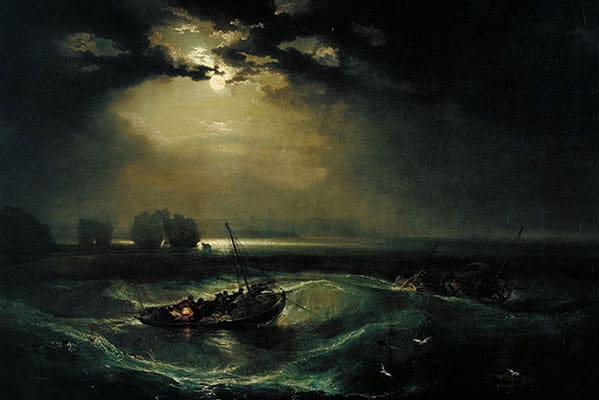
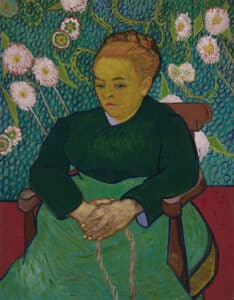
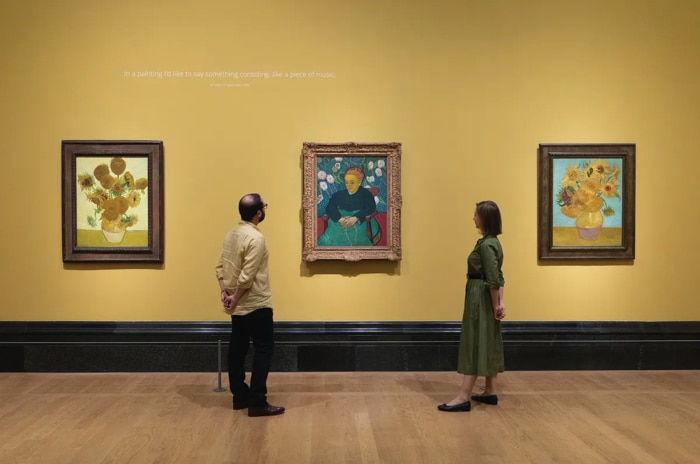
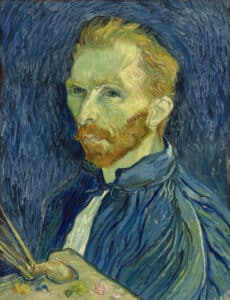
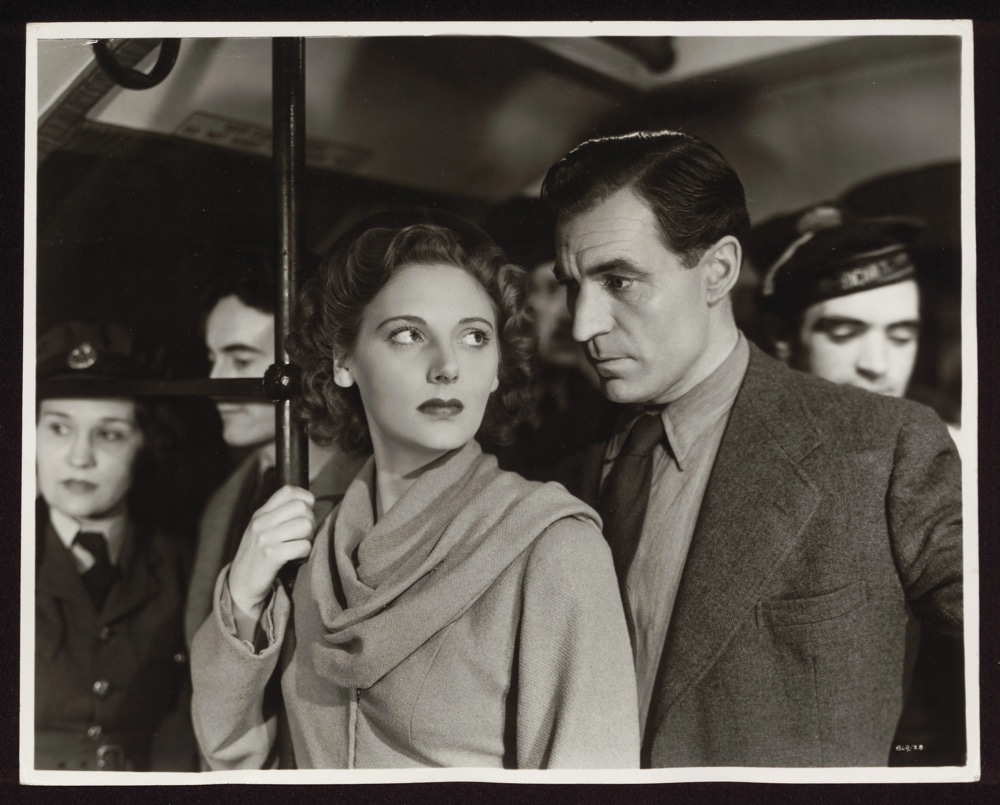
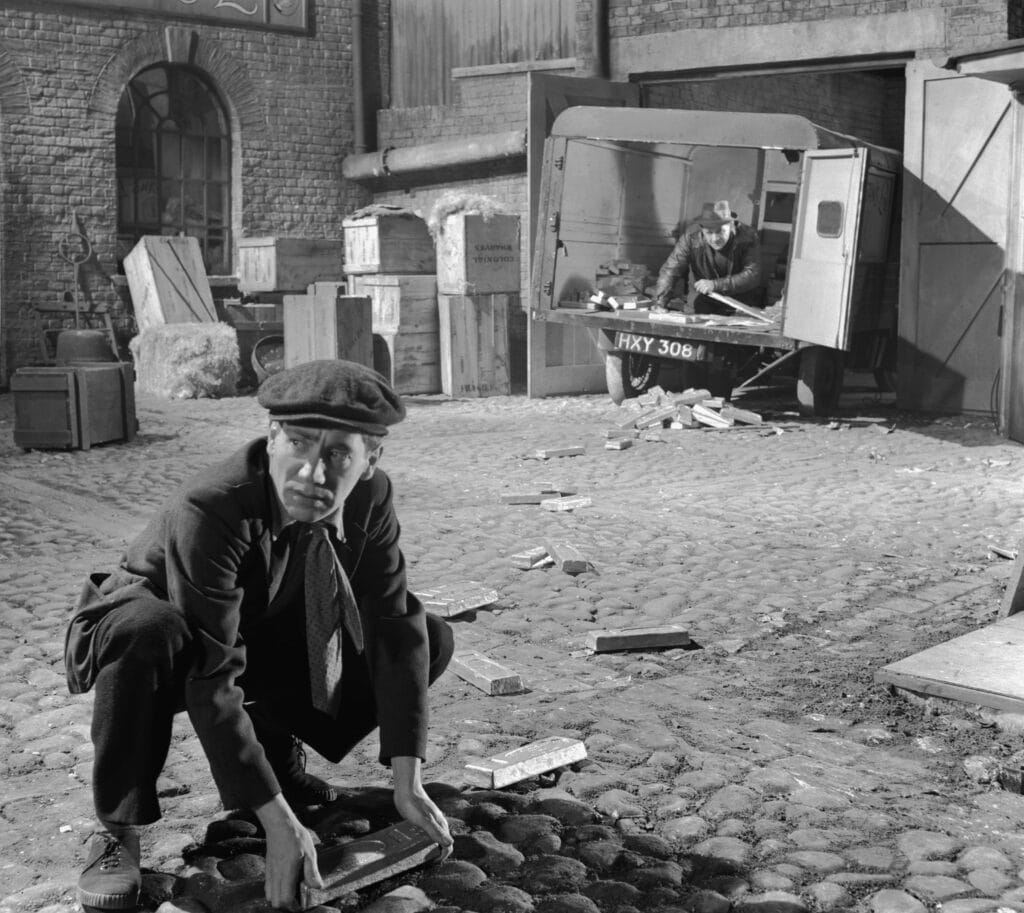

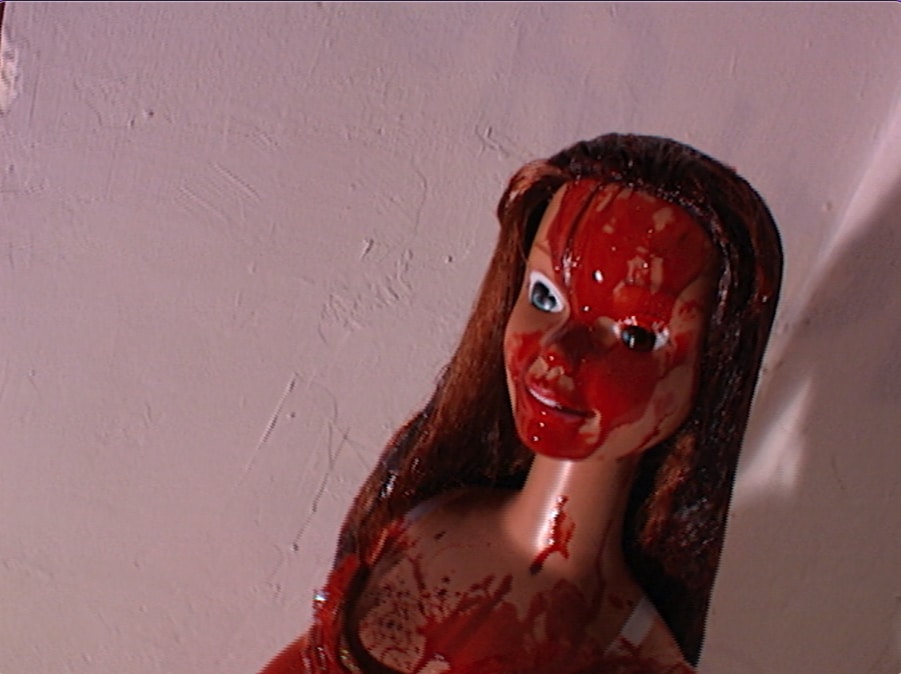
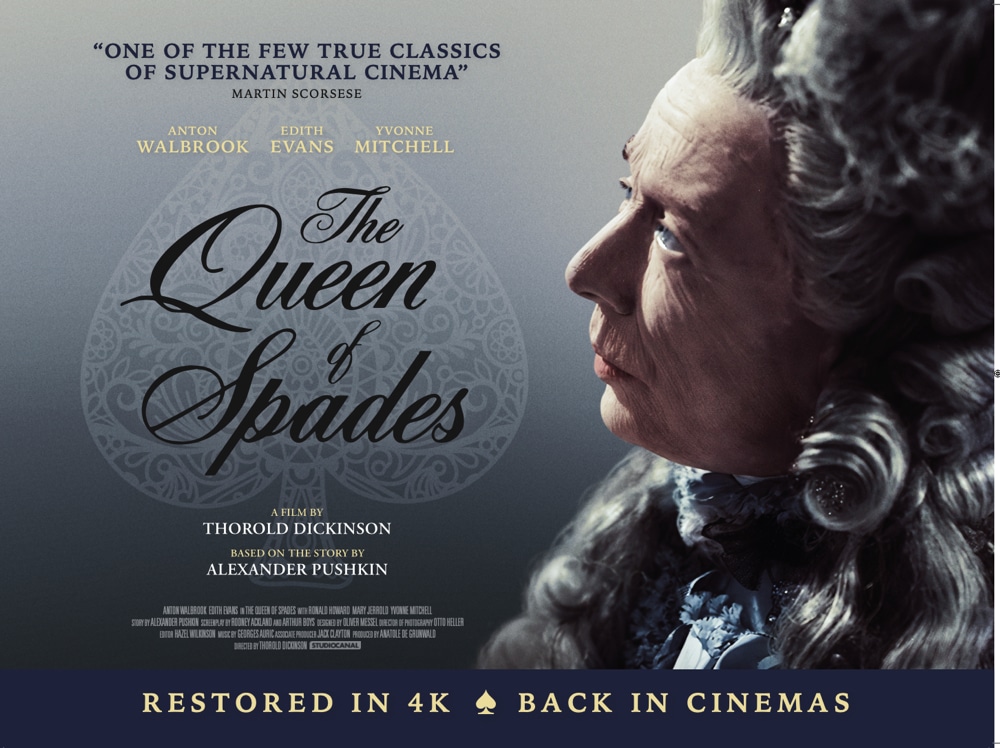
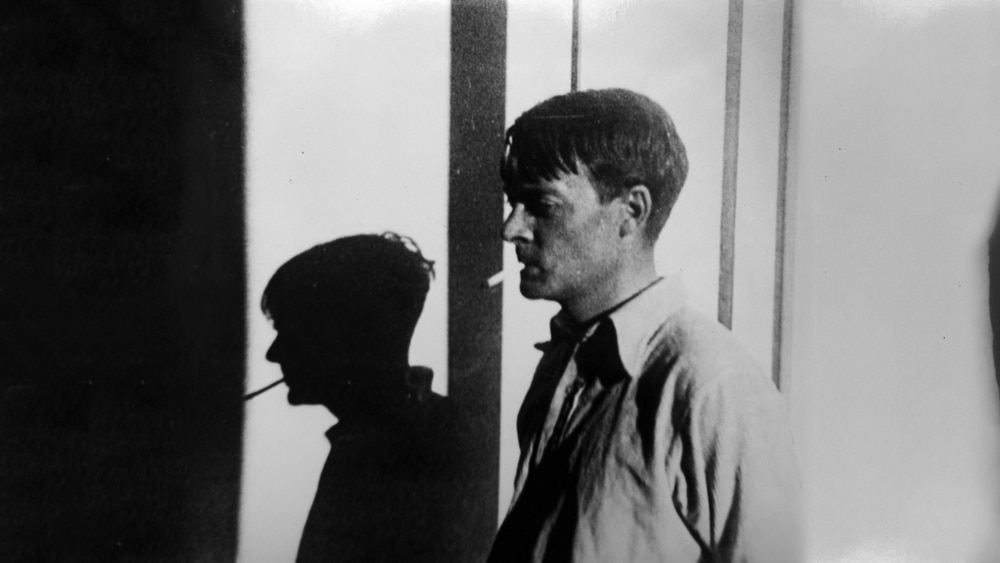
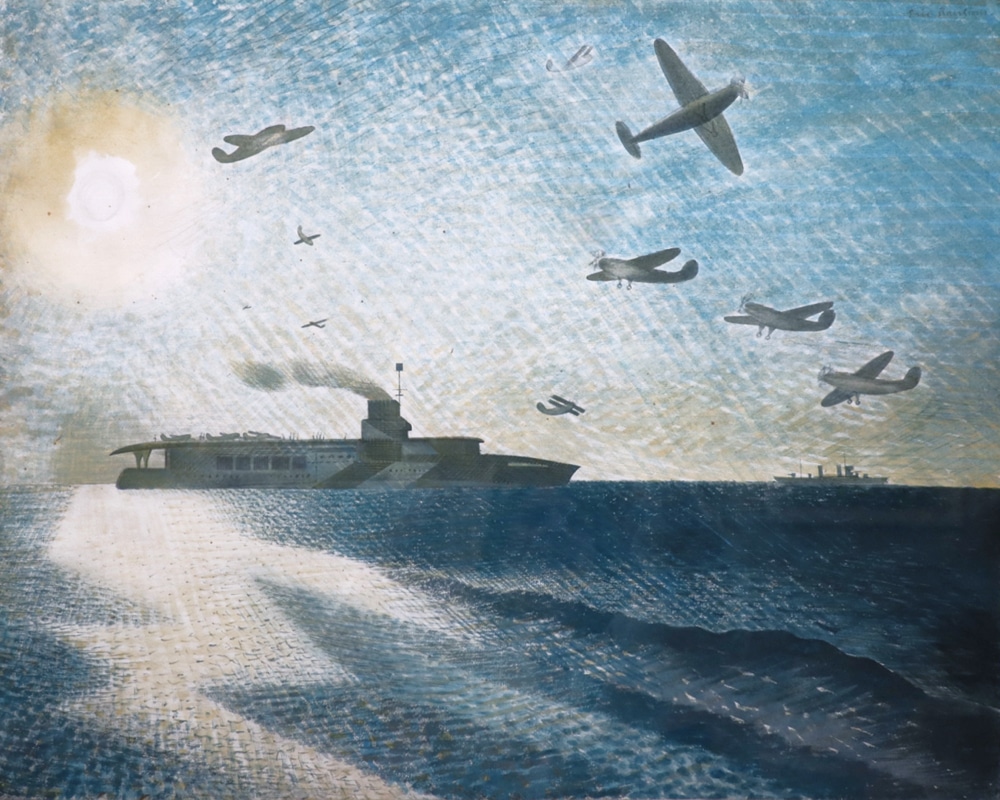
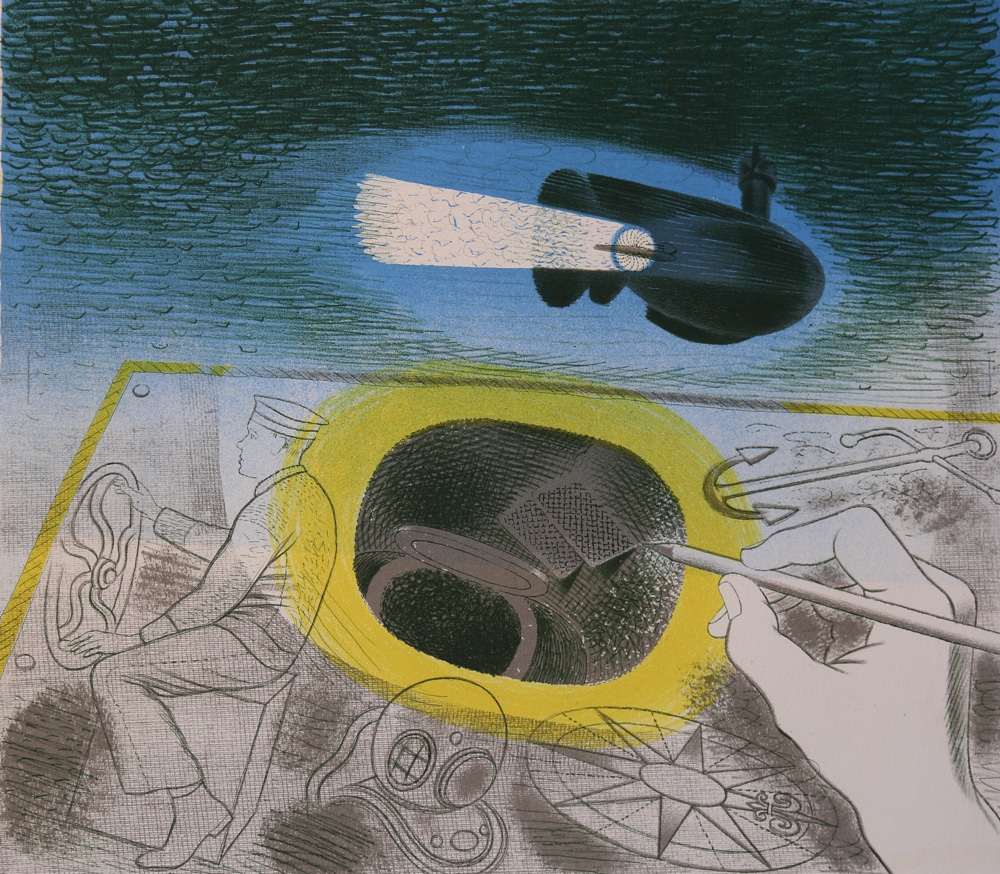

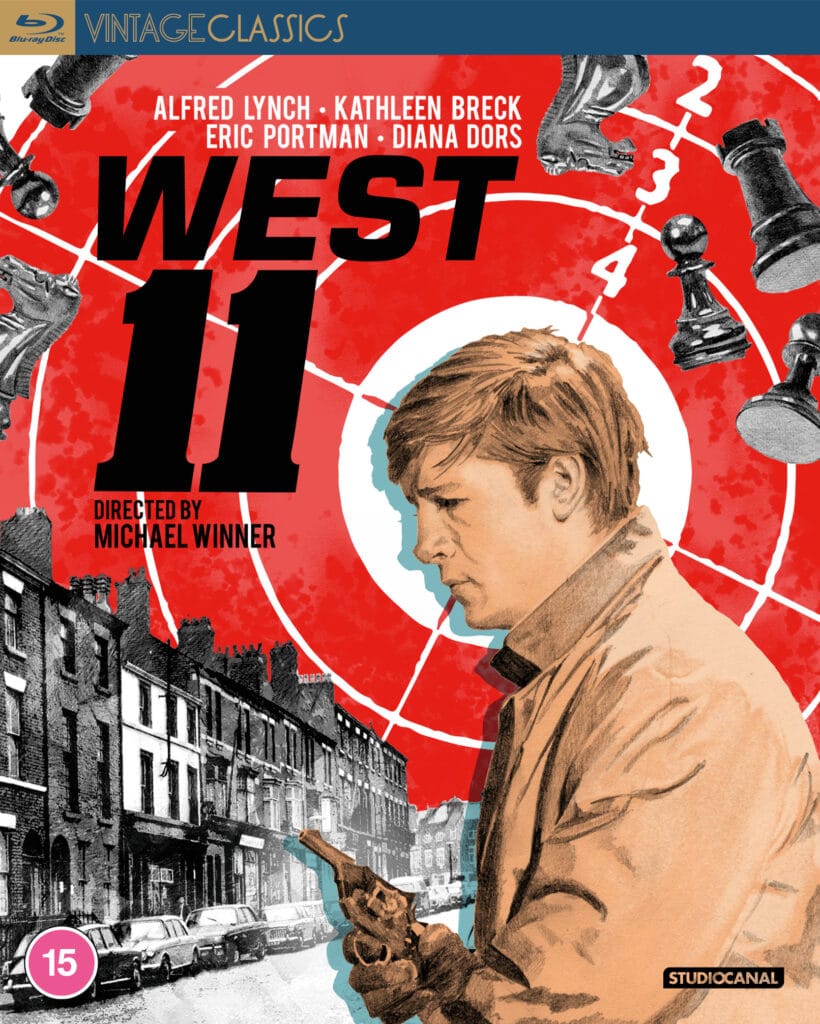
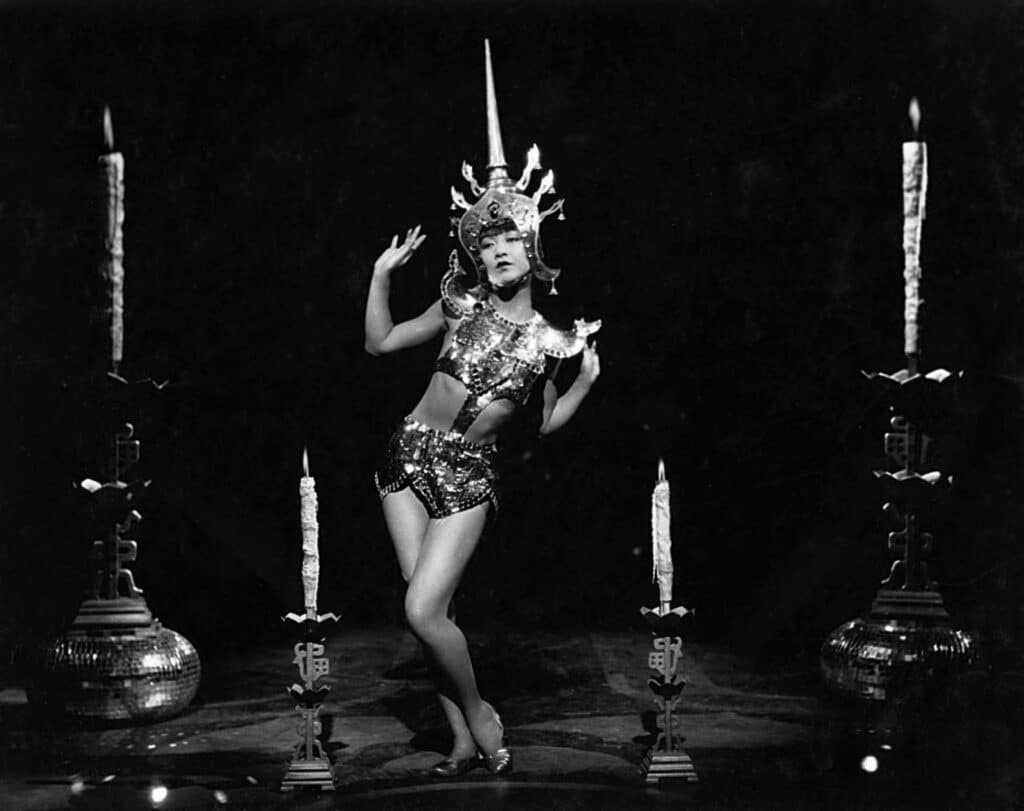
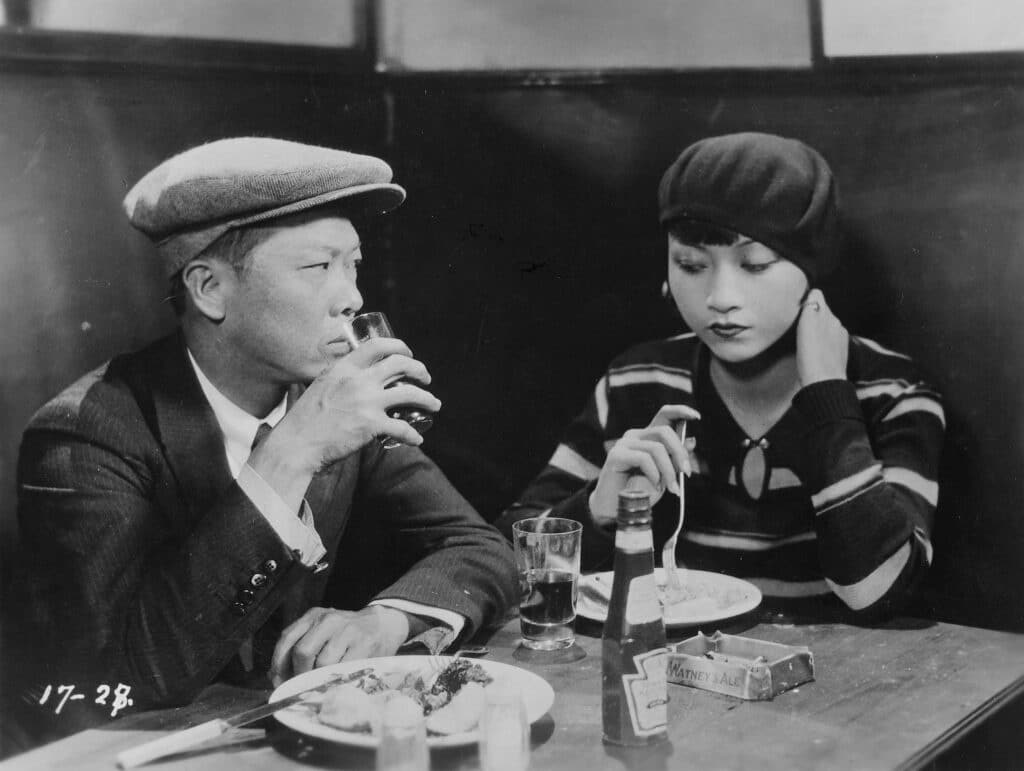
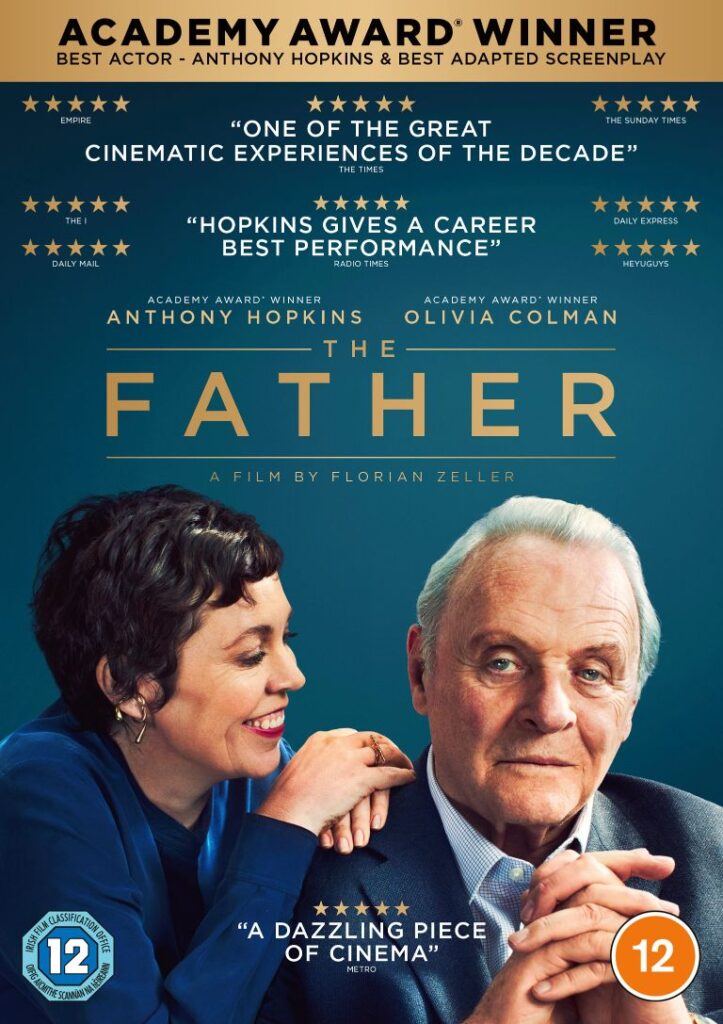
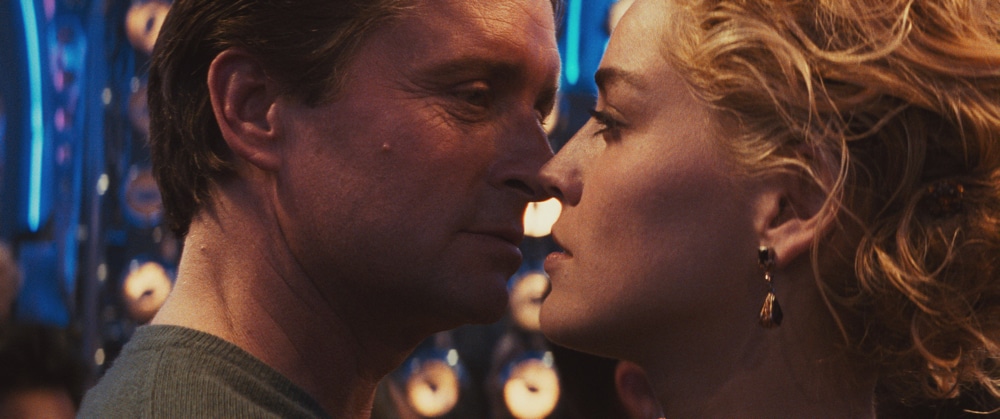
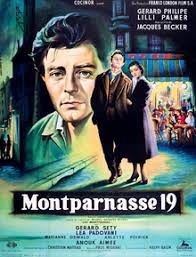
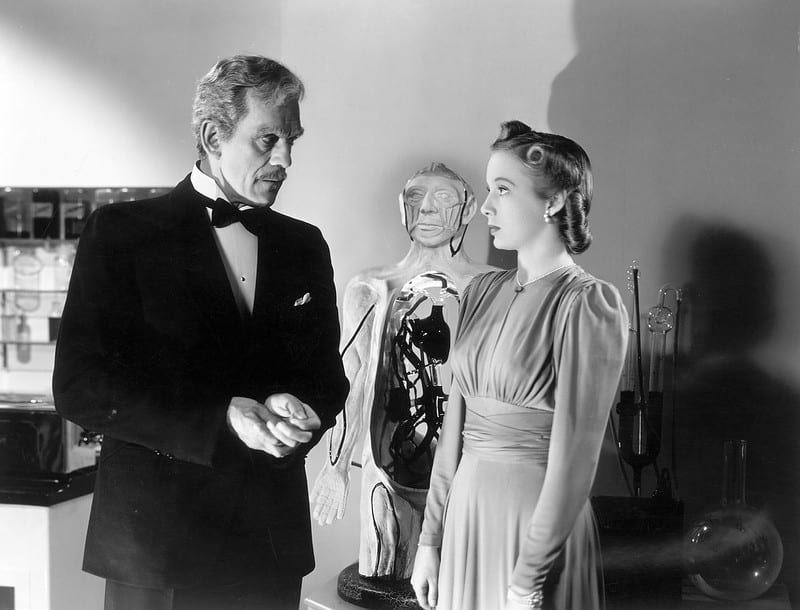
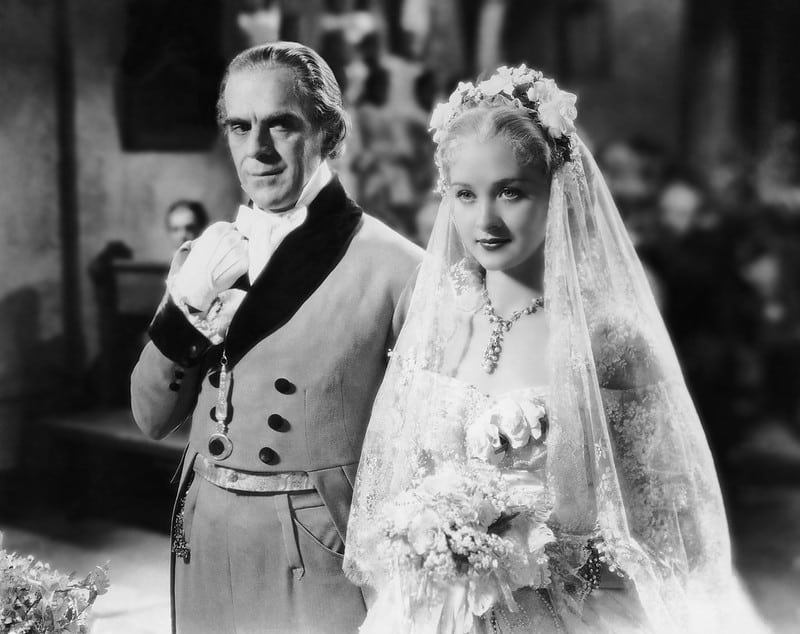
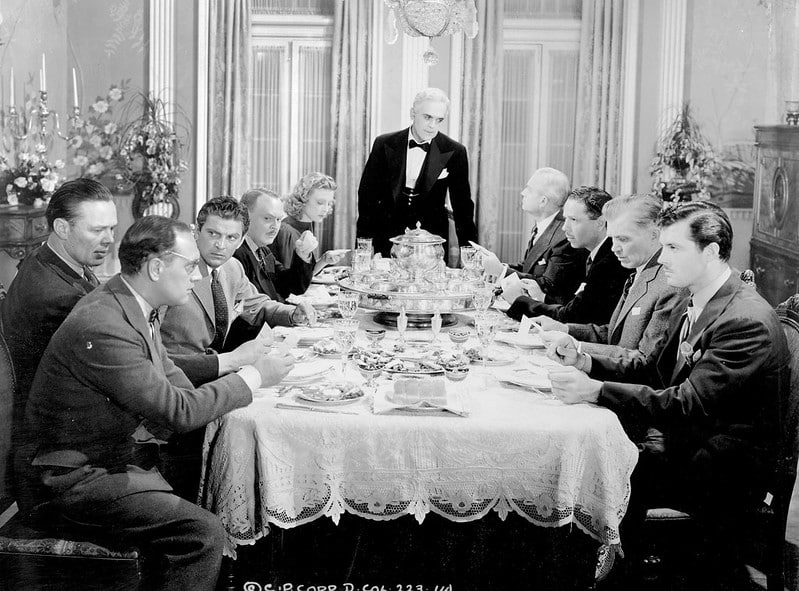
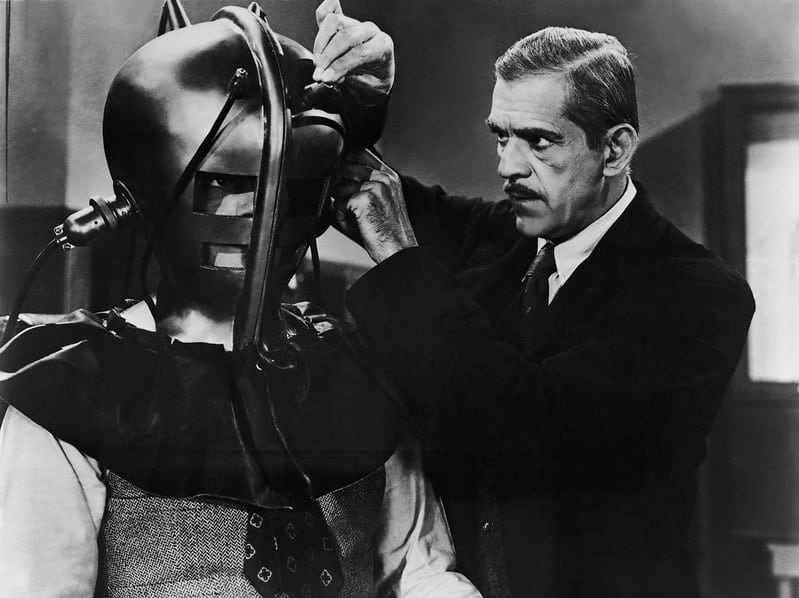
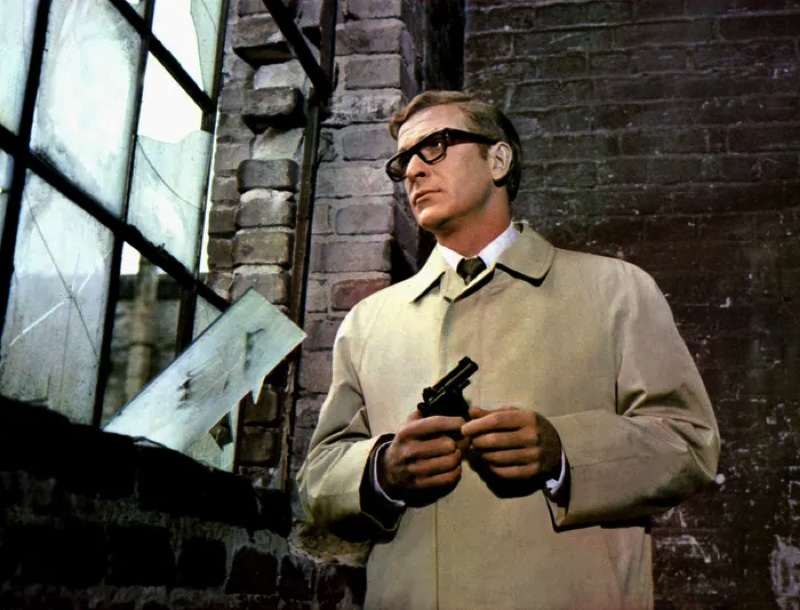
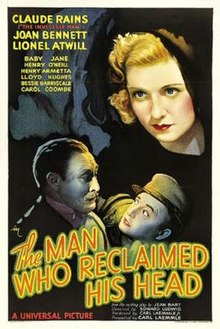
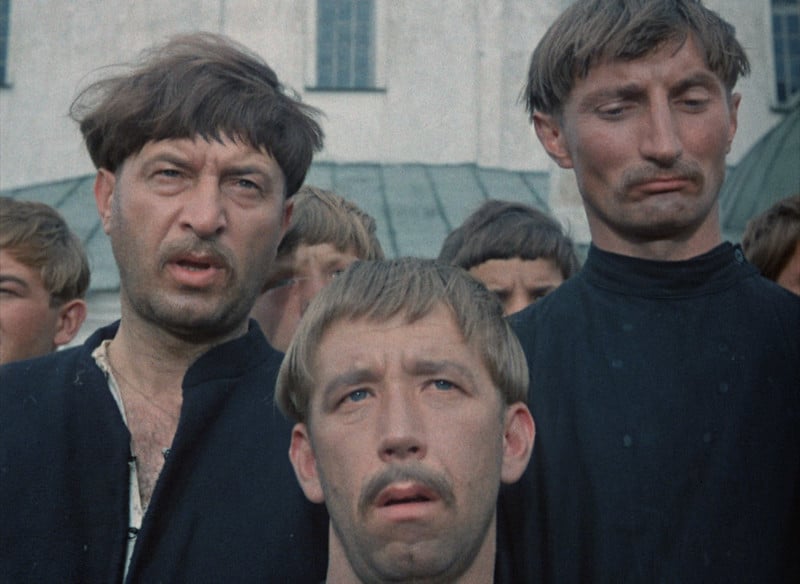
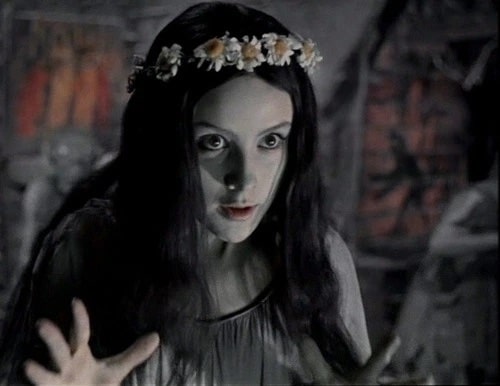
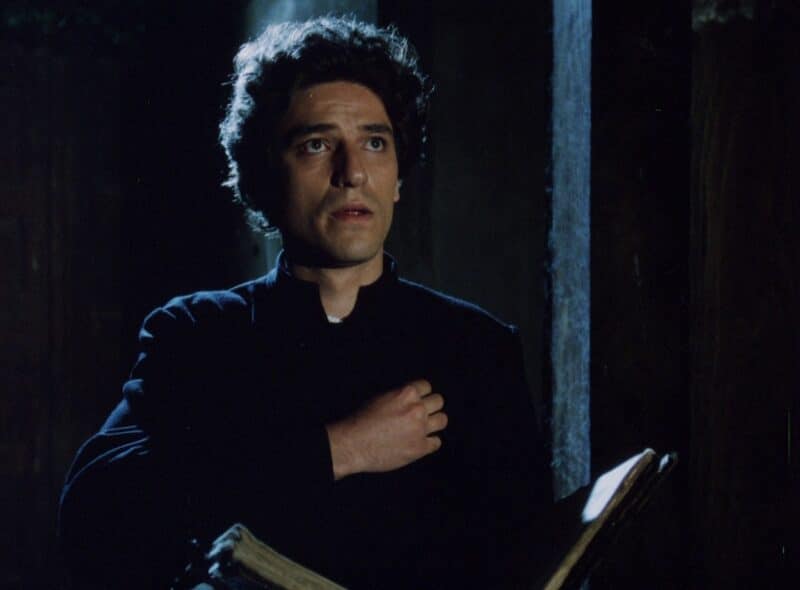
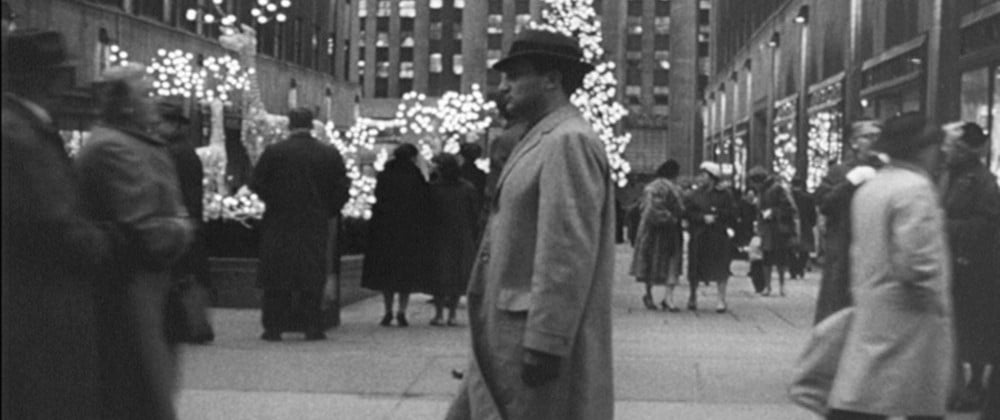
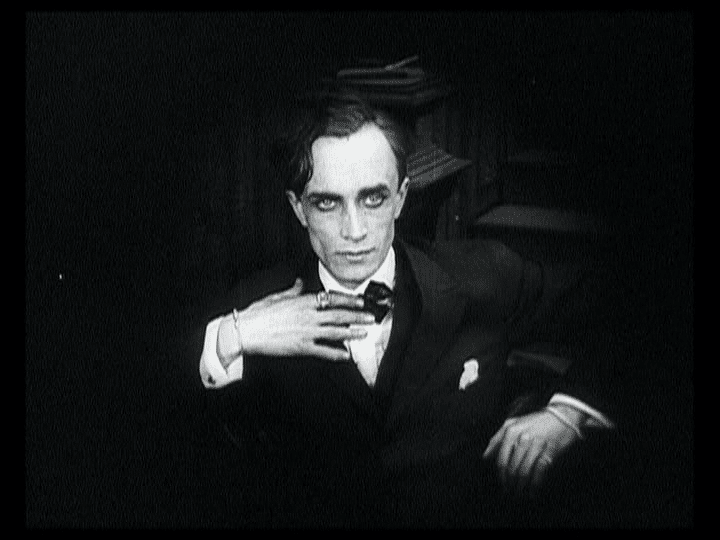
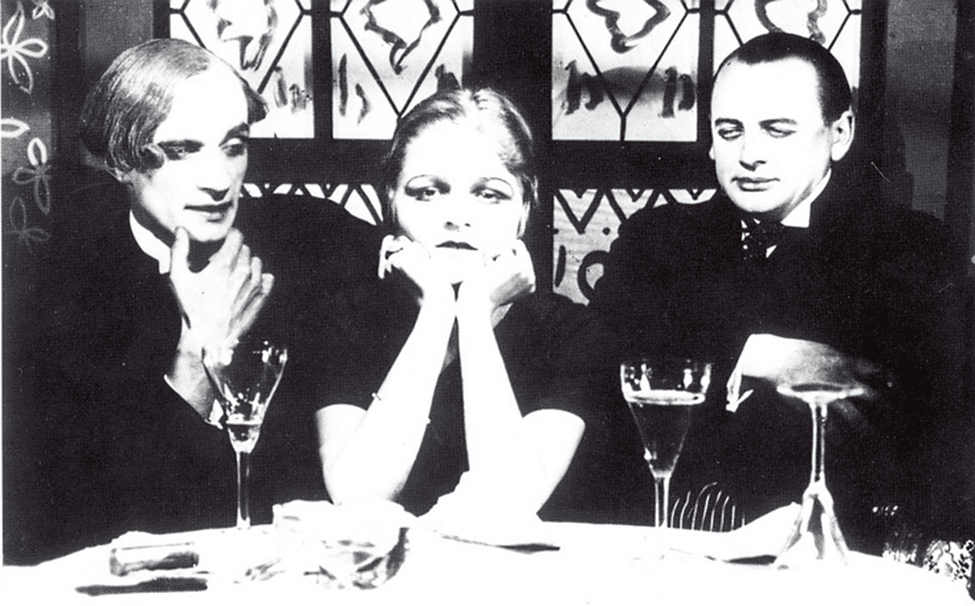
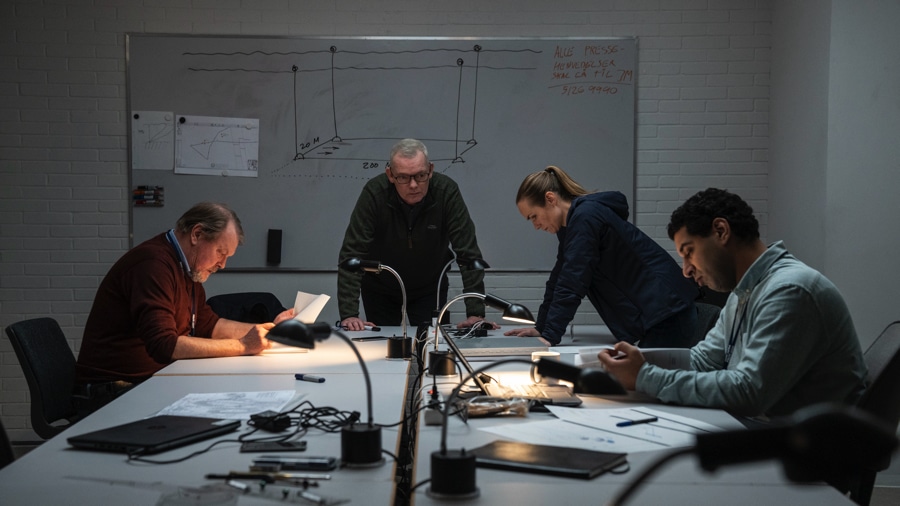

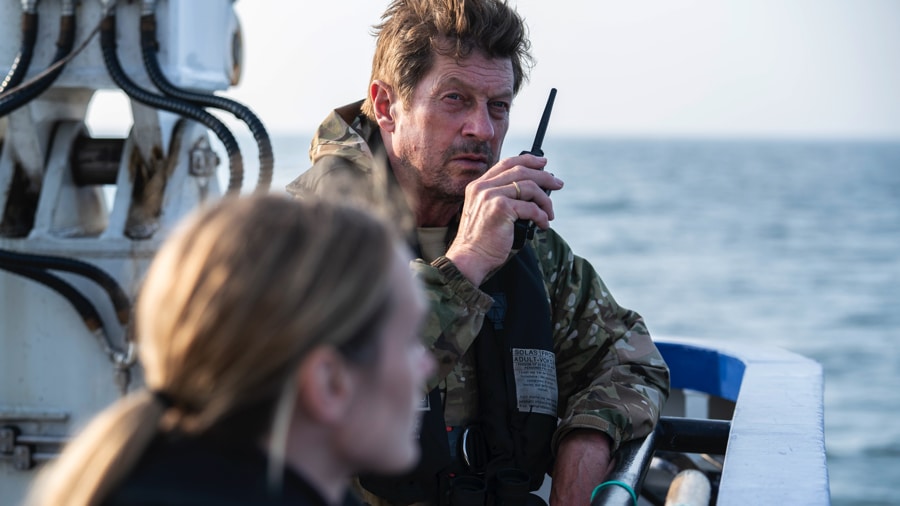
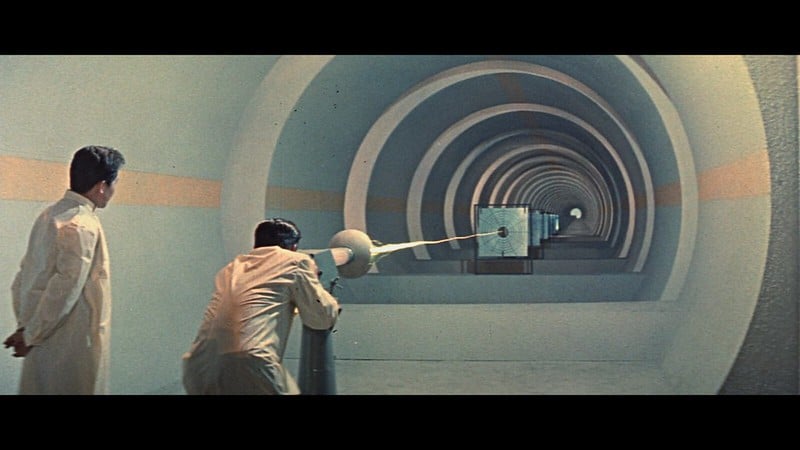
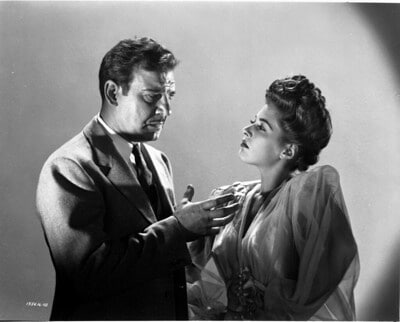
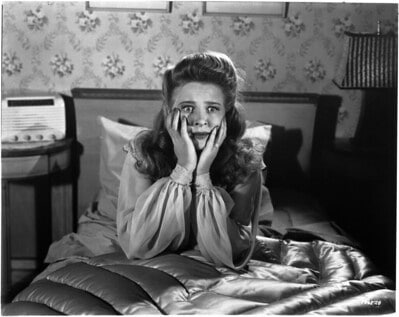
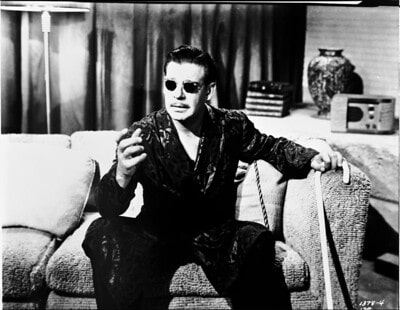
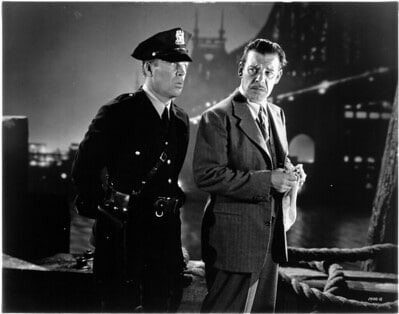
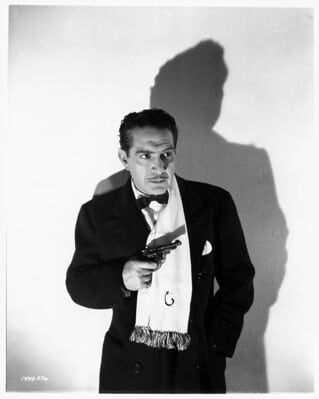
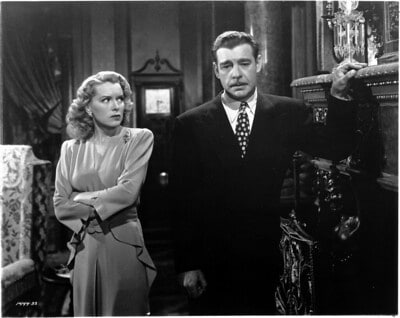
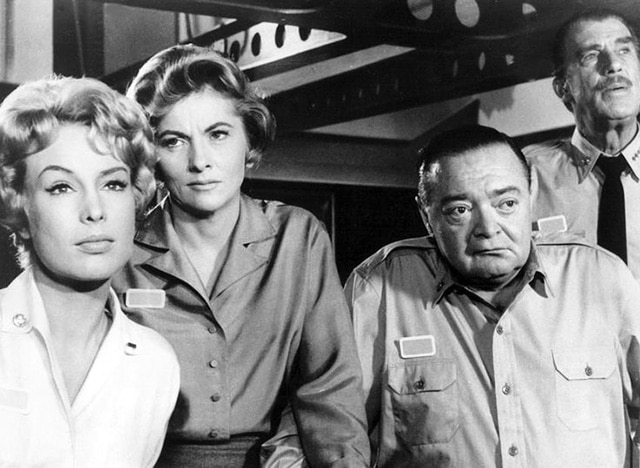
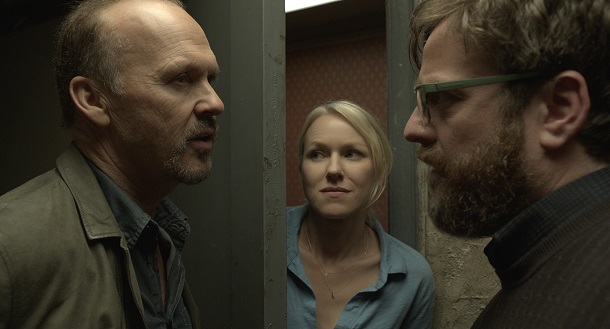
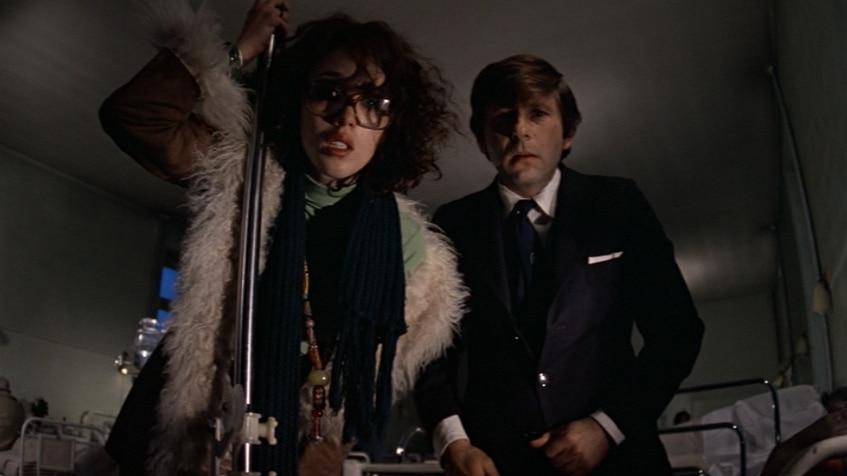

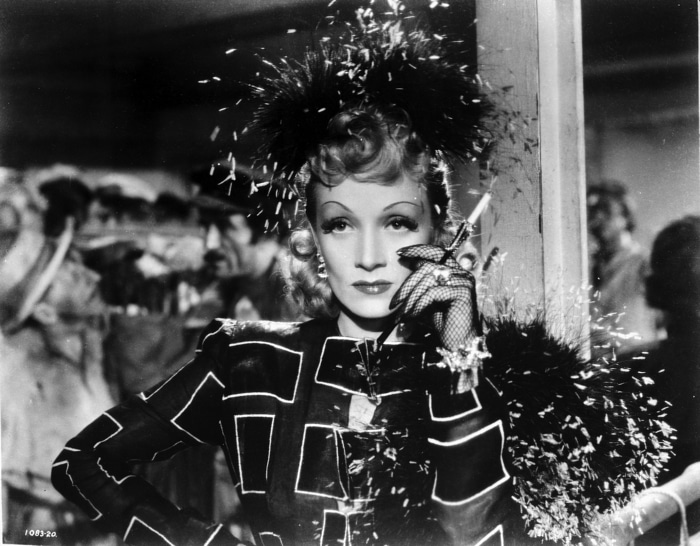
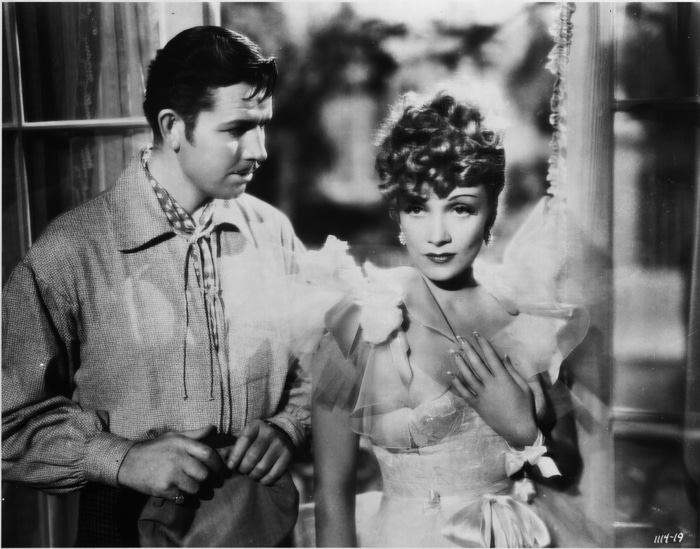
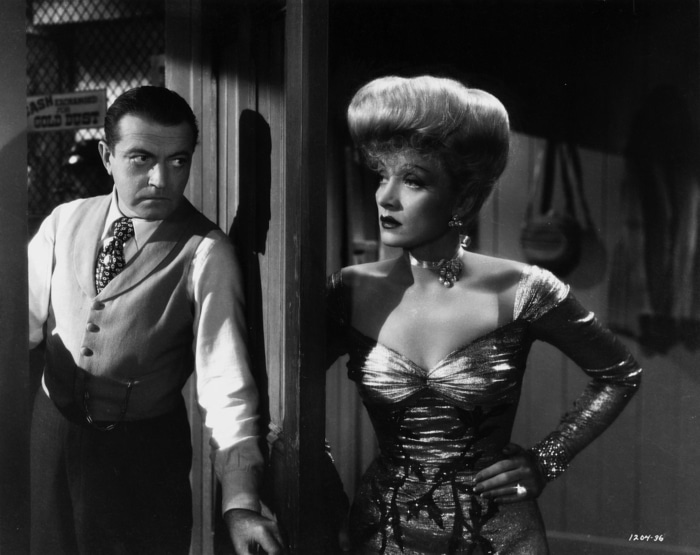
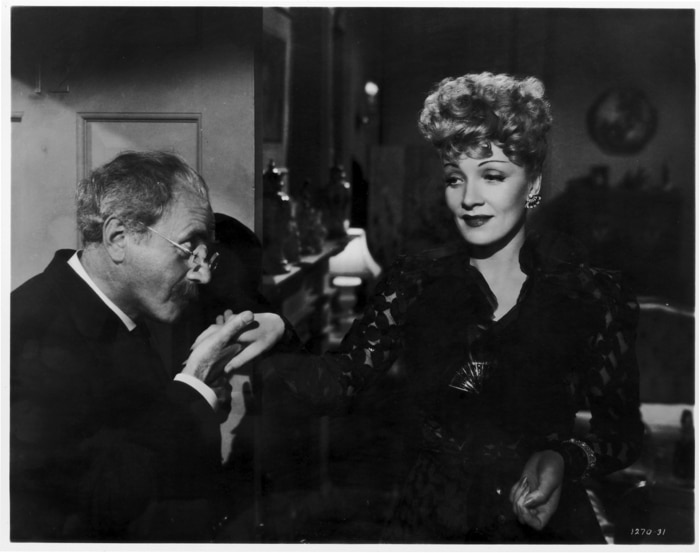
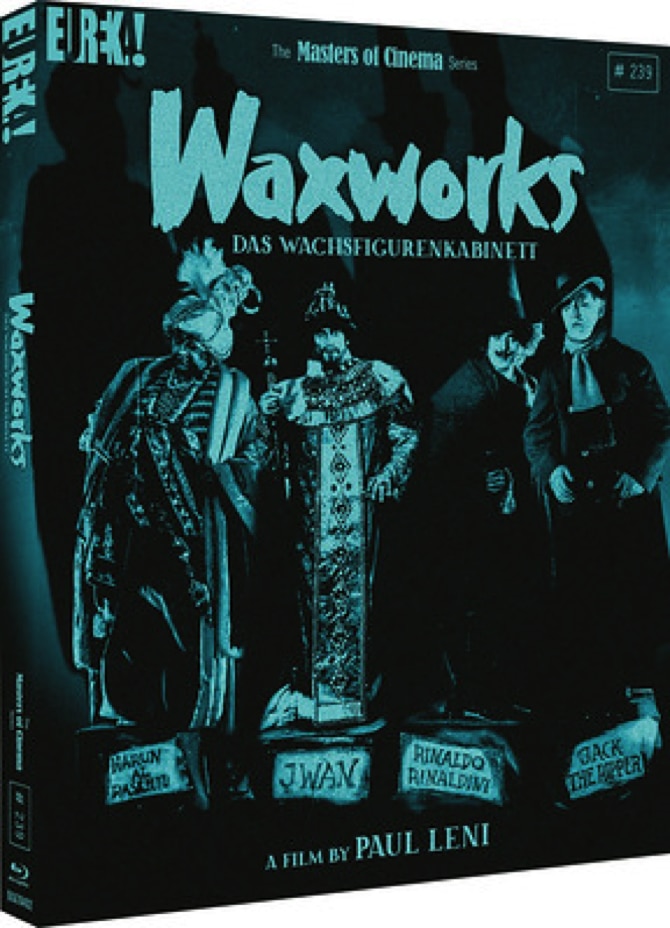
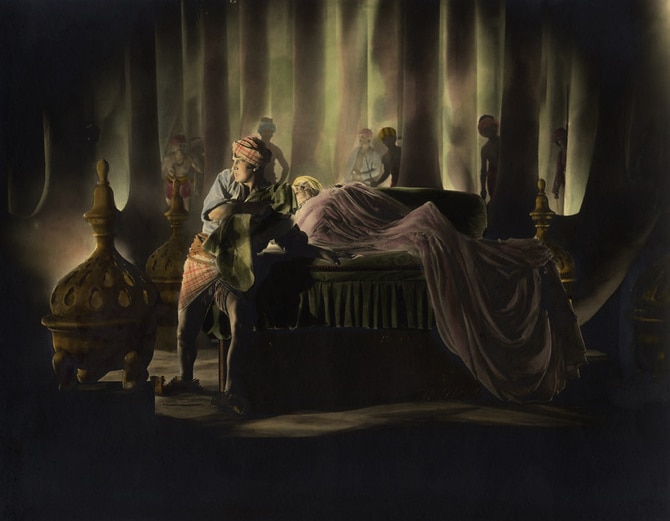
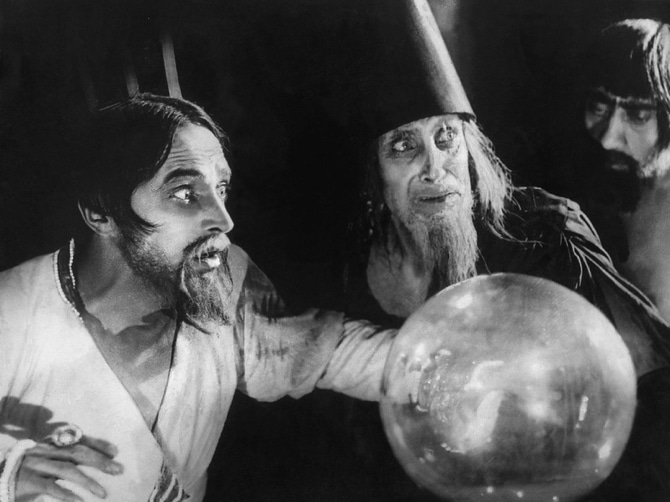
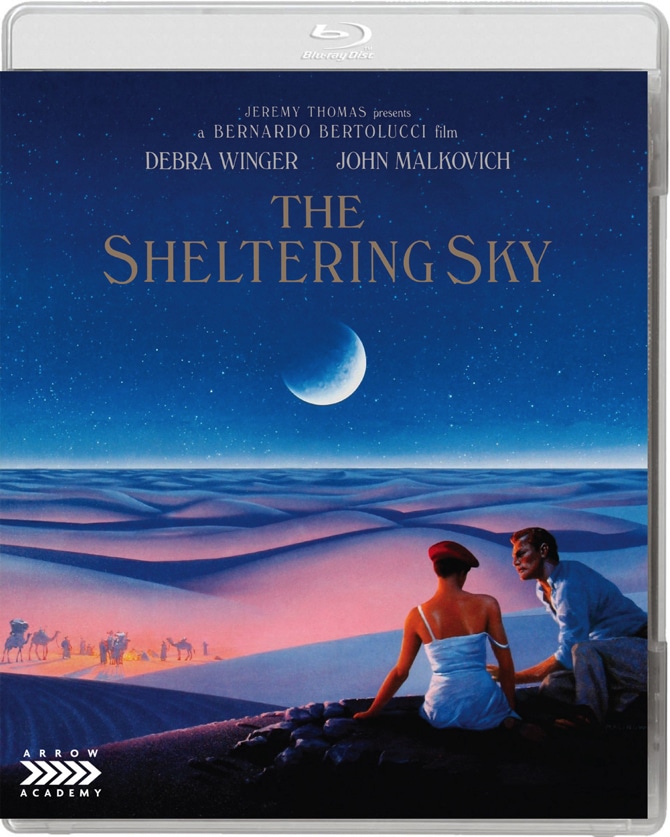
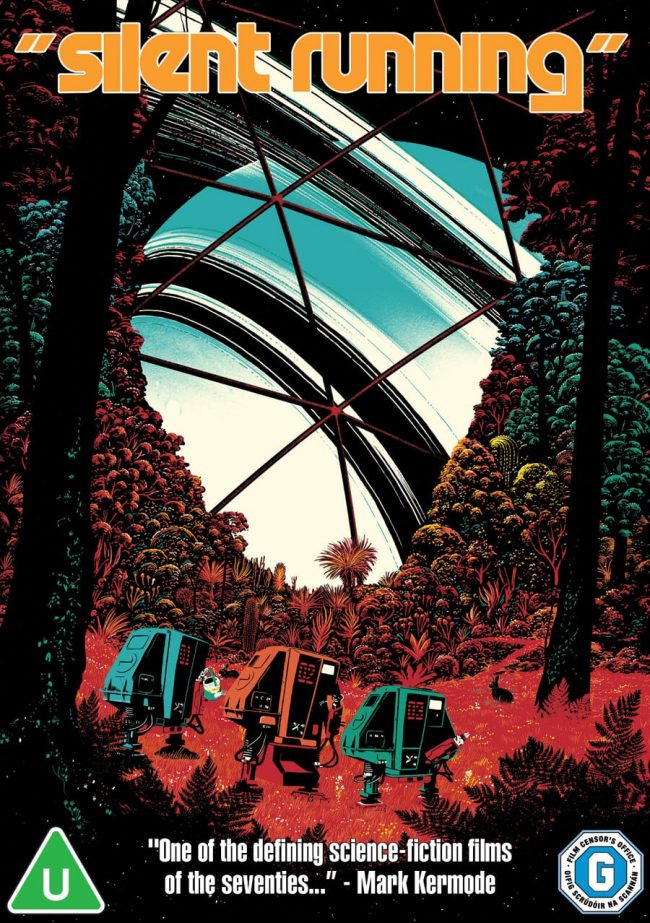
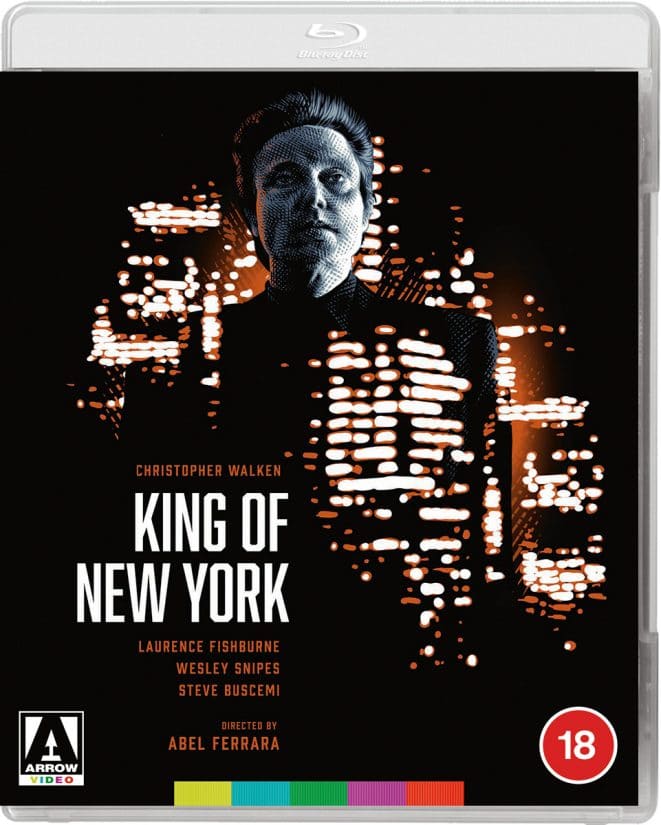
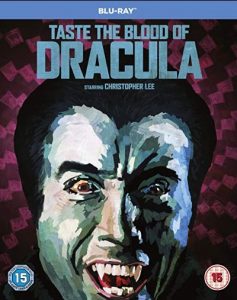 Atmospherically directed by Hungarian Peter Sasdy, and adapted for the screen by Anthony Hinds – stepping in due to budgetary constraints under the pseudonym of John Elder (he told his neighbours he was a hairdresser to avoid publicity throughout his entire career) this outing actually broadens the storyline into a damning social satire of Victorian repression and upper class ennui. The eclectic cast has Christopher Lee, Geoffrey Keen and Gwen Watford and sees three distinguished English gentlemen (Keen, Peter Sallis and John Carson) descend into Satanism, for want of anything better to do, accidentally killIng Dracula‘s sidekick Lord Courtly (Ralph Bates), in the process. As an act of revenge the Count vows they will die at the hands of their own children. But Lee actually bloodies the waters in the second half, swanning in glowering due to his lack of a domineering role in the proceedings.

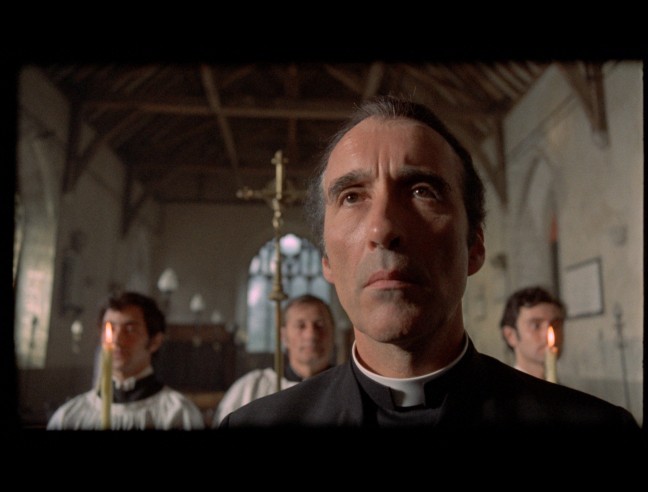
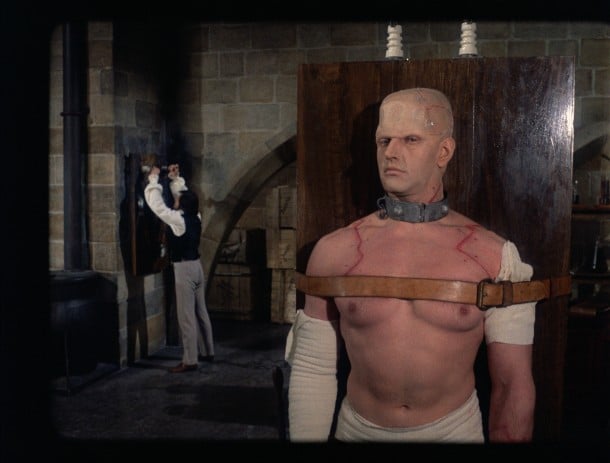
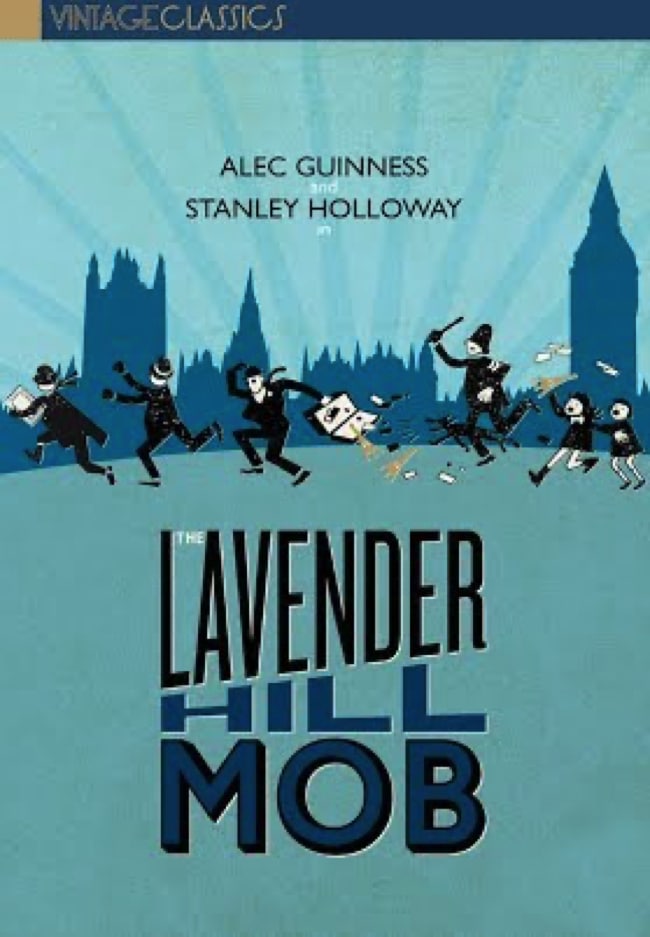
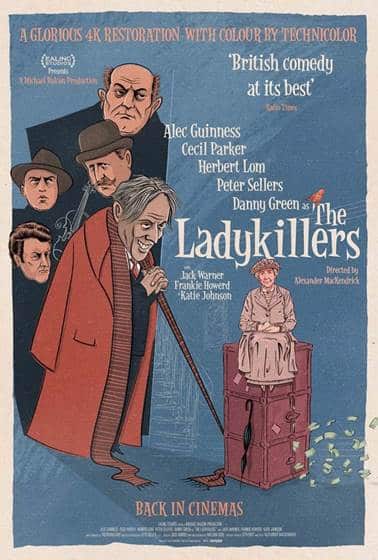
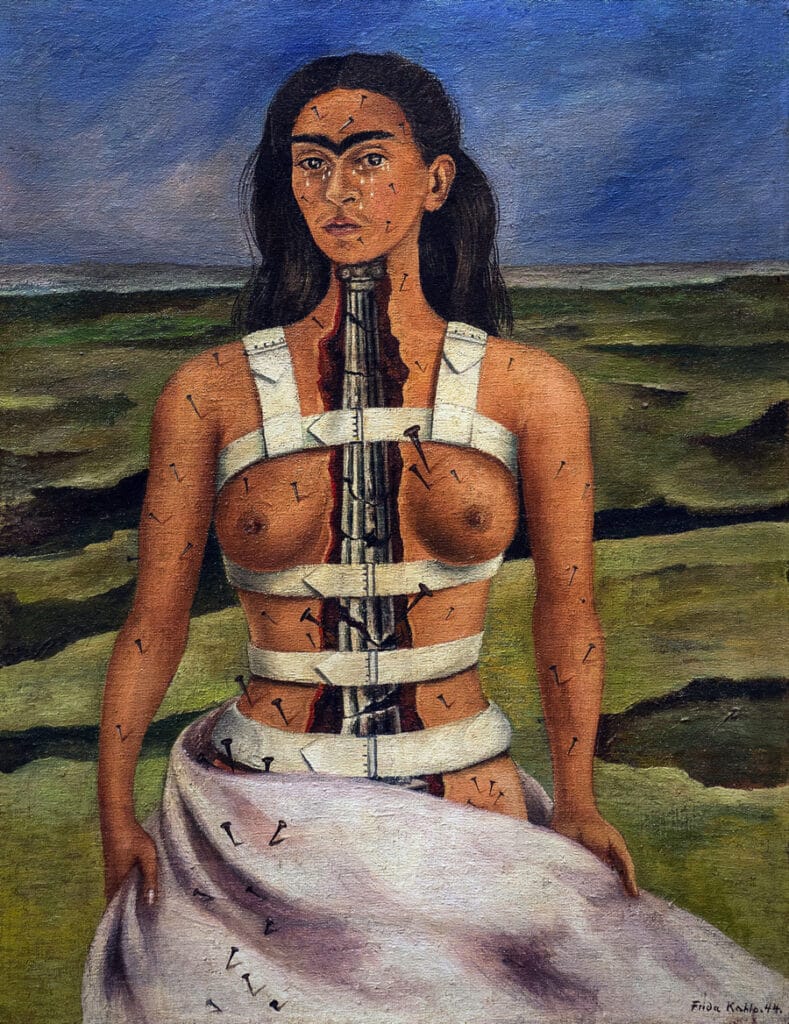
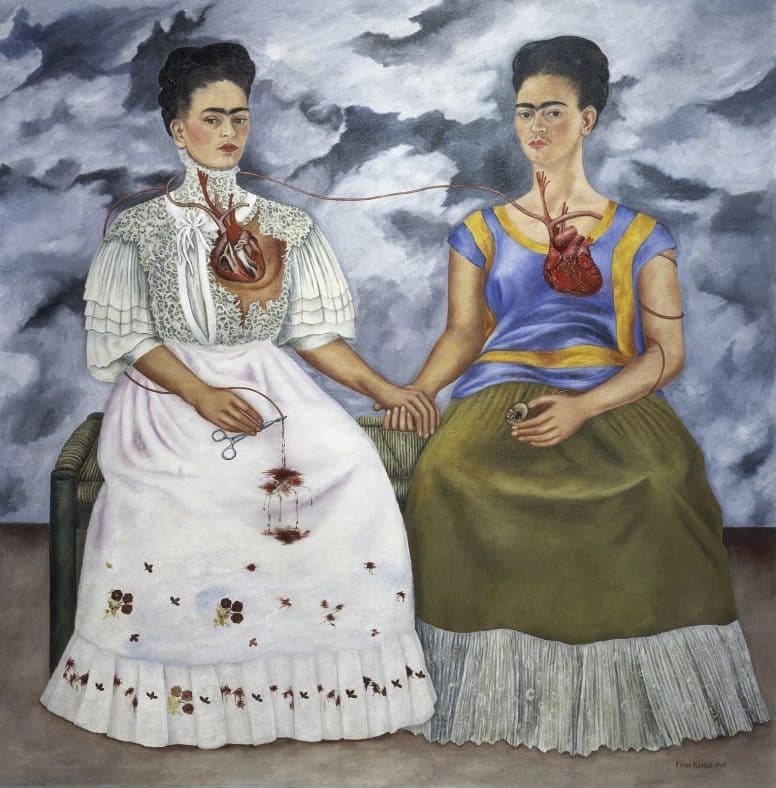
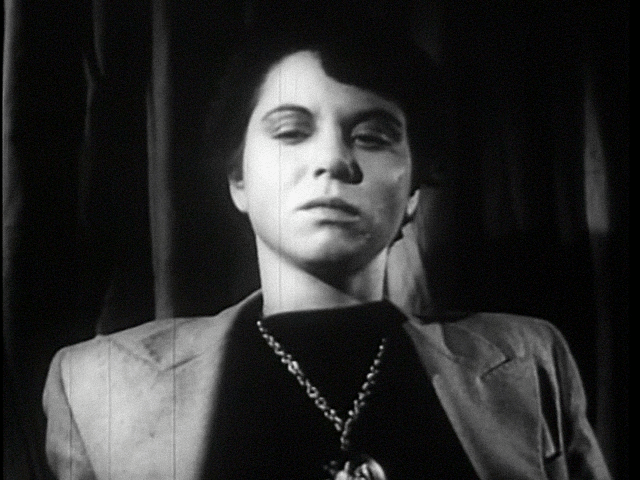
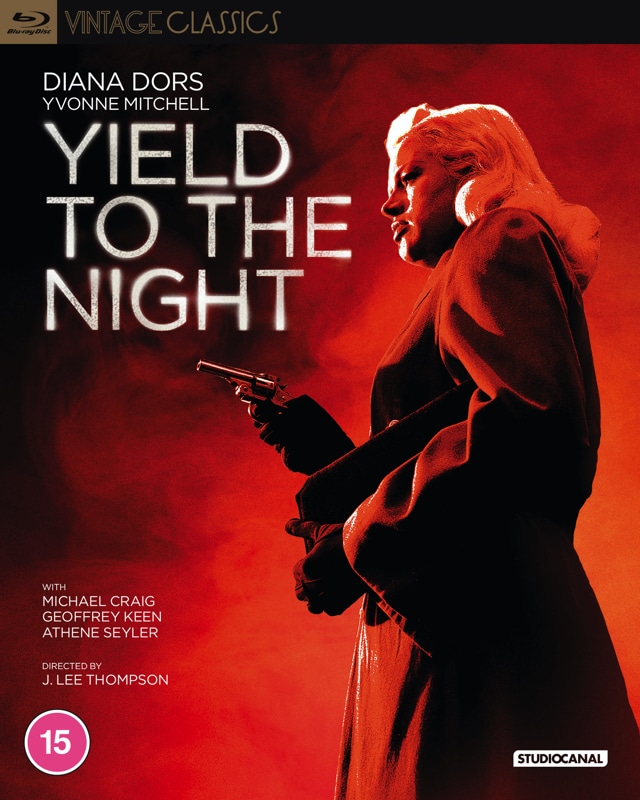
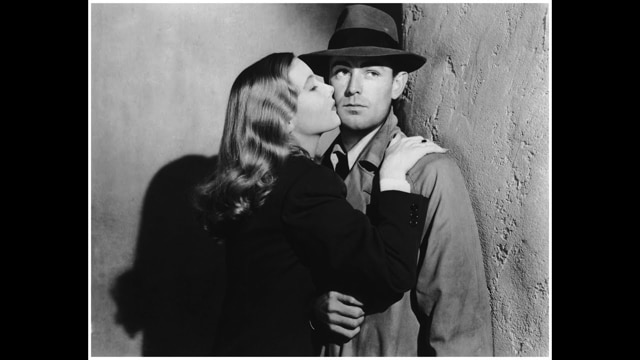
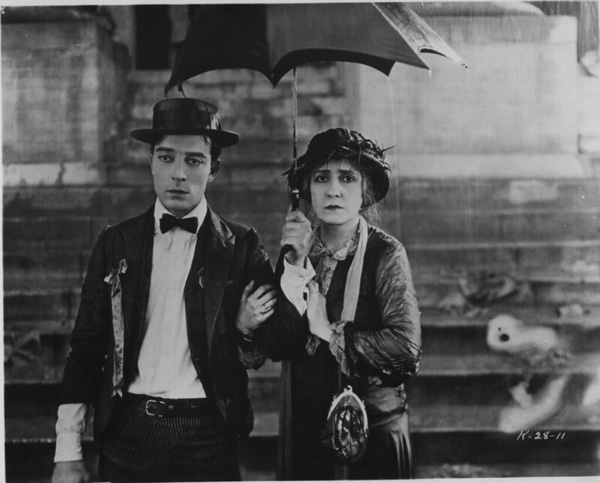
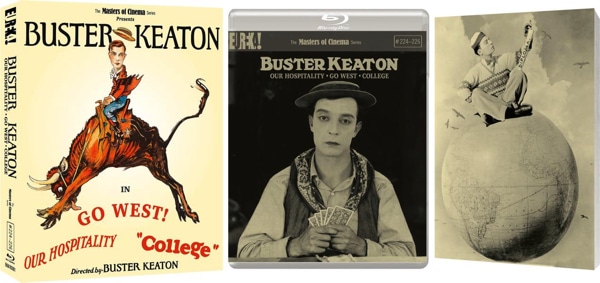
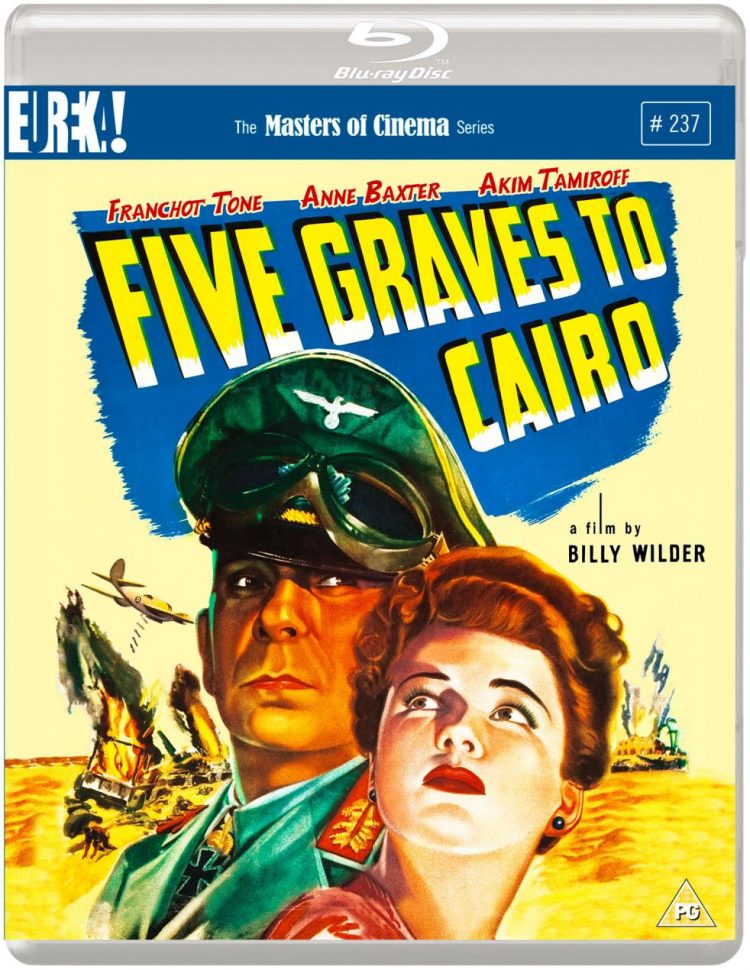

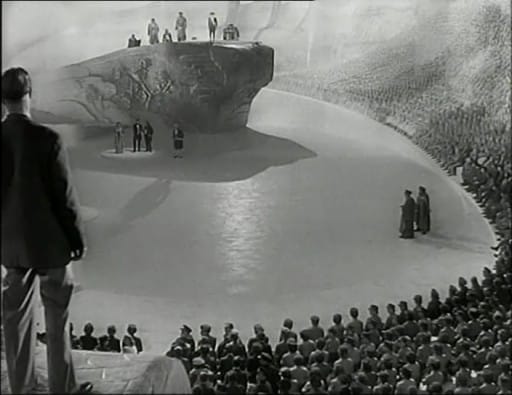
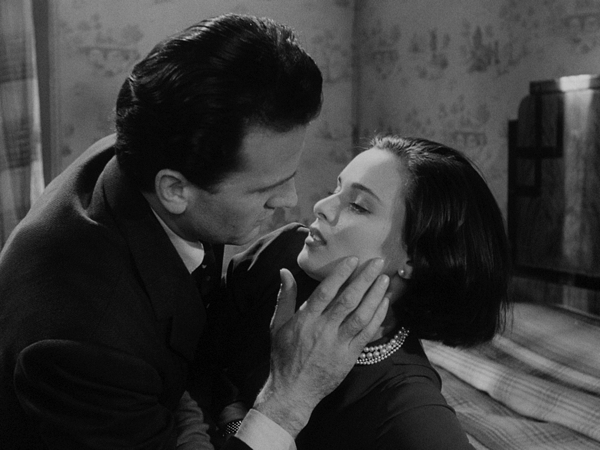
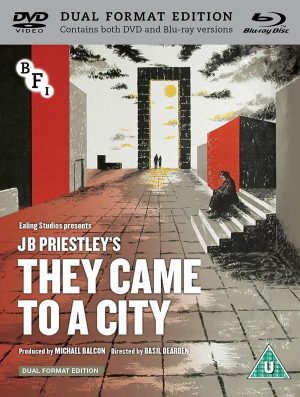
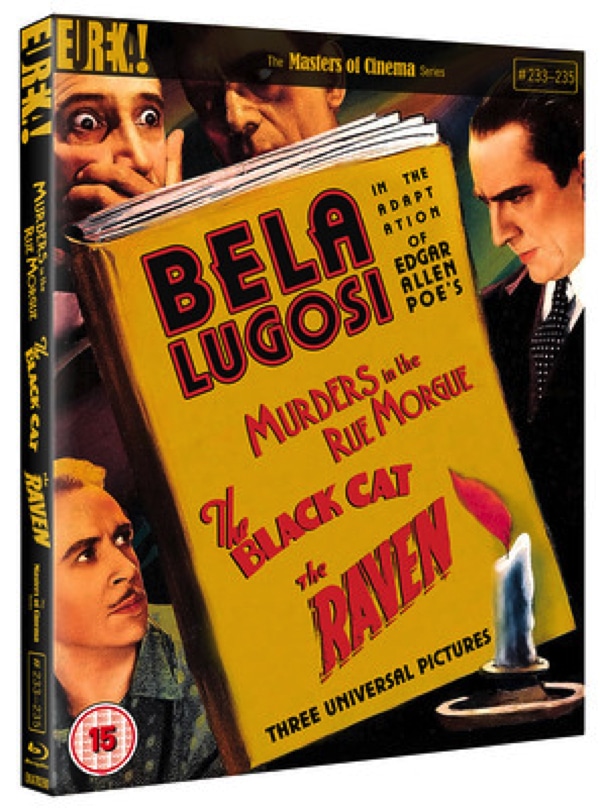
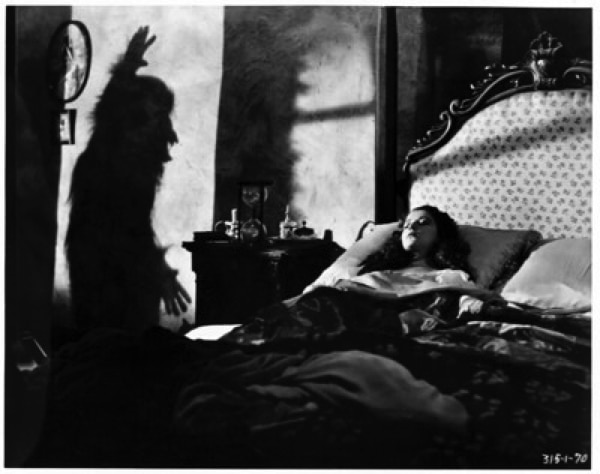
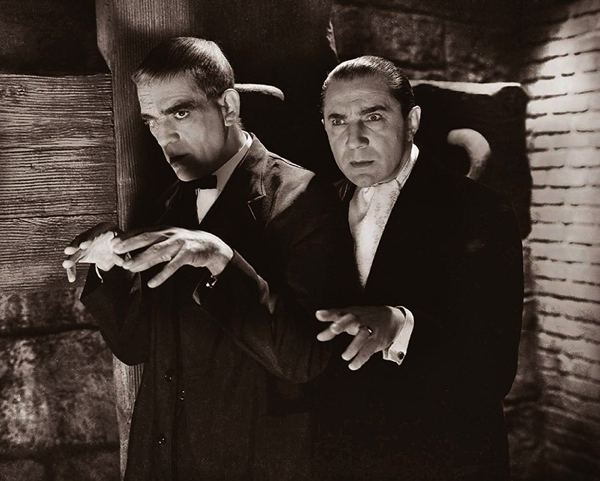
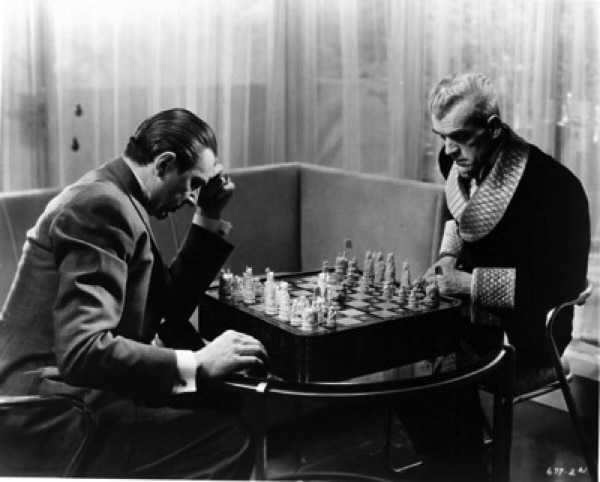
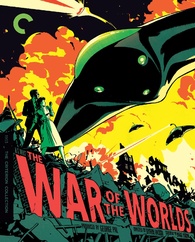 Although a brash travesty of H.G.Wells’ original 1898 novel, and despite Steven Spielberg’s 2005 ‘upgrade’ and last autumn’s well-received TV version, George Pal’s original big screen version is still for many the last word in fifties Technicolor destruction on the grand scale (blessed as John Baxter described it with “the smooth unreality of a comic strip”).
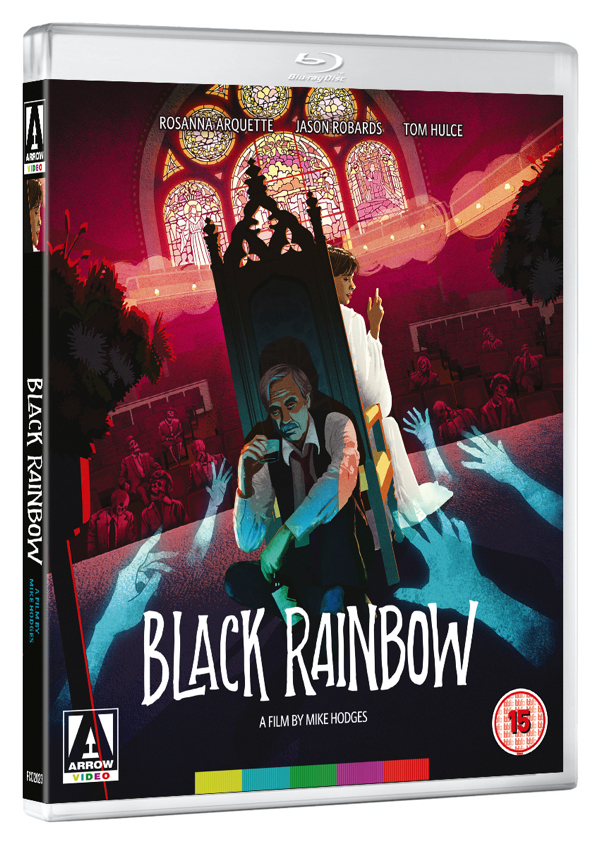 Rosanna Arquette shines as a clairvoyant on tour with her father (Jason Robards) in this supernatural curio from undervalued English director Mike Hodges.
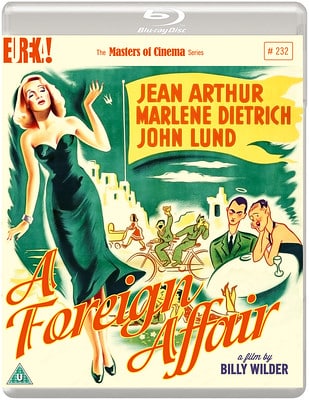 Shot in post war Berlin, the ruins of the divided capital a startling sign of the times, A Foreign Affair reunited Billy Wilder (1906-2002) with his star Marlene Dietrich. Both had met in Berlin in 1929, when Wilder interviewed Dietrich, who had a part in George Kaiser’s musical revue ‘Two Ties’ – the same year Wilder collaborated with Robert Siodmak and Fred Zinnemann (among others) for
 The inspirational tenet of the Cistercian monks is simplicity. Life in a monastery is not an escape route from the world. Apart from running the monastery and brewing, the monks lives are spent in deep contemplation, silencing their minds and stripping back their own desires and thoughts and offer themselves to God in prayer. Not to be confused with meditation that has as its focus green fields, beaches or or the next holiday: the monks are taught to empty their minds so as to make room for God’s presence. Their existence is enriched by the simplicity of their lives and not their material wealth.
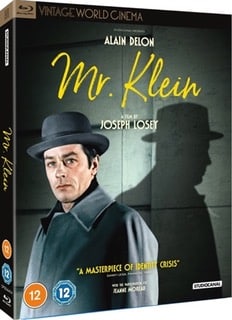
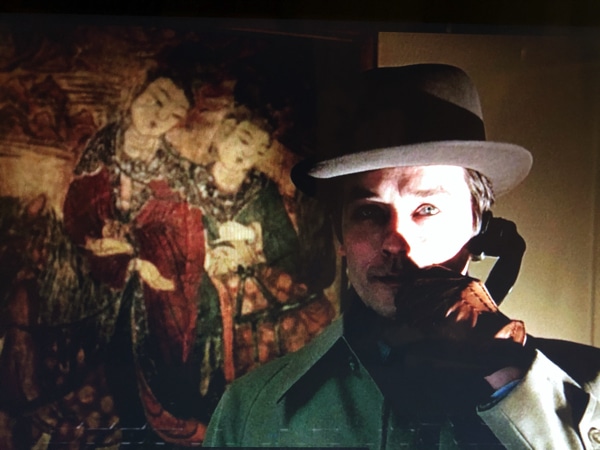 Elliptical in nature, in the same way as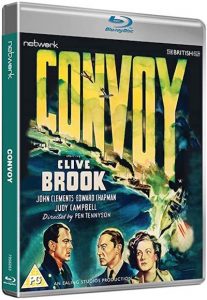
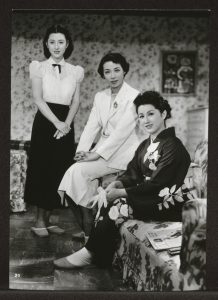 The Flavour of Green Tea Over Rice tells the story of a marriage slowly imploding as Japan shifts into the modern world from its pre war traditions.
 Dirty weekends don’t come any dirtier than the one in this ferocious indie revenge thriller that has ravishing locations, a twisty storyline, and a female lead who is not just a pretty face.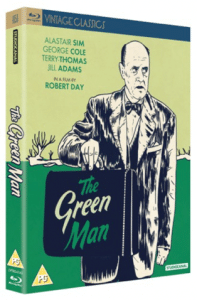
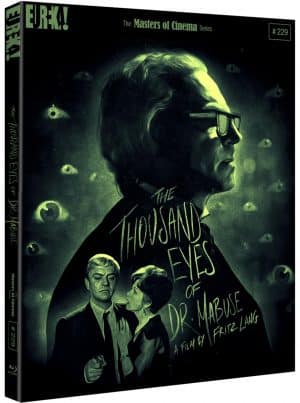 Dir.: Fritz Lang; Cast: Peter van Eyck, Dawn Addams, Gert Fröbe, Werner Peters, Wolfgang Preiss, Lupo Prezzo, Reinhard Kolldehoff; Germany/Italy/France 1960, 103 min.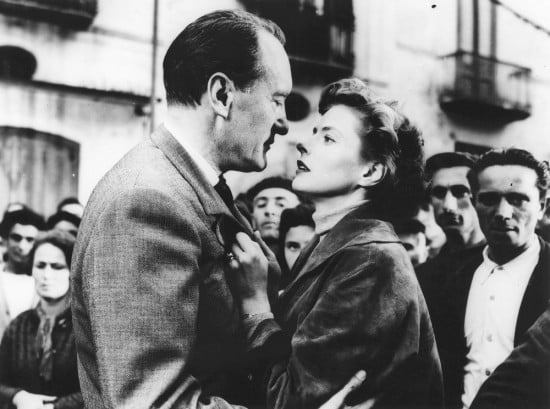
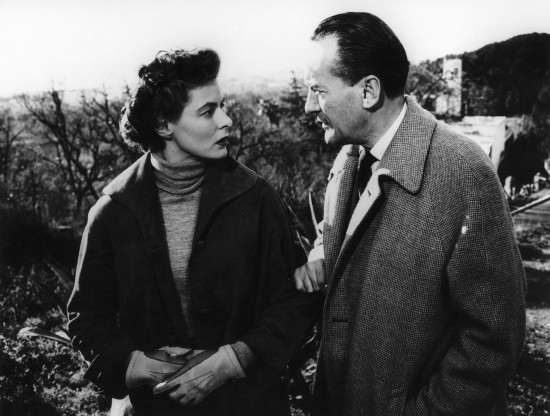
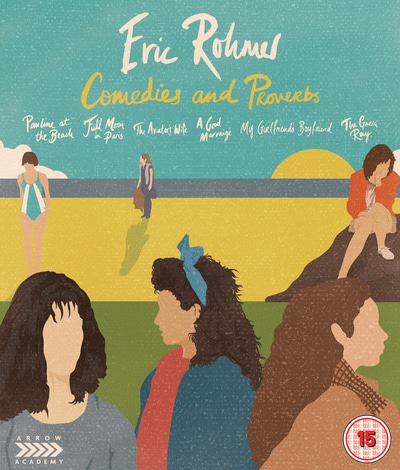 The Comedies and Proverbs series brings together six of Éric Rohmer’s best; the first entry in the series,

 Legendary director Nicholas Ray began his career with this lyrical film noir, the first in a series of existential genre films overflowing with sympathy for America’s outcasts and underdogs. When the wide-eyed fugitive Bowie (Farley Granger), having broken out of prison with some bank robbers, meets the innocent Keechie (Cathy O’Donnell), each recognizes something in the other that no one else ever has.
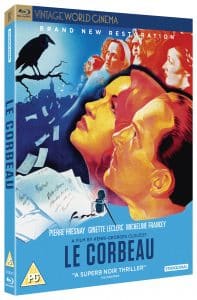 LE CORBEAU (1942)
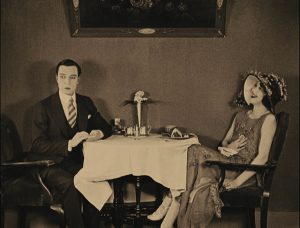 The Navigator (1924, dir. Buster Keaton & Donald Crisp) – Wealthy Rollo Treadway (Keaton) suddenly decides to propose to his neighbour across the street, Betsy O’Brien (Kathryn McGuire), and sends his servant to book passage for a honeymoon sea cruise to Honolulu. When Betsy rejects his sudden offer however, he decides to go on the trip anyway, boarding without delay that night. Because the pier number is partially covered, he ends up on the wrong ship, the Navigator, which Betsy’s rich father has just sold to a small country at war. Keaton was unhappy with the audience response to Sherlock Jr., and endeavoured to make a follow-up that was both exciting and successful. The result was the biggest hit of Keaton’s career and his personal favourite.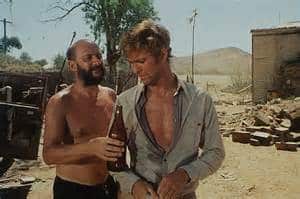
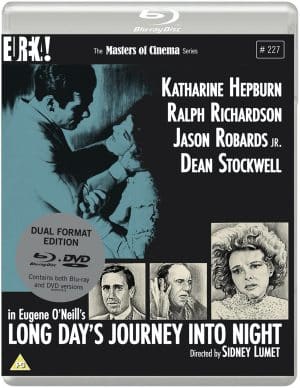 Nobel literate Eugene O’Neill (1888-1953) wrote Long Day’s Journey into Night in 1941/42. He stipulated that the highly autobiographical play should not be staged until 25 years after his death. But his widow Charlotta Monterey was so impressed by Lumet’s stage production of late husband’s play The Iceman Cometh she gave him the film rights despite higher bids from other directors. Trust the Swedes to get their paws on the gloomy Bergman-esque play), it premiered in in Stockholm in 1956, nine months before the first US staging in Boston and New York,
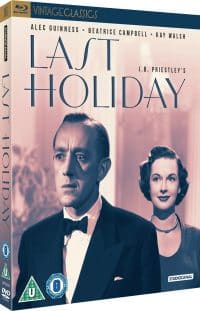 L
L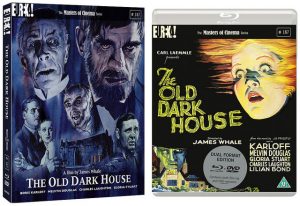 Dir: James Whale | Wri: Benn Levy/J B Priestley | Cast: Boris Karloff| Charles Laughton | Eva Moore | Gloria Stuart | Melvyn Douglas| Raymond Massey | Horror / Comedy |US 75′
 Director Stanley Kramer (1913-2001) was always ready to bring controversial stories to the screen, Guess Who is Coming to Dinner being one of them. When he directed Aby Mann’s adaption of his own story in 1961, Judgement at Nuremberg was very much a slap in the face for Cold War warriors, who had forgiven (West) Germans the Holocaust, just to have old Nazis to fight against Bolshevism.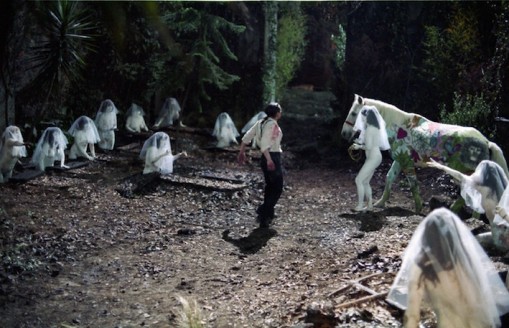
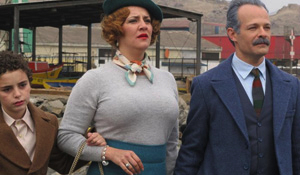
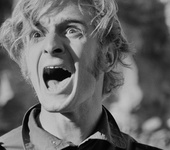 FANDO Y LIS (1968)
 The former artistic director of the Royal Academy Tim Marlow takes us round Lucian Freud’s first and only exhibition at the London gallery (until 26 January 2020). Although Freud is seen as a modern artist his work is very much connected to that ‘old master’, painterly tradition of Titian and Rembrandt: Few modern artists have explored the human body with such intensity, and such determination. Of course, he was a gambler, a playboy and a bon viveur, but few artists spent as much time in their studio as Lucian Freud. The RA’s Andrea Tarsia explains how he pitted his developing style against his personal life, scrutinising himself as much as his subjects. His single-minded passion focused on self-portraiture as much as on those his was painting:. “Everything is a self-portrait”. Often his subjects are not even named: what mattered more to him was the immediacy of the situation, the spontaneity of the gaze. Accompanied by a jazzy score the doc conveys the energy and charisma that seems to spin off each hypnotic portrait, even a small canvas can dominate a room.
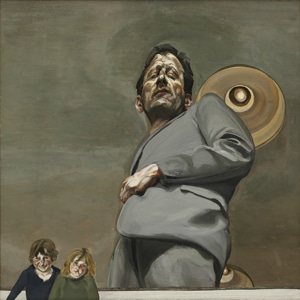 A sensuality entered the artist’s work in the late 1950s and early 1960 where an emphasis on touch starts to appear. This is most noticeable during a trip to Ian Fleming’s Golden Eye when he painted a Flemish style portrait on a small scrap of copper. It sees him putting his finger on his lips and was the start of this sensuous awareness. The 1960s also marked a switch to hog-hair brushes with ‘Man’s Head’ (1963) and the restless associated portraits, smooth backgrounds allowing the face to stand out. Although Freud admired Francis Bacon’s style of working in a gestural way, his own work increasingly gained a more structural, almost architectural element, as he slotted colours together with pasty brushstrokes, trying to make the paint tell the story.
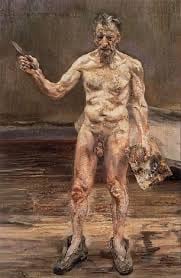 Lucian Freud’s large 1993 self-portrait is defiant – he was 71, but still emanated power and excitement; his greatest fear was losing his mind, but he was also concerned about his physical vigour. ‘Benefits Supervisor Sleeping’ (1995) sold in 2008 for 33.6million dollars – the highest price ever paid for a work by a living artist. Freud carried on painting voraciously until his death on 20 July 2011. He was 88. “Being with him was like being plugged into the National Grid for an hour” said one sitter. “Freud was one of the great European painters of the last 500 years. He’s one of those big figures across the centuries, rather than representative of an era or a movement” says Tim Marlow. “Tradition is a big word but Lucian challenged tradition constantly”. Jasper Sharp adds him to a list that goes back to Holbein; Durer; Cranach and Rembrandt. And he goes on: “Freud gives that list a little shuffle, making us look at Rembrandt a bit differently and Holbein a bit differently through his eyes, and through himself”. And that is a remarkable achievement for any artist. MT
 Dir: Blake Edwards | Cast: Cary Grant, Tony Curtis, Joan O’Brien, Dina Merrill, Gene Evans, Dick Sargent (TV’s Bewitched) | US Drama 124′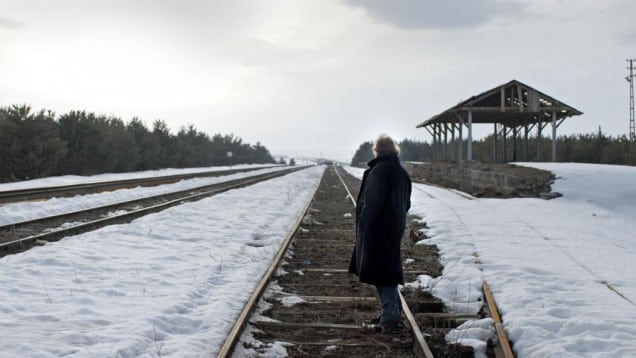

 The Golem was one of the highlights of German Expressionism. Directors Paul Wegener (The Student of Prague) and Carl Boese (Grock) created a world of chaos and destruction in the Jewish ghetto of Prague, where love and political commitment are shown as equally destructive.
 Dir: Karyn Kusama | Wri: Phil Hay | US Thriller 100′
 A towering figure of American cinema, Samuel Fuller was a master of the B-movie, a pulp maestro whose iconoclastic vision elevated the American genre film to new heights. After the major success of The Steel Helmet, Fuller was put under contract by Twentieth Century Fox after being impressed by Darryl F. Zanuck’s direct sales pitch (other studios offered Fuller money and tax shelters; Zanuck simply told him, “We make better movies.”).
 Dir Miloš Forman | Cast: John Savage, Treat Williams, Beverly D’Angelo, Annie Golden | US Comedy musical 121′
 Dir: Robert Fuest | UK Thriller 99′
 Dir: John Irwin | US Thriller 118′
 Dir: Joseph Losey | 97′ UK Crime drama
 Dir: Alan J Pakula | Western | US 118′
 Dominating Pier Paolo Pasolini’s work of the 1970s, is a trio of exuberant dramas that explore three literary classics: Giovanni Boccaccio’s The Decameron (1971), Geoffrey Chaucer’s The Canterbury Tales (1972) and The Thousand and One Nights (1974) (often known as The Arabian Nights). These came to be known as his ‘Trilogy of Life’.
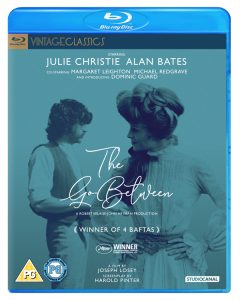 Losey’s adaptation of LP Hartley’s novel is arguably his masterpiece. Pinter’s script adds a darkly amusing twist to the torrid love and coming of age story set in the lush summer landscapes of Norfolk to Michel Legrand’s iconic score.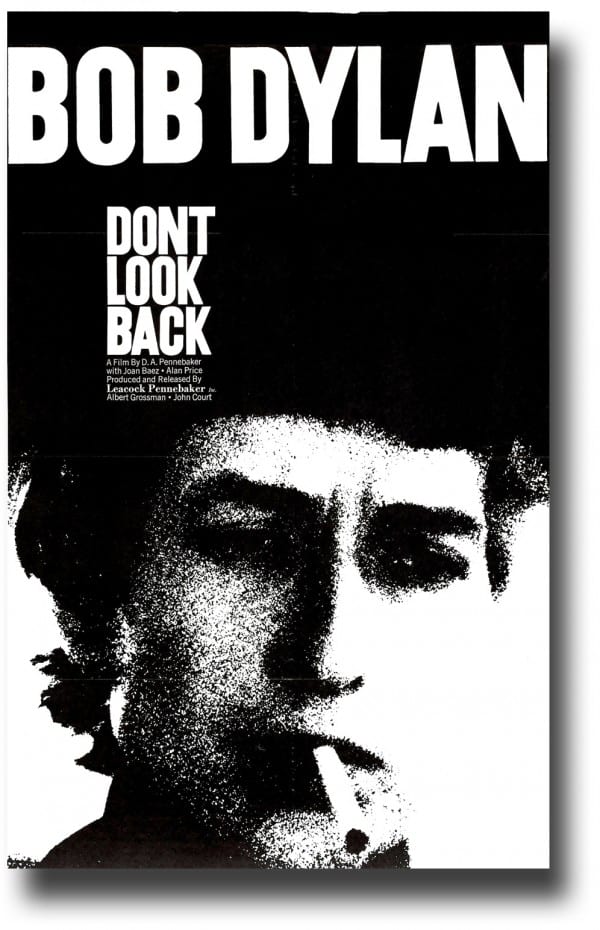
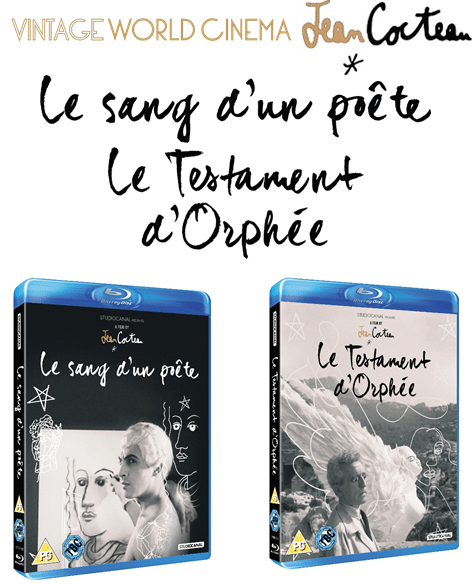
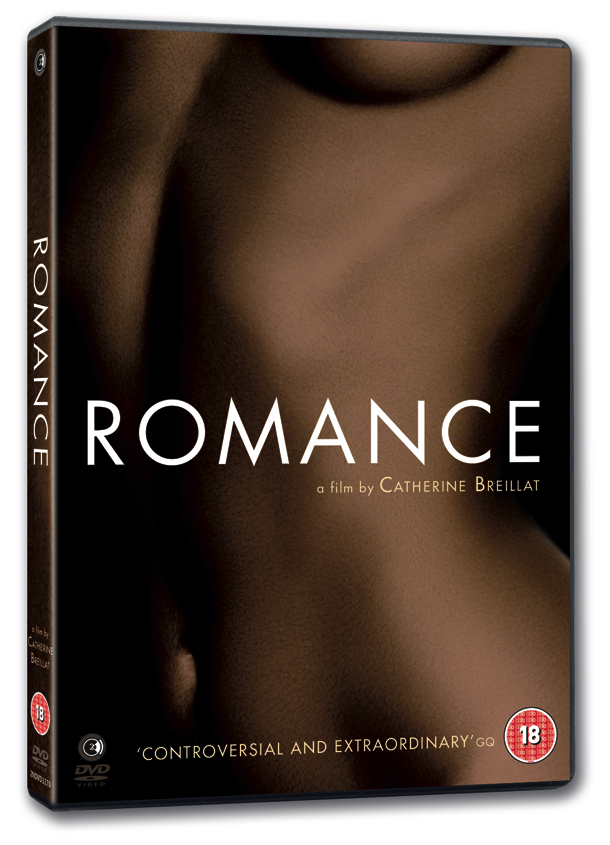
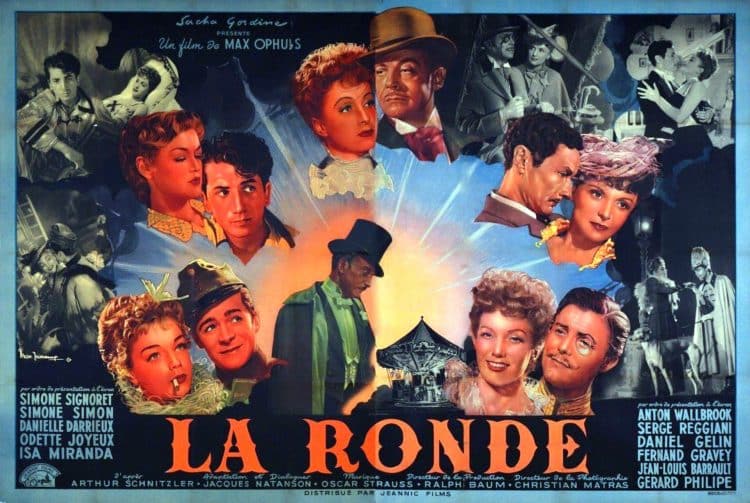
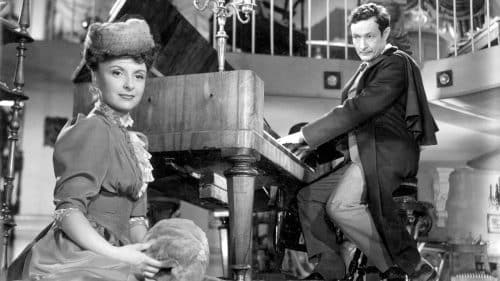 There are echoes of von Sternbergs’s romantic comedies, particularly Shanghai Gesture, that played out like a roulette wheel. Both directors make use of irony and wit as well as well as farcical moments. The female characters are often victims of male society, they are courtesans or bourgeois women who have failed to fit in with the hypocritical standards of their class. The male characters strut around like peacocks in their dandy-like attire, and soldiers in highly decorative uniforms. Songs and music are key elements in the work of both directors, driving the narrative forward, as here with Strauss, the “Waltz King”.
 Dir: Elia Kazan | Drama | US
 Dir: John Guillermin | Script: Bryan Forbes | Cast: M E Clifton Jones, John Mills, Maureen Connell, Cecil Parker, Patrick Allen, Leslie Philips, Barbara Hicks, Sidney James, John Le Mesurier, Marius Goring, Michael Hordern | War Drama | UK 101′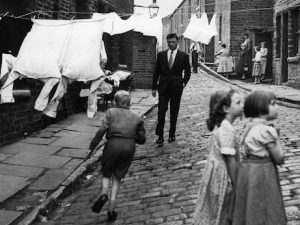
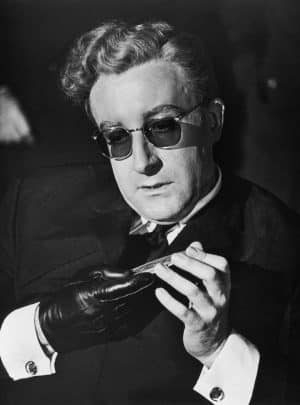 Conflict was the theme that ran through all Stanley Kubrick’s works and he created three major anti-war films: Paths of Glory (1958), Full Metal Jacket (1987) and Dr. Strangelove: the latter being by far the most far reaching and most significant of the trio and was to have a profound political impact, with policy changes ensuring that the events depicted could never really occur in real life. Based on the novel “Red Alert” by Peter George, who co-wrote the script with Kubrick and Terry Southern,
 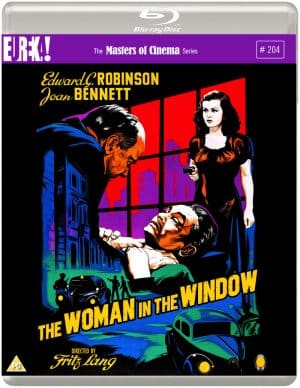 Dir: Fritz Lang | Wri: Nunnally Johnson | Cast: Edward G Robinson, Joan Bennett, Raymond Massey | US Film Noir 107′
 Dir: Richard Lester | Writer: Charles Wood | Cast: John Lennon, Roy Kinnear, Michael Crawford, Michael Hordern, Jack MacGowran | UK Comedy 109′
 What could be more romantic than a train journey? Even if it feels more like a boys own adventure, as many of these British Transport films do. Escaping into the unknown with a promise of excitement and discovery – or just a trip back in time to revisit childhood holidays in the 1960s and 1970s, where the English landscape stretched far and wide from the window of the pullman out of Waterloo, or even Paddington, and not an anorak in sight!
  Dir: Aleksei German | Wri: Joseph Brodsky | Comedy Drama USSR, 147′
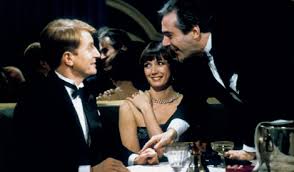 Dir: Alain Resnais; Cast: Sabine Azéma, Pierre Arditi, André Dussollier, Fanny Ardant; France 1986, 112 min.
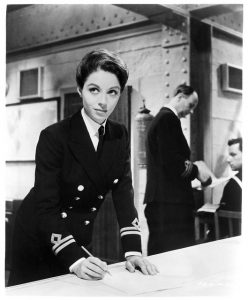 Dir: Lewis Gilbert | Cast:
 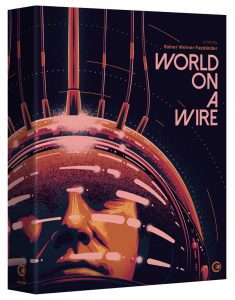 Dir: Rainer Werner Fassbinder | Sci-fi | Ger, 1973 | 204′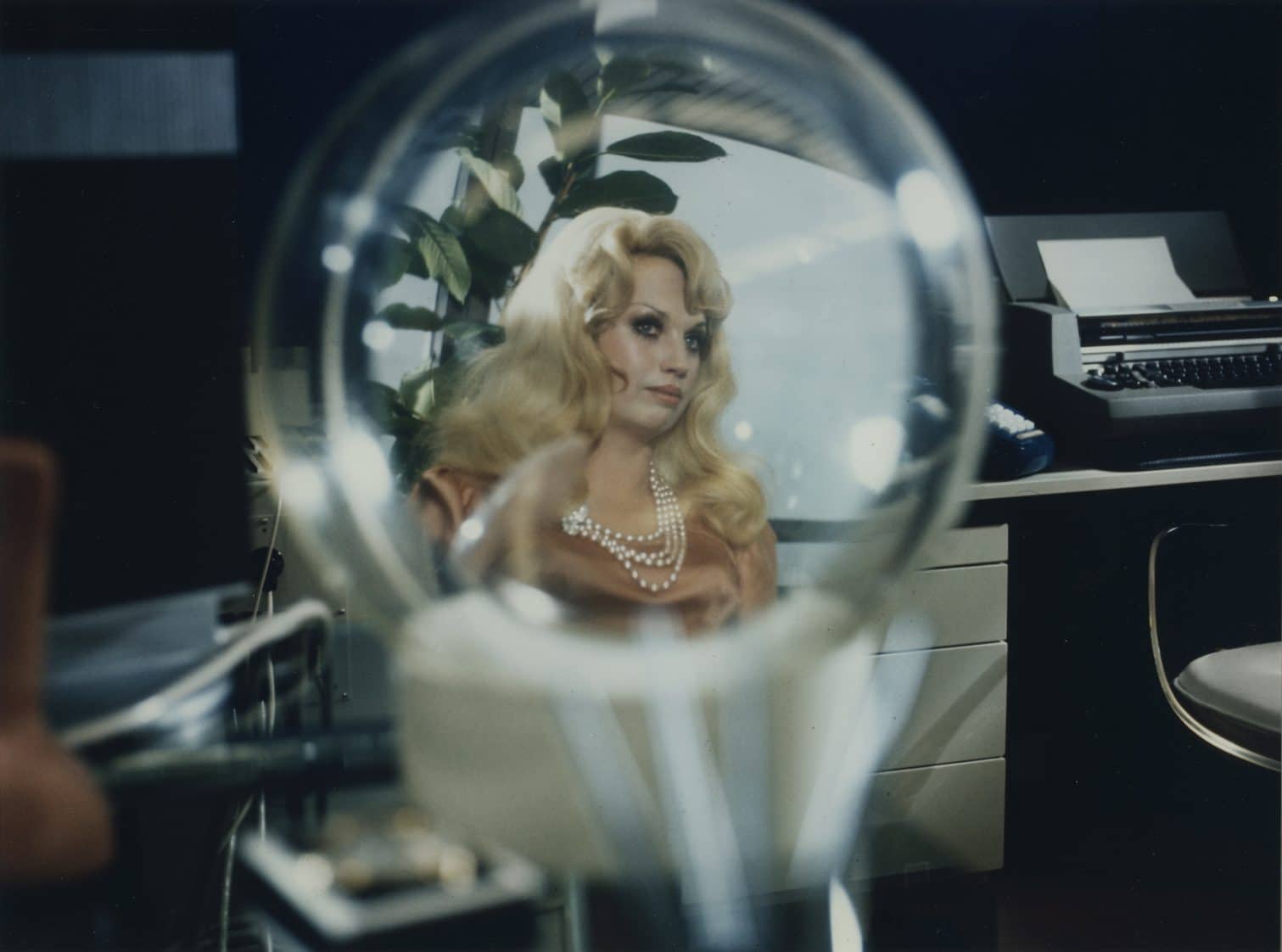
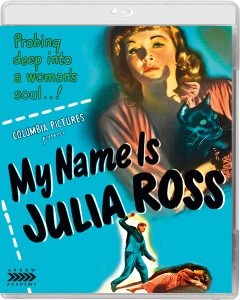 Dir: Joseph H. Lewis; Wri: Muriel Roy Bolton, Music Mischa Bakaleinikoff, Art Director Jerome Pycha Jr | Cast: Nina Foch May Whitty George Macready Roland Varno Anita Bolster Doris Lloyd | Noir thriller US, 64’
 Dir: William Friedkin | Writer: Mart Crowley | Drama | 118’
 But Julien Duvivier’s 1956 thriller DEADLIER THAN THE MALE (Voici les temps des Assassins) somehow manages to outdo them all when it comes to violent women in film Noir: Catherine (Delorme) is the daughter of the drug depending Gabrielle (Bogaert), and tries to escape from the milieu by marrying the restaurant owner Andre Chatelin (Gabin), who has divorced her mother. Telling him that Gabrielle is dead, the scheming Catherine succeeds in marrying the much older man, who soon learns that his wife is lying about her mother. He more or less imprisons her with her mother Antoinette (Bert), also a restaurant owner, who kills her chicken with a whip – which she also uses on Catherine. The frightened woman asks Andre’s friend, the student Gerard (Blain), to kill her husband, but when he refuses, she kills him. Her end – by the fangs of a particular vicious animal – is particularly gruesome. Again, the images of Armand Thirad are undeserving of this blatant ideology.
 The notorious Pépé LE MOKO (Jean Gabin, in a truly iconic performance) plunges into the gangster underworld as a wanted man: women long for him, rivals hope to destroy him, and the law is breathing down his neck at every turn. On the lam in the labyrinthine Casbah of Algiers, Pépé is safe from the clutches of the police–until a Parisian playgirl compels him to risk his life and leave its confines once and for all. One of the most influential films of the 20th century and a landmark of French poetic realism, Julien Duvivier’s Pépé le moko is presented here in its full-length version. AVAILABLE FROM CRITERION COLLECTION | Amazon Prime
 Dir: Tony Richardson | Writers: Shelagh Delaney, Tony Richardson | Cast: Rita Tushingham, Murray Melvin, Dora Bryan, John Danquah, Robert Stephens | UK | Drama | 101′
 KHARTOUM is the kind of spectacular, rousing historical adventure that doesn’t get made anymore, certainly not along the same lines as Basil Dearden’s star-studded epic that exposes English colonialism, religious fanaticism, heroism and sacrifice in a magnificent visual masterpiece. Back in the day, it all seemed perfectly harmless to our innocent childhood eyes as we sat round the telly oblivious to the political incorrectness. And that wasn’t the worst thing: it later emerged that over a hundred horses were severely injured or killed immediately during the battle scenes, due to unethical stunt methods of the time.
 John Schlesinger’s YANKS, a moving and romantic WWII tale of love starring Richard Gere and Vanessa Redgrave is based on Lancashire born Colin Welland’s original story, he also wrote the script.
 THE LAST WALTZ is deeply personal yet timeless in its universal appeal. Martin Scorsese’s love song to rock music is a resounding one, and arguably the best concert film of all time. Dated in its Seventies look, but endearingly so, the doc has been remastered onto bluray, and the result is stunning. The film showcases the legendary rock group The Band’s final farewell concert appearance. Joined on stage by more than a dozen special guests, Van Morrison, Eric Clapton, Neil Young and Joni Mitchell perform their iconic numbers to dazzling effect. The Last Waltz started as a concert, but it became a celebration. In between numbers, Scorsese chats to members of The Band, filmed by master DoPs Laszlo Kovacs and Vilmos Zsigmond. Scorsese’s message to the audience, “this film should be played loud” MT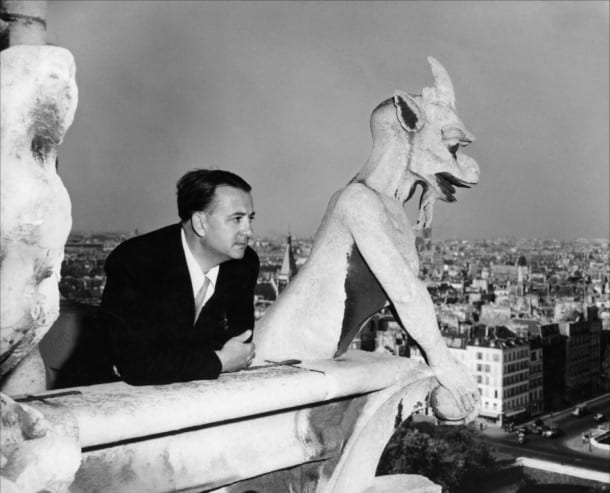
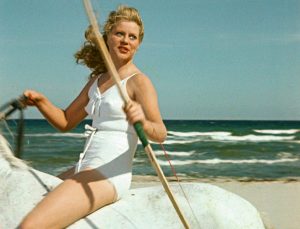 Kristina Söderbaum was Swedish along with several of her compatriots such as Zarah Leander (LA HABANERA) and Ingrid Bergman who appeared in Carl Froelich’s 1938 romantic drama DIE VIER GESELLEN. Then there was the Czech actor Lida Baarova
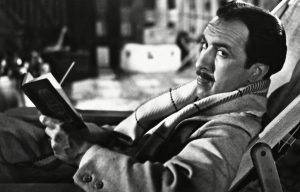 Later reality and feature films moved even closer: DER GROSSE KÖNIG (Veit Harlan 1942) was premiered in parallel with USSR invasion. Male leader figures like Frederick the Great and Frederick I often featured, such as the hero portraits of Schiller, Schlüter and PARACELSUS (GW Pabst, 1943). During the war years, the newsreels lasted on average forty minutes.
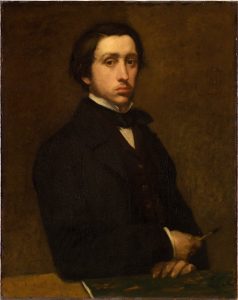 Dir/DoP: David Bickerstaff | 91′ | Art Doc in
 A great collector himself, he was able to buy more painting through sales of his own work, indulging his passion for El Greco, Gauguin and Van Gogh. He idolised the work of Ingrès and his competitor Delacroix. He also developed a passion for photography and often used that to inform his own artwork, and many painters adopt this same technique in portrait painting today.
 Dir.: Simon Hunter; Cast: Sheila Hancock, Kevin Guthrie, Amy Mason, Wendy Morgan; UK 2017, 102 min.
 WINTER’S CHILD (L’ENFANT DE L’HIVER) (1989) ****
 Dir: Paul Schrader | Writer: Harold Pinter | Cast: Christopher Walken, Natasha Richardson, Helen Mirren, Rupert Everett | US Thriller | 104′
 Dir.: Alain Resnais; Cast: Delphine Seyrig, Giorgio Albertazzi, Sacha Pitoeff; France/Italy 1961, 94 min
 Dir: Richard Marquand | Cast: Donald Sutherland, Kate Nelligan, Christopher Cazenove, | Action Drama | UK |
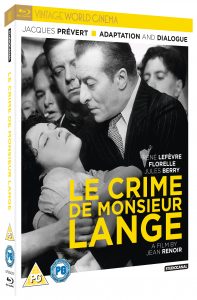 Dir.: Jean Renoir; Cast: Rene Lefevre, Florelle, Jules Berry, Nadia Sibirskaia; France 1936, 80 min.
 Mohsen Makhmalbaf is one of its shining lights of Iranian cinema lauded by critics and cineastes alike on the international film circuit and at home. His Poetic Trilogy is a collection of three of the writer-director’s most lyrical, imaginative works:
  This ‘Poetic Trilogy’ consisting of three features shot between 1996 and 2012, could be called lyrical journeys, very much in the manner of Sergei Paradjanow’s The Colour of Pomegranates. The emphasis is on the visual, and GABBEH starts with an exploration of the colourful titular carpet, floating downstream. The carpet depicts a couple riding a horse, and whilst the owner of the carpet, elderly couple (Hossein and Rogleih Moharami) fight over their past, recounting their romantic miss-adventures, the girl in the picture, also called Gabbeh (Djodat), springs to live, to tell her story. Living with Nomads, Gabbeh is looking forward to marry her beloved for a long time. But her repressive father always invents new reasons to postpone the marriage: her uncle (Ghalandari) is used as a reason for the father to stall. First Gabbeh has to wait for the uncle’s return from a trip, than he has to find a wife for himself – somebody who will sing near a river “like a canary”. But Gabbeh tires of seeing her future husband only as a shadow on the horizon, and she will have to make a decision.
 Filmed in a small town in Tajikistan, SILENCE tells the story of ten-year old Khorshid (Normatova), who is blind, but earns a living as a tuner of musical instruments, to support his mother. His master always threatens him with dismissal, since the young boy gets obsessed with the four opening notes of Beethoven’s Fifth, which keeps him distracted. A young woman (Abdelahyeva) acts as his eyes, selling bread and fruit near the river. She wears cherries instead of earrings and flower petals instead of nail varnish. In one scene, she becomes very nervous, when a soldier looks like he wants to arrest a woman, who is not adequately covered. SILENCE is a symphony of images (DoP Ebrahim Ghafori) and sounds, a magic and sensual journey into the world of a special childhood.
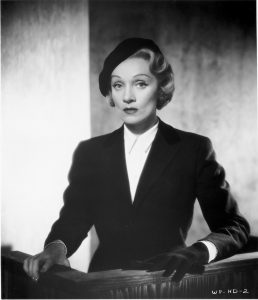 Dir: Billy Wilder | Writers: Billy Wilder, Harry Kurnitz, Lawrence B Marcus | Cast: Marlene Dietrich, Tyrone Power, Charles Laughton, Elsa Lanchester, John Williams, Torin Thatcher, Norma Varden, Una O’Connor | US Crime Drama | 116′
 Dir: Michael Cimino | US War Thriller | 183′
 Dir: Peter Medak | Cast: George C Scott, Trish Van Devere, Joh Colicos, Melvyn Douglas | Horror | 107′
 Dir: Yuen Woo-ping | Action drama | China | 90′
 Dir: Paul Van Carter | Doc | UK |
 Woodfall Film Productions was founded in 1958 by English director Tony Richardson (1928-1991), the American producer Harry Saltzman (later of James Bond fame) and the English author and playwright John Osborne, whose play Look back in Anger was filmed by Richardson in 1959 as the opus number of the company that championed the British New Wave. So it’s only fitting that Richardson should finish the circle in 1984 with Hotel New Hampshire, creating a sub-genre of dram-com, which was later developed by Wes Anderson.
 The Entertainer featured Laurence Olivier in the title role, reprising his stage role from the Royal Court, co-written by John Osborne from his own play. There is nothing heroic about Olivier’s Archie Rice: he is a bankrupt womaniser, exploiting his long suffering wife Phoebe (de Banzie) and using Tina Lapford (Field) – who came second in the Miss Britain contest – and her wealthy family to prolong his stage career. Not even the death of his son in the Suez conflict can deter him from his vain pursuit of a long dead career. Using his father – who dies on stage – for his own advantage, Archie sinks deeper and deeper. There is a poignant scene with his film daughter Jean (Plowright), whom he asks: “What would think, if I married a woman your age?” and Jean answers exasperated “Oh. Daddy”. At the end of productions, Olivier would marry Plowright, after his divorce from Vivien Leigh. Shot partly at Margate, this is a bleak portrait of show business, shot in brilliant black and white by the great Oswald Morris (Moby Dick, A Farewell to Arms).
  Set in a desolate Manchester, A Taste of Honey would make a star of the lead actor Rita Tushingham. She plays 17-year old school girl Jo, who is totally neglected by her sex-mad mother Helen (Bryan), who only has time for her fiancée Robert (Stephens). Jo gets pregnant by the black sailor Jimmy (Danquah), who soon leaves with his ship. Jo befriends the textile student Geoffrey, a brilliant Murray Melvin, who is not sure about his sexual orientation. He looks lovingly after her, before Helen returns, after having been rejected by Robert. She shucks Geoffrey out, and pretends to look after her daughter and the baby, whilst having one eye on the next, potential suitor. A Taste of Honey is relentlessly gloomy and discouraging. Photographed innovatively
 Nothing could be more different than Richardson’s next project, the historical romp Tom Jones, based on the novel by Henry Fielding. Albert Finney is the bumptious titular hero, who is nearly hanged due to the schemes by his adversary Bliflil (the debut for David Warner). With a great love story involving Sophie Western (York) and her father (Griffith), there are some great performances by Edith Evans, Joan Greenwood and Diane Cilento. Like his auteur Richardson, Lassally changes style effortlessly in this colourful wide-screen bonanza. It would garner an Oscar for Richardson, and was a huge success at the box office: the slender budget of £467000 pounds would result in a cool 70 million takings. AS
 Dir: David Cronenberg | Jennifer Jason-Leigh, Jude Law, Ian Holm, Willem Dafoe
 Although Hou Hsiao-hsien tries to play down his early films – CUTE GIRL (1980) *** is evidence of his talent for clever comic timing and situational comedy, as well as the more serious fare that would follow later. The romcom was a commercial vehicle for two leading stars of the 1980s: Feng Fei-fei (who has since died) and Kenny Bee, who was the main character in this first part of the trilogy that continued with Cheerful Wind/Feng er ti ta cai (1981) and The Green, Green Grass of Home/Zai in hepan quincao qing (1983).
 THE GREEN, GREEN GRASS OF HOME (1981) *** is the third part of the Kenny Bee trilogy and continues in a formulaic romantic/musical comedy vein, with a considerably more auteurist feel already emerging along with some impressive extended takes and naturalistic, improvisational performances from impressive child newcomers.
 Dir: Roger Donaldson | Sam Neill, Warren Oates | 107′ | NZ Thriller
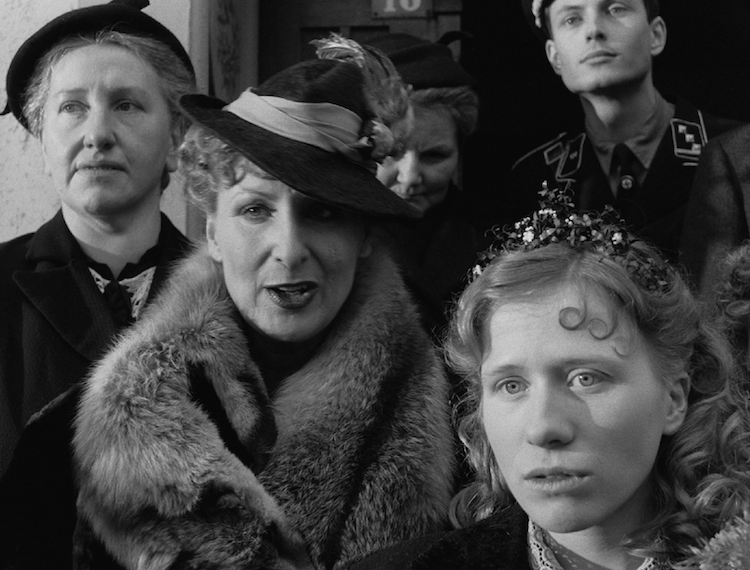 Eduard falls in love with social climber Lucie (Rasenack), who runs a brothel and talks him into joining the SA. Back in the village, another member of the Simon clan is imprisoned in a KZ, for his Communist Party leanings. Maria has now fallen in love with the engineer Otto Wohlleben, but a letter from Paul, who is living in the USA, destroys any future for them. When Paul finally remerges, arriving in Hamburg, he cannot enter the country due to to his name being misconstrued as being ‘Jewish’ – and he has no proof of his Aryan ancestry. Meanwhile Otto is defusing bombs at the front when he learns that Maria has borne him a son called Hermann who he will meet for the first time at the end of the war, when American troops arrive in the village, after the Allies’ victory in 1945, bringing with them a sense of normality – and food. Paul finally returns from the USA, his big limousine is the talk of the village. But his return is not celebrated by everyone and he soon goes back, missing the funeral of his grandmother Katherinna (Bredel). Maria lives her life through her son Hermann who is interested in music and poetry. He eventually falls for Klärchen, who is eleven years older than him. Paul has since sold his company to the Americans for a huge profit, and channels his success into helping Herman with his musical career.
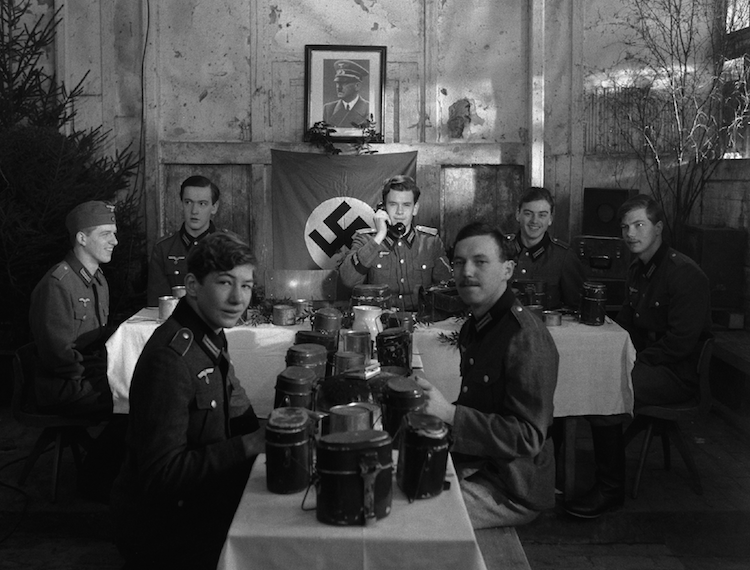 The shoot ran from 1981, and took 18 months, before 13 months of editing resulted in a 15-hour potted version, down from 18 hours of rough-cut. Over ten million West Germans watched the eleven episodes. Thanks to DoP Gernot Roll, a later cinema version was internationally successful, the seemingly arbitrary changes from colour to black-and-white and back giving the chronicle of the years between 1919 and 1982 an added feature. The main premise of HEIMAT was to show how ordinary people – in this case the Germans – can easily embrace a murderous regime such as Nazism, and even in a small village like Schabbach, could tolerate the existence of the concentration camps, almost turning a blind eye. These same people went on to embrace consumerism, this time following in the footsteps of the Americans. Reitz would follow Heimat with The Second Heimat (1992), Heimat – Fragments – The Story of the Women in Heimat (2006) and Home from Home (2013) – all together another 30 hours viewing, premiered at the Venice Film Festival, which became Reitz’ second home.
 Wri/Dir: Galina Miklinova | Animation | Czech Rep | 83′
 The film is set in the late 1830s. Yukitaro (Kazuo Hasegawa) is a male actor who plays female roles and his stage name is Yokinojo. Whilst in Edo, acting in a play, he notices in the audience the three men who were responsible for the death of his mother and father. He is persuaded by the Hirutaro (Raizo Ichikawa), the head of the acting troupe, to take revenge on the murderers. Yet Yukitaro decides to drive them to a ‘theatrical’ madness before killing them (he announces his revenge will be “a flamboyant performance”). Unfortunately he is emotionally sidelined by the daughter of one of the guilty men. Namiji (Ayako Wakao) is genuinely attracted to Yukitaro and desires a romance. Initially, he sees her attention as a pretence to trapping him but gradually realises that she is sincere. Yokitaro’s revenge is achieved but on the way it is challenged by erotic attraction and the self-mocking criticism of a thief Hojin (Shintaro Katsu) who is continually pursuing the actor.
 The film is completely set in the studio, making for a superb staging of action that intensifies its heightened theatrical ‘reality.’ This is a valid Ichikawa world where performers are cunningly immersed in the idea of performance (without ever being self-consciously aware of the effect they are striving to achieve). An Actor’s Revenge then becomes an intoxicating concoction when astonishing camerawork and a jazzy, lounge-lizard soundtrack are added to the mix.
 Dir: Gabriela Cowperthwaite | Cast: Kate Mara, Ramon Rodriguez, Tom Felton, Bradley Witford, Edie Falco | US Biopic Drama | 116′
 Dir: Andre De Toth | | Joel McCrea, Veronica Lake, Don Defore Western | US | 94′
 Dir: J Lee Thompson | Cast: John Mills, Sylvia Syms, Anthony Quayle | UK | 122’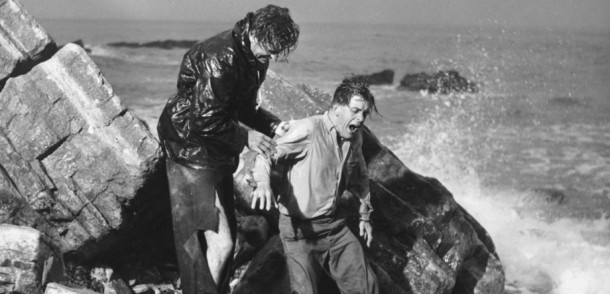
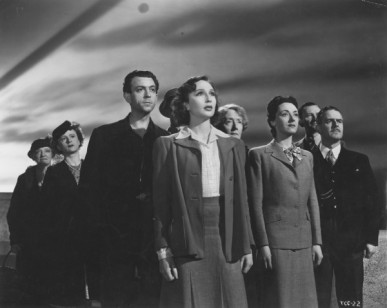
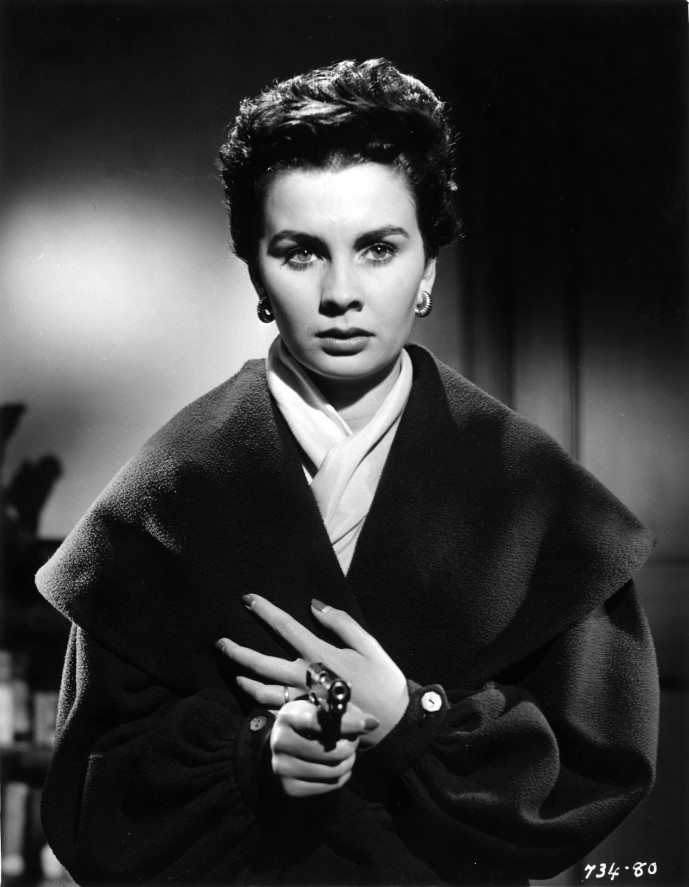
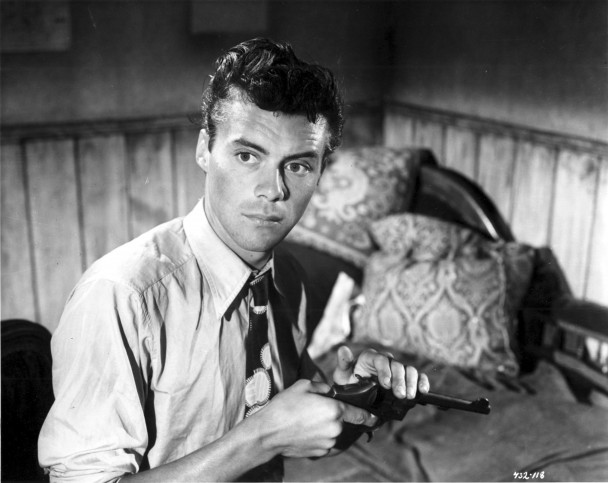
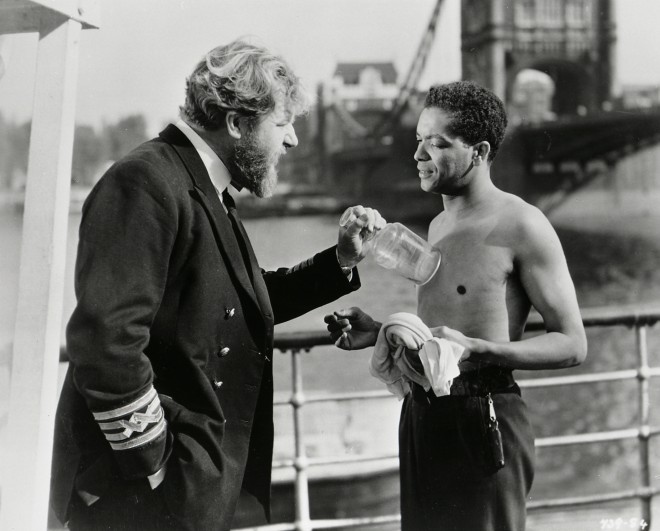

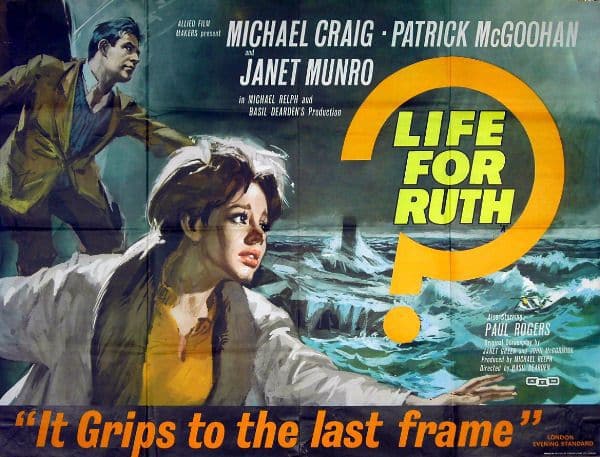
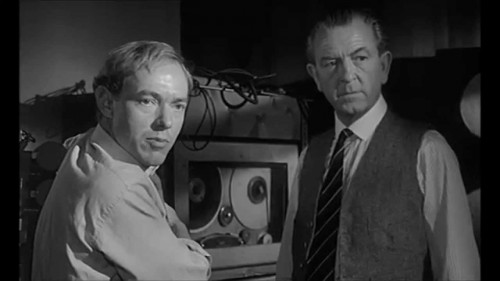
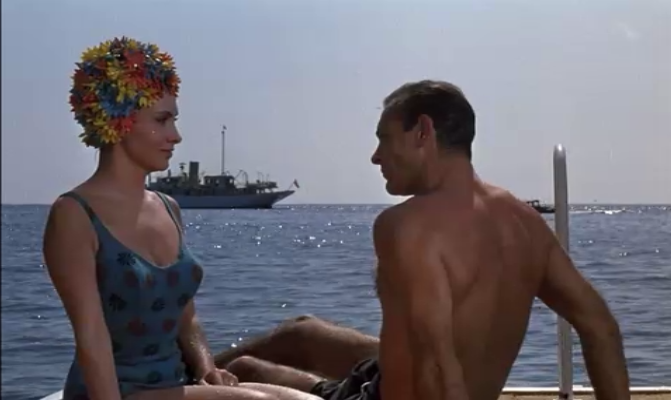
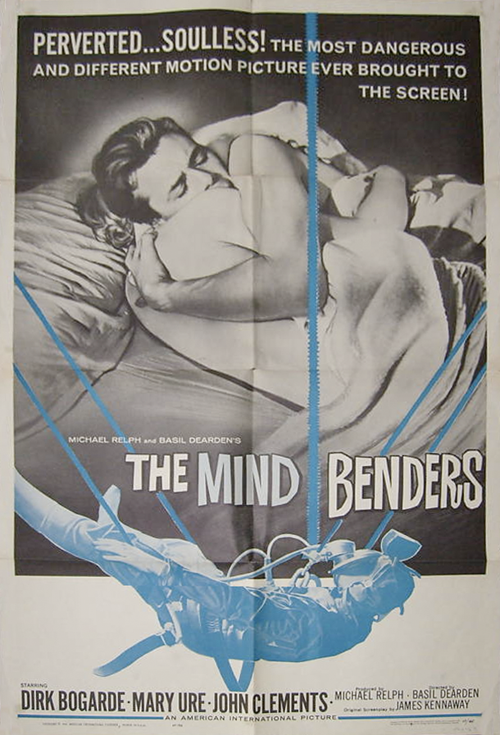
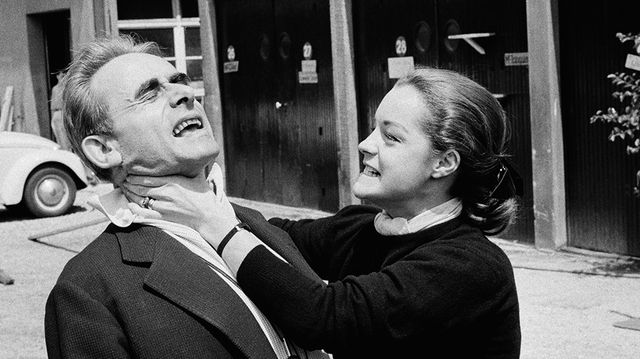
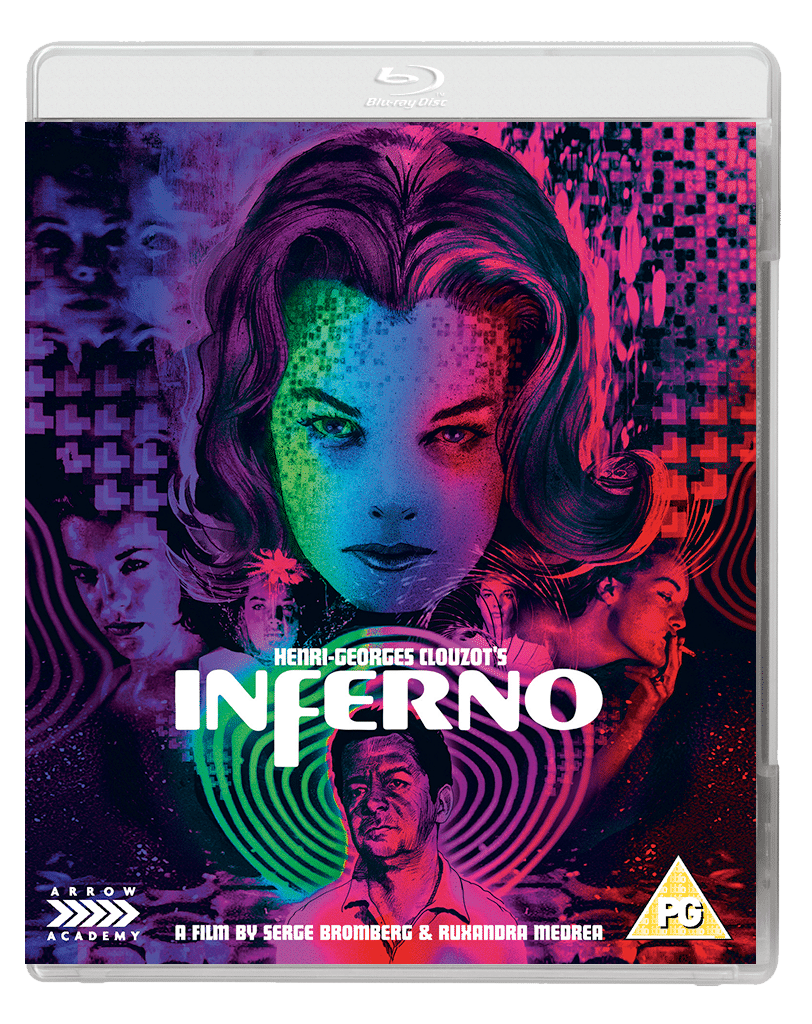
 Dir: Carl Theodor Dreyer | Writer: Thea von Harbou | Silent | 90′
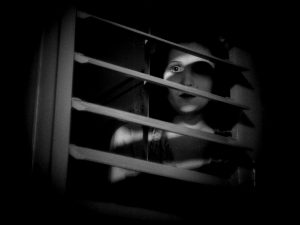 Filmed on a magnificent studio set, and in intimate close-ups where the characters often appear as if in a halo, silhouetted against the mysterious darkness, the piano accompaniment lends a sinister almost ghostly tension to the story. The meticulous camera moves with stealth drawing us in to the intrigue while maintaining an unsettling distance. Passion glows but never sizzles in Rudolph Mate and Karl Freund’s cinematography, Freund has his only role as an actor, in vignette, as an jovial art dealer. The film was scripted by Dreyer with Fritz Lang’s wife, Thea von Harbou (Metropolis, M), based on Herman Bang’s 1902 novel
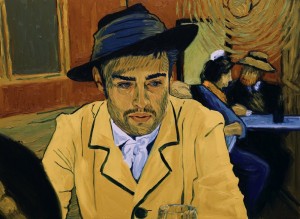 Dir: Dorota Kobiela, Hugh Welchman | With Douglas Booth, Jerome Flynn, Robert Gulaczyk, Helen McCrory, John Sessions, Eleanor Tomlinson, Aidan Turner, Chris O’Dowd | Animated Biography | Poland | UK | 94′
 Dir.: Federico Fellini; Cast: Baldwin Baas, Elisabeth Labi; Italy/West Germany | 70′.
 Dir: Elio Petri | Writer: Ugo Pirri | Cast: Ugo Tognazzi, Flavio Bucci, Daria Nicolodi | Italy | Comedy Drama 126′

 Dir.: Francis Lee; Cast: Josh O’Connor, Alec Secareanu, Gemma Jones, Ian Hart; UK 2017, 104 min.
 French directing duo Alexandre Bustillo and Julien Maury, who rose to fame with their standout debut Inside, have done their best to give an arthouse twist to Tobe Hooper’s 1974 cult original TCM replacing his pared-down grainy indie look with a grungy green-sheened shocker, blunting facial features and darkening scenes of gory violence and misogyny. It’s a tolerably decent adaptation which echoes Malick’s Badlands.
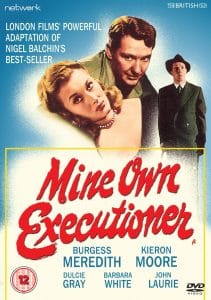 Dir: Anthony Kimmins | Writer: Nigel Balchin | Psychological Drama | UK | Burgess Meredith, Barbara White, Kieron Moore, Dulcie Gray
 US DRAMA –
 Filmmaker Maren Ade has created one of the most poignant and refreshingly humorous German arthouse comedy dramas of recent memory – it never drags despite its three-hour running time. Picturing the absurd and often awkward nature of family relationships, this is a life-affirming experience not to be missed, especially at Christmas time. After The Forest for the Trees and Everyone Else, Ade is working her way slowly but surely to the top as most of the most refreshing European writer directors around..
 There’s something sad and awkwardly compulsive about this cautionary tale of a misguided intergenerational liaison between a lonely man and a glib young woman who meet in an island paradise. One of the best recent dramas about delusional love and its grim aftermath that perfectly epitomises the sinking realisation of being ‘over the hill’ on a holiday fling, while still holding on to the dream . Slim and but beautifully scenic and deeply resonant in its evergreen theme.
 THRILLER –
  UK DEBUT –
  UK COMEDY –
 Hopkins’ fraud of a film is full of middle-aged cyphers floating around in a fantasy world of the Seventies where they meet for coffee mornings and discuss worthy causes. But in the real place, this lot passed on decades ago to be replaced by the likes of Hugh Skinner’s fundraising nerd or the smiling Romanians touting The Big Issue at every street corner. Robert Festinger’s script teeters from crass to cringeworthy with no laughs to be had, and a score that jars. Hampstead is utterly specious and hollow – even Diane Keaton can’t save it.
 A fantastic box set that brings together dazzling high def print of some of the best films in the crime genre: THE DARK MIRROR (1946) starring Olivia de Havilland; Fritz Lang’s SECRET BEYOND THE DOOR (1947) with Joan Bennett and Michael Redgrave; FORCE OF EVIL (1948) directed by the underrated Abraham Polonsky; and Cornel Joseph H Lewis’ THE BIG COMBO (1955); with its terrific score by David Raksin with dynamite duo Cornel Wilde and Jean Wallace. The dual format edition comes with a hardback book on the films. MT
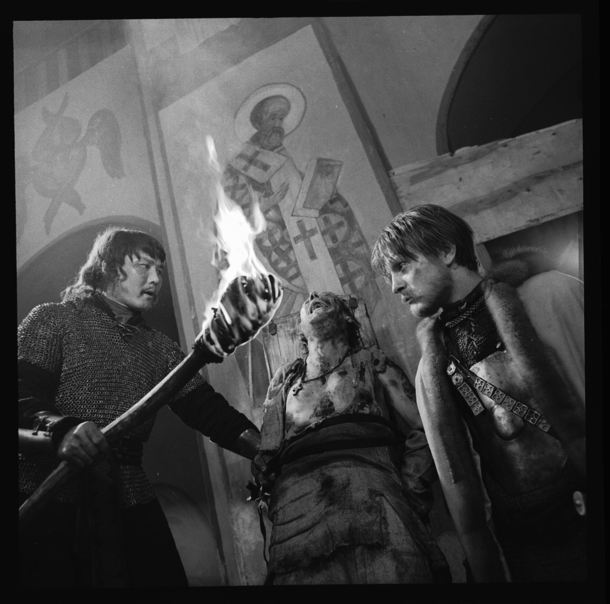

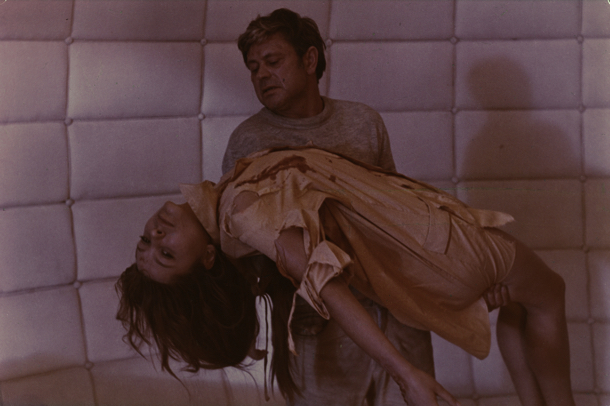
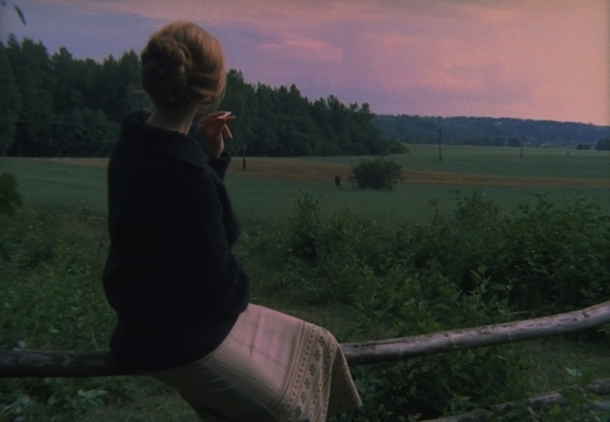
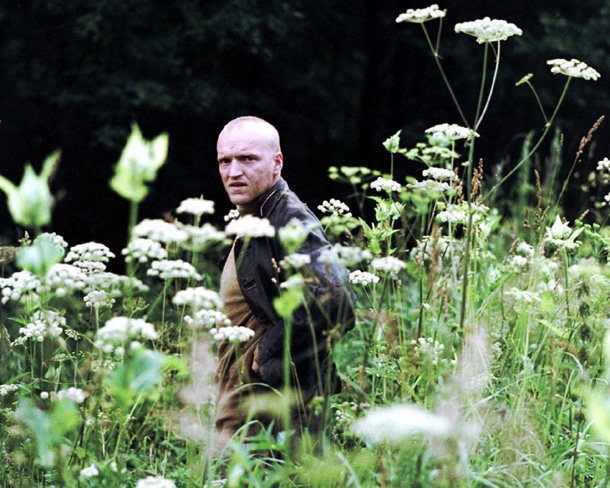
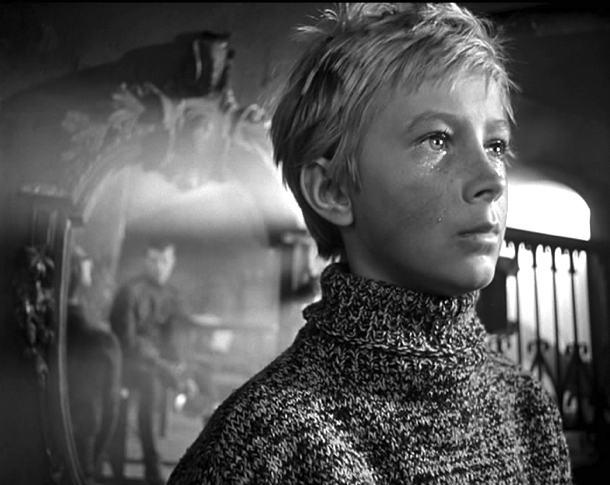
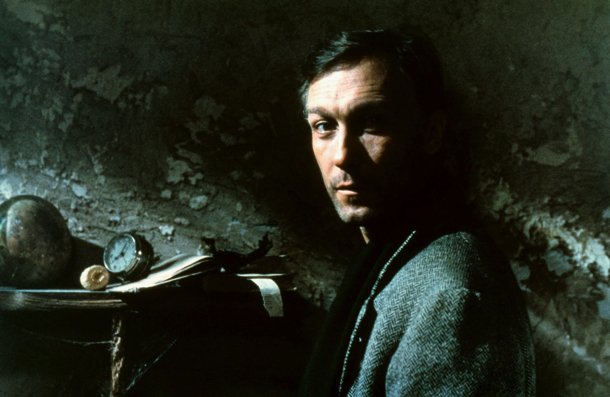
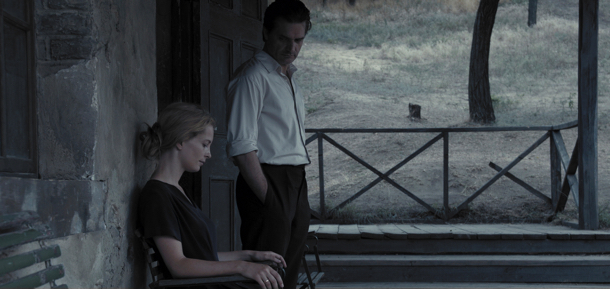
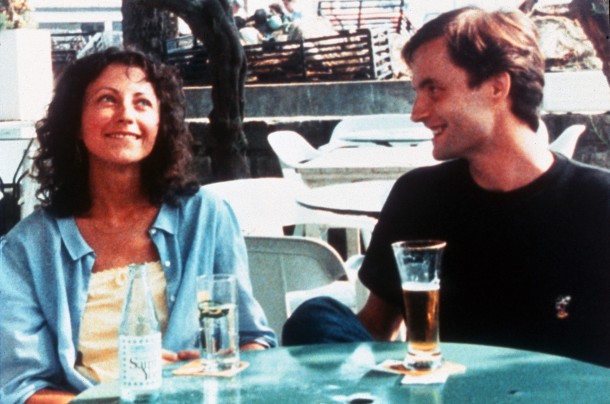
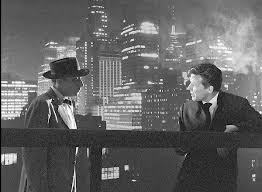
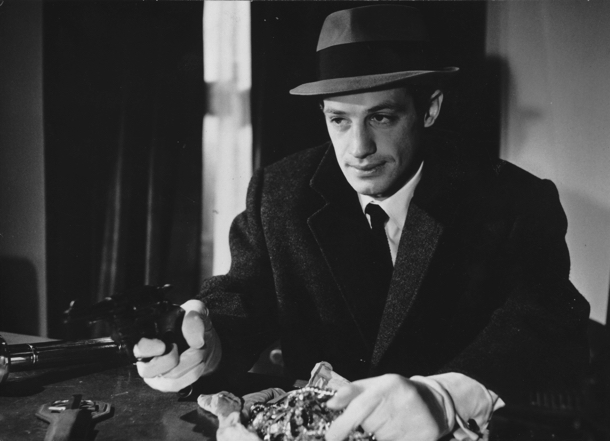

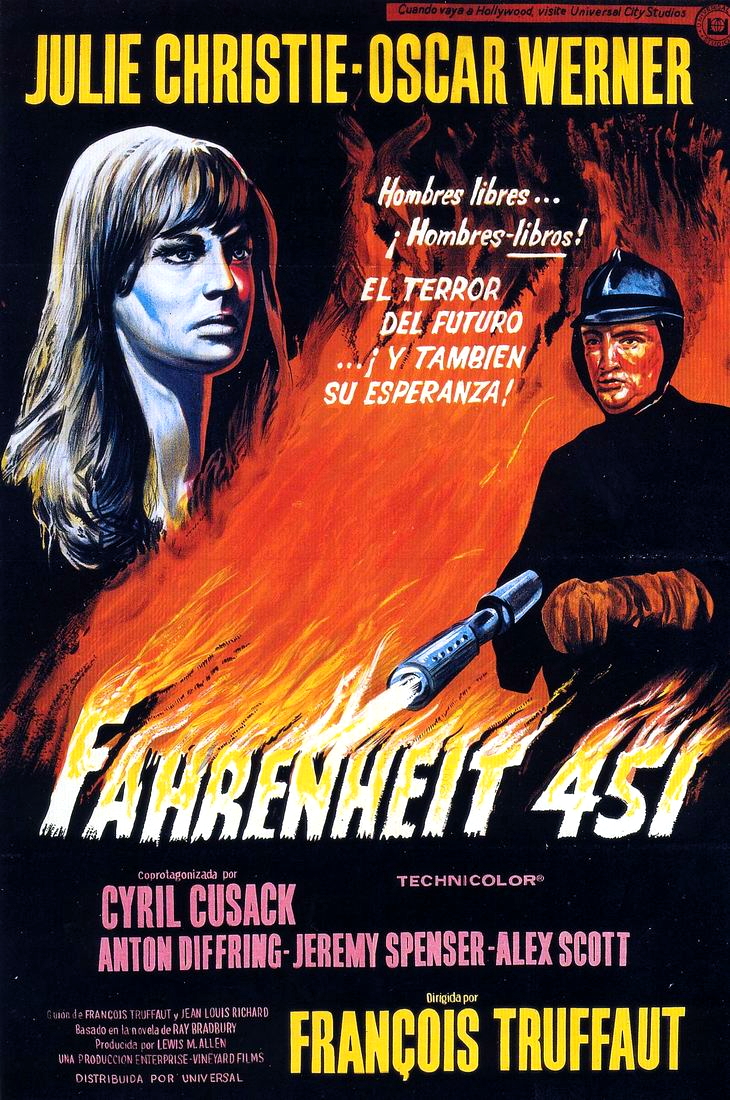

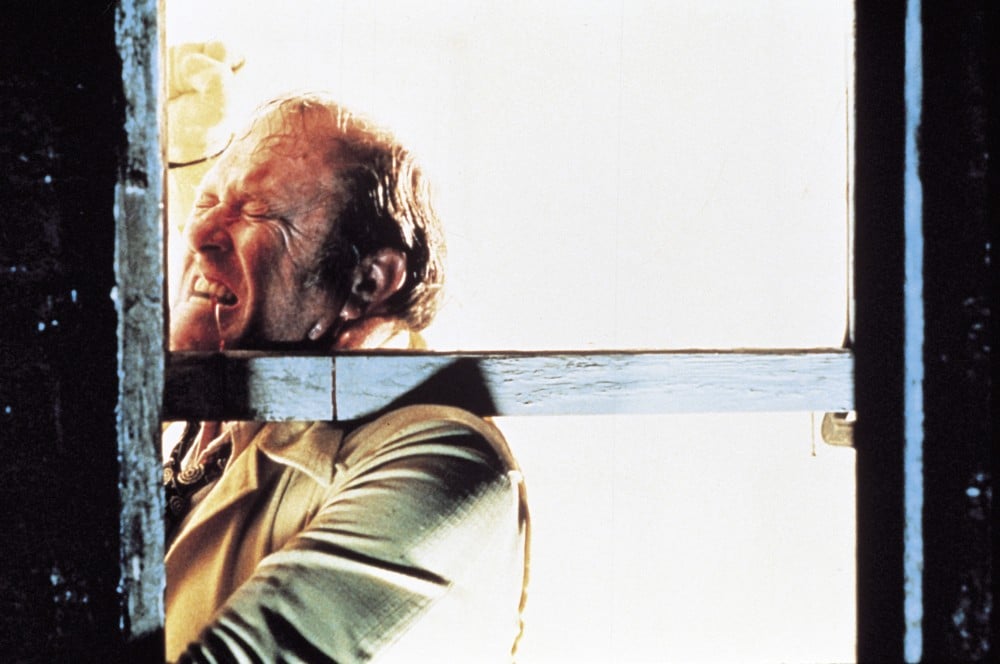
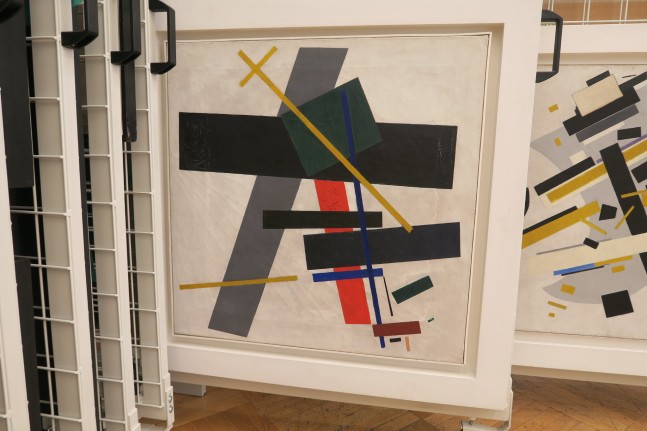


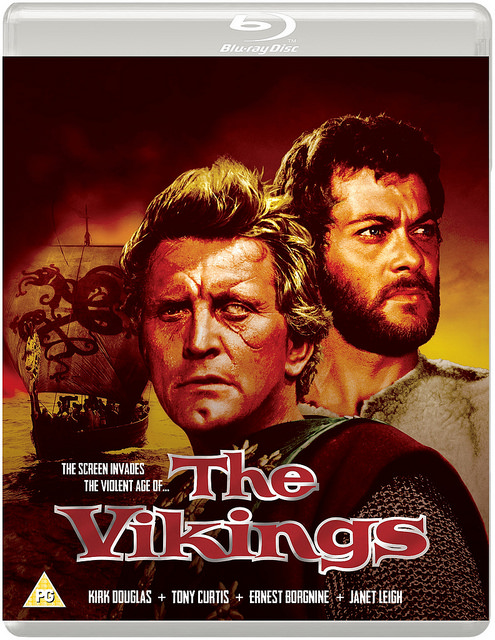
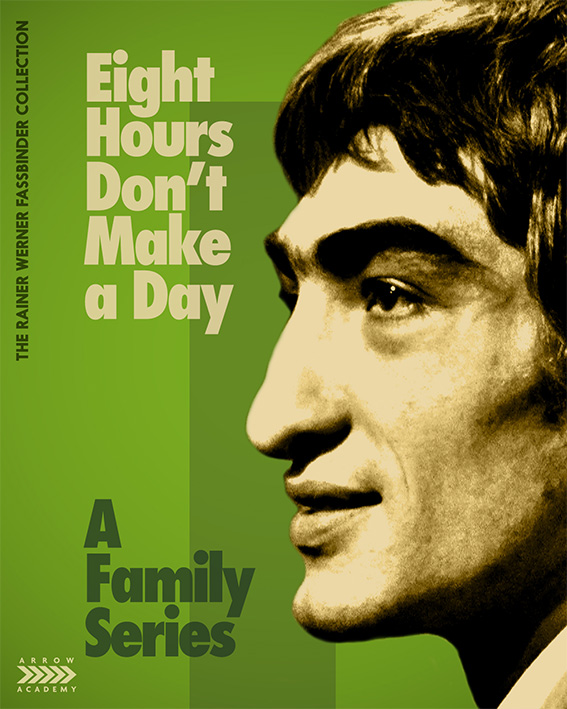

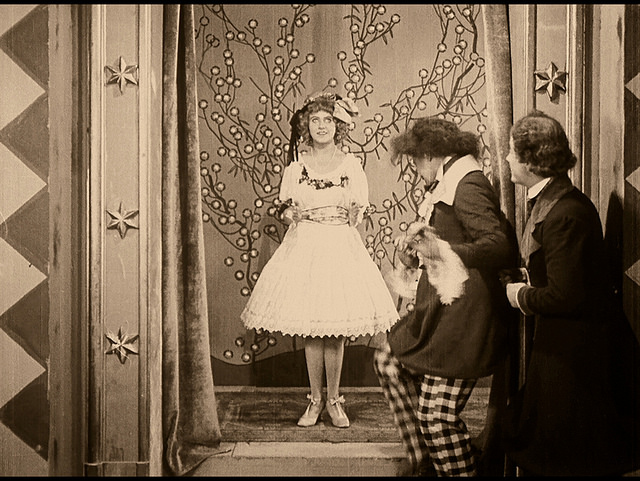
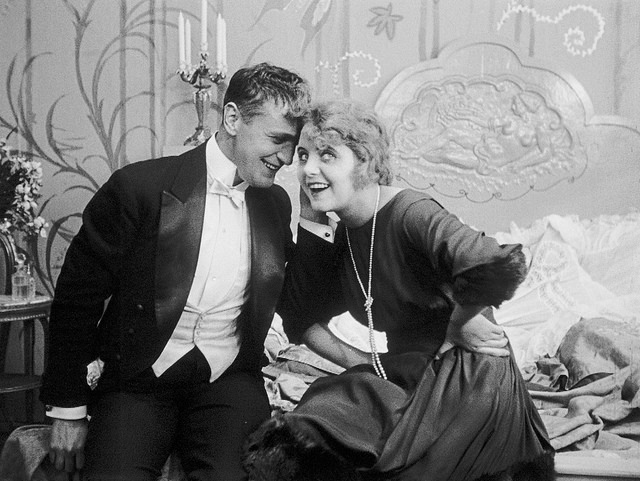
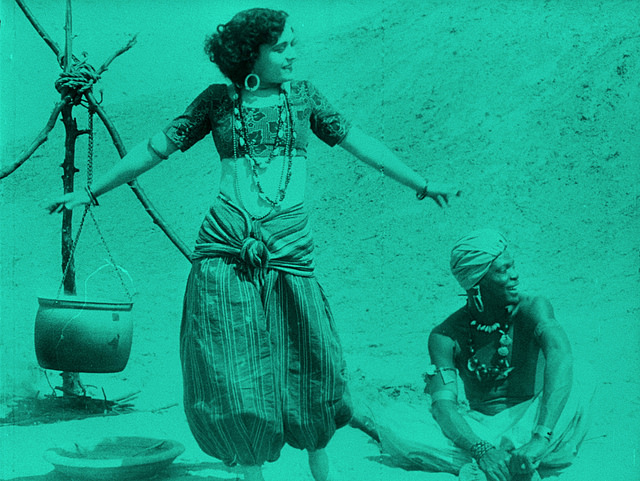
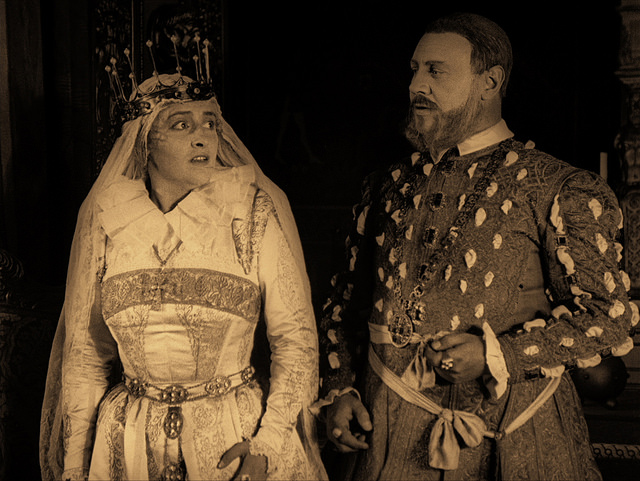

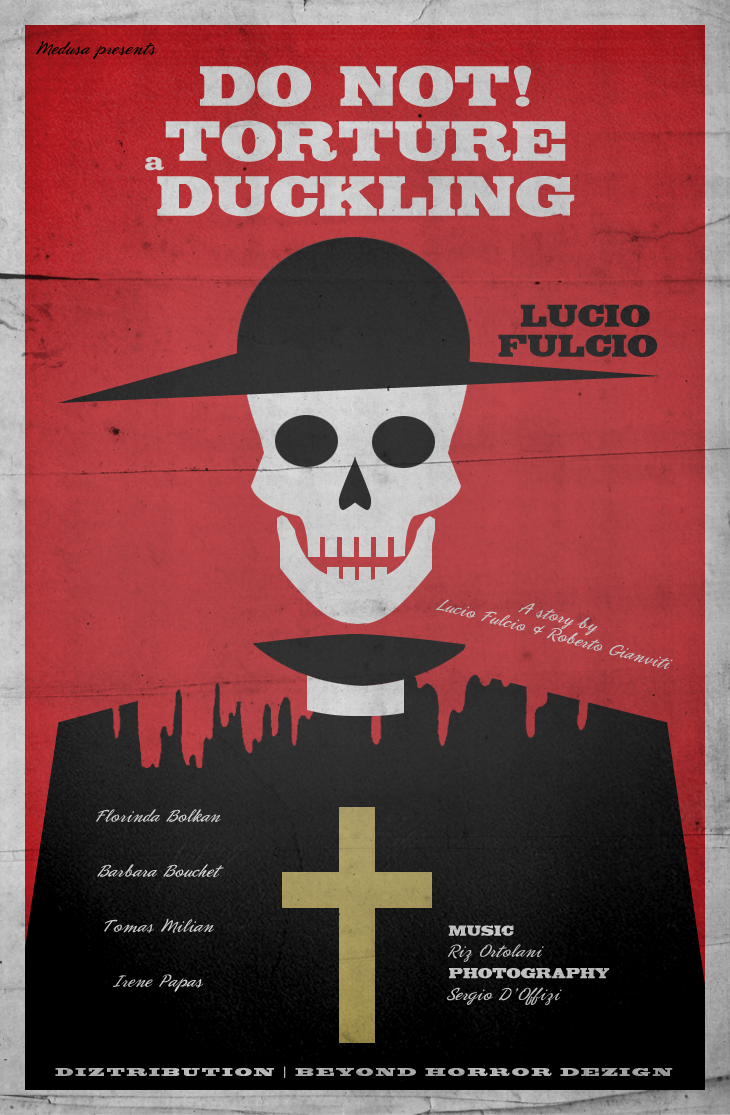
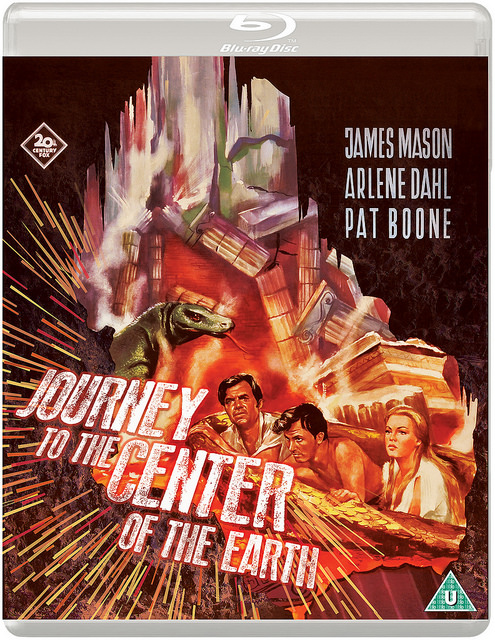

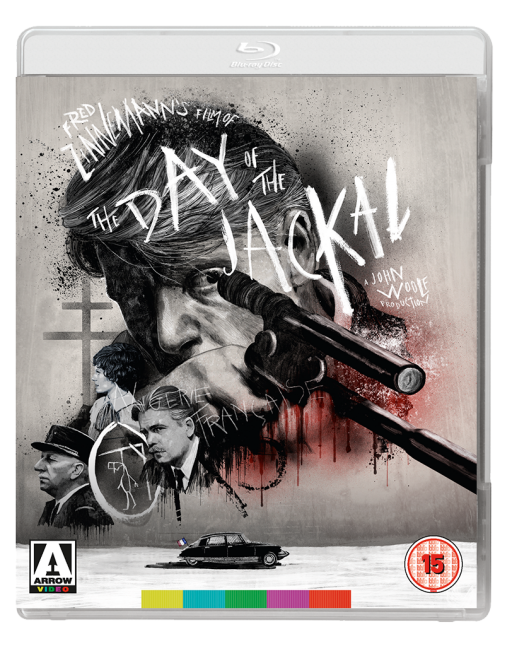
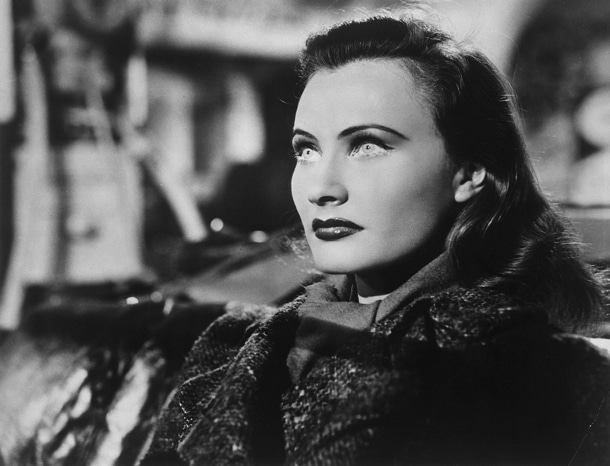
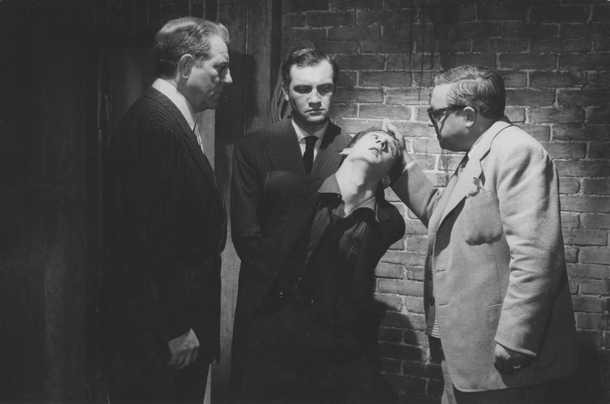
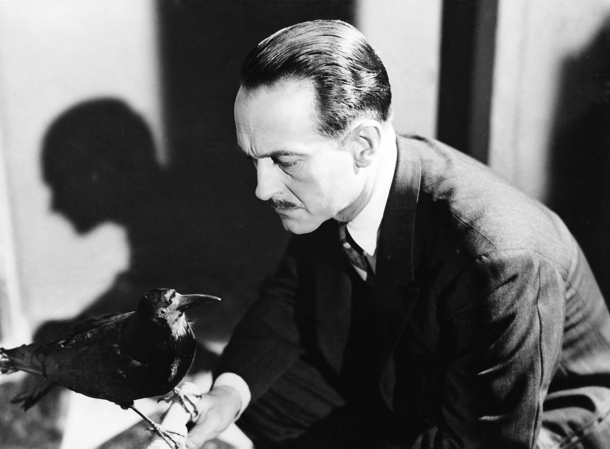
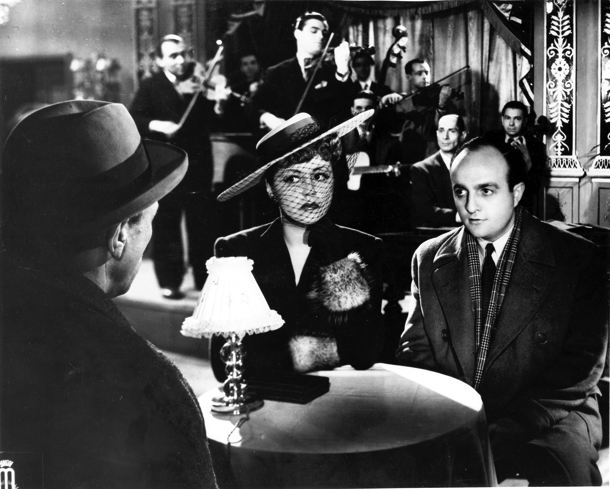
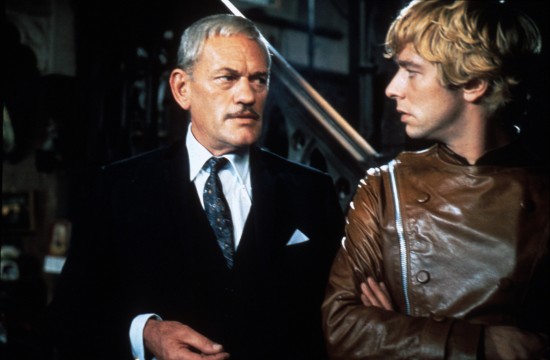

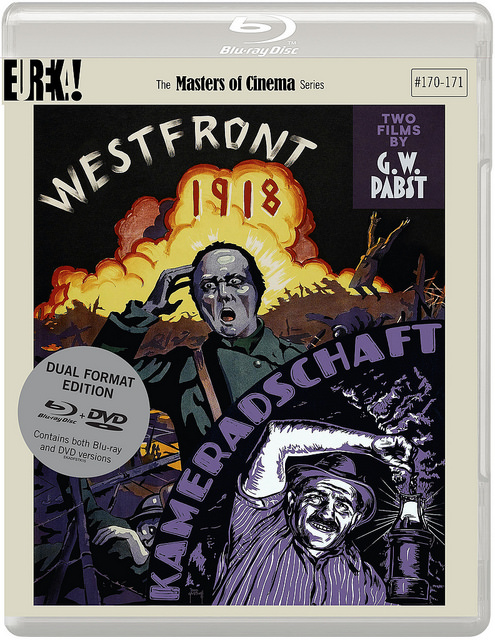


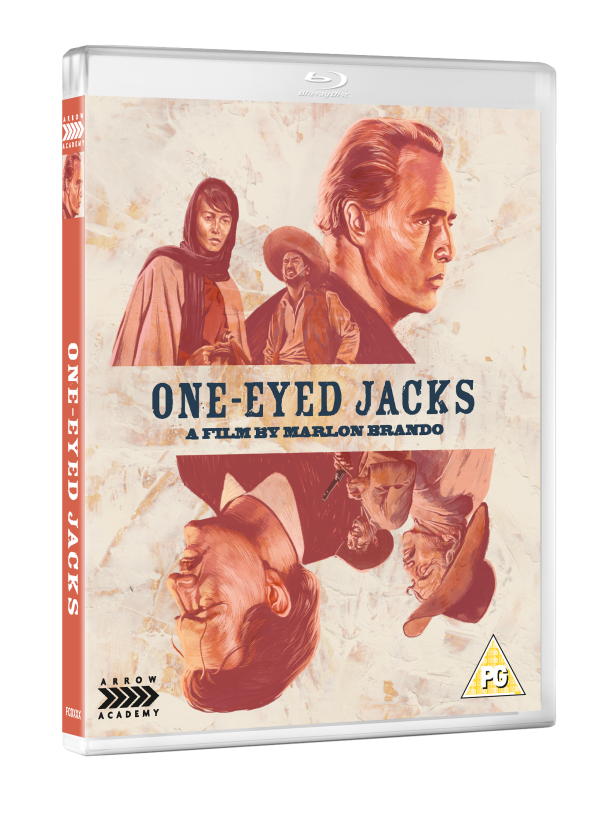
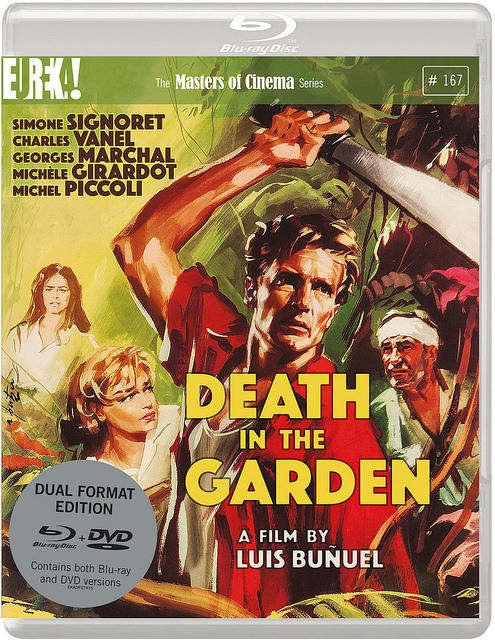
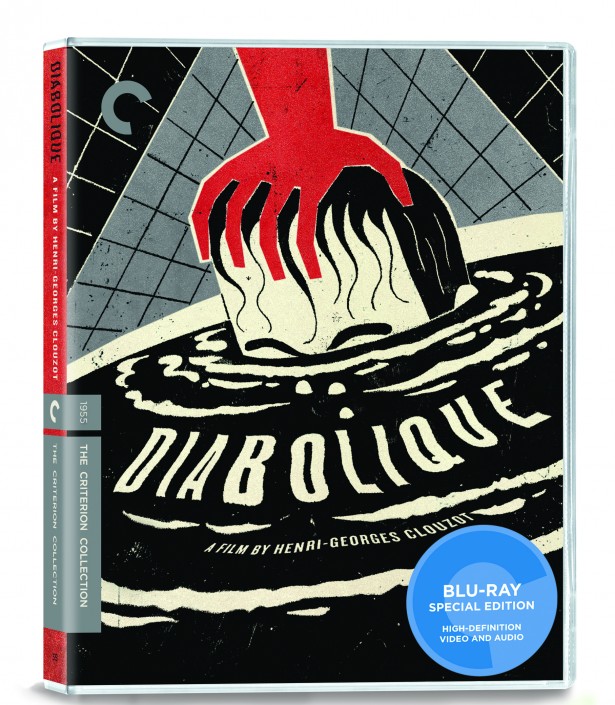
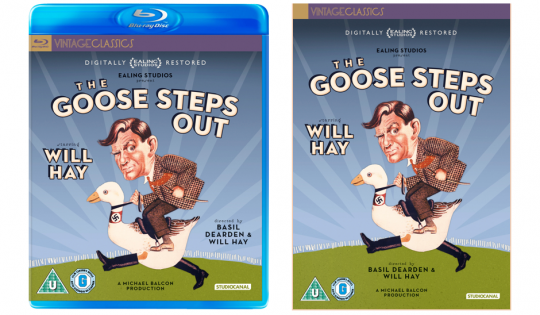
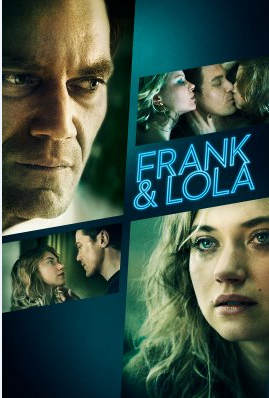

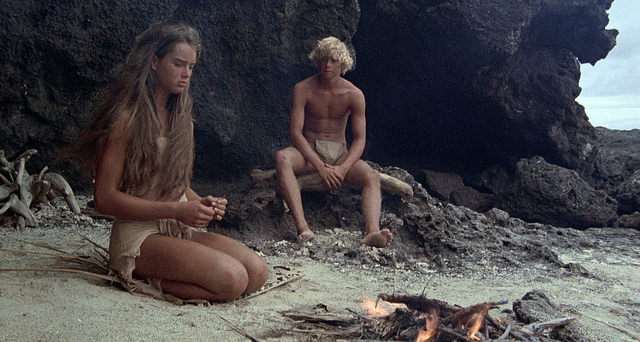
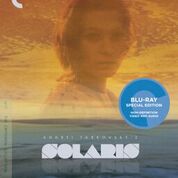
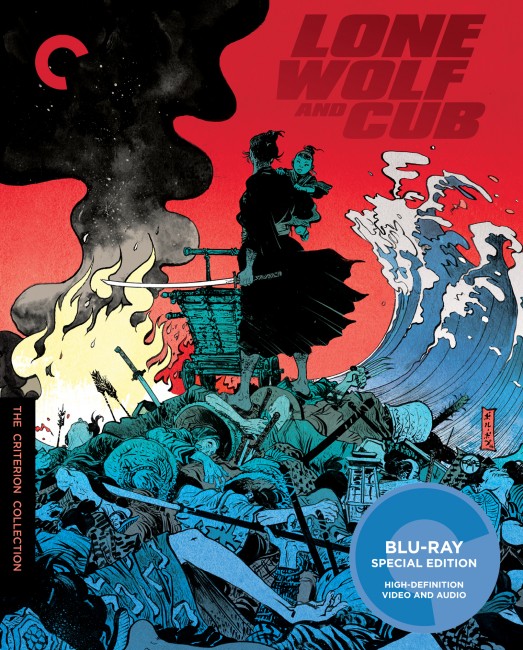
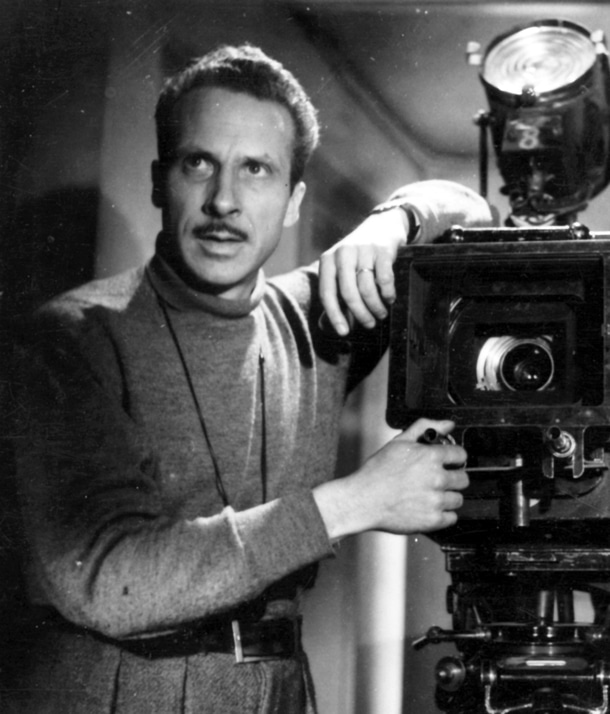
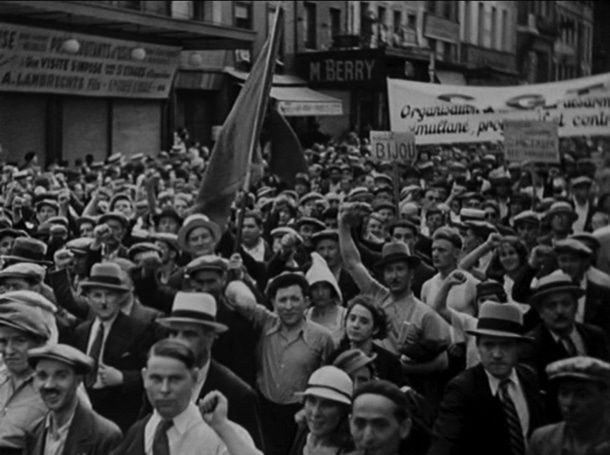
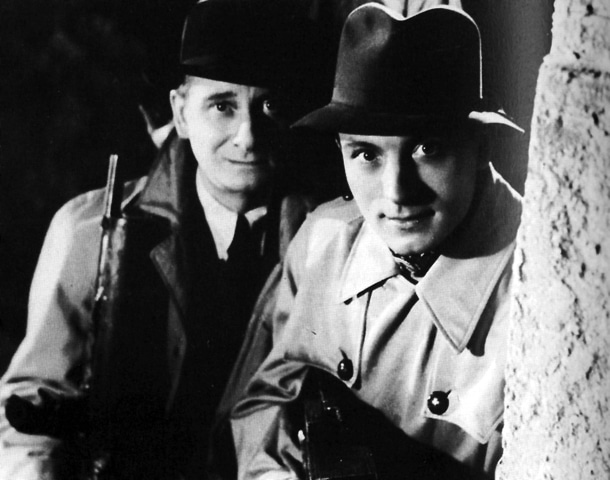
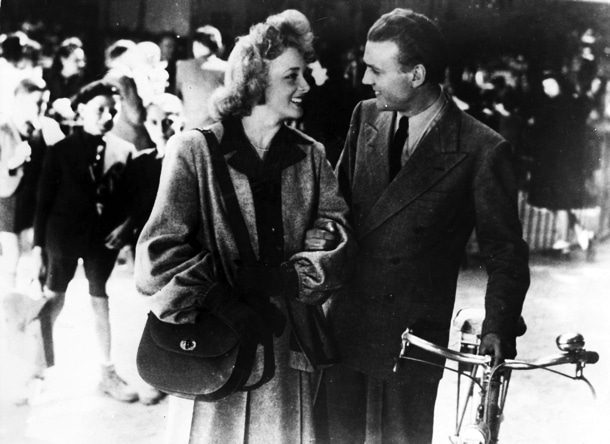
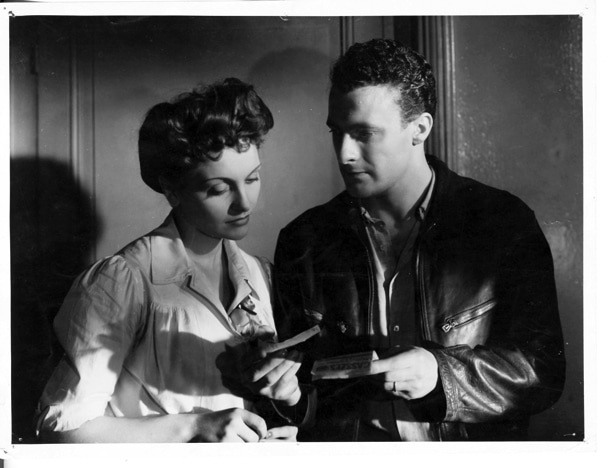
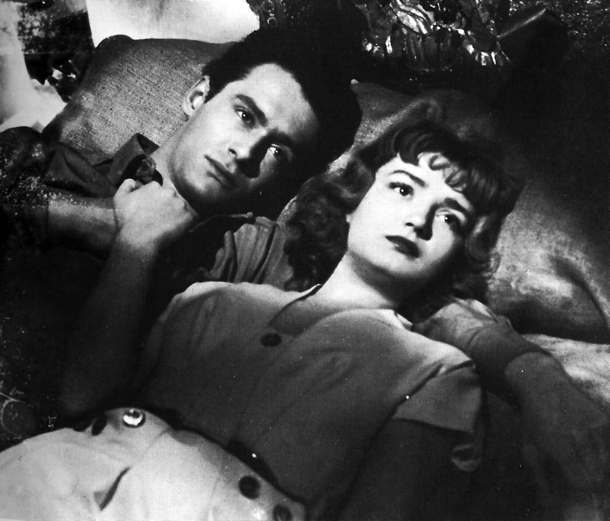
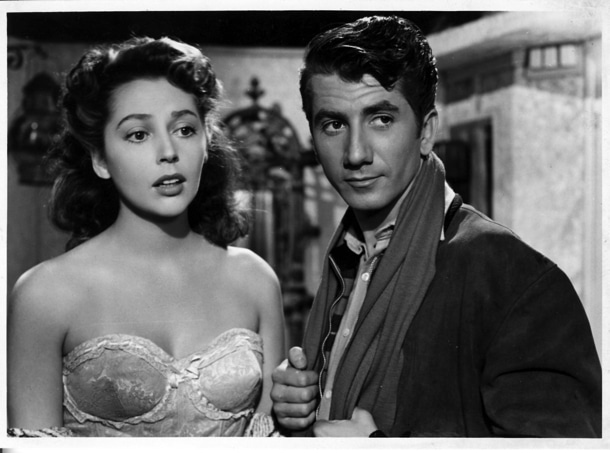
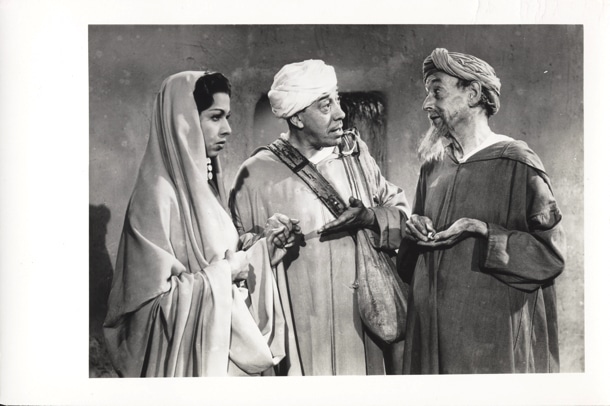
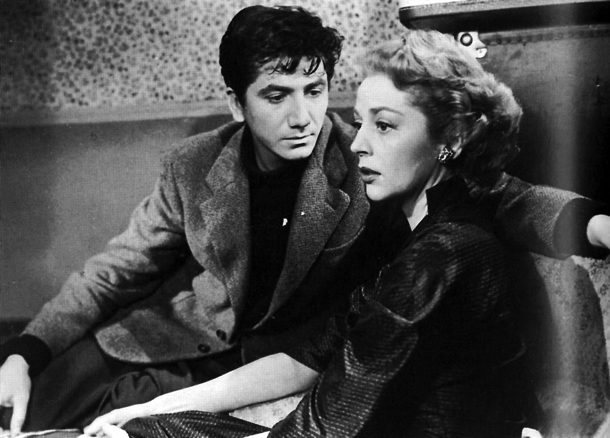
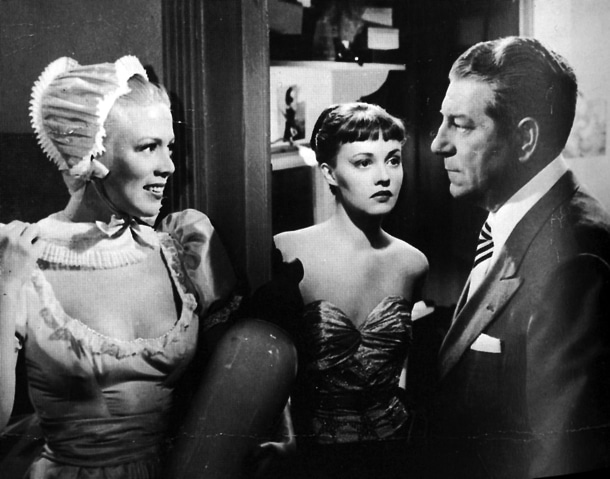
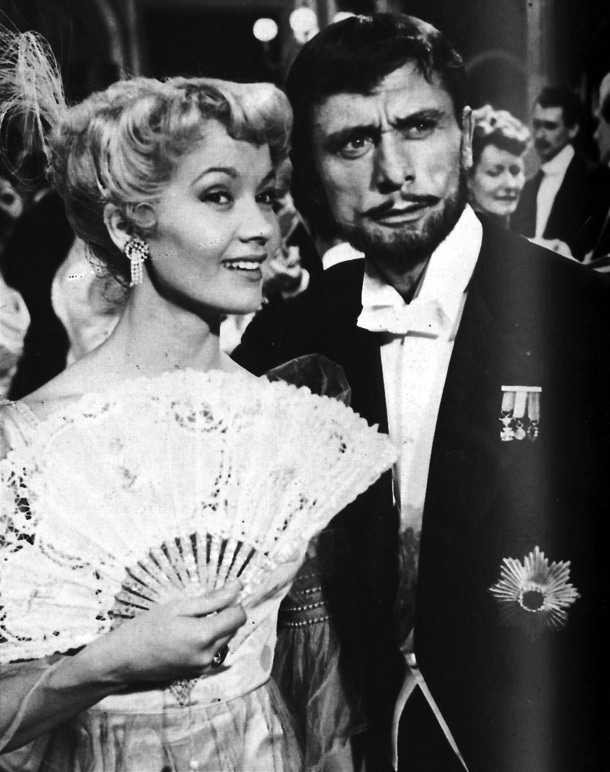
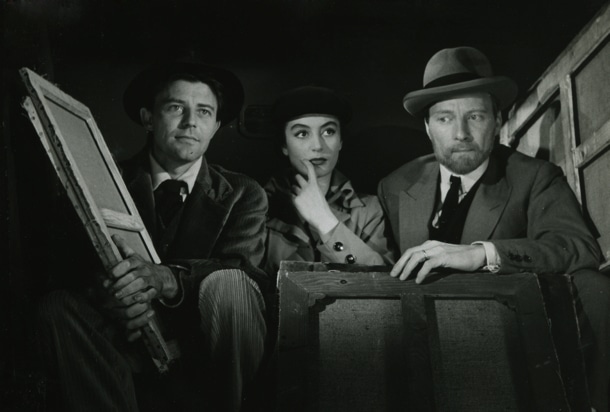
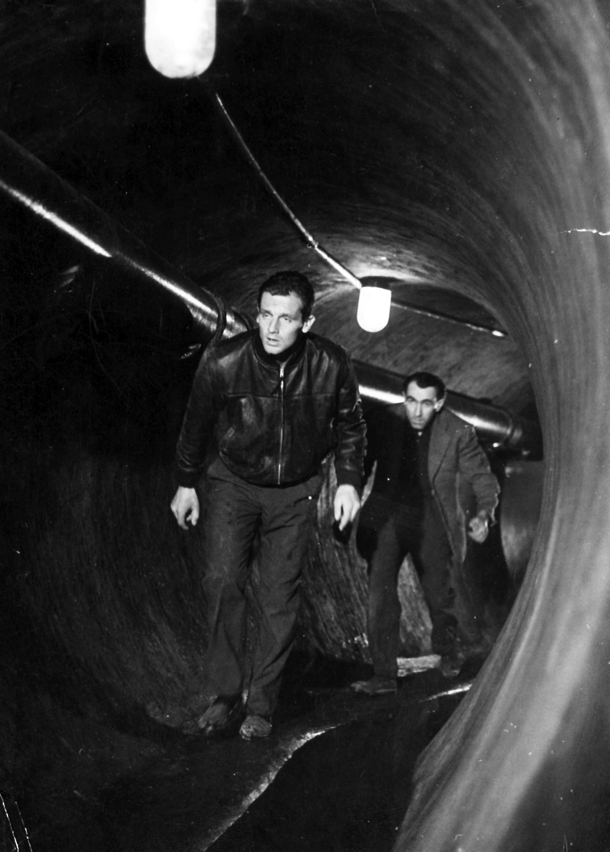


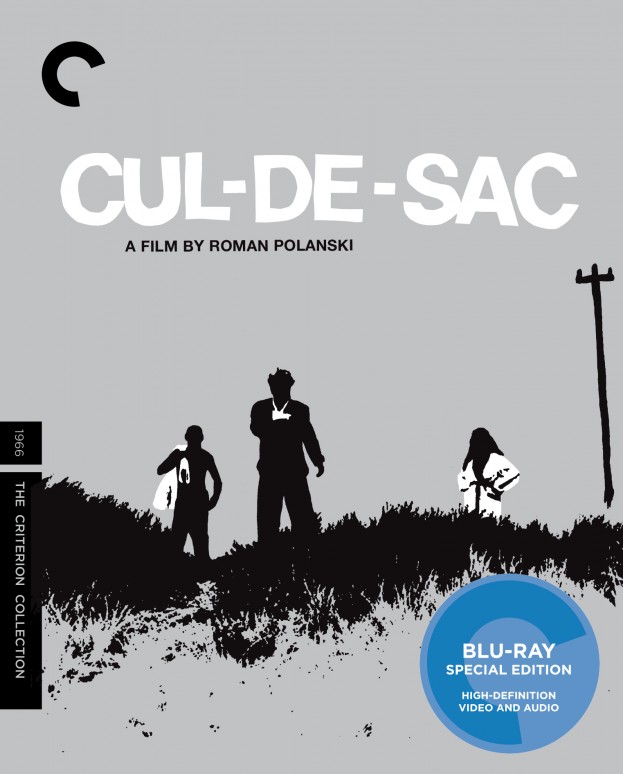
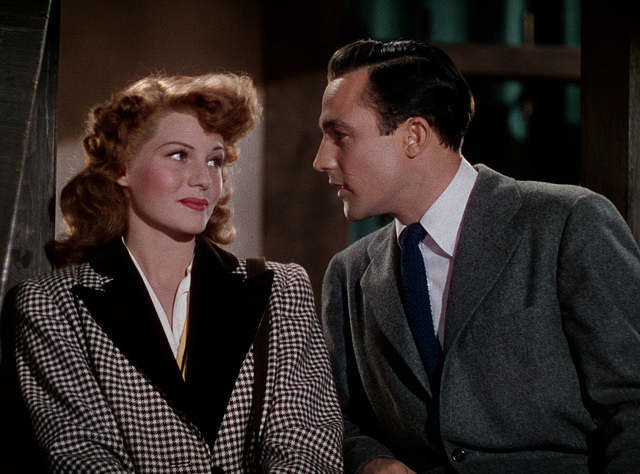
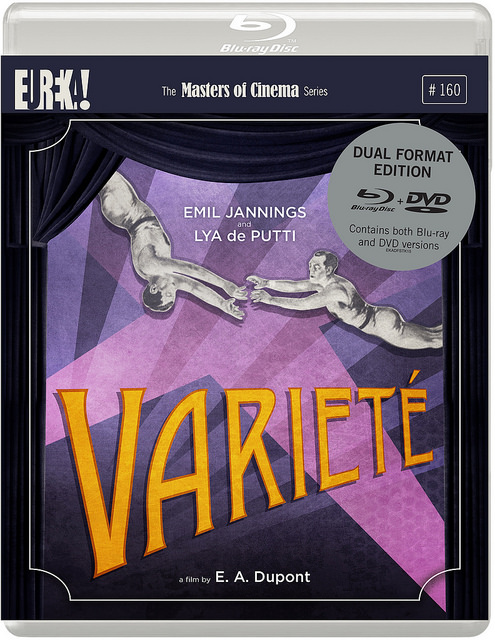
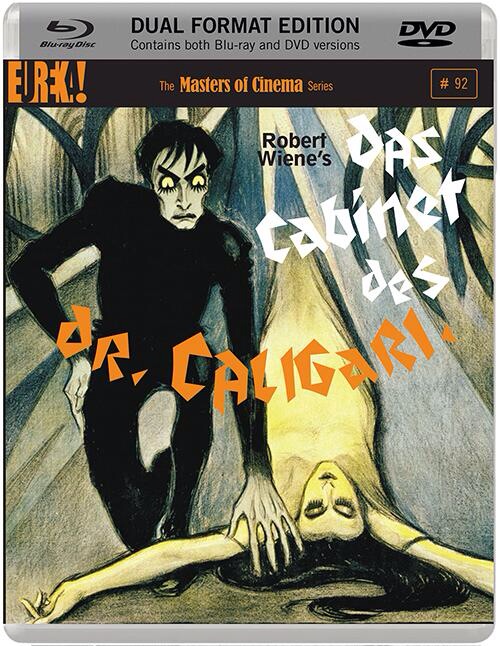
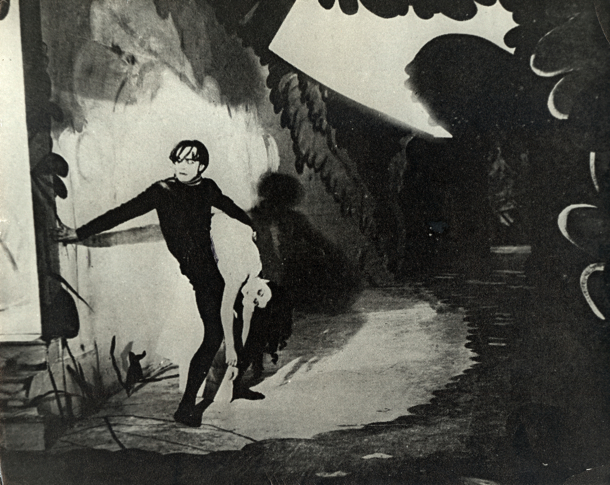
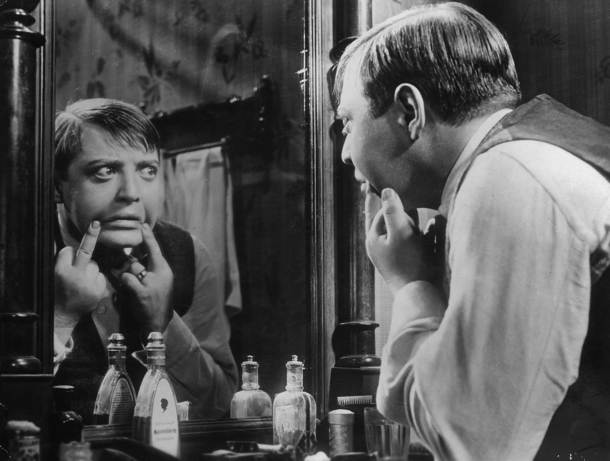
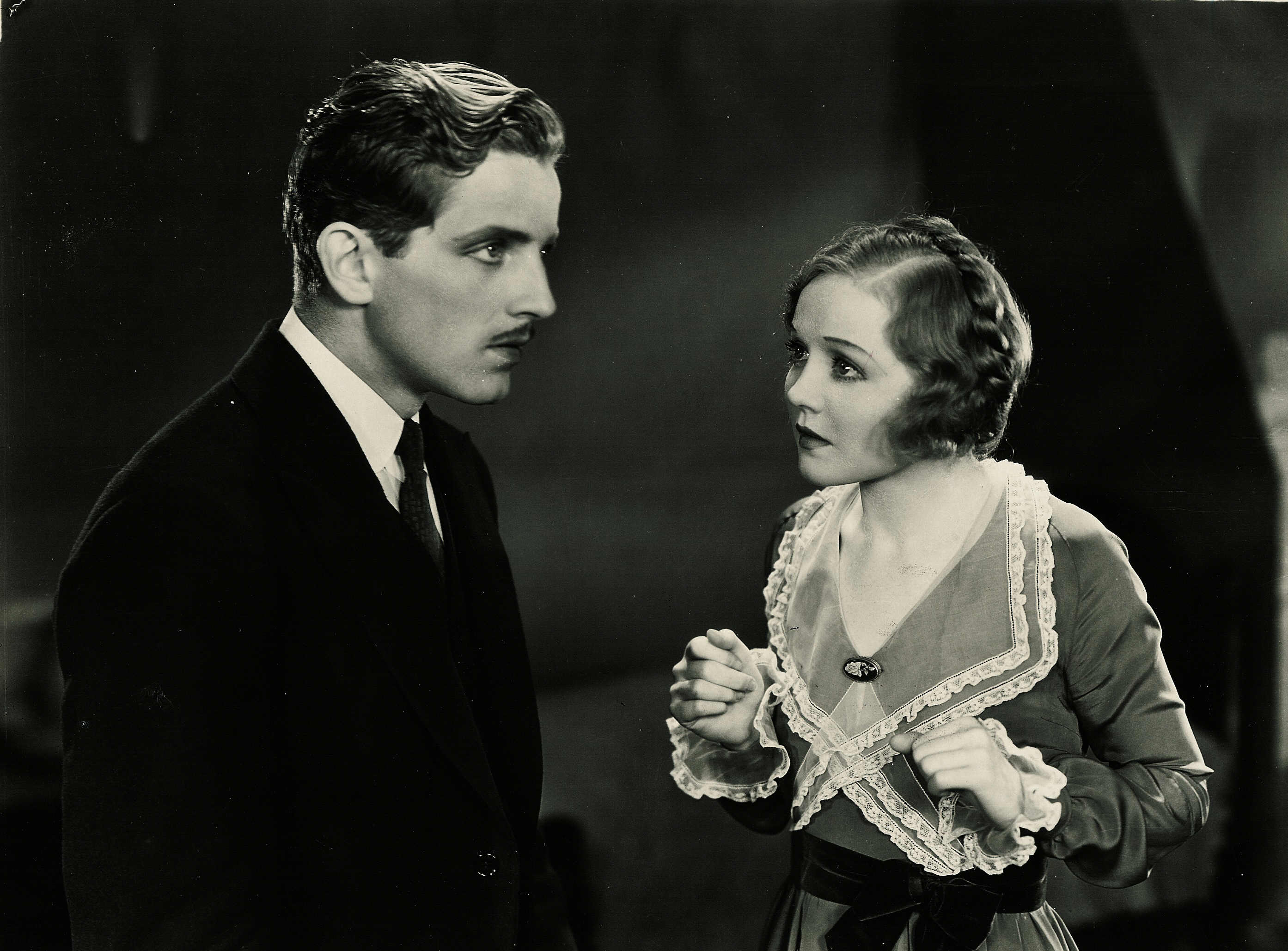
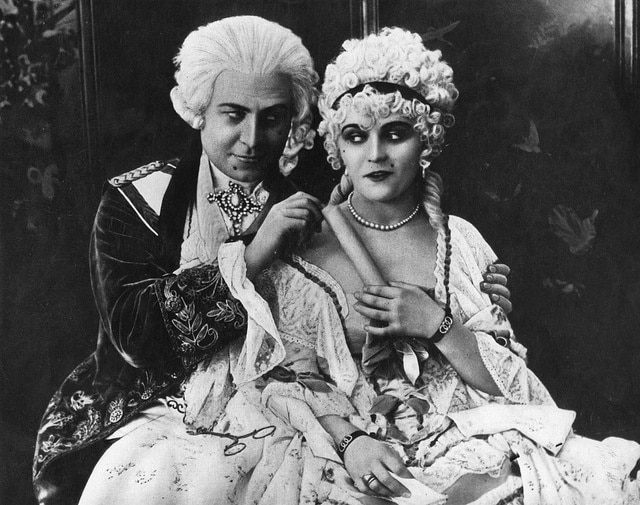

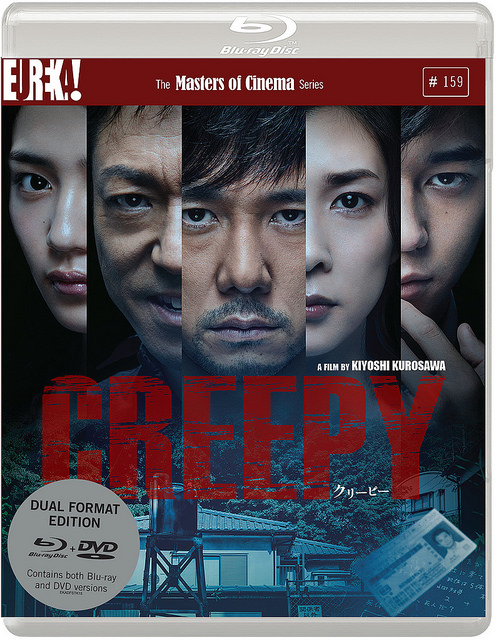
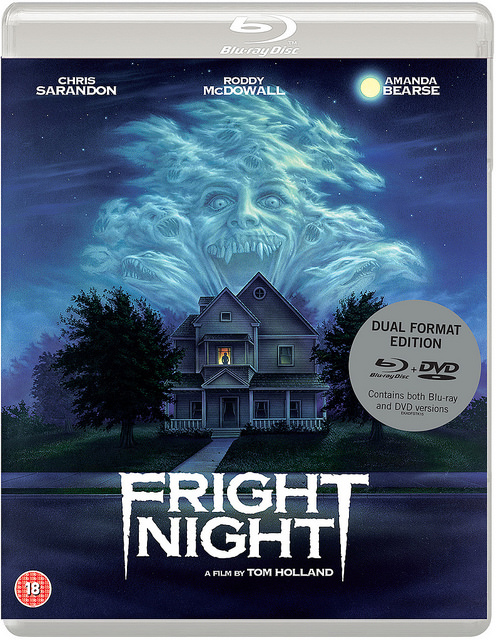
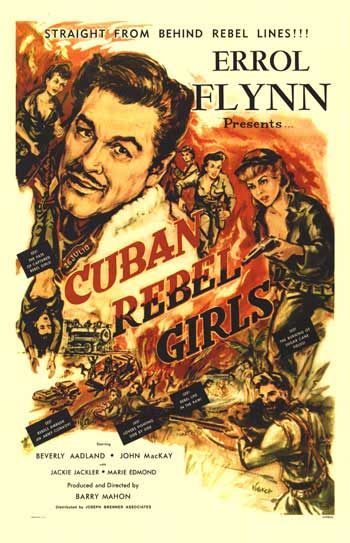

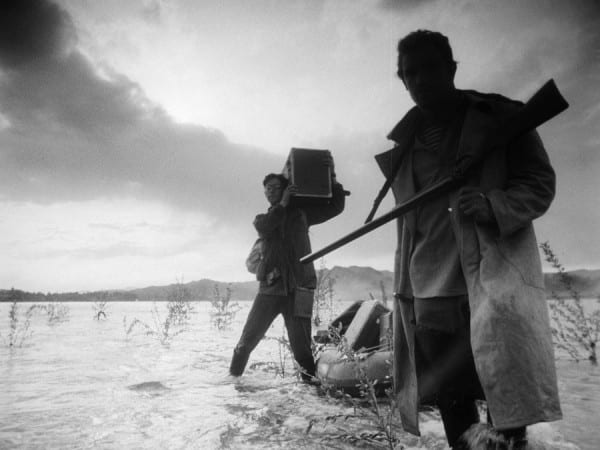

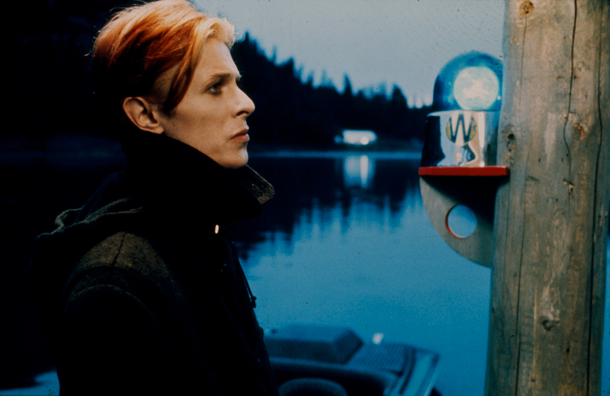
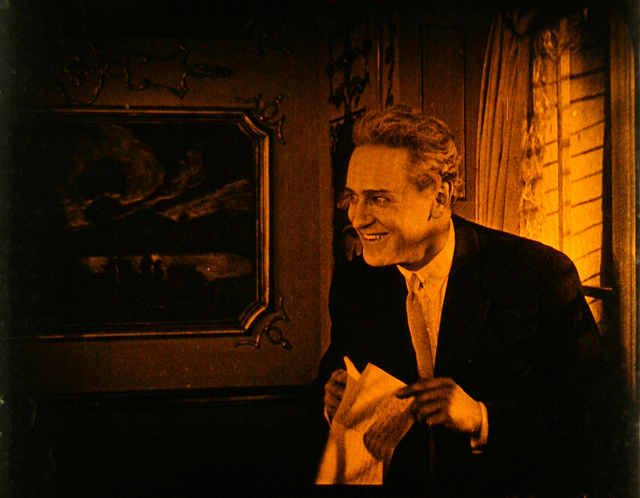


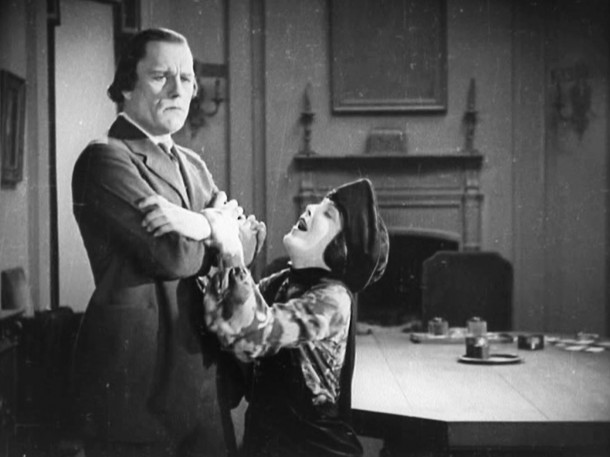

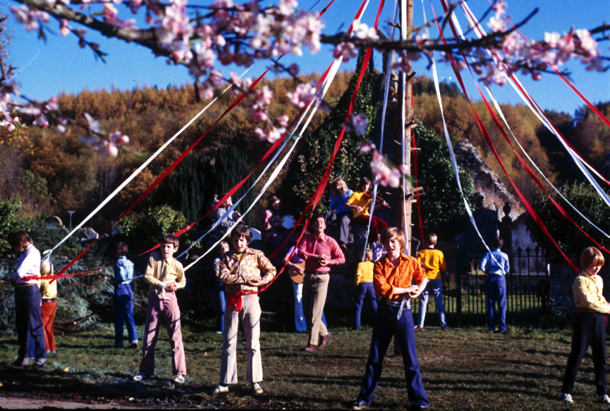
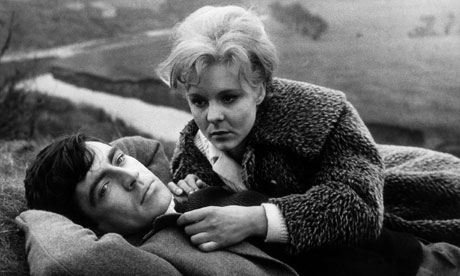
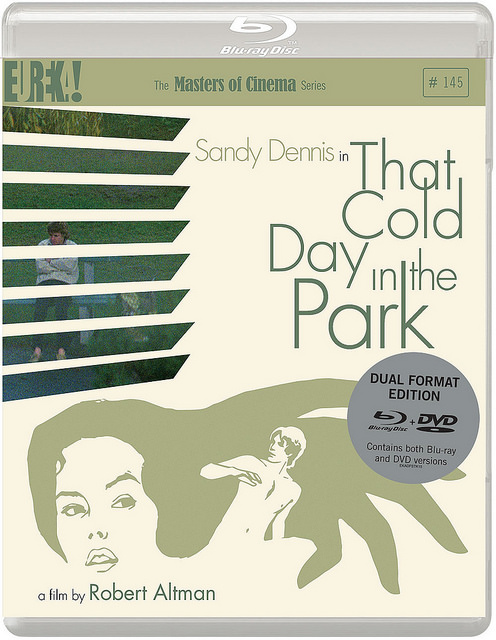

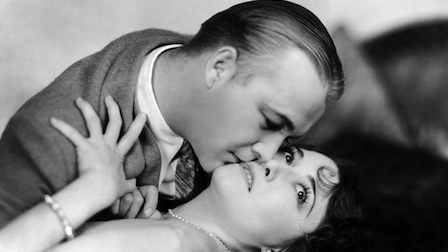


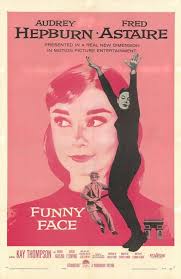

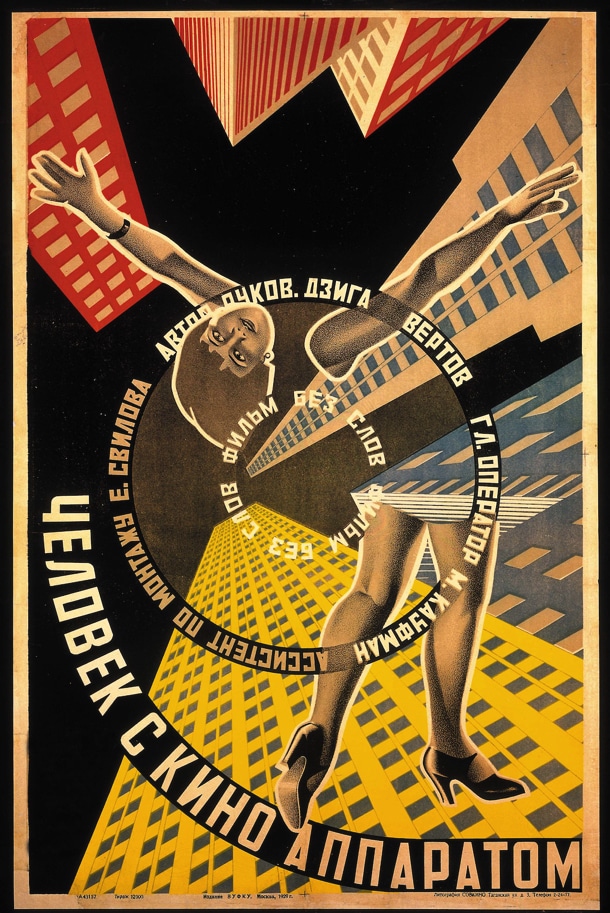
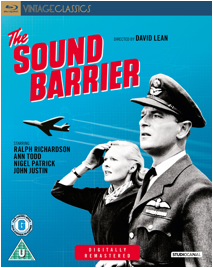
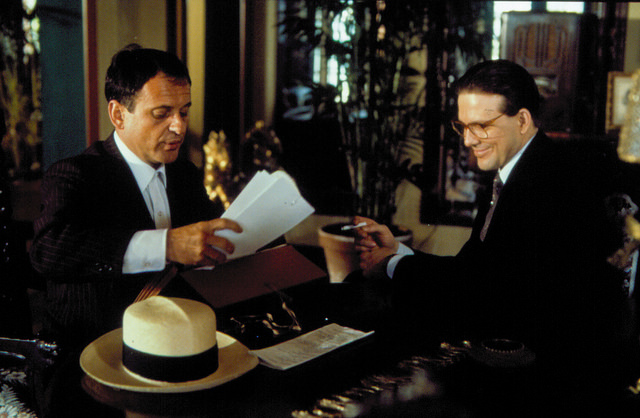

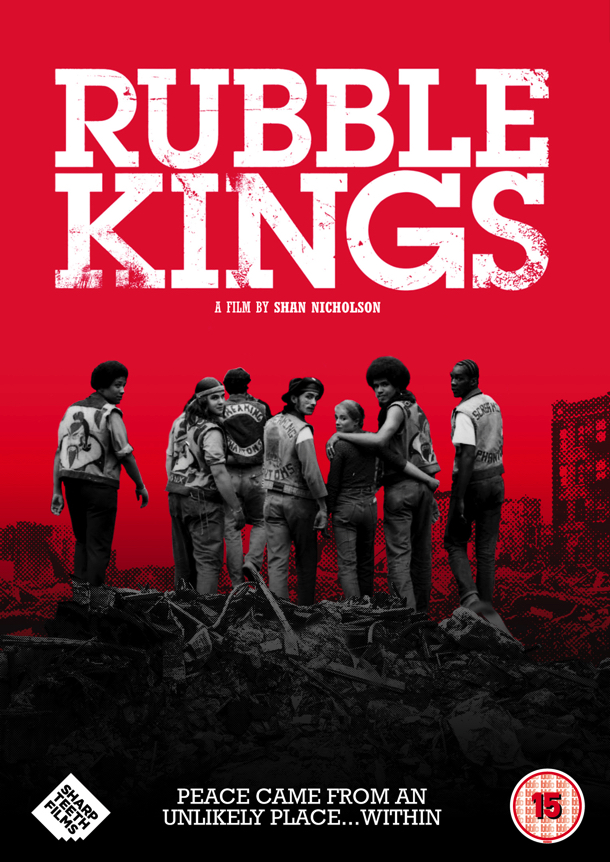
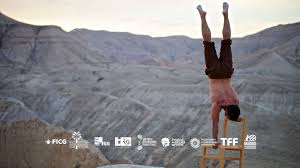
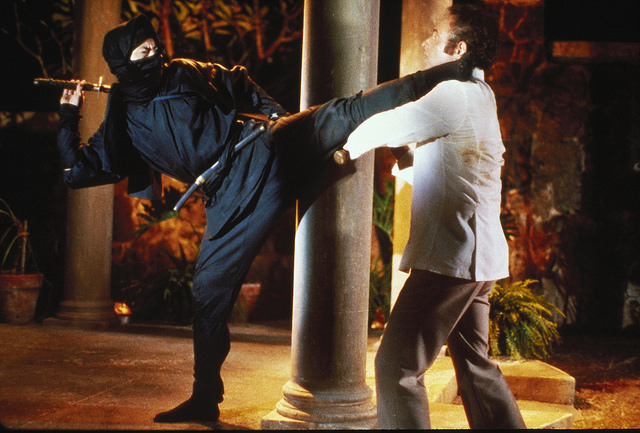
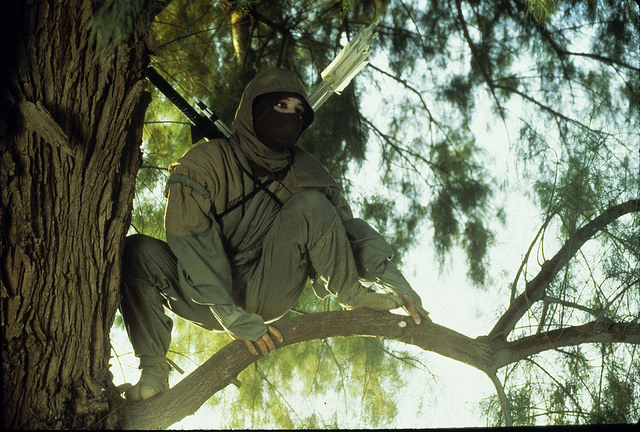
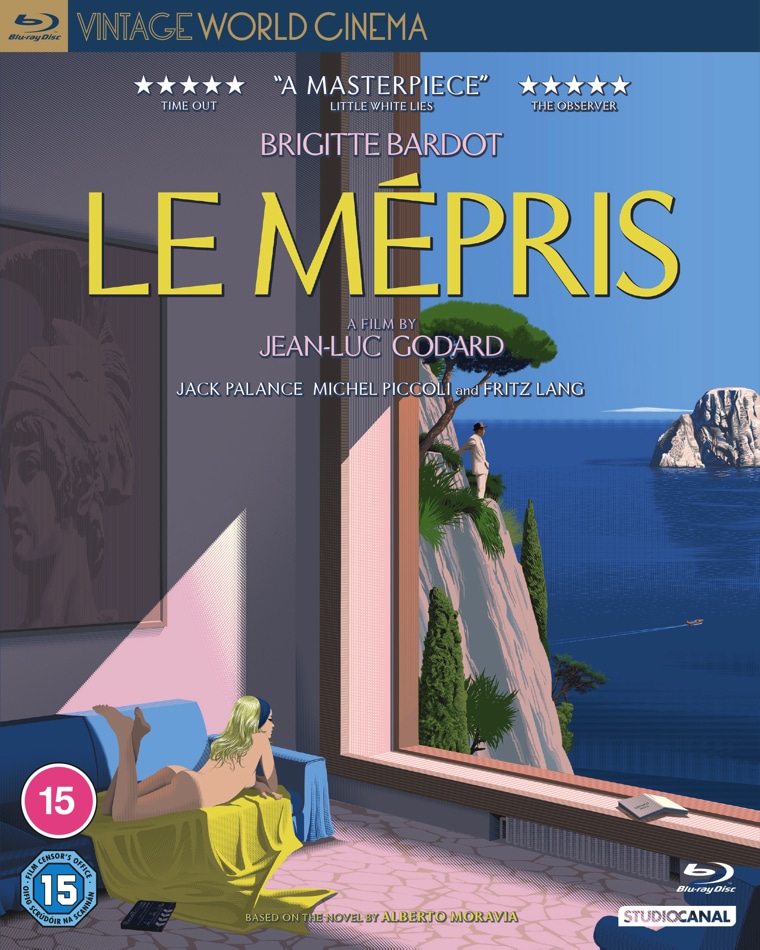
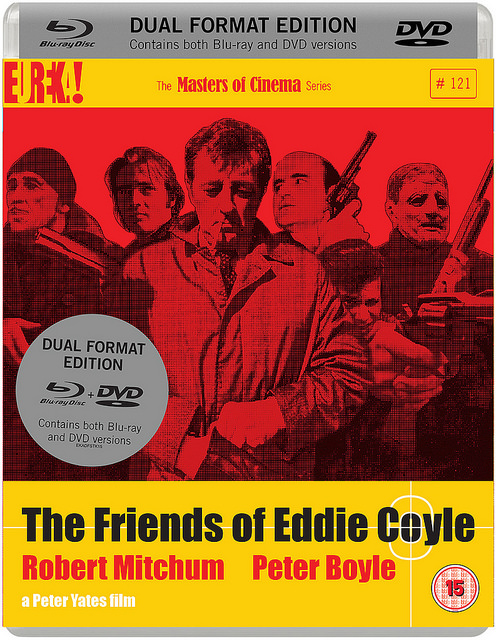

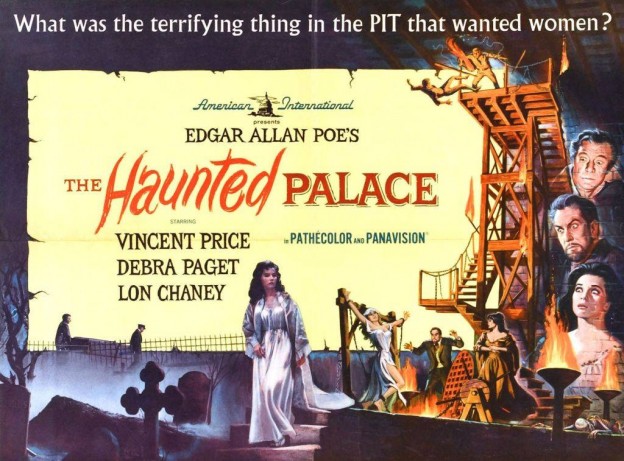
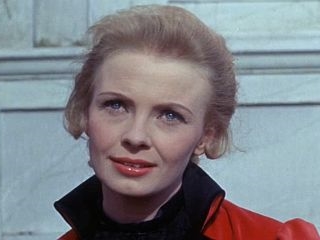
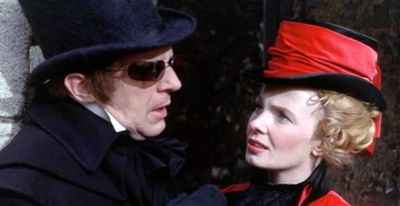



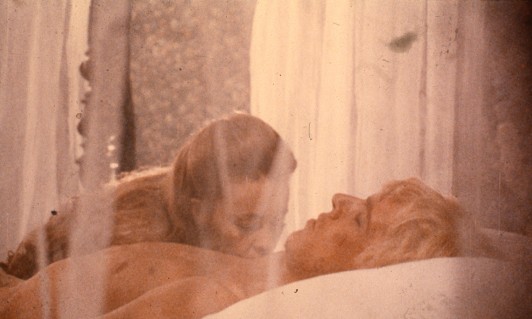
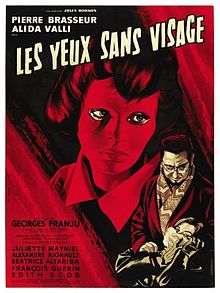

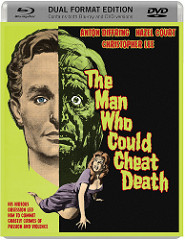
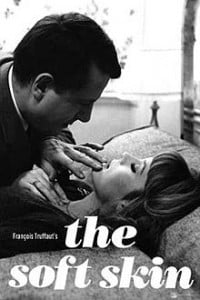 Truffaut’s La Peau Douce is known, in translation, as Soft Skin, as it best conveys the film’s vulnerability of character and minimal eroticism. It’s a superb, understated study of adultery that descends into a crime passionel.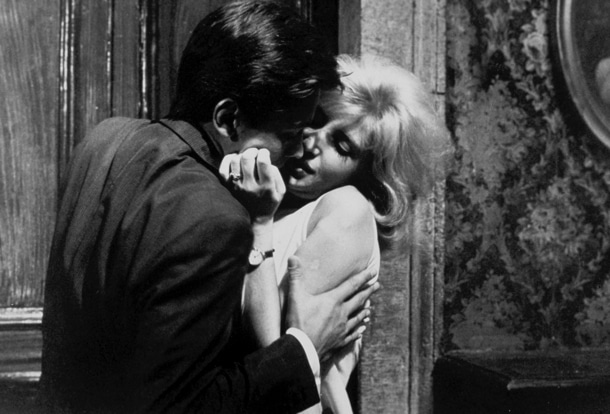
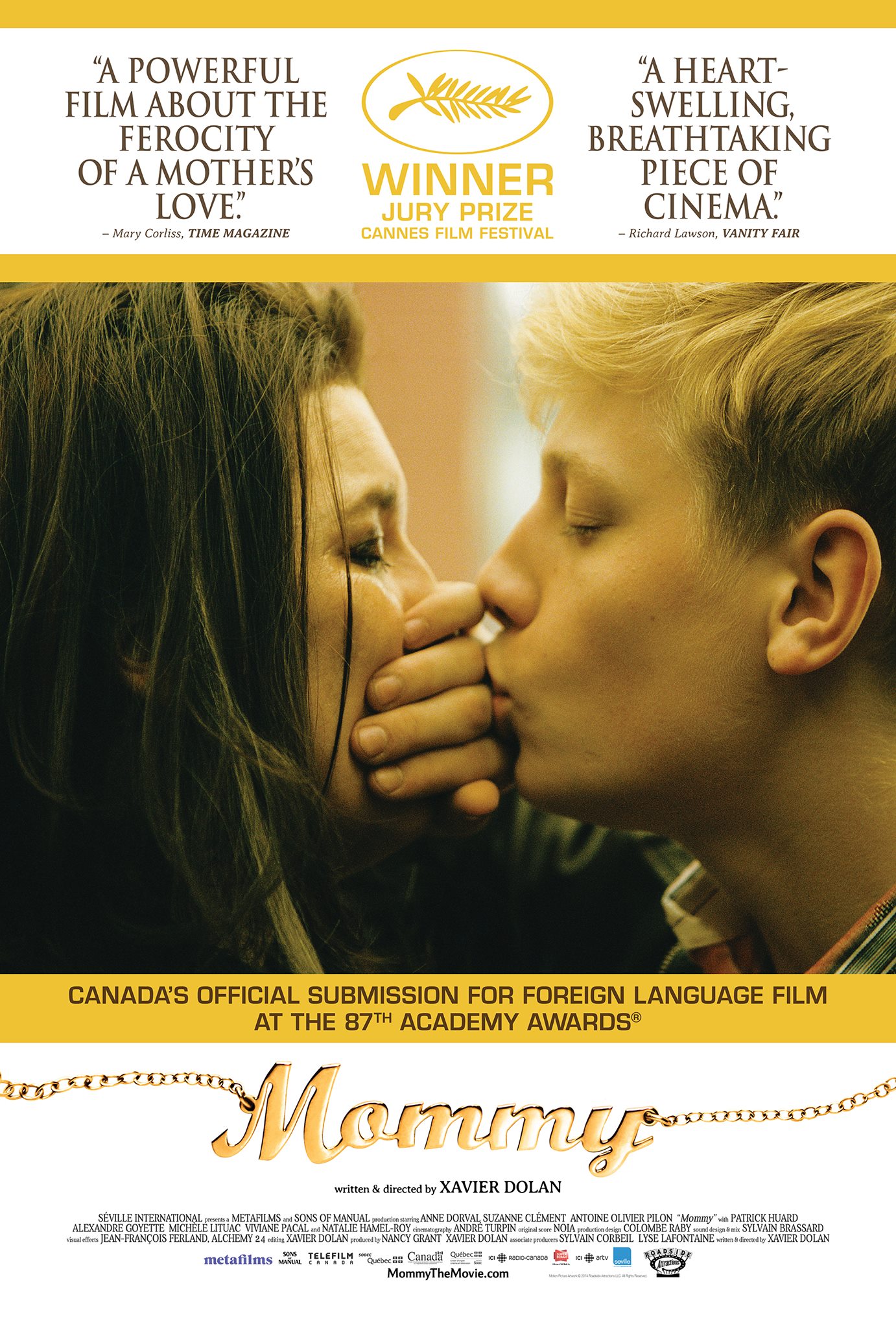
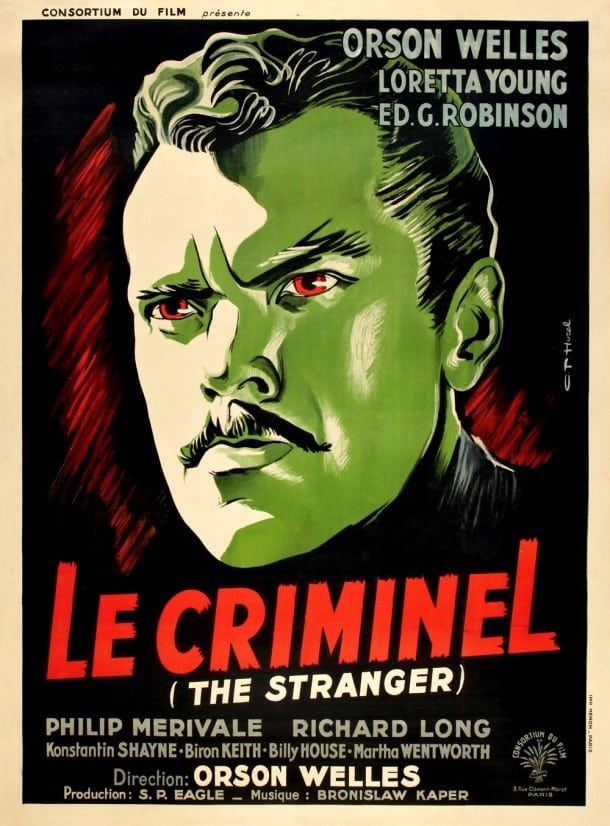
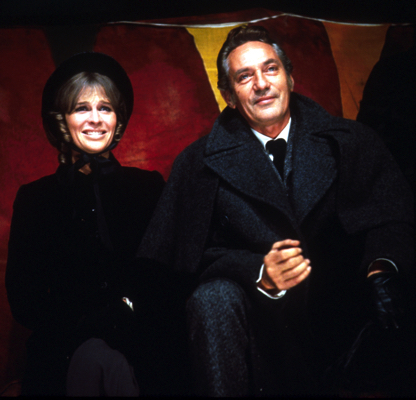

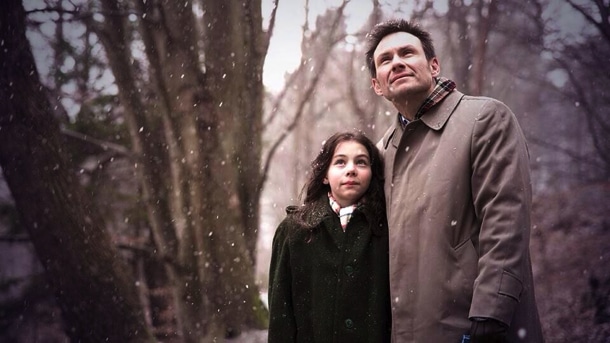

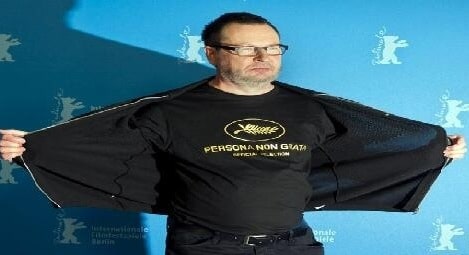
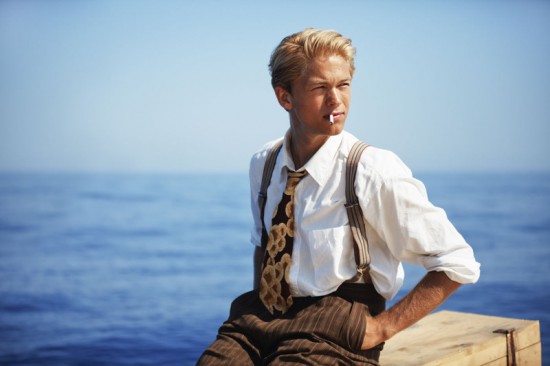


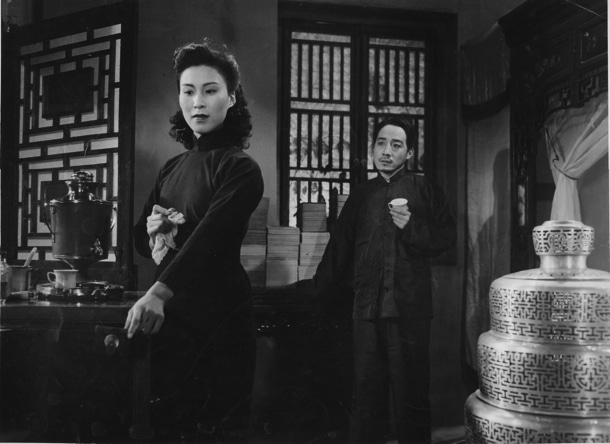

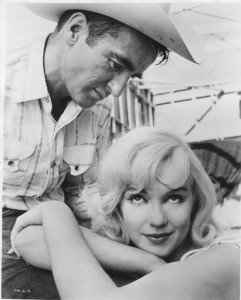 Dir.: John Huston; Cast: Marilyn Monroe, Clark Gable, Montgomery Clift, Eli Wallach, Thelma Ritter; USA 1960, 120 min.




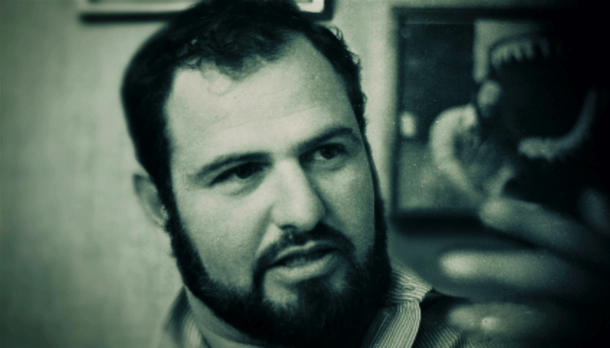
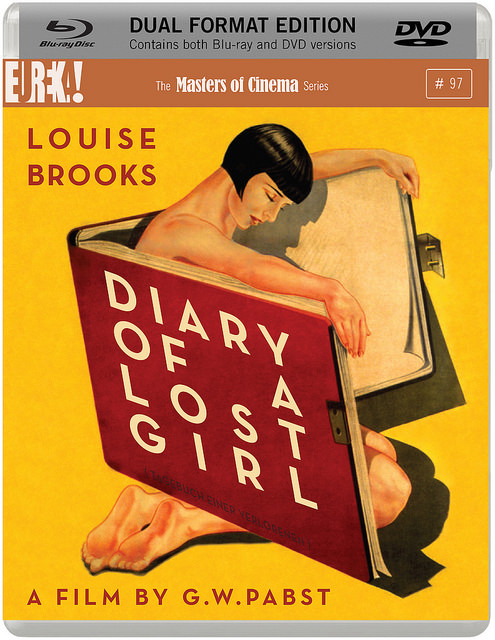
 Newly restored High Definition (1080p) presentation of the feature, transferred from original film elements by Universal