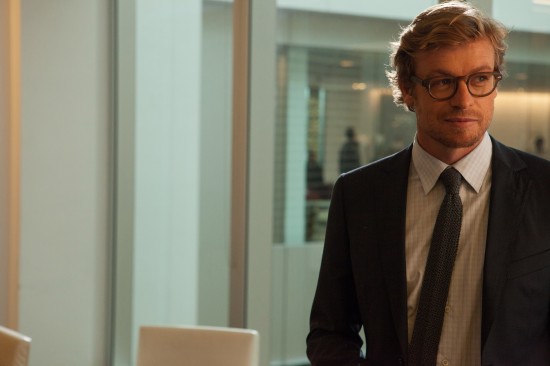
The U.S. Grand Jury Prize: Documentary/China | Dirs: Nanfu Wang/Jialing Zhang,
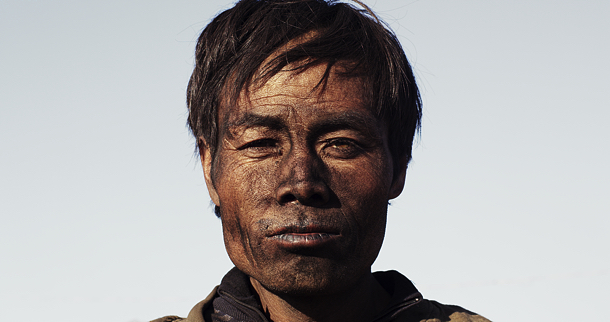
 photo by Nanfu Wang. ONE CHILD NATION After becoming a mother, a filmmaker uncovers the untold history of China’s one-child policy and the generations of parents and children forever shaped by this social experiment.
The U.S. Grand Jury Prize: Dramatic/USA | Dir/Wri Chinonye Chukwu
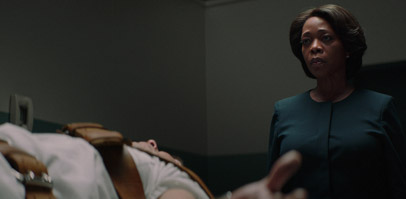 photo by Eric Branco
CLEMENCY: Years of carrying out death row executions have taken a toll on prison warden Bernadine Williams. As she prepares to execute another inmate, Bernadine must confront the psychological and emotional demons her job creates, ultimately connecting her to the man she is sanctioned to kill. Cast: Alfre Woodard, Aldis Hodge, Richard Schiff, Wendell Pierce, Richard Gunn, Danielle Brooks.
The World Cinema Grand Jury Prize: Documentary: Dirs: Tamara Kotevska, Ljubomir Stefanov | Macedonia
HONEYLAND – When nomadic beekeepers break Honeyland’s basic rule (take half of the honey, but leave half to the bees), the last female bee hunter in Europe must save the bees and restore natural balance.
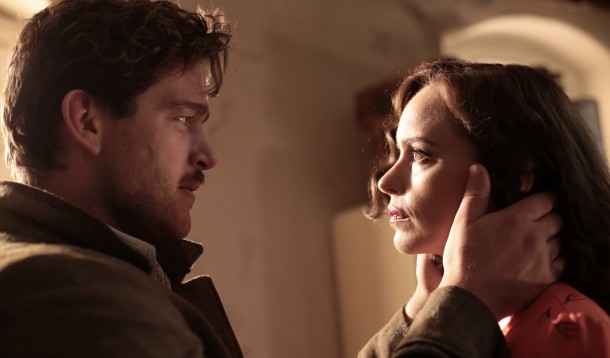
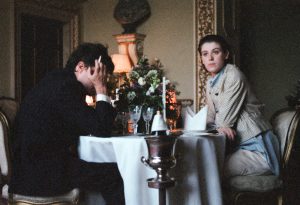 The Souvenir| photo by Agatha A. Nitecka. The World Cinema Grand Jury Prize: Dramatic | UK | Dir/wri: Joanna Hogg
THE SOUVENIR: A shy film student begins finding her voice as an artist while navigating a turbulent courtship with a charismatic but untrustworthy man. She defies her protective mother and concerned friends as she slips deeper and deeper into an intense, emotionally fraught relationship which comes dangerously close to destroying her dreams. Cast: Honor Swinton Byrne, Tom Burke, Tilda Swinton.
The Audience Award: U.S. Documentary, | USA Dir: Rachel Lears:
KNOCK DOWN THE HOUSE — A young bartender in the Bronx, a coal miner’s daughter in West Virginia, a grieving mother in Nevada and a registered nurse in Missouri build a movement of insurgent candidates challenging powerful incumbents in Congress. One of their races will become the most shocking political upset in recent American history. Cast: Alexandria Ocasio-Cortez.
The Audience Award: U.S. Dramatic, U.S.A. Dir/Wri: Paul Downs
BRITTANY RUNS A MARATHON — A woman living in New York takes control of her life – one city block at a time. Cast: Jillian Bell, Michaela Watkins, Utkarsh Ambudkar, Lil Rel Howery, Micah Stock, Alice Lee.
The Audience Award: World Cinema Documentary/Austria: Dir: Richard Ladkan
SEA OF SHADOWS/Austria – The vaquita, the world’s smallest whale, is near extinction as its habitat is destroyed by Mexican cartels and Chinese mafia, who harvest the swim bladder of the totoaba fish, the “cocaine of the sea.” Environmental activists, Mexican navy and undercover investigators are fighting back against this illegal multimillion-dollar business.
The Audience Award: World Cinema Dramatic/Denmark Dir: May el-Toukhy

QUEEN OF HEARTS — A woman jeopardises both her career and her family when she seduces her teenage stepson and is forced to make an irreversible decision with fatal consequences. Cast: Trine Dyrholm, Gustav Lindh, Magnus Krepper.
The Audience Award: NEXT, Alex Rivera, Cristina Ibarra
THE INFILTRATORS / U.S.A. (Directors: , Screenwriters: — A rag-tag group of undocumented youth – Dreamers – deliberately get detained by Border Patrol in order to infiltrate a shadowy, for-profit detention center. Cast: Maynor Alvarado, Manuel Uriza, Chelsea Rendon, Juan Gabriel Pareja, Vik Sahay.
The Directing Award: U.S. Documentary | USA Dirs: Steven Bognar and Julia
AMERICAN FACTORY — In post-industrial Ohio, a Chinese billionaire opens a new factory in the husk of an abandoned General Motors plant, hiring two thousand blue-collar Americans. Early days of hope and optimism give way to setbacks as high-tech China clashes with working-class America.
The Directing Award: U.S. Dramatic U.S.A. Dirs: Joe Talbot, Screenwriters: Joe Talbot,
THE LAST BLACK MAN IN SAN FRANCISCO — Jimmie Fails dreams of reclaiming the Victorian home his grandfather built in the heart of San Francisco. Joined on his quest by his best friend Mont, Jimmie searches for belonging in a rapidly changing city that seems to have left them behind.
The Directing Award: World Cinema Documentary NOR | Dir: Mads Brüggerwas
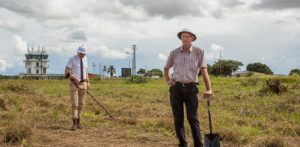 photo by Tore Vollan. Cold Case Hammarskjöld / Denmark, Norway, Sweden, Belgium — Danish director Mads Brügger and Swedish private investigator Göran Bjorkdahl are trying to solve the mysterious death of Dag Hammarskjold. As their investigation closes in, they discover a crime far worse than killing the Secretary-General of the United Nations.
The Directing Award: World Cinema Dramatic | Spain (Dir/Wri: Lucía Garibaldi,
THE SHARKS / Uruguay, Argentina – While a rumour about the presence of sharks in a small beach town distracts residents, 15-year-old Rosina begins to feel an instinct to shorten the distance between her body and Joselo’s. Cast: Romina Bentancur, Federico Morosini, Fabián Arenillas, Valeria Lois, Antonella Aquistapache.
The Waldo Salt Screenwriting Award: U.S. Dramatic USA | Dir: Pippa Blanco
SHARE— After discovering a disturbing video from a night she doesn’t remember, sixteen-year-old Mandy must try to figure out what happened and how to navigate the escalating fallout. Cast: Rhianne Barreto, Charlie Plummer, Poorna Jagannathan, J.C. MacKenzie, Nick Galitzine, Lovie Simone.
U.S. Documentary Special Jury Award for Moral Urgency| USA | Dir: Jacqueline Olive
ALWAYS IN SEASON — When 17-year-old Lennon Lacy is found hanging from a swing set in rural North Carolina in 2014, his mother’s search for justice and reconciliation begins as the trauma of more than a century of lynching African Americans bleeds into the present.
A U.S. Documentary Special Jury Award: Emerging Filmmaker USA : Liza Mandelup
JAWLINE — The film follows 16-year-old Austyn Tester, a rising star in the live-broadcast ecosystem who built his following on wide-eyed optimism and teen girl lust, as he tries to escape a dead-end life in rural Tennessee.
A U.S. Documentary Special Jury Award for Editing USA : Todd Douglas Miller
APOLLO 11 — A purely archival reconstruction of humanity’s first trip to another world, featuring never-before-seen 70mm footage and never-before-heard audio from the mission.
U.S. Documentary Special Jury Award for Cinematography | U.S.A. Dir: Luke Lorentzen
MIDNIGHT FAMILY / Mexico/DOC — In Mexico City’s wealthiest neighbourhoods, the Ochoa family runs a private ambulance, competing with other for-profit EMTs for patients in need of urgent help. As they try to make a living in this cutthroat industry, they struggle to keep their financial needs from compromising the people in their care.
SUNDANCE FILM FESTIVAL 2019 | 23 JANUARY – 3 FEBRUARY 2019 |

 Dir: James Whale | Wri: Benn Levy/J B Priestley | Cast: Boris Karloff| Charles Laughton | Eva Moore | Gloria Stuart | Melvyn Douglas| Raymond Massey | Horror / Comedy |US 75′
 Dir: Richard Lester | Writer: Charles Wood | Cast: John Lennon, Roy Kinnear, Michael Crawford, Michael Hordern, Jack MacGowran | UK Comedy 109′
 Dir: Elio Petri | Writer: Ugo Pirri | Cast: Ugo Tognazzi, Flavio Bucci, Daria Nicolodi | Italy | Comedy Drama 126′
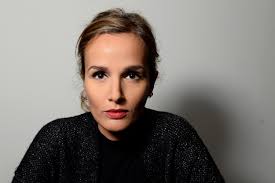
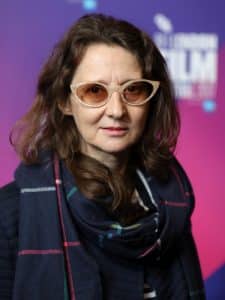 Hollywood may still be struggling with female representation as 2018 gets underway, but Europe has seen tremendous successes in the world of indie film where talented women of all ages are winning accolades in every sphere of the film industry, bringing their unique vision and intuition to a party that has continued to rock throughout the past year. Admittedly, there have been some really fabulous female roles recently – probably more so than for male actors. But on the other side of the camera, women have also created some thumping dramas; robust documentaries and bracingly refreshing genre outings: Lucrecia Martel’s mesmerising Argentinian historical fantasy ZAMA (LFF/left) and Julia Ducournau’s Belgo-French horror drama RAW (below/right) have been amongst the most outstanding features in recent memory. All these films provide great insight into the challenges women continue to face, both personally and in society as a whole, and do so without resorting to worthiness or sentimentality. So as we go forward into another year, here’s a flavour of what’s been happening in 2017.
 It all started at SUNDANCE in January where documentarian Pascale Lamche’s engrossing film about Winnie Mandela, WINNIE, won Best World Doc and Maggie Betts was awarded a directing prize for her debut feature NOVITIATE, about a nun struggling to take and keep her vows in 1960s Rome. Eliza Hitman also bagged the coveted directing award for her gay-themed indie drama BEACH RATS, that looks at addiction from a young boy’s perspective.
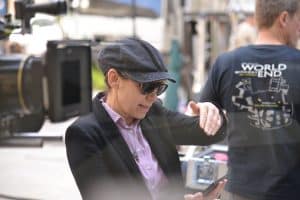 Meanwhile, back in Europe, BERLIN‘s Golden Bear went to Hungarian filmmaker Ildiko Enyedi (right) for her thoughtful and inventive exploration of adult loneliness and alienation BODY AND SOUL. Agnieska Holland won a Silver Bear for her green eco feature SPOOR, and Catalan newcomer Carla Simón went home with a prize for her feature debut SUMMER 1993 tackling the more surprising aspects of life for an orphaned child who goes to live with her cousins. CANNES 2017, the festival’s 70th celebration, also proved to be another strong year for female talent. Claire Simon’s first comedy – looking at love in later life – LET THE SUNSHINE IN was well-received and provided a playful role for Juliette Binoche, which she performed with gusto. Agnès Varda’s entertaining travel piece FACES PLACES took us all round France and finally showed Jean-Luc Godard’s true colours, winning awards at TIFF and Cannes. Newcomers were awarded in the shape of Léa Mysius whose AVA won the SACD prize for its tender exploration of oncoming blindness, and Léonor Séraille whose touching drama about the after-effects of romantic abandonment MONTPARNASSE RENDEZVOUS won the Caméra D’Or.
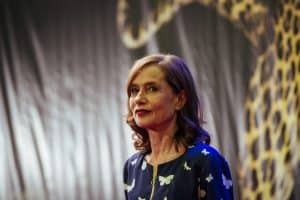 The Doyenne of French contemporary cinema Isabelle Huppert won Best Actress in LOCARNO 2017 for her performance as a woman who morphs from a meek soul to a force to be reckoned with when she is struck by lightening, in Serge Bozon’s dark comedy MADAME HYDE. Huppert has been winning accolades since the 1970s but she still has to challenge Hollywood’s Ann Doran (1911-2000) on film credits (374) – but there is plenty of time!). Meanwhile, Nastassja Kinski was awarded a Lifetime Achievement Honour for her extensive and eclectic contribution to World cinema (Paris,Texas, Inland Empire, Cat People and Tess to name a few).
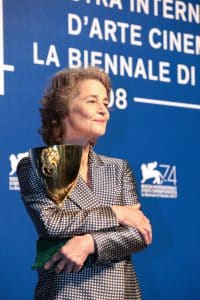 With a Jury headed by Annette Bening, VENICE again showed women in a strong light. Away from the Hollywood-fraught main competition, this year’s Orizzonti Award was awarded to Susanna Nicchiarelli’s NICO, 1988, a stunning biopic of the final years of the renowned model and musician Christa Pfaffen, played by a feisty Trine Dyrholm. And Sara Forestier’s Venice Days winning debut M showed how a stuttering girl and her illiterate boyfriend help each other overcome adversity. Charlotte Rampling won the prize for Best Actress for her portrait of strength in the face of her husbands’ imprisonment in Andrea Pallaoro’s HANNAH.
 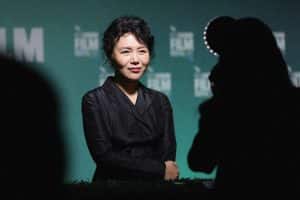 At last but not least, Hong Kong director Vivianne Qu (left/LFF) was awarded the Fei Mei prize at PINGYAO’s inaugural CROUCHING TIGER, HIDDEN DRAGON film festival and the Film Festival of India’s Silver Peacock for her delicately charming feature ANGELS WEAR WHITE that deftly raises the harrowing plight of women facing sexual abuse in the mainland. It seems that this is a hot potato the superpowers of China and US still have in common. But on a positive note, LADYBIRD Greta Gerwig’s first film as a writer and director, has been sweeping the boards critically all over the US and is the buzzworthy comedy drama of 2018 (coming in February). So that’s something else to look forward to. MT