
Dir: Carlos Hugo Christiansen | Argentina, Noir 85′
Argentine director/co-writer Carlos Hugo Christiansen (1914-1999) was one of the leading lights of Argentine cinema during its “Golden Age” after WWII, and directed 54 feature films that pushed the boundaries of what was considered permissible back in the day. Together with Alejandro Casona, Christiansen – who was of Danish parentage – adapted three short stories written by the “King of Gloom” Cornell Woolrich (Rear Window), another leading proponent of of Film Noir. In 1937 Christiansen decided to let If I Die before I wake stand alone with a running time of 73 minutes, leaving Alguin al telefono and El Pajaro as a well matched duo of darkness under the common title Nunca Abre Esa Puerta.
Both features are set in a domestic environment which somehow heightens the seething atmosphere of terror that gradually seeps into both films, especially as a women are the target of suppressed and confused male emotions of jealousy and revenge. Alguin stars Angel Magaña as Raul Valdez whose sister Luisa (Dumas) is in thrall to a shady old man (Fiorito) who wants her body and the gambling debts she owes him.
Raul’s interest in his sister is more insidious than he cares to admit to himself, but he is also bound by a brotherly desire to defend her honour and avenge her death. Naturally Christiansen had to handle this in a discrete narrative so as not to upset the influential Catholic Church. We see Raul moving around his sister’s neo-modernist apartment like a naughty schoolboy up to no good on the pretence of offering her ‘brotherly protection’. But Raul’s jealousy eventually explodes and he hits Luisa, suspecting her debtor of competing for her affections. Poor Luisa is also being terrorised by mysterious phone-calls causing her to commit suicide. Raul puts two and two together and – quiet wrongly – suspects the culprit is also the old man. But he is in for a surprise. Soon we see him being threatened by the same calls that caused Luisa to take her own life.
El Pajaro features one of Woolrich’s most famous – and recurring villains – the whistler. Each time recidivist criminal Daniel (Roberto Escalada) offends, he can’t help whistling. Once again the focus is the family, and sexual jealousy rears its head with the males in denial of their feelings: this time the trio involves Daniel, his accomplice Raul (Luis Otero) and Maria (Norma Jimenez) who is Daniel’s childhood love and now lives with her blind mother Rosa (Ilde Pirovano). Raul represses his not-so-brotherly love for his sister Maria, and Daniel is arrogant and self-centred, preferring to kill instead of love. Daniel is the proto-type psychopath of the Woolrich oeuvre, a man incapable of love. Chiaroscuro camerawork is a vital element allowing Rosa to tell the difference between night and day (“it’s a different kind of shadow”).
Alguin al telefono and El Pajaro are worlds apart in their social milieux, but they both focus on family dysfunction. Christiansen pictures this languid descent into darkness for both his anti-heroes as their characters implode – a central element of noir cinema – at a time when the sanctity of the family and Church were paramount in Argentina. AS
ARGENTINA NOIR CINEMA | VIENNALE 2022
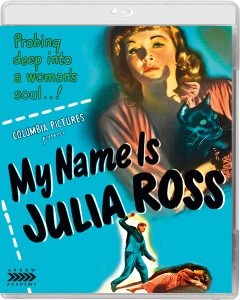 Dir: Joseph H. Lewis; Wri: Muriel Roy Bolton, Music Mischa Bakaleinikoff, Art Director Jerome Pycha Jr | Cast: Nina Foch May Whitty George Macready Roland Varno Anita Bolster Doris Lloyd | Noir thriller US, 64’
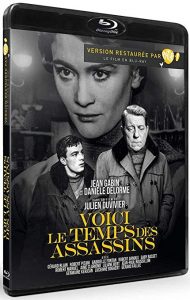 But Julien Duvivier’s 1956 thriller DEADLIER THAN THE MALE (Voici les temps des Assassins) somehow manages to outdo them all when it comes to violent women in film Noir: Catherine (Delorme) is the daughter of the drug depending Gabrielle (Bogaert), and tries to escape from the milieu by marrying the restaurant owner Andre Chatelin (Gabin), who has divorced her mother. Telling him that Gabrielle is dead, the scheming Catherine succeeds in marrying the much older man, who soon learns that his wife is lying about her mother. He more or less imprisons her with her mother Antoinette (Bert), also a restaurant owner, who kills her chicken with a whip – which she also uses on Catherine. The frightened woman asks Andre’s friend, the student Gerard (Blain), to kill her husband, but when he refuses, she kills him. Her end – by the fangs of a particular vicious animal – is particularly gruesome. Again, the images of Armand Thirad are undeserving of this blatant ideology.
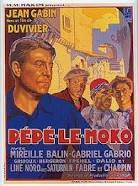 The notorious Pépé LE MOKO (Jean Gabin, in a truly iconic performance) plunges into the gangster underworld as a wanted man: women long for him, rivals hope to destroy him, and the law is breathing down his neck at every turn. On the lam in the labyrinthine Casbah of Algiers, Pépé is safe from the clutches of the police–until a Parisian playgirl compels him to risk his life and leave its confines once and for all. One of the most influential films of the 20th century and a landmark of French poetic realism, Julien Duvivier’s Pépé le moko is presented here in its full-length version. AVAILABLE FROM CRITERION COLLECTION | Amazon Prime