Posts Tagged ‘Cairo Film Festival’

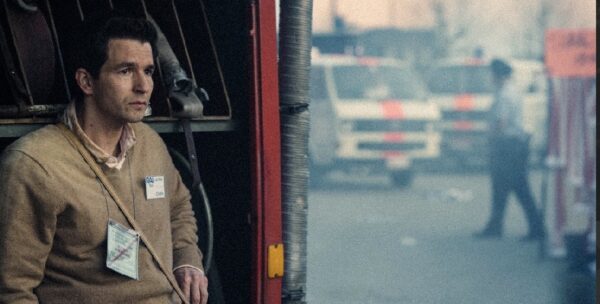
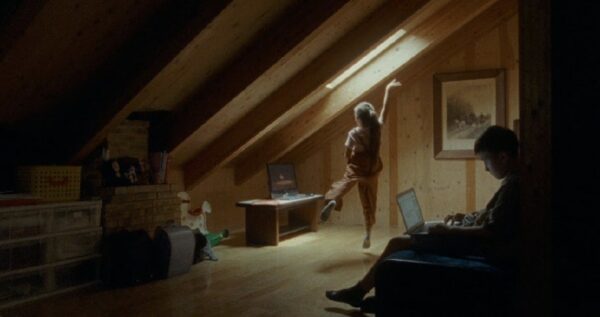
Four Minus Three (2026) Cairo International Film Festival

Dir: Adrian Goiginger | Austria/Germany | Cast: Valerie Pachner, Robert Stadlober | Drama  121’

A deeply affecting account of unimaginable personal loss, Adrian Goiginger’s Four Minus Three is an ambitious, emotionally demanding drama that explores the precarious relationship between laughter and grief. Winner of the Golden Pyramid at this year’s Cairo International Film Festival, the film confirms Goiginger’s talent for finding extraordinary human stories in the most devastating of circumstances.

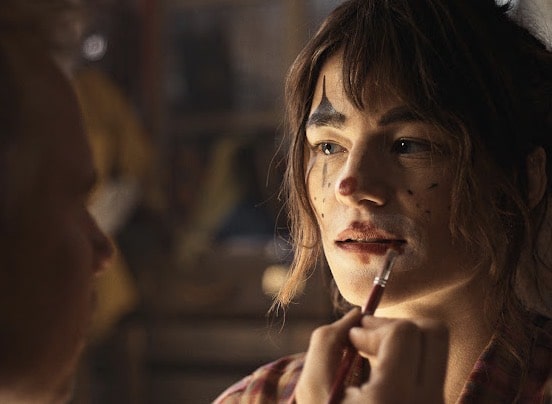
Based on the true story of Barbara Pachl-Eberhart, the film follows Barbara, a professional clown whose carefully constructed world of playfulness and performance is shattered when a car accident kills her husband and their two children. Suddenly deprived of the family around which her life revolved, she faces the seemingly impossible task of finding a reason to carry on. For someone whose profession is to make others laugh, the irony is particularly cruel: how do you rediscover joy when your own world has collapsed?

Goiginger builds his narrative around this unsettling contradiction, resisting the temptation to turn tragedy into straightforward tearjerker territory. Instead, he examines the different ways in which people process grief, and the sometimes uncomfortable distance between the public face we present to the world and the private turmoil we struggle to contain. The clowning motif provides a distinctive framework, although the film occasionally presses too hard on the emotional buttons, with its two-hour running time testing the audience’s capacity for sustained melancholy.

Valerie Pachner is the film’s considerable asset. Giving a remarkably exposed performance, she navigates Barbara’s journey from devastation towards the tentative possibility of acceptance without resorting to easy sentimentality. Her ability to convey the contradictions of a woman accustomed to creating happiness for others while barely able to confront her own despair gives the film its emotional authenticity. Robert Stadlober also contributes to the film’s intimate family portrait.

Goiginger’s direction is compassionate and visually assured, allowing moments of unexpected humour and tenderness to emerge from the darkness. His greatest achievement is to recognise that grief is neither linear nor easily resolved, and that laughter need not represent a betrayal of those who have been lost.

If Four Minus Three occasionally succumbs to the emotional insistence of its subject matter, its sincerity and the conviction of Pachner’s performance are difficult to resist. An affecting, if at times overextended, meditation on survival, it makes a persuasive case for the restorative power of human connection. Cairo’s Golden Pyramid recognises a film whose emotional reach is considerable, even if its approach is not always as restrained as its subject deserves.

WINNER OF THE GOLDEN PYRAMID CAIRO FILM FESTIVAL 2026

Deleau: Cinema Unchained (2026) Cairo Film Festival 2026

Dir: Michel La Veaux | Doc 106’ 2026

There are film festival gatekeepers, and then there is Pierre-Henri Deleau, a man who spent three decades opening doors that much of the international film establishment didn’t even know existed.

Michel La Veaux’s affectionate and richly rewarding documentary, Deleau: Cinema Unchained, is both a portrait of an extraordinary individual and a celebration of independent cinema in its most adventurous, uncompromising form.

Chockful of archive footage, the film kicks off in the late 1960s, when a young Deleau, then a university student in Lille, was swept up in the cinematic revolution of the Nouvelle Vague. Already an insatiable cinephile, he travelled regularly to Paris to immerse himself in films, developing an appetite for cinema that challenged convention and ventured beyond familiar territory. His association with the legendary Henri Langlois at the Cinémathèque Française further shaped his outlook. Then came May 1968. As the Cannes Film Festival was brought to a dramatic halt by the political upheaval and protests of the period, a new idea began to take shape: cinema needed an alternative platform, one less beholden to established reputations, national film institutions and the familiar hierarchy of the official selection.

In 1969, the Directors’ Fortnight was born, with Deleau at its helm. What followed was an extraordinary thirty-year exercise in cinematic discovery. His brief was never simply to find films that fitted a particular aesthetic or commercial profile, but to seek out voices that were different, challenging and frequently ahead of their time. He became an international talent scout with an almost instinctive ability to recognise a filmmaker before the rest of the world had caught up.

La Veaux’s documentary brings this remarkable period back to life through a treasure trove of historical photographs, extracts from films and recollections from the filmmakers whose careers intersected with Deleau’s. The result is a wonderfully immersive journey through several decades of world cinema, much of it unfamiliar territory even for seasoned film enthusiasts. It is a reminder of just how much adventurous filmmaking has flourished outside the conventional Hollywood and European mainstream, and how essential a platform such as the Fortnight has been in bringing it to international attention.

The roll call of names is remarkable. Werner Herzog, Martin Scorsese, Nagisa Oshima, Theo Angelopoulos, Ken Loach, the Taviani brothers, Jim Jarmusch, Spike Lee, Atom Egoyan, Michael Haneke, Sofia Coppola and the Dardenne brothers are among the filmmakers whose work found an important early platform through the Fortnight. Deleau’s championing of Canadian cinema was equally significant, notably giving Denys Arcand’s The Decline of the American Empire its world premiere at Cannes, helping to propel the filmmaker onto the international stage.

But what makes the film particularly engaging is that it isn’t simply a parade of famous names retrospectively acknowledging a benefactor. It is also an invitation to rediscover the films themselves. The archive sequences and carefully chosen extracts open windows onto different cinematic cultures, styles and sensibilities, taking us from European auteurs to African and Asian filmmaking, from politically charged works to formally daring experiments. Some of these films will be familiar to devoted cineastes; others are fascinating discoveries in their own right. There is a palpable pleasure in being reminded that cinema’s history is considerably wider and more adventurous than the handful of titles that dominate conventional retrospectives.

Through testimonies from figures including Michael Haneke, Ken Loach, Atom Egoyan and Denys Arcand, we gain a sense of the influence Deleau exerted, not through the usual mechanisms of industry power, but through an unwavering belief in the filmmaker and the work. He understood that recognition at Cannes could change the trajectory of a career, and that a first opportunity could be as important as any subsequent award or commercial success.

La Veaux also captures something of Deleau himself: his formidable cultural appetite, his memory, his enthusiasm and, above all, his deeply personal relationship with cinema. There is an evident affection between filmmaker and subject, but the film’s warmth is balanced by a genuine appreciation of the institutional independence and occasional rebelliousness that made the Fortnight such an important counterweight to the official festival.

At a time when film festivals are increasingly conscious of market forces, established names and the demands of international distribution, this is a timely reminder of the value of taking risks. Deleau’s achievement was not merely to programme another section of the world’s most prestigious film festival. It was to create a space in which unfamiliar voices could be heard, overlooked national cinemas could find an audience and young directors could take their first significant steps towards international recognition.

Ultimately, Deleau: Cinema Unchained is a love letter to the people who make independent cinema possible: the filmmakers who dare to be different, and the cinephiles who recognise their worth before anybody else does. Choc-full of archival riches and international film discoveries, it celebrates a man whose greatest talent may have been knowing when to say yes.

A must for anyone who believes that the future of cinema depends on keeping its doors open to the unexpected.

CAIRO INTERNATIONAL FILM FESTIVAL | Special Screening

Al Baraneya (2026) Cairo International Film Festival

Dir: Ashgan El-Hamus | Drama 2026 84’

Set on the outskirts of Cairo, Al Baraneya centres on Amal, a pregnant woman living within an extended family whose domestic life is thrown into turmoil when a landowner makes an offer to buy their home.

Surrounded by jasmine fields it’s an enviable place to live, the family initially appears bound by the warmth and familiarity of shared village life. But the prospect of a lucrative property deal quickly exposes underlying tensions. Suspicion grows and old resentments soon surface as individual interests begin to compete with the family’s collective security.

At its heart, the Egyptian international competition title explores the increasingly precarious economics of village life, where property represents not simply financial value but identity, heritage and belonging. Amal finds herself caught in the emotional crossfire as the possible loss of the family home threatens to unravel the fragile equilibrium of domestic life.

Ashgan El-Hamus uses this intimate family drama to examine the corrosive influence of money and the vulnerability of traditional communities facing economic change.

Al Barenaya is a decent, well-intentioned film, but it struggles to offer a perspective that feels genuinely distinctive. Its treatment of poverty, marginalisation and social inequality leans heavily on familiar tropes of hardship and deprivation, without uncovering much that feels particularly new about the realities it seeks to portray. The film establishes the misery of its characters, but offers little in the way of deeper insight into the structures that keep them trapped in it. There is a sense of revisiting well-worn territory without finding a fresh cinematic language or perspective through which to explore it. Competent and occasionally affecting, but ultimately more familiar than illuminating.

CAIRO FILM FESTIVAL | International Competition 2026

Hussein Fahmy – taking Cairo film festival into the future

Hussein Fahmy: A man with a mission – and the charisma to make things happen 

As the Cairo International Film Festival celebrates its 47th edition, its president, distinguished Egyptian actor Hussein Fahmy, remains a man with plenty to say about the future of cinema. Part cultural guardian, part indefatigable enthusiast and occasionally a witty commentator on the state of the world, Fahmy has ambitions for CIFF that stretch well beyond the annual red carpet.

Hussein Fahmy has the sort of presence that makes you feel cinema is in safe hands. A distinguished actor with decades of experience, he is also a man with an noble undertaking: preserving the past, nurturing the next generation and persuading an increasingly distracted world that cinema still has something meaningful to say.

As president of the Cairo International Film Festival, now in its 47th edition, Fahmy is keenly aware that a festival cannot simply exist as an annual celebration of films and famous faces. It has to leave something behind. And, preferably, something that lasts.

One of his most ambitious ideas is the creation of an entirely new art city in Cairo, a permanent cultural home where Egypt’s extraordinary cinematic heritage could be collected, preserved and made accessible. He has in mind something along the lines of the celebrated National Museum of Cinema in Turin, where film history is treated not as an antiquarian curiosity but as a living, breathing part of cultural identity.

Egypt, after all, has one of the richest film histories in the Arab world. Its archive is an invaluable national treasure, and Fahmy is determined that it should have a proper home. The proposed art city would give that heritage the recognition and infrastructure it deserves, while creating a destination for filmmakers, researchers, students and audiences.

It is an idea that speaks to his particular understanding of the job. Being a festival president, in Fahmy’s view, should involve more than introducing guests and handing out awards. It should mean taking responsibility for what happens to cinema next.

That forward-looking ambition is also behind From Book to Screen, a new initiative designed to turn 12 novels into screenplays, giving producers a ready-made starting point for developing them into films. It is a practical response to one of the industry’s perennial problems: finding compelling stories and getting them from the printed page into production.

The idea is to create a bridge between literary talent and the film industry, encouraging producers to look beyond the familiar formulas and discover stories that might otherwise remain on the shelf. It is also a reminder that good cinema begins with good writing – something that can occasionally get lost in the frantic pursuit of the next commercial success.

Then there is children’s cinema, another strand inspired in part by the successful initiatives at the Turin Film Festival. Fahmy wants to introduce children to the pleasures of cinema at a very young age, developing an audience that understands the magic of watching a film collectively rather than simply consuming moving images on a ‘phone screen.

It is a particularly timely ambition. For Fahmy, one of the great challenges facing cinema is the changing relationship between audiences and images. We are watching more than ever, but are we actually feeling anything?

He is concerned about what he sees as a new lightweight approach to filmmaking, with production, scripts and acting increasingly pared down in comparison with the classics. His observations extend well beyond the film industry. There is, he suggests, a widespread resentment towards modern life, a sense of disenchantment and disconnection that seems to have infected cities across the world.

And then there is Gen Z, whose relationship with the world is increasingly mediated through their phones. Living inside digital bubbles, young people can find themselves making money from publishing videos that, in Fahmy’s less-than-enthusiastic assessment, have remarkably little to say about anything.

It is an amusingly exasperated observation, delivered with the air of someone who has seen enough changes in the world to be entitled to a little scepticism. But beneath the humour is a serious concern: what happens to attention, imagination and emotional engagement when everything is reduced to a fleeting image and an instant reaction?

For Fahmy, cinema has to push back. It must offer something more substantial than another disposable piece of content. The challenge is not to reject the modern world, but to find a way of making films that are moving, thought-provoking and memorable.

That concern is particularly relevant when considering the state of Egyptian and wider Middle Eastern commercial cinema. Once capable of producing between 40 and 60 substantial commercial films a year, the Egyptian industry has seen output fall to around 15. The pressures of the global economic crisis, compounded by the continuing instability and financial difficulties across the Middle East, have taken their toll.

It is a worrying contraction for an industry that has historically been a major cultural and commercial force throughout the Arab world. Egyptian cinema has long travelled beyond its borders, shaping tastes, stars and popular culture across the region. Its decline is therefore not simply a domestic problem but a loss for the wider MENA film landscape.

The president is conscious that the industry needs both investment and confidence. Festivals can provide visibility, introduce filmmakers to international markets and encourage new partnerships, but they cannot single-handedly repair an entire production ecosystem. Nevertheless, he clearly sees CIFF as an important part of the solution.

Mr Fahmy’s own relationship with cinema is hardly confined to his presidential duties. He has recently appeared in the Chinese film China That I Have Known, directed by a Chinese woman filmmaker, adding another international experience to an acting career that has taken him far beyond Egypt. It is an interesting reminder that, while he is busy safeguarding Egyptian cinema, he remains an actor with an appetite for discovering different filmmaking cultures.

And what about artificial intelligence? Inevitably, the conversation turns to the technology that is beginning to reshape every aspect of film production, from writing and visual effects to editing and performance.

Although Hussein Fahmy recognises that artificial intelligence will inevitably become part of filmmaking’s future, CIFF has drawn a line for the moment. The festival has decided not to accept AI-generated films, with artistic director Mohamed Tarek arguing that there is as yet no satisfactory way to distinguish between films made through human creativity and those effectively produced by entering prompts into a machine.

So Mr Fahmy is not dismissive of its possibilities. AI is developing rapidly as a filmmaking tool, and he recognises that it will eventually become part of the industry’s working vocabulary.

There is something characteristically practical about his approach: neither blindly embracing every new development nor pretending that it can simply be wished away. Cinema has always had to adapt to technological change, even if the speed of the current transformation is unprecedented.

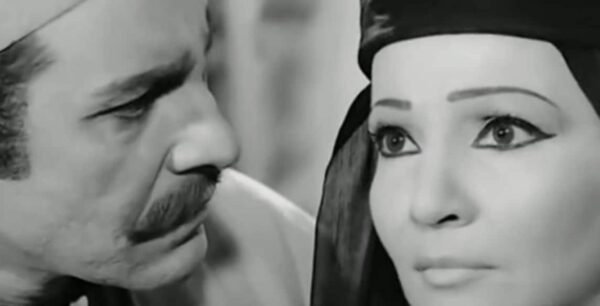
The festival’s programme itself reflects some of these tensions. Among the films discussed is a cult classic of Egyptian cinema Some Kind of Fear (Shay min al-Khawf شيء من الخوف, 1969), starring Shadia and Mahmoud Morsi, directed by Hussein Kamal. It explores a particularly terrible episode involving the cutting off of the Nile’s water supply, with devastating consequences for farmers and ordinary people threatened with starvation. It is precisely the kind of subject that reminds us of cinema’s capacity to revisit history, expose injustice and give human dimension to events that might otherwise remain distant abstractions.

For Fahmy, that ability to make audiences feel something is essential. A film should not simply pass before our eyes. It should leave a mark.

The 47th Cairo International Film Festival is therefore about more than showcasing a selection of international and Arab films. It is also an attempt to articulate what Egyptian cinema might become, while protecting what it has already achieved. The proposed art city, the literary adaptation project and the children’s programme are all different expressions of the same ambition: to build an infrastructure around cinema rather than leave its future entirely to commercial forces and technological fashion.

Hussein Fahmy approaches these challenges with the enthusiasm of someone who genuinely believes that cinema matters. His occasional impatience with contemporary culture is tempered by humour, and his ambitions are refreshingly larger than the immediate demands of another festival edition.

At a time when attention spans are shrinking, audiences are increasingly fragmented and the economics of filmmaking are under pressure, he is making a rather old-fashioned argument for the enduring value of the big screen: that stories matter, that archives matter, that children deserve to discover cinema properly, and that a country with Egypt’s incredible film heritage has a responsibility to preserve it.

It is an ambitious brief. But then, Hussein Fahmy has never seemed particularly interested in thinking small.

CAIRO INTERNATIONAL FILM FESTIVAL 2026

BerleeN_ (2026) Cairo International Film Festival

Dir: Ahmad Abdalla | Drama 2026

Berlin may be one of Europe’s most cosmopolitan cities, but you would hardly know it from Ahmad Abdalla’s BerleeN_, a film about three Arab migrants whose arrival in the German capital seems to have brought with it a curious suspension of both reality and common sense.

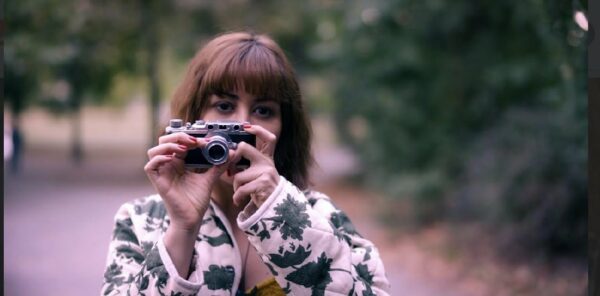
Set over a single day, the film weaves together the stories of three characters: Mai, who finds herself mistaken for a dead woman; Hana, whose camera apparently offers glimpses of parallel realities; and Hassan, who is haunted by mysterious musical sounds while pursuing revenge. It’s an intriguing enough collection of ingredients, but the resulting concoction feels considerably less exotic than its director seems to imagine.

The trouble begins with the characters themselves. Rather than emerging as recognisable, complicated human beings with individual histories, contradictions and personalities, the three protagonists feel suspiciously like stock figures assembled to illustrate familiar themes of displacement, alienation and the immigrant experience. They are less people we get to know than narrative devices required to service the screenplay’s increasingly self-conscious surrealism. And then there is the rather bizarre question of language.

Why, having arrived in Berlin, does none of these characters want ti speak decent German? The film is listed as an Arabic-language production, but that is not quite the same thing as explaining away the absence of a real effort to learn the native language of the country that has so generously offered them refuge. These are people supposedly navigating life in one of Europe’s major cities, yet the everyday business of communicating, negotiating, misunderstanding and occasionally getting lost in translation seems strangely peripheral. Where are the awkward encounters with bureaucracy, the linguistic ‘lost in translation’ episodes that make the immigrant experience recognisable? Berlin becomes a convenient geographical label rather than a living social environment.

It is an especially curious omission because language is surely one of the most immediate markers of belonging and exclusion. Instead, the characters appear to inhabit a sort of Arabic-speaking bubble, insulated from the very society in which they are supposedly trying to establish their lives. Some German is spoken but you do begin to wonder whether they have actually emigrated or simply wandered onto a rather expensive Egyptian film set with German street signs.

Abdalla is clearly aiming for something more elusive than straightforward social realism. The intersecting narratives, strange coincidences and incursions into alternative realities suggest a desire to explore the psychological dislocation of people caught between past and present, memory and imagination. But surrealism is not an automatic passport to profundity. Without sufficiently developed characters or an emotional centre, eccentricity can quickly become an end in itself.

Berlin, meanwhile, is curiously underused. A city so rich in history, cultural friction and contemporary contradictions should offer an extraordinary cinematic playground. Yet here it feels more like a suitably atmospheric backdrop against which the director can arrange his characters and their various existential predicaments. The city never quite gets under their skin, nor do they convincingly get under ours.

The performances cannot entirely overcome the limitations of the writing. There are moments when the actors suggest more nuanced, complicated individuals than the screenplay allows them to become. But the film keeps pulling us back towards its predetermined – and to often heavily relied upon – mystery and metaphor.

Ultimately, BerleeN_ wants to say something about displacement, identity and the difficulty of belonging, but never quite does the hard work of making us feel those things. Its characters are so heavily burdened with symbolic significance that they struggle to acquire ordinary human dimensions.

For a film about immigrants in Berlin, it is oddly detached from the realities of being an immigrant in Berlin. The irony is that the three protagonists seem every bit as foreign to the film’s own world as they are supposed to be to their adopted city.

A promising premise, then, but one that gets lost somewhere between Cairo and Berlin – and apparently without a German phrasebook.

Editorial note: The film is Ahmed Abdalla’s seventh feature and had its world premiere in the Cairo International Film Festival’s International Competition on 13 November 2026. The Arabic-language designation is confirmed in the Film Clinic catalogue.

CAIRO FILM FESTIVAL | International Competition 2026

Masterclass with Matteo Garrone – Cairo Film Festival 2026

Masterclass with Matteo Garrone

From the gritty social realism of Gomorrah to the dark fairy-tale worlds of Pinocchio and the human odyssey of Io Capitano, the Italian director has fashioned one of contemporary European cinema’s most distinctive and unpredictable bodies of work.

Matteo Garrone is a filmmaker who refuses to be categorised. Equally at home exploring the brutal mechanics of organised crime, the absurdities of celebrity culture, the grotesque imaginings of ancient fairy tales or the desperate realities of migration, he has built a filmography distinguished by its visual audacity, psychological acuity and restless curiosity about human nature.

There is, however, a recognisable thread running through his work: a fascination with outsiders, individuals consumed by their desires and people struggling against circumstances that threaten to overwhelm them. His films may inhabit radically different worlds, but they share an extraordinary sensitivity to faces, physical environments and the strange poetry of everyday existence.

Garrone’s journey into cinema was not conventional. Born in Rome in 1968, he grew up in a modest family immersed in the arts. His father, Nico Garrone, was a respected theatre critic and writer, his mother a photographer, while his stepfather worked as a cinematographer. His grandfather was also an actor. Theatre, photography and cinema were therefore familiar surroundings, although filmmaking was not initially an obvious career destination.

After graduating from art school in 1986, Garrone worked as an assistant camera operator before devoting himself to painting. His interest in composition, colour, light and the representation of reality would eventually become central to his cinematic language. He has often described cinema as another form of painting, an opportunity to bring images to life and explore the world through movement rather than the static frame.

A serious tennis injury had already put paid to his youthful ambitions, and it was in his mid-twenties that he began experimenting with filmmaking. Encouraged by his cinematographer stepfather and working with leftover film stock, he made his first short film, Silhouette (1996), which won a prize at Nanni Moretti’s Sacher Festival. Its subject, Nigerian prostitutes living on the outskirts of Rome, introduced an interest in marginalised communities that would remain a constant throughout his career.

His first feature, Terra di mezzo (1997), developed from this material, weaving together three stories about immigrants and people living on the edges of Italian society. Ospiti (1998) continued the exploration of displacement, while Estate romana (2000) offered a more eccentric portrait of Rome and its artistic inhabitants. Already, Garrone was demonstrating an instinct for finding visual drama in overlooked environments and unexpected characters.

It was L’imbalsamatore (The Embalmer, 2002), however, that brought him wider critical recognition. Inspired by a real criminal case, this unsettling psychological drama follows Peppino, a diminutive taxidermist who develops an obsessive relationship with a handsome young man, Valerio, before jealousy and manipulation enter the picture. Garrone transforms the material into something approaching a modern gothic tale, balancing grotesque humour with disturbing psychological intimacy. It also established his ability to make the ordinary feel strange, even nightmarish.

With Primo Amore (First Love, 2004), he explored another destructive obsession, this time a man’s fixation with female physical perfection and his increasingly controlling relationship with a young woman. The film confirmed his interest in the darker territories of desire, possession and psychological violence.

Then came Gomorrah (2008), the film that catapulted him onto the international stage. Adapted from Roberto Saviano’s incendiary investigation into the Neapolitan Camorra, it rejected the familiar conventions of the gangster film in favour of a sprawling, interconnected portrait of a society in which organised crime had become an everyday economic and social reality.

Rather than concentrating on a single protagonist, Garrone followed several lives: young boys seduced by the fantasy of criminal power, workers caught in the illegal waste industry, a tailor entangled in the fashion business and individuals attempting to survive within a system governed by corruption and violence.

The result was a remarkable work of social observation, drawing on real locations, non-professional performers and a documentary-like immediacy. Its Grand Prix victory at Cannes in 2008 established Garrone as one of Europe’s most compelling directors. Yet, rather than repeating the formula, he immediately moved in a different direction.

Reality (2012) was a darkly comic examination of the seduction of celebrity culture. Luciano, a Neapolitan fishmonger played by Aniello Arena, becomes consumed by the possibility of appearing on Big Brother. What begins as a comic portrait of social aspiration gradually becomes a disturbing study of delusion and the need for recognition. As Luciano loses his grip on reality, Garrone transforms contemporary Naples into a colourful, carnivalesque landscape in which the protagonist’s fantasies increasingly take over his existence. The film won Garrone his second Grand Prix at Cannes, an exceptional achievement.

His next project was even more unexpected. Tale of Tales (2015), his first entirely English-language feature, adapted three stories from Giambattista Basile’s seventeenth-century collection Pentamerone. With Salma Hayek, Vincent Cassel, Toby Jones and John C. Reilly among its international cast, the film plunged into a world of monsters, grotesque transformations, sexual obsession and impossible desires. Far removed from the social realism of Gomorrah, it nevertheless retained Garrone’s fascination with the extremes of human behaviour. Drawing on painters including Goya, he created an extraordinary visual universe that was simultaneously sumptuous, unsettling and darkly comic.

He returned to contemporary reality with Dogman (2018), a bleak and deeply affecting drama inspired loosely by a notorious Italian criminal case. Marcello, a gentle dog groomer played by Marcello Fonte, finds himself increasingly dominated by Simone, a violent former boxer. Their relationship becomes an examination of intimidation, dependency and the gradual destruction of personal dignity. Fonte’s extraordinary performance earned him the Best Actor award at Cannes, while Garrone’s atmospheric portrait of a decaying coastal community provided one of the director’s most accomplished visual settings. It is a film that combines the brutality of his earlier work with the dark fairy-tale sensibility developed in Tale of Tales.

With Pinocchio (2019), Garrone returned to one of Italy’s most cherished literary creations, but deliberately avoided the sanitised conventions of the familiar children’s adventure. His adaptation of Carlo Collodi’s novel is an earthy, often grotesque fable, populated by fantastical creatures and unsettling encounters. Roberto Benigni, who had previously directed and starred in his own version, plays Geppetto, while Federico Ielapi takes the role of the wooden puppet. Elaborate prosthetics, physical effects and extraordinary production design give the film a tactile quality, as Garrone revisits the darker origins of the original story. It also represents a return to the imaginative world of childhood that first inspired his artistic ambitions.

His most recent major feature, Io Capitano (2023), marked another significant evolution. Following two Senegalese teenagers, Seydou and Moussa, on their perilous journey from Dakar towards Europe, the film turns the familiar migration narrative around, placing the audience inside the experience of those making the journey rather than observing them from the European destination.

Drawing on the testimonies of migrants who had endured the Sahara, human trafficking, imprisonment and the Mediterranean crossing, Garrone constructed a narrative that combines harrowing realism with moments of almost mythic beauty. He worked closely with people familiar with these experiences, recognising the importance of approaching a world outside his own cultural background with sensitivity and authenticity.

The casting of Seydou Sarr, who had no previous acting experience, was crucial. His performance as the young Seydou brings extraordinary emotional immediacy to a story that might otherwise have become an abstract account of political and humanitarian crisis. Garrone’s visual imagination is particularly striking in the desert sequences and the desperate final sea crossing, where the physical ordeal becomes an epic journey of survival.

Io Capitano won the Silver Lion for Best Director at the 2023 Venice Film Festival, while Sarr received the Marcello Mastroianni Award. The film subsequently became Italy’s submission for the 2024 Academy Awards, receiving an Oscar nomination for Best International Feature Film.

Looking across Garrone’s filmography, it is striking how little he has repeated himself. After the international success of Gomorrah, he could easily have established himself as a specialist in crime cinema. Instead, he turned to reality television, seventeenth-century folklore, psychological violence, children’s literature and migration. Each project represents a new visual and narrative challenge, yet the same underlying interests remain.

His protagonists are frequently outsiders, driven by desires that become destructive or trapped in circumstances over which they have little control. His locations are never simply backdrops: they are living environments that shape the characters and their destinies. And his painterly instincts are evident everywhere, from the carefully composed faces and interiors of The Embalmer to the expansive landscapes of Io Capitano.

There are echoes of Italian neorealism, certainly, alongside the grotesque and surreal traditions of filmmakers such as Marco Ferreri and Pier Paolo Pasolini. But Garrone has fashioned a sensibility distinctly his own, moving effortlessly between documentary observation and visual fantasy.

Perhaps his greatest achievement is his ability to find something extraordinary in apparently ordinary people without romanticising their circumstances or excusing their behaviour. His cinema is compassionate but rarely sentimental, visually beautiful even when depicting deeply disturbing realities.

For a filmmaker who began by painting, cinema has become a means of exploring the world in all its contradictions, cruelties and unexpected beauty. And with Io Capitano, Garrone demonstrated once again that the boundaries of that world remain far wider than anyone might have imagine

MASTERCLASS WITH MATTEO GARRONE | CAIRO FILM FESTIVAL

International Competition | Cairo Film festival 2026

The 47th Cairo International Film Festival (11–20 November 2026) has selected 12 films for its International Competition, competing for the Golden Pyramid. It is a particularly international selection, spanning Egypt, Iran, Lebanon, Japan, Costa Rica, Morocco and several European countries. The jury is chaired by Moroccan filmmaker Nabil Ayouch.

This year’s selection once again highlights buzzworthy themes: Female experience and resilience: Al Baraneya, Inherited, Strawberries and Love Is the Monster. Displacement and cultural identity: BerleeN_, The Ballet Lesson and Yugo Goes to America. A road movie with an irresistible central conceit, this documentary follows four Belgrade millennials as they drive across 24 American states in a Yugo, the once-infamous Yugoslav car widely regarded as one of the worst vehicles ever sold in the United States. Travelling from New York to Los Angeles, they encounter fellow enthusiasts while exploring the curious cultural afterlife of a car that has become a symbol of both national identity and international ridicule. Beneath the comic premise lies a more reflective investigation into belonging, nostalgia and the relationship between two very different worlds. A potentially entertaining and revealing journey into the mythology of an automotive underdog.

AlBareneya


AL BARANEYA – Ashgan El-Hamus (Egypt/Netherlands/Belgium/Saudi Arabia)

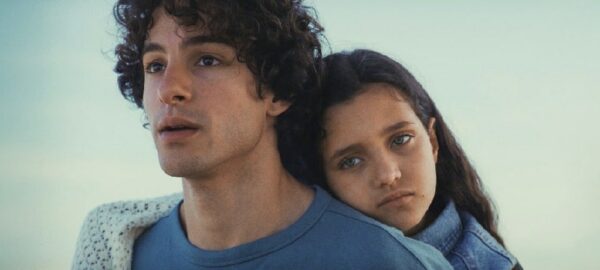
Family ties, property and the increasingly precarious economics of village life provide the foundations for Ashgan El-Hamus’s intimate Egyptian drama. Amal, pregnant and living with her extended family on the outskirts of Cairo, finds domestic harmony threatened when a landowner makes an offer for their home. Against a backdrop of jasmine fields, the threatened sale becomes a catalyst for suspicion, competing loyalties and simmering resentment. There is an interesting tension here between the warmth of an affectionate, unruly family and the corrosive influence of money, with the prospect of losing one’s home becoming a metaphor for a wider erosion of belonging.

BerleeN_, Ahmad Abdalla (Egypt/Germany)

Ahmad Abdalla, one of the more distinctive voices in contemporary Egyptian independent cinema, ventures into the emotional and geographical territory of the diaspora with this Berlin-set drama. Over the course of a single day, three Arab strangers find themselves caught up in a series of surreal encounters that bring uncomfortable ghosts from their respective pasts into the present. Berlin, with its layered histories and transient international population, offers fertile territory for a story about displacement, memory and fractured identity. The film’s unusual meeting of characters suggests a narrative less concerned with conventional storytelling than with the unexpected connections that can emerge between strangers.

Four Minus Three


FOUR MINUS THREE – Adrian Goiginger (Austria/Germany)

The juxtaposition of clowning and catastrophe provides the emotional centre of Adrian Goiginger’s challenging drama. Barbara, a professional clown whose life revolves around bringing laughter to others, loses her family in a devastating car accident. Suddenly confronted with grief on an almost unimaginable scale, she must find a way to reconcile her public persona with the private reality of profound loss. The premise invites an exploration of humour as both survival mechanism and emotional disguise, questioning whether laughter can offer anything more than temporary refuge from despair. Valerie Pachner faces a demanding central role in a film whose 121-minute running time suggests an expansive examination of grief and the fragile business of finding hope again.


HEYSEL 85 – Teodora Ana Mihai (Belgium/Netherlands/Germany)

The 1985 Heysel Stadium disaster, in which 39 people died before the European Cup final between Liverpool and Juventus, remains one of the most shameful episodes in European sporting history. Teodora Ana Mihai approaches this traumatic event through the intersecting experiences of a mayor’s daughter and a journalist of Italian descent, bringing a personal dimension to a tragedy whose political and institutional repercussions continue to resonate. Rather than simply revisiting the horror of the stadium crush, the film has the potential to probe the moral compromises, failures of responsibility and collective guilt surrounding it. A sobering reminder of how easily sporting tribalism can turn into something far more destructive.

In this Darkness I see You


IN THIS DARKNESS I SEE YOU – Nadim Tabet (Lebanon/France/Qatar)

A construction site becomes an unsettling arena of social tension and supernatural suggestion in Nadim Tabet’s Lebanese drama. Strange and potentially life-threatening incidents begin to disturb relations between Syrian migrant workers and the Lebanese villagers living nearby. Tarek, one of the workers, becomes convinced that the site is haunted, introducing an element of psychological uncertainty into an already volatile situation. The suggestion of a haunting offers an intriguing metaphor for the unresolved tensions surrounding migration, exploitation and the uneasy coexistence of communities. At just 79 minutes, this could prove a tightly controlled exercise in atmosphere, with the supernatural serving as a prism through which very earthly fears are exposed.


Inherited


INHERITED – Morteza Alizadeh (Iran)

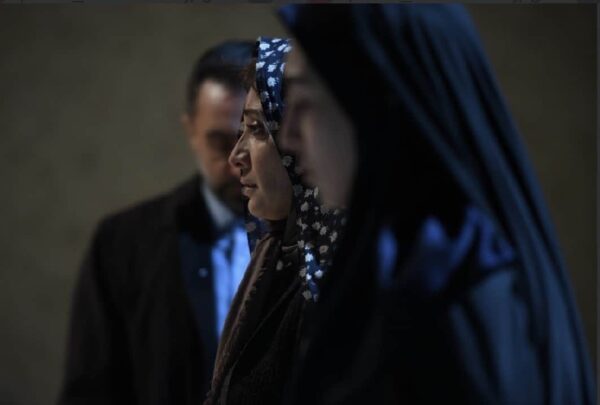
Few premises are as immediately disturbing as the one at the heart of Morteza Alizadeh’s Iranian drama. Mina, condemned to death for murder, attempts to injure herself in the hope of postponing her execution. When this fails, she is told by a prison trustee that the only remaining way to delay her death is to become pregnant. It is an extraordinary and deeply unsettling predicament, exposing the grotesque contradictions of a system in which a woman’s body becomes an instrument of institutional bargaining. The title carries particular resonance: what is inherited here is not simply a social or familial burden, but a cycle of oppression in which female autonomy is brutally compromised.


Love is the Monster


LOVE IS THE MONSTER – Neto Villalobos Brenes (Costa Rica/Peru/Panama/Chile/Mexico)

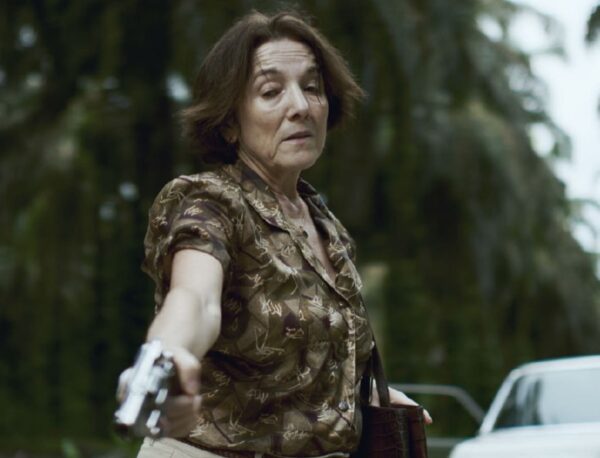
Costa Rican filmmaker Neto Villalobos Brenes moves into thriller territory with this dystopian vision of a society where inequality and everyday violence have become the norm. At its emotional centre is an elderly grandmother determined to make the most of the remaining time she has with her granddaughter. But a series of increasingly dangerous events forces her into moral territory she could never have imagined entering. The intriguing premise lies in the collision between the tenderness of intergenerational affection and the brutality of the surrounding world. With acclaimed Chilean actress Paulina García (Gloria) in the cast, the film promises a potentially provocative examination of whether love can remain an innocent emotion when survival itself demands increasingly monstrous behaviour.


Strawberries


STRAWBERRIES – Laïla Marrakchi (Morocco/France/Spain/Belgium)

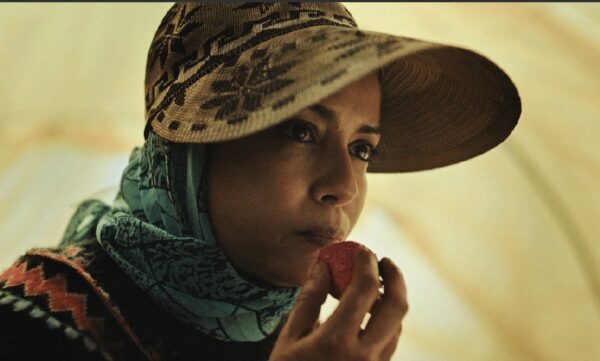
Laïla Marrakchi turns her attention to the largely invisible female workforce sustaining Europe’s agricultural economy in this socially engaged drama about two Moroccan women who travel to southern Spain to work as seasonal strawberry pickers. Hasna and Meriem arrive with hopes of providing better lives for their families, only to encounter degrading working conditions, harassment and exploitation. Their growing solidarity becomes an important source of resistance as they challenge the injustices surrounding them. Marrakchi’s subject has considerable contemporary urgency, exposing the uncomfortable contradiction between Europe’s dependence on migrant labour and its treatment of the people who provide it. The personal relationship between the two women should give this political material its emotional force, avoiding the pitfalls of reducing their experiences to a simple social-problem narrative.

THE BALLET LESSON – Kazuya Murayama (Japan)

A journey across Japan becomes an exploration of fractured family relationships and the uncertainties of childhood in Kazuya Murayama’s drama. Japanese-Russian siblings Nikita and Nina have grown up in the care of their Russian grandparents, their absent parents existing largely through stories and recollections. When their father suddenly reappears, he takes them on a journey to find their mother, Yuki, a Japanese ballet dancer. The cultural duality of the children’s background adds an intriguing dimension to what might otherwise be a familiar road-movie structure. There is considerable scope for exploring the dislocation of children caught between different languages, histories and parental loyalties, with the journey itself becoming a metaphor for the elusive nature of home.


THE GREEN EYES – Fanny Liatard and Jérémy Trouilh (France/Belgium/Sweden)

Following their César-nominated short-film work and feature debut Gagarine, Fanny Liatard and Jérémy Trouilh return with a story that blends social realism and childhood fantasy. Eleven-year-old Chaya faces the threat of eviction from her family home in the Landes region, while her older brother Nour falls into a mysterious, seemingly endless sleep. Determined to bring him back, she embarks on an imaginative journey into his dreams. The premise offers an evocative way of connecting the vulnerability of childhood with the harsh realities of housing insecurity and family instability. The filmmakers’ interest in marginalised communities is now filtered through a more magical register, where the imaginative world of a child may offer a form of resistance to circumstances beyond her control.

Words of Love


WORDS OF LOVE – Rudi Rosenberg (France)

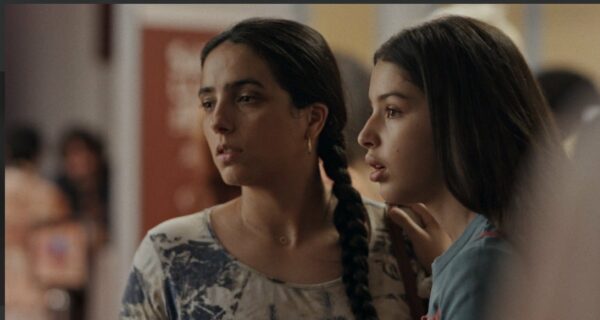
Hafsia Herzi brings her considerable screen presence to Rudi Rosenberg’s family comedy-drama about a household whose carefully established equilibrium is threatened by adolescent curiosity. Erika has spent 14 years raising her children alone, but her daughter Abigail’s determination to find the absent father she has never known threatens to unsettle the family dynamic. What begins as a potentially disruptive quest develops into an unpredictable journey that allows mother and daughter to see one another differently. Rosenberg, whose earlier feature The New Kid demonstrated an instinct for the awkwardness and emotional turbulence of growing up, returns to familiar coming-of-age territory. The film’s appeal will depend on its ability to find humour and tenderness without sentimentalising the complications of unconventional family life.


YUGO GOES TO AMERICA – Filip Grujić and Aleksa Borković (Serbia/Croatia)

An old Yugoslav car becomes an unlikely vehicle for exploring identity, nostalgia and the peculiar relationship between national pride and international ridicule in this documentary road movie. Four young Belgraders set off across 24 American states in a Yugo, once dismissed as one of the worst cars ever sold in the United States. Their journey from New York to Los Angeles brings encounters with fellow enthusiasts and unexpected reflections on the car’s cultural afterlife. Beneath the potentially comic premise lies a more thoughtful investigation into what happens when an object becomes a symbol of a vanished country and its complicated legacy. The Yugo’s reputation as an automotive underdog provides an entertaining hook for a journey that may prove as much about the travellers themselves as the vehicle they are driving.

CAIRO FILM FESTIVAL 2026 | INTERNATIONAL COMPETITION


Cairo International Film Festival 2026

The 47th Cairo International Film Festival (11–20 November) is attracting an impressive international line-up for its 50th anniversary edition.

Among the notable names expected in Cairo are Chinese actress Fan Bingbing, Italian director Matteo Garrone, Mauritanian filmmaker Abderrahmane Sissako, Moroccan-French director Nabil Ayouch and Spanish filmmaker Óliver Laxe.

Garrone and Sissako are among this year’s Golden Pyramid Lifetime Achievement recipients, with Sissako also scheduled to give a masterclass. Ayouch will head the International Competition jury, which includes Egyptian actress Ghada Adel, Belgian director Laura Wandel and Syrian-German filmmaker Ameer Fakher Eldin.

Egyptian actor Asser Yassin will receive the Faten Hamama Award for Excellence, while screenwriter Medhat El-Adl and cinematographer Saeed Shimi will also be honoured for their contributions to cinema.

With 145 films from 64 countries, including 17 world premieres, Cairo is clearly aiming for a memorable anniversary celebration, bringing together established international talent and a broad selection of contemporary world cinema.

CAIRO INTERNATIONAL FILM FESTIVAL 11-20 NOVEMBER 2026

I Play Rocky (2026) Cairo International Film Festival

I Play Rocky: The underdog takes on Hollywood

Peter Farrelly’s crowd-pleasing account of how Sylvester Stallone fought to become Rocky Balboa opens Cairo’s 47th International Film Festival.

There is a plucky irony in I Play Rocky: before Sylvester Stallone could persuade the world to cheer for a fictional boxer, he had to fight his own battle with Hollywood. The man who created Rocky Balboa was himself an outsider, an aspiring actor with a screenplay, a fiercely held conviction and precious little leverage. His demand to play the leading role in his own film could easily have been a career-ending act of hubris. Instead, it became the first round of a remarkable Hollywood victory.

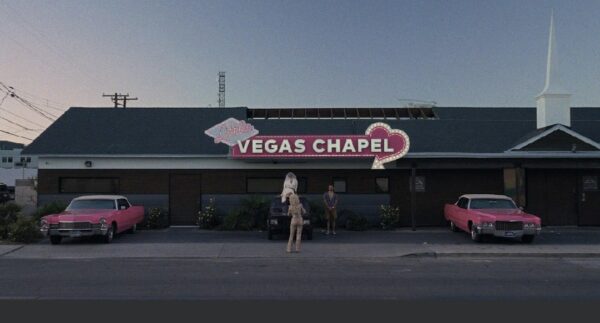
Directed by Peter Farrelly, the Oscar-winning filmmaker behind Green Book, I Play Rocky revisits the improbable gestation of the 1976 boxing drama that became a global phenomenon. Stallone, played by Anthony Ippolito, is struggling to establish himself when inspiration strikes.

After watching Muhammad Ali fight Chuck Wepner, he conceives a story about an obscure boxer who gets an extraordinary opportunity to prove himself. The screenplay attracts industry interest, but the producers have another idea: buy the script and cast a recognised star. Stallone refuses to surrender the character he has created. The ensuing contest, fought in offices and negotiations rather than a boxing ring, becomes a test of whether Hollywood will back a new voice or simply purchase a promising property.

The casting is crucial. Ippolito, previously seen as Al Pacino in The Offer, takes on the daunting task of playing a younger Stallone, a man whose eventual screen persona is already part of popular culture. Around him, Matt Dillon, AnnaSophia Robb, Toby Kebbell, Tracy Letts, P.J. Byrne, Jay Duplass and Stephan James lend the story a strong supporting ensemble. James plays Carl Weathers, whose Apollo Creed would become Rocky’s formidable opponent in the original film. The recreation of this formative period in American cinema offers the pleasure of seeing familiar screen history from the other side of the camera.

Farrelly understands the commercial appeal of the material. This is not an austere investigation of artistic compromise, nor a revisionist exposé of the film industry. It is a buoyant, accessible showbiz story, with the audience invited to enjoy the mounting absurdity of a struggling actor insisting that he, rather than an established name, must embody his creation. The entertainment lies in the collision between ambition and conventional wisdom: executives may recognise a good story, but can they recognise the person who has to tell it?

There is, of course, a danger in dramatising a success story whose ending is already written. We know that Rocky will be made, that it will win three Academy Awards, including Best Picture, and that its central character will become one of cinema’s most enduring underdogs. Suspense must therefore come from the struggle itself, from the cost of persistence and the possibility that conviction might tip over into folly. The familiar destination makes the journey no less revealing, although the film’s appeal depends on how much personality and friction Farrelly can bring to the well-established legend.

As an opening-night choice for Cairo, the timing is particularly persuasive. The 47th Cairo International Film Festival runs from 11 to 20 November 2026, and the original Rocky and the festival both date from 1976. Half a century later, their anniversaries converge in a film about the stubborn belief that cinema can change a life. The selection also offers a suitably celebratory introduction to a festival seeking both international recognition and a broad audience: a Hollywood origin story with a familiar name, a recognisable struggle and an obvious emotional hook.

There is a further attraction for a festival audience. I Play Rocky turns the spotlight on the mechanics of filmmaking itself: the negotiations, the compromises, the casting decisions and the precarious moment when a private creative conviction becomes a public gamble. Its subject is not simply the making of a hit, but the question of who gets to control a story once the industry sees its commercial potential.

Cairo could hardly have chosen a more accessible invitation to its anniversary year. I Play Rocky promises nostalgia without requiring an audience to be a boxing enthusiast, and a Hollywood tale whose central fight is for authorship as much as fame. Its most engaging proposition is also its simplest: sometimes the person who knows a character best is the one everyone else is trying to keep out of the ring.

CAIRO INTERNATIONAL FILM FESTIVAL 11-20 November

Calle Malaga (2025) Cairo International Film Festival 2025

Dir: Maryam Touzani | Cast: Carmen Maura, Marta Etura, Ahmed Boulane, María Alfonsa Rosso, La Imèn, Ghali Errazqi, Sanae Regragui, Fouad Menebhi, Abdelilah Iramdane | Drama 116’

Nestled in the tight knit Spanish community of Tangier lies Calle Malaga, longtime  home to 77-year-old Maria Angeles the star of this light-hearted audience pleaser and Morocco’s Oscar hopeful 2026.

For Moroccan filmmaker Maryam Touzani the feature is a cinematic love letter to her mother, who was born there, and her Spanish roots in the Moroccan town. The smiling faces, the sights, smells and sensuality remind her of growing up and lure her back endlessly, inspiring this enjoyable drama that feels relatable and yet gently exotic.

Maria Angeles the main character (played by Spanish star Carmen Maura) is having a difficult time with her onscreen daughter who turns up out of the blue making difficult demands. Divorced and living in the breadline in Madrid with her two children she begs her mother to sell up and go back to to the Spanish capital which would mean leaving her much loved lifestyle in this cosy sunlit quartier.  And what’s worse she has booked her mother into a local care home using the money from the flat sale to sure up her own finances

Calle Malaga carries its troubled story lightly, touching on all that’s comforting about ageing: the final freedom, the long acquired wisdom, the pleasure of being at home surrounded by treasured possessions, and above all the daily round of pleasantries and warm encounters when Maria Angeles does her shopping in the local market, anticipating a delicious lunch and dinner and the pleasure of cooking and savouring the flavours.

Instead Maria Angeles is deluged by her daughter’s intractable domestic problems: a recent divorce, a struggling family and lack of money, turning the spry and graceful woman’s world upside down. in a bid to please Maria Angeles agrees to stay in the care home for a short stay. But predictably, the loss of dignity and infantilisation she suffers in the home is relatable and will ring true for those affected. So after a few days Maria says firmly ‘thanks’ and ‘no’.

There are complicatios on the way cleverly handled in Touzani’s clever script co-written with her award-winning partner Nabil Ayouch. It doesn’t lose sight of reality and avoids sentimentality with its mischievous take on life. But what happens next is a triumph of age and experience over adversity in this glorious film that puts personal freedom and mature love in the frame once again. Maria gains considerable agency when she takes control of her life in this often poignant but delightfully hopeful comedy drama. @Meredith Taylor

CAIRO INTERNATIONAL FILM FESTIVAL 2025 |

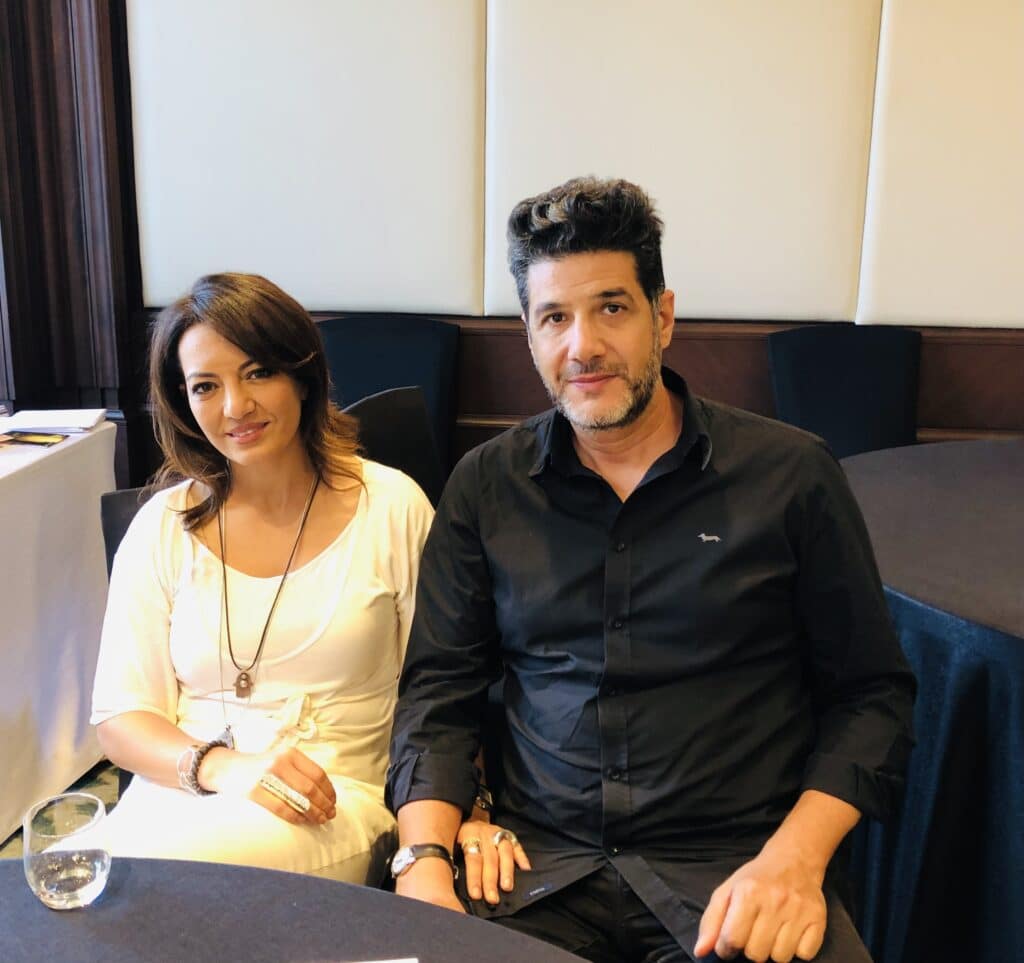
Maryam Touzani and Nabil Ayouch

Franz (2025) Cairo International Film Festival 2025

Dir: Agnieszka Holland | Cast: Idan Weiss, Peter Kurth, Jenovefa Bokova | Biopic 2025 127’ 

As a biopic that highlights Kafta’s romance with Felice Bauer and offers a lively depiction of his novel The Penal Colony, along with other key moment’s of the Prague-born visionary writer’s life, Franz could never be accused of being confusing and intractable, unlike the adjective that takes his name. But if fails to lay bare the soul of its leading man. Above all this intriguing drama shows that Polish Great director Agnieska Holland has no intention of settling into a traditional style, or slowing down.

Starring Idan Weiss as Franz Kafka (1883-1924), it follows the author’s life from his early teens in his hometown of Prague to his premature death, in Vienna, 1924. It tackles low points in Kafka’s life: a fractious relationship with his authoritative factory-owner father Hermann (a furious Peter Kurth), who belittled his writing and wanted Franz to follow in his footsteps, and the tragic death of his two older brothers. Kafka comes across as a sensitive, earnest young man determined to soldier on with his creative ambitions until his early death, depicted in the film’s final scene.

Visually this is a stylish and classically mounted triumph suffused with period detail yet somehow timeless, a quality accentuated by a funky modern score from Polish band Trupa Trupa. The fractured narrative structure helps to keep things interesting; and we soon realise that, like many artists before him, Kafka would only gain recognition after his death.   

With his delicate dark looks and pallid complexion German actor Idan Weiss is captivating as the main character, determined to follow a creative path, always polite but often obtuse and pedantic – as in the scene where he spars with a beggar who asks for a single Czech koruna: Kafka gives him a two koruna piece, demanding change for the coin.

In the end Kafka remains as enigmatic as ever with Holland and her writer Marek Epstein creating a memorable and engrossing impression of the Czech luminary and wisely deciding not even to try and unravel a mystery which remains intact for posterity. @Meredith Taylor 

NOW IN FRENCH CINEMAS | CAIRO INTERNATIONAL FILM FESTIVAL 2025

Once Upon a Time in Gaza (2025) Best Arab Feature Film Award – Cairo International Film Festival 2025

Dir/Wri: Arab and Tarzan Nasser | Cast: Nader Abd Alhay- Ramzi Maqdisi and Majd Eid | 90’

Trump’s words about making a riviera of Gaza holds a great deal of weight if you stop to really consider the social and financial benefits to this beleaguered region.

A fabulous climate lush vegetation and white sandy beaches and jobs for the people. What not to like?. What’s not to like is Hamas and its negative impact on a population and country it has dominated for decades.

Once Upon a Time Gaza, takes us back to 2007 where Yahia, a young student, forges a friendship with Osama, a charismatic restaurant owner with a big heart. Together, they start peddling drugs while delivering falafel sandwiches, but they are soon forced to grapple with a corrupt cop and his oversized ego. Meanwhile as Hamas tightens its control Yahia is for forced to seek vengeance for his friend Ossama’s murder.

Arab and Tarzan Nasser are best known for their multi-award winning second feature Gaza Mon Amour (2019), a poetic romance between two sexagenarians. The film premiered at the Venice Film Festival in 2020 and was selected to represent Palestine in the 2021 Oscars race.

Here they take full control of writing and directing duties to create a gripping and persuasive thriller that unfolds in the streets of Gaza city and remains captivating throughout. @MeredithTaylor

BEST ARAB FILM AWARD | CAIRO INTERNATIONAL FILM FESTIVAL 2025

Zafzifa (2025) Cairo International Film Festival 2025

Dir/Wri: Peter Sant | Cast: Dimitrios Gainnakoudakis, Crishelle Medrano, Mehdi Aouni | Drama Malta 99’

A man is left adrift and disillusioned on the island of Malta when his family leaves him in Peter Sant’s latest feature, an arthouse follow-up to Of Time and the Sea (2018).

After his wife clears off with their little daughter, Dimitri (Dimitri Giannakoudakis) becomes homeless eventually finding himself sharing a house with a hardworking delivery driver who is generous, up to a point.

But soon even ‘Mr India’ grows tired of supporting this middle-aged loser who spends his days drinking and aimlessly roaming a seaside town, sponging off his friends. And when Dimitri strikes up a romantic relationship with Philippine carer Annie, also down on her luck, things really come unstuck.

With a jagged score and woozy handheld camera underpinned by incisive social commentary on the fragility of human relationships in the shifting tide of contempo Europe, Zafzifa (a Maltese word for the sound of air or liquid oozing through an opening) conjures up a febrile vision of this holiday island full of people who don’t really belong. Making use of impressionistic images, often shot after dark or in stark sunlight, Sant portrays the doubtful day-to-day life of the lost and directionless hoping for a better life while just trying to survive.

With his rough-hewn physicality Giannakoudakis makes for a muscular but unappealing presence as Dimitri, filling the screen with his brooding looks. Unable to find gainful employment, not that he appears to be looking that hard, he is also suffering from an identity crisis: “’I’ve been here most of my life but I wouldn’t call it home”. And indeed we don’t get much of a sense of identity either of this southern Mediterranean island, beyond its pleasant climate and rocky shores bathed by turquoise waters. At one point a procession weaving through the streets suggests a thriving Christian community where English is spoken along with Maltese, a semitic language, and occasionally Italian.

In this latest offering, World premiering at Cairo International Film Festival the Australian-born Maltese-based filmmaker dredges the squalid backwaters of the sunny location, where of the collection of dislocated, disenchanted migrant workers strive to make a living on the back of the hospitality industry. Each one has a sob story to tell about a life gone slightly off the rails. Medhi (Mehdi Aouni), a French speaking Tunisian, is doing better than most, a self-starter he too has been in Malta a long time. Although unhappily married to a rich local woman, Mehdi has found work with a local construction firm: apparently Malta is experiencing a building boom. Annie has come here to raise her young son, but her tentative relationship with Dimitri feels forced and unnatural, and we don’t care about either of them.

Rather likes its central character, Zafzifa drifts along torpidly, the offbeat camera angles and artful images making it watchable for a while. But that alone cannot make up for the slim plotting, wooden acting and lack of any dramatic heft. @MeredithTaylor

INTERNATIONAL COMPETITION | CAIRO FILM FESTIVAL 2025


The Blue Trail (2025) Cairo International Film Festival 2025

Dir: Gabriel Mascaro | Cast: Denise Weinberg, Rodrigo Santoro, Miriam Socarrás, Adanilo, Rosa Malagueta, Clarissa Pinheiro | Portugal, Sci-fi drama 82′ 2025

Stories about courageous women refusing to budge are a bit of a theme at this year’s Cairo International Film Festival. First there is Calle Malaga about an ageing Spanish woman determined to stay in her Tangier home.  Then, in his fourth outing Gabriel Mascaro makes use of surreal but lowkey sci-fi in The Blue Trail (O Último Azul), a feisty but light-hearted fable about another woman who’s not for turning. Rather like the determined spirit played by Sonia Braga in Kleber Mondonca Filho’s Aquarius, Mascaro’s  77 year-old character Tereza also refuses to move on, despite her years.

The Blue Trail’s focus is on age discrimination in a near future world where the young often hold sway in their parents’ future. With their mobile ‘phones and social media they are backed by a government that insist that the more mature should move off to remote housing estates in a series of ‘wrinkle wagons’. All in the name of economic productivity.

Instead Tereza (Weinberg) sets off on a liberating, life-changing odyssey into the Amazon Forest where she sets her heart on learning to fly, with the help of a riverboat captain who transports her along the world’s most enigmatic river where they will encounter a fantastical fortune-telling blue snail.

Dreamlike yet grounded in a sense of timely reality, Mascaro’s satire is funny, moving and beautiful to behold with its gorgeous colours and camerwork and a melodious score. @MeredithTaylor

CAIRO INTERNATIONAL FILM FESTIVAL 2025 | OPENING FILM 2025

Cairo International Film Festival | International Competition 2025

C A I R O   F I L M   F E S T I V A L   2 0 2 5 

Hussein Fahmy, President of the Cairo International Film Festival, announces the competition line-up of the Cairo International Film Festival (CIFF), in its 46th edition.

Copyright Cairo International Film Festival


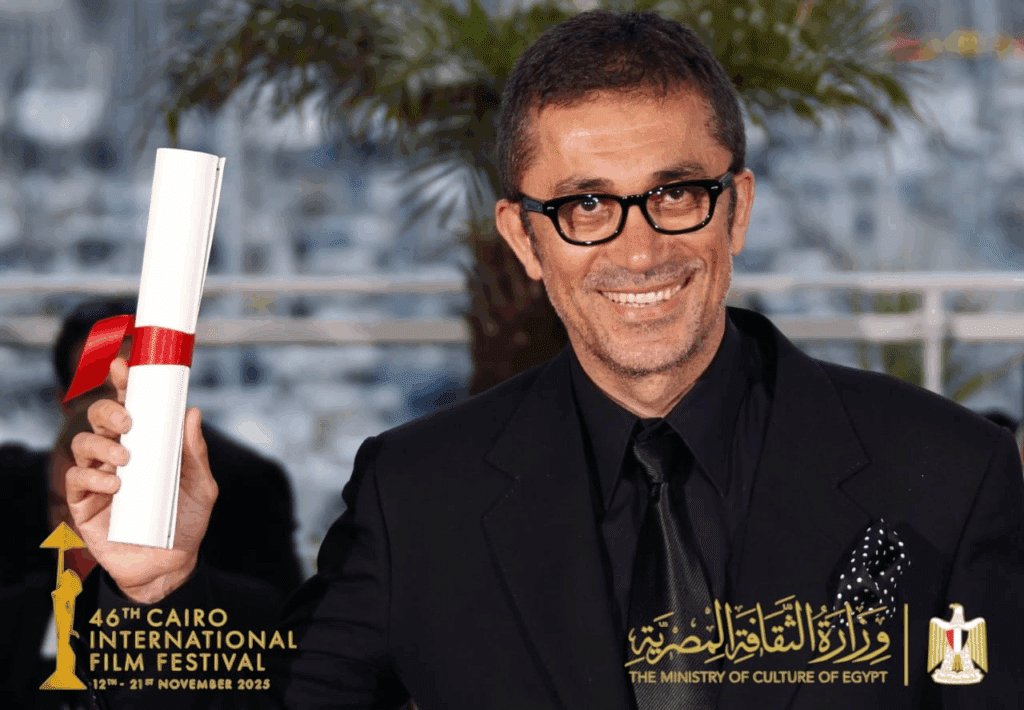
Jury President: Nuri Bilge Ceylan

Renowned Turkish filmmaker Nuri Bilge Ceylan is considered one of the most significant contemporary directors in world cinema. His films are celebrated for their profound human and philosophical depth and their exquisite visual language, marking milestones in global cinema through their existential questions and distinctive aesthetic vision. Ceylan has received multiple awards at the Cannes Film Festival over the years. His film Distant (2003) won both the Grand Prix and the Best Actor Award. He received the Best Director Award for Three Monkeys (2008), and in 2011 his film Once Upon a Time in Anatolia earned him the Grand Prix once again. His career reached its peak in 2014 when he won the Palme d’Or for his epic Winter Sleep. Most recently, his film About Dry Grasses earned the Best Actress Award at Cannes in 2023, reaffirming his enduring presence and influence in world cinema

Jury – International Competition

Nuri Bilge Ceylan – Director and Screenwriter, Turkey – President of the Jury

Nadine Khan – Director, Egypt

Simona Paggi, – Editor, Italy

Leyla Bouzid – Director, Tunisia 

Guan Hu – Director, China 

Bogdan Mureșanu – Director, Romania

Basma – Actress. Egypt 


International Competition | 14 Titles 

Calle Málaga | Maryam Touzani | Morocco, France, Spain, Ger, Belg | 2025 | 116′

Death Does Not Exist | Félix Dufour-Laperrière | Canada | 2025 | 75 min

Dragonfly | Paul Andrew Williams | United Kingdom | 2025 | 98 min

Exile | Mehdi Hmili | Tunisia, Lux, France, Qatar, Saudi Arabia | 2025 | 120′

Once Upon a Time in Gaza | Tarzan & Arab Nasser | France, Palestine, Germany, Portugal, Qatar, Jordan | 2025 | 87 min

One More Show | Mai Saad & Ahmed Eldanf | Egypt and Palestine | 2025 | 74′

Renovation | Gabrielė Urbonaitė | Lithuania, Latvia, Belgium | 2025 | 90 min

Sand City | Mahde Hasan | Bangladesh | 2025 | 99 min

The Silent Run | Marta Bergman | Belgium, Canada | 2025 | 94 min

Souraya, Mon Amour | Nicolas Khoury | Lebanon, Qatar | 2025 | 81 min

The Things You Kill | Alireza Khatami | Turk, Canada, France, Poland | 2025 | 113′

Zafzifa | Peter Sant | Malta | 2025 | 99 min

A Son | Nacho La Casa | Spain | 91 min | 2025

As We Breathe | Şeyhmus Altun | Turkey | 95 min | 2025

CAIRO INTERNATIONAL FILM FESTIVAL | 12-21 NOVEMBER 2025

Egyptian Classics Restored | Cairo International Film Festival 2025

Egyptian cinema holds a treasure trove of classics dating back to the 1950s waiting to be rediscovered and well worth revisiting.

Thanks to the specialist restoration centre just outside Cairo, many films are now being remastered and re-coloured for a wider audience to enjoy. Some are light-hearted – even saucy – comedies, others are historical epics or carry a political message but these are fantastic films not be overlooked.

This year Cairo International Film Festival celebrates its 46th edition, with the following:


The Palace of Desire | Hassan Al-Imam | Arab Rep of Egypt | 1967 | 130′

Palace Walk | Hassan Al-Imam | Arab Rep of Egypt | 1964 | 135′

Something of Fear | Hussein Kamal | Arab Rep of Egypt | 1969 | 120′

Cairo 30 | Salah Abu Seif | Arab Rep of Egypt | 1966 | 130′

The Second Wife | Salah Abu Seif | Arab Rep of Egypt | 1967 | 112′

The Sin | Henry Barakat | Arab Rep of Egypt | 1965 | 105′

The Quail and the Autumn | Houssam El-Din Moustafa | Arab Rep of Egypt | 1967 | 129′

The Beggar | Houssam El-Din Moustafa | Arab Rep of Egypt | 1973 | 138′

The Mirage | Anwar El-Shenawy | Arab Rep of Egypt | 1970 | 130′

The Impossible | Hussein Kamal | Arab Rep of Egypt | 1965 | 110′

My Wife and the Dog | Said Marzouk | Arab Rep of Egypt | 1971 | 95′

Sunset and Sunrise | Kamal El-Sheikh | Arab Rep of Egypt | 1970 | 125′

The Lamp of Umm Hashim | Kamal Attia | Arab Rep of Egypt | 1968 | 105

A Crime in a Quiet Neighbourhood | Houssam El-Din Moustafa | Arab Rep of Egypt | 1967 | 95′

The Man Who Lost His Shadow | Kamal El-Sheikh | Arab Rep of Egypt | 1968 | 130′

A Woman on the Road | Ezz El-Dine Zulficar | Arab Rep of Egypt | 1958 | 115′

The People and the Nile | Youssef Chahine | Arab Rep of Egypt | 1972 | 105′

Khan al-Khalili | Atef Salem | Arab Republic of Egypt | 1966 | 115′

Night and Jail Bars | Ashraf Fahmy | Arab Republic of Egypt | 1973 | 100′

My Wife, the General Manager | Fatin Abdel Wahab | Arab Rep of Egypt | 1966 | 110′

The Road | Houssam El-Din Moustafa | Arab Rep of Egypt | 1964 | 105′


CAIRO INTERNATIONAL FILM FESTIVAL | 12 – 21 NOVEMBER 2025 

Dragonfly (2025) Winner Golden Pyramid – Cairo International Film Festival 2025

Dir/Wri: Paul Andrew Williams | Cast: Brenda Blethyn, Andrea Riseborough, Jason Watkins | UK Thriller

Brenda Blethyn stars alongside Andrea Riseborough as women struggling against the odds in this chilly two-hander that won the Golden Pyramid Award for Best Film at this year’s 46th Cairo International Film Festival.

Paul Andrew Williams’ third feature has all the key elements of a classic sink estate thriller: a pit bull terrier, negligent care workers, cereals and tea predominating as the source of nourishment – along with a drop of tinned soup. From the get-go Raffertie’s tense score signals all is not well. 

It starts in the style of a Mike Leigh drama with equally banal dialogue but a few red herrings surface along the way. Jobless Colleen (Riseborough) and Mrs Richards (Blethyn), a pensioner, rub along reasonably as neighbours in a glum suburb of seventies bungalows, until Colleen’s dog destroys Elsie Richard’s bedding plants. When Colleen offers to replace them their camaraderie goes from strength to strength.

Colleen is a bit of a dark horse though. Pleasant enough on the outside, you wouldn’t want to cross swords with her, or the dog, ominously named Sabre. Schlepping around in baggy track bottoms, hair scraped back, is Colleen’s normal look, but occasionally she slaps on some red lipstick giving the impression there’s more going on than initially meets the eye.  

Best known for his TV credits Broadchurch and The Walk-In, the Bafta-awarded writer-director showcases the parlous state of ‘Broken Britain’ in this slim but compulsive tale of two lost souls – one on the breadline, the other on the rough end of buxom care-workers who couldn’t ‘care’ less. And we really feel their pain. 

But when Colleen offers to do a few jobs round the house and some shopping, taking charge of Elsie’s debit card into the bargain, an unsettling vibe creeps in. Then Elsie resentful son John (Watkins) arrives to spoil the party. 

Worth watching for its clever plot line and spot-on performances from Blethyn and Riseborough, this tight little thriller goes to unexpected places despite a rather overwrought finale. @MeredithTaylor

CAIRO FILM FESTIVAL 2025 | Golden Pyramid Award Best Film to the producer in a film directed by Paul Andrew Williams | Best Actress Award (shared) to Andrea Riseborough and Brenda Blethyn for their roles in Dragonfly.
IN UK CINEMAS FROM 7 NOVEMBER 2025
https://www.youtube.com/watch?v=2hr-WlHtMQY

The Silent Run (2025) Cairo International Film Festival 2025

Dir: Marta Bergman | Cast: Salim Kechiouche, Zbeida Belhajamor, Clara Toros, Abda Razak Alsweha, Lucie Debay, Michaël Abiteboul, Yoann Zimmer, Isabelle de Hertogh and Marie Denarnaud | Belgium, Canada – French, Arabic – 94′

Marta Bergman has already made a name for herself for the stunning feature debut Alone at my Wedding that premiered at Cannes’ Acid sidebar in 2018.

The Bucharest-born filmmaker’s second feature, a migrant movie, follows Syrian nationals Sara and Adam and their two-year-old toddler who have entered Belgium illegally en route to the UK.

Cutesy opening sequences of the couple cuddling and dancing with their baby, born in Greece, are intended to endear us to their supposed plight. But the simple truth is their illegal entry into Belgium is with the intention of heading for the softer options of the UK to claim asylum, via traffickers. No mention is given as to why they have left their original home, or the circumstances involving their departure with a tiny baby.

Bergman dialogue light escape thriller relies on woozy, impressionistic camerawork to show how the couple come face to face with the authorities in the shape of veteran policer officer Redoune, who is charged with rooting out people who shouldn’t be coming to Europe without dire need.

The authorities are shown as unsympathetic and abusive, Redouane’s car following in hot pursuit of the migrants’ van in the semi darkness on the Belgian motorway. Headlight lights flash and sirens blare as scuffles break out, Redouane threatening the foreigners at gunpoint. Clearly they are victims of traffickers but Redouane will soon sees himself at the hands of the Law after his harsh treatment of these illegals. Facing a harsh truth involving her baby, Sara too becomes belligerent in this grim tale of trafficking and illegal migration with a hopeful ending for the Syrian couple.  @MeredithTaylor  

IN COMPETITION | CAIRO INTERNATIONAL FILM FESTIVAL 2025

The Things You Kill (2025) Cairo International Film Festival

Dir/Wri: Alireza Khatami | Cast: Ekin Koç, Erkan Koçak Köstendil, Hazar Ergüclü, Ercan Kesal

Writer-director Alireza Khatami is best known for his obtuse storytelling techniques but The Things You Kill, a noirish thriller about an unappealing university professor dealing with a dual domestic crisis is disappointing eventually ending up in no-mans’ land after opening as one of those slow-burning dramas in the style of Nuri Bilge Ceylan

What opens as a relatable film centring on the aftermath of a family upheaval and the consequent emotional confusion soon drifts into surreal territory with mysterious dreamlike sequences and dual identities that simply doesn’t ring true and renders what was initially a plausible scenario into absurd Bunuel

Ali (Ekin Koç), a part-time language teacher, has recently returned to Turkey from the US where he has lived for a number of years. Efforts to start a family with his wife, Hazar (Hazar Ergüclü), a vet, have ground to a halt and his low mood is compounded by the state of his mother. His father (Ercan Kesal) seems to be abusing his wife, the couple live in grim house in the outskirts of the city – she will suddenly die an explained death.

One day in his cabin in the hills Ali then comes across a drifter named Reza (Erkan Koçak Köstendil) who offers to help him out with some gardening, to take the weight off his shoulders. This all sounds exciting but gradually the plot will go pear-shaped requiring the audience to suspend disbelief in a tale devoid of dramatic heft.

Clearly Ali regrets his move back to Turkey from his a seemingly more fruitful like in the US and this disdainful torpor spills over onto everyone he meets in a way that his problems in Turkey fail to be of concern or even interest. And when his mother does die, in suspiciously circumstances, and the finger points to his father leaving Ali to deal with all the stress entailed we couldn’t really care less.

When Ali and Reza then become bizarrely involved in the grisly denouement the plot has drifted so far away from its promising premise we have completely lost interest. Everyone welcomes a film with original ideas and, especially a twisty tale with a satisfying outcome. But it’s doubly disappointing when our appetite is whetted but never satisfied at the end of the meal. @MeredithTaylor

CAIRO INTERNATIONAL FILM FESTIVAL 2025 | INTERNATIONAL COMPETITION

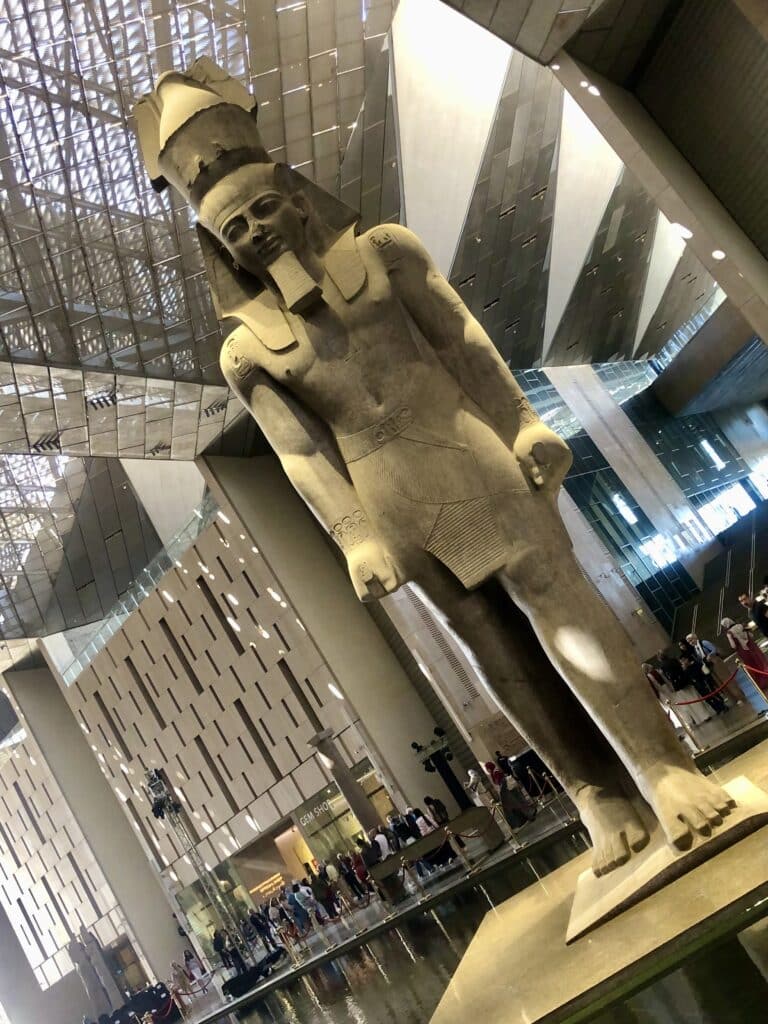
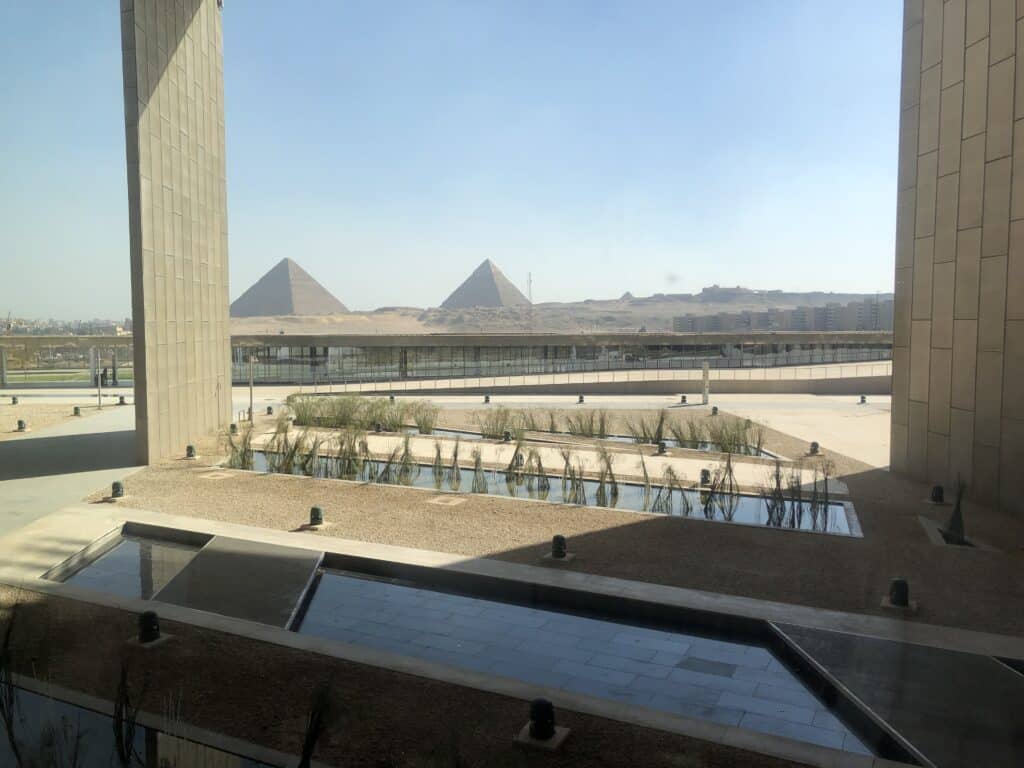
Cairo Film Festival 2025 | Grand Egyptian Museum GEM

The new Grand Egyptian Museum is the biggest archaeological museum in the world. Showcasing  around 100,000 artefacts from some seven millennia of the country’s history, the museum serves as a tribute to Egypt’s already monumental cultural offering to the World.

The Grand Egyptian Museum, near to the Great Pyramid of Khufu at Giza, on the outskirts of Cairo, now houses the entire contents of the intact tombs of the boy king Tutankhamun, discovered by British archaeologist Howard Carter, and the 4,500 funerary boat Khufu, in addition to the other treasures already displayed to the public since 2024.


The inauguration of this museum is the culmination of a generations-long dream and a message to the entire world that Egypt, with its rich history, continues to captivate humanity with its creativity and its ability to preserve its heritage and present it in its most splendid form. It is a window through which the future looks upon the greatness of the past.

Cairo International Film Festival is keen to extend special appreciation to the artist Farouk Hosny, the former Minister of Culture, along with Dublin-based architects responsible for the building’s conception and design. @MeredithTaylor

CAIRO INTERNATIONAL FILM FESTIVAL 12-21 NOVEMBER 2025


Happy Birthday! (2025) Cairo International Film Festival 2025

Dir: Sarah Goher | Egypt, Drama 2025

1940’s Hollywood actor and comedian W.C. Fields is rumoured  to have coined the phrase, “never work with children or animals. Children and animals can be unpredictable, they certainly have the ability to steal scenes and upstage an adult”.

Well Doha Ramadan certainly steals the limelight in this touching new Egyptian crowd-pleaser that pictures the class divide from a kid’s perspective in Egypt today

Directed by Sarah Goher and co-written and exec-produced by Mohamed Diab (Clash). The film, Egypt’s Oscar hopeful, world premiered at TriBeCa 2025 where it garnered three prizes including the Nora Ephron award for Best Screenplay

Little Doha plays Toha an endearing eight year old who works as a go for for a wealthy Cairo family where the director brings alive the harsh reality on the streets of the Egyptian capital where even the weakest members of society strive hard to make a living with whatever means possible. And when it comes to enterprise the Egyptians are real troupers – it brings tears to your eyes when you see children and crippled old people  desperately trying to survive through their own initiatives, and puts beggars in the West to shame.

Toha is so keen to make her friend Nelly happy on her birthday.  racking her brains to come up with idea for a lovely present. She even ends up risking her life wading through the waters of the Nile river at sunset, where her own father drowned, catching fish to sell at the market her mother warning her to be careful.

In scenes that are some of the most enchanting of the entire film Toha then goes to market, trading her catch to all and sundry in an effort to raise money.

But Toha is never sentimentalised as a character. She can stand up for herself as we when find out when she pesters a group of men to give her a lift. Luckily the Egyptians are good-natured and happy to help anyone in need, particularly children who ask nicely.

Eventually Toha comes up with the perfect idea for the birthday gift and cadges a lift to the party with a child taxi driver. It’s hard to believe both kids are so mature for their age, forced to grow up quickly in this harsh reality of poverty.

And while the privileged Nelly. the daughter of her mother’s employer, gets a new iPhone for her birthday and a show with a magician Nelly gets something far more rewarding: the satisfaction of achievement. @MeredithTaylor 

HAPPY BIRTHDAY! will represent EGYPT in next year’s Oscar race

Golden Pyramid Career Achievement Award | Cairo 2025


Hungarian filmmaker Ildiko Enyedi is set to receive a career achievement award at this year’s Cairo Film Festival.

The critically acclaimed screenwriter and director is a distinct voice in the world of independent auteur cinema and has gone from strength to strength in a career that saw her rise to international acclaim when she won the Camera d’Or for her debut feature My Twentieth Century.

The offbeat and provocative drama Of Body and Soul (2017), won the Berlinale Golden Bear and was later nominated for the Academy Awards.

Her latest outing, Silent Friend, had its world premiere at the Biennale de Venezia in September. The film will screen at Cairo International Film Festival as part of the official selection.

Other titles in her filmography include Magic Hunter, A Gyar, Tamas and Juli, Simon, the Magician, and The Story of My Wife.

Enyedi was a professor for film in Budapest and served as a member of various juries at international film festivals, such as the presidency of the short film jury in Cannes. Enyedi will be awarded with the Golden Pyramid Career Achievement award of the 46th edition of the Cairo International Film Festival.

Cairo International Film Festival | 12-23 NOVEMBER 2025

Top 25 Egyptian Films (2000-25)

CAIRO INTERNATIONAL FILM FESTIVAL has got together with International the Federation of Film Critics (FIPRESCI celebrating its 100th anniversary), and the Egyptian Film Critics Association (EFCA), to publish a list of their all time Top 25 Egyptian Films of the First Quarter of the 21st Century.” .

CAIRO (CIFF) celebrates is 46th edition, from 12–21 November 2025, and the results of the poll will form part of a glossy comprehensive new book. The volume will include critical analyses of each of the 25 selected films, along with an extensive overview of the key artistic and production trends that have shaped Egyptian cinema over the past quarter-century. A dedicated discussion session will also take place during the festival to present and debate the book.

The poll was just one of the international events marking FIPRESCI’s 100th anniversary. The partnership was formally announced at the Egyptian Pavilion of the Marché du Film during this year’s 78th Cannes Film Festival (13–24 May 2025).

The 25 films were selected by 63 members of FIPRESCI from amongst 881 features publicly released in cinemas, satellite and digital platforms in Egypt in the first half of this century – between 1 January 2001 and 31 July 2025 – in order to allow them to be announced during the festival.

Top 25 Egyptian Films (2000–2025)

1. I Love Cinema (2004) by Ossama Fawzy

2. Messages from the Sea (2010) by Daoud Abdel Sayed

3. A Citizen, a Detective, and a Thief (2001) by Daoud Abdel Sayed

4. Gate of the Sun (2004) by Yousry Nasrallah

5. In the Heliopolis Apartment (2007) by Mohamed Khan

6. Sleepless Nights (2003) by Hani Khalifa

7. The Best of Times (2004) by Hala Khalil

8. Microphone (2011) by Ahmad Abdalla Elsayed

9. Ibrahim El Abyad (2009) by Mawran Hamed

10. The Yacoubian Building (2006) by Mawran Hamed

11. The Magician (2001) by Radwan El-Kashef

12. In the Last Days of the City (2016) by Tamer El Said

13. His Excellency the Minister (2002) by Samir Seif

14. Scheherazade, Tell Me a Story (2009) by Yousry Nasrallah

15. Coming Forth by Day (2012) by Hala Lotfy

16. The Closed Doors (2001) by Atef Hatata

17. Feathers  (2021) by Omar Zohairy

18. The Aquarium (2008) by Yousry Nasrallah

19. Seeking a Way Out for Mr. Rambo (2025) by Khaled Mansour

20. Factory Girl (2014) by Mohamed Khan

21. One-Zero (2009) by Kamlah Abu-Zikri

22. Leisure Time (2006) by Mohammed Moustafa

23. The Island (2007) by Sherif Arafa

24. Abu Zaabal 89 (2025) by Bassam Mortada

25. Chaos, This Is (2007) by Youssef Chahine & Khaled Youssef

Founded in 1976, Cairo International Film Festival is among the oldest and most prestigious film festivals in the Arab world and Africa. It holds an official Category “A” accreditation from the International Federation of Film Producers Associations (FIAPF)—the only Arab and African festival with this status.

The International Federation of Film Critics (FIPRESCI), established in 1925 in Brussels, unites national organisations of film critics from over 50 countries, along with individual members from around 40 additional countries, and is dedicated to promoting global film culture and protecting the professional interests of film critics worldwide.

CAIRO INTERNATIONAL FILM FESTIVAL 2025 | 12-21 NOVEMBER 2025

The Voice of Hind Rajab (2025)

Wri/Dir: Kaouther Ben Hania. Saja Kilani, Motaz Malhees, Amer Hlehel, and Clara Khoury | Drama 

Best known for Four Daughters and The Man Who Sold His Skin Kaouther Ben Hania’s new film is an exploration of the space between fiction and documentary in a film about remembrance.

The Tunisian director casts Palestinian actors who bring to life recorded voices of those on a desperate mission to save the titular Hind Rajab and preserve her memory forever after the tragic events of the Hamas attack on Israel which gave rise to the subsequent war in Gaza. The death of a child is devastating and the director makes this a moving experience if ever there was one and Ben Hania’s ability to meld reality and into the documentary sequences is skilfully done. 

After celebrating its world premiere in Official Competition at the Venice Film Festival, followed by its North American premiere at Toronto International Film Festival, the film will continue to screen at major international, UK & Irish festivals this autumn, including the upcoming London Film Festival where it will screen in Competition.

The film has been selected by Tunisia as its official entry for the Foreign Language Academy Award next year.

What Belt and Road Week means for Egyptian cinema

Belt and Road Film Week is an event that showcases films and promotes cultural exchange among countries participating in the Belt and Road Initiative, 2025, which was intruded by the Shanghai International Film Festival back in 2018.

It features screenings, awards, and activities aimed at enhancing cooperation in the film industry. 55 Film organisations and festival comprising 48 counties now take part, along with Egypt they are China, Portugal, Chile, Colombia, Indonesia, Hungary, the Netherlands and Mongolia

Belt and Road Week is significant for Egyptian film as it enhances collaboration and visibility for Arab cinema, allowing Egyptian films greater access to Asian markets. The Cairo International Film Festival’s participation aims to foster partnerships and cultural exchange, benefiting filmmakers and promoting Egyptian cinema internationally.

Egypt is proud to be participating for the 7th successive year in the Belt and Road Film Festival Alliance, Representing CIFF at the event was film critic Mohamed Tarek, the Festival’s Artistic Director, who took an active part in the alliance’s official meetings. The discussions focused on ways to increase cooperation between member festivals, promote the exchange of films, and organise cross-border cultural and cinematic events. These efforts aim to raise the international profile of Arab cinema and create new opportunities for filmmakers from alliance member states.

A pioneer in the African and Arab world Egyptian cinema has an impressive legacy that dates back to the 1890s. With over four thousand features, shorts and documentaries produced across the region, the country’s film industry has been a cornerstone of creativity showcasing the nation’s cultural heritage and creating a bridge between the generations.

Cairo International Film Festival, the oldest and only internationally accredited, annually running film festival in the Arab world, Africa and the Middle East will celebrate its 46th edition from 12-21 November 2025. @MeredithTaylor

CAIRO INTERNATIONAL FILM FESTIVAL | 12-21 November 2025

Death Does Not Exist (2025) Cairo International Film Festival 2025

Dir/Wri: Felix Dufour-Laperriere | Animation Canada 71’

Death Does Not Exist a Canadian-French animated drama follows Hélène, an activist who abandons her colleagues after they fail in an armed attack against a wealthy target; isolated in the wilderness, she becomes haunted by Manon, a former member of the group who challenges Hélène to reconsider her values and convictions.

Felix Dufour-Laperriere opts for muted sepia and olive greens in his delicately rendered visuals but it’s the sinister score that blends electronic and exotic animal soundscape that really transports us to a mysterious land full of exotic birds and plants where Helene is haunted by Manon and her fears of the past and the violence that led to the tragedy in this thrilling apocalyptic film with its layered narrative that evokes all the fears and dangers of the world we live in @MeredithTaylor

CAIRO INTERNATIONAL FILM FESTIVAL 2025 | INTERNATIONAL COMPETITION DIRECTORS FORTNIGHT | CANNES FILM FESTIVAL


The Memory of Butterflies (2025) Cairo Film Festival 2025

Wri/Dir: Tatiana Fuentes Sadowski | Doc 67’

La memoria de las mariposas (The Memory of Butterflies), is a potent but daintily-captured analog documentary that tells the 20th century account of two indigenous Peruvian boys taken to London to adapt to modern European life.

Using black-and-white, hand-processed Super 8 imagery and sepia tinted stock Tatiana Fuentes Sadowski delves into the story of Omarino and Aredomi interweaving her first feature documentary with an expose of Peru’s violent 35-year dictatorship and the colonial rubber trade of the late 19th and early 20th century in Latin America.

With an imaginative lightness of touch Sadowski digs deeply into the men’s past deconstructing the official history of the archive, after sharing the photo with the Indigenous peoples of Peru today, the descendants of Omarino and Aredomi.

LA MEMORIA DE LAS MARIPOSAS serves as a striking ethnographical portrait of lost and marginalised generations devastated by the rubber boom, thus raising the profile of those forgotten or sidelined by the official version of events. @MeredithTaylor

CAIRO INTERNATIONAL FILM FESTIVAL 2025 INTERNATIONAL PANORAMA | FIPRESCI WINNER FORUM BERLINALE | SPECIAL MENTION DOCUMENTARY AWARD 2025


45th Cairo International Film Festival Awards | 2024

The New Year That Never Came won the Golden Pyramid for best film at Cairo’s 45th International Film Festival (CIFF). The dark comedy unfolds on the cusp of Romania’s 1989 revolution and took the ‘Horizons’ award for best film along with the Fipresci prize at this year’s Venice Film Festival. It was written and directed by Romania’s Bogdan Mureșanu.

Russia’s Natalia Nazarova won the Silver Pyramid award for Postmarks, an upbeat drama about a woman with cerebral palsy whose life changes when she meets a sailor. A special mention was awarded to Alina Khojevanova and best actor was won Maxim Stoyanov.

The Bronze Pyramid award for the best first or second film by a director went to Brazil’s Pedro Freire for drama Malu. The lead Yara De Novaes, was award the best actress prize. 

Egyptian melodrama Spring Came Laughing, took the Henry Barrakat Award for its director Noha Adel. The film also won best artistic contribution, the Salah Abu Seif Award for best director and the Fipresci prize.

The Arab film prize was awarded to A State Of Passion– which also won the Special Jury Prize for Feature Documentary.  Abu Zaabal 89 took the Best Feature Documentary Award.  

Earlier in the festival, Hussein Fahmy, President of CIFF, expressed his enthusiasm for a new agreement emphasising the festival’s commitment to fostering international cooperation in the film industry with partnerships that aim to spotlight Egypt as a global cinematic hub, offering extraordinary filming locations and modern infrastructure. The aim is to continue attracting major international productions to the region, and supporting the film industry locally and globally, while promoting Egyptian culture and heritage on the world stage. 

In a related announcement, the festival revealed a new collaboration with Media Production City, aiming to expand opportunities for cinematic production and establish Egypt as a central hub for global filmmaking. @MeredithTaylor

45th CAIRO INTERNATIONAL FILM FESTIVAL 2024 | 13-22 NOVEMBER 2024

Madanyia (2024) Cairo International Film Festival 2024

Dir: Mohamed Subahi | Sudan, Doc 75′

A lively documentary despite its tragic subject matter charting the history of modern Sudan through the lives of three people in today’s Khartoum.

The country has experienced turbulent upheavals but on the streets of the capital there is an indomitable spirit at play. Here ordinary people are striving for democracy buoyed by their sunny enthusiasm and determination to bring about change. To keep us appraised of Sudan’s recent history the director makes ample use of inter-titles with key dates and historical facts.

Acting as his own DoP and editor Mohamed Subahi sets the scene at a pivotal moment in the Sudanese Revolution that began in December 2018. The three are campaigning in various local movements but their interweaving stories are full of positivity and hope, and the mood is enhanced with vibrant camerawork by Subahi and his co-DoP Algaddal Hassan who capture the febrile intensity and the passion of the Sudanese youth who aspire towards a fully democratic republic irrespective of creed and colour. Sadly, the only violence seem to come from the authorities. Despite ugly scenes that see the police opening fire, the people press on with their peaceful protest, terrified out of the lives. @MeredithTaylor

CAIRO INTERNATIONAL FILM FESTIVAL 2024

They Will Be Dust (2024) Cairo Film Festival 2024

Dir: Carlos Marques-Marcet | Cast: Alfredo Castro, Angela Molina, Monica Almirall | Spain 106mins

Euthanasia is a hot topic at the moment with The Room Next Door taking the Golden Lion at Venice 2024 and now this end of life drama from Spain’s Carlos Marques-Marcet who puts a positive spin on the subject winning an award Toronto and Valladolid only weeks later.

The film is so upbeat and pragmatic it incorporates jaunty dance sequences and even are aria from Maria Callas into the storyline that kicks off with a histrionic outburst from Claudia (Molina), an actor who has been struck down with a brain tumour and is quickly calmed down by her theatre director husband Flavio (Castro) in their comfortable home. Many may find the comedy treatment inappropriate but it suits the emotional pitch of a couple who are facing up to the final years with jokey humour and dignity.

Claudia wants to go to Dignitas Switzerland but Flavio refuses to left be left alone and opts to die by her side. But their daughter Violeta (Batet) is not convinced, and finds herself engaging in persuasive debate between her parents in a discussion that give the drama  potent emotional freight although the subject is not played out with quite the same rigour as the feeling that erupt.

Such is their devotion to one another that Claudia and Flavio decide to renew their vows with some cringeworthy moments for their extended family. It’s always awkward and faintly embarrassing when long-term couples insist on egging the omelette by imposing their  declarations of devotion and undying love for each other on their nearest and dearest. But these two are so wrapped up in one another they fail to notice or even care. And in some ways this adds grist to the drama that plays out, as predicted, with an airing of privately shared songs as so on.

When Claudia is asked by the clinic to provide a “playlist to die to” it soon becomes clear that she is very much a diva who wants her ‘swansong’ to be a memorable performance for everyone in the family whether appropriate or not. Veteran actor Molina certainly gives gusto to her dying character as the star turn of this intense and intelligent film. It may not be everyone’s cup of tea @MeredithTaylor

CAIRO INTERNATIONAL FILM FESTIVAL 2024 | Special Screening


All We Imagine as Light (2024) Cairo International Film Festival 2024

Dir/Wri: Payal Kapadia | Cast: Kani Kusruti, Divya Prabha, Chhaya Kadam, Hridhu Haroon | India Drama 110′

Writer-director Payal Kapadia‘s Mumbai set feature All We Imagine As Light was the first Indian film to compete for the Palme d’Or in nearly three decades; an impressive achievement for a first time filmmaker, especially an Indian woman who went on to win the Grand Prix in 2024.

The last time an Indian film made it into the main competition was Shaji N Karun’s Swaham in 1994. Sadly it went home empty-handed losing out to Quentin Tarantino’s Pulp Fiction. Kapadia’s poetic yet powerful documentary, A Night of Knowing Nothing, won the Golden Eye for best documentary at Cannes in 2021.

Unfolding in two parts and shifting deftly from realism to reverie All We Imagine As Light centres on two women caught in impossible love stories in modern day Mumbai. Prabha, a nurse, shares a flat with Anu, yet they hardly know each other and are further constrained from forming a friendship due to shameful secrets that trap them from sharing their personal lives. Both women are disappointed by love, for differing reasons, and this emotional claustrophobia pervades the first part of the drama.

There’s nothing brash or bossy about these characters they both bear their difficulties with restraint and modesty. Anu, a Hindu, is in love with a Muslim man and forced to conceal her relationship due to societal constraints. All the two of them want is to make love but this is frowned upon, even nowadays.

Prabha is caught in an arranged marriage with a man who has since cleared off to his village. One day, out of the blue, a rice cooker arrives in the post, supposedly from her estranged husband. This innocent gift sends Prabha into a deep depression, opening up fresh wounds of romantic disillusionment and upsetting her emotional equilibrium once again. She is a married woman constrained by all the ties that it implies, but the disappearance of her husband leaving her lonely and desperate.

The second part of the film brings an uplifting almost dreamlike tonal shift that sees the women freed from their inertia when they set off on a road trip to a beach resort where a mystical forest creates  space for dreams to be unleashed.

Kapadia’s film touches on traditional themes of abandonment, religious intolerance, female friendship and sexual liberation that are still all too relevant in today’s India with its impressive technical and financial advances: Men are free but many women are still sadly stuck in the dark ages. Meanwhile in the West men and women are enjoying the freedoms of gay marriage, gay parenthood, and sexual transitioning. A thoughtful, richly thematic and beautifully captured film enhanced by a magical score and two sensitive performances from leads Kani Kusruti and Divya Prabha. @MeredithTaylor

IN CINEMAS FROM 23 NOVEMBER 2024


Spring Comes on Laughing (2024) Cairo International Film Festival 2024

Dir/Wri: Noha Adel | Cast: Main cast: Reem Safwat, Rehab Anan, Carol Ackad, Kawthar Younis | Egypt/France. 2024. 96mins

Conflict is never far away in this female centric film inspired by a poem from Egyptian Salah Jahin that begins ’Spring came on laughing but finds me in sorrow’.

A first feature for Egypt’s Noha Adel, screening at this year’s Cairo International Film Festival, shows how an upbeat anodyne conversation can suddenly take a turn into darker more confrontational territory when four women get together to discuss their lives, loves and dreams in Cairo. Tonally the drama feels rather one note with emotions running high and often out of control, each person raising their voice but not really listening to the another.

The film is made up of four spring-set tales and a wrapping finale. It opens with Salwa (Sally Abdou) and her daughter Reem (Reem Safwat) meeting their elderly neighbour Mukhtar (Mukhtar Younis) and his son Shady (Shady Hakim) for afternoon tea. A polite cultural exchange of views about theatre, cinema and literature suddenly turns tense when someone says the wrong thing, and the dynamic switches from convivial tete-a-tete to pistols at dawn. .

The next segment takes place in May at a birthday lunch for Zazou (Rehab Anan). The entente cordiale once again turns sour in a celebration that should have been joyful. These women seem intent on jumping down each other’s throats, and when a simple misunderstanding causes offence, longterm friends turn into sworn enemies.

The previous month, in April, the scene is set at a beauty salon where one of the staff, Abeer (Reem Al Aqqad) is suddenly accused of theft, unearthing a litany of petty grievances as souls are bared in no uncertain terms, and events turn histrionic. A March wedding is then disrupted when Kawthar (Kawthar Younis), an uninvited guest, makes an unwelcome appearance much to the consternation of the bride Lili (Carol Ackad).

Sometimes feeling like four short films welded together, rather than a cohesive whole feature, Spring Comes on Laughing feels  repetitive with the same grievances being aired and the same hysterical soul-searching. The women want to project an image of success and satisfaction but this is only skin deep. Scratch the surface and they are actually dissatisfied, angry and negative, especially about the men in their lives. This chaotic vibe is accentuated by Sara Yahia’s mobile camera that ducks and dives in an attempt to keep up with the mayhem.

So a brave attempt at allowing women to air their views but a space for calm contemplation and measured debate, rather than continuous hysteria, would be have been most welcome. MeredithTaylor

CAIRO INTERNATIONAL FILM FESTIVAL 2024

The Beggar | Al Shahat (1973) Cairo International Film Festival 2024

Dir: Houssain El-Din Mustafa | Egypt, Drama 122′

The Beggar is a lyrical love story directed by Houssaim El-Din Mustafa who looks at one man’s search for the meaning of life in 1970s Cairo.

This seventies cult classic really captures the era with a score of hits from Marc Bolan (“Jeapster for your Love”), Semprini and even Jimi Hendrix. A nightclub singer croons Shirley Bassey’s “Something in the Way He Moves”; a teenager rocks false eye lashes and black ‘kinky boots’. There’s snogging in bed, cleavages aplenty (and that’s just the women). There’s even a product placement for Johnny Walker whisky.

Sexual jealousy, infidelity and religion must have been provocative themes in the Middle East back then, yet Egypt emerges as a fun, permissive place to be, at least for middle classes. But what starts as a lighthearted comedy often drifts into dark melodrama. These tonal shifts are managed with dexterity, the humour giving way to some emotionally fraught scenes in chintzy domestic settings by the Nile with a riverside panorama that shows the 5-star Cairo Sofitel still under construction.


The focus is Mr Omar (Mahmoud Moursy), a sharp-suited lawyer caught in a midlife crisis and a loveless marriage to Zeinab (Maryam Fakhruddin). The stooge is his beret-toting, pipe-smoking friend Mr Mustafa (a sort of Egyptian Jacques Tati) who introduces him to nightclub singer Miss Margaret. Things move fast, but sadly married men are not her bag, and Omar realises his predicament.

The lawyer then meets Belly dancer Warda at the Capri Nightclub. And he’s smitten. Put off by his marital status and kids, Warda also turns him down. So Omar vents his frustration by accelerating at top speed when driving her home: it’s a clever psychologic ploy that uses terror to create sexual tension allowing Omar to finally get his leg over. Trying to change his life, he creates a kitsch love nest with a wardrobe full of the latest fashions for Warda, but soon, as predicted, he loses interest.

Omar’s problem is not clearly sexual frustration, but a lack of self-realisation. Financial success is not the only goal in life. Wracked with guilt at lying to his wife and daughter, and unfulfilled by his romantic encounters, the lawyer gives up his practice to a former colleague Osman, and turns to Sufism in the hope of enlightenment, amid scenes that use magic realism to push home the spiritualism of this branch of Islam.

The Beggar is an intelligent and entertaining film despite its rather convoluted and confusing ending. Seventies Egypt is still a man’s world where most women are seen as simpering side-kicks, happy to stay and home and look after the children, even though some are outwardly emancipated in the creative industry. Interestingly the director highlights the close father/daughter relationship that sees Omar, by his own omission, as his teenager’s close friend, and not just her loving her father. @MeredithTaylor

CAIRO INTERNATIONAL FILM FESTIVAL 2024


The State of Passion (2024) Cairo international Film Festival 2024

WriDirs: Carol Mansour, Muna Khalidi | Doc 89′

Filmmakers Carol Mansour and Muna Khalidi are close friends of the Abu Sittan family and explore from an intensely personal angle the life and work of Palestinian doctor Ghassan Abu Sittah who works tirelessly to save lives in his native Gaza. 

Hassan is actually based in London where he runs a Harley Street clinic specialising in complex lip surgery. But when duty calls he jumps on a plane to the region and provides emergency support, just as he has done during five conflicts involving Israel, as well as in Afghanistan, Iraq, Lebanon, Syria, and Yemen.

An opening segment makes uses of mobile phone footage and storyboarded images to introduce the well known surgeon who is passionately driven in a humanitarian cause to treat survivors of airstrikes and bombs blasts during the recent conflict in Gaza that has touched so many lives.

There are interviews with his mother and wife Dima who describe their fears of living with a close loved one whose life puts him in danger every single day. The film them scrolls backwards and forwards describing his childhood and education and his determination to become a doctor.

Avoiding sensationalism the directors follow Ghassan’s emergency surgery in the only single functioning hospital in the war zone where he is forced to choose which victims are worth saving. He remembers one night performing six amputations involving children. The injuries are brutal and indiscriminate so he operates a tough triage system. Sometimes only limbs are discovered in the rubble. There is a cemetery dedicated to children’s appendages. 

In scenes of utter devastation we witness bomb sites strewn with tee-shirts and plastic shoes that have literally melted in the heat of the blasts. Gruelling, almost unwatchable scenes in the aftermath to an incursion bear witness to the broken bodies and blood-soaked floors. No family is left untouched by the ghastly events.

Most recently he has been lobbying in the UK parliament for end to the genocide, citing Israel’s purported use of white phosphorus in attacks on children and babies. Together with his solicitor he is mounting a war crimes case. And it’s here that the documentary claims the Israelis are trying to discredit his efforts. @MeredithTaylor

CAIRO INTERNATIONAL FILM FESTIVAL 2024


Film Restoration and Production in Egypt | Cairo Film Festival 2024

A pioneer in the African and Arab world Egyptian cinema has an impressive legacy that dates back to the 1890s. With over four thousand features, shorts and documentaries produced across the region, the country’s film industry has been a cornerstone of creativity showcasing the nation’s cultural heritage and creating a bridge between the generations.

Flaws are removed by hand | copyright Filmuforia.com


Many of these film classics are being restored to their former glory at the Egyptian Media Production City, on the outskirts of the capital Cairo. This vast hub stretches over two million square metres in addition to one more million square metres located within the Media Free Zone. EMPC is home to ninety state of art film studios, where new films and series are currently in production. These services contribute to providing Arab and foreign production companies with all the necessary facilities for shooting their films including sound stages, backlots and a state of the art Dolby Atmos studio for sound mixing.


copyright Filmuforia.com

In the Heritage Restoration Centre a team of highly experienced craftsman undertake the process of restoration of TV and classic films which includes repairing and correcting flaws, cleaning,  scanning and transforming into digital content. This gives cineastes and newcomers to classic cinema the chance to experience films for the first time in high resolution formats.

colour correction before and after at EMPC | copyright Filmuforia.com


This year’s Cairo International Film Festival presented fourteen newly restored classics for screening in their own special strand. Festival president, director and actor Hussein Fahmy, is fully supportive of the restoration of classic cinema and is currently committed to restoring a further ten films at the Egypt Media Production City. @MeredithTaylor

CAIRO INTERNATIONAL FILM FESTIVAL 2024

Colour correction process

Passing Dreams (2024) Cairo International Film Festival 2024

Wri/Dir: Rashid Masharawi | Drama 81’

An intelligent and thoughtful film kicks off this year’s CAIRO INTERNATIONAL FILM FESTIVAL  Passing Dreams is a feature-length Palestinian film written and directed by Rashid Masharawi. Upbeat and full of optimism throughout the film follows Sami, a 12-year-old boy, who embarks on a journey across Palestine with his uncle (Ashraf Barhom) and teenage cousin Maryam (Emilia Massou)

It will be an eventful voyage of discovery – of each other, and the people the meet along the way who share their stories reflecting the difficulties of restrictive life and a thwarted existence. So what  starts as a family-centred road movie broadens out into a complex study of this Middle Eastern country and its hopes and aspirations in the occupied territories.

The trip will take them from a refugee camp in the West Bank, where Sami lives, to other Palestinian cities such as Bethlehem, the Old City of Jerusalem, and Haifa all atmospherically captured in Duraid Munajim’s limpid camerawork and set to a lilting score from Johanni Curtet.

Significantly the pigeon is carrying a ring bearing a small blue pearl, a keepsake from Sami’s grandma to help him through life. In some ways this pigeon comes to represent hope and the future, so finding it is vital to keep Sami’s dreams alive. Sometimes there’s a safety in hope: It can suspend us from to need to achieving anything but brings us closer to our each other in the process. And that’s surprising upshot of this tenderly crafted latest feature from the award-winning Palestinian filmmaker. @MeredithTaylor

THE CAIRO INTERNATIONAL FILM FESTIVAL | 13-23 NOVEMBER 2024

Cairo International Film Festival 2024 | 13-22 November 2024

Cairo International Film Festival is internationally accredited as the oldest and only continuously running film festival in the Arab world, Africa, and the Middle East. Taking place from 13th November to 22nd November the 45th edition is led by its President Hussein Fahmy and his director Essam Zakaria.

This year’s celebration will include 194 films from 72 countries around the world and will open with the World Premiere of Passing Dreams (in competition) directed by Palestine’s Rashid Masharawi and starring Ashraf Barhom, Emilia Masson and Adel Abu Ayyash who plays a young boy pursuing an elusive carrier pigeon across Palestine believing it will return home.

Passing Dreams (2024) courtesy of Cairo International Film Festival


The Golden Pyramid Award – International Competition 2024

An international jury headed by Danis Tanović will decide on the winning film in this competition strand. Helping him are Ahmed Hafez (Editor, Egypt), Andrea Pallaoro (Director, Italy), Ángela Molina (Actress, Spain); Aisha Ben Ahmed (Actress, Tunisia); Anocha Suwichakornpong (Director, Thailand); Sylvie Pialat (Producer, France).

Moondove (2024)

INTERNATIONAL COMPETITION

Competition hopefuls include this year’s top titles: Julie Delpy’s Meet the Barbarians (2024); Golden Globe nominated Memoir of a Snail, an enchanting anime with intergenerational appeal. There’s also another chance to see Constance Tsang’s Cannes 2024 awarded drama Blue Sun Palace.

Premieres include Necmi Sancak’s Ayse (2024), a family drama set against the changing face of Istanbul; 4 O’Clock Flowers, the feature debut from Egyptian fimmaker Khedija Lemkecher; and Moondove written, directed and produced in 2024 by award-winning filmmaker Karim Kassem.

4 O’Clock Flowers (2024) courtesy of Cairo International Film Festival


Arze (2024)

HORIZONS OF ARAB CINEMA

The latest Palestinian feature documentaries will compete in this section that includes the Best Palestinian film award.

Amongst the titles Carol Mansour and Muna Khalidi’s A State Of Passion: Ghassan Abu Sittah, raises the profile of British-Palestinian reconstructive surgeon, Ghassan Abu Sittah, who worked tirelessly around the clock for over a month in the casualty department of Gaza’s Al Shifa and Al Ahli hospitals.

Mahmoud Nabil Ahmed’s Gazan Tales, centres on the lives of four men in the Gaza Strip and Maxime Lindon’s Holidays In Palestine follows 30 year old Shadi, an activist who leaves France to return to his village in Palestine.

Other films in this selection include Diaries from Lebanon (2024) a Berlinale-winning documentary looking at the tragedy unfolding in and around present day Beirut; and Mira Shaib’s feature debut Arze (2024) a family drama that sees a single mother and son struggling to survive in the city after they lose their source of revenue: a scooter.

The Second Wife (1967)


CAIRO CLASSICS

Celebrates a selection of international cult classics included renowned  director Salah Abouseif’s timeless masterpiece of Egyptian cinema The Second Wife, (1967) – a microcosm of Egyptian country life is reflected through the story of a corrupt mayor who controls the village. Stars Suad Hosny, Salah Mansour and Shukri Sarhan.


CAIRO FILM FESTIVAL | TRIBUTES 2024
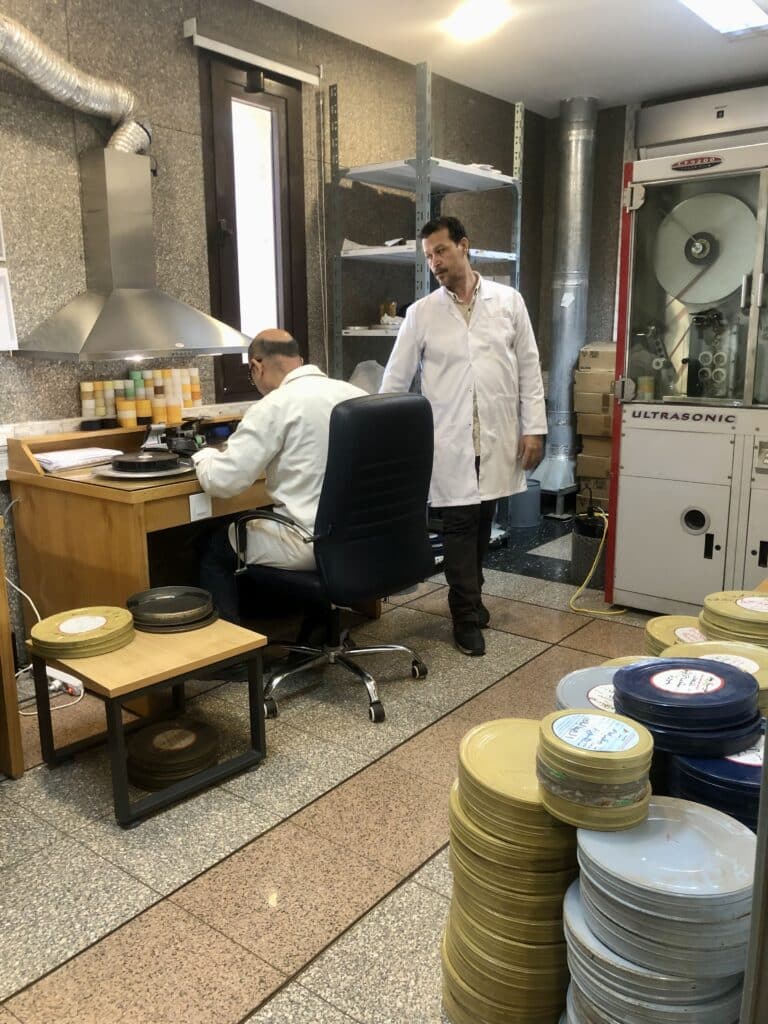
THE GOLDEN PYRAMID – HONORARY TRIBUTE

Yousri Nasrallah – Director and Writer, Egypt

In a film career spanning over four decades, Nasrallah began as a film critic for the Lebanese newspaper Al-Safir. In 1982 he was an assistant to filmmaker Youssef Chahine in the film An Egyptian Story, followed by Goodbye Bonaparte, for which he co-wrote the screenplay. He soon became one of the leading protagonists of the auteur cinema movement with dramas such as the epic love story Bab el Shams (2004/5). Nasrallah is the first Egyptian filmmaker to chair the short film jury at the Cannes Film Festival. Other collaborations include working with German director Volker Schlöndorff and Syrian director Omar Amiralay.

FATEN HAMAMA – EXCELLENCE AWARD

Danis Tanović – Film director, producer, screenwriter – Bosnia & Herzegovina

The Bosnian film director, producer and screenwriter studied piano at the Sarajevo Music Academy before enrolling at the Academy of Performing Arts in Sarajevo. However, in 1992, the siege of the city forced him to stop studying and instead to turn his talents to documentary films, which he continued in Belgium after a spell at the Institut Supérieur des Arts in the Belgian capital.

Tanovic went on to write and direct the 2001 Bosnian feature No Man’s Land, which won the Oscar for Best Foreign Film, the European Film Academy Award for Best Screenplay, the César for the Best First Feature film, and a the Golden Globe for Best Foreign Language Film amongst others. His filmography also includes Iron Picker (2013), Tigers (2014), Death in Sarajevo (2016), which was awarded the Silver Bear at the 66th Berlin International Film Festival. He is the only director from Bosnia and Herzegovina to win an Oscar.

FATEN HAMAMA – EXCELLENCE AWARD

Ahmed Ezz – Actor – Egypt

After studying English at Ain Shams University. Ezz embarked on a film career gaining international recognition with his breakthrough in A Teenager’s Diary directed by Inas El-Degheidy in 2001. Roles in blockbuster films include Private Alexandria (2005), The Hostage in 2006, and Transit Prisoner in 2008, all directed by Sandra Nashaat. Other performances include the big budget war film The Passage about the Arab-Israeli War of Attrition, his first collaboration with the great director Sherif Arafa. The two worked together for a second time in The crime (2022), and in the same year, he presented the film Kira And Jinn with director Marwan Hamed in their first collaboration.

Cairo Film Connection (CFC) also takes place during the festival (17-20 Nov). The 10th Edition comprises a series of eighteen projects in their development stage. The selected works include six from Egypt, two each from Tunisia, Iraq, and Lebanon, and one each from Kuwait, Sudan, Saudi Arabia, Jordan, Morocco, and Algeria.

CAIRO INTERNATIONAL FILM FESTIVAL | 13 – 22 NOVEMBER 2024


Diaries from Lebanon (2024) Cairo International Film Festival 2024

Dir: Myriam El Hajj | with Joumana Haddad, Perla Joe Maalouli, Georges Moufarrej | Lebanon / France / Qatar / Saudi Arabia 2024 | Arabic, Subtitles: English | 110′ | Colour | World premiere | Documentary form

Lebanon’s ongoing conflict is complex. Over the years many filmmakers have documented various aspects of the nation’s continuing strife that seems to stem from internal struggles as well as external forces; not least the current issues with Israel. All very confusing for the rest of the world: War and Lebanon have almost become synonymous in our collective consciousness.

Three people share their input in this new documentary from Myriam El Hajj, founder member of Rawiyat – Sisters in Film, a collective of women filmmakers from the Arab world. Diaries from Lebanon is her second documentary and takes us back to 2018 and brings together three voices. The first is a feminist writer, poet and activist named Joumana who stands for election to the Lebanese parliament, defying a political system that has been suffocating her country for 40 years. The film shows how Joumana is voted in, only to be fraudulently ousted the very next day, leaving her supporters furious and leading to more unrest and violent demonstrations in the streets of Beirut.

Another feisty woman, Perla Joe, soon becomes a symbol of this uprising, capturing the imagination of young people who feel increasingly marginalised in a place where war has become the only unifying force in their collective experience.

Meanwhile the past rears its head in the shape of Georges, a vociferous veteran of the Lebanese Civil War which lasted from 1975 to 1990. One of the original fighters, he lost a leg in the conflict but still believes in ‘the glory’ of war, rather than ‘the pity’ as Great War poet and soldier Wilfred Owen famously cited in 1917/18. Glory seems to be thin on the ground in this Middle Eastern nation, but the dream of peace and a worthwhile future is now the ultimate battle. @MeredithTaylor

CAIRO INTERNATIONAL FILM FESTIVAL 2024


Cairo International Film Festival 2023 | Cancelled

Cairo International Film Festival – the oldest and most prestigious feature film festival in the Middle East – will be celebrating its 45th edition this year from 15 until 24 November with Bosnian director Danis Tanović as head of the Official competition jury, appointed by Amir Ramsis, Director of the Festival.

The well-known international writer and director has been selected in a bid to draw prominent figures from the global film industry to take part in the festival, with the aim of showcasing and sharing experiences among emerging Egyptian, Arab, and international filmmakers participating in the event.

Born in 1969, Bosnian director and screenwriter Tanović is one of the most prominent directors and screenwriters in Eastern Europe and worldwide.
His most important works include Death in Sarajevo which won the FIPRESCI award at Berlinale in 2016, No Man’s Land which garnered an Academy Award for Best Foreign Language Film and Best Screenplay at Cannes in 2001, and An Episode in the Life of an Iron Picker which won the Silver Bear – Grand Jury Prize, and a Silver Bear for Best Actor at the Berlinale in 2013. Tanović is the only director from Bosnia and Herzegovina to win an Academy Award.

Cairo International Film Festival is pleased to announce the MENA premiere of Back to Alexandria (main image) by Tamer Ruggli among its 45th edition official competition section. The Swiss-born director is a true international figure who has lived in Zaire, Saudi Arabia and Austria. This, his first feature, a story of female empowerment, stars the legendary French actress Fanny Ardant and the multitalented actress, director Nadine Labaki who plays a woman who must return to her native Egypt to visit her estranged mother (Ardant), an eccentric aristocrat. The eventful journey, leading her from Cairo back to Alexandria, is suffused with memories, nostalgia, and mixed feelings about her past which will inform and shape her exciting future.

CAIRO INTERNATIONAL FILM FESTIVAL | 15 – 24 NOVEMBER 2023 was CANCELLED due to the Middle East Crisis 

Houria (2022)

Dir: Mounia Meddour | Cast: Lyna Khoudri, Rachida Brakni, Nadia Kaci, Amira Hilda Douaouda | Drama, 104′

A talented dancer is forced to re-think her life in this vibrant second feature from Mounia Meddour who continues to explore the Algerian sisterhood and their creative struggle against male oppression.

Houria (Lyna Khoudri) always dreamed of being a ballet dancer. Her friends are all in the same predicament, striving to make a success of their lives. As a trained PE teacher, Houria throws herself into often painful practice sessions, coached by her mother Sabrina (Brakni), in the hope of being accepted into a professional troupe. But she is just one of several women in this passionate and sensuously crafted drama who are desperate for personal and professional fulfilment yet thwarted by Algeria’s male-dominated set-up and blighted by tragedy.

Her best friend Sonia (Amira Hilda Douaouda), also a gym teacher, has organised an illegal boat passage to Spain. Having saved the money to buy a car by betting on ram baiting fights – in scenes that are grossly overplayed and distressing but aim to convey a testosterone fuelled male environment – Houria is then attacked by a convicted criminal who remains at large, due to sloppy policing, and left with a broken ankle and post-traumatic mutism, her hopes of a dancing career dashed. Once again the sisterhood comes to the rescue, and these scenes are evocatively played by the film’s talented cast, and beautifully captured in Leo Lefevre’s spectacular close-up camerawork that focuses on faces and body language. During her rehabilitation Houria volunteers on a rehabilitation project with aurally and vocally challenged women and together they find common ground and a way forward.

Houria – a name meaning ‘freedom in Arabic – often feels like a series of spirited episodes in the lives of these unfortunate women who have triumphed against adversity and made their way forward creatively despite considerable sadness, pain and regret. There’s a great deal of passion here but not much of a dramatic arc until the final stages when all the plotlines eventually come together. Despite formal flaws this is heartfelt filmmaking. MT

NOW ON RELEASE IN FRANCE | PREMIERED AT CAIRO FILM FESTIVAL 2022
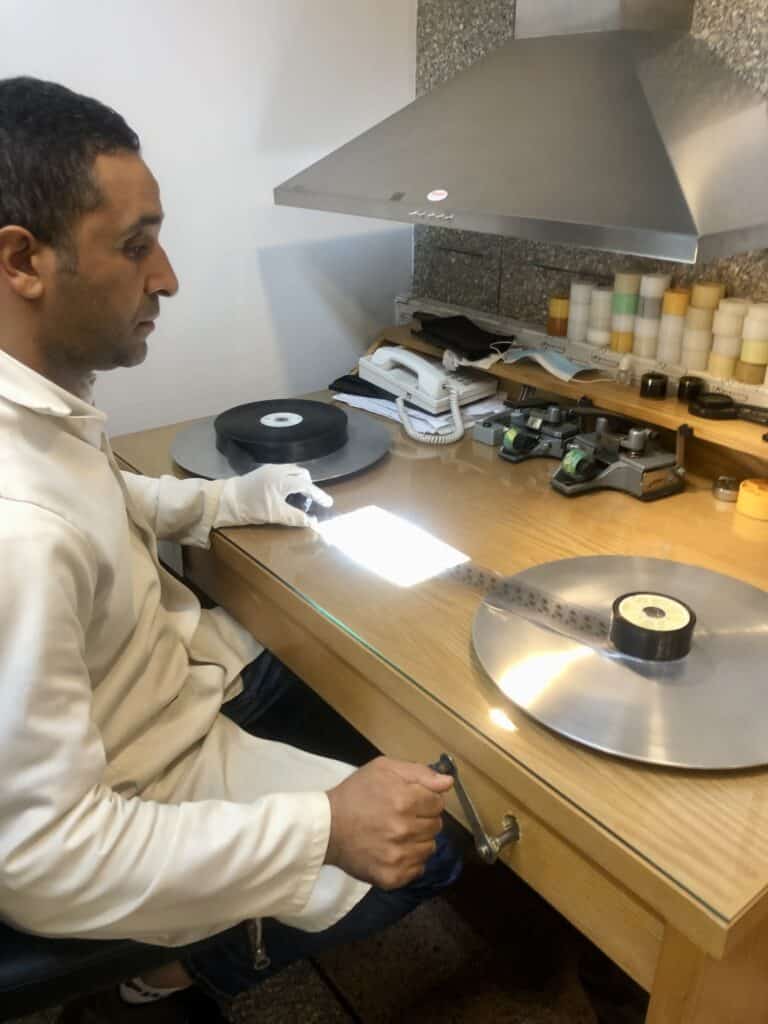
 

Curfew (2020)

Dir.: Amir Ramses; Cast: Elham Shahin, Amina Khalil, Ahmed Magdy, Kamel El Basha; Egypt 2020, 96 min.

In this impressive domestic drama that won the main prize at this year’s Cairo Film Festival, Egyptian writer/director Amir Ramses takes on one of the biggest taboos in the Arab world: paedophilia. Flashbacks relating to the crime are coy but nevertheless disturbing considering the perpetrator is a senior member of his family, Ramses finding just the right balance to get his message across without upsetting the censors. s great to see veteran actor Elham Shahin back on the screen again, after so long,

Set in the autumn of 2013, the story revolves around an extended family in Cairo. Faten (Shahin) leaves prison after twenty years, having served time for the murder of her husband. Rumours say it was a ‘crime passionnel’ over her love affair with Yahia (El Basha), who – still lives – in the same apartment block – but the real motive has never surfaced.

Meanwhile, her embittered daughter Layla (Khalil) in waiting for her at the prison entrance with her husband Hassan (Magdy), a doctor in the local hospital. Layla has only visited her mother once in prison and is deeply resentful about her taking her father away from her. A local curfew makes it impossible for the former teacher to escape to her home in the country but she has her granddaughter Donia for company, and she also reconnects with Selma, Hassan’s niece. But Donia and Faten cross the line and reveal an unpalatable secret with tragic repercussions for all concerned.

Hassan is shown as an example of a progressive Arab man, Ramses  criticising working conditions for women: the nurses have only one way of promotion: a recommendation of a doctor – for which they have to pay with sex. His decision to stage most of the drama in domestic environments gives the feature an Ozuesque quality in its unity of space and time. The Curfew avoids sentimentality and dramatic overkill, finding a way to raise the profile of a society repressed by a cult of poisoned masculinity, camouflaging itself as religion. AS

THE CURFEW WON THE CAIRO FILM FESTIVAL‘s Golden Pyramid Award, along with BEST ACTRESS for Ilham Shaheen 2020

Charulata (1964) Cairo International Film Festival 2024

Dir.: Satyajit Ray | Cast: Madhabi Mukherjee, Soumitra Chatterjee, Shailen Mukherjee | India 1964; 117 min.

Another story of female alienation, set in Kolkata in the early 1880s and based on the short story “The Broken Nest” by Rabindranath Tagore. Ray uses utmost candour in this screen version, without betraying any of Tagore’s intentions. Charulata (M. Mukerjee) is the wife of Bhupati (S Mukerjee), who publishes a newspaper “The Sentinel”.

Feeling that his well-educated and elegant wife is lonely, Bhupati invites his older brother Umapada and wife, Manda, to come and stay. But they fail to alleviate his wife’s boredom so he asks his younger cousin Amal (S Chatterjee) into the household. Both share a passion for literature and the relationship becomes more intimate. Bhupati, submerged in his masculine world of politics, is unaware of this relationship. Amal, feeling guilty and threatened by Charulata’s intellect and his feelings for her, abruptly breaks off his relationship with disastrous consequences.

Very much in the style of the Japanese director, Yasujiro Ozu (An Autumn Afternoon), this beautifully told domestic drama offers a pared-down, understated portrait of family life in nineteenth century India. Even in 1964, the role of the Indian woman of Charulata’s class, had not changed that much from the 1880s – many female viewers cried openly after the premiere and Ray was aware of the tension his film would create. Strangely, the Cannes Film Festival rejected the film but it was shown in the summer of 1965 at the Berlinale, were Ray won the “Silver Bear” for best director.

Despite the simplicity of the narrative, Charulata’s passion is still very much in evidence and Madhavii Mukherjee is still remembered today for her luminous performance. The monochrome camera glides through the big house with its imposing clocks and furniture as atmospheric sounds drift in from the street: the cries of street vendors and delicate birdsong from the garden.

Although surrounded by a legion of  of capable servants, Charulata is isolated until Amal appears. But despite his artistic sensitivity and feelings for her, Ray illustrates how he is still a man in a man’s world – not so far removed from Bhupati – and when challenged he is surprised that Charulata’s opinions differ (understandably) from his views and literary taste.

Amal is shown as a coward with feet of clay, a traitor to his own ideas. Bhupati loves his politics and uses his power to exercise to , his ego rather than to understand people. In the end, the question of reconciliation is left open: and the final frame is illuminating.

Penelope Houston summed it up in 1965 when she wrote in ‘Sight and Sound’: “…the interplay of sophistication and simplicity is extraordinary”. And for Satyajit Ray this would remain the favourite of his film, “the one he would make again exactly the same”. Today, CHARULATA still feels modern. AS

SCREENING IN THE CLASSICS STRAND | CAIRO INTERNATIONAL FILM FESTIVAL 2024
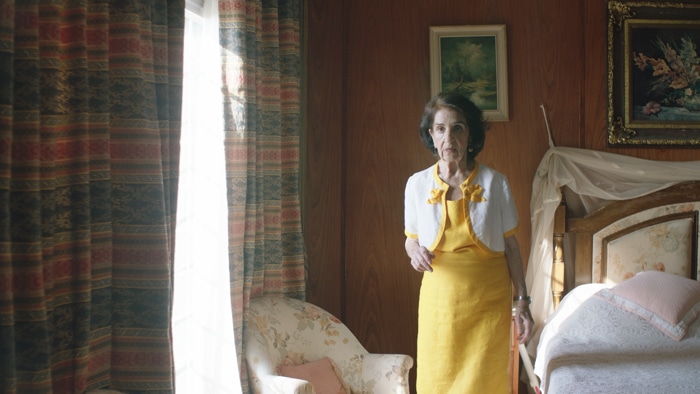


Cleopatra (1963) Cairo International Film Festival 2024

Joseph L Mankiewicz’ version of Cleopatra is a real romp and one of the most magnificent romps in the history of cinema.

A restored Egyptian classic this dazzling epic had an original budget of a whopping $44million, nearly bankrupting Fox Studios. Filming took over the lives of those involved for nearly three years.

Infact, the gradually deepening suntans of the cast bear witness to this lengthy project which started in London in 1960 and re-located to Rome, in search of a more favourable climate, where it finally wrapped over two years later after the original director, Rouben Mamoulian, had been sacked and Mankiewicz hired, fired and hired again in a bizarre turn of events where he was forced to re-write the script after shooting had begun.

But this wasn’t the only set-back, Elizabeth Taylor nearly died of pneumonia during filming and was forced to undergo an emergency tracheotomy, the scar is still livid and visible in most frames. She sported an extensive range of no less than sixty five different rigouts.

Not to be deterred by poor health, she gives a glowing performance of regal grace and persuasive feminine powerl, her legendary violet eyes glittering under the weight of increasingly elaborate eye-shadow. The film not only garnered a record $1million contract but also the undying love of Richard Burton: their affair made headlines and brought intense publicity to the production.

The film opens with a masterful Rex Harrison who plays an ebullient but fair-minded Julius Caesar, victorious in his defeat of Pompey but creaking with back problems and vulnerable to the sedicious charms of Taylor’s Cleopatra, who arrives notoriously wrapped in a carpet.

One of the extraordinary things about this production, apart from the elaborate sets, monstruous props, fabulous costumes, bronzed thighs peeping from leather battle-dresses and sculpted Nubian Slaves, are the unexpected faces who who go on to more banal productions: Richard O’Sullivan (Bless This House) as a teenage Ptolemy, and George Cole (who become Arthur Daley) as Flavius. Also starring here is a strawberry blonde Roddy McDowall as the sly, scheming Octavian.

Caesar and Cleopatra are a force to be reckoned with as their plot for World domination takes centre stage in the first part, and is sealed with the birth of Caesarion, adding a further boost to Caesar’s ego.

Peter Finch was originally set to play the role of Caesar but there’s a masculine joviality to the world-weary casting of Rex Harrison which works rather well here. Gwen Watford is suitably elegant and restrained in the role of the long-suffering Calpurnia. After Caesar is stabbed in the senate, Octavian takes over and forms a triumvirate several years later with arrival of Richard Burton as Mark Anthony while Cleopatra has returned to Egypt.

The onscreen chemistry of Burton and Taylor is the vital ingredient that illuminates the post-interval part of this production. Their love is clear for all to see, both on and off-screen. But Burton is a more vulnerable and blustering masculine figure compared to the more statesmanlike Rex Harrison. As Mark Anthony, Burton becomes intoxicated literally and metaphorically with the image of Elizabeth Taylor’s Cleopatra. And she is suitably incandescent when Octavian arranges his ‘marriage’ to his sister Octavia, another slightly questionable casting of ‘Upstairs Downstairs’s’ Jean Marsh.

Full of glamour, pageantry, inflated egos, botched battle scenes and bloated banquet sequences courtesy of John DeCuir who went on to win an Oscar for the production. Cleopatra more or less swept the board at the Academy Awards that year in 1963 winning and the only cut back was to the final edit which was taken down to just over three hours from a massive six-hour director’s cut. Truly a legend. @MeredithTayor

CLEOPATRA screening during CAIRO INTERNATIONAL FILM FESTIVAL | RESTORED CLASSICS. 
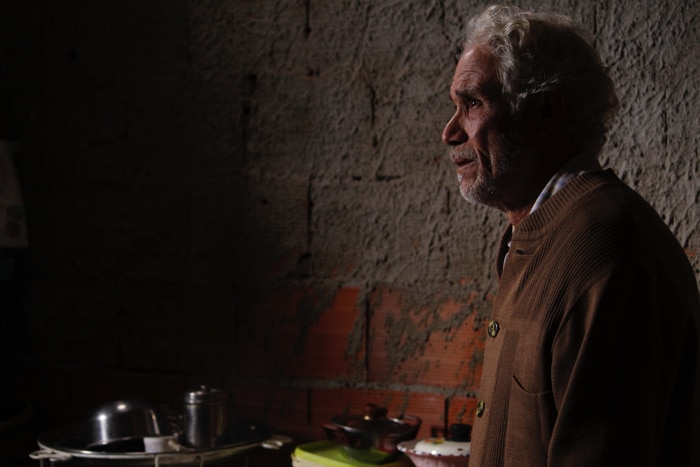
.


Copyright © 2026 Filmuforia