
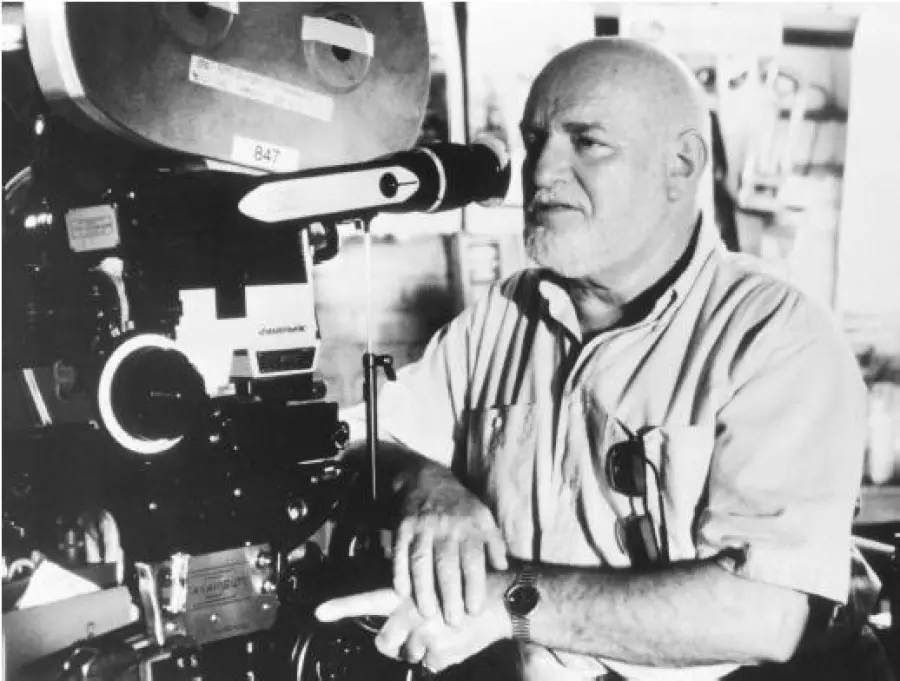
John Schlesinger (1926-2003), one of the greatest directors of the 20th century, helped redefine British cinema in the 1960s yet his influence extended far beyond it.
Schlesinger’s route to filmmaking was an unusual one. After serving in the Royal Engineers during the Second World War, he worked as an actor in repertory theatre and television before moving behind the camera. At the BBC he established himself as a documentary filmmaker, developing an observational style and an interest in social reality that would remain central to his work throughout his career.
He emerged as one of the leading figures of the British New Wave with films such as A Kind of Loving (1962), Billy Liar (1963), Darling (1965) and Terminus. These films captured a society in transition, examining class, ambition, and changing social values with a sharp and often unsentimental eye. Darling proved a particular milestone, winning international acclaim and helping to establish Julie Christie as one of the foremost actresses of her generation.
Although associated with social realism, Schlesinger refused to be confined by any single style. He moved from the Victorian landscapes of Far from the Madding Crowd to the contemporary relationships of Sunday Bloody Sunday, a film notable for its intelligence, emotional honesty, and groundbreaking portrayal of sexuality.
Commercial and critical success came with Midnight Cowboy (1969). Set in New York and starring Dustin Hoffman and Jon Voight, this terrific drama explored loneliness, friendship, and survival on the margins of American life. The film won the Academy Award for Best Picture and earned Schlesinger the Oscar for Best Director, cementing his international reputation.
Over four decades he worked with an exceptional range of actors, among them Julie Christie, Dirk Bogarde, Dustin Hoffman, Jon Voight, Laurence Olivier, Roy Scheider, Jane Fonda, Donald Sutherland, Meryl Streep, Sean Penn, Timothy Hutton, Daniel Day-Lewis, Peter Finch and Madonna. Actors frequently remarked on his ability to combine rigorous direction with a deep understanding of performance.
His later films demonstrated the same willingness to explore different genres and subjects. Marathon Man brought political paranoia and suspense to the screen with unforgettable intensity. Yanks examined wartime relationships with warmth and restraint, while The Falcon and the Snowman explored espionage and idealism in modern America.
What united Schlesinger’s work was a sustained interest in people living at the edges of society or confronting personal uncertainty. Long before such themes became commonplace, he explored questions of identity, isolation, belonging, and human connection. His films were notable not only for their craftsmanship but also for their compassion.
Today, John Schlesinger is remembered as one of the most important directors of his generation: a filmmaker who combined the instincts of a journalist, the eye of a documentarian, and the sensibility of a humanist. His work remains a significant chapter in the history of British and international cinema.
JOHN SCHLESINGER AT 100 1926-2026