
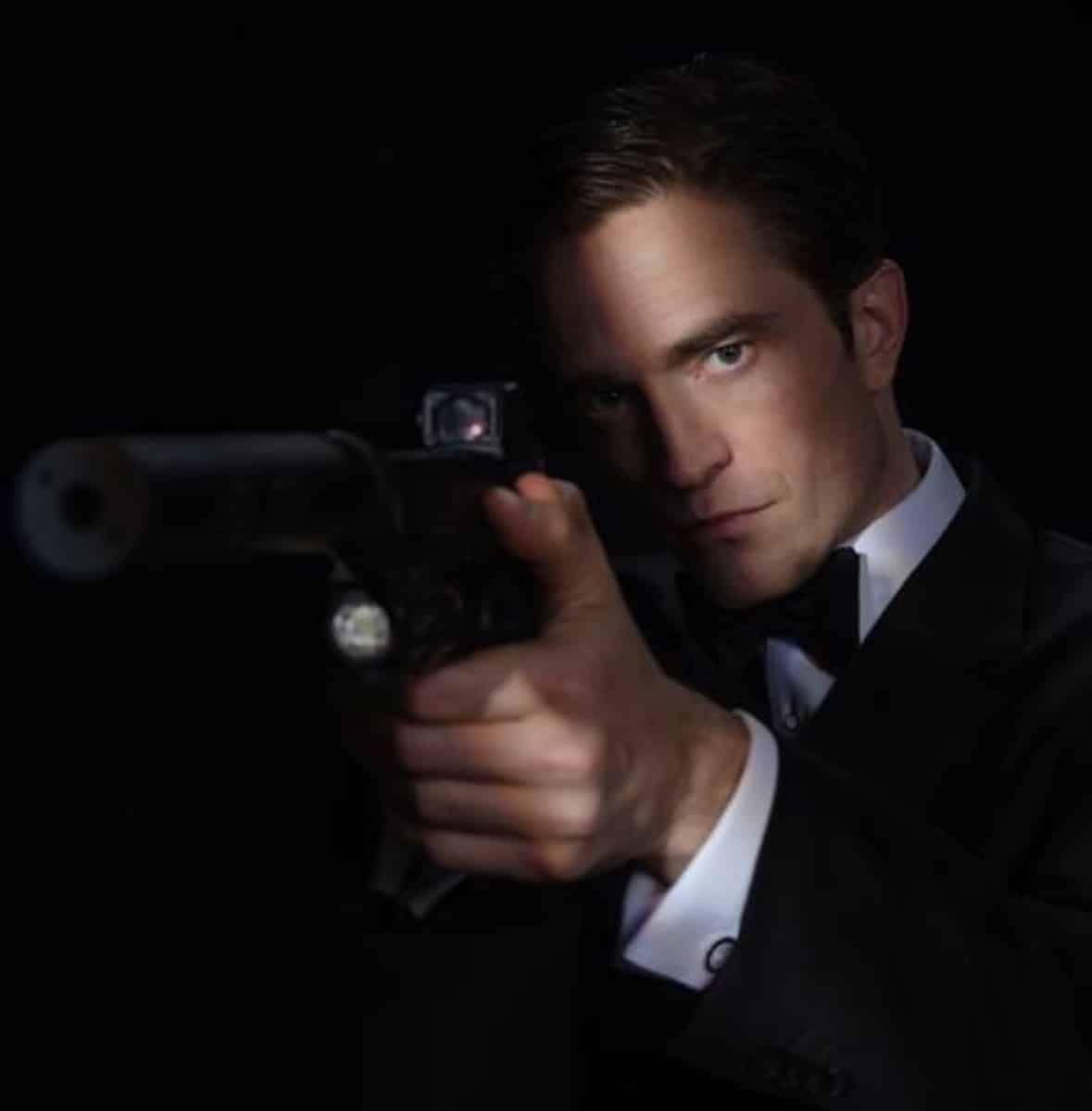
The name’s Pattinson. Robert Pattinson. And Bond has never looked quite so intriguing.
Well, now that’s a rather delicious surprise. Robert Pattinson as James Bond? Suddenly 007 has acquired a distinctly 21st-century edge, and it’s difficult not to feel that the casting is inspired. At 40, the London-born actor brings something the franchise has been quietly searching for: an unmistakably English sensibility, a certain louche elegance and an intriguing streak of unpredictability. He has the breeding, the bone structure and the understated sophistication, but there’s also something deliciously off-kilter about him. This is not a Bond who needs to announce his masculinity by ordering another martini.
Pattinson’s Englishness is part of the appeal. There is a natural reserve beneath the mischievous smile, an innate politeness that can turn, almost imperceptibly, into something more dangerous. He can do Savile Row suavity without looking as though he’s borrowed someone else’s wardrobe, while his slightly dishevelled, metropolitan cool gives the traditional Bond silhouette a contemporary twist. Think impeccable tailoring with a knowing disregard for convention. Suave, certainly, but with a metrosexual sensibility that feels entirely of its time: comfortable with his appearance, fashion-conscious, emotionally nuanced and never remotely threatened by a little self-deprecation.
His journey to 007 has been anything but conventional. First catching the public eye as Cedric Diggory in Harry Potter and the Goblet of Fire, he became a global heart-throb as Edward Cullen in the Twilight phenomenon. But rather than settle into the comfortable confines of blockbuster stardom, Pattinson took a wonderfully circuitous route through some of contemporary cinema’s more adventurous territory. From David Cronenberg’s Cosmopolis and Maps to the Stars, to the unnerving brilliance of Good Time and Robert Eggers’ The Lighthouse, he established himself as an actor prepared to take risks and inhabit distinctly unconventional characters. Christopher Nolan’s Tenet brought him back into the mainstream, while Matt Reeves’ The Batman demonstrated that he could reinvent comic-book hero without losing his own distinctive identity. Add Mickey 17, Die My Love and his forthcoming collaboration with Denis Villeneuve on Dune: Part Three, and the credentials are hardly lacking. He has travelled a long way from vampire heart-throb to one of the most interesting actors of his generation.
That is precisely why he feels right for Bond now. Pattinson can suggest danger without theatrical machismo, intelligence without pomposity and seduction without trying too hard. There is a delicious ambiguity to his screen presence: you are never entirely certain whether he’s amused, calculating or about to do something spectacularly reckless. In a franchise that needs reinvention without abandoning its DNA, that is quite an asset. And with Villeneuve directing and Steven Knight scripting, there is every reason to anticipate a Bond with psychological texture as well as spectacular action.
As for the gentlemen who have gone before him, the shoes are formidable. Sean Connery supplied the original animal magnetism and imperious Scottish swagger; George Lazenby brought a surprisingly vulnerable romanticism; Roger Moore has always been my favourite, with his whiff of test pilot slickness and raffish elegance. He made 007 the epitome of effortless British camp and aristocratic charm; Timothy Dalton restored a darker, more Fleming-esque intensity; Pierce Brosnan delivered the immaculate, polished playboy; and Daniel Craig reinvented the character as a bruised, muscular action hero. But for me he was too stocky and simian. Each reflected his era. Now it’s Pattinson’s turn to make Bond his own. If Connery was the original, Moore the charmer and Craig the stocky, bruiser, perhaps Pattinson will be the thinking woman’s Bond: elegant, enigmatic, faintly dangerous and rather more interesting than he has any right to be.
ROBERT PATTINSON: the 7th 007 James Bond