


Dir: Martin McDonagh | UK Comedy Drama 2026
McDonagh’s latest film, premiering at Venice, is unmistakably his own: wickedly funny, verbally flamboyant and populated by people who seem to regard emotional damage as a competitive sport. Yet beneath the black comedy and verbal fireworks is a surprisingly mournful film about ageing, guilt and the long shadow cast by the things men persuade themselves they had to do.
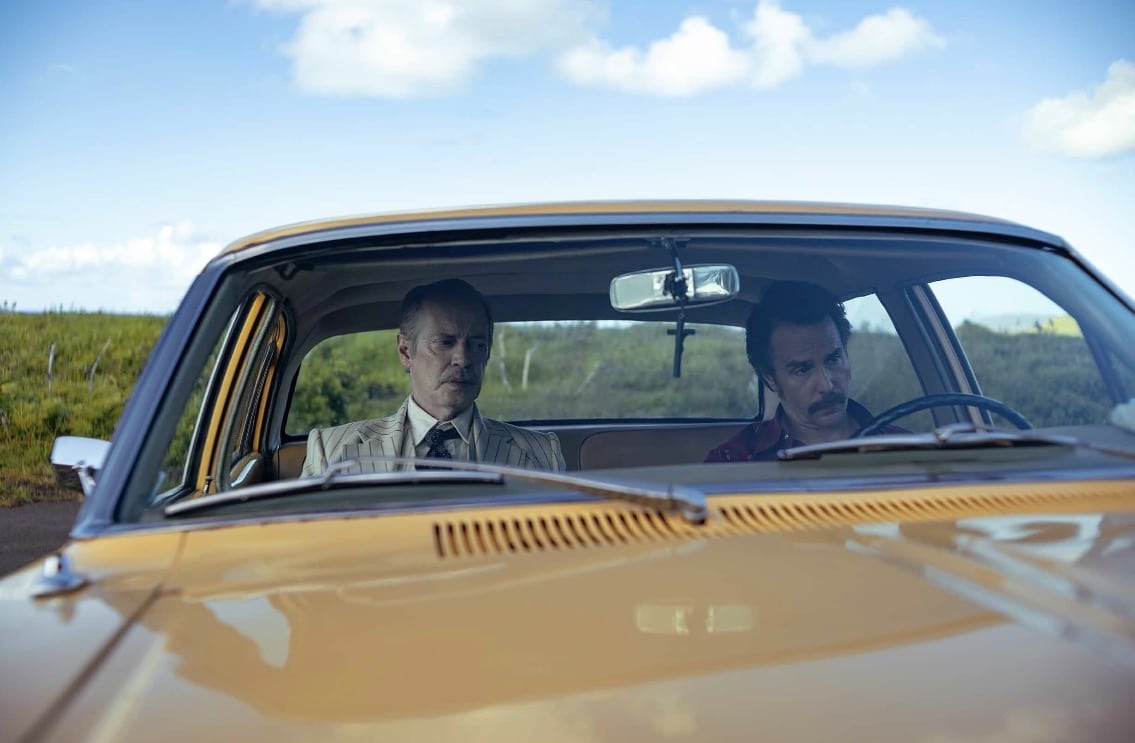
At its centre are two very different American operatives, thrown together in an exotic and increasingly strange corner of the world. One is older, hardened and gloriously disreputable; the other is younger, more domesticated and still clinging to the idea that there might be such a thing as a respectable life. Their relationship provides McDonagh with his favourite territory: two men talking, arguing, insulting and needling each other until the jokes begin to expose something neither wants to acknowledge.
John Malkovich is -,refreshingly – terrific. He brings an almost decadent theatricality to his character, a man who has accumulated so many stories that he has begun to confuse experience with mythology. There is something both horrible and touching about him. He can be vicious one minute and almost pathetically vulnerable the next, and Malkovich never tries to make him conventionally likeable.
Sam Rockwell is the ideal sparring partner. His performance is less flamboyant but equally precise, allowing frustration, anxiety and moral discomfort to creep gradually beneath the comedy. Together, the two actors give the film its pulse. Their scenes have the unpredictable rhythm of a particularly vicious double act.
The London-born filmmaker’s ultimate gift remains his ear for dialogue. His characters don’t simply speak; they fence. A seemingly trivial exchange can suddenly veer into violence, confession or absurdity. There are moments when the writing is so clever that you can almost see the machinery working, and this is perhaps the film’s principal weakness. McDonagh occasionally pushes a joke beyond the point at which it needs pushing, and some of the philosophical observations arrive with rather too much polish.
There is also a fascinating tension between the film’s political backdrop and its comic personality. The historical realities surrounding the men’s work are grim, but McDonagh refuses to turn the film into a conventional political drama. Instead, history hangs over the characters like an accusation they would rather convert into another anecdote. That makes the film more oblique — and arguably more interesting — but it also means that the larger political implications sometimes feel tantalisingly underdeveloped.
Visually, the setting provides a striking counterpoint to the ugliness of the men’s world. Vast landscapes and ancient monuments dwarf these two representatives of a superpower accustomed to believing that it can interfere anywhere it chooses. The contrast gives the comedy an unexpected melancholy.
What makes the film ultimately so enjoyable is that McDonagh doesn’t ask us to forgive his characters. He simply makes them fascinating. They are funny because they are appalling, and occasionally moving because, underneath all their bravado, they are frightened men confronting the possibility that the stories they have told about themselves may no longer hold up.
It isn’t quite as devastating as McDonagh’s finest work, comedies such us In Bruges and its cleverness occasionally gets in its own way. But when the actors are this good and the dialogue snaps this sharply, it hardly matters.
This is McDonagh doing what McDonagh does best: making you laugh at people you probably shouldn’t like, before leaving you wondering why, underneath the laughter, you have begun to feel sorry for them.
VEMICE FILM FESTIVAL 2026