

Dir: Manon Coubia | Drama France 2026
There is something almost magical about the mountain refuge at the heart of Manon Coubia’s Forest High. Perched high in the northern Alps, it’s difficult to reach and, once there, seems to exist in a time zone of its own. Hikers arrive, eat, sleep, talk and disappear again into the mountains. The seasons turn. Snow comes and goes. And the three women who take turns tending the hut are left, each in her own way, to confront the peculiar freedoms and anxieties of solitude.
Coubia’s feature debut unfolds as a triptych. Anne, Hélène and Suzanne — played with remarkable naturalness by Salomé Richard, Aurélia Petit and Anne Coesens — each inhabit the refuge during a different period of the year. They are not conventional heroines with neatly explained back stories. Instead, Coubia allows their personalities and histories to emerge gradually through encounters with passing visitors, fragments of conversation, small confessions and the repetitive practical business of keeping the refuge functioning.
That lack of conventional drama is precisely the point. Beds have to be made, meals prepared, fires tended and hikers welcomed. Yet beneath these apparently mundane activities lies a more elusive drama: why have these women chosen to remove themselves, temporarily or otherwise, from the world below? What are they escaping from, and what might they discover in its absence?
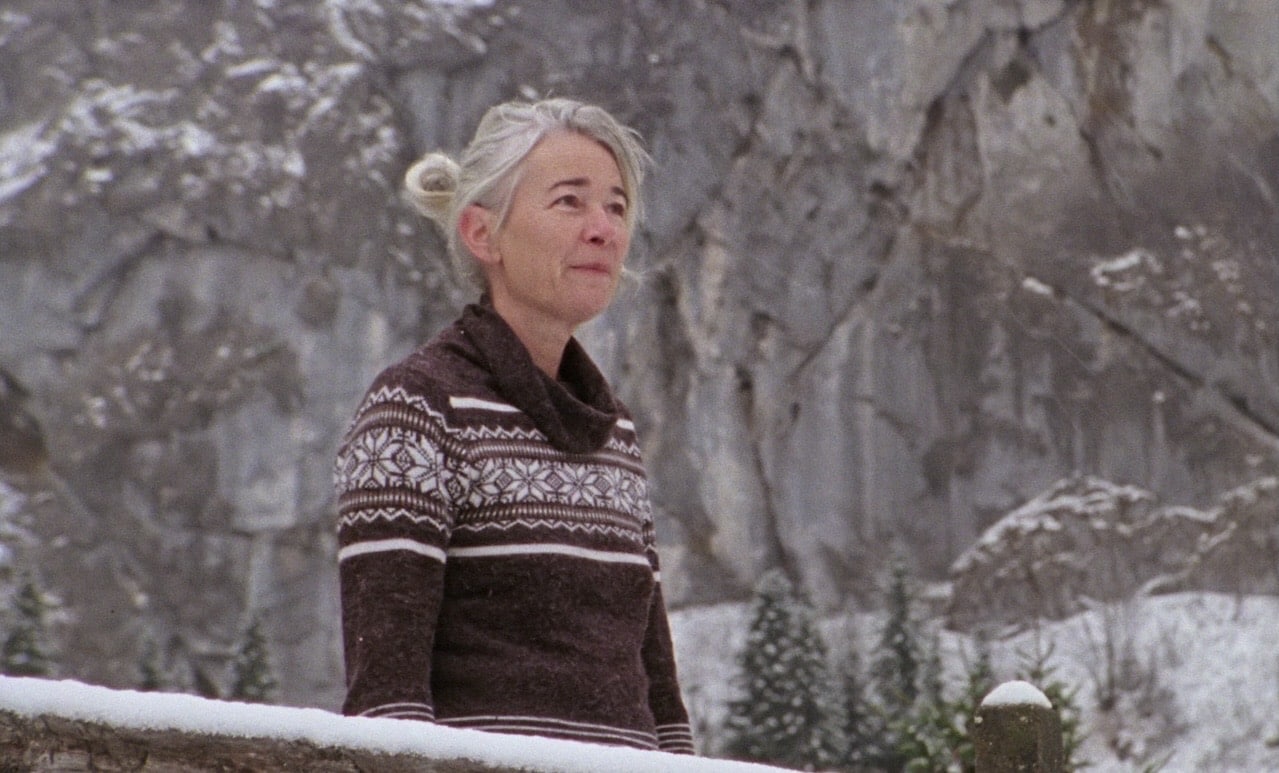
The film’s visual character is one of its great strengths. Shot on 16mm, the Alpine landscape has a tactile, slightly grainy beauty rather than the glossy perfection of a tourist postcard. Coubia observes forests, rock faces, snow, mist and changing light with the patience of someone who knows the terrain intimately. Nature is not simply a backdrop but a presence — sometimes benign, sometimes imposing, occasionally almost uncanny. The changing seasons give the film its structure while also suggesting that human lives, however intense they may feel from inside, are part of a much larger cycle.
Sound is equally important. Cowbells, footsteps, cutlery, wind and the muted sounds of the refuge frequently replace conventional musical emphasis. Silence becomes almost another character. There are moments when the film seems to hover on the edge of the fantastic, when mist or darkness transforms the familiar landscape into something mysterious and faintly threatening.
The visitors who pass through provide the film’s fleeting human connections. Some leave only the smallest trace; others open doors into painful memories. A particularly affecting encounter touches on family history and wartime displacement, while elsewhere poetry, flirtation and unexpected intimacy briefly puncture the women’s isolation. The people passing through may be temporary, but their stories accumulate, giving the refuge the quality of a repository of memory.
Coubia’s own experience is crucial to the film’s authenticity. She spent ten years working seasonally as a mountain-hut keeper, and Forest High grew directly from that experience. The result is neither conventional fiction nor documentary, but something intriguingly in between: a film that feels observed rather than manufactured.
Ultimately, Forest High is about solitude as a choice rather than merely a condition. The mountain offers escape from the noise and demands of contemporary life, but it does not necessarily offer escape from oneself. Instead, isolation creates the space in which memory, desire, grief and the possibility of connection can become more clearly heard.
The three women are separated by age and circumstance, yet their stories gradually begin to feel like variations on the same question: how much distance from the world do we need before we can see our place within it? Coubia’s answer is beautifully ambiguous. Solitude can heal, but it can also expose. And the most meaningful encounters may be precisely those that are fleeting.
Quiet, patient and visually ravishing, Forest High recalls the German cult classic Der Wand asking us to slow down and inhabit its rhythms rather than waiting for them to accelerate. Its ultimate achievement is to make stillness feel dramatic — and a remote mountain refuge feel like a small, secluded version of the world itself.
BERLINALE 2026 | Bfi LONDON FILM FESTIVAL