
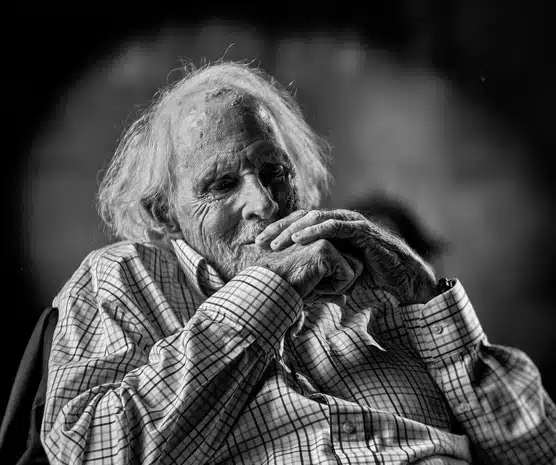

Dir: Mike Mendes | US Biopic 111′
Mike Mendez’s Dernsie: The Amazing Life of Bruce Dern arrives at Cannes like a respectful knock on a door that has already been open for sixty years and is now slightly annoyed by repetition.
Premiering in the Cannes Classics section of the Cannes Film Festival, the film is not so much a revelation as a long, carefully lit reminder that 89 year old Bruce Dern (1936-) has been working steadily since back when cinema still occasionally believed in moral clarity, or at least pretended to.
Mendez, best known for genre work that tends to involve a comfortable amount of chaos and unease, approaches Dern’s life with the tone of someone briefly attempting restraint before remembering he is not especially interested in it. The result is a documentary that oscillates between reverence and a faint suspicion that its subject might, at any moment, wander off-frame simply to avoid being summarised.
Structurally, Dernsie is straightforward: interviews, archival clips, the usual parade of collaborators and admirers who speak of Dern as if he is both an actor and a ‘weather system’. There are contributions from filmmakers who describe him in tones ranging from “fearless” to “slightly alarming in a productive way,” which feels accurate enough to pass unchallenged.
The film is at its strongest when it lets Dern’s actual screen history do the work. Clips from Nebraska (2013) land with the quiet authority of someone who has spent decades refining the art of looking like he has just heard something mildly disappointing and will now carry that feeling indefinitely. Earlier footage from Coming Home (1978) and The Great Gatsby (1974) reminds us that Dern has long specialised in men who are either running from something or standing too still to notice it has arrived.
On a personal level Dern’s emotional life has always revolved round his daughter Laura and their bond is described as ‘complex and lifelong’ not only because of their shared craft but because it stretches way beyond Hollywood. Dern’s multiple marriages get a look in too although not in much detail. The focus is more on his acting philosophy and artistic identity and independence.
Mendez resists the temptation to over-explain. This is wise. Dern’s career does not particularly reward explanation. It rewards attention, and even then, only briefly. What emerges is not a mythologising so much as a careful inventory: of choices made, roles inhabited, and an enduring refusal to behave as if acting were ever meant to be tidy. If there is a criticism to be made, it is that Dernsie occasionally confuses accumulation for argument. But perhaps that is appropriate. Dern himself has never seemed especially interested in arguing with time. He has simply outlasted it, one slightly uncooperative character at a time.
CANNES FILM FESTIVAL 2026 | Cannes Classics