

Dir: Alex Camilleri | Malta, Drama 108′
Five years on from his debut Luzzu Alex Camilleri returns to the festival circuit with Zejtune, a soulful, sun-drenched road movie that trades conventional drama for something more elusive: a meditation on belonging, memory, and the complicated pull of home.
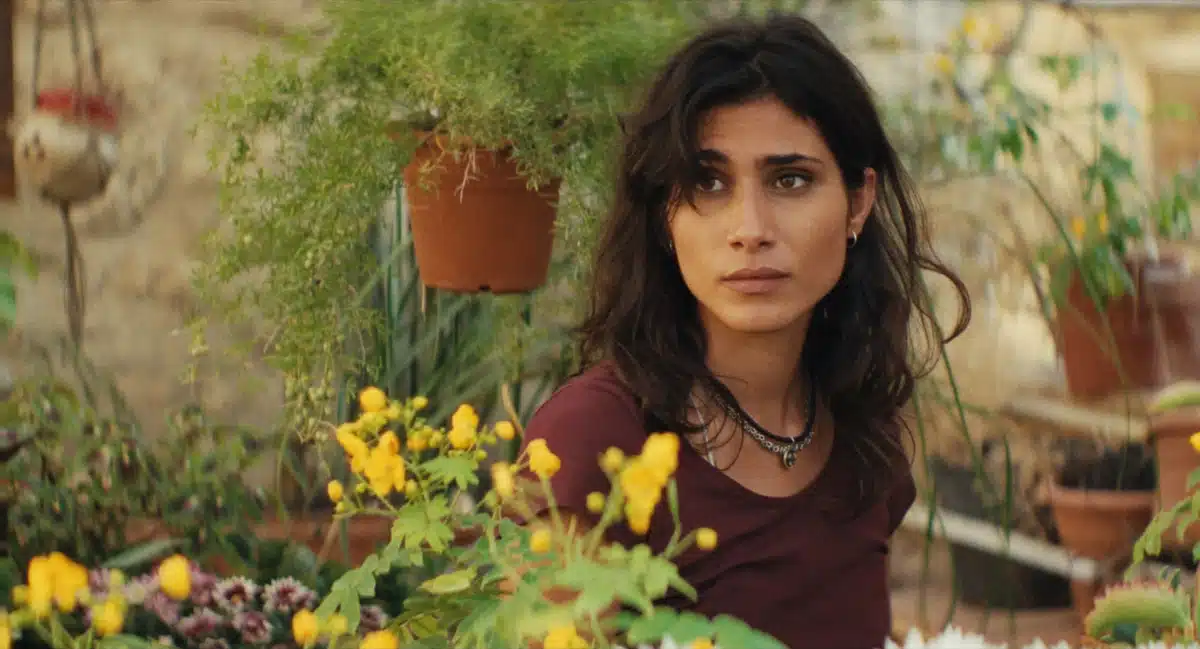
Premiering in Tribeca’s International Narrative Competition, the film follows Mar (Michela Farrugia), a young woman determined to leave Malta behind for good. After the death of her estranged mother, she inherits three plots of farmland scattered across the island and its neighbouring outposts.
Before she can sell them and finance her escape, however, she must physically locate and claim the land. What begins as a practical mission turns into an emotional reckoning when she crosses paths with Nenu (Nenu Borg), an irrepressible octogenarian folk singer whose music, joie de vivre, and stubborn affection for Malta gradually chip away at her resentment.
The premise is deceptively simple: a woman trying to sever ties with her homeland finds herself reconnecting with it through an unlikely traveling companion. Yet Camilleri, whose acclaimed Luzzu put contemporary Malta on the cinematic map, transforms this familiar setup into a richly textured exploration of identity. The film is less interested in plot mechanics than in the spaces between conversations, songs, and landscapes.
Michela Farrugia anchors the film with a beautifully restrained performance. Mar carries the weight of old wounds without ever becoming inaccessible, while Nenu Borg is a revelation. Playing a version of the island’s living cultural memory, he brings warmth, wit, and genuine charisma to every scene. Their chemistry gives the film its beating heart, turning what could have been a standard road movie into an affecting intergenerational duet.
Supporting turns from Michael Azzopardi and Frida Cauchi deepen the sense of a community that Mar is trying—and failing—to leave behind.
Visually, Zejtune is stunning. Cinematographer Quentin Devillers captures Malta not as a tourist destination but as a living, breathing character. Golden limestone villages glow under relentless Mediterranean sunlight, dusty country roads stretch toward shimmering coastlines, and windswept farmland becomes a landscape of memory and inheritance. The imagery has an earthy tactility that recalls the best contemporary European cinema, balancing postcard beauty with a palpable sense of place.
Perhaps the film’s most distinctive element is its embrace of għana, Malta’s traditional improvised folk-singing culture. Camilleri weaves the music organically into the narrative, allowing songs to function as storytelling, debate, confession, and emotional release. The result is a film that feels deeply rooted in local tradition while remaining universally accessible.
At a moment when so many festival dramas focus on high-concept storytelling, Zejtune stands out for its patience and sincerity. It’s a film about returning, remembering, and discovering that the places we try hardest to escape often remain part of us.
Warm, humane, and quietly transporting, Zejtune is one of Tribeca’s most rewarding discoveries—a road movie with dust on its boots, music in its soul, and a profound understanding of what it means to belong.
TRIBECA FILM FESTIVAL 2026 | ZEJTUNE received the Best Screenplay Award in an International Narrative Feature