
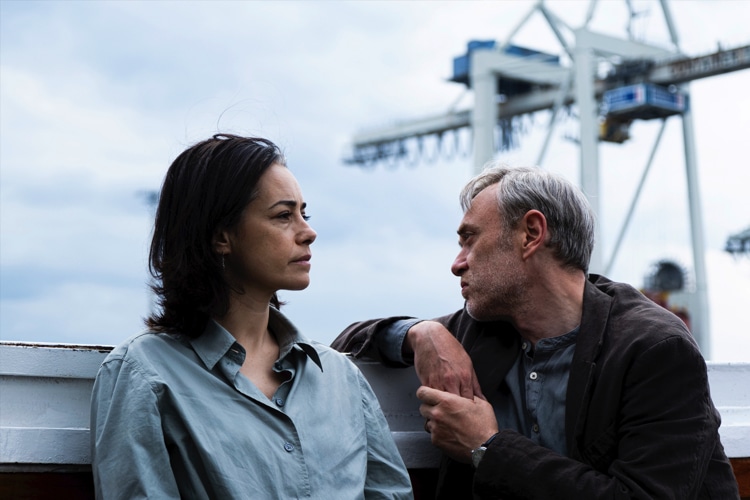

Dir: İlker Çatak | with Özgü Namal, Tansu Biçer, Leyla Smyrna Cabas, İpek Bilgin | Germany / France / Turkey 2026
This new drama from the acclaimed filmmaker Ilker Catak The Teachers Lounge is a family affair seen through the eyes of a couple of theatre creatives forced to reinvent their lives after losing jobs in Ankara.
Turkey is a country in transition from strict traditional values to more modern ideas, and after questionable governmental cutbacks Aziz and Derya face an uncertain future work-wise. They are forced to give up their flat and move to Istanbul with their teenage daughter Ezgi.
Life was never going to be easy living with Aziz’ mother (who looks more like his sister) in her small two-bedroomed apartment. Derya is determined not to rely on her generosity from the outset but finances are tight and intergenerational tensions rise as the couple explore their options. The grandmother relishes the opportunity to get to know Ezgi, who often resents her interference while finding her feet and exploring love for the first time. Aziz starts writing a play called ‘Yellow Letters’ which soon takes shape with Derya taking on the part of a woman forced to undress for security guards. And this proves to be a point of contention and leads to her questioning her husband’s misogynist angle.
Despite Turkey being a secular Muslim country the director gives religious expression a significant place in the narrative: we follow Aziz and Derya’s brother to the ‘men only’ mosque prayers and afterwards the ‘grace’ is said around the dinner table when the extended family meet for a convivial impromptu meal.
A decision to sell the Ankara flat brings more conflict and Derya, concerned about money, contacts the producer who came to watch her last performance, but it seems the two are not on the same wavelength politically speaking, so Aziz starts working as a taxi driver to bring in some revenue, bringing further problems. Tansu Bicer gives a thoughtful performance as Aziz. He’s a modern man who remains calm balancing out Derya’s more zesty approach to life, she often has a go at him but he takes it all with good grace, adjusting his approach accordingly. Relatable in its plotline, co-written by Catak and two other scripters, the film mentions the lack of acknowledgement writers are forced to take in the creative process.
Yellow Letters aims to present the face of modern secular Turkey, showing how the couple, forced into close proximity by members of a close family, are always going to face issues. Aziz comes under fire from the authorities again, more overtly this time: There’s a brief court interlude where he stands prosecuted for criticising the president in his writing. His barrister defends this as ‘freedom of speech’. Whether or not a grey area, this is considered by the state to be an act of terrorism.
Derya then brings fresh controversy to their relationship by taking a well paid role from the producer she rejected, claiming to want self-sufficiency rather than relying on Aziz’ mother. Aziz is naturally offended citing this betrayal of her creative values in independent arthouse theatre, while Derya defends her decision accusing Aziz of being a dreamer. In defiance he resolves to take the part himself to roaring applause on the opening night.
Yellow Letters is a well-thought and likeable film making its world premiere at this year’s Berlinale where it won the main prize. It tick-boxes timely issues and flows well into a satisfying conclusion with not many surprises on the way.
BERLINALE COMPETITION 2026 | 12-22 FEBRUARY 2026