


Dir: Sara Ishaq | Drama 118′
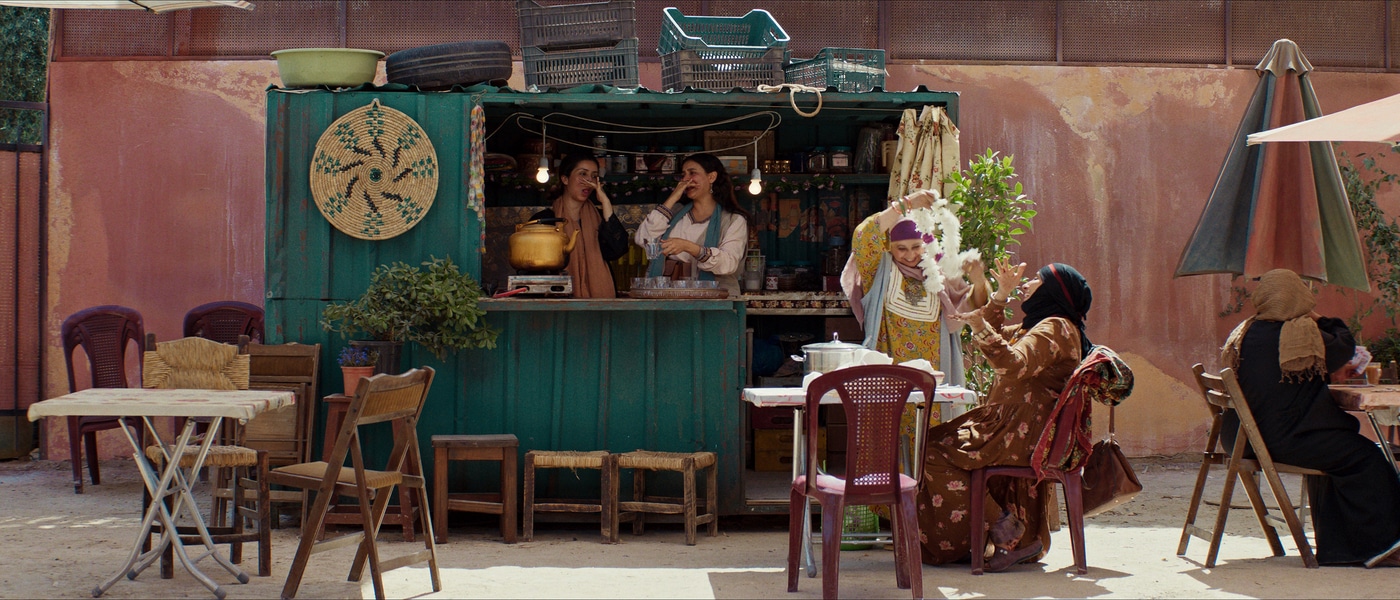
Premiering in competition at Critics’ Week during the Cannes Film Festival 2026, Sara Ishaq first feature arrives with a premise that feels both starkly political and disarmingly intimate. Set in Yemen, it builds a world around a women-only petrol station—an almost allegorical space that promises safety through exclusion, and order through denial.
The film’s greatest strength lies in that central conceit: The station is more than a location; it becomes a fragile utopia, a little haven of autonomy carved out of chaos. The rules—no men, no weapons, no politics—are repeated like a mantra, but the film is smart enough to treat them not as solutions, but as illusions. Politics, after all, has a way of seeping through even the most tightly sealed borders, and the narrative tension emerges precisely from that inevitability.
Layal, the station’s proprietor, is drawn with admirable restraint. Rather than framing her as a courageous heroine or a tragic victim, the film allows her contradictions to surface gradually. Her authority is quiet but brittle, and the arrival of her estranged sister rocks the boat adding much needed dramatic heft. Their relationship becomes the emotional core of the film—less about reconciliation than about the uneasy recognition of shared survival strategies. The looming threat of the brother’s enlistment functions as both a narrative engine and a moral fault line, forcing each character to confront what they are willing to sacrifice.
Visually the film is drawn in muted colours, beige and taupe, the desert landscapes emphasising both isolation and exposure. The petrol station itself is shot with a kind of geometric rigidity that echoes its rules-based existence, but the interior space provide some colour to brighten things up. There’s a palpable tension between openness and enclosure: vast exteriors contrasted with tightly controlled interiors. The camera often lingers allowing silences to accumulate into something almost oppressive, and even claustrophobic.
The idea of a petrol station providing a women’s only sanctuary is a novel idea but the film relies too much on this female symbolism which somehow feels forced rather than natural, the absence of men coming across as a conceptual constraint, limiting the complexity of the world beyond the station’s boundaries.
However, Ishaq’s direction is confident in her impressive debut, and she takes no easy short cuts to tell her story – that said, a little light pruning would have not gone amiss. The central question at its heart—whether one life can be saved without betraying the fragile equilibrium that sustains others—remains unresolved, echoing beyond the film’s final frame.
The Station is a subtle piece of filmmaking, its impact is cumulative and by the finale we leave feeling satisfied by this gentle meditation on survival, sisterhood, and the impossibility of neutrality in a world defined by conflict.
SCREENING DURING CANNES SEMAINE DE LA CRITIQUE 2026