

Dir: Robert Aldrich | Drama 30´
The Greatest Mother of ’Em All is a possibly the most most bizarre Hollywood outing you’ll ever see. In fact, you’re unlikely ever to get your hands on the soft porn movie because the rare short came courtesy of the Robert Aldrich retrospective at this year’s Viennale.
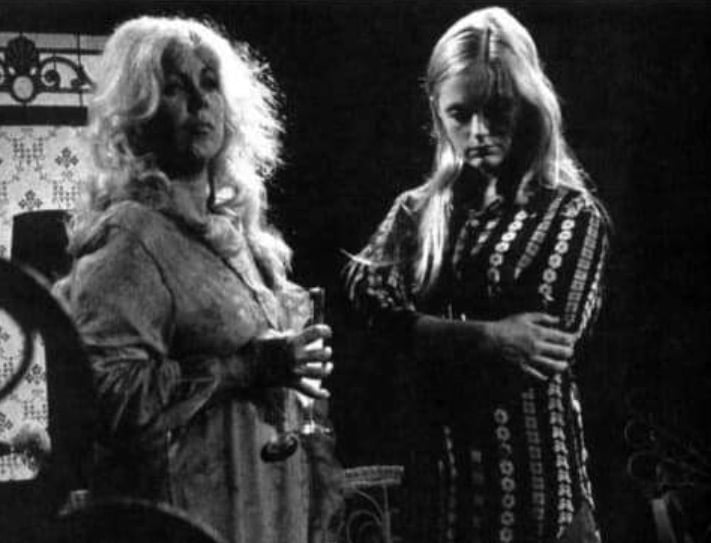
A bizarre, bitterly satirical portrait of an entertainment industry built on the exploitation of women has, at its centre, a failed actress, played by Ann Sothern, who attempts to relaunch her own fortunes by pushing her teenage daughter Tricia (Alexandra Hay) into show business, beginning with a job as a stripper.
What follows is a disturbing chain of sexual manipulation, coercion and abuse of power, in which the young girl is passed from a television producer to a washed-up film director, played by Peter Finch. When the director falls in love with Tricia, her mother sees another opportunity to exploit the situation, resorting to blackmail.
Aldrich exposes a world in which women’s bodies are treated as commodities, their prospects dependent on sexual availability and their vulnerability to men who control access to fame and employment. Yet the exploitation is not confined to the men of the industry: Tricia’s mother, herself a casualty of Hollywood’s ruthless machinery, perpetuates its abuses by sacrificing her daughter’s safety and dignity in the hope of recovering her own lost status. The film’s most troubling dimension lies in this complicity, as female ambition becomes entangled with maternal betrayal and the transmission of exploitation from one generation to the next. Tricia’s eventual fate gives the story its bleakest possible conclusion: a young woman crushed by a system that offers her no meaningful agency or escape.
Originally conceived as a feature, the project struggled to attract financial backing because of its resemblance to Aldrich’s box-office failure The Legend of Lylah Clare (1968) which also starred Peter Finch. Aldrich attempted to turn several key scenes into a promotional short, hoping to persuade the producers of the larger project’s potential. The result was not what he had envisaged, and he later dismissed it as a “thirty-minute monument to my misjudgement of who can act and who can’t”, referring to his dissatisfaction with Hay’s performance. Nevertheless, this fragment offers a revealing glimpse of Aldrich’s preoccupation with Hollywood’s predatory structures, the abuse of power and the human cost of an industry that consumes its own.
VIENNALE FILM FESTIVAL 2026 | ROBERT ALDRICH RETRO