
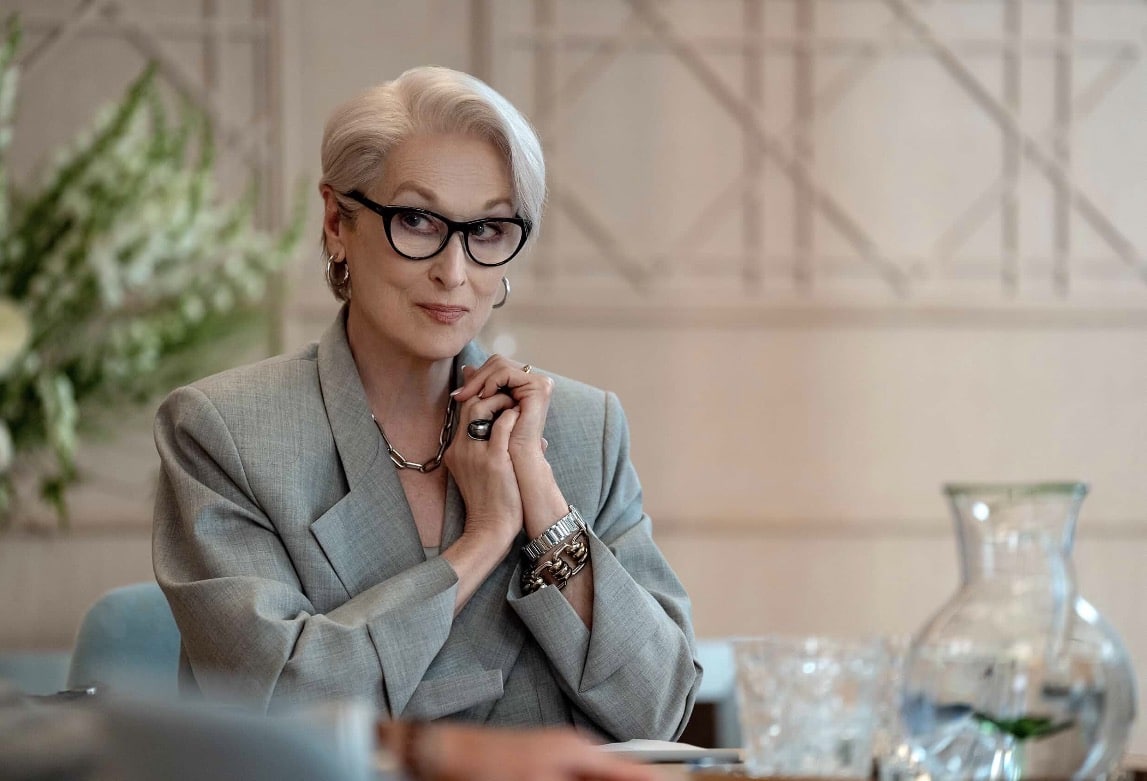


Dir: David Frankel | Cast: Meryl Streep, Anne Hathaway, Emily Blunt, Stanley Tucci, Justin Theroux | US Drama 119′
The Devil Wears Prada was never really about fashion. The outfits, handbags, and implausible beauty standards were only the guise for a biting satire about power and ambition. The original film was iconic for that reason. What emerges in this latest version, with its updated script, is that glamour only becomes interesting when it costs someone something.
The Devil Wears Prada 2, approaches the same world from a completely different emotional angle. Instead of examining the seduction of success, the focus here is the fear of becoming irrelevant. The result is a film that is more mature, more reflective, and occasionally more emotionally honest — but also less dangerous, and less enjoyable as a result.
Twenty years ago David Frankel’s original fizzed with the energy of discovery. Andy Sachs entered the fashion industry as an outsider, and the audience learned its rules alongside her. Every transformation carried tension because we could see exactly what she was sacrificing to survive in Miranda Priestly’s orbit.
Frankel’s sequel abandons that outsider perspective. Andy is no longer intimidated by the fashion machine; she has become part of it. That single change fundamentally alters the tone. There is no longer a collision between ordinary life and elite culture, here everyone already speaks the language of ‘prestige’.
The smartest thing about this latest outing is that it makes fashion itself feel unstable. Miranda is still intimidating, but the world no longer bends around magazine editors the way it did in 2006 (with people like Anna Wintour who inspired fear).
Print media has weakened, luxury branding has become algorithmic, and influence now belongs as much to social media personalities as to editors in couture offices. The film understands this cultural shift and uses it as the core of its conflict. Miranda is not fighting Andy this time; she is struggling to be noticed, and this gives the sequel a more melancholic tone.
The original film was acerbic and ruthless: all about humiliation and sharp reversals of power. Ironically TDWP 2 moves at a more leisurely pace, and conversations linger. There’s a maturity at play amongst the characters and a softer attitude – in short, it lacks the bite that made the original feel nastier.
Meryl Streep is on top form with a more subtle performance, a more humane, almost sentimental take on life – but there are cracks in her facade that expose an awareness of her infallibility. Emily Blunt (as Emily Charlton) has matured and totally ‘gets’ the modern luxury culture, so emerges a more confident, almost sardonic, character taking over Miranda’s mantel as the most intimidating member of the team. Anne Hathaway’s Andy is more complex yet also more grounded, observing the action from a distance.
Two decades later New York has naturally changed as a city. Visually, the sequel makes the capital into a more polished, slick and refined fashion centre but now the characters feel less authentic as real people and more like models inhabiting a glossy fashion campaign; and while this is clearly intentional is also makes everything feel more remote. The original was certainly crueller, but this updated take acknowledges broader body representation, and that makes it ultimately more toned down, taking away the scathing, sarcastic edge that made the original so addictive and daring for its fanbase.
There’s attempt to hark back to 2006 – scenes often feel designed to remind audiences why they loved the original: repeated phrases, mirrored compositions, and nostalgic callbacks. There’s a sense that this new adaptation wants to garner the same power and success of the original while tempering it with contemporary sensibilities: You can’t have it both ways – so naturally this becomes a pale rider alongside the sharper, funnier and more culturally disruptive original outing.
What ultimately separates the two films is their relationship with ambition. The original argued that success can quietly consume your identity before you notice what you have lost. The sequel asks a different question: what happens after you achieve the life you once wanted, and discover the world has already moved on? That is a more reflective theme, but it is not as dramatically immediate.
IN FRENCH and UK CINEMAS FROM 29 April 2026