
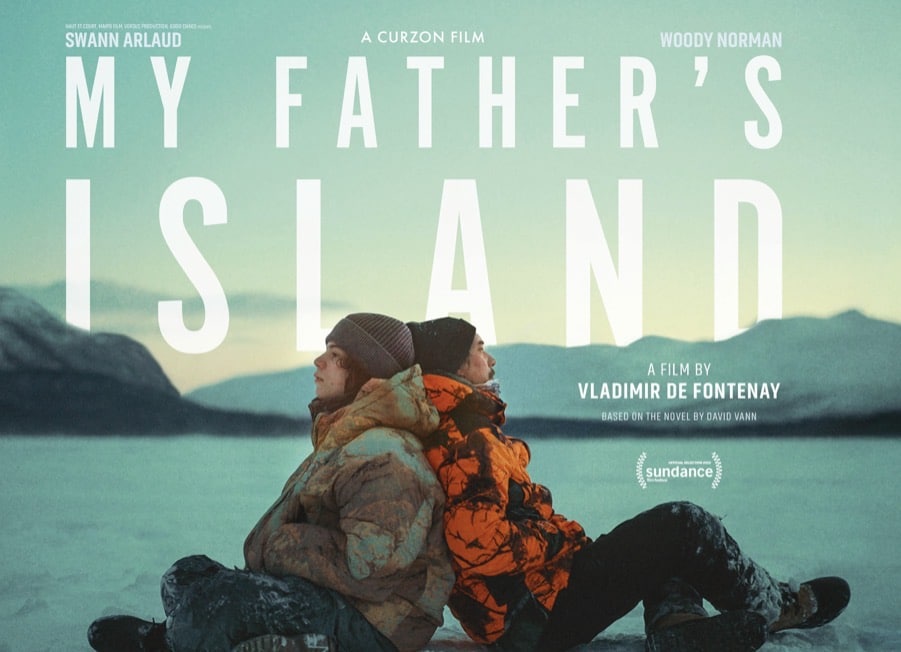


Dir: Vladimir de Fontenay | Drama 2026
There is a particular kind of coming-of-age film that mistakes silence for depth. My Father’s Island comes perilously close to that trap before revealing that its silences are, in fact, the point. Vladimir de Fontenay’s drama is not necessarily interested in reconciliation – its focus is the awkward, often painful space that exists before it.
Set against the staggering isolation of the Norwegian fjords, the film follows Roy, a London teenager sent to spend time with the father he barely knows. The premise sounds familiar enough, but de Fontenay avoids the sentimental rhythms that usually govern estranged-parent dramas. There are no convenient confessions around campfires, no sudden emotional breakthroughs engineered by the screenplay. Instead, the relationship unfolds in fits and starts, shaped as much by what remains unsaid as by what is spoken.
Landscape is biggest character here. The island is not simply a backdrop but an extension of the story’s emotional terrain. Towering cliffs and endless stretches of water dwarf the characters, reducing their conflicts to something simultaneously insignificant and monumental. The cinematography finds beauty in bleakness, favouring cold blues and muted greys that make every frame feel touched by salt air and northern light. At times the visuals verge on the sublime.
Woody Norman gives the film its emotional anchor. His Roy carries himself with the wary self-sufficiency of a child forced to grow up too quickly. Norman never pushes for sympathy; instead, he allows frustration, curiosity and resentment to coexist in ways that feel recognisably adolescent. Opposite him, Swann Arlaud delivers a performance of considerable restraint. His father is not a villain, nor is he a figure seeking easy redemption. He is simply a man whose failures have become impossible to ignore.
What makes My Father’s Island compelling is its refusal to simplify either character. The screenplay understands that estrangement rarely arrives through a single catastrophic event. More often it is the result of countless small absences accumulating over time. The film captures that reality with painful precision.
Not everything works. The deliberate pacing occasionally drifts into inertia, particularly in the middle stretch where atmosphere threatens to overwhelm narrative momentum. Those looking for a survival thriller may also find themselves surprised by how little interest the film has in conventional suspense. Its focus remains stubbornly emotional, even when the surrounding circumstances suggest more dramatic possibilities.
Yet the film ultimately succeeds because it trusts the audience. It does not explain every feeling or underline every thematic point. Instead, it allows viewers to sit with uncertainty, discomfort and longing. In an era of increasingly overdetermined storytelling, that restraint feels refreshing.
My Father’s Island may not be the easiest watch of the year, but it is one of the more thoughtful. Its emotional truths arrive quietly, almost imperceptibly, before settling in the mind long after the final image fades. By the end, the island itself feels less like a location than a state of being: lonely, beautiful and impossible to leave entirely behind.
NOW IN CURZON CINEMAS |