
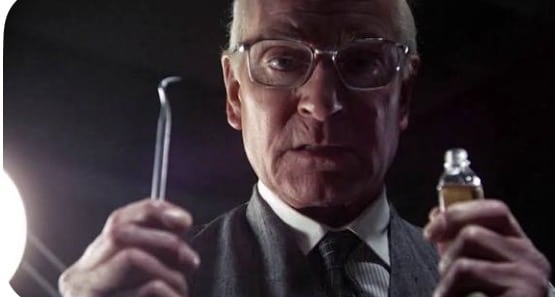

Dir: John Schlesinger | Cast: Dustin Hoffman, Laurence Olivier, Marthe Keller, Roy Schneider | US Thriller 126’
Marathon Man remains one of the most unsettling thrillers of the 1970s, blending political paranoia, conspiracy, and psychological terror into a tense urban nightmare. Adapted from William Goldman’s novel, the film follows Babe Levy (Dustin Hoffman), a graduate student and avid runner whose ordinary life is shattered when he becomes entangled in a deadly web involving Nazi war criminal Christian Szell (Laurence Olivier), hidden diamonds, and international espionage.
Dustin Hoffman is a mesmerising main character, giving Babe a convincing vulnerability that makes his transformation from bewildered victim to determined survivor compelling and believable. Rather than portraying a conventional action hero, Hoffman presents a man overwhelmed by forces he barely understands, and it is this sense of confusion and fear that gives the film much of its emotional power. His famous confrontation scenes with Olivier are especially effective, with Hoffman’s nervous intensity providing a perfect counterpoint to Olivier’s chilling calm.
John Schlesinger’s direction is equally impressive. He creates an atmosphere of constant unease, turning New York City into a place of menace and uncertainty. Schlesinger, who I always think is an underrated filmmaker, demonstrates remarkable control of suspense, particularly during the film’s celebrated torture sequence, which remains disturbing not because of graphic imagery but because of the director’s ability to exploit anticipation and psychological dread. The pacing is generally assured, and Schlesinger balances action, mystery, and character development with considerable skill, along with his unusual framing and the visual choices of Oscar-winning editor Jim Clark.
However, Marathon Man is not without flaws. William Goldman’s screenplay struggles at times to reconcile its espionage plot with its character-driven elements. Several narrative developments rely on coincidence, while the motivations of certain characters are either underexplained or revealed too abruptly. The complex web of intelligence agencies, criminal interests, and historical guilt occasionally becomes muddled, and the plot turns are confusing and often illogical. The final act, is exciting, but feels somewhat less convincing than the carefully constructed tension that precedes it.
Even so, these script weaknesses do little to diminish the film’s impact. The combination of Hoffman’s deeply human performance, Olivier’s unforgettable villain, and Schlesinger’s expert command of suspense elevates Marathon Man above many thrillers of its era, and by Golly it was a hell of an era with classics like Chinatown, Get Carter, Dirty Harry, Klute, French Connection to name but a few, it remains a gripping, unsettling exploration of fear and paranoia, anchored by performances and direction that are far stronger than its occasionally uneven screenplay.
NOW AVAILABLE ON ARTE.COM