


Dir: Olive Nwoso | Drama 2026
London-based Nigerian filmmaker Olive Nwosu closes this year’s AFRICA FILM FESTIVAL with an intimate and vibrant portrait of female friendship, solidarity and survival in contemporary Lagos, following a fiercely independent cab driver whose encounter with a collective of sex workers opens up an unexpected world of sisterhood.
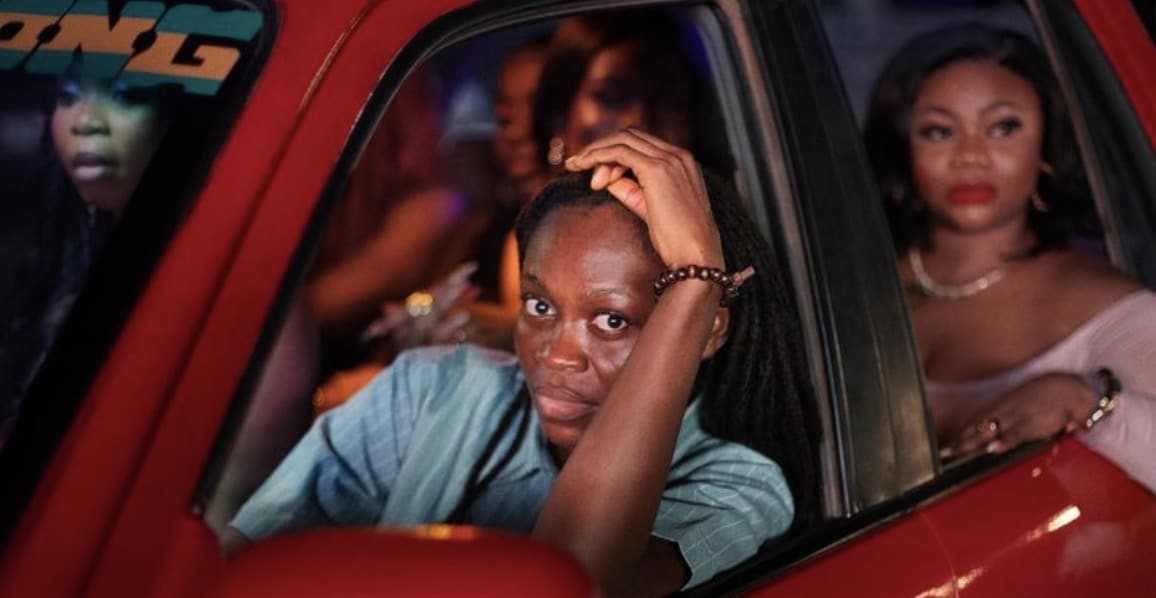
Olive Nwosu’s Lady is a visually assured portrait of female independence and the unexpected bonds that can develop between women whose lives appear to have little in common. Set in the restless streets of Lagos, it follows Lady, a female taxi driver determined to save enough money to escape to Freetown. Self-reliant and guarded, she has fashioned a life around keeping others at a distance. Her carefully maintained equilibrium is disturbed by the return of Pinky, a childhood friend who has become involved in sex work. When Lady agrees to drive Pinky and her companions to their nocturnal appointments, a practical arrangement gradually develops into something more personal, challenging her assumptions about freedom, respectability and the choices women make to survive.
The premise offers Nwosu an opportunity to explore female solidarity without resorting to easy sentimentality. Lady initially regards the women’s lives with a mixture of curiosity and judgement, but their exuberance and frankness begin to undermine her carefully constructed sense of superiority. The film’s most interesting idea is that independence, while necessary, can also become a form of self-imposed isolation. The women may inhabit very different worlds, but they share a vulnerability to economic pressure and a desire to determine their own destinies. Their developing relationship gives the story its emotional foundation, although the screenplay occasionally settles for suggesting complexity rather than fully exploring it.
Jessica Gabriel’s Ujah gives Lady a convincing reserve and inner tension. Her performance is strongest when she allows discomfort and vulnerability to emerge beneath her character’s tough exterior, without spelling out every emotional shift. Amanda Oruh brings a contrasting warmth and vivacity to Pinky, whose apparent self-assurance conceals a more complicated reality. Their interactions provide the film with its most engaging moments, while Tinuade Jemiseye and the supporting ensemble contribute to the impression of a wider community of women rather than simply serving as background to Lady’s personal journey. The collective performances are a considerable strength, even if some of the secondary characters remain less fully developed than their potential warrants.
Lagos is almost a character in its own right. The crowded streets, restless traffic and nocturnal world of entertainment give the film a physical energy that counterbalances the uncertainty of the women’s circumstances. The cinematography makes effective use of darkness, artificial light and the city’s shifting textures, creating a visual landscape in which exhilaration and danger coexist. The music adds further momentum, helping to establish a world that feels alive rather than merely providing an exotic backdrop. Nwosu demonstrates a confident visual sensibility, although there are moments when the atmosphere is more compelling than the drama unfolding within it.
Does Lady work as an enjoyable piece of filmmaking? Largely, yes, provided you’re not expecting a tightly plotted thriller or a conventional story of escape and redemption. There is humour, warmth and a genuine pleasure in watching the women negotiate their differences. Yet the narrative sometimes lacks the momentum needed to turn its observations into a fully satisfying dramatic arc. The film’s social concerns are legitimate and thoughtfully integrated, but its characters occasionally seem to serve those concerns rather than being allowed the messy, unpredictable individuality that would make them even more compelling.
What ultimately distinguishes Lady is its refusal to reduce its women to either victims or uncomplicated symbols of empowerment. Their choices are shaped by circumstance, but they retain their wit, agency and capacity for friendship. The film is more successful as a character study than as a tightly constructed drama, and its visual confidence sometimes outstrips its storytelling. Nevertheless, this is an engaging debut, rich in atmosphere and anchored by strong performances. Nwosu leaves us with the appealing suggestion that freedom need not mean standing alone, and that the most unexpected friendships can force us to reconsider not only other people’s lives, but our own.
Film Africa 2026 is the Royal African Society’s flagship celebration of African cinema in London, from 23 October – 1 November, marking the Society’s 125th anniversary with ten days of films, conversations and special events across capital and the UK.