

The 47th Cairo International Film Festival (11–20 November 2026) has selected 12 films for its International Competition, competing for the Golden Pyramid. It is a particularly international selection, spanning Egypt, Iran, Lebanon, Japan, Costa Rica, Morocco and several European countries. The jury is chaired by Moroccan filmmaker Nabil Ayouch.
This year’s selection once again highlights buzzworthy themes: Female experience and resilience: Al Baraneya, Inherited, Strawberries and Love Is the Monster. Displacement and cultural identity: BerleeN_, The Ballet Lesson and Yugo Goes to America. A road movie with an irresistible central conceit, this documentary follows four Belgrade millennials as they drive across 24 American states in a Yugo, the once-infamous Yugoslav car widely regarded as one of the worst vehicles ever sold in the United States. Travelling from New York to Los Angeles, they encounter fellow enthusiasts while exploring the curious cultural afterlife of a car that has become a symbol of both national identity and international ridicule. Beneath the comic premise lies a more reflective investigation into belonging, nostalgia and the relationship between two very different worlds. A potentially entertaining and revealing journey into the mythology of an automotive underdog.
AlBareneya
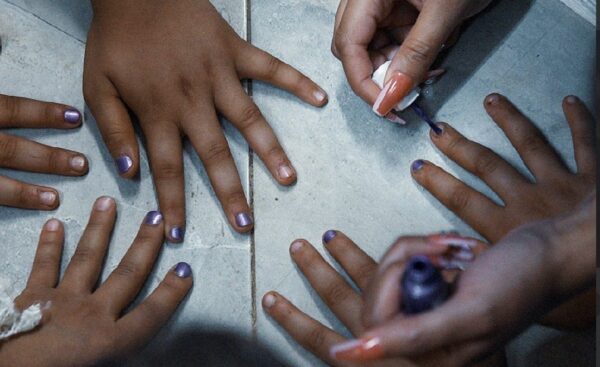
AL BARANEYA – Ashgan El-Hamus (Egypt/Netherlands/Belgium/Saudi Arabia)
Family ties, property and the increasingly precarious economics of village life provide the foundations for Ashgan El-Hamus’s intimate Egyptian drama. Amal, pregnant and living with her extended family on the outskirts of Cairo, finds domestic harmony threatened when a landowner makes an offer for their home. Against a backdrop of jasmine fields, the threatened sale becomes a catalyst for suspicion, competing loyalties and simmering resentment. There is an interesting tension here between the warmth of an affectionate, unruly family and the corrosive influence of money, with the prospect of losing one’s home becoming a metaphor for a wider erosion of belonging.

BerleeN_, Ahmad Abdalla (Egypt/Germany)
Ahmad Abdalla, one of the more distinctive voices in contemporary Egyptian independent cinema, ventures into the emotional and geographical territory of the diaspora with this Berlin-set drama. Over the course of a single day, three Arab strangers find themselves caught up in a series of surreal encounters that bring uncomfortable ghosts from their respective pasts into the present. Berlin, with its layered histories and transient international population, offers fertile territory for a story about displacement, memory and fractured identity. The film’s unusual meeting of characters suggests a narrative less concerned with conventional storytelling than with the unexpected connections that can emerge between strangers.

Four Minus Three
FOUR MINUS THREE – Adrian Goiginger (Austria/Germany)
The juxtaposition of clowning and catastrophe provides the emotional centre of Adrian Goiginger’s challenging drama. Barbara, a professional clown whose life revolves around bringing laughter to others, loses her family in a devastating car accident. Suddenly confronted with grief on an almost unimaginable scale, she must find a way to reconcile her public persona with the private reality of profound loss. The premise invites an exploration of humour as both survival mechanism and emotional disguise, questioning whether laughter can offer anything more than temporary refuge from despair. Valerie Pachner faces a demanding central role in a film whose 121-minute running time suggests an expansive examination of grief and the fragile business of finding hope again.

HEYSEL 85 – Teodora Ana Mihai (Belgium/Netherlands/Germany)
The 1985 Heysel Stadium disaster, in which 39 people died before the European Cup final between Liverpool and Juventus, remains one of the most shameful episodes in European sporting history. Teodora Ana Mihai approaches this traumatic event through the intersecting experiences of a mayor’s daughter and a journalist of Italian descent, bringing a personal dimension to a tragedy whose political and institutional repercussions continue to resonate. Rather than simply revisiting the horror of the stadium crush, the film has the potential to probe the moral compromises, failures of responsibility and collective guilt surrounding it. A sobering reminder of how easily sporting tribalism can turn into something far more destructive.

In this Darkness I see You
IN THIS DARKNESS I SEE YOU – Nadim Tabet (Lebanon/France/Qatar)
A construction site becomes an unsettling arena of social tension and supernatural suggestion in Nadim Tabet’s Lebanese drama. Strange and potentially life-threatening incidents begin to disturb relations between Syrian migrant workers and the Lebanese villagers living nearby. Tarek, one of the workers, becomes convinced that the site is haunted, introducing an element of psychological uncertainty into an already volatile situation. The suggestion of a haunting offers an intriguing metaphor for the unresolved tensions surrounding migration, exploitation and the uneasy coexistence of communities. At just 79 minutes, this could prove a tightly controlled exercise in atmosphere, with the supernatural serving as a prism through which very earthly fears are exposed.
Inherited
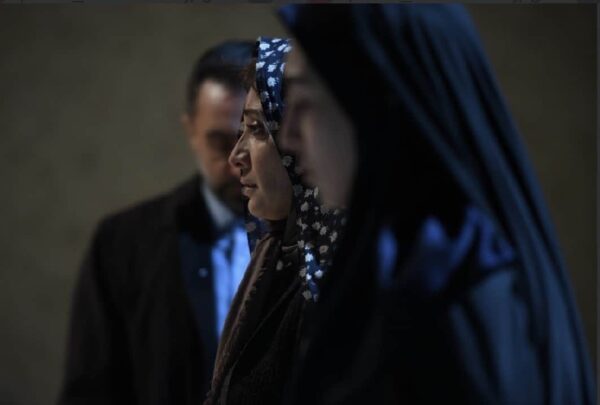
INHERITED – Morteza Alizadeh (Iran)
Few premises are as immediately disturbing as the one at the heart of Morteza Alizadeh’s Iranian drama. Mina, condemned to death for murder, attempts to injure herself in the hope of postponing her execution. When this fails, she is told by a prison trustee that the only remaining way to delay her death is to become pregnant. It is an extraordinary and deeply unsettling predicament, exposing the grotesque contradictions of a system in which a woman’s body becomes an instrument of institutional bargaining. The title carries particular resonance: what is inherited here is not simply a social or familial burden, but a cycle of oppression in which female autonomy is brutally compromised.

Love is the Monster
LOVE IS THE MONSTER – Neto Villalobos Brenes (Costa Rica/Peru/Panama/Chile/Mexico)
Costa Rican filmmaker Neto Villalobos Brenes moves into thriller territory with this dystopian vision of a society where inequality and everyday violence have become the norm. At its emotional centre is an elderly grandmother determined to make the most of the remaining time she has with her granddaughter. But a series of increasingly dangerous events forces her into moral territory she could never have imagined entering. The intriguing premise lies in the collision between the tenderness of intergenerational affection and the brutality of the surrounding world. With acclaimed Chilean actress Paulina García (Gloria) in the cast, the film promises a potentially provocative examination of whether love can remain an innocent emotion when survival itself demands increasingly monstrous behaviour.
Strawberries
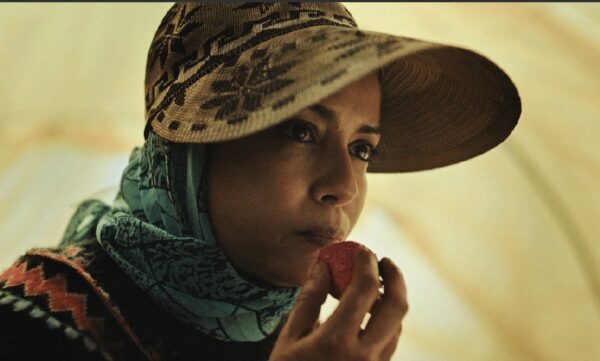
STRAWBERRIES – Laïla Marrakchi (Morocco/France/Spain/Belgium)
Laïla Marrakchi turns her attention to the largely invisible female workforce sustaining Europe’s agricultural economy in this socially engaged drama about two Moroccan women who travel to southern Spain to work as seasonal strawberry pickers. Hasna and Meriem arrive with hopes of providing better lives for their families, only to encounter degrading working conditions, harassment and exploitation. Their growing solidarity becomes an important source of resistance as they challenge the injustices surrounding them. Marrakchi’s subject has considerable contemporary urgency, exposing the uncomfortable contradiction between Europe’s dependence on migrant labour and its treatment of the people who provide it. The personal relationship between the two women should give this political material its emotional force, avoiding the pitfalls of reducing their experiences to a simple social-problem narrative.

THE BALLET LESSON – Kazuya Murayama (Japan)
A journey across Japan becomes an exploration of fractured family relationships and the uncertainties of childhood in Kazuya Murayama’s drama. Japanese-Russian siblings Nikita and Nina have grown up in the care of their Russian grandparents, their absent parents existing largely through stories and recollections. When their father suddenly reappears, he takes them on a journey to find their mother, Yuki, a Japanese ballet dancer. The cultural duality of the children’s background adds an intriguing dimension to what might otherwise be a familiar road-movie structure. There is considerable scope for exploring the dislocation of children caught between different languages, histories and parental loyalties, with the journey itself becoming a metaphor for the elusive nature of home.
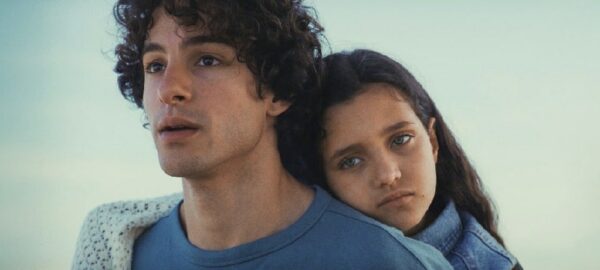
THE GREEN EYES – Fanny Liatard and Jérémy Trouilh (France/Belgium/Sweden)
Following their César-nominated short-film work and feature debut Gagarine, Fanny Liatard and Jérémy Trouilh return with a story that blends social realism and childhood fantasy. Eleven-year-old Chaya faces the threat of eviction from her family home in the Landes region, while her older brother Nour falls into a mysterious, seemingly endless sleep. Determined to bring him back, she embarks on an imaginative journey into his dreams. The premise offers an evocative way of connecting the vulnerability of childhood with the harsh realities of housing insecurity and family instability. The filmmakers’ interest in marginalised communities is now filtered through a more magical register, where the imaginative world of a child may offer a form of resistance to circumstances beyond her control.

Words of Love
WORDS OF LOVE – Rudi Rosenberg (France)
Hafsia Herzi brings her considerable screen presence to Rudi Rosenberg’s family comedy-drama about a household whose carefully established equilibrium is threatened by adolescent curiosity. Erika has spent 14 years raising her children alone, but her daughter Abigail’s determination to find the absent father she has never known threatens to unsettle the family dynamic. What begins as a potentially disruptive quest develops into an unpredictable journey that allows mother and daughter to see one another differently. Rosenberg, whose earlier feature The New Kid demonstrated an instinct for the awkwardness and emotional turbulence of growing up, returns to familiar coming-of-age territory. The film’s appeal will depend on its ability to find humour and tenderness without sentimentalising the complications of unconventional family life.

YUGO GOES TO AMERICA – Filip Grujić and Aleksa Borković (Serbia/Croatia)
An old Yugoslav car becomes an unlikely vehicle for exploring identity, nostalgia and the peculiar relationship between national pride and international ridicule in this documentary road movie. Four young Belgraders set off across 24 American states in a Yugo, once dismissed as one of the worst cars ever sold in the United States. Their journey from New York to Los Angeles brings encounters with fellow enthusiasts and unexpected reflections on the car’s cultural afterlife. Beneath the potentially comic premise lies a more thoughtful investigation into what happens when an object becomes a symbol of a vanished country and its complicated legacy. The Yugo’s reputation as an automotive underdog provides an entertaining hook for a journey that may prove as much about the travellers themselves as the vehicle they are driving.
CAIRO FILM FESTIVAL 2026 | INTERNATIONAL COMPETITION