
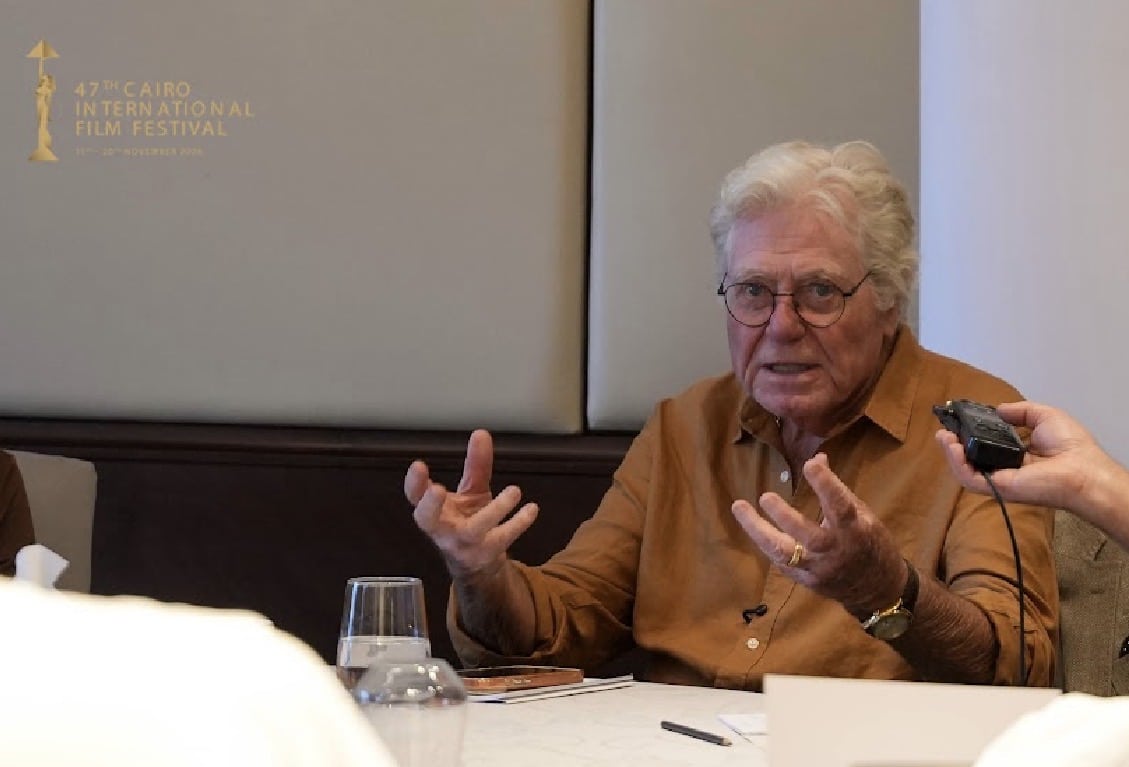
Hussein Fahmy: A man with a mission – and the charisma to make things happen
As the Cairo International Film Festival celebrates its 47th edition, its president, distinguished Egyptian actor Hussein Fahmy, remains a man with plenty to say about the future of cinema. Part cultural guardian, part indefatigable enthusiast and occasionally a witty commentator on the state of the world, Fahmy has ambitions for CIFF that stretch well beyond the annual red carpet.
Hussein Fahmy has the sort of presence that makes you feel cinema is in safe hands. A distinguished actor with decades of experience, he is also a man with an noble undertaking: preserving the past, nurturing the next generation and persuading an increasingly distracted world that cinema still has something meaningful to say.
As president of the Cairo International Film Festival, now in its 47th edition, Fahmy is keenly aware that a festival cannot simply exist as an annual celebration of films and famous faces. It has to leave something behind. And, preferably, something that lasts.
One of his most ambitious ideas is the creation of an entirely new art city in Cairo, a permanent cultural home where Egypt’s extraordinary cinematic heritage could be collected, preserved and made accessible. He has in mind something along the lines of the celebrated National Museum of Cinema in Turin, where film history is treated not as an antiquarian curiosity but as a living, breathing part of cultural identity.
Egypt, after all, has one of the richest film histories in the Arab world. Its archive is an invaluable national treasure, and Fahmy is determined that it should have a proper home. The proposed art city would give that heritage the recognition and infrastructure it deserves, while creating a destination for filmmakers, researchers, students and audiences.
It is an idea that speaks to his particular understanding of the job. Being a festival president, in Fahmy’s view, should involve more than introducing guests and handing out awards. It should mean taking responsibility for what happens to cinema next.
That forward-looking ambition is also behind From Book to Screen, a new initiative designed to turn 12 novels into screenplays, giving producers a ready-made starting point for developing them into films. It is a practical response to one of the industry’s perennial problems: finding compelling stories and getting them from the printed page into production.
The idea is to create a bridge between literary talent and the film industry, encouraging producers to look beyond the familiar formulas and discover stories that might otherwise remain on the shelf. It is also a reminder that good cinema begins with good writing – something that can occasionally get lost in the frantic pursuit of the next commercial success.
Then there is children’s cinema, another strand inspired in part by the successful initiatives at the Turin Film Festival. Fahmy wants to introduce children to the pleasures of cinema at a very young age, developing an audience that understands the magic of watching a film collectively rather than simply consuming moving images on a ‘phone screen.
It is a particularly timely ambition. For Fahmy, one of the great challenges facing cinema is the changing relationship between audiences and images. We are watching more than ever, but are we actually feeling anything?
He is concerned about what he sees as a new lightweight approach to filmmaking, with production, scripts and acting increasingly pared down in comparison with the classics. His observations extend well beyond the film industry. There is, he suggests, a widespread resentment towards modern life, a sense of disenchantment and disconnection that seems to have infected cities across the world.
And then there is Gen Z, whose relationship with the world is increasingly mediated through their phones. Living inside digital bubbles, young people can find themselves making money from publishing videos that, in Fahmy’s less-than-enthusiastic assessment, have remarkably little to say about anything.
It is an amusingly exasperated observation, delivered with the air of someone who has seen enough changes in the world to be entitled to a little scepticism. But beneath the humour is a serious concern: what happens to attention, imagination and emotional engagement when everything is reduced to a fleeting image and an instant reaction?
For Fahmy, cinema has to push back. It must offer something more substantial than another disposable piece of content. The challenge is not to reject the modern world, but to find a way of making films that are moving, thought-provoking and memorable.
That concern is particularly relevant when considering the state of Egyptian and wider Middle Eastern commercial cinema. Once capable of producing between 40 and 60 substantial commercial films a year, the Egyptian industry has seen output fall to around 15. The pressures of the global economic crisis, compounded by the continuing instability and financial difficulties across the Middle East, have taken their toll.
It is a worrying contraction for an industry that has historically been a major cultural and commercial force throughout the Arab world. Egyptian cinema has long travelled beyond its borders, shaping tastes, stars and popular culture across the region. Its decline is therefore not simply a domestic problem but a loss for the wider MENA film landscape.
The president is conscious that the industry needs both investment and confidence. Festivals can provide visibility, introduce filmmakers to international markets and encourage new partnerships, but they cannot single-handedly repair an entire production ecosystem. Nevertheless, he clearly sees CIFF as an important part of the solution.
Mr Fahmy’s own relationship with cinema is hardly confined to his presidential duties. He has recently appeared in the Chinese film China That I Have Known, directed by a Chinese woman filmmaker, adding another international experience to an acting career that has taken him far beyond Egypt. It is an interesting reminder that, while he is busy safeguarding Egyptian cinema, he remains an actor with an appetite for discovering different filmmaking cultures.
And what about artificial intelligence? Inevitably, the conversation turns to the technology that is beginning to reshape every aspect of film production, from writing and visual effects to editing and performance.
Although Hussein Fahmy recognises that artificial intelligence will inevitably become part of filmmaking’s future, CIFF has drawn a line for the moment. The festival has decided not to accept AI-generated films, with artistic director Mohamed Tarek arguing that there is as yet no satisfactory way to distinguish between films made through human creativity and those effectively produced by entering prompts into a machine.
So Mr Fahmy is not dismissive of its possibilities. AI is developing rapidly as a filmmaking tool, and he recognises that it will eventually become part of the industry’s working vocabulary.
There is something characteristically practical about his approach: neither blindly embracing every new development nor pretending that it can simply be wished away. Cinema has always had to adapt to technological change, even if the speed of the current transformation is unprecedented.
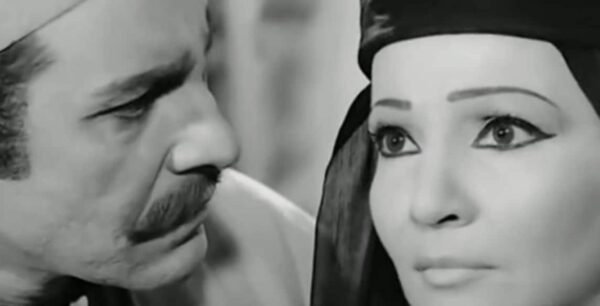
The festival’s programme itself reflects some of these tensions. Among the films discussed is a cult classic of Egyptian cinema Some Kind of Fear (Shay min al-Khawf شيء من الخوف, 1969), starring Shadia and Mahmoud Morsi, directed by Hussein Kamal. It explores a particularly terrible episode involving the cutting off of the Nile’s water supply, with devastating consequences for farmers and ordinary people threatened with starvation. It is precisely the kind of subject that reminds us of cinema’s capacity to revisit history, expose injustice and give human dimension to events that might otherwise remain distant abstractions.
For Fahmy, that ability to make audiences feel something is essential. A film should not simply pass before our eyes. It should leave a mark.
The 47th Cairo International Film Festival is therefore about more than showcasing a selection of international and Arab films. It is also an attempt to articulate what Egyptian cinema might become, while protecting what it has already achieved. The proposed art city, the literary adaptation project and the children’s programme are all different expressions of the same ambition: to build an infrastructure around cinema rather than leave its future entirely to commercial forces and technological fashion.
Hussein Fahmy approaches these challenges with the enthusiasm of someone who genuinely believes that cinema matters. His occasional impatience with contemporary culture is tempered by humour, and his ambitions are refreshingly larger than the immediate demands of another festival edition.
At a time when attention spans are shrinking, audiences are increasingly fragmented and the economics of filmmaking are under pressure, he is making a rather old-fashioned argument for the enduring value of the big screen: that stories matter, that archives matter, that children deserve to discover cinema properly, and that a country with Egypt’s incredible film heritage has a responsibility to preserve it.
It is an ambitious brief. But then, Hussein Fahmy has never seemed particularly interested in thinking small.
CAIRO INTERNATIONAL FILM FESTIVAL 2026