
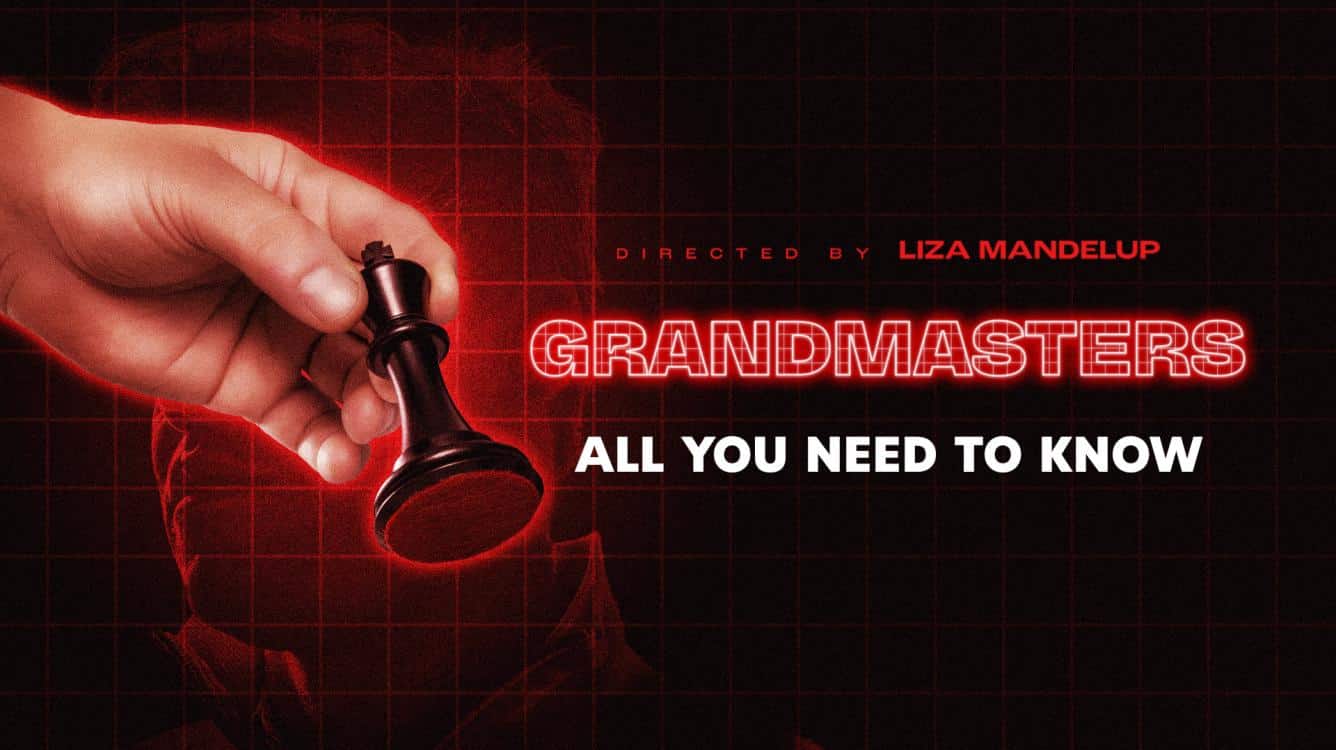

Dir: Lisa Mandelup | US Doc 2026
Grandmasters sets out to make the esoteric world of competitive chess accessible, following the disruption caused when an eccentric German entrepreneur recruits reigning world champion Magnus Carlsen to launch a new league designed to revolutionise the game.
It is a promising premise: a collision between old-world intellectual elitism and the brash commercial instincts of modern sport. Yet the film struggles to turn that potential into anything quite as compelling as its ambitions suggest.
The central characters provide the documentary’s principal interest. Carlsen, whose formidable intelligence and understated personality have made him one of chess’s most distinctive figures, offers a fascinating study in competitive obsession. Against him stands the entrepreneurial provocateur, whose vision of reinventing chess brings welcome unpredictability to a world traditionally governed by convention, hierarchy and an almost priestly reverence for its rules. The contrast is inherently dramatic, even if the film does not always extract the tension it deserves from their uneasy alliance.
There is, too, something undeniably intriguing about the grandmasters themselves: men whose extraordinary powers of concentration coexist with personalities that can appear awkward, eccentric or wilfully inscrutable. But chess presents a formidable challenge to the filmmaker.
Much of its drama takes place inside the players’ heads, invisible to the casual observer. Explaining the intricacies of the game is one thing; conveying the emotional stakes of a match to an audience unfamiliar with its subtleties is quite another. Grandmasters is at its best when it concentrates on the human rivalries, egos and ambitions behind the moves, and less convincing when it assumes that proximity to chess’s elite is sufficient to generate excitement.
Visually, the film must find ways to animate a sport whose essential action consists of moving small pieces across a board. Close-ups, the ritualised choreography of competition and the intense expressions of players locked in concentration offer moments of visual interest, but there is a danger of mistaking atmosphere for drama. The challenge is to make the abstract tangible, to communicate the pressure of a decisive move without reducing the experience to a succession of furrowed brows and silently turning wheels. Where the imagery fails to illuminate the psychological contest, the proceedings risk becoming as static as the boards themselves.
The larger question is whether chess needs revolutionising at all, or whether the attempt to make it more marketable threatens to diminish precisely what makes it distinctive. The prospect of transforming an ancient intellectual pursuit into a slicker, more commercially appealing spectacle provides the film with its most provocative underlying conflict. Yet the clash between tradition and innovation needs more than an eccentric impresario and a celebrated champion to sustain it; it needs a sharper sense of what is genuinely at stake.
Ultimately, Grandmasters offers a window into a rarefied world whose personalities are often more compelling than its mechanics. There is interest here, and occasional character-driven intrigue, but the film’s ambitions outstrip its dramatic execution. It may persuade viewers that chess is populated by people considerably more interesting than its forbidding reputation suggests. It is less successful at making the game itself irresistible viewing. A documentary about revolutionising chess should, at the very least, leave us feeling that something decisive has happened. Here, the pieces move, the egos collide, but the final position feels frustratingly familiar.
NOW IN US CINEMAS