
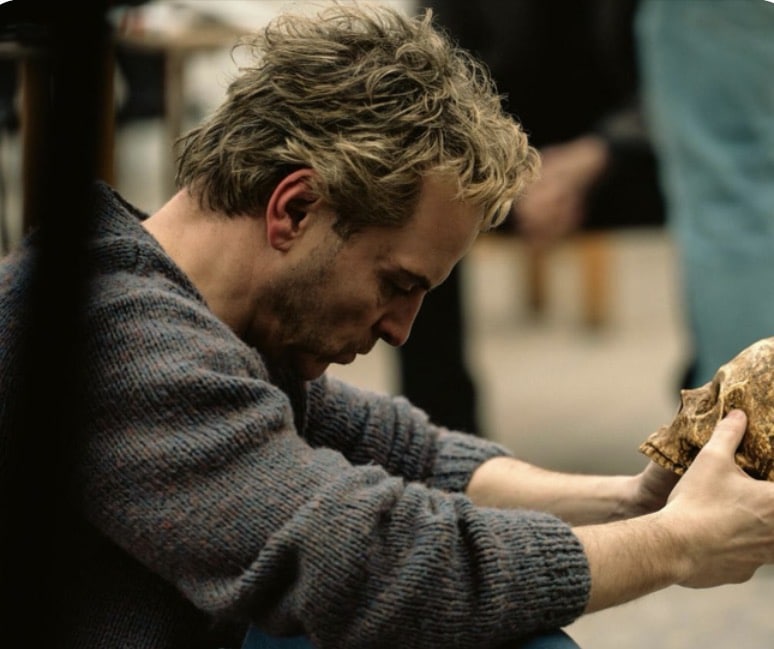

Dir: Simon Stone | UK Drama 110’
Elsinore: Andrew Scott and the art of defiance
In Elsinore, Simon Stone finds an arresting subject in the relationship between artistic ambition and physical decline. Set within the London theatre world of 1989, the film follows Ian Charleson as he undertakes the role of Hamlet at the National Theatre while privately confronting the illness that will end his life. Andrew Scott inhabits this contradiction with remarkable intensity, creating a portrait of a man who refuses to let his circumstances dictate the limits of his ambition.
Charleson, celebrated internationally for Chariots of Fire, wants something more substantial than the repetition of past successes. Hamlet represents an opportunity to demonstrate the full measure of his talent, but the decision comes at an immense personal cost. Living with AIDS at a time when the disease was surrounded by fear, prejudice and silence, he must negotiate the demands of a physically exhausting role while protecting what remains of his independence. The theatre becomes both an escape from his predicament and a place where its consequences can no longer be ignored.
Stone avoids the conventional sweep of a cradle-to-grave biopic. Instead, he concentrates on a crucial period in Charleson’s life, allowing the drama to develop through encounters, rehearsals and the tensions between professional obligation and personal choice. His approach is intimate, often deliberately unadorned. The imposing architecture of the National Theatre provides an intriguing counterpoint to the vulnerability of the people inhabiting it. Within this formidable institution, the most consequential battles are fought in private.
There is a strong argument for describing Elsinore as a chamber piece. Its dramatic energy comes less from external events than from the shifting relationships between a handful of characters. Yet the film is not hermetically sealed. Through Charleson’s experience, Stone evokes a particular moment in British cultural history, when AIDS was devastating lives and forcing difficult questions about dignity, sexuality and the right to determine one’s own future.
Scott’s performance is the film’s great achievement. He does not play Charleson as an inspirational figure who rises serenely above adversity. His portrayal retains the actor’s impatience, humour, pride and occasional abrasiveness. Here is someone who knows his own worth but is acutely conscious of the time slipping away. Scott communicates this awareness without resorting to the obvious signals of suffering. His stillness can be as eloquent as his anger; his moments of levity are particularly affecting because they reveal a personality that illness has not extinguished.
The prospect of performing Hamlet gives Scott an opportunity to explore the uneasy relationship between the actor’s body and the character’s words. Shakespeare’s preoccupation with death inevitably resonates with Charleson’s circumstances, but Scott avoids making every speech an explicit commentary on his condition. Instead, the theatrical performance emerges as an artistic undertaking in its own right. Charleson is not simply acting out his own tragedy; he is pursuing the exacting work of interpretation, with all the concentration and discipline it requires.
Olivia Colman brings a welcome counterpoint as Dr Margaret Johnson, whose medical understanding makes her acutely aware of the risks Charleson is taking. Her concern is complicated by the knowledge that protecting him physically might also mean denying him something fundamental to his identity. Colman’s restrained, unsentimental approach lends their encounters a productive friction. She neither sanctifies his determination nor dismisses it, allowing the conflict between care and personal freedom to remain unresolved.
What gives Elsinore its emotional weight is its resistance to the idea that art can somehow conquer death. Charleson’s achievement does not alter the outcome of his illness. Rather, it demonstrates the importance of retaining agency when so much else has been taken away. His insistence on playing Hamlet becomes an affirmation of professional identity, but also of the right to decide what makes life meaningful.
Stone’s film is most persuasive when it trusts its actors and allows the silences between them to do their work. Its subject is undeniably tragic, yet its deepest interest lies in the persistence of wit, desire and creative purpose in the face of extinction.
Ultimately, Elsinore is less a film about dying than about the determination to continue working, thinking and creating while life remains. Scott gives that determination extraordinary human substance. His Charleson is neither a martyr nor a symbol, but an artist fighting for the privilege of being understood through his work. In the intimate space between the dressing room and the stage, that struggle becomes both deeply personal and profoundly moving.
UK Premiering at BFI London Film Festival