
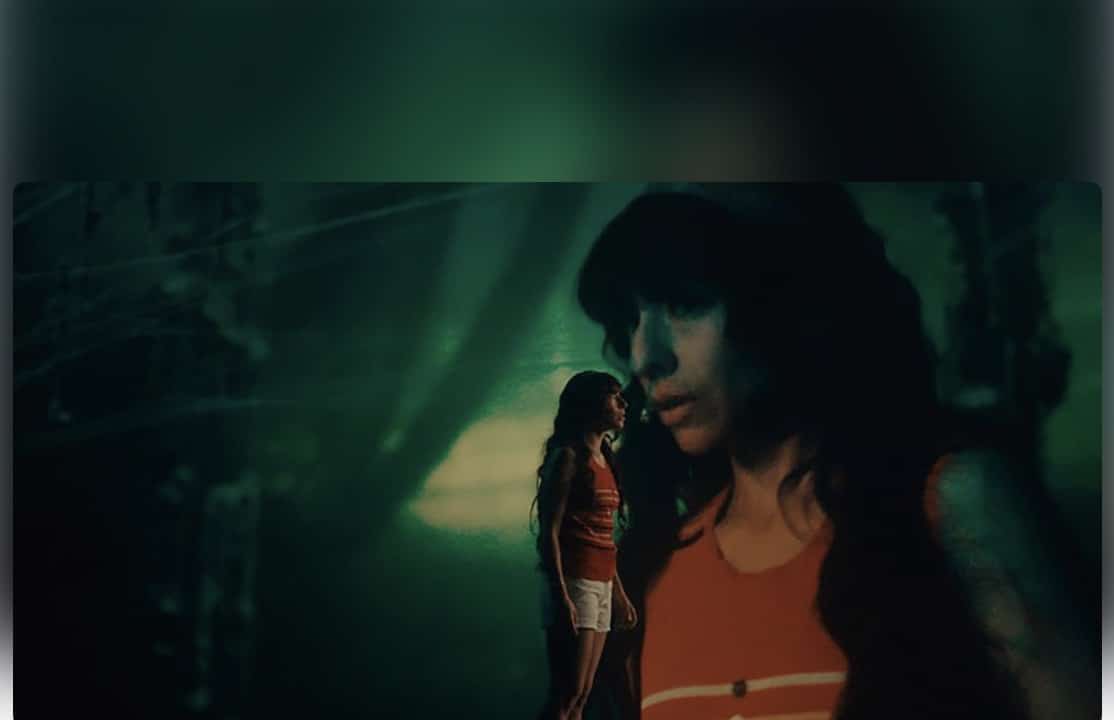


Dirs: Cristóbal León, Joaquín Cociña | Drama 2026
Few contemporary filmmakers dismantle the boundaries between fantasy, folklore and cinematic artifice with the audacity of Chilean duo Cristóbal León and Joaquín Cociña.
Following the hypnotic nightmares of The Wolf House and the gleefully labyrinthine The Hyperboreans, they return with Donkey Princess, a film that at first glance appears to embrace the conventions of a fairy tale before mischievously pulling the rug from beneath them.
Princess Diana (no, not that one!) lives in a kingdom where love itself has been outlawed by her domineering father, King Arthur. When the young princess falls for the outsider Lalo, he is banished, sending her on a quest across strange parallel worlds armed only with a magical bracelet and an increasingly fragile sense of reality. What begins as a romantic fantasy gradually mutates into an exploration of free will, identity and the stories we inherit from those who seek to control us.
León and Cociña have described this as their most linear and narrative work, yet “linear” is a relative term in their universe. The plot may offer a recognisable emotional spine, but it continually slips into uncanny detours where mythology, science fiction, handmade illusion and dream logic coexist with exhilarating freedom. Rather than asking audiences to solve its mysteries, the film invites them to surrender to them.
Visually, Donkey Princess is another triumph of handcrafted invention. Live action merges almost imperceptibly with miniature sets, painted backdrops, stop-motion flourishes and digital interventions that deliberately expose their own artifice. The result is less a polished fantasy than a living storybook assembled from theatre scenery, puppet magic and childhood imagination. Every frame bears the fingerprints of its creators, recalling early cinema as much as contemporary experimental art, while evoking echoes of Michel Gondry and Alejandro Jodorowsky without ever feeling derivative.
The performances anchor the film’s flights of invention. Antonia Giesen gives Diana a touching blend of innocence and determination, allowing the emotional stakes to remain tangible even as reality fragments around her. Francisco Melo brings surprising depth to King Arthur, transforming what might have been a fairy-tale tyrant into a tragically possessive father, while Andrew Bargsted lends Lalo an understated warmth that keeps the romance believable amidst the surrealism.
Narratively, Donkey Princess functions less as a straight fantasy than as an ever-shifting meditation on storytelling itself. León and Cociña continue to blur the line between creation and illusion, making every new world feel simultaneously fabricated and emotionally authentic.
The film’s episodic structure occasionally sacrifices momentum for visual reverie, and some viewers may find its refusal to settle into conventional rhythms frustrating. Yet that unpredictability is also its greatest strength, allowing each scene to unfold with the exhilaration of stepping into an unknown dream.
Like all the directors’ finest work, Donkey Princess refuses to be consumed passively. It asks audiences to participate in its imagination, to delight in its handmade textures and to embrace uncertainty over easy explanation. In an era dominated by frictionless digital fantasy, León and Cociña remind us that cinema can still feel gloriously tactile, mysterious and gloriously strange. It is an enchanting, intellectually playful work that confirms them as two of the most original visual storytellers working in world cinema today.
Locarno Film Festival 2026 – International Competition