
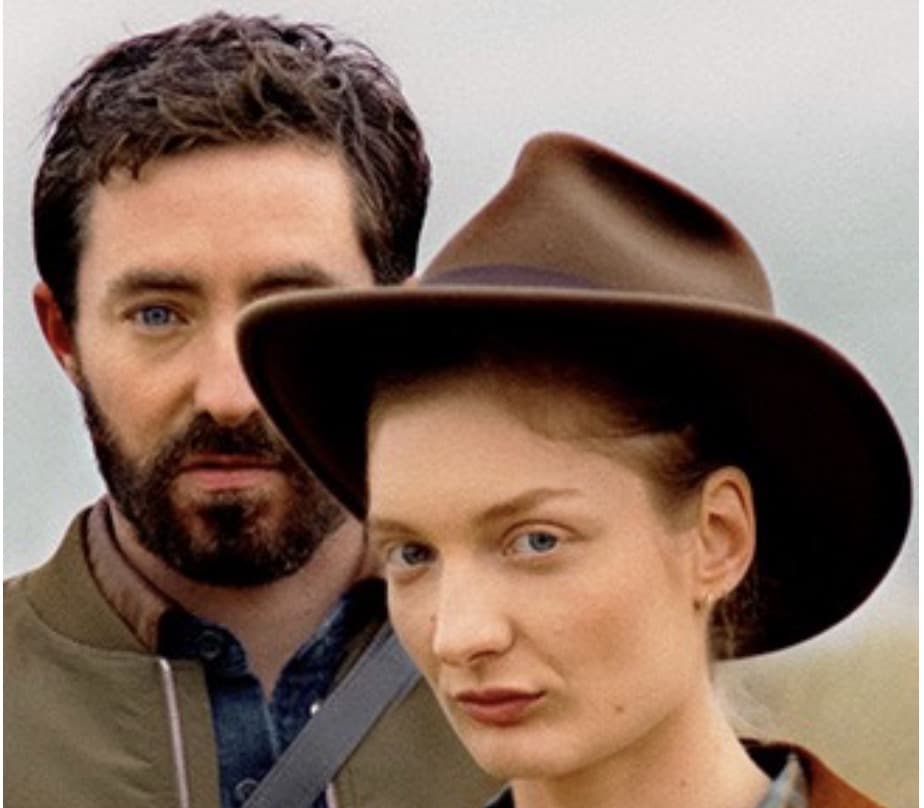


Dir: Ann Sirot and Raphaël Balboni | Drama 2026
Ann Sirot and Raphaël Balboni’s Diane in the Loop begins with an arresting contradiction: Diane despises men as much as she desires them. From that unstable premise, the Belgian directing duo build something considerably more intriguing than a conventional revenge story — a darkly comic, psychologically charged film about trauma, memory and the complicated inheritance between mother and daughter.
Diane discovers that her mother was raped three years before she was born. The revelation becomes an existential rupture. For Diane, the past suddenly demands action. She wants revenge; perhaps more precisely, she wants to give shape and purpose to a violence that occurred before she even existed.
Her mother wants something else entirely. She wants to forget. After years of carrying the consequences of what happened, she has one overriding desire: to become the woman she believes she should have been.
That opposition gives the film its strongest dramatic idea. Diane sees remembering as a duty, almost a form of justice. Her mother sees forgetting as a route to freedom. Neither position is treated as entirely correct, and Sirot and Balboni wisely resist turning the mother into a passive victim or Diane into a righteous avenger.
Instead, they explore the strange territory between inherited trauma and personal identity. Diane has not experienced her mother’s ordeal, yet she feels entitled — perhaps compelled — to make it her own. Her mother, meanwhile, has lived through the original violence and has no desire to allow it to dictate the rest of her life.
The film’s treatment of Diane’s sexuality adds another provocative layer. Her contempt for men exists alongside a powerful attraction to them, making desire itself another source of conflict. Sirot and Balboni are interested in the messy inconsistencies of human behaviour rather than psychological neatness. Diane does not conform to the reassuring logic of a heroine whose worldview can be explained by a single traumatic revelation.
What makes Diane in the Loop particularly promising for Venice is this tonal instability. The premise could easily have produced a grim, solemn drama, but the filmmakers instead find uncomfortable humour and absurdity in the collision between mother and daughter. Their relationship becomes a battleground over memory itself: one woman insists that the past must be confronted; the other insists that she has earned the right to leave it behind.
The film’s most provocative question is ultimately not who should be punished, but who owns a trauma? Can a daughter seek justice for something done to her mother? Does remembering honour the victim, or can it become another way of imprisoning her? And is forgetting necessarily an act of denial — or can it be the ultimate assertion of freedom?
There are moments when the film’s ideas risk becoming more conspicuous than its characters, and Diane’s antagonism towards men can feel deliberately schematic. But the refusal to offer easy psychological explanations is also part of its appeal. This is a film more interested in contradiction than resolution.
In Diane in the Loop, the past is not simply something that happened. It is something two generations fight over. Diane wants to remember for both of them; her mother wants, finally, to forget for herself.
Sirot and Balboni turn that conflict into an unsettling and often sharply funny examination of what we inherit, what we remember — and what we must sometimes abandon in order to become someone other than the person our history has made us.
Venice Film Festival 2026