
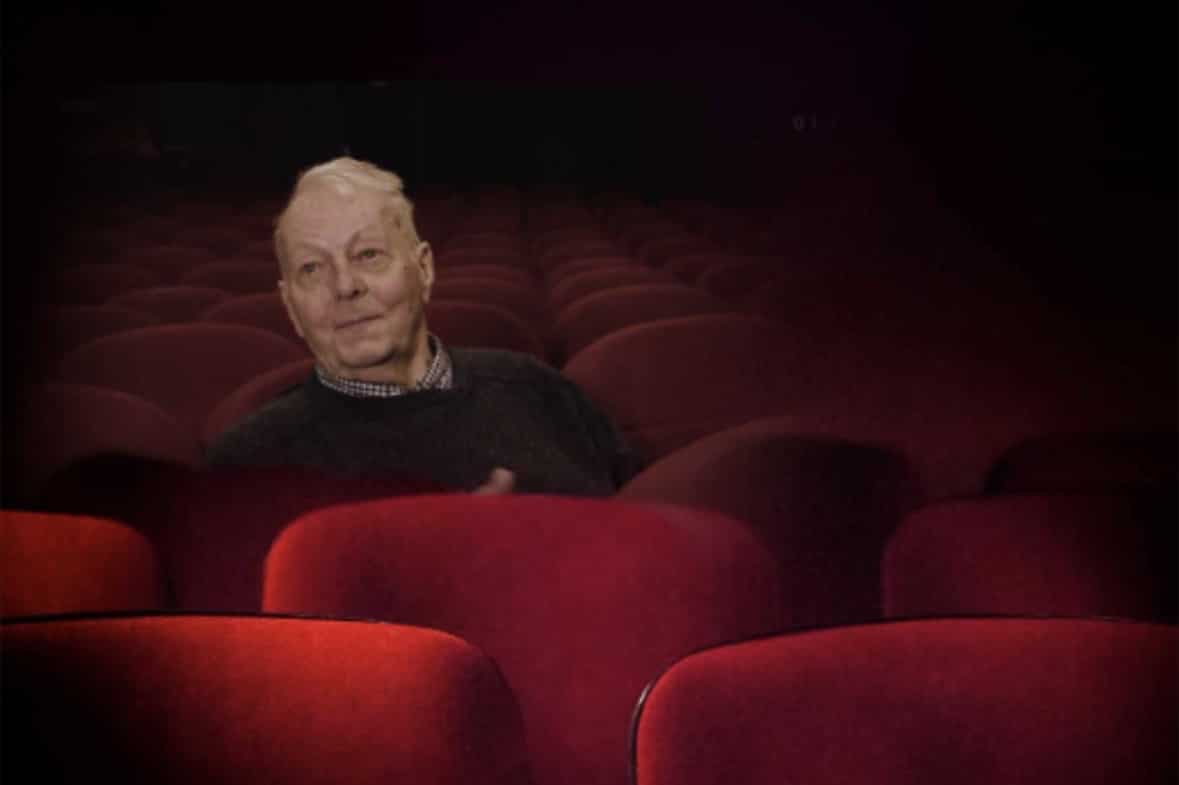

Dir: Michel La Veaux | Doc 106’ 2026
There are film festival gatekeepers, and then there is Pierre-Henri Deleau, a man who spent three decades opening doors that much of the international film establishment didn’t even know existed.
Michel La Veaux’s affectionate and richly rewarding documentary, Deleau: Cinema Unchained, is both a portrait of an extraordinary individual and a celebration of independent cinema in its most adventurous, uncompromising form.
Chockful of archive footage, the film kicks off in the late 1960s, when a young Deleau, then a university student in Lille, was swept up in the cinematic revolution of the Nouvelle Vague. Already an insatiable cinephile, he travelled regularly to Paris to immerse himself in films, developing an appetite for cinema that challenged convention and ventured beyond familiar territory. His association with the legendary Henri Langlois at the Cinémathèque Française further shaped his outlook. Then came May 1968. As the Cannes Film Festival was brought to a dramatic halt by the political upheaval and protests of the period, a new idea began to take shape: cinema needed an alternative platform, one less beholden to established reputations, national film institutions and the familiar hierarchy of the official selection.
In 1969, the Directors’ Fortnight was born, with Deleau at its helm. What followed was an extraordinary thirty-year exercise in cinematic discovery. His brief was never simply to find films that fitted a particular aesthetic or commercial profile, but to seek out voices that were different, challenging and frequently ahead of their time. He became an international talent scout with an almost instinctive ability to recognise a filmmaker before the rest of the world had caught up.
La Veaux’s documentary brings this remarkable period back to life through a treasure trove of historical photographs, extracts from films and recollections from the filmmakers whose careers intersected with Deleau’s. The result is a wonderfully immersive journey through several decades of world cinema, much of it unfamiliar territory even for seasoned film enthusiasts. It is a reminder of just how much adventurous filmmaking has flourished outside the conventional Hollywood and European mainstream, and how essential a platform such as the Fortnight has been in bringing it to international attention.
The roll call of names is remarkable. Werner Herzog, Martin Scorsese, Nagisa Oshima, Theo Angelopoulos, Ken Loach, the Taviani brothers, Jim Jarmusch, Spike Lee, Atom Egoyan, Michael Haneke, Sofia Coppola and the Dardenne brothers are among the filmmakers whose work found an important early platform through the Fortnight. Deleau’s championing of Canadian cinema was equally significant, notably giving Denys Arcand’s The Decline of the American Empire its world premiere at Cannes, helping to propel the filmmaker onto the international stage.
But what makes the film particularly engaging is that it isn’t simply a parade of famous names retrospectively acknowledging a benefactor. It is also an invitation to rediscover the films themselves. The archive sequences and carefully chosen extracts open windows onto different cinematic cultures, styles and sensibilities, taking us from European auteurs to African and Asian filmmaking, from politically charged works to formally daring experiments. Some of these films will be familiar to devoted cineastes; others are fascinating discoveries in their own right. There is a palpable pleasure in being reminded that cinema’s history is considerably wider and more adventurous than the handful of titles that dominate conventional retrospectives.
Through testimonies from figures including Michael Haneke, Ken Loach, Atom Egoyan and Denys Arcand, we gain a sense of the influence Deleau exerted, not through the usual mechanisms of industry power, but through an unwavering belief in the filmmaker and the work. He understood that recognition at Cannes could change the trajectory of a career, and that a first opportunity could be as important as any subsequent award or commercial success.
La Veaux also captures something of Deleau himself: his formidable cultural appetite, his memory, his enthusiasm and, above all, his deeply personal relationship with cinema. There is an evident affection between filmmaker and subject, but the film’s warmth is balanced by a genuine appreciation of the institutional independence and occasional rebelliousness that made the Fortnight such an important counterweight to the official festival.
At a time when film festivals are increasingly conscious of market forces, established names and the demands of international distribution, this is a timely reminder of the value of taking risks. Deleau’s achievement was not merely to programme another section of the world’s most prestigious film festival. It was to create a space in which unfamiliar voices could be heard, overlooked national cinemas could find an audience and young directors could take their first significant steps towards international recognition.
Ultimately, Deleau: Cinema Unchained is a love letter to the people who make independent cinema possible: the filmmakers who dare to be different, and the cinephiles who recognise their worth before anybody else does. Choc-full of archival riches and international film discoveries, it celebrates a man whose greatest talent may have been knowing when to say yes.
A must for anyone who believes that the future of cinema depends on keeping its doors open to the unexpected.
CAIRO INTERNATIONAL FILM FESTIVAL | Special Screening