


Dir: Asmahan Bkerat | Doc, Jordan, Palestine 2026
Concrete Land is the kind of confident, aesthetically rigorous debut that festival programmers relish: politically alert without lapsing into didacticism, emotionally restrained without becoming entirely inert.
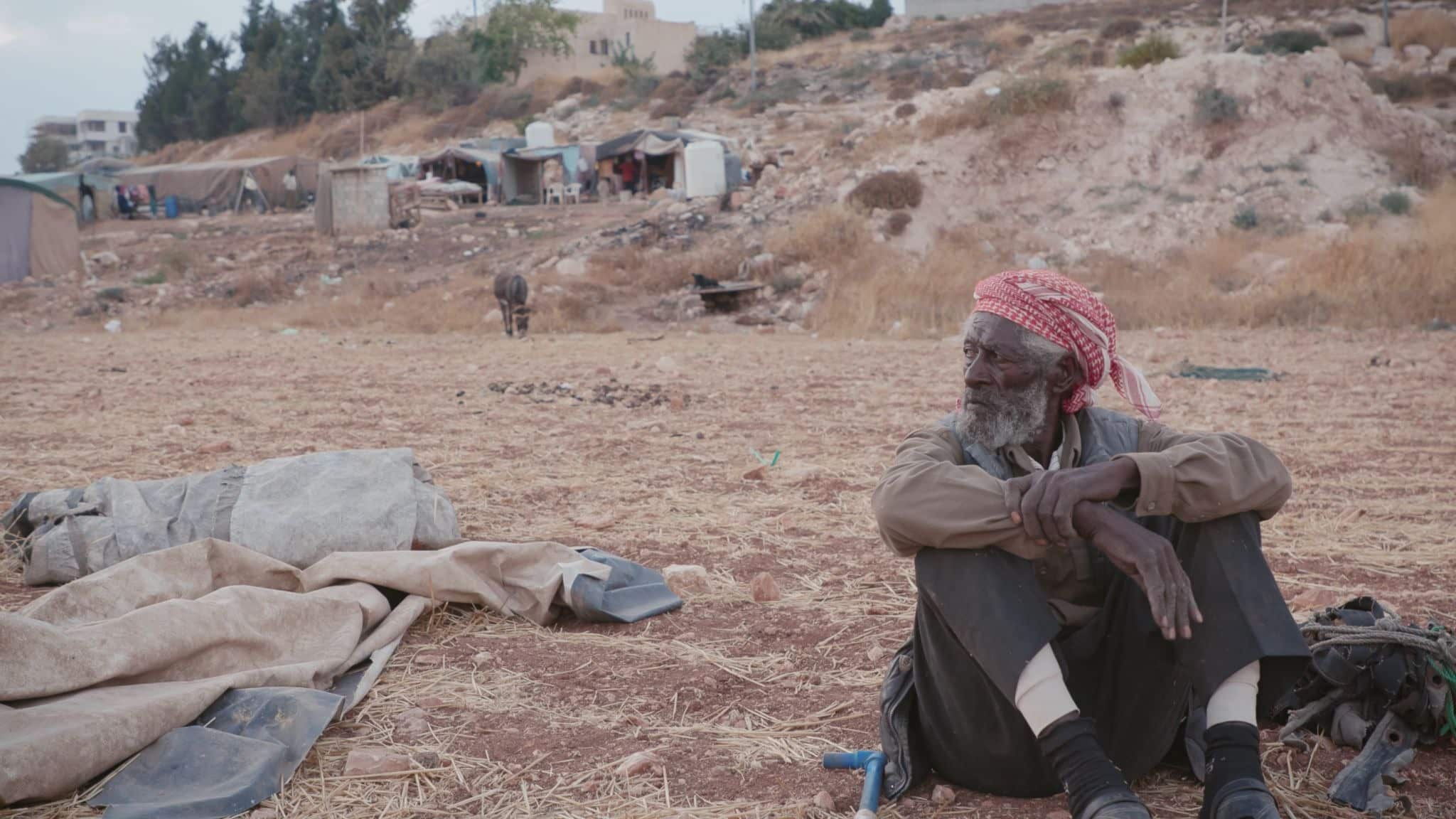
Premiering in Locarno’s international competition, it is an impressively crafted, intimate story of three generations of a Palestinian Bedouin family in Jordan. Facing displacement, racism and internal conflict, their love, humour, and resilience are tested to the limit.
Set amid the liminal spaces of an urban landscape in perpetual reconstruction, the film follows a young man balancing the competing forces of family obligation, economic hardship and the seductive promise of escape. Plot, however, is almost beside the point. The director focuses on mood at the expense of narrative propulsion, making use of gesture, architecture and silence, to build a portrait of a generation trapped between inherited failures and uncertain futures.
From a cinematography point of view the film is a triumph: images of striking assurance feature tower blocks, abandoned developments and skeletal construction sites that become recurring visual motifs, photographed with an eye for texture rather than spectacle. The camera repeatedly finds beauty in unfinished surfaces, transforming concrete into both metaphor and material reality. It’s an accomplished visual strategy that gives the film an identity from its opening frames.
The lead character matches that restraint with impressive discipline, subtly internalising his feelings of conflict to the point where even minor shifts in expression carry weight. And this feeling is carried through by the other people in the documentary. Concrete Land is very much a mood piece rather than an in-depth study in social psychology.
Concrete Land is very much a slow-burner. Its measured pace builds quiet tension, but the repeated scenes of work and routine eventually begin to feel repetitive rather than revealing. The final act embraces ambiguity with confidence, though you may end up admiring the film’s craft more than feeling emotionally engaged.
From a craft perspective, however, there is little to fault. The sound design quietly expands the emotional geography of the film, allowing distant machinery, traffic and environmental noise to become an almost musical presence but this is used sparingly rather than driving the narrative forward.
Impressively made Concrete Land establishes Asmahan Bkerat as a distinctive new voice, even if its carefully calibrated austerity keeps us at an admiring distance.
LOCARNO FILM FESTIVAL 2026