
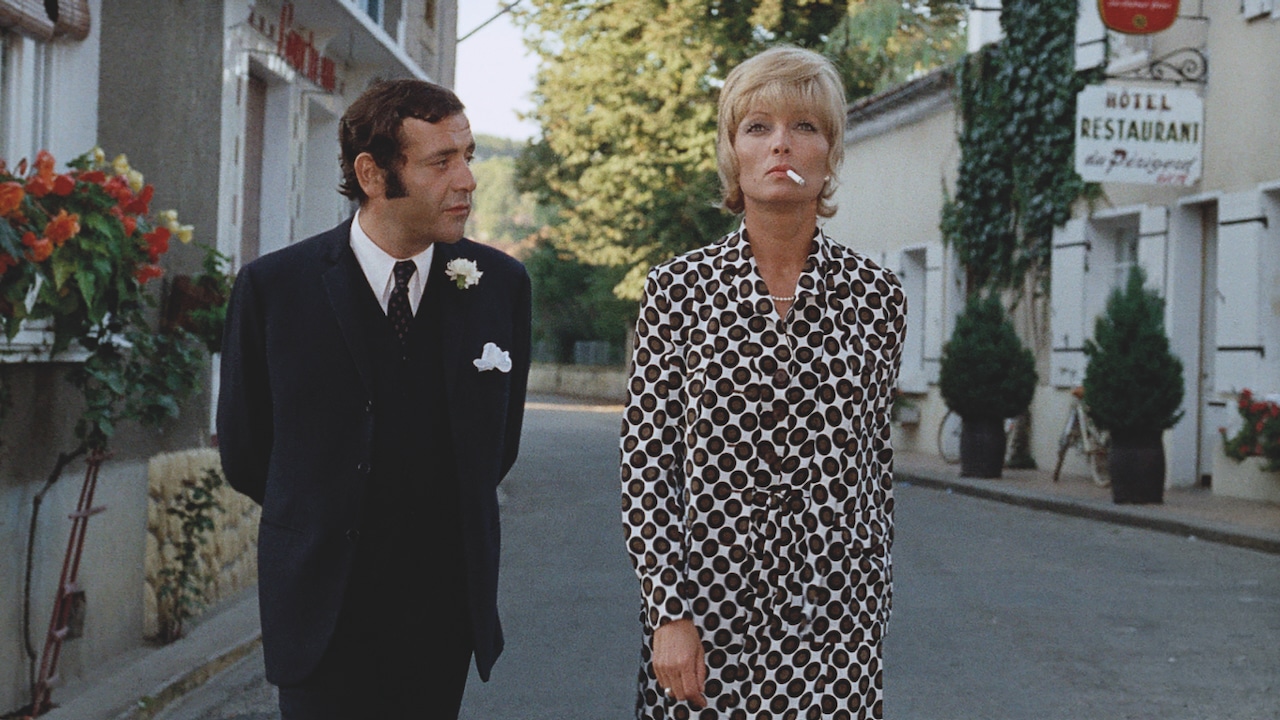
Claude Chabrol (1930-2010) was one of those filmmakers who seemed to regard cinema less as a profession than as a permanent state of curiosity.
The French director made films for more than half a century, moving with surprising ease between murder stories, comedies, literary adaptations and psychological dramas, but beneath the variety there was a remarkably consistent preoccupation: what happens when the polished surface of respectable life begins to crack.
Born in Paris in 1930, Chabrol grew up in a bourgeois family and spent part of the Second World War in the small village of Sardent in central France. Cinema became an early obsession. He organised screenings and immersed himself in films with the enthusiasm of someone discovering an alternative education. After the war he returned to Paris, where he studied literature and law but was increasingly drawn towards the city’s film culture. The Cinémathèque Française was his real university.
There he became part of the remarkable circle of young cinephiles who would soon transform French cinema. François Truffaut, Jean-Luc Godard, Éric Rohmer and Jacques Rivette were among his contemporaries, and the journal Cahiers du cinéma became their battleground. Chabrol joined the magazine in the early 1950s, writing about the American directors whom established French critics often dismissed as commercial entertainers. Alfred Hitchcock was particularly important to him. Chabrol recognised that suspense could be much more than a mechanism for frightening an audience: it could expose character, morality, sexual jealousy and social hypocrisy.
A close friendship with Éric Rohmer led to their influential study of Hitchcock, published in 1957. But Chabrol was not content to remain a critic. His circumstances gave him an opportunity that many of his colleagues lacked. An inheritance from his first wife’s family provided money with which he could make films, and Chabrol used some of it to help finance work by other young filmmakers. He was therefore not simply one of the New Wave directors; he was among the people who helped create the conditions in which the movement could happen.
His own first feature, Le Beau Serge (1958), was made on a modest budget in Sardent. It was an audacious beginning: rather than constructing an elaborate cinematic world, Chabrol went back to a place he knew and turned its landscape and inhabitants into the setting for a story about friendship, disappointment and moral failure. The film immediately demonstrated an instinct that would remain central to his work—the ability to find menace in ordinary surroundings.
Les Cousins followed in 1959 and won the Golden Bear in Berlin. If Le Beau Serge had looked towards provincial France, Les Cousins shifted its attention to Paris and the seductive, competitive world of bourgeois youth. Chabrol’s cinema was already different from the more romantic image of the New Wave. His characters could be attractive, witty and modern, but he had little faith in the idea that modernity automatically made people freer or better.
During the early 1960s his career became less predictable. Chabrol made films that were not always successful and experimented with commercial genres, including thrillers and spy films. This period is sometimes treated as a detour, but it was actually important to his development. He learned how to work within the machinery of commercial filmmaking without abandoning his own interests. Unlike some of his fellow New Wave directors, he was never particularly interested in making difficulty or experimentation an end in itself. He liked audiences, genres and stories. By the end of the decade, he had found his territory.
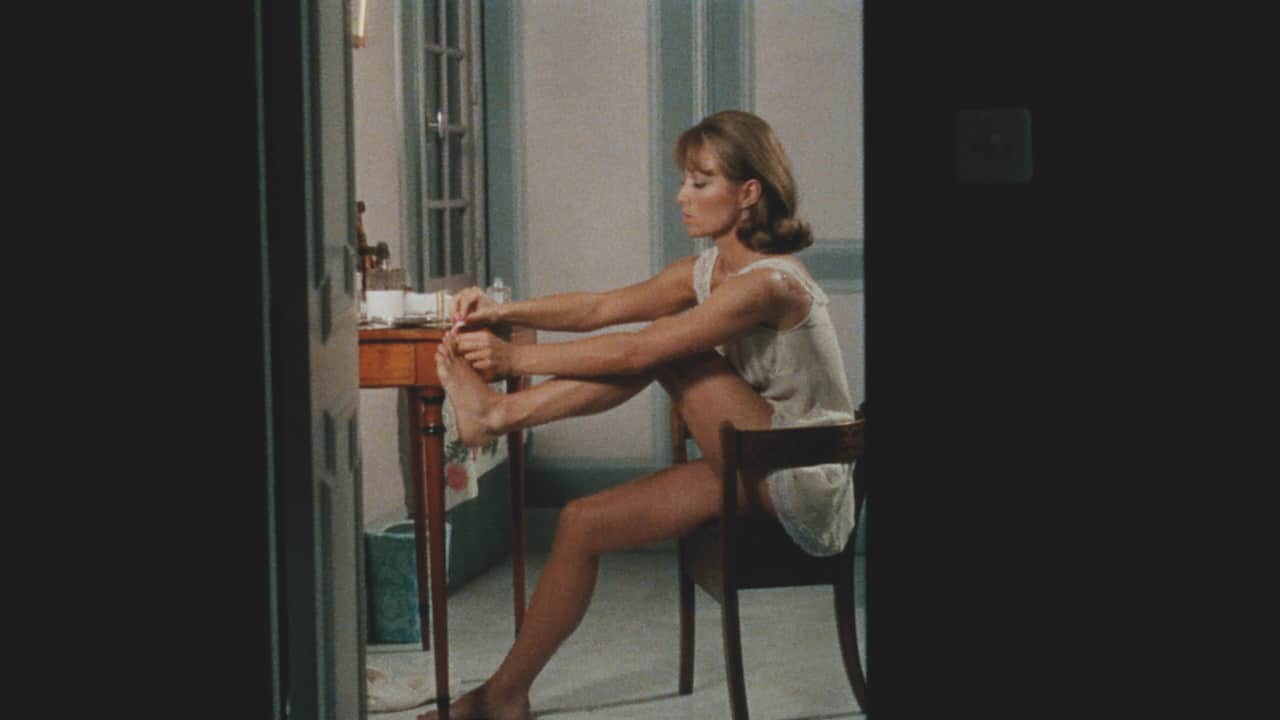
Les Biches (1968), La Femme infidèle above (1969), Que la bête meure (1969) and Le Boucher (1970) (main pic) established the Chabrol style in its mature form. The settings became increasingly bourgeois: comfortable houses, country properties, restaurants, schools and immaculate dinner tables. Yet these reassuring environments were rarely reassuring for long. Chabrol understood that wealth and good manners could provide excellent camouflage for obsession, cruelty and violence.
Stéphane Audran became the great female presence of this period. Elegant without being conventionally glamorous, intelligent and capable of suggesting enormous emotional depths without displaying them, she was perfectly suited to Chabrol’s cinema. Their professional partnership produced some of his finest work, including La Femme infidèle and Le Boucher. His fascination was not simply with adultery or murder but with the elaborate social rituals surrounding them—the lies people tell themselves, the things they choose not to see, and the extraordinary lengths to which respectable people will go to preserve appearances.
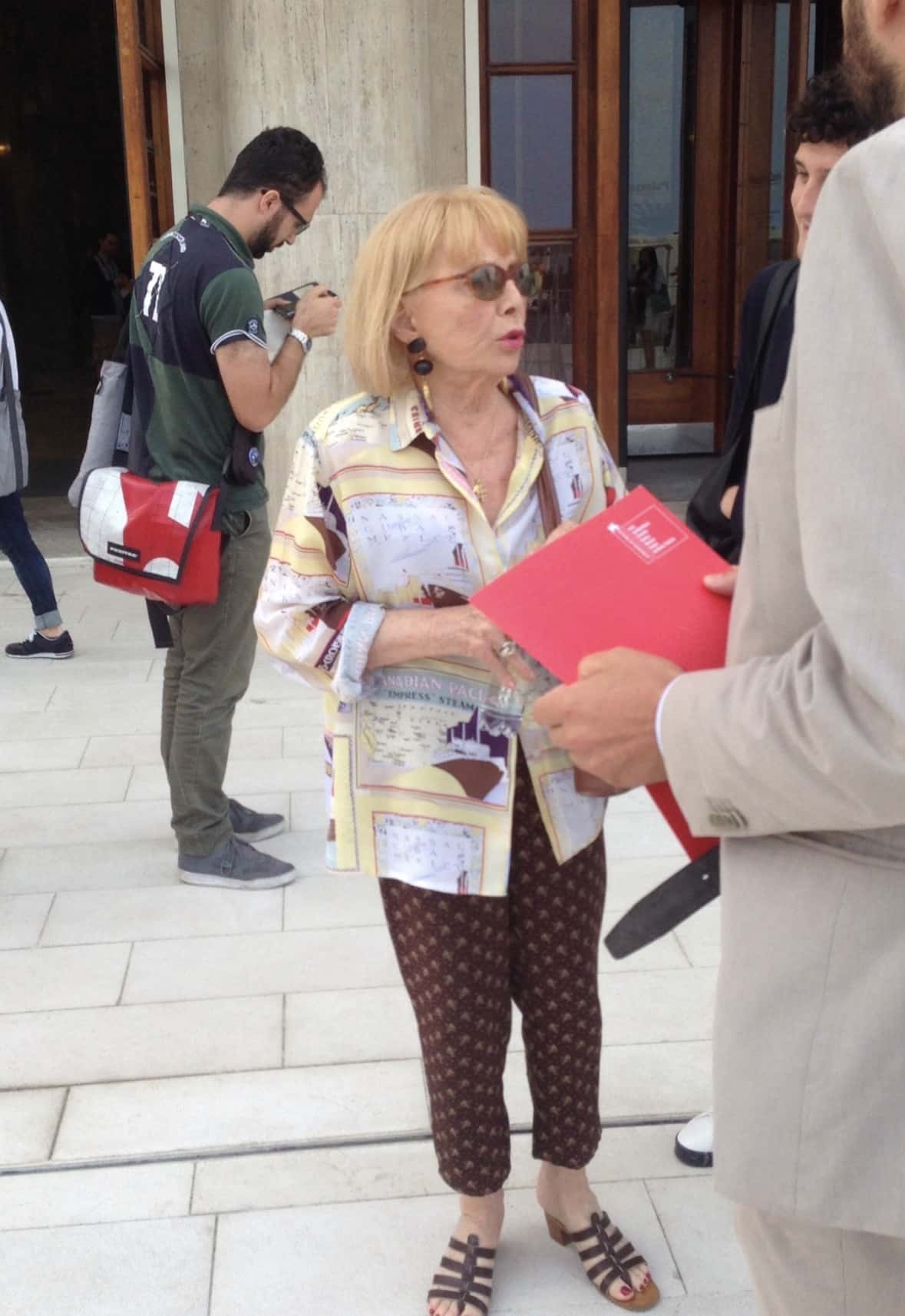
Stephan Audrane at Venice in 2017 | copyright image
This is why calling Chabrol the “French Hitchcock” is useful only up to a point. Hitchcock gave him a language of suspense, but Chabrol used it for his own purposes. His real subject was France: its provincial life, its bourgeoisie, its class divisions, its institutions and its hypocrisies. A murder in a Chabrol film is often less important than the society surrounding the murderer and the victim.
He also had a wicked sense of humour. Chabrol could be ruthless without being solemn. He enjoyed the absurdity of bourgeois rituals—the elaborate meals, the polite conversations, the apparently impeccable marriages—and often allowed comedy to sit beside horror. His villains were not necessarily monsters. Sometimes they were simply people who had reached the point where the rules they lived by could no longer contain their desires.
His productivity was extraordinary. He continued making films through the 1970s and 1980s, often producing work quickly and sometimes moving between serious and commercial projects. There were weaker films, inevitably, but he rarely seemed to lose interest in the possibilities of cinema. He could take a familiar genre and find another way of looking at it.
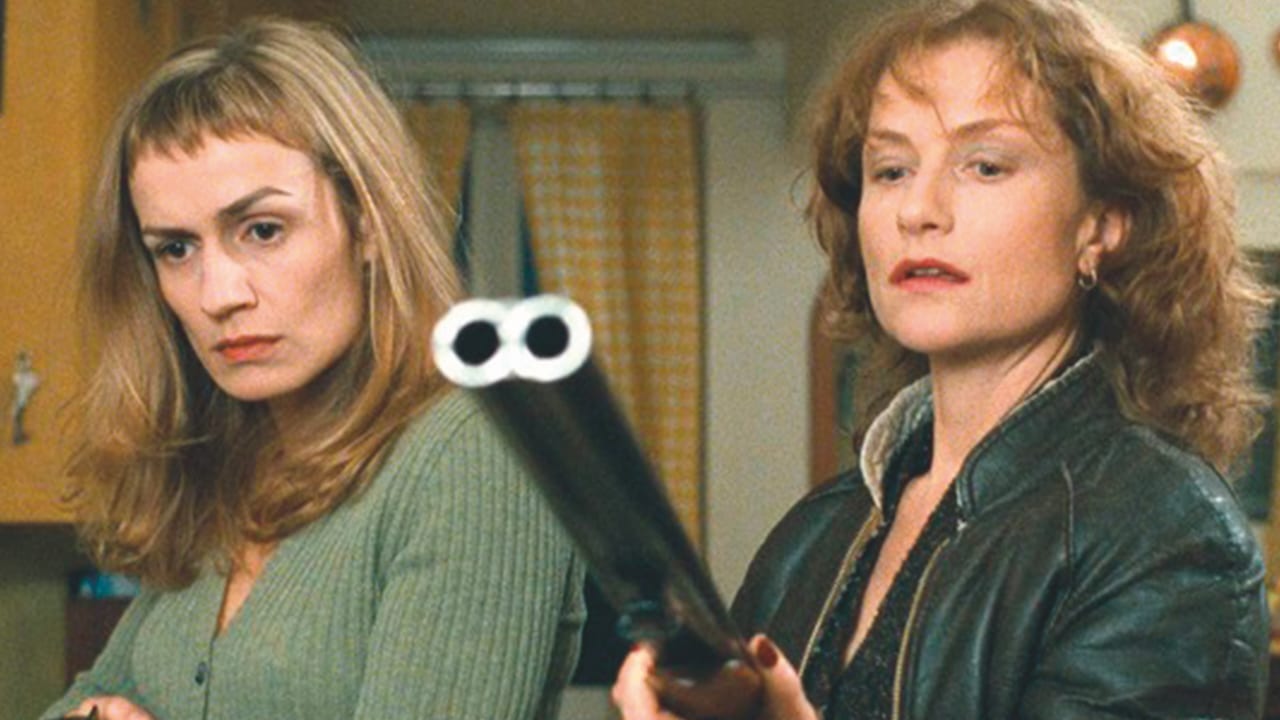
In the late 1980s and 1990s came another remarkable period. Une affaire de femmes, Madame Bovary, Betty and L’Enfer showed a filmmaker who had become increasingly interested in the psychology of women, marriage and social constraint. Then came La Cérémonie in 1995, one of his most powerful films. With Isabelle Huppert and Sandrine Bonnaire, Chabrol turned a story of domestic service and class resentment into something far more disturbing: a portrait of two social worlds that coexist but scarcely understand one another.
His later films retained the same fascination with hidden motives and carefully maintained appearances. By then Chabrol had become an institution, but he never entirely behaved like one. He continued to make films at a remarkable rate, and his appetite for actors, locations and stories remained intact. He could be sardonic, playful, occasionally mischievous, but he was always watching. His last two films were The Girl Cut in Two (2007) starring Ludivine Sagnier and Benoit Magimel, and Bellamy (2009) with Gerard Depardieu in the leading role.
Chabrol died in Paris in 2010, aged eighty. By then he had made more than fifty features, an astonishing body of work that is both uneven and remarkably coherent. His career also offers a different model of what a New Wave director could become. Where Godard continually challenged the language of cinema and Truffaut turned filmmaking into a form of personal expression, Chabrol gradually became a master of classical storytelling. He took the lessons of the New Wave and used them to make films that could look almost conventional while quietly subverting everything they appeared to believe in.
That may be his greatest achievement. Chabrol made the bourgeois thriller into a form of social observation. His camera enters the dining room, sits down at the table and waits. The wine is poured, the conversation begins, everyone behaves correctly—and somewhere underneath the civility is anger, desire, jealousy or fear. Chabrol knew that the most revealing moment is not necessarily when the crime takes place. It is the moment just before, when everyone is still pretending that everything is perfectly normal.
CLAUDE CHABROL: ELEMENTS OF CRIME from 1 September – 6 October 2026 at the BFI Southbank London.