


Dir: Francesco Clerici, Mattia Colombo | Italy 2026
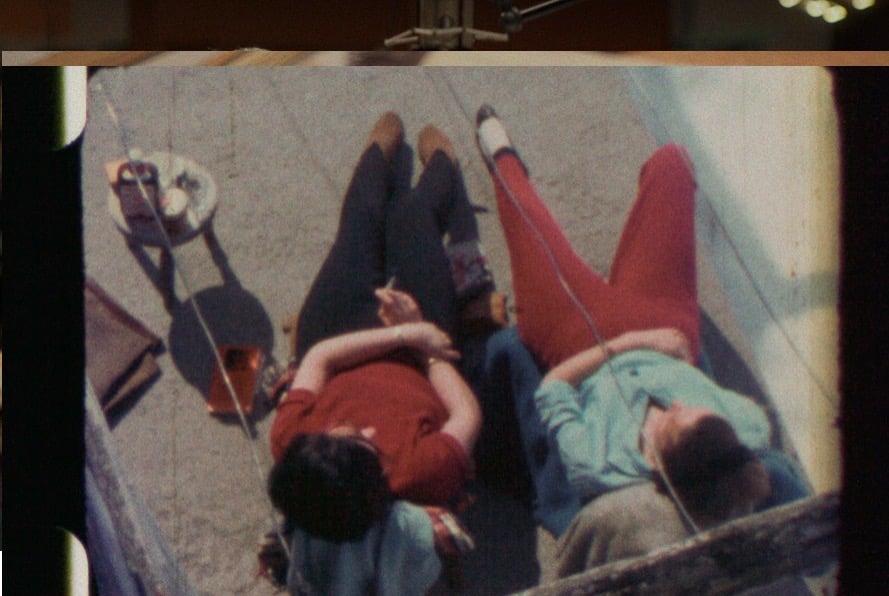
There is an intriguing paradox at the heart of Anatomy of a Portrait: how do you make a life visible when almost nothing survives to show it? Fernanda Wittgens, the pioneering Italian art historian who became the first woman to direct Milan’s Pinacoteca di Brera, has been left with only a handful of photographs, a five-second film fragment and a cache of letters. Rather than treating this scarcity as an obstacle, the directors turn it into the film’s central creative principle. The result is a quietly audacious meditation on memory, representation and cinema’s ability to conjure a person who has been all but erased.
Wittgens’s story would seem to demand a conventional historical documentary. Her achievements alone provide formidable material. She protected Brera’s artworks during the Second World War, helped Jews and political fugitives escape Fascist Italy, was imprisoned for her anti-Fascist activities and, after Liberation, devoted herself to rebuilding the museum and making art accessible beyond an elite audience. Yet Anatomy of a Portrait deliberately resists the reassuring authority of archival abundance. Instead, it asks what happens when history has left us almost nothing.
The film’s most compelling device is to make that absence tangible. Actress Sara Drago enters a recording studio to reconstruct Wittgens’s voice from her letters, while art historian Giovanna Ginex — whose scholarship has helped restore Wittgens to public attention — becomes both guide and interrogator. The process of attempting to give Wittgens a voice becomes the film itself. Drago embodies the absent woman; Ginex questions, contextualises and occasionally unsettles that embodiment. Between them develops a dialogue across time, creating a series of mirrors in which Wittgens is simultaneously reconstructed and recognised as irretrievably unknowable.
It is here that the film becomes more than a biographical portrait. The question is not simply who was Fernanda Wittgens? but who gets to be remembered? Her erasure acquires a particular resonance because she was a woman operating within a cultural and institutional world dominated by men. Her achievements were extraordinary, yet her disappearance from collective memory was almost equally remarkable. The film consequently links historical recovery to a continuing struggle over whose work, whose voice and whose contribution are considered worthy of preservation.
There is also a productive tension between the actress and the historian. Drago’s performance inevitably introduces imagination into the reconstruction, while Ginex represents the evidential discipline of scholarship. Neither can fully recover Wittgens. Their exchange instead exposes the unstable territory between fact and interpretation that all historical cinema inhabits. The film is refreshingly candid about this process: rather than pretending to resurrect its subject objectively, it shows us the machinery of resurrection.
That self-consciousness makes Anatomy of a Portrait particularly interesting as a film about cinema. Its formal conceit recalls the fundamental promise — and impossibility — of the medium: to make the absent present. A photograph freezes a face, a film fragment preserves a gesture, a recorded voice can appear to collapse decades in an instant. Yet here the filmmakers repeatedly remind us that these fragments do not constitute a life. They are traces from which a life must be imagined.
The film’s engagement with art is equally significant. Wittgens understood museums not simply as repositories but as public spaces with a civic and even political function. During Fascism and war, protecting art became inseparable from protecting people; after the war, rebuilding Brera became part of rebuilding a culture. The film therefore presents her commitment to art as something considerably more consequential than connoisseurship. Art becomes an instrument of resistance, memory and social renewal.
If Anatomy of a Portrait has a weakness, it may be that its intellectual apparatus occasionally threatens to become more interesting than its subject. The repeated emphasis on reconstruction, voices and the act of remembering can feel deliberately self-reflexive, and some viewers may long for a more expansive engagement with Wittgens herself. But that tension is also the film’s point: the absence of conventional material forces the filmmakers to confront the limits of biography and the seductive fiction of believing that an historical figure can ever be completely recovered.
What finally emerges is not a definitive portrait but an act of restoration. Wittgens is brought back not through the accumulation of facts but through fragments, questions, performance and imagination. The film understands that historical memory is not a museum object that can simply be taken from storage and displayed intact. It is something continually reconstructed.
In that sense, Anatomy of a Portrait performs a fitting tribute to the woman at its centre. Fernanda Wittgens devoted her life to rescuing works of art from destruction and ensuring that they remained available to future generations. This film performs a similar act of cultural salvage. It cannot give her back exactly as she was. Instead, it makes the compelling case that she should never have been allowed to disappear in the first place.
A thoughtful and formally inventive documentary in which the struggle to reconstruct a forgotten woman becomes an examination of who controls historical memory — and of cinema’s remarkable capacity to make absence feel like presence
VENICE FILM FESTIVAL 2026