

Reviewed by Peter Herbert
Dir: Frank Borzage | Drama 1944
Till We Meet Again has finally been beautifully restored in 4K by Universal and is no longer the underrated jewel of Frank Borzage’s career. It can now be added to the key films in his career, from The River, Seventh Heaven, A Farewell to Arms, No Greater Glory, Three Comrades, I’ve Always Loved You and Moonrise through to China Doll.
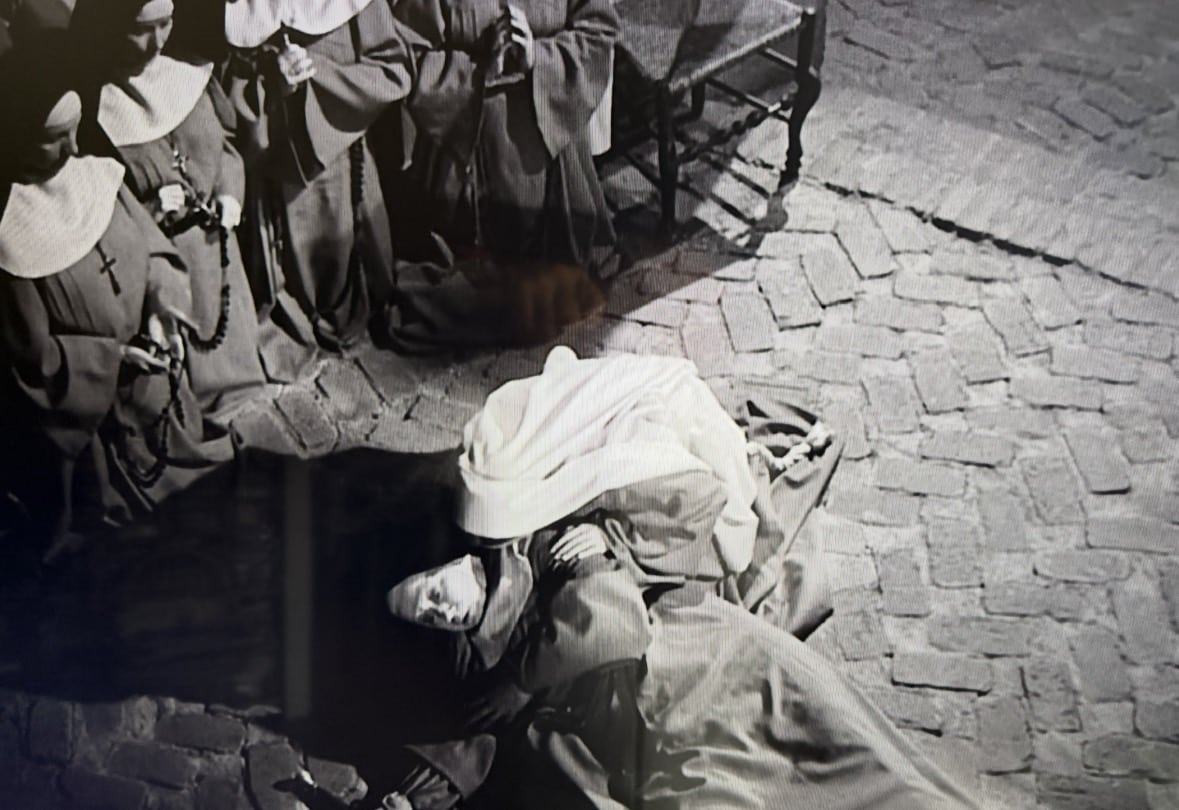
Frank Borzage made Till We Meet Again before the Second World War ended, yet it is far from the simplistic propaganda Hollywood produced at the time and attracted censorship problems with the Hays Code. The film opens with a flock of white birds landing near a group of young, veiled girls gathered around the novice nun Sister Clothilde. They look unhappy and fearful, as if the world beyond the convent is a threat, while Clothilde offers a litany of solace and comfort learned from her own short lifetime within its walls.
The film introduces two major characters. The Mother Superior (Lucille Watson) reflects on seventy-five years of living through three German invasions in Europe, as if resigned to the wearisome questioning of the never-ending pain of warfare. She is a commanding figure and, although secretly aiding the resistance against Nazi invaders, keeps a tight rein on life in the convent, where no men set foot inside the sacred inner circle. The Nazi Major Krupp (Konstantin Shayne) is like the Mother Superior: an authoritarian, worldly figure upholding precise codes of military behaviour. While both convey respect for each other’s resolve, the clash between religious and political ideologies is subtle and clearly handled by Borzage.
It is against this setting that Borzage creates another discourse at the heart of the film. Clothilde (Barbara Britten) feels she has betrayed her Mother Superior and decides to leave the convent and escort John (Ray Milland), a stranded American Air Force pilot, out of the country. Both begin a perilous journey through hostile territory. Filmed by the German impressionist cameraman Theodor Sparkuhl on studio sets, in huts by day and woodlands by night, the two behave as if they were a married couple. Clothilde will see her face reflected in a mirror for the first time, and he will discover that she is a nun from the convent where he was hiding. Both draw closer together the further they drift from familiar surroundings.
In a sequence of sensuous eroticism, he holds her hands as a lover would while she shields his bleeding wound by laying her head on his chest, away from the eyes of Nazi soldiers. As she lifts her head, there are traces of blood on her face. This scene is one of Borzage’s purest realisations of adrift souls transcended by love. It is evidence that Frank Borzage, alongside Robert Bresson, is one of the masters of filmmaking capable of creating exceptional spiritual power.
NOW SCREENING IN 4K at London’s BFI SOUTHBANK LONDON