


Dir: Jean-Pierre Jeunet | French Drama, 2026
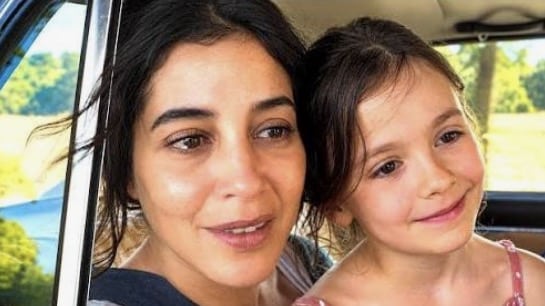
Jean-Pierre Jeunet’s adaptation of Valérie Perrin’s bestselling novel is, visually, an absolute delight. The film positively glows on screen, with Jeunet’s familiar attention to colour, composition and eccentric detail giving the world of Violette a richly textured, almost magical quality. There is an irresistible visual warmth to the film, even when its subject matter becomes increasingly dark.
The performances are another considerable strength. Leïla Bekhti brings considerable emotional depth to Violette, but it is the contrast between her two principal male counterparts that gives the story much of its dramatic charge. Melvil Poupaud is excellent as Julien, the gentle, reflective investigator whose curiosity gradually draws him into Violette’s complicated past. Against him, Matthias Schoenaerts provides a strikingly different presence as Philippe, her husband: muscular, brooding and emotionally intense. The contrast between Poupaud’s understated sensitivity and Schoenaerts’ barely contained volatility is particularly effective.
Where Violette becomes less convincing, however, is in its narrative construction. The novel is built around a series of revelations, memories and shifting perspectives, gradually reconstructing a past that is considerably more complicated than it first appears. Jeunet retains this fractured structure, moving repeatedly between present and past, but the transitions become increasingly disorientating. As the story gathers complexity, the flashbacks begin to collide rather than illuminate, leaving the viewer struggling to establish precisely where, and sometimes when, they are in the unfolding drama.
This is perhaps the fundamental difficulty in adapting Perrin’s novel. In book form we would have time to absorb each revelation and piece together the intricate puzzle. On screen, the constant shifts in chronology demand a greater degree of narrative clarity. At 2 hours and 12 minutes, the film has considerable scope, but its increasingly convoluted structure occasionally works against its emotional impact leaving us totally confused as it moves on at the pace of a high speed TGV.
Nevertheless, there is much to admire in the extraordinary family saga with its unexpected twists and turns (you certainly want to punch Violette’s ghastly mother in law for continuing to refer to her little granddaughter as Catherine rather than Lionine).
Jeunet, best known for A Very Long Engagement – another sprawling epic – offers up a film of extraordinary visual appeal, and the performances give it a genuine emotional life and the have real depth and character. You certainly comes away admiring its beauty and its actors, while wishing that its storytelling had been rather less bewildering.
IN UK CINEMAS