

Directors: Nathan Fielder, Lance Oppenheim |Doc USA | 2026 | 174’
Thirty-four days before beginning an 11-year prison sentence for fraud, disgraced Theranos founder Elizabeth Holmes invites comedian and filmmaker Nathan Fielder and his camera crew into her private world. Alongside her partner Billy Evans, she appears willing to offer unprecedented access to her domestic life, ostensibly providing an opportunity to set the record straight and challenge the public perception of her as Silicon Valley’s most notorious fraudster.
But what begins as an intimate observational portrait gradually develops into something altogether stranger. As Fielder probes Holmes’ insistence on her innocence, the boundaries between truth, manipulation and performance become increasingly difficult to distinguish. And when the story takes an unexpected turn, the documentary itself becomes part of the mystery.
What transpires is an extraordinary exercise in psychological gamesmanship, You Can See Everything is as much about the art of deception as the enigmatic woman at its centre. Directors Nathan Fielder and Lance Oppenheim have fashioned a documentary that repeatedly confounds expectations, transforming an apparently straightforward account of Elizabeth Holmes’ final days of freedom into a deliciously uncomfortable examination of truth, self-delusion and the unreliability of appearances.
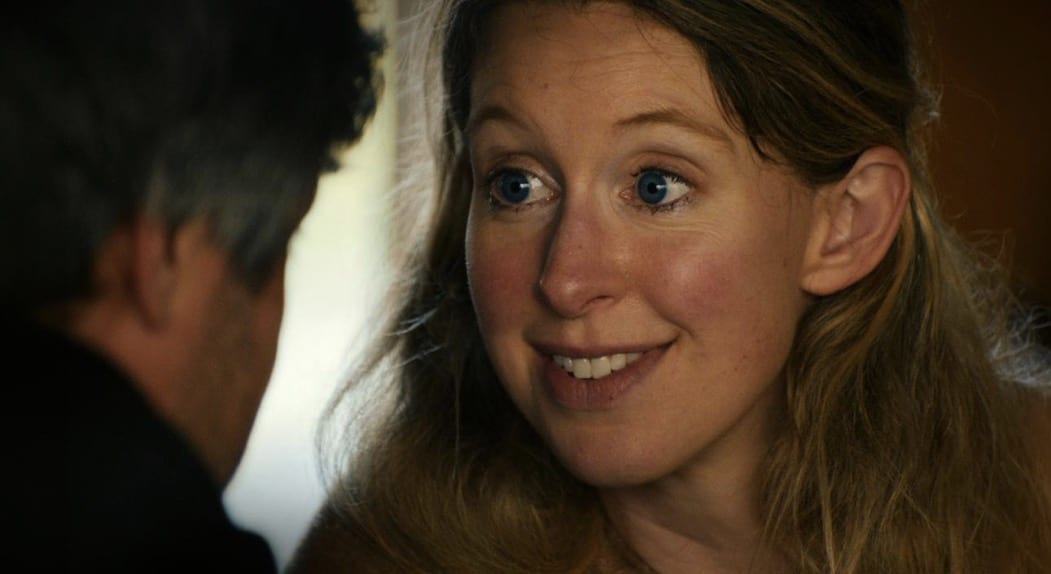
Holmes is a mesmerising subject. With her wide-eyed gaze, carefully measured delivery and seemingly unshakeable conviction that she has been misunderstood, she remains an extraordinarily slippery presence. Whether she genuinely believes her own version of events or is simply an accomplished performer is the question that hangs over almost every encounter. Her partner Billy Evans is equally intriguing, his occasionally peculiar behaviour introducing another layer of uncertainty into an already disconcerting domestic picture.
Fielder, meanwhile, proves a wonderfully effective foil. His trademark deadpan manner, awkward silences and apparently innocuous questions conceal a persistent investigative curiosity. Watching him attempt to penetrate Holmes’ impenetrable composure is frequently funny, but also increasingly tense. The dynamic between interviewer and subject becomes a fascinating battle of wills, with neither entirely in control.
Visually, the film is superbly judged. Oppenheim creates an atmosphere of chilly domestic claustrophobia, contrasting beautifully composed, almost clinical interiors with the restless expanse of the ocean outside the couple’s beachside home. Uncomfortably tight close-ups, lingering silences and an ominous musical score lend even the most mundane conversations an air of impending menace. The camera seems to be searching for something that its subjects are determined not to reveal.
What makes the film standout of the ordinary is its willingness to keep changing direction. Without giving away its considerable surprises, the narrative gradually expands beyond Holmes herself, questioning the very nature of documentary filmmaking and whether anyone can ever be accurately represented on camera.
At 174 minutes, it is certainly a substantial undertaking but somehow you keep watching, and the combination of dark humour, psychological intrigue and extraordinary revelations keeps it remarkably gripping. There are moments of genuine unease, punctuated by unexpected laughs, and an increasingly unsettling sense that nobody is quite what they seem.
So not exactly scary, but frequently chilling and wonderfully unpredictable. A documentary with the suspense of a thriller and the capacity to leave you debating what you have actually witnessed long after the credits roll.
IN UK CINEMAS FROM FRIDAY