


Dir: Fatih Akin | German Wartime Drama 92’
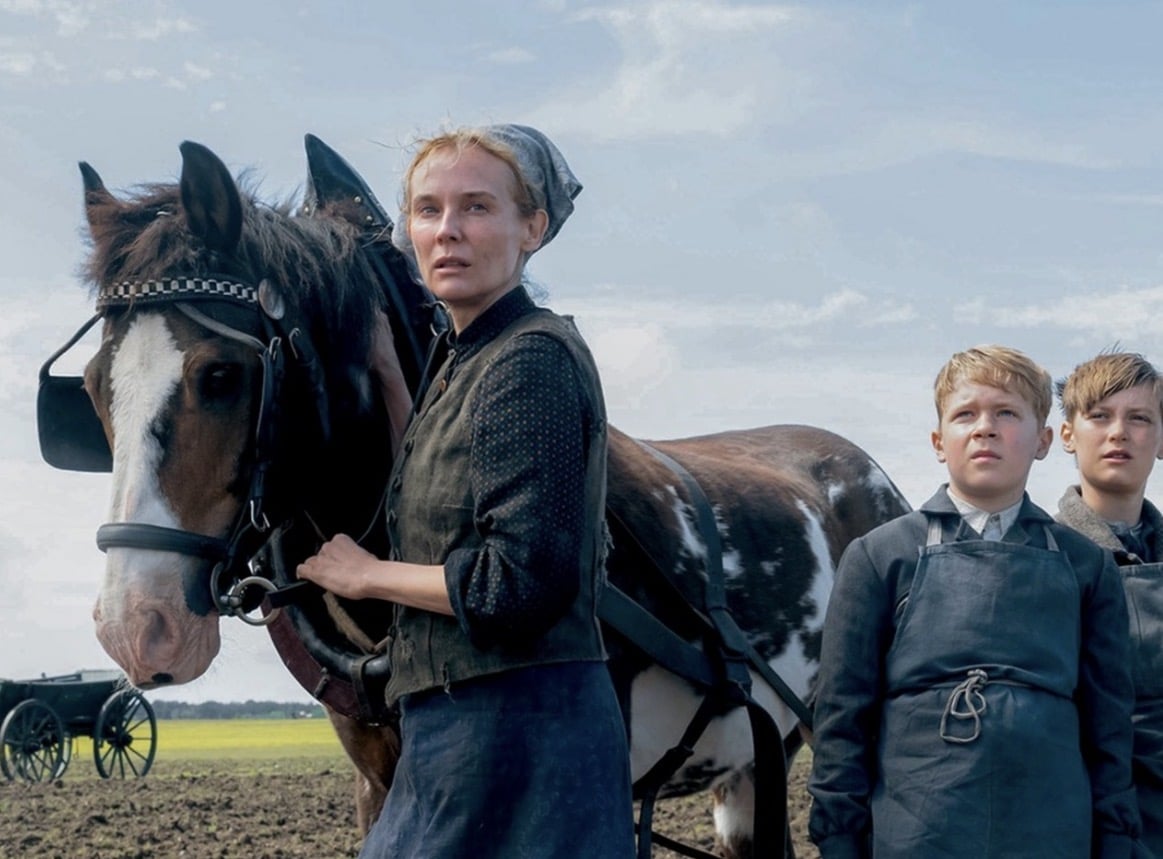
There is a striking visual austerity to Amrum, Fatih Akin’s, latest film, an evocative period drama set on a remote North Sea island in the final days of the Second World War. Its windswept landscapes, vast stretches of sand, restless waters and low-slung houses create a beautifully realised world in which nature is both a constant presence and an unforgiving force. Cinematographer Karl Walter Lindenlaub captures the elemental beauty of the island with an almost painterly eye, offering a sharp contrast to the ugliness of the human behaviour unfolding within it.
Based on the childhood memories of the late German filmmaker Hark Bohm, whose screenplay Akin brings to the screen, the story follows 12-year-old Nanning (a sensitive Jasper Billerbeck), whose family has fled the Allied bombing of Hamburg. With his father away fighting for the Reich and his mother Hille (Laura Tonke) a fervent Nazi believer, Nanning is desperate to please his mother and finds himself navigating an increasingly confusing world as Germany faces defeat. When his mother, devastated by Hitler’s death and the collapse of everything she believes in, takes to her bed and refuses to eat, the boy embarks on an increasingly difficult quest to find her white bread, butter and honey.
It is an ostensibly simple narrative, but one that opens onto a more troubling portrait of a society steeped in ideological prejudice, suspicion and cruelty. The islanders are hardly a welcoming community, their attitudes towards outsiders often marked by an almost casual hostility. Children can be as merciless as adults, while the grown-ups seem largely incapable of extending much compassion beyond their immediate concerns. Even acts of kindness are compromised by an atmosphere of mistrust and deeply entrenched loyalties.
This is where the film’s emotional engagement becomes more difficult. Although Nanning’s innocence and determination invite our sympathy, the people surrounding him are a decidedly unappealing bunch. Hille, in particular, is a chilling embodiment of blind ideological devotion, while the wider community offers little warmth to counterbalance the harshness of its attitudes. Their circumstances may explain some of their behaviour, but they do not necessarily make these characters any easier to care about. The result is a film that observes human frailty and moral blindness with considerable clarity, yet struggles to generate the emotional connection its story seems to promise.
Akin is at his most assured when allowing the landscape to speak for itself. The sea, tidal flats and immense open skies provide a visual poetry that the human drama rarely matches. There are moments of startling physical brutality, too, as Nanning encounters the harsher realities of survival, from the killing of animals to the grim remnants of war washed up on the shoreline. The juxtaposition of such violence with the island’s extraordinary natural beauty is among the film’s most effective achievements.
Ultimately, Amrum is a carefully composed and often compelling portrait of childhood innocence confronting the moral debris of a defeated Germany. Its strongest moments lie in its images rather than its characterisations, and while Billerbeck brings an appealing vulnerability to Nanning, the surrounding world remains stubbornly inhospitable. Akin has fashioned an impressive visual elegy to a particular moment in German history, but its emotional temperature remains decidedly cool.
A CONTENDER FOR THE AWARD SEASON| BERLINALE PREMIERE