

Dir: Visar Morina | Drama 2026 130’
Shame and Money is a film about the humiliation of poverty, but also about the stubborn human need to preserve dignity when the means of doing so have all but disappeared.
Set in Kosovo, it follows Shaban, a farmer whose life is overturned by a family rupture, forcing him, his wife Hatixhe, their three children and his mother to abandon the countryside and seek a future in Pristina. What begins as a practical relocation soon becomes a crisis of identity, as the skills and values that once sustained Shaban prove increasingly inadequate to the demands of urban life.
Morina is fascinated by characters who find themselves estranged from the world they thought they understood. His filmmaking is controlled, observational and deliberately unsentimental. Rather than manufacture dramatic confrontations, he allows tension to accumulate through awkward encounters, financial calculations and the everyday indignities of trying to make ends meet. The camera observes rather than judges, giving the characters room to reveal themselves through gestures, silences and evasions. The result is a social realism that never feels entirely documentary: beneath the ordinary surfaces lies a growing sense of entrapment.
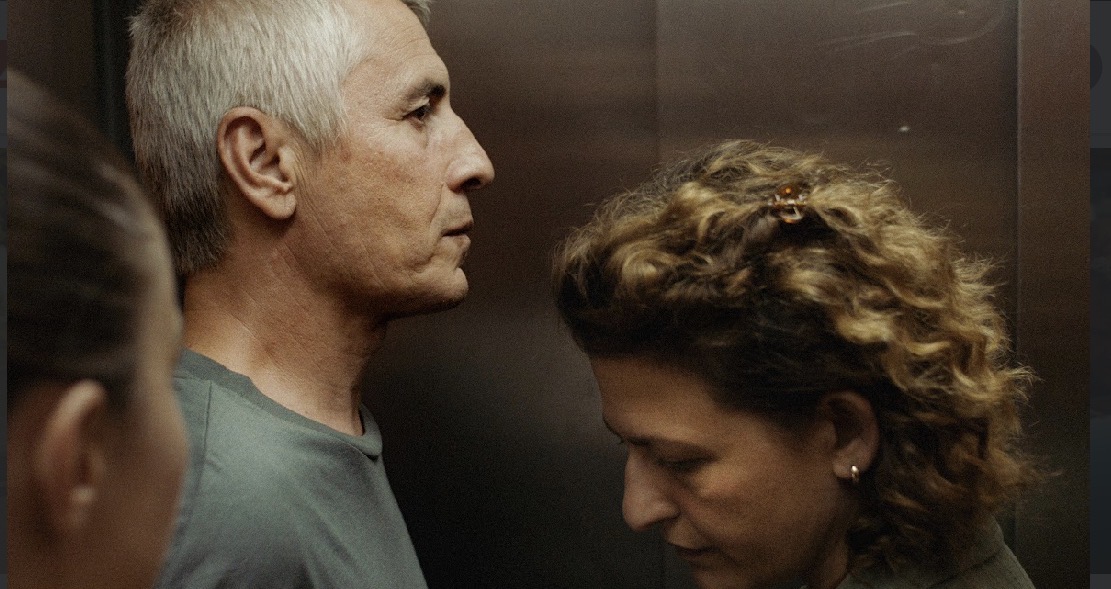
Astrit Kabashi gives Shaban a physical solidity that makes his vulnerability all the more affecting. He is a man accustomed to work, responsibility and a clearly defined place within the family. In the city, however, his capacity to provide is no longer assured, and his masculine pride becomes both his defence and his undoing. The title suggests a moral predicament as much as an economic one. Shame is not simply the consequence of having too little money; it arises from the fear of being judged, of becoming dependent, of failing those who have every reason to rely on you.
Flonja Kodheli’s Hatixhe provides an important counterpoint. Her pragmatism and emotional endurance suggest a different way of confronting adversity, while the relationship between husband and wife supplies the film with much of its emotional substance. Their predicament is not reduced to a familiar battle of the sexes. Rather, Morina explores how financial insecurity can distort even the most intimate relationships, making affection difficult to express when survival takes precedence over everything else.
The contrast between rural and urban life is particularly well crafted. The countryside may offer familiarity and a sense of belonging, but it cannot protect the family from its troubles; Pristina promises opportunity while exposing them to new forms of precariousness. Morina finds drama in this gap between expectation and reality, refusing the consolations of an easy solution.
At 130 minutes, Shame and Money is a measured, occasionally demanding experience, although for some audiences it might overstay its welcome. The accumulation of setbacks can feel repetitive, and viewers seeking a more conventional narrative drive may find its rhythms austere. Yet the very refusal to sensationalise poverty gives the film its force. Morina understands that a family’s slow erosion of confidence can be every bit as compelling as a spectacular catastrophe.
The film works best as an intimate study of character rather than a tightly plotted piece of entertainment. Its humour is muted, its pleasures modest, but there is considerable warmth beneath the severity. By the end, the struggle to maintain dignity becomes a universal predicament, extending well beyond Kosovo. This is an unshowy, intelligent film whose emotional impact derives from its restraint.
EUROPEAN FILM AWARDS CONTENDER | Karlovy Vary Film Festival World Premiere