
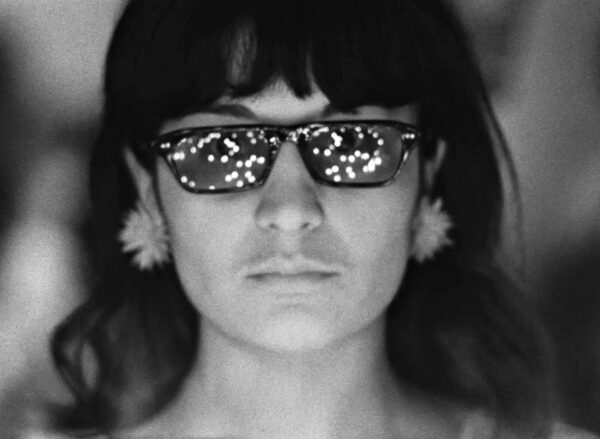
Few filmmakers have reinvented the language of cinema as radically as Artavazd Pelechian.
Artavazd Pelechian (February 22, 1938-) is a renowned Armenian-Soviet filmmaker and theorist famous for creating the “distance montage” editing technique, which links and echoes images across long stretches of a film to create a rhythmic, poetic cosmic unity
Working largely beyond conventional narrative, Pelechian transforms documentary images into visual symphonies—rhythmic, elemental and charged with extraordinary emotional power. His films move from the endurance of a people to the conquest of space, from the rhythms of rural life to the violence of natural catastrophe. Crowds surge, animals struggle, bodies labour and aircraft rise into the sky, while music and montage turn these concrete images into something almost mythic. Beneath them all runs a single, urgent question: what does it mean to be human in a world shaped by forces far greater than ourselves?
Born in 1938 in Leninakan, now Gyumri, in Soviet Armenia (now the second-largest city in Armenia), Pelechian grew up within a culture marked by memory, displacement and collective experience. Armenia’s history, its landscapes and its strong traditions of communal life would later become central to his cinema. Yet his films are never simply national portraits. They use Armenian experience as a starting point for exploring universal questions about belonging, survival, labour, nature and human ambition.
Pelechian did not begin as a conventional filmmaker. Before entering the world of cinema, he studied at the Armenian Agricultural Institute in Yerevan. His early interest in film developed through a fascination with images, movement and the expressive possibilities of editing. He eventually moved to Moscow and entered the prestigious All-Union State Institute of Cinematography, commonly known as VGIK, where he studied film direction. At VGIK, he encountered the great tradition of Soviet montage and absorbed the influence of filmmakers such as Sergei Eisenstein and Dziga Vertov.
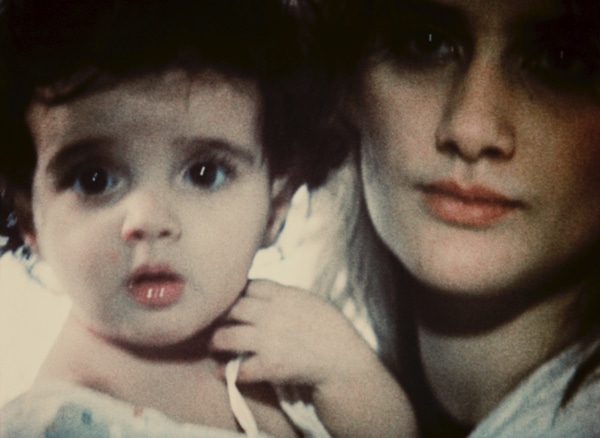
Kyanq (1993) Copyright Viennale Film Festival
Their work convinced him that editing could do far more than connect one shot to the next. Montage could create ideas, emotions and associations that did not exist in any individual image. Pelechian took this principle in a new direction. Instead of relying mainly on direct visual collisions, he allowed images to recur across a film, separated by time and transformed by their changing context. A face, a crowd, a mountain or a moving body might return later with an entirely different emotional charge.
He called this method “distance montage,” a form of editing in which images communicate across gaps rather than only through immediate juxtaposition. The effect is less like a conventional argument than a musical composition. Themes appear, disappear and return. Images echo one another. Sound and rhythm create connections that the viewer may feel before being able to explain them.
Pelechian’s early films established this distinctive approach. In The Beginning (1967), he explored the revolutionary promise and upheavals of the twentieth century through archival and documentary images. The film does not present history as a straightforward sequence of events. Instead, it creates a sense of collective movement, violence and transformation, suggesting how political change can become both an ideal and a destructive force.
Menq, We, Artavazd Pelechian, Sowjetunion 1969, V’26 Historiografie Copyright Viennale Film Festival
A breakthrough came with We (1969), one of the defining films of Armenian cinema. Made to mark the fiftieth anniversary of the Sovietisation of Armenia, it is not a conventional historical documentary. Pelechian combines archival material with images of crowds, faces, ceremonies, labour and public life to evoke the experience of a people rather than explain its history. The title is crucial: the film is concerned with collective identity, with the emotional and historical meaning of belonging to a community.
In We, Armenia appears not as a fixed political entity but as a living memory carried through bodies, gestures and repeated experiences. The film’s power comes from its accumulation of images. No single scene explains the whole, but together they create a portrait of endurance, grief and solidarity. It is both deeply Armenian and broadly human.
Pelechian continued to explore the relationship between people and their environment in The Inhabitants (1970). This short film turns its attention to animals and the natural world. Its creatures are not presented simply as objects of scientific observation. Their movements, vulnerability and instinctive behaviour suggest a world governed by forces older and more powerful than human civilisation.
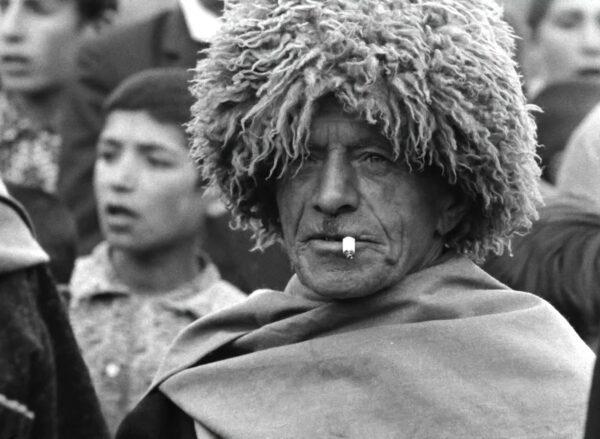
Tarva yeghanaknery, The Seasons, Artavazd Pelechian, Sowjetunion 1975, V’26 Historiografie copyright Viennale Film Festival
This groundbreaking film also complicates the boundary between human and animal life. Pelechian’s subjects are connected by movement, fear, struggle and survival. The natural world is not a passive background but an active presence, one that places limits on human control and challenges the assumption that people stand outside nature.
Pelechian’s most widely celebrated film, The Seasons (1975), brings these concerns into vivid physical form. Set in the Armenian countryside, it follows shepherds, farmers and animals through the recurring cycles of rural life. Men carry enormous bundles of hay down steep slopes. Sheep and goats are driven across difficult terrain. Bodies slip, stumble, strain and recover. Rivers, mountains and weather constantly test the people who depend on them.
The film is undoubtedly beautiful, but its beauty is never merely picturesque. Rural life appears as a continuous negotiation with gravity, climate and exhaustion. Human beings are resourceful and determined, yet they remain vulnerable to the landscape around them. Pelechian finds humour in physical struggle, exhilaration in collective labour and grandeur in ordinary survival.
Unlike many of his earlier works, The Seasons relies primarily on newly filmed material rather than archival footage. Its images were shot with cinematographer Mikhail Vartanov, whose camera captures both the scale of the Armenian landscape and the intimate details of bodies at work. The result is a film that feels immediate and tactile. We can almost feel the weight of the hay, the force of the water and the instability of the mountain paths.
With Our Century (1982), Pelechian shifted from rural labour to humanity’s dream of flight. The film assembles archival images of aircraft, parachutists, astronauts and cosmonauts into a meditation on technological ambition. Human beings rise from the ground, defy gravity and attempt to extend their reach into space.
Our Century is not just a simple celebration of progress. The exhilaration of flight is inseparable from danger. Every ascent contains the possibility of collapse; every technological triumph reveals the risks involved in exceeding familiar limits. Pelechian presents the twentieth century as an age of extraordinary courage and ingenuity, but also of instability and hubris.
The film’s title gives its ambition a historical scale. Our Century is not only about aviation or space exploration. It is about the emotional character of an era that believed it could conquer distance, gravity and perhaps nature itself. The images are thrilling because they express a genuine human desire to transcend limitation. They are unsettling because they also reveal how fragile that desire can be.
Pelechian’s later films became shorter and more concentrated. Life (1993), lasting only a few minutes, focuses on childbirth and the arrival of a new human being. After the vast crowds and historical movements of his earlier work, the film turns towards an intimate and universal event. Birth becomes both a physical reality and a symbol of renewal.
End (1992–93) is similarly concise but more contemplative. Its images of travel, movement and departure create a mood of memory and uncertainty. The title suggests finality, yet Pelechian’s cinema rarely treats endings as absolute. In his work, beginnings and endings belong to larger cycles. Movement continues beyond the frame, and the past remains active in the present.
After a long period away from filmmaking, Pelechian returned with Nature (2019–20). The film confronts the destructive power of the natural world through images of floods, earthquakes and other catastrophes. It forms a striking counterpart to The Seasons. In the earlier film, people struggle within nature’s rhythms; in Nature, those forces become overwhelming, threatening the structures and systems human beings have built.
The film speaks directly to contemporary anxieties about climate change and environmental collapse, but its concerns are broader than current events. Pelechian has always been interested in the sublime: the mixture of awe and terror produced when human beings encounter forces beyond their control. Nature makes that encounter almost unbearable. The world is magnificent, but it is also indifferent to human plans.
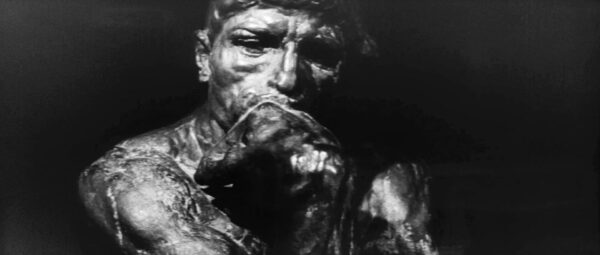
Zemlya lyudey, Land of the People, Artavazd Pelechian, Sowjetunion 1966, V’26 Historiografie | copyright Viennale Film Festival 2026
Across these films, Pelechian developed a cinema that depends less on explanation than on rhythm, repetition and emotional association. He rarely uses conventional narration, dialogue or identifiable protagonists. Instead, he builds meaning through the relationship between images. A crowd may suggest both solidarity and danger. A mountain may represent endurance, isolation or threat. A rising aircraft may embody freedom, ambition or the possibility of disaster.
Music is central to this process. Pelechian’s soundtracks do not simply illustrate the images. They can intensify them, contradict them or create a sense of distance. A sequence of physical struggle may become comic, tragic or heroic depending on its rhythm and sound. The soundtrack helps transform documentary footage into something closer to poetry or music.
The Armenian director’s films are therefore difficult to summarise because their meanings are not contained in a single message. They are experienced through accumulation. An image seen at the beginning may return near the end, altered by everything that has happened in between. The viewer is not given a clear argument but is invited to sense a network of relationships.
Pelechian’s place in film history is closely connected to the Soviet montage tradition, but he cannot be reduced to it. Eisenstein used the collision of shots to generate intellectual and emotional effects. Vertov explored the camera’s ability to reveal hidden structures in everyday life. Pelechian inherited their belief in editing as the central creative act of cinema, then developed a more distant and associative form of montage.
His influence spread gradually beyond the Soviet Union. The French filmmaker Jean-Luc Godard was among those who recognised the radical importance of his work, helping introduce Pelechian to wider international audiences. His films later became important reference points for experimental documentary, artists’ cinema and filmmakers interested in non-narrative forms.
Pelechian’s background is essential to understanding his work, but his films should not be treated as simple autobiographical statements. He emerged from Soviet Armenia, studied within the Soviet film system and drew on the traditions of Soviet montage. At the same time, he created a highly personal language that moved beyond national and ideological categories.
His cinema is rooted in specific places and histories, yet it continually expands towards universal questions. What holds a community together? How does a people survive historical violence? What happens when human beings try to overcome nature? Where does progress lead when it is driven by both courage and fear? What remains when individual lives become part of a crowd, a nation or a species?
Pelechian’s achievement lies in making these questions felt rather than simply stated. His films ask us to watch differently: to notice repetition, to listen to rhythm and to accept that meaning may emerge slowly, through echoes and contrasts. They remind us that documentary cinema does not have to explain the world in order to reveal it.
Few filmmakers have made images feel so physical and so mysterious at the same time. In Pelechian’s hands, a crowd becomes a historical force, a landscape becomes a living presence and a simple act of labour becomes a meditation on survival. His films suggest that cinema’s deepest possibilities may lie not in telling us what to think, but in showing us relationships that words alone cannot express.
VIENNALE FILM FESTIVAL 2026 | Historiographie 2026