

Dir: Viesturs Kairišs | Drama 2026
In Ulya, Latvian director transforms the story of an extraordinary basketball player into a poetic and melancholy meditation on difference, identity and the price of exceptional talent.
Set in Soviet Latvia in 1964, this elegantly crafted arthouse drama follows Uļjana Semjonova, known as Ulya, a teenage girl whose extraordinary height makes her an outsider long before she discovers that it might also be the key to a remarkable future. Although the narrative follows the familiar trajectory of a sporting biopic, Kairišs is less interested in the mechanics of sporting triumph than in the personal cost of becoming someone whom the world wants to claim as its own.
Ulya grows up on an isolated farm in a community of Old Believers, where tradition offers a sense of belonging but leaves little room for anyone who deviates from accepted norms. Approaching two metres tall, she is conspicuous in a world that values conformity, and her parents worry about how she will find her place in it. When her potential attracts the attention of basketball coaches in Riga, she is offered a route out of her rural isolation. Yet the apparent solution to her difficulties contains its own contradiction: the very characteristic that makes her an object of curiosity at home becomes the source of her value to the sporting establishment. In one environment she is an awkward outsider; in the other, she risks being reduced to a physical asset. The film’s most compelling insight is that recognition is not necessarily the same as understanding.
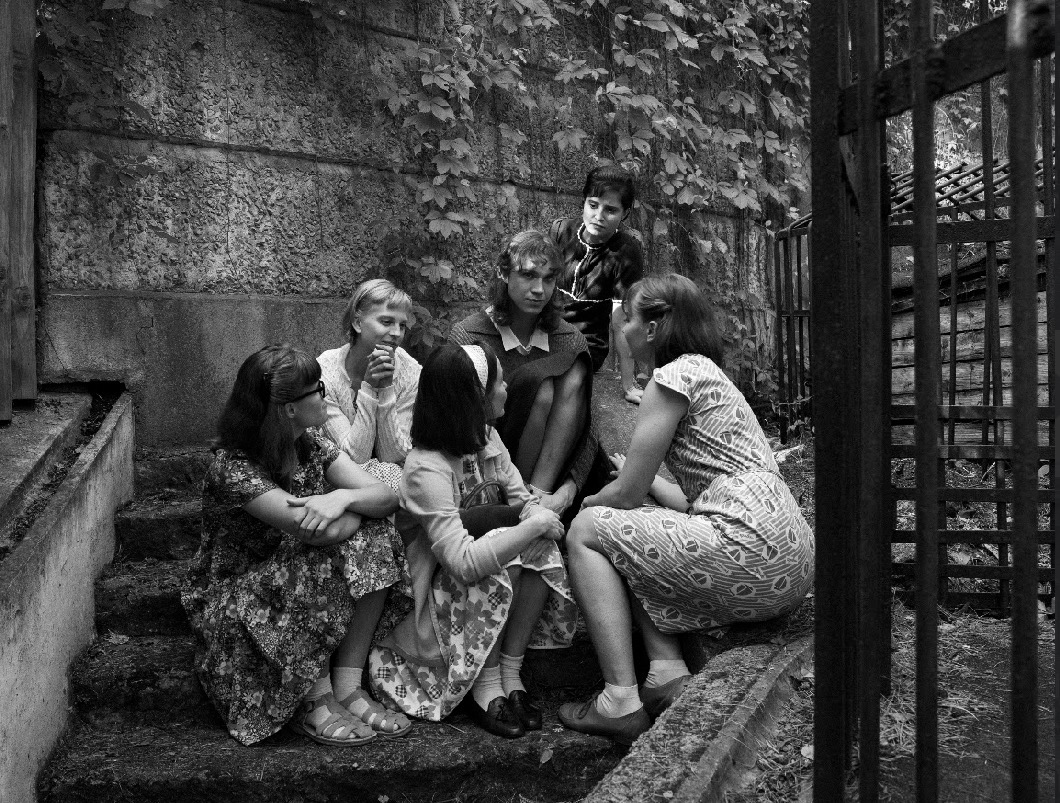
Kairišs gives this predicament a striking visual form. Shot in grainy black and white by cinematographer Wojciech Staroń, the film presents the countryside as a world of stark beauty, austere interiors and wintry expanses. Ulya’s imposing figure seems at once part of this landscape and strangely alien to it. As the story moves towards the more institutional surroundings of Riga, the visual contrast reinforces her transition from a protected but restrictive community into a society with ambitions for her that she does not yet know whether she shares. The monochrome photography lends the film a certain timelessness, while its measured compositions and restrained camera work keep the emphasis on Ulya’s isolation rather than on the spectacle of her unusual physique.
The basketball sequences follow the same approach. Rather than building towards the familiar emotional crescendo of a triumphant sports drama, Kairišs concentrates on Ulya’s gradual discovery of what her body can do. The court offers a new kind of confidence, but it also introduces another system of expectations. Sporting achievement may give her a purpose, yet it cannot answer the more intimate question of how she wishes to live. This is where the film moves beyond the conventions of the biopic, suggesting that the making of a champion and the making of an independent person are not necessarily the same process.
Kārlis Arnolds Avots brings vulnerability and reserve to the central role, conveying the awkwardness of a young person who has become accustomed to being looked at without necessarily being understood. The performance is deliberately understated, although the unconventional casting may prove distracting for some viewers. Chulpan Khamatova provides much of the film’s emotional grounding as Ulya’s mother, balancing affection with anxiety about the life her daughter might face beyond the family. Aleksas Kazanavičius similarly contributes to the atmosphere of parental concern. Together, they suggest a family caught between the desire to protect Ulya and the recognition that keeping her close may ultimately limit her possibilities.
The film’s historical setting gives this personal struggle an additional resonance. Soviet institutions are ready to recognise and cultivate extraordinary ability, but their interest in the individual is inseparable from their interest in what she can achieve. Ulya’s experience therefore speaks beyond sport or the particular circumstances of 1960s Latvia. It touches on the universal frustration of being defined by a single characteristic, however remarkable, and the difficulty of claiming an identity that extends beyond other people’s expectations. There is something quietly affecting in the idea that a person celebrated for being exceptional might still long for the freedom to be ordinary.
Nevertheless, Ulya is more successful as a thoughtful visual study than as an emotionally involving drama. Its austerity is both its strength and its limitation. The black-and-white images are often beautiful, but the persistent solemnity leaves little room for humour, exuberance or the spontaneous pleasures that might have made Ulya’s discovery of basketball more exhilarating. The supporting characters can also feel more like representatives of the forces shaping her life than fully realised individuals. One senses a richer, more complex story beneath the film’s controlled surface, particularly in the tension between personal ambition and institutional expectation, that is not always fully explored.
Even so, Kairišs offers a worthwhile alternative to the conventional sporting narrative, in which talent is discovered, obstacles are overcome and victory provides a satisfying resolution. Here, achievement is more ambiguous, and the emotional question remains open. Ulya may find a place in the world through basketball, but whether that place allows her to be herself is another matter entirely.
The result is a film that is more resonant than entertaining in the conventional sense: visually assured, thoughtful and occasionally moving, but held back by its emotional reserve. Its lasting interest lies in the distinction it draws between being admired and being accepted. Ulya’s extraordinary height makes her impossible to overlook, yet the film asks whether anyone can truly see the person behind it. That question gives this restrained portrait of a young athlete a significance well beyond the sporting arena
Eligible for Best International Feature at the Oscars entry for Latvia | World Premiere at Cannes in Un Certain Regard sidebar