


Wri/Dir: Mariano Llinas | Doc 320’
Jorge Luis Borges was never an easy man to pin down — so perhaps it was inevitable that a film about him would become a labyrinth of its own. The Life of Borges explores the Argentine writer whose stories transformed time, identity, infinity and reality into dazzling literary puzzles, while also examining the eccentric, cultivated and surprisingly human figure behind the legend.
Harto de Borges / The Life of Borges is unusually long because it attempts to encompass Borges’s entire intellectual and personal life rather than deliver a streamlined biography. Its scope is both its greatest strength and its central weakness. Literature, philosophy, politics, blindness, Buenos Aires, love and literary imagination all receive attention, but the film’s determination to include everything often dilutes its focus. It is rich in material, yet insufficiently selective.
The five and a half hour story moves through Borges’s Buenos Aires childhood, literary beginnings and growing international reputation, his fascination with books and language, and the gradual blindness that increasingly turned the physical world into something he experienced through memory and imagination. The film also considers his friendships, romances, political controversies and encounters, presenting the forces that shaped one of the 20th century’s most singular literary figures.
At its centre is Borges himself: scholarly, ironic, witty and deliberately enigmatic. His blindness gives the later sections an almost mythical quality, but the film is strongest when it punctures that mythology and reveals the mischievous intellectual underneath — a man capable of treating the universe as both a philosophical proposition and an elaborate joke. These glimpses of contradiction and personality are more revealing than the film’s broader catalogue of achievements.
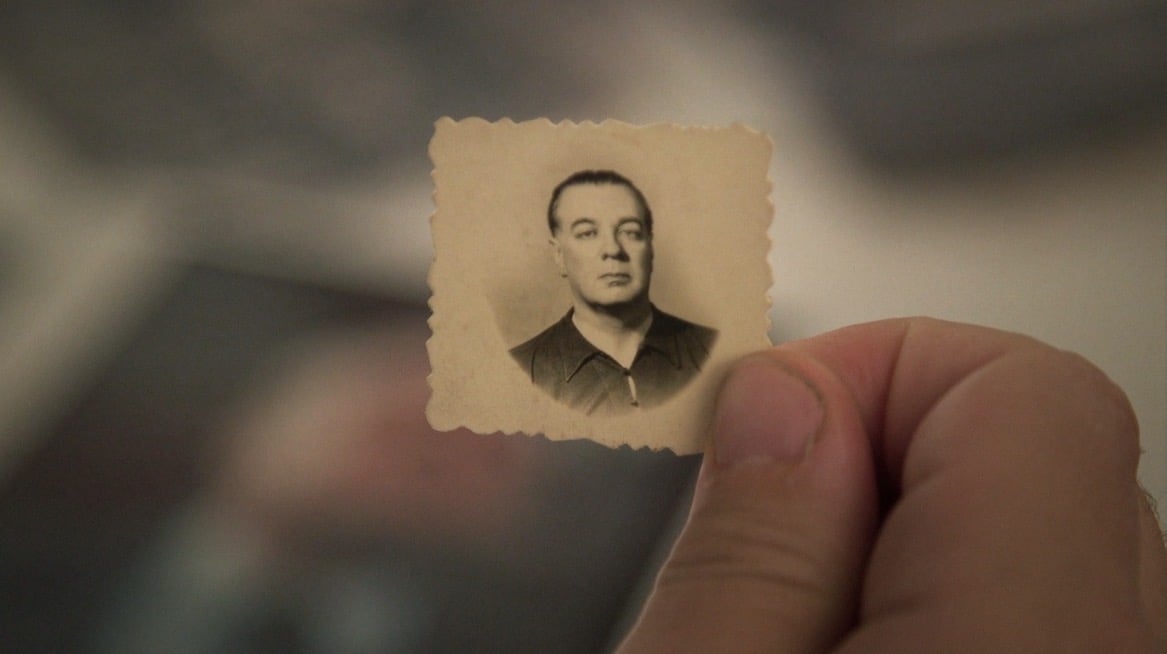
Visually, the film embraces the Borgesian atmosphere of labyrinths, libraries, old Buenos Aires and fading memories. Archival photographs and footage are combined with interviews and literary references to create a portrait that feels less like a conventional cradle-to-grave biography than a journey through Borges’s mental landscape. Reality and recollection continually overlap, giving the film an appropriately dreamlike texture. Its imagery and atmosphere often succeed where its exposition does not.
The narrative style, however, is its most serious limitation. Rather than moving decisively from one defining moment to the next, the film circles its subject, accumulating ideas, anecdotes and interpretations. This approach reflects Borges’s own fascination with repetition, infinity and labyrinthine structures, but it also produces considerable drag. The film is intellectually ambitious, yet its pacing is too indulgent; many passages deepen the portrait, while others merely prolong it.
Even so, the film offers a compelling account of the man behind the adjective Borgesian. It captures the central contradictions of Borges: a writer obsessed with infinite worlds who increasingly lost access to the physical one; a celebrated intellectual who could be playful, vain, charming and contradictory; and a man whose greatest journeys ultimately took place without leaving a library.
Fascinating, atmospheric and intellectually generous, The Life of Borges is also too diffuse and overextended to become a fully satisfying biography. Its greatest achievement is not explaining Borges but evoking him — elusive, contradictory and endlessly suggestive. Worthwhile for devoted readers and admirers, but too meandering for anyone seeking a concise or definitive portrait. Chose a rainy afternoon and let his story slowly envelope you.
BFI LONDON FILM FESTIVAL 2026