


Dir: David Kittredge | UK/US documentary 2026
Boorman and the Devil: John Boorman’s wild ride from Point Blank to Exorcist II
There are few film directors whose careers have been quite as gloriously unpredictable as John Boorman’s. Gangster films, war movies, survival dramas, science fiction, Arthurian legend, political thrillers, family memoir: Boorman did them all, usually with an appetite for risk that could veer from the inspired to the downright bonkers. David Kittredge’s Boorman and the Devil takes the director’s most notorious disaster — Exorcist II: The Heretic — and uses it as a portal into the life and career of one of British cinema’s great originals. It is, fittingly, a film about failure that turns into a celebration of artistic nerve.
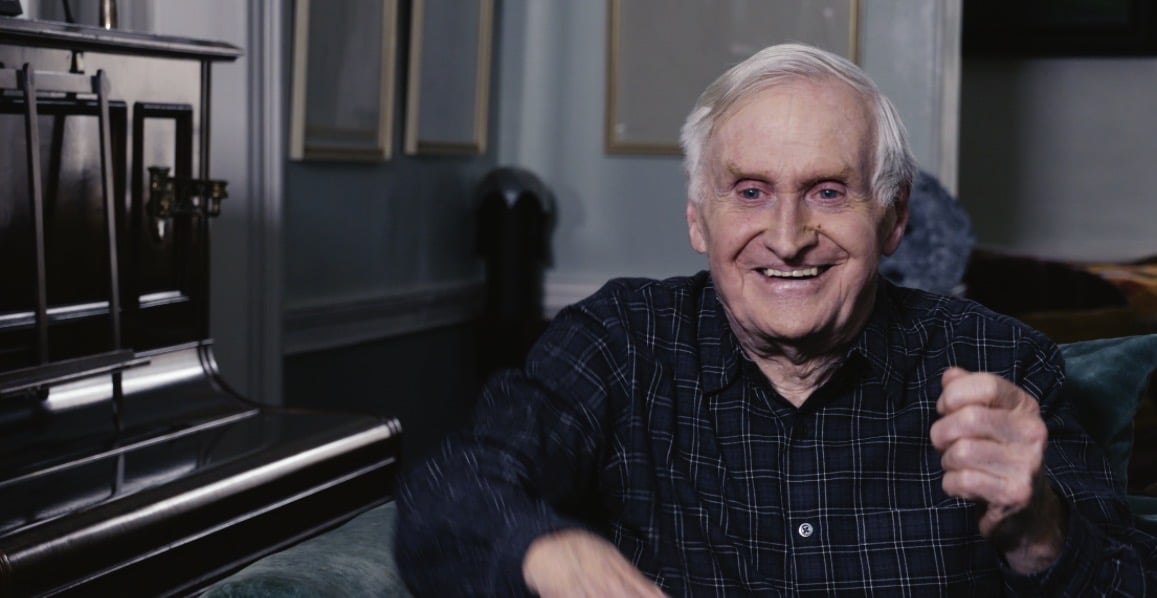
At 112 minutes, Kittredge’s documentary is ostensibly an autopsy of The Heretic, the 1977 sequel that almost detonated Boorman’s Hollywood career. But it becomes something considerably richer: a portrait of a filmmaker who has always preferred the dangerous road to the obvious one. Boorman himself, now in his nineties, is the film’s secret weapon. Sitting amid souvenirs from his career — including Excalibur and Zardoz — he is candid, funny and still clearly haunted by the experience.
Boorman’s story is extraordinary enough without the Devil. Born in Shepperton in 1933, he began in television and documentary filmmaking before making his breakthrough with the sharply stylish Catch Us If You Can and then heading to Hollywood for the muscular Lee Marvin thriller Point Blank (1967). Its fractured chronology, cool surfaces and expressive use of colour announced a director determined to do things his own way.
Then came Hell in the Pacific, the surreal two-hander starring Lee Marvin and Toshiro Mifune; Leo the Last; and, in 1972, Deliverance. That film — four city businessmen canoeing into the Appalachian wilderness with catastrophic consequences — remains Boorman’s defining American masterpiece: brutal, atmospheric and formally controlled, but also deeply interested in the thin membrane separating civilisation from savagery. And then came Zardoz.
If Deliverance established Boorman as a serious auteur, Zardoz proved that he was never going to be content simply repeating himself. Sean Connery in a red loincloth, a giant flying stone head and a dystopian meditation on sex, death, power and immortality made it one of the most gloriously strange studio films of the 1970s. It bombed and baffled — but, like The Heretic, it has subsequently acquired a cult following.
Kittredge understands that this willingness to gamble is essential to understanding Boorman. His documentary isn’t interested in turning the director into a misunderstood saint, nor does it simply recycle the familiar story of a great filmmaker making a terrible film. Instead, it asks the more interesting question: how does an artist capable of Deliverance end up making Exorcist II?
The answer is a wonderfully chaotic mixture of ambition, circumstance, ego, technical experimentation, illness, casting problems and Hollywood pressure. Boorman saw The Heretic not as a conventional horror sequel but as a metaphysical continuation — almost a corrective to William Friedkin’s original The Exorcist. He wanted to rescue Linda Blair’s Regan from being simply a victim and explore consciousness, trauma and the nature of evil. It was an audacious idea for a studio sequel whose audience presumably wanted another dose of demonic possession.
The production rapidly became a catalogue of disasters. Richard Burton was reportedly struggling badly with his lines and performance; Boorman himself became seriously ill with San Joaquin Valley fever; the screenplay evolved during production; and the elaborate technical ambitions — including pioneering Steadicam work, complex effects and highly stylised imagery — constantly pushed the production towards the edge.
Kittredge makes all this hugely entertaining. The documentary has the pace of a thriller: every time you think the production has survived one catastrophe, another arrives. There are locusts, illness, Burton, rewrites, effects problems and increasingly desperate attempts to hold the movie together.
But the great achievement is that it never becomes merely a Best Worst Movie-style exercise in laughing at a spectacular turkey. Kittredge is much more interested in why ambitious films fail — and why the same qualities that produce masterpieces can sometimes produce spectacular wreckage.
The film is particularly good on the people who normally disappear from movie histories. Kittredge interviewed crew members involved in the production, including the script supervisor, camera department, assistant directors, Boorman’s assistant, the entomologist responsible for the locusts and Steadicam pioneer Garrett Brown.
Linda Blair and Louise Fletcher are also terrific. Fletcher, especially, emerges as one of the film’s most engaging witnesses, recalling the chaos with affection rather than bitterness. There is also the irresistible spectacle of watching Boorman confront his own cinematic ghost.
Visually, the documentary is striking. Kittredge makes excellent use of The Heretic itself, allowing Boorman’s extraordinary imagery to argue its own case. The film’s dreamlike compositions, locust-eye perspectives, elaborate production design, ghost-glass effects and Garrett Brown’s pioneering Steadicam work look startling even now. Ennio Morricone’s score, composed under intense pressure, receives its due as another element of the film that vastly exceeds its reputation.
That visual material also provides an elegant way into Boorman’s wider cinema. You begin to see the same obsessions running through the apparently disparate films: nature versus civilisation, the erotic and the mystical, violence and ritual, transformation, masculinity, mortality and the search for some kind of spiritual escape.
Those themes connect Deliverance to Excalibur, Zardoz to The Emerald Forest, and Hope and Glory to the later The General. Even his more conventional films tend to have something slightly strange lurking beneath the surface.
Excalibur (1981), his lavish Arthurian epic, was another apparently mad proposition that worked magnificently, turning myth into something simultaneously sensual, operatic and dreamlike. The Emerald Forest (1985) returned to the collision between Western civilisation and the natural world. Hope and Glory (1987), inspired by Boorman’s childhood during the Blitz, was warmer and more autobiographical, yet still possessed his fascination with the way childhood can transform catastrophe into adventure. Later came The General, The Tailor of Panama and Queen and Country, extending a career that stubbornly refused to settle into a single mode.
That is why Boorman and the Devil ultimately becomes about much more than Exorcist II. The notorious flop becomes a prism through which to view the whole Boorman canon.
And Kittredge is smart enough not to pretend that The Heretic is secretly a masterpiece. It isn’t necessary. The film can be fascinating, visually audacious and full of remarkable ideas while still being a spectacularly messy piece of filmmaking. That tension is precisely what makes the documentary work.
There is something rather moving, too, about seeing Boorman revisit the film decades later. The failure clearly remains an old wound, but there is no sense that he has stopped believing in what he was trying to do. That is perhaps the most revealing thing about him. Boorman would rather have made something excessive, eccentric and flawed than something safe. And that is the real subject of Kittredge’s film: the price — and the exhilaration — of taking a swing for the fences.
Funny, beautifully assembled and packed with enough film history to satisfy serious Boorman devotees while remaining accessible to anyone who enjoys a Hollywood disaster story, Boorman and the Devil is both an entertaining production saga and a persuasive reminder of what has been lost from mainstream filmmaking: the possibility that a director might be given enormous resources and actually be allowed to go completely off-piste. In an age of increasingly cautious franchise filmmaking, Boorman’s career looks almost impossibly adventurous.
Boorman and the Devil doesn’t exorcise The Heretic. It does something more interesting: it makes you want to watch it again — and then work your way back through the extraordinary, unruly canon of John Boorman.
NOW IN CINEMAS