
Robert Aldrich: The Hollywood Rebel Who Knew How to Play the Game
Robert Aldrich (1918-was the kind of Hollywood director the Hollywood system both needed and distrusted. He could deliver a hit, handle a cast of unruly stars and shoot an action sequence with ferocious efficiency. But he also had an inconvenient habit of questioning the people who paid for the pictures. He was, in other words, a Hollywood professional with the temperament of an insurgent.
Aldrich made westerns, film noir, war movies, Gothic horror, prison pictures and sports films. Yet the genre was almost beside the point. His real subject was power — who possesses it, who abuses it and what happens when the people at the bottom finally decide they have had enough. It is a remarkably consistent body of work.And Aldrich himself was almost as unlikely a Hollywood rebel as you could imagine.
Born in 1918 into a wealthy Rhode Island family, Aldrich could have followed the conventional route into America’s establishment. As a cousin to the Rockefellers he came from a prominent, conservative clan from which he broke away in order to make films. After studying at the University of Virginia, he went to work at RKO in 1941. There he started at the bottom. Not glamorous Hollywood bottom, either. Production clerk. Script clerk. Assistant. He gradually worked his way through the studio system, learning how films were actually made rather than merely dreaming about directing them. It was an extraordinary apprenticeship.
After a time as an assistant director for some of the most distinguished filmmakers of the period, including Jean Renoir, Joseph Losey and Charlie Chaplin he learnt television, directing episodes of live shows before finally making his feature debut. By the time Aldrich reached the director’s chair he knew the Hollywood machine from the inside out. And he didn’t particularly like what he saw.
The first crucial break came with Burt Lancaster. Aldrich directed Apache in 1954, casting Lancaster as an Apache warrior struggling against a system determined to destroy him. It was a commercial success and established the director as someone who could take a conventional genre and give it an unexpectedly abrasive edge. Then came Vera Cruz, with Lancaster and Gary Cooper.
This was no ordinary western. Lancaster’s Joe Erin is a swaggering mercenary, Cooper’s Benjamin Trane a former Confederate officer — and neither man is remotely the uncomplicated hero audiences might expect.
Aldrich had discovered something that would become his trademark: the best way to make a conventional Hollywood movie interesting was to distrust its conventions.
A year later came Kiss Me Deadly. If you want to understand Aldrich, start here. Ralph Meeker plays private detective Mike Hammer, but forget Humphrey Bogart’s relatively romanticised detectives. Hammer is nasty, violent, selfish and sexually predatory. Aldrich turns Los Angeles into a nightmare of paranoia, greed and atomic anxiety.
The mysterious object at the centre of the story becomes almost secondary to the atmosphere. Everyone wants something. Nobody can be trusted. And underneath it all is the terrifying possibility that modern civilisation has acquired the means to destroy itself. The final images are unforgettable.
Aldrich had taken film noir and pushed it almost into science fiction. He had not finished attacking institutions. The Big Knife (1955), starring Jack Palance, is a savage portrait of Hollywood itself. The film industry appears not as the dream factory but as a ruthless business in which executives can manipulate, threaten and destroy people while smiling politely.
Attack! (1956), with Jack Palance and Lee Marvin, did something similar to the war film. Instead of noble soldiers marching towards victory, Aldrich gave us cowardice, incompetence and ambitious officers prepared to sacrifice their men for their careers. It was not the sort of cinema designed to make generals comfortable. Nor was Aldrich interested in making audiences particularly comfortable either.
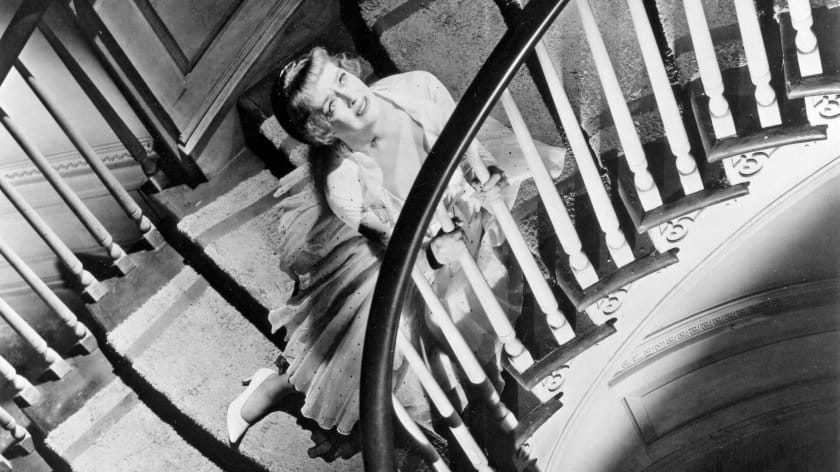
Then, in 1962, came the film that made Aldrich famous to an entirely new audience: What Ever Happened to Baby Jane? It was one of those ideas that sounds ridiculous until someone actually makes it work: take two ageing Hollywood legends, Bette Davis and Joan Crawford, lock them inside a decaying mansion and let resentment, jealousy and madness do the rest.
The casting was sensational. The production became legendary. And the film itself is considerably better than the gossip surrounding it. Davis plays Baby Jane Hudson, a former child star who has never psychologically left the stage. Crawford is her sister Blanche, once a major film star and now paralysed and dependent upon Jane.
Davis gives one of the great grotesque performances in American cinema, turning Baby Jane into a grotesque mixture of childishness, vanity and desperation. Crawford, meanwhile, brings dignity and pathos to Blanche’s imprisonment. Aldrich keeps the camera close, the atmosphere claustrophobic and the audience increasingly uncertain about who deserves our sympathy.
There is also a delicious piece of self-referential Hollywood cruelty at work. These are two women whose careers were built by an industry that adored youth and then discarded them when they grew older. The horror isn’t simply that Baby Jane is mad. It is that Hollywood has forgotten her.
Aldrich returned to Gothic territory with Hush…Hush, Sweet Charlotte (1964), replacing Joan Crawford with Olivia de Havilland. Again, an ageing woman is imprisoned by the past, trapped inside an oppressive house and haunted by memories of violence.
Aldrich clearly understood something about actresses that many male directors didn’t: their public images could themselves become dramatic material. Davis and Crawford weren’t merely playing characters. They were bringing decades of Hollywood history into the room with them. And Aldrich knew it.
If Aldrich was fascinated by women trapped by age and fame, he was equally fascinated by men trapped by institutions. The Flight of the Phoenix (1965) strands James Stewart, Richard Attenborough, Ernest Borgnine and Hardy Krüger among others in the Sahara after a plane crash. The plane is destroyed. Water is running out. Rescue seems unlikely. What happens next is pure Aldrich. The real battle is not man versus desert. It is man versus man. Who is going to lead? Who is going to obey? Who is actually competent? And how long can civilisation survive when its rules no longer apply? Aldrich understood that putting strong personalities in a confined space was better than any special effect.
Then came The Dirty Dozen in 1967. Lee Marvin leads a spectacularly disreputable collection of military prisoners — Charles Bronson, Telly Savalas, Donald Sutherland, John Cassavetes and Ernest Borgnine among them — who are offered a chance to escape execution by undertaking an almost suicidal mission. It was a magnificent piece of commercial filmmaking.
But underneath the explosions was another Aldrich idea: sometimes the institution needs the very people it has condemned. These men are criminals. They are violent. They are difficult. And precisely because they don’t respect conventional authority, they are useful.
The film was an enormous success and became Aldrich’s signature popular film. It also demonstrated the director’s extraordinary ability to work with actors who had personalities almost as large as his own. Lee Marvin, in particular, seemed born for Aldrich.
Aldrich had a remarkable repertory company. Lancaster was there from the beginning. Lee Marvin became one of his great collaborators. Ernest Borgnine appeared repeatedly. Jack Palance brought his distinctive mixture of menace and vulnerability. Charles Bronson became part of the Aldrich action-movie landscape. And then he discovered Burt Reynolds.
With The Longest Yard (1974), Aldrich turned prison football into another battle between outsiders and authority. Reynolds plays a disgraced former professional footballer forced to organise a team of prisoners to play the guards. It is funny, violent and surprisingly subversive. Once again, the people in power discover that the people they control are capable of defeating them. Reynolds and Aldrich followed it with Hustle, a much darker story of corruption and exploitation in Los Angeles.
The 1970s brought Aldrich increasing freedom but not necessarily increasing commercial security. Ulzana’s Raid (1972), starring Burt Lancaster, is one of his most powerful westerns: bleak, unsentimental and deeply sceptical about the mythology of America’s frontier. Emperor of the North Pole (1973), with Lee Marvin and Ernest Borgnine, is a brutal Depression-era battle between a railway guard and a tramp determined to ride the rails.
And Twilight’s Last Gleaming (1977), again with Lancaster, is perhaps Aldrich at his most politically furious — a conspiracy thriller about nuclear weapons, military power and government secrecy. These films are not particularly interested in reassuring us. That was never Aldrich’s strong suit.
Aldrich’s career is fascinating because he managed to occupy two apparently incompatible positions. He was a commercial director who could make a massive hit, and an independent filmmaker who wanted to make films on his own terms.
He was attracted to outsiders, criminals, soldiers who hated their officers, actresses abandoned by Hollywood, prisoners fighting guards and individuals confronting institutions much larger than themselves. The characters might change but argument rarely did. Authority is suspect; respectability is overrated. And the outsider may understand the system better than the people running it. Perhaps this explains why Aldrich’s films have aged so well.
Kiss Me Deadly still feels paranoid. Baby Jane still feels vicious. The Dirty Dozen still feels gloriously disreputable. The Longest Yard still has its anti-authoritarian bite. And behind them all is a director who understood Hollywood better than most because he had actually worked his way through it.
Robert Aldrich died in 1983, aged only 65. He left behind no single easily recognisable “Aldrich style”. Instead he left something more interesting: a worldview. He believed that people were complicated, institutions were dangerous and heroes were often just villains with better publicity. Not a bad philosophy for Hollywood. And not a bad reason to watch his films again.
ROBERT ALDRICH RETROSPECTIVE | VIENNALE 2026