
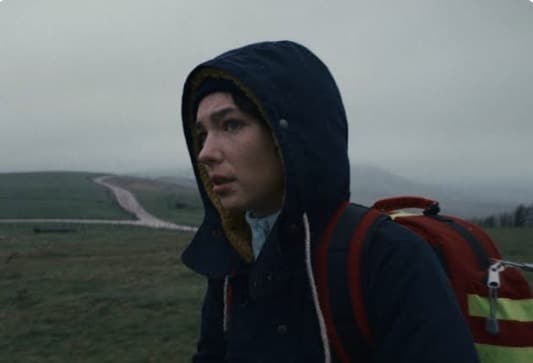

Dir: Nicola Sorcinelli | Drama 2026
There is something immediately arresting about the premise of Nicola Sorcinelli’s Balcanica: an Afghan father and son, both musicians, are forced to leave their country when music is prohibited, carrying their artistic identity with them on a perilous journey towards Europe. Along the Balkan route they encounter Greta, an Italian doctor, and their lives become unexpectedly entangled.
Sorcinelli’s central idea is an intelligent one. Music is not simply decoration or a means of providing an emotional soundtrack to a story about migration; it is what the characters are trying to preserve. Nazar, an orchestra conductor, and his son Jalil, a young tuba player, are defined by something that their persecutors cannot easily confiscate — their ability to make music. The journey consequently becomes about more than physical survival. It is also about whether identity and memory can survive displacement.
That gives Balcanica a potentially distinctive place within a genre that has become increasingly familiar. Films about refugees travelling through the Balkans have often relied on the visual vocabulary of fences, forests, borders, smugglers and precarious crossings. Sorcinelli starts with those realities but introduces an unusual counterpoint: the incongruous presence of musicians carrying an artistic life through a landscape of danger and exclusion.
This is Sorcinelli’s first feature, following a body of award-recognised short-film work. That background may explain the film’s apparent concentration on atmosphere and character rather than political exposition. The challenge is considerable. The subject matter is politically urgent, but urgency can easily become a substitute for complexity. A film about refugees does not automatically become significant simply because the circumstances it depicts are significant.
The most interesting question is whether Sorcinelli allows his characters to exist beyond their circumstances. Nazar and Jalil need to be more than victims, just as Greta needs to be more than the European conscience encountering their suffering. The relationship between the three characters offers the possibility of something more complicated: an encounter in which each has to reconsider what freedom, belonging and responsibility actually mean.
Stylistically, Balcanica occupied the territory between intimate human drama and contemporary European political cinema. Its musical premise offers Sorcinelli the opportunity to create a distinctive sound world, contrasting the discipline and beauty of performance with the disorder of forced migration. Done well, that contrast could become the film’s strongest formal device.
And the film could hardly be more timely. Afghanistan’s continuing repression of artistic expression, Europe’s increasingly contested migration policies and the political divisions surrounding the Balkan route give the story an uncomfortable contemporary resonance. Yet Balcanica does not need to lecture its audience about these issues. Its greater potential lies in making them personal: putting faces, relationships and aspirations where political debate too often supplies only statistics.
The danger is that the film could become overly earnest, particularly if the symbolism of music is pushed too heavily. The tuba, the journey and the meeting between Afghan refugees and an Italian doctor are already rich with metaphor. Sorcinelli’s greatest challenge will be knowing when to trust the images and characters rather than explaining their significance.
What makes Balcanica compelling is precisely this tension. It is clearly a film of its moment, but it need not be trapped by that moment. Its strongest idea is beautifully simple: when everything else has been taken away, what remains of a person may be the thing that cannot be physically carried across a border — but can nevertheless be remembered, performed and passed on.
An ambitious and strikingly timely debut, with an unusually poetic premise. Its success will depend on whether Sorcinelli can turn a familiar story of displacement into something genuinely personal and cinematic rather than merely topical.
VENICE FILM FESTIVAL 2026