
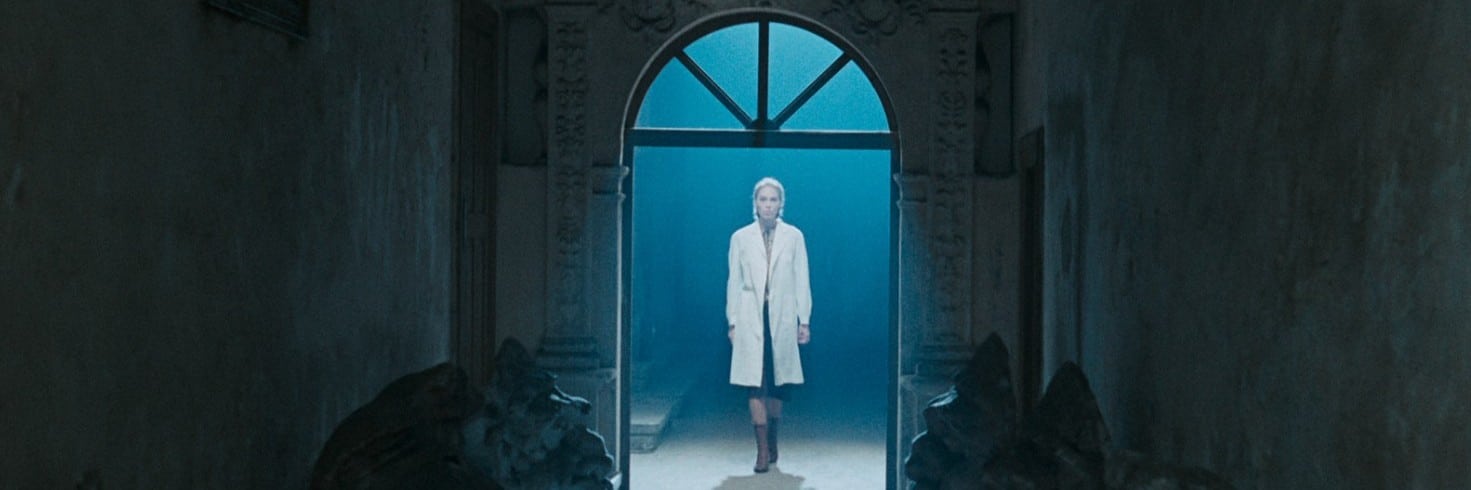

Dir: Andrzej Żuławski | Polish thriller 1971
The Polish director’s astonishing debut, The Third Part of the Night, arrives like a film already in a state of fever.
Drawing on the wartime experiences of his father in Nazi-occupied Poland, Żuławski turns history into something intensely subjective: a nightmare in which reality fractures, identities dissolve and grief becomes almost physically unbearable.
The film follows a fugitive whose world collapses after he witnesses the murder of his family. From that moment, Żuławski offers little refuge in conventional narrative logic. Instead, his protagonist is propelled through a hallucinatory landscape of doppelgängers, shifting identities, religious imagery, bodily horror and a sinister Nazi laboratory developing a vaccine. The boundaries between memory, reality and delirium become increasingly impossible to distinguish.
What makes the film so extraordinary is the sheer velocity of Żuławski’s filmmaking. Characters rush through rooms, streets and corridors as though pursued by forces they cannot comprehend; emotions are expressed at a pitch that borders on hysteria; the camera seems almost unable to remain still. Yet beneath the apparent chaos is a precise understanding of how war destroys the ordinary structures by which we make sense of ourselves and the world around us.
There is something genuinely frightening about the film, but its horror is not primarily that of conventional cinema. Żuławski is less interested in depicting the machinery of Nazi persecution than in showing what happens inside the human psyche when that machinery has shattered every possibility of security, identity and meaning. His doppelgängers and repetitions suggest a self that can no longer remain singular or stable.
The Third Part of the Night remains a startlingly visceral experience. More than fifty years after its release, its intensity has barely diminished. It is excessive, disturbing, frequently grotesque — and completely alive.
Żuławski would go on to make films that pushed this feverish style even further, but there is something uniquely powerful about encountering it here, fully formed at the beginning. The Third Part of the Night is not merely an impressive debut. It is one of the most audacious and remarkable first features in cinema history.
Screening at London’s Garden Cinema | 30 August