


Dir: Dragana Jurišić | Doc 2026
The Balkan Cowboy is an evocative and deeply personal debut documentary from visual artist Dragana Jurišić that uses the iconography of the American Western to excavate the fractured memory of the former Yugoslavia. Premiering in competition at the 2026 Sarajevo Film Festival, the film is at once an act of historical retrieval, an autobiographical essay and a meditation on cinema’s ability to preserve vanished worlds.
Jurišić’s subject is the enigmatic cult filmmaker Hari Džekson, an amateur director who transformed the landscapes around the Bosnian town of Bijeljina into his own mythical frontier during the 1970s and 1980s. Recruiting neighbours, workers and friends as actors, Džekson fashioned homemade Westerns that joyfully appropriated Hollywood mythology while inadvertently creating a space where people from different ethnic communities collaborated long before the Yugoslav Wars would violently tear them apart.
For Jurišić, however, Džekson is more than an eccentric regional filmmaker. He is the catalyst for her own artistic life. After the destruction of her family home in 1991, when thousands of her photographer father’s negatives were lost to the flames, she inherited his camera and, with it, a determination to document memory before it disappears. That intimate connection lends the film an emotional authenticity that elevates it beyond straightforward biography.
Rather than constructing a conventional portrait, Jurišić embarks on a detective story, piecing together Džekson’s life through interviews with those who knew him while confronting the unresolved mystery surrounding his disappearance. These encounters are interwoven with reflections on the collapse of Yugoslavia, allowing personal recollection and collective trauma to merge with striking elegance. The result is less concerned with factual certainty than with the elusive ways memory survives through stories, images and cinema itself.
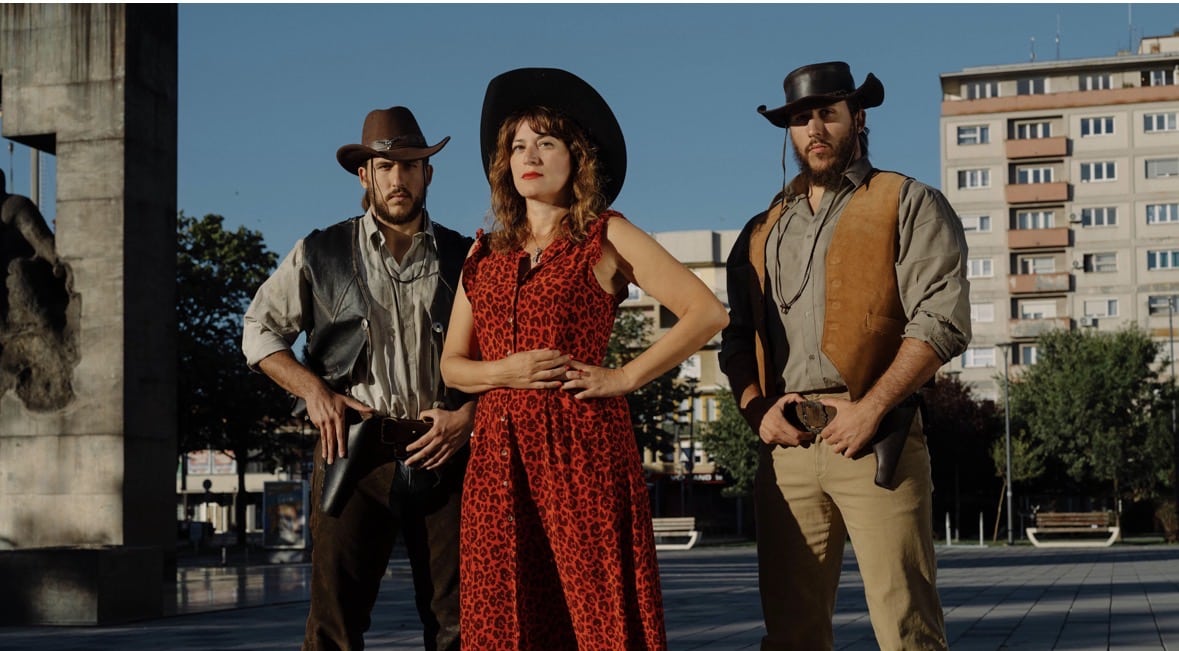
The documentary’s most inspired gesture comes as Jurišić decides to complete Džekson’s unfinished dream by making a Western of her own with local non-professional performers drawn from communities once divided by war. These sequences avoid sentimental symbolism, instead demonstrating how filmmaking itself can become an act of reconciliation, collaboration and quiet resistance against historical amnesia.
The Balkan Cowboy looks great and reflects Jurišić’s background as an acclaimed photographer. Richly textured landscapes echo the Monument Valley vistas that inspired Džekson’s fantasies, while carefully composed archival material sits seamlessly alongside newly shot footage. The film’s measured pacing occasionally risks becoming overly contemplative, but its visual sophistication and emotional sincerity sustain its reflective mood.
The Balkan Cowboy is about inherited imagination: how one eccentric filmmaker’s love of cowboy mythology became a means of preserving identity amid political catastrophe. Jurišić deftly demonstrates that cinema does not merely record history; it creates alternative histories capable of outlasting violence and loss.
This thoughtful and formally inventive debut should resonate strongly with festival audiences attuned to hybrid documentary forms exploring memory, identity and post-conflict societies. Its blend of personal memoir, archival excavation and cinephile homage gives it clear appeal on the international documentary circuit, while confirming Jurišić as a distinctive new filmmaking voice whose work bridges visual art and cinema with considerable assurance.
SARAJEVO FILM FESTIVAL 2026