

Dir: Marie-Elsa Sgualdo | Drama 97’
Among the more unexpected success stories of the 2025 Venice Film Festival, Silent Rebellion emerged as a film that won audiences not through grand gestures but through emotional precision. Set in wartime Switzerland, this assured historical drama transforms a deeply personal story into a powerful examination of female resilience, social conformity and moral courage.
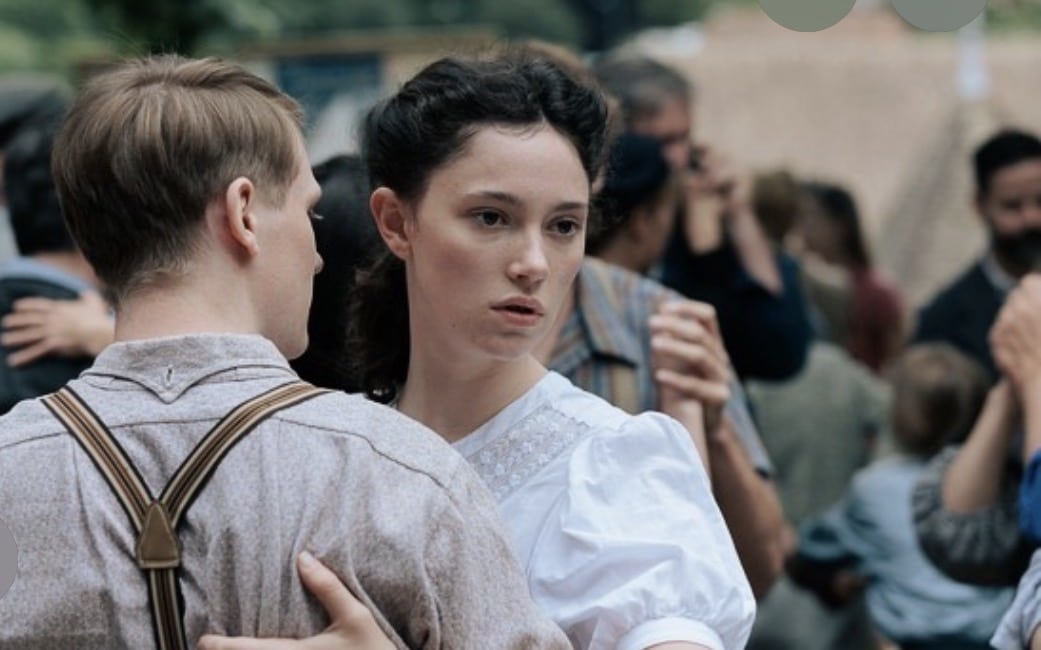
The film unfolds in the early 1940s, when Europe was engulfed by conflict and Switzerland’s neutrality concealed tensions of its own. Against this backdrop, a young woman finds herself ostracised after a traumatic assault leaves her pregnant. Faced with a rigid religious community, led by Grégoire Colin’s stern-faced pastor, determined to dictate her future, she gradually begins to challenge the rules that govern her life. What begins as a story of survival develops into something far more compelling: an account of an individual discovering her own agency in a society designed to suppress it.
Director Marie-Elsa Sgualdo approaches the material with admirable restraint. Rather than leaning into courtroom drama or overt confrontation, she focuses on the quieter mechanisms of power: family expectations, community judgement and institutional indifference. The result is a film that feels both historically specific and strikingly contemporary.
The production design and cinematography evoke rural Switzerland with understated elegance. The landscape is beautiful but never romanticised; mountains and fields become visual reminders of a world that can feel both protective and imprisoning. Every frame contributes to an atmosphere of simmering tension.
At the centre of the film is a remarkable breakthrough performance from Lila Gueneau. She carries the narrative with a maturity beyond her years, conveying determination, fear and anger with extraordinary subtlety. Her turn anchors the entire production and provides the emotional depth that elevates the film above conventional period drama. It is the kind of performance that launches careers and ensures a character remains in the viewer’s mind long after the screening ends. Grégoire Colin provides contrast with a taciturn performance
What distinguishes Silent Rebellion from many historical dramas is its refusal to simplify its themes. The film acknowledges the complexities of its era while never losing sight of the human cost of silence and prejudice. It is an intimate story with wider implications, asking uncomfortable questions about justice, gender and who gets to shape history.
In a festival crowded with larger, more ostentatious productions, Silent Rebellion stood out because of its confidence and clarity. Its success at Venice confirmed the arrival of an exciting new filmmaking voice and one of the year’s most affecting performances.
RAINDANCE FILM FESTIVAL | Venice Film Festival