

Dir: Rob Arthur | UK Doc 104′
Rock documentaries often follow a familiar rhythm: meteoric rise, spectacular fall, hard-won redemption. But Frampton follows a more personal style. Striking the perfect chord between rock mythology and human resilience, Rob Arthur’s affectionate yet surprisingly candid documentary about legendary English singer-guitarist Peter Frampton, is both a celebration and a reckoning—an intimate portrait of a musician whose story extends far beyond the blockbuster success of Frampton Comes Alive!.
For audiences too young to remember the phenomenon, Frampton’s rise was almost impossibly swift. Born in Bromley England, in 1950, he first played with bands The Herd and Humble Pie before launching a solo career and becoming one of the defining rock stars of the 1970s when Frampton Comes Alive! transformed him into a global sensation and one of the biggest-selling live acts of the decade.
This deeply personal and emotionally resonant documentary that world-premiered at the Tribeca Festival 2026, finds fresh power in a story audiences may think they already know. By the time the credits roll, Peter Frampton emerges not simply as the golden-haired superstar Frampton Comes Alive!, but as one of rock’s most resilient survivors.
Directed by Frampton’s longtime bandleader and collaborator Rob Arthur, the film combines a treasure trove of archival footage, intimate contemporary interviews, and electrifying performance sequences from Frampton’s recent tours. The result is a celebration — a candid examination of a musician whose career has been defined as much by perseverance as by fame.
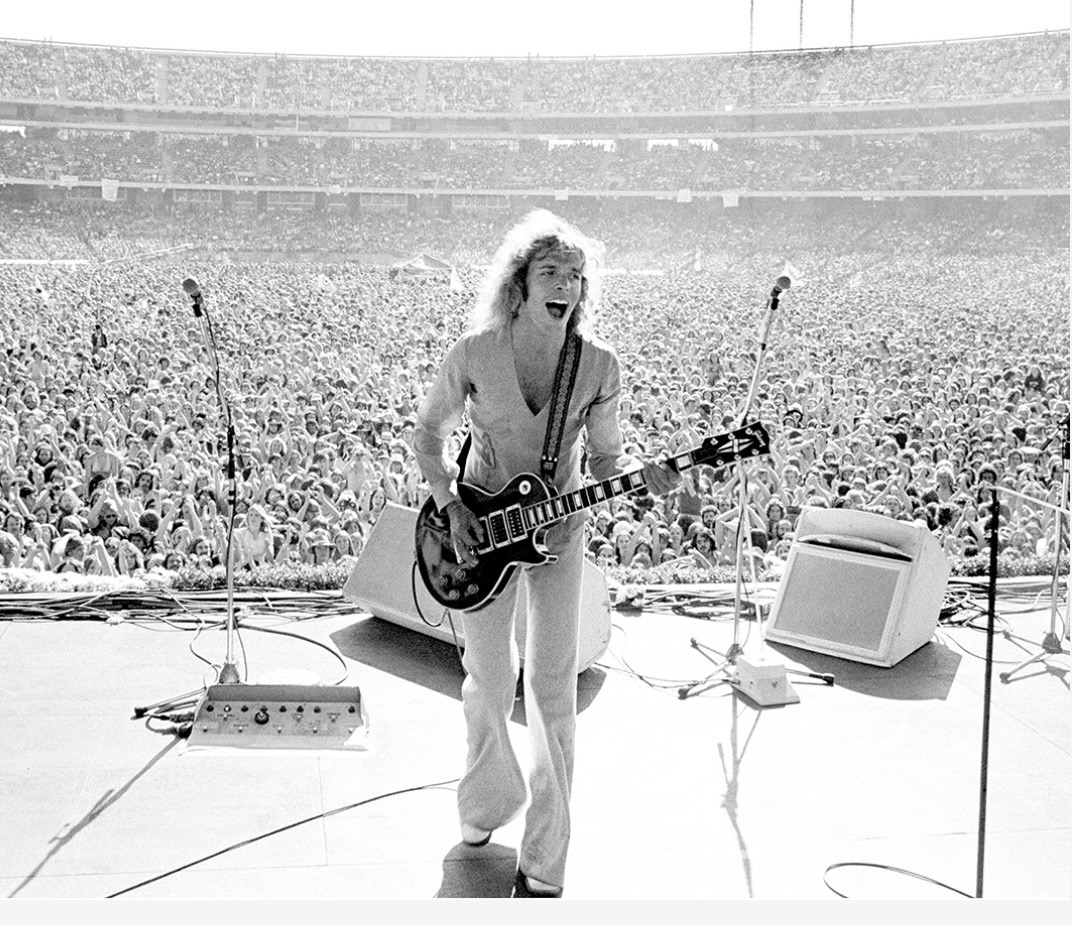
Arthur structures the documentary around the extraordinary peaks and valleys of Frampton’s six-decade career. The film traces his early years in The Herd and Humble Pie before chronicling the explosion of Frampton Comes Alive!, the 1976 live album that transformed him into one of the biggest rock stars on the planet. Stadiums filled, magazine covers multiplied, and Frampton became a cultural sensation almost overnight.
Yet Frampton is at its most compelling when is reflects on the cost of that success. Frampton recalls being overwhelmed by the machinery of superstardom and uncomfortable with the heartthrob image that often overshadowed his craft. The documentary details the crushing pressure to replicate the success of Frampton Comes Alive!, the commercial and critical backlash that followed, struggles with substance abuse, a devastating 1978 car accident, and the financial betrayals that left him rebuilding both his career and his confidence.
The doc is refreshingly unsentimental about these setbacks. Rather than presenting Frampton as a tragic figure, Arthur frames him as an artist continually reinventing himself. One particularly fascinating thread examines a little-known moment when Pete Townshend floated the possibility of Frampton joining The Who during a difficult period in his career — a tantaliaing “what if?” that never materialised (thank God!).
The talking-head roster is impressive without ever feeling obligatory: Ringo Starr, Sheryl Crow, Tom Morello, Alice Cooper, Nancy Wilson, Roger Daltrey, Bill Wyman, Cameron Crowe, Herb Alpert, Kate Hudson, and members of Frampton’s family all contribute memories that illuminate different facets of the musician’s life. Unlike many celebrity-heavy music docs, these appearances feel genuinely thoughtful, helping to build a portrait of a performer beloved by peers as much as by fans.
What ultimately elevates Frampton is its emotional final act. Arthur follows Frampton as he confronts Inclusion Body Myositis, the degenerative muscle disease that threatens the physical abilities upon which his career was built. The film culminates around his farewell touring chapter and final concert era, transforming what could have been a melancholy coda into something unexpectedly uplifting. Frampton’s determination, at 76 to keep performing, even as his body presents new limitations, becomes the documentary’s most powerful statement.
At 104 minutes, Frampton occasionally indulges in reverence, but Arthur’s close relationship with his subject ultimately proves an asset. He gains access not just to the legend but to the man beneath decades of mythology.
The documentary arrives as both a 50th-anniversary tribute to Frampton Comes Alive! and a reminder that Peter Frampton’s greatest achievement may not be the album that made him famous, but the resilience that allowed him to endure everything that came after.
Ultimately Frampton is more about survival than nostalgia – and all the more affecting for it.
FRAMPTON! | TriBeCa Film Festival 2026