
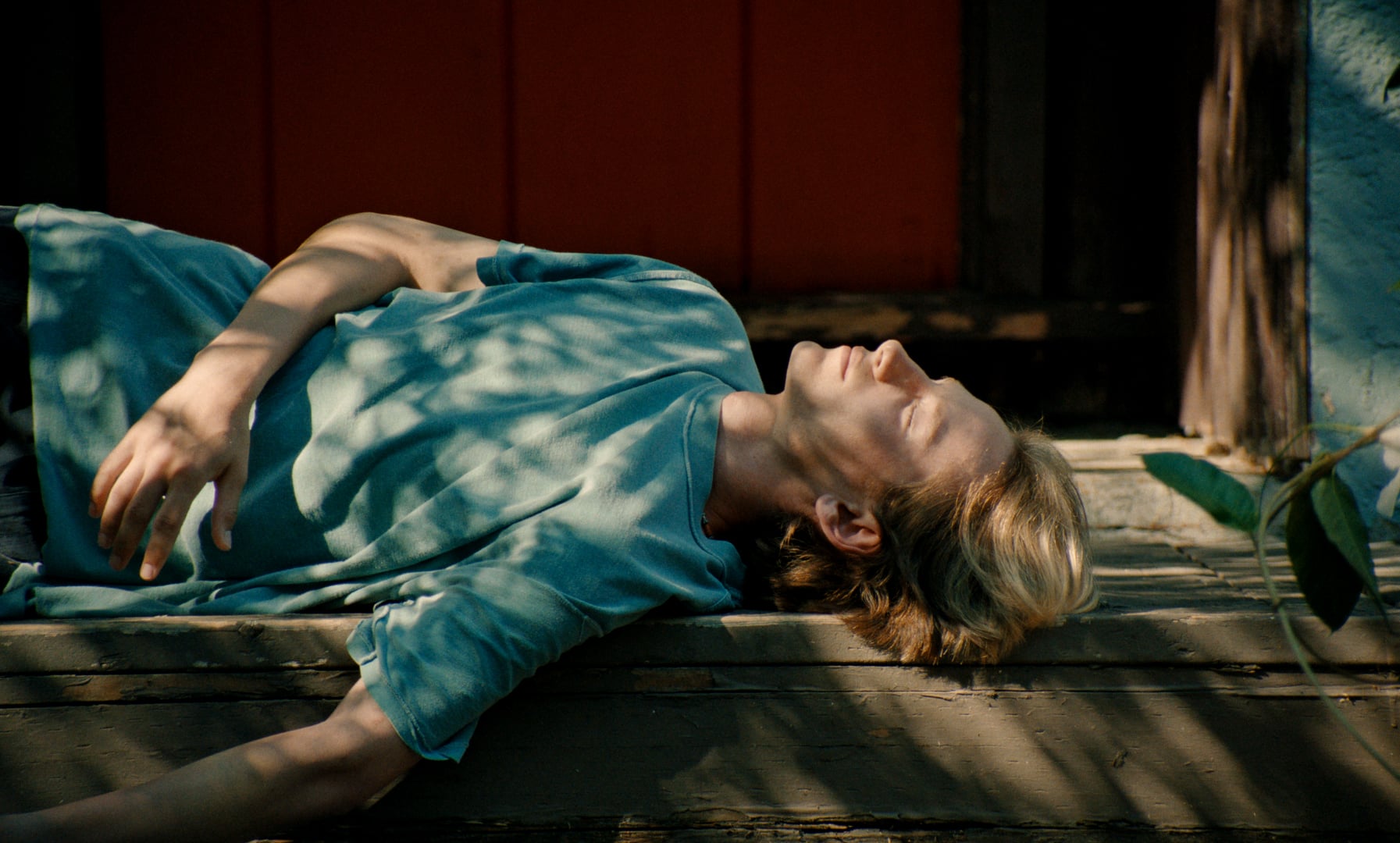

Dir: Sophy Romvari | Drama, Canada 90′
In her striking feature debut, Blue Heron, writer-director Sophy Romvari transforms family trauma into a dreamlike meditation on memory, grief, and the stories we tell ourselves about the past.
Set on Vancouver Island in the late 1990s, the film follows eight-year-old Sasha as her Hungarian immigrant family attempts to build a new life while grappling with the increasingly troubling behavior of her older brother, Jeremy.
At the centre of the film is a thoughtful performance from Eylul Guven as young Sasha. Rarely asked to articulate what she feels, Guven instead communicates volumes through observation, curiosity and confusion, embodying the way children absorb family tensions long before they fully understand them. Her presence gives the film its emotional anchor.
As Jeremy, Edik Beddoes delivers the film’s most challenging and enigmatic turn. Alternately charismatic, vulnerable and unsettling, Jeremy remains a figure viewed largely through Sasha’s memories, making Beddoes’ portrayal all the more impressive. He creates a character whose volatility hangs over the film like a storm cloud, even when he is off-screen.
The family dynamic is further enriched by Iringó Réti and Ádám Tompa as Sasha and Jeremy’s parents. Both bring a lived-in authenticity to their roles, capturing the exhaustion and quiet heartbreak of parents struggling to hold a family together while navigating the pressures of immigration, financial uncertainty and a child they no longer fully understand.
In the film’s framing narrative, Amy Zimmer plays the adult Sasha, now attempting to piece together the events that shaped her childhood. Zimmer lends these scenes a reflective melancholy, grounding the film’s exploration of memory as something constantly reconstructed rather than simply recalled.
Romvari’s direction is assured and deeply personal, favouring impressionistic fragments over conventional storytelling. The result is visually striking and emotionally resonant, though the film’s deliberate pace and elliptical structure occasionally threaten to keep viewers at arm’s length. Some may find its ambiguity frustrating, particularly regarding Jeremy, whose inner life remains tantalisingly out of reach.
Yet Blue Heron succeeds precisely because it embraces uncertainty. It understands that family histories are rarely neat, and that memory often reveals as much through omission as through detail. Anchored by nuanced performances across the board and guided by Romvari’s confident artistic vision, Blue Heron marks the arrival of a filmmaker with a distinctive voice and a remarkable sensitivity to the complexities of childhood experience.
IN UK CINEMAS FROM END JUNE 2026