

Dir: Manuela Martelli | Chile, Drama 100’
In The Meltdown, Chilean director Manuela Martelli turns a missing-person mystery into something bleaker and more elusive: a study of memory, silence and the emotional debris left behind by dictatorship.
Premiering in the Un Certain Regard section at Cannes, the film continues Martelli’s fascination with Chile’s uneasy transition into democracy, but approaches politics obliquely, through atmosphere rather than direct confrontation.
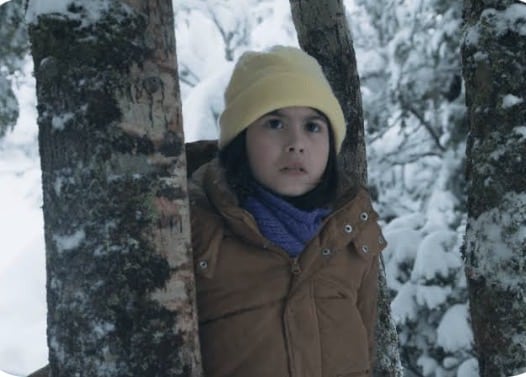
Set in Chile in 1992, the story follows young Inés, played with remarkable stillness by Maya O’Rourke, who is sent to stay with her grandparents at an isolated mountain hotel near a ski resort. There she becomes fascinated by Hanna, a teenage German skier (Maia Rae Domagala) who has arrived with a group of elite athletes connected to the old East German sporting system, including Lina and Alexander — former athletes themselves (Saskia Rosendahl and Jakub Gierszal).
When Hanna suddenly disappears, the film drifts into thriller territory, though Martelli is less interested in solving the mystery than in exposing the culture of secrecy surrounding it.
The political background is crucial. Chile in 1992 was officially democratic again after the fall of Augusto Pinochet’s dictatorship, yet the country was still psychologically trapped in the shadow of authoritarianism.
At the same time, East Germany had recently collapsed, leaving many former athletes and coaches displaced after decades of state-sponsored sporting systems tied to surveillance and control. Martelli cleverly mirrors these two histories. Lina and Alexander arrive carrying the emotional wreckage of a vanished country, while the Chilean adults around them behave like people trained never to ask questions too loudly. Everyone seems to know something; nobody wants to speak, especially not Ines who knows something about the night Hanna vanished but is scared to speak out.
Visually, the film is striking in its refusal to acknowledge the spectacular beauty of the mountain scenery; Benjamín Echazarreta’s cinematography keeps the camera uncomfortably close to faces, windows and corridors, creating an oppressive intimacy. The dull, washed-out palette gives the film the texture of fading colour photographs, as though the images themselves are deteriorating under the weight of memory. Even the snowy mountain landscapes feel claustrophobic rather than expansive.
The sound design is equally unsettling. Mariá Portugal’s score moves in strange pulses and ghostly fragments, never allowing the viewer to relax into conventional suspense. At times the music feels almost detached from the action, haunting the film like a buried recollection trying to resurface.
What ultimately makes The Meltdown memorable is its child’s perspective. Inés wanders silently through adult conversations, collecting fragments of truth she cannot yet fully understand. O’Rourke carries the film with an unnerving calmness; permanently aware that every adult around her is hiding something. The little girl carries secrets before she even knows what those secrets mean.
Martelli’s film occasionally risks becoming too opaque, particularly in its final stretch where ambiguity threatens to overwhelm emotional payoff. Yet that uncertainty is also part of the point. The Meltdown is a film about societies learning to live beside unresolved trauma, where disappearance becomes both literal and historical. It is less a political thriller than a ghost story about the afterlife of political systems — and its chill remains long after the screen fades to black.
CANNES FILM FESTIVAL 2026 | UN CERTAIN REGARD