

Wri/Dir: Jorge Thielen Armand | Cast: Asia Argento |
On a rain-lashed South American shoreline, a blood-soaked man is screaming “Mátalo!”.(kill him). Death Has No Master immediately sets the tone for a menacing and violent thriller
Down onto the craggy rocks stumbles a distraught woman, played by Asia Argento. Caro has returned to Venezuela to claim her inheritance and sell the family cocoa estate following her father’s death. But this is a country ravaged by economic collapse and social unrest, and the bad news: the property is worth perhaps only half of what she imagined.
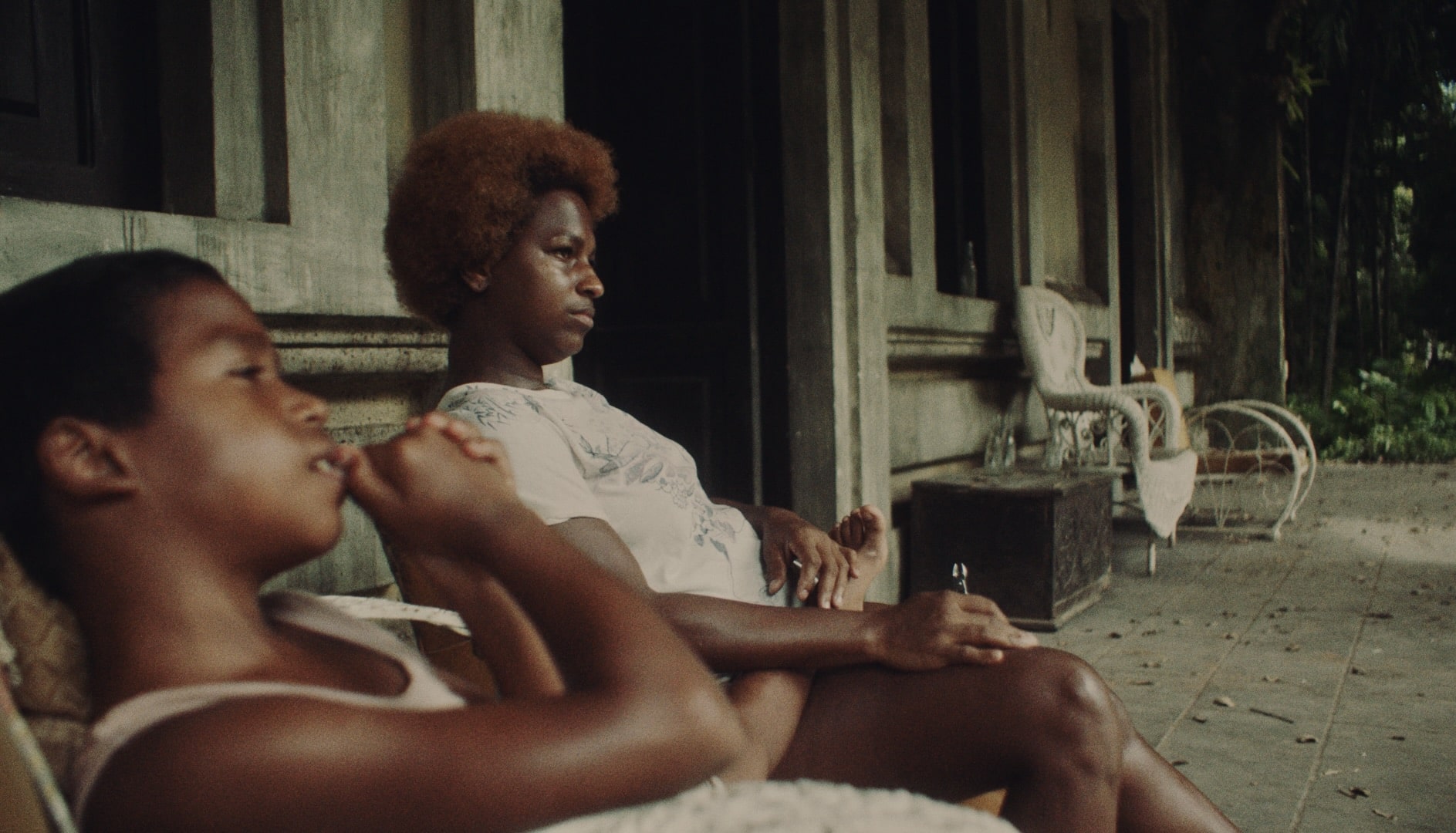
The journey to the estate is superbly atmospheric. Caro’s car winds between jungle and coastline before arriving at a decaying colonial mansion almost entirely reclaimed by vegetation, its corridors echoing with insects, birds and unseen wildlife. Inside, a local retainer already exerts control over the house, while Sonia, the hostile housekeeper, barely conceals her resentment at Caro’s arrival as she grudgingly shows her to the master bedroom. From the outset the film creates an oppressive sense of decadence — not simply of a crumbling estate, but of an entire nation haunted by its past.
Caro quickly discovers that reclaiming the property will not be straightforward. Squatters now inhabit the plantation, including the unsettling young Maiko, Sonia’s little son, and they have no intention of leaving the place they now consider their own. The film smartly folds Venezuela’s political realities into its thriller mechanics: squatters gain legal rights after five years of occupation, and even the police question Caro’s origins and, as a foreigner, her right for a roof over her head when she is clearly not a resident. The local inspector advises Caro to go home and abandon any hope of repossession. Digging deeper, she uncovers disturbing truths about her father and the country’s long history of violence and exploitation.
Argento gives a ferocious performance. Her Caro is volatile, selfish and increasingly unhinged, lashing out in Italian, throwing tantrums and attempting to bully those around her with a horsewhip when the law offers no immediate path to justice. Not a sympathetic character then, but we somehow feel for her in her plight. The film takes an ambivalent position suggesting that in a society where institutions have collapsed, morality quickly gives way to survival. If Caro wants her inheritance back, she and the local town sheriff, who has now become her close companion, may have to descend to the same level of brutality as the people she despises.
The final act drifts into something stranger and more dreamlike. Without fully embracing magic realism, the film slips into an ambiguous reverie of childhood memories and unreliable narration as Caro recalls fragments of her past as a little girl growing up on the plantation. The narrative at times threatens to lose momentum, but the atmosphere remains hypnotic right through to the blood-soaked finale.
What lingers most is the suffocating sense of decay and that terrible sense of fear that takes hold in a country where lawlessness is the order of the day, and justice has no meaning anymore: a once-grand colonial estate swallowed by the jungle, and a society consumed by corruption and resentment who have taken the law into their own hands. With its terrifying soundtrack Death Has No Master is an ugly, unsettling thriller that trades in dread rather than shocks, powered by Argento’s fearless performance and Jorge Thielen Armand’s intensely tactile direction in conjuring up this frightening dystopian drama that was never going to end well.
CANNES FILM FESTIVAL 2026 | DIRECTORS’ FORTNIGHT