

Dir: Lila Pinell | Drama 2026 83′
There’s something deceptively slight about Shana—it’s the kind of film that drifts in on a loose premise and a lightweight protagonist, only to quietly accumulate emotional weight as it goes along.
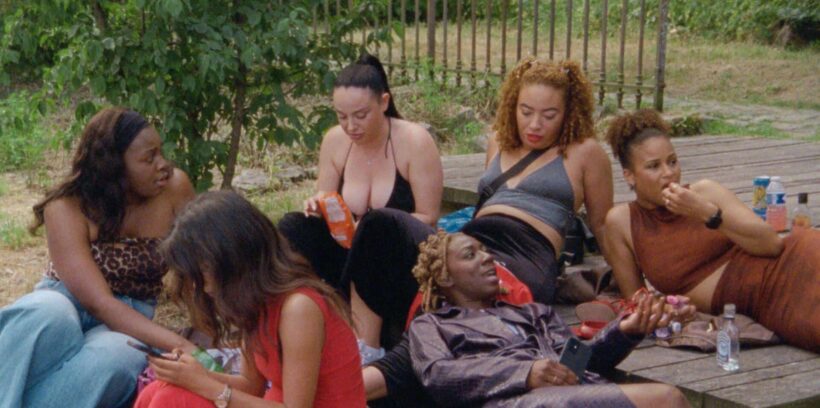
Starring Eva Huault, as the titular Shana (of Moroccan Jewish heritage) alongside Noemie Lvosky, and screening in the Quinzaine section of this year’s Cannes Film Festival this French social comedy starts off as a frothy chick-flic. What develops is a portrait of a woman who seems perpetually in motion yet fundamentally stuck. Shana is framed by a string of misadventures, improvising her life one dodgy decision at a time. Episodic in structure, the story unfolds in a series of scattered vignettes.
Shana herself is a compelling contradiction. In her early thirties, she’s neither naïve nor particularly self-aware. Surrounded by supportive womenfolk, she understands her messy world, but lacks the momentum—or perhaps the belief—to escape. Her shtick—odd jobs, small-time schemes, transactional relationships—feels less like rebellion, and more like inertia dressed up as agency. The film doesn’t doesn’t attempt to make a virtue of all this dizzy posturing, but neither does it condemning her for it. There’s a lived-in quality to her chaos, a sense that she’s been surviving like this for years and no one, least of all Shana, expects anything different.
The relationship with Moïse is where the focus narrows in. He’s not a guy with much psychological depth—but perhaps that’s the point. We don’t need to understand him fully to recognise what he represents: a familiar pattern of attraction that feeds on volatility. What’s more interesting is how the film situates Shana within that dynamic. Pinell avoids easy victim narratives; her heroine is neither oblivious nor trapped, but maybe in denial. This is the kind of relationship she has become used to, a kind of emotional habit that she wears like a pair of much desired but often painful stilettos, and therein lies the addiction. The couple’s scenes together carry a jittery, uncomfortable energy, and although repetition dulls the impact, Moïse come across more as a cypher from central casting than a real person.
The story turns on a ring that Shana has inherited from her grandmother. The heirloom, said to ward off the ‘evil eye’, could have been a heavy-handed metaphor, but the film treats it with a light, almost mischievous touch. And this ambiguity serves the drama well, suggesting that Shana really believes in the power of this heirloom, and as such it becomes the vector for change in subtle ways.
While often feeling directionless, the narrative steers away from neat solutions or a cliched plot resoluton. There are some amusing lines, Shana’s life moves on with a flicker of self-recognition but, in the end, it is what it is. And this may frustrate viewers hoping for a breakthrough or a ground-breaking revelation. Pinell pictures life as it really is, in all its raw intensity, and that may satisfy most of us.
DIRECTORS’ FORTNIGHT 2026