

Dirs: Efrain Mojica and Rebecca Zweig. Mexico /USA/France
Reviewed by Peter Herbert
Jaripeo is a traditional carnival dating from the 16th century in Mexico’s Michoacan region. It aims to bring together local communities to celebrate masculinity through the staging of rodeos. They serve as a rite of passage for boys into manhood with displays of hyper masculinity attracting explorations of queer gender and identity. It is a setting that filmmaker Efrain Mojica is drawn into as a way to explore the right to exist alongside heterosexual norms of religion, family and society.
The result is a fine example of the burgeoning independent film movement across Latin America, fighting against shifts to the right in politics and cut backs with funding of the arts. Jaripeo is a Mexican film made with key support from the American Sundance Production Fund.
The film opens with a car journey through countryside that stops on a hill top overlooking towns in a landscape. The enclosed space of a car becomes a form of interior confessional for Mojica as a way to open up feelings to co-director Rebecca Zweig. These include memories of childhood, family and a sense of guilt about being able express gender identity. The car as a setting is returned to alongside scenes from the carnival, as the confessions of gender fluid Mojica deepen during the course of the film. The film makers are long-time friends, united by a creative bond resulting in the film’s confident shift from conventional documentary into a form of personal docu drama.
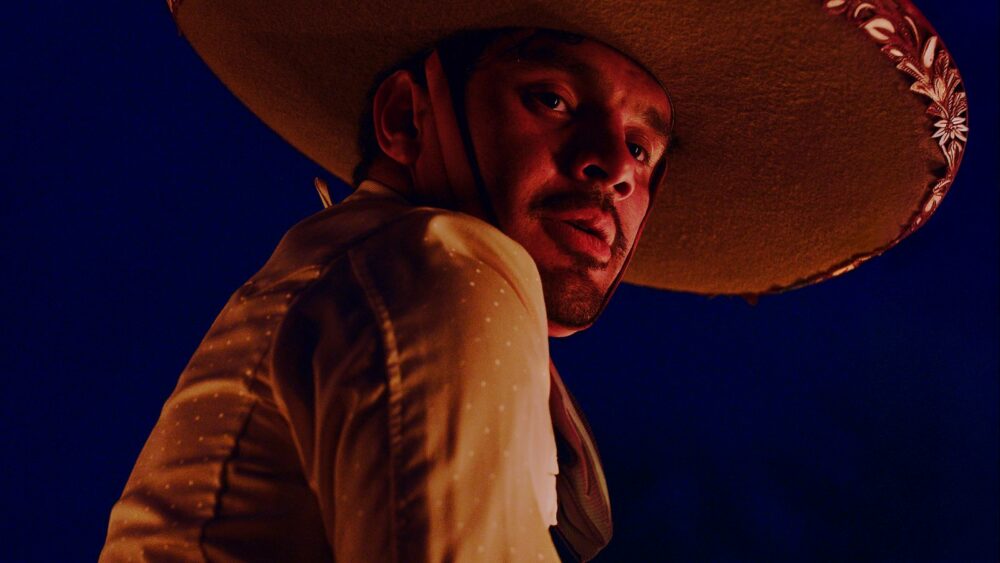
Carnival footage, filmed on super 8 using ‘cinema verité’ techniques, provides vivid portraits of spectators and participants. This also allows the filmmakers an intimate way to observe the visceral beauty of men. Cowboy hats and clothing add to the sense of ritual, and while some of the men riding bulls are triumphant there are others where this is not the case. The film contains a beautiful sequence of a boy exhausted and defeated by his ordeal observed with sensitivity and compassion.
The material is often edited to feel like a quote ‘the link between man and beast as a vivid dance of life filmed with the eye of desire’. Alongside the confessions of the central figure of Mojica, the filmmakers are fascinated by a number of rodeo riders. One is an older man who cross-dresses and another is a cowboy who thrills to riding on a bull while secretly navigating codes of closeted sexual behaviour.
Recreated cruising scenes using red lighting at night as the cowboy walks through wheat fields take on the feeling of a heightened fantasy of desire. They deepen the film’s queer imagination turning Jaripeo into a striking addition to the new wave of Latin American Lgbtqia+ cinema.
BFI FLARE LGBTQIA+ Film Festival 2026