

Dir/Wr: Sophie Heldman | Co-Wri: Flora Nicholson | Cast: Clare Dunne, Mia Tharia, Fiona Shaw | 114′
A scandal in a Scottish girls’ boarding school is the basis for this distinctive queer drama world premiering at this year’s Berlinale and directed by Germany’s Sophie Heldman.
Berlinale favours the arcane and avant-garde: especially unusual LGBT titles or films from far corners of the globe. And this second feature, starring Fiona Shaw, harks back to the Regency era in 1810, is certainly unusual for a period normally associated with strait literary adaptations by Jane Austen and Mary Shelley.
A lesbian in real life, Shaw plays Lady Cumming Gordon, a strait-laced, well-healed aristocrat who places her ‘illegitimate’ Indian granddaughter Jane (Tharia), in a select school for young ladies. The place is run by two women, but Jane feels unhappy from the offset in this rarified atmosphere, particularly when she is forced to share a bed with one of the tutors Miss Pirie (Nicholson). Born in Calcutta to a mixed parentage she has seen a wider world (which later comes into play) and exerts her independence at once, refusing to join in some of the activities.
Delighted with the place and the lades running it, Lady Cumming Gordon recommends it to her friends and insists Jane stays with her tutors for the summer months, financing the ‘holiday’ in a grim seaside cottage where the teenager finds her feet for the first time.
But Miss Woods (Dunne) and Miss Pirie (Nicholson) resent Jane interrupting their cosy twosome, so faced with this rejection the Indian girl asks to be sent home, and tells her grandmother why, in no uncertain terms, causing a ruckus for all concerned.
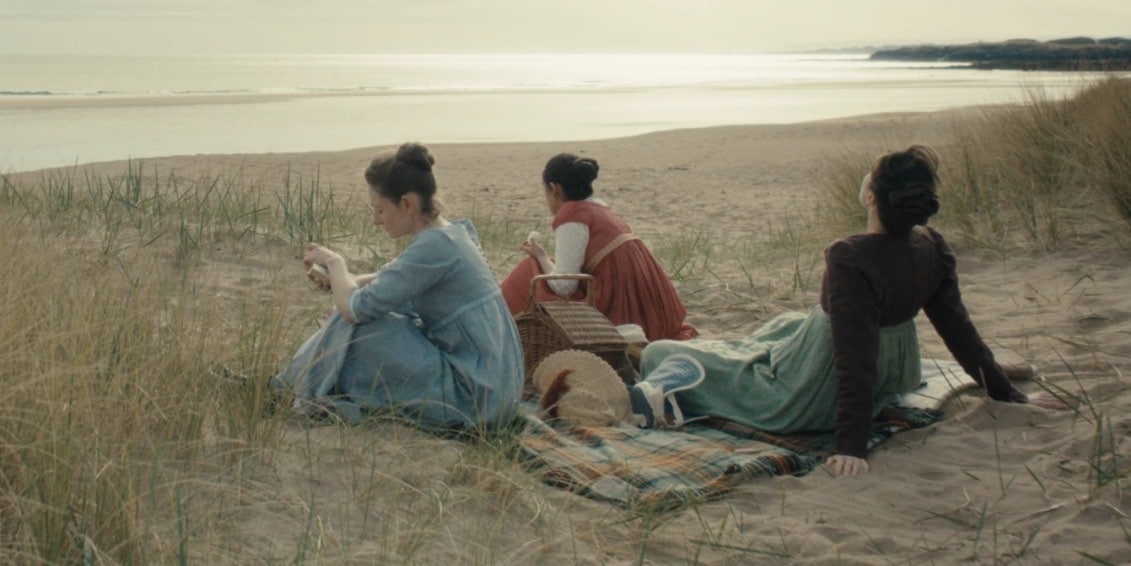
Dug up from the archives by Heldman and her co-writer Flora Nicholson, The Education of Jane Cumming is based on real events, and is captivating and intimate in scale, filmed in Fiona Reid’s whoozy camerawork that delicately captures the flighty imagination and graceful. There are echoes of Stephane Brize’s 2017 drama A Woman’s Life.
The film is carried by Fiona Shaw’s exquisite turn as a society noblewoman appalled by events beyond her ken and control, the script skirting diffidently round its subject matter leaving us to make up our own minds about the affair which nevertheless rocked the establishment, much as did Mary Shelley’s ‘Frankenstein’ (1816), at a time when Britain was experiencing a broadening of horizons and renaissance at the end of the Napoleonic wars. A captivating if often perplexing sophomore feature.
BERLINALE 2026 | PANORAMA STRAND